EP0406103B1 - Pestizide Zusammensetzungen auf der Basis von Mikroorganismen, Verfahren zu ihrer Herstellung und ihre Verwendung in der Landwirtschaft - Google Patents
Pestizide Zusammensetzungen auf der Basis von Mikroorganismen, Verfahren zu ihrer Herstellung und ihre Verwendung in der Landwirtschaft Download PDFInfo
- Publication number
- EP0406103B1 EP0406103B1 EP90401833A EP90401833A EP0406103B1 EP 0406103 B1 EP0406103 B1 EP 0406103B1 EP 90401833 A EP90401833 A EP 90401833A EP 90401833 A EP90401833 A EP 90401833A EP 0406103 B1 EP0406103 B1 EP 0406103B1
- Authority
- EP
- European Patent Office
- Prior art keywords
- product
- fungus
- microorganism
- product according
- fermentation
- Prior art date
- Legal status (The legal status is an assumption and is not a legal conclusion. Google has not performed a legal analysis and makes no representation as to the accuracy of the status listed.)
- Expired - Lifetime
Links
Images


Classifications
-
- C—CHEMISTRY; METALLURGY
- C12—BIOCHEMISTRY; BEER; SPIRITS; WINE; VINEGAR; MICROBIOLOGY; ENZYMOLOGY; MUTATION OR GENETIC ENGINEERING
- C12N—MICROORGANISMS OR ENZYMES; COMPOSITIONS THEREOF; PROPAGATING, PRESERVING, OR MAINTAINING MICROORGANISMS; MUTATION OR GENETIC ENGINEERING; CULTURE MEDIA
- C12N1/00—Microorganisms; Compositions thereof; Processes of propagating, maintaining or preserving microorganisms or compositions thereof; Processes of preparing or isolating a composition containing a microorganism; Culture media therefor
- C12N1/14—Fungi; Culture media therefor
- C12N1/145—Fungi isolates
-
- A—HUMAN NECESSITIES
- A01—AGRICULTURE; FORESTRY; ANIMAL HUSBANDRY; HUNTING; TRAPPING; FISHING
- A01N—PRESERVATION OF BODIES OF HUMANS OR ANIMALS OR PLANTS OR PARTS THEREOF; BIOCIDES, e.g. AS DISINFECTANTS, AS PESTICIDES OR AS HERBICIDES; PEST REPELLANTS OR ATTRACTANTS; PLANT GROWTH REGULATORS
- A01N63/00—Biocides, pest repellants or attractants, or plant growth regulators containing microorganisms, viruses, microbial fungi, animals or substances produced by, or obtained from, microorganisms, viruses, microbial fungi or animals, e.g. enzymes or fermentates
- A01N63/30—Microbial fungi; Substances produced thereby or obtained therefrom
-
- C—CHEMISTRY; METALLURGY
- C12—BIOCHEMISTRY; BEER; SPIRITS; WINE; VINEGAR; MICROBIOLOGY; ENZYMOLOGY; MUTATION OR GENETIC ENGINEERING
- C12R—INDEXING SCHEME ASSOCIATED WITH SUBCLASSES C12C - C12Q, RELATING TO MICROORGANISMS
- C12R2001/00—Microorganisms ; Processes using microorganisms
- C12R2001/645—Fungi ; Processes using fungi
Definitions
- the present invention relates to new compositions based on entomopathogenic fungi, their preparation process and their application in agronomy.
- Biological insecticides are more specific than most chemical pesticides and therefore do not induce secondary phenomena; in addition, they are not toxic to invertebrates and vertebrates, and therefore to humans. Their use would therefore be entirely advantageous.
- it faces the following problems; on the one hand, the proliferation of entomopathogenic fungi is limited to hot and humid regions, and in temperate regions it is currently considered that, given the high doses of fungi to be used, such a method of combating insects is not economical applicable; on the other hand, these germs are particularly sensitive to ultraviolet rays.
- US Pat. No. 4,530,834 relates to a process for preparing dried mycelium, which comprises a number of steps, including a step of culturing on a medium which is defined by the inventors as "any commercially available medium", a step of treatment with a protective chemical agent in order to increase the viability of the mycelium as well as an incubation and drying stage. It is specified that the products for use for insect control are ground and put in the form of wettable powder, and then applied by spraying on the plants.
- US Pat. No. 3,013,946 also relates to a process for the preparation of a composition of fungi having an insecticidal effect, by culturing microorganisms of the family Moniliales on a solid support which is vermiculite. It is specified that the fermentation is carried out for a period of 14 to 21 days but without checking the condition of the fungus, in particular the presence of spores.
- the culture medium is dried after fermentation and before use in spreading.
- Patent FR 2,394,6O6 relates to a process for the preparation of microorganisms, including B. bassiana , which can be used in the fight against plant diseases, consisting in mixing an aqueous preparation of a microorganism with a suspension of clay, this clay being able to be montmorillonite or bentonite.
- Patent EP-A-0 226 394 describes a process for the direct and single-stage fermentation of various microorganisms on particles which are more particularly vermiculite.
- the particulate support thus treated can be used to inoculate cultures.
- the method consists in first mixing vermiculite, flour and water, sterilizing this mixture, then inoculating it with a microorganism, such as a mushroom , consecutively carry out storage for maturation and then carry out drying, which results in a particulate product which can be used for the treatment of crops.
- patent EP-AO 226 394 does not mention in any way the control of the maturity of the culture of the microorganism, whereas this parameter is essential both to allow the effectiveness of the product under the conditions of spreading and to optimize the manufacturing.
- This prior patent does not describe a product in which the microorganism has an ability to sporulate under the conditions of spreading. It also provides for sterilization of the support. If we refer to the illustrative examples given in patent EP-A-0 226 394, it can be seen that very long culture times are provided: 45 days in example 1, 2 to 4 weeks in examples 2 and 3. For a person skilled in the art, such durations imply an absence of quality and quantity control of the mushrooms in the products obtained.
- the previous process is also carried out in containers whose use requires cultivation on thin layers, without any regulation.
- the preferred support as illustrated in the examples of this prior patent, is vermiculite, which is not suitable for a mechanized agronomic application.
- Patent FR-A-2 298 951 relates to products in the form of aggregates, obtained by extrusion, which can be used as an inoculant, fertilizer or in other similar applications.
- Microorganisms are added to a solid support and the mixture is treated to the desired solid form.
- Microorganisms mainly of the genus Trichoderma, are incubated on crushed barley or other grains, in closed containers. This process does not allow any control of the quantity of biomass and its quality.
- Patent FR-A-2 298 951 does not teach the use of precolonized particles or granules.
- the object of the present invention is obtaining a product having high efficiency, good stability, low production cost, in particular thanks to very short cultivation times and great ease of use.
- the invention more particularly relates to a granular product, precolonized by microorganisms, the maturity of which is controlled and which finds application in agronomic treatments.
- the object of the present invention is therefore an agronomic treatment product based on at least one microorganism useful for the fight against crop pests and diseases or for soil fertilization according to claim 1.
- Said microorganism can be a bacterium enabling soil fertilization, such as a Rhizobium , or an ectomycorrhizal fungus such as a Laccaria . It can also be an entomopathogenic fungus, effective against one or more insect pests of crops, soil insects (scarabids and curculionids in particular), biting insects (cercopids in particular) or boring insects (notably borer).
- Said microorganism can also be a pathogenic fungus vis-à-vis other fungi, such as in particular a Fusarium, non pathogenic vis-à-vis plants but pathogenic vis-à-vis a pest Fusarium , or a pathogenic Trichoderma against Sclerotinia , Rhizoctonia , Armillaria or Botrytis .
- Said microorganism can also have a pathogenic effect on nematodes, and it can thus be an Arthrobotrys .
- a product containing one of these microorganisms has the particular advantage, by comparison with the pesticides or fertilizers usually used, of not polluting the environment and of preserving the flora and fauna.
- the product can be spread in the field directly after it has been obtained by direct culture and fermentation in the solid state on said particles. This is a notable advantage of the invention: in fact it is not necessary to grind the product at the outlet of the fermenter, or to incorporate additives into it.
- the microorganism is a fungus and it is entirely in mycelium form at the time of spreading, in which case said product is said to be immature, or the fungus is in mycelium and spore form, in which case said product is said to be mature.
- This control of the state of the mushroom population, and therefore of the efficacy of the product is an essential characteristic of the invention.
- the prior art to the knowledge of the applicant, does not describe products whose composition in spores and mycelium is precisely controlled.
- the product according to the invention can also be composed of a mixture of mature and immature forms.
- said support has a density preferably between 0.6 and 1.
- the support is of mineral or organic origin, in particular composed of montmorillonite, attapulgite, or sepiolite.
- the support must be compatible with a mechanized ground or aerial application.
- said support has a water retention capacity of at least 40%.
- said particles have a size of between 100 and 1000 ⁇ m and preferably of approximately 500 ⁇ m.
- the present invention also relates to a product in which said fungus is a strain of B.bassiana , in particular the strain deposited in the National Collection of Cultures of Microrganisms under No. I 867 or a mutant of this strain.
- said product is put in a dry form for storage and spreading.
- the present invention also relates to a process for obtaining an agronomic treatment product based on at least one microorganism, for the fight against pests and diseases of crops or for soil fertilization, characterized in that it comprises the direct culture by fermentation in the solid state of said microorganism on at least one solid support in particles, insoluble in the fermentation medium, and the recovery of said particles, which are colonized by the microorganism, the maturity of the culture being controlled to allow the microorganism to sporulate under the conditions of spreading.
- the association of the microorganism and the particles of solid support is done without any intervention of any physical or chemical means or agent, which is a notable advantage of the process according to the invention.
- microorganisms precolonize the particles during fermentation, which ensures a more efficient association of the microorganism and the particles.
- the microorganism is a fungus and the fermentation is stopped substantially at the stage of obtaining the mycelium, which leads to a product known as immature or at the stage of obtaining mycelium and spores, which leads to a so-called mature product.
- Stopping fermentation with a view to producing an immature product makes it possible to shorten the fermentation by several days.
- said particles have been sterilized or not.
- the fungus used is an entomopathogenic fungus, effective against one or more insect pests of crops.
- This fungus can in particular be B.bassiana , B.tenella , B. brognartii , or Paecilomyces fumosoroseus .
- said fungus is B. bassiana.
- said fermentation takes place for 30 to 50 hours, and preferably 48 hours, it provides an immature product; when the fermentation time is at least 90 hours, a mature product is then obtained.
- the process of the invention can be implemented with high thicknesses of support during fermentation, reaching several tens of cm, which is favorable for industrial production as well as for controlling the maturity of Culture.
- the invention also relates to a biological control process, against plant diseases and pests, characterized in that one spreads an effective amount of the product defined above, in particular based on enthomopathogenic fungi, on the plants to be treated, the disease to be treated can for example be the European corn borer which is due to O. nubilalis , but also other European borer or other plant diseases.
- the invention further relates to a soil fertilization process, characterized in that an effective quantity of the fertilizer product based on microorganisms defined above is spread.
- a semi-synthetic liquid medium A (table 1) is seeded using conidia of B. bassiana , resulting from a culture on semi-synthetic agar medium B (table 2) aged 5 days, at a rate of 106 conidia / ml. This medium is incubated at 25 ° C., in flasks on a shaking table or in a liquid fermenter depending on the amounts of culture to be inoculated.
- medium A contains between 1 and 2.108 blastospores / ml.
- TABLE 1 Composition of medium A Cereal maceration liquor 20.0g Sucrose 30.0g KNO3 5.0g KH2 PO4 6.8g CaCO3 2.0g MgSO4 7H2O 0.1g Deionized water 1 l
- Composition of medium B Glucose 10.0g Yeast extract 5.0g KH2 PO4 0.4g Na2 HPO4, 12H2O 1.4g Mg SO4, 7H2O 0.6g KCl 1.0g NH4 NO3 0.7g Chloramphenicol 0.5g Agar 15.0g Deionized water 1 l
- the support can be sterilized beforehand (3 h at 120 ° C) or not, a sterile process is not essential since few contaminants develop under the culture conditions used and satisfactory results are obtained.
- This support is impregnated with one of the nutrient media C, D or E (Tables 3, 4 and 5); these nutrient media C or D or E sterilized (30 minutes at 115 ° C), being added with the inoculum at a rate of 3.106 blastospores / ml of medium C, D or E.
- the impregnation and the homogenization can be carried out in a baking kneader type apparatus or in the reactor itself, so as to obtain a dry matter content of approximately 60% (weight of the support / wet weight). Under these conditions, an inoculation rate of approximately 2.106 blastospores / g of dry support material is obtained. Depending on the case, the strain is incubated between 18 and 27 ° C. TABLE 3 Composition of medium C Sucrose 132.0g No Residual sugar * 27, Og Deionized water 1 l * Residual No Sugar is a byproduct of sugar extraction composed mainly of nitrogenous materials and marketed by oli Sucrière.
- Figure 1 shows the reactor and its regulation and control device.
- the reactor is composed of a tank (2), filled with a semi-solid medium, in which one or more turning propellers (1) soak carried by a movable carriage (4) and driven by a motor (5).
- the carriage (4) is driven by a advancement motor (3) and also carries a spraying boom (6) supplied by the solution inlet pipes (19, (20) and (21).
- an upper perforated plate (22) constituting a coarse sieve serving to retain the layer of culture medium, which can reach 0.50 to 1 meter, and a lower perforated plate (23) forming a finer screen and allowing the distribution of air evenly through the enclosure of the tank (2).
- Two sieves can advantageously be replaced by a single sieve consisting of a braided stainless steel mesh (DYNAPORE sheet), playing both the role of air diffuser and support of the culture medium.
- Air circulation is ensured by the fan (15); the flow rate is of the order of 7.5 1.mn ⁇ 1-kg of dry matter ⁇ 1.
- the device for measuring the culture conditions in the reactor consists of an oxygen probe (7), a pH probe (8) and a temperature probe (9).
- the temperature and humidity of the air are measured by the probes (11) at the inlet and outlet (1O) of the reactor.
- Compression strain gauges (12) make it possible to measure the mass in culture. in the reactor and the air flow measurement is carried out using the flow meter.
- the fermentation control and the regulation of the reactor are ensured by the microcomputer (24) which receives the information provided by the oxygen sensor (7), the pH sensor (8), the temperature sensor (9), the temperature and humidity probes (10) and (11), the compression stress sensors (12), the flow meter (14), and which, according to this information acts on the advancement motor of the carriage (3), humidifier (13), fan (15), cold batteries (16) and hot (17), the valves controlling the flow rates of the inlet pipes of solutions (19), (20) and (21).
- the temperature is maintained at around 25 ° C and the humidity of the culture at around 40% by ventilation of hot and humid air.
- Conidiogenesis monitoring is carried out from time to time using a standardized method for counting conidia.
- a dilution to one tenth of the suspension thus obtained is carried out in a methylene blue solution. After one hour of incubation at room temperature, the counts are carried out on a Malassez cell.
- composition of the methylene blue solution Methylene blue 0.6g KH2 PO4 81.3g Na2HPO4, 12H2O 5.7 g Water 1, O l
- Measuring fungal respiration is the only method that currently allows real-time monitoring of crops.
- the gases are pumped out of the fermenter, dried using a "Hygrostop" (Hartman and Braun).
- Their composition is determined by means of an infrared gas analyzer of the URAS 3G type (Hartman and Braun) for CO2 and of a paramagnetic oxygen analyzer of the Magnos 3 type (Hartman and Braun).
- the whole is managed by a microcomputer making it possible to calculate various parameters online: - the CPR or CO2 production rate - OUR or oxygen consumption rate.
- analyzes carried out on a delayed basis make it possible to monitor changes in glucosamine and ergosterol levels.
- FIG. 2 An example of the result obtained during a culture on medium C is represented in FIG. 2 in which the culture time has been plotted on the abscissa, from the inoculation of the fermenter, and on the ordinate the CPR, the glucosamine level and the ergosterol level.
- Curve A represents the evolution of the glucosamine level
- curve B the evolution of the ergosterol level
- curve C represents the evolution of the CPR.
- the microgranulate carries both mycelium and conidia. It is difficult to quantitatively separate the two forms from one another on the one hand and the mycelium from the support on the other hand. Only indirect measurement methods are possible. They consist in dosing, after extraction, biochemical constituents of the mycelium and spores, chitin and ergosterol.
- the chitin and ergosterol The chitin and ergosterol.
- Chitin a constituent of the cell wall, is hydrolyzed in an acid medium and hot to N acetyl glucosamine (SAKURAI et al. (1977) Agric. Biol. Chem. 41, 4, 619-624).
- the glucosamine reacts after deamination, with a colored reagent, methyl 2-benzothiazone hydrazone (MBTH).
- MBTH methyl 2-benzothiazone hydrazone
- the intensity of the blue coloration is proportional to the quantity of glucosamine (TSUJI et al. 1969 Chem. Pharm. Bull., 17,7,15O5-151O, RIDE et DRYSDALE DRYSDALE, 1972, Physiological Plant Pathology, 2, 7, 15).
- the hydrolysis is carried out as follows: the sample to be assayed is previously washed three times with a 1 mol.Cl ⁇ 1 KCl solution in order to eliminate the interference due to the residual nutrient medium, then 1 g of washed sample is precisely weighed, 10 ml of concentrated HCl are added , it is left at room temperature for 16 hours, 40 ml of deionized water are added and finally this solution is autoclaved for 2 hours at 130 ° C.
- 1 ml of hydrolyzate is neutralized by adding 2.5 ml of NaOH to 1 mol.l ⁇ 1 and 1.5 ml of deionized water.
- the quantity of glucosamine in the samples is determined relative to a range of N acetyl glucosamine (O to 30 ⁇ g / ml) carried out simultaneously.
- the results are expressed in ⁇ g of glucosamine / g of dry matter of samples.
- the extraction is carried out practically in the following manner: a mass of sample is precisely weighed in a flask (sufficient quantity for the extract to contain 0.1 to 30 ⁇ g / 10 ⁇ l). 100 ml of methanol and 50 ml of alcoholic potassium hydroxide (KOH 2Og - ethyl alcohol 5O ml) are added. The whole is saponified under reflux, for 30 min, then centrifuged for 10 min. at 6OOO t.min. ⁇ 1. The supernatant is mixed with 100 ml of water and 100 ml of petroleum ether. The whole is left in a separating funnel, then the ether phase is recovered (upper phase) and it is evaporated. The dry residue is taken up in 10 ml of dichloromethane.
- the ergosterol is dosed in the extract thus obtained by high performance liquid chromatography on a column packed with Lichrososorb SI 6O silica of 5 ⁇ m particle size (Merck).
- the mobile phase is a mixture of methylene chloride -isopropanol (99.5 / O, 5 V / V).
- the results are expressed in ⁇ g of ergosterol per gram of dry matter.
- the assay methods described in e) make it possible to quantify the total biomass at the end of the process, but not to verify the viability of the product, on the one hand at the end of the culture, on the other hand after a given storage period.
- carrying out a germination test in petri dishes makes it possible to determine the viability of a spore-forming product, the result expressed being the number of germinated conidia giving rise to a colony compared to the total number of conidia measured at the cell. of Malassez.
- the dried culture sample is moistened and incubated. During the incubation, the mycelium continues its growth which had been stopped by drying and sporulates. After 144 h of total incubation (incubation during culture and during the viability test), the rate of conidia has reached a maximum and remains constant. For cultures always carried out under the same conditions, the maximum rate of conidia obtained is always the same. It is therefore sufficient to determine the rate of conidia after 96 h of incubation. The value obtained is an indication of the quality of the product.
- the 50 g are moistened with 22 ml of sterile water in order to reach a dry matter content of between 6O and 70%.
- the vials are then incubated in an air-conditioned room at 25 ° C for 96 hours.
- the granulated compositions according to the invention are stored after drying in an atmosphere the humidity of which is controlled under inert gas (nitrogen, carbon dioxide) or alternatively under vacuum, preferably at a temperature between 5 and 30 ° C.
- inert gas nitrogen, carbon dioxide
- vacuum preferably at a temperature between 5 and 30 ° C.
- Efficacy was estimated in a complete block type test with four repetitions. Each plot is infested weekly for 3 weeks. At each infestation, one moth opal is introduced per plant.
- the efficiency is expressed as a percentage reduction compared to the control, the workforce of which is 1.9 caterpillars per plant.
- the granules obtained after fermentation of 48, 72 and 96 hours are considered to be immature, while those obtained at 120 hours are considered to be mature.
- the mixture is composed of 70% of 48 hour granules and 30% of mature granules.
- Example 2 A preparation consisting of a mixture of granules, as defined in Example 2 (70% of 48 hour granules and 30% of mature granules of 120 hours), and obtained according to the procedure of Example 1 was tested in comparison with formulations prepared according to methods described in the prior art.
- liquid suspensions are applied at a dose of 1013 conidia or 10O g of mycelium (in 2OO l) per hectare.
- Efficacy was estimated in a complete block type test with four repetitions. Each plot is infested weekly for 3 weeks. At each infestation, one moth opal is introduced per plant.
- the efficiency is expressed as a percentage reduction compared to the control, the workforce of which is 1.9 caterpillars per plant.
- the solid formulations tested are of two types: fixation or adsorption (US-4,263,036) of propagules (conidia or blastospores) infectious on microgranules impregnated or not with a nutritive medium. Such a process is specified in patent GB-1,002,977 for chemicals. The results of the experiments are shown in Table 8.
- the conidia were adsorbed in suspension in complete medium based on glucose (1.5%) and yeast extract (1.5%).
- Example 2 A preparation consisting of a mixture of granules, as defined in Example 2 (70% of 48 hour granules and 30% of granules of 120 hours), and obtained according to the procedure of Example 1 was tested compared to reference insecticides (Table 9).
- the reference chemical insecticides are the granule DURSBAN G which is a chlorpyriphos (manufactured by Quinoline) applied at the dose of 25 kg / ha and DECIS G (cios Procida) applied at the dose of 25 kg / ha. TABLE 9 Comparative efficacy of the product of the invention and of the reference chemical insecticides Product Application rate kg / ha Efficiency % reduction in attacks % reduction in larval population GRANULE (mixture on montmorillonite) according to the invention 25 88.1 93.3 DECIS G 25 9O 8O DURSBAN G 25 91.3 9O, 8
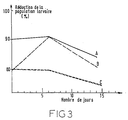
- Curves A, B and C respectively represent the evolution of the insecticidal effect of the immature granules according to the invention, of the mature granules according to the invention, and of the DECIS G granules.
Landscapes
- Life Sciences & Earth Sciences (AREA)
- Health & Medical Sciences (AREA)
- Engineering & Computer Science (AREA)
- Zoology (AREA)
- Microbiology (AREA)
- Chemical & Material Sciences (AREA)
- Biotechnology (AREA)
- General Health & Medical Sciences (AREA)
- Wood Science & Technology (AREA)
- Genetics & Genomics (AREA)
- Virology (AREA)
- Organic Chemistry (AREA)
- Mycology (AREA)
- Bioinformatics & Cheminformatics (AREA)
- Tropical Medicine & Parasitology (AREA)
- Dentistry (AREA)
- Agronomy & Crop Science (AREA)
- Medicinal Chemistry (AREA)
- Environmental Sciences (AREA)
- Pest Control & Pesticides (AREA)
- Biomedical Technology (AREA)
- Botany (AREA)
- Biochemistry (AREA)
- General Engineering & Computer Science (AREA)
- Plant Pathology (AREA)
- Agricultural Chemicals And Associated Chemicals (AREA)
- Micro-Organisms Or Cultivation Processes Thereof (AREA)
- Immobilizing And Processing Of Enzymes And Microorganisms (AREA)
Claims (28)
- Produkt zur agronomischen Behandlung auf der Basis von wenigstens einem Mikroorganismus, das sich zur Bekämpfung von Schädlingen oder von Krankheiten der Kulturen oder zur Bodendüngung eignet, dadurch gekennzeichnet, daß es Teilchen umfaßt, die aus einem festen Träger gebildet sind, der den Mikroorganismus trägt und mit einer mechanisierten Auftragung verträglich ist, und daß es direkt nach seiner Gewinnung durch direkte Kultur und Fermentation in festem Zustand auf den Teilchen auf dem Feld verteilt werden kann, wobei die Mikroorganismen während der Fermentation die Teilchen im voraus besiedeln und die Reife der Kultur des Mikroorganismus kontrolliert wird.
- Produkt gemäß Anspruch 1, dadurch gekennzeichnet, daß der Mikroorganismus ein Pilz ist.
- Produkt gemäß Anspruch 2, dadurch gekennzeichnet, daß der Pilz zum Zeitpunkt des Verteilens zur Gänze in Form des Mycels vorliegt, in welchem Falle das Produkt als unreif bezeichnet wird.
- Produkt gemäß Anspruch 2, dadurch gekennzeichnet, daß der Pilz in Form des Mycels und von Sporen vorliegt, in welchem Falle das Produkt als reif bezeichnet wird.
- Produkt gemäß Anspruch 2, dadurch gekennzeichnet, daß es aus einem Gemisch der reifen und der unreifen Form besteht.
- Produkt gemäß einem der Ansprüche 1 bis 5, dadurch gekennzeichnet, daß der Träger eine Dichte hat, die vorzugsweise zwischen 0,6 und 1 liegt.
- Produkt gemäß einem der Ansprüche 1 bis 6, dadurch gekennzeichnet, daß der Träger mineralischen oder organischen Ursprungs ist.
- Produkt gemäß Anspruch 7, dadurch gekennzeichnet, daß es sich bei dem Träger um Montmorillonit handelt.
- Produkt gemäß Anspruch 7, dadurch gekennzeichnet, daß es sich bei dem Träger um Attapulgit handelt.
- Produkt gemäß einem der Ansprüche 1 bis 9, dadurch gekennzeichnet, daß der Träger ein Wasserrückhaltevermögen von wenigstens 40% besitzt.
- Produkt gemäß einem der Ansprüche 1 bis 10, dadurch gekennzeichnet, daß die Teilchen eine Größe zwischen 100 und 1000 µm und vorzugsweise eine Größe von ungefähr 500 µm haben.
- Produkt gemäß einem der Ansprüche 2 bis 11, dadurch gekennzeichnet, daß der verwendete Pilz ein entomopathogener Pilz ist, der gegen ein oder mehrere Insekten, die die Kulturen schädigen, wirksam ist.
- Produkt gemäß einem der Ansprüche 2 bis 12, dadurch gekennzeichnet, daß es sich bei dem Pilz um Beauveria bassiana handelt.
- Stamm von Beauveria bassiana, der bei der Collection Nationale de Cultures de Microorganismes unter der Nr. I 867 hinterlegt wurde und im Produkt gemäß einem der Ansprüche 1 bis 13 verwendet wird.
- Stamm von Beauveria bassiana, dadurch gekennzeichnet, daß er sich durch eine oder mehrere Mutationen aus dem Stamm gemäß Anspruch 14 ergibt.
- Produkt gemäß Anspruch 13, dadurch gekennzeichnet, daß es sich bei dem Beauveria-bassiana-Stamm um einen Stamm gemäß einem der Ansprüche 14 und 15 handelt.
- Produkt gemäß einem der Ansprüche 1 bis 13 und 16, dadurch gekennzeichnet, daß es zur Lagerung und Verteilung in trockener Form vorliegt.
- Verfahren zur Gewinnung eines Produkts zur agronomischen Behandlung auf der Basis von wenigstens einem Mikroorganismus zur Bekämpfung von Schädlingen oder von Krankheiten der Kulturen oder zur Bodendüngung, dadurch gekennzeichnet, daß es die direkte Kultur des Mikroorganismus durch Fermentation in festem Zustand auf wenigstens einem aus Teilchen bestehenden festen Träger, der im Fermentationsmedium unlöslich ist, und die Gewinnung der von dem Mikroorganismus besiedelten Teilchen umfaßt, wobei die Reife der Kultur kontrolliert wird, so daß der Mikroorganismus unter den Bedingungen der Verteilung Sporen bilden kann.
- Verfahren gemäß Anspruch 18, dadurch gekennzeichnet, daß der Mikroorganismus ein Pilz ist.
- Verfahren gemäß Anspruch 19, dadurch gekennzeichnet, daß die Fermentation ungefähr im Stadium des Erhaltens des Mycels unterbrochen wird, was zu einem als unreif bezeichneten Produkt führt.
- Verfahren gemäß Anspruch 19, dadurch gekennzeichnet, daß die Fermentation bis zum Stadium des Erhaltens des Mycels und von Sporen fortgeführt wird, was zu einem als reif bezeichneten Produkt führt.
- Verfahren gemäß einem der Ansprüche 19 bis 21, dadurch gekennzeichnet, daß der verwendete Pilz ein entomopathogener Pilz ist, der gegen ein oder mehrere Insekten, die die Kulturen schädigen, wirksam ist.
- Verfahren gemäß einem der Ansprüche 19, 20 und 22, dadurch gekennzeichnet, daß es sich bei dem Pilz um Beauveria bassiana handelt und die Fermentation 20 bis 60 Stunden lang und vorzugsweise 48 Stunden lang erfolgt, in welchem Fall man ein unreifes Produkt erhält.
- Verfahren gemäß einem der Ansprüche 19, 21 und 22, dadurch gekennzeichnet, daß es sich bei dem Pilz um Beauveria bassiana handelt und die Fermentation wenigstens 90 Stunden lang erfolgt, in welchem Fall man ein reifes Produkt erhält.
- Verfahren gemäß einem der Ansprüche 18 bis 24, dadurch gekennzeichnet, daß die Teilchen vorher sterilisiert worden sind oder nicht sterilisiert worden sind.
- Verfahren zur Behandlung von Pflanzen gegen Krankheiten oder Schädlinge, dadurch gekennzeichnet, daß man eine wirksame Menge des Produkts gemäß einem der Ansprüche 1 bis 13, 16 und 17 auf die zu behandelnden Pflanzen verteilt.
- Verfahren gemäß Anspruch 26, dadurch gekennzeichnet, daß man die Pflanzen gegen Ostriania nubilalis, den Maiszünsler, behandelt.
- Verfahren zur Bodendüngung, dadurch gekennzeichnet, daß man eine wirksame Menge des Produkts gemäß einem der Ansprüche 1 bis 11 und 17 auf die zu behandelnden Böden verteilt.
Applications Claiming Priority (2)
| Application Number | Priority Date | Filing Date | Title |
|---|---|---|---|
| FR8908553A FR2648677B1 (fr) | 1989-06-27 | 1989-06-27 | Compositions pesticides a base de micro-organismes, leur procede de preparation et leur application en agronomie |
| FR8908553 | 1989-06-27 |
Publications (2)
| Publication Number | Publication Date |
|---|---|
| EP0406103A1 EP0406103A1 (de) | 1991-01-02 |
| EP0406103B1 true EP0406103B1 (de) | 1996-02-28 |
Family
ID=9383166
Family Applications (1)
| Application Number | Title | Priority Date | Filing Date |
|---|---|---|---|
| EP90401833A Expired - Lifetime EP0406103B1 (de) | 1989-06-27 | 1990-06-26 | Pestizide Zusammensetzungen auf der Basis von Mikroorganismen, Verfahren zu ihrer Herstellung und ihre Verwendung in der Landwirtschaft |
Country Status (8)
| Country | Link |
|---|---|
| EP (1) | EP0406103B1 (de) |
| AT (1) | ATE134480T1 (de) |
| AU (1) | AU631221B2 (de) |
| DE (1) | DE69025501T2 (de) |
| DK (1) | DK0406103T3 (de) |
| ES (1) | ES2084014T3 (de) |
| FR (1) | FR2648677B1 (de) |
| GR (1) | GR3019520T3 (de) |
Cited By (2)
| Publication number | Priority date | Publication date | Assignee | Title |
|---|---|---|---|---|
| RU2172588C1 (ru) * | 2000-12-27 | 2001-08-27 | Бердский завод биологических препаратов | Штамм гриба beauveria bassiana (bals) vuill bkm f-3732d, используемый для получения энтомопатогенных препаратов |
| US10383339B2 (en) | 2013-11-08 | 2019-08-20 | Novozymes Bioag A/S | Compositions and methods for treating pests |
Families Citing this family (8)
| Publication number | Priority date | Publication date | Assignee | Title |
|---|---|---|---|---|
| JPH0698759A (ja) * | 1992-04-28 | 1994-04-12 | Nematetsuku:Kk | 線虫の天敵微生物生産方法 |
| AU5893494A (en) * | 1993-01-22 | 1994-08-15 | Shkoda, Vladimir Sergeevich | Process for obtaining microbiological preparations for agricultural use, a production line for carrying this out and removable unit for deep culture of the microorganisms |
| GB9326517D0 (en) * | 1993-12-29 | 1994-03-02 | Zeneca Ltd | Compositions for control of soil pests |
| WO2002028189A2 (en) * | 2000-10-04 | 2002-04-11 | Paul Stamets | Mycoattractants and mycopesticides |
| US6660290B1 (en) | 2000-10-04 | 2003-12-09 | Myco Pesticides Llc | Mycopesticides |
| ES2310134B1 (es) * | 2007-06-05 | 2010-01-07 | Universidad De Alicante | Composicion fitosanitaria que comprende un hongo entomopatogeno perteneciente a la especie b. bassiana y triturados o fragmentados de datiles, metodo de elaboracion y uso de la misma. |
| FR2951738B1 (fr) | 2009-10-26 | 2013-12-27 | Pierre Philippe Claude | Substrats matriciels carbones pour l'obtention de bacteries biofertilisantes |
| CN114600908B (zh) * | 2022-01-25 | 2024-01-30 | 春华秋实科技集团有限公司 | 一种具有杀虫功能的复合微生物的组合物及其应用 |
Family Cites Families (6)
| Publication number | Priority date | Publication date | Assignee | Title |
|---|---|---|---|---|
| FR2298951A1 (fr) * | 1974-10-22 | 1976-08-27 | Ricard Jacques | Comprimes granules pour le traitement des plantes |
| FR2394606A1 (fr) * | 1976-10-29 | 1979-01-12 | Agronomique Inst Nat Rech | Procede de protection et de conservation des micro-organismes avec des argiles en vue de leur application agronomique |
| FR2494717A1 (fr) * | 1980-11-21 | 1982-05-28 | Pasteur Institut | Perfectionnements apportes aux procedes de preparation de spores durables d'entomophthorales pathogenes d'insectes, preparations de spores ainsi obtenues et compositions phytosanitaires contenant lesdites preparations |
| US4530834A (en) * | 1982-09-17 | 1985-07-23 | The United States Of America As Represented By The Secretary Of Agriculture | Preparation of an entomopathogenic fungal insect control agent |
| CA1316859C (en) * | 1985-12-06 | 1993-04-27 | Dennis E. Mccabe | Production of microbial field crop inoculants |
| US5068105A (en) * | 1989-03-13 | 1991-11-26 | W. R. Grace & Co.-Conn. | Fungal formulation for biocontrol of soilborne plant pathogens |
-
1989
- 1989-06-27 FR FR8908553A patent/FR2648677B1/fr not_active Expired - Fee Related
-
1990
- 1990-06-26 EP EP90401833A patent/EP0406103B1/de not_active Expired - Lifetime
- 1990-06-26 ES ES90401833T patent/ES2084014T3/es not_active Expired - Lifetime
- 1990-06-26 DE DE69025501T patent/DE69025501T2/de not_active Expired - Fee Related
- 1990-06-26 AT AT90401833T patent/ATE134480T1/de active
- 1990-06-26 DK DK90401833.0T patent/DK0406103T3/da active
- 1990-06-27 AU AU57918/90A patent/AU631221B2/en not_active Ceased
-
1996
- 1996-04-02 GR GR960400908T patent/GR3019520T3/el unknown
Cited By (2)
| Publication number | Priority date | Publication date | Assignee | Title |
|---|---|---|---|---|
| RU2172588C1 (ru) * | 2000-12-27 | 2001-08-27 | Бердский завод биологических препаратов | Штамм гриба beauveria bassiana (bals) vuill bkm f-3732d, используемый для получения энтомопатогенных препаратов |
| US10383339B2 (en) | 2013-11-08 | 2019-08-20 | Novozymes Bioag A/S | Compositions and methods for treating pests |
Also Published As
| Publication number | Publication date |
|---|---|
| ES2084014T3 (es) | 1996-05-01 |
| AU631221B2 (en) | 1992-11-19 |
| ATE134480T1 (de) | 1996-03-15 |
| EP0406103A1 (de) | 1991-01-02 |
| DE69025501T2 (de) | 1996-07-11 |
| AU5791890A (en) | 1991-01-03 |
| FR2648677A1 (fr) | 1990-12-28 |
| FR2648677B1 (fr) | 1996-06-07 |
| DE69025501D1 (de) | 1996-04-04 |
| GR3019520T3 (en) | 1996-07-31 |
| DK0406103T3 (da) | 1996-07-08 |
Similar Documents
| Publication | Publication Date | Title |
|---|---|---|
| Feng et al. | Production, formulation and application of the entomopathogenic fungus Beauveria bassiana for insect control: current status | |
| EP1876232B1 (de) | Neuer stamm von trichoderma atroviride, ein diesen stamm enthaltendes kulturmilieu sowie die verwendung dieses stamms insbesondere als stimulans zur keimung und/oder zum wachstum von pflanzen | |
| Bennett et al. | Beneficial microorganism survival on seed, roots and in rhizosphere soil following application to seed during drum priming | |
| US20170164621A1 (en) | Endophyte enhanced seedlings with increased pest tolerance | |
| JPH0532514A (ja) | 有害生物の制御のための病原性菌類調製物の製造工程および製造方法および使用法 | |
| JP2007524647A (ja) | 新規内部寄生菌に関する組成物および使用方法 | |
| WO2019103588A1 (fr) | Production, formulation et recyclage d' un produit biofongicide et biostimulant à base de trichoderma asperellum | |
| Stirling et al. | Development of commercially acceptable formulations of the nematophagous fungusVerticillium chlamydosporium | |
| DE69528753T2 (de) | Mikroorganismen zur biologischen bekämpfung von pflanzenkrankheiten | |
| EP0406103A1 (de) | Pestizide Zusammensetzungen auf der Basis von Mikroorganismen, Verfahren zu ihrer Herstellung und ihre Verwendung in der Landwirtschaft | |
| KR102929166B1 (ko) | 피씨움 올리간드럼을 함유한 생물학적 액체 항진균 산물 및 제조 방법 | |
| EP1990404A1 (de) | Stamm des Pilzes Trichoderma atroviride, Isolationsverfahren eines solchen Stamms, Verfahren zur Herstellung eines Produkts auf der Basis dieses Stamms und Verwendung dieses Stamms | |
| FR3097557A1 (fr) | Nouvel agent de biocontrole et son utilisation pour la lutte contre des maladies fongiques de plantes | |
| Fourie et al. | Effects of fruit and pollen exudates on growth of Botrytis cinerea and infection of plum and nectarine fruit | |
| JP7395257B2 (ja) | 昆虫寄生菌を用いた害虫防除資材およびそれを用いた害虫防除方法 | |
| CN111893061A (zh) | 一种除虫菊酯类杀虫剂降解菌株及其菌剂和降解工艺 | |
| JP4581410B2 (ja) | 殺虫性油剤 | |
| WO2009037399A2 (fr) | Procede de production de spores et de metabolites provenant de microorganismes d'origine fongique et leurs utilisations | |
| WO1993000421A1 (fr) | Moyens pour ameliorer la croissance des plantes | |
| JPH06247822A (ja) | 生菌含有製剤及びその製造方法 | |
| Cliquet et al. | Influence of culture conditions on growth and survival of conidia of Trichoderma spp. coated on seeds | |
| JP2002101870A (ja) | フザリウム菌に対して拮抗作用を有する微生物及びその微生物を利用したキュウリつる割病の防除方法及びその大量培養方法。 | |
| US5270039A (en) | Method for suppressing mycotic infection in garlic and microorganisms used therefor | |
| FR3149906A1 (fr) | Nouvel agent de biostimulation et ses utilisations | |
| WO2005068609A1 (fr) | Clones de trichoderma harzianum, procede d’isolement et de culture et application comme produit phytosanitaire |
Legal Events
| Date | Code | Title | Description |
|---|---|---|---|
| PUAI | Public reference made under article 153(3) epc to a published international application that has entered the european phase |
Free format text: ORIGINAL CODE: 0009012 |
|
| AK | Designated contracting states |
Kind code of ref document: A1 Designated state(s): AT BE CH DE DK ES FR GB GR IT LI LU NL SE |
|
| 17P | Request for examination filed |
Effective date: 19901224 |
|
| 17Q | First examination report despatched |
Effective date: 19930706 |
|
| GRAA | (expected) grant |
Free format text: ORIGINAL CODE: 0009210 |
|
| AK | Designated contracting states |
Kind code of ref document: B1 Designated state(s): AT BE CH DE DK ES FR GB GR IT LI LU NL SE |
|
| REF | Corresponds to: |
Ref document number: 134480 Country of ref document: AT Date of ref document: 19960315 Kind code of ref document: T |
|
| REG | Reference to a national code |
Ref country code: CH Ref legal event code: NV Representative=s name: KIRKER & CIE SA |
|
| GBT | Gb: translation of ep patent filed (gb section 77(6)(a)/1977) |
Effective date: 19960228 |
|
| REF | Corresponds to: |
Ref document number: 69025501 Country of ref document: DE Date of ref document: 19960404 |
|
| REG | Reference to a national code |
Ref country code: ES Ref legal event code: FG2A Ref document number: 2084014 Country of ref document: ES Kind code of ref document: T3 |
|
| ITF | It: translation for a ep patent filed | ||
| REG | Reference to a national code |
Ref country code: GR Ref legal event code: FG4A Free format text: 3019520 |
|
| REG | Reference to a national code |
Ref country code: DK Ref legal event code: T3 |
|
| PLBE | No opposition filed within time limit |
Free format text: ORIGINAL CODE: 0009261 |
|
| STAA | Information on the status of an ep patent application or granted ep patent |
Free format text: STATUS: NO OPPOSITION FILED WITHIN TIME LIMIT |
|
| 26N | No opposition filed | ||
| PGFP | Annual fee paid to national office [announced via postgrant information from national office to epo] |
Ref country code: SE Payment date: 20000616 Year of fee payment: 11 |
|
| PGFP | Annual fee paid to national office [announced via postgrant information from national office to epo] |
Ref country code: GR Payment date: 20000621 Year of fee payment: 11 Ref country code: GB Payment date: 20000621 Year of fee payment: 11 |
|
| PGFP | Annual fee paid to national office [announced via postgrant information from national office to epo] |
Ref country code: DK Payment date: 20000628 Year of fee payment: 11 |
|
| PGFP | Annual fee paid to national office [announced via postgrant information from national office to epo] |
Ref country code: LU Payment date: 20000629 Year of fee payment: 11 |
|
| PGFP | Annual fee paid to national office [announced via postgrant information from national office to epo] |
Ref country code: AT Payment date: 20000630 Year of fee payment: 11 Ref country code: ES Payment date: 20000630 Year of fee payment: 11 Ref country code: NL Payment date: 20000630 Year of fee payment: 11 |
|
| PGFP | Annual fee paid to national office [announced via postgrant information from national office to epo] |
Ref country code: BE Payment date: 20000711 Year of fee payment: 11 |
|
| PGFP | Annual fee paid to national office [announced via postgrant information from national office to epo] |
Ref country code: DE Payment date: 20000802 Year of fee payment: 11 |
|
| PGFP | Annual fee paid to national office [announced via postgrant information from national office to epo] |
Ref country code: CH Payment date: 20000912 Year of fee payment: 11 |
|
| PG25 | Lapsed in a contracting state [announced via postgrant information from national office to epo] |
Ref country code: LU Free format text: LAPSE BECAUSE OF NON-PAYMENT OF DUE FEES Effective date: 20010626 Ref country code: GB Free format text: LAPSE BECAUSE OF NON-PAYMENT OF DUE FEES Effective date: 20010626 Ref country code: AT Free format text: LAPSE BECAUSE OF NON-PAYMENT OF DUE FEES Effective date: 20010626 Ref country code: DK Free format text: LAPSE BECAUSE OF NON-PAYMENT OF DUE FEES Effective date: 20010626 |
|
| PG25 | Lapsed in a contracting state [announced via postgrant information from national office to epo] |
Ref country code: SE Free format text: LAPSE BECAUSE OF NON-PAYMENT OF DUE FEES Effective date: 20010627 Ref country code: ES Free format text: LAPSE BECAUSE OF NON-PAYMENT OF DUE FEES Effective date: 20010627 |
|
| PG25 | Lapsed in a contracting state [announced via postgrant information from national office to epo] |
Ref country code: GR Free format text: LAPSE BECAUSE OF NON-PAYMENT OF DUE FEES Effective date: 20010630 Ref country code: CH Free format text: LAPSE BECAUSE OF NON-PAYMENT OF DUE FEES Effective date: 20010630 Ref country code: BE Free format text: LAPSE BECAUSE OF NON-PAYMENT OF DUE FEES Effective date: 20010630 Ref country code: LI Free format text: LAPSE BECAUSE OF NON-PAYMENT OF DUE FEES Effective date: 20010630 |
|
| BERE | Be: lapsed |
Owner name: INSTITUT NATIONAL DE LA RECHERCHE AGRONOMIQUE INR Effective date: 20010630 |
|
| PG25 | Lapsed in a contracting state [announced via postgrant information from national office to epo] |
Ref country code: NL Free format text: LAPSE BECAUSE OF NON-PAYMENT OF DUE FEES Effective date: 20020101 |
|
| EUG | Se: european patent has lapsed |
Ref document number: 90401833.0 |
|
| GBPC | Gb: european patent ceased through non-payment of renewal fee |
Effective date: 20010626 |
|
| REG | Reference to a national code |
Ref country code: CH Ref legal event code: PL |
|
| NLV4 | Nl: lapsed or anulled due to non-payment of the annual fee |
Effective date: 20020101 |
|
| REG | Reference to a national code |
Ref country code: DK Ref legal event code: EBP |
|
| PG25 | Lapsed in a contracting state [announced via postgrant information from national office to epo] |
Ref country code: DE Free format text: LAPSE BECAUSE OF NON-PAYMENT OF DUE FEES Effective date: 20020403 |
|
| REG | Reference to a national code |
Ref country code: ES Ref legal event code: FD2A Effective date: 20030203 |
|
| PG25 | Lapsed in a contracting state [announced via postgrant information from national office to epo] |
Ref country code: IT Free format text: LAPSE BECAUSE OF NON-PAYMENT OF DUE FEES;WARNING: LAPSES OF ITALIAN PATENTS WITH EFFECTIVE DATE BEFORE 2007 MAY HAVE OCCURRED AT ANY TIME BEFORE 2007. THE CORRECT EFFECTIVE DATE MAY BE DIFFERENT FROM THE ONE RECORDED. Effective date: 20050626 |
|
| REG | Reference to a national code |
Ref country code: FR Ref legal event code: TP |
|
| PGFP | Annual fee paid to national office [announced via postgrant information from national office to epo] |
Ref country code: FR Payment date: 20090617 Year of fee payment: 20 |