EP0409737B1 - Oxytitanium-Phthalocyanin, Verfahren zu seiner Herstellung und Verwendung dieses elektrophotoleitfähigen Elementes - Google Patents
Oxytitanium-Phthalocyanin, Verfahren zu seiner Herstellung und Verwendung dieses elektrophotoleitfähigen Elementes Download PDFInfo
- Publication number
- EP0409737B1 EP0409737B1 EP90402094A EP90402094A EP0409737B1 EP 0409737 B1 EP0409737 B1 EP 0409737B1 EP 90402094 A EP90402094 A EP 90402094A EP 90402094 A EP90402094 A EP 90402094A EP 0409737 B1 EP0409737 B1 EP 0409737B1
- Authority
- EP
- European Patent Office
- Prior art keywords
- degrees
- peak
- oxytitanium phthalocyanine
- photosensitive layer
- electrophotosensitive member
- Prior art date
- Legal status (The legal status is an assumption and is not a legal conclusion. Google has not performed a legal analysis and makes no representation as to the accuracy of the status listed.)
- Expired - Lifetime
Links
Images






Classifications
-
- G—PHYSICS
- G03—PHOTOGRAPHY; CINEMATOGRAPHY; ANALOGOUS TECHNIQUES USING WAVES OTHER THAN OPTICAL WAVES; ELECTROGRAPHY; HOLOGRAPHY
- G03G—ELECTROGRAPHY; ELECTROPHOTOGRAPHY; MAGNETOGRAPHY
- G03G5/00—Recording-members for original recording by exposure, e.g. to light, to heat or to electrons; Manufacture thereof; Selection of materials therefor
- G03G5/02—Charge-receiving layers
- G03G5/04—Photoconductive layers; Charge-generation layers or charge-transporting layers; Additives therefor; Binders therefor
-
- G—PHYSICS
- G03—PHOTOGRAPHY; CINEMATOGRAPHY; ANALOGOUS TECHNIQUES USING WAVES OTHER THAN OPTICAL WAVES; ELECTROGRAPHY; HOLOGRAPHY
- G03G—ELECTROGRAPHY; ELECTROPHOTOGRAPHY; MAGNETOGRAPHY
- G03G5/00—Recording-members for original recording by exposure, e.g. to light, to heat or to electrons; Manufacture thereof; Selection of materials therefor
- G03G5/02—Charge-receiving layers
- G03G5/04—Photoconductive layers; Charge-generation layers or charge-transporting layers; Additives therefor; Binders therefor
- G03G5/06—Photoconductive layers; Charge-generation layers or charge-transporting layers; Additives therefor; Binders therefor characterised by the photoconductive material being organic
- G03G5/0664—Dyes
- G03G5/0696—Phthalocyanines
-
- C—CHEMISTRY; METALLURGY
- C09—DYES; PAINTS; POLISHES; NATURAL RESINS; ADHESIVES; COMPOSITIONS NOT OTHERWISE PROVIDED FOR; APPLICATIONS OF MATERIALS NOT OTHERWISE PROVIDED FOR
- C09B—ORGANIC DYES OR CLOSELY-RELATED COMPOUNDS FOR PRODUCING DYES, e.g. PIGMENTS; MORDANTS; LAKES
- C09B67/00—Influencing the physical, e.g. the dyeing or printing properties of dyestuffs without chemical reactions, e.g. by treating with solvents grinding or grinding assistants, coating of pigments or dyes; Process features in the making of dyestuff preparations; Dyestuff preparations of a special physical nature, e.g. tablets, films
- C09B67/0001—Post-treatment of organic pigments or dyes
- C09B67/0014—Influencing the physical properties by treatment with a liquid, e.g. solvents
- C09B67/0016—Influencing the physical properties by treatment with a liquid, e.g. solvents of phthalocyanines
-
- C—CHEMISTRY; METALLURGY
- C09—DYES; PAINTS; POLISHES; NATURAL RESINS; ADHESIVES; COMPOSITIONS NOT OTHERWISE PROVIDED FOR; APPLICATIONS OF MATERIALS NOT OTHERWISE PROVIDED FOR
- C09B—ORGANIC DYES OR CLOSELY-RELATED COMPOUNDS FOR PRODUCING DYES, e.g. PIGMENTS; MORDANTS; LAKES
- C09B67/00—Influencing the physical, e.g. the dyeing or printing properties of dyestuffs without chemical reactions, e.g. by treating with solvents grinding or grinding assistants, coating of pigments or dyes; Process features in the making of dyestuff preparations; Dyestuff preparations of a special physical nature, e.g. tablets, films
- C09B67/0025—Crystal modifications; Special X-ray patterns
- C09B67/0026—Crystal modifications; Special X-ray patterns of phthalocyanine pigments
Definitions
- the present invention relates to oxytitanium phthalocyanine having a novel crystal form, a process for producing the oxytitanium phthalocyanine and an electrophotosensitive member using the oxytitanium phthalocyanine.
- phthalocyanine pigments have been watched and studied for electronic materials used for electrophotosensitive members, solar cells, sensors, etc. in addition to colorants.
- non-impact type printers utilizing electrophotography have been popularized as terminal printers instead of the conventional impact type printers.
- These printers are laser beam printers using lasers as light sources in general.
- semiconductor lasers are used in view of cost, apparatus size, etc.
- the semiconductor lasers have long wavelengths (i.e., emission wavelengths: 790 ⁇ 20 nm), so that electrophotosensitive members having sufficient sensitivity for laser light having the long wavelengths have been developed.
- the sensitivity of an electrophotosensitive member varies depending on a species of a charge-generating material.
- phthalocyanine compounds among these, various crystal forms have been known. It is generally known, for example, that non-metallic phthalocyanine compounds of ⁇ -type, ⁇ -type, ⁇ -type, ⁇ -type, ⁇ -type, ⁇ -type, etc. and copper phthalocyanine of ⁇ -type, ⁇ -type, ⁇ -type, ⁇ -type, ⁇ -type, etc. exist. Further, it is also generally known that the difference in crystal form exerts great influence on electrophotographic characteristics (i.e., sensitivity, potential stability in durability test, etc.) and paint characteristics when the phthalocyanine compounds are used in paint.
- electrophotographic characteristics i.e., sensitivity, potential stability in durability test, etc.
- An object of the present invention is to provide oxytitanium phthalocyanine having a novel crystal form and a process for producing the oxytitanium phthalocyanine.
- Another object of the present invention is to provide an oxytitanium phthalocyanine crystal which is excellent in solvent stability and a process for producing the oxytitanium phthalocyanine crystal.
- Another object of the present invention is to provide an electrophotosensitive member having high photosensitivity for long-wavelength light.
- a further object of the present invention is to provide an electrophotosensitive member which has excellent stability of electric potential and maintains good images when used in a durability test.
- a still further object of the present invention is to provide an electrophotosensitive member having a good photomemory characteristic (a charging characteristic after irradiation with visible rays for a long time).
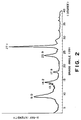
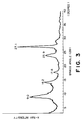
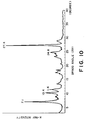
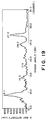
- oxytitanium phthalocyanine having a novel crystal form characterized by main peaks specified by Bragg angles (2 ⁇ ⁇ 0.2 degree) of 9.0 degrees, 14.2 degrees, 23.9 degrees and 27.1 degrees in X-ray diffraction pattern based on CuK ⁇ characteristic X-rays.
- a process for producing oxytitanium phthalocyanine having a crystal form characterized by main peaks specified by Bragg angles (2 ⁇ ⁇ 0.2 degree) of 9.0 degrees, 14.2 degrees, 23.9 degrees and 27.1 degrees in X-ray diffraction pattern based on CuK ⁇ characteristic X-rays wherein amorphous oxytitanium phthalocyanine is treated with methanol and then is subjected to milling with a solvent selected from the group consisting of ether, monoterpene hydrocarbons, and liquid paraffin.
- an electrophotosensitive member comprising an electroconductive support and a photosensitive layer formed thereon, wherein the photosensitive layer comprises oxytitanium phthalocyanine having a crystal form characterized by main peaks specified by Bragg angles (2 ⁇ ⁇ 0.2 degree) of 9.0 degrees, 14.2 degrees, 23.9 degrees and 27.1 degrees in X-ray diffraction pattern based on CuK ⁇ characteristic X-rays.
- the peak of 27.1 degrees is the first strongest peak and the peak of 9.0 degrees is the second strongest peak.
- the above four peaks are followed by the peaks of 17.9 degrees and 13.3 degrees. Further, there are no clear peaks observed in the range of 10.5 - 13.0 degrees, 14.8 - 17.4 degrees or 18.2 - 23.2 degrees.
- the shapes of the peaks in the X-ray diffraction pattern of the invention can be slightly changed depending on the production or measuring conditions, so the tip of each peak can split.
- the peak of 8.9 degrees appears to split into two peaks of 8.9 degrees and about 9.4 degrees
- the peak of 14.2 degrees also appears to split into two peaks of 14.2 degrees and about 14.1 degrees.
- oxytitanium phthalocyanine is represented by the following formula: wherein X1, X2, X3 and X4 respectively denote Cl or Br; and n, m, l and k are respectively an integer of 0 - 4.
- Titanium tetrachloride is reacted with o-phthalodinitrile in ⁇ -chloronaphthalene to provide dichlorotitanium phthalocyanine.
- the resultant dichlorotitanium phthalocyanine is washed with a solvent such as ⁇ -chloronaphthalene, trichlorobenzene, dichlorobenzene, N-methylpyrrolidone or N,N-dimethylformamide and is further washed with a solvent such as methanol or ethanol, followed by hydrolysis with hot water to obtain an oxytitanium phthalocyanine crystal.
- the resultant crystal comprises a mixture of various crystal forms in most cases.
- the resultant crystal is treated by acid pasting (i.e., a method of dissolving the mixture in acid (e.g., sulfuric acid) and pouring the resultant solution into water to reprecipitate a solid in the form of a paste), whereby the resultant crystal is once converted into amorphous oxytitanium phthalocyanine.
- acid pasting i.e., a method of dissolving the mixture in acid (e.g., sulfuric acid) and pouring the resultant solution into water to reprecipitate a solid in the form of a paste
- the resultant amorphous oxytitanium phthalocyanine is subjected to methanol treatment for 30 minutes or more, preferably 1 hour or more, at room temperature or under heating or boiling, followed by drying under reduced pressure.
- the treated oxytitanium phthalocyanine is subjected to milling for 5 hours or more, preferably 10 hours or more, with a solvent, as a dispersion medium, selected from: ethers, such as n-propyl ether, n-butyl ether, iso-butyl ether, sec-butyl ether, n-amyl ether, n-butyl methyl ether, n-butyl ethyl ether or ethylene glycol n-butyl ether; monoterpene hydrocarbons, such as terpinolene or pinene; and liquid paraffins, to provide oxytitanium phthalocyanine having a specific crystal form of the present invention.
- a solvent as a dispersion medium
- the methanol treatment may for example be performed by treating the amorphous oxytitanium phthalocyanine in the form of a dispersion in methanol under stirring, and the milling may be performed by using a milling device such as a sand mill or a ball mill with milling media such as glass beads, steel beads or alumina balls.
- a milling device such as a sand mill or a ball mill with milling media such as glass beads, steel beads or alumina balls.
- the resultant oxytitanium phthalocyanine of the invention functions as an excellent photoconductor and may be adapted for an electronic material such as an electrophotosensitive member, a solar cell, a sensor or a switching device.
- Figure 4 shows an embodiment, wherein a photosensitive layer 1 is composed of a single layer and comprises a charge-generating material 2 and a charge-transporting material (not shown) together.
- the photosensitive layer 1 may be disposed on an electroconductive support 3.
- Figure 5 shows an embodiment of laminated structure wherein a photosensitive layer 1 comprises a charge generation layer 4 comprising a charge-generating material 2 and a charge transport layer 5 comprising a charge-transporting material (not shown) disposed on the charge generation layer 4; and the charge transport layer 5 may be disposed on an electroconductive support 3.
- the charge generation layer 4 and the charge transport layer 5 can be disposed in reverse.
- the electroconductive support 3 may be a material having an electroconductivity including: a metal such as aluminum or stainless steel; and metal, plastic or paper having an electroconductive layer.
- the primer layer may comprise a substance, such as polyvinyl alcohol, polyethylene oxide, ethyl cellulose, methyl cellulose, casein, polyamide, glue or gelatin.
- the above substance may be dissolved in an appropriate solvent and applied onto the electroconductive support 3 to prepare the primer layer.
- the thickness of the primer layer may be 0.2 - 3.0 ⁇ m.
- the photosensitive layer which is composed of a single layer as shown in Figure 4 may be formed by mixing the charge-generating material comprising the oxytitanium phthalocyanine crystal of the invention and the charge-transporting material with an appropriate solution containing a binder resin, applying the resultant coating liquid and then drying the coating.
- the charge generation layer of the photosensitive layer having a laminated structure as shown in Figure 5 may be formed by dispersing the charge-generating material comprising the oxytitanium phthalocyanine crystal of the invention in an appropriate solution containing a binder resin, applying the resultant coating liquid and then drying the coating. It is possible not to use the binder resin in the above solution.
- the charge generation layer may also be formed by vapor deposition.
- the binder resin as described above may include: polyester, acrylic resins, polyvinylcarbazole, phenoxy resins, polycarbonate, polyvinyl butyral, polystyrene, vinyl acetate resins, polysulfone, polyarylate or vinylidene chloride-acrylonitrile copolymers.
- the charge transport layer may be formed by dissolving a charge-transporting material and a binder resin in an appropriate solvent, applying the resultant coating liquid and then drying the coating.
- the charge-transporting material used may include: triaryl amine compounds, hydrazone compounds, stilbene compounds, pyrazoline compounds, oxazole compounds, thiazole compounds or triaryl methane compounds.
- the binder resin the above-mentioned resins can be used.
- the method for applying the photosensitive layer(s) may be: dipping, spray coating, spinner coating, bead coating, blade coating or beam coating.
- the charge-generating material and the charge-transporting material may preferably be contained in the photosensitive layer in amounts of 2 - 20 wt. % and 30 - 80 wt. %, respectively, particularly 2 - 10 wt. % and 40 - 70 wt. %, respectively.
- the charge-generating material may preferably be contained in the charge generation layer in an amount of 20 - 80 wt. %, particularly 50 - 70 wt. %
- the charge-transporting material may preferably be contained in the charge transport layer in an amount of 30 - 70 wt. %, particularly 40 - 60 wt. %.
- the thickness of the photosensitive layer which is composed of a single layer may preferably be 5 - 40 ⁇ m, more preferably 10 - 30 ⁇ m.
- the thickness of the charge generation layer may preferably be 0.01 - 10 ⁇ m, more preferably 0.05 - 5 ⁇ m and the thickness of the charge transport layer may preferably be 5 - 40 ⁇ m, more preferably 10 - 30 ⁇ m.
- a thin protective layer can be further disposed on the photosensitive layer.
- the oxytitanium phthalocyanine crystal of the invention is used as the charge-generating material, it is possible to mix the oxytitanium phthalocyanine crystal with another charge-generating material or the charge-transporting material as desired.
- the electrophotosensitive member according to the present invention can be applied to not only a laser beam printer, a light-emitting diode (LED) printer and a cathode-ray tube (CRT) printer but also an ordinary electrophotographic copying machine and other applicable fields of electrophotography.
- a laser beam printer a light-emitting diode (LED) printer and a cathode-ray tube (CRT) printer
- an ordinary electrophotographic copying machine and other applicable fields of electrophotography can be applied to not only a laser beam printer, a light-emitting diode (LED) printer and a cathode-ray tube (CRT) printer but also an ordinary electrophotographic copying machine and other applicable fields of electrophotography.
- LED light-emitting diode
- CRT cathode-ray tube
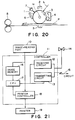
- FIG 20 shows a schematic structural view of an ordinary transfer-type electrophotographic apparatus using an electrophotosensitive member of the invention.
- a photosensitive drum (i.e., photosensitive member) 1 as an image-carrying member is rotated about an axis 1a at a prescribed peripheral speed in the direction of the arrow shown inside of the photosensitive drum 1.
- the surface of the photosensitive drum is uniformly charged by means of a charger 2 to have a prescribed positive or negative potential.
- the photosensitive drum 1 is exposed to light-image L (as by slit exposure or laser beam-scanning exposure) by using an image exposure means (not shown), whereby an electrostatic latent image corresponding to an exposure image is successively formed on the surface of the photosensitive drum 1.
- the electrostatic latent image is developed by a developing means 4 to form a toner image.
- the toner image is successively transferred to a transfer material P which is supplied from a supply part (not shown) to a position between the photosensitive drum 1 and a transfer charger 5 in synchronism with the rotating speed of the photosensitive drum 1, by means of the transfer charger 5.
- the transfer material P with the toner image thereon is separated from the photosensitive drum 1 to be conveyed to a fixing device 8, followed by image fixing to print out the transfer material P as a copy outside the electrophotographic apparatus.
- Residual toner particles on the surface of the photosensitive drum 1 after the transfer are removed by means of a cleaner 6 to provide a cleaned surface, and residual charge on the surface of the photosensitive drum 1 is erased by a pre-exposure means 7 to prepare for the next cycle.
- a corona charger is widely used in general.
- the transfer charger 5 such a corona charger is also widely used in general.
- the electrophotographic apparatus in the electrophotographic apparatus, it is possible to provide a device unit which includes plural means inclusive of or selected from the photosensitive member (photosensitive drum), the charger, the developing means, the cleaner, etc. so as to be attached or removed as desired.
- the device unit may, for example, be composed of the photosensitive member and at-least one device of the charger, the developing means and the cleaner to prepare a single unit capable of being attached to or removed from the body of the electrophotographic apparatus by using a guiding means such as a rail in the body.
- the device unit can be accompanied with the charger and/or the developing means to prepare a single unit.
- exposure light-image L may be given by reading data on reflection light or transmitted light from an original or on the original, converting the data into a signal and then effecting a laser beam scanning, a drive of LED array or a drive of a liquid crystal shutter array.
- FIG. 21 shows a block diagram of an embodiment for explaining this case.
- a controller 11 controls an image-reading part 10 and a printer 19.
- the whole controller 11 is controlled by a CPU (central processing unit) 17.
- Read data from the image-reading part is transmitted to a partner station through a transmitting circuit 13, and on the other hand, the received data from the partner station is sent to the printer 19 through a receiving circuit 12.
- An image memory memorizes prescribed image data.
- a printer controller 18 controls the printer 19, and a reference numeral 14 denotes a telephone.
- the image received through a circuit 15 (the image data sent through the circuit from a connected remote terminal) is demodulated by means of the receiving circuit 12 and successively stored in an image memory 16 after a restoring-signal processing of the image data.
- image recording of the page is effected.
- the CPU 17 reads out the image data for one page from the image memory 16 and sends the image data for one page subjected to the restoring-signal processing to the printer controller 18.
- the printer controller 18 receives the image data for one page from the CPU 17 and controls the printer 19 in order to effect image-data recording. Further, the CPU 17 is caused to receive image for a subsequent page during the recording by the printer 19. As described above, the receiving and recording of the image are performed.
- the resultant paste was recovered by filtration and stirred in 100 ml of deionized water for 1 hour at 80 °C, followed by filtration to obtain 4.3 g of a blue oxytitanium phthalocyanine crystal.
- the results of elementary analysis are shown below.
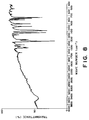
- the resultant oxytitanium phthalocyanine crystal was dissolved in 150 g of concentrated sulfuric acid and then added dropwise to 1500 ml of deionized water at 20 °C under stirring to reprecipitate a crystal, followed by filtration and sufficient washing with water to obtain amorphous oxytitanium phthalocyanine.
- An X-ray diffraction pattern of the amorphous oxytitanium phthalocyanine is shown in Figure 6.
- the resultant amorphous oxytitanium phthalocyanine in an amount of 4.0 g was subjected to stirring for suspension in 100 ml of methanol for 8 hours at room temperature (22 °C), followed by filtration and drying under reduced pressure to obtain low-crystallized oxytitanium phthalocyanine.
- An X-ray diffraction pattern of the low-crystallized oxytitanium phthalocyanine is shown in Figure 7.
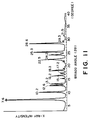
- a so-called ⁇ -type oxytitanium phthalocyanine crystal was synthesized in the same manner as disclosed in Japanese Laid-Open Patent Application (KOKAI) No. 239248/1986 (U.S. Patent 4,728,592).
- the X-ray diffraction pattern is shown in Figure 11.
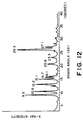
- a so-called A-type oxytitanium phthalocyanine crystal was synthesized in the same manner as disclosed in Japanese Laid-Open Patent Application (KOKAI) No. 67094/1987 (U.S. Patent 4,664,997).
- the X-ray diffraction pattern is shown in Figure 12.
- the conditions of the X-ray diffraction analysis using CuK ⁇ characteristic X-rays described above were as follows. Measuring machine: X-ray diffraction apparatus manufactured by Rigaku Denki K.K. RAD-A system X-ray tube (Target): Cu Tube voltage: 50 KV Tube current: 40 mA Scanning method: 2 ⁇ / ⁇ scan Scanning speed: 2 deg./min. Sampling width: 0.020 deg. Starting angle (2 ⁇ ): 3 deg. Stopping angle (2 ⁇ ): 40 deg. Divergence slit: 0.5 deg. Scattering slit: 0.5 deg. Receiving slit: 0.3 mm Curved monochromator: used.
- part(s) denotes "weight part(s)”.
- a solution of 5 parts of a polyamide (6-66-610-12 quaternary copolymer nylon) in a mixture solvent of 70 parts of methanol and 25 parts of butanol was applied onto the electroconductive layer by dipping, followed by drying to provide a 1 ⁇ m thick primer layer.
- An electrophotosensitive member was prepared in the same manner as in Example 1 except that the ⁇ -type oxytitanium phthalocyanine crystal prepared in Comparative Synthesis Example 1 was used.
- An electrophotosensitive member was prepared in the same manner as in Example 1 except that the A-type oxytitanium phthalocyanine crystal prepared in Comparative Synthesis Example 2 was used.
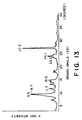
- An electrophotosensitive member was prepared in the same manner as in Example 1 except that the oxytitanium phthalocyanine crystal (disclosed in Japanese Laid-Open Patent Application (KOKAI) No. 17066/1989) prepared in Comparative Synthesis Example 3 was used.
- the oxytitanium phthalocyanine crystal (disclosed in Japanese Laid-Open Patent Application (KOKAI) No. 17066/1989) prepared in Comparative Synthesis Example 3 was used.
- Example 1 The above-prepared four electrophotosensitive members prepared in Example 1 and Comparative Examples 1 - 3 were attached to laser beam printers (LBP-SX, manufactured by Canon K.K.), respectively. Each electrophotosensitive member was charged so as to provide -700 V of dark part potential and then exposed to laser light (emission wavelength: 802 nm) to provide -150 V of exposed or light part potential. The exposure quantity ( ⁇ J/cm2) required for decreasing the potential from -700 V to -150 V was measured to evaluate the photosensitivity. The results are shown in Table 1.
- the oxytitanium phthalocyanine crystals prepared in Synthesis Examples 2 and 3 were used for providing electrophotosensitive members in the same manner as in Example 1.
- the exposure quantity was measured in the same manner as described above by using each of the electrophotosensitive members, so that a high electrophotosensitivity similar to that in Example 1 was obtained in each case.
- Example 1 and Comparative Examples 1 - 3 were subjected to a copying test (durability test) of 4000 sheets on condition that the initial dark part potential and light part potential were set to -700 V and -150 V, respectively.
- the dark part potential and light part potential were measured in some stages to evaluate electrophotosensitive characteristics, and states of images in some stages were observed. Changes in the dark part potential and contrast potential (i.e., the difference between the dark part potential and light part potential) are shown in Figures 14 and 15, respectively.
- the electrophotosensitive member of Example 1 provided a good image similar to the initial image.
- the electrophotosensitive members of Comparative Examples 1 - 3 provided images each having fog on the white background (the hatched region A in Figure 14); particularly, the electrophotosensitive member of Comparative Example 3 provided an image having remarkable fog on the white background after the copying of 4000 sheets (the hatched region B in Figure 14).
- the density was controlled by means of a density control lever when the electrophotosensitive members of Comparative Examples 1 - 3 were used, whereby the density of a black portion became insufficient as shown in Figure 15 (the hatched region C).
- each electrophotosensitive member was irradiated with white light (1500 lux) for 30 minutes.
- Each electrophotosensitive member was attached to the above-mentioned laser beam printer and charged with respect to both the irradiated and non-irradiated parts so as to provide -700 V of surface potential to the non-irradiated part. Then, the surface potential of the irradiated part was measured to evaluate the charging characteristic. The results are shown in Table 2.
- the oxytitanium phthalocyanine crystals prepared in Synthesis Examples 2 and 3 were used for providing electrophotosensitive members in the same manner as in Example 1.
- the electrophotosensitive members were subjected to the above measurement to provide a good photomemory characteristic (a charging characteristic after light irradiation) similar to that in Example 1.
- spectral sensitivity of the electrophotosensitive member of Example 1 is shown relative to the maximum value of spectral sensitivity which is represented by 1.0.
- an electrophotosensitive member using an oxytitanium phthalocyanine crystal of the invention showed a stable and high photosensitivity in the long-wavelength region of 770 - 810 nm.
- the coating liquid for providing the charge generation layer in Example 1 which comprised the oxytitanium phthalocyanine crystal of the invention was left standing for one month.
- the oxytitanium phthalocyanine crystal was recovered from the resultant coating liquid and was subjected to X-ray diffraction analysis, whereby the X-ray diffraction pattern caused no change and it was found that the original crystal form was retained. Accordingly, the oxytitanium phthalocyanine crystal of the invention showed an excellent liquid stability.
- a part of the electrophotosensitive member was slowly dipped in a beaker filled with methyl ethyl ketone for 1 minute and then pulled up slowly.
- the surface of the resultant electrophotosensitive member was washed by flowing methyl ethyl ketone thereto from a washing bottle, followed by drying for 1 hour to remove the charge transport layer and to provide the electrophotosensitive layer wherein a part of the charge generation layer was exposed.
- the part of the charge generation layer was cut off together with an aluminum cylinder and was subjected to X-ray diffraction analysis. Conditions of the X-ray diffraction analysis were as shown below. Measuring machine: Full-automatic X-ray diffraction apparatus: MXP18 manufactured by Mac Science Co.
- X-ray tube Cu Tube voltage: 40 KV Tube current: 300 mA
- X-ray incident angle ⁇ : 1 deg.
- Scanning speed 4 deg./min.
- Scanning method 2 ⁇ scan Sampling width: 0.020 deg. Starting angle (2 ⁇ ): 5 deg. Stopping angle (2 ⁇ ): 35 deg.
- Divergence slit 0.28 mm Scattering slit: 3.2 mm Receiving slit: 3.2 mm Plate monochromator: used.
- An X-ray diffraction pattern of the above-prepared charge generation layer is shown in Figure 17.
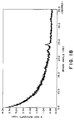
- An X-ray diffraction pattern of the aluminum cylinder alone is shown in Figure 18.
- An electrophotosensitive member was prepared in the same manner as in Example 1 except that a compound represented by the following formula: was used as a charge-transporting material.
- An electrophotosensitive member was prepared in the same manner as in Example 1 except that a compound represented by the following formula: was used as a charge-transporting material.
- a primer layer similar to the one in Example 1 was formed by means of a bar coater, and a 20 ⁇ m-thick charge transport layer similar to the one in Example 1 was further formed thereon.
- An electrophotosensitive member was prepared in the same manner as in Example 5 except that the ⁇ -type oxytitanium phthalocyanine crystal prepared in Comparative Synthesis Example 1 was used.
- An electrophotosensitive member was prepared in the same manner as in Example 5 except that the A-type oxytitanium phthalocyanine crystal prepared in Comparative Synthesis Example 2 was used.
- An electrophotosensitive member was prepared in the same manner as in Example 5 except that the oxytitanium phthalocyanine crystal (disclosed in Japanese Laid-Open Patent Application (KOKAI) No. 17066/1989) prepared in Comparative Synthesis Example 3 was used.
- the oxytitanium phthalocyanine crystal (disclosed in Japanese Laid-Open Patent Application (KOKAI) No. 17066/1989) prepared in Comparative Synthesis Example 3 was used.
- Example 5 and Comparative Examples 4 - 6 were subjected to evaluation of photosensitivity by means of an electrostatic testing apparatus (EPA-8100, manufactured by Kawaguchi Denki K.K.). Each electrophotosensitive member was charged so as to provide 700 V (positive) of surface potential by corona charging and was exposed to monochromatic light (emission wavelength: 802 nm) isolated by means of a monochromator to provide 200 V (positive) of surface potential. The exposure quantity ( ⁇ J/cm2) required for decreasing the potential from 700 V to 200 V was measured to provide the results shown in Table 4 below.
- EPA-8100 manufactured by Kawaguchi Denki K.K.
Landscapes
- Chemical & Material Sciences (AREA)
- Chemical Kinetics & Catalysis (AREA)
- Organic Chemistry (AREA)
- Physics & Mathematics (AREA)
- General Physics & Mathematics (AREA)
- Photoreceptors In Electrophotography (AREA)
- Fax Reproducing Arrangements (AREA)
Claims (27)
- Oxytitanium-Phthalocyanin in Kristallform, gekennzeichnet durch Hauptpeaks, dargestellt durch Bragg-Winkel (2ϑ ± 0.2 Grad) von 9.0 Grad, 14.2 Grad, 21.9 Grad und 27.1 Grad im Röntgenstrahlenbeugungsbild, bezogen auf CuKα-Röntgenstrahlen-Charakteristik.
- Verfahren zur Herstellung von Oxytitanium-Phthalocyanin nach Anspruch 1, umfassend die Behandlung von amorphem Oxytitanium-Phthalocynanin mit Methanol und Mahlen des behandelten amorphen Oxytitanium-Phthalocyanins mit einem Lösungsmittel, auswählt aus der Gruppe, bestehend aus Äther, Monoterpen-Kohlenwasserstoffen und flüssigem Paraffin.
- Elektrophotoempfindliche Einrichtung, umfassend einen elektrisch leitenden Träger und eine darauf gebildete lichtempfindliche Schicht, dadurch gekennzeichnet, daß die lichtempfindliche Schicht Oxytitanium-Phthalocyanin gemäß Anspruch 1 enthält.
- Elektrophotoempfindliche Einrichtung, nach Anspruch 3, wobei die lichtempfindliche Schicht aus einer einzelnen Schicht besteht.
- Elektrophotoempfindliche Einrichtung, nach Anspruch 3, wobei die lichtempfindliche Schicht eine ladungserzeugende Schicht enthaltend ein ladungserzeugendes Material, und eine ladungstransportierende Schicht, enthaltend ein ladungstransportierendes Material, umfaßt.
- Elektrophotoempfindliche Einrichtung, nach Anspruch 3, wobei ferner eine Zwischenschicht zwischen dem elektrisch leitenden Träger und der lichtempfindlichen Schicht gebildet ist.
- Elektrophotoempfindliche Einrichtung, nach Anpruch 3, wobei ferner eine Schutzschicht auf der lichtempfindlichen Schicht gebildet ist.
- Vorrichtungseinheit, umfassend: eine elektrophotoempfindliche Einrichtung, eine Ladungseinrichtung zur Ladung der elektrophotoempfindlichen Einrichtung vor der Bildbelichtung; und Reinigungseinrichtungen zur Entfernung rückständigen Toners von der elektrophotoempfindlichen Einrichtung nach Entwicklung des belichteten Bildes; wobei die elektrophotoempfindliche Einrichtung einen elektrisch leitenden Träger und eine darauf gebildete lichtempfindliche Schicht umfaßt und wobei die lichtempfindliche Schicht Oxytitanium-Phthalocyanin gemäß Anspruch 1 enthält; wobei ferner die elektrophotoempfindliche Einrichtung, die Ladungseinrichtungen und die Reinigungseinrichtungen zu der Vorrichtungseinheit zusammengefaßt sind, welche montierbar an und entfernbar von dem Körper eines Gerätes ist.
- Elektrophotographisches Gerät, umfassend eine elektrophotoempfindliche Einrichtung, eine Einrichtung zur Bildung eines elektrostatischen latenten Bildes, eine Einrichtung zur Entwicklung des elektrostatischen latenten Bildes und eine Einrichtung zur Übertragung des entwickelten Bildes auf ein Übertragungsmaterial, dadurch gekennzeichnet, daß die elektrophotoempfindliche Einrichtung einen elektrisch leitenden Träger und eine darauf gebildete lichtempfindliche Schicht umfaßt und wobei die lichtempfindliche Schicht Oxytitanium-Phthalocyanin gemäß Anspruch 1 enthält.
- Faksimilegerät, umfassend: eine elektrophotographische Vorrichtung, umfassend eine elektrophotoempfindliche Einrichtung, wobei die elektrophotoempfindliche Einrichtung einen elektrisch leitenden Träger und darauf eine lichtempfindliche Schicht enthält, und wobei die lichtempfindliche Schicht Oxytitanium-Phthalocyanin gemäß Anspruch 1 enthält; und weiter umfassend eine Aufnahmeeinrichtung zur Aufnahme von Bilddaten aus einem davon getrennten Endgerät.
- Vorrichtungseinheit nach Anspruch 8, worin die lichtempfindliche Schicht eine einzelne Schicht ist.
- Vorrichtungseinheit nach Anspruch 8, worin die lichtempfindliche Schicht eine ladungserzeugende Schicht, enthaltend das Oxytitanium-Phthalocyanin, und eine Ladungstransportschicht, enthaltend ein ladungstransportierendes Material, umfaßt.
- Vorrichtungseinheit nach Anspruch 8, wobei eine Zwischenschicht zwischen dem elektrisch leitenden Träger und der lichtempfindlichen Schicht angeordnet ist.
- Vorrichtungseinheit nach Anspruch 8, wobei eine Schutzschicht auf der lichtempfindlichen Schicht angeordnet ist.
- Oxytitanium-Phthalocyanin nach Anspruch 1, wobei der Peak von 27.1 Grad der stärkste Peak und der Peak 9.0 Grad der zweitstärkste Peak ist.
- Oxytitanium-Phthalocyanin nach Anpruch 1, wobei die Kristallform im wesentlichen frei von Peaks im Bereich von 10.5 bis 13.0 Grad, 14.8 bis 17.4 Grad und 18.2 bis 23.2 Grad ist.
- Verfahren nach Anspruch 2, wobei der Äther ausgewählt ist aus der Gruppe, bestehend aus n-Propyläther, n-Butyläther, iso-Butyläther, sec-Butyläther, n-Amyläther, n-Butylmethyläther, n-Butylethyläther and Ethylenglycol n-Butyläther.
- Verfahren nach Anspruch 2, wobei der Peak von 27.1 Grad der stärkste Peak und der Peak von 9.0 Grad der zweitstärkste Peak ist.
- Verfahren nach Anspruch 2, wobei die Kristfallform im wesentlichen frei von Peaks in den Bereichen von 10.5 bis 13.0 Grad, 14.8 bis 17.4 Grad und 18.2 bis 23.2 Grad ist.
- Elektrophotoempfindliche Einrichtung nach Anspruch 3, wobei der Peak von 27.1 Grad der stärkste Peak und der Peak von 9.0 der zweitstärkste Peak ist.
- Elektrophotoempfindliche Einrichtung nach Anspruch 3, wobei die Kristallform im wesentlichen frei von Peaks in den Bereichen von 10.5 bis 13.0 Grad, 14.8 bis 17.4 Grad und 18.2 bis 23.2 Grad ist.
- Vorrichtungseinheit nach Anspruch 8, wobei der Peak von 27.1 Grad der stärkste Peak und der Peak von 9.0 Grad der zweitstärkste Peak ist.
- Vorrichtungseinheit nach Anspruch 8, wobei die Kristallform im wesentlichen frei von Peaks in den Bereichen von 10.5 bis 13.0 Grad, 14.8 bis 17.4 Grad und 18.2 bis 23.2 Grad ist.
- Elektrophotographisches Gerät nach Anspruch 9, wobei der Peak von 27.1 Grad der stärkste Peak und der Peak von 9.0 Grad der zweitstärkste Peak ist.
- Elektrophotographisches Gerät nach Anspruch 9, wobei die Kristallform im wesentlichen frei von Peaks in den Bereichen von 10.5 bis 13.0 Grad, 14.8 bis 17.4 Grad und 18.2 bis 23.2 Grad ist.
- Faksimilegerät nach Anspruch 10, wobei der Peak von 27.1 Grad der stärkste Peak und der Peak von 9.0 Grad der zweitstärkste Peak ist.
- Faksimilegerät nach Anspruch 10, wobei die Kristallform im wesentlichen frei von Peaks in den Bereichen von 10.5 bis 13.0 Grad, 14.8 bis 17.4 Grad und 18.2 bis 23.2 Grad ist.
Applications Claiming Priority (2)
| Application Number | Priority Date | Filing Date | Title |
|---|---|---|---|
| JP189200/89 | 1989-07-21 | ||
| JP18920089 | 1989-07-21 |
Publications (2)
| Publication Number | Publication Date |
|---|---|
| EP0409737A1 EP0409737A1 (de) | 1991-01-23 |
| EP0409737B1 true EP0409737B1 (de) | 1994-03-02 |
Family
ID=16237196
Family Applications (1)
| Application Number | Title | Priority Date | Filing Date |
|---|---|---|---|
| EP90402094A Expired - Lifetime EP0409737B1 (de) | 1989-07-21 | 1990-07-20 | Oxytitanium-Phthalocyanin, Verfahren zu seiner Herstellung und Verwendung dieses elektrophotoleitfähigen Elementes |
Country Status (7)
| Country | Link |
|---|---|
| US (1) | US5132197A (de) |
| EP (1) | EP0409737B1 (de) |
| JP (1) | JP2502404B2 (de) |
| KR (1) | KR940007962B1 (de) |
| CN (2) | CN1040009C (de) |
| DE (1) | DE69006961T2 (de) |
| HK (1) | HK31996A (de) |
Families Citing this family (63)
| Publication number | Priority date | Publication date | Assignee | Title |
|---|---|---|---|---|
| US5272264A (en) * | 1989-05-22 | 1993-12-21 | Mitsubishi Kasei Corporation | Process for preparation of crystalline oxytitanium phthalocyanine |
| EP0428102B1 (de) * | 1989-11-13 | 1996-09-25 | Canon Kabushiki Kaisha | Lichtempfindliches Element, elektrophotographischer Apparat und ihn benutzendes Bildherstellungsverfahren |
| US5530115A (en) * | 1989-12-08 | 1996-06-25 | Canon Kabushiki Kaisha | Process for producing crystalline I-type oxytitanium phthalocyanine |
| JP3072778B2 (ja) | 1990-02-26 | 2000-08-07 | キヤノン株式会社 | オキシチタニウムフタロシアニン結晶の製造方法 |
| DE69116085T2 (de) * | 1990-10-23 | 1996-06-13 | Canon Kk | Lichtempfindliches elektrophotographisches Element |
| JP3119380B2 (ja) | 1990-10-23 | 2000-12-18 | キヤノン株式会社 | 電子写真感光体、それを用いた電子写真装置およびファクシミリ |
| DE69124061T2 (de) * | 1990-10-24 | 1997-05-15 | Canon Kk | Verfahren zur Herstellung von kristallinem Oxytitanphthalocyanin |
| JP2801426B2 (ja) * | 1991-04-24 | 1998-09-21 | キヤノン株式会社 | オキシチタニウムフタロシアニン、その製造方法およびそれを用いた電子写真感光体 |
| JP3039701B2 (ja) * | 1991-05-15 | 2000-05-08 | キヤノン株式会社 | 電子写真感光体の製造方法 |
| JPH04372663A (ja) * | 1991-06-21 | 1992-12-25 | Fuji Xerox Co Ltd | フタロシアニン混合結晶及びそれを用いた電子写真感光体 |
| DE69227729T2 (de) * | 1991-06-21 | 1999-06-02 | Mitsui Chemicals, Inc., Tokio/Tokyo | Amorphe Phthalocyaninverbindung oder eine Mischung amorpher Phthalocyaninverbindungen sowie ein Verfahren zu ihrer Herstellung |
| US5246807A (en) * | 1991-08-05 | 1993-09-21 | Canon Kabushiki Kaisha | Electrophotographic photosensitive member, and electrophotographic apparatus, device unit, and facsimile machine employing the same |
| DE69225766T2 (de) * | 1991-10-25 | 1998-12-03 | Canon K.K., Tokio/Tokyo | Elektrophotographisches, lichtempfindliches Element, elektrophotographisches Gerät, Vorrichtungseinheit und Faksimiliegerät unter Verwendung desselben |
| DE69224723T2 (de) * | 1991-12-20 | 1998-10-22 | Mitsubishi Chem Corp | Elektrophotographischer Photorezeptor |
| US5350655A (en) * | 1992-03-13 | 1994-09-27 | Konica Corporation | Electrophotographic photoreceptor with titanyl phthaloycyanine |
| EP0567395A3 (de) * | 1992-04-23 | 1994-10-19 | Canon Kk | Elektrophotographisches, lichtempfindliches Element und elektrophotographischer Apparat und Anlageeinheit die es verwenden. |
| US5330867A (en) * | 1992-08-24 | 1994-07-19 | Xerox Corporation | Photogenerating titanyl phthalocyanine and processes thereof |
| ES2248873T3 (es) * | 1992-09-21 | 2006-03-16 | Canon Kabushiki Kaisha | Elemento fotosensible electrofotografico, aparato electrofotografico y aparato que tiene el elemento fotosensible electrofotografico. |
| US5384625A (en) * | 1992-12-28 | 1995-01-24 | Canon Kabushiki Kaisha | Image forming method |
| DE69419487T2 (de) * | 1993-11-29 | 2000-03-30 | Canon K.K., Tokio/Tokyo | Elektrophotographisches lichtempfindliches Element, ein das Element umfassendes elektrophotographisches Gerät, und eine Baueinheit eines elektrophotographischen Gerätes |
| TW382078B (en) * | 1994-06-10 | 2000-02-11 | Canon Kk | Electrophotographic photosensitive member, electrophotographic apparatus including same and electrophotographic apparatus unit |
| US5523189A (en) * | 1994-10-27 | 1996-06-04 | Eastman Kodak Company | Electrophotographic recording elements and preparation method |
| US5629418A (en) * | 1994-10-27 | 1997-05-13 | Eastman Kodak Company | Preparation of titanyl fluorophthalocyanines |
| US5567559A (en) * | 1995-04-11 | 1996-10-22 | Sinonar Corp. | Electrophotographic photoreceptors containing titanyl phthalocyanine processed through ammoniated complex, and method for production thereof |
| US5614342A (en) * | 1995-05-02 | 1997-03-25 | Eastman Kodak Company | Methods for preparing cocrystals of titanyl fluorophthalocyanines and unsubstituted titanyl phthalocyanine, electrophotographic elements, and titanyl phthalocyanine compositions |
| US5766810A (en) * | 1995-05-02 | 1998-06-16 | Eastman Kodak Company | Methods for preparing cocrystals of titanyl fluorophthalocyannes and unsubstituted titanyl phthalocyanine, electrophotographic elements, and titanyl phthalocyanine compositions |
| US5773181A (en) * | 1995-05-23 | 1998-06-30 | Eastman Kodak Company | Non-uniformly substituted phthalocyanine compositions preparation methods, and electrophotographic elements |
| JP2907121B2 (ja) * | 1996-05-29 | 1999-06-21 | 日本電気株式会社 | オキシチタニウムフタロシアニン結晶、その製造方法およびそれを用いた電子写真感光体 |
| DE69717021T2 (de) * | 1996-08-08 | 2003-07-31 | Canon K.K., Tokio/Tokyo | Elektrophotographisches photoempfindliches Element, Prozesskassette und elektrophotographisches Gerät unter Verwendung desselben |
| JP3569422B2 (ja) * | 1996-12-26 | 2004-09-22 | シャープ株式会社 | 結晶型オキソチタニルフタロシアニン及びそれを用いた電子写真感光体並びに画像形成方法 |
| US6245472B1 (en) | 1997-09-12 | 2001-06-12 | Canon Kabushiki Kaisha | Phthalocyanine compounds, process for production thereof and electrophotographic photosensitive member using the compounds |
| WO1999045074A1 (en) * | 1998-03-05 | 1999-09-10 | Avecia Limited | Titanyl phthalocyanine and its use |
| US6225015B1 (en) | 1998-06-04 | 2001-05-01 | Mitsubishi Paper Mills Ltd. | Oxytitanium phthalocyanine process for the production thereof and electrophotographic photoreceptor to which the oxytitanium phthalocyanine is applied |
| US6270936B1 (en) | 1998-08-25 | 2001-08-07 | Canon Kabushiki Kaisha | Electrophotographic photosensitive member, process cartridge, and electrophotographic apparatus |
| EP0997783B1 (de) | 1998-10-28 | 2005-12-14 | Sharp Kabushiki Kaisha | Elektrophotographischer Photorezeptor, der kristallines Oxotitanylphthalocyanin enthält |
| DE69925228T2 (de) | 1998-12-01 | 2006-02-23 | Canon K.K. | Elektrophotographisches lichtempfindliches Element, Prozesskartusche und elektrophotographischer Apparat |
| US6258498B1 (en) | 1998-12-25 | 2001-07-10 | Canon Kabushiki Kaisha | Electrophotographic photosensitive member, and process cartridge and electrophotographic photosensitive member |
| JP2000206710A (ja) | 1999-01-08 | 2000-07-28 | Sharp Corp | 電子写真感光体及び電子写真画像形成法 |
| US6440631B1 (en) * | 1999-01-08 | 2002-08-27 | Canon Kabushiki Kaisha | Process for producing electrophotographic photosensitive member |
| US6291120B1 (en) | 1999-05-14 | 2001-09-18 | Sharp Kabushiki Kaisha | Electrophotographic photoreceptor and coating composition for charge generating layer |
| JP4849385B2 (ja) | 2000-10-24 | 2012-01-11 | 保土谷化学工業株式会社 | フタロシアニン組成物及びその製造方法、並びにそれを用いた電子写真感光体 |
| US6703174B2 (en) | 2001-01-31 | 2004-03-09 | Canon Kabushiki Kaisha | Electrophotographic apparatus and process cartridge |
| DE60238461D1 (de) | 2001-03-30 | 2011-01-13 | Canon Kk | Herstellungsverfahren eines elektrolichtempfindlichen Elements |
| US7033716B2 (en) * | 2002-12-02 | 2006-04-25 | Eastman Kodak Company | Two-stage milling process for preparing cocrystals of titanyl fluorophthalocyanine and titanyl phthalocyanine, and electrophotographic element containing same |
| US7011919B2 (en) * | 2002-12-02 | 2006-03-14 | Eastman Kodak Company | Self-dispersing titanyl phthalocyanine pigment compositions and electrophotographic charge generation layers containing same |
| US6949139B2 (en) * | 2002-12-02 | 2005-09-27 | Eastman Kodak Company | Process for forming cocrystals containing chlorine-free titanyl phthalocyanines and low concentration of titanyl fluorophthalocyanine using organic milling aid |
| US7026084B2 (en) * | 2002-12-02 | 2006-04-11 | Eastman Kodak Company | Cocrystals containing high-chlorine titanyl phthalocyanine and low concentration of titanyl fluorophthalocyanine, and electrophotographic element containing same |
| US7033715B2 (en) * | 2002-12-02 | 2006-04-25 | Eastman Kodak Company | Uniform cocrystals of titanyl fluorophthalocyanine and titanyl phthalocyanine formed in trichloroethane, and charge generating layer containing same |
| WO2004095144A1 (ja) | 2003-04-24 | 2004-11-04 | Sharp Kabushiki Kaisha | 電子写真感光体、電子写真画像形成方法および電子写真装置 |
| JP4105588B2 (ja) * | 2003-05-16 | 2008-06-25 | シャープ株式会社 | 電子写真感光体およびそれを備える画像形成装置 |
| JP3718508B2 (ja) | 2003-06-03 | 2005-11-24 | シャープ株式会社 | 電子写真感光体およびそれを備える画像形成装置 |
| KR100528734B1 (ko) * | 2003-10-08 | 2006-01-10 | (주)프탈로스 | 옥시티타늄 프탈로시아닌 전하발생물질의 제조방법 및이로부터 제조된 새로운 결정형의 옥시티타늄프탈로시아닌 전하발생물질 |
| KR100528735B1 (ko) * | 2003-10-08 | 2005-12-27 | (주)프탈로스 | 옥시티타늄 프탈로시아닌 전하발생물질의 제조 방법 및이를 위한 장치 |
| EP1731575A4 (de) | 2004-03-04 | 2009-03-04 | Mitsubishi Chem Corp | Phthalocyaninzusammensetzung und jeweils davon gebrauch machendes bzw. machende bzw. machender photoleitfähiges material, elektrophotographischer photorezeptor, kartusche für elektrophotographischen photorezeptor sowie bebilderungsvorrichtung |
| US7211359B2 (en) * | 2004-04-30 | 2007-05-01 | Eastman Kodak Company | Coating solution containing cocrystals and or crystals of a charge-generation pigment or a mixture of charge-generation pigments |
| WO2006028418A1 (en) * | 2004-09-07 | 2006-03-16 | Agency For Science, Technology And Research | Differential geometry-based method and apparatus for measuring polarization mode dispersion vectors in optical fibers |
| US7947417B2 (en) * | 2004-11-18 | 2011-05-24 | Xerox Corporation | Processes for the preparation of high sensitivity titanium phthalocyanines photogenerating pigments |
| WO2007108488A1 (ja) * | 2006-03-20 | 2007-09-27 | Mitsubishi Chemical Corporation | フタロシアニン結晶、並びにそれを用いた電子写真感光体、電子写真感光体カートリッジ、及び画像形成装置 |
| US8323861B2 (en) | 2006-05-18 | 2012-12-04 | Mitsubishi Chemical Corporation | Electrophotographic photoreceptor, image-forming apparatus, and electrophotographic cartridge |
| US7947825B2 (en) * | 2007-02-13 | 2011-05-24 | Xerox Corporation | Process for making titanyl phthalocyanine |
| JP5265881B2 (ja) * | 2007-05-14 | 2013-08-14 | 京セラドキュメントソリューションズ株式会社 | 画像形成装置及び画像形成方法 |
| JP2010249871A (ja) * | 2009-04-10 | 2010-11-04 | Sharp Corp | 電子写真感光体およびそれを備えた画像形成装置 |
| JP6425411B2 (ja) | 2014-04-24 | 2018-11-21 | キヤノン株式会社 | 電子写真感光体、電子写真感光体の製造方法、プロセスカートリッジおよび電子写真装置、ならびに、ヒドロキシガリウムフタロシアニン結晶 |
Family Cites Families (16)
| Publication number | Priority date | Publication date | Assignee | Title |
|---|---|---|---|---|
| US4444861A (en) * | 1981-12-15 | 1984-04-24 | Ashai Kasei Kogyo Kabushiki Kaisha | Photo sensitive article for electrophotography containing charge transfer material |
| JPS59166959A (ja) * | 1983-03-14 | 1984-09-20 | Nippon Telegr & Teleph Corp <Ntt> | 積層型電子写真感光体 |
| JPS61171771A (ja) * | 1985-01-25 | 1986-08-02 | Mitsubishi Chem Ind Ltd | 電子写真用感光体の製造方法 |
| CA1253487A (en) * | 1984-11-01 | 1989-05-02 | Tetsuo Murayama | Crystalline oxytitanium phthalocyanine and photoreceptor for use in electrophotography |
| JPS61109056A (ja) * | 1984-11-01 | 1986-05-27 | Mitsubishi Chem Ind Ltd | 積層型電子写真感光体 |
| JPS63365A (ja) * | 1986-06-19 | 1988-01-05 | Mitsubishi Chem Ind Ltd | 結晶型の変換方法 |
| JPH0730267B2 (ja) * | 1986-06-19 | 1995-04-05 | 三菱化学株式会社 | 結晶型オキシチタニウムフタロシアニン及びその製造方法 |
| US4728592A (en) * | 1986-07-17 | 1988-03-01 | Dainippon Ink And Chemicals, Inc. | Electrophotoconductor with light-sensitive layer containing alpha-type titanyl phthalocyanine |
| JPS63116158A (ja) * | 1986-11-05 | 1988-05-20 | Toyo Ink Mfg Co Ltd | 光半導体材料およびこれを用いた電子写真感光体 |
| JPH061386B2 (ja) * | 1987-02-13 | 1994-01-05 | 東洋インキ製造株式会社 | 光半導体材料およびこれを用いた電子写真感光体 |
| DE3813459A1 (de) * | 1987-04-24 | 1988-11-10 | Minolta Camera Kk | Funktionsmaessig geteiltes photoempfindliches element |
| DE3823363C2 (de) * | 1987-07-10 | 2000-05-25 | Konishiroku Photo Ind | Elektrofotografisches Aufzeichnungsmaterial und Verfahren zu seiner Herstellung |
| US4898799A (en) * | 1987-07-10 | 1990-02-06 | Konica Corporation | Photoreceptor |
| JP2714838B2 (ja) * | 1989-01-09 | 1998-02-16 | コニカ株式会社 | 電子写真感光体 |
| JP2748497B2 (ja) * | 1989-02-17 | 1998-05-06 | 三菱化学株式会社 | オキシチタニウムフタロシアニン結晶の製造法 |
| JP2864622B2 (ja) * | 1989-02-23 | 1999-03-03 | 三菱化学株式会社 | オキシチタニウムフタロシアニン結晶を製造する方法 |
-
1990
- 1990-07-20 EP EP90402094A patent/EP0409737B1/de not_active Expired - Lifetime
- 1990-07-20 US US07/555,038 patent/US5132197A/en not_active Expired - Lifetime
- 1990-07-20 DE DE69006961T patent/DE69006961T2/de not_active Expired - Lifetime
- 1990-07-20 JP JP2192671A patent/JP2502404B2/ja not_active Expired - Lifetime
- 1990-07-21 CN CN90107249A patent/CN1040009C/zh not_active Expired - Fee Related
- 1990-07-21 KR KR1019900011118A patent/KR940007962B1/ko not_active Expired - Lifetime
-
1996
- 1996-02-22 HK HK31996A patent/HK31996A/en not_active IP Right Cessation
-
1997
- 1997-07-29 CN CN97117103A patent/CN1125380C/zh not_active Expired - Fee Related
Also Published As
| Publication number | Publication date |
|---|---|
| DE69006961T2 (de) | 1994-06-23 |
| CN1050206A (zh) | 1991-03-27 |
| JP2502404B2 (ja) | 1996-05-29 |
| KR910003455A (ko) | 1991-02-27 |
| KR940007962B1 (ko) | 1994-08-31 |
| CN1195791A (zh) | 1998-10-14 |
| CN1040009C (zh) | 1998-09-30 |
| EP0409737A1 (de) | 1991-01-23 |
| CN1125380C (zh) | 2003-10-22 |
| US5132197A (en) | 1992-07-21 |
| DE69006961D1 (de) | 1994-04-07 |
| JPH03128973A (ja) | 1991-05-31 |
| HK31996A (en) | 1996-03-01 |
Similar Documents
| Publication | Publication Date | Title |
|---|---|---|
| US5132197A (en) | Oxytitanium phthalocyanine, process for producing same and electrophotosensitive member using same | |
| US5194354A (en) | Low crystalline oxytitanium phthalocyanine, process for producing crystalline oxytitanium phthalocyanines using the same, oxytitanium phthalocyanine of a novel crystal form and electrophotographic photosensitive member using the same | |
| US5298353A (en) | Electrophotographic photosensitive member | |
| EP1721940B1 (de) | JGaPc-Verbindungen, Verfahren zu deren Herstellung und elektrophotografisches lichtempfindliches Element in dem diese Verbindungen verwendet werden | |
| EP0803546B1 (de) | Hydroxygalliumphthalocyaninverbindung, Verfahren zu ihrer Herstellung und elektrographisches lichtempfindliches Element unter Verwendung dieser Verbindung | |
| US5593805A (en) | Oxytitanium phthalocyanine, process for producing same and electrophotographic photosensitive member using same | |
| EP0482884B1 (de) | Lichtempfindliches elektrophotographisches Element | |
| US5932722A (en) | Hydroxygallium phthalocyanine compound, production process therefor and electrophotographic photosensitive member using the compound | |
| JP2879369B2 (ja) | 電子写真感光体、該電子写真感光体を備えた電子写真装置並びにファクシミリ | |
| JP2879370B2 (ja) | 電子写真感光体、該電子写真感光体を備えた電子写真装置並びにファクシミリ | |
| JP2841242B2 (ja) | 電子写真感光体、該電子写真感光体を備えた電子写真装置並びにファクシミリ | |
| JP3211913B2 (ja) | フタロシアニン化合物、その製造方法及び該フタロシアニン化合物を用いた電子写真感光体、該電子写真感光体を有する装置ユニット、並びに該電子写真感光体を備えた電子写真装置 | |
| JP2931070B2 (ja) | 新規な結晶形のオキシチタニウムフタロシアニンおよびそれを用いた電子写真感光体 | |
| JP2814017B2 (ja) | 電子写真感光体、該電子写真感光体を備えた電子写真装置並びにファクシミリ | |
| JPH04182655A (ja) | 電子写真感光体、該電子写真感光体を備えた電子写真装置並びにファクシミリ | |
| JPH04254862A (ja) | 電子写真感光体、該電子写真感光体を備えた電子写真装置並びにファクシミリ | |
| JP2002296816A (ja) | 電子写真感光体、プロセスカートリッジ及び電子写真装置 | |
| JP2872795B2 (ja) | 新規な結晶形のオキシチタニウムフタロシアニンおよびそれを用いた電子写真感光体 | |
| JPH04253065A (ja) | 電子写真感光体、該電子写真感光体を備えた電子写真装置並びにファクシミリ | |
| JPH04182654A (ja) | 電子写真感光体、該電子写真感光体を備えた電子写真装置並びにファクシミリ | |
| JPH04257866A (ja) | 電子写真感光体、該電子写真感光体を備えた電子写真装置並びにファクシミリ | |
| JPH04257867A (ja) | 電子写真感光体、該電子写真感光体を備えた電子写真装置並びにファクシミリ | |
| JPH0534961A (ja) | 電子写真感光体 | |
| JPH11184118A (ja) | 電子写真感光体、該電子写真感光体を有するプロセスカ−トリッジ及び電子写真装置 | |
| JPH11202512A (ja) | 電子写真感光体、該電子写真感光体を有するプロセスカ−トリッジ及び電子写真装置 |
Legal Events
| Date | Code | Title | Description |
|---|---|---|---|
| PUAI | Public reference made under article 153(3) epc to a published international application that has entered the european phase |
Free format text: ORIGINAL CODE: 0009012 |
|
| AK | Designated contracting states |
Kind code of ref document: A1 Designated state(s): DE FR GB |
|
| 17P | Request for examination filed |
Effective date: 19910603 |
|
| 17Q | First examination report despatched |
Effective date: 19930329 |
|
| GRAA | (expected) grant |
Free format text: ORIGINAL CODE: 0009210 |
|
| AK | Designated contracting states |
Kind code of ref document: B1 Designated state(s): DE FR GB |
|
| REF | Corresponds to: |
Ref document number: 69006961 Country of ref document: DE Date of ref document: 19940407 |
|
| ET | Fr: translation filed | ||
| PLBE | No opposition filed within time limit |
Free format text: ORIGINAL CODE: 0009261 |
|
| STAA | Information on the status of an ep patent application or granted ep patent |
Free format text: STATUS: NO OPPOSITION FILED WITHIN TIME LIMIT |
|
| 26N | No opposition filed | ||
| REG | Reference to a national code |
Ref country code: GB Ref legal event code: IF02 |
|
| PGFP | Annual fee paid to national office [announced via postgrant information from national office to epo] |
Ref country code: FR Payment date: 20090722 Year of fee payment: 20 |
|
| PGFP | Annual fee paid to national office [announced via postgrant information from national office to epo] |
Ref country code: DE Payment date: 20090731 Year of fee payment: 20 Ref country code: GB Payment date: 20090731 Year of fee payment: 20 |
|
| REG | Reference to a national code |
Ref country code: GB Ref legal event code: PE20 Expiry date: 20100719 |
|
| PG25 | Lapsed in a contracting state [announced via postgrant information from national office to epo] |
Ref country code: GB Free format text: LAPSE BECAUSE OF EXPIRATION OF PROTECTION Effective date: 20100719 |
|
| PG25 | Lapsed in a contracting state [announced via postgrant information from national office to epo] |
Ref country code: DE Free format text: LAPSE BECAUSE OF EXPIRATION OF PROTECTION Effective date: 20100720 |