EP0412841A1 - Derivate von menschlichem Thrombomodulin - Google Patents
Derivate von menschlichem Thrombomodulin Download PDFInfo
- Publication number
- EP0412841A1 EP0412841A1 EP90308826A EP90308826A EP0412841A1 EP 0412841 A1 EP0412841 A1 EP 0412841A1 EP 90308826 A EP90308826 A EP 90308826A EP 90308826 A EP90308826 A EP 90308826A EP 0412841 A1 EP0412841 A1 EP 0412841A1
- Authority
- EP
- European Patent Office
- Prior art keywords
- thrombomodulin
- dna
- plasmid
- thrombin
- amino acid
- Prior art date
- Legal status (The legal status is an assumption and is not a legal conclusion. Google has not performed a legal analysis and makes no representation as to the accuracy of the status listed.)
- Withdrawn
Links
- 101000763314 Homo sapiens Thrombomodulin Proteins 0.000 title claims abstract description 49
- 102000051206 human THBD Human genes 0.000 title claims abstract description 43
- 239000013598 vector Substances 0.000 claims abstract description 45
- MTCFGRXMJLQNBG-UHFFFAOYSA-N Serine Natural products OCC(N)C(O)=O MTCFGRXMJLQNBG-UHFFFAOYSA-N 0.000 claims abstract description 13
- 239000004473 Threonine Substances 0.000 claims abstract description 13
- AYFVYJQAPQTCCC-UHFFFAOYSA-N Threonine Natural products CC(O)C(N)C(O)=O AYFVYJQAPQTCCC-UHFFFAOYSA-N 0.000 claims abstract description 12
- 238000004519 manufacturing process Methods 0.000 claims abstract description 11
- 230000001086 cytosolic effect Effects 0.000 claims abstract description 6
- VBEQCZHXXJYVRD-GACYYNSASA-N uroanthelone Chemical compound C([C@@H](C(=O)N[C@H](C(=O)N[C@@H](CS)C(=O)N[C@@H](CC(N)=O)C(=O)N[C@@H](CS)C(=O)N[C@H](C(=O)N[C@@H]([C@@H](C)CC)C(=O)NCC(=O)N[C@@H](CC=1C=CC(O)=CC=1)C(=O)N[C@@H](CO)C(=O)NCC(=O)N[C@@H](CC(O)=O)C(=O)N[C@@H](CCCNC(N)=N)C(=O)N[C@@H](CS)C(=O)N[C@@H](CCC(N)=O)C(=O)N[C@@H]([C@@H](C)O)C(=O)N[C@@H](CCCNC(N)=N)C(=O)N[C@@H](CC(O)=O)C(=O)N[C@@H](CC(C)C)C(=O)N[C@@H](CCCNC(N)=N)C(=O)N[C@@H](CC=1C2=CC=CC=C2NC=1)C(=O)N[C@@H](CC=1C2=CC=CC=C2NC=1)C(=O)N[C@@H](CCC(O)=O)C(=O)N[C@@H](CC(C)C)C(=O)N[C@@H](CCCNC(N)=N)C(O)=O)C(C)C)[C@@H](C)O)NC(=O)[C@H](CO)NC(=O)[C@H](CC(O)=O)NC(=O)[C@H](CC(C)C)NC(=O)[C@H](CO)NC(=O)[C@H](CCC(O)=O)NC(=O)[C@@H](NC(=O)[C@H](CC=1NC=NC=1)NC(=O)[C@H](CCSC)NC(=O)[C@H](CS)NC(=O)[C@@H](NC(=O)CNC(=O)CNC(=O)[C@H](CC(N)=O)NC(=O)[C@H](CC(C)C)NC(=O)[C@H](CS)NC(=O)[C@H](CC=1C=CC(O)=CC=1)NC(=O)CNC(=O)[C@H](CC(O)=O)NC(=O)[C@H](CC=1C=CC(O)=CC=1)NC(=O)[C@H](CO)NC(=O)[C@H](CO)NC(=O)[C@H]1N(CCC1)C(=O)[C@H](CS)NC(=O)CNC(=O)[C@H]1N(CCC1)C(=O)[C@H](CC=1C=CC(O)=CC=1)NC(=O)[C@H](CO)NC(=O)[C@@H](N)CC(N)=O)C(C)C)[C@@H](C)CC)C1=CC=C(O)C=C1 VBEQCZHXXJYVRD-GACYYNSASA-N 0.000 claims abstract description 5
- 101800003838 Epidermal growth factor Proteins 0.000 claims abstract description 4
- 229940116977 epidermal growth factor Drugs 0.000 claims abstract description 4
- 238000000034 method Methods 0.000 claims description 42
- 230000014509 gene expression Effects 0.000 claims description 32
- 108020004511 Recombinant DNA Proteins 0.000 claims description 27
- 108091028043 Nucleic acid sequence Proteins 0.000 claims description 25
- 150000001413 amino acids Chemical group 0.000 claims description 23
- 239000013604 expression vector Substances 0.000 claims description 18
- 229920001184 polypeptide Polymers 0.000 claims description 15
- 108090000765 processed proteins & peptides Proteins 0.000 claims description 15
- 102000004196 processed proteins & peptides Human genes 0.000 claims description 15
- DHMQDGOQFOQNFH-UHFFFAOYSA-N Glycine Natural products NCC(O)=O DHMQDGOQFOQNFH-UHFFFAOYSA-N 0.000 claims description 14
- 230000008569 process Effects 0.000 claims description 14
- DCXYFEDJOCDNAF-UHFFFAOYSA-N Asparagine Natural products OC(=O)C(N)CC(N)=O DCXYFEDJOCDNAF-UHFFFAOYSA-N 0.000 claims description 12
- DCXYFEDJOCDNAF-REOHCLBHSA-N L-asparagine Chemical compound OC(=O)[C@@H](N)CC(N)=O DCXYFEDJOCDNAF-REOHCLBHSA-N 0.000 claims description 12
- CKLJMWTZIZZHCS-REOHCLBHSA-N L-aspartic acid Chemical compound OC(=O)[C@@H](N)CC(O)=O CKLJMWTZIZZHCS-REOHCLBHSA-N 0.000 claims description 12
- KDXKERNSBIXSRK-UHFFFAOYSA-N Lysine Natural products NCCCCC(N)C(O)=O KDXKERNSBIXSRK-UHFFFAOYSA-N 0.000 claims description 12
- KZSNJWFQEVHDMF-UHFFFAOYSA-N Valine Chemical compound CC(C)C(N)C(O)=O KZSNJWFQEVHDMF-UHFFFAOYSA-N 0.000 claims description 12
- 239000004471 Glycine Substances 0.000 claims description 8
- ONIBWKKTOPOVIA-UHFFFAOYSA-N Proline Natural products OC(=O)C1CCCN1 ONIBWKKTOPOVIA-UHFFFAOYSA-N 0.000 claims description 7
- 239000004475 Arginine Substances 0.000 claims description 6
- WHUUTDBJXJRKMK-UHFFFAOYSA-N Glutamic acid Natural products OC(=O)C(N)CCC(O)=O WHUUTDBJXJRKMK-UHFFFAOYSA-N 0.000 claims description 6
- QNAYBMKLOCPYGJ-REOHCLBHSA-N L-alanine Chemical compound C[C@H](N)C(O)=O QNAYBMKLOCPYGJ-REOHCLBHSA-N 0.000 claims description 6
- ODKSFYDXXFIFQN-BYPYZUCNSA-P L-argininium(2+) Chemical compound NC(=[NH2+])NCCC[C@H]([NH3+])C(O)=O ODKSFYDXXFIFQN-BYPYZUCNSA-P 0.000 claims description 6
- KZSNJWFQEVHDMF-BYPYZUCNSA-N L-valine Chemical compound CC(C)[C@H](N)C(O)=O KZSNJWFQEVHDMF-BYPYZUCNSA-N 0.000 claims description 6
- ROHFNLRQFUQHCH-UHFFFAOYSA-N Leucine Natural products CC(C)CC(N)C(O)=O ROHFNLRQFUQHCH-UHFFFAOYSA-N 0.000 claims description 6
- 239000004472 Lysine Substances 0.000 claims description 6
- QIVBCDIJIAJPQS-UHFFFAOYSA-N Tryptophan Natural products C1=CC=C2C(CC(N)C(O)=O)=CNC2=C1 QIVBCDIJIAJPQS-UHFFFAOYSA-N 0.000 claims description 6
- 235000004279 alanine Nutrition 0.000 claims description 6
- ODKSFYDXXFIFQN-UHFFFAOYSA-N arginine Natural products OC(=O)C(N)CCCNC(N)=N ODKSFYDXXFIFQN-UHFFFAOYSA-N 0.000 claims description 6
- 235000009582 asparagine Nutrition 0.000 claims description 6
- 229960001230 asparagine Drugs 0.000 claims description 6
- 235000003704 aspartic acid Nutrition 0.000 claims description 6
- OQFSQFPPLPISGP-UHFFFAOYSA-N beta-carboxyaspartic acid Natural products OC(=O)C(N)C(C(O)=O)C(O)=O OQFSQFPPLPISGP-UHFFFAOYSA-N 0.000 claims description 6
- 238000012258 culturing Methods 0.000 claims description 6
- 235000018417 cysteine Nutrition 0.000 claims description 6
- XUJNEKJLAYXESH-UHFFFAOYSA-N cysteine Natural products SCC(N)C(O)=O XUJNEKJLAYXESH-UHFFFAOYSA-N 0.000 claims description 6
- 235000013922 glutamic acid Nutrition 0.000 claims description 6
- 239000004220 glutamic acid Substances 0.000 claims description 6
- 125000000291 glutamic acid group Chemical group N[C@@H](CCC(O)=O)C(=O)* 0.000 claims description 6
- ZDXPYRJPNDTMRX-UHFFFAOYSA-N glutamine Natural products OC(=O)C(N)CCC(N)=O ZDXPYRJPNDTMRX-UHFFFAOYSA-N 0.000 claims description 6
- 125000003630 glycyl group Chemical group [H]N([H])C([H])([H])C(*)=O 0.000 claims description 6
- HNDVDQJCIGZPNO-UHFFFAOYSA-N histidine Natural products OC(=O)C(N)CC1=CN=CN1 HNDVDQJCIGZPNO-UHFFFAOYSA-N 0.000 claims description 6
- AGPKZVBTJJNPAG-UHFFFAOYSA-N isoleucine Natural products CCC(C)C(N)C(O)=O AGPKZVBTJJNPAG-UHFFFAOYSA-N 0.000 claims description 6
- 229960000310 isoleucine Drugs 0.000 claims description 6
- 125000000741 isoleucyl group Chemical group [H]N([H])C(C(C([H])([H])[H])C([H])([H])C([H])([H])[H])C(=O)O* 0.000 claims description 6
- 125000001909 leucine group Chemical group [H]N(*)C(C(*)=O)C([H])([H])C(C([H])([H])[H])C([H])([H])[H] 0.000 claims description 6
- 229930182817 methionine Natural products 0.000 claims description 6
- 125000001360 methionine group Chemical group N[C@@H](CCSC)C(=O)* 0.000 claims description 6
- COLNVLDHVKWLRT-UHFFFAOYSA-N phenylalanine Natural products OC(=O)C(N)CC1=CC=CC=C1 COLNVLDHVKWLRT-UHFFFAOYSA-N 0.000 claims description 6
- COLNVLDHVKWLRT-QMMMGPOBSA-N phenylalanine group Chemical group N[C@@H](CC1=CC=CC=C1)C(=O)O COLNVLDHVKWLRT-QMMMGPOBSA-N 0.000 claims description 6
- 125000003607 serino group Chemical group [H]N([H])[C@]([H])(C(=O)[*])C(O[H])([H])[H] 0.000 claims description 6
- 125000000341 threoninyl group Chemical group [H]OC([H])(C([H])([H])[H])C([H])(N([H])[H])C(*)=O 0.000 claims description 6
- 125000000430 tryptophan group Chemical group [H]N([H])C(C(=O)O*)C([H])([H])C1=C([H])N([H])C2=C([H])C([H])=C([H])C([H])=C12 0.000 claims description 6
- OUYCCCASQSFEME-UHFFFAOYSA-N tyrosine Natural products OC(=O)C(N)CC1=CC=C(O)C=C1 OUYCCCASQSFEME-UHFFFAOYSA-N 0.000 claims description 6
- 125000001493 tyrosinyl group Chemical group [H]OC1=C([H])C([H])=C(C([H])=C1[H])C([H])([H])C([H])(N([H])[H])C(*)=O 0.000 claims description 6
- 239000004474 valine Substances 0.000 claims description 6
- 239000003085 diluting agent Substances 0.000 claims description 4
- 239000000546 pharmaceutical excipient Substances 0.000 claims description 4
- 125000002480 thymidyl group Chemical group 0.000 claims description 4
- 239000003937 drug carrier Substances 0.000 claims description 2
- 102400001368 Epidermal growth factor Human genes 0.000 claims 1
- 239000008194 pharmaceutical composition Substances 0.000 claims 1
- 102100033237 Pro-epidermal growth factor Human genes 0.000 abstract description 5
- 108010079274 Thrombomodulin Proteins 0.000 description 180
- 102000012607 Thrombomodulin Human genes 0.000 description 176
- 239000013612 plasmid Substances 0.000 description 142
- 108090000190 Thrombin Proteins 0.000 description 118
- 229960004072 thrombin Drugs 0.000 description 117
- 210000004027 cell Anatomy 0.000 description 107
- 108020004414 DNA Proteins 0.000 description 96
- 101800004937 Protein C Proteins 0.000 description 63
- 102000017975 Protein C Human genes 0.000 description 63
- 101800001700 Saposin-D Proteins 0.000 description 60
- 229960000856 protein c Drugs 0.000 description 60
- FAPWRFPIFSIZLT-UHFFFAOYSA-M Sodium chloride Chemical compound [Na+].[Cl-] FAPWRFPIFSIZLT-UHFFFAOYSA-M 0.000 description 54
- 108090000623 proteins and genes Proteins 0.000 description 43
- 239000012634 fragment Substances 0.000 description 42
- 241001646716 Escherichia coli K-12 Species 0.000 description 37
- 239000003146 anticoagulant agent Substances 0.000 description 31
- LFQSCWFLJHTTHZ-UHFFFAOYSA-N Ethanol Chemical compound CCO LFQSCWFLJHTTHZ-UHFFFAOYSA-N 0.000 description 30
- XLYOFNOQVPJJNP-UHFFFAOYSA-N water Chemical compound O XLYOFNOQVPJJNP-UHFFFAOYSA-N 0.000 description 30
- 230000035602 clotting Effects 0.000 description 28
- 230000004913 activation Effects 0.000 description 27
- 239000000872 buffer Substances 0.000 description 27
- 239000011780 sodium chloride Substances 0.000 description 27
- 206010053567 Coagulopathies Diseases 0.000 description 26
- 230000000694 effects Effects 0.000 description 26
- 230000006870 function Effects 0.000 description 25
- QKNYBSVHEMOAJP-UHFFFAOYSA-N 2-amino-2-(hydroxymethyl)propane-1,3-diol;hydron;chloride Chemical compound Cl.OCC(N)(CO)CO QKNYBSVHEMOAJP-UHFFFAOYSA-N 0.000 description 24
- TWRXJAOTZQYOKJ-UHFFFAOYSA-L Magnesium chloride Chemical compound [Mg+2].[Cl-].[Cl-] TWRXJAOTZQYOKJ-UHFFFAOYSA-L 0.000 description 24
- 102000004169 proteins and genes Human genes 0.000 description 24
- 238000006243 chemical reaction Methods 0.000 description 23
- 239000000243 solution Substances 0.000 description 23
- 239000000047 product Substances 0.000 description 22
- 108091008146 restriction endonucleases Proteins 0.000 description 22
- 239000000523 sample Substances 0.000 description 22
- 210000002381 plasma Anatomy 0.000 description 21
- 235000018102 proteins Nutrition 0.000 description 21
- 238000010276 construction Methods 0.000 description 18
- 238000002955 isolation Methods 0.000 description 17
- 239000000203 mixture Substances 0.000 description 17
- PXIPVTKHYLBLMZ-UHFFFAOYSA-N Sodium azide Chemical compound [Na+].[N-]=[N+]=[N-] PXIPVTKHYLBLMZ-UHFFFAOYSA-N 0.000 description 16
- 238000011534 incubation Methods 0.000 description 16
- KCXVZYZYPLLWCC-UHFFFAOYSA-N EDTA Chemical compound OC(=O)CN(CC(O)=O)CCN(CC(O)=O)CC(O)=O KCXVZYZYPLLWCC-UHFFFAOYSA-N 0.000 description 15
- 229940127219 anticoagulant drug Drugs 0.000 description 15
- HEDRZPFGACZZDS-UHFFFAOYSA-N Chloroform Chemical compound ClC(Cl)Cl HEDRZPFGACZZDS-UHFFFAOYSA-N 0.000 description 14
- ISWSIDIOOBJBQZ-UHFFFAOYSA-N Phenol Chemical compound OC1=CC=CC=C1 ISWSIDIOOBJBQZ-UHFFFAOYSA-N 0.000 description 14
- 239000000499 gel Substances 0.000 description 14
- 239000008188 pellet Substances 0.000 description 14
- 241000588724 Escherichia coli Species 0.000 description 13
- 239000007984 Tris EDTA buffer Substances 0.000 description 13
- AIYUHDOJVYHVIT-UHFFFAOYSA-M caesium chloride Chemical compound [Cl-].[Cs+] AIYUHDOJVYHVIT-UHFFFAOYSA-M 0.000 description 13
- 238000005119 centrifugation Methods 0.000 description 13
- UXVMQQNJUSDDNG-UHFFFAOYSA-L Calcium chloride Chemical compound [Cl-].[Cl-].[Ca+2] UXVMQQNJUSDDNG-UHFFFAOYSA-L 0.000 description 12
- HTTJABKRGRZYRN-UHFFFAOYSA-N Heparin Chemical compound OC1C(NC(=O)C)C(O)OC(COS(O)(=O)=O)C1OC1C(OS(O)(=O)=O)C(O)C(OC2C(C(OS(O)(=O)=O)C(OC3C(C(O)C(O)C(O3)C(O)=O)OS(O)(=O)=O)C(CO)O2)NS(O)(=O)=O)C(C(O)=O)O1 HTTJABKRGRZYRN-UHFFFAOYSA-N 0.000 description 12
- 239000001110 calcium chloride Substances 0.000 description 12
- 235000011148 calcium chloride Nutrition 0.000 description 12
- 229910001628 calcium chloride Inorganic materials 0.000 description 12
- 229960002897 heparin Drugs 0.000 description 12
- 229920000669 heparin Polymers 0.000 description 12
- 230000005764 inhibitory process Effects 0.000 description 12
- 229910001629 magnesium chloride Inorganic materials 0.000 description 12
- 238000012360 testing method Methods 0.000 description 12
- 206010051055 Deep vein thrombosis Diseases 0.000 description 11
- 206010047249 Venous thrombosis Diseases 0.000 description 11
- 238000010367 cloning Methods 0.000 description 11
- 230000009466 transformation Effects 0.000 description 11
- 208000032843 Hemorrhage Diseases 0.000 description 10
- 206010028980 Neoplasm Diseases 0.000 description 10
- 108010076504 Protein Sorting Signals Proteins 0.000 description 10
- 238000003556 assay Methods 0.000 description 10
- 208000034158 bleeding Diseases 0.000 description 10
- 230000000740 bleeding effect Effects 0.000 description 10
- 238000003776 cleavage reaction Methods 0.000 description 10
- 239000003636 conditioned culture medium Substances 0.000 description 10
- 238000000746 purification Methods 0.000 description 10
- 238000011160 research Methods 0.000 description 10
- 230000007017 scission Effects 0.000 description 10
- 108091026890 Coding region Proteins 0.000 description 9
- 229940076279 serotonin Drugs 0.000 description 9
- 102000015081 Blood Coagulation Factors Human genes 0.000 description 8
- 108010039209 Blood Coagulation Factors Proteins 0.000 description 8
- 239000003114 blood coagulation factor Substances 0.000 description 8
- 230000015271 coagulation Effects 0.000 description 8
- 238000005345 coagulation Methods 0.000 description 8
- 230000002265 prevention Effects 0.000 description 8
- 239000011535 reaction buffer Substances 0.000 description 8
- 238000013518 transcription Methods 0.000 description 8
- 230000035897 transcription Effects 0.000 description 8
- 102000004190 Enzymes Human genes 0.000 description 7
- 108090000790 Enzymes Proteins 0.000 description 7
- 102000009123 Fibrin Human genes 0.000 description 7
- 108010073385 Fibrin Proteins 0.000 description 7
- BWGVNKXGVNDBDI-UHFFFAOYSA-N Fibrin monomer Chemical compound CNC(=O)CNC(=O)CN BWGVNKXGVNDBDI-UHFFFAOYSA-N 0.000 description 7
- 208000006011 Stroke Diseases 0.000 description 7
- 125000000539 amino acid group Chemical group 0.000 description 7
- 208000009190 disseminated intravascular coagulation Diseases 0.000 description 7
- 229940088598 enzyme Drugs 0.000 description 7
- 229950003499 fibrin Drugs 0.000 description 7
- 230000037361 pathway Effects 0.000 description 7
- 239000011541 reaction mixture Substances 0.000 description 7
- 239000012679 serum free medium Substances 0.000 description 7
- 238000001356 surgical procedure Methods 0.000 description 7
- OCKGFTQIICXDQW-ZEQRLZLVSA-N 5-[(1r)-1-hydroxy-2-[4-[(2r)-2-hydroxy-2-(4-methyl-1-oxo-3h-2-benzofuran-5-yl)ethyl]piperazin-1-yl]ethyl]-4-methyl-3h-2-benzofuran-1-one Chemical compound C1=C2C(=O)OCC2=C(C)C([C@@H](O)CN2CCN(CC2)C[C@H](O)C2=CC=C3C(=O)OCC3=C2C)=C1 OCKGFTQIICXDQW-ZEQRLZLVSA-N 0.000 description 6
- 108091003079 Bovine Serum Albumin Proteins 0.000 description 6
- 102000011413 Chondroitinases and Chondroitin Lyases Human genes 0.000 description 6
- 108010023736 Chondroitinases and Chondroitin Lyases Proteins 0.000 description 6
- CSNNHWWHGAXBCP-UHFFFAOYSA-L Magnesium sulfate Chemical compound [Mg+2].[O-][S+2]([O-])([O-])[O-] CSNNHWWHGAXBCP-UHFFFAOYSA-L 0.000 description 6
- 208000010378 Pulmonary Embolism Diseases 0.000 description 6
- 208000007536 Thrombosis Diseases 0.000 description 6
- 238000004458 analytical method Methods 0.000 description 6
- 239000012131 assay buffer Substances 0.000 description 6
- 230000001419 dependent effect Effects 0.000 description 6
- 230000029087 digestion Effects 0.000 description 6
- 238000009585 enzyme analysis Methods 0.000 description 6
- ZMMJGEGLRURXTF-UHFFFAOYSA-N ethidium bromide Chemical compound [Br-].C12=CC(N)=CC=C2C2=CC=C(N)C=C2[N+](CC)=C1C1=CC=CC=C1 ZMMJGEGLRURXTF-UHFFFAOYSA-N 0.000 description 6
- 229960005542 ethidium bromide Drugs 0.000 description 6
- 238000002474 experimental method Methods 0.000 description 6
- 239000001963 growth medium Substances 0.000 description 6
- 239000003550 marker Substances 0.000 description 6
- 229940127216 oral anticoagulant drug Drugs 0.000 description 6
- 230000010118 platelet activation Effects 0.000 description 6
- 238000012545 processing Methods 0.000 description 6
- 230000010076 replication Effects 0.000 description 6
- QZAYGJVTTNCVMB-UHFFFAOYSA-N serotonin Chemical compound C1=C(O)C=C2C(CCN)=CNC2=C1 QZAYGJVTTNCVMB-UHFFFAOYSA-N 0.000 description 6
- 208000010110 spontaneous platelet aggregation Diseases 0.000 description 6
- 239000000725 suspension Substances 0.000 description 6
- JKMHFZQWWAIEOD-UHFFFAOYSA-N 2-[4-(2-hydroxyethyl)piperazin-1-yl]ethanesulfonic acid Chemical compound OCC[NH+]1CCN(CCS([O-])(=O)=O)CC1 JKMHFZQWWAIEOD-UHFFFAOYSA-N 0.000 description 5
- 101000938391 Homo sapiens Transmembrane protein Proteins 0.000 description 5
- 108091092195 Intron Proteins 0.000 description 5
- 241000187747 Streptomyces Species 0.000 description 5
- 239000007983 Tris buffer Substances 0.000 description 5
- 206010000891 acute myocardial infarction Diseases 0.000 description 5
- 239000011543 agarose gel Substances 0.000 description 5
- 210000004369 blood Anatomy 0.000 description 5
- 239000008280 blood Substances 0.000 description 5
- 229940098773 bovine serum albumin Drugs 0.000 description 5
- 239000011575 calcium Substances 0.000 description 5
- 201000011510 cancer Diseases 0.000 description 5
- OPTASPLRGRRNAP-UHFFFAOYSA-N cytosine Chemical compound NC=1C=CNC(=O)N=1 OPTASPLRGRRNAP-UHFFFAOYSA-N 0.000 description 5
- 238000005516 engineering process Methods 0.000 description 5
- 238000000605 extraction Methods 0.000 description 5
- 239000008187 granular material Substances 0.000 description 5
- 239000011159 matrix material Substances 0.000 description 5
- 239000002609 medium Substances 0.000 description 5
- 239000006228 supernatant Substances 0.000 description 5
- LENZDBCJOHFCAS-UHFFFAOYSA-N tris Chemical compound OCC(N)(CO)CO LENZDBCJOHFCAS-UHFFFAOYSA-N 0.000 description 5
- 229960005080 warfarin Drugs 0.000 description 5
- PJVWKTKQMONHTI-UHFFFAOYSA-N warfarin Chemical compound OC=1C2=CC=CC=C2OC(=O)C=1C(CC(=O)C)C1=CC=CC=C1 PJVWKTKQMONHTI-UHFFFAOYSA-N 0.000 description 5
- 229920001817 Agar Polymers 0.000 description 4
- 229920000936 Agarose Polymers 0.000 description 4
- 241000193830 Bacillus <bacterium> Species 0.000 description 4
- 101100207042 Caenorhabditis elegans unc-94 gene Proteins 0.000 description 4
- 102000037716 Chondroitin-sulfate-ABC endolyases Human genes 0.000 description 4
- 108090000819 Chondroitin-sulfate-ABC endolyases Proteins 0.000 description 4
- YQYJSBFKSSDGFO-UHFFFAOYSA-N Epihygromycin Natural products OC1C(O)C(C(=O)C)OC1OC(C(=C1)O)=CC=C1C=C(C)C(=O)NC1C(O)C(O)C2OCOC2C1O YQYJSBFKSSDGFO-UHFFFAOYSA-N 0.000 description 4
- 239000007995 HEPES buffer Substances 0.000 description 4
- 102000007625 Hirudins Human genes 0.000 description 4
- 108010007267 Hirudins Proteins 0.000 description 4
- OUYCCCASQSFEME-QMMMGPOBSA-N L-tyrosine Chemical compound OC(=O)[C@@H](N)CC1=CC=C(O)C=C1 OUYCCCASQSFEME-QMMMGPOBSA-N 0.000 description 4
- 108091000080 Phosphotransferase Proteins 0.000 description 4
- 238000002835 absorbance Methods 0.000 description 4
- 239000008272 agar Substances 0.000 description 4
- 229940024606 amino acid Drugs 0.000 description 4
- 235000001014 amino acid Nutrition 0.000 description 4
- 229960004676 antithrombotic agent Drugs 0.000 description 4
- 230000001413 cellular effect Effects 0.000 description 4
- 238000002512 chemotherapy Methods 0.000 description 4
- 230000002950 deficient Effects 0.000 description 4
- 239000003599 detergent Substances 0.000 description 4
- 238000010494 dissociation reaction Methods 0.000 description 4
- 230000005593 dissociations Effects 0.000 description 4
- VHJLVAABSRFDPM-QWWZWVQMSA-N dithiothreitol Chemical compound SC[C@@H](O)[C@H](O)CS VHJLVAABSRFDPM-QWWZWVQMSA-N 0.000 description 4
- 238000001962 electrophoresis Methods 0.000 description 4
- 210000003527 eukaryotic cell Anatomy 0.000 description 4
- 239000003527 fibrinolytic agent Substances 0.000 description 4
- 229940006607 hirudin Drugs 0.000 description 4
- WQPDUTSPKFMPDP-OUMQNGNKSA-N hirudin Chemical compound C([C@@H](C(=O)N[C@@H](CCC(O)=O)C(=O)N[C@@H](CCC(O)=O)C(=O)N[C@@H]([C@@H](C)CC)C(=O)N1[C@@H](CCC1)C(=O)N[C@@H](CCC(O)=O)C(=O)N[C@@H](CCC(O)=O)C(=O)N[C@@H](CC=1C=CC(OS(O)(=O)=O)=CC=1)C(=O)N[C@@H](CC(C)C)C(=O)N[C@@H](CCC(N)=O)C(O)=O)NC(=O)[C@H](CC(O)=O)NC(=O)CNC(=O)[C@H](CC(O)=O)NC(=O)[C@H](CC(N)=O)NC(=O)[C@H](CC=1NC=NC=1)NC(=O)[C@H](CO)NC(=O)[C@H](CCC(N)=O)NC(=O)[C@H]1N(CCC1)C(=O)[C@H](CCCCN)NC(=O)[C@H]1N(CCC1)C(=O)[C@@H](NC(=O)CNC(=O)[C@H](CCC(O)=O)NC(=O)CNC(=O)[C@@H](NC(=O)[C@@H](NC(=O)[C@H]1NC(=O)[C@H](CCC(N)=O)NC(=O)[C@H](CC(N)=O)NC(=O)[C@H](CCCCN)NC(=O)[C@H](CCC(O)=O)NC(=O)CNC(=O)[C@H](CC(O)=O)NC(=O)[C@H](CO)NC(=O)CNC(=O)[C@H](CC(C)C)NC(=O)[C@H]([C@@H](C)CC)NC(=O)[C@@H]2CSSC[C@@H](C(=O)N[C@@H](CCC(O)=O)C(=O)NCC(=O)N[C@@H](CO)C(=O)N[C@@H](CC(N)=O)C(=O)N[C@H](C(=O)N[C@H](C(NCC(=O)N[C@@H](CCC(N)=O)C(=O)NCC(=O)N[C@@H](CC(N)=O)C(=O)N[C@@H](CCCCN)C(=O)N2)=O)CSSC1)C(C)C)NC(=O)[C@H](CC(C)C)NC(=O)[C@H]1NC(=O)[C@H](CC(C)C)NC(=O)[C@H](CC(N)=O)NC(=O)[C@H](CCC(N)=O)NC(=O)CNC(=O)[C@H](CO)NC(=O)[C@H](CCC(O)=O)NC(=O)[C@H]([C@@H](C)O)NC(=O)[C@@H](NC(=O)[C@H](CC(O)=O)NC(=O)[C@@H](NC(=O)[C@H](CC=2C=CC(O)=CC=2)NC(=O)[C@@H](NC(=O)[C@@H](N)C(C)C)C(C)C)[C@@H](C)O)CSSC1)C(C)C)[C@@H](C)O)[C@@H](C)O)C1=CC=CC=C1 WQPDUTSPKFMPDP-OUMQNGNKSA-N 0.000 description 4
- 238000001727 in vivo Methods 0.000 description 4
- 238000001802 infusion Methods 0.000 description 4
- 239000000463 material Substances 0.000 description 4
- 238000002156 mixing Methods 0.000 description 4
- 230000002093 peripheral effect Effects 0.000 description 4
- 102000020233 phosphotransferase Human genes 0.000 description 4
- 210000004623 platelet-rich plasma Anatomy 0.000 description 4
- 210000001236 prokaryotic cell Anatomy 0.000 description 4
- 238000010186 staining Methods 0.000 description 4
- 239000000758 substrate Substances 0.000 description 4
- 230000014616 translation Effects 0.000 description 4
- 238000005406 washing Methods 0.000 description 4
- DGVVWUTYPXICAM-UHFFFAOYSA-N β‐Mercaptoethanol Chemical compound OCCS DGVVWUTYPXICAM-UHFFFAOYSA-N 0.000 description 4
- 241000283690 Bos taurus Species 0.000 description 3
- 101000763316 Bos taurus Thrombomodulin Proteins 0.000 description 3
- OYPRJOBELJOOCE-UHFFFAOYSA-N Calcium Chemical compound [Ca] OYPRJOBELJOOCE-UHFFFAOYSA-N 0.000 description 3
- 241000701959 Escherichia virus Lambda Species 0.000 description 3
- 108010049003 Fibrinogen Proteins 0.000 description 3
- 102000008946 Fibrinogen Human genes 0.000 description 3
- 101500025568 Homo sapiens Saposin-D Proteins 0.000 description 3
- 241000701109 Human adenovirus 2 Species 0.000 description 3
- 102000003960 Ligases Human genes 0.000 description 3
- 108090000364 Ligases Proteins 0.000 description 3
- 241000699673 Mesocricetus auratus Species 0.000 description 3
- JOCBASBOOFNAJA-UHFFFAOYSA-N N-tris(hydroxymethyl)methyl-2-aminoethanesulfonic acid Chemical compound OCC(CO)(CO)NCCS(O)(=O)=O JOCBASBOOFNAJA-UHFFFAOYSA-N 0.000 description 3
- XDMCWZFLLGVIID-SXPRBRBTSA-N O-(3-O-D-galactosyl-N-acetyl-beta-D-galactosaminyl)-L-serine Chemical compound CC(=O)N[C@H]1[C@H](OC[C@H]([NH3+])C([O-])=O)O[C@H](CO)[C@H](O)[C@@H]1OC1[C@H](O)[C@@H](O)[C@@H](O)[C@@H](CO)O1 XDMCWZFLLGVIID-SXPRBRBTSA-N 0.000 description 3
- 241000283973 Oryctolagus cuniculus Species 0.000 description 3
- 241000364057 Peoria Species 0.000 description 3
- 241000714474 Rous sarcoma virus Species 0.000 description 3
- 108010022999 Serine Proteases Proteins 0.000 description 3
- 102000012479 Serine Proteases Human genes 0.000 description 3
- HEMHJVSKTPXQMS-UHFFFAOYSA-M Sodium hydroxide Chemical compound [OH-].[Na+] HEMHJVSKTPXQMS-UHFFFAOYSA-M 0.000 description 3
- 239000007994 TES buffer Substances 0.000 description 3
- 230000001154 acute effect Effects 0.000 description 3
- 230000002776 aggregation Effects 0.000 description 3
- 238000004220 aggregation Methods 0.000 description 3
- 229960000723 ampicillin Drugs 0.000 description 3
- AVKUERGKIZMTKX-NJBDSQKTSA-N ampicillin Chemical compound C1([C@@H](N)C(=O)N[C@H]2[C@H]3SC([C@@H](N3C2=O)C(O)=O)(C)C)=CC=CC=C1 AVKUERGKIZMTKX-NJBDSQKTSA-N 0.000 description 3
- 238000005571 anion exchange chromatography Methods 0.000 description 3
- 230000008901 benefit Effects 0.000 description 3
- 230000003115 biocidal effect Effects 0.000 description 3
- 230000015572 biosynthetic process Effects 0.000 description 3
- 210000004899 c-terminal region Anatomy 0.000 description 3
- 229910052791 calcium Inorganic materials 0.000 description 3
- OSQPUMRCKZAIOZ-UHFFFAOYSA-N carbon dioxide;ethanol Chemical compound CCO.O=C=O OSQPUMRCKZAIOZ-UHFFFAOYSA-N 0.000 description 3
- 230000001269 cardiogenic effect Effects 0.000 description 3
- 210000000349 chromosome Anatomy 0.000 description 3
- 230000004087 circulation Effects 0.000 description 3
- 239000013599 cloning vector Substances 0.000 description 3
- 230000001143 conditioned effect Effects 0.000 description 3
- 230000007423 decrease Effects 0.000 description 3
- 238000012217 deletion Methods 0.000 description 3
- 230000037430 deletion Effects 0.000 description 3
- 238000011161 development Methods 0.000 description 3
- 230000018109 developmental process Effects 0.000 description 3
- 229940012952 fibrinogen Drugs 0.000 description 3
- 230000013595 glycosylation Effects 0.000 description 3
- 238000006206 glycosylation reaction Methods 0.000 description 3
- 210000003917 human chromosome Anatomy 0.000 description 3
- 229940100689 human protein c Drugs 0.000 description 3
- RAXXELZNTBOGNW-UHFFFAOYSA-N imidazole Natural products C1=CNC=N1 RAXXELZNTBOGNW-UHFFFAOYSA-N 0.000 description 3
- 230000003902 lesion Effects 0.000 description 3
- 238000012417 linear regression Methods 0.000 description 3
- 229910052943 magnesium sulfate Inorganic materials 0.000 description 3
- 235000019341 magnesium sulphate Nutrition 0.000 description 3
- 230000001394 metastastic effect Effects 0.000 description 3
- 206010061289 metastatic neoplasm Diseases 0.000 description 3
- 230000003287 optical effect Effects 0.000 description 3
- 239000002245 particle Substances 0.000 description 3
- 239000002244 precipitate Substances 0.000 description 3
- 239000002243 precursor Substances 0.000 description 3
- 230000017854 proteolysis Effects 0.000 description 3
- 238000012216 screening Methods 0.000 description 3
- 238000012163 sequencing technique Methods 0.000 description 3
- 238000002415 sodium dodecyl sulfate polyacrylamide gel electrophoresis Methods 0.000 description 3
- 241000894007 species Species 0.000 description 3
- 239000000126 substance Substances 0.000 description 3
- 229960000103 thrombolytic agent Drugs 0.000 description 3
- PGOHTUIFYSHAQG-LJSDBVFPSA-N (2S)-6-amino-2-[[(2S)-5-amino-2-[[(2S)-2-[[(2S)-2-[[(2S)-2-[[(2S)-4-amino-2-[[(2S)-2-[[(2S)-2-[[(2S)-2-[[(2S)-2-[[(2S)-5-amino-2-[[(2S)-5-amino-2-[[(2S)-2-[[(2S)-2-[[(2S)-2-[[(2S,3R)-2-[[(2S)-5-amino-2-[[(2S)-2-[[(2S)-2-[[(2S,3R)-2-[[(2S)-2-[[(2S)-2-[[(2S)-2-[[(2S)-2-[[(2S)-5-amino-2-[[(2S)-1-[(2S,3R)-2-[[(2S)-2-[[(2S)-2-[[(2R)-2-[[(2S)-2-[[(2S)-2-[[2-[[(2S)-2-[[(2S)-2-[[(2S)-2-[[(2S)-1-[(2S)-2-[[(2S)-2-[[(2S)-2-[[(2S)-2-amino-4-methylsulfanylbutanoyl]amino]-3-(1H-indol-3-yl)propanoyl]amino]-5-carbamimidamidopentanoyl]amino]propanoyl]pyrrolidine-2-carbonyl]amino]-3-methylbutanoyl]amino]-4-methylpentanoyl]amino]-4-methylpentanoyl]amino]acetyl]amino]-3-hydroxypropanoyl]amino]-4-methylpentanoyl]amino]-3-sulfanylpropanoyl]amino]-4-methylsulfanylbutanoyl]amino]-5-carbamimidamidopentanoyl]amino]-3-hydroxybutanoyl]pyrrolidine-2-carbonyl]amino]-5-oxopentanoyl]amino]-3-hydroxypropanoyl]amino]-3-hydroxypropanoyl]amino]-3-(1H-imidazol-5-yl)propanoyl]amino]-4-methylpentanoyl]amino]-3-hydroxybutanoyl]amino]-3-(1H-indol-3-yl)propanoyl]amino]-5-carbamimidamidopentanoyl]amino]-5-oxopentanoyl]amino]-3-hydroxybutanoyl]amino]-3-hydroxypropanoyl]amino]-3-carboxypropanoyl]amino]-3-hydroxypropanoyl]amino]-5-oxopentanoyl]amino]-5-oxopentanoyl]amino]-3-phenylpropanoyl]amino]-5-carbamimidamidopentanoyl]amino]-3-methylbutanoyl]amino]-4-methylpentanoyl]amino]-4-oxobutanoyl]amino]-5-carbamimidamidopentanoyl]amino]-3-(1H-indol-3-yl)propanoyl]amino]-4-carboxybutanoyl]amino]-5-oxopentanoyl]amino]hexanoic acid Chemical compound CSCC[C@H](N)C(=O)N[C@@H](Cc1c[nH]c2ccccc12)C(=O)N[C@@H](CCCNC(N)=N)C(=O)N[C@@H](C)C(=O)N1CCC[C@H]1C(=O)N[C@@H](C(C)C)C(=O)N[C@@H](CC(C)C)C(=O)N[C@@H](CC(C)C)C(=O)NCC(=O)N[C@@H](CO)C(=O)N[C@@H](CC(C)C)C(=O)N[C@@H](CS)C(=O)N[C@@H](CCSC)C(=O)N[C@@H](CCCNC(N)=N)C(=O)N[C@@H]([C@@H](C)O)C(=O)N1CCC[C@H]1C(=O)N[C@@H](CCC(N)=O)C(=O)N[C@@H](CO)C(=O)N[C@@H](CO)C(=O)N[C@@H](Cc1cnc[nH]1)C(=O)N[C@@H](CC(C)C)C(=O)N[C@@H]([C@@H](C)O)C(=O)N[C@@H](Cc1c[nH]c2ccccc12)C(=O)N[C@@H](CCCNC(N)=N)C(=O)N[C@@H](CCC(N)=O)C(=O)N[C@@H]([C@@H](C)O)C(=O)N[C@@H](CO)C(=O)N[C@@H](CC(O)=O)C(=O)N[C@@H](CO)C(=O)N[C@@H](CCC(N)=O)C(=O)N[C@@H](CCC(N)=O)C(=O)N[C@@H](Cc1ccccc1)C(=O)N[C@@H](CCCNC(N)=N)C(=O)N[C@@H](C(C)C)C(=O)N[C@@H](CC(C)C)C(=O)N[C@@H](CC(N)=O)C(=O)N[C@@H](CCCNC(N)=N)C(=O)N[C@@H](Cc1c[nH]c2ccccc12)C(=O)N[C@@H](CCC(O)=O)C(=O)N[C@@H](CCC(N)=O)C(=O)N[C@@H](CCCCN)C(O)=O PGOHTUIFYSHAQG-LJSDBVFPSA-N 0.000 description 2
- WPVINHLVHHPBMK-ULQDDVLXSA-N (2s)-n-[(2s)-5-(diaminomethylideneamino)-1-(4-nitroanilino)-1-oxopentan-2-yl]-1-[(2s)-5-oxopyrrolidine-2-carbonyl]pyrrolidine-2-carboxamide Chemical compound C([C@H]1C(=O)N[C@@H](CCCN=C(N)N)C(=O)NC=2C=CC(=CC=2)[N+]([O-])=O)CCN1C(=O)[C@@H]1CCC(=O)N1 WPVINHLVHHPBMK-ULQDDVLXSA-N 0.000 description 2
- HZAXFHJVJLSVMW-UHFFFAOYSA-N 2-Aminoethan-1-ol Chemical compound NCCO HZAXFHJVJLSVMW-UHFFFAOYSA-N 0.000 description 2
- 229930024421 Adenine Natural products 0.000 description 2
- GFFGJBXGBJISGV-UHFFFAOYSA-N Adenine Chemical compound NC1=NC=NC2=C1N=CN2 GFFGJBXGBJISGV-UHFFFAOYSA-N 0.000 description 2
- 102000004506 Blood Proteins Human genes 0.000 description 2
- 108010017384 Blood Proteins Proteins 0.000 description 2
- 101150074155 DHFR gene Proteins 0.000 description 2
- 102000053602 DNA Human genes 0.000 description 2
- 102000012410 DNA Ligases Human genes 0.000 description 2
- 108010061982 DNA Ligases Proteins 0.000 description 2
- 239000003109 Disodium ethylene diamine tetraacetate Substances 0.000 description 2
- 102000010911 Enzyme Precursors Human genes 0.000 description 2
- 108010062466 Enzyme Precursors Proteins 0.000 description 2
- ZHNUHDYFZUAESO-UHFFFAOYSA-N Formamide Chemical compound NC=O ZHNUHDYFZUAESO-UHFFFAOYSA-N 0.000 description 2
- 108700028146 Genetic Enhancer Elements Proteins 0.000 description 2
- WQZGKKKJIJFFOK-GASJEMHNSA-N Glucose Natural products OC[C@H]1OC(O)[C@H](O)[C@@H](O)[C@@H]1O WQZGKKKJIJFFOK-GASJEMHNSA-N 0.000 description 2
- 241000829111 Human polyomavirus 1 Species 0.000 description 2
- GRRNUXAQVGOGFE-UHFFFAOYSA-N Hygromycin-B Natural products OC1C(NC)CC(N)C(O)C1OC1C2OC3(C(C(O)C(O)C(C(N)CO)O3)O)OC2C(O)C(CO)O1 GRRNUXAQVGOGFE-UHFFFAOYSA-N 0.000 description 2
- 102000016943 Muramidase Human genes 0.000 description 2
- 108010014251 Muramidase Proteins 0.000 description 2
- 108010062010 N-Acetylmuramoyl-L-alanine Amidase Proteins 0.000 description 2
- 108091005804 Peptidases Proteins 0.000 description 2
- 102000035195 Peptidases Human genes 0.000 description 2
- 108010021757 Polynucleotide 5'-Hydroxyl-Kinase Proteins 0.000 description 2
- 102000008422 Polynucleotide 5'-hydroxyl-kinase Human genes 0.000 description 2
- 108700040121 Protein Methyltransferases Proteins 0.000 description 2
- 102000055027 Protein Methyltransferases Human genes 0.000 description 2
- 108010094028 Prothrombin Proteins 0.000 description 2
- 102100027378 Prothrombin Human genes 0.000 description 2
- 239000012614 Q-Sepharose Substances 0.000 description 2
- 240000004808 Saccharomyces cerevisiae Species 0.000 description 2
- VMHLLURERBWHNL-UHFFFAOYSA-M Sodium acetate Chemical compound [Na+].CC([O-])=O VMHLLURERBWHNL-UHFFFAOYSA-M 0.000 description 2
- UIIMBOGNXHQVGW-UHFFFAOYSA-M Sodium bicarbonate Chemical compound [Na+].OC([O-])=O UIIMBOGNXHQVGW-UHFFFAOYSA-M 0.000 description 2
- 208000037065 Subacute sclerosing leukoencephalitis Diseases 0.000 description 2
- 206010042297 Subacute sclerosing panencephalitis Diseases 0.000 description 2
- 108010022394 Threonine synthase Proteins 0.000 description 2
- 108010000499 Thromboplastin Proteins 0.000 description 2
- 102000002262 Thromboplastin Human genes 0.000 description 2
- 206010043647 Thrombotic Stroke Diseases 0.000 description 2
- 102000003978 Tissue Plasminogen Activator Human genes 0.000 description 2
- 108090000373 Tissue Plasminogen Activator Proteins 0.000 description 2
- XSQUKJJJFZCRTK-UHFFFAOYSA-N Urea Chemical compound NC(N)=O XSQUKJJJFZCRTK-UHFFFAOYSA-N 0.000 description 2
- 230000003213 activating effect Effects 0.000 description 2
- 229960000643 adenine Drugs 0.000 description 2
- 238000001042 affinity chromatography Methods 0.000 description 2
- 238000013019 agitation Methods 0.000 description 2
- 230000002785 anti-thrombosis Effects 0.000 description 2
- 229940127090 anticoagulant agent Drugs 0.000 description 2
- 239000008346 aqueous phase Substances 0.000 description 2
- 210000001367 artery Anatomy 0.000 description 2
- 230000001580 bacterial effect Effects 0.000 description 2
- 230000009286 beneficial effect Effects 0.000 description 2
- 229940041514 candida albicans extract Drugs 0.000 description 2
- 210000001715 carotid artery Anatomy 0.000 description 2
- 210000000170 cell membrane Anatomy 0.000 description 2
- 239000003153 chemical reaction reagent Substances 0.000 description 2
- 229960005091 chloramphenicol Drugs 0.000 description 2
- WIIZWVCIJKGZOK-RKDXNWHRSA-N chloramphenicol Chemical compound ClC(Cl)C(=O)N[C@H](CO)[C@H](O)C1=CC=C([N+]([O-])=O)C=C1 WIIZWVCIJKGZOK-RKDXNWHRSA-N 0.000 description 2
- 239000000701 coagulant Substances 0.000 description 2
- 150000001875 compounds Chemical class 0.000 description 2
- 230000009089 cytolysis Effects 0.000 description 2
- 229940104302 cytosine Drugs 0.000 description 2
- 238000007405 data analysis Methods 0.000 description 2
- 230000003247 decreasing effect Effects 0.000 description 2
- 230000007812 deficiency Effects 0.000 description 2
- 230000022811 deglycosylation Effects 0.000 description 2
- MUCZHBLJLSDCSD-UHFFFAOYSA-N diisopropyl fluorophosphate Chemical compound CC(C)OP(F)(=O)OC(C)C MUCZHBLJLSDCSD-UHFFFAOYSA-N 0.000 description 2
- 239000013024 dilution buffer Substances 0.000 description 2
- 208000037265 diseases, disorders, signs and symptoms Diseases 0.000 description 2
- 235000019301 disodium ethylene diamine tetraacetate Nutrition 0.000 description 2
- 238000010828 elution Methods 0.000 description 2
- 210000002889 endothelial cell Anatomy 0.000 description 2
- 239000002158 endotoxin Substances 0.000 description 2
- 239000006167 equilibration buffer Substances 0.000 description 2
- 239000013613 expression plasmid Substances 0.000 description 2
- 229960005051 fluostigmine Drugs 0.000 description 2
- 210000003709 heart valve Anatomy 0.000 description 2
- 229940106780 human fibrinogen Drugs 0.000 description 2
- GRRNUXAQVGOGFE-NZSRVPFOSA-N hygromycin B Chemical compound O[C@@H]1[C@@H](NC)C[C@@H](N)[C@H](O)[C@H]1O[C@H]1[C@H]2O[C@@]3([C@@H]([C@@H](O)[C@@H](O)[C@@H](C(N)CO)O3)O)O[C@H]2[C@@H](O)[C@@H](CO)O1 GRRNUXAQVGOGFE-NZSRVPFOSA-N 0.000 description 2
- 229940097277 hygromycin b Drugs 0.000 description 2
- 210000003000 inclusion body Anatomy 0.000 description 2
- NOESYZHRGYRDHS-UHFFFAOYSA-N insulin Chemical compound N1C(=O)C(NC(=O)C(CCC(N)=O)NC(=O)C(CCC(O)=O)NC(=O)C(C(C)C)NC(=O)C(NC(=O)CN)C(C)CC)CSSCC(C(NC(CO)C(=O)NC(CC(C)C)C(=O)NC(CC=2C=CC(O)=CC=2)C(=O)NC(CCC(N)=O)C(=O)NC(CC(C)C)C(=O)NC(CCC(O)=O)C(=O)NC(CC(N)=O)C(=O)NC(CC=2C=CC(O)=CC=2)C(=O)NC(CSSCC(NC(=O)C(C(C)C)NC(=O)C(CC(C)C)NC(=O)C(CC=2C=CC(O)=CC=2)NC(=O)C(CC(C)C)NC(=O)C(C)NC(=O)C(CCC(O)=O)NC(=O)C(C(C)C)NC(=O)C(CC(C)C)NC(=O)C(CC=2NC=NC=2)NC(=O)C(CO)NC(=O)CNC2=O)C(=O)NCC(=O)NC(CCC(O)=O)C(=O)NC(CCCNC(N)=N)C(=O)NCC(=O)NC(CC=3C=CC=CC=3)C(=O)NC(CC=3C=CC=CC=3)C(=O)NC(CC=3C=CC(O)=CC=3)C(=O)NC(C(C)O)C(=O)N3C(CCC3)C(=O)NC(CCCCN)C(=O)NC(C)C(O)=O)C(=O)NC(CC(N)=O)C(O)=O)=O)NC(=O)C(C(C)CC)NC(=O)C(CO)NC(=O)C(C(C)O)NC(=O)C1CSSCC2NC(=O)C(CC(C)C)NC(=O)C(NC(=O)C(CCC(N)=O)NC(=O)C(CC(N)=O)NC(=O)C(NC(=O)C(N)CC=1C=CC=CC=1)C(C)C)CC1=CN=CN1 NOESYZHRGYRDHS-UHFFFAOYSA-N 0.000 description 2
- 230000003834 intracellular effect Effects 0.000 description 2
- 230000000670 limiting effect Effects 0.000 description 2
- 238000011068 loading method Methods 0.000 description 2
- 230000007774 longterm Effects 0.000 description 2
- 229960000274 lysozyme Drugs 0.000 description 2
- 239000004325 lysozyme Substances 0.000 description 2
- 235000010335 lysozyme Nutrition 0.000 description 2
- 230000014759 maintenance of location Effects 0.000 description 2
- 230000036210 malignancy Effects 0.000 description 2
- 210000004962 mammalian cell Anatomy 0.000 description 2
- 239000012528 membrane Substances 0.000 description 2
- 230000011987 methylation Effects 0.000 description 2
- 238000007069 methylation reaction Methods 0.000 description 2
- 244000005700 microbiome Species 0.000 description 2
- 210000004897 n-terminal region Anatomy 0.000 description 2
- 230000014508 negative regulation of coagulation Effects 0.000 description 2
- 230000007971 neurological deficit Effects 0.000 description 2
- 230000036961 partial effect Effects 0.000 description 2
- 239000012071 phase Substances 0.000 description 2
- 230000008488 polyadenylation Effects 0.000 description 2
- 238000002360 preparation method Methods 0.000 description 2
- 125000002924 primary amino group Chemical group [H]N([H])* 0.000 description 2
- 230000002947 procoagulating effect Effects 0.000 description 2
- 230000000750 progressive effect Effects 0.000 description 2
- 238000001243 protein synthesis Methods 0.000 description 2
- 229940039716 prothrombin Drugs 0.000 description 2
- 210000001938 protoplast Anatomy 0.000 description 2
- 238000003259 recombinant expression Methods 0.000 description 2
- 230000004044 response Effects 0.000 description 2
- 238000001542 size-exclusion chromatography Methods 0.000 description 2
- 239000001509 sodium citrate Substances 0.000 description 2
- NLJMYIDDQXHKNR-UHFFFAOYSA-K sodium citrate Chemical compound O.O.[Na+].[Na+].[Na+].[O-]C(=O)CC(O)(CC([O-])=O)C([O-])=O NLJMYIDDQXHKNR-UHFFFAOYSA-K 0.000 description 2
- 229910000162 sodium phosphate Inorganic materials 0.000 description 2
- 238000003756 stirring Methods 0.000 description 2
- 231100001274 therapeutic index Toxicity 0.000 description 2
- 238000002560 therapeutic procedure Methods 0.000 description 2
- 230000009424 thromboembolic effect Effects 0.000 description 2
- 229960000187 tissue plasminogen activator Drugs 0.000 description 2
- 231100000167 toxic agent Toxicity 0.000 description 2
- 239000003440 toxic substance Substances 0.000 description 2
- 238000013519 translation Methods 0.000 description 2
- 239000012137 tryptone Substances 0.000 description 2
- 238000000108 ultra-filtration Methods 0.000 description 2
- 239000012138 yeast extract Substances 0.000 description 2
- QTBSBXVTEAMEQO-UHFFFAOYSA-M Acetate Chemical compound CC([O-])=O QTBSBXVTEAMEQO-UHFFFAOYSA-M 0.000 description 1
- 102000007469 Actins Human genes 0.000 description 1
- 108010085238 Actins Proteins 0.000 description 1
- 208000030090 Acute Disease Diseases 0.000 description 1
- 102000011767 Acute-Phase Proteins Human genes 0.000 description 1
- 108010062271 Acute-Phase Proteins Proteins 0.000 description 1
- 208000002109 Argyria Diseases 0.000 description 1
- 206010003178 Arterial thrombosis Diseases 0.000 description 1
- 235000014469 Bacillus subtilis Nutrition 0.000 description 1
- 241000894006 Bacteria Species 0.000 description 1
- 208000035143 Bacterial infection Diseases 0.000 description 1
- 0 CC(C)(*)C1=CCC(C*NC)=CC(*(*)=C)=C1 Chemical compound CC(C)(*)C1=CCC(C*NC)=CC(*(*)=C)=C1 0.000 description 1
- 241000282472 Canis lupus familiaris Species 0.000 description 1
- 206010007559 Cardiac failure congestive Diseases 0.000 description 1
- 206010009192 Circulatory collapse Diseases 0.000 description 1
- 206010009900 Colitis ulcerative Diseases 0.000 description 1
- 102000008186 Collagen Human genes 0.000 description 1
- 108010035532 Collagen Proteins 0.000 description 1
- 206010010356 Congenital anomaly Diseases 0.000 description 1
- 230000007023 DNA restriction-modification system Effects 0.000 description 1
- 230000007018 DNA scission Effects 0.000 description 1
- 239000006144 Dulbecco’s modified Eagle's medium Substances 0.000 description 1
- 206010014498 Embolic stroke Diseases 0.000 description 1
- 241000206602 Eukaryota Species 0.000 description 1
- 108010014173 Factor X Proteins 0.000 description 1
- 108010074860 Factor Xa Proteins 0.000 description 1
- 101710196208 Fibrinolytic enzyme Proteins 0.000 description 1
- 206010017533 Fungal infection Diseases 0.000 description 1
- 241000287828 Gallus gallus Species 0.000 description 1
- 101000609762 Gallus gallus Ovalbumin Proteins 0.000 description 1
- CEAZRRDELHUEMR-URQXQFDESA-N Gentamicin Chemical compound O1[C@H](C(C)NC)CC[C@@H](N)[C@H]1O[C@H]1[C@H](O)[C@@H](O[C@@H]2[C@@H]([C@@H](NC)[C@@](C)(O)CO2)O)[C@H](N)C[C@@H]1N CEAZRRDELHUEMR-URQXQFDESA-N 0.000 description 1
- 229930182566 Gentamicin Natural products 0.000 description 1
- SXRSQZLOMIGNAQ-UHFFFAOYSA-N Glutaraldehyde Chemical compound O=CCCCC=O SXRSQZLOMIGNAQ-UHFFFAOYSA-N 0.000 description 1
- 102000003886 Glycoproteins Human genes 0.000 description 1
- 108090000288 Glycoproteins Proteins 0.000 description 1
- 239000012981 Hank's balanced salt solution Substances 0.000 description 1
- 206010019280 Heart failures Diseases 0.000 description 1
- 206010019345 Heat stroke Diseases 0.000 description 1
- 102000003839 Human Proteins Human genes 0.000 description 1
- 108090000144 Human Proteins Proteins 0.000 description 1
- 108091006905 Human Serum Albumin Proteins 0.000 description 1
- 102000008100 Human Serum Albumin Human genes 0.000 description 1
- 102000004877 Insulin Human genes 0.000 description 1
- 108090001061 Insulin Proteins 0.000 description 1
- 108010050904 Interferons Proteins 0.000 description 1
- 108010002352 Interleukin-1 Proteins 0.000 description 1
- KFZMGEQAYNKOFK-UHFFFAOYSA-N Isopropanol Chemical class CC(C)O KFZMGEQAYNKOFK-UHFFFAOYSA-N 0.000 description 1
- 241000235649 Kluyveromyces Species 0.000 description 1
- FBOZXECLQNJBKD-ZDUSSCGKSA-N L-methotrexate Chemical compound C=1N=C2N=C(N)N=C(N)C2=NC=1CN(C)C1=CC=C(C(=O)N[C@@H](CCC(O)=O)C(O)=O)C=C1 FBOZXECLQNJBKD-ZDUSSCGKSA-N 0.000 description 1
- GUBGYTABKSRVRQ-QKKXKWKRSA-N Lactose Natural products OC[C@H]1O[C@@H](O[C@H]2[C@H](O)[C@@H](O)C(O)O[C@@H]2CO)[C@H](O)[C@@H](O)[C@H]1O GUBGYTABKSRVRQ-QKKXKWKRSA-N 0.000 description 1
- 208000032514 Leukocytoclastic vasculitis Diseases 0.000 description 1
- GDBQQVLCIARPGH-UHFFFAOYSA-N Leupeptin Natural products CC(C)CC(NC(C)=O)C(=O)NC(CC(C)C)C(=O)NC(C=O)CCCN=C(N)N GDBQQVLCIARPGH-UHFFFAOYSA-N 0.000 description 1
- 102000004895 Lipoproteins Human genes 0.000 description 1
- 108090001030 Lipoproteins Proteins 0.000 description 1
- 206010025323 Lymphomas Diseases 0.000 description 1
- 241001465754 Metazoa Species 0.000 description 1
- 208000031888 Mycoses Diseases 0.000 description 1
- 230000004989 O-glycosylation Effects 0.000 description 1
- 108020005187 Oligonucleotide Probes Proteins 0.000 description 1
- 208000012868 Overgrowth Diseases 0.000 description 1
- 206010033645 Pancreatitis Diseases 0.000 description 1
- 206010033647 Pancreatitis acute Diseases 0.000 description 1
- 239000005662 Paraffin oil Substances 0.000 description 1
- 208000030852 Parasitic disease Diseases 0.000 description 1
- 241000235648 Pichia Species 0.000 description 1
- 229920001213 Polysorbate 20 Polymers 0.000 description 1
- 239000004365 Protease Substances 0.000 description 1
- 206010038563 Reocclusion Diseases 0.000 description 1
- 108091081062 Repeated sequence (DNA) Proteins 0.000 description 1
- 241000235070 Saccharomyces Species 0.000 description 1
- BUGBHKTXTAQXES-UHFFFAOYSA-N Selenium Chemical compound [Se] BUGBHKTXTAQXES-UHFFFAOYSA-N 0.000 description 1
- 229920002684 Sepharose Polymers 0.000 description 1
- 206010040047 Sepsis Diseases 0.000 description 1
- 206010041067 Small cell lung cancer Diseases 0.000 description 1
- 208000004078 Snake Bites Diseases 0.000 description 1
- DBMJMQXJHONAFJ-UHFFFAOYSA-M Sodium laurylsulphate Chemical compound [Na+].CCCCCCCCCCCCOS([O-])(=O)=O DBMJMQXJHONAFJ-UHFFFAOYSA-M 0.000 description 1
- 229930006000 Sucrose Natural products 0.000 description 1
- CZMRCDWAGMRECN-UGDNZRGBSA-N Sucrose Chemical compound O[C@H]1[C@H](O)[C@@H](CO)O[C@@]1(CO)O[C@@H]1[C@H](O)[C@@H](O)[C@H](O)[C@@H](CO)O1 CZMRCDWAGMRECN-UGDNZRGBSA-N 0.000 description 1
- 208000005485 Thrombocytosis Diseases 0.000 description 1
- 108020004440 Thymidine kinase Proteins 0.000 description 1
- 102000004338 Transferrin Human genes 0.000 description 1
- 108090000901 Transferrin Proteins 0.000 description 1
- 108010042606 Tyrosine transaminase Proteins 0.000 description 1
- 201000006704 Ulcerative Colitis Diseases 0.000 description 1
- 208000036142 Viral infection Diseases 0.000 description 1
- 241000700605 Viruses Species 0.000 description 1
- 229930003448 Vitamin K Natural products 0.000 description 1
- DGEZNRSVGBDHLK-UHFFFAOYSA-N [1,10]phenanthroline Chemical compound C1=CN=C2C3=NC=CC=C3C=CC2=C1 DGEZNRSVGBDHLK-UHFFFAOYSA-N 0.000 description 1
- 208000037919 acquired disease Diseases 0.000 description 1
- 208000017733 acquired polycythemia vera Diseases 0.000 description 1
- 230000009471 action Effects 0.000 description 1
- 201000003229 acute pancreatitis Diseases 0.000 description 1
- 238000002266 amputation Methods 0.000 description 1
- 230000002547 anomalous effect Effects 0.000 description 1
- 239000003242 anti bacterial agent Substances 0.000 description 1
- 239000000427 antigen Substances 0.000 description 1
- 102000036639 antigens Human genes 0.000 description 1
- 108091007433 antigens Proteins 0.000 description 1
- 239000004019 antithrombin Substances 0.000 description 1
- 238000013459 approach Methods 0.000 description 1
- 238000000149 argon plasma sintering Methods 0.000 description 1
- 230000006793 arrhythmia Effects 0.000 description 1
- 206010003119 arrhythmia Diseases 0.000 description 1
- 208000021328 arterial occlusion Diseases 0.000 description 1
- 208000022362 bacterial infectious disease Diseases 0.000 description 1
- 230000002902 bimodal effect Effects 0.000 description 1
- 230000001851 biosynthetic effect Effects 0.000 description 1
- 230000000903 blocking effect Effects 0.000 description 1
- 239000003130 blood coagulation factor inhibitor Substances 0.000 description 1
- 210000004556 brain Anatomy 0.000 description 1
- 239000004202 carbamide Substances 0.000 description 1
- 125000003178 carboxy group Chemical group [H]OC(*)=O 0.000 description 1
- 206010007625 cardiogenic shock Diseases 0.000 description 1
- 239000000969 carrier Substances 0.000 description 1
- 230000032823 cell division Effects 0.000 description 1
- 239000013592 cell lysate Substances 0.000 description 1
- 239000013553 cell monolayer Substances 0.000 description 1
- 239000006285 cell suspension Substances 0.000 description 1
- 230000008859 change Effects 0.000 description 1
- 238000007385 chemical modification Methods 0.000 description 1
- 239000003795 chemical substances by application Substances 0.000 description 1
- 239000013611 chromosomal DNA Substances 0.000 description 1
- 230000002759 chromosomal effect Effects 0.000 description 1
- 108010009717 circulating anticoagulants Proteins 0.000 description 1
- 229920001436 collagen Polymers 0.000 description 1
- 230000002860 competitive effect Effects 0.000 description 1
- 239000002299 complementary DNA Substances 0.000 description 1
- 230000003750 conditioning effect Effects 0.000 description 1
- 238000007796 conventional method Methods 0.000 description 1
- 238000012937 correction Methods 0.000 description 1
- 230000008878 coupling Effects 0.000 description 1
- 238000010168 coupling process Methods 0.000 description 1
- 238000005859 coupling reaction Methods 0.000 description 1
- 239000003398 denaturant Substances 0.000 description 1
- 238000004925 denaturation Methods 0.000 description 1
- 230000036425 denaturation Effects 0.000 description 1
- 239000008121 dextrose Substances 0.000 description 1
- 238000003745 diagnosis Methods 0.000 description 1
- 102000004419 dihydrofolate reductase Human genes 0.000 description 1
- 230000003292 diminished effect Effects 0.000 description 1
- 201000010099 disease Diseases 0.000 description 1
- 208000035475 disorder Diseases 0.000 description 1
- 239000012153 distilled water Substances 0.000 description 1
- 239000003814 drug Substances 0.000 description 1
- 229940079593 drug Drugs 0.000 description 1
- -1 e.g. Proteins 0.000 description 1
- 238000013156 embolectomy Methods 0.000 description 1
- 230000003511 endothelial effect Effects 0.000 description 1
- 239000003623 enhancer Substances 0.000 description 1
- 238000012869 ethanol precipitation Methods 0.000 description 1
- 238000011156 evaluation Methods 0.000 description 1
- 239000012894 fetal calf serum Substances 0.000 description 1
- 239000012467 final product Substances 0.000 description 1
- 238000009472 formulation Methods 0.000 description 1
- 230000002538 fungal effect Effects 0.000 description 1
- 230000002068 genetic effect Effects 0.000 description 1
- 238000010353 genetic engineering Methods 0.000 description 1
- 239000008103 glucose Substances 0.000 description 1
- 239000011544 gradient gel Substances 0.000 description 1
- 208000019622 heart disease Diseases 0.000 description 1
- 238000010438 heat treatment Methods 0.000 description 1
- 230000002949 hemolytic effect Effects 0.000 description 1
- 238000009396 hybridization Methods 0.000 description 1
- 238000000338 in vitro Methods 0.000 description 1
- 230000002779 inactivation Effects 0.000 description 1
- 230000006698 induction Effects 0.000 description 1
- 230000002757 inflammatory effect Effects 0.000 description 1
- 239000003112 inhibitor Substances 0.000 description 1
- 230000002401 inhibitory effect Effects 0.000 description 1
- 208000014674 injury Diseases 0.000 description 1
- 238000003780 insertion Methods 0.000 description 1
- 230000037431 insertion Effects 0.000 description 1
- 229940125396 insulin Drugs 0.000 description 1
- 238000011368 intensive chemotherapy Methods 0.000 description 1
- 230000003993 interaction Effects 0.000 description 1
- 230000000302 ischemic effect Effects 0.000 description 1
- 238000002372 labelling Methods 0.000 description 1
- 239000008101 lactose Substances 0.000 description 1
- 208000032839 leukemia Diseases 0.000 description 1
- GDBQQVLCIARPGH-ULQDDVLXSA-N leupeptin Chemical compound CC(C)C[C@H](NC(C)=O)C(=O)N[C@@H](CC(C)C)C(=O)N[C@H](C=O)CCCN=C(N)N GDBQQVLCIARPGH-ULQDDVLXSA-N 0.000 description 1
- 108010052968 leupeptin Proteins 0.000 description 1
- 239000003446 ligand Substances 0.000 description 1
- 208000019423 liver disease Diseases 0.000 description 1
- 239000006166 lysate Substances 0.000 description 1
- 230000002934 lysing effect Effects 0.000 description 1
- 238000005259 measurement Methods 0.000 description 1
- 230000007246 mechanism Effects 0.000 description 1
- 230000010534 mechanism of action Effects 0.000 description 1
- 230000001404 mediated effect Effects 0.000 description 1
- 229960000485 methotrexate Drugs 0.000 description 1
- 230000000813 microbial effect Effects 0.000 description 1
- 230000004089 microcirculation Effects 0.000 description 1
- 238000013508 migration Methods 0.000 description 1
- 230000005012 migration Effects 0.000 description 1
- 235000019799 monosodium phosphate Nutrition 0.000 description 1
- 208000010125 myocardial infarction Diseases 0.000 description 1
- 229920002113 octoxynol Polymers 0.000 description 1
- 239000002751 oligonucleotide probe Substances 0.000 description 1
- 230000003071 parasitic effect Effects 0.000 description 1
- 229950000964 pepstatin Drugs 0.000 description 1
- 108010091212 pepstatin Proteins 0.000 description 1
- FAXGPCHRFPCXOO-LXTPJMTPSA-N pepstatin A Chemical compound OC(=O)C[C@H](O)[C@H](CC(C)C)NC(=O)[C@H](C)NC(=O)C[C@H](O)[C@H](CC(C)C)NC(=O)[C@H](C(C)C)NC(=O)[C@H](C(C)C)NC(=O)CC(C)C FAXGPCHRFPCXOO-LXTPJMTPSA-N 0.000 description 1
- 230000002572 peristaltic effect Effects 0.000 description 1
- NMHMNPHRMNGLLB-UHFFFAOYSA-N phloretic acid Chemical compound OC(=O)CCC1=CC=C(O)C=C1 NMHMNPHRMNGLLB-UHFFFAOYSA-N 0.000 description 1
- SHUZOJHMOBOZST-UHFFFAOYSA-N phylloquinone Natural products CC(C)CCCCC(C)CCC(C)CCCC(=CCC1=C(C)C(=O)c2ccccc2C1=O)C SHUZOJHMOBOZST-UHFFFAOYSA-N 0.000 description 1
- 230000004962 physiological condition Effects 0.000 description 1
- 230000001766 physiological effect Effects 0.000 description 1
- 210000002826 placenta Anatomy 0.000 description 1
- 239000004033 plastic Substances 0.000 description 1
- 229920003023 plastic Polymers 0.000 description 1
- 239000002985 plastic film Substances 0.000 description 1
- 229920006255 plastic film Polymers 0.000 description 1
- 208000037244 polycythemia vera Diseases 0.000 description 1
- 239000000256 polyoxyethylene sorbitan monolaurate Substances 0.000 description 1
- 235000010486 polyoxyethylene sorbitan monolaurate Nutrition 0.000 description 1
- 230000004481 post-translational protein modification Effects 0.000 description 1
- 239000003805 procoagulant Substances 0.000 description 1
- 230000009465 prokaryotic expression Effects 0.000 description 1
- 230000002035 prolonged effect Effects 0.000 description 1
- 230000000644 propagated effect Effects 0.000 description 1
- 210000004777 protein coat Anatomy 0.000 description 1
- 230000002685 pulmonary effect Effects 0.000 description 1
- 239000013014 purified material Substances 0.000 description 1
- 201000005380 purpura fulminans Diseases 0.000 description 1
- 238000011084 recovery Methods 0.000 description 1
- 230000009467 reduction Effects 0.000 description 1
- 230000002829 reductive effect Effects 0.000 description 1
- 230000010410 reperfusion Effects 0.000 description 1
- 230000003362 replicative effect Effects 0.000 description 1
- 230000000717 retained effect Effects 0.000 description 1
- 230000001177 retroviral effect Effects 0.000 description 1
- 238000009738 saturating Methods 0.000 description 1
- 238000003345 scintillation counting Methods 0.000 description 1
- 238000007789 sealing Methods 0.000 description 1
- 230000028327 secretion Effects 0.000 description 1
- 238000004062 sedimentation Methods 0.000 description 1
- 229910052711 selenium Inorganic materials 0.000 description 1
- 239000011669 selenium Substances 0.000 description 1
- 208000013223 septicemia Diseases 0.000 description 1
- 238000013207 serial dilution Methods 0.000 description 1
- 206010040560 shock Diseases 0.000 description 1
- 238000002741 site-directed mutagenesis Methods 0.000 description 1
- 239000002002 slurry Substances 0.000 description 1
- 208000000587 small cell lung carcinoma Diseases 0.000 description 1
- 239000011734 sodium Substances 0.000 description 1
- 239000001632 sodium acetate Substances 0.000 description 1
- 235000017281 sodium acetate Nutrition 0.000 description 1
- 235000017557 sodium bicarbonate Nutrition 0.000 description 1
- 229910000030 sodium bicarbonate Inorganic materials 0.000 description 1
- AJPJDKMHJJGVTQ-UHFFFAOYSA-M sodium dihydrogen phosphate Chemical compound [Na+].OP(O)([O-])=O AJPJDKMHJJGVTQ-UHFFFAOYSA-M 0.000 description 1
- 239000001488 sodium phosphate Substances 0.000 description 1
- 235000011008 sodium phosphates Nutrition 0.000 description 1
- 238000010532 solid phase synthesis reaction Methods 0.000 description 1
- 230000002269 spontaneous effect Effects 0.000 description 1
- 238000007447 staining method Methods 0.000 description 1
- 239000005720 sucrose Substances 0.000 description 1
- 208000011580 syndromic disease Diseases 0.000 description 1
- 230000002194 synthesizing effect Effects 0.000 description 1
- 238000013151 thrombectomy Methods 0.000 description 1
- 206010043554 thrombocytopenia Diseases 0.000 description 1
- 230000003582 thrombocytopenic effect Effects 0.000 description 1
- 230000002537 thrombolytic effect Effects 0.000 description 1
- 210000001519 tissue Anatomy 0.000 description 1
- 229960000707 tobramycin Drugs 0.000 description 1
- NLVFBUXFDBBNBW-PBSUHMDJSA-N tobramycin Chemical compound N[C@@H]1C[C@H](O)[C@@H](CN)O[C@@H]1O[C@H]1[C@H](O)[C@@H](O[C@@H]2[C@@H]([C@@H](N)[C@H](O)[C@@H](CO)O2)O)[C@H](N)C[C@@H]1N NLVFBUXFDBBNBW-PBSUHMDJSA-N 0.000 description 1
- 239000012581 transferrin Substances 0.000 description 1
- 230000001052 transient effect Effects 0.000 description 1
- 230000008733 trauma Effects 0.000 description 1
- ITMCEJHCFYSIIV-UHFFFAOYSA-N triflic acid Chemical compound OS(=O)(=O)C(F)(F)F ITMCEJHCFYSIIV-UHFFFAOYSA-N 0.000 description 1
- RYFMWSXOAZQYPI-UHFFFAOYSA-K trisodium phosphate Chemical compound [Na+].[Na+].[Na+].[O-]P([O-])([O-])=O RYFMWSXOAZQYPI-UHFFFAOYSA-K 0.000 description 1
- XREXPQGDOPQPAH-QKUPJAQQSA-K trisodium;[(z)-18-[1,3-bis[[(z)-12-sulfonatooxyoctadec-9-enoyl]oxy]propan-2-yloxy]-18-oxooctadec-9-en-7-yl] sulfate Chemical compound [Na+].[Na+].[Na+].CCCCCCC(OS([O-])(=O)=O)C\C=C/CCCCCCCC(=O)OCC(OC(=O)CCCCCCC\C=C/CC(CCCCCC)OS([O-])(=O)=O)COC(=O)CCCCCCC\C=C/CC(CCCCCC)OS([O-])(=O)=O XREXPQGDOPQPAH-QKUPJAQQSA-K 0.000 description 1
- 210000004881 tumor cell Anatomy 0.000 description 1
- 241000701161 unidentified adenovirus Species 0.000 description 1
- 241001430294 unidentified retrovirus Species 0.000 description 1
- 238000011144 upstream manufacturing Methods 0.000 description 1
- 208000019553 vascular disease Diseases 0.000 description 1
- 239000003981 vehicle Substances 0.000 description 1
- 230000009385 viral infection Effects 0.000 description 1
- 239000013603 viral vector Substances 0.000 description 1
- 235000019168 vitamin K Nutrition 0.000 description 1
- 239000011712 vitamin K Substances 0.000 description 1
- 150000003721 vitamin K derivatives Chemical class 0.000 description 1
- 229940046010 vitamin k Drugs 0.000 description 1
- 210000005253 yeast cell Anatomy 0.000 description 1
Images



Classifications
-
- C—CHEMISTRY; METALLURGY
- C07—ORGANIC CHEMISTRY
- C07K—PEPTIDES
- C07K14/00—Peptides having more than 20 amino acids; Gastrins; Somatostatins; Melanotropins; Derivatives thereof
- C07K14/435—Peptides having more than 20 amino acids; Gastrins; Somatostatins; Melanotropins; Derivatives thereof from animals; from humans
- C07K14/745—Blood coagulation or fibrinolysis factors
- C07K14/7455—Thrombomodulin
-
- A—HUMAN NECESSITIES
- A61—MEDICAL OR VETERINARY SCIENCE; HYGIENE
- A61P—SPECIFIC THERAPEUTIC ACTIVITY OF CHEMICAL COMPOUNDS OR MEDICINAL PREPARATIONS
- A61P7/00—Drugs for disorders of the blood or the extracellular fluid
- A61P7/02—Antithrombotic agents; Anticoagulants; Platelet aggregation inhibitors
Definitions
- the present invention provides novel human thrombomodulin derivatives and DNA compounds encoding these derivatives. Also provided are recombinant DNA vectors, and host cells transformed with these vectors, the host cells being useful for producing these novel proteins. These thrombomodulin derivatives possess unique properties which make them especially suitable as anticoagulant agents and useful in the treatment or prevention of thrombotic events.
- the coagulation system is best looked at as a chain reaction involving the sequential activation of zymogens into active serine proteases which eventually lead to the production of the enzyme, thrombin.
- thrombin through limited proteolysis, converts plasma fibrinogen into the insoluble gel, fibrin.
- Two key events in the coagulation cascade are the conversion of clotting Factor X to Xa by clotting factor IXa and the conversion of prothrombin into thrombin by clotting factor Xa.
- Both of these reactions occur on cell surfaces, most notably the platelet surface, and both reactions require cofactors.
- the major cofactors, factors V and VIII circulate as relatively inactive precursors, but when the first few molecules of thrombin are formed, thrombin activates, by limited proteolysis, the cofactors.
- the activated cofactors, Va and VIIIa accelerate, by about five orders of magnitude, both the conversion of prothrombin into thrombin and the conversion of factor X to factor Xa.
- Activated protein C primarily prefers two plasma protein substrates which it hydrolyzes and irreversibly destroys. These plasma protein substrates are the activated forms of clotting cofactors V and VIII (cofactors Va and VIIIa, respectively). Activated protein C only minimally degrades the inactive precursors, clotting factors V and VIII. In dogs, activated protein C has been shown to sharply increase circulating levels of the major physiological fibrinolytic enzyme, tissue plasminogen activator. Activated protein C has been shown in vitro to enhance lysis of fibrin in human whole blood, and recent experiments suggest that this effect is mediated through the interaction with an inhibitor of tissue plasminogen activator. Activated protein C, therefore, is an important in vivo antithrombotic and possibly fibrinolytic agent.
- thrombomodulin forms a tight 1:1 stoichiometric complex with thrombin.
- thrombomodulin when complexed with thrombin, modifies substantially the functional properties of thrombin.
- Thrombin in the coagulation pathway, normally clots fibrinogen, activates platelets, and converts clotting cofactors V and VIII to their activated forms, Va and VIIIa.
- Thrombin alone, acts to activate Protein C, but only very slowly and inefficiently.
- thrombin when in the 1:1 complex with thrombomodulin, fails to clot fibrinogen, does not activate platelets, and does not convert clotting factors V and VIII to their activated forms.
- the thrombin:thrombomodulin complex promotes the activation of protein C with the rate constant of protein C activation being as great as 20,000-fold higher for the thrombin:thrombomodulin complex than the rate constant for thrombin alone.
- Activated protein C is an antithrombotic agent with a wider therapeutic index than other anticoagulants, such as heparin and the oral hydroxycoumarin-type anticoagulants, such as warfarin.
- Neither protein C nor activated protein C is effective until thrombin is generated at some local site.
- Activated protein C is virtually ineffective without thrombin, because thrombin is needed to convert clotting factors V to Va and VIII to VIIIa.
- the activated forms of these two cofactors are the preferred substrate for activated protein C.
- the protein C zymogen when infused into patients, will remain inactive until thrombin is generated and complexed with thrombomodulin. Without the thrombomodulin:thrombin complex, the protein C zymogen is not converted into activated Protein C.
- human thrombomodulin (“human TM”) is synthesized as a 575 amino acid protein including a signal peptide portion which is reported to be of 16-, 18- or 21-residues in length. (Jackman, R. et al ., Proc. Natl. Acad. Sci. (USA) , 84 , 6425 (1987); Shirai, T. et al ., J. Biochem. , 103 , 281 (1988); and, Wen, et al ., supra , repectively).
- human TM comprises, sequentially from the amino terminus, the following domains or regions: 1) an amino terminal domain ( ⁇ 223-226 amino acid residues); 2) six EGF ("epidermal growth factor")-like structures (referred to also as the "EGF-homology region”; ⁇ 236-240 amino acid residues); 3) a serine/threonine rich region in which several possible O-glycosylation sites are present ( ⁇ 34-37 amino acid residues); 4) a transmembrane region ( ⁇ 23-24 amino acid residues); and, 5) a cytoplasmic domain ( ⁇ 36-38 amino acid residues).
- EGF epidermal growth factor
- N-terminal region or domain refers to the approximate range of amino acid residues noted above for each region or domain.
- N-terminal region or domain optionally may include the human thrombomodulin signal peptide, or a portion thereof.
- the present invention overcomes these difficulties by providing soluble thrombomodulin derivatives capable of being produced by recombinant DNA techniques. These derivatives can be obtained in virtually unlimited quantity, are easily handled, and possess desirable clinically-useful characteristics. Thus, these derivatives will provide clinicians with previously unavailable means for the treatment and prevention of thromboses.
- the benefits and characteristics of the proteins provided by the invention are described in detail below and in the examples.
- AD2LP--the adenovirus-2 late promoter Antibiotic--a substance produced by a microorganism that either naturally or with limited chemical modification, will inhibit the growth of or kill another microorganism or eukaryotic cell.
- Ap r the ampicillin-resistant phenotype or a gene conferring ampicillin-resistance.
- dhfr--the dihydrofolate reductase gene useful as a selectable marker in dhfr ⁇ cells and which can be used to amplify (increase the copy number of) a DNA segment by exposing the host cell to increasing levels of methotrexate.
- EP--a DNA segment comprising the SV40 early promoter of the T-antigen (F) gene, the T-antigen binding sites, and the SV40 origin of replication.
- Host cell--an organism including prokaryotes and eukaryotes, which can be transformed with a recombinant DNA vector.
- the term includes, but is not limited to, mammalian cells, as well as viable protoplasts, for example, of Streptomyces.
- Hm r the hygromycin-resistant phenotype or a gene conferring hygromycin-resistance.
- IVS--DNA encoding an intron, also called an intervening sequence.
- MCS--multiple cloning site also called a polylinker.
- pA--A DNA sequence encoding a polyadenylation signal.
- the term includes, but is not limited to, plasmids, cosmids and phage vectors.
- the present invention provides soluble human thrombomodulin derivatives which are amino acid sequences which, in order from the N-terminus, comprise:
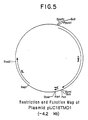
- the amino acid sequence of the soluble thrombomodulin derivative is the amino acid sequence encoded by the thrombomodulin derivative encoding sequence of plasmid pUC18TMD1 or plasmid phdTMD1.
- the amino acid sequence of the soluble thrombomodulin derivative is: wherein ALA is Alanine, ARG is Arginine, ASN is Asparagine, ASP is Aspartic Acid, CYS is Cysteine, GLN is Glutamine, GLU is Glutamic Acid, GLY is Glycine, HIS is Histidine, ILE is Isoleucine, LEU is Leucine, LYS is Lysine, MET is Methionine, PHE is Phenylalanine, PRO is Proline, SER is Serine, THR is Threonine, TRP is Tryptophan, TYR is Tyrosine, and VAL is Valine.
- the thrombomodulin derivatives provided are produced by recombinant technology means, preferably by the transformation of a eukaryotic host cell with a recombinant DNA expression vector encoding the thrombomodulin derivative followed by culturing the cell under conditions suitable for expression of the derivatives of the invention.
- the expression vector should be constructed so that the DNA sequence encoding the TM derivatives is properly positioned for expression and in proper translational reading frame in relation to the translation start site. Further, the start site can be derived from the inserted DNA sequence or can be derived from other sources.
- This sequence can be either heterologous or homologous to the vector, itself, if naturally-occurring, or homologous or heterologous to the promoter used in the construction.
- the expression vector can comprise a selectable marker and transformation can be in a host cell normally sensitive to the toxic substance used for selection in the absence of the marker gene.
- glycosylation of the product is likely to occur.
- the invention also provides the thrombomodulin derivatives not only in non-glycosylated form, such as would be expected if the polypeptide was expressed in a prokaryotic microbial host cell, but also in glycosylated form.
- glycosylation refers to the addition of one or more sugar moieties to the expressed protein.
- eukaryotic expression often results in the secretion of the product from the host cell, especially when a signal peptide portion of the expressed polypeptide is present.
- a polypeptide produced by culturing, under conditions suitable for expression, a host cell, said host cell transformed with a recombinant DNA expression vector comprising the thrombomodulin derivative encoding sequence of plasmid pUC18TMD1 or plasmid phdTMD1.
- a DNA sequence encoding a human thrombomodulin derivative is the following: wherein A is deoxyadenyl, G is deoxyguanyl, C is deoxycytidyl, and T is thymidyl.
- the preferred host cell for this embodiment is a eukaryotic host cell, preferably a mammalian cell.
- the most preferred host cell is either a human 293 ("293 cell") or Syrian Hamster AV12-664 cell ("AV12").
- 293 cell human 293
- AV12 Syrian Hamster AV12-664 cell
- two forms of the polypeptide have been observed, particularly when the derivatives are expressed in the 293 or AV12 cells. These polypeptides are designated the high molecular weight thrombomodulin derivative and the low molecular weight thrombomodulin derivative.
- the high molecular weight form has a molecular weight of about 95 to about 110 kD (reducing conditions) and about 76-94 kD (non-reducing conditions).
- the high molecular weight form Upon chemical deglycosylation with anhydrous TFMS (trifluoromethanesulfonic acid) ( See Sojar, et al ., Arch Biochem. Biophys . 259 , 52 (1987)), the high molecular weight form produced a protein of about 68kD and 65kD (under reducing conditions), after two and three hours, respectively.
- this form is susceptible to chondroitinase ABC cleavage to produce a protein which prolongs thrombin clotting time but at a level less than that of the untreated form.
- the susceptibility to chondroitinase treatment suggests that the high molecular weight form of the soluble thrombomodulin derivative of the invention may possess a glyco saminoglycan moiety. Further, this form has the following additional characteristics:
- the low molecular weight form has a molecular weight of about 73 to about 77 kD (reducing conditions) and about 58-66 kD (non-reducing conditions).
- this form of the thrombomodulin derivative produced, after 3 hours, a protein of about 63 to about 64 kD (reducing conditions).
- This derivative also has the following characteristics:
- DNA sequences are also provided by the invention.
- recombinant DNA vectors are also provided by the invention.
- host cells are also provided by the invention.
- the derivatives of the invention preferably are prepared using recombinant DNA techniques.
- the invention provides novel DNA sequences, recombinant DNA vectors and host cells for expressing the desired products.
- a preferred method for preparing the soluble thrombomodulin derivatives is by culturing a eukaryotic host cell with an expression vector containing the desired DNA sequence.
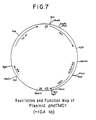
- the preferred recombinant expression vector for this purpose is plasmid phdTMD1, the restriction site and function map of which is provided in Figure 7.
- the overall construction of plasmid phdTMD1 is outlined in the flowchart of Figure 1. Each of the steps in this construction will be discussed in detail.
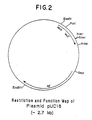
- plasmid pUC18 is a commercially available (e.g. from Boehringer-Mannheim, Indianapolis, IN) recombinant DNA cloning vector containing a multiple cloning site ("polylinker") within its included lac gene.
- polylinker a multiple cloning site
- these plasmids comprise a modified ampicillin-resistance gene and origin of replication derived from pBR322. These vectors are especially useful because they allow the cloning of doubly digested DNA restriction fragments, separately and in the desired orientation with respect to the LAC promoter.
- the restriction site and function map of pUC18 is provided in Figure 2.
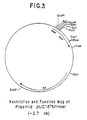
- pUC18TMlinker then is prepared by doubly digesting pUC18 with restriction enzymes Eco RI and Pst I, followed by ligation of the resulting DNA with the Eco RI- Pst I linker described above.
- the restriction site and function map of the resulting vector, pUC18TMlinker is provided in Figure 3.
- the coding sequence for the soluble thrombomodulin derivatives of the invention is derived from genomic DNA encoding the entire thrombomodulin gene. This gene has been localized on chromosome 20 of the human genome and is reported to be intron-free. ( See , Wen D. et al . Biochemistry , 26 , 4350 (1987); and, Jackman, R. et al ., Proc. Natl. Acad. Sci.(USA) , 84 , 6425 (1987)). Using oligonucleotide probes designed and based upon the bovine thrombomodulin DNA sequence ( See , Jackman, R. et al , Proc. Natl. Acad. Sci.
- GHTM3A carrying the entire human thrombomodulin gene
- This chromosomal library is available commercially from the American Type Culture Collection (ATCC), 12301 Parklawn Drive, Rockville MD 20852, under the accession number ATCC 57712 (ID Code LL20NS01).
- GHTM3A was found to contain the entire thrombomodulin gene on an ⁇ 6.4 kb Hin dIII fragment packaged in the Charon 21A vector.
- the entire coding region is obtained by treating the clone with Hin dIII restriction endonuclease and isolating the ⁇ 6.4 kb restriction fragment.
- plasmid pGHTM3A The ⁇ 6.4 kb Hin dIII fragment from GHTM3A then was ligated to Hin dIII-digested puc19. The resulting plasmid, designated plasmid pGHTM3A, was isolated and used for further constructions.
- the next step in the construction of phdTMD1 involves obtaining the ⁇ 1.9 kb Ppu MI restriction fragment from plasmid pGHTM3A. This fragment also contains all but the first few base pairs of the human thrombomodulin coding region. The missing pairs are reconstructed by ligating the ⁇ 1.9 kb Ppu MI fragment of pGHTM3A to Ppu MI digested pUC18TMlinker, as described below.
- the Ppu MI sites for isolating the human TM sequence overlap the dcm methylase recognition sequence, 5′-CCTGG-3′. Methylation of the internal cytosine of this sequence would block cleavage by Ppu MI.
- Plasmid pGHTM3A is isolated from the E. coli K12 GM48 transformants, is treated with restriction enzyme Ppu MI, and the ⁇ 1.9 kb restriction fragment, containing the human TM gene, is isolated. Plasmid pUC18TMlinker, prepared in the manner described above, likewise is treated with restriction enzyme Ppu MI. The resulting DNA was isolated and then ligated to the ⁇ 1.9 kb Ppu MI restriction fragment of pGHTM3A. The recircularized plasmid, designated pUC18TM, was isolated and contains the entire human TM coding sequence. Plasmid pUC18TM has been transformed into E. coli K12 DH5 ⁇ F′ as the preferred source and stock reservoir of the plasmid.
- the plasmid can be isolated, using conventional means, from this strain which has been deposited, under the terms of the Budapest Treaty, and made a part of the permanent stock culture collection of the NRRL. This strain is available under the accession number NRRL B-18524 deposited July 20, 1989.
- a restriction site and function map of plasmid pUC18TM is provided in Figure 4 of the drawings.
- Plasmid pUC18TMD1 comprises the sequence ("TMD1") encoding the soluble thrombomodulin derivatives of the invention.
- This vector is prepared by deleting from the full length TM sequence located on pUC18TM about 500 base pairs from the 3′-end of the gene. The deletion is performed by treating pUC18TM with restriction enzyme Bsm I followed by recircularization. This deletion occurs at the serine/threonine rich/transmembrane domain junction, effectively cleaving the transmembrane and cytoplasmic encoding regions from the vector. Based upon published sequences for human thrombomodulin, this cleavage, upon religation, would be expected to produce upon expression of the encoded protein, and absent any additional in vivo processing, a polypeptide with the following structure:
- plasmid pGHTM3A As was the case for the Ppu MI restriction of plasmid pGHTM3A, subsequent Bcl I digestion, as will be necessary, requires that the internal deoxyadenyl residue in the recognition sequence not be methylated. Therefore, cloning of plasmid pUC18TMD1 requires tranformation into a host strain deficient in adenine methylase activity ( dam ⁇ ). As noted, the strain used earlier, E. coli K12 GM48 (NRRL B-15725), is suitable for this purpose.
- Plasmid phd is a convenient eukaryotic expression vector because it is a cassette vector which contains the BK virus enhancer sequence ("BK") immediately upstream from the adenovirus-2 late promoter ("AD2LP").
- BK BK virus enhancer sequence
- AD2LP adenovirus-2 late promoter
- plasmid phd contains a single Bcl I restriction enzyme recognition sequence positioned for insertion of a desired DNA sequence so that it is expressed from the BK enhancer-AD2LP promoter system. This construction allows for high level transcription and subsequent expression of an inserted gene sequence.
- Plasmid phd also contains a hygromycin resistance-conferring sequence, as well as a dihydrofolate reductase (dhfr) cistron, both of which can be used as selectable markers in hygromycin sensitive or dhfr negative host cells, respectively.
- dhfr dihydrofolate reductase
- Plasmid phd has been transformed into E. coli K12 GM48, as the preferred source and stock reservoir of the plasmid.
- the plasmid can be isolated by conventional means from this strain which has been deposited and made a part of the permanent stock culture collection of the NRRL.
- the strain is available under the accession number NRRL B-18525 deposited July 26, 1989.
- a restriction site and function map of phd is shown in Figure 6 of the drawings.
- Plasmid phdTMD1 To prepare recombinant DNA expression plasmid phdTMD1, the ⁇ 1.5 kb Bcl I fragment of pUCTMDI was isolated and ligated to Bcl I-digested plasmid phd. The recircularized DNA is the desired product, plasmid phdTMD1.
- a restriction site and function map of plasmid phdTMD1 is provided in Figure 7 of the drawings.
- vectors used and described above are not to be construed as the only way to clone and express the DNA sequences encoding soluble thrombomodulin derivatives of the invention.
- one skilled in the art now can construct vectors containing any desired restriction enzyme recognition sequence(s) to prepare both eukaryotic and prokaryotic recombinant DNA vectors which are useful in the invention.
- one skilled in the art is fully familiar with the degeneracy of the genetic code. Consequently, the skilled artisan can modify the DNA sequences provided by the invention to provide homologous proteins having the same or improved physiological characteristics compared to those polypeptides specifically provided herein.
- DNA sequences can be modified to express an identical protein to those provided, albeit expressed at higher levels.
- one skilled in the art is familiar with means to prepare synthetically, either partially or in whole, DNA sequences which would be useful in preparing recombinant DNA vectors or soluble TM encoding sequences which are encompassed by the invention.
- recombinant means for modifying the DNA sequences provided may include, for example, site-directed deletion or site-directed mutagenesis. These techniques are well known to those skilled in the art and require no further elaboration here. Consequently, as used herein, "constructed” includes within its scope DNA which is isolated from natural sources, prepared synthetically or semi-synthetically (from natural and synthetic sources) or which are modified by recombinant DNA methods.
- polypeptides expressed recombinantly may be synthesized, as well, either in whole or in part by conventional known techniques, e.g. solid phase synthesis.
- present invention should not to be construed as necessarily limited to the specific vector constructions or means for production of the ultimate human thrombomodulin derivatives either defined above or in the examples. These alternate means for preparing the present thrombomodulin derivatives are meant to be encompassed by the present invention.
- the preferred method for producing the soluble human thrombomodulin derivatives of the invention is by expressing in a host cell a recombinant DNA vector comprising the thrombomodulin derivative encoding sequence of plasmid pUC18TMD1 or plasmid phdTMD1.
- thrombomodulin derivative encoding sequence wherein A is deoxyadenyl, G is deoxyguanyl, C is deoxycytidyl, and T is thymidyl.
- This latter sequence was previously described.
- This sequence, or a portion thereof, can be expressed in both prokaryotic and eukaryotic cells if inserted in properly designed expression vectors.
- E. coli, Bacillus and Streptomyces expression vectors are now well-known in the art.
- the noted thrombomodulin derivative encoding sequence can be prepared as described above and in the examples and then can be inserted in proper orientation for transcription and expression from a given promoter in the appropriate prokaryotic expression vector, cloned under conditions which allow selection of properly transformed host cells and then expressed, under conditions suitable for expression of the inserted sequence, followed by recovery of the product.
- Expression in a prokaryotic host cell, especially in E. coli, of the desired thrombomodulin derivatives of the invention is not limited to the use of a particular promoter because a specific promoter is not crucial to the operablility of the invention.
- Promoters which can be used may include, for example, the lipoprotein (" lpp ”) promoter, the E. coli trp promoter, bacteriophage lambda promoters, or the E. coli lactose (“ lac ”) promoter.
- one or more promoters can be used in tandem, such as for example, the trp and lac promoters.
- hybrid promoter/translational activating sequences can be prepared such as the tac promoter, to drive expression of the TMD1 coding sequence provided by the invention. All of these promoters have been previously characterized, are well-known in the art, and can be constructed either synthetically or from known plasmids.
- thermoinducible runaway replicon such as that disclosed in U.K. Patent Publication 1,557,774 and in Uhlin et al ., Gene , 6 , 91 (1979).
- the replicon maintains a relatively low copy number of about 10 to 15 copies per cell.
- copy number control is lost and plasmids containing the replicon amplify to approximately 1000-2000 copies per cell.
- the cloning of a foreign gene, such as the soluble thrombomodulin derivatives of the invention, into vectors comprising a runaway replicon results, upon induction and loss of copy number control, in a greatly increased rate of protein synthesis and the concomitant formation of intracellular proteinaceous granules ("inclusion bodies").
- the granules are highly homogenous in their protein composition, with the desired protein product comprising up to and often exceeding 80% by dry weight of the granule. These granules can be easily isolated from cell lysates and are stable to washing in low concentrations of urea or detergents. Washing removes proteins that bind non-specifically to the granule.
- the present invention is not limited to the use of a runaway replicon-containing plasmid for the cloning and expression in prokaryotic cells of the soluble thrombomodulin derivatives.
- Many replicons such as those from pBR322, pBR328, pACYC184, and the like are know in the art and are suitable for the construction of recombinant DNA vectors designed to drive expression of the thrombomodulin derivative-encoding DNA sequences of the invention.
- selectable markers are not crucial to the operation of the invention.
- the product when expressed in a prokaryotic cell such as, for example, E. coli, Bacillus or Streptomyces, the product normally would not be expected to be glycosylated or even processed further by the intracellular biosynthetic machinery. Consequently, in such cells, the thrombomodulin derivatives of the invention may not be secreted from the cell. Instead, as often seen, particularly in E. coli, the product may be deposited as "inclusion bodies" as described earlier. The purification of the product, in such a case, may require the disruption of the host cell membrane, denaturation of the product, followed possibly by refolding of the protein, and, if desired, cleavage of any desired portion of the signal sequence using appropriate proteases.
- DNA sequence for the signal peptide can be modified so as to encode a specific cleavage site recognized by a given enzyme so that site-specific cleavage of the product would be possible.
- the means for such purification, refolding, and cleavage steps now are well-known to those skilled in the art and will not be elaborated further.
- the product when expressed from a prokaryotic host cell, either in its full length form or a portion thereof, may possess significant thrombomodulin-like activity and could be used for this purpose or for the development of other useful derivatives.
- these products could be used as antigens for the production of human thrombomodulin antibodies which could be used in a variety of assays.
- Many such assays use competitive antibody-binding to measure levels of a protein in a sample.
- radioactively (or other) labelling of the prokaryotic cell-produced thrombomodulin derivatives can be used as the "competing molecule" in an assay for thrombomodulin in blood plasma.
- Such an assay would be important for the diagnosis of patients with coagulation problems.
- products produced from a prokaryotic cell could be used for structure analysis, folding characteristics, etc. for the development of further improved thrombomodulin derivatives.
- the preferred host cell for production of the thrombomodulin derivatives of the invention is a eukaryotic host cell.
- mammalian and other eukaryotic host cells such as some yeasts ( e.g. Saccharomyces, Kluyveromyces, or Pichia), possess the necessary cellular machinery for the recognition and proper processing of the signal peptide portion present on the amino-terminus of the expressed product.
- Some mammalian host cells also provide post-translational modifications, such as glycosylation, etc., as observed in wild-type thrombomodulin in plasma.
- a wide variety of vectors exist for the transformation of eukaryotic host cells, and as indicated above, the specific vectors provided herein are in no way intended to limit the scope of the invention.
- pSV2-type vectors comprise segments of the SV40 genome and which constitute a defined eukaryotic transcription unit including a promoter (e.g. , EP), intervening sequences (IVS), and polyadenylation (pA) sites.
- a promoter e.g. , EP
- IVS intervening sequences
- pA polyadenylation
- the pSV2-type vectors transform mammalian and other eukaryotic host cells by integrating into the host cell chromosomal DNA.
- Plasmid pSV2-type vectors have been constructed ( See Eukaryotic Viral Vectors , edited by Gluzman, Cold Spring Harbor Laboratories, N.Y., 1982) such as plasmids pSV2-gpt, pSV2-neo, pSV2-dhfr, and pSV2- ⁇ -globin, in which the SV40 promoter drives transcription of an inserted gene.
- plasmids pSV2-gpt, pSV2-neo, pSV2-dhfr, and pSV2- ⁇ -globin in which the SV40 promoter drives transcription of an inserted gene.
- Such vectors are available from the American Type Culture Collection, Rockville, MD or from the Northern Regional Research Laboratory (NRRL), Peoria, IL.
- promoters other than the SV40 early promoter.
- the present invention is in no way limited to the use of any particular promoter exemplified herein.
- Other promoters such as the SV40 late promoter or promoters from eukaryotic genes such as, for example, the estrogen-inducible chicken ovalbumin gene, the interferon genes, the glucocorticoid-inducible tyrosine aminotransferase gene, the thymidine kinase gene and the major early and late adenovirus genes, can be readily isolated and modified for use on recombinant DNA expression vectors designed to produce the thrombomodulin derivatives of the invention.
- Eukaryotic promoters can be used also in tandem to drive expression of the desired final product.
- plasmid pRSVcat (available from the ATCC under the accession number ATCC 37152) comprises portions of the long terminal repeat of Rous Sarcoma Virus (RSV), a virus known to infect chicken and other host cells.
- RSV Rous Sarcoma Virus
- the RSV long terminal repeat sequences can be isolated on an ⁇ .76 kb Nde I- Hin dIII restriction fragment of plasmid pRSVcat. This promoter can be isolated and inserted in an appropriate vector such that it is positioned correctly to drive transcription and expression of the thrombomodulin derivative encoding sequence of the invention.
- the eukaryotic expression vectors specifically provided can be transformed into and expressed in a variety of eukaryotic, especially mammalian, host cells.
- Vectors which contain no selectable marker with which to isolate and identify stable transformants would be useful for transient assay or for purposes of cotransformation, such as in the procedure outlined in U.S. Pat. No. 4,399,216, issued August 26, 1983, incorporated herein by reference.
- the vectors of the invention may include sequences which allow for replication in E. coli because it usually more efficient to prepare plasmid DNA in E. coli than in other host organisms, and, if desired, transform the vectors into the desired host.
- expression of the desired thrombomodulin derivative encoding sequences of the invention occurs in those host cells in which the particular promoter associated with the inserted gene functions.
- the promoters noted above, and in particular, the adenovirus-2 late promoter used in phdTMD1 function in a wide variety of host cells.
- preferred host cells for expression of the thrombomodulin derivatives of the invention are provided in Table 1:
- Especially preferred host cells include human 293 (“293 cells”) cells and Syrian Hamster AV12 ("AV12”) cells, available from the American Type Culture Collection, Rockville, MD, under the accession numbers ATCC CRL 1573 and CRL 9595, respectively.
- the AV12 cells were deposited (November 24, 1987) under the terms of the Budapest Treaty and the 293 cells are listed in the ATCC catalog as presently available to the public.
- phdTMD1 When expressed in either AV12 or 293 cells, phdTMD1 produces two forms of the soluble thrombomodulin derivatives of the invention. These are designated as the high molecular weight and low molecular weight forms. The particular physical and functional characteristics of each form are described in detail in the examples below.
- N-terminal sequencing of the low and high molecular weight derivatives indicates that cleavage in the signal peptide portion of the molecule occurs predominantly at the carboxy terminus of amino acid 18 (proline) leaving the following as the predicted amino acid of the product, assuming no further processing occurs subsequent to expression: wherein
- ALA Alanine
- ARG Arginine
- ASN Asparagine
- ASP Aspartic Acid
- CYS Cysteine
- GLN Glutamine
- GLU Glutamic Acid
- GLY Glycine
- HIS Histidine
- ILE Isoleucine
- LEU Leucine
- LYS Lysine
- MET Methionine
- PHE Phenylalanine
- PRO Proline
- SER Serine
- THR Threonine
- TRP Tryptophan
- TYR Tyrosine
- VAL Valine.
- N-terminal sequencing of the low molecular weight form also indicates a minor population of product in which the signal peptide portion of the N-terminus is cleaved at the carboxy terminus of amino acid 16 (glycine).
- the predicted amino acid sequence of this product is the following: wherein ALA is Alanine, ARG is Arginine, ASN is Asparagine, ASP is Aspartic Acid, CYS is Cysteine, GLN is Glutamine, GLU is Glutamic Acid, GLY is Glycine, HIS is Histidine, ILE is Isoleucine, LEU is Leucine, LYS is Lysine, MET is Methionine, PHE is Phenylalanine, PRO is Proline, SER is Serine, THR is Threonine, TRP is Tryptophan, TYR is Tyrosine, and VAL is Valine.
- the present derivatives offer useful properties previously unavailable to the skilled clinician.
- the thrombomodulin derivatives of the invention are easily prepared and purified because they are soluble and secreted from the eukaryotic host cell.
- the unexpected solubility in detergent-free buffers provides a distinct advantage over wild-type thrombomodulin.
- the products provide significant physiological activity which could not have been predicted.
- optimal calcium concentrations approximate those present under normal physiological conditions and observed for the wild-type thrombomodulin.
- the products most strikingly the high molecular weight form, inhibit the clotting cascade through two distinct and different mechanisms.
- the derivatives in consort with thrombin activate the Protein C anticoagulant pathway, thereby reducing the activity of the major cofactors in the clotting system, Factors Va and VIIIa.
- the derivatives, particularly the high molecular weight form substantially inhibit thrombin coagulant activity.
- the derivatives, particularly the high molecular weight derivative inhibit the normal capability of thrombin to activate platelets. This is unexpected since the literature suggests that full-length human thrombomodulin isolated from natural sources has little, if any, inhibitory effect on thrombin coagulant and platelet activation activities. ( See , e.g. Maruyama, I., et al ., J. Clin. Invest . 75 , 987 (1985); Salem, H.H., et al ., J. Biol. Chem . 259 , 12246 (1984)).
- the soluble, secretable thrombomodulin derivatives of the invention will have substantial value in the prevention and treatment of thrombotic disorders.
- thrombotic disorders include a wide variety of acquired disease states involving intravascular coagulation, including deep vein thrombosis, pulmonary embolism, peripheral arterial thrombosis, emboli originating from the heart or peripheral arteries, acute myocardial infarction, thrombotic strokes, and disseminated intravascular coagulation.
- Disseminated intravascular coagulation occurs as a complication to numerous disease states including major trauma, major surgery, heat stroke, septicemia, acute and chronic liver disease, malignancies including solid tumors, leukemias and lymphomas, a wide variety of bacterial, fungal, parasitic and viral infections, obstetrical complications, hemolytic processes, cardiogenic shock, circulatory collapse from any cause, severe progressive strokes, snake bites, collagen vascular disorders, purpura fulminans, acute pancreatitis, allergic vasculitis, polycythemia vera, thrombocythemia, and ulcerative colitis among others.
- thrombomodulin congenital deficiencies in the expression of the thrombomodulin may be demonstrated in patients with thromboembolic problems. Acute episodes in such patients will be amenable to treatment with the thrombomodulin derivatives provided.
- Deep vein thrombosis and pulmonary embolism can be treated with conventional anticoagulants, but a far more attractive clinical approach is to prevent the occurrence of thromboembolic complications in identified high-risk patients, such as, for example, patients undergoing surgery, patients who are chronically bedridden and patients with congestive heart failure.
- high-risk patients such as, for example, patients undergoing surgery, patients who are chronically bedridden and patients with congestive heart failure.
- low doses of heparin e.g. 5,000 units every 8 hours are administered both, pre- and post-surgery, to prevent deep vein thrombosis.
- Low-dose heparin occasionally causes heavy bleeding during and after surgery.
- the low molecular weight derivative causes less thrombin inactivation and less inhibition of platelet activation than the high molecular weight form thrombomodulin derivatives.
- the low molecular weight form in particular, is more selective than heparin and less likely to cause bleeding complications, being active only when and where thrombin is generated and fibrin thrombi are formed.
- Thrombomodulin derivatives would be more effective and less likely to cause bleeding complications than heparin when used prophylactically for the prevention of deep vein thrombosis.
- the dose of recombinant-produced thrombomodulin derivatives for prevention of deep vein thrombosis is in the range from 0.5 to 100 mg/day.
- administration of the thrombomodulin derivative should begin 6 hours prior to surgery and continue until the patient becomes mobile.
- the dose of thrombomodulin derivative (preferably the high molecular weight form) ranges from 1-30 mg as a loading dose, followed by a continuous infusion in amounts ranging from 3-300 mg/day. Similar dosage schedules are applicable for the treatment of peripheral arterial thrombi.
- these proteins can replace heparin, intra- and post-surgically, in conjunction with thrombectomies or embolectomies, surgical procedures which are often necessary to save ischemic limbs from amputation in the setting of an acute arterial obstruction.
- Arterial emboli originating from the heart are frequent complications in heart diseases involving heart valves, in patients with artificial heart valves, in acute myocardial infarction, and in certain types of heart arrhythmias.
- the treatment of these problems with conventional oral anticoagulants is not always entirely effective, and, as always, when oral anticoagulants are used, the risk of bleeding complications is substantial.
- the present thrombomodulin derivatives administered long-term in doses comparable to those for the treatment of established deep vein thrombosis-pulmonary embolism, through continuous infusion using, for example, a portable pump system, has substantial utility in the prevention of cardiogenic emboli.
- emboli originating from thrombi in peripheral arteries are not treated or prevented satisfactorily with currently used regimens, which include drugs capable of suppressing platelet function, oral anticoagulants, or combinations thereof.
- the thrombomodulin derivatives administered long-term in the same manner as outlined for cardiogenic emboli, has major potential in the prevention of emboli originating from carotid artery thrombi and resulting in embolic strokes.
- thrombomodulin derivatives (most probably the low molecular weight form) is also useful in the treatment of thrombotic strokes.
- strokes are not usually treated with conventional anticoagulants.
- thrombomodulin variants can be given to stroke victims and are beneficial in preventing the local extension of the occluding arterial thrombus, thereby reducing the neurological deficit resulting from the stroke.
- the amount of thrombomodulin variants administered will vary with each patient depending on the nature and severity of the stroke.
- the present thrombomodulin derivatives (most preferably the high molecular weight variant) will be useful in the treatment of acute myocardial infarction because there is evidence that the major mechanism of action of thrombomodulin and derivatives provided, that is, the activation of the protein C anticoagulant pathway, constitutes a highly effective means of achieving antithrombotic effects on the arterial side of the circulation.
- the major mechanism of action of thrombomodulin and derivatives provided that is, the activation of the protein C anticoagulant pathway
- heparin, as adjunct therapy is relatively ineffective, as an antithrombotic agent on the arterial side of the circulation.
- the present thrombomodulin derivatives can be given with thrombolytic agents during the acute phases of the myocardial infarction.
- the thrombomodulin derivatives can be given for several additional days to prevent coronary reocclusion.
- acute myocardial infarction the patient is given the loading dose of 3-30 mg of thrombomodulin variants at the time thrombolytic treatment is initiated followed by a continuous infusion of thrombomodulin variants in amounts ranging from 1-100 mg/day.
- thrombomodulin derivatives are useful in the treatment of disseminated intravascular coagulation ("DIC").
- DIC disseminated intravascular coagulation
- inflammatory mediators such as IL-1, TNF, and LPS endotoxin sharply downregulate the expression of thrombomodulin on endothelial cells leading in turn to defective activation of the protein C anticoagulant pathways.
- Heparin and the oral anticoagulants have been given to patients with disseminated intravascular coagulation in extensive clinical trials, but the results of these trials have been disappointing.
- thrombomodulin has a distinct advantage over conventional anticoagulants. Because of their selectivity, the thromomodulin derivatives of the invention will not aggravate the bleeding problems associated with disseminated intravascular coagulation, as do heparin and the oral anticoagulants, but instead will retard or inhibit the formation of additional microvascular fibrin deposits.
- Infused thrombomodulin will block the substantial quantities of thrombin present in the circulation.
- the high molecular variant will block thrombin's procoagulant and platelet activating activity and speed up the conversion of protein C to activated protein C.
- the doses required are comparable to those used in established deep vein thrombosis-pulmonary embolism. Treatment will continue until definitive measures can be taken to treat the underlying causes of the DIC syndrome.
- Thrombomodulin variants being more selective than conventional anticoagulants and having a higher therapeutic index than either heparin or the oral anticoagulant, can be given relatively safely to the thrombocytopenic patient, thus making possible the treatment of patients with invasive cancers with effective intensive chemotherapy in combination with thrombomodulin variants. Treatment of invasive cancers with thrombomodulin variants will follow a dosage regimen comparable to that used in deep vein thrombosis-pulmonary embolism.
- the invention provides in another aspect, a method for the treatment or prevention of thrombotic events in a patient in need thereof, which comprises administering to said patient a therapeutically-effective amount of a thrombomodulin derivative provided herein.
- the compounds of the present invention can be formulated according to known methods to prepare pharmaceutically-useful compositions.
- a thrombomodulin derivative of the present invention is combined in admixture with a pharmaceutically acceptable carrier, diluent or excipient.
- a pharmaceutically acceptable carrier e.g., human serum albumin.
- suitable carriers, diluents or excipients and their formulation, inclusive of other human proteins, e.g., human serum albumin are described, for example, in Remington's Pharmaceutical Sciences 16th ed., 1980, Mack Publishing Co., edited by Osol et al., which is hereby incorporated by reference.
- compositions will contain a therapeutically- effective amount of the thrombomodulin derivative, together with a suitable amount of carrier, excipient, or diluent, vehicle in order to prepare pharmaceutically acceptable compositions suitable for effective administration to the patient.
- the thrombomodulin compositions can be administered parenterally, or by other methods well-known to those skilled in the art, so as to ensure their delivery to the bloodstream in an effective form.
- the thrombomodulin gene has been localized to chromosome 20 in the human genome (Wen, D. et al . Biochemistry , 26 , 4350 (1987). Further, this gene is reported to contain no introns (Jackman, R. et al . Proc. Natl. Acad. Sci. (USA) , 84 , 6425 (1987). Based upon this information, a human chromosome 20 library carried in lambda phage Charon 21A was purchased from American Type Culture Collection (ATCC #57712, ID code LL20NS01, Rockville, MD 20852). E.
- coli strain C600 cells (commercially available from Stratagene, LaJolla, CA 92037) were grown to an optical density of 0.6-0.8 at 600 nm in TY broth (10 g Bacto-tryptone, 5 g Bacto-yeast extract, 10 g NaCl/liter, pH 7.4); 600 ⁇ l of cells were infected with 50,000 phage. A total of 600,000 phage (three chromosome equivalents) were plated on twelve 150 mm dishes, each containing 75 ml TY agar (TY broth plus 15 g/liter Bacto-agar). Plaques were well-formed after 6 hours at 37°C. The phage were transferred to Colony/Plaque Screen filters (New England Nuclear, Boston, MA) and prepared for hybridization using the supplier's recommendations.
- SSPE (20X) is prepared by dissolving 174 g of NaCl, 27.6 g of NaH2PO4 . H2O and 7.4 g of EDTA in 800 ml of H2O after which the pH is adjusted to 7.4 with NaOH ( ⁇ 6.5 ml of a 10 N solution) and the volume adjusted to 1 liter. The filters then were exposed to film for 24 hours at -70° C to prove that all of the original probe mixture had been removed. These filters then were hybridized again using a different probe mix. The second films were compared to the first set and only plaques that hybridized with both sets of probes were chosen for a second round of screening.
- the human genomic DNA had been inserted into the Hin dIII site of the Charon 21A vector and so could be released by digesting the recombinant clone with Hin dIII.
- Fifty ⁇ g of purified phage DNA were digested in a volume of 200 ul of core buffer with 50 units of Hin dIII (buffer and enzyme supplied by Bethesda Research Laboratories, Gaithersburg, Maryland 20877) for 90 minutes at 37°C.
- the samples were precipitated with ethanol and then separated by electrophoresis on a 1.0% agarose gel along with lambda DNA cut with Hin dIII (Bethesda Research Laboratories) as a size marker.
- the DNA was visualized using ethidium bromide and the size of each band was calculated based upon its migration in the gel.
- the insert size for GHTM3A was estimated to be ⁇ 6.4 kb.
- Example 1B 50 ⁇ g of the phage GHTM3A DNA isolated in Example 1B is mixed with 5 ⁇ l ( ⁇ 50 units) of restriction enzyme Hin dIII, 10 ⁇ 1 of 10X Hin dIII reaction buffer (500 mM NaCl, 500 mM Tris-HCl (pH 8.0), 100 mM MgCl2) and 85 ⁇ 1 of H2O and is incubated at 37°C for about 2 hours.
- the Hin dIII digested phage GHTM3A DNA is then electrophoresed on a 0.6% agarose gel until the ⁇ 6.4 kb Hin dIII fragment is separated from the other digestion products.
- the DNA bands are visualised by first staining the gel with a dilute solution of ethidium bromide and then viewing the gel with ultraviolet light.
- the region of the gel containing the ⁇ 6.4 kb Hin dIII fragment is cut from the gel, wrapped in a piece of plastic film and frozen at -70°C for about 10 minutes.
- the frozen gel slice then is gently squeezed at room temperature and the gel slurry poured into a 1.5 ml centrifuge tube.
- An equal volume of phenol is added and the mixture vigorously vortexed and frozen again at -70°C.
- the mixture is thawed at room temperature and the aqueous phase removed after centrifugation at 13,000xg for 10 minutes.
- the aqueous phase is extracted once more with phenol and then twice with CHCl3.
- the DNA is precipitated by addition of 2 volumes of ethanol, incubation at -20°C for 20 minutes and followed by centrifugation.
- E. coli K12 DH5 ⁇ F′ (commercially available from Bethesda Research Laboratories, "BRL", Gaithersburg, MD 20877) in TY-broth is grown to an O.D. 590 nm of ⁇ 0.2.
- the culture is chilled on ice for ten minutes, and the cells are collected by centrifugation.
- the cell pellet is resuspended in 25 ml of cold 100 mM CaCl2 and incubated on ice for 25 minutes.
- the cells are once again pelleted by centrifugation and the pellet is resuspended in 2.5 ml of cold 100 mM CaCl2 and incubated on ice overnight.
- Example 1E Two hundred ⁇ l of this cell suspension are mixed with the ligated DNA prepared in Example 1E and incubated on ice for 20 minutes. The mixture then is incubated at 42°C for 2 minutes, followed by a 10 minute incubation at room temperature. Three ml of TY-broth are added to the cell mixture, and then the cells are incubated in an air-shaker at 37°C for two hours.
- TY-broth (10 g Bacto-tryptone, 5 g Bacto-yeast extract, 10 g NaCl, pH 7.5) containing 50 ⁇ g/ml ampicillin was incubated with a culture of E. coli DH5 ⁇ F′/pGHTM3A and incubated in an air-shaker at 37°C until the optical density (O.D.) at 590 nm was ⁇ l absorbance unit, at which time 150 mg of chloramphenicol were added to the culture. The incubation was continued for about 16 hours; the chloramphenicol addition inhibits protein synthesis, and thus inhibits further cell division, but allows plasmid replication to continue.
- O.D. optical density
- the lysed cells were frozen in a dry ice-ethanol bath and then thawed.
- the cellular debris was removed from the solution by centrifugation at 25,000 rpm for 40 minutes in an SW27 rotor (Beckman 7360 N. Lincoln Ave., Lincolnwood, IL 60646). After adding 30.44 g of CsCl and ⁇ 1 ml of a 5 mg/ml ethidium bromide solution, the solution volume was adjusted to 40 ml and decanted into a Vti50 ultracentrifuge tube (Beckman). After sealing the tube, the solution was centrifuged in a Vti50 rotor at 42,000 rpm for ⁇ 16 hours.
- the resulting plasmid band visualized with ultraviolet light, was isolated and then placed in a Ti75 tube and rotor (Beckman) and centrifuged at 55,000 rpm for 16 hours. Any necessary volume adjustments were made using TES containing 0.761 g/ml CsCl.
- the plasmid band was again isolated, the ethidium bromide extracted with salt-saturated isopropanol, and diluted 1:3 with TES buffer. Two volumes of ethanol then were added to the solution, followed by incubation overnight at -20°C.
- the plasmid DNA was pelleted by centrifuging the solution in an SS34 rotor (Sorvall) for 15 minutes at 10,000 rpm.
- the Ppu MI sites used for isolating the coding sequence of human thrombomodulin both overlap the dcm methylase recognition sequence, 5′-CCTGG-3′. Methylation of the internal cytosine residue of this recognition sequence results in blockage of DNA cleavage. For this reason, it was necessary to isolate plasmid pGHTM3A from E. coli K12 GM48. E. coli K12 GM48, a strain deficient in the cytosine methylase, originally was deposited November 23, 1983, and now is available, under the terms of the Budapest Teaty, from the permanent stock culture collection of the Northern Regional Research Laboratory ("NRRL"), Peoria, Illinois 61604, under the accession number NRRL B-15725.
- NRRL Northern Regional Research Laboratory
- E. coli K12 GM48 was prepared for transformation and then transformed with plasmid pGHTM3A in substantial accordance with the procedure of Example 1F. Plasmid pGHTM3A was isolated from the E. coli K12 GM48/pGHTM3A transformants in substantial accordance with the teaching of Example 2B.
- the Ppu MI-digested plasmid pGHTM3A DNA was loaded onto a 1% agarose gel, and the desired ⁇ 1.9 kb Ppu MI restriction fragment was isolated and purified in substantial accordance with the teaching of Example 1.
- the ⁇ 2 ⁇ g of fragment obtained were dissolved in 10 ⁇ l of TE buffer and stored at -20°C.
- the DNA fragments used in the construction of the linker were synthesized either by using a Systec 1450A DNA Synthesizer (Systec Inc., 3816 Chandler Drive, Minneapolis, MN) or an ABS 380A DNA Synthesizer (Applied Biosystems, Inc., 850 Lincoln Centre Drive, Foster City, CA 94404). Many DNA synthesizing instruments are known in the art and can be used to make the desired fragments. In addition, the fragments can also be conventionally prepared in substantial accordance with the procedures of Itakura et al ., 1977, Science , 198:1056 and Crea et al ., 1978, Proc. Nat. Acad. Sci. (USA) , 75:5765.
- the kinase reaction was incubated at 37°C for 30 minutes, and the reaction was terminated by incubation at 100°C for 10 minutes.
- reaction was chilled on ice, 2 ⁇ l of 0.2M dithothreitol, 2.5 ⁇ l of 5 mM ATP, and 15 units of T4 polynucleotide kinase were added, mixed, and the reaction mix incubated another 30 minutes at 37°C. The reaction was stopped by another 10 minute incubation at 100°C and then chilled on ice.
- the two single strands of the DNA linker were mixed together after the kinase reaction.
- the kinase reaction mixture was incubated at 100°C for 10 minutes in a water bath containing ⁇ 150 ml of water. After this incubation, the water bath was shut off and allowed to cool to room temperature, a process taking about 3 hours. The water bath, still containing the tube of kinased DNA, then was placed in a 4°C refrigerator overnight. This process annealed the single strands.
- the synthesized linker had the following structure: The linker was stored at -20°C until needed.
- plasmid pUC18 DNA Approximately 10 ⁇ g of plasmid pUC18 DNA (Boehringer-Mannheim, Indianapolis, IN 46250; or BRL, Gaithersburg, MD 20760) were dissolved in 10 ⁇ l 10X Eco RI reaction buffer (500 mM NaCl, 1M Tris-HCl, pH 7.5, 50 mM MgCl2, 1 mg/ml bovine serum albumin), 5 ⁇ l ( ⁇ 50 units) restriction enzyme Eco RI, and 85 ⁇ l H2O, and the reaction was placed at 37°C for 2 hours. The reaction mixture was then made 0.25M in NaOAc, and after adding two volumes of ethanol and chilling in a dry ice-ethanol bath, the DNA was pelleted by centrifugation.
- 10X Eco RI reaction buffer 500 mM NaCl, 1M Tris-HCl, pH 7.5, 50 mM MgCl2, 1 mg/ml bovine serum albumin
- Eco RI restriction enzyme Eco RI
- the DNA pellet was dissolved in 10 ⁇ l 10X Pst I reaction buffer (1M NaCl, 100 mM Tris-HCl, pH 7.5, 100 mM MgCl2, 1 mg/ml bovine serum albumin), 5 ⁇ l ( ⁇ 50 units) restriction enzyme Pst I, and 85 ⁇ l H2O, and the reaction was placed at 37°C for two hours.
- the reaction mixture was extracted once with phenol, once with CHCl3 and the digested DNA precipitated and pelleted as described above.
- the DNA pellet which constituted Eco RI- Pst I-digested plasmid pUC18 was resuspended in 10 ⁇ l of TE buffer and stored at -20°C until use.
- the ligated DNA constituting plasmid pUC18TMlinker prepared in Example 3D was used to transform E. coli K12 DH5 ⁇ F′ cells substantially as described in Example IF.
- E. coli K12 DH5 ⁇ F′/pUC18TMlinker transformants were verified by restriction enzyme analysis of their plasmid DNA.
- a single E. coli K12 DH5 ⁇ F′/pUCTMlinker transformant was cultured as described in Example 2A and plasmid pUC18TMlinker DNA was isolated from this culture as described in Example 2B.
- plasmid pUC18TMlinker DNA Approximately 10 ⁇ g of plasmid pUC18TMlinker DNA were digested with Ppu MI restriction enzyme substantially as described in Example 3A. After phenol extraction and CHCl3 extraction, the Ppu MI-digested DNA was ethanol precipitated as described in Example 3C. The DNA pellet, which constituted ⁇ 10 ⁇ g of Ppu MI-digested pUC18TMlinker DNA, was resuspended in 10 ⁇ l of TE buffer and stored at -20°C until ready for use.
- Example 3A One ⁇ g of the ⁇ 1.9 kb Ppu MI restriction fragment prepared in Example 3A was mixed with 1 ⁇ g of Ppu MI-digested pUC18TMlinker DNA prepared in Example 3F and then ligated substantially as described in Example 3D.
- Plasmid pUC18TM has been transformed into E. coli K12 DH5 ⁇ F′, as the preferred source and stock reservoir of the plasmid.
- the plasmid can be conventionally isolated from the strain which has been deposited (July 20, 1989), and made a part of the permanent stock culture collection of the NRRL. The strain is available under the accession number NRRL B-18524.
- the ligated DNA constituting plasmid pUC18TM prepared in Example 3G was used to transform E. coli K12 DH5 ⁇ F′ cells as described in Example 1.
- E. coli K12 DH5 ⁇ F′/pUC18TM transformants were verified by restriction enzyme analysis of the plasmid DNA.
- a single K12 DH5 ⁇ F′/pUC18TM transformant was cultured as described in Example 2A and plasmid pUC18TM DNA was isolated from this culture as described in Example 2B.
- Example 3H Ten ⁇ g of plasmid pUC18TM prepared and isolated as described in Example 3H were dissolved in 10 ⁇ l 10X Bsm I reaction buffer (500 mM NaCl, 100 mM Tris-HCl, pH 7.4, 100 mM MgCl2, 100 mM 2-mercaptoethanol, 1 mg/ml bovine serum albumin), 10 ⁇ l of BsmI ( ⁇ 50 units, New England Biolabs) and 85 ⁇ l of H2O. The reaction mixture was incubated at 65°C under paraffin oil, extracted once with phenol, once with CHCl3 and the DNA was precipitated as described in Example 3C.
- 10X Bsm I reaction buffer 500 mM NaCl, 100 mM Tris-HCl, pH 7.4, 100 mM MgCl2, 100 mM 2-mercaptoethanol, 1 mg/ml bovine serum albumin
- BsmI ⁇ 50 units, New England Biolabs
- the Bsm I-digested pUC18TM DNA was electrophoresed in a 1% agarose gel until the ⁇ 4.2 kb and ⁇ .46 kb fragment were separated clearly.
- the ⁇ 4.2 kb fragment was isolated and purified in accordance with Example 1C.
- the ⁇ 8 ⁇ g of purified fragment which constituted Bsm I-digested buffer pUC18TM DNA, was resuspended in 10 ⁇ l of TE buffer and stored at -20°C.
- Example 4A Half a ⁇ g of the Bsm I-digested pUC18TM DNA prepared in Example 4A was recircularized by ligation substantially as described in Example 3D.
- the ligated DNA constituted the desired plasmid, plasmid pUC18TMD1.
- a restriction site and function map of the plasmid is presented in Figure 5 of the accompanying drawings.
- the ligated DNA constituting plasmid pUC18TMD1 prepared in Example 4B was used to transform E. coli K12 DH5 ⁇ F′ cells as described in Example 1.
- E. coli K12 DH5 ⁇ F′/pUC18TMD1 transformants were verified by restriction enzyme analysis of the plasmid DNA.
- a single E. coli K12 DH5 ⁇ F′/pUC18TMD1 transformant was cultured as described in Example 2A and plasmid pUC18TMD1 was isolated from this culture substantially as described in Example 2B.
- E. coli K12 GM48 was prepared for transformation and then transformed with plasmid pUC18TMD1 in substantial accordance with the procedure of Example 1. Plasmid pUC18TMD1 DNA was isolated from the E. coli K12 GM48/pUC18TMD1 transformants in substantial accordance with the teaching of Example 2B.
- the Bcl I-digested plasmid pUC18TMD1 DNA was loaded onto a 1% agarose gel, and the desired ⁇ 1.5 kb Bcl I restriction fragment was isolated and purified in substantial accordance with the teaching of Example 3A.
- the ⁇ 10 ⁇ g of fragment obtained were dissolved in 10 ⁇ l of TE buffer and stored at -20°C.
- E. coli K12 GM48 was prepared for transformation and then transformed with mammalian expression plasmid phd, in substantial accordance with the procedure of Example 1.
- a restriction site and function map of plasmid phd is presented in Figure 6 of the accompanying drawings.
- E. coli K12 GM48/phd has been deposited in the NRRL and is available under the accession number NRRL B-18525 (July 26, 1989). Plasmid phd DNA was isolated from the E. coli K12 GM48/phd transformants in substantial accordance with the teaching of Example 1.
- Example 4D One ⁇ g of the ⁇ 1.5 kb Bcl I fragment prepared in Example 4D was mixed with 0.5 ⁇ g of Bcl I-digested plasmid phd prepared in Example 4E and ligated substantially as described in Example 3D.
- the ligated DNA constituted plasmid phdTMD1.
- a restriction site and function map of the plasmid is presented in Figure 7 of the accompanying drawings.
- the ligated DNA constituting phdTMD1 prepared in Example 4F was used to transform E. coli K12 DH5 ⁇ F′ cells as described in Example 1.
- E. coli K12 DH5 ⁇ F′/phdTMD1 transformants were verified by restriction enzyme analysis of the plasmid DNA.
- Transformants containing the correct orientation of the 1.5 kb Bcl I insert yielded the following restriction fragments following digestion of 1 ⁇ g plasmid DNA with Bgl II in 100 mM NaCl, 50 mM Tris-HCl, pH 8.0, 10 mM MgCl2 at 37°C for 1 hour: ⁇ 4.6 kb, ⁇ 2.6 kb, ⁇ 1.6 kb and ⁇ 1.4 kb. Fragments were identified by electrophoresis in 1% agarose and ethidium bromide staining in the manner described in Example 1.
- a single E. coli K12 DH5 ⁇ F′/phdTMD1 transformant containing the correct orientation was cultured in TY-broth as described in Example 2A. Plasmid DNA was isolated from the culture as described in Example 2B. To remove residual traces of CsCl, the ⁇ l mg of isolated plasmid phdTMD1 was resuspended in 10 ml of TE buffer and ethanol precipitated twice in accordance with Example 3C. The DNA pellet, which constituted plasmid phdTMD1 was resuspended in 1 ml of TE buffer and stored at -20°C.
- the ligated DNA constituting phdTMD1 prepared in Example 4F was used to transform E. coli K12 DH5 ⁇ F′ cells as described in Example 1.
- E. coli K12 DH5 ⁇ F′/phdTMD1 transformants were verified by restriction enzyme analysis of the plasmid DNA.
- Transformants containing the correct orientation of the 1.5 kb Bcl I insert yielded the following restriction fragments following digestion of 1 ⁇ g plasmid DNA with Bgl II in 100 mM NaCl, 50 mM Tris-HCl, pH 8.0, 10 mM MgCl2 at 37°C for 1 hour: ⁇ 4.6 kb, ⁇ 2.6 kb, ⁇ 1.6 kb and ⁇ 1.4 kb. Fragments were identified by electrophoresis in 1% agarose and ethidium bromide staining in the manner described in Example 1.
- a single E. coli K12 DH5 ⁇ F′/phdTMD1 transformant containing the correct orientation was cultured in TY-broth as described in Example 2A. Plasmid DNA was isolated from the culture as described in Example 2B. To remove residual traces of CsCl, the ⁇ 1 mg of isolated plasmid phdTMD1 was resuspended in 10 ml of TE buffer and ethanol precipitated twice in accordance with Example 3C. The DNA pellet, which constituted plasmid phdTMD1 was resuspended in 1 ml of TE buffer and stored at -20°C.
- Example 5B The 1 ml DNA solution prepared in Example 5B was added to a 100 mm dish of the 293 or AV12 cells with gentle agitation and incubated at 37°C for 3-4 hours. Using care not to detach the cells, the cells were washed twice with the growth medium described in Example 5A and returned to a 37°C incubator. Since plasmid phdTMD1 comprises a selectable marker for resistance to hygromycin B, stable transformants were selected by the addition, 72 hours post-transformation, to the growth medium of 200 ⁇ g/ml hygromycin B. Cells were allowed to propagate in this selection medium for 2-3 weeks with a change of medium every 2 days. Individual hygromycin-resistant transformants then were isolated for further propagation and analysis.
- Wild-type thrombomodulin forms a 1:1 stoichiometric high-affinity complex with thrombin at the endothelial cell-surface. This complex is able to rapidly convert protein C zymogen to activated protein C at physiological calcium concentrations. In the absence of thrombomodulin, thrombin-dependent activation of protein C is strongly inhibited by physiological calcium concentrations, occurring at rates greater than 1000-fold slower relative to the thrombomodulin:thrombin complex.
- the assay for the expressed soluble human thrombomodulin activity produced by the vectors of the invention transformed in 293 or AV12 cells in conditioned culture medium exploits the above-mentioned properties of the thrombomodulin:thrombin complex relative to thrombin alone. This assay is performed as follows:
- Serum free medium is 3 parts Dulbecco's Modified Eagles Medium to 1 part F12 Medium (both from Gibco Laboratories Life Technologies, Inc.) with 10 ⁇ 8 M selenium, 5 x 10 ⁇ 5 M ethanolamine and 1 ⁇ g/ml Vitamin K (all from Sigma Chemical Co., St. Louis, MO 63178); 2.4 g/l NaHCO3 and 1 ⁇ g/ml transferrin (Miles Scientific, Naperville, IL 60566); 2 x 10 ⁇ 2 M HEPES (Sigma Chemical Co., St. Louis, MO 63178); 1 ⁇ g/ml insulin and 1 ⁇ g/ml tobramycin (Eli Lilly and Co., Indianapolis, IN 46285; Sigma Chemical Co., St. Louis, MO 63178). After incubation overnight at 37°C, the conditioned serum-free medium was removed and centrifuged at 13,000 g to remove cellular debris and particulates.
- Thrombomodulin activity in conditioned medium could be measured in units of ⁇ g activated protein C/ml/min by comparing O.D. readings of the samples to a standard curve of freshly prepared activated recombinant human protein C.
- an estimation of the concentration of thrombomodulin in the samples in units of ⁇ g/ml could be determined by comparison to a standard curve of purified detergent-solubilized rabbit thrombomodulin.
- thrombomodulin assay described in Example 6, 293 or AV12/phdTMD1 transformants were found to secrete soluble thrombomodulin activity into conditioned serum-free medium, the components of which are described in Example 6A. Thrombomodulin expression levels were found in the range 0.2-2.5 ⁇ g/ml after overnight conditioning at 37°C.
- Both 293 and AV12/phdTMD1 transformants expressing ⁇ 2.0 ⁇ g/ml of the soluble human thrombomodulin derivatives of the invention were expanded until confluent monolayers were obtained in 10 roller bottles ( ⁇ 850 cm2).
- growth medium was replaced with 100 ml 3:1 serum-free medium/roller bottle and the cultures returned to 37°C for 24 hours.
- This initial 100 ml of conditioned medium was then discarded and replaced with 100 ml fresh serum-free medium. Collections of serum-free conditioned medium subsequently were made every 24 hours.
- the pooled conditioned medium from 10 roller bottles ( ⁇ 1 litre) was centrifuged at 13,000xg for 30 minutes at 4°C, decanted and stored at -20°C.
- a Fast-flow Q-sepharose (Pharmacia LKB Biotechnology, Inc. P. 0. Box 1327, Piscataway, NJ) column was used as the initial step in the purification of the soluble human thrombomodulins of the invention.
- the column (1.6 x 20 cm) was pre-equilibrated with 20 column volumes of 0.1M NaCl, 0.02M Tris-HCl (pH 7.4), 0.1 mM EDTA and 0.02% w/v NaN3, at a flow rate of 2.0 ml/min.
- Two litres of serum-free conditioned medium then was applied overnight at 4°C at a flow rate of 2 ml/min.
- the column then was washed with 10 column volumes of equilibration buffer.
- the thrombomodulin activity was recovered from the column in a volume of 60-100 ml by step elution with 1M NaCl, 0.02M Tris-HCl (pH 7.4), 0.1 mM EDTA, 0.02% (w/v) NaN3.
- Affigel-10 N-hydroxysuccinimide ester of derivatized cross-linked agarose affinity gel matrix (BioRad, Richmond, CA 94804) were washed with 200 ml ice-cold distilled H2O. To this 10 ml of gel were added 25 ml of a solution of 2 mg/ml bovine thrombin (Enzyme Research Laboratories, South Bend, IN 46601) in 50 mM HEPES pH 7.6. The thrombin was allowed to couple with the gel matrix by gentle agitation at 4°C for 4 hours. Coupling efficiency, as determined by measuring O.D. 280 nm of the supernatant following sedimentation of the gel, was typically about 95%.
- affinity matrix was treated with 50 mM diisopropylfluorophosphate for 10 minutes at 4°C. Treatment of the matrix in this manner inhibits the serine protease activity of bound thrombin without destroying its ability to bind recombinant thrombomodulin.
- the diisopropylphosphorothrombin affinity column then was extensively washed to remove excess diisopropylfluorophosphate and equilibrated with 0.02M NaCl, 0.02M Tris-HCl (pH 7.4), 1.0 mM CaCl2, 0.02% (w/v) NaN3 at a flow rate of 2 ml/minute at 4°C.
- the Fast flow Q-sepharose eluate prepared in Example 7B was concentrated and desalted by ultrafiltration using 0.02M NaCl, 0.02M Tris-HCl (pH 7.4), 0.001M CaCl2, 0.02% (w/v) NaN3.
- This desalted sample, containing about 70 mg protein in 40 ml buffer then was applied to the diisopropylphosphorothrombin affinity column at a flow rate of 0.5 ml/min. Unbound material was reapplied to the column by means of a loop and peristaltic pump. In this manner continuous flow of the sample over the affinity column could be maintained overnight at 4° C, so as to maximize binding of the recombinant thrombomodulin to the affinity column.
- the affinity purified human thrombomodulin derivatives prepared in Example 7C were subjected to size-exclusion chromatography using a Superose-6 HR 10/30 column (Pharmacia LKB Biotechnology, Inc., Piscataway, NJ 08855).
- the column was equilibrated overnight at room temperature with mobile phase buffer (50 mM Na2PO4 (pH 7.5), 0.1M NaCl, 0.1% (w/v) NaN3, 0.05% (v/v) Tween-20) at a flow rate of 0.1 ml/min.
- the concentrated affinity-purified thrombomodulin prepared in Example 7C was applied to the column in 200 ⁇ l aliquots (3-6 purification runs).
- the column was eluted with mobile phase buffer at a flow rate of 0.5 ml/min. Fractions (0.5 ml) were collected and assayed for thrombomodulin activity as described in Example 6A.
- Both the high molecular weight and low molecular weight forms of the thrombomodulin derivatives were purified further by anion exchange chromatography on a Mono-Q HR 5/5 column (Pharmacia LKB Biotechnology, Inc., Piscataway, NJ 08855). In both cases the column was equilibrated using 0.02M NaCl, 0.02M Tris-HCl (pH 7.8), 0.001M EDTA, 0.02% NaN3.
- Pool #2 containing the low molecular weight form of soluble human thrombomodulin derivative prepared in Example 7D was applied to and eluted from the Mono-Q column in the same manner as described for Pool #1.
- a sharp peak of thrombomodulin activity was eluted in a volume of ⁇ 2 ml between 0.45 and 0.65M NaCl.
- This material constituted the low molecular weight form of soluble human thrombomodulin, the properties of which are described below.
- each form of recombinant thrombomodulin can be isolated from 2 liters of serum-free conditioned medium produced from either AV12/phdTMD1 or 293/phdTMD1 transformants.
- the material obtained was usually greater than 95% pure.
- Wild-type detergent solubilized human thrombomodulin forms a high affinity 1:1 stoichiometric complex with thrombin, with a dissociation constant (K d ) of approximately 0.4 nM (Suzuki, K. et al . J. Biochem. , 104:628 1988).
- K d dissociation constant
- the high and low molecular weight recombinant thrombomodulin derivatives purified from both 293 and AV12 transformants, were diluted to a concentration of 500 ng/ml in 0.1 M NaCl, 0.02 M Tris-HCl (pH 7.5), 3 mM CaCl2 ("Buffer A"). Twenty ⁇ l of each sample then was mixed in 96-well plates with 100 ⁇ l of Buffer A and 50 ⁇ l of a solution of 50 ⁇ l/ml of Protein C ( See , Grinell, B. supra ) in Buffer A.
- thrombin Ten ⁇ l of bovine thrombin (Enzyme Research Laboratories, South Bend, IN 46601) then was added from serial dilutions in Buffer A to obtain thrombin concentrations in the range of 100-0.05 nM. The reaction mixtures then were incubated at 37°C for 10 minutes on a rotating plate. After the incubation, a four-fold molar excess of hirudin (in a 20 ⁇ l volume) (Sigma Chemical Co., St. Louis, MO 63178) was added to each well. Control wells containing Buffer A, Protein C and thrombin were treated in the same way.
- the O.D. 405 nm readings in the thrombomodulin-containing wells were corrected for background by subtraction of the O.D. 405 nm reading obtained in thrombin control wells. Under the conditions used, the O.D. 405 nm reading thus obtained was proportional to the amount of activated Protein C generated by the thrombomodulin:thrombin complex. The amount of activated Protein C, therefore, could be calculated from a standard curve of freshly prepared activated Protein C. By this means, the rate of Protein C activation ( ⁇ g activated Protein C per minute) could be determined as a function of thrombin concentration.
- the amount of free thrombin and thrombin bound to thrombomodulin at each concentration was determined.
- the proportion of thrombomodulin complexed to thrombin was 100%.
- the concentration of thrombomodulin used was 0.75 nm (assuming a molecular weight for wild-type thrombomodulin of 74,000 daltons; Suzuki, et al ., J. Biochem. , 140:628 (1988)).
- the rate of Protein C activation by the thrombomodulin:thrombin complex has been shown to be dependent on the concentration of Protein C.
- the K m of wild-type human thrombomodulin:thrombin complex for Protein C has been determined to be about 0.7 ⁇ M (Suzuki, K. et al ., J. Biochem. 140:628 1988).
- the K m for Protein C of the thrombomodulin:thrombin complex was determined, for each of the derivatives purified according to the procedures of Example 7, in the following manner.
- Soluble thrombomodulin derivatives were diluted and mixed with Buffer A as described in Example 8A, except that the concentration of Protein C was varied from 70-0.07 ⁇ M, and the thrombin concentration was kept constant at 2.2 nM.
- Control wells contained Buffer A, thrombin and varying Protein C concentrations. After incubation for 10 minutes at 37° C and inhibition of thrombin by addition of a four-fold molar excess of hirudin, the rate of Protein C activation was determined using chromogenic S-2366, as described in Example 8A. Readings at O.D. 405 nm in thrombomodulin-containing wells were corrected by subtraction of the O.D. 405 nm reading in Protein C control wells. Data obtained were analyzed by non-linear regression analysis using the Enzfitter program described in Example 8A. The K m of recombinant thrombomodulin:thrombin complex for Protein C obtained by this method are summarized in Table 2, which follows.
- Wild-type thrombomodulin displays saturable kinetics with respect to Ca 2+ , with an optimum at 1-5 mM (Esmon, N. L., et al ., J. Biol. Chem. , 259:12246 1984).
- the Ca 2+ dependence of the thrombomodulin derivatives was determined by varying the Ca 2+ concentration of assay buffers.
- the thrombomodulin derivatives, Protein C and thrombin were diluted to the appropriate concentrations in Buffer A containing from 5 mM to 0.025 mM CaCl2 and mixed together essentially as described in Example 8A.
- the thrombomodulin derivatives were used at 0.75 nM, thrombin at 2.2 nM and Protein C at 1.4 ⁇ M. Control reactions containing Protein C, thrombin and varying amounts of CaCl2 also were prepared. After activation for 10 minutes at 37°C and hirudin inhibition of thrombin, O.D. readings were obtained at 405 nm as described in Example 8A.
- thrombomodulin:thrombin complex is Ca 2+ -dependent whereas the spontaneous activation of Protein C by thrombin alone increases with decreasing Ca 2+ concentration.
- APTT activated partial thromboplastin time
- TCT thrombin clotting time
- the "APTT test” quantifies the activation of the Protein C anticoagulant pathway, and measures the diminished clotting activity arising as a consequence of the proteolytic degradation of cofactors Va and VIIIa by activated Protein C.
- the thrombin clotting time test (TCT) is normal even with full activation of the Protein C anticoagulant pathway. Rather, a prolongation of the TCT reflects the inhibition of thrombin's procoagulant activity by thrombomobulin and the thrombomodulin derivatives described herein.
- Human plasma used for these studies was collected by atraumatic venipuncture and prepared by mixing 9 volumes of whole blood with 1 volume of 0.11 M sodium citrate, followed by centrifugation at 2,000xg for 10 minutes.
- the supernatant plasma was stored on ice until use. Both the APTT and TCT tests were performed using an automated clotting timer and disposable plastic cuvettes (both from American Labor, Largo, FL 33543).
- 50 ⁇ l of plasma or plasma containing a given concentration of recombinant thrombomodulin derivative (1-5 ⁇ g/ml) was mixed with 50 ⁇ l of actin activated cephaloplastin reagent (Baxter Healthcare Corp., McGaw Park, IL 60085) for 3 minutes at 37°C. Fifty ⁇ l of 0.02 M CaCl2 then was added and the clotting time determined.
- Table 3 The APTT test results for high and low molecular weight thrombomodulin derivatives purified from both AV12 and 293 cells are summarized in Table 3.
- TCT test 50 ⁇ l of plasma or plasma containing recombinant thrombomodulin derivative were mixed with 100 ⁇ l of 0.05 M imidazole buffer (pH 7.3) and incubated at 37°C for 120 seconds. Clotting was initiated by the addition of 50 ⁇ l of thrombin (Parke-Davis, Detroit, MI). Thrombin was freshly diluted in distilled water and used at a concentration sufficient to give a clotting time of approximately 20 seconds.
- Table 4 The TCT test results for the various recombinant human thrombomodulin derivatives are summarized in Table 4.
- Wild type thrombomodulin has been shown to inhibit thrombin-dependent platelet activation as measured by inhibition of thrombin-induced platelet serotonin release (Esmon, N. L., et al ., J. Biol. Chem ., 258:12238, (1983) and, Maruyama, I., et al ., J. Clin. Invest ., 75:987, (1985)).
- the influence of the various purified human thrombomodulin derivatives on thrombin-induced serotonin release from platelets was determined as follows:
- Example 8D Whole blood was collected as described in Example 8D and platelet-rich plasma was prepared by centrifugation at 1000xg for 3 minutes.
- the platelet-rich plasma was mixed with an equal volume of modified Tangen's buffer (0.145 M NaCl, 0.005 M KCl, 0.05 mM CaCl2, 0.1 mM MgCl2, 0.0055 M glucose, 0.015 M HEPES (pH 7.4) and 1 mg/ml bovine serum albumin), and platelets pelleted by centrifugation at 900xg for 10 minutes.
- the plates were gently resuspended in Tangen's buffer at one-fifth the original volume of plasma and slowly equilibrated at 37°C.
- the platelet suspension was incubated with 0.1 ⁇ Ci/ml 14C-5-hydroxytryptamine (Amersham Corp., Arlington Heights, IL 60005) for 1 hour at 37°C. Excess radiolabel was removed by washing the platelet suspension three times in Tangen's buffer.
- the platelet pellet finally obtained was gently resuspended to the original plasma volume in Tangen's buffer and kept at room temperature until use.
- the final suspension contained 5 x 10⁸ platelets per ml, as counted by use of a hemocytometer.
- Table 5 The Effect of Human Thrombomodulin Derivatives on Thrombin-Induced 14C-Serotonin Release From Human Platelets * %14C-Serotonin Release Thrombomodulin Concentration Form of TM Producing Cell Line 0 nM 10 nM 20 nM High M. W. AV12 80 16 7 High M. W. 293 80 14 12.5 Low M. W. AV12 80 64 57 Low M. W. 293 80 64 54 * The %14C-serotonin released was determined in the presence of 1 nM thrombin for 3 minutes at 37°C.
- Wild-type detergent-solubilized thrombomodulin has been shown to inhibit thrombin-induced platelet activation as measured by inhibition of thrombin-induced platelet aggregation (Esmon, N.L. et al ., J. Biol. Chem . 258:12238-12242, 1983).
- the ability of the human thrombomodulin derivatives of the invention to inhibit platelet aggregation was evaluated in platelet-rich human plasma as follows:
- Wild-type thrombomodulin exhibits anomalous behavior on sodium dodecyl sulfate polyacrylamide gel electrophoresis (SDS-PAGE).
- the molecular weight of the protein ranges from 74-84 kD before and 88-110 kD after disulfide bond reduction (Esmon, N. L. et al ., J. Biol. Chem ., 257:859 (1981) and, Suzuki, K. et al ., J. Biochem ., 104:628 (1988)).
- the molecular weights of the various human thrombomodulin derivatives purified as described in Example 7 were determined by SDS-PAGE under both reducing and non-reducing conditions.
- the electrophoresis was performed with ultra-thin 10-15% gradient gels using a commerically available automated electophoresis system (PhastSystem, Pharmacia LKB, Uppsala, Sweden) according to the manufacturer's instructions.
- Molecular weight standards and protein standards were stained using the PhastSystem silver staining method according to the manufacturer's instruction.
- 0.2 to 1.0 ⁇ g of each recombinant thrombomodulin derivative were required to obtain good staining visibility.
- 200 ⁇ l (75 ⁇ g/ml) of the soluble thrombomodulin derivatives purified from 293 cells were incubated overnight at 37°C both with and without chondroitinase ABC (50 milliunits, Sigma Chemical Co., St. Louis, MO) in 100 mM NaCl, 50mM Tris-HCl, 30 ⁇ M sodium acetate (pH 8.0), in the presence of 2.5mM 1,10-phenanthroline, 10 ⁇ g/ml pepstatin and 20 ⁇ g/ml leupeptin.
- chondroitinase ABC 50 milliunits, Sigma Chemical Co., St. Louis, MO
- the chondrioitinase treated derivatives of Example 9A were used to determine the effect on thrombin clotting time of human fibrinogen.
- the clotting reactions contained 3 mg/ml of human fibrinogen in 150mM NaCl, 20mM Tris-HCl, 3mM CaCl2, pH 7.4 at 37°C.
- the clotting time was measured after the addition of 16nM thrombin.
- the chondroitinase treated thrombomodulin derivatives of Example 9A were added at a concentration of 100nM.
- Table 7 Effect of Chondroitinase ABC on Soluble Thrombomodulin Derivatives Sample Clotting Time (secs) Thrombin 22 ⁇ 1 Thrombin + Chondroitinase 24 ⁇ 1 Thrombin + low m.w.
- Derivative 53 ⁇ 1 Thrombin + low m.w. Derivative + Chondroitinase 52 ⁇ 1 Thrombin + high m.w. Derivative 250 ⁇ 6 Thrombin + high m.w. Derivative + Chondroitinase 102 ⁇ 4
Landscapes
- Health & Medical Sciences (AREA)
- Chemical & Material Sciences (AREA)
- Life Sciences & Earth Sciences (AREA)
- Organic Chemistry (AREA)
- General Health & Medical Sciences (AREA)
- Hematology (AREA)
- Medicinal Chemistry (AREA)
- General Chemical & Material Sciences (AREA)
- Zoology (AREA)
- Nuclear Medicine, Radiotherapy & Molecular Imaging (AREA)
- Diabetes (AREA)
- Pharmacology & Pharmacy (AREA)
- Bioinformatics & Cheminformatics (AREA)
- Animal Behavior & Ethology (AREA)
- Engineering & Computer Science (AREA)
- Public Health (AREA)
- Veterinary Medicine (AREA)
- Toxicology (AREA)
- Chemical Kinetics & Catalysis (AREA)
- Gastroenterology & Hepatology (AREA)
- Biochemistry (AREA)
- Biophysics (AREA)
- Genetics & Genomics (AREA)
- Molecular Biology (AREA)
- Proteomics, Peptides & Aminoacids (AREA)
- Micro-Organisms Or Cultivation Processes Thereof (AREA)
- Medicines That Contain Protein Lipid Enzymes And Other Medicines (AREA)
- Peptides Or Proteins (AREA)
- Preparation Of Compounds By Using Micro-Organisms (AREA)
Applications Claiming Priority (4)
| Application Number | Priority Date | Filing Date | Title |
|---|---|---|---|
| US39361789A | 1989-08-11 | 1989-08-11 | |
| US393617 | 1989-08-11 | ||
| US47487090A | 1990-02-05 | 1990-02-05 | |
| US474870 | 1990-02-05 |
Publications (1)
| Publication Number | Publication Date |
|---|---|
| EP0412841A1 true EP0412841A1 (de) | 1991-02-13 |
Family
ID=27014375
Family Applications (1)
| Application Number | Title | Priority Date | Filing Date |
|---|---|---|---|
| EP90308826A Withdrawn EP0412841A1 (de) | 1989-08-11 | 1990-08-10 | Derivate von menschlichem Thrombomodulin |
Country Status (7)
| Country | Link |
|---|---|
| EP (1) | EP0412841A1 (de) |
| JP (1) | JPH03133380A (de) |
| AU (1) | AU6085890A (de) |
| CA (1) | CA2022713A1 (de) |
| HU (1) | HUT56876A (de) |
| IE (1) | IE902907A1 (de) |
| IL (1) | IL95283A0 (de) |
Cited By (11)
| Publication number | Priority date | Publication date | Assignee | Title |
|---|---|---|---|---|
| EP0641215A4 (de) * | 1992-02-05 | 1995-11-29 | Schering Ag | Protease-resistente analoge des thrombomodulin. |
| US5585095A (en) * | 1993-09-14 | 1996-12-17 | Regents Of The University Of Minnesota | Method to enhance thrombomodulin APC generation using cationic proteins |
| US5639625A (en) * | 1994-09-26 | 1997-06-17 | Oklahoma Medical Research Foundation | Method for detecting antibodies to thrombomodulin in patients |
| US6040441A (en) * | 1994-10-18 | 2000-03-21 | Corvas International, Inc. | Nematode-extracted serine protease inhibitors and anticoagulant proteins |
| WO2002066669A1 (en) * | 2001-02-23 | 2002-08-29 | Biovitrum Ab | Method for purification of soluble ssao |
| US8076298B2 (en) | 2006-12-12 | 2011-12-13 | Eli Lilly And Company | Treating acute renal failure with soluble thrombomodulin variants |
| US8258269B2 (en) | 2007-03-23 | 2012-09-04 | Asahi Kasei Pharma Corporation | Method for producing high-purity soluble thrombomodulin |
| WO2014020183A1 (de) * | 2012-08-03 | 2014-02-06 | Ici Immunochemical Intelligence Gmbh | In-vitro-assay zur diagnose von störungen der hämostase |
| US8772239B2 (en) | 2011-11-15 | 2014-07-08 | Asahi Kasei Pharma Corporation | Medicament for therapeutic treatment and/or improvement of sepsis |
| US9127089B2 (en) | 2010-04-30 | 2015-09-08 | Asahi Kasei Pharma Corporation | Highly-purified soluble thrombomodulin and method for producing same |
| US12514910B2 (en) | 2018-10-22 | 2026-01-06 | Asahi Kasei Pharma Corporation | Medicament for therapeutic treatment and/or improvement of sepsis accompanied by coagulopathy |
Families Citing this family (4)
| Publication number | Priority date | Publication date | Assignee | Title |
|---|---|---|---|---|
| WO1990010081A1 (en) * | 1989-02-17 | 1990-09-07 | Codon | Soluble analogs of thrombomodulin |
| JPH05310787A (ja) * | 1992-05-01 | 1993-11-22 | Asahi Chem Ind Co Ltd | 新規なポリペプチド |
| ES2360610T3 (es) * | 2005-10-13 | 2011-06-07 | Eli Lilly And Company | Tratamiento de la insuficiencia renal aguda con trombomodulina soluble. |
| RU2433829C2 (ru) | 2006-10-06 | 2011-11-20 | Асахи Касеи Фарма Корпорейшн | Средство для лечения и/или улучшения состояния при диссеминированном внутрисосудистом свертывании |
Citations (2)
| Publication number | Priority date | Publication date | Assignee | Title |
|---|---|---|---|---|
| WO1988009811A1 (en) * | 1987-06-12 | 1988-12-15 | Novo-Nordisk A/S | Proteins and derivatives thereof |
| EP0312598B1 (de) * | 1987-01-08 | 1999-05-26 | Asahi Kasei Kogyo Kabushiki Kaisha | Peptid zur beschleunigung der wirkung des proteins-c mit thrombin |
-
1990
- 1990-08-03 CA CA002022713A patent/CA2022713A1/en not_active Abandoned
- 1990-08-05 IL IL95283A patent/IL95283A0/xx unknown
- 1990-08-07 HU HU904924A patent/HUT56876A/hu unknown
- 1990-08-09 AU AU60858/90A patent/AU6085890A/en not_active Abandoned
- 1990-08-10 IE IE290790A patent/IE902907A1/en unknown
- 1990-08-10 JP JP2213571A patent/JPH03133380A/ja active Pending
- 1990-08-10 EP EP90308826A patent/EP0412841A1/de not_active Withdrawn
Patent Citations (2)
| Publication number | Priority date | Publication date | Assignee | Title |
|---|---|---|---|---|
| EP0312598B1 (de) * | 1987-01-08 | 1999-05-26 | Asahi Kasei Kogyo Kabushiki Kaisha | Peptid zur beschleunigung der wirkung des proteins-c mit thrombin |
| WO1988009811A1 (en) * | 1987-06-12 | 1988-12-15 | Novo-Nordisk A/S | Proteins and derivatives thereof |
Non-Patent Citations (2)
| Title |
|---|
| THE JOURNAL OF BIOLOGICAL CHEMISTRY, vol. 264, no. 9, March 1989, pages 4872-4876; K. SUZUKI et al.: "A domain composed of epidermal growth factor-like structures of human thrombomodulin is essential for thrombin binding and for protein C activation" * |
| THE JOURNAL OF BIOLOGICAL CHEMISTRY, vol. 265, no. 21, July 1990, pages 12602-12610; J.F. PARKINSON et al.: "Stable expression of a secretable deletion mutant of recombinant human thrombomodulin in mammalian cells" * |
Cited By (24)
| Publication number | Priority date | Publication date | Assignee | Title |
|---|---|---|---|---|
| EP0641215A4 (de) * | 1992-02-05 | 1995-11-29 | Schering Ag | Protease-resistente analoge des thrombomodulin. |
| EP1449849A3 (de) * | 1992-02-05 | 2006-01-25 | Paion Deutschland GmbH | Protease-resistentes Thrombomodulinanalog |
| US5585095A (en) * | 1993-09-14 | 1996-12-17 | Regents Of The University Of Minnesota | Method to enhance thrombomodulin APC generation using cationic proteins |
| US5674489A (en) * | 1993-09-14 | 1997-10-07 | Regents Of The University Of Minnesota | Method to enhance thrombomodulin APC generation using cationic proteins |
| US5639625A (en) * | 1994-09-26 | 1997-06-17 | Oklahoma Medical Research Foundation | Method for detecting antibodies to thrombomodulin in patients |
| US6087487A (en) * | 1994-10-18 | 2000-07-11 | Corvas International, Inc. | Nematode-extracted serine protease inhibitors and anticoagulant proteins |
| US6090916A (en) * | 1994-10-18 | 2000-07-18 | Corvas International, Inc. | Nematode-extracted serine protease inhibitors and anticoagulant proteins |
| US6096877A (en) * | 1994-10-18 | 2000-08-01 | Corvas International, Inc. | Nematode-extracted serine protease inhibitors and anticoagulant proteins |
| US6121435A (en) * | 1994-10-18 | 2000-09-19 | Corvas International, Inc. | Nematode-extracted serine protease inhibitors and anticoagulant proteins |
| US6534629B1 (en) * | 1994-10-18 | 2003-03-18 | Corvas International, Inc. | Nematode-extracted serine protease inhibitors and anticoagulant proteins |
| US6040441A (en) * | 1994-10-18 | 2000-03-21 | Corvas International, Inc. | Nematode-extracted serine protease inhibitors and anticoagulant proteins |
| US6046318A (en) * | 1994-10-18 | 2000-04-04 | Corvas International, Inc. | Nematode-extracted serine protease inhibitors and anticoagulant proteins |
| WO2002066669A1 (en) * | 2001-02-23 | 2002-08-29 | Biovitrum Ab | Method for purification of soluble ssao |
| EP2754447A2 (de) | 2006-12-12 | 2014-07-16 | Indiana University Research and Technology Corporation | Behandlung von akutem nierenversagen mit löslichen thrombomodulin varianten |
| US8076298B2 (en) | 2006-12-12 | 2011-12-13 | Eli Lilly And Company | Treating acute renal failure with soluble thrombomodulin variants |
| US8258269B2 (en) | 2007-03-23 | 2012-09-04 | Asahi Kasei Pharma Corporation | Method for producing high-purity soluble thrombomodulin |
| US8952137B2 (en) | 2007-03-23 | 2015-02-10 | Asahi Kasei Pharma Corporation | Method for producing high-purity soluble thrombomodulin |
| US9127089B2 (en) | 2010-04-30 | 2015-09-08 | Asahi Kasei Pharma Corporation | Highly-purified soluble thrombomodulin and method for producing same |
| US8772239B2 (en) | 2011-11-15 | 2014-07-08 | Asahi Kasei Pharma Corporation | Medicament for therapeutic treatment and/or improvement of sepsis |
| US9034823B2 (en) | 2011-11-15 | 2015-05-19 | Asahi Kasei Pharma Corporation | Medicament for therapeutic treatment and/or improvement of sepsis |
| US9555080B2 (en) | 2011-11-15 | 2017-01-31 | Asahi Kasei Pharma Corporation | Medicament for therapeutic treatment and/or improvement of sepsis |
| US9592275B2 (en) | 2011-11-15 | 2017-03-14 | Asahi Kasei Pharma Corporation | Medicament for therapeutic treatment and/or improvement of sepsis |
| WO2014020183A1 (de) * | 2012-08-03 | 2014-02-06 | Ici Immunochemical Intelligence Gmbh | In-vitro-assay zur diagnose von störungen der hämostase |
| US12514910B2 (en) | 2018-10-22 | 2026-01-06 | Asahi Kasei Pharma Corporation | Medicament for therapeutic treatment and/or improvement of sepsis accompanied by coagulopathy |
Also Published As
| Publication number | Publication date |
|---|---|
| IE902907A1 (en) | 1991-02-27 |
| CA2022713A1 (en) | 1991-02-12 |
| IL95283A0 (en) | 1991-06-30 |
| HUT56876A (en) | 1991-10-28 |
| HU904924D0 (en) | 1991-01-28 |
| AU6085890A (en) | 1991-02-14 |
| JPH03133380A (ja) | 1991-06-06 |
Similar Documents
| Publication | Publication Date | Title |
|---|---|---|
| EP0191606B2 (de) | Vektoren und Verfahren zur Expression einer die Aktivität des menschlichen Proteins-C enthaltenden Substanz | |
| US5256770A (en) | Oxidation resistant thrombomodulin analogs | |
| EP0412841A1 (de) | Derivate von menschlichem Thrombomodulin | |
| RU2107094C1 (ru) | Фрагмент днк, кодирующий полипептид к2р со свойствами активатора плазминогена, полипептид к2р со свойствами активатора плазминогена, рекомбинантная плазмидная днк ра27.3, кодирующая полипептид к2р со свойствами активатора плазминогена и фармацевтическая композиция, обладающая фибринолитической активностью | |
| JP3189052B2 (ja) | 抗血液凝固活性を有するポリペプチド | |
| EP0641215B1 (de) | Protease-resistente analoge des thrombomodulin | |
| US5356783A (en) | Inhibitor of tissue factor activity | |
| JP4855627B2 (ja) | 医薬用途のためのトロンボモジュリン | |
| EP0310065A2 (de) | Fibrinolytischer Wirkungsverstärker | |
| EP0323149B1 (de) | Vektoren und Verbindungen zur Expression von Zymogen-Formen von menschlichem Protein C | |
| RU2143490C1 (ru) | Бифункциональный вариант урокиназы, плазмида, содержащая синтетический структурный ген, кодирующий бифункциональную урокиназу, плазмида (варианты), способ получения плазмиды, способ получения бифункционального варианта урокиназы, тромболитическое средство | |
| AU646633B2 (en) | Soluble analogs of thrombomodulin | |
| US5270040A (en) | Vectors and compounds for expression of human protein C | |
| EP0487660B1 (de) | Behandlung thrombotischer ereignisse | |
| US20020031518A1 (en) | Plasminogen fragment having activity to inhibit tumor metastasis and growth and process for preparing same technical field | |
| JP2002515245A (ja) | プロテインz依存性プロテアーゼインヒビター | |
| JP2000504941A (ja) | トロンビンによって活性化され得るプラスミノーゲンアクチベーター | |
| JPH02167076A (ja) | ポリペプチド化合物 | |
| JPH03130231A (ja) | 医薬製剤 | |
| HK1071574A (en) | Protease-resistant thrombomodulin analog | |
| JPWO1991004276A1 (ja) | 単離された生理的に活性なヒトトロンボモジュリンポリペプチド |
Legal Events
| Date | Code | Title | Description |
|---|---|---|---|
| PUAI | Public reference made under article 153(3) epc to a published international application that has entered the european phase |
Free format text: ORIGINAL CODE: 0009012 |
|
| 17P | Request for examination filed |
Effective date: 19900818 |
|
| AK | Designated contracting states |
Kind code of ref document: A1 Designated state(s): AT BE CH DE DK ES FR GB GR IT LI LU NL SE |
|
| STAA | Information on the status of an ep patent application or granted ep patent |
Free format text: STATUS: THE APPLICATION IS DEEMED TO BE WITHDRAWN |
|
| 18D | Application deemed to be withdrawn |
Effective date: 19940301 |