EP0412986B1 - Epitaktische abscheidung - Google Patents
Epitaktische abscheidung Download PDFInfo
- Publication number
- EP0412986B1 EP0412986B1 EP89905146A EP89905146A EP0412986B1 EP 0412986 B1 EP0412986 B1 EP 0412986B1 EP 89905146 A EP89905146 A EP 89905146A EP 89905146 A EP89905146 A EP 89905146A EP 0412986 B1 EP0412986 B1 EP 0412986B1
- Authority
- EP
- European Patent Office
- Prior art keywords
- solid state
- substrate
- layer
- manufacture
- state devices
- Prior art date
- Legal status (The legal status is an assumption and is not a legal conclusion. Google has not performed a legal analysis and makes no representation as to the accuracy of the status listed.)
- Expired - Lifetime
Links
- 230000008021 deposition Effects 0.000 title description 13
- CPLXHLVBOLITMK-UHFFFAOYSA-N Magnesium oxide Chemical compound [Mg]=O CPLXHLVBOLITMK-UHFFFAOYSA-N 0.000 claims abstract description 98
- 239000000395 magnesium oxide Substances 0.000 claims abstract description 48
- 239000000758 substrate Substances 0.000 claims abstract description 46
- 238000000034 method Methods 0.000 claims abstract description 26
- 230000004888 barrier function Effects 0.000 claims abstract description 22
- 239000001301 oxygen Substances 0.000 claims abstract description 22
- 229910052760 oxygen Inorganic materials 0.000 claims abstract description 22
- 238000004519 manufacturing process Methods 0.000 claims abstract description 21
- QVGXLLKOCUKJST-UHFFFAOYSA-N atomic oxygen Chemical compound [O] QVGXLLKOCUKJST-UHFFFAOYSA-N 0.000 claims abstract description 20
- 238000004544 sputter deposition Methods 0.000 claims abstract description 12
- PNEYBMLMFCGWSK-UHFFFAOYSA-N aluminium oxide Inorganic materials [O-2].[O-2].[O-2].[Al+3].[Al+3] PNEYBMLMFCGWSK-UHFFFAOYSA-N 0.000 claims abstract description 11
- RYGMFSIKBFXOCR-UHFFFAOYSA-N Copper Chemical compound [Cu] RYGMFSIKBFXOCR-UHFFFAOYSA-N 0.000 claims abstract description 9
- 229910052788 barium Inorganic materials 0.000 claims abstract description 9
- DSAJWYNOEDNPEQ-UHFFFAOYSA-N barium atom Chemical compound [Ba] DSAJWYNOEDNPEQ-UHFFFAOYSA-N 0.000 claims abstract description 9
- 229910052802 copper Inorganic materials 0.000 claims abstract description 9
- 239000010949 copper Substances 0.000 claims abstract description 9
- 150000001875 compounds Chemical class 0.000 claims abstract description 6
- 229910052727 yttrium Inorganic materials 0.000 claims abstract description 6
- VWQVUPCCIRVNHF-UHFFFAOYSA-N yttrium atom Chemical compound [Y] VWQVUPCCIRVNHF-UHFFFAOYSA-N 0.000 claims abstract description 6
- 229910044991 metal oxide Inorganic materials 0.000 claims abstract description 4
- 239000010410 layer Substances 0.000 claims description 74
- 239000007787 solid Substances 0.000 claims description 30
- FYYHWMGAXLPEAU-UHFFFAOYSA-N Magnesium Chemical compound [Mg] FYYHWMGAXLPEAU-UHFFFAOYSA-N 0.000 claims description 21
- 239000002887 superconductor Substances 0.000 claims description 21
- 238000000151 deposition Methods 0.000 claims description 19
- 239000000463 material Substances 0.000 claims description 19
- 229910052749 magnesium Inorganic materials 0.000 claims description 15
- 239000011777 magnesium Substances 0.000 claims description 15
- 239000000919 ceramic Substances 0.000 claims description 11
- 239000002356 single layer Substances 0.000 claims description 11
- 229910052751 metal Inorganic materials 0.000 claims description 10
- 239000002184 metal Substances 0.000 claims description 10
- XKRFYHLGVUSROY-UHFFFAOYSA-N Argon Chemical compound [Ar] XKRFYHLGVUSROY-UHFFFAOYSA-N 0.000 claims description 6
- 230000015572 biosynthetic process Effects 0.000 claims description 6
- GQPLMRYTRLFLPF-UHFFFAOYSA-N Nitrous Oxide Chemical compound [O-][N+]#N GQPLMRYTRLFLPF-UHFFFAOYSA-N 0.000 claims description 4
- 229910052786 argon Inorganic materials 0.000 claims description 3
- 239000004065 semiconductor Substances 0.000 claims description 3
- 239000001272 nitrous oxide Substances 0.000 claims description 2
- RTAQQCXQSZGOHL-UHFFFAOYSA-N Titanium Chemical compound [Ti] RTAQQCXQSZGOHL-UHFFFAOYSA-N 0.000 claims 1
- QCWXUUIWCKQGHC-UHFFFAOYSA-N Zirconium Chemical compound [Zr] QCWXUUIWCKQGHC-UHFFFAOYSA-N 0.000 claims 1
- 229910052712 strontium Inorganic materials 0.000 claims 1
- CIOAGBVUUVVLOB-UHFFFAOYSA-N strontium atom Chemical compound [Sr] CIOAGBVUUVVLOB-UHFFFAOYSA-N 0.000 claims 1
- 239000010936 titanium Substances 0.000 claims 1
- 229910052719 titanium Inorganic materials 0.000 claims 1
- 229910052726 zirconium Inorganic materials 0.000 claims 1
- 239000010409 thin film Substances 0.000 abstract description 9
- 239000010408 film Substances 0.000 description 18
- 229910052594 sapphire Inorganic materials 0.000 description 15
- 239000010980 sapphire Substances 0.000 description 15
- 239000013078 crystal Substances 0.000 description 11
- 239000000203 mixture Substances 0.000 description 9
- 238000000407 epitaxy Methods 0.000 description 7
- 230000000694 effects Effects 0.000 description 5
- 235000012431 wafers Nutrition 0.000 description 4
- 238000002441 X-ray diffraction Methods 0.000 description 3
- 230000015556 catabolic process Effects 0.000 description 3
- 238000006731 degradation reaction Methods 0.000 description 3
- 230000003647 oxidation Effects 0.000 description 3
- 238000007254 oxidation reaction Methods 0.000 description 3
- MCMNRKCIXSYSNV-UHFFFAOYSA-N Zirconium dioxide Chemical compound O=[Zr]=O MCMNRKCIXSYSNV-UHFFFAOYSA-N 0.000 description 2
- AYJRCSIUFZENHW-UHFFFAOYSA-L barium carbonate Chemical compound [Ba+2].[O-]C([O-])=O AYJRCSIUFZENHW-UHFFFAOYSA-L 0.000 description 2
- 238000005229 chemical vapour deposition Methods 0.000 description 2
- 229910052593 corundum Inorganic materials 0.000 description 2
- 238000011982 device technology Methods 0.000 description 2
- 230000008020 evaporation Effects 0.000 description 2
- 238000001704 evaporation Methods 0.000 description 2
- 239000007789 gas Substances 0.000 description 2
- 238000001755 magnetron sputter deposition Methods 0.000 description 2
- -1 oxygen ions Chemical class 0.000 description 2
- BASFCYQUMIYNBI-UHFFFAOYSA-N platinum Chemical compound [Pt] BASFCYQUMIYNBI-UHFFFAOYSA-N 0.000 description 2
- 239000000843 powder Substances 0.000 description 2
- 230000005855 radiation Effects 0.000 description 2
- VEALVRVVWBQVSL-UHFFFAOYSA-N strontium titanate Chemical compound [Sr+2].[O-][Ti]([O-])=O VEALVRVVWBQVSL-UHFFFAOYSA-N 0.000 description 2
- 239000000126 substance Substances 0.000 description 2
- 229910001845 yogo sapphire Inorganic materials 0.000 description 2
- 229910021521 yttrium barium copper oxide Inorganic materials 0.000 description 2
- 230000004913 activation Effects 0.000 description 1
- 239000004411 aluminium Substances 0.000 description 1
- 229910052782 aluminium Inorganic materials 0.000 description 1
- XAGFODPZIPBFFR-UHFFFAOYSA-N aluminium Chemical compound [Al] XAGFODPZIPBFFR-UHFFFAOYSA-N 0.000 description 1
- 238000001354 calcination Methods 0.000 description 1
- 239000012707 chemical precursor Substances 0.000 description 1
- 238000005056 compaction Methods 0.000 description 1
- 238000001816 cooling Methods 0.000 description 1
- 238000005336 cracking Methods 0.000 description 1
- 230000002939 deleterious effect Effects 0.000 description 1
- 238000009792 diffusion process Methods 0.000 description 1
- 238000002149 energy-dispersive X-ray emission spectroscopy Methods 0.000 description 1
- 230000004907 flux Effects 0.000 description 1
- 238000010438 heat treatment Methods 0.000 description 1
- 239000012535 impurity Substances 0.000 description 1
- 238000011065 in-situ storage Methods 0.000 description 1
- 230000003993 interaction Effects 0.000 description 1
- 238000001659 ion-beam spectroscopy Methods 0.000 description 1
- 238000005259 measurement Methods 0.000 description 1
- 239000002905 metal composite material Substances 0.000 description 1
- 238000002488 metal-organic chemical vapour deposition Methods 0.000 description 1
- 238000004377 microelectronic Methods 0.000 description 1
- 230000005012 migration Effects 0.000 description 1
- 238000013508 migration Methods 0.000 description 1
- 239000011812 mixed powder Substances 0.000 description 1
- 229910021421 monocrystalline silicon Inorganic materials 0.000 description 1
- 230000003287 optical effect Effects 0.000 description 1
- TWNQGVIAIRXVLR-UHFFFAOYSA-N oxo(oxoalumanyloxy)alumane Chemical compound O=[Al]O[Al]=O TWNQGVIAIRXVLR-UHFFFAOYSA-N 0.000 description 1
- 229910052697 platinum Inorganic materials 0.000 description 1
- 230000008569 process Effects 0.000 description 1
- 238000001552 radio frequency sputter deposition Methods 0.000 description 1
- 238000011160 research Methods 0.000 description 1
- 238000012552 review Methods 0.000 description 1
- 230000009897 systematic effect Effects 0.000 description 1
- 238000002207 thermal evaporation Methods 0.000 description 1
- 238000012546 transfer Methods 0.000 description 1
- 230000007704 transition Effects 0.000 description 1
Images
Classifications
-
- H—ELECTRICITY
- H10—SEMICONDUCTOR DEVICES; ELECTRIC SOLID-STATE DEVICES NOT OTHERWISE PROVIDED FOR
- H10N—ELECTRIC SOLID-STATE DEVICES NOT OTHERWISE PROVIDED FOR
- H10N60/00—Superconducting devices
- H10N60/01—Manufacture or treatment
- H10N60/0268—Manufacture or treatment of devices comprising copper oxide
- H10N60/0296—Processes for depositing or forming copper oxide superconductor layers
- H10N60/0576—Processes for depositing or forming copper oxide superconductor layers characterised by the substrate
- H10N60/0632—Intermediate layers, e.g. for growth control
-
- H—ELECTRICITY
- H10—SEMICONDUCTOR DEVICES; ELECTRIC SOLID-STATE DEVICES NOT OTHERWISE PROVIDED FOR
- H10N—ELECTRIC SOLID-STATE DEVICES NOT OTHERWISE PROVIDED FOR
- H10N60/00—Superconducting devices
- H10N60/01—Manufacture or treatment
-
- H—ELECTRICITY
- H10—SEMICONDUCTOR DEVICES; ELECTRIC SOLID-STATE DEVICES NOT OTHERWISE PROVIDED FOR
- H10N—ELECTRIC SOLID-STATE DEVICES NOT OTHERWISE PROVIDED FOR
- H10N60/00—Superconducting devices
- H10N60/01—Manufacture or treatment
- H10N60/0912—Manufacture or treatment of Josephson-effect devices
- H10N60/0941—Manufacture or treatment of Josephson-effect devices comprising high-Tc ceramic materials
Definitions
- This invention relates to the formation of high quality single crystal or near single crystal epitaxial barrier layers and, in particular, to the formation of such layers either as a preliminary to, or at an intermediate stage of, the fabrication of multilayer thin film structures for application in solid state devices or circuits.
- Such layers formed epitaxially on a single crystal substrate may act either as a chemical barrier to prevent the migration of impurities or as an electrical barrier to control or eliminate the passage of electric current.
- Thin film devices and microelectronic circuits are frequently formed by growing perfect single crystal or near single crystal layers on substrate wafers that are themselves single crystal.
- the films are said to be epitaxial when their crystal orientation is determined during growth by matching to the lattice periodicity of the substrate. Furthermore when a multilayer thin film is formed epitaxy may sometimes be maintained by matching each layer to some lattice periodicity in the preceding layer.
- High quality epitaxial layers are required either for their electrical or magnetic properties or alternatively as insulating or dielectric layers or as barrier layers to prevent chemical interdiffusion and degradation of layers by separating them physically.
- the application envisaged does not require single crystal epitaxy as far as the actual performance of a particular layer itself is concerned.
- epitaxy may still be necessary so as to transfer epitaxial growth to a layer to be subsequently deposited which does require epitaxy for it to function correctly in the application envisaged.
- European Patent Application No 301525 discloses the manufacture of a solid state device by depositing an epitaxial layer of magnesia on a single crystal silicon substrate and depositing an epitaxial layer of a YBaCuO superconductor on the magnesia layer.
- a method of manufacture of solid state devices comprising the formation of an epitaxial layer of magnesia by sputtering of material from a magnesium-containing target on to an alumina-containing substrate and the subsequent formation of an expitaxial layer of a compound including yttrium, barium, copper and oxygen on said layer of magnesia.
- a solid state device comprising a first epitaxial layer of a material selected from the class including superconductors and semiconductors formed on a second epitaxial layer including a metallic oxide on a crystalline substrate.
- One embodiment of the present invention provides a method to form an epitaxial barrier layer of magnesia (MgO) on a substrate wafer of sapphire (Al2O3).
- MgO magnesia
- Another embodiment of the invention provides a method of introducing very thin layers of epitaxial magnesia between two layers of high temperature ceramic superconductor having structures related to the perovskite structure.
- the invention also contemplates a method of introducing single monolayers of magnesium atoms within a thin film single crystal of high temperature ceramic superconductor with a structure related to the perovskite structure.
- a single crystal sapphire substrate was coated with an epitaxial barrier layer of magnesia (MgO) by vapour deposition onto the heated substrate.
- MgO magnesia
- the preferred temperature for the substrate during deposition is 750°C-900°C, although it may be as low as 540°C.
- the crystallographic orientation of the MgO barrier layer depends on the crystallographic orientation of the plane of the Al2O3 substrate wafer.
- MgO can be formed with a (100) plane matching epitaxially to r-plane (10 1 2) sapphire, or with a (110) plane matching epitaxially to m-plane (01 1 0) sapphire, or with a (111) plane matching epitaxially to a-plane (11 2 0) or c-plane (0001) sapphire
- an MgO layer is formed by DC magnetron sputter deposition from a magnesium metal target in a sputtering gas composed of 40% oxygen in argon at a pressure of 1-2 pascals.
- the preferred deposition rate is 0.05 nanometres per second.
- an MgO layer is formed by RF sputter deposition from a magnesium metal target or from an MgO oxide target.
- an MgO layer is deposited by ion beam sputtering from a magnesium metal target or from an MgO oxide target.
- an MgO layer is deposited by laser evaporation from an MgO target.
- an MgO layer is deposited by thermal evaporation or molecular beam evaporation (MBE) of magnesium metal in an oxidising atmosphere.
- MBE molecular beam evaporation
- an MgO layer is deposited by chemical vapour deposition (CVD) or metal-organic chemical vapour deposition (MOCVD) from suitable chemical precursors.
- CVD chemical vapour deposition
- MOCVD metal-organic chemical vapour deposition
- the MgO epitaxial layer may form a substrate for a further layer of deposited material that derives its epitaxy from the MgO layer.
- this layer may be an epitaxial layer of high temperature ceramic superconductor with a structure related to the perovskite structure.
- the barrier layer prevents interdiffusion of aluminium into the superconductor and consequent degradation of superconducting properties.
- the invention allows an epitaxial barrier layer or layers to be provided which separate epitaxial layers of high temperature ceramic superconducting material, with structures related to the perovskite structure.
- the barrier layer consists of a single monolayer of magnesium incorporated epitaxially into the perovskite lattice on oxygen vacancies in the structure or on other suitable crystallographic sites in the lattice.
- the necessary overall properties may be achieved by inserting an appropriate number of monolayer barriers closely spaced in the epitaxial structure.
- the monolayer barriers shall be on planes parallel to the (001) plane of the perovskite structure.
- the barrier layer may be an epitaxial layer of MgO deposited on a base electrode of high temperature superconducting ceramic with a structure related to the perovskite structure.
- a base electrode of high temperature superconducting ceramic with a structure related to the perovskite structure.
- an epitaxial counter electrode of ceramic superconductor can be deposited.
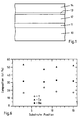
- a sapphire wafer (10) is 0.6mm thick with r-plane (10 1 2) orientation.
- a buffer layer (11) of magnesia 100 nanometres thick is deposited epitaxially.
- the single crystal magnesia layer forms a substrate for an epitaxial layer (12) of Y1Ba2Cu3O7 of thickness 200 nanometres orientated with the (001) plane parallel to the substrate.
- Two single monolayers of magnesium (13) are deposited separated by 0.8nm.
- a counterelectrode 14 of (001) orientation Y1Ba2Cu3O7 is deposited to a thickness of 200 nanometres.
- the illustration relates to a superconducting device, the invention is not limited to this and other applications involving epitaxial barrier layers of MgO on sapphire are envisaged.
- the objective is to have a base electrode of superconductor and then a non-superconducting, preferably insulating, barrier followed by another superconducting layer all being epitaxially strucutred with relation to one another. It is not possible to structure the thickness of a layer of magnesia optimally, but, by using a sequence of magnesium monolayers separated by a controlled thickness of superconductor, desired properties may be achieved.
- barrier layer Other materials may be used for the barrier layer.
- the use of zirconia or strontium titanate is possible.
- a metal target measuring 35mm by 55mm, consisted of a surround of copper with yttrium and barium at the two ends of the racetrack in proportions roughly 1:2 divided by a 3-5mm strip of copper. It was operated at a target-substrate distance of 70mm and a sputtering pressure of 2-3Pa. Oxygen was injected into the system close to the substrates using a showerhead arrangement to reduce oxidation of the target.
- a ceramic target was used.
- an operating pressure in the region 15 to 40 Pa was chosen, with a target distance of 20-30mm.
- the composition of the ceramic target was adjusted to give the correct film composition at this high sputtering pressure.
- the targets were made by carefully calcining a well mixed powder of BaCO3, Y2O3 and CuO at 890°C for 72 hours then hydrostatically compacting the reground powder at a pressure of 16MPa to form three tiles. After compaction these were fired at 900°C for 36-56 hours. To prevent the tiles cracking due to differential heating during sputtering, the operating power was reduced to 16W.
- the substrates were placed on a platinum strip heater, the substrate of which was measured with an optical pyrometer. As the substrates were well coated, their temperature could also be measured directly with only small interference of the transmitted radiation from the heater beneath. Measurements indicated that the substrates were cooler than the heater by about 160°-200°C with the heater at 900°C. Following deposition, the YBaCuO films were heat treated in situ, cooling from 600°C to 350°C over a period of an hour in 100 mbar of oxygen.
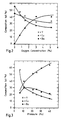
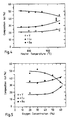
- the sputtering parameters of pressure, temperature and oxygen concentration were measured using energy-dispersive x-ray analysis with a flat piece of sintered YBa2Cu3O7 made up from high purity powders as internal standard.
- MgO was deposited on to sapphire substrates at a temperature of 850°-900°C from a pure magnesium target in an argon/15% oxygen mixture.
- the target ran in oxide mode and there was some interaction between the oxidation level of the metal and the radiation from the heater and power loading of the magnetron. It was found that the target oxidation was accelerated if the power loading was too large, and hence a power level of only 25W was used to give consistent deposition.
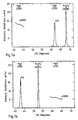
- a film on an epitaxial MgO layer on sapphire had a zero resistance temperature of 50 K whilst a film deposited on sapphire directly had a broader transition down to 10 K.
- a film deposited on to YSZ showed a zero resistance temperature of 75 K.
- the temperature should be controlled to ⁇ 2.5°C, the sputtering pressure to ⁇ 0.5% and the oxygen concentration to within 1%.
- the (110) face is to be preferred, as all atomic sites are exposed at one time, rather than needing many growth ledges to accommodate atoms as they arrive. Furthermore, the tendency to form an extra CuO plane stacking fault and the Y2Ba4Cu8O x phase is obviated.
- the deposition temperature By nucleating the correct epitaxy relationship at high temperature, the deposition temperature could be reduced, whilst still preserving the preferred growth orientation.
- Shapes other than a flat substrate may be used as a basis for the deposition.
- ribbons are one possibility.
Landscapes
- Engineering & Computer Science (AREA)
- Manufacturing & Machinery (AREA)
- Chemical & Material Sciences (AREA)
- Ceramic Engineering (AREA)
- Superconductor Devices And Manufacturing Methods Thereof (AREA)
- Crystals, And After-Treatments Of Crystals (AREA)
- Inorganic Compounds Of Heavy Metals (AREA)
Claims (26)
- Verfahren zur Herstellung von Festkörperbauteilen,
dadurch gekennzeichnet, daß es das Abscheiden eines Metall enthaltenden Materials auf einem Substrat, um eine zumindest teilweise epitaktische Monolage einer Verbindung zu bilden, die das Metall und Sauerstoff enthält, und das Abscheiden einer weiteren zumindest teilweise epitaktischen Schicht eines anderen Materials auf der Oberfläche der Monolage umfaßt. - Verfahren zur Herstellung von Festkörperbauteilen nach Anspruch 1,
dadurch gekennzeichnet, daß das Metall enthaltende Material zumindest ein Metall aus der Gruppe umfassend Magnesium, Strontium, Titan und Zirkon enthält. - Verfahren zur Herstellung von Festkörperbauteilen nach Anspruch 2,
dadurch gekennzeichnet, daß das Metall enthaltende Material Magnesium enthält. - Verfahren zur Herstellung von Festkörperbauteilen nach Anspruch 1,
dadurch gekennzeichnet, daß das Substrat Aluminiumoxid enthält. - Verfahren zur Herstellung von Festkörperbauteilen nach Anspruch 1,
dadurch gekennzeichnet, daß das Substrat ein Halbleiter ist. - Verfahren zur Herstellung von Festkörperbauteilen nach Anspruch 1,
dadurch gekennzeichnet, daß das Substrat ein Supraleiter ist. - Verfahren zur Herstellung von Festkörperbauteilen nach Anspruch 6,
dadurch gekennzeichnet, daß das Substrat ein Hochtemperatur-Supraleiter ist, der im wesentlischen eine Perowskit-Struktur aufweist. - Verfahren zur Herstellung von Festkörperbauteilen nach Anspruch 1,
dadurch gekennzeichnet, daß die weitere Schicht ein keramischer Supraleiter ist. - Verfahren zur Herstellung von Festkörperbauteilen nach Anspruch 1,
dadurch gekennzeichnet, daß die weitere Schicht eine Verbindung aus Yttrium, Barium, Kupfer und Sauerstoff enthält. - Verfahren zur Herstellung von Festkörperbauteilen unter Bildung einer epitaktischen Schicht aus Magnesiumoxid durch Sputtern von Material von einem Magnesium enthaltenden Ziel auf ein Aluminiumoxid enthaltendes Substrat und der anschließenden Bildung einer epitaktischen Schicht einer Verbindung, die Yttrium, Barium, Kupfer und Sauerstoff enthält, auf der Schicht aus Magnesiumoxid.
- Verfahren zur Herstellung von Festkörperbauteilen nach Anspruch 10,
dadurch gekennzeichnet, daß das Substrat auf eine Temperatur von zwischen 750°C und 900°C geheizt wird, während das Material aus dem Magnesium enthaltenden Ziel gesputtert wird. - Verfahren zur Herstellung von Festkörperbauteilen nach Anspruch 11,
dadurch gekennzeichnet, daß eine oxidierende Umgebungsatmosphäre aufrecht erhalten wird, während das Material aus dem Magnesium enthaltenden Ziel gesputtert wird. - Verfahren zur Herstellung von Festkörperbauteilen nach Anspruch 12,
dadurch gekennzeichnet, daß die oxidierende Umgebungsatmosphäre Sauerstoff enthält. - Verfahren zur Herstellung von Festkörperbauteilen nach Anspruch 12,
dadurch gekennzeichnet, daß die oxidierende Umgebungsatmosphäre Distickstoffoxid enthält. - Verfahren zur Herstellung von Festkörperbauteilen nach entweder Anspruch 13 oder Anspruch 14,
dadurch gekennzeichnet, daß die oxidierende Umgebungsatmosphäre Argon enthält. - Festkörperbauteil,
dadurch gekennzeichnet, daß es eine erste epitaktische Schicht (12) aus einem Material umfaßt, das aus der Supraleiter und Halbleiter enthaltenden Klasse ausgewählt ist, die auf einer zweiten epitaktischen Monolage (11), die ein Metalloxid enthält, auf einem kristallinen Substrat (10) gebildet ist. - Festkörperbauteil nach Anspruch 16,
dadurch gekennzeichnet, daß Metalloxid Magnesiumoxid ist. - Festkörperbauteil nach Anspruch 17,
dadurch gekennzeichnet, daß das kristalline Substrat Aluminiumoxid enthält. - Festkörperbauteil nach Anspruch 18,
dadurch gekennzeichnet, daß die erste epitaktische Schicht ein Supraleiter ist, der Yttrium, Barium, Kupfer und Sauerstoff enthält. - Festkörperbauteil nach Anspruch 19,
dadurch gekennzeichnet, daß es eine Schicht aus Magnesiumoxid enthält, die ihre (100) Ebene aneinandergrenzend mit der (101 2) eines Aluminiumoxidsubstrats hat. - Festkörperbauteil nach Anspruch 19,
dadurch gekennzeichnet, daß es eine Schicht aus Magnesiumoxid enthält, die ihre (110) Ebene aneinandergrenzend mit der (011 0) eines Aluminiumoxidsubstrats hat. - Festkörperbauteil nach Anspruch 19,
dadurch gekennzeichnet, daß es eine Schicht aus Magnesiumoxid enthält, die ihre (111) Ebene aneinandergrenzend mit der (112 0) eines Aluminiumoxidsubstrats hat. - Festkörperbauteil nach Anspruch 19,
dadurch gekennzeichnet, daß es eine Schicht aus Magnesiumoxid enthält, die ihre (111) Ebene aneinandergrenzend mit der (0001) eines Aluminiumoxidsubstrats hat. - Verfahren zur Bildung einer Sperrschicht in einem Festkörperbauteil,
dadurch gekennzeichnet, daß es das Abscheiden einer epitaktischen Schicht eines supraleitenden Materials auf einem Substrat, das Abscheiden einer Monolage eines zweiten Materials enthaltend eine Verbindung vom einem Metall und Sauerstoff auf der epitaktischen Schicht und das Abscheiden einer weiteren epitaktischen Schicht auf dem supraleitenden Material auf der Monolage umfaßt. - Verfahren zur Bildung einer Sperrschicht in einem Festkörperbauteil nach Anspruch 24,
dadurch gekennzeichnet, daß die Monolage gleichzeitig mit der weiteren epitaktischen Schicht abgeschieden wird. - Verfahren zur Bildung einer Sperrschicht in einem Festkörperbauteil nach entweder Anspruch 24 oder Anspruch 25,
dadurch gekennzeichnet, daß eine Vielzahl von Monolagen des zweiten Materials und entsprechender weiterer epitaktischer Lagen des supraleitenden Materials nacheinander auf dem Substrat abgeschieden werden.
Applications Claiming Priority (3)
| Application Number | Priority Date | Filing Date | Title |
|---|---|---|---|
| GB888809548A GB8809548D0 (en) | 1988-04-22 | 1988-04-22 | Epitaxial barrier layers in thin film technology |
| GB8809548 | 1988-04-22 | ||
| PCT/GB1989/000430 WO1989010634A1 (en) | 1988-04-22 | 1989-04-21 | Epitaxial deposition |
Publications (2)
| Publication Number | Publication Date |
|---|---|
| EP0412986A1 EP0412986A1 (de) | 1991-02-20 |
| EP0412986B1 true EP0412986B1 (de) | 1995-06-28 |
Family
ID=10635662
Family Applications (1)
| Application Number | Title | Priority Date | Filing Date |
|---|---|---|---|
| EP89905146A Expired - Lifetime EP0412986B1 (de) | 1988-04-22 | 1989-04-21 | Epitaktische abscheidung |
Country Status (8)
| Country | Link |
|---|---|
| EP (1) | EP0412986B1 (de) |
| JP (1) | JPH03505024A (de) |
| KR (1) | KR900701074A (de) |
| CN (1) | CN1020992C (de) |
| DE (1) | DE68923279T2 (de) |
| FI (1) | FI905176A0 (de) |
| GB (3) | GB8809548D0 (de) |
| WO (1) | WO1989010634A1 (de) |
Families Citing this family (3)
| Publication number | Priority date | Publication date | Assignee | Title |
|---|---|---|---|---|
| EP0471292B1 (de) * | 1990-08-08 | 1999-11-24 | Sumitomo Electric Industries, Limited | Substrat für supraleitende Einrichtungen |
| CN105470204A (zh) * | 2015-09-22 | 2016-04-06 | 顾士平 | 高温超导体与半导体接口实现方法 |
| CN109390452A (zh) * | 2018-10-17 | 2019-02-26 | 广东远合工程科技有限公司 | 一种大功率led用碳纤维压印铁磁复合陶瓷基散热基板 |
Citations (1)
| Publication number | Priority date | Publication date | Assignee | Title |
|---|---|---|---|---|
| EP0301525A2 (de) * | 1987-07-29 | 1989-02-01 | Matsushita Electric Industrial Co., Ltd. | Supraleitende Struktur |
Family Cites Families (13)
| Publication number | Priority date | Publication date | Assignee | Title |
|---|---|---|---|---|
| FR2071706A5 (de) * | 1969-11-12 | 1971-09-17 | Ibm | |
| BE786585A (fr) * | 1971-07-23 | 1973-01-22 | Philips Corp | Matieres semi-conductrices luminescentes au phosphure de gallium et procede pour les preparer |
| US3979271A (en) * | 1973-07-23 | 1976-09-07 | Westinghouse Electric Corporation | Deposition of solid semiconductor compositions and novel semiconductor materials |
| US4158851A (en) * | 1976-03-29 | 1979-06-19 | Sumitomo Electric Industries, Ltd. | Semi-insulating gallium arsenide single crystal |
| US4316785A (en) * | 1979-11-05 | 1982-02-23 | Nippon Telegraph & Telephone Public Corporation | Oxide superconductor Josephson junction and fabrication method therefor |
| US4366493A (en) * | 1980-06-20 | 1982-12-28 | International Business Machines Corporation | Semiconductor ballistic transport device |
| FR2510309A1 (fr) * | 1981-07-22 | 1983-01-28 | Centre Nat Rech Scient | Procede d'augmentation de la temperature critique de supraconduction dans les supraconducteurs organiques quasi-unidimensionnels et nouveaux composes supraconducteurs ainsi obtenus |
| JPH0682651B2 (ja) * | 1985-05-30 | 1994-10-19 | 株式会社日立製作所 | 半導体装置用エピタキシヤル絶縁膜とその製造方法 |
| DE3850580T2 (de) * | 1987-01-30 | 1994-10-27 | Hitachi Ltd | Supraleiteranordnung. |
| KR950010206B1 (ko) * | 1987-03-09 | 1995-09-11 | 가부시끼가이샤 한도다이 에네르기 겐꾸쇼 | 전자 장치 및 그 제조 방법 |
| US4768069A (en) * | 1987-03-23 | 1988-08-30 | Westinghouse Electric Corp. | Superconducting Josephson junctions |
| CA1326976C (en) * | 1987-05-26 | 1994-02-15 | Satoshi Takano | Superconducting member |
| JPH0688858B2 (ja) * | 1987-08-21 | 1994-11-09 | 松下電器産業株式会社 | 超電導体 |
-
1988
- 1988-04-22 GB GB888809548A patent/GB8809548D0/en active Pending
- 1988-05-20 GB GB888812038A patent/GB8812038D0/en active Pending
-
1989
- 1989-04-12 KR KR1019890702467A patent/KR900701074A/ko not_active Ceased
- 1989-04-21 JP JP1504928A patent/JPH03505024A/ja active Pending
- 1989-04-21 EP EP89905146A patent/EP0412986B1/de not_active Expired - Lifetime
- 1989-04-21 FI FI905176A patent/FI905176A0/fi not_active IP Right Cessation
- 1989-04-21 GB GB8909042A patent/GB2217943B/en not_active Expired - Lifetime
- 1989-04-21 WO PCT/GB1989/000430 patent/WO1989010634A1/en not_active Ceased
- 1989-04-21 DE DE68923279T patent/DE68923279T2/de not_active Expired - Fee Related
- 1989-04-22 CN CN89103498A patent/CN1020992C/zh not_active Expired - Fee Related
Patent Citations (1)
| Publication number | Priority date | Publication date | Assignee | Title |
|---|---|---|---|---|
| EP0301525A2 (de) * | 1987-07-29 | 1989-02-01 | Matsushita Electric Industrial Co., Ltd. | Supraleitende Struktur |
Non-Patent Citations (2)
| Title |
|---|
| CRC Handbook of Chemistry and Physics, 65th Ed., 1984-1985, page E-83 * |
| Physical Review Letters, Vol. 58, No. 25, 22 June 1987, pp. 2684-2686 * |
Also Published As
| Publication number | Publication date |
|---|---|
| FI905176A7 (fi) | 1990-10-19 |
| WO1989010634A1 (en) | 1989-11-02 |
| KR900701074A (ko) | 1990-08-17 |
| GB8812038D0 (en) | 1988-06-22 |
| GB2217943B (en) | 1992-12-23 |
| DE68923279T2 (de) | 1995-11-23 |
| GB8809548D0 (en) | 1988-05-25 |
| CN1020992C (zh) | 1993-05-26 |
| FI905176A0 (fi) | 1990-10-19 |
| GB2217943A (en) | 1989-11-01 |
| CN1038722A (zh) | 1990-01-10 |
| JPH03505024A (ja) | 1991-10-31 |
| EP0412986A1 (de) | 1991-02-20 |
| GB8909042D0 (en) | 1989-06-07 |
| DE68923279D1 (de) | 1995-08-03 |
Similar Documents
| Publication | Publication Date | Title |
|---|---|---|
| JP2664066B2 (ja) | 超電導薄膜およびその作製方法 | |
| US20040168636A1 (en) | Process and apparatus for producing cystalline thin film buffer layers and structures having biaxial texture | |
| EP0309294A2 (de) | Verfahren und Vorrichtung zur Herstellung von supraleitenden Oxidmaterialien | |
| WO2001026165A2 (en) | Method and apparatus for forming buffer layers | |
| EP0406126A1 (de) | Substrat mit einer supraleitenden Schicht | |
| Ramesh et al. | Ferroelectric bismuth titanate/superconductor (Y‐Ba‐Cu‐O) thin‐film heterostructures on silicon | |
| US5361720A (en) | Epitaxial deposition | |
| US4874741A (en) | Non-enhanced laser evaporation of oxide superconductors | |
| EP0635894B1 (de) | Schichtstruktur mit isolierender Dünnschicht und Oxydsupraleiter-Dünnschicht | |
| EP0410868A2 (de) | Supraleitende Dünnschicht aus Oxid und Verfahren zu deren Herstellung | |
| US6998028B1 (en) | Methods for forming superconducting conductors | |
| EP0412986B1 (de) | Epitaktische abscheidung | |
| US5276010A (en) | Process for producing bismuth-based oxide superconducting films | |
| EP0341148A2 (de) | Halbleitersubstrat mit dünner Supraleiterschicht | |
| Geerk et al. | HTSC thin film growth by inverted cylindrical magnetron sputtering | |
| JPS63239742A (ja) | 薄膜超電導体の製造方法 | |
| JPH05116940A (ja) | 基板上に金属酸化物の薄膜を生成させる方法 | |
| EP0324220A1 (de) | Supraleitende Dünnschichten | |
| Tomlinson et al. | Optimization of thin-film YBa/sub 2/Cu/sub 3/O/sub 7/deposition by DC sputtering onto sapphire substrates | |
| EP0504804A1 (de) | Supraleitende dünne Schicht des Systems Bi-Kupferoxyd und Verfahren, um sie herzustellen | |
| US20090036313A1 (en) | Coated superconducting materials | |
| JP2702711B2 (ja) | 薄膜超電導体の製造方法 | |
| JP2594271B2 (ja) | 超電導体用薄膜の製造装置および超電導体用薄膜の製造方法 | |
| Sanchez et al. | Deposition of YBa2Cu3Ox by laser ablation on Si (100) using different buffer layers | |
| EP0333513B1 (de) | Oxid-Supraleiter |
Legal Events
| Date | Code | Title | Description |
|---|---|---|---|
| PUAI | Public reference made under article 153(3) epc to a published international application that has entered the european phase |
Free format text: ORIGINAL CODE: 0009012 |
|
| 17P | Request for examination filed |
Effective date: 19900907 |
|
| AK | Designated contracting states |
Kind code of ref document: A1 Designated state(s): DE FR GB IT NL SE |
|
| RAP1 | Party data changed (applicant data changed or rights of an application transferred) |
Owner name: BRITISH TECHNOLOGY GROUP LTD |
|
| 17Q | First examination report despatched |
Effective date: 19930402 |
|
| GRAA | (expected) grant |
Free format text: ORIGINAL CODE: 0009210 |
|
| AK | Designated contracting states |
Kind code of ref document: B1 Designated state(s): DE FR GB IT NL SE |
|
| ITF | It: translation for a ep patent filed | ||
| REF | Corresponds to: |
Ref document number: 68923279 Country of ref document: DE Date of ref document: 19950803 |
|
| ET | Fr: translation filed | ||
| PG25 | Lapsed in a contracting state [announced via postgrant information from national office to epo] |
Ref country code: GB Effective date: 19960421 |
|
| PG25 | Lapsed in a contracting state [announced via postgrant information from national office to epo] |
Ref country code: SE Effective date: 19960422 |
|
| PLBE | No opposition filed within time limit |
Free format text: ORIGINAL CODE: 0009261 |
|
| STAA | Information on the status of an ep patent application or granted ep patent |
Free format text: STATUS: NO OPPOSITION FILED WITHIN TIME LIMIT |
|
| 26N | No opposition filed | ||
| PG25 | Lapsed in a contracting state [announced via postgrant information from national office to epo] |
Ref country code: NL Effective date: 19961101 |
|
| GBPC | Gb: european patent ceased through non-payment of renewal fee |
Effective date: 19960421 |
|
| PG25 | Lapsed in a contracting state [announced via postgrant information from national office to epo] |
Ref country code: FR Effective date: 19961227 |
|
| PG25 | Lapsed in a contracting state [announced via postgrant information from national office to epo] |
Ref country code: DE Effective date: 19970101 |
|
| NLV4 | Nl: lapsed or anulled due to non-payment of the annual fee |
Effective date: 19961101 |
|
| EUG | Se: european patent has lapsed |
Ref document number: 89905146.0 |
|
| REG | Reference to a national code |
Ref country code: FR Ref legal event code: ST |
|
| PG25 | Lapsed in a contracting state [announced via postgrant information from national office to epo] |
Ref country code: IT Free format text: LAPSE BECAUSE OF NON-PAYMENT OF DUE FEES;WARNING: LAPSES OF ITALIAN PATENTS WITH EFFECTIVE DATE BEFORE 2007 MAY HAVE OCCURRED AT ANY TIME BEFORE 2007. THE CORRECT EFFECTIVE DATE MAY BE DIFFERENT FROM THE ONE RECORDED. Effective date: 20050421 |