EP0415211B1 - Dérivés de 3-aryl-pyrrolidin-2,4-diones - Google Patents
Dérivés de 3-aryl-pyrrolidin-2,4-diones Download PDFInfo
- Publication number
- EP0415211B1 EP0415211B1 EP90115872A EP90115872A EP0415211B1 EP 0415211 B1 EP0415211 B1 EP 0415211B1 EP 90115872 A EP90115872 A EP 90115872A EP 90115872 A EP90115872 A EP 90115872A EP 0415211 B1 EP0415211 B1 EP 0415211B1
- Authority
- EP
- European Patent Office
- Prior art keywords
- alkyl
- formula
- halogen
- alkoxy
- optionally substituted
- Prior art date
- Legal status (The legal status is an assumption and is not a legal conclusion. Google has not performed a legal analysis and makes no representation as to the accuracy of the status listed.)
- Expired - Lifetime
Links
- 0 *C1C2=C=C=C(C(C(*3C4CNCNC3)=O)=C4O*)C(*)=C*2NC1 Chemical compound *C1C2=C=C=C(C(C(*3C4CNCNC3)=O)=C4O*)C(*)=C*2NC1 0.000 description 2
Classifications
-
- C—CHEMISTRY; METALLURGY
- C07—ORGANIC CHEMISTRY
- C07D—HETEROCYCLIC COMPOUNDS
- C07D513/00—Heterocyclic compounds containing in the condensed system at least one hetero ring having nitrogen and sulfur atoms as the only ring hetero atoms, not provided for in groups C07D463/00, C07D477/00 or C07D499/00 - C07D507/00
- C07D513/02—Heterocyclic compounds containing in the condensed system at least one hetero ring having nitrogen and sulfur atoms as the only ring hetero atoms, not provided for in groups C07D463/00, C07D477/00 or C07D499/00 - C07D507/00 in which the condensed system contains two hetero rings
- C07D513/04—Ortho-condensed systems
-
- A—HUMAN NECESSITIES
- A01—AGRICULTURE; FORESTRY; ANIMAL HUSBANDRY; HUNTING; TRAPPING; FISHING
- A01N—PRESERVATION OF BODIES OF HUMANS OR ANIMALS OR PLANTS OR PARTS THEREOF; BIOCIDES, e.g. AS DISINFECTANTS, AS PESTICIDES OR AS HERBICIDES; PEST REPELLANTS OR ATTRACTANTS; PLANT GROWTH REGULATORS
- A01N43/00—Biocides, pest repellants or attractants, or plant growth regulators containing heterocyclic compounds
- A01N43/90—Biocides, pest repellants or attractants, or plant growth regulators containing heterocyclic compounds having two or more relevant hetero rings, condensed among themselves or with a common carbocyclic ring system
-
- A—HUMAN NECESSITIES
- A01—AGRICULTURE; FORESTRY; ANIMAL HUSBANDRY; HUNTING; TRAPPING; FISHING
- A01N—PRESERVATION OF BODIES OF HUMANS OR ANIMALS OR PLANTS OR PARTS THEREOF; BIOCIDES, e.g. AS DISINFECTANTS, AS PESTICIDES OR AS HERBICIDES; PEST REPELLANTS OR ATTRACTANTS; PLANT GROWTH REGULATORS
- A01N47/00—Biocides, pest repellants or attractants, or plant growth regulators containing organic compounds containing a carbon atom not being member of a ring and having no bond to a carbon or hydrogen atom, e.g. derivatives of carbonic acid
- A01N47/02—Biocides, pest repellants or attractants, or plant growth regulators containing organic compounds containing a carbon atom not being member of a ring and having no bond to a carbon or hydrogen atom, e.g. derivatives of carbonic acid the carbon atom having no bond to a nitrogen atom
- A01N47/06—Biocides, pest repellants or attractants, or plant growth regulators containing organic compounds containing a carbon atom not being member of a ring and having no bond to a carbon or hydrogen atom, e.g. derivatives of carbonic acid the carbon atom having no bond to a nitrogen atom containing —O—CO—O— groups; Thio analogues thereof
-
- C—CHEMISTRY; METALLURGY
- C07—ORGANIC CHEMISTRY
- C07D—HETEROCYCLIC COMPOUNDS
- C07D277/00—Heterocyclic compounds containing 1,3-thiazole or hydrogenated 1,3-thiazole rings
- C07D277/02—Heterocyclic compounds containing 1,3-thiazole or hydrogenated 1,3-thiazole rings not condensed with other rings
- C07D277/04—Heterocyclic compounds containing 1,3-thiazole or hydrogenated 1,3-thiazole rings not condensed with other rings having no double bonds between ring members or between ring members and non-ring members
- C07D277/06—Heterocyclic compounds containing 1,3-thiazole or hydrogenated 1,3-thiazole rings not condensed with other rings having no double bonds between ring members or between ring members and non-ring members with carbon atoms having three bonds to hetero atoms with at the most one bond to halogen, e.g. ester or nitrile radicals, directly attached to ring carbon atoms
-
- C—CHEMISTRY; METALLURGY
- C07—ORGANIC CHEMISTRY
- C07D—HETEROCYCLIC COMPOUNDS
- C07D279/00—Heterocyclic compounds containing six-membered rings having one nitrogen atom and one sulfur atom as the only ring hetero atoms
- C07D279/04—1,3-Thiazines; Hydrogenated 1,3-thiazines
- C07D279/06—1,3-Thiazines; Hydrogenated 1,3-thiazines not condensed with other rings
-
- C—CHEMISTRY; METALLURGY
- C07—ORGANIC CHEMISTRY
- C07D—HETEROCYCLIC COMPOUNDS
- C07D279/00—Heterocyclic compounds containing six-membered rings having one nitrogen atom and one sulfur atom as the only ring hetero atoms
- C07D279/10—1,4-Thiazines; Hydrogenated 1,4-thiazines
Definitions
- the invention relates to new 3-aryl-pyrrolidine-2,4-dione derivatives, several processes for their preparation and their use as herbicides, insecticides and acaricides.
- EP-A 0 262 399 discloses similarly structured compounds (3-aryl-pyrrolidine-2,4-diones), of which no herbicidal, fungicidal, antifungal, tickicidal, insecticidal or acaricidal activity has become known.
- DE-A-2 361 084 discloses substituted 3-hydroxyindones with herbicidal activity. However, the effectiveness and range of action of these compounds is not always satisfactory.
- reaction temperatures can be varied within a substantial range. In general, temperatures between 0 ° C and 250 ° C, preferably between 50 ° C and 150 ° C.
- Process (A) according to the invention is generally carried out under normal pressure.
- reaction components of the formulas (II) and the deprotonating bases are generally employed in approximately equimolar amounts. However, it is also possible to use one or the other component in a larger excess (up to 3 moles).
- Process (A) is characterized in that compounds of the formula (II) in which X, Y, Z, m, n and R3 have the meaning given above are subjected to intramolecular condensation in the presence of bases.
- All customary inert organic solvents can be used as diluents in process (A) according to the invention.
- Hydrocarbons such as cyclohexane, toluene and xylene, preferably ethers such as dibutyl ether, tetrahydrofuran, dioxane, glycol dimethyl ether and diglycol dimethyl ether, and also polar solvents such as dimethyl sulfoxide, sulfolane, dimethylformamide and N-methyl-pyrrolidone are preferably usable.
- All conventional proton acceptors can be used as deprotonating agents when carrying out process (A) according to the invention.
- Alkali metal and alkaline earth metal oxides, hydroxides and carbonates such as sodium hydroxide, potassium hydroxide, magnesium oxide, calcium oxide, sodium carbonate, potassium carbonate and calcium carbonate, which can also be used in the presence, are preferably used phase transfer catalysts such as triethylbenzylammonium chloride, tetrabutylammonium bromide, Adogen 464 or TDA 1 can be used.
- alkali metal and alkaline earth metal amides and hydrides such as sodium amide, sodium hydride and calcium hydride, and also alkali metal alcoholates, such as sodium methylate, sodium methylate and potassium tert-butoxide, can also be used.
- Adogen 464 methyltrialkyl (C8-C10) ammonium chloride
- TDA 1 tris (methoxyethoxylethyl) amine
- the process (B ⁇ ) is characterized in that compounds of the formula (Ia) are reacted with carboxylic acid halides of the formula (III).
- All solvents which are inert towards these compounds can be used as diluents in process (B ⁇ ) according to the invention when the acid halides are used.
- Hydrocarbons such as gasoline, benzene, toluene, xylene and tetralin are preferably usable, furthermore halogenated hydrocarbons such as methylene chloride, chloroform, carbon tetrachloride, chlorobenzene and o-dichlorobenzene, also ketones such as acetone and methylisopropyl ketone, furthermore ethers such as diethyl ether, tetrahydrofuran and dioxane, in addition carboxylic acid esters, such as ethyl acetate, and also strongly polar solvents, such as dimethyl sulfoxide and sulfolane. If the hydrolysis stability of the acid halide permits, the reaction can also be carried out in the presence of water.
- Tertiary amines such as triethylamine, pyridine, DABCO, DBU, DBA, Hunig base and N, N-dimethylaniline, furthermore alkaline earth metal oxides, such as magnesium and calcium oxide, and also alkali metal and alkaline earth metal carbonates, such as sodium carbonate, are preferably usable , Potassium carbonate and calcium carbonate.
- reaction temperatures can also be varied within a substantial range in the process (B ⁇ ) according to the invention, even when using carboxylic acid halides. In general, temperatures between -20 ° C and + 150 ° C, preferably between 0 ° C and 100 ° C.
- the starting materials of the formula (Ia) and the carboxylic acid halide of the formula (III) are generally used in approximately equivalent amounts. However, it is also possible to use the carboxylic anhydride in a larger excess (up to 5 mol). The processing takes place according to usual methods.
- the process (B ⁇ ) is characterized in that compounds of the formula (Ia) are reacted with carboxylic acid hydrides of the formula (IV).
- the diluents which can preferably be used are those which are also preferred when using acid halides. Otherwise, an excess of carboxylic acid hydride can also act as a diluent.
- reaction temperatures can also be varied within a substantial range in the process (B ⁇ ) according to the invention, even when using carboxylic anhydrides. In general, temperatures between -20 ° C and + 150 ° C, preferably between 0 ° C and 100 ° C.
- the starting materials of the formula (Ia) and the carboxylic anhydride of the formula (IV) are generally used in approximately equivalent amounts. However, it is also possible to use the carboxylic anhydride in a larger excess (up to 5 mol). The processing takes place according to usual methods.
- the general procedure is to remove diluent and excess carboxylic acid hydride and the resulting carboxylic acid by distillation or by washing with an organic solvent or with water.
- Process (C) is characterized in that compounds of the formula (Ia) are reacted with chloroformates of the formula (V).
- corresponding chloroformic acid esters are used, all customary acid acceptors are suitable as acid binders in the reaction according to process (C) according to the invention.
- Tertiary amines such as triethylamine, pyridine, DABCO, DBC, DBA, Hunig base and N, N-dimethylaniline, furthermore alkaline earth metal oxides, such as magnesium and calcium oxide, and also alkali metal and alkaline earth metal carbonates, are preferably usable. such as sodium carbonate, potassium carbonate and calcium carbonate.
- All solvents which are inert to these compounds can be used as diluents in process (C) according to the invention when using the chloroformate.
- Hydrocarbons such as gasoline, benzene, toluene, xylene and tetralin are preferably usable, furthermore halogenated hydrocarbons such as methylene chloride, chloroform, carbon tetrachloride, chlorobenzene and o-dichlorobenzene, also ketones such as acetone and methylisopropyl ketone, furthermore ethers such as diethyl ether, tetrahydrofuran and dioxane, in addition Carboxylic acid esters such as ethyl acetate and also strongly polar solvents such as dimethyl sulfoxide and sulfolane.
- reaction temperatures can be varied within a substantial range when carrying out process (C) according to the invention. If one works in the presence of a diluent and an acid binder, the reaction temperatures are generally between -20 ° C and + 100 ° C, preferably between 0 ° C and 50 ° C.
- Process (C) according to the invention is generally carried out under normal pressure.
- the starting materials of the formula (Ia) and the corresponding (chloroformate of the formula (V) are generally used in approximately equivalent amounts. However, it is also possible to use one or the other component in a larger excess
- the mixture is then worked up by customary methods, in general the procedure is to remove precipitated salts and to concentrate the remaining reaction mixture by stripping off the diluent.
- Process (D) is characterized in that compounds of the formula (Ia) are reacted with acetal hydroxides (VIII) or amines (IX).
- ethers such as tetrahydrofuran, dioxane, diethyl ether or alcohols such as methanol, ethanol, isopropanol, but also water can preferably be used in the process according to the invention.
- Process (D) according to the invention is generally carried out under normal pressure.
- the reaction temperatures are generally between -20 ° C and 100 ° C, preferably between 0 ° C and 50 ° C.
- the starting materials of the formula (Ia) or (IX) are generally used in approximately equimolar amounts. However, it is also possible to use one or the other Use component in a larger excess (up to 2 moles). In general, the procedure is that the reaction mixture is concentrated by stripping off the diluent.
- Suitable oxidants for process (E) according to the invention are all sulfur-oxidizing reagents, e.g. Halogen such as chlorine and bromine and their aqueous solutions, alkali peroxides such as sodium peroxide and potassium peroxide, salts of halogen oxyacids such as potassium chlorate, potassium bromate, sodium periodate and sodium perborate, furthermore inorganic persalts such as potassium permanganate, potassium peroxodisulfate and potassium peroxomonosulfate, and also in the presence of ammonium sulfate and also sodium metal sulfate and also ammonium sulfate and ammonium sulfate as well as sodium methoxide.
- Organic peroxides such as tert-butyl hydroperoxide but also organic peracids such as peracetic acid, perpropionic acid and m-chloroperbenzoic acid (MCPBA) can also be used.
- Hydrocarbons such as gasoline, benzene, toluene, Xylene and tetralin are also halogenated hydrocarbons such as methylene chloride, chloroform, chlorobenzene and dichlorobenzene, and also organic acids such as acetic acid and propionic acid and water.
- reaction temperatures when carrying out process (E) according to the invention can be varied within a substantial range.
- the reaction temperatures are between -30 ° C and + 150 ° C, preferably between 0 ° C and 100 ° C.
- Process (E) according to the invention is generally carried out under normal pressure.
- the starting materials of the formulas (Ia) to (Ic) and the corresponding oxidizing agent are used in approximately twice equimolar amounts. However, it is also possible to use the oxidizing agent in a larger excess (up to 2 mol). The processing takes place according to the usual methods.
- Suitable oxidants for process (F) according to the invention are all sulfur-oxidizing reagents, for example halogen such as chlorine and bromine and their aqueous solutions, alkali peroxides such as sodium peroxide and potassium peroxide, salts of halogen oxygen acids such as potassium chlorate, potassium bromate, sodium periodate and sodium perborate, and furthermore inorganic persalts such as potassium permanganate , Potassium peroxodisulfate and potassium peroxomonosulfate, but also H2O2 in the presence of transition metal salts such as sodium tungstate and ammonium molybdate.
- Organic peroxides such as tert-butyl hydroperoxide but also organic peracids such as peracetic acid, perpropionic acid and m-chloroperbenzoic acid (MCPBA) can also be used.
- Hydrocarbons such as gasoline, benzene, toluene, xylene and tetralin are preferably usable, furthermore halogenated hydrocarbons such as methylene chloride, chloroform, chlorobenzene and dichlorobenzene, and also organic acids such as acetic acid and propionic acid and water.
- reaction temperatures when carrying out process (F) according to the invention can be varied within a substantial range.
- the reaction temperatures are between -30 ° C and + 150 ° C, preferably between 0 ° C and 100 ° C.
- Process (F) according to the invention is generally carried out under normal pressure.
- the active substances are suitable for controlling animal pests, preferably arthropods and nematodes, in particular insects and arachnids, which occur in agriculture, in forests, in the protection of stored goods and materials and in the hygiene sector. They are effective against normally sensitive and resistant species as well as against all or individual stages of development.
- the pests mentioned above include: From the order of the Isopoda, for example, Oniscus asellus, Armadillidium vulgare, Porcellio scaber. From the order of the Diplopoda, for example, Blaniulus guttulatus. From the order of the Chilopoda, for example, Geophilus carpophagus and Scutigera spec.
- Symphyla for example, Scutigerella immaculata.
- Thysanura for example Lepisma saccharina.
- Collembola for example Onychiurus armatus.
- Orthoptera for example Blatta orientalis, Periplaneta americana, Leucophaea maderae, Blattella germanica, Acheta domesticus, Gryllotalpa spp., Locusta migratoria migratorioides, Melanoplus differentialis, Schistocerca gregaria.
- Dermaptera for example, Forficula auricularia.
- Thysanoptera for example Hercinothrips femoralis, Thrips tabaci.
- Heteroptera for example Eurygaster spp., Dysdercus intermedius, Piesma quadrata, Cimex lectularius, Rhodnius prolixus, Triatoma spp.
- From the order of the Homoptera for example, Aleurodes brassicae, Bemisia tabaci, Trialeurodes vaporariorum, Aphis gossypii, Brevicoryne brassicae, Cryptomyzus ribis, Aphis fabae, Doralis pomi, Eriosoma lanigerum, Hyalopterus arundinis, Macrosiphum avenae, Phusoponosum, Myzus sppas spp., Euscelis bilobatus, Nephotettix cincticeps, Lecanium corni, Saissetia oleae, Laodelphax striatellus, Nilaparvata lugens, Aonidiella aurantii, Aspidiotus hederae, Pseudococcus spp.
- Psylla spp From the order of the Lepidoptera, for example Pectinophora gossypiella, Bupalus piniarius, Cheimatobia brumata, Lithocolletis blancardella, Hyponomeuta padella, Plutella maculipennis, Malacosoma neustria, Euproctis chrysorrhoea, Lymantria spp.
- Hymenoptera for example Diprion spp., Hoplocampa spp., Lasius spp., Monomorium pharaonis, Vespa spp.
- Diptera for example Aedes spp., Anopheles spp., Culex spp., Drosophila melanogaster, Musca spp., Fannia spp., Calliphora erythrocephala, Lucilia spp., Chrysomyia spp., Cuterebra spp., Gastrophilus spp., Hyppobosca ., Stomoxys spp., Oestrus spp., Hypoderma spp., Tabanus spp.
- Tannia spp. Bibio hortulanus, Oscinella frit, Phorbia spp., Pegomyia hyoscyami, Ceratitis capitata, Dacus oleae, Tipula paludosa.
- Siphonaptera for example Xenopsylla cheopis, Ceratophyllus spp ..
- Arachnida for example Scorpio maurus, Latrodectus mactans.
- Acarina e.g. Acarus siro, Argas spp., Ornithodoros spp., Dermanyssus gallinae, Eriophyes ribis, Phyllocoptruta oleivora, Boophilus spp., Rhipicephalus spp., Amblyomma spp., Hyalomma spp., Ixodes spp., Psoroptes spp.,. Chori ., Tarsonemus spp., Bryobia praetiosa, Panonychus spp., Tetranychus spp ..
- the plant-parasitic nematodes include Pratylenchus spp., Radopholus similis, Ditylenchus dipsaci, Tylenchulus semipenetrans, Heterodera spp., Globodera ssp., Meloidogyne spp., Aphelenchoides spp., Longidorus spp., Tripichema spp.
- the active compounds according to the invention can furthermore be used as defoliants, desiccants, haulm killers and in particular as weed killers. Weeds in the broadest sense are all plants that grow in places where they are undesirable. Whether the substances according to the invention act as total or selective herbicides depends essentially on the amount used.
- the compounds according to the invention have a selective activity against monocotyledon weeds in monocotyledon and dicotyledon crops in the pre- and post-process (pre- and post-mergence) with good crop tolerance.
- the active compounds according to the invention can be used, for example, in the following plants: Monocotyledon weeds of the genera: Echinochloa, Setaria, Panicum, Digitaria, Phleum, Poa, Festuca, Eleusine, Brachiaria, Lolium, Bromus, Avena, Cyperus, Sorghum, Agropyron, Cynodon, Monochoria, Fimbristylis, Sagittaria, Iochasumirumum, Scalumumum, Scalumumum , Sphenoclea, Dactyloctenium, Agrostis, Alopecurus, Apera.
- the compounds are suitable for total weed control, for example on industrial and rail tracks and on paths and squares with and without tree cover.
- the compounds for weed control in permanent crops for example forests, ornamental trees, fruit, wine, citrus, nut, banana, coffee, tea, rubber, oil palm, cocoa, berry fruit and hop plants and for selective weed control in annual crops.
- the active compounds according to the invention show good compatibility with important crop plants, such as. As wheat, cotton, soybeans, citrus fruits and sugar beets, and can therefore be used as selective weed control agents.
- the active compounds can be converted into the customary formulations, such as solutions, emulsions, suspensions, powders, foams, pastes, granules, aerosols, active substance-impregnated natural and synthetic substances, very fine encapsulations in polymeric substances and in coating compositions for seeds, and also in formulations with Fuel sets, such as smoking cartridges, cans, spirals, etc., as well as ULV cold and warm mist formulations.
- customary formulations such as solutions, emulsions, suspensions, powders, foams, pastes, granules, aerosols, active substance-impregnated natural and synthetic substances, very fine encapsulations in polymeric substances and in coating compositions for seeds, and also in formulations with Fuel sets, such as smoking cartridges, cans, spirals, etc., as well as ULV cold and warm mist formulations.
- formulations are prepared in a known manner, for example by mixing the active ingredients with extenders, that is to say liquid solvents, pressurized liquefied gases and / or solid carriers, optionally using surface-active agents, that is to say emulsifiers and / or dispersants and / or foam-generating agents. If water is used as an extender, organic solvents can, for example, also be used as auxiliary solvents.
- extenders that is to say liquid solvents, pressurized liquefied gases and / or solid carriers, optionally using surface-active agents, that is to say emulsifiers and / or dispersants and / or foam-generating agents.
- surface-active agents that is to say emulsifiers and / or dispersants and / or foam-generating agents.
- organic solvents can, for example, also be used as auxiliary solvents.
- liquid solvents aromatics, such as xylene, toluene, or alkylnaphthalenes, chlorinated aromatics or chlorinated aliphatic hydrocarbons, such as chlorobenzenes, chlorethylenes or methylene chloride, aliphatic hydrocarbons, such as cyclohexane or paraffins, for example petroleum fractions, Alcohols, such as butanol or glycol, and their ethers and esters, ketones, such as acetone, methyl ethyl ketone, methyl isobutyl ketone or cyclohexanone, strongly polar solvents, such as dimethylformamide and dimethyl sulfoxide, and water;
- Liquefied gaseous extenders or carriers mean liquids which are gaseous at normal temperature and under normal pressure, for example aerosol propellants, such as halogenated hydrocarbons and butane, propane, nitrogen and carbon dioxide;
- Solid carrier materials are suitable: for example natural rock powders
- adhesives such as carboxymethyl cellulose, natural and synthetic powdery, granular or latex-shaped polymers are used, such as gum arabic, polyvinyl alcohol, polyvinyl acetate, and natural phospholipids, such as cephalins and lecithins, and synthetic phospholipids.
- Other additives can be mineral and vegetable oils.
- Dyes such as inorganic pigments, e.g. Iron oxide, titanium oxide, ferrocyan blue and organic dyes such as alizarin, azo and metal phthalocyanine dyes and trace nutrients such as salts of iron, manganese, boron, copper, cobalt, molybdenum and zinc can be used.
- the formulations generally contain between 0.1 and 95 percent by weight of active compound, preferably between 0.5 and 90%.
- the active compounds according to the invention can be present in their commercially available formulations and in the use forms prepared from these formulations in a mixture with other active compounds, such as insecticides, attractants, sterilants, acaricides, nematicidal herbicides or fungicides.
- Insecticides include, for example, phosphoric acid esters, carbamates, carboxylic acid esters, chlorinated hydrocarbons, phenylureas, substances produced by microorganisms, etc.
- the active compounds according to the invention can furthermore be present in their commercially available formulations and in the use forms prepared from these formulations in a mixture with synergists.
- Synergists are connections which increases the effectiveness of the active ingredients without the added synergist itself having to be active.
- the active substance content of the use forms prepared from the commercially available formulations can vary within wide ranges.
- the active substance concentration of the use forms can be from 0.0000001 to 95% by weight of active substance, preferably between 0.0001 and 1% by weight.
- the application takes place in a customary manner adapted to the application forms.
- the active ingredients can be used as such, in the form of their formulations or the use forms prepared therefrom by further dilution or by combination with emulsifiable oils, surface-active substances and further additions, such as ready-to-use solutions, suspensions, emulsions, powders, pastes and granules. They are used in the usual way, e.g. by pouring, spraying, spraying, sprinkling.
- the active compounds according to the invention can be applied as herbicides both before and after emergence of the plants.
- the amount of active ingredient used can vary over a wide range. It essentially depends on the type of effect desired. In general, the application rates are between 0.01 and 15 kg of active ingredient per hectare of soil, preferably between 0.1 and 5 kg per ha.
- the active compounds which can be used according to the invention are also suitable for controlling mites, ticks, etc. in the field of animal husbandry and cattle breeding, better results, e.g. higher milk yields, higher weight, more beautiful animal fur, longer lifespan etc. can be achieved.
- the active ingredients which can be used according to the invention are used in this field in a known manner, such as by oral use in the form of, for example, tablets, capsules, drinkers, granules, by dermal or external use in the form of, for example, dipping (dipping), spraying (spraying), pouring on (pour-on and spot-on) and powdering, as well as by parenteral use in the form of, for example, injection and furthermore by the “feed-through” method.
- use as a shaped body (collar, ear tag) is also possible.
- Bean plants Phaseolus vulgaris
- Bean plants which are severely affected by all stages of development of the common spider mite or bean spider mite (Tetranychus urticae)
- the kill is determined in%. 100% means that all spider mites have been killed; 0% means that no spider mites have been killed.
- Rice seedlings (Oryza sativa) are treated by dipping into the active ingredient preparation of the desired concentration and populated with larvae of the green rice leafhopper (Nephotettix cincticeps) while the seedlings are still moist.
- the kill is determined in%. 100% means that all cicadas have been killed; 0% means that no cicadas have been killed.
- Seeds of the test plants are sown in normal soil and watered with the active compound preparation after 24 hours.
- the amount of water per unit area is expediently kept constant.
- the concentration of active substance in the preparation is irrelevant, the only decisive factor is the amount of active substance applied per unit area.
- Test plants with a height of 5-15 cm are sprayed with the active substance preparation in such a way that the desired amounts of active substance are applied per unit area.
- the concentration of the spray liquor is chosen so that the particular amounts of active compound desired are applied in 2000 l of water / ha.
Landscapes
- Chemical & Material Sciences (AREA)
- Organic Chemistry (AREA)
- Life Sciences & Earth Sciences (AREA)
- Wood Science & Technology (AREA)
- Environmental Sciences (AREA)
- Plant Pathology (AREA)
- Health & Medical Sciences (AREA)
- Engineering & Computer Science (AREA)
- Dentistry (AREA)
- General Health & Medical Sciences (AREA)
- Agronomy & Crop Science (AREA)
- Zoology (AREA)
- Pest Control & Pesticides (AREA)
- Agricultural Chemicals And Associated Chemicals (AREA)
- Indole Compounds (AREA)
- Plural Heterocyclic Compounds (AREA)
- Nitrogen- Or Sulfur-Containing Heterocyclic Ring Compounds With Rings Of Six Or More Members (AREA)
- Nitrogen And Oxygen Or Sulfur-Condensed Heterocyclic Ring Systems (AREA)
- Nitrogen Condensed Heterocyclic Rings (AREA)
- Pyrrole Compounds (AREA)
Claims (10)
- 3-arylpyrrolidine-2,4-diones de formule (I)
 A-B représentent -S-CH₂-, -SO-CH₂-, -SO₂-CH₂-, -CH₂-S-, -CH₂-SO-, -CH₂-SO₂-, -S-, -SO-, -SO₂-,X est un groupe alkyle en C₁ à C₆, un halogène, un groupe alkoxy en C₁ à C₆,Y représente de l'hydrogène, un groupe alkyle en C₁ à C₆, un halogène, un groupe alkoxy en C₁ à C₆, halogénalkyle en C₁ à C₃,Z est un groupe alkyle en C₁ à C₆, un halogène, un groupe alkoxy en C₁ à C₆,n est un nombre de 0 à 3,R est de l'hydrogène (Ia) ou représente les groupes de formuledans lesquels
-CO-R¹ (Ib), -CO-O-R² (Ic)
ou E (Id)
E est un équivalent de cation métallique ou un ion ammonium,R¹ est un groupe alkyle en C₁ à C₂₀ éventuellement substitué par un halogène, alcényle en C₂ à C₂₀, (alkoxy en C₁ à C₈)-(alkyle en C₁ à C₈), (alkylthio en C₁ à C₈)-(alkyle en C₁ à C₈)-poly(alkoxy en C₁ à C₈)-(alkyle en C₂ à C₈) et cycloalkyle à noyau de 3 à 8 atomes, qui peut être interrompu par de l'oxygène et/ou du soufre,
un groupe phényle éventuellement substitué par un halogène, un radical nitro, alkyle en C₁ à C₆, alkoxy en C₁ à C₆, halogénalkyle en C₁ à C₆, halogénalkoxy en C₁ à C₆,
un groupe phényl-(alkyle en C₁ à C₆) éventuellement substitué par un halogène, un radical alkyle en C₁ à C₆, alkoxy en C₁ à C₆, halogénalkyle en C₁ à C₆, halogénalkoxy en C₁ à C₆,
un groupe pyridyle, pyrimidyle, thiazolyle ou pyrazolyle substitués chacun le cas échéant par un halogène et un radical alkyle en C₁ à C₆, un groupe phénoxy-(alkyle en C₁ à C₆) éventuellement substitué par un halogène et un radical alkyle en C₁ à C₆,
un groupe pyridyloxy-(alkyle en C₁ à C₄), pyrimidyloxy-(alkyle en C₁ à C₄) ou thiazolyloxy-(alkyle en C₁ à C₄) substitués chacun le cas échéant par un halogène, un radical amino et alkyle en C₁ à C₆R² est un groupe alkyle en C₁ à C₂₀ éventuellemeent substitué par un halogène, alcényle en C₂ à C₂₀, (alkoxy en C₁ à C₈)-(alkyle en C₂ à C₈), poly(alkoxy en C₁ à C₈)-(alkyle en C₂ à C₈), un groupe phényle éventuellement substitué par un radical halogéno, nitro, alkyle en C₁ à C₆, alkoxy en C₁ à C₆, halogénalkyle en C₁ à C₆,ainsi que les formes de pureté énantiomérique de composés de formule I. - 3-arylpyrrolidine-2,4-diones de formule (I) suivant la revendication 1, dans laquelleA-B représentent -S-CH₂-, -SO-CH₂-, -SO₂-CH₂-, -CH₂-S-, -CH₂-SO-, -CH₂-SO₂-, -S-, -SO-, -SO₂-,X est un groupe alkyle en C₁ à C₄, un halogène, un groupe alkoxy en C₁ à C₄,Y est de l'hydrogène, un groupe alkyle en C₁ à C₄, un halogène, un groupe alkoxy en C₁ à C₄, halogénalkyle en C₁ ou C₂,Z est un groupe alkyle en C₁ à C₄, un halogène, un groupe alkoxy en C₁ à C₄,n est un nombre de 0 à 3,R est de l'hydrogène (Ia) ou représente les groupes de formuledans lesquels
-CO-R¹ (Ib), -CO-O-R² (Ic)
ou E (Id)
E est un équivalent de cation métallique ou un ion ammonium,R¹ est un groupe alkyle en C₁ à C₁₆ éventuellement substitué par un halogène, alcényle en C₂ à C₁₆, (alkoxy en C₁ à C₆)-(alkyle en C₁ à C₆), (alkylthio en C₁ à C₆)-(alkyle en C₁ à C₆), poly(alkoxy en C₁ à C₆)-(alkyle en C₂ à C₆) et cycloalkyle à noyau de 3 à 7 atomes qui peut être interrompu par 1 ou 2 atomes d'oxygène et/ou de soufre,
un groupe phényle éventuellement substitué par un radical halogéno, nitro, alkyle en C₁ à C₄, alkoxy en C₁ à C₄, halogénalkyle en C₁ à C₃, halogénalkoxy en C₁ à C₃,
un groupe phényl-(alkyle en C₁ à C₄) éventuellement substitué par un radical halogéno, alkyle en C₁ à C₄, alkoxy en C₁ à C₄, halogénalkyle en C₁ à C₃, halogénalkoxy en C₁ à C₃,
un groupe pyridyle, pyrimidyle, thiazolyle ou pyrazolyle éventuellement substitués chacun par un halogène et un radical alkyle en C₁ à C₆, un groupe phénoxy-(alkyle en C₁ à C₅) éventuellement substitué par un halogène et un radical alkyle en C₁ à C₄,
un groupe pyridyloxy-(alkyle en C₁ à C₄), pyrimidyloxy-(alkyle en C₁ à C₄) et thiazolyloxy-(alkyle en C₁ à C₄) substitués chacun le cas échéant par un halogène, un radical amino et alkyle en C₁ à C₄,R² est un groupe alkyle en C₁ à C₁₆ éventuellemeent substitué par un halogène, alcényle en C₂ à C₁₆, (alkoxy en C₁ à C₁₆)-(alkyle en C₂ à C₆), poly(alkoxy en C₁ à C₆)-(alkyle en C₂ à C₆),ainsi que les formes de pureté énantiomérique de composés de formule I.
un groupe phényle éventuellement substitué par un halogène, un radical nitro, alkyle en C₁ à C₄, alkoxy en C₁ à C₃, halogénalkyle en C₁ à C₃, - 3-arylpyrrolidine-2,4-diones de formule (I) suivant la revendication 1, dans laquelleA-B représentent -S-CH₂-, -SO-CH₂-, -SO₂-CH₂-, -CH₂-S-, -CH₂-SO-, -CH₂SO₂-, -S-, -SO-, -SO₂-,X représente les radicaux méthyle, éthyle, propyle, isopropyle, fluoro, chloro, bromo, méthoxy et éthoxy,Y représente de l'hydrogène, les radicaux méthyle, éthyle, propyle, isopropyle, butyle, isobutyle, tertiobutyle, chloro, bromo, méthoxy, éthoxy et trifluorométhyle,Z représente les radicaux méthyle, éthyle, isopropyle, butyle, isobutyle, tertiobutyle, chloro, bromo, méthoxy et éthoxy,n est un nombre de 0 à 3,R représente de l'hydrogène (Ia) ou les groupes de formuledans lesquels
-CO-R¹ (Ib), -CO-O-R² (Ic)
ou E (Id)
E est un équivalent de cation métallique ou un ion ammonium,R¹ est un groupe alkyle en C₁ à C₁₄ éventuellement substitué par du fluor ou du chlore, un groupe alcényle en C₂ à C₁₄, (alkoxy en C₁ à C₄)-(alkyle en C₁ à C₆), (alkylthio en C₁ à C₄)-(alkyle en C₁ à C₆), poly(alkoxy en C₁ à C₄)-(alkyle en C₂ à C₄) et cycloalkyle à noyau de 3 à 6 atomes, qui peut être interrompu par 1-2 atomes d'oxygène et/ou de soufre, un groupe phényle portant éventuellement un substituant fluoro, chloro, bromo, méthyle, éthyle, propyle, isopropyle, méthoxy, éthoxy, trifluorométhyle, trifluorométhoxy, nitro,
un groupe phényl-(alkyle en C₁ à C₃) éventuellement substitué par un radical fluoro, chloro, bromo, méthyle, éthyle, propyle, isopropyle, méthoxy, éthoxy, trifluorométhyle, trifluorométhoxy,
un groupe pyridyle, pyrimidyle, thiazolyle ou pyrazolyle portant le cas échéant un substituant fluoro, chloro, bromo, méthyle, éthyle,
un groupe phénoxy-(alkyle en C₁ à C₄) éventuellement substitué par un radical fluoro, chloro, méthyle, éthyle,
un groupe pyridyloxy-(alkyle en C₁ à C₄), pyrimidyloxy-(alkyle en C₁ à C₄) ou thiazolyloxy-(alkyle en C₁ à C₄) portant éventuellement un substituant fluoro, chloro, amino, méthyle, éthyle,R² est un groupe alkyle en C₁ à C₁₄ éventuellemeent substitué par du fluor ou du chlore, alcényle en C₂ à C₁₄, (alkoxy en C₁ à C₄)-(alkyle en C₂ à C₆), poly(alkoxy en C₁ à C₄)-(alkyle en C₂ à C₆),ainsi que les formes de pureté énantiomérique de composés de formule I.
un groupe phényle éventuellement substitué par un radical fluoro, chloro, nitro, méthyle, éthyle, propyle, isopropyle, méthoxy, éthoxy, trifluorométhyle, - Procédé de production de 3-arylpyrrolidine-2,4-diones de formule (I)
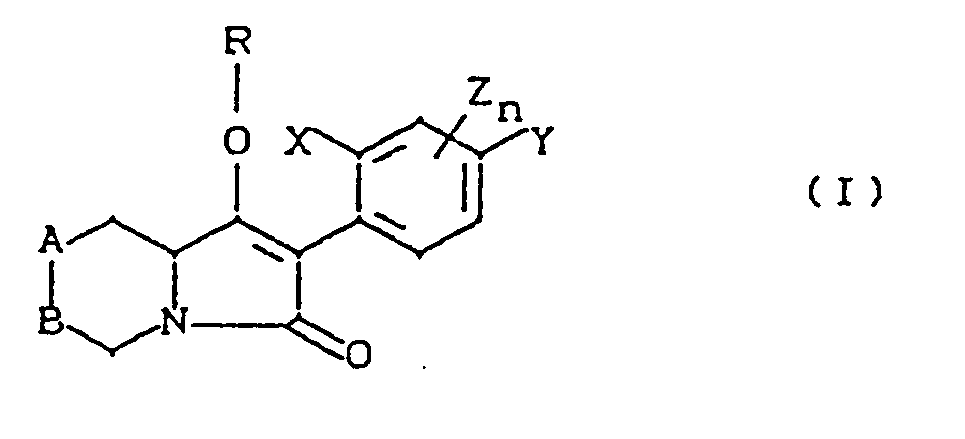 A, B, R, X, Y, Z et n ont les définitions indiquées dans la revendication 1 ainsi que des formes de pureté énantiomérique de composés de formule (I), caractérisé en ce que(A) pour obtenir les composés de formule (Ia)
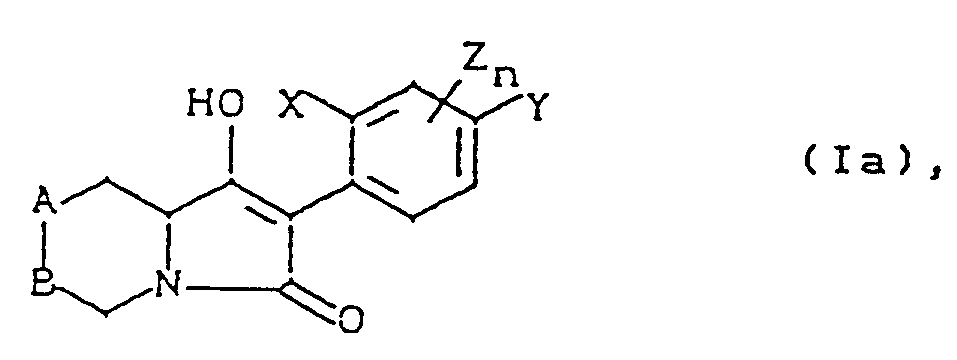 A, B, X, Y, Z et n ont la définition indiquée ci-dessus,on effectue la condensation intramoléculaire d'esters de N-acylamino-acides de formule (II)
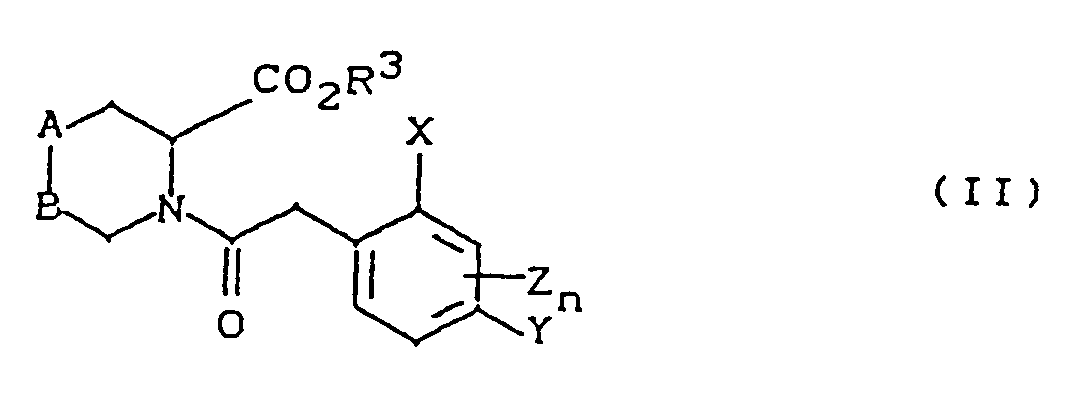 A, B, X, Y, Z et n ont la définition indiquée ci-dessus, etR³ est un groupe alkyleen présence d'un diluant et en présence d'une base,(B) pour l'obtention de composés de formule (Ib)
 A, B, X, Y, Z et n ont la définition indiquée ci-dessus,on fait réagir des composés de formule (Ia)
 A, B, X, Y, Z et n ont la définition indiquée ci-dessus,α) avec des halogénures d'acides de formule générale (III),
 R¹ a la définition indiquée ci-dessus etHal est un halogène, en particulier le chlore et le brome,le cas échéant en présence d'un diluant et en la présence éventuelle d'un accepteur d'acide, ouβ) avec des anhydrides d'acides carboxyliques de formule (IV)
R¹-CO-O-CO-R¹ (IV)
dans laquelleR¹ a la définition indiquée ci-dessus,le cas échéant en présence d'un diluant et en la présence éventuellement d'un accepteur d'acide,(C) pour obtenir des composés de formule (Ic) A, B, X, Y, Z et n ont la définition indiquée ci-dessus,on fait réagir des composés de formule (Ia)
 A, B, X, Y, Z et n ont la définition indiquée ci-dessus,avec un ester d'acide chloroformique de formule générale (V)
R²-O-CO-Cl (V)
dans laquelleR² a la définition indiquée ci-dessus,le cas échéant en présence d'un diluant et en la présence éventuellement d'un accepteur d'acide,(D) pour l'obtention de composés de formule (Id) A, B, X, Y, Z, E et n ont la définition indiquée ci-dessus,on fait réagir des composés de formule (Ia)
 A, B, X, Y, Z et n ont la définition indiquée ci-dessus,avec des hydroxydes de métaux ou des amines de formules générales (VIII) et (IX)
MesOHt (VIII)
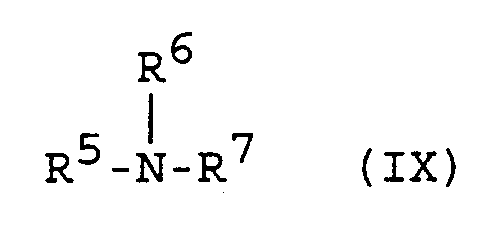 Me représente des ions métalliques monovalents ou divalentss et t représentent les nombres 1 et 2 etR⁵, R⁶ et R⁷ représentent indépendamment les uns des autres de l'hydrogène et des groupes alkyle,le cas échéant en présence d'un diluant,(E) pour l'obtention de composés de formule (Ie)
 A, B, R, X, Y, Z et n ont la définition indiquée ci-dessus,on fait réagir des composés de formule (Ia)-(Ic),
 R, X, Y, Z et n ont la définition indiquée ci-dessus, etA-B représentent -S-CH₂-, -CH₂-S- ou -S-,avec des quantités à peu près équimolaires d'un agent oxydant, éventuellement en présence d'un diluant,(F) pour l'obtention de composés de formule (If),
 A, B, R, X, Y, Z et n ont la définition indiquée ci-dessus,on fait réagir des composés de formule (Ia)-(Ic),
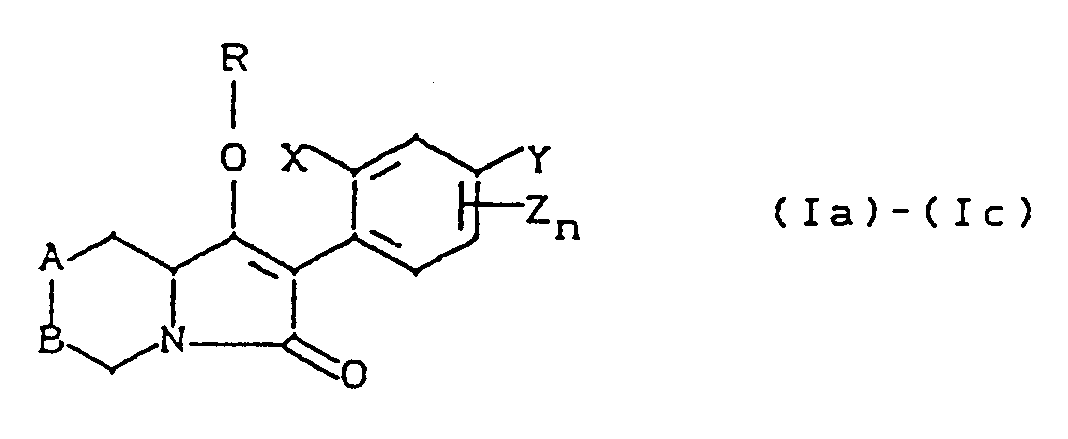 R, X, Y, Z et n ont la définition indiquée ci-dessus, etA-B représentent -S-CH₂-, -CH₂-S- ou -S-, avec le double des quantités équimolaires d'unagent oxydant, le cas échéant en présence d'un diluant.
 - Compositions insecticides et/ou acaricides et/ou herbicides, caractérisées par une teneur en au moins une 3-arylpyrrolidine-2,4-dione de formule (I).
- Procédé pour combattre des insectes et/ou des acariens et/ou des mauvaises herbes, caractérisé en ce qu'on fait agir sur les insectes et/ou sur les acariens et/ou sur les mauvaises herbes et/ou sur leur milieu des 3-arylpyrrolidine-2,4-diones de formule (I).
- Utilisation de 3-arylpyrrolidine-2,4-diones de formule (I) pour combattre des insectes et/ou des acariens et/ou des mauvaises herbes.
- Procédé de préparation de compositions insecticides et/ou acaricides et/ou herbicides, caractérisé en ce qu'on mélange des 3-arylpyrrolidine-2,4-diones de formule (I) avec des diluants et/ou des agents tensioactifs.
- Esters d'acylamino-acides de formule (II)
 A-B représentent -S-CH₂-, -SO-CH₂-, -SO₂-CH₂-, -CH₂-S-, -CH₂-SO-, -CH₂SO₂-, -S-, -SO-, -SO₂-,X est un groupe alkyle, un halogène, un groupe alkoxy,Y est de l'hydrogène, un groupe alkyle, un halogène, un groupe alkoxy, halogénalkyle,Z est un groupe alkyle, un halogène, un groupe alkoxy,n est un nombre de 0 à 3,R³ est un groupe alkyle.
 - Procédé de production d'esters d'acylamino-acides de formule (II)
 A-B représentent -S-CH₂-, -SO-CH₂-, -SO₂-CH₂-, -CH₂-S-, -CH₂-SO-, -CH₂SO₂-, -S-, -SO-, -SO₂-,X est un groupe alkyle, un halogène, un groupe alkoxy,Y est de l'hydrogène, un groupe alkyle, un halogène, un groupe alkoxy, halogénalkyle,Z est un groupe alkyle, un halogène, un groupe alkoxy,n est un nombre de 0 à 3,R³ est un groupe alkyle,caractérisé en ce quea) on acyle des esters d'amino-acides de formule (VI)
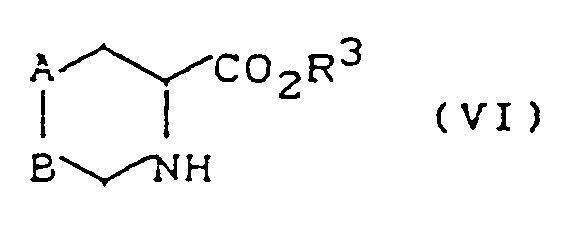 R³ est un groupe alkyle,etA et B ont la définition indiquée ci-dessus,avec des halogénures d'acides phénylacétiques de formule (VII)
 X, Y, Z et n ont la définition indiquée ci-dessus,etHal représente du chlore ou du brome,ou bienb) on estérifie des acylamino-acides de formule (IIa)
 A, B, X, Y, Z et n ont la définition indiquée ci-dessusetR⁴ est de l'hydrogène.
Applications Claiming Priority (2)
| Application Number | Priority Date | Filing Date | Title |
|---|---|---|---|
| DE3929087A DE3929087A1 (de) | 1989-09-01 | 1989-09-01 | 3-aryl-pyrrolidin-2,4-dion-derivate |
| DE3929087 | 1989-09-01 |
Publications (3)
| Publication Number | Publication Date |
|---|---|
| EP0415211A2 EP0415211A2 (fr) | 1991-03-06 |
| EP0415211A3 EP0415211A3 (en) | 1992-01-15 |
| EP0415211B1 true EP0415211B1 (fr) | 1994-12-21 |
Family
ID=6388446
Family Applications (1)
| Application Number | Title | Priority Date | Filing Date |
|---|---|---|---|
| EP90115872A Expired - Lifetime EP0415211B1 (fr) | 1989-09-01 | 1990-08-18 | Dérivés de 3-aryl-pyrrolidin-2,4-diones |
Country Status (9)
| Country | Link |
|---|---|
| US (1) | US5116836A (fr) |
| EP (1) | EP0415211B1 (fr) |
| JP (1) | JP3154715B2 (fr) |
| KR (1) | KR910006304A (fr) |
| BR (1) | BR9004336A (fr) |
| CA (1) | CA2024357A1 (fr) |
| DD (1) | DD299305A5 (fr) |
| DE (2) | DE3929087A1 (fr) |
| ZA (1) | ZA906952B (fr) |
Cited By (1)
| Publication number | Priority date | Publication date | Assignee | Title |
|---|---|---|---|---|
| US9204640B2 (en) | 2011-03-01 | 2015-12-08 | Bayer Intellectual Property Gmbh | 2-acyloxy-pyrrolin-4-ones |
Families Citing this family (87)
| Publication number | Priority date | Publication date | Assignee | Title |
|---|---|---|---|---|
| DE4004496A1 (de) * | 1990-02-14 | 1991-08-22 | Bayer Ag | 3-aryl-pyrrolidin-2,4-dion-derivate |
| US5585384A (en) * | 1991-01-31 | 1996-12-17 | Bayer Aktiengesellschaft | Substituted bicyclic 3-aryl-pyrrolidine-2,4-dione derivatives |
| US5811374A (en) * | 1991-02-07 | 1998-09-22 | Bayer Aktiengesellschaft | 3-aryl-pyrrolidine-2,4-dione derivatives |
| ATE139768T1 (de) * | 1991-03-19 | 1996-07-15 | Ciba Geigy Ag | Verbindungen mit herbiziden,acarizider und insektizider wirkung |
| CN1129444A (zh) * | 1993-07-05 | 1996-08-21 | 拜尔公司 | 取代的芳基酮-烯醇杂环类化合物 |
| US6500948B1 (en) * | 1995-12-08 | 2002-12-31 | Agouron Pharmaceuticals, Inc. | Metalloproteinase inhibitors-compositions, uses preparation and intermediates thereof |
| CN1215390A (zh) * | 1996-04-02 | 1999-04-28 | 拜尔公司 | 取代的苯基酮烯醇杀虫剂及除草剂 |
| ES2251022T3 (es) * | 1996-05-10 | 2006-04-16 | Bayer Cropscience Ag | Nuevos piridilcetoenoles sustituidos. |
| ES2275796T3 (es) | 1996-08-05 | 2007-06-16 | Bayer Cropscience Ag | Fenilcetoenoles 2- y 2,5-substituidos. |
| DE19808261A1 (de) | 1998-02-27 | 1999-10-28 | Bayer Ag | Arylphenylsubstituierte cyclische Ketoenole |
| DE19813354A1 (de) | 1998-03-26 | 1999-09-30 | Bayer Ag | Arylphenylsubstituierte cyclische Ketoenole |
| DE19818732A1 (de) | 1998-04-27 | 1999-10-28 | Bayer Ag | Arylphenylsubstituierte cyclische Ketoenole |
| DE19935963A1 (de) | 1999-07-30 | 2001-02-01 | Bayer Ag | Biphenylsubstituierte cyclische Ketoenole |
| DE19946625A1 (de) | 1999-09-29 | 2001-04-05 | Bayer Ag | Trifluormethylsubstituierte spirocyclische Ketoenole |
| DE10016544A1 (de) * | 2000-04-03 | 2001-10-11 | Bayer Ag | C2-phenylsubstituierte Ketoenole |
| AR029677A1 (es) | 2000-06-29 | 2003-07-10 | Bayer Ag | Combinaciones de compuestos activos con propiedades insecticidas y acaricidas |
| DE10042736A1 (de) | 2000-08-31 | 2002-03-14 | Bayer Ag | Wirkstoffkombinationen mit insektiziden und akariziden Eigenschaften |
| DE10043610A1 (de) * | 2000-09-05 | 2002-03-14 | Bayer Ag | Wirkstoffkombinationen mit insektiziden und akariziden Eigenschaften |
| DE10049804A1 (de) * | 2000-10-09 | 2002-04-18 | Bayer Ag | Wirkstoffkombinationen mit fungiziden und akariziden Eigenschaften |
| DE10055941A1 (de) | 2000-11-10 | 2002-05-23 | Bayer Ag | Wirkstoffkombinationen mit insektiziden und akariziden Eigenschaften |
| DE10062422A1 (de) * | 2000-12-14 | 2002-06-20 | Bayer Ag | Verwendung von Acetyl-CoA Carboxylase zum Identifizieren von insektizid wirksamen Verwendung |
| DE10139465A1 (de) * | 2001-08-10 | 2003-02-20 | Bayer Cropscience Ag | Selektive Herbizide auf Basis von substituierten, cayclischen Ketoenolen und Safenern |
| JP4022136B2 (ja) * | 2002-12-10 | 2007-12-12 | 津田駒工業株式会社 | 緯糸打ち出しタイミングの算出方法及び緯入れ条件設定方法 |
| DE10301804A1 (de) * | 2003-01-20 | 2004-07-29 | Bayer Cropscience Ag | 2,4-Dihalogen-6-(C2-C3-alkyl)-phenyl substituierte Tetramsäure-Derivate |
| DE10311300A1 (de) * | 2003-03-14 | 2004-09-23 | Bayer Cropscience Ag | 2,4,6-Phenylsubstituierte cyclische Ketoenole |
| DE10326386A1 (de) * | 2003-06-12 | 2004-12-30 | Bayer Cropscience Ag | N-Heterocyclyl-phenylsubstituierte cyclische Ketoenole |
| DE10330724A1 (de) | 2003-07-08 | 2005-01-27 | Bayer Cropscience Ag | Wirkstoffkombinationen mit insektiziden und akariziden Eigenschaften |
| DE10351647A1 (de) * | 2003-11-05 | 2005-06-09 | Bayer Cropscience Ag | 2-Halogen-6-alkyl-phenyl substituierte Tetramsäure-Derivate |
| DE10354628A1 (de) | 2003-11-22 | 2005-06-16 | Bayer Cropscience Ag | 2-Ethyl-4,6-dimethyl-phenyl-substituierte Tetramsäure-Derivate |
| DE10354629A1 (de) | 2003-11-22 | 2005-06-30 | Bayer Cropscience Ag | 2-Ethyl-4,6-dimethyl-phenyl substituierte spirocyclische Tetramsäure-Derivate |
| WO2005053405A1 (fr) * | 2003-12-04 | 2005-06-16 | Bayer Cropscience Aktiengesellschaft | Combinaisons d'agents a proprietes insecticides et acaricides |
| DE102004014620A1 (de) * | 2004-03-25 | 2005-10-06 | Bayer Cropscience Ag | 2,4,6-phenylsubstituierte cyclische Ketoenole |
| DE102004035133A1 (de) * | 2004-07-20 | 2006-02-16 | Bayer Cropscience Ag | Selektive Insektizide auf Basis von substituierten, cyclischen Ketoenolen und Safenern |
| DE102004044827A1 (de) | 2004-09-16 | 2006-03-23 | Bayer Cropscience Ag | Jod-phenylsubstituierte cyclische Ketoenole |
| DE102004053192A1 (de) * | 2004-11-04 | 2006-05-11 | Bayer Cropscience Ag | 2-Alkoxy-6-alkyl-phenyl substituierte spirocyclische Tetramsäure-Derivate |
| DE102004053191A1 (de) * | 2004-11-04 | 2006-05-11 | Bayer Cropscience Ag | 2,6-Diethyl-4-methyl-phenyl substituierte Tetramsäure-Derivate |
| DE102005008033A1 (de) * | 2005-02-22 | 2006-08-24 | Bayer Cropscience Ag | Wirkstoffkombinationen mit insektiziden und akariziden Eigenschaften |
| DE102005008021A1 (de) | 2005-02-22 | 2006-08-24 | Bayer Cropscience Ag | Spiroketal-substituierte cyclische Ketoenole |
| DE102005059469A1 (de) * | 2005-12-13 | 2007-06-14 | Bayer Cropscience Ag | Insektizide Zusammensetzungen mit verbesserter Wirkung |
| DE102006007882A1 (de) | 2006-02-21 | 2007-08-30 | Bayer Cropscience Ag | Cycloalkyl-phenylsubstituierte cyclische Ketoenole |
| DE102006018828A1 (de) | 2006-04-22 | 2007-10-25 | Bayer Cropscience Ag | Alkoxyalkyl-substituierte cyclische Ketoenole |
| DE102006025874A1 (de) * | 2006-06-02 | 2007-12-06 | Bayer Cropscience Ag | Alkoxyalkyl-substituierte cyclische Ketoenole |
| DE102006027731A1 (de) | 2006-06-16 | 2007-12-20 | Bayer Cropscience Ag | Wirkstoffkombinationen mit insektiziden und akariziden Eigenschaften |
| DE102006050148A1 (de) | 2006-10-25 | 2008-04-30 | Bayer Cropscience Ag | Trifluormethoxy-phenylsubstituierte Tetramsäure-Derivate |
| DE102006057037A1 (de) * | 2006-12-04 | 2008-06-05 | Bayer Cropscience Ag | cis-Alkoxyspirocyclische biphenylsubstituierte Tetramsäure-Derivate |
| DE102006057036A1 (de) | 2006-12-04 | 2008-06-05 | Bayer Cropscience Ag | Biphenylsubstituierte spirocyclische Ketoenole |
| DE102007009957A1 (de) | 2006-12-27 | 2008-07-03 | Bayer Cropscience Ag | Verfahren zur verbesserten Nutzung des Produktionsptentials transgener Pflanzen |
| EP1992614A1 (fr) * | 2007-05-16 | 2008-11-19 | Bayer CropScience Aktiengesellschaft | Tétramates 3-(2-alkoxy-phényl)-substitués |
| EP2014169A1 (fr) | 2007-07-09 | 2009-01-14 | Bayer CropScience AG | Concentré soluble de tétramères 3-(2-alkoxy-4-chlor-6-alkyl-phenyl)-substitués et leurs énols correspondants |
| EP2020413A1 (fr) | 2007-08-02 | 2009-02-04 | Bayer CropScience AG | Dérivé de tétrame et d'acide tétramique oxaspirocyclique et spiro substitué |
| EP2039248A1 (fr) * | 2007-09-21 | 2009-03-25 | Bayer CropScience AG | Combinaisons d'agents actifs à propriétés insecticides et acaricides |
| EP2045240A1 (fr) | 2007-09-25 | 2009-04-08 | Bayer CropScience AG | Dérivé de tétrame et d'acide tétramique halogénalkoxyspirocyclique |
| EP2103615A1 (fr) * | 2008-03-19 | 2009-09-23 | Bayer CropScience AG | Tétramate de 4'4'-dioxaspiro-spirocyclique substitué |
| EP2127522A1 (fr) | 2008-05-29 | 2009-12-02 | Bayer CropScience AG | Combinaisons de principes actifs presentant des propriétés insecticides et acaricides |
| US8389443B2 (en) * | 2008-12-02 | 2013-03-05 | Bayer Cropscience Ag | Geminal alkoxy/alkylspirocyclic substituted tetramate derivatives |
| US8846946B2 (en) | 2008-12-02 | 2014-09-30 | Bayer Cropscience Ag | Germinal alkoxy/alkylspirocyclic substituted tetramate derivatives |
| AR075126A1 (es) | 2009-01-29 | 2011-03-09 | Bayer Cropscience Ag | Metodo para el mejor uso del potencial de produccion de plantas transgenicas |
| CN102348684B (zh) * | 2009-03-11 | 2014-11-12 | 拜尔农作物科学股份公司 | 被卤代烷基亚甲基氧基苯基取代的酮烯醇 |
| DE102009028001A1 (de) | 2009-07-24 | 2011-01-27 | Bayer Cropscience Ag | Wirkstoffkombinationen mit insektiziden und akariziden Eigenschaften |
| WO2011098440A2 (fr) | 2010-02-10 | 2011-08-18 | Bayer Cropscience Ag | Cétoénols cyliques à substitution biphényle |
| CN103068825A (zh) | 2010-02-10 | 2013-04-24 | 拜耳知识产权有限责任公司 | 螺杂环取代的特特拉姆酸衍生物 |
| DE102010008644A1 (de) | 2010-02-15 | 2011-08-18 | Bayer Schering Pharma Aktiengesellschaft, 13353 | Zyklische Ketoenole zur Therapie |
| DE102010008642A1 (de) | 2010-02-15 | 2011-08-18 | Bayer Schering Pharma Aktiengesellschaft, 13353 | Zyklische Ketoenole zur Therapie |
| DE102010008643A1 (de) | 2010-02-15 | 2011-08-18 | Bayer Schering Pharma Aktiengesellschaft, 13353 | Zyklische Ketoenole zur Therapie |
| EP2560487A1 (fr) | 2010-04-20 | 2013-02-27 | Bayer Intellectual Property GmbH | Composition insecticide et/ou herbicide à action améliorée, à base de dérivés d'acide tétramique à substituants spirohétérocycliques |
| DE102011011040A1 (de) | 2011-02-08 | 2012-08-09 | Bayer Pharma Aktiengesellschaft | (5s,8s)-3-(4'-Chlor-3'-fluor-4-methylbiphenyl-3-yl)-4-hydroxy-8-methoxy-1-azaspiro[4.5]dec-3-en-2-on (Verbindung A) zur Therapie |
| DE102011080405A1 (de) | 2011-08-04 | 2013-02-07 | Bayer Pharma AG | Substituierte 3-(Biphenyl-3-yl)-8,8-difluor-4-hydroxy-1-azaspiro[4.5]dec-3-en-2-one zur Therapie |
| BR112013021021A2 (pt) | 2011-02-17 | 2016-08-02 | Bayer Ip Gmbh | 3- (bifenil - 3 - il) - 8, 8 - difluoro - 4 - hidroxi - 1 - azaspiro [4, 5] dec - 3 - eno - 2 - onas substituídas para terapia e cetoenóis espirocíclicos substituídos com halogéneo |
| DE102011080406A1 (de) | 2011-08-04 | 2013-02-07 | Bayer Pharma AG | Substituierte 3-(Biphenyl-3-yl)-4-hydroxy-8-methoxy-1-azaspiro8[4.5]dec-3-en-2-one |
| KR102030337B1 (ko) | 2012-01-26 | 2019-10-10 | 바이엘 인텔렉쳐 프로퍼티 게엠베하 | 어류 기생충 방제용의 페닐-치환된 케토에놀 |
| US11178868B2 (en) | 2015-10-06 | 2021-11-23 | Bayer Cropscience Aktiengesellschaft | Alkynyl-substituted 3-phenylpyrrolidine-2,4-diones and use thereof as herbicides |
| AU2017249659A1 (en) * | 2016-04-14 | 2018-11-01 | Bayer Cropscience Aktiengesellschaft | Anellated 3-phenyl tetramic acid derivatives having a herbicidal effect |
| AR115088A1 (es) | 2018-05-15 | 2020-11-25 | Bayer Ag | Espirociclohexilpirrolin-2-onas y su uso como herbicidas |
| CA3100089A1 (fr) | 2018-05-15 | 2019-11-21 | Bayer Aktiengesellschaft | Pyrrolin-2-ones a substitution 2-bromo-6-alcoxyphenyle et leur utilisation comme herbicides |
| AR115087A1 (es) | 2018-05-15 | 2020-11-25 | Bayer Ag | 3-(4-alquinil-6-alcoxi-2-clorofenil)-3-pirrolin-2-onas, un método para su preparación y su uso como herbicidas |
| AR115089A1 (es) | 2018-05-15 | 2020-11-25 | Bayer Ag | 2-alquil-6-alcoxifenil-3-pirrolin-2-onas especialmente sustituidas y su uso como herbicidas |
| WO2019228787A1 (fr) | 2018-05-29 | 2019-12-05 | Bayer Aktiengesellschaft | 2-alkyle-6-alcoxyphényle-pyrroline-2-ones à substitution spéciale et leur utilisation comme herbicides |
| WO2019228788A1 (fr) | 2018-05-29 | 2019-12-05 | Bayer Aktiengesellschaft | Pyrorroline-2-ones à substitution 2-bromo-6-alcoxyphényle et leur utilisation comme herbicides |
| EP3938349A1 (fr) | 2019-03-15 | 2022-01-19 | Bayer Aktiengesellschaft | 3-(2-alkoxy-6-alkyl-4-propinylphényl)-3-pyrroline-2-ones à substitution spéciale et leur utilisation comme herbicides |
| EP3938348A1 (fr) | 2019-03-15 | 2022-01-19 | Bayer Aktiengesellschaft | Nouvelles 3-(2-brome-4-alkinyl-6-alkoxyphényl)-3-pyrroline-2-ones et leur utilisation comme herbicides |
| CA3133184A1 (fr) | 2019-03-15 | 2020-09-24 | Bayer Aktiengesellschaft | 3-phenyl-5-spirocyclopentyl-3-pyrrolin-2-ones a substitution specifique et leur utilisation en tant qu'herbicides |
| BR112021013653A2 (pt) | 2019-03-15 | 2021-09-14 | Bayer Aktiengesellschaft | 5-espirociclo-hexila-3-pirrolin-2-onas substituídas por 3-(2- bromo-4-alquinila-6-alcoxifenila) e seu uso como herbicidas |
| EA202192467A1 (ru) | 2019-03-15 | 2022-02-16 | Байер Акциенгезельшафт | Специфически замещенные 3-(2-галоген-6-алкил-4-пропинилфенил)-3-пирролин-2-оны и их применение в качестве гербицидов |
| WO2021204884A1 (fr) | 2020-04-09 | 2021-10-14 | Bayer Aktiengesellschaft | 3-(4-alcényl-phényl)-3-pyrrolin-2-ones et leur utilisation comme herbicides |
| WO2021209486A1 (fr) | 2020-04-15 | 2021-10-21 | Bayer Aktiengesellschaft | Pyrroline-2-ones à substitution spécifique et leur utilisation en tant qu'herbicides |
| BR112022022128A2 (pt) | 2020-05-27 | 2022-12-13 | Bayer Ag | Pirrolin-2-onas especificamente substituídas e seu uso como herbicidas |
| WO2023274869A1 (fr) | 2021-06-29 | 2023-01-05 | Bayer Aktiengesellschaft | 3-(4-alcényl-phényl)-3-pyrrolino-2-ones et leur utilisation comme herbicides |
Citations (1)
| Publication number | Priority date | Publication date | Assignee | Title |
|---|---|---|---|---|
| DE2361084A1 (de) * | 1972-12-12 | 1974-06-20 | Union Carbide Corp | Substituierte 3-hydroxyindone und diese enthaltende mittel |
Family Cites Families (3)
| Publication number | Priority date | Publication date | Assignee | Title |
|---|---|---|---|---|
| US4139364A (en) * | 1977-08-09 | 1979-02-13 | E. I. Du Pont De Nemours And Company | Triazolone herbicides |
| IT1153963B (it) * | 1982-03-22 | 1987-01-21 | Montedison Spa | Derivati dell'acido 2 0 4-tiazolidin-carbossilico 3-acil sostituiti ad azione fitoregolatrice e biostimolanti |
| US4925868A (en) * | 1986-08-29 | 1990-05-15 | Takeda Chemical Industries, Ltd. | 4-Hydroxy-3-pyrrolin-2-ones and treatment of circulatory disorders therewith |
-
1989
- 1989-09-01 DE DE3929087A patent/DE3929087A1/de not_active Withdrawn
-
1990
- 1990-08-15 US US07/567,872 patent/US5116836A/en not_active Expired - Lifetime
- 1990-08-18 DE DE59008063T patent/DE59008063D1/de not_active Expired - Fee Related
- 1990-08-18 EP EP90115872A patent/EP0415211B1/fr not_active Expired - Lifetime
- 1990-08-29 JP JP22544290A patent/JP3154715B2/ja not_active Expired - Fee Related
- 1990-08-30 CA CA002024357A patent/CA2024357A1/fr not_active Abandoned
- 1990-08-30 KR KR1019900013472A patent/KR910006304A/ko not_active Withdrawn
- 1990-08-31 BR BR909004336A patent/BR9004336A/pt not_active IP Right Cessation
- 1990-08-31 ZA ZA906952A patent/ZA906952B/xx unknown
- 1990-09-03 DD DD90343786A patent/DD299305A5/de not_active IP Right Cessation
Patent Citations (1)
| Publication number | Priority date | Publication date | Assignee | Title |
|---|---|---|---|---|
| DE2361084A1 (de) * | 1972-12-12 | 1974-06-20 | Union Carbide Corp | Substituierte 3-hydroxyindone und diese enthaltende mittel |
Cited By (1)
| Publication number | Priority date | Publication date | Assignee | Title |
|---|---|---|---|---|
| US9204640B2 (en) | 2011-03-01 | 2015-12-08 | Bayer Intellectual Property Gmbh | 2-acyloxy-pyrrolin-4-ones |
Also Published As
| Publication number | Publication date |
|---|---|
| DE3929087A1 (de) | 1991-03-07 |
| JP3154715B2 (ja) | 2001-04-09 |
| DD299305A5 (de) | 1992-04-09 |
| EP0415211A2 (fr) | 1991-03-06 |
| KR910006304A (ko) | 1991-04-29 |
| DE59008063D1 (de) | 1995-02-02 |
| BR9004336A (pt) | 1991-09-03 |
| EP0415211A3 (en) | 1992-01-15 |
| CA2024357A1 (fr) | 1991-03-02 |
| JPH0393785A (ja) | 1991-04-18 |
| US5116836A (en) | 1992-05-26 |
| ZA906952B (en) | 1991-07-31 |
Similar Documents
| Publication | Publication Date | Title |
|---|---|---|
| EP0415211B1 (fr) | Dérivés de 3-aryl-pyrrolidin-2,4-diones | |
| EP0377893B1 (fr) | Dérivés de 3-aryl-pyrrolidine-2,4-dione | |
| EP0442073B1 (fr) | Dérivés polycycliques d'aryl-3-pyrroline-diones-2,4 | |
| EP0613885B1 (fr) | Dérivées de la 1-H-3-phényl-5-cycloalkyl-pyrrolidine-2,4-dione substituée, leur préparation et leur utilisation comme parasiticides et herbicides | |
| EP0528156B1 (fr) | Dérivés de 3-aryle-4-hydroxy-delta3-dihydrofuranone et 3-aryle-4-hydroxy-delta3-dihydrothiophénone | |
| EP0355599B1 (fr) | Aryl-3 pyrrolidinediones-2,4 | |
| EP0521334B1 (fr) | Dérivés substitués de la 1-H-3-aryl-pyrrolidine-2,4-dione, leur préparation et leur utilisation comme insecticides, acaricides et herbicides | |
| EP0647637B1 (fr) | Dérivés de 3-aryle-4-hydroxy-3-dihydrofuranone | |
| DE4306259A1 (de) | Dialkyl-1-H-3-(2,4-dimethylphenyl)-pyrrolidin-2,4-dione, ihre Herstellung und ihre Verwendung | |
| EP0596298A2 (fr) | Dérivés de 1-H-3-aryl-pyrrolidin-2,4-dione 5-spirosubstitués comme herbicides, insecticides et acaricides | |
| EP0706527A1 (fr) | Derives substitues spiro-heterocycliques de la 1h-3-arylpyrrolidine-2,4-dione, leur procede de preparation et leur utilisation comme insecticides | |
| DE3913682A1 (de) | 3-aryl-pyrrolidin-2,4-dione | |
| EP0373425A2 (fr) | Pyridazinones substituées, procédé pour leur préparation et leur utilisation comme insecticides | |
| EP0591806A1 (fr) | 2-arylpyrroles substitués | |
| EP0501129B1 (fr) | Dérivés bicycliques substitués de la 3-aryl-pyrrolidin-2,4-dione | |
| WO1994001401A1 (fr) | Derives herbicides et insecticides substitues de 3-benzoyl-pyrrolidin-2,4-dione | |
| DE4102339A1 (de) | Substituierte 3-phenyl-4-hydroxy-(delta)(pfeil hoch)3(pfeil hoch)-pyrrolin-2-one | |
| DE4326909A1 (de) | Substituierte 1-H-3-Aryl-pyrrolidin-2,4-dion-Derivate | |
| DE4337853A1 (de) | 3-Aryl-4-hydroxy-DELTA·3·-dihydrofuranon-Derivate | |
| EP0189043B1 (fr) | Furazans substitués | |
| EP0515941A1 (fr) | 2-Arylpyrroles substitués | |
| EP0642303B1 (fr) | 2-arylpyrroles substitues | |
| DE4124151A1 (de) | Insektizide und akarizide pflanzenschutzmittel enthaltend substituierte 1,2,4-oxadiazolderivate | |
| EP0655999A1 (fr) | Iodure de 1,2,4-dithiazolium et son utilisation comme parasiticide | |
| DE4321031A1 (de) | Substituierte Pyridylpyrrole |
Legal Events
| Date | Code | Title | Description |
|---|---|---|---|
| PUAI | Public reference made under article 153(3) epc to a published international application that has entered the european phase |
Free format text: ORIGINAL CODE: 0009012 |
|
| 17P | Request for examination filed |
Effective date: 19900820 |
|
| AK | Designated contracting states |
Kind code of ref document: A2 Designated state(s): BE CH DE DK FR GB IT LI NL |
|
| PUAL | Search report despatched |
Free format text: ORIGINAL CODE: 0009013 |
|
| AK | Designated contracting states |
Kind code of ref document: A3 Designated state(s): BE CH DE DK FR GB IT LI NL |
|
| 17Q | First examination report despatched |
Effective date: 19930817 |
|
| GRAA | (expected) grant |
Free format text: ORIGINAL CODE: 0009210 |
|
| AK | Designated contracting states |
Kind code of ref document: B1 Designated state(s): BE CH DE DK FR GB IT LI NL |
|
| PG25 | Lapsed in a contracting state [announced via postgrant information from national office to epo] |
Ref country code: DK Effective date: 19941221 |
|
| ITF | It: translation for a ep patent filed | ||
| REF | Corresponds to: |
Ref document number: 59008063 Country of ref document: DE Date of ref document: 19950202 |
|
| GBT | Gb: translation of ep patent filed (gb section 77(6)(a)/1977) |
Effective date: 19950110 |
|
| ET | Fr: translation filed | ||
| PLBE | No opposition filed within time limit |
Free format text: ORIGINAL CODE: 0009261 |
|
| STAA | Information on the status of an ep patent application or granted ep patent |
Free format text: STATUS: NO OPPOSITION FILED WITHIN TIME LIMIT |
|
| 26N | No opposition filed | ||
| PGFP | Annual fee paid to national office [announced via postgrant information from national office to epo] |
Ref country code: GB Payment date: 19960809 Year of fee payment: 7 |
|
| PGFP | Annual fee paid to national office [announced via postgrant information from national office to epo] |
Ref country code: BE Payment date: 19960828 Year of fee payment: 7 |
|
| PGFP | Annual fee paid to national office [announced via postgrant information from national office to epo] |
Ref country code: NL Payment date: 19960831 Year of fee payment: 7 |
|
| PG25 | Lapsed in a contracting state [announced via postgrant information from national office to epo] |
Ref country code: GB Free format text: LAPSE BECAUSE OF NON-PAYMENT OF DUE FEES Effective date: 19970818 |
|
| PG25 | Lapsed in a contracting state [announced via postgrant information from national office to epo] |
Ref country code: BE Free format text: LAPSE BECAUSE OF NON-PAYMENT OF DUE FEES Effective date: 19970831 |
|
| BERE | Be: lapsed |
Owner name: BAYER A.G. Effective date: 19970831 |
|
| PG25 | Lapsed in a contracting state [announced via postgrant information from national office to epo] |
Ref country code: NL Free format text: LAPSE BECAUSE OF NON-PAYMENT OF DUE FEES Effective date: 19980301 |
|
| GBPC | Gb: european patent ceased through non-payment of renewal fee |
Effective date: 19970818 |
|
| NLV4 | Nl: lapsed or anulled due to non-payment of the annual fee |
Effective date: 19980301 |
|
| PGFP | Annual fee paid to national office [announced via postgrant information from national office to epo] |
Ref country code: DE Payment date: 20070801 Year of fee payment: 18 |
|
| REG | Reference to a national code |
Ref country code: CH Ref legal event code: PFA Owner name: BAYER AKTIENGESELLSCHAFT Free format text: BAYER AKTIENGESELLSCHAFT# #D-51368 LEVERKUSEN (DE) -TRANSFER TO- BAYER AKTIENGESELLSCHAFT# #D-51368 LEVERKUSEN (DE) |
|
| PGFP | Annual fee paid to national office [announced via postgrant information from national office to epo] |
Ref country code: CH Payment date: 20070815 Year of fee payment: 18 |
|
| PGFP | Annual fee paid to national office [announced via postgrant information from national office to epo] |
Ref country code: IT Payment date: 20070828 Year of fee payment: 18 |
|
| PGFP | Annual fee paid to national office [announced via postgrant information from national office to epo] |
Ref country code: FR Payment date: 20070808 Year of fee payment: 18 |
|
| REG | Reference to a national code |
Ref country code: CH Ref legal event code: PL |
|
| REG | Reference to a national code |
Ref country code: FR Ref legal event code: ST Effective date: 20090430 |
|
| PG25 | Lapsed in a contracting state [announced via postgrant information from national office to epo] |
Ref country code: CH Free format text: LAPSE BECAUSE OF NON-PAYMENT OF DUE FEES Effective date: 20080831 Ref country code: LI Free format text: LAPSE BECAUSE OF NON-PAYMENT OF DUE FEES Effective date: 20080831 |
|
| PG25 | Lapsed in a contracting state [announced via postgrant information from national office to epo] |
Ref country code: IT Free format text: LAPSE BECAUSE OF NON-PAYMENT OF DUE FEES Effective date: 20080818 Ref country code: FR Free format text: LAPSE BECAUSE OF NON-PAYMENT OF DUE FEES Effective date: 20080901 Ref country code: DE Free format text: LAPSE BECAUSE OF NON-PAYMENT OF DUE FEES Effective date: 20090303 |