EP0419666A1 - Promotor, plasmid, das diesen enthält, und rekombinantes avipoxvirus - Google Patents
Promotor, plasmid, das diesen enthält, und rekombinantes avipoxvirus Download PDFInfo
- Publication number
- EP0419666A1 EP0419666A1 EP90901019A EP90901019A EP0419666A1 EP 0419666 A1 EP0419666 A1 EP 0419666A1 EP 90901019 A EP90901019 A EP 90901019A EP 90901019 A EP90901019 A EP 90901019A EP 0419666 A1 EP0419666 A1 EP 0419666A1
- Authority
- EP
- European Patent Office
- Prior art keywords
- gene
- dna
- nucleotide sequence
- plasmid
- fragment
- Prior art date
- Legal status (The legal status is an assumption and is not a legal conclusion. Google has not performed a legal analysis and makes no representation as to the accuracy of the status listed.)
- Ceased
Links
Images







Classifications
-
- C—CHEMISTRY; METALLURGY
- C12—BIOCHEMISTRY; BEER; SPIRITS; WINE; VINEGAR; MICROBIOLOGY; ENZYMOLOGY; MUTATION OR GENETIC ENGINEERING
- C12N—MICROORGANISMS OR ENZYMES; COMPOSITIONS THEREOF; PROPAGATING, PRESERVING, OR MAINTAINING MICROORGANISMS; MUTATION OR GENETIC ENGINEERING; CULTURE MEDIA
- C12N15/00—Mutation or genetic engineering; DNA or RNA concerning genetic engineering, vectors, e.g. plasmids, or their isolation, preparation or purification; Use of hosts therefor
- C12N15/09—Recombinant DNA-technology
- C12N15/63—Introduction of foreign genetic material using vectors; Vectors; Use of hosts therefor; Regulation of expression
-
- C—CHEMISTRY; METALLURGY
- C12—BIOCHEMISTRY; BEER; SPIRITS; WINE; VINEGAR; MICROBIOLOGY; ENZYMOLOGY; MUTATION OR GENETIC ENGINEERING
- C12N—MICROORGANISMS OR ENZYMES; COMPOSITIONS THEREOF; PROPAGATING, PRESERVING, OR MAINTAINING MICROORGANISMS; MUTATION OR GENETIC ENGINEERING; CULTURE MEDIA
- C12N15/00—Mutation or genetic engineering; DNA or RNA concerning genetic engineering, vectors, e.g. plasmids, or their isolation, preparation or purification; Use of hosts therefor
- C12N15/09—Recombinant DNA-technology
- C12N15/63—Introduction of foreign genetic material using vectors; Vectors; Use of hosts therefor; Regulation of expression
- C12N15/79—Vectors or expression systems specially adapted for eukaryotic hosts
- C12N15/85—Vectors or expression systems specially adapted for eukaryotic hosts for animal cells
- C12N15/86—Viral vectors
-
- C—CHEMISTRY; METALLURGY
- C07—ORGANIC CHEMISTRY
- C07K—PEPTIDES
- C07K14/00—Peptides having more than 20 amino acids; Gastrins; Somatostatins; Melanotropins; Derivatives thereof
- C07K14/005—Peptides having more than 20 amino acids; Gastrins; Somatostatins; Melanotropins; Derivatives thereof from viruses
-
- C—CHEMISTRY; METALLURGY
- C12—BIOCHEMISTRY; BEER; SPIRITS; WINE; VINEGAR; MICROBIOLOGY; ENZYMOLOGY; MUTATION OR GENETIC ENGINEERING
- C12N—MICROORGANISMS OR ENZYMES; COMPOSITIONS THEREOF; PROPAGATING, PRESERVING, OR MAINTAINING MICROORGANISMS; MUTATION OR GENETIC ENGINEERING; CULTURE MEDIA
- C12N15/00—Mutation or genetic engineering; DNA or RNA concerning genetic engineering, vectors, e.g. plasmids, or their isolation, preparation or purification; Use of hosts therefor
- C12N15/09—Recombinant DNA-technology
- C12N15/63—Introduction of foreign genetic material using vectors; Vectors; Use of hosts therefor; Regulation of expression
- C12N15/79—Vectors or expression systems specially adapted for eukaryotic hosts
- C12N15/82—Vectors or expression systems specially adapted for eukaryotic hosts for plant cells, e.g. plant artificial chromosomes (PACs)
-
- C—CHEMISTRY; METALLURGY
- C12—BIOCHEMISTRY; BEER; SPIRITS; WINE; VINEGAR; MICROBIOLOGY; ENZYMOLOGY; MUTATION OR GENETIC ENGINEERING
- C12N—MICROORGANISMS OR ENZYMES; COMPOSITIONS THEREOF; PROPAGATING, PRESERVING, OR MAINTAINING MICROORGANISMS; MUTATION OR GENETIC ENGINEERING; CULTURE MEDIA
- C12N15/00—Mutation or genetic engineering; DNA or RNA concerning genetic engineering, vectors, e.g. plasmids, or their isolation, preparation or purification; Use of hosts therefor
- C12N15/09—Recombinant DNA-technology
- C12N15/63—Introduction of foreign genetic material using vectors; Vectors; Use of hosts therefor; Regulation of expression
- C12N15/79—Vectors or expression systems specially adapted for eukaryotic hosts
- C12N15/85—Vectors or expression systems specially adapted for eukaryotic hosts for animal cells
-
- C—CHEMISTRY; METALLURGY
- C12—BIOCHEMISTRY; BEER; SPIRITS; WINE; VINEGAR; MICROBIOLOGY; ENZYMOLOGY; MUTATION OR GENETIC ENGINEERING
- C12N—MICROORGANISMS OR ENZYMES; COMPOSITIONS THEREOF; PROPAGATING, PRESERVING, OR MAINTAINING MICROORGANISMS; MUTATION OR GENETIC ENGINEERING; CULTURE MEDIA
- C12N7/00—Viruses; Bacteriophages; Compositions thereof; Preparation or purification thereof
-
- A—HUMAN NECESSITIES
- A61—MEDICAL OR VETERINARY SCIENCE; HYGIENE
- A61K—PREPARATIONS FOR MEDICAL, DENTAL OR TOILETRY PURPOSES
- A61K39/00—Medicinal preparations containing antigens or antibodies
-
- C—CHEMISTRY; METALLURGY
- C12—BIOCHEMISTRY; BEER; SPIRITS; WINE; VINEGAR; MICROBIOLOGY; ENZYMOLOGY; MUTATION OR GENETIC ENGINEERING
- C12N—MICROORGANISMS OR ENZYMES; COMPOSITIONS THEREOF; PROPAGATING, PRESERVING, OR MAINTAINING MICROORGANISMS; MUTATION OR GENETIC ENGINEERING; CULTURE MEDIA
- C12N2710/00—MICROORGANISMS OR ENZYMES; COMPOSITIONS THEREOF; PROPAGATING, PRESERVING, OR MAINTAINING MICROORGANISMS; MUTATION OR GENETIC ENGINEERING; CULTURE MEDIA dsDNA viruses
- C12N2710/00011—Details
- C12N2710/24011—Poxviridae
- C12N2710/24022—New viral proteins or individual genes, new structural or functional aspects of known viral proteins or genes
-
- C—CHEMISTRY; METALLURGY
- C12—BIOCHEMISTRY; BEER; SPIRITS; WINE; VINEGAR; MICROBIOLOGY; ENZYMOLOGY; MUTATION OR GENETIC ENGINEERING
- C12N—MICROORGANISMS OR ENZYMES; COMPOSITIONS THEREOF; PROPAGATING, PRESERVING, OR MAINTAINING MICROORGANISMS; MUTATION OR GENETIC ENGINEERING; CULTURE MEDIA
- C12N2710/00—MICROORGANISMS OR ENZYMES; COMPOSITIONS THEREOF; PROPAGATING, PRESERVING, OR MAINTAINING MICROORGANISMS; MUTATION OR GENETIC ENGINEERING; CULTURE MEDIA dsDNA viruses
- C12N2710/00011—Details
- C12N2710/24011—Poxviridae
- C12N2710/24041—Use of virus, viral particle or viral elements as a vector
- C12N2710/24043—Use of virus, viral particle or viral elements as a vector viral genome or elements thereof as genetic vector
-
- C—CHEMISTRY; METALLURGY
- C12—BIOCHEMISTRY; BEER; SPIRITS; WINE; VINEGAR; MICROBIOLOGY; ENZYMOLOGY; MUTATION OR GENETIC ENGINEERING
- C12N—MICROORGANISMS OR ENZYMES; COMPOSITIONS THEREOF; PROPAGATING, PRESERVING, OR MAINTAINING MICROORGANISMS; MUTATION OR GENETIC ENGINEERING; CULTURE MEDIA
- C12N2760/00—MICROORGANISMS OR ENZYMES; COMPOSITIONS THEREOF; PROPAGATING, PRESERVING, OR MAINTAINING MICROORGANISMS; MUTATION OR GENETIC ENGINEERING; CULTURE MEDIA ssRNA viruses negative-sense
- C12N2760/00011—Details
- C12N2760/18011—Paramyxoviridae
- C12N2760/18111—Avulavirus, e.g. Newcastle disease virus
- C12N2760/18122—New viral proteins or individual genes, new structural or functional aspects of known viral proteins or genes
Definitions
- the present invention relates to a DNA sequence capable of efficiently expressing an exogenous gene in poxvirus genome by functionally binding to the exogenous gene, a method for selection of the DNA sequence, a chimera gene comprising the DNA sequence functionally ligated with the exogenous gene, a plasmid bearing the chimera gene and infectious recombinant poxvirus containing such a chimera gene.
- fowlpoxvirus (hereafter abbreviated as FPV) was analyzed by means of molecular biology [Fiona Tomley et al., J. Gen Virol., 69 , 1025-1040 (1988); R. Drillen et al., Virology, 160 , 203-209 (1987); Matthew M. Binns et al., J. Gen. Virol., 69 , 1275-1283 (1988)].
- FPV fowlpoxvirus
- FPV recombinant FPV was reported for the first time [David B. Boyl et al., Virus Research, 10 , 343-356 (1988)], where 7.5K promoter of vaccinia virus and PLll promoter are used as transcription-regulatory sequences for expression of an exogenous gene.
- Recombinant FPV is expected to be effective as a polyvalent live vaccine, similarly to recombinant vaccinia virus.
- a first method comprises ligating exogenous genes, respectively, under control of a sequence having one promoter activity and inserting them into different recombination sites. In this case, a plurality of recombination sites are required.
- a second method comprises inserting many exogenous genes into one recombination site.
- a sequence having one promoter activity may express a plurality of exogenous genes, depending on the number or length of exogenous gene or way of ligation. However, in view of an expression efficiency, it is desired to use one sequence having a promoter activity per one exogenous gene.
- a third method which is most preferred comprises ligating a plurality of exogenous genes at a plurality of recombination sites, respectively, under nucleotide sequences having different promoter activities.
- Homologous sequence of about 100 bp causes spontaneous recombination of DNA. Therefore, where the inserted sequence on genome is located as closely to a sequence having high homology to that of about 100 bp in the sequence, deletion of the inserted exogenous gene ligated to the sequence tends to occur. That is, in the case of using a plurality of sequences each having one promoter activity, the deletion tends to occur when sequences having the respective promoter activities are located closely to each other. Particularly where a plurality of exogenous genes are inserted into one site together with a sequence having the same promoter activity, its tendency is remarkable; however, even where the exogenous genes are inserted into many recombination sites, the tendency is noted. For this reason, it was difficult to insert many exogenous genes.
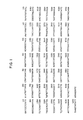
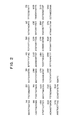
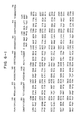
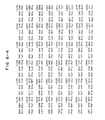
- Figs. 1, 2, 3 and 4 show nucleotide sequences of fragments 14-6, 49-22, 41-3 and 37-1 having the promoter activity according to the present invention.
- Fig. 5 shows a nucleotide sequence of about 100 bp from Bam HI cleavage site of pNZ131-derived fragment of about 3.1 kbp.
- Fig. 6 shows a nucleotide sequence of hemagglutinin neuraminidase gene of Newcastle disease virus.
- Fig. 7 and Fig. 8 show restriction enzyme maps of pNZ131 and pNZ1127R, respectively.
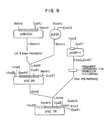
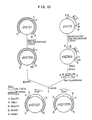
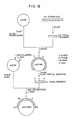
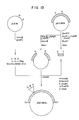
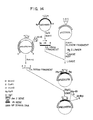
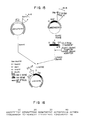
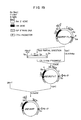
- Figs. 9, 10, 11, 12, 13, 14 and 15 indicate procedures for construction of pNZ76, pNZ1127R, mp10-HN180, pNZ136S, pNZ136SL, pNZ2437R and pNZ2127RL, respectively.
- Fig. 16 shows the synthetic DNA sequence.
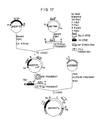
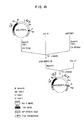
- Figs. 17, 18 and 19 indicate procedures for construction of pNZ2537L, pNZ253717L15 and pNZ2637, respectively.
- a DNA sequence capable of expressing exogenous genes in Avipoxvirus genome under its control.
- a DNA fragment is inserted into a plasmid carrying a marker gene that is not under control of the promoter, at the upstream of the marker gene, by shotgun cloning.
- a cell which has come to express the marker gene is selected and a sequence of the inserted fragment may be provided for analysis.
- a gene which can be used as the marker gene in the present invention is not particularly limited, so far as its expression can be confirmed, but a gene, which expression is readily confirmed, is preferably used.
- a specific example of such a gene is lacZ gene.
- lacZ gene When lacZ gene is expressed, chlorophenol red- ⁇ -D-galactopyranoside (hereafter abbreviated as CPRG) is decomposed by ⁇ -galactosidase to form a red color so that detection can be readily made.
- CPRG chlorophenol red- ⁇ -D-galactopyranoside
- CPRG chlorophenol red- ⁇ -D-galactopyranoside
- the inserted DNA fragment When a DNA fragment is inserted into the plasmid at the upstream of lacZ gene and transfected to the same cells to form a red color, the inserted DNA fragment obviously has promoter activity.
- the nucleotide sequence having the promoter activity of the present invention can be obtained.
- the nucleotide sequence having the promoter activity in the present invention may be of any origin but poxvirus is preferable.
- poxvirus hereafter abbreviated as APV
- APV Avipoxvirus
- FPV a virus used as avian pox live vaccine akin to FPV
- NP strain chick embryo habituated pigeonpoxvirus Nakano strain
- APV incorporated with a nucleotide sequence eventually having the promoter activity is prepared, it is recommended to incorporate the marker gene into the non-essential APV DNA site of a plasmid incorporated with a genome region non-essential to proliferation of APV and insert a candidate of the nucleotide sequence having the promoter activity at the upstream thereof.
- the chimera gene of the present invention ligated with an exogenous gene at the downstream of the nucleotide sequence having the promoter activity is incorporated into genome or transfected to APV-infected cells as a plasmid, whereby the exogenous gene can be expressed.
- the exogenous gene is not particularly limited; as such a gene that makes use of the characteristic feature of the present invention, there may be exemplified a gene encoding antigen protein of pathogenic virus, etc., e.g., antigen protein of Newcastle disease virus, especially represented by hemagglutinin neuraminidase.
- HN hemagglutinin neuraminidase
- NDV Newcastle disease virus
- cDNA prepared from, e.g., D-26 strain includes two types. One is composed of 1746 base pairs from 12 to 1857 and another is composed of 1848 base pairs from 112 to 1959, in the nucleotide sequence shown in Fig. 5. A difference between these cDNAs lies in the 1747th nucleotide in Fig. 5 (nucleotide marked with * in Fig. 6). The latter cDNA is C as illustrated in the figure but in the former, C is replaced by T and as the result, translation termination codon (TAA) is formed. cDNA used in the examples later described is the former one which has a size shorter than that of the latter.
- cDNA prepared from Beaudette C strain is composed of 1731 base pairs [N. Miller, J. Gen. Virol., 67 , 1917-1927 (1986)] and has a structure in which even 170 nucleotides are substituted, when the structure is compared to that of cDNA prepared from D-26 strain.
- sequences of cDNA encoding NDV-derived HN gene are not always the same; however, as long as cDNA has a nucleotide sequence which is substituted, inserted or deleted within such a range as retaining substantially the same function as that of the above three cDNA, such cDNA may be used without causing any inconvenience.
- its amino acid sequence may also be modified to a different degree, so long as cDNA has substantially the same function.
- the plasmid of the present invention which carries a nucleotide sequence having the promoter activity and chimera gene ligated to an exogenous gene under its control can express the exogenous gene, when the plasmid is transfected to APV-infected cells.
- transfection of this plasmid to cultured animal cells infected with APV causes homologous recombination between virus genome DNA and APV-derived DNA in the plasmid to construct recombinant APV.
- a specific example of the genome region non-essential to proliferation includes a region which causes homologous recombination with Eco RI fragment (about 7.3 kbp) of NP strain DNA showing a restriction enzyme map as given in Fig. 7; etc.
- the animal culture cells used in this step may be any cells which can be infected with APV to proliferate. Specific examples of the animal culture cells are chicken-derived culture cells such as chick embryo fibroblast, etc. and chick chorio-allantoic membrane, etc.
- Construction of the recombinant APV may be carried out in a conventional manner.
- a recombinant vector is transfected by the calcium phosphate coprecipitation method or by the electroporation method, to host cells infected with Avipoxvirus according to, for example, D.M. Glover, DNA Cloning, volume II, A Practical Approach, pp. 191-211, IRL Press, Oxford, Washington.
- the thus obtained virus mass containing recombinant virus is infected to host cells cultured on Eagle's MEM. Plaques grown on the medium may be made recombinant virus candidate strains.
- the candidate strains may be selected and purified by a hybridization method using the DNA as a probe and confirmed by immunoassay using an anti-NDV antibody.
- a transcription termination factor may be introduced into the exogenous gene at its downstream.
- the transcription termination factor introduced and a method for the introduction are not limited, so long as they are factor and method usable for host.
- a site having high homology to a nucleotide sequence having the promoter activity is present adjacent the recombination site and becomes a cause for deletion so that stable recombinant APV cannot be prepared in some occasion.
- the problem may be solved by utilization of other recombination site, utilization of a nucleotide sequence having other promoter activity or by incorporation of the exogenous gene to be expressed into a direction opposite the site having high homology to the nucleotide sequence having the promoter activity which is located adjacent the recombination site; etc.
- the nucleotide sequence may be controlled to have such a size that causes no homologous recombination is caused, by shortening the nucleotide sequence in such a range as having the promoter activity of required potency, such as removal of a portion, which less affects the promoter activity, from the nucleotide sequence having the promoter activity; etc.
- the promoter activity of required potency refers to a promoter activity sufficient to provide an expression dose required for cells in which the exogenous gene is to be expressed.
- the nucleotide sequence having the promoter activity may sometimes contain a portion which enhances the promoter activity when it is removed, or a portion causing no reduction in the promoter activity even though it is removed. While monitoring deletion caused by homologous recombination or an expression dose of the exogenous gene, etc., these additional portions are removed or, if necessary or desired, added to obtain the nucleotide sequence having the most preferred promoter activity, depending on purpose.
- a plurality of novel Avipoxvirus promoters capable of expressing polypeptide in the recombinant virus, which can lead to construction of infectious recombinant poxvirus as polyvalent vaccine having at least trivalency which can stably express large varieties of exogenous genes.
- NP strain of about 3.0 x 10⁷ plaque forming unit (PFU) was infected to chick embryo fibloblasts cultured in a 150 cm2 culture flask. After culturing at 37°C in 5% CO2 incubator for 72 hours, the procedure of freezing and thawing was repeated 3 times to prepare a stock solution. The stock solution was centrifuged at 3000 r.p.m. for 10 minutes to remove cell debris. The supernatant was further centrifuged at 25000 rpm for 60 minutes and the precipitated virus particles were recovered.
- PFU plaque forming unit
- the virus particles were suspended in 800 ⁇ l of buffer (50 mM Tris-HCl, 1 mM MgCl2, pH 7.5) containing 15 ⁇ g of DNase (manufactured by Takara Shuzo Co., Ltd.) followed by incubation at 37°C for an hour. Then 100 ⁇ l of 250 mM EDTA solution was added and the mixture was allowed to stand at room temperature for 30 minutes. Thereafter, 100 ⁇ l of 10% SDS solution and 50 ⁇ l of 0.1% proteinase K (manufactured by Boehringer Mannheim Co., Ltd.) were added to the mixture followed by reacting at 50°C for an hour.
- buffer 50 mM Tris-HCl, 1 mM MgCl2, pH 7.5
- DNase manufactured by Takara Shuzo Co., Ltd.
- TE (1 mM EDTA, 10 mM Tris-HCl aqueous solution, pH 8.0) was added to an equal volume mixture of phenol and chloroform until the aqueous phase was separated from the organic solvent phase and, 1 ml of the organic solvent phase was added to the reaction mixture described above to gently suspend the reaction mixture in the organic solvent phase. After allowing to stand for 10 minutes, the suspension was centrifuged at 3500 rpm for 10 minutes to separate into two phases. The aqueous phase which formed the upper layer was recovered and the protein was removed. Further 2 ml of ethanol was added to precipitate virus DNA. The precipitated DNA was washed with 70% ethanol and dried to give about 500 ng of NP strain-derived DNA.
- pNZ76 is a plasmid containing the DNA fragment ligated with 7.5 K promoter of vaccinia virus and lacZ gene.
- NP strain-derived DNA (1 ⁇ g) prepared in (1) was digested with Eco RI.
- the digestion product was mixed with 500 ng of pUC18 (manufactured by Pharmacia Inc.) digested with Eco RI and was ligated using T4 DNA ligase to give many clones.
- pNZ131 a clone which was ligated with about 7.3 kbp NP strain DNA fragment shown in Fig. 7 was named pNZ131.
- pNZ76 was partially cleaved with Bam HI and rendered the blunt end followed by ligation again.
- a sequence was changed in one Bam HI cleavage site positioned at the downstream of lacZ gene of the two cleavage sites so that the plasmid was not recognized with Bam HI.
- the plasmid was doubly cleaved with Eco RI and Bam HI and selected by applying to 0.8% agarose gel electrophoresis, which was named pNZ76B. After digesting pNZ76B with Xba I and Sma I, about 3.2 kbp DNA fragment containing lacZ gene was extracted and changed to the blunt end by Klenow fragment.
- pNZ131B digested with Eco RV was mixed with about 3.2 kbp fragment described above.
- the mixture was ligated using T4 DNA ligase to construct plasmids pNZ1127 and pNZ1127R (Fig. 8).
- NP strain of about 1.5 x 10⁷ p.f.u. was infected at 0.05 m.o.i. to chick embryo fibloblasts (hereafter abbreviated as CEF) cultured in an incubator at 37°C in 5% CO2 overnight in a 75 cm2 culture flask. Two hours after, 15 ml of CEF growth medium (Eagle's MEM containing 5% fetal calf serum, 0.03% L-glutamine and 10% Tryptose phosphate broth) was added thereto followed by incubation for further 2 hours.
- CEF growth medium Eagle's MEM containing 5% fetal calf serum, 0.03% L-glutamine and 10% Tryptose phosphate broth
- the suspension was centrifuged at 1500 rpm for 5 minutes and Dulbecco-PBS (-) was then removed. Further after suspending in 20 ml of Saline G (0.8% NaCl, 0.04% KCl, 0.0395% Na2HPO4.12H2O, 0.02% KH2PO4, 0.01% MgCl2.6H2O, 0.01% CaCl2, 0.1% glucose, pH 7.1), the suspension was centrifuged at 1500 rpm for 5 minutes to remove Saline G. Then, the precipitated cells were suspended in 700 ⁇ l of Saline G and the suspension was transferred to a cuvette for electroporation.
- a solution containing 10 ⁇ g of pNZ1127 was fractionated. After ethanol precipitation and washing, it was dried and the plasmid DNA was then dissolved in 100 ⁇ l of Saline G.
- lacZ gene was expressed in pNZ1127 and the nucleotide sequence having the promoter activity was present at the upstream of lacZ gene.
- lacZ gene was not expressed in pNZ1127R and any nucleotide sequence having the promoter activity was not present at the upstream of lacZ gene.
- NP strain DNA obtained in (1) was fully digested with Sau 3AI or Eco RV.
- the Eco RV digestion product was, after ligating with 10 ng of Bam HI linker (manufactured by Takara Shuzo Co., Ltd.) using T4 DNA ligase, digested again with Bam HI. The product was recovered by 0.8% agarose gel electrophoresis.
- the thus obtained Sau 3AI fragment and the Eco RV fragment were mixed with 300 ng of pNZ1127R and the mixture was ligated using T4 DNA ligase.
- This DNA was transformed to Escherichia coli, which had been made competenet by treatment with calcium chloride (hereafter abbreviated as competent Escherichia coli ) [Molecular Cloning, 249-251, Cold Spring Harbour Laboratory, 1982] and cultured in LB agar medium (5 g of NaCl, 5 g of yeast extract, 10 g of Bacto-trypton and 18 g of Bacto-agar per liter) supplemented with 50 ⁇ g/ml of ampicillin to give single cell colonies.
- competent Escherichia coli Molecular Cloning, 249-251, Cold Spring Harbour Laboratory, 1982
- LB agar medium 5 g of NaCl, 5 g of yeast extract, 10 g of Bacto-trypton and 18 g of Bacto-agar per liter
- Procedures similar to (4) and (5) were carried out except that the plasmid pool DNAs obtained in (7) were used in place of pNZ1127 or pNZ1127R, respectively.
- Plasmids transfected to prepare the viruses in the red color-formed plaques were named pNZ1127R/14-6, pNZ1127R/41-3, pNZ1127R/49-2, pNZ1127R/37-1, etc.
- pNZ1127R/14-6, pNZ1127R/41-3 and pNZ1127R/49-2 are derived from the fragment obtained by digesting NP strain DNA with Sau 3AI and, pNZ1127R/37-1 are derived from the fragment obtained by digesting NP strain DNA with Eco RV, in (6).
- a size of the plaque formed by these recombinant viruses and their growth property are not different from those of NP strain which is the parent strain, indicating that the Eco RV site into which lacZ has been incorporated is non-essential to infectious growth.
- plasmids contain the nucleotide sequence having the promoter activity of the present invention.
- DNA was prepared and about 100 bp nucleotide sequence of the about 3.1 kbp fragment at the Bam HI site was determined by the dideoxy method [F. Sanger et al., Proc. Natl. Acad. Sci. USA, 74 , 5463-5467 (1987)] (Fig. 5).
- sequences of inserted fragments 14-6, 49-22, 41-3 and 37-1 were directly determined from pNZ1127R/14-6, pNZ1127R/49-22, pNZ1127R/41-3 and pNZ1127R/37-1 by the dideoxy method (which are shown in Figs. 1, 2, 3 and 4, respectively).
- M13-mp10RF DNA manufactured by Amersham Co.
- Bam HI and Xba I the digestion product was extracted with phenol-chloroform (1 : 1).
- cleaved M13-mp10RF DNA was recovered.
- the transformed TGl strain was cultured at 37°C for 12 hours in 2 x YT agar medium supplemented with 0.003% of X-gal and 0.03 mM isopropyl- ⁇ -D-thiogalactopyranoside (hereafter abbreviated as IPTG).
- IPTG isopropyl- ⁇ -D-thiogalactopyranoside
- phage RFDNA was recovered from a white plaque.
- the phage was cleaved with Bgl II and a hybrid phage inserted with adaptor DNA was selected by 0.8% agarose gel electrophoresis and named mp10-mpa.
- Plasmid XLIII-10H containing HN gene from NDV [Virus Research, 7 , 241-255 (1987)] was obtained from Assistant Professor Masao Kawakita, of Tokyo University, Department of Liberal Arts.
- the nucleotide sequence of this plasmid was analyzed by the dideoxy method using M13 phage and, it has been revealed by contrasting to the sequence of known HN gene [J. Gen. Virol., 67 , 1917-1927 (1986)] that cDNA of HN gene is 1746 base pairs from 112 to 1857 shown in Fig. 6. This was clarified by Assistant Professor Kawakita.
- the amino acids encoded by the cDNA obtained herein had homology of 95% or more to the amino acid sequence of HN from Beaudette C strain and B1 strain [E. Jorgensen, Virology, 156 , 12-24 (1987)].
- hybrid phage mp10-mpa prepared in (1) was digested with Kpn I, extraction was performed with phenol-chloroform (1 : 1). By ethanol precipitation, cleaved mp10-mpa was recovered.
- the cleaved mp10-mpa (0.1 ⁇ g) was mixed with 0.2 ⁇ g of the Ava II fragment (about 1.15 kbp) of the HN gene DNA described above and, the cohesive end of the DNA fragment was rendered blunt end by DNA polymerase. After extracting with phenol-chloroform (1 : 1), the DNA was recovered by ethanol precipitation. The recovered DNA was ligated using T4 DNA ligase and transformed to competent E. coli TGl strain, which was allowed to grow at 37°C for 12 hours in 2 x YT agar medium. Phage RFDNA was recovered from the formed plaque. The phage was cleaved with Xba I and Xho I. A hybrid phage containing the Ava II fragment of HN gene DNA was selected by 0.8% agarose gel electrophoresis and this was named mp10-HN115.
- hybrid phage mp10-HN115 prepared in (2) was digested with Aat II and Xho I. Then, the product was subjected to 0.6% agarose gel electrophoresis to recover about 7.7 kbp Aat II-Xho I fragment.
- coli JM 103 was transformed and cultured at 37°C for 15 hours in LB agar medium supplemented with 0.003% of X-gal, 0.03 mM of IPTG and 40 ⁇ g/ml of ampicillin.
- white colony was cultured at 37°C for 15 hours in LB liquid medium supplemented with 40 ⁇ g/ml of ampicillin and plasmid was extracted by the method of Birnboim and Doly [Nucleic Acid Research, 7 , 1513 (1979)].
- pNZ136SL was digested with Bam HI, it was made blunt end by Klenow fragment. Then 0.1 ⁇ g of Bgl II linker was added thereto followed by ligation using T4 DNA ligase. After digesting with Bgl II, about 0.5 ⁇ g of the HN gene fragment described above was added thereto followed by ligation using T4 DNA ligase. Then, a plasmid in which one copy of the HN gene had been inserted as shown in Fig. l4 was selected and named pNZ2137R.
- plasmid in which one copy of 14-6 had been inserted was selected in terms of its molecular weight and the promoter had been ligated with HN gene in such a direction as to be capable of reaction through digestion with Ssp I and Eco RI was selected. This was made recombinant plasmid pNZ2437R.
- Recombinant virus stock containing recombinant NP strain bearing HN gene thereon was obtained in a manner similar to Example 1 (4) except for using pNZ2437R in place of pNZ1127 or pNZ1127R.
- a 10-fold dilution (500 ⁇ l) of the recombinant virus stock was inoculated on 1.0 x 10⁷ CEF cultured at 37°C in a 10 cm Petri dish in 5% CO2 incubator. The inoculant was again put in 5% CO2 incubator at 37°C. Two hours after, the virus solution was removed and CEF was then washed twice with Eagle's MEM. CEF growth medium containing 1% agar was overlaid in a volume of 10 ml. After incubation at 37°C in 5% CO2 incubator for about 7 days, plaque appeared. After the plaque formation was confirmed, 10 ml of FCS-free CEF growth medium containing 0.02% neutral red and 1% agar was overlaid. After incubation at 37°C for 4 to 5 hours, a cell group which was not stained red was confirmed and checked on a plate. The overlaid agar medium was transferred to another dish so as not to destroy its shape.
- a nylone membrane (manufactured by Pole Co.) was pushed onto the cell layer remained at the bottom of the Petri dish to transfer virus thereon. After air drying, the membrane was treated with a modifier (0.5 M NaOH and 1.5 M NaCl) for 10 minutes and then with a neutralizing solution (3 M sodium acetate, pH 5.5) for 10 minutes. After air drying, the membrane was heated at 80°C for 2 hours. The membrane was treated with 4 x STE (0.6 M NaCl, 0.08 M Tris HCl, 4 mM EDTA, pH 7.8)-10 x Denhardt (1% polyvinylpyrrolidone, 1% Ficoll)-0.1% SDS at 68°C for 2 hours.
- a modifier 0.5 M NaOH and 1.5 M NaCl
- a neutralizing solution 3 M sodium acetate, pH 5.5
- the recombinant was purified by repeating the procedures similar to those in (8) except that 200 ⁇ l of a suspension of plaque containing fNZ2437R isolated in 1 ml of Eagle's MEM was used in place of 500 ⁇ l of the 10-fold dilution of recombinant virus stock.
- the aforesaid recombinant virus fNZ2437R showing m.o.i of 1.0 was inoculated on CEF cultured in a chamber slide for tissue culture. After culturing at 37°C in a 5% CO2 incubator, FCS-free CEF growth medium was added. Thereafter, incubation was performed for 2 days at 37°C in a 5% CO2 incubator and the medium was then withdrawn. After washing with Dulbecco-PBS (-) and air drying, the system was treated with cold acetone for 20 minutes to fix the cells.
- the recombinant virus solution (500 ⁇ l) obtained in (9) was inoculated on 1 x 10⁷ CEF cultured in a 10 cm Petri dish in a concentration of 1 x 10² PUF/ml. Two hours after, 10 ml of CEF growth medium containing 1% agar was overlaid followed by incubation at 37°C in 5% CO2 incubator for 7 days to form plaques.
- the agar medium was withdrawn from the Petri dish. A sterilized nylon membrane was pushed onto the surface of cells remained at the bottom of the Petri dish to transfer virus plaques and cells thereon. After treating with 2% skimmed milk-supplemented Dulbecco-PBS (-) for 30 minutes, anti-NDV chicken antibody was reacted as a first antibody at room temperature for an hour. After the reaction, the mixture was washed with Dulbecco-PBS (-) and biotinated anti-chicken IgG antibody was reacted as a second antibody at room temperature for an hour.
- NP strain capable of concurrently expressing surface antigen HN of Newcastle disease virus and lacZ gene of Escherichia coli under the control of different NP strain promoters:
- plasmid pNZ1127R/41-3 in which the 41-3 fragment had been ligated before lacZ was digested with Bam HI
- 1 ⁇ g of the fragment of about 2.3 kbp recovered from pNZ2437R described above was added to the digestion product followed by ligation using T4 DNA ligase.
- a plasmid shown in Fig. 14 was selected from the 0.8% agarose gel electrophoresis pattern and named pNZ2127RL.
- a recombinant virus stock containing recombinant NP strain bearing HN gene and lacZ gene was obtained in a manner similar to Example 1 (4) except for using pNZ2127RL in place of pNZ1127 or pNZ1127R.
- Example 2 Using the recombinant virus stock obtained in (2) above, the same procedures as in Example 1 (5) were carried out. A plaque which formed a red color was recovered through a sterilized Pasteur pipette and suspended in 1 ml of Eagle's MEM to prepare a recombinant virus stock. Purification was performed by repeating the procedures similar to Example (5) until all plaques appeared formed a red color.
- Example 2 The same procedures as in Example 2 (8) were carried out except that 200 ⁇ l of a suspension of one of the purified plaques recovered through a Pasteur pipette in 1 ml of Eagle's MEM was used in place of 500 ⁇ l of the recombinant virus stock. As the result, it was confirmed that HN gene had been incorporated in the virus of all plaques.
- plaque hybridization was performed in a manner similar to Example 2 (8). In all plaques produced by the purified virus, spots were noted on an X ray film, indicating that HN gene had also been incorporated.
- HN protein by the recombinant NP strain was confirmed in a manner similar to Example 2 (10) and (11) except for using the recombinant virus obtained in (3) instead of fNZ2437.
- the digestion product of NP strain DNA extracted in Example 1 (1) with Eco RI was ligated with the digestion product of pUC18 with Eco RI and the resulting ligation product was transformed to competent Escherichia coli TGl strain [Molecular Cloning, 249-251, Cold Spring Harbour Laboratory, 1982].
- the transformant was cultured in LB agar medium supplemented with 0.8 ⁇ l/ml of X-gal and 50 ⁇ g/ml of ampicillin and, a white single cell colony was selected.
- the colony was inoculated on 200 ml of sterilized LB liquid medium supplemented with 50 ⁇ g/ml of ampicillin which was charged in a 500 ml Sakaguchi flask.
- Plasmid DNA was prepared from these Escherichia coli according to a modification of the method by Birnboim and Doly (supra) and, a restriction enzyme map of the inserted fragment was prepared using Eco RI, Hind III and Bam HI. Comparison with information on known APV genome (C.C. Randall et al., Virology, 89 , 229-239 (1978), etc.) shows that the Eco RI fragment of the cloned NP strain DNA had about 80% of the nucleotide sequence of NP strain genome.
- Each of the plaques was inoculated on 200 ml of sterilized LB liquid medium supplemented with 50 ⁇ g/ml of ampicillin which was charged in a 500 ml Sakaguchi flask. While shaking at 37°C, incubation was performed overnight to prepare RF DNAs of M13.
- RF DNAs were digested with Hpa I and Pst I, 0.8% agarose gel electrophoresis was conducted and was selected RF DNAs, one by one, in which the Hind III fragment of about 4 kbp had been cloned to directions different from each other, was selected from the pattern.
- the two M13 RF DNAs were digested with Kpn I and Sam HI and then treated with Kilosequence Deletion Kit (manufactured by Takara Shuzo Co., Ltd.). The treated matter was transfected to competent Escherichia coli TGl strain and mixed with LB soft agar medium before solidification. The resulting mixture was overlaid on LB agar medium followed by incubation at 37°C overnight. The plaques appeared were collected.
- Each of the plaques was inoculated on 200 ml of sterilized LB liquid medium which was charged in a 500 ml Sakaguchi flask. While shaking at 37°C, incubation was performed overnight to prepare RF DNAs of M13.
- Various M13 RF DNAs prepared in (2) were transfected to competent Escherichia coli TGl strain. After shake culture in 2 ml of LB liquid medium for 8 hours, the medium was transferred to a micro centrifuging tube and centrifuged at 15,000 rpm for 30 seconds in a cooling centrifuge (MR15A, manufactured by Tomy Seiko Co., Ltd.). From the medium, 1 ml of the supernatant was collected. After 200 ⁇ l of PEG/NaCl aqueous solution (20% polyethylene glycol 6000, 2.5 M sodium chloride) was added to the supernatant, the mixture was again centrifuged at 15,000 rpm for 5 minutes in a cooling centrifuge.
- M13 RF DNAs prepared in (2) were transfected to competent Escherichia coli TGl strain. After shake culture in 2 ml of LB liquid medium for 8 hours, the medium was transferred to a micro centrifuging tube and centrifuged at 15,000 rpm for 30 seconds
- Recombinant M13 phage obtained as the residue was extracted with 50 ⁇ l of TE and 50 ⁇ l of phenol/chloroform (1 : 1) and the extract was precipitated with ethanol. The thus recovered DNA was washed with 70% ethanol and air-dried to prepare single-stranded DNA. Using M2 primer (manufactured by Takara Shuzo Co., Ltd.), the sequence of each single-stranded DNA was determined by the dideoxy method. The results revealed that the entire nucleotide sequence of the DNA fragment 37-1 was a part of the nucleotide sequence of this Hind III fragment of about 4 kbp. The results also revealed that an open reading frame composed of 708 nucleotides following initiation codon starting with the 516th nucleotide in Fig. 4 was present.
- plasmid pNZ136SL was a plasmid in which NP strain DNA of about 1.8 kbp containing the entire nucleotide sequence following the 4th nucleotide toward the downstream of the DNA fragment 37-1 shown in Fig. 4 was cloned and multicloning site of pUC18 was further incorporated into the Eco RV site starting with 590th nucleotide.
- the synthetic DNA having a sequence shown in Fig. 16 was ligated with the DNA fragment of 4.5 kbp recovered from the digestion product of pNZ136SL with Hpa I and Pst I by 0.8% agarose gel electrophoresis, using T4 DNA ligase and the resulting plasmid was named pNZ1365P.
- pNZ136SP was digested with Nco I and treated with Kilosequence Delation Kit.
- the thus treated plasmid was ligated with synthetic DNA: using T4 DNA ligase.
- the thus obtained plasmid was transfected to competent Escherichia coli TGl strain. Colonies were formed on LB agar medium supplemented with 50 ⁇ g/ml of ampicillin.
- Plasmid DNA was prepared from each colony in a manner similar to Example 1 (7) except that 10 colonies obtained were independently used instead of combining 10 each of the two colonies.
- DNA not cleaved with Nco I was selected and digested with Bam HI and Bgl II followed by 6% polyacrylamide gel electrophoresis.
- the DNA fragment of about 300 bp, the DNA fragment of about 200 bp and the DNA fragment of about 100 bp were recovered and named ⁇ 14, ⁇ 26 and ⁇ 36, respectively.
- pNZ136SP was digested with Nco I and was treated with Klenow fragment.
- the thus treated plasmid was ligated with synthetic DNA: using T4 DNA ligase.
- the thus obtained plasmid was transfected to competent Escherichia coli TGl strain. Colonies were formed on LB agar medium supplemented with 50 ⁇ g/ml of ampicillin. Plasmid DNA was prepared from each colony in a manner similar to Example 1 (7) except that 10 colonies obtained were independently used instead of combining 10 each of the two colonies.
- DNA cleaved with Hind III was selected and digested with Bam HI and Bgl II.
- the DNA fragment of about 300 bp was recovered and named ⁇ N.
- the DNA fragment of about 50 bp was recovered in a manner similar to (5) except for using Hpa I instead of Nco I.
- the DNA fragment was named ⁇ Hpa I.
- Each of the five DNA fragments obtained in (4), (5) and (6) was liaged with pNZ1127R digested with Bam HI, using T4 DNA ligase.
- the thus obtained plasmid was transfected to competent Escherichia coli TGl strain. Colonies were formed on LB agar medium supplemented with 50 ⁇ g/ml of ampicillin. Plasmid DNAs were prepared from each colony in a manner similar to Example 1 (7) except that 10 colonies (50 in total) obtained with each of the DNA fragments were independently used one by one, instead of combining 10 each for the two colonies.
- ⁇ 14, ⁇ 26, ⁇ 36, ⁇ N and ⁇ Hpa I have nucleotide sequences of 225 to 515 nucleotides, 301 to 515 nucleotides, 404 to 515 nucleotides, 3 to 515 nucleotides, 475 to 515 nucleotides, respectively, shown in Fig. 4.
- plasmids in which the five DNA fragments had been inserted by one fragment each in the same direction as that of the same nucleotide sequence in pNZ1127R/37-1 were selected and named pNZ1127R/ ⁇ 14, pNZ1127R/ ⁇ 26, pNZ1127R/ ⁇ 36, pNZ1127R/ ⁇ N and pNZ1127R/ ⁇ Hpa I, respectively.
- Recombinant virus stock was obtained in a manner similar to Example 1 (4) except for using the five plasmids obtained in (7) instead of pNZ1127 and pNZ1127R.
- This recombinant virus stock was subjected to plaque assay in a manner similar to Example 1 (5). In any cells infected with the recombinant virus, red plaques were noted and it was revealed that all of the DNA fragments ⁇ 14, ⁇ 26, ⁇ 36, ⁇ N and ⁇ Hpa I had the promoter activity.
- Red plaques were collected. Using the red plaque as a virus stock, the recombinant virus was purified until all plaques appeared to form a red color.
- the recombinant viruses obtained from pNZ1127R/ ⁇ 14, pNZ1127R/ ⁇ 26, pNZ1127R/ ⁇ 36, pNZ1127R/ ⁇ N and pNZ1127R/ ⁇ Hpa I were named fNZ1127R/ ⁇ 14, fNZ1127R/ ⁇ 26, fNZ1127R/ ⁇ 36, fNZ1127R/ ⁇ N and fNZ1127R/ ⁇ Hpa I, respectively.
- Each of the purified viruses were cultured overnight and inoculated on CEF cultured in a multiplicity of 6 x 10⁵ PFU to infect 3 x 10⁶ of CEF. After culturing at 37°C in 5% CO2 incubator for 15 hours, the viruses were frozen and thawed 3 times. Using the viruses, their ⁇ -galactosidase activity was determined according to the method of Miller [J.H. Miller, Experiment of Molecular Genetics, 352-355, Cold Spring Harbour Laboratory (1972)]. The results are shown in Table 1.
- the relative activity is expressed by a relative value to ⁇ -galactosidase activity of fNZ1127R/37-1.
- PS-17 containing nucleotide sequence from 489 to 505 nucleotides shown in Fig. 4: and PS-9 containing nucleotide sequence from 497 to 505 nucleotides shown in Fig. 4: were synthesized.
- pNZ1127R was digested with Bam HI and PS-17 and PS-9 were added thereto, respectively, to ligate them using T4 DNA ligase.
- the thus obtained plasmids were transfected to competent Escherichia coli TG1 strain. Colonies were formed on LB agar medium supplemented with 50 ⁇ g/ml of ampicillin. Plasmid DNA was prepared from each colony in a manner similar to Example 1 (7) except that the colonies obtained were independently used instead of combining 10 each of the two colonies.
- DNA not cleaved with Bam HI was selected.
- sequence analysis using primers LP-1 and FP-1 according to the dideoxy method plasmids in which one fragment each had been inserted in the same direction as that of the same nucleotide sequence in pNZ1127R/37-1 were selected.
- Recombinant stock virus was obtained in a manner similar to Example 1 (4) except for using the two plasmids in place of pNZ1127 or pNZ1127R, respectively.
- This recombinant virus stock was subjected to plaque assay in a manner similar to Example 1 (5). Only the plaque formed by the recombinant virus containing the nucleotide sequence of PS-17 at the upstream of lacZ gene was stained red. The results revealed that PS-17 had the promoter activity.
- pNZ87-37 Japanese Patent Application Laid-Open No. 1-157381
- DNA fragment having ligated HN gene of NDV D-26 strain under control of 7.5 K promoter of vaccinia virus had been cloned to pUC18 was digested with Bam HI and Kpn I
- 0.8% agarose gel electrophoresis was performed to recover DNA fragment of about 4.5 kbp.
- pNZ76B was digested with Bam HI and Kpn I and 0.8% agarose gel electrophoresis was then performed to recover DNA fragment of about 3.2 kbp containing lacZ gene.
- the two DNA fragments were ligated with each other using T4 DNA ligase to construct pNZ87-37L ⁇ P.
- pNZ87-37L ⁇ P was digested with Sph I and then treated with Klenow fragment, the treated matter was digested with Kpn I and 0.8% agarose gel electrophoresis was performed to recover DNA fragment of about 5 kbp.
- pNZ136SP was digested with Sph I and treated with Klenow fragment followed by digestion with Kpn I. The resulting digestion product was ligated with the aforesaid DNA fragment of about 5 kbp using T4 DNA ligase to construct pNZ2537L.
- pMC1871 manufactured by Pharmacia Fine Chemicals, Inc.
- Bam HI and Cla I 0.8% agarose gel electrophoresis was performed to recover DNA fragment of about 800 bp.
- pN2537L was digested with Bam HI and Cla I
- 0.8% agarose gel electrophoresis was performed to recover DNA fragment of about 9 kbp.
- These two DNA fragments were ligated with synthetic DNA AS-K: using T4 DNA ligase.
- the thus obtained plasmid was transfected to competent Escherichia coli TGl strain. Colonies were formed on LB agar medium supplemented with 50 ⁇ g/ml of ampicillin. Plasmid DNA was prepared from each colony in a manner similar to Example 1 (7) except that the colonies obtained were independently used instead of combining 10 each of the two colonies.
- pNZ2537L15 was digested with Bam HI followed by ligation with PS-17 using T4 DNA ligase.
- the thus obtained plasmid was transfected to competent Escherichia coli TGl strain. Colonies were formed on LB agar medium supplemented with 50 ⁇ g/ml of ampicillin. Plasmid DNA was prepared from each colony in a manner similar to Example 1 (7) except that 10 colonies obtained were independently used instead of combining 10 each of the two colonies. From the plasmid DNAs, DNA which was not cleaved with Bam HI and in which only one fragment of PS-17 was inserted in the direction considered to govern lacZ gene as promoter was selected. This plasmid DNA was named pNZ253717L15.
- pNZ253717L15 was partially digested with Sac I, 0.8% agarose gel electrophoresis was performed to recover DNA fragment of about 3.2 kbp containing pS-17 and the entire length of lacZ gene. Further after pNZ253717L15 was fully digested with Sac I, 0.8% agarose gel electrophoresis was performed to recover DNA fragment of about 6.5 kbp. These two DNA fragments were ligated with each other using T4 DNA ligase. The thus obtained plasmid was transfected to competent Escherichia coli TGl strain. Colonies were formed on LB agar medium supplemented with 50 ⁇ g/ml of ampicillin.
- Plasmid DNA was prepared from each colony in a manner similar to Example 1 (7) except that the colonies obtained were independently used instead of combining 10 each of the two colonies. After this plasmid was digested with Cla I and Pst I, 0.8% agarose gel electrophoresis. Based on its pattern, plasmid in which only one fragment of lacZ gene had been inserted in the direction opposite that of pNZ253717L15 was selected and named pNZ2637 ⁇ T.
- Recombinant virus stock was obtained in a manner similar to Example 1 (4) except for using pNZ2637 ⁇ T instead of pNZ1127 and pNZ1127R.
- This recombinant virus stock was subjected to plaque assay in a manner similar to Example 1 (5). Red-stained plaques were noted.
- Red plaques were collected. Using the red plaque as a virus stock, the recombinant virus was purified until all plaques appeared were stained red.
- the thus obtained recombinant virus which expressed ⁇ -galactosidase was named fNZ2637 ⁇ T.
- the cleavage product was ligated with synthetic DNA DS-T: using T4 DNA ligase to insert them.
- the thus obtained plasmid was transfected to competent Escherichia coli TGl strain. Colonies were formed on LB agar medium supplemented with 50 ⁇ g/ml of ampicillin. Plasmid DNA was prepared from each colony in a manner similar to Example 1 (7) except that 10 colonies obtained were independently used instead of combining 10 each of the two colonies.
- the thus obtained plasmid DNAs were analyzed with their sequences and plasmid in which only one fragment of DS-T had been inserted at the Kpn I site was selected and named pNZ2637.
- Recombinant virus stock was obtained in a manner similar to Example 1 (4) except for using pNZ2637 instead of pNZ1127 and pNZ1127R.
- This recombinant virus stock was subjected to plaque assay in a manner similar to Example 1 (5). Red-stained plaques were noted.
- Red plaques were collected. Using the red plaque as a virus stock, the recombinant virus was purified until all plaques appeared were stained red.
- the thus obtained recombinant virus which expressed ⁇ -galactosidase was named fNZ2637.
- This recombinant virus stock was subjected to plaque assay in a manner similar to Example 1 (5). Red-stained plaques were noted, confirming that lacZ gene was stably retained and expressed therein.
- fNZ2637 ⁇ T and fNZ2637 were infected to 4 x 10⁴ of CEF cultured overnight, respectively, at 4 x 10⁴ PFU.
- the infected viruses were fixed with cold acetone for 5 minutes and treated using anti-NDV chick antiserum as a first antibody and isothiocyanate fluorescein-bound anti-chick IgG (manufactured by Capel Co.) as a second antibody. Fluorescence microscopic observation indicates that fluorescence in fNZ2637-infected cells is obviously more intense. As the result, it is revealed that transcription termination factor present at the downstream of the gene participates in potentiating expression of the gene.
- virus promoter capable of expressing polypeptide in recombinant virus
- the promoter can be selected, which leads to great progress in the field of manufacturing vaccine.
- poxvirus which can stably express an exogenous gene can be constructed so that vaccine can be stably produced.
Landscapes
- Health & Medical Sciences (AREA)
- Genetics & Genomics (AREA)
- Life Sciences & Earth Sciences (AREA)
- Chemical & Material Sciences (AREA)
- Engineering & Computer Science (AREA)
- Organic Chemistry (AREA)
- Bioinformatics & Cheminformatics (AREA)
- Zoology (AREA)
- Wood Science & Technology (AREA)
- Biomedical Technology (AREA)
- General Engineering & Computer Science (AREA)
- Biotechnology (AREA)
- General Health & Medical Sciences (AREA)
- Biochemistry (AREA)
- Microbiology (AREA)
- Biophysics (AREA)
- Molecular Biology (AREA)
- Plant Pathology (AREA)
- Physics & Mathematics (AREA)
- Virology (AREA)
- Medicinal Chemistry (AREA)
- Gastroenterology & Hepatology (AREA)
- Proteomics, Peptides & Aminoacids (AREA)
- Cell Biology (AREA)
- Immunology (AREA)
- Micro-Organisms Or Cultivation Processes Thereof (AREA)
- Medicines Containing Antibodies Or Antigens For Use As Internal Diagnostic Agents (AREA)
Applications Claiming Priority (4)
| Application Number | Priority Date | Filing Date | Title |
|---|---|---|---|
| JP335605/88 | 1988-12-29 | ||
| JP33560588 | 1988-12-29 | ||
| JP7602589 | 1989-03-28 | ||
| JP176025/89 | 1989-03-28 |
Publications (2)
| Publication Number | Publication Date |
|---|---|
| EP0419666A1 true EP0419666A1 (de) | 1991-04-03 |
| EP0419666A4 EP0419666A4 (en) | 1991-05-15 |
Family
ID=26417177
Family Applications (1)
| Application Number | Title | Priority Date | Filing Date |
|---|---|---|---|
| EP19900901019 Ceased EP0419666A4 (en) | 1988-12-29 | 1989-12-28 | Promoter, plasmid containing the same, and recombinant avipoxvirus |
Country Status (4)
| Country | Link |
|---|---|
| EP (1) | EP0419666A4 (de) |
| KR (1) | KR940001265B1 (de) |
| AU (1) | AU623476B2 (de) |
| WO (1) | WO1990007581A1 (de) |
Cited By (1)
| Publication number | Priority date | Publication date | Assignee | Title |
|---|---|---|---|---|
| EP0537232A4 (en) * | 1990-07-02 | 1993-06-30 | Smithkline Beecham Corporation | Recombinant pigeon pox virus vaccine |
Families Citing this family (3)
| Publication number | Priority date | Publication date | Assignee | Title |
|---|---|---|---|---|
| US5310671A (en) * | 1988-06-24 | 1994-05-10 | British Technology Group Limited | Fowlpox virus non-essential regions |
| JP2781605B2 (ja) * | 1989-06-22 | 1998-07-30 | 日本ゼオン株式会社 | 組み換えアビポックスウイルス |
| BE1004877A3 (fr) * | 1991-05-27 | 1993-02-16 | Solvay | Virus de l'avipox recombinant, culture de cellules infectees par ce virus et vaccins pour la volaille derives de ce virus. |
Family Cites Families (7)
| Publication number | Priority date | Publication date | Assignee | Title |
|---|---|---|---|---|
| JPS61170393A (ja) * | 1985-01-21 | 1986-08-01 | Nippon Zeon Co Ltd | 組換え体ベクタ−及びその製造法 |
| JPS61271990A (ja) * | 1985-05-27 | 1986-12-02 | Agency Of Ind Science & Technol | 改造ジヒドロ葉酸還元酵素遺伝子を含む特定dna配列 |
| WO1988002022A1 (en) * | 1986-09-22 | 1988-03-24 | Commonwealth Scientific And Industrial Research Or | Recombinant poxviruses |
| DE3853088T2 (de) * | 1987-03-27 | 1995-10-19 | Nippon Zeon Co | Rekombinantes Avipoxvirus. |
| CA1340203C (en) * | 1987-09-16 | 1998-12-15 | Noboru Yanagida | Recombinant apivoxvirus |
| US5310671A (en) * | 1988-06-24 | 1994-05-10 | British Technology Group Limited | Fowlpox virus non-essential regions |
| CA2001001A1 (en) * | 1988-10-21 | 1990-04-21 | Matthew M. Binns | Fowlpox virus promoter |
-
1989
- 1989-12-28 WO PCT/JP1989/001330 patent/WO1990007581A1/ja not_active Ceased
- 1989-12-28 AU AU48240/90A patent/AU623476B2/en not_active Ceased
- 1989-12-28 KR KR1019900701934A patent/KR940001265B1/ko not_active Expired - Fee Related
- 1989-12-28 EP EP19900901019 patent/EP0419666A4/en not_active Ceased
Cited By (1)
| Publication number | Priority date | Publication date | Assignee | Title |
|---|---|---|---|---|
| EP0537232A4 (en) * | 1990-07-02 | 1993-06-30 | Smithkline Beecham Corporation | Recombinant pigeon pox virus vaccine |
Also Published As
| Publication number | Publication date |
|---|---|
| KR910700347A (ko) | 1991-03-14 |
| AU623476B2 (en) | 1992-05-14 |
| KR940001265B1 (ko) | 1994-02-18 |
| EP0419666A4 (en) | 1991-05-15 |
| AU4824090A (en) | 1990-08-01 |
| WO1990007581A1 (en) | 1990-07-12 |
Similar Documents
| Publication | Publication Date | Title |
|---|---|---|
| EP0284416B1 (de) | Rekombinantes Avipoxvirus | |
| AU613291B2 (en) | Fowlpox virus promoters | |
| CA1340203C (en) | Recombinant apivoxvirus | |
| Kotwal et al. | Analysis of a large cluster of nonessential genes deleted from a vaccinia virus terminal transposition mutant | |
| Andersson et al. | A defined subgenomic fragment of in vitro synthesized Moloney sarcoma virus DNA can induce cell transformation upon transfection | |
| Chisholm et al. | Multiple early transcripts and splicing of the Autographa californica nuclear polyhedrosis virus IE-1 gene | |
| KR970000595B1 (ko) | 재조합 종두 비루스 | |
| Kinloch et al. | Adenovirus hexon. Sequence comparison of subgroup C serotypes 2 and 5. | |
| CN112680443A (zh) | 一种启动子pCalm1及其应用 | |
| JP3435574B2 (ja) | 外来dnaを含有するウマのヘルペスウイルス(ehv)、その調製方法およびワクチンにおけるその使用 | |
| Aloni et al. | Attenuation May Regulate Gene Expression in Animal Viruses and Cell | |
| US5369025A (en) | Recombinant fowlpox vaccine for protection against Marek's disease | |
| KR930000273B1 (ko) | 약물의 유전공학적 제조방법 | |
| US5387519A (en) | Recombinant avipoxvirus | |
| JPH0365191A (ja) | スフェロイジン単離dnaおよび組み換え昆虫ポックスウィルス発現ベクター | |
| Gloor et al. | The bacteriophage Mu N gene encodes the 64-kDa virion protein which is injected with, and circularizes, infecting Mu DNA. | |
| AU623476B2 (en) | Promoter, plasmid containing the same, and recombinant avipoxvirus | |
| CN111500633A (zh) | 基于基因编辑技术的重组金丝雀痘病毒构建方法 | |
| CN113637705B (zh) | 猴1型腺病毒(SAdV-1)载体系统及其应用 | |
| EP0404576A2 (de) | Rekombinantes Avipoxvirus | |
| US5286639A (en) | Recombinant avipoxvirus | |
| Bouet et al. | Direct PCR sequencing of the ndd gene of bacteriophage T4: identification of a product involved in bacterial nucleoid disruption | |
| US5332676A (en) | Avipox virus promoter | |
| CN113293146A (zh) | 一种稳定表达lsdv orf132基因的重组山羊痘病毒及其制备方法和应用 | |
| JP2638677B2 (ja) | プロモーター、それを含むプラスミド及び組み換えアビポツクスウイルス |
Legal Events
| Date | Code | Title | Description |
|---|---|---|---|
| PUAI | Public reference made under article 153(3) epc to a published international application that has entered the european phase |
Free format text: ORIGINAL CODE: 0009012 |
|
| 17P | Request for examination filed |
Effective date: 19900926 |
|
| AK | Designated contracting states |
Kind code of ref document: A1 Designated state(s): DE FR IT |
|
| A4 | Supplementary search report drawn up and despatched |
Effective date: 19910327 |
|
| AK | Designated contracting states |
Kind code of ref document: A4 Designated state(s): DE FR IT |
|
| 17Q | First examination report despatched |
Effective date: 19940411 |
|
| STAA | Information on the status of an ep patent application or granted ep patent |
Free format text: STATUS: THE APPLICATION HAS BEEN REFUSED |
|
| 18R | Application refused |
Effective date: 19941218 |