EP0420502A2 - Dérivé d'activateur de plasminogène et méthode pour sa fabrication - Google Patents
Dérivé d'activateur de plasminogène et méthode pour sa fabrication Download PDFInfo
- Publication number
- EP0420502A2 EP0420502A2 EP90310305A EP90310305A EP0420502A2 EP 0420502 A2 EP0420502 A2 EP 0420502A2 EP 90310305 A EP90310305 A EP 90310305A EP 90310305 A EP90310305 A EP 90310305A EP 0420502 A2 EP0420502 A2 EP 0420502A2
- Authority
- EP
- European Patent Office
- Prior art keywords
- replaced
- tpa
- serine
- amino acid
- derivative
- Prior art date
- Legal status (The legal status is an assumption and is not a legal conclusion. Google has not performed a legal analysis and makes no representation as to the accuracy of the status listed.)
- Granted
Links
- 0 CCCC=C(C(C)C)[C@](C*)([C@](*)[*@@](*)C=C(CN)*(C)=C)*=CCC=C(C)C Chemical compound CCCC=C(C(C)C)[C@](C*)([C@](*)[*@@](*)C=C(CN)*(C)=C)*=CCC=C(C)C 0.000 description 1
Images



Classifications
-
- C—CHEMISTRY; METALLURGY
- C12—BIOCHEMISTRY; BEER; SPIRITS; WINE; VINEGAR; MICROBIOLOGY; ENZYMOLOGY; MUTATION OR GENETIC ENGINEERING
- C12N—MICROORGANISMS OR ENZYMES; COMPOSITIONS THEREOF; PROPAGATING, PRESERVING, OR MAINTAINING MICROORGANISMS; MUTATION OR GENETIC ENGINEERING; CULTURE MEDIA
- C12N9/00—Enzymes; Proenzymes; Compositions thereof; Processes for preparing, activating, inhibiting, separating or purifying enzymes
- C12N9/14—Hydrolases (3)
- C12N9/48—Hydrolases (3) acting on peptide bonds (3.4)
- C12N9/50—Proteinases, e.g. Endopeptidases (3.4.21-3.4.25)
- C12N9/64—Proteinases, e.g. Endopeptidases (3.4.21-3.4.25) derived from animal tissue
- C12N9/6421—Proteinases, e.g. Endopeptidases (3.4.21-3.4.25) derived from animal tissue from mammals
- C12N9/6424—Serine endopeptidases (3.4.21)
- C12N9/6456—Plasminogen activators
- C12N9/6459—Plasminogen activators t-plasminogen activator (3.4.21.68), i.e. tPA
-
- C—CHEMISTRY; METALLURGY
- C12—BIOCHEMISTRY; BEER; SPIRITS; WINE; VINEGAR; MICROBIOLOGY; ENZYMOLOGY; MUTATION OR GENETIC ENGINEERING
- C12Y—ENZYMES
- C12Y304/00—Hydrolases acting on peptide bonds, i.e. peptidases (3.4)
- C12Y304/21—Serine endopeptidases (3.4.21)
- C12Y304/21069—Protein C activated (3.4.21.69)
-
- A—HUMAN NECESSITIES
- A61—MEDICAL OR VETERINARY SCIENCE; HYGIENE
- A61K—PREPARATIONS FOR MEDICAL, DENTAL OR TOILETRY PURPOSES
- A61K38/00—Medicinal preparations containing peptides
Definitions
- the present invention relates to a novel derivative of TPA which is useful in the treatment of thrombosis; a DNA sequence encoding the said derivative; an expression vector comprising the said DNA sequence; a transformant into which the said vector has been introduced; and a method for producing the said derivative.
- TPA human TPA
- TPA secreted by human melanoma i.e., Bows melanoma
- TPA is known to be a glyco-protein comprising 572 amino acid residues [Pennica, D., et al., Nature, 301 , 214 (1983)].
- TPA is an enzyme which acts upon the plasminogen which is present in the blood and converts this plasminogen into plasmin.
- the plasmin dissolves the fibrin which causes thrombi.
- TPA possesses strong affinity with fibrin, moreover, the activity of TPA is fibrin-dependent, hence, TPA is regarded as acting specifically upon thrombi. Therefore, TPA is used therapeutically for the treatment of various types of thrombosis [Crossbard, E B., Pharmaceutical Research, 4 , 375 (1987)].
- TPA is administered into the blood stream for the treatment of thrombosis, long-sustained effect is not obtained, and the TPA rapidly vanishes from the blood stream, which constitutes a problem in therapeutic applications.
- TPA is believed to be metabolized principally in the liver [Fuchs, H. E., et al., Blood, 65 , 539 (1985)].
- the half-life of TPA in the blood is only about 2 minutes [Collen, D., et al., Circulation, 72 , 384 (1985)]. Consequently, large quantities of TPA must be administered in order to maintain a constant effective concentration of TPA in the blood.
- solubility of TPA in water is low, administration at high concentrations is impossible, and therefore the administration of the prescribed quantity of TPA requires considerable time.
- TPA TPA impractical for the treatment of urgent cases of thrombosis.
- TPA being a protein which occurs only in minute quantities in nature, TPA is expensive, consequently to administrate large doses of TPA is extremely expensive and imposes a great economic burden upon the patient.
- TPA derivatives described in these reports have proved to be extremely inferior to the native TPA with regard to the affinity with fibrin that is one of the characteristic properties of TPA [Larsen, G. R., et al., J. Biol. Chem., 263 , 1023 (1988)]. Furthermore, in some case, these TPA derivatives also display a pronounced decrease in fibrinolytic ability [Hansen, L., et al., J. Biol., Chem., 263 , 15713 (1988)].
- TPA derivatives with superior therapeutic efficacy have not yet been obtained. Therefore, there has existed a need for the development of TPA derivatives which permit effective treatment of thrombosis with small doses by virtue of improved persistence in the blood; retain the original biochemical characteristics of TPA to the greatest possible extent; and cause no significant increases in hemorrhagic or other adverse side effects.
- TPA is composed of five regions, i.e., a finger region, a growth factor region, a kringle 1 region, a kringle 2 region, and a region possessing serine protease activity. These regions are aligned in the above-mentioned order from the N-terminus of the amino acid sequence of TPA (Pennica, D., et. al., Nature, 301 , 214, supra). All of the TPA derivatives created thus far and evaluated the ability of persistence in the blood and fibrolytic ability, lack the finger region alone, or lack an extensive region including finger region and other regions [Hansen, L., et al., J. Biol.
- TPA derivatives lacking the finger region, are improved with respect to persistence in the blood, but display markedly decreased thrombolytic ability. Therefore, plasminogen activation and fibrolytic properties are believed to arise from the finger region.
- the aforesaid kringle regions have also been studied.
- the kringle 2 region is said to be concerned in the affinity of TPA for fibrin and the property of activation of TPA by fibrin.
- although derivatives lacking the kringle 1 region have been created and studied, the function of this region has not yet been adequately clarified [Zonneveld, A. J. V., et al., Journal of Biological Chemistry, 261 , 14214 (1986); Proc. N. A. S., 83 , 169 (1986)].
- the present inventors endeavored to create TPA derivatives characterized by long persistence in the blood and high affinity for plasminogen by appropriately modifying the finger region without loss of the essential characteristics of this region, or by modifying the kringle regions, or by modifying both the finger and kringle regions. Moreover, with the objective of enhancing the affinity for fibrin and the property of activation by fibrin which are possessed by the kringle 2 region, the amino acid sequence of the kringle 1 region was converted into a sequence resembling the kringle 2 region. In this manner, using genetic engineering methods, a large number of amino acid substitution products were created.
- TPA derivatives with the 37th through 42nd amino acids included in the finger region replaced by other amino acids, especially by hydrophobic amino acids, and/or the amino acids of a portion of the kringle 1 region replaced by other prescribed amino acids, certain particular TPA derivatives were found to possess the same degree of thrombolytic effectiveness as native TPA, and, moreover, to display greatly extended lifetimes in the blood, thereby realizing the completion of the present invention.
- the TPA derivative which overcomes the above-discussed and numerous other disadvantages and deficiencies of the prior art, is a derivative with replacement of at least one amino acid selected from the group consisting of asparagine at the 37th position, serine at the 38th position, glycine at the 39th position, arginine at the 40th position, alanine at the 41st position, and glutamine at the 42nd position from the N-terminus of the amino acid sequence of natural TPA.
- the said, amino acid is replaced by a hydrophobic amino acid.
- the hydrophobic amino acid is selected from the group consisting of phenylalanine, valine, isoleucine, leucine, and serine.
- the TPA derivative of this invention is a derivative in which glycine at the 161st position, lysine at the 162nd position, and serine at the 165th position from the N-terminus of the amino acid sequence of natural TPA are replaced by arginine, arginine, and tryptophan, respectively.
- the TPA derivative of this invention is a derivative with replacement of amino acids, wherein at least one amino acid selected from the group consisting of asparagine at the 37th position, serine at the 38th position, glycine at the 39th position, arginine at the 40th position, alanine at the 41st position, and glutamine at the 42nd position from the N-terminus of the amino acid sequence of natural TPA is replaced by a hydrophobic amino acid, and wherein glycine at the 161st position, lysine at the 162nd position, and serine at the 165th position from the N-terminus of said amino acid sequence are replaced by arginine, arginine, and tryptophan, respectively.
- the TPA derivative of this invention is a derivative with replacement of amino acids, wherein at least one amino acid selected from the group consisting of asparagine at the 37th position, serine at the 38th position, glycine at the 39th position, arginine at the 40th position, alanine at the 41st position, and glutamine at the 42nd position from the N-terminus of the amino acid sequence of natural TPA is replaced by a hydrophobic amino acid, and wherein asparagine at the 115th position of said amino acid sequence is replaced by proline.
- the DNA sequence of this invention encodes the above-mentioned TPA derivative.
- the DNA sequence is derived from cDNA or genomic DNA.
- the expression vector of this invention comprises the above-mentioned DNA sequence.
- the transformant of this invention is obtained by introducing the above-mentioned expression vector into a cultured animal cell.
- the glycosylated TPA derivative of this invention is obtained by cultivating the transformant.
- the method for producing a TPA of this invention comprises the steps of:
- the invention described herein makes possible the objectives of, (1) providing a novel TPA derivative characterized by long half-life in the blood and high fibrinolytic ability; (2) providing a novel TPA derivative which can be effectively used for the treatment of thrombotic disorders such as myocardial infarction by virtue of far improved persistence in the blood as compared with native TPA as well as retention of the same level of thrombolytic ability as native TPA; (3) providing a novel high-potency TPA derivative which permit the improvement of the therapeutic efficacy of TPA treatment now being undertaken in connection with various vascular disorders; (4) providing a DNA sequence encoding the TPA derivative possessing the aforesaid superior properties, an expression vector containing the said DNA sequence, and a transformant obtained by the introduction of the said expression vectors; and (5) providing a method for producing a TPA derivative by cultivation of the said transformant.
- a DNA sequence encoding the amino acid sequence of native TPA is required.
- Such a DNA sequence can be obtained by cloning cDNA or genomic DNA (hereinafter, genomic DNA is referred to as gDNA), or by chemical synthesis of DNA on the basis of the appropriate cDNA, gDNA, or TPA amino acid sequences.
- cDNA encoding TPA has already been isolated by [Pennica, D. et al. (Nature, 301 , 214 (1983), supra], while gDNA encoding TPA has been isolated by Ny, T. et al. [Proc. Natl. Acad. Sci. USA, 81 , 5355 (1984)]; Brown, M. J. et al. [Gene, 33 , 279 (1985)]; and Degen, S. J. F. et al. [J. Biol. Chem., 261 , 6972 (1986)].
- the numbering of amino acid and cDNA sequences of TPA is in accordance with that of Pennica, D. et al. (supra), while the numbering of exons follows that of Ny, T. et al. (supra).
- TPA expression vectors obtained by gene manipulation are known, and, for example, a DNA sequence can be obtained by utilizing the TPA expression vector pSVePA-1 described in Japanese Laid-Open Patent Publication No. 62-14783.
- An example of the construction of an expression vector for a TPA derivative of the present invention is as follows.
- mRNA is isolated from a host containing the aforesaid expression vector pSVePA-1, for example, CHO-K1 cells transformed by this vector (Japanese Laid-Open Patent Publication No. 62-14783, supra). Then, cDNA is synthesized from this mRNA, a cDNA library is constructed, and cloning is performed. Cloning can be performed, for example, by plaque hybridization, using as a probe, a DNA fragment (encoding TPA) obtained by cleavage of the aforesaid expression vector with an appropriate restriction enzyme. In this manner, the clone CH79 which displays positive hybridization with this probe can be selected.
- this clone CH79 When the DNA in this clone CH79 is isolated and the DNA sequence is analyzed by the Southern hybridization method, it is found that this clone contains a DNA fragment which hybridizes with the aforesaid probe and which can be cleaved to approximately 2.2 kb by Hin dIII.
- the CDNA clone pCH7g is then obtained by inserting this Hin dIII-cleaved fragment into a plasmid vector pUC19.
- Determination of the base sequence of the cDNA portion of this clone pCH79 by the M13 method reveals that the 5′ terminus of this cDNA portion is linked with a Hin dIII recognition site originating from the plasmid vector pUC19, while approximately 150 bp downstream from this a Bgl II recognition site is present, and the stop codon TGA is located approximately 1500 bp further downstream. About 410 bp downstream from this TGA codon, an another Hin dIII recognition site originating from the plasmid vector pUC19 is present.
- the base sequence of this cDNA portion is identical with that of the base sequence of TPA as reported by Pennica D. et al. (Nature, 301 , 234, supra).
- the TPA expression vectors which are essential for the preparation of the TPA derivatives can be constructed.
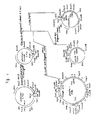
- TPA expression vector pSVeCPA-1 and TPA derivative expression vectors The construction of natural-type, TPA expression vector pSVeCPA-1 and TPA derivative expression vectors is described as follows.
- a natural-type TPA expression vector pSVeCPA-1 can be constructed by using the plasmid vector pSVeSal I (Japanese Laid-open Patent Publication No. 62-14783, supra), the gDNA contained in the aforesaid vector pSVePA-1, and the cDNA of the aforesaid TPA.
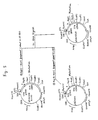
- the TPA expression vector pSVeCPA-1 is constructed by ligating the following three DNA fragments 1, 2, and 3. The construction of this expression vector is schematically shown in Figure 1.
- the plasmid vector pSVeSal I Japanese Laid-Open Patent Publication No. 62-14783, supra is cleaved with a restriction enzyme Nco I, the larger fragment ( Nco I- Nco I fragment, approximately 4.7 kb) is isolated, and circularized with T4 DNA ligase.
- the plasmid vector pSVeSal I- Hin dIII so obtained is cleaved with Hin dIII, and the larger of the resulting DNA fragments (approximately 4.7 kb) is recovered.
- the TPA expression vector pSVePA-1 constructed by the use of the aforesaid gDNA is cleaved with Hin dIII and Bgl II, and the smaller of the resulting DNA fragments (approximately 1.9 kb) is recovered.
- This DNA fragment (approximately 2 kb), containing cDNA of TPA, is obtained by cleavage of the aforesaid cDNA clone pCH79 with Bgl II and Hin dIII.
- the TPA expression vector pSVeCPA-1 constructed in this manner is designed so that the early promoter of the SV40 virus is present upstream from the TPA gene in a position and direction permitting expression of the TPA gene, and TPA can be produced when the vector is introduced into mammalian cells. Not only the SV40 promoter but in fact any promoter which permits the expression of the TPA gene can be used for this purpose.
- TPA derivative an amino acid-substituted variant of TPA (i.e., TPA derivative), with certain amino acid residues in the finger region replaced by different amino acids, include the following.
- the synthesized DNA sequence may be either the entire cDNA or merely an appropriate portion (i.e., the portion into which mutations are introduced). If only a portion is synthesized, then, by using a suitable restriction endonuclease (i.e., restriction enzyme and T4 DNA ligase), a portion of the original cDNA sequence can be replaced by the synthetic DNA.
- a suitable restriction endonuclease i.e., restriction enzyme and T4 DNA ligase
- TPA derivatives with amino acid replacements can be produced by synthesizing DNA sequences encoding portions of an amino acid sequence including the amino acid replacements and constructing expression vectors containing the cDNA sequence of native TPA with the corresponding portions replaced by the said synthetic DNA sequences.
- PN1 a TPA derivative in which arginine at the 7th position, aspartic acid at the 8th position, and gultamic acid at the gth position from the N-terminus of the amino acid sequence of natural TPA are replaced by lysines, respectively.
- PN2 a TPA derivative in which lysine at the 10th position, threonine at the 11th position, glutamine at the 12th position, methionine at the 13th position, and isoleucine at the 14th position from the N-terminus of the amino acid sequence of natural TPA are replaced by glutamic acid, valine, serine, serine, and serine, respectively.
- PN3 a TPA derivative in which tyrosine at the 15th position, glutamine at the 16th position, glutamine at the 17th position, hisfidine at the 18th position, and glutamine at the 19th position from the N-terminus of the amino acid sequence of natural tissue plaminogen activator are replaced by phenylalanine, serine, serine, glutamic acid, and serine, respectively.
- DS1 a TPA derivative in which serine at the 28th position, asparagine at the 29th position, arginine at the 30th position, valine at the 31st position, and glutamic acid at the 32nd position, and tyrosine at the 32nd position from the N-terminus of the amino acid sequence of natural TPA are replaced by valine, serine, glutamic acid, serine, lysine, and asparginine, respectively.
- SD2 a TPA derivative in which asparagine at the 37th position, serine at the 38th position, glycine at the 39th position, argininen at the 40th position alanine at the 41st position and glutamine at the 42nd position from the N-terminus of the amino acid sequence of natural TPA are replaced by serine, valine, valine, gulutamic acid, serine, and serine, respectively.
- SD2 a TPA derivative in which asparagine at the 37th position, serine at the 38th position, glycine at the 39th position, argininen at the 40th position alanine at the 41st position and glutamine at the 42nd position from the N-terminus of the amino acid sequence of natural TPA are replaced by leucine, valine, valine, isolencine, valine, and lencine, respectively.
- SD3 a TPA derivative in which asparagine at the 37th position, serine at the 38th position, glycine at the 39th position, argininen at the 40th position alanine at the 41st position and glutamine at the 42nd position from the N-terminus of the amino acid sequence of natural TPA are replaced by serine, valine, valine, isolencine, serine, and serine, respectively.
- SD4 a TPA derivative in which asparagine at the 37th position, serine at the 38th position, glycine at the 39th position, argininen at the 40th position alanine at the 41st position and glutamine at the 42nd position from the N-terminus of the amino acid sequence of natural TPA are replaced by serine, valine, valine, isolenciene, valine, and serine, respectively.
- SD5 a TPA derivative in which asparagine at the 37th position, serine at the 38th position, glycine at the 39th position, argininen at the 40th position alanine at the 41st position and glutamine at the 42nd position from the N-terminus of the amino acid sequence of natural TPA are replaced by serine, valine, valine, isolencine, valine, and leucine, respectively.
- SD6 a TPA derivative in which asparagine at the 37th position, serine at the 38th position, glycine at the 39th position, argininen at the 40th position alanine at the 41st position and glutamine at the 42nd position from the N-terminus of the amino acid sequence of natural TPA are replaced by phenylalanine, leucine, phenylalanine, valine, leucine, and phenylalanine, respectively.
- SD7 a TPA derivative in which asparagine at the 37th position, serine at the 38th position, glycine at the 39th position, argininen at the 40th position alanine at the 41st position and glutamine at the 42nd position from the N-terminus of the amino acid sequence of natural TPA are replaced by valine, phenylalanine, leucine, phenylalanine, isoleucine, and valine, respectively.
- SD8 a TPA derivative in which asparagine at the 37th position, serine at the 38th position, glycine at the 39th position, argininen at the 40th position alanine at the 41st position and glutamine at the 42nd position from the N-terminus of the amino acid sequence of natural TPA are replaced by serine, valine, valine, glutamic acid, phenylalanine, serine, respectively.
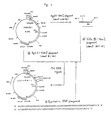
- the expression vectors pSVePN1, pSVePN2 and pSVePN3 used for the production of the aforesaid TPA derivatives PN1, PN2 and PN3, respectively, can be constructed by ligating the following three types of DNA fragments 1, 2, and 3 by the use T4 DNA ligase.
- the construction of these expression vectors is schematically illustrated in Figure 2, employing pSVePN1 as a typical example.
- Single-stranded synthetic DNA fragments with the following DNA sequences, two varieties for each vector, are synthesized.
- the two varieties of single-stranded DNA for each vector are complementary, and prior to the construction of the expression vector are annealed by a conventional method for use in the form of double-stranded DNA.
- Expression vectors pSVePN1, pSVePN2 and pSVePN3 for the three TPA derivatives PN1, PN2, and PN3, respectively, are constructed by ligation of the DNA fragments 1, 2, and 3.
- the expression vectors are introduced into E. coli DH1 (ATCC 33849), respectively, resulting in transformants.
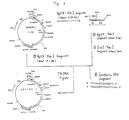
- the expression vector pSVeDS1 used for the Production of the aforesaid TPA derivative DS1 can be constructed by ligating the following four types of DNA fragments 4, 5, 6, and 7, with the use of T4 DNA ligase.
- the construction of this expression vector is schematically shown in Figure 3.
- the Bgl II- Nar I fragment (0.33 kb) obtained as in item 5 above is digested with Ssp I, which cleaves the base sequence of the cDNA encoding TPA in the vicinity of the 290th base pair, thus obtaining a DNA fragment of approximately 230 bp.
- Expression vector pSVeDS1 for the TPA derivative DS1 is constructed by ligating the DNA fragments 4, 5, 6, and 7. The expression vector is introduced into E . coli DH1 (ATCC 33849), resulting in a transformant.
- Figure 6 shows the amino acid sequences in the vicinity of the N-terminus of the TPA derivatives PN1, PN2, PN3 and DS1 produced by the aforesaid expression vectors, in comparison with that of native TPA.
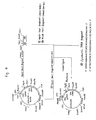
- the expression vectors pSVeSD1, pSVeSD2, pSVeSD3, pSVeSD4, pSVeSD5, pSVeSD6, pSVeSD7, and pSVeSD8 used for the production of the aforesaid TPA derivatives SD1, SD2, SD3, SD4, SD5, SD6, SD7, and SD8, respectively, can be constructed by ligating the following four types of DNA fragments 8, 9, 10, and 11 by the use T4 DNA ligase.
- the construction of these expression vectors is schematically illustrated in Figure 4, employing pSVeSD8 as a typical example.
- Single-stranded synthetic DNA fragments with the following DNA sequences, two varieties for each vector, are synthesized.
- the two varieties of single-stranded DNA for each vector are complementary, and prior to the constructicn of the expression vector are annealed by a conventional method for use in the form of double-stranded DNA.
- the Bgl II- Nar I fragment (0.33 kb) obtained in item (9) above is digested with Dra III, which cleaves the base sequence of the CDNA encoding TPA in the vicinity of the 320th base pair, thus obtaining a DNA fragment of approximately 200 bp.
- Expression vectors pSVeSD1, pSVeSD2, pSVeSD3, pSVeSD4, pSVeSD5, pSVeSD6, pSVeSD7, and pSVeSD8 are constructed by ligating DNA fragments 8, 9, 10, and 11, respectively.
- the expression vectors are introduced into E. coli DH1 (ATCC 33849), respectively, resulting in transformants.
- Expression vectors for TPA derivatives formed by replacement of certain amino acid residues in the kringle 1 region of TPA by other amino acids are prepared, for example, by the method using synthetic DNA primers to introduce mutations into the DNA sequence encoding the amino acid sequence of TPA (i.e., site-directed mutagenesis).
- KM4 a TPA derivative in which glycine at the 161st position, lysine at the 162nd position, and serine at the 165th position from the N-terminus of the amino acid sequence of natural TPA are replaced by arginine, arginine, and tryptophan, respectively.
- KM21 a TPA derivative in which asparagine at the 115th position from the N-terminus of the amino acid sequence of natural TPA is replaced by proline.
- the aforesaid TPA derivatives with modified kringle regions can be prepared, for example, by excising a DNA fragment encoding a portion of the amino acid sequence of TPA (containing a site of the amino acid to be replaced) from a TPA expression vector, for example, pSVeCPA-1 obtained as in item II-A, and incorporating this fragment into a single-stranded phage or plasmid such as M13 or pUC119 suitable for introduction into an E. coli host.
- a TPA expression vector for example, pSVeCPA-1 obtained as in item II-A
- the smaller of the fragments obtained by cleavage of pSVeCPA-1 with Nar I and Sma I is inserted into M13mp11 (manufactured by Takara Shuzo, Co., Ltd.) which has likewise been treated with Nar I and Sma I, thereby obtaining a recombinant phage vector M13NS.
- M13mp11 manufactured by Takara Shuzo, Co., Ltd.
- a portion of a DNA fragment homologous to the aforesaid excised DNA fragment (containing a portion into which the mutations are to be introduced, and the bases present in the portion has been replaced by desired bases) is synthesized separately for use as a primer.
- the following DNA fragment I is synthesized. 5′ TGCTGCAGAACTCCCAGCTGTACCTCCTCGCCTTAAAGACG 3′ (I)
- This primer e.g., the aforesaid DNA fragment I
- T4 polynucleotide kinase is phosphorylated with T4 polynucleotide kinase, then annealed to the aforesaid recombinant single-stranded phage or plasmid, and the DNA chain is extended by the conventional method.
- This procedure may be accomplished by the use of a commercially available in vitro mutagenetic system kit.
- the plasmid so obtained (M13-NSM4), containing the mutant portion is then introduced into a suitable host, for example, E. coli JM109, and amplified.
- this plasmid M13-NSM4 is treated with Nar I and Sma I, the smaller fragment (approximately 1.2 kb; corresponding to the portion of the TPA-coding DNA containing the mutation) is isolated, and is ligated to the aforesaid Nar I- Sma I fragment of pSVeCPA-1 (larger fragment, approximately 7 kb), thereby obtaining an expression vector (pSCKM4) for production of KM41.
- an expression vector (pSCKM21) for producing KM21 is constructed.
- Transformants are obtained by introducing each of the two expression vectors pSCKM4 and pSCKM21 constructed in this manner into E. coli DH1 (ATCC 33849).
- Expression vectors for finger-kringle 1 modified TPA derivatives can be prepared by combining an expression vector for TPA with a modified finger region, prepared as in the above item II-B, and an expression vector for TPA with a modified kringle region, prepared as in the above item II-C, thereby constructing a new expression vector.
- the four types of TPA derivatives KS48, KS218, KS44 and KS214, to be described below, can be produced by this method.
- KS48 a TPA derivative in which asparagine at the 37th position, serine at the 38th position, glycine at the 39th position, arginine at the 40th position, alanine at the 41st position, glutamine at the 42nd position, glycine at the 161st position, lysine at the 162nd position, and serine at the 165th position from the N-terminus of the amino acid sequence of natural TPA are replaced by serine, valine, valine, glutamic acid, phenylalanine, serine, arginine, arginine, and tryptophan, respectively.
- KS218 a TPA derivative in which asparagine at the 37th position, serine at the 38th position, glycine at the 39th position, arginine at the 40th position, alanine at the 41st position, glutamine at the 42nd position and asparagine at the 115th position from the N-terminus of the amino acid sequence of natural TPA are replaced by serine, valine, valine, glutamic acid, phenylalanine, serine, and proline, respectively.
- KS44 a TPA derivative in which asparagine at the 37th position, serine at the 38th position, glycine at the 39th position, arginine at the 40th position, alanine at the 41st position, glutamine at the 42nd position, glycine at the 161st position, lysine at the 162nd position, and serine at the 165th position from the N-terminus of the amino acid sequence of natural TPA are replaced by serine, valine, valine, isoleucine, valine, serine, arginine, arginine, and tryptophan, respectively.
- KS214 a TPA derivative in which asparagine at the 37th position, serine at the 38th position, glycine at the 39th position, arginine at the 40th position, alanine at the 41st position, glutamine at the 42nd position and asparagine at the 115th position from the N-terminus of the amino acid sequence of natural TPA are replaced by serine, valine, valine, isoleucine, valine, serine, and proline, respectively.
- Expression vectors pSVeKS48, pSVeKS218, pSVeKS44 and pSVeKS214 for the production of these TPA derivatives can be constructed by ligating the two types of fragments 1 and 2 indicated below. The construction of these expression vectors is schematically illustrated in Figure 5, employing pSVeKS48 as a typical example.
- TPA derivative expression vectors pSVeKS48, pSVeKS218, pSVeKS44 and pSVeKS214 are obtained by ligating the DNA fragments of the above two varieties 1 and 2, respectively.
- the expression vectors are introduced into E. coli DH1 (ATCC 33849) respectively, resulting in transforments.
- a transformant carrying the expression vector pSVeKS48 was designated E. coli DH115 KS48, and depos ited with the Fementation Research Institute, Agency of Industrial Science and Technology, 1-3, Higashi 1-chome, Tsukuba-shi, Ibaraki-ken, Japan, on June 25, 1990, under Accession No. BP-3083, where it will be maintained under the terms of the Budapest Treaty.
- a plasmid vector possessing a selectable marker gene is constructed and used after mixing with the TPA expression vector in an appropriate proportion, thus permitting selection of the transformants.
- a marker vector pSV2neo-dhfr possessing the neo and dhfr genes is suitable for this purpose, and can be constructed in the following manner.
- the rDNA vector pSV2dhfr (American Type Culture Collection, rDNA Vector 37146), possessing the dhfr gene, is cleaved with Pvu II.
- the resulting Pvu II- Pvu II fragments are ligated Bam HI linker-d (pCGGATCCG) using T4 DNA ligase, thereby obtaining a vector pSV2Bdhfr.
- This vector is cleaved with Bam HI, and the resulting Bam HI- Bam HI fragment is ligated, using T4 DNA ligase, with a Bam HI- Bam HI fragment obtained by cleaving the rDNA vector pSV2neo (American Type Culture Collection, rDNA Vector 37149) with Bam HI, thereby obtaining a circular marker vector pSV2neo-dhfr.
- CH0-K1 ATCC CCL-631
- TPA derivatives can be produced in glycosylated form.
- the transformants so obtained actually produce the fibrin clot as an index.
- In vitro fibrolytic ability can be measured by the method of Larsen, G. R. et al. [J. Biol. Chem., 263 , 1023 (1988)], using release of radioactivity from 125I-fibrin; or by the method of Collen, D. et al. [Thromb. Haemost., 52 , 308 (1984)].
- Fibrin dependence of TPA activity or plasminogen-activating activity can be assessed by the method of Collen, D. et al., using the synthetic substrate S-2251 on which plasmin acts [J. Biol. Chem., 257 , 2912 (1982), sapra] or by the method of Takada, A. et al. [Haemostasis, 18 , 117 (1988)].
- Persistence in the blood can be evaluated as half-life using the method described by Beebe, D. P. et al. [Thrombosis Research, 43 , 663 (1986)] or by Mattson, Ch. et al. [Thrombosis Research, 30 , 91 (1983)].
- TPA derivatives of the present invention possess thrombolytic characteristics of nearly the same level as those of native TPA, and moreover, display excellent persistence in the blood. These characteristics will be further clarified in the following examples.
- a DNA fragment encoding native TPA was prepared from cDNA in the following manner.
- RNA was extracted from CHO-K1 cells which had been transformed with a TPA expression vector pSVePA-1, which utilizes genomic DNA (gDNA) (Japanese Laid-Open Patent Publication No. 62-14783, supra).
- This total RNA extract was subjected to oligo-dT cellulose chromatography, and the polyA+mRNA fraction so obtained was subjected to molecular weight fractionation by the sucrose gradient centrifugation method, thereby obtaining a fraction containing mRNA of TPA.
- cDNA was prepared with a commercial cDNA synthesis kit Amersham, and this was used for preparing a cDNA library.
- a commercial cDNA cloning kit (Amersham) employing lambda-gt10 was used for preparing this cDNA library.
- this library was subjected to plaque hybridization by the conventional method.
- an approximately 2.5 kb DNA fragment containing the 10th, 11th and 12th exons, obtained by cleavage of the aforesaid expression vector pSVePA-1 with an restriction enzyme Xba I the phage clones which displayed positive hybridization with the said DNA fragment were selected.
- DNA was isolated from each of the several positive phage clones obtained in this manner, and after digestion with a restriction enzyme Hin dIII (Takara Shuzo, Co., Ltd.), the DNA was subjected to agarose gel electrophoresis. Then, the positive phage clones were analyzed by Southern hybridization, using as a probe, the same Xba I-cleaved 2.5 kb DNA fragment which was employed in the aforesaid plaque hybridization procedure. The results showed that a clone designated as CH79 hybridized with the aforesaid probe, and contained a DNA fragment which was cleaved into an approximately 2.2 kb fragment by Hin dIII.
- TPA expression vector pSVeCPA-1 and expression vectors for TPA derivatives were constructed as follows.
- TPA expression vector pSVeCPA-1 was constructed by the ligation of three DNA fragments obtained in the following items 1, 2, and 3.
- the construction of this expression vector is schematically shown in Figure 1.
- a plasmid vector pSVeSalI Japanese Laid-Open Patent Publication No.62-14783, supra was cleaved with a restriction enzyme Nco I, and the larger DNA fragment so obtained ( Nco I- Nco I fragment, approximately 4.7 kb) was isolated.
- This DNA fragment contained an early promoter region (SVe) including an origin (Ori) for replication in E. coli , derived from SV40; a sequence containing a polyadenylation signal (polyA); an ampicillin-resistance gene (Amp.); and two Hin dIII recognition sites.
- This Nco I- Nco I fragment was circularized with T4 DNA ligase, and the plasmid vector so obtained, designated as pSVeSal-IHindIII, was amplified by introduction into E. col i DH1.
- this plasmid vector pSVeSalI-HindIII was isolated from the E. coli DH1 by the conventional method, cleaved with Hin dIII, and the larger of the resulting fragments ( Hin dIII- Hin dIII fragment, approximately 4.7 kb) was recovered.
- the aforesaid TPA expression vector pSVePA-1 constructed by utilizing gDNA, was cleaved with Hin dIII and Bgl II, thereby obtaining a small (approximately 1.9 kb) DNA fragment ( Hin dIII- Bgl II fragment).
- This Hin dIII- Bgl II fragment contained the entire second exon and a portion of the third exon of gDNA encoding TPA.
- pCH79 the cDNA clone obtained as in the above item I, was cleaved with Bgl II and Hin dIII, thereby obtaining a DNA fragment ( Bgl II- Hin dIII fragment) of approximately 2 kb containing TPA cDNA.
- TPA expression vector designated as pSVeC-PA-1
- This vector pSVeCPA-1 was introduced into an E. coli DH1, and used in the construction of the following expression vectors for TPA derivatives.
- This TPA expression vector pSVeCPA-1 comprises a gene having the ability of producing native TPA, and contains a portion derived from gDNA (from the second exon indicated by numeral 2 to the Bgl II recognition site of the third exon indicated by numeral 3 in Figure 1) and a portion derived from cDNA.
- TPA derivatives composed of the amino acid sequence of native TPA with the respective amino acid replacements indicated in Table 1, 2, or 3 were designated by PN1, PN2, PN3, DS1, SD1, SD2, SD3, SD4, SD5, SD6, SD7 and SD8.
- Table 1 TPA derivative Expression Vector Amino acid number from N-terminus 7 8 9 10 11 12 13 14 15 16 17 18 19
- Native TPA pSVeCPA-1 Arg Asp Glu Lys Tyr Gln Met Ile Tyr Gln Gln His Gln PN1 pSVePN1 Lys Lys Lys - - - - - - - - - PN2 pSVePN2 - - - Glu Val Ser Ser Ser - - - - PN3 pSVePN3 - - - - - - - - - Phe Ser Ser Glu Ser - denote the same amino acid as that of native TPA.
- the corresponding expression vectors pSVePNI, pSVePN2, pSVePN3, pSVeDS1, pSVeSD1, pSVeSD2, pSVeSD3, pSVeSD4, pSVeSD5, pSVeSD6, pSVeSD7 and pSVeSD8, used for the production of these TPA derivatives, were constructed as follows.
- pSVePN1, pSVePN2 and pSVePN3 were constructed by using T4 DNA ligase to ligate the three types of DNA fragments obtained in the following items 1, 2, and 3.
- Single-stranded synthetic DNA fragments for use in the construction of the expression vectors for the respective TPA derivatives two varieties for each vector, were synthesized with a commercial DNA synthesizer (381A DNA Synthesizer, Applied Biosystems). The DNA sequences of these synthetic oligonucleotides are shown below. The two varieties of single-stranded DNA corresponding to each vector are complementary. Prior to the construction of the expression vector, these DNA fragments were annealed by a conventional method for use in the form of double-stranded DNA.
- the larger of the DNA fragments ( Bgl II- Nar I fragment, approximately 8.1 kb) was obtained by digestion with Bgl II and Nar I of the TPA expression vector pSVeCPA-1 constructed as in item II-A above.
- Three expression vectors (pSVePN1, pSVePN2 and pSVePN3) for producing the corresponding TPA derivatives were constructed by ligation of the DNA fragments 1, 2, and 3 obtained in this manner. Transformants were then obtained by introducing these expression vectors into E. coli DH1 (ATCC 33849).
- the expression vector pSVeDS1 (production for DS1) was constructed by using T4 DNA ligase to ligate the following four types of DNA fragments 4, 5, 6, and 7.
- Single-stranded synthetic DNA fragments for use in the construction of the expression vectors for the respective TPA derivatives two varieties for each vector, were synthesized with a commercial DNA synthesizer (381A DNA Synthesizer, Applied Biosystems). The sequences of these synthetic oligonucleotides are shown below. The two varieties of single-stranded DNA corresponding to each vector are complementary, and prior to the construction of the expression vector were annealed by a conventional method for use in the form of double-stranded DNA.
- Synthetic DNA fragments for construction of DS1 5′ TCTTGGACTCAGAGACTC 3′ 5′ TCAGAGTCTCTGAGTCCAAGA 3′
- the Bgl II- Nar I fragment (0.33 kb) obtained as in item II-B (5) above was digested with Ssp I, which cleaves the base sequence of the cDNA encoding TPA in the vicinity of the 290th base pair, thus obtaining an Ssp I- Nar I fragment of approximately 230 bp.
- the larger of the DNA fragments (approximate onlyly 8.1 kb) was obtained by digestion with Bgl II and Nar I of the TPA expression vector pSVeCPA-1, constructed as in item II-A above.
- the expression vector pSVeDS1 was constructed by ligation of the DNA fragments 4, 5, 6, and 7 obtained in this manner. A transformant was obtained by introduction of this TPA derivative expression vector into an E. coli DH1 (ATCC 33849).
- the aforesaid expression vectors pSVeSD1, pSVeSD2, pSVeSD3, pSVeSD4, pSVeSD5, pSVeSD6, pSVeSD7, and pSVeSD8 were constructed by using T4 DNA ligase to ligate the following four types of DNA fragments 8, 9, 10, and 11.
- TPA derivative Expression Vector Amino acid number from N-terminus 115 161 162 165 Native TPA pSveCPA-1 Asn Gly Lys Ser KM4 pSCKM4 - Arg Arg Trp KM21 pSCKM21 Pro - - - - denote the same amino acid as that of native TPA.
- the TPA expression vector pSVeCPA-1 was cleaved with restriction enzymes Nar I (New England Biolabs) and Sma I (Takara Shuzo, Co., Ltd.), and a fragment of approximately 1.2 kb was isolated by agarose gel electrophoresis. This fragment contains a cDNA sequence encoding an amino acid sequence of native TPA from the glycine residue at the 110th position to the proline residue at the 508th position.
- the transformants possessing the vector M13-NS obtained as in item II-C, 1 were cultivated, and single-stranded DNA was obtained from the supernate of the culture medium.
- the following DNA fragment I was synthesized with a commercial DNA synthesizer (381A DNA Synthesizer, Applied Biosystems). 5′ TGCTGCAGAACTCCCAGCTGTACCTCCTCGCCTTAAAGACG 3′ (I)
- This DNA fragment was phosphorylated with T4 polynucleotide kinase (Takara Shuzo, Co., Ltd.), then annealed to the aforesaid single-stranded DNA M13-NS, and the DNA chain was extended. This procedure was accomplished by means of a commercial in vitro mutagenetic system kit (Amersham). The plasmid (M13-NSM4) containing the desired mutant portion, obtained in this manner was introduced into E. coli TG1 and amplified.
- the DNA sequence of the original expression vector corresponding to the amino acid sequence from the 161st through the 165th residue of native TPA glycine, lysine, tyrosine, serine, serine
- -GGGAAGTACAGCTCA- glycine, lysine, tyrosine, serine, serine
- This DNA sequence corresponds to the amino acid sequence arginine, arginine, tyrosine, serine, tryptophan.
- the introduction of the aforesaid mutation in the DNA sequence was confirmed by means of a commercial sequencing kit (Takara Shuzo, Co., Ltd.).
- mutant vector M13-NSM21 was prepared by the same procedure as that described above.
- this DNA was cleaved with Nar I and Sma I, and a fragment of approximately 1.2 kb (smaller fragment) was obtained by agarose gel electrophoresis.
- the TPA expression vector pSVeCPA-1 was also treated with Nar I and Sma I, and a fragment of approximately 7 kb (larger fragment) was obtained by agarose gel electrophoresis.
- An expression vector pSCKM4 for KM4 was then obtained by ligation of these two fragments.
- an expression vector pSCKM21 was obtained and introduced into E. coli DH1.
- This vector comprises a gene encoding the TPA derivative KM21.
- Transformants were obtained by introduction of pSCK4 and PSCKM21 into E. coli DH1 (ATCC 33849), respectively.
- Expression vectors pSVeKS48, pSVeKS218, pSVeKS44, and pSVeKS214 for the TPA derivatives KS48, KS218, KS44, and KS214, respectively, with amino acid replacements in both the finger region and the kringle 1 region, were constructed as follows. Amino acid replacements in these derivatives are shown in Table 5.
- TPA derivative Expression Vector Amino acid number from N-terminus 37 38 39 40 41 42 115 161 162 165 Native TPA pSVeCPA1 Asn Ser Gly Arg Ala Gln Asn Gly Lys Ser KS48 pSVeKS48 Ser Val Val Glu Phe Ser Asn Arg Arg Trp KS218 pSVeKS218 Ser Val Val Glu Phe Ser Pro Gly Lys Ser KS44 pSVeKS44 Ser Val Val Ile Val Ser Asn Arg Arg Trp KS214 pSVeKS214 Ser Val Val Ile Val Ser Pro Gly Lys Ser
- pSVeSD8 was treated with Bgl II and Nar I, and the smaller fragment (approximately 0.33 kb) was isolated.
- pSCK4 was treated with Bgl II and Nar I, and the larger fragment (approximately 8.1 kb) was isolated.
- T4 DNA ligase was ligated with T4 DNA ligase, thereby obtaining an expression vector pSVeKS48, and transformants were obtained by introducing this vector into E. coli DH1 (ATCC No. 33849).
- a transformant carrying the expression vector pSVeKS48 was designated E.
- the expression vector pSVeKS44 was constructed from pSVeSD4 and pSCKM4, and the expression vector pSVeKS214 was constructed from pSVeSD4 and pSCKM21.
- Marker vectors possessing the neo and dhfr genes as selectable markers were constructed in the following manner.
- the rDNA vector pSV2dhfr (ATCC, rDNA Vector 37146) was cleaved with a restriction enzyme Pvu II, and a Pvu II- Pvu II fragment was isolated. Using T4 DNA ligase, this Pvu II- Pvu II fragment was ligated with Bam HI linker-d (pCGGATCCG, Takara Shuzo, Co., Ltd.), thereby constructing a vector pSV2Bdhfr, which was introduced into E. coli DH1 and amplified.
- This vector pSV2Bdhfr was isolated and digested with Bam HI, and a Bam HI- Bam HI fragment (approximately 2 kb) containing dhfr gene was then isolated by agarose gel electrophoresis. Using T4 DNA ligase, this Bam HI- Bam HI fragment was ligated to a Bam HI- Bam HI fragment obtained by cleavage of the rRNA vector pSV2neo (American Type Culture Collection, rDNA Vector 37149). The circular marker vector constructed in this manner was introduced into E. coli DH1. In this marker vector, which was designated pSV2neo-dhfr, the neo and dhfr genes are inserted in the same expression direction.
- TPA derivative expression vectors obtained as in the aforesaid item II-B, in accordance with the method of Chen, C. et al. [Molec ular and Cellular Biology, 7 , 2745 (1987)].
- Each of these TPA derivative expression vectors was used in a mixture with the marker vector pSV2neo-dhfr in a ratio of 300:1 [TPA derivative expression vector:pSV2neo-dhfr(by weight)].
- mice producing TPA in a concentrations of at least 0.5 ⁇ g/ml per milliliter culture medium were selected.
- the transformant cells thus selected produced TPA derivatives even in serum-free MD medium (MD medium containing 7 mM ⁇ -aminocaproic acid, 50 ⁇ M foipan, 1 mg/ml bovine serum albumin, and 5 ⁇ g/ml insulin).
- TPA derivatives produced by the aforesaid transformants were recovered and purified by the following procedure.
- a commercial ELISA kit (Imubind TPA ELISA Kit, American Diagnostic Inc.) was used for the detection of TPA antigens in this process.
- the culture broth containing the TPA derivative obtained by cultivation of the transformants in the MD serum-free medium described in item IV above, was passed through a CPG-10 column (Electronucleonics Co.) equilibrated with 20 mM phosphate buffer solution (PH 7.5) containing 1 M sodium chioride and 50 ⁇ M foipan, and the column was washed with the same buffer solution as was used for equilibration. Almost no TPA derivative was detected by measurement of TPA antigen in the culture broth which had passed through the column and in the washing solution.
- the TPA derivative was eluted from the CPG-10 column.
- This eluate solution was then charged into a ConA-Sepharose (Pharmacia) column equilibrated with 20 mM phosphate buffer solution (pH 7.5) containing 1 M sodium chloride, 0.01% Tween 80 and 50 ⁇ M foipan.
- the plasminogen activation ability of KM4 and KS48 was compared with that of recombinant TPA obtained from CHO-K1 cells transformed with the native TPA expression vector pSVeCPA-1 (Japanese Laid-Open Patent Publication No. 62-14783).
- the measurements were performed by the following procedure, in accordance with the method of Takada et al., employing the synthetic substrate S-2251 on which plasmin acts [Takada, A., et al., Haemostasis, 18 , 117 (1988)].
- the TPA was used in the reaction after conversion to two-chain form, and the plasminogen used was human lysine type plasminogen (American Diagnostica).
- Lysine type plasminogen was added at concentrations in the range of 11-88 nM to aliquots of 20 mM phosphate buffer solution (pH 7.5) containing 0.1 M sodium chloride, 0.05% Tween 80, 0.3 mM S-2251, and 0.1 mg/ml cyanogen bromide-treated human fibrinogen.
- the aforesaid TPA derivatives (KM4 or KS48) were added to aliquots of this solution in amounts so that the concentrations of the respective TPA derivatives would be 0.15 nM and thus, the reaction was initiated.
- the reaction was conducted at 25°C, and the absorbance at 405 nm was measured at predetermined times.
- the rate of plasmin generation was determined from the obtained data.
- a Lineweaver-Burk graph was plotted using this plasmin generation rate, and the parameters Km and Kcat were calculated.
- the results so obtained are shown in Table 6.
- the data in this Table show that each of the tested TPA derivatives of the present invention displayed higher plasminogen activation ability than recombinant TPA obtained from CHO-K1 cells.
- Table 6 TPA derivative Km(nM) V max (nM ⁇ min) Kcat(sec ⁇ 1) Kcat/Km(nM ⁇ sec ⁇ 1) Native TPA 41.5 0.78′ 0.0871 0.00210 KM4 29.2 1.92 0.213 0.00729 KS48 32.8 0.72 0.0800 0.00244
- TPA derivatives obtained in Example 1 were measured in accordance with the method of Collen, D. et al. [Thromb. Haemost., 52 , 308 (1984)], using the following procedure.
- plasma was prepared from the blood of five volunteers using a citrate anticoagulant, then these plasmas were mixed and used for the following measurements.
- 10 ⁇ l of 125I-labelled fibrinogen (10 MBq/ml) 10 ⁇ l
- 25 ⁇ l of human ⁇ -thrombin (100 units/ml) 50 ⁇ l of 0.5 M calcium chloride
- the mixture was promptly placed in a silicone tube (inner diameter 4 mm, outer diameter 8 mm) and allowed to coagulate for 1 hour at 37°C.
- the silicone tube containing the clot so formed was cut into 1 cm lengths, after which the clots were removed from the tube and washed with 0.85% sodium chloride solution.
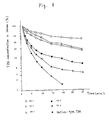
- each of the plasma clots prepared in this manner was floated in 2.5 ml of plasma, then the TPA or TPA derivative to be tested was added, allowing the reaction to be initiated. After the commencement of the reaction, 50 ⁇ l of the plasma was sampled every hour, and the radioactivity of the 125I which had been released from the plasma clot into the plasma was measured with a gamma-counter. This measurement was continued over a 5-hour period. Taking the radioactivity released by complete dissolution of the clot as 100%, the percentage of dissolution for each sampling time was determined. The results so obtained are shown in Figure 7.
- Recombinant TPA obtained from CHO-K1 cells transformed with the native TPA expression vector pSVePA-1 Japanese Laid-Open Patent Publication No. 62-14783 was used as a control.
- SD4 displayed lytic ability of the same order as CHO recombinant TPA.
- KS48 also displayed lytic ability of the same level as CHO recombinant TPA up to 2 hours after the commencement of measurement, but subsequently the activity of this derivative tended to diminish.
- results for the respective analytes are indicated by the symbols ⁇ for SD4, ⁇ for SD8, ⁇ for KS48, ⁇ for recombinant TPA obtained from CHO-1 cells and ⁇ for spontaneous lysis without addition of either TPA or TPA derivatives.
- the results for the respective analytes are indicated by the symbols ⁇ for DS1, ⁇ for SD1, ⁇ for PN1, ⁇ for PN2, ⁇ for PN3, and ⁇ for the recombinant native TPA.
- the measurement results for the TPA derivatives KM4, KS48, SD4, KS218 and SD8 are shown in figure 9 together with the corresponding results for the recombinant native TPA.
- the results for the respective analytes are indicated by the symbols ⁇ for KM4, ⁇ for SD8, ⁇ for SD4, ⁇ for KS218, ⁇ for KS48, and ⁇ for the recombinant native TPA.
- TPA derivatives displayed improved persistence in the blood as compared with recombinant native TPA obtained from CHO-K1 cells.
- TPA derivatives with amino acid replacements in the region from the 37th to the 42nd amino acid residue from the N-terminus of the amino acid sequence of TPA i.e., KS48, KS218, SD4 and SD8 displayed far greater persistence in the blood than the recombinant native TPA.
Landscapes
- Chemical & Material Sciences (AREA)
- Health & Medical Sciences (AREA)
- Organic Chemistry (AREA)
- Life Sciences & Earth Sciences (AREA)
- Engineering & Computer Science (AREA)
- Bioinformatics & Cheminformatics (AREA)
- Zoology (AREA)
- Wood Science & Technology (AREA)
- Genetics & Genomics (AREA)
- Biochemistry (AREA)
- General Health & Medical Sciences (AREA)
- General Engineering & Computer Science (AREA)
- Biomedical Technology (AREA)
- Medicinal Chemistry (AREA)
- Molecular Biology (AREA)
- Biotechnology (AREA)
- Microbiology (AREA)
- Micro-Organisms Or Cultivation Processes Thereof (AREA)
- Medicines That Contain Protein Lipid Enzymes And Other Medicines (AREA)
Applications Claiming Priority (8)
| Application Number | Priority Date | Filing Date | Title |
|---|---|---|---|
| JP24375089 | 1989-09-20 | ||
| JP243750/89 | 1989-09-20 | ||
| JP269406/89 | 1989-10-17 | ||
| JP1269406A JP2787483B2 (ja) | 1989-10-17 | 1989-10-17 | クリングル1領域に変異を有する新規血栓溶解剤とその製造方法 |
| JP50428/90 | 1990-03-01 | ||
| JP5042890 | 1990-03-01 | ||
| JP206458/90 | 1990-08-02 | ||
| JP02206458A JP3081220B2 (ja) | 1990-08-02 | 1990-08-02 | 新規プラスミノーゲン活性化因子誘導体およびその製造方法 |
Publications (3)
| Publication Number | Publication Date |
|---|---|
| EP0420502A2 true EP0420502A2 (fr) | 1991-04-03 |
| EP0420502A3 EP0420502A3 (en) | 1992-07-01 |
| EP0420502B1 EP0420502B1 (fr) | 1994-05-25 |
Family
ID=27462495
Family Applications (1)
| Application Number | Title | Priority Date | Filing Date |
|---|---|---|---|
| EP19900310305 Expired - Lifetime EP0420502B1 (fr) | 1989-09-20 | 1990-09-20 | Dérivé d'activateur de plasminogène et méthode pour sa fabrication |
Country Status (3)
| Country | Link |
|---|---|
| EP (1) | EP0420502B1 (fr) |
| CA (1) | CA2025743A1 (fr) |
| DE (1) | DE69009135T2 (fr) |
Family Cites Families (1)
| Publication number | Priority date | Publication date | Assignee | Title |
|---|---|---|---|---|
| WO1987004722A1 (fr) * | 1986-01-31 | 1987-08-13 | Genetics Institute, Inc. | Nouvelles proteines thrombolytiques |
-
1990
- 1990-09-19 CA CA002025743A patent/CA2025743A1/fr not_active Abandoned
- 1990-09-20 DE DE1990609135 patent/DE69009135T2/de not_active Expired - Fee Related
- 1990-09-20 EP EP19900310305 patent/EP0420502B1/fr not_active Expired - Lifetime
Also Published As
| Publication number | Publication date |
|---|---|
| CA2025743A1 (fr) | 1991-03-21 |
| EP0420502B1 (fr) | 1994-05-25 |
| DE69009135D1 (de) | 1994-06-30 |
| EP0420502A3 (en) | 1992-07-01 |
| DE69009135T2 (de) | 1994-09-08 |
Similar Documents
| Publication | Publication Date | Title |
|---|---|---|
| US5342775A (en) | Plasminogen activator | |
| US5976530A (en) | Peptide plasminogen activators | |
| CA1293211C (fr) | Activateur du plasminogene dans les tissus humains | |
| EP0457758B1 (fr) | Activateur de plasminogene tissulaire presentant des proprietes specifiques zymogenes ou specifiques a la fibrine | |
| US5763253A (en) | Methods of preparing tissue plasiminogen activator derivative composition | |
| US4853330A (en) | Human tissue plasminogen activator | |
| US6274335B1 (en) | Method of treatment using recombinant human tissue plasminogen activator | |
| US5270198A (en) | DNA molecules encoding variants of tissue plasminogen activators, vectors, and host cells | |
| AU645776B2 (en) | Vectors and compounds for expression of glycosylation mutants of human protein C | |
| CA1341432C (fr) | Variantes d'activateurs du plasminogene, ainsi que leurs procedes de synthese | |
| US5407819A (en) | Human plasminogen activator variants having amino acids 37-42 substituted and a method for their manufacture | |
| EP0420502B1 (fr) | Dérivé d'activateur de plasminogène et méthode pour sa fabrication | |
| EP0387380A1 (fr) | Mutants de l'activateur du plasminogène dérivé de l'urine, leur production et leur utilisation | |
| EP0445464A2 (fr) | DérivÀ© d'activateur de plasminogène et méthode pour sa fabrication | |
| EP0381331A2 (fr) | Séquences des gènes qui codifient des résidus modifiés situés dans le domaine protéase du t-PA | |
| US5346824A (en) | DNA encoding variants of tissue plasminogen activators and expression vectors and hosts thereof | |
| WO1989007145A1 (fr) | Sequences de genes modifiees codant pour des activateurs de plasminogenes tissulaires modifies et molecules ainsi produites | |
| JP2831709B2 (ja) | 血栓溶解剤およびその製造方法 | |
| JPH0491789A (ja) | 新規プラスミノーゲン活性化因子誘導体およびその製造方法 | |
| Yahara et al. | Recombinant variants of tissue-type plasminogen activator containing amino acid substitutions in the finger domain | |
| JP2874901B2 (ja) | 新規血栓溶解剤およびその製造方法 | |
| JP2787484B2 (ja) | 新規血栓溶解剤とその製造方法 | |
| HK1007333B (en) | Variants of plasminogen activators and processes for their production | |
| JPH03285685A (ja) | 新規プラスミノーゲン活性化因子誘導体およびその製造方法 | |
| HK1007334B (en) | Tissue plasminogen activator having zymogenic or fibrin specific properties |
Legal Events
| Date | Code | Title | Description |
|---|---|---|---|
| PUAI | Public reference made under article 153(3) epc to a published international application that has entered the european phase |
Free format text: ORIGINAL CODE: 0009012 |
|
| 17P | Request for examination filed |
Effective date: 19901231 |
|
| AK | Designated contracting states |
Kind code of ref document: A2 Designated state(s): BE DE FR GB IT |
|
| PUAL | Search report despatched |
Free format text: ORIGINAL CODE: 0009013 |
|
| AK | Designated contracting states |
Kind code of ref document: A3 Designated state(s): BE DE FR GB IT |
|
| 17Q | First examination report despatched |
Effective date: 19920918 |
|
| GRAA | (expected) grant |
Free format text: ORIGINAL CODE: 0009210 |
|
| AK | Designated contracting states |
Kind code of ref document: B1 Designated state(s): BE DE FR GB IT |
|
| ITF | It: translation for a ep patent filed | ||
| REF | Corresponds to: |
Ref document number: 69009135 Country of ref document: DE Date of ref document: 19940630 |
|
| ET | Fr: translation filed | ||
| PLBE | No opposition filed within time limit |
Free format text: ORIGINAL CODE: 0009261 |
|
| STAA | Information on the status of an ep patent application or granted ep patent |
Free format text: STATUS: NO OPPOSITION FILED WITHIN TIME LIMIT |
|
| 26N | No opposition filed | ||
| REG | Reference to a national code |
Ref country code: GB Ref legal event code: IF02 |
|
| PGFP | Annual fee paid to national office [announced via postgrant information from national office to epo] |
Ref country code: FR Payment date: 20020910 Year of fee payment: 13 |
|
| PGFP | Annual fee paid to national office [announced via postgrant information from national office to epo] |
Ref country code: GB Payment date: 20020918 Year of fee payment: 13 |
|
| PGFP | Annual fee paid to national office [announced via postgrant information from national office to epo] |
Ref country code: DE Payment date: 20020925 Year of fee payment: 13 |
|
| PGFP | Annual fee paid to national office [announced via postgrant information from national office to epo] |
Ref country code: BE Payment date: 20021129 Year of fee payment: 13 |
|
| PG25 | Lapsed in a contracting state [announced via postgrant information from national office to epo] |
Ref country code: GB Free format text: LAPSE BECAUSE OF NON-PAYMENT OF DUE FEES Effective date: 20030920 |
|
| PG25 | Lapsed in a contracting state [announced via postgrant information from national office to epo] |
Ref country code: BE Free format text: LAPSE BECAUSE OF NON-PAYMENT OF DUE FEES Effective date: 20030930 |
|
| BERE | Be: lapsed |
Owner name: *KANEGAFUCHI KAGAKU KOGYO K.K. Effective date: 20030930 |
|
| PG25 | Lapsed in a contracting state [announced via postgrant information from national office to epo] |
Ref country code: DE Free format text: LAPSE BECAUSE OF NON-PAYMENT OF DUE FEES Effective date: 20040401 |
|
| GBPC | Gb: european patent ceased through non-payment of renewal fee |
Effective date: 20030920 |
|
| PG25 | Lapsed in a contracting state [announced via postgrant information from national office to epo] |
Ref country code: FR Free format text: LAPSE BECAUSE OF NON-PAYMENT OF DUE FEES Effective date: 20040528 |
|
| REG | Reference to a national code |
Ref country code: FR Ref legal event code: ST |
|
| PG25 | Lapsed in a contracting state [announced via postgrant information from national office to epo] |
Ref country code: IT Free format text: LAPSE BECAUSE OF NON-PAYMENT OF DUE FEES;WARNING: LAPSES OF ITALIAN PATENTS WITH EFFECTIVE DATE BEFORE 2007 MAY HAVE OCCURRED AT ANY TIME BEFORE 2007. THE CORRECT EFFECTIVE DATE MAY BE DIFFERENT FROM THE ONE RECORDED. Effective date: 20050920 |