EP0421976A1 - Umschlag, insbesondere Fotolaborarbeitstasche - Google Patents
Umschlag, insbesondere Fotolaborarbeitstasche Download PDFInfo
- Publication number
- EP0421976A1 EP0421976A1 EP90890233A EP90890233A EP0421976A1 EP 0421976 A1 EP0421976 A1 EP 0421976A1 EP 90890233 A EP90890233 A EP 90890233A EP 90890233 A EP90890233 A EP 90890233A EP 0421976 A1 EP0421976 A1 EP 0421976A1
- Authority
- EP
- European Patent Office
- Prior art keywords
- envelope
- punched
- wall
- rear wall
- folded over
- Prior art date
- Legal status (The legal status is an assumption and is not a legal conclusion. Google has not performed a legal analysis and makes no representation as to the accuracy of the status listed.)
- Granted
Links
Images
Classifications
-
- B—PERFORMING OPERATIONS; TRANSPORTING
- B65—CONVEYING; PACKING; STORING; HANDLING THIN OR FILAMENTARY MATERIAL
- B65D—CONTAINERS FOR STORAGE OR TRANSPORT OF ARTICLES OR MATERIALS, e.g. BAGS, BARRELS, BOTTLES, BOXES, CANS, CARTONS, CRATES, DRUMS, JARS, TANKS, HOPPERS, FORWARDING CONTAINERS; ACCESSORIES, CLOSURES, OR FITTINGS THEREFOR; PACKAGING ELEMENTS; PACKAGES
- B65D27/00—Envelopes or like essentially-rectangular flexible containers for postal or other purposes having no structural provision for thickness of contents
- B65D27/12—Closures
- B65D27/14—Closures using adhesive applied to integral parts, e.g. flaps
- B65D27/16—Closures using adhesive applied to integral parts, e.g. flaps using pressure-sensitive adhesive
Definitions
- the invention relates to an envelope, in particular a photo laboratory work bag, with a closure flap which can be folded over on the opening side on one envelope wall, the front wall, and can be folded over to the other envelope wall, the rear wall, which flap can be glued to the rear wall by means of an adhesive label stuck over a die cut.
- Material and with or without a window envelopes often serve as photo laboratory work bags for receiving the films and photos to be worked out in a photo laboratory, but they are also used as envelopes or generally as storage bags for various objects.
- These envelopes should be able to be closed quickly and neatly by simply folding the flap over and they should also be able to be stacked on top of one another in any number, without fear of sticking together.
- the adhesive label on the back that is to say on the outside of the envelope, must be specially prepared by silicone coating or the like, so that when the envelopes are stacked on one another the labels which are then lying one above the other are prevented from sticking together.
- these special adhesive labels are relatively expensive and increase the overall manufacturing effort.
- at least the rear wall consists of a plastic film or the like, which further increases the material and cost involved in the manufacture of the envelope.
- the invention is therefore based on the object to remedy these shortcomings and to create an envelope of the type described, which can be rationally manufactured and which is also characterized by a label area over the entire surface including the closure flap which covers the label-free area.
- the invention solves this problem in that the cutout is in the rear wall and the adhesive label is glued from the inside of the envelope over the open cutout and in that the front wall has a separating lacquer layer on the outside in its area opposite the cutout, advantageously using a silicon-containing synthetic resin lacquer Separating lacquer layer forms.
- the arrangement of the cut-out in the rear wall fills the entire front wall together with the flap come free and enables full-surface printing.
- the die-cut on the back wall with the label on the inside offers a neat image even when the flap is open and conventional labels can be used as labels without any treatment of the back.
- the release varnish that can be applied without difficulty in the course of the envelope production or printing in the area opposite to the punched-out area on the outside of the front wall ensures that any number of envelopes are stacked on one another without adhesive, since this release varnish has a repulsive effect and does not bond with the adhesive of the label.
- the wall thickness of the rear wall prevents the envelope lying on top of one another from being pressed directly onto the adhesive layer of the label lying within the rear wall, as a result of which the stacked envelopes are prevented from sticking.
- the release varnish itself is transparent, can be written on and printed on, so that it does not impair the design of the front wall regardless of when it is applied.
- the adhesive label can also be stuck from the inside of the envelope over the punched-out section still covered with the punched-out part, the punched-out part hanging detachably in the punched-out connection webs interrupting the circumferential punched line.
- This stamped part which is still available for the time being, thus covers the adhesive label from the outside, so that there are no longer any free adhesive spots and the envelopes can be stacked on top of one another in a completely safe manner.
- the punched part is only pulled off when necessary, which is clean due to the punched line forming a predetermined tear line and only interrupted by the connecting webs and with a handle, and the envelope can be closed properly.
- the envelope, or at least the punched-out rear wall area is preferably made of non-fibrous paper or the like.
- the closure flap has a film or a connecting lacquer layer on the inside in its area that can be folded over onto the punched-out area, so that the flap can be detached from the adhesive label in any case and independently of the remaining envelope material and a repeated, proper closing and opening of the flap is guaranteed.
- Conventional overpressure connection varnishes preferably a nitrocellulose varnish, are suitable as the connection varnish, the material and production expenditure remaining minimal due to the small surface area of the film or the connection varnish layer.
- the envelopes are made from a cohesive blank that forms the front and back wall, including the flap and possibly a tear-off strip, which results in the desired envelope due to folding and gluing on the side, the cut-out can be rationally prefabricated during the production of the blank and the adhesive label easily folded before folding or pieces of film and the lacquer layers are applied at the locations assigned to them, which enables material-saving, particularly economical envelope production.
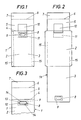
- An envelope 1 consists of a front wall 2 and a rear wall 3, a flap 5 projecting above the opening 4 of the envelope being attached to the front wall 2, from which a tear-off strip 7 can be separated by means of a perforation line 6.
- a punch 8 is provided just below the edge 4 forming the edge, via which an adhesive label 9 is glued from the inside of the envelope, so that the adhesive area within the punch 8 is used to glue the flap 5 which can be folded towards the rear wall 3 can be.
- the punched-out 8 is open from the outset and therefore the adhesive label 9 is accessible from the outside.
- a separating lacquer layer 11 is applied to the outside of the front wall 2 in the area opposite the punched-out area 8, which layer has an adhesive-repelling effect and therefore cannot stick to the adhesive label 9.
- the adhesive label 9 can, however, also be covered by the punched-out part 12, which is still remaining in the punched-out 8, in order to get by without a separating lacquer layer and to be able to stack the envelopes 1 safely on one another.
- This part 12 hangs only via connecting webs 14 which interrupt the circumferential punching line 13, detachably in the punching 8, so that it can be pulled off at any time along the predetermined tear line given by the punching line 13.
- a suitable adhesive and / or a non-fibrous material of the stamped part 12 or the rear wall 3 or the entire envelope 1 that can be peeled off from the adhesive must of course be provided. If the part 12 is removed, the adhesive point of the adhesive label 9 is exposed and the closure flap 5 can be closed again by folding down and pressing down.
- the envelope 1 can be produced rationally and in a material-saving manner, for example by prefabricating a uniform blank 1a, which comprises the front wall 2, rear wall 3 and closure flap 5 together with lateral adhesive tabs 15 and already with the punched-out 8 and on the inside with the adhesive label 9 and optionally the connecting lacquer layer 10 and is provided on the outside with the release lacquer layer 11 (FIG. 2).
- a uniform blank 1a which comprises the front wall 2, rear wall 3 and closure flap 5 together with lateral adhesive tabs 15 and already with the punched-out 8 and on the inside with the adhesive label 9 and optionally the connecting lacquer layer 10 and is provided on the outside with the release lacquer layer 11 (FIG. 2).
- an envelope 1 (FIG. 1) is produced in a rational manner, which is also characterized by its full-surface printability, which includes the entire front wall and closure flap.
- one or more viewing windows can be provided in the rear wall 3 or in the front wall 2, and there is inherently full freedom for the actual design of the envelope and
Landscapes
- Engineering & Computer Science (AREA)
- Mechanical Engineering (AREA)
- Making Paper Articles (AREA)
- Credit Cards Or The Like (AREA)
- Supplying Of Containers To The Packaging Station (AREA)
- Packages (AREA)
- Bag Frames (AREA)
Abstract
Description
- Die Erfindung bezieht sich auf einen Umschlag, insbesondere Fotolaborarbeitstasche, mit einer öffnungsseitig an der einen Umschlagwand, der Vorderwand, angesetzten und zur anderen Umschlagwand, der Rückwand, hin umklappbaren Verschlußklappe, die umgeklappt an der Ruckwand mittels eines über eine Ausstanzung geklebten Klebeetiketts festklebbar ist.
- Solche im wesentlichen aus Papier od. dgl. Material und mit oder ohne Sichtfenster hergestellten Umschläge dienen häufig als Fotolaborarbeitstaschen zur Aufnahme der in einem Fotolabor auszuarbeitenden Filme und Fotos, sie werden aber auch als Briefkuverts oder allgemein als Aufnahmetaschen für verschiedenste Gegenstände verwendet. Diese Umschläge sollen sich dabei durch einfaches Umklappen der Verschlußklappe schnell und sauber verschließen lassen und sie sollen auch, ohne ein Zusammenkleben befürchten zu müssen, einwandfrei und in beliebiger Anzahl übereinandergestapelt werden können. Wie aus dem DE-GM 78 34 984, der DE-PS 31 37 681 bzw. AT-PS 377 104, oder der CH-PS 356 077 und den US-PSen 3 079 066 und 3 256 941 hervorgeht, sind bisher bei den bekannten Umschlägen die Ausstanzungen in der Verschlußklappe oder dem als Verschluß dienenden Vorderwandteil angeordnet und die Klebeetikette außen über diese Ausstanzungen geklebt, so daß die Etikette bei auf- und zugeklappter Verschlußklappe sichtbar sind und den optischen Eindruck der Umschläge beeinträchtigen. Vor allem aber wird durch die Etikette der Aufdruckbereich an der Vorderwand geschmälert, was gerade bei der Verwendung als Fotolaborarbeitstasche recht unerwünscht ist, da hier neben Informationen und Felder zur Beschriftung u. dgl. möglichst großflächige Werbeaufdrucke Platz finden sollen. Abgesehen davon, müssen die Klebeetikette an ihrer Rückseite, also an der Umschlagaußenseite, durch Silikonbeschichtung od. dgl. speziell präpariert sein, damit beim Aufeinanderstapeln der Umschläge ein Zusammenkleben der dann übereinander liegenden Etikette verhindert wird. Diese speziellen Klebeetikette sind aber relativ teuer und erhöhen den gesamten Herstellungsaufwand. Um außerdem einen mehrmals verwendbaren Klebeverschluß zu erreichen, besteht bei den bekannten Umschlägen zumindest die Rückwand aus einer Kunststoffolie od. dgl., was den Material- und Kostenaufwand bei der Umschlagherstellung weiter steigert.
- Der Erfindung liegt daher die Aufgabe zugrunde, diese Mängel zu beseitigen und einen Umschlag der eingangs geschilderten Art zu schaffen, der sich rationell fertigen läßt und der sich darüber hinaus durch einen die Vorderwand samt Verschlußklappe ganzflächig erfassenden etikettfreien Aufdruckbereich auszeichnet.
- Die Erfindung löst diese Aufgabe dadurch, daß die Ausstanzung in der Rückwand liegt und das Klebeetikett von der Umschlaginnenseite her über die offene Ausstanzung geklebt ist und daß die Vorderwand an der Außenseite in ihrem der Ausstanzung gegenüberliegenden Bereich eine Trennlackschicht aufweist, wobei vorteilhafterweise ein siliziumhältiger Kunstharzlack die Trennlackschicht bildet. Die Anordnung der Ausstanzung in der Rückwand macht die gesamte Vorderwand zusammen mit der Verschlußklappe voll kommen frei und ermöglicht ganzflächige Aufdrucke. Die an der Rückwand vorgesehene Ausstanzung mit dem innenliegenden Etikett bietet auch bei offener Verschlußklappe ein ordentliches Bild und als Etikette können herkömmliche Etikette ohne jegliche Behandlung der Rückseite verwendet werden. Der im Zuge der Umschlagherstellung oder Bedrukkung ohne Schwierigkeiten aufzubringende Trennlack im der Ausstanzung gegenüberliegenden Bereich an der Vorderwandaußenseite gewährleistet das klebefreie Aufeinanderstapeln beliebig vieler Umschläge, da dieser Trennlack eine abstoßende Wirkung zeigt und sich nicht mit dem Kleber des Etiketts verbindet. Zusätzlich verhindert dabei die Wandstärke der Rückwand ein unmittelbar flächiges Aufeinanderdrücken des aufliegenden Umschlages auf die Klebeschicht der innerhalb der Rückwand liegenden Etikette, wodurch ein Haftenbleiben der aufeinandergestapelten Umschläge ausgeschlossen ist. Der Trennlack selbst ist durchsichtig, läßt sich beschreiben und bedrucken, so daß er unabhängig vom Zeitpunkt seines Aufbringens keinerlei Beeinträchtigung der Vorderwandgestaltung mit sich bringt.
- Zur Vermeidung der Trennlackschicht kann nach einer anderen Ausgestaltung der Erfindung das Klebeetikett von der Umschlaginnenseite her auch über die noch mit dem ausgestanzten Teil abgedeckte Ausstanzung geklebt sein, wobei der ausgestanzte Teil durch die umfangseitige Stanzlinie unterbrechende Verbindungsstege lösbar in der Ausstanzung hängt. Dieser vorerst noch vorhandene Stanzteil deckt somit das Klebeetikett nach außen hin ab, so daß es keine freie Klebestelle mehr gibt und die Umschläge beliebig und vollkommen gefahrlos aufeinander stapelbar sind. Erst bei Bedarf wird der Stanzteil abgezogen, was durch die eine Sollreißlinie bildende, nur von den Verbindungsstegen unterbrochene Stanzlinie sauber und mit einem Griff möglich ist, und der Umschlag kann ordnungsgemäß verschlossen werden. Damit es hier zu keinem Haftenbleiben von Materialfasern od. dgl. am Klebeetikett kommen kann, besteht vorzugsweise der Umschlag, zumindest aber der die Austanzung aufweisende Rückwandbereich aus einem nichtfasernden Papier od. dgl. Material.
- Um einen mehrmalig verwendbaren Klebeverschluß sicherzustellen, trägt erfindungsgemäß die Verschlußklappe an der Innenseite in ihrem auf die Ausstanzung umklappbaren Bereich eine Folie oder eine Verbindungslackschicht, so daß sich die Klappe auf jeden Fall und unabhängig vom übrigen Umschlagmaterial rückstandsfrei von dem Klebeetikett lösen läßt und ein mehrmaliges, einwandfreies Schließen und Öffnen der Verschlußklappe gewährleistet ist. Als Verbindungslack eignen sich herkömmliche Überdruck-Verbindungslacke, vorzugsweise ein Nitrocelluloselack, wobei auch hier durch die Kleinflächigkeit der Folie oder der Verbindungslackschicht der Material- und Herstellungsaufwand minimal bleibt. Werden die Umschläge aus einem zusammenhängenden, Vorder- und Rückwand samt Verschlußklappe und eventuell anschließendem Abreißstreifen bildenden Zuschnitt hergestellt, der durch Falten und seitliches Verkleben den gewünschten Umschlag ergibt, kann rationell bei der Herstellung des Zuschnittes auch die Ausstanzung vorgefertigt und vor dem Zusammenfalten problemlos die Klebeetikette bzw. Folienstückchen und die Lackschichten an den ihnen zugeordneten Stellen aufgebracht werden, wodurch eine materialsparende, besonders wirtschaftliche Umschlagherstellung möglich ist.
- In der Zeichnung ist der Erfindungsgegenstand beispielsweise veranschaulicht, und zwar zeigen
- Fig. 1 einen erfindungsgemäßen Umschlag mit geöffneter Verschlußklappe in Rückansicht,
- Fig. 2 den Zuschnitt dieses Umschlages in innenseitiger Ansicht und
- Fig. 3 ein anderes Ausführungsbeispiel eines erfindungsgemäßen Umschlages ebenfalls in Rückansicht.
- Ein Umschlag 1 besteht aus einer Vorderwand 2 und einer Rückwand 3, wobei an der Vorderwand 2 eine über die Öffnung 4 des Umschlages hochragende Verschlußklappe 5 angesetzt ist, von der mittels einer Perforationslinie 6 ein Abreißstreifen 7 abtrennbar sein kann. In der Rückwand 3 ist knapp unterhalb der die Öffnung 4 bildenden Randkante eine Ausstanzung 8 vorgesehen, über die von der Umschlaginnenseite her ein Klebeetikett 9 geklebt ist, so daß der klebende Bereich innerhalb der Ausstanzung 8 zum Festkleben der zur Rückwand 3 hin umklappbaren Verschlußklappe 5 genutzt werden kann.
- Im auf die Ausstanzung 8 umklappbaren Bereich an der Innenseite der Verschlußklappe 5 ist eine Schicht 10 aus Verbindungslack oder einer Folie aufgebracht, so daß sich die Verschlußklappe 5, auch wenn sie aus faserndem Material besteht, mehrmals ohne Verlust der Klebewirkung schließen und wieder öffnen läßt.
- Beim Ausführungsbeispiel nach Fig. 1 und 2 ist die Ausstanzung 8 von vornherein offen und daher das Klebeetikett 9 von außen zugänglich. Um hier ein gegenseitiges Festkleben aufeinandergestapelter Umschläge 1 zu verhindern, ist an der Vorderwand 2 außenseitig im der Ausstanzung 8 gegenüberliegenden Bereich eine Trennlackschicht 11 aufgetragen, die eine kleberabstoßende Wirkung besitzt und daher mit dem Klebeetikett 9 nicht verkleben kann.
- Wie in Fig. 3 angedeutet, kann das Klebeetikett 9 aber auch vom ausgestanzten, aber noch in der Ausstanzung 8 verbleibenden Teil 12 abgedeckt werden, um ohne Trennlackschicht auszukommen und die Umschläge 1 gefahrlos aufeinanderstapeln zu können. Dieser Teil 12 hängt dabei nur über Verbindungsstege 14, die die umfangseitige Stanzlinie 13 unterbrechen, lösbar in der Ausstanzung 8, so daß er jederzeit bei Bedarf entlang der durch die Stanzlinie 13 gegebenen Sollreißlinie abgezogen werden kann. Um dabei nicht ein Haftenbleiben am Etikett befürchten zu müssen, ist selbstverständlich für ein entsprechendes Klebemittel und/oder ein vom Kleber abziehbares, nicht faserndes Material des Stanzteiles 12 bzw. der Rückwand 3 oder des ganzen Umschlages 1 zu sorgen. Ist der Teil 12 entfernt, liegt die Klebestelle des Klebeetiketts 9 frei und die Verschlußklappe 5 kann wieder durch Umklappen und Niederdrücken verschlossen werden.
- Der Umschlag 1 läßt sich rationell und materialsparend herstellen, indem beispielsweise ein einheitlicher Zuschnitt 1a vorgefertigt wird, der Vorderwand 2, Rückwand 3 und Verschlußklappe 5 samt seitlichen Klebelaschen 15 umfaßt und bereits mit der Ausstanzung 8 und innenseitig mit dem Klebeetikett 9 und gegebenenfalls der Verbindungslackschicht 10 sowie außenseitig mit der Trennlackschicht 11 versehen ist (Fig. 2). Durch entsprechendes Zusammenfalten und Zusammenkleben dieses Zuschnittes 1a entsteht auf rationelle Weise ein Umschlag 1 (Fig. 1), der sich zudem durch seine die gesamte Vorderwand und Verschlußklappe einbeziehende, ganzflächige Bedruckbarkeit auszeichnet. Selbstverständlich kann dabei in der Rückwand 3 oder auch in der Vorderwand 2 ein oder mehrere Sichtfenster vorgesehen sein und für die eigentliche Ausgestaltung des Umschlages und die Materialwahl besteht an und für sich volle Freiheit.
Claims (6)
Applications Claiming Priority (2)
| Application Number | Priority Date | Filing Date | Title |
|---|---|---|---|
| AT230489 | 1989-10-05 | ||
| AT2304/89 | 1989-10-05 |
Publications (2)
| Publication Number | Publication Date |
|---|---|
| EP0421976A1 true EP0421976A1 (de) | 1991-04-10 |
| EP0421976B1 EP0421976B1 (de) | 1993-06-02 |
Family
ID=3531874
Family Applications (1)
| Application Number | Title | Priority Date | Filing Date |
|---|---|---|---|
| EP90890233A Expired - Lifetime EP0421976B1 (de) | 1989-10-05 | 1990-08-02 | Umschlag, insbesondere Fotolaborarbeitstasche |
Country Status (3)
| Country | Link |
|---|---|
| EP (1) | EP0421976B1 (de) |
| AT (1) | ATE90062T1 (de) |
| DE (1) | DE59001610D1 (de) |
Cited By (5)
| Publication number | Priority date | Publication date | Assignee | Title |
|---|---|---|---|---|
| GB2267268A (en) * | 1992-05-26 | 1993-12-01 | Ken Stokes Printing Limited | Document envelopes |
| FR2720180A1 (fr) * | 1994-05-19 | 1995-11-24 | Jacques Meersseman | Enveloppe publicitaire. |
| FR2798906A1 (fr) * | 1999-09-29 | 2001-03-30 | Seetal Schaller Ag | Pochette d'ordre pour la livraison de travaux photographiques |
| CN107187691A (zh) * | 2017-06-12 | 2017-09-22 | 李璇芬 | 具有可粘结盖片结构包装片材的制作方法及由该方法获得的包装盒 |
| CN107521796A (zh) * | 2017-07-31 | 2017-12-29 | 李璇芬 | 带有粘结盖片且开启方便包装片材的制作方法及该方法获得的包装盒 |
Citations (2)
| Publication number | Priority date | Publication date | Assignee | Title |
|---|---|---|---|---|
| US3256941A (en) * | 1964-09-23 | 1966-06-21 | Gulf Oil Corp | Bag closure |
| DE3137681C1 (de) * | 1981-09-22 | 1983-02-03 | Paul Kieser GmbH Druckerei und Verlag, 8901 Neusäß | Fotolaborarbeitstasche |
-
1990
- 1990-08-02 AT AT90890233T patent/ATE90062T1/de not_active IP Right Cessation
- 1990-08-02 DE DE9090890233T patent/DE59001610D1/de not_active Expired - Fee Related
- 1990-08-02 EP EP90890233A patent/EP0421976B1/de not_active Expired - Lifetime
Patent Citations (2)
| Publication number | Priority date | Publication date | Assignee | Title |
|---|---|---|---|---|
| US3256941A (en) * | 1964-09-23 | 1966-06-21 | Gulf Oil Corp | Bag closure |
| DE3137681C1 (de) * | 1981-09-22 | 1983-02-03 | Paul Kieser GmbH Druckerei und Verlag, 8901 Neusäß | Fotolaborarbeitstasche |
Cited By (8)
| Publication number | Priority date | Publication date | Assignee | Title |
|---|---|---|---|---|
| GB2267268A (en) * | 1992-05-26 | 1993-12-01 | Ken Stokes Printing Limited | Document envelopes |
| FR2720180A1 (fr) * | 1994-05-19 | 1995-11-24 | Jacques Meersseman | Enveloppe publicitaire. |
| FR2798906A1 (fr) * | 1999-09-29 | 2001-03-30 | Seetal Schaller Ag | Pochette d'ordre pour la livraison de travaux photographiques |
| EP1088766A1 (de) * | 1999-09-29 | 2001-04-04 | Seetal Schaller AG | Versandtasche für Fotoarbeiten |
| CN107187691A (zh) * | 2017-06-12 | 2017-09-22 | 李璇芬 | 具有可粘结盖片结构包装片材的制作方法及由该方法获得的包装盒 |
| CN107187691B (zh) * | 2017-06-12 | 2023-07-04 | 李璇芬 | 具有可粘结盖片结构包装片材的制作方法及由该方法获得的包装盒 |
| CN107521796A (zh) * | 2017-07-31 | 2017-12-29 | 李璇芬 | 带有粘结盖片且开启方便包装片材的制作方法及该方法获得的包装盒 |
| CN107521796B (zh) * | 2017-07-31 | 2023-07-04 | 李璇芬 | 带有粘结盖片且开启方便包装片材的制作方法及该方法获得的包装盒 |
Also Published As
| Publication number | Publication date |
|---|---|
| EP0421976B1 (de) | 1993-06-02 |
| DE59001610D1 (de) | 1993-07-08 |
| ATE90062T1 (de) | 1993-06-15 |
Similar Documents
| Publication | Publication Date | Title |
|---|---|---|
| DE68922617T2 (de) | Etikett und verfahren zu seiner herstellung. | |
| DE19653891C1 (de) | Siegel- oder Verschlußetikett | |
| DE3310597A1 (de) | Zweiweg-umschlag mit mitteln zur befestigung einer ruecksendeklappe und verfahren zu dessen herstellung | |
| EP0946936A1 (de) | Etikett zum etikettieren von vorzugsweise zylindrischen behältnissen und behältnis mit einem solchen etikett | |
| DE69413826T2 (de) | Fensterbriefumschlag | |
| DE29800751U1 (de) | Anordnung mit einem flexiblen beschriftbaren Etikettenmaterial | |
| DE69506457T2 (de) | Selbstklebeetikett für eine versiegelbare Verpackung | |
| EP0421976B1 (de) | Umschlag, insbesondere Fotolaborarbeitstasche | |
| DE69017701T2 (de) | Etiketten und deren herstellung. | |
| EP1065644A2 (de) | Materialbahn mit Überdeckungsetikett | |
| DE2656021A1 (de) | Briefordner zur aufnahme von gelochtem schriftgut | |
| DE3137681C1 (de) | Fotolaborarbeitstasche | |
| EP0326798B1 (de) | Verbundetikett | |
| DE4018737A1 (de) | Selbstklebeetikett zum befestigen und versiegeln eines passbildes | |
| DE60204590T2 (de) | Label mit mehrfachdaten und verfahren zu seiner herstellung | |
| DE102013107410B4 (de) | Mehrlagiges Etikett | |
| CH683411A5 (de) | Mit einer Randlochung versehene Zeigetasche. | |
| WO1998013210A1 (de) | Formular mit integrierter karte sowie träger- und mehrschichtmaterial zur herstellung eines solchen formulars | |
| DE9217655U1 (de) | Schablone zum Einätzen eines Codes in eine Glasscheibe | |
| DE4410851A1 (de) | Briefumschlag aus zerreißfestem Kunststoff | |
| DE19829603C2 (de) | Etikett mit integrierter Aufhängelasche und Herstellungsverfahren dazu | |
| DE4321353C1 (de) | Recyclingfähiger Briefumschlag | |
| DE2802122A1 (de) | Verfahren zur herstellung von foliengeschuetzten etiketten, und klebefolie zur verwendung bei diesem verfahren | |
| DE19505531A1 (de) | Selbstklebeetikett | |
| DE2930725A1 (de) | Verpackung aus pappe fuer eine folienbahn |
Legal Events
| Date | Code | Title | Description |
|---|---|---|---|
| PUAI | Public reference made under article 153(3) epc to a published international application that has entered the european phase |
Free format text: ORIGINAL CODE: 0009012 |
|
| AK | Designated contracting states |
Kind code of ref document: A1 Designated state(s): AT BE CH DE DK ES FR GB GR IT LI LU NL SE |
|
| 17P | Request for examination filed |
Effective date: 19910614 |
|
| 17Q | First examination report despatched |
Effective date: 19921027 |
|
| GRAA | (expected) grant |
Free format text: ORIGINAL CODE: 0009210 |
|
| AK | Designated contracting states |
Kind code of ref document: B1 Designated state(s): AT BE CH DE DK ES FR GB GR IT LI LU NL SE |
|
| PG25 | Lapsed in a contracting state [announced via postgrant information from national office to epo] |
Ref country code: IT Free format text: LAPSE BECAUSE OF FAILURE TO SUBMIT A TRANSLATION OF THE DESCRIPTION OR TO PAY THE FEE WITHIN THE PRE;WARNING: LAPSES OF ITALIAN PATENTS WITH EFFECTIVE DATE BEFORE 2007 MAY HAVE OCCURRED AT ANY TIME BEFORE 2007. THE CORRECT EFFECTIVE DATE MAY BE DIFFERENT FROM THE ONE RECORDED.SCRIBED TIME-LIMIT Effective date: 19930602 Ref country code: GB Effective date: 19930602 Ref country code: FR Effective date: 19930602 Ref country code: GR Free format text: LAPSE BECAUSE OF FAILURE TO SUBMIT A TRANSLATION OF THE DESCRIPTION OR TO PAY THE FEE WITHIN THE PRESCRIBED TIME-LIMIT Effective date: 19930602 Ref country code: BE Effective date: 19930602 Ref country code: DK Effective date: 19930602 Ref country code: ES Free format text: THE PATENT HAS BEEN ANNULLED BY A DECISION OF A NATIONAL AUTHORITY Effective date: 19930602 Ref country code: SE Effective date: 19930602 Ref country code: NL Effective date: 19930602 |
|
| REF | Corresponds to: |
Ref document number: 90062 Country of ref document: AT Date of ref document: 19930615 Kind code of ref document: T |
|
| REF | Corresponds to: |
Ref document number: 59001610 Country of ref document: DE Date of ref document: 19930708 |
|
| PG25 | Lapsed in a contracting state [announced via postgrant information from national office to epo] |
Ref country code: CH Effective date: 19930831 Ref country code: LU Free format text: LAPSE BECAUSE OF NON-PAYMENT OF DUE FEES Effective date: 19930831 Ref country code: LI Effective date: 19930831 |
|
| EN | Fr: translation not filed | ||
| NLV1 | Nl: lapsed or annulled due to failure to fulfill the requirements of art. 29p and 29m of the patents act | ||
| GBV | Gb: ep patent (uk) treated as always having been void in accordance with gb section 77(7)/1977 [no translation filed] |
Effective date: 19930602 |
|
| PLBI | Opposition filed |
Free format text: ORIGINAL CODE: 0009260 |
|
| 26 | Opposition filed |
Opponent name: ENVEPHOT VERPACKUNGEN GESELLSCHAFT M.B.H. Effective date: 19940228 |
|
| REG | Reference to a national code |
Ref country code: CH Ref legal event code: PL |
|
| PG25 | Lapsed in a contracting state [announced via postgrant information from national office to epo] |
Ref country code: DE Effective date: 19940503 |
|
| APAA | Appeal reference recorded |
Free format text: ORIGINAL CODE: EPIDOS REFN |
|
| APAC | Appeal dossier modified |
Free format text: ORIGINAL CODE: EPIDOS NOAPO |
|
| APCC | Communication from the board of appeal sent |
Free format text: ORIGINAL CODE: EPIDOS OBAPO |
|
| APAC | Appeal dossier modified |
Free format text: ORIGINAL CODE: EPIDOS NOAPO |
|
| PLBN | Opposition rejected |
Free format text: ORIGINAL CODE: 0009273 |
|
| STAA | Information on the status of an ep patent application or granted ep patent |
Free format text: STATUS: OPPOSITION REJECTED |
|
| 27O | Opposition rejected |
Effective date: 19951102 |
|
| PGFP | Annual fee paid to national office [announced via postgrant information from national office to epo] |
Ref country code: AT Payment date: 20030829 Year of fee payment: 14 |
|
| PG25 | Lapsed in a contracting state [announced via postgrant information from national office to epo] |
Ref country code: AT Free format text: LAPSE BECAUSE OF NON-PAYMENT OF DUE FEES Effective date: 20040802 |
|
| APAH | Appeal reference modified |
Free format text: ORIGINAL CODE: EPIDOSCREFNO |