EP0423247B1 - Coumamidin-verbindungen - Google Patents
Coumamidin-verbindungen Download PDFInfo
- Publication number
- EP0423247B1 EP0423247B1 EP89912032A EP89912032A EP0423247B1 EP 0423247 B1 EP0423247 B1 EP 0423247B1 EP 89912032 A EP89912032 A EP 89912032A EP 89912032 A EP89912032 A EP 89912032A EP 0423247 B1 EP0423247 B1 EP 0423247B1
- Authority
- EP
- European Patent Office
- Prior art keywords
- characteristic
- compounds
- coumamidine
- accompanying drawings
- absorption spectrum
- Prior art date
- Legal status (The legal status is an assumption and is not a legal conclusion. Google has not performed a legal analysis and makes no representation as to the accuracy of the status listed.)
- Expired - Lifetime
Links
- 0 CC(C)C(C(O[C@](C(C(C)C)I(C(C)=O)C(I)=O)O*)IC(CIC(C(C)O[C@]1Oc2ccc(C=CC(ICC[C@@](C)IC)=O)cc2)C(*)[C@]1IC(CI)=C)=O)IC(O)I Chemical compound CC(C)C(C(O[C@](C(C(C)C)I(C(C)=O)C(I)=O)O*)IC(CIC(C(C)O[C@]1Oc2ccc(C=CC(ICC[C@@](C)IC)=O)cc2)C(*)[C@]1IC(CI)=C)=O)IC(O)I 0.000 description 4
Images


Classifications
-
- C—CHEMISTRY; METALLURGY
- C07—ORGANIC CHEMISTRY
- C07H—SUGARS; DERIVATIVES THEREOF; NUCLEOSIDES; NUCLEOTIDES; NUCLEIC ACIDS
- C07H15/00—Compounds containing hydrocarbon or substituted hydrocarbon radicals directly attached to hetero atoms of saccharide radicals
- C07H15/20—Carbocyclic rings
- C07H15/203—Monocyclic carbocyclic rings other than cyclohexane rings; Bicyclic carbocyclic ring systems
-
- C—CHEMISTRY; METALLURGY
- C12—BIOCHEMISTRY; BEER; SPIRITS; WINE; VINEGAR; MICROBIOLOGY; ENZYMOLOGY; MUTATION OR GENETIC ENGINEERING
- C12P—FERMENTATION OR ENZYME-USING PROCESSES TO SYNTHESISE A DESIRED CHEMICAL COMPOUND OR COMPOSITION OR TO SEPARATE OPTICAL ISOMERS FROM A RACEMIC MIXTURE
- C12P19/00—Preparation of compounds containing saccharide radicals
- C12P19/44—Preparation of O-glycosides, e.g. glucosides
Definitions
- This invention relates to a mixture of compounds and two new coumamidine compounds.
- the compounds of the present invention are similar to the family of compounds LL-BM123, disclosed in U.S. Patent No. 4,007,167.
- the compounds LL-BM123 are active against a variety of microorganisms and are useful in inhibiting the growth of such bacteria.
- the compounds of the present invention are also active against a variety of microorganisms. However, they differ from LL-BM123 in that the present compounds do not contain the spermidine substituent, 1,5,10-triazadecane. Further, the antibacterial effects of the new compounds on specific microorganisms, together with their chemical and physical properties, differentiate them from the previously described antibacterial agents.
- coumamidine gamma 1 I
- coumamidine gamma 2 II
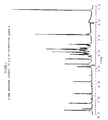
- Figure 1 is a hydrogen nuclear magnetic resonance spectrum of coumamidine gamma 1 at 500 MHz in D2O.
- Figure 2 is a hydrogen nuclear magnetic resonance spectrum of coumamidine gamma 2 at 500 MHz in D2O.
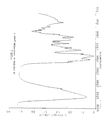
- Figure 3 is an infrared spectrum of coumamidine gamma 1 prepared in a KBr (potassium bromide) pellet.
- Figure 4 is an infrared spectrum of coumamidine gamma 2 prepared in a KBr pellet.
- the compounds and mixture of the compounds of the invention are made by cultivating the microorganism Saccharopolyspora sp. AB 1167L-65.
- the microorganism produces branched mycelia. Spores are borne in chains on the aerial mycelium.
- the strain was isolated from soil collected at Russell, Kentucky. A subculture of this microorganism was deposited in the permanent collection of the Agricultural Research Service at Northern Regional Research Center, United States Department of Agriculture, 1815 North University Street, Peoria, Illinois 61604 U.S.A.
- the accession number for strain AB 1167L-65 is NRRL 18369.
- Coumamidine gamma 1 and coumamidine gamma 2 are produced together by submerged aerobic fermentation (described in detail hereinbelow) of the microorganism Saccharopolyspora sp. strain AB 1167L-65.
- the compounds are recovered from fermentation broth filtrates of Saccharopolyspora sp. strain AB 1167L-65 by solid-phase extraction with an adsorption resin.
- Coumamidine gamma 1 and gamma 2 exhibit antibiotic activity against a broad spectrum of bacteria grown under aerobic conditions.
- the meso isomer of diaminopimelic acid was found in whole-cell hydrolysates. Chromatography of the sugars in whole-cell hydrolysates showed arabinose and galactose as diagnostic sugars.
- Whole-cell hydrolysates can be used to predict cell-wall composition, and the combination of morphology and chemical composition can be used to classify aerobic actinomycetes into groups that are recognized based on their cell wall type. Lechevalier and Lechevalier, Inter. J. Syst. Bacteriol ., 20, 435-443, (1970), have developed such a classification scheme.
- the microorganism of this invention has a cell wall of Type IV, i.e., contains meso-2,6-diaminopimelic acid and has a type A whole-cell sugar pattern (arabinose and galactose).
- the spore chains of Saccharopolyspora sp. AB 1167L-65 are straight to flexuous.
- the color of the aerial growth is white, yellowish white, or brownish pink.
- the surface of the aerial hyphae is ornamented with spiny protrusions.
- the culture is grown in a culture media which includes a source of carbon and a source of nitrogen.
- Media which are useful include an assimilable source of carbon such as starch, sugar, molasses, glycerol, a combination of glucose plus molasses, etc.; an assimilable source of nitrogen such as protein, protein hydrolysate, polypeptides, amino acids, peptone plus yeast extract or whole yeast, etc.; and other organic and inorganic ingredients which can be added to stimulate production of the antibiotic such as, for example, inorganic anions and cations including potassium, magnesium, calcium, ammonium, sulfate, carbonate, phosphate, chloride, etc. Further, buffers such as calcium carbonate can be added to aid in controlling the pH of the fermentation media.
- Aeration can be provided by forcing sterile air through the fermenting medium. Agitation can be provided by shaking the container or by stirring the culture, for example, with a mechanical stirrer.
- the fermentation is carried out in a temperature range of from about 24°C to about 35°C.
- the pH of the fermentation is preferably maintained between from about pH 6 to about pH 9.
- the antibiotic is produced and accumulated from between 3 and 9 days after inoculation of the fermentation.
- the fermentation broth is filtered to remove the mycelial mass with Whatman® filter paper (No. 1).
- the filtrate is adjusted to pH 7 and mixed with Diaion HP-20® resin.
- the compounds displaying antibiotic activity (the determination of which is described in detail hereinbelow) are eluted from the resin with a step gradient from water to 100% methanol.
- This is the fermentation isolate of Saccharopolyspora sp. which shows antibacterial activity and which includes the compounds coumamidine gamma 1 and coumamidine gamma 2.
- the product can be purified by drying the active fractions from the resin on a rotary evaporator and triturating the residue with acetone and methanol. The remaining water-soluble residue is chromatographed on a column of CM Sephadex® resin available from Pharmacia. The product displaying antibiotic activity elutes from the column upon the application of a linear gradient of from 0% to 5% NaCl. Active fractions are desalted over a carbon column. The sample is thereafter chromatographed on a size exclusion column in a buffered solution.
- the column effluent is monitored for antibiotic activity by an agar disc diffusion assay.
- a 20 microliter sample of each column fraction is applied to a paper disc.
- the discs are then placed on agar plates which were previously seeded with sufficient organism ( Pseudomonas aeruginosa BMHl) to provide a turbid background, typically 105 to 106 colony forming units (CFU) per mL.
- Pseudomonas aeruginosa BMHl sufficient organism
- CFU colony forming units
- Saccharopolyspora sp. AB 1167L-65 (NRRL 18369) was maintained as frozen inoculum stock by freezing a portion of the original inoculum and storing at -75°C.
- the medium N2Bl was used for both seed growth and for the fermentation.
- the ingredients for medium N2Bl are shown in Table 5.
- Table 5 Medium N2Bl INGREDIENT grams per liter Glucose monohydrate 20 F-152 liquid peptone (made by Inolex Chemical Corporation, Chicago, IL) 10 Yeast extract (made by Difco Laboratories, Detroit, MI) 1 Molasses, Brer Rabbit® green label (made by Del Monte Corporation, San Francisco, CA) 5 Calcium carbonate 2 Distilled water to 1.0 liter. The pH was not adjusted.
- the medium was prepared for seeding as follows: Ten mL of the medium was dispensed into seed tubes. The tubes were 25 x 150 mm glass tubes which were covered with stainless steel caps. One hundred mLs of the medium was dispensed into 500 mL Erlenmeyer flasks. The flasks were plugged with rayon pharmaceutical coil. Thereafter, the tubes and flasks were sterilized for 35 minutes at 121° C 15 psi.
- the first step 0.5 mL of the frozen stored inoculum was inoculated into the 25 x 150 mm glass tubes each containing 10 mL of N2Bl medium. The tubes were incubated for 96 hours at 28°C on a rotary shaker.
- the second step five percent vegetative inoculum from the tube growth was used to inoculate the seed flasks, each containing 100 mL of N2Bl medium. The seed flask was incubated for 72 hours at 28°C on a rotary shaker operated at 250 rpm with a stroke of 5.7 cm.
- the mycelial mass was removed from the fermentation broth from Example 1 by filtration through Whatman® filter paper (No. 1).
- the filtrate was adjusted to pH 7 and stirred for 4 hours with 2 L of resin (Diaion HP-20®), and this mixture was allowed to stand for 12 hours at 4° C.
- the spent beer was decanted, and the resin was washed with 2 L of water.
- the compounds having antibiotic activity were eluted from the resin with two 2 L washings of 50% methanol/water and two 2 L washings of 50% acetonitrile and water. The washings were pooled, and the volume was reduced on a vertical evaporator.
- the sample was lyophilized to yield 35.3 g of crude material.
- the crude material was triturated with 200 mL of acetone and 200 mL of methanol.
- the insoluble material was redissolved in 100 mLs of water and adsorbed onto an ion exchange column (CM Sephadex® resin), Na+ form (2.5 x 30 cm), in distilled water.
- the column was washed with 500 mL of water, after which the compounds were eluted with a linear gradient of 0 to 5% NaCl over 4 liters of solvent.
- the fractions displaying antibiotic activity were pooled (350 mL) and adsorbed onto a bed of charred resin, such as Ambersorb® resin (XE 347) manufactured by Rohm and Haas, (2.5 x 16 cm).
- the column was washed with 300 mL of water, 300 mL of 50% methanol/water and 300 mL of 50% acetonitrile/water. The aqueous methanol and acetone fractions were combined and the solvent was removed to yield 110 mg of material with antibiotic activity.
- This material was dissolved in 2.5 mL of 50 mM ammonium acetate and chromatographed on a size exclusion column [Fractogel® resin TSK (HW-40); 2.5 cm X 100 cm] and thereafter eluted with 50 mM ammonium acetate.
- the flow rate was 1.5 mL/ min (22 psi), and 15 mL fractions were collected. The eluate was monitored at 254 nm.
- the isomeric coumamidines, gamma 1 and gamma 2 are white powders, readily soluble in water and dimethylsulfoxide, slightly soluble in methanol.
- High resolution, positive ion fast atom bombardment (FAB) mass spectrometry established identical molecular ions or m/z 835.3576 for the two isomers corresponding to a formula of C33H49N13013 (calc. 835.3577).
- UV lambda max 286 nm.
- the coumamidine gamma 1 isomer has an imidazolidone ring at the 2 and 3 position of the terminal sugar
- the coumamidine gamma 2 isomer has an oxazolidone ring at positions 3 and 4 of the terminal sugar.
- Carbon-13 N.M.R. data are given in Table 6.
- the antimicrobial activity of the coumamidine compounds of the present invention against a variety of aerobically grown bacteria is illustrated in Table 7.
- Minimum inhibitory concentration (MIC) was determined by the agar dilution method, described hereinbelow, using Brain Heart Infusion agar.
- BHI Brain Heart Infusion
- Each plate was inoculated with 1:100 (or 1:10 for slow growing strains (primarily Micrococcus and Streptococcus ) dilutions of up to 32 different microrganisms, using a Steers replicator block calibrated to deliver approximately 104 colony forming units (CFU).
- CFU colony forming units
- the inoculated plates are incubated at from about 35°C to about 37°C for approximately 20-24 hours.
- a control plate using BHI agar containing no test compound, was prepared and incubated at the beginning, and the end, of each test. Ciprofloxacin was used as a control antibacterial.
- each petri dish was observed for the presence or absence of microorganism growth.
- the MIC was defined as the lowest concentration of test compound yielding no growth, a slight haze, or sparsely isolated colonies on the inoculum spot as compared to the growth control containing no test compound.
- Total daily dose administered to a host in single or divided doses may be in amounts, for example, from 0.001 to 100 mg/kg body weight daily and more usually 0.01 to 20 mg. Dosage unit compositions may contain such amounts of submultiples thereof to make up the daily dose.
- the amount of active ingredient that may be combined with the carrier materials to produce a single dosage form will vary depending upon the host treated and the particular mode of administration.
- the specific dose level for any particular patient will depend upon a variety of factors including the activity of the specific compound employed; the age, body weight, general health, sex and diet of the patient; the time of administration; the route of administration; the rate of excretion of the compound and its active metabolites; drugs used in combination, and the severity of the particular disease undergoing therapy.
- the compounds of the present invention may be administered orally, nasally, opthalmically, parenterally, vaginally, rectally, topically or in an aerosol in dose unit formulations containing conventional nontoxic pharmaceutically acceptable carriers, adjuvants and vehicles, as desired.
- parenteral as used herein includes subcutaneous, intravenous, intramuscular or intrasternal injection, or infusion techniques.
- sterile injectable preparations for example, sterile injectable aqueous or oleagenous suspensions may be formulated according to the known art using suitable dispersing or wetting agents and suspending agents.
- the sterile injectable preparation may also be a sterile injectable solution or suspension in a nontoxic parenterally acceptable diluent or solvent, for example, as a solution in 1,3- butanediol.
- acceptable vehicles and solvents that may be employed are water, Ringer's solution, and isotonic sodium chloride solution.
- sterile, fixed oil may be employed including synthetic mono- or diglycerides.
- fatty acids such as oleic acid find use in the preparation of injectables.
- Suppositories for rectal or vaginal administration of the active compound may be prepared by mixing the active ingredient with a suitable, nonirritating excipient such as cocoa butter and polyethylene glycols which are solid at ordinary temperatures but liquid at the rectal/vaginal temperatures and will therefore melt in the rectum or vagina and release the active ingredient.
- a suitable, nonirritating excipient such as cocoa butter and polyethylene glycols which are solid at ordinary temperatures but liquid at the rectal/vaginal temperatures and will therefore melt in the rectum or vagina and release the active ingredient.
- Solid dosage forms for the oral administration may include capsules, tablets, pills, powders, and granules.
- the active compound may be admixed with at least one inert diluent such as sucrose, lactose, or starch.
- Such dosage forms may also comprise, as is normal practice, additional substances other than inert diluents, e.g., lubricating agents such as magnesium stearate.
- the dosage forms may also comprise buffering agents. Tablets and pills can additionally be prepared with enteric coatings.
- Liquid dosage forms for oral administration may include pharmaceutically acceptable emulsions, solutions, suspensions, syrups, and elixirs containing inert diluents commonly used in the art, such as water.
- Such compositions may also comprise adjuvants, such as wetting agents, emulsifying and suspending agents and sweetening, flavoring, and perfuming agents.
- the compounds of the invention can be used in treating infections caused by susceptible organisms in warm-blooded animals. They are useful for the treatment of infections of the urogenital, gastrointestinal, and respiratory systems, as well as infections of the ear, eye, skin, and soft tissues. They are useful for the treatment of opportunistic infections in burn patients.
- the present invention includes within its scope the compounds in dilute forms, as crude concentrates, and in pure forms.
- the compounds of the present invention are organic bases and are capable of forming acid-addition salts with a variety of organic and inorganic salt-forming reagents.
- Suitable acids include sulfuric, phosphoric, hydrochloric, hydrobromic, sulfamic, citric, oleic, fumaric, tartaric, acetic, benzoic, gluconic, ascorbic, and the like.
- the compounds of the present invention are capable of forming esters with, for example, acetate, propionate, butyrate, and the like.
Landscapes
- Chemical & Material Sciences (AREA)
- Organic Chemistry (AREA)
- Life Sciences & Earth Sciences (AREA)
- Engineering & Computer Science (AREA)
- Wood Science & Technology (AREA)
- Biochemistry (AREA)
- Biotechnology (AREA)
- General Health & Medical Sciences (AREA)
- Genetics & Genomics (AREA)
- Health & Medical Sciences (AREA)
- Zoology (AREA)
- Molecular Biology (AREA)
- Microbiology (AREA)
- General Chemical & Material Sciences (AREA)
- Chemical Kinetics & Catalysis (AREA)
- Bioinformatics & Cheminformatics (AREA)
- General Engineering & Computer Science (AREA)
- Pharmaceuticals Containing Other Organic And Inorganic Compounds (AREA)
- Preparation Of Compounds By Using Micro-Organisms (AREA)
Claims (5)
- Fermentationsisolat von Saccharopolyspora sp., das Verbindungen nach folgenden Formeln umfaßt:

- Verbindung, die aus der Gruppe von Verbindungen mit folgenden Formeln gewählt ist:

- Verbindung, die durch folgendes gekennzeichnet ist:a. ein charakteristisches magnetisches Kernresonanzspektrum nach FIG. 1 der beigefügten Zeichnungen;b. ein charakteristisches Infrarotabsorptionsspektrum nach FIG 3 der beigefügten Zeichnungen;c. charakteristische 13-C-NMR-Daten, wie in Tabelle 6 gezeigt;d. ein charakteristisches Ultraviolettabsorptionsspektrum mit maximaler Extinktion bei einer Wellenlänge von 286 Nanometern; unde. einen charakteristischen m/z-Wert von ungefähr 835,36, wie mittels hochauflösender Positiv-Ionen-schnell-Atom-Beschuß-Massenspektroskopie gemessen, was einer offensichtlichen chemischen Formel von C₃₃H₄₉N₁₃O₁₃ entspricht.
- Verbindung, die durch folgendes gekennzeichnet ist:a. ein charakteristisches magnetisches Kernresonanzspektrum nach FIG. 2 der beigefügten Zeichnungen;b. ein charakteristisches Infrarotabsorptionsspektrum nach FIG. 4 der beigefügten Zeichnungen; undc. charakteristische 13-C-NMR-Daten nach Tabelle 6;d. ein charakteristisches Ultraviolettabsorptionsspektrum mit maximaler Extinktion bei einer Wellenlänge von 286 Nanometern; unde. einen charakteristischen m/z-Wert von ungefähr 835,36, wie mittels hochauflösender Positiv-Ionen-schnell-Atom-Beschuß-Massenspektroskopie gemessen, was einer offensichtlichen chemischen Formel von C₃₃H₄₉N₁₃O₁₃ entspricht.
- Pharmazeutische Zusammensetzung, die antibakterielle Aktivität aufweist, und die einen pharmazeutischen Träger und eine therapeutisch wirksame Menge einer Verbindung nach Anspruch 2 umfaßt.
Applications Claiming Priority (3)
| Application Number | Priority Date | Filing Date | Title |
|---|---|---|---|
| US26085388A | 1988-10-21 | 1988-10-21 | |
| US260853 | 1988-10-21 | ||
| PCT/US1989/004556 WO1990004599A1 (en) | 1988-10-21 | 1989-10-10 | Coumamidine compounds |
Publications (3)
| Publication Number | Publication Date |
|---|---|
| EP0423247A1 EP0423247A1 (de) | 1991-04-24 |
| EP0423247A4 EP0423247A4 (en) | 1991-06-05 |
| EP0423247B1 true EP0423247B1 (de) | 1995-11-02 |
Family
ID=22990905
Family Applications (2)
| Application Number | Title | Priority Date | Filing Date |
|---|---|---|---|
| EP19890118797 Pending EP0364862A3 (de) | 1988-10-21 | 1989-10-10 | Coumamidin-Verbindungen |
| EP89912032A Expired - Lifetime EP0423247B1 (de) | 1988-10-21 | 1989-10-10 | Coumamidin-verbindungen |
Family Applications Before (1)
| Application Number | Title | Priority Date | Filing Date |
|---|---|---|---|
| EP19890118797 Pending EP0364862A3 (de) | 1988-10-21 | 1989-10-10 | Coumamidin-Verbindungen |
Country Status (4)
| Country | Link |
|---|---|
| EP (2) | EP0364862A3 (de) |
| CA (1) | CA2001085A1 (de) |
| DE (1) | DE68924708D1 (de) |
| WO (1) | WO1990004599A1 (de) |
Family Cites Families (15)
| Publication number | Priority date | Publication date | Assignee | Title |
|---|---|---|---|---|
| US4007167A (en) * | 1974-10-09 | 1977-02-08 | American Cyanamid Company | Antibiotic BM123 and production thereof |
| US4123607A (en) * | 1975-11-10 | 1978-10-31 | American Cyanamid Company | Alkylated derivatives of antibiotic BM123γ |
| US4018972A (en) * | 1976-03-08 | 1977-04-19 | American Cyanamid Company | Antibacterial agents cis-BM123γ1 and cis-BM123γ2 |
| US4154925A (en) * | 1976-03-18 | 1979-05-15 | American Cyanamid Company | Alkylated derivatives of antibacterial agents cis-BM123γ1 and cis-BM123γ2 |
| US4206206A (en) * | 1977-03-24 | 1980-06-03 | Kowa Company, Ltd. | Antibiotics of the KA-6606 series and pharmaceutical compositions thereof |
| US4328307A (en) * | 1977-03-24 | 1982-05-04 | Kowa Company, Ltd. | Novel antibiotics, process for preparation thereof and biologically pure culture for use therein |
| US4112219A (en) * | 1977-07-13 | 1978-09-05 | American Cyanamid Company | Acyl derivatives of antibiotic BM123γ |
| US4196200A (en) * | 1978-02-02 | 1980-04-01 | American Cyanamid Company | Antibiotic BM123-dioctyl sulfosuccinate complexes |
| US4196198A (en) * | 1978-02-02 | 1980-04-01 | American Cyanamid Company | Antibiotic BM123-alkyl sulfate complexes |
| US4196199A (en) * | 1978-02-02 | 1980-04-01 | American Cyanamid Company | Antibiotic BM123 syntan complexes |
| US4291026A (en) * | 1979-08-28 | 1981-09-22 | American Cyanamid Company | Antibiotic BM123ν pamoate complexes |
| US4293651A (en) * | 1979-10-02 | 1981-10-06 | The Upjohn Company | Process for producing antibiotic using saccharopolyspora |
| US4251511A (en) * | 1979-10-02 | 1981-02-17 | The Upjohn Company | Antibiotic and fermentation process of preparing |
| US4321329A (en) * | 1979-10-02 | 1982-03-23 | The Upjohn Company | Saccharopolyspora culture |
| JPS6253997A (ja) * | 1985-09-03 | 1987-03-09 | Kowa Co | 新規なアミノ配糖体及びこれを含有する製剤 |
-
1989
- 1989-10-10 EP EP19890118797 patent/EP0364862A3/de active Pending
- 1989-10-10 EP EP89912032A patent/EP0423247B1/de not_active Expired - Lifetime
- 1989-10-10 DE DE68924708T patent/DE68924708D1/de not_active Expired - Lifetime
- 1989-10-10 WO PCT/US1989/004556 patent/WO1990004599A1/en not_active Ceased
- 1989-10-20 CA CA 2001085 patent/CA2001085A1/en not_active Abandoned
Non-Patent Citations (2)
| Title |
|---|
| JOURNAL OF ANTIBIOTICS, vol. 42, no. 4, April 1989, Tokyo (JP); P.A. FERNANDES et al., pp. 538-541 * |
| JOURNAL OF ANTIBIOTICS, vol.42, no. 4, April 1989, Tokyo (JP); R.H. CHEN et al., pp. 533-537 # * |
Also Published As
| Publication number | Publication date |
|---|---|
| CA2001085A1 (en) | 1990-04-21 |
| EP0423247A1 (de) | 1991-04-24 |
| EP0423247A4 (en) | 1991-06-05 |
| WO1990004599A1 (en) | 1990-05-03 |
| EP0364862A3 (de) | 1991-06-05 |
| EP0364862A2 (de) | 1990-04-25 |
| DE68924708D1 (de) | 1995-12-07 |
Similar Documents
| Publication | Publication Date | Title |
|---|---|---|
| EP0182315B1 (de) | Antibiotikum NK84-0218, dieses enthaltende Arzneimittel und Verfahren zu seiner Herstellung | |
| US4518589A (en) | BBM-2478 Antibiotic complex | |
| US4007167A (en) | Antibiotic BM123 and production thereof | |
| US4946941A (en) | Novel glycopeptide antibiotics | |
| HU188684B (en) | Process for producing a2, and simultaneously produced a1 and a3 components of antibioticum a/16686 | |
| KR100659680B1 (ko) | 항생 물질 카프라자마이신류 및 그 제조법 | |
| US4705688A (en) | Antibiotic LL-E19020 α and β | |
| US4551533A (en) | Antibiotic LL-D42067α | |
| EP1285928B1 (de) | Antibiotische tripropeptine und verfahren ihrer herstellung | |
| US4597968A (en) | Antibiotic 13-384 complex from Micromonospora carbonacea var africana | |
| US5484717A (en) | Antibiotic 31F508α1, 31F508α2, 31F508β1, 31F508β2 | |
| EP0326173B1 (de) | Antibiotische Antitumor-Verbindung und Methode zu deren Herstellung | |
| US5171740A (en) | Coumamidine compounds | |
| US7183253B2 (en) | Substantially pure glycopeptide antibiotics AC-98-1, AC-98-2, AC-98-3, AC-98-4 and AC-98-5 | |
| US6395711B1 (en) | Macrolides with antitumor activity | |
| EP0300294B1 (de) | Verbindung DC-107 und Verfahren zu deren Herstellung | |
| EP0702691B1 (de) | Neues aus einem marinen actionmyceten isoliertes thiodepsipeptid | |
| EP0364862A2 (de) | Coumamidin-Verbindungen | |
| EP0376609B1 (de) | Antibiotikum A80915 und Verfahren zu seiner Herstellung | |
| US4572895A (en) | Process for preparing an antibiotic complex by culturing actinomyces strain ATCC 39417 | |
| US4774184A (en) | Culture and process for producing antibiotic LL-D42067alpha | |
| CA2444907C (en) | Substantially pure glycopeptide antibiotics ac-98-1; ac-98-2; ac-98-3; ac-98-4 and ac-98-5 | |
| EP0721985B1 (de) | Die substanz it-62-b und sie enthaltende medizinische zubereitungen | |
| JPH0430400B2 (de) | ||
| US4482488A (en) | Antibiotic A53868 and process for production thereof |
Legal Events
| Date | Code | Title | Description |
|---|---|---|---|
| PUAI | Public reference made under article 153(3) epc to a published international application that has entered the european phase |
Free format text: ORIGINAL CODE: 0009012 |
|
| 17P | Request for examination filed |
Effective date: 19910128 |
|
| AK | Designated contracting states |
Kind code of ref document: A1 Designated state(s): BE CH DE FR GB IT LI NL SE |
|
| A4 | Supplementary search report drawn up and despatched |
Effective date: 19910415 |
|
| AK | Designated contracting states |
Kind code of ref document: A4 Designated state(s): BE CH DE FR GB IT LI NL SE |
|
| RBV | Designated contracting states (corrected) |
Designated state(s): BE CH DE ES FR GB GR IT LI NL SE |
|
| XX | Miscellaneous (additional remarks) |
Free format text: VERBUNDEN MIT 89118797.3/0364862 (EUROPAEISCHE ANMELDENUMMER/VEROEFFENTLICHUNGSNUMMER) DURCH ENTSCHEIDUNG VOM 24.09.92. |
|
| 17Q | First examination report despatched |
Effective date: 19940204 |
|
| GRAA | (expected) grant |
Free format text: ORIGINAL CODE: 0009210 |
|
| AK | Designated contracting states |
Kind code of ref document: B1 Designated state(s): BE CH DE ES FR GB GR IT LI NL SE |
|
| PG25 | Lapsed in a contracting state [announced via postgrant information from national office to epo] |
Ref country code: IT Free format text: LAPSE BECAUSE OF FAILURE TO SUBMIT A TRANSLATION OF THE DESCRIPTION OR TO PAY THE FEE WITHIN THE PRE;WARNING: LAPSES OF ITALIAN PATENTS WITH EFFECTIVE DATE BEFORE 2007 MAY HAVE OCCURRED AT ANY TIME BEFORE 2007. THE CORRECT EFFECTIVE DATE MAY BE DIFFERENT FROM THE ONE RECORDED.SCRIBED TIME-LIMIT Effective date: 19951102 Ref country code: BE Effective date: 19951102 Ref country code: NL Free format text: LAPSE BECAUSE OF FAILURE TO SUBMIT A TRANSLATION OF THE DESCRIPTION OR TO PAY THE FEE WITHIN THE PRESCRIBED TIME-LIMIT Effective date: 19951102 Ref country code: FR Effective date: 19951102 Ref country code: GR Free format text: LAPSE BECAUSE OF FAILURE TO SUBMIT A TRANSLATION OF THE DESCRIPTION OR TO PAY THE FEE WITHIN THE PRESCRIBED TIME-LIMIT Effective date: 19951102 Ref country code: ES Free format text: THE PATENT HAS BEEN ANNULLED BY A DECISION OF A NATIONAL AUTHORITY Effective date: 19951102 |
|
| XX | Miscellaneous (additional remarks) |
Free format text: VERBUNDEN MIT 89118797.3/0364862 (EUROPAEISCHE ANMELDENUMMER/VEROEFFENTLICHUNGSNUMMER) DURCH ENTSCHEIDUNG VOM 24.09.92. |
|
| REF | Corresponds to: |
Ref document number: 68924708 Country of ref document: DE Date of ref document: 19951207 |
|
| REG | Reference to a national code |
Ref country code: CH Ref legal event code: NV Representative=s name: A. BRAUN, BRAUN, HERITIER, ESCHMANN AG PATENTANWAE |
|
| PG25 | Lapsed in a contracting state [announced via postgrant information from national office to epo] |
Ref country code: SE Effective date: 19960202 |
|
| PG25 | Lapsed in a contracting state [announced via postgrant information from national office to epo] |
Ref country code: DE Effective date: 19960203 |
|
| EN | Fr: translation not filed | ||
| NLV1 | Nl: lapsed or annulled due to failure to fulfill the requirements of art. 29p and 29m of the patents act | ||
| PLBE | No opposition filed within time limit |
Free format text: ORIGINAL CODE: 0009261 |
|
| STAA | Information on the status of an ep patent application or granted ep patent |
Free format text: STATUS: NO OPPOSITION FILED WITHIN TIME LIMIT |
|
| PG25 | Lapsed in a contracting state [announced via postgrant information from national office to epo] |
Ref country code: GB Effective date: 19961010 |
|
| 26N | No opposition filed | ||
| PG25 | Lapsed in a contracting state [announced via postgrant information from national office to epo] |
Ref country code: CH Effective date: 19961031 Ref country code: LI Effective date: 19961031 |
|
| GBPC | Gb: european patent ceased through non-payment of renewal fee |
Effective date: 19961010 |
|
| REG | Reference to a national code |
Ref country code: CH Ref legal event code: PL |