EP0424628A1 - Faserverstärkte Polyphenylenether-Formmassen und Verfahren zu ihrer Herstellung - Google Patents
Faserverstärkte Polyphenylenether-Formmassen und Verfahren zu ihrer Herstellung Download PDFInfo
- Publication number
- EP0424628A1 EP0424628A1 EP90116019A EP90116019A EP0424628A1 EP 0424628 A1 EP0424628 A1 EP 0424628A1 EP 90116019 A EP90116019 A EP 90116019A EP 90116019 A EP90116019 A EP 90116019A EP 0424628 A1 EP0424628 A1 EP 0424628A1
- Authority
- EP
- European Patent Office
- Prior art keywords
- weight
- composition according
- parts
- molding composition
- carboxylic acid
- Prior art date
- Legal status (The legal status is an assumption and is not a legal conclusion. Google has not performed a legal analysis and makes no representation as to the accuracy of the status listed.)
- Withdrawn
Links
- 239000000203 mixture Substances 0.000 title claims abstract description 37
- 238000000465 moulding Methods 0.000 title claims abstract description 36
- 229920001955 polyphenylene ether Polymers 0.000 title claims abstract description 27
- 238000000034 method Methods 0.000 title claims description 5
- 238000004519 manufacturing process Methods 0.000 title 1
- PPBRXRYQALVLMV-UHFFFAOYSA-N Styrene Chemical compound C=CC1=CC=CC=C1 PPBRXRYQALVLMV-UHFFFAOYSA-N 0.000 claims abstract description 16
- -1 polyoctenylene Polymers 0.000 claims abstract description 15
- 229920000642 polymer Polymers 0.000 claims abstract description 11
- 239000003365 glass fiber Substances 0.000 claims abstract description 9
- 150000007934 α,β-unsaturated carboxylic acids Chemical class 0.000 claims abstract description 9
- 229910052799 carbon Inorganic materials 0.000 claims abstract description 4
- OKTJSMMVPCPJKN-UHFFFAOYSA-N Carbon Chemical compound [C] OKTJSMMVPCPJKN-UHFFFAOYSA-N 0.000 claims abstract description 3
- 125000000524 functional group Chemical group 0.000 claims abstract description 3
- 239000000835 fiber Substances 0.000 claims description 12
- 150000001875 compounds Chemical class 0.000 claims description 11
- 125000004432 carbon atom Chemical group C* 0.000 claims description 9
- NXXYKOUNUYWIHA-UHFFFAOYSA-N 2,6-Dimethylphenol Chemical compound CC1=CC=CC(C)=C1O NXXYKOUNUYWIHA-UHFFFAOYSA-N 0.000 claims description 8
- FPYJFEHAWHCUMM-UHFFFAOYSA-N maleic anhydride Chemical compound O=C1OC(=O)C=C1 FPYJFEHAWHCUMM-UHFFFAOYSA-N 0.000 claims description 8
- 239000004917 carbon fiber Substances 0.000 claims description 6
- 238000006243 chemical reaction Methods 0.000 claims description 6
- VZCYOOQTPOCHFL-OWOJBTEDSA-N fumaric acid group Chemical group C(\C=C\C(=O)O)(=O)O VZCYOOQTPOCHFL-OWOJBTEDSA-N 0.000 claims description 6
- 239000000654 additive Substances 0.000 claims description 5
- 125000000217 alkyl group Chemical group 0.000 claims description 5
- 239000000155 melt Substances 0.000 claims description 5
- 239000004793 Polystyrene Substances 0.000 claims description 4
- 125000003118 aryl group Chemical group 0.000 claims description 4
- 239000001257 hydrogen Substances 0.000 claims description 4
- 229910052739 hydrogen Inorganic materials 0.000 claims description 4
- 125000004435 hydrogen atom Chemical class [H]* 0.000 claims description 4
- 229920002223 polystyrene Polymers 0.000 claims description 4
- 238000002360 preparation method Methods 0.000 claims description 4
- VZCYOOQTPOCHFL-UHFFFAOYSA-N trans-butenedioic acid Natural products OC(=O)C=CC(O)=O VZCYOOQTPOCHFL-UHFFFAOYSA-N 0.000 claims description 4
- 239000004593 Epoxy Substances 0.000 claims description 3
- 229920001400 block copolymer Polymers 0.000 claims description 3
- 125000003700 epoxy group Chemical group 0.000 claims description 3
- 239000001530 fumaric acid Substances 0.000 claims description 3
- IQPQWNKOIGAROB-UHFFFAOYSA-N isocyanate group Chemical group [N-]=C=O IQPQWNKOIGAROB-UHFFFAOYSA-N 0.000 claims description 3
- 239000002243 precursor Substances 0.000 claims description 3
- 125000002924 primary amino group Chemical group [H]N([H])* 0.000 claims description 3
- RNFJDJUURJAICM-UHFFFAOYSA-N 2,2,4,4,6,6-hexaphenoxy-1,3,5-triaza-2$l^{5},4$l^{5},6$l^{5}-triphosphacyclohexa-1,3,5-triene Chemical compound N=1P(OC=2C=CC=CC=2)(OC=2C=CC=CC=2)=NP(OC=2C=CC=CC=2)(OC=2C=CC=CC=2)=NP=1(OC=1C=CC=CC=1)OC1=CC=CC=C1 RNFJDJUURJAICM-UHFFFAOYSA-N 0.000 claims description 2
- 101100496169 Arabidopsis thaliana CLH1 gene Proteins 0.000 claims description 2
- ZAMOUSCENKQFHK-UHFFFAOYSA-N Chlorine atom Chemical compound [Cl] ZAMOUSCENKQFHK-UHFFFAOYSA-N 0.000 claims description 2
- 101100044057 Mesocricetus auratus SYCP3 gene Proteins 0.000 claims description 2
- 239000006057 Non-nutritive feed additive Substances 0.000 claims description 2
- 239000005062 Polybutadiene Substances 0.000 claims description 2
- 239000004721 Polyphenylene oxide Substances 0.000 claims description 2
- 101100080600 Schizosaccharomyces pombe (strain 972 / ATCC 24843) nse6 gene Proteins 0.000 claims description 2
- 125000003545 alkoxy group Chemical group 0.000 claims description 2
- 125000002947 alkylene group Chemical group 0.000 claims description 2
- 125000003710 aryl alkyl group Chemical group 0.000 claims description 2
- 125000004104 aryloxy group Chemical group 0.000 claims description 2
- 239000000460 chlorine Substances 0.000 claims description 2
- 229910052801 chlorine Inorganic materials 0.000 claims description 2
- 101150111293 cor-1 gene Proteins 0.000 claims description 2
- 125000000753 cycloalkyl group Chemical group 0.000 claims description 2
- 239000000975 dye Substances 0.000 claims description 2
- 239000003063 flame retardant Substances 0.000 claims description 2
- 125000002887 hydroxy group Chemical group [H]O* 0.000 claims description 2
- 239000000049 pigment Substances 0.000 claims description 2
- 239000004014 plasticizer Substances 0.000 claims description 2
- 229920002857 polybutadiene Polymers 0.000 claims description 2
- 229920000570 polyether Polymers 0.000 claims description 2
- 239000000126 substance Substances 0.000 claims description 2
- 229920002554 vinyl polymer Polymers 0.000 claims description 2
- 239000011159 matrix material Substances 0.000 abstract description 14
- 230000000052 comparative effect Effects 0.000 description 7
- 229920000049 Carbon (fiber) Polymers 0.000 description 4
- VNWKTOKETHGBQD-UHFFFAOYSA-N methane Chemical compound C VNWKTOKETHGBQD-UHFFFAOYSA-N 0.000 description 4
- 238000012986 modification Methods 0.000 description 4
- 230000004048 modification Effects 0.000 description 4
- 150000002989 phenols Chemical class 0.000 description 4
- 239000002904 solvent Substances 0.000 description 4
- XMNDMAQKWSQVOV-UHFFFAOYSA-N (2-methylphenyl) diphenyl phosphate Chemical compound CC1=CC=CC=C1OP(=O)(OC=1C=CC=CC=1)OC1=CC=CC=C1 XMNDMAQKWSQVOV-UHFFFAOYSA-N 0.000 description 3
- YXFVVABEGXRONW-UHFFFAOYSA-N Toluene Chemical compound CC1=CC=CC=C1 YXFVVABEGXRONW-UHFFFAOYSA-N 0.000 description 3
- 238000002474 experimental method Methods 0.000 description 3
- 229920005990 polystyrene resin Polymers 0.000 description 3
- 239000012783 reinforcing fiber Substances 0.000 description 3
- 238000001878 scanning electron micrograph Methods 0.000 description 3
- WYTZZXDRDKSJID-UHFFFAOYSA-N (3-aminopropyl)triethoxysilane Chemical compound CCO[Si](OCC)(OCC)CCCN WYTZZXDRDKSJID-UHFFFAOYSA-N 0.000 description 2
- HEDRZPFGACZZDS-UHFFFAOYSA-N Chloroform Chemical compound ClC(Cl)Cl HEDRZPFGACZZDS-UHFFFAOYSA-N 0.000 description 2
- YNAVUWVOSKDBBP-UHFFFAOYSA-N Morpholine Chemical compound C1COCCN1 YNAVUWVOSKDBBP-UHFFFAOYSA-N 0.000 description 2
- 238000007872 degassing Methods 0.000 description 2
- 238000001704 evaporation Methods 0.000 description 2
- 239000008187 granular material Substances 0.000 description 2
- 238000001746 injection moulding Methods 0.000 description 2
- 238000002156 mixing Methods 0.000 description 2
- 238000012545 processing Methods 0.000 description 2
- 238000004513 sizing Methods 0.000 description 2
- 239000000243 solution Substances 0.000 description 2
- 229920003048 styrene butadiene rubber Polymers 0.000 description 2
- 229920001169 thermoplastic Polymers 0.000 description 2
- 239000004416 thermosoftening plastic Substances 0.000 description 2
- 239000001124 (E)-prop-1-ene-1,2,3-tricarboxylic acid Substances 0.000 description 1
- WPWHSFAFEBZWBB-UHFFFAOYSA-N 1-butyl radical Chemical group [CH2]CCC WPWHSFAFEBZWBB-UHFFFAOYSA-N 0.000 description 1
- HIDBROSJWZYGSZ-UHFFFAOYSA-N 1-phenylpyrrole-2,5-dione Chemical compound O=C1C=CC(=O)N1C1=CC=CC=C1 HIDBROSJWZYGSZ-UHFFFAOYSA-N 0.000 description 1
- HIXDQWDOVZUNNA-UHFFFAOYSA-N 2-(3,4-dimethoxyphenyl)-5-hydroxy-7-methoxychromen-4-one Chemical compound C=1C(OC)=CC(O)=C(C(C=2)=O)C=1OC=2C1=CC=C(OC)C(OC)=C1 HIXDQWDOVZUNNA-UHFFFAOYSA-N 0.000 description 1
- JAHNSTQSQJOJLO-UHFFFAOYSA-N 2-(3-fluorophenyl)-1h-imidazole Chemical compound FC1=CC=CC(C=2NC=CN=2)=C1 JAHNSTQSQJOJLO-UHFFFAOYSA-N 0.000 description 1
- GVLZQVREHWQBJN-UHFFFAOYSA-N 3,5-dimethyl-7-oxabicyclo[2.2.1]hepta-1,3,5-triene Chemical compound CC1=C(O2)C(C)=CC2=C1 GVLZQVREHWQBJN-UHFFFAOYSA-N 0.000 description 1
- PYSRRFNXTXNWCD-UHFFFAOYSA-N 3-(2-phenylethenyl)furan-2,5-dione Chemical compound O=C1OC(=O)C(C=CC=2C=CC=CC=2)=C1 PYSRRFNXTXNWCD-UHFFFAOYSA-N 0.000 description 1
- 239000004743 Polypropylene Substances 0.000 description 1
- OFOBLEOULBTSOW-UHFFFAOYSA-N Propanedioic acid Natural products OC(=O)CC(O)=O OFOBLEOULBTSOW-UHFFFAOYSA-N 0.000 description 1
- 238000006742 Retro-Diels-Alder reaction Methods 0.000 description 1
- 229920000147 Styrene maleic anhydride Polymers 0.000 description 1
- ZVQOOHYFBIDMTQ-UHFFFAOYSA-N [methyl(oxido){1-[6-(trifluoromethyl)pyridin-3-yl]ethyl}-lambda(6)-sulfanylidene]cyanamide Chemical compound N#CN=S(C)(=O)C(C)C1=CC=C(C(F)(F)F)N=C1 ZVQOOHYFBIDMTQ-UHFFFAOYSA-N 0.000 description 1
- 229940091181 aconitic acid Drugs 0.000 description 1
- 238000012648 alternating copolymerization Methods 0.000 description 1
- 125000003277 amino group Chemical group 0.000 description 1
- QVGXLLKOCUKJST-UHFFFAOYSA-N atomic oxygen Chemical compound [O] QVGXLLKOCUKJST-UHFFFAOYSA-N 0.000 description 1
- 150000001555 benzenes Chemical class 0.000 description 1
- ODWXUNBKCRECNW-UHFFFAOYSA-M bromocopper(1+) Chemical compound Br[Cu+] ODWXUNBKCRECNW-UHFFFAOYSA-M 0.000 description 1
- CQEYYJKEWSMYFG-UHFFFAOYSA-N butyl acrylate Chemical compound CCCCOC(=O)C=C CQEYYJKEWSMYFG-UHFFFAOYSA-N 0.000 description 1
- 150000001732 carboxylic acid derivatives Chemical class 0.000 description 1
- 239000003795 chemical substances by application Substances 0.000 description 1
- GTZCVFVGUGFEME-IWQZZHSRSA-N cis-aconitic acid Chemical compound OC(=O)C\C(C(O)=O)=C\C(O)=O GTZCVFVGUGFEME-IWQZZHSRSA-N 0.000 description 1
- HNEGQIOMVPPMNR-IHWYPQMZSA-N citraconic acid Chemical compound OC(=O)C(/C)=C\C(O)=O HNEGQIOMVPPMNR-IHWYPQMZSA-N 0.000 description 1
- 239000008139 complexing agent Substances 0.000 description 1
- 239000000470 constituent Substances 0.000 description 1
- 238000010276 construction Methods 0.000 description 1
- 229920001577 copolymer Polymers 0.000 description 1
- 230000008878 coupling Effects 0.000 description 1
- 238000010168 coupling process Methods 0.000 description 1
- 238000005859 coupling reaction Methods 0.000 description 1
- IFDVQVHZEKPUSC-UHFFFAOYSA-N cyclohex-3-ene-1,2-dicarboxylic acid Chemical compound OC(=O)C1CCC=CC1C(O)=O IFDVQVHZEKPUSC-UHFFFAOYSA-N 0.000 description 1
- URYYVOIYTNXXBN-UPHRSURJSA-N cyclooctene Chemical compound C1CCC\C=C/CC1 URYYVOIYTNXXBN-UPHRSURJSA-N 0.000 description 1
- 239000004913 cyclooctene Substances 0.000 description 1
- IEPRKVQEAMIZSS-AATRIKPKSA-N diethyl fumarate Chemical compound CCOC(=O)\C=C\C(=O)OCC IEPRKVQEAMIZSS-AATRIKPKSA-N 0.000 description 1
- 230000008030 elimination Effects 0.000 description 1
- 238000003379 elimination reaction Methods 0.000 description 1
- 239000003822 epoxy resin Substances 0.000 description 1
- RTZKZFJDLAIYFH-UHFFFAOYSA-N ether Substances CCOCC RTZKZFJDLAIYFH-UHFFFAOYSA-N 0.000 description 1
- 230000008020 evaporation Effects 0.000 description 1
- 238000000605 extraction Methods 0.000 description 1
- 238000001125 extrusion Methods 0.000 description 1
- 229920000578 graft copolymer Polymers 0.000 description 1
- LNEPOXFFQSENCJ-UHFFFAOYSA-N haloperidol Chemical compound C1CC(O)(C=2C=CC(Cl)=CC=2)CCN1CCCC(=O)C1=CC=C(F)C=C1 LNEPOXFFQSENCJ-UHFFFAOYSA-N 0.000 description 1
- 238000005470 impregnation Methods 0.000 description 1
- 238000010348 incorporation Methods 0.000 description 1
- 238000002347 injection Methods 0.000 description 1
- 239000007924 injection Substances 0.000 description 1
- 239000011147 inorganic material Substances 0.000 description 1
- 238000004898 kneading Methods 0.000 description 1
- VZCYOOQTPOCHFL-UPHRSURJSA-N maleic acid Chemical compound OC(=O)\C=C/C(O)=O VZCYOOQTPOCHFL-UPHRSURJSA-N 0.000 description 1
- 239000011976 maleic acid Substances 0.000 description 1
- 239000000463 material Substances 0.000 description 1
- 125000002496 methyl group Chemical group [H]C([H])([H])* 0.000 description 1
- LVHBHZANLOWSRM-UHFFFAOYSA-N methylenebutanedioic acid Natural products OC(=O)CC(=C)C(O)=O LVHBHZANLOWSRM-UHFFFAOYSA-N 0.000 description 1
- 239000011368 organic material Substances 0.000 description 1
- 238000005691 oxidative coupling reaction Methods 0.000 description 1
- 239000001301 oxygen Substances 0.000 description 1
- 229910052760 oxygen Inorganic materials 0.000 description 1
- 229920000647 polyepoxide Polymers 0.000 description 1
- 229920002959 polymer blend Polymers 0.000 description 1
- 238000006116 polymerization reaction Methods 0.000 description 1
- 229920006380 polyphenylene oxide Polymers 0.000 description 1
- 229920001155 polypropylene Polymers 0.000 description 1
- 229920005749 polyurethane resin Polymers 0.000 description 1
- 239000000843 powder Substances 0.000 description 1
- 238000001556 precipitation Methods 0.000 description 1
- 238000003825 pressing Methods 0.000 description 1
- 150000003254 radicals Chemical class 0.000 description 1
- 229920005989 resin Polymers 0.000 description 1
- 239000011347 resin Substances 0.000 description 1
- 238000007142 ring opening reaction Methods 0.000 description 1
- 238000006884 silylation reaction Methods 0.000 description 1
- 125000000547 substituted alkyl group Chemical group 0.000 description 1
- 238000012360 testing method Methods 0.000 description 1
- UFDHBDMSHIXOKF-UHFFFAOYSA-N tetrahydrophthalic acid Natural products OC(=O)C1=C(C(O)=O)CCCC1 UFDHBDMSHIXOKF-UHFFFAOYSA-N 0.000 description 1
- 238000009757 thermoplastic moulding Methods 0.000 description 1
- GTZCVFVGUGFEME-UHFFFAOYSA-N trans-aconitic acid Natural products OC(=O)CC(C(O)=O)=CC(O)=O GTZCVFVGUGFEME-UHFFFAOYSA-N 0.000 description 1
- BPSIOYPQMFLKFR-UHFFFAOYSA-N trimethoxy-[3-(oxiran-2-ylmethoxy)propyl]silane Chemical compound CO[Si](OC)(OC)CCCOCC1CO1 BPSIOYPQMFLKFR-UHFFFAOYSA-N 0.000 description 1
- 125000000391 vinyl group Chemical group [H]C([*])=C([H])[H] 0.000 description 1
- UKRDPEFKFJNXQM-UHFFFAOYSA-N vinylsilane Chemical class [SiH3]C=C UKRDPEFKFJNXQM-UHFFFAOYSA-N 0.000 description 1
Images
Classifications
-
- C—CHEMISTRY; METALLURGY
- C08—ORGANIC MACROMOLECULAR COMPOUNDS; THEIR PREPARATION OR CHEMICAL WORKING-UP; COMPOSITIONS BASED THEREON
- C08K—Use of inorganic or non-macromolecular organic substances as compounding ingredients
- C08K9/00—Use of pretreated ingredients
- C08K9/04—Ingredients treated with organic substances
-
- C—CHEMISTRY; METALLURGY
- C08—ORGANIC MACROMOLECULAR COMPOUNDS; THEIR PREPARATION OR CHEMICAL WORKING-UP; COMPOSITIONS BASED THEREON
- C08K—Use of inorganic or non-macromolecular organic substances as compounding ingredients
- C08K7/00—Use of ingredients characterised by shape
- C08K7/02—Fibres or whiskers
- C08K7/04—Fibres or whiskers inorganic
- C08K7/06—Elements
-
- C—CHEMISTRY; METALLURGY
- C08—ORGANIC MACROMOLECULAR COMPOUNDS; THEIR PREPARATION OR CHEMICAL WORKING-UP; COMPOSITIONS BASED THEREON
- C08K—Use of inorganic or non-macromolecular organic substances as compounding ingredients
- C08K7/00—Use of ingredients characterised by shape
- C08K7/02—Fibres or whiskers
- C08K7/04—Fibres or whiskers inorganic
- C08K7/14—Glass
-
- C—CHEMISTRY; METALLURGY
- C08—ORGANIC MACROMOLECULAR COMPOUNDS; THEIR PREPARATION OR CHEMICAL WORKING-UP; COMPOSITIONS BASED THEREON
- C08L—COMPOSITIONS OF MACROMOLECULAR COMPOUNDS
- C08L71/00—Compositions of polyethers obtained by reactions forming an ether link in the main chain; Compositions of derivatives of such polymers
- C08L71/08—Polyethers derived from hydroxy compounds or from their metallic derivatives
- C08L71/10—Polyethers derived from hydroxy compounds or from their metallic derivatives from phenols
- C08L71/12—Polyphenylene oxides
- C08L71/123—Polyphenylene oxides not modified by chemical after-treatment
-
- C—CHEMISTRY; METALLURGY
- C08—ORGANIC MACROMOLECULAR COMPOUNDS; THEIR PREPARATION OR CHEMICAL WORKING-UP; COMPOSITIONS BASED THEREON
- C08L—COMPOSITIONS OF MACROMOLECULAR COMPOUNDS
- C08L65/00—Compositions of macromolecular compounds obtained by reactions forming a carbon-to-carbon link in the main chain; Compositions of derivatives of such polymers
Definitions
- the present invention relates to fiber-reinforced molding compositions with superior mechanical properties based on polyphenylene ether resins, and to a process for producing these molding compositions.
- Polyphenylene ethers also called polyphenylene oxides, are polymers with high heat resistance and good mechanical and electrical properties. They are generally used as mixtures with polystyrene resins (see, for example, DE-PSS 21 19 301 and 22 11 005) and / or polyoctenylene (DE-OSS 34 42 273 and 35 18 277).
- a special modification of the fiber surface by treating the glass fiber with vinylsilanes or gamma-glycidoxypropyltrimethoxysilanes for use in molding compositions containing PPE is described in DE-OS 21 32 595, JP 73/97 954, JP 74/10 826 and JP 85 / 88 072.
- OE-OS 27 19 305 the opposite way, namely an end group modification of the PPE over a before the Compoundation performed silylation, proposed, but this is a cumbersome and labor-intensive way to achieve an improved fiber-matrix coupling.
- a widely used surface modification of the reinforcing fibers is achieved by treatment with aminoalkylsilanes, e.g. B. gamma-aminopropyltriethoxysilane.
- Glass fibers that have been sized in this way are incorporated into numerous compounds containing PPE, and an additional modification of the composition of the thermoplastic matrix is always required to connect the fiber to the matrix.
- aminoalkylsilanes e.g. B. gamma-aminopropyltriethoxysilane.
- the object of the present invention was to develop fiber-reinforced molding compositions based on PPE which, while avoiding the disadvantages described above, have improved adhesion between the fiber and the matrix.
- the molding compositions according to the invention can by the usual methods for thermoplastic processing, for. B. injection molding or pressing, to form moldings.
- polyphenylene ethers used are primarily polyethers based on 2,6-dimethylphenol, the ether oxygen of one unit being bound to the benzene nucleus of the adjacent unit.
- o, o'-dialkylphenols are also suitable, the alkyl radical of which preferably has at most 6 carbon atoms, provided that it does not have an alpha-tertiary carbon atom.
- phenols which are only substituted in an ortho position by a tertiary alkyl radical, in particular a tertiary butyl radical.
- Each of the monomeric phenols listed can be substituted in the 3-position, optionally also in the 5-position, by a methyl group. Mixtures of the monomeric phenols mentioned here can of course also be used.
- the polyphenylene ethers can e.g. B. in the presence of complexing agents such as copper bromide and morpholine, can be prepared from the phenols (see. DE-OSS 32 24 692 and 32 24 691).
- the viscosity numbers J determined according to DIN 53 728 in chloroform at 25 ° C., are in the range from 35 to 80 cm3 / g (concentration 5 g / l).
- the polymer of 2,6-dimethylphenol, the poly- (2,6-dimethyl-1,4-phenylene ether), with a viscosity number J of 45 to 70 cm 3 / g is preferred.
- the polyphenylene ethers are usually used as powders or granules.
- the polyoctenylenes are produced by ring-opening or ring-expanding polymerization of cyclooctene (see, for example, Dräxler, Kautschuk + Kunststoffe 1981 , pages 185 to 190). Polyoctenylenes with different proportions of cis and trans double bin and different J values and, accordingly, different molecular weights are available by methods known from the literature. Polyoctenylenes with a viscosity number of 50 to 350 cm3 / g, preferably 80 to 160 cm3 / g, determined on a 0-1% strength solution in toluene are preferred. 55 to 95%, preferably 75 to 85%, of their double bonds are in the trans form.
- the molding composition contains 1 to 10 parts by weight of polyoctenylene.
- Examples include maleic acid, fumaric acid, itaconic acid, aconitic acid, tetrahydrophthalic acid, methyl maleic acid, maleic anhydride, N-phenyl maleimide, diethyl fumarate and butyl acrylate called. Fumaric acid and maleic anhydride are preferably used here. Mixtures can of course also be used.
- Precursors of such ⁇ , ⁇ -unsaturated carboxylic acid derivatives are also suitable, which under the conditions of melt mixing by known reactions, such as. B. elimination or Retro-Diels-Alder reaction, pass into this.
- the styrene polymer which is optionally added during the preparation or processing of the polyphenylene ether, should preferably be compatible with the polyphenylene ether used. Its molecular weight Mw is in the range from 1,500 to 2,000,000, preferably in the range from 70,000 to 1,000,000.
- styrene polymers are polystyrene, impact-modified polystyrene and styrene-butadiene copolymers. Mixtures of these polymers can of course also be used.
- the styrene-butadiene copolymers can be random, smeared or block-shaped.
- Block copolymers of the ABA type are preferably used to increase the toughness.
- the polystyrene blocks A have an average molecular weight Mw of 4,000 to 150,000 and together make up up to 33% by weight of the block copolymer.
- the polybutadiene block B which can also be hydrogenated or partially hydrogenated, has an average molecular weight Mw of 20,000 to 480,000.
- the reinforcing fiber contained in the molding composition according to the invention preferably carries free amino, epoxy or isocyanate groups on its surface.
- Amino groups are e.g. B. by sizing it with a copolyamide, low molecular weight amine compounds or, especially when using glass fibers, applied with gamma-aminopropyltriethoxysilane; Epoxy groups by impregnation with uncrosslinked epoxy resins or, in the case of glass fibers, with gamma-glycidoxypropyltrimethoxysilane;
- Isocyanate groups by sizing with a solution of uncrosslinked, preferably low molecular weight polyurethane resins.
- Components III are preferably used at a maximum of 30% by weight, based on I.
- the individual components can be mixed either simultaneously or in succession.
- the unreinforced molding compound is first prepared as granules or as a melt and the functionalized fibers are mixed into these in a well-kneading aggregate.
- a well-kneading aggregate For example, single or twin screw kneaders or co-kneaders can be used.
- the mixing temperature is generally between 250 and 350 ° C, preferably between 260 and 310 ° C and the residence time generally between 1 and 10 minutes, preferably between 3 and 5 minutes.
- the molding compositions of the invention can be processed by conventional injection molding processes under the same conditions as the corresponding conventional thermoplastic molding compositions. Even large molded parts can be easily manufactured with it.
- the molding compositions according to the invention are used to produce moldings which are subject to operational stress (alternating and / or permanently stressed) and in which good fiber-matrix adhesion is of crucial importance.
- the moldings find z.
Landscapes
- Chemical & Material Sciences (AREA)
- Health & Medical Sciences (AREA)
- Chemical Kinetics & Catalysis (AREA)
- Medicinal Chemistry (AREA)
- Polymers & Plastics (AREA)
- Organic Chemistry (AREA)
- Compositions Of Macromolecular Compounds (AREA)
Abstract
2.1 Die Aufgabe der vorliegenden Erfindung war, faserverstärkte Formmassen auf Basis von Polyphenylenether zu entwickeln, die eine verbesserte Haftung zwischen Faser und Matrix aufweisen und gute mechanische Eigenschaften besitzen. 2.2 Die Aufgabe wurde gelöst durch Formmassen, die Polyphenylenether, ggf. Styrolpolymerisat, ggf. Polyoctenylen, ein α,β-ungesättigtes Carbonsäurederivat sowie Kohlenstoff- und/oder Glasfasern enthalten, deren Oberflächen funktionelle Gruppen tragen. 2.3 Die Formmassen werden zur Herstellung technischer Formteile, wie z. B. Zahnräder oder Pumpenteile verwendet.
Description
- Die vorliegende Erfindung betrifft faserverstärkte Formmassen mit überlegenen mechanischen Eigenschaften auf Basis von Polyphenylenetherharzen, sowie ein Verfahren zur Herstellung dieser Formmassen.
- Polyphenylenether (PPE), auch Polyphenylenoxide genannt, sind Polymere mit hoher Wärmeformbeständigkeit sowie guten mechanischen und elektrischen Eigenschaften. Sie werden in der Regel als Abmischungen mit Polystyrolharzen (siehe z. B. DE-PSS 21 19 301 und 22 11 005) und/oder Polyoctenylen (DE-OSS 34 42 273 und 35 18 277) eingesetzt.
- Es wurden mehrfach Versuche unternommen, die Steifigkeit von PPE enthaltenden Formmassen zu erhöhen, indem aus anorganischem oder organischem Material bestehende, verstärkende Fasern zugemischt wurden.
- So sind z. B. aus der DE-05 23 64 901 Polymermischungen aus PPE, Polystyrolharzen und Glasfasern bekannt, wobei die dort verwendeten Glasfasern eine Länge zwischen 3,1 und 25,4 mm, vorzugsweise unterhalb 6,35 mm, aufweisen. In der EP-OS 0 243 991 sowie der entsprechenden US-PS 4 749 737 werden sehr kurze, ungeschlichtete Fasern zur Verbesserung der Faser-Matrix-Haftung im Compound mit Siloxanen gemischt, die Si-H-Bindungen enthalten, und dann mit PPE und einem Polystyrolharz umgeschmolzen.
- Eine spezielle Modifizierung der Faseroberfläche durch Behandlung der Glasfaser mit Vinylsilanen oder gamma-Glycidoxypropyl-trimethoxysilanen für den Einsatz in PPE-haltigen Formmassen ist in den Schriften DE-OS 21 32 595, JP 73/97 954, JP 74/10 826 und JP 85/88 072 beschrieben. In der OE-OS 27 19 305 wurde der umgekehrte Weg, nämlich eine Endgruppenmodifizierung des PPE über eine vor der Compoundierung durchgeführte Silylierung, vorgeschlagen, was jedoch einen umständlichen und arbeitsintensiven Weg zum Erzielen einer verbesserten Faser-Matrix-Kopplung darstellt.
- Eine vielfach eingesetzte Oberflächenmodifizierung der Verstärkungsfasern wird durch die Behandlung mit Aminoalkylsilanen, z. B. gamma-Aminopropyltriethoxysilan, erzielt. Derart geschlichtete Glasfasern werden in zahlreiche PPE enthaltende Compounds eingearbeitet, wobei zur Anbindung der Faser an die Matrix immer eine zusätzliche Modifizierung der Zusammensetzung der Thermoplastmatrix erforderlich ist. So werden etwa in der JP 87/15 247 der Zusatz von z. B. mit Maleinsäureanhydrid modifiziertem Polypropylen, in der JP 85/46 951 der Zusatz von Ethylen-Maleinsäureanhydrid-Copolymeren und in den Schriften JP 85/44 535, DE-OS 32 46 433 und JP 82/168 938 der Zusatz von Styrol-Maleinsäureanhydrid-Copolymeren beschrieben. Diese Polymerzusätze haben jedoch den Nachteil, dao sie die Wärmeformbeständigkeit der Formmassen erniedrigen oder aber mit der PPE-Matrix nur teilverträglich oder in den meisten Fällen unverträglich sind und daher die mechanischen Eigenschaften der Formmassen verschlechtern.
- Die Aufgabe der vorliegenden Erfindung war, faserverstärkte Formmassen auf Basis von PPE zu entwickeln, die unter Vermeidung der oben beschriebenen Nachteile eine verbesserte Haftung zwischen Faser und Matrix aufweisen.
- Diese Aufgabe wurde durch Formmassen gelöst, die aus folgenden Komponenten hergestellt werden:
- I. 97 bis 50 Gew.-%, bezogen auf die Summe aus I. und II., einer Mischung aus
30 bis 100 Gewichtsteilen eines Polyphenylenethers, 0 bis 70 Gewichtsteilen eines Styrolpolymerisats, 0 bis 10 Gewichtsteilen eines Polyoctenylens sowie 0,1 bis 2,5 Gewichtsteilen eines α,β-ungesättigten Carbonsäurederivats oder einer Vorstufe davon; - II. 3 bis 50 Gew.-% Kohlenstoff- und/oder Glasfasern, deren Oberflächen funktionelle Gruppen tragen, die mit den α,β-ungesät tigten Carbonsäurederivaten chemische Verknüpfungsreaktionen eingehen können; sowie gegebenenfalls
- III. Farbstoffe, Pigmente, Weichmacher, flammhemmende Zusätze, Verarbeitungshilfsmittel und/oder andere übliche Zusätze.
- Die erfindungsgemäßen Formmassen lassen sich nach den für die Thermoplastverarbeitung üblichen Verfahren, z. B. Spritzgießen oder Pressen, zu Formkörpern verarbeiten.
- Als Polyphenylenether kommen in erster Linie Polyether auf Basis von 2,6-Dimethylphenol in Frage, wobei der Ethersauerstoff der einen Einheit an den Benzolkern der benachbarten Einheit gebunden ist.
- Grundsätzlich kommen auch andere o,o′-Dialkylphenole in Frage, deren Alkylrest vorzugsweise höchstens 6 C-Atome besitzt, sofern dieser kein alpha-ständiges tertiäres C-Atom aufweist. Ferner eignen sich Phenole, die lediglich in einer ortho-Stellung durch einen tertiären Alkylrest, insbesondere einen tertiären Butylrest, substituiert sind. Jeder der aufgeführten monomeren Phenole kann in 3-Stellung, gegebenenfalls auch in 5-Stellung, durch eine Methylgruppe substituiert sein. Selbstverständlich können auch Gemische der hier erwähnten monomeren Phenole eingesetzt werden.
- Die Polyphenylenether können z. B. in Gegenwart von komplexbildenden Mitteln, wie Kupferbromid und Morpholin, aus den Phenolen hergestellt werden (vgl. DE-OSS 32 24 692 und 32 24 691). Die Viskositätszahlen J, bestimmt nach DIN 53 728 in Chloroform bei 25 °C, liegen im Bereich von 35 bis 80 cm³/g (Konzentration 5 g/l). Bevorzugt ist das Polymere des 2,6-Dimethylphenols, der Poly-(2,6-dimethyl-1,4-phenylenether), mit einer Viskositätszahl J von 45 bis 70 cm³/g. Die Polyphenylenether werden üblicherweise als Pulver oder Granulate eingesetzt.
- Die Polyoctenylene werden durch ringöffnende bzw. ringerweiternde Polymerisation von Cycloocten hergestellt (siehe z. B. A. Dräxler, Kautschuk + Gummi, Kunststoffe 1981, Seiten 185 bis 190). Polyoctenylene mit unterschiedlichen Anteilen an cis- und trans-Doppelbin dungen sowie unterschiedlichen J-Werten und dementsprechend unterschiedlichen Molekulargewichten sind nach literaturbekannten Methoden erhältlich. Bevorzugt werden Polyoctenylene mit einer Viskositätszahl von 50 bis 350 cm³/g, vorzugsweise 80 bis 160 cm³/g, bestimmt an einer 0-1 %igen Lösung in Toluol. 55 bis 95 %, vorzugsweise 75 bis 85 %, ihrer Doppelbindungen liegen in der trans-Form vor.
- Es gibt verschiedene Möglichkeiten, um eine Mischung aus Polyphenylenether und dem Polyoctenylen herzustellen. Eine Möglichkeit besteht darin, dar man beide Polare in einem geeigneten Lösemittel löst und die Mischung durch Abdampfen des Lösemittels oder Ausfällen mit einem Nichtlöser isoliert. Eine andere Möglichkeit besteht darin, die beiden Polymeren in der Schmelze zu vereinigen. Bezüglich weiterer Einzelheiten wird auf die DE-OS 35 18 277 verwiesen. In einer bevorzugten Ausführungsform enthält die Formmasse 1 bis 10 Gewichtsteile Polyoctenylen.
- Unter α,β-ungesättigten Carbonsäurederivaten sind beispielsweise Verbindungen der allgemeinen Formeln (I) und (II)
(I) R¹ - CO - CR² = CR³ - CO - R⁴
(II) R¹ - CO - CR² = CR
zu verstehen, wobei
R¹ und R⁴ Hydroxylgruppen, Aryloxy- und/oder Alkoxygruppen fit bis zu 12 C-Atomen oder gemeinsam -O- oder -NR⁵- darstellen, R² und R³ bedeuten Wasserstoff, eine Alkyl- oder Cycloalkylgruppe fit bis zu 12 C-Atomen, eine mit dem Rest COR¹ substituierte Alkylgruppe, eine Arylgruppe, Chlor oder gemeinsam eine Alkylengruppe mit bis zu 12 C-Atomen, während R⁵ Wasserstoff, Alkyl, Aralkyl oder Arylgruppen mit jeweils bis zu 12 C-Atomen darstellt. - Als Beispiele seien Maleinsäure, Fumarsäure, Itaconsäure, Aconitsäure, Tetrahydrophthalsäure, Methylmaleinsäure, Maleinsäureanhydrid, N-Phenylmaleinimid, Fumarsäurediethylester und Butylacrylat genannt. Bevorzugt werden hierbei Fumarsäure und Maleinsäureanhydrid eingesetzt. Selbstverständlich können auch Mischungen verwendet werden.
- Geeignet sind auch Vorstufen solcher α,β-ungesättigter Carbonsäurederivate, die unter den Bedingungen des Schmelzemischens durch bekannte Reaktionen, wie z. B. Eliminierung oder Retro-Diels-Alder-Reaktion, in diese übergehen.
- Selbstverständlich können zusätzlich weitere Verbindungen mit eingesetzt werden, die z. B. durch alternierende Copolymerisation unter Aufpfropfen den Einbau des α,β-ungesättigten Carbonsäurederivats fördern. In erster Linie kommen hierbei Vinylaromaten, wie z. B. Styrol, in Frage, die vor allem mit Maleinsäureanhydrid eine derartige Reaktion eingehen. In der deutschen Patentanmeldung DE-OS 38 31 348 wird die Herstellung derartiger Pfropfcopolymerer beschrieben.
- Das Styrolpolymerisat, das gegebenenfalls bei der Herstellung oder der Aufarbeitung des Polyphenylenethers zugegeben wird, soll vorzugsweise mit dem eingesetzten Polyphenylenether verträglich sein. Sein Molekulargewicht Mw liegt im Bereich von 1 500 bis 2 000 000, vorzugsweise im Bereich von 70 000 bis 1 000 000.
- Besonders bevorzugte Styrolpolymerisate sind Polystyrol, schlagzäh modifiziertes Polystyrol sowie Styrol-Butadien-Copolymere. Selbstverständlich können auch Mischungen dieser Polymeren eingesetzt werden.
- Die Styrol-Butadien-Copolymere können statistisch, verschmiert oder blockförmig sein. Zur Erhöhung der Zähigkeit werden bevorzugt Blockcopolymere des Typs A-B-A eingesetzt. Die Polystyrolblöcke A haben ein mittleres Molekulargewicht Mw von 4 000 bis 150 000 und machen gemeinsam bis zu 33 Gew.-% des Blockcopolymerisats aus. Der Polybutadienblock B, der auch hydriert oder teilhydriert sein kann, hat ein mittleres Molekulargewicht Mw von 20 000 bis 480 000.
- Die in der erfindungsgemäßen Formmasse enthaltene Verstärkungsfaser trägt an ihrer Oberfläche vorzugsweise freie Amino-, Epoxid- oder Isocyanatgruppen. Aminogruppen werden z. B. durch Schlichten it einem Copolyamid, niedermolekularen Aminverbindungen oder, speziell bei der Verwendung von Glasfasern, mit gamma-Aminopropyltriethoxysilan aufgebracht; Epoxidgruppen durch Imprägnieren mit unvernetzten Epoxidharzen oder, bei Glasfasern, mit gamma-Glycidoxypropyltrimethoxysilan; Isocyanatgruppen durch Schlichten mit einer Lösung unvernetzter, vorzugsweise niedermolekularer Polyurethanharze. Die Komponenten III werden bevorzugt zu maximal 30 Gew.-%, bezogen auf I, eingesetzt.
- Das Mischen der einzelnen Komponenten kann entweder gleichzeitig oder nacheinander geschehen. Im allgemeinen stellt man zunächst die unverstärkte Formmasse als Granulat oder als Schmelze her und mischt in diese die funktionalisierten Fasern in einem gut knetenden Aggregat ein. Dabei können beispielsweise Ein- oder Zweischneckenkneter oder Ko-Kneter verwendet werden. Die Mischtemperatur liegt im allgemeinen zwischen 250 und 350 °C, vorzugsweise zwischen 260 und 310 °C und die Verweilzeit im allgemeinen zwischen 1 und 10 Minuten, vorzugsweise zwischen 3 und 5 Minuten.
- Die Formmassen der Erfindung lassen sich nach üblichen Spritzgießverfahren unter den gleichen Bedingungen wie die entsprechenden herkömmlichen thermoplastischen Formmassen verarbeiten. Auch große Formteile lassen sich damit in einfacher Weise herstellen.
- Aus den erfindungsgemäßen Formmassen werden speziell betriebsbelastete (im Wechsel und/oder dauerbelastete) Formteile hergestellt, bei denen eine gute Faser-Matrix-Haftung von entscheidender Bedeutung ist. Die Formteile finden z. B. Verwendung im Maschinen- und Apparatebau (beispielsweise für Zahnräder oder Pumpenteile), im Sportartikelbereich, in der Kfz.-Industrie oder in der Elektroindustrie.
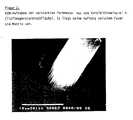
- 100 Gewichtsteile Polyphenylenether mit einem 3-Wert von 68 cm³/g, der durch oxidative Kupplung von 2,6-Dimethylphenol, Abstoppen der Reaktion und anschließender Reaktionsextraktion gemäß den DE-OSS 33 13 864 und 33 23 777, anschließendem Abdampfen des Lösemittels und Extrusion der Schmelze über einen Entgasungsextruder erhalten wurde, werden mit 2 Gewichtsteilen Diphenylkresylphosphat (DISFLAMOLL(R) DPK, Bayer) und einem Teil IRGANOX(R) 1010 sowie 15,6 Gewichtsteilen einer NH₂-Gruppen tragenden Kohlenstoffaser (GRAFIL(R) XAS/PA 6, Courtaulds Advanced Materials), die zu der PPE-Schmelze dosiert werden, in einem Zweiwellenkneter bei 280 °C umgeschmolzen. Vor dem Austrag des Produkts werden die flüchtigen Bestandteile in einer Entgasungszone entfernt. Das Produkt wird granuliert, getrocknet und zu Prüfkörpern spritzgegossen. Die daran ermittelten Eigenschaften sind in Tabelle 1 aufgeführt. An der rasterelektronischen (REM-)Aufnahme ist deutlich sichtbar, daß keine Haftung zwischen Faser und Matrix vorliegt (Fig. 1).
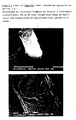
- Der im Vergleichsbeispiel A beschriebene Versuch wird wiederholt, wobei jedoch dem Gemisch aus PPE, Diphenylkresylphosphat und IRGANOX(R) 1010 0,5 bis 1,5 Gewichtsteile Maleinsäureanhydrid zugesetzt werden und anschließend die Kohlenstoffaser der Schmelze zudosiert wird. Zusammensetzung und Eigenschaften der so hergestellten Compounds sind in Tabelle 1 aufgeführt. Die REM-Aufnahme von Beispiel 2 zeigt, daß eine ausgezeichnete Haftung zwischen Faser und Matrix vorliegt (Fig. 2 a und 2 b).
- Der im Vergleichsbeispiel A beschriebene Versuch wird wiederholt, wobei jedoch statt der dort verwendeten Kohlenstoffaser eine Epoxidharz-geschlichtete Kohlenstoffaser (TENAX(R) HTA-6-CN, Akzo (Enka AG) eingesetzt wird (Tab. 1).
- Der im Vergleichsbeispiel B beschriebene Versuch wird wiederholt, wobei jedoch, wie in den Beispielen 1 bis 3 beschrieben, zusätzlich 1,5 Teile Maleinsäureanhydrid eingesetzt werden (Tab. 1).
Tabelle 1 Beispiel A 1 2 3 B 4 PPE Gew.-Teile 100 100 100 100 100 100 Diphenylkresylphosphat Gew.-Teile 2 2 2 2 2 2 IRGANOX(R) 1010 Gew.-Teile 1 1 1 1 1 1 Maleinsäureanhydrid Gew-Teile - 0,5 1 1,5 - 1,5 GRAFIL(R) XAS/PA 6 Gew.-Teile 15,6 15,6 15,6 15,6 - - TENAX(R) HTA-6-CN Gew.-Teile - - - - 15,6 15,6 Zug-E-Modul DIN 53 457 MPa 8600 8400 9100 9200 7000 9500 Zugfestigkeit DIN 53 455 MPa 98 117 132 122 92 136 Reißdehnung DIN 53 455 % 1,5 1,8 1,9 2,2 1,9 1,8 Schlagzähigkeit DIN 53 453 kJ/m² 13 17 17 13 14 16 - REM-Aufnahme der verstärkten Formmasse aus dem Vergleichsbeispiel A (Tieftemperaturbruchfläche). Es liegt keine Haftung zwischen Faser und Matrix vor.
- REM-Aufnahme der verstärkten Formmasse aus dem Vergleichsbeispiel A (Tieftemperaturbruchfläche). Es liegt keine Haftung zwischen Faser und Matrix vor.

- REM-Aufnahme der verstärkten Formmasse aus Beispiel 2 (Tieftemperaturbruchfläche). Die an der Faser festgeklebten Reste der Matrix lassen eine ausgezeichnete Haftung zwischen Faser und Matrix erkennen.

Claims (10)
1. Faserverstärkte Formmasse, die aus folgenden Komponenten hergestellt werden:
I. 97 bis 50 Gew.-%, bezogen auf die Summe aus I. und II., einer Mischung aus 30 bis 100 Gewichtsteilen eines Polyphenylenethers, 0 bis 70 Gewichtsteilen eines Styrolpolymerisats, 0 bis 10 Gewichtsteilen eines Polyoctenylens sowie 0,1 bis 2,5 Gewichtsteilen eines α,β-ungesättigten Carbonsäurederivats oder einer Vorstufe davon;
II. 3 bis 50 Gew.-% Kohlenstoff- und/oder Glasfasern, deren Oberflächen funktionelle Gruppen tragen, die fit den α,β-ungesättigten Carbonsäurederivaten chemische Verknüpfungsreaktionen eingehen können, sowie gegebenenfalls
III. Farbstoffe, Pigmente, Weichmacher, flammhemmende Zusätze, Verarbeitungshilfsmittel und/oder andere übliche Zusätze.
2. Formmasse gemäß Anspruch 1,
dadurch gekennzeichnet,
daß der Polyphenylenether ein Polyether auf Basis von 2,6-Dimethylphenol ist.
dadurch gekennzeichnet,
daß der Polyphenylenether ein Polyether auf Basis von 2,6-Dimethylphenol ist.
3. Formmasse gemäß den Ansprüchen 1 und 2,
dadurch gekennzeichnet,
daß sie 1 bis 10 Gewichtsteile eines Polyoctenylens enthält.
dadurch gekennzeichnet,
daß sie 1 bis 10 Gewichtsteile eines Polyoctenylens enthält.
4. Formmasse gemäß den Ansprüchen 1 bis 3,
dadurch gekennzeichnet,
daß die α,β-ungesättigten Carbonsäurederivate Verbindungen der allgemeinen Formeln (I) und (II) darstellen,
(I) R¹ - CO - CR² = CR³ - CO - R⁴
(II) R¹ - CO - CR² = CR 
wobei R¹ und R⁴ unabhängig voneinander Hydroxyl-, Aryloxy- und/oder Alkoxygruppen mit bis zu 12 C-Atomen oder gemeinsam -O- oder -NR⁵- bedeuten, R² und R³ für Wasserstoff, eine Alkyl- oder Cycloalkylgruppe mit bis zu 12 C-Atomen, eine fit dem Rest COR¹ substituierte Alkylgruppe, eine Arylgruppe, Chlor oder gemeinsam für eine Alkylengruppe mit bis zu 12 C-Atomen steht;
R⁵ hat die Bedeutung Wasserstoff, Alkyl, Aralkyl oder Aryl.
dadurch gekennzeichnet,
daß die α,β-ungesättigten Carbonsäurederivate Verbindungen der allgemeinen Formeln (I) und (II) darstellen,
(I) R¹ - CO - CR² = CR³ - CO - R⁴
(II) R¹ - CO - CR² = CR
wobei R¹ und R⁴ unabhängig voneinander Hydroxyl-, Aryloxy- und/oder Alkoxygruppen mit bis zu 12 C-Atomen oder gemeinsam -O- oder -NR⁵- bedeuten, R² und R³ für Wasserstoff, eine Alkyl- oder Cycloalkylgruppe mit bis zu 12 C-Atomen, eine fit dem Rest COR¹ substituierte Alkylgruppe, eine Arylgruppe, Chlor oder gemeinsam für eine Alkylengruppe mit bis zu 12 C-Atomen steht;
R⁵ hat die Bedeutung Wasserstoff, Alkyl, Aralkyl oder Aryl.
5. Formmasse gemäß Anspruch 4,
dadurch gekennzeichnet,
daß das α,β-ungesättigte Carbonsäurederivat Fumarsäure und/oder Maleinsäureanhydrid darstellt.
dadurch gekennzeichnet,
daß das α,β-ungesättigte Carbonsäurederivat Fumarsäure und/oder Maleinsäureanhydrid darstellt.
6. Formmasse gemäß den Ansprüchen 4 und 5,
dadurch gekennzeichnet,
daß zu ihrer Herstellung zusätzlich ein Vinylaromat, vorzugsweise Styrol, mit eingesetzt wird.
dadurch gekennzeichnet,
daß zu ihrer Herstellung zusätzlich ein Vinylaromat, vorzugsweise Styrol, mit eingesetzt wird.
7. Formmasse gemäß den Ansprüchen 1 bis 6,
dadurch gekennzeichnet,
daß das Styrolpolymerisat teilweise oder vollständig aus Blockcopolymeren des Typs A-B-A besteht, wobei A einen Polystyrolblock und B einen Polybutadienblock bedeutet, der hydriert oder unhydriert sein kann.
dadurch gekennzeichnet,
daß das Styrolpolymerisat teilweise oder vollständig aus Blockcopolymeren des Typs A-B-A besteht, wobei A einen Polystyrolblock und B einen Polybutadienblock bedeutet, der hydriert oder unhydriert sein kann.
8. Formmasse gemäß den Ansprüchen 1 bis 7,
dadurch gekennzeichnet,
daß die Fasern an ihrer Oberfläche freie Amino-, Epoxid- oder Isocyanatgruppen tragen.
dadurch gekennzeichnet,
daß die Fasern an ihrer Oberfläche freie Amino-, Epoxid- oder Isocyanatgruppen tragen.
9. Verfahren zur Herstellung von Formmassen gemäß den Ansprüchen 1 bis 8,
dadurch gekennzeichnet,
daß die einzelnen Komponenten in der Schmelze gemischt werden.
dadurch gekennzeichnet,
daß die einzelnen Komponenten in der Schmelze gemischt werden.
10. Aus den Formmassen gemäß den Ansprüchen 1 bis 8 hergestellte Formteile.
Applications Claiming Priority (2)
| Application Number | Priority Date | Filing Date | Title |
|---|---|---|---|
| DE3935169A DE3935169A1 (de) | 1989-10-21 | 1989-10-21 | Faserverstaerkte polyphenylenether-formmassen und verfahren zu ihrer herstellung |
| DE3935169 | 1989-10-21 |
Publications (1)
| Publication Number | Publication Date |
|---|---|
| EP0424628A1 true EP0424628A1 (de) | 1991-05-02 |
Family
ID=6391965
Family Applications (1)
| Application Number | Title | Priority Date | Filing Date |
|---|---|---|---|
| EP90116019A Withdrawn EP0424628A1 (de) | 1989-10-21 | 1990-08-22 | Faserverstärkte Polyphenylenether-Formmassen und Verfahren zu ihrer Herstellung |
Country Status (5)
| Country | Link |
|---|---|
| US (1) | US5338789A (de) |
| EP (1) | EP0424628A1 (de) |
| JP (1) | JPH03140360A (de) |
| CA (1) | CA2028038A1 (de) |
| DE (1) | DE3935169A1 (de) |
Cited By (2)
| Publication number | Priority date | Publication date | Assignee | Title |
|---|---|---|---|---|
| WO2002098969A1 (en) * | 2001-06-01 | 2002-12-12 | The Lubrizol Corporation | Substrates with modified carbon surfaces in composites |
| EP2343340A4 (de) * | 2008-10-17 | 2012-09-05 | Zeon Corp | Polymerisierbare zusammensetzung, vernetzbarer formkörper, vernetzter formkörper und verbundkörper aus einem vernetzten formkörper |
Families Citing this family (3)
| Publication number | Priority date | Publication date | Assignee | Title |
|---|---|---|---|---|
| US20100143692A1 (en) * | 2008-12-10 | 2010-06-10 | Ryan James P | Carbon and Glass Fiber Reinforced Composition |
| US9365685B2 (en) | 2012-02-28 | 2016-06-14 | Ut-Battelle, Llc | Method of improving adhesion of carbon fibers with a polymeric matrix |
| BR112017021124B1 (pt) | 2015-04-02 | 2022-03-15 | Evonik Operations Gmbh | Processo para a produção de um material compósito de fibra |
Citations (3)
| Publication number | Priority date | Publication date | Assignee | Title |
|---|---|---|---|---|
| US4728693A (en) * | 1985-05-22 | 1988-03-01 | Huls Aktiengesellschaft | Impact-resistant thermoplastic molding compounds based on polyphenylene ethers, polyoctenylenes and polyamides |
| EP0288787A2 (de) * | 1987-04-28 | 1988-11-02 | General Electric Company | Modifizierte glassverstärkte Polyphenylenetherharzverbundwerkstoffe mit duktilem Verhalten bei Zugbruchversuch |
| EP0319833A2 (de) * | 1987-12-09 | 1989-06-14 | BASF Aktiengesellschaft | Verstärkte thermoplastische Formmassen auf Basis von Polyphenylenether |
Family Cites Families (13)
| Publication number | Priority date | Publication date | Assignee | Title |
|---|---|---|---|---|
| US4131598A (en) * | 1976-03-29 | 1978-12-26 | General Electric Company | Polyphenylene ether composition |
| US4152316A (en) * | 1977-04-13 | 1979-05-01 | General Electric Company | Compositions of a polyphenylene ether resin and alkenyl aromatic resins modified with epdm rubber |
| US4423189A (en) * | 1981-10-28 | 1983-12-27 | General Electric Company | Compositions of a polyphenylene ether resin, low molecular weight polystyrene and a block copolymer |
| CA1244171A (en) * | 1984-01-10 | 1988-11-01 | Akitoshi Sugio | Polyphenylene ether resin composition |
| DE3442273C2 (de) * | 1984-11-20 | 1995-04-27 | Huels Chemische Werke Ag | Thermoplastische Massen auf Basis von Polyphenylenethern, Styrolpolymerisaten und Polyoctenylenen sowie Verfahren zu ihrer Herstellung |
| EP0231626B1 (de) * | 1985-12-26 | 1991-07-31 | Asahi Kasei Kogyo Kabushiki Kaisha | Thermoplastische Harzzusammensetzung |
| US4874810A (en) * | 1986-03-07 | 1989-10-17 | General Electric Company | Impact modified polyphenylene ether-polyamide compositions |
| US4873276A (en) * | 1986-03-07 | 1989-10-10 | General Electric Company | Polyphenylene ether/polyamide blends having mproved physical properties |
| JPS62223252A (ja) * | 1986-03-25 | 1987-10-01 | Mitsubishi Rayon Co Ltd | ポリフエニレンエ−テル樹脂組成物 |
| NL8601128A (nl) * | 1986-05-02 | 1987-12-01 | Gen Electric | Polymeermengsel met polyfenyleenether en versterkende vezels. |
| JP2533323B2 (ja) * | 1987-06-12 | 1996-09-11 | 住友化学工業株式会社 | 熱可塑性樹脂組成物 |
| US4900786A (en) * | 1988-06-23 | 1990-02-13 | General Electric Company | Polyphenylene ether/rubber modified polystyrene composition suitable for blow molding large parts |
| JP2842536B2 (ja) * | 1988-08-31 | 1999-01-06 | 三菱化学株式会社 | 樹脂組成物 |
-
1989
- 1989-10-21 DE DE3935169A patent/DE3935169A1/de not_active Withdrawn
-
1990
- 1990-08-22 EP EP90116019A patent/EP0424628A1/de not_active Withdrawn
- 1990-10-19 CA CA002028038A patent/CA2028038A1/en not_active Abandoned
- 1990-10-19 JP JP2279471A patent/JPH03140360A/ja active Pending
-
1992
- 1992-04-09 US US07/865,631 patent/US5338789A/en not_active Expired - Fee Related
Patent Citations (3)
| Publication number | Priority date | Publication date | Assignee | Title |
|---|---|---|---|---|
| US4728693A (en) * | 1985-05-22 | 1988-03-01 | Huls Aktiengesellschaft | Impact-resistant thermoplastic molding compounds based on polyphenylene ethers, polyoctenylenes and polyamides |
| EP0288787A2 (de) * | 1987-04-28 | 1988-11-02 | General Electric Company | Modifizierte glassverstärkte Polyphenylenetherharzverbundwerkstoffe mit duktilem Verhalten bei Zugbruchversuch |
| EP0319833A2 (de) * | 1987-12-09 | 1989-06-14 | BASF Aktiengesellschaft | Verstärkte thermoplastische Formmassen auf Basis von Polyphenylenether |
Cited By (3)
| Publication number | Priority date | Publication date | Assignee | Title |
|---|---|---|---|---|
| WO2002098969A1 (en) * | 2001-06-01 | 2002-12-12 | The Lubrizol Corporation | Substrates with modified carbon surfaces in composites |
| EP2343340A4 (de) * | 2008-10-17 | 2012-09-05 | Zeon Corp | Polymerisierbare zusammensetzung, vernetzbarer formkörper, vernetzter formkörper und verbundkörper aus einem vernetzten formkörper |
| US8686068B2 (en) | 2008-10-17 | 2014-04-01 | Zeon Corporation | Polymerizable composition, cross-linkable shaped article, cross-linked shaped article, and cross-linked shaped article composite |
Also Published As
| Publication number | Publication date |
|---|---|
| JPH03140360A (ja) | 1991-06-14 |
| CA2028038A1 (en) | 1991-04-22 |
| US5338789A (en) | 1994-08-16 |
| DE3935169A1 (de) | 1991-04-25 |
Similar Documents
| Publication | Publication Date | Title |
|---|---|---|
| EP0205816B1 (de) | Schlagzähe thermoplastische Formmassen auf Basis von modifizierten Polyphenylenethern, Polyoctenylenen und Polyamiden | |
| DE2242324C3 (de) | Verfahren zur Herstellung von glasverstärkten Polyolefinmassen | |
| EP0181449B1 (de) | Thermoplastische Massen auf Basis von Polyphenylenethern und Polyoctenylenen sowie Verfahren zu ihrer Herstellung | |
| DE69401224T2 (de) | Thermoplastische Harzzusammensetzung und Verfahren zur Herstellung von Harz des modifizierten Polyolefin-Typs | |
| DE2705656C3 (de) | Pfropfcopolymerisate und Verfahren zu ihrer Herstellung | |
| EP0246358B1 (de) | Verfahren zur Herstellung thermoplastischer, PPE enthaltender Formmassen | |
| DE2947421A1 (de) | Polyphenylenaetherharzzusammensetzungen, die polysiloxan-modifizierte alkenylaromatische harze enthalten | |
| DE2119301A1 (de) | Thermoplastische Massen von hoher Schlagzähigkeit | |
| DE3917026A1 (de) | Harzmasse und daraus hergestellte formkoerper | |
| DE2546621B2 (de) | Thermoplastische Formmasse | |
| EP0185860B1 (de) | Thermoplastische Massen auf Basis von Polyphenylenethern, Styrolpolymerisaten und Polyoctenylenen | |
| EP0168566B1 (de) | Thermoplastische Massen auf Basis von Polyphenylenethern, schlagfesten Styrolpolymerisaten und pulverförmigem, füllstoffhaltigen Kautschuk sowie Verfahren zu ihrer Herstellung | |
| EP0250760B1 (de) | Schlagzähe thermoplastische Formmassen auf Basis von modifizierten Polyphenylenethern, Polyoctenylenen und Polyamiden | |
| DE3001901C3 (de) | Feuerhemmende Harzmasse und ihre Verwendung | |
| DE69310025T2 (de) | Thermoplastische Harzzusammensetzung und Formkörper | |
| DE3834912A1 (de) | Thermoplastische formmassen auf basis von polyphenylenethern und polyamiden und ihre herstellung | |
| DE2713509C2 (de) | ||
| EP0513488B1 (de) | Formmassen auf Basis modifizierter Polyarylether | |
| DE3043893A1 (de) | Formmassen mit polyphenylenaether und hydriertem radialblockcopolymer aus vinylaromatischer verbindung und dienkautschuk | |
| DE3616280C3 (de) | Thermoplastische Polyamidformmassen mit geringer Wasseraufnahme | |
| DE3935169A1 (de) | Faserverstaerkte polyphenylenether-formmassen und verfahren zu ihrer herstellung | |
| DE4015533A1 (de) | Thermoplastische formmassen auf der basis von polyestern und polyphenylenethern | |
| DE3818424A1 (de) | Faeden aus linearen thermoplastischen polyamiden und modifizierten polyphenylenethern | |
| DE3442274A1 (de) | Thermoplastische massen auf basis von polyphenylenethern und styrol-butadien-emulsionspolymerisaten | |
| DE2364901A1 (de) | Glasverstaerkte zusammensetzungen aus polyphenylenaethern und kristallinen styrolharzen |
Legal Events
| Date | Code | Title | Description |
|---|---|---|---|
| PUAI | Public reference made under article 153(3) epc to a published international application that has entered the european phase |
Free format text: ORIGINAL CODE: 0009012 |
|
| 17P | Request for examination filed |
Effective date: 19901217 |
|
| AK | Designated contracting states |
Kind code of ref document: A1 Designated state(s): AT BE CH DE ES FR GB IT LI NL SE |
|
| 17Q | First examination report despatched |
Effective date: 19931216 |
|
| STAA | Information on the status of an ep patent application or granted ep patent |
Free format text: STATUS: THE APPLICATION IS DEEMED TO BE WITHDRAWN |
|
| 18D | Application deemed to be withdrawn |
Effective date: 19950301 |