EP0424889A2 - Auf in Register gespeicherten Daten basierende Speicherverwaltungsanordnung zur Speicherraumwiederzuordnung - Google Patents
Auf in Register gespeicherten Daten basierende Speicherverwaltungsanordnung zur Speicherraumwiederzuordnung Download PDFInfo
- Publication number
- EP0424889A2 EP0424889A2 EP90120339A EP90120339A EP0424889A2 EP 0424889 A2 EP0424889 A2 EP 0424889A2 EP 90120339 A EP90120339 A EP 90120339A EP 90120339 A EP90120339 A EP 90120339A EP 0424889 A2 EP0424889 A2 EP 0424889A2
- Authority
- EP
- European Patent Office
- Prior art keywords
- memory
- address
- address space
- cpu
- bits
- Prior art date
- Legal status (The legal status is an assumption and is not a legal conclusion. Google has not performed a legal analysis and makes no representation as to the accuracy of the status listed.)
- Withdrawn
Links
Images


Classifications
-
- G—PHYSICS
- G06—COMPUTING OR CALCULATING; COUNTING
- G06F—ELECTRIC DIGITAL DATA PROCESSING
- G06F12/00—Accessing, addressing or allocating within memory systems or architectures
- G06F12/02—Addressing or allocation; Relocation
-
- G—PHYSICS
- G06—COMPUTING OR CALCULATING; COUNTING
- G06F—ELECTRIC DIGITAL DATA PROCESSING
- G06F12/00—Accessing, addressing or allocating within memory systems or architectures
- G06F12/02—Addressing or allocation; Relocation
- G06F12/0223—User address space allocation, e.g. contiguous or non contiguous base addressing
- G06F12/0292—User address space allocation, e.g. contiguous or non contiguous base addressing using tables or multilevel address translation means
Definitions
- the present invention relates to a memory management system adapted to a personal computer.
- an address space managed by a CPU is comprised of a RAM area serving as a system memory, a ROM area storing a BIOS (basic input and output system) and the like, a video RAM area, and an area related to a user for allocating an extension memory.
- a conventional memory map is shown in Fig. 1.
- the system memory is allocated in addresses 0(h) through 9FFFF(h) (h represents a hexadecimal).
- the video RAM area is allocated in the address A0000(h) through BFFFF(h).
- a dedicated RAM which is independent of the system memory and is managed by a display circuit is allocated to the video RAM area.
- the addresses C0000(h) through EFFFF(h) are released to permit a user to mount an extension ROM or an interface with a peripheral unit.
- the BIOS-ROM is allocated in addresses F0000(h) through FFFFF(h).
- the extension memory is allocated in the address 100000(h) or more.
- RAM a RAM of 1M (mega) bits or more has been used.
- 8 1M-bit RAMs can constitute 1MB (mega byte) memory space.
- An industrial standard machine usually supports a system memory address space of 640 Kbytes (or 512K bytes).
- the address space from 640 KB (512KB) to 1MB is assigned to the BIOS ROM and the video RAM. Accordingly, if the system memory ranging from 0(h) through 9FFFF(h) in the memory map described above is constituted by using the 1M-bit RAM, a memory capacity of 384 KB (512KB) ranging from A0000(h) through FFFFF(h) is redundant.
- This redundant memory is usually reallocated in the address 100000(h) or more under the control of the address decoding conditions to thereby effectively use the redundant memory. Since the extension memory or the like may be allocated in the address 100000(h) or more, the control is required for avoiding the redundant memory being allocated overlapped with the extension memory.
- the memory size of the extension memory is limited to 1MB, 4MB, and 8MB.
- the memory address to be reallocated is controlled by a logic circuit constituted by a gate array. Accordingly, the addresses to be reallocatable are preliminarily fixed, resulting in limited combinations of the extension memory size and the reallocation address.
- the memory extension is limited to fixed combinations. Even if a new memory having a capacity other than that of the existing memories is developed in the near future, the logic circuit is not designed to take account of it. Thus, the new memory cannot be used as the extension memory.
- the capacity of the system memory is designed to be changeable, i.e., if the system memory is allocated in the addresses from 0(h) through 7FFFF(h), the memory of 512KB becomes redundant. In this case, the address control of further 128KB (512KB-384KB) in addition to 384KB must be controlled by the hardware logic.
- An object of the present invention is to provide a memory management system in which a part of a CPU address space is reallocatable in an arbitrary location of the CPU address space.
- a memory management system comprises: means, provided for each divided blocks of a logical address space, for storing data indicating location where the block is reallocated; means for setting, in said storage means, an arbitrary location data in the logical address space; and allocating means for allocating the corresponding block in a physical address space based on the location data set in said storage means.
- a part of the CPU address space (a logical address space) is divided into a plurality of blocks. Registers are provided to the divided blocks in one-to-one correspondence. Arbitrary location addresses in the CPU address space where the blocks are to be reallocated in a memory address space (physical address space) based on the location data reallocated in the CPU address space. Accordingly, size of the extension memory is not constrained. Further, the size of the system memory can be arbitrary set by setting adequate reallocation data in the registers. A logic circuit must not be preliminarily designed taking account of the effective arrangement of the extension memory and the size of the system memory.
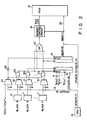
- Fig. 2 is a block diagram showing an embodiment of a memory management system according to the present invention.
- the size of a memory (RAM) 16 is 1MB (mega bytes) and a first 512KB memory is unconditionally assigned to the CPU addresses 0(h) through 7FFFF(h).
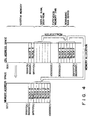
- the remaining 512KB memory is divided into 8 blocks (block 8, block 9, ..., block F) each having 64KB memory capacity. (see Fig. 4) Accordingly, the 20-bit memory address is enough to access the memory 16.
- Registers 11 are provided for each block in one-to-one correspondence.
- the respective registers store data indicating locations where the corresponding blocks (a part of the CPU address space, i.e., a logical address space) are to be reallocated in the CPU address space.
- the location data is set by an initialize routine in the BIOS, for example.
- the CPU 31 is comprised of a 32-bit microprocessor 80386SX manufactured by an Intel. Corp., U.S.A.
- the address output from the CPU 31 is a 24-bit data.
- the memory address space is 1MB, the memory address is a 20 bit data. Accordingly, when the CPU address is converted into the memory address, the lower 16 bits of the CPU address are same as those of the memory address. Therefore, the upper 8 bits of the CPU address are converted into the upper 4 bits of the memory address. Accordingly, the upper 8 bits (bit 16 through bit 23) of the address data (24 bits) for reallocating the divided block into an arbitrary location in the CPU address space, are set in the registers 11, individually.
- the outputs of the respective registers 11 are supplied to the respective one input terminals of comparators 12, and the upper 8 bits of the address data output from the CPU 31 is supplied to the other terminal of each of the comparator 12.
- the comparator 12 compare the upper 8 bits from the CPU 31 with the upper 8 bits from the registers 11. When a coincidence is obtained from any one of the comparators 12, it outputs a logic "1" signal.
- the output signals from the comparators 12 are supplied to the one input terminals of the AND gates 23. Further, an output signal of a comparator 21 is supplied to the other terminal of each of the AND gate 23.
- the comparator 21 detects whether the address of the upper 8 bits supplied from the CPU 31 coincides with the address of the system memory, i.e., "00"(h) through “07”(h). Upon detecting the coincidence, the comparator 21 outputs the logic "0" signal to the AND gate 23 and logic "1" signal to a selector 14. Accordingly, when the upper 8 bits of "00"(h) through “07”(h) of the CPU addresses "0"(h) through “7FFFF”(h) are set in the register 11, the coincidence signal of logic "1" output from the comparator 12 is gated by the AND gate 23.
- the respective outputs from the AND gate 23 are supplied to the selector 14 as well as to an OR gate 13.
- the upper 4 bits ("8"(h) through “F”(h)) of the memory address space ("80000"(h) through “FFFFF”(h) excluding "0"(h) through “7FFFF”(h)) are fixedly supplied to the selector 14.
- the four bits of bit 16 through bit 19 among the address output from the CPU 31 are supplied to the selector 14.
- the selector 14 outputs the bits 16 through 19 of the CPU address.
- the selector 14 When the logic "1" signal is output from the AND gate 23 of the block 8, the selector 14 outputs the upper 4 bits ("8"(h)) of the memory address.
- the selector 14 When the logic "1" signal is output from the AND gate 23 of the block 9, the selector 14 outputs the upper 4 bits “9”(h) of the memory address. Similarly, when the logic "1" signal is output from the AND gates 23 of the blocks A through F, the selector 14 outputs the upper 4 bits of "A"(h) through “F”(h).
- the upper 4 bits output from the selector 14 is combined with the lower 16 bits (bit 0 through bit 15) supplied from the CPU 31 to be supplied to the RAM 16 as well as the memory controller 15 as the 20-bit memory address. Accordingly, when the address output from the CPU 31 indicates any one of the blocks 0 through 7 in the CPU address space, the selector 14 directly, outputs the CPU address as the memory address.
- the selector 14 when the address output from the CPU 31 indicates the blocks any one of the blocks 8 through F in the CPU address space, the selector 14 outputs the corresponding 4 bits of "A0000"(h) through "100000"(h) in the memory address space.
- the concept of converting the CPU address into the memory address is shown in Fig. 5.
- the output signal from the OR gate 12 is further supplied to the memory controller 15.
- the OR gate outputs data to the memory controller 15 indicating that any one of the blocks "8" through “F” is accessed by the CPU 31.
- the memory controller 15 which has been known outputs memory control signals such as an address strobe signal (RAS), and a column address strobe signal (CAS).
- RAS address strobe signal
- CAS column address strobe signal
- the different addresses where the 8 divided blocks from block 8 through block F are to be reallocated in the CPU address space are set in the registers 11.
- the system memory has 512KB in size and no other memories such as the video RAM and the BIOS ROM are allocated in the 128KB memory space ranging from 512KB to 640KB. Accordingly, blocks 8 and 9 are reallocated in the addresses "80000"(h) through "9FFFF"(h) in the CPU address space. Further, the upper 8-bit data of "08"(h) and "09"(h) are set in the corresponding registers 11.
- the upper 8 bits “30"(h) thereof is compared with the "30"(h) from the corresponding register 11 by the corresponding comparator 12.
- the coincidence signal is supplied to the selector 14 from the corresponding comparator 12.
- the upper 4 bits "8"(h) of the memory address is output from the selector 14.
- This address (MA19-16) is combined with the address (CPUA 15-0) output from the CPU 31 and then supplied to the RAM 16 as the 20-bit memory address.
- the location designated by the memory address is accessed under the control of the control signals from the memory controller 15.
- the present invention is not limited to the above embodiment.
- the address ranging from "0"(h) through "7FFFF"(h) is fixedly used as the system memory.
- the above address range may be blocked if necessary.
- the address range of the system memory is compared by the comparator 21.
- a flip-flop (flag) may be set and the output thereof may be supplied to the selector 14.
Landscapes
- Engineering & Computer Science (AREA)
- Theoretical Computer Science (AREA)
- Physics & Mathematics (AREA)
- General Engineering & Computer Science (AREA)
- General Physics & Mathematics (AREA)
- Memory System (AREA)
- Techniques For Improving Reliability Of Storages (AREA)
Applications Claiming Priority (2)
| Application Number | Priority Date | Filing Date | Title |
|---|---|---|---|
| JP274967/89 | 1989-10-24 | ||
| JP1274967A JPH03137744A (ja) | 1989-10-24 | 1989-10-24 | メモリ管理方式 |
Publications (2)
| Publication Number | Publication Date |
|---|---|
| EP0424889A2 true EP0424889A2 (de) | 1991-05-02 |
| EP0424889A3 EP0424889A3 (en) | 1991-11-27 |
Family
ID=17549068
Family Applications (1)
| Application Number | Title | Priority Date | Filing Date |
|---|---|---|---|
| EP19900120339 Withdrawn EP0424889A3 (en) | 1989-10-24 | 1990-10-23 | A memory management system for reallocating memory space based on data set in registers |
Country Status (3)
| Country | Link |
|---|---|
| EP (1) | EP0424889A3 (de) |
| JP (1) | JPH03137744A (de) |
| KR (1) | KR930002313B1 (de) |
Cited By (2)
| Publication number | Priority date | Publication date | Assignee | Title |
|---|---|---|---|---|
| US7603593B2 (en) | 2004-06-14 | 2009-10-13 | Massimo Iaculo | Method for managing bad memory blocks in a nonvolatile-memory device, and nonvolatile-memory device implementing the management method |
| CN119487466A (zh) * | 2022-12-08 | 2025-02-18 | 三菱电机株式会社 | 编程辅助程序、编程辅助装置及编程辅助方法 |
Family Cites Families (2)
| Publication number | Priority date | Publication date | Assignee | Title |
|---|---|---|---|---|
| IT1183808B (it) * | 1985-04-30 | 1987-10-22 | Olivetti & Co Spa | Circuito elettronico per collegare un microprocessore ad una memoria ad elevata capacita |
| US4891752A (en) * | 1987-03-03 | 1990-01-02 | Tandon Corporation | Multimode expanded memory space addressing system using independently generated DMA channel selection and DMA page address signals |
-
1989
- 1989-10-24 JP JP1274967A patent/JPH03137744A/ja active Pending
-
1990
- 1990-10-23 EP EP19900120339 patent/EP0424889A3/en not_active Withdrawn
- 1990-10-24 KR KR9017005A patent/KR930002313B1/ko not_active Expired - Fee Related
Cited By (2)
| Publication number | Priority date | Publication date | Assignee | Title |
|---|---|---|---|---|
| US7603593B2 (en) | 2004-06-14 | 2009-10-13 | Massimo Iaculo | Method for managing bad memory blocks in a nonvolatile-memory device, and nonvolatile-memory device implementing the management method |
| CN119487466A (zh) * | 2022-12-08 | 2025-02-18 | 三菱电机株式会社 | 编程辅助程序、编程辅助装置及编程辅助方法 |
Also Published As
| Publication number | Publication date |
|---|---|
| EP0424889A3 (en) | 1991-11-27 |
| KR930002313B1 (en) | 1993-03-29 |
| JPH03137744A (ja) | 1991-06-12 |
| KR910008574A (ko) | 1991-05-31 |
Similar Documents
| Publication | Publication Date | Title |
|---|---|---|
| EP0473275B1 (de) | Speichersteuerungseinheit und Speichereinheit | |
| US4835734A (en) | Address translation apparatus | |
| EP0387644A1 (de) | Mehrprozessoranordnung mit Vervielfältigung von globalen Daten und mit zwei Stufen von Adressübersetzungseinheiten | |
| EP0187453B1 (de) | Programmzuweisbare E/A-Adressen für einen Rechner | |
| US6226736B1 (en) | Microprocessor configuration arrangement for selecting an external bus width | |
| US4737909A (en) | Cache memory address apparatus | |
| KR940001877B1 (ko) | 멀티 프로세서 시스템 | |
| US4608632A (en) | Memory paging system in a microcomputer | |
| US4318175A (en) | Addressing means for random access memory system | |
| US5761719A (en) | On-chip memory map for processor cache macro | |
| US6625673B1 (en) | Method for assigning addresses to input/output devices | |
| EP0214490A2 (de) | Datenverarbeitungseinrichtung mit einer Schaltung zur Prüfung der Adressgrenzen in einem virtuellen Speicher | |
| EP0424889A2 (de) | Auf in Register gespeicherten Daten basierende Speicherverwaltungsanordnung zur Speicherraumwiederzuordnung | |
| US4984150A (en) | Virtual memory control management system | |
| EP0795159A1 (de) | Bus-zu-bus-brücke | |
| US5247631A (en) | Programmable control of EMS page register addresses | |
| JPH0148570B2 (de) | ||
| US5253354A (en) | Row address generator for defective DRAMS including an upper and lower memory device | |
| JPS6232516B2 (de) | ||
| US5410662A (en) | Programmable control of EMS page register addresses | |
| JPH06175917A (ja) | フラッシュメモリ | |
| JP3449749B2 (ja) | 情報処理装置 | |
| KR890000805B1 (ko) | 메모리를 이용한 메모리 스페이스 확장방식 | |
| JPH01140342A (ja) | 仮想計算機システム | |
| JPH06337847A (ja) | マルチプロセッサ装置 |
Legal Events
| Date | Code | Title | Description |
|---|---|---|---|
| PUAI | Public reference made under article 153(3) epc to a published international application that has entered the european phase |
Free format text: ORIGINAL CODE: 0009012 |
|
| 17P | Request for examination filed |
Effective date: 19901120 |
|
| AK | Designated contracting states |
Kind code of ref document: A2 Designated state(s): DE FR GB |
|
| PUAL | Search report despatched |
Free format text: ORIGINAL CODE: 0009013 |
|
| AK | Designated contracting states |
Kind code of ref document: A3 Designated state(s): DE FR GB |
|
| STAA | Information on the status of an ep patent application or granted ep patent |
Free format text: STATUS: THE APPLICATION HAS BEEN WITHDRAWN |
|
| 18W | Application withdrawn |
Withdrawal date: 19930526 |