EP0425201B1 - Mélange de polyester, sa préparation et son utilisation - Google Patents
Mélange de polyester, sa préparation et son utilisation Download PDFInfo
- Publication number
- EP0425201B1 EP0425201B1 EP90311486A EP90311486A EP0425201B1 EP 0425201 B1 EP0425201 B1 EP 0425201B1 EP 90311486 A EP90311486 A EP 90311486A EP 90311486 A EP90311486 A EP 90311486A EP 0425201 B1 EP0425201 B1 EP 0425201B1
- Authority
- EP
- European Patent Office
- Prior art keywords
- polyester mixture
- polyester
- molecular weight
- component
- mixture
- Prior art date
- Legal status (The legal status is an assumption and is not a legal conclusion. Google has not performed a legal analysis and makes no representation as to the accuracy of the status listed.)
- Expired - Lifetime
Links
- 229920000728 polyester Polymers 0.000 title claims abstract description 63
- 239000000203 mixture Substances 0.000 title claims abstract description 62
- 238000002360 preparation method Methods 0.000 title claims description 5
- 229920003023 plastic Polymers 0.000 claims abstract description 14
- 239000004033 plastic Substances 0.000 claims abstract description 14
- 238000000034 method Methods 0.000 claims abstract description 12
- 238000000199 molecular distillation Methods 0.000 claims abstract description 11
- OFOBLEOULBTSOW-UHFFFAOYSA-N Malonic acid Chemical compound OC(=O)CC(O)=O OFOBLEOULBTSOW-UHFFFAOYSA-N 0.000 claims abstract description 6
- 150000002009 diols Chemical class 0.000 claims abstract description 6
- 150000001875 compounds Chemical class 0.000 claims abstract description 5
- 239000002253 acid Substances 0.000 claims description 15
- 125000002887 hydroxy group Chemical group [H]O* 0.000 claims description 11
- 239000000539 dimer Substances 0.000 claims description 9
- LFQSCWFLJHTTHZ-UHFFFAOYSA-N Ethanol Chemical compound CCO LFQSCWFLJHTTHZ-UHFFFAOYSA-N 0.000 claims description 7
- 239000004014 plasticizer Substances 0.000 claims description 7
- -1 ester compounds Chemical class 0.000 claims description 5
- 239000010409 thin film Substances 0.000 claims description 3
- 150000004670 unsaturated fatty acids Chemical class 0.000 claims description 3
- 235000021122 unsaturated fatty acids Nutrition 0.000 claims description 3
- 239000011342 resin composition Substances 0.000 claims 2
- 239000007795 chemical reaction product Substances 0.000 claims 1
- 238000004519 manufacturing process Methods 0.000 claims 1
- 239000000047 product Substances 0.000 claims 1
- 239000011347 resin Substances 0.000 claims 1
- 229920005989 resin Polymers 0.000 claims 1
- DNIAPMSPPWPWGF-UHFFFAOYSA-N Propylene glycol Chemical compound CC(O)CO DNIAPMSPPWPWGF-UHFFFAOYSA-N 0.000 description 12
- WNLRTRBMVRJNCN-UHFFFAOYSA-N adipic acid Chemical compound OC(=O)CCCCC(O)=O WNLRTRBMVRJNCN-UHFFFAOYSA-N 0.000 description 8
- 150000002148 esters Chemical class 0.000 description 7
- 229920000915 polyvinyl chloride Polymers 0.000 description 7
- 239000004800 polyvinyl chloride Substances 0.000 description 7
- 235000014113 dietary fatty acids Nutrition 0.000 description 6
- 239000000194 fatty acid Substances 0.000 description 6
- 229930195729 fatty acid Natural products 0.000 description 6
- 150000004665 fatty acids Chemical class 0.000 description 6
- 238000005886 esterification reaction Methods 0.000 description 5
- KBPLFHHGFOOTCA-UHFFFAOYSA-N 1-Octanol Chemical compound CCCCCCCCO KBPLFHHGFOOTCA-UHFFFAOYSA-N 0.000 description 4
- YIWUKEYIRIRTPP-UHFFFAOYSA-N 2-ethylhexan-1-ol Chemical compound CCCCC(CC)CO YIWUKEYIRIRTPP-UHFFFAOYSA-N 0.000 description 4
- 239000000470 constituent Substances 0.000 description 4
- PUPZLCDOIYMWBV-UHFFFAOYSA-N (+/-)-1,3-Butanediol Chemical compound CC(O)CCO PUPZLCDOIYMWBV-UHFFFAOYSA-N 0.000 description 3
- LYCAIKOWRPUZTN-UHFFFAOYSA-N Ethylene glycol Chemical compound OCCO LYCAIKOWRPUZTN-UHFFFAOYSA-N 0.000 description 3
- 235000011037 adipic acid Nutrition 0.000 description 3
- 239000001361 adipic acid Substances 0.000 description 3
- 238000001704 evaporation Methods 0.000 description 3
- 238000013508 migration Methods 0.000 description 3
- 230000005012 migration Effects 0.000 description 3
- 229920006395 saturated elastomer Polymers 0.000 description 3
- AOHAPDDBNAPPIN-UHFFFAOYSA-N 3-Methoxy-4,5-methylenedioxybenzoic acid Chemical compound COC1=CC(C(O)=O)=CC2=C1OCO2 AOHAPDDBNAPPIN-UHFFFAOYSA-N 0.000 description 2
- LRHPLDYGYMQRHN-UHFFFAOYSA-N N-Butanol Chemical compound CCCCO LRHPLDYGYMQRHN-UHFFFAOYSA-N 0.000 description 2
- AMQJEAYHLZJPGS-UHFFFAOYSA-N N-Pentanol Chemical compound CCCCCO AMQJEAYHLZJPGS-UHFFFAOYSA-N 0.000 description 2
- KKEYFWRCBNTPAC-UHFFFAOYSA-N Terephthalic acid Chemical compound OC(=O)C1=CC=C(C(O)=O)C=C1 KKEYFWRCBNTPAC-UHFFFAOYSA-N 0.000 description 2
- 239000000654 additive Substances 0.000 description 2
- WERYXYBDKMZEQL-UHFFFAOYSA-N butane-1,4-diol Chemical compound OCCCCO WERYXYBDKMZEQL-UHFFFAOYSA-N 0.000 description 2
- 239000006227 byproduct Substances 0.000 description 2
- 238000004821 distillation Methods 0.000 description 2
- 230000008020 evaporation Effects 0.000 description 2
- BXWNKGSJHAJOGX-UHFFFAOYSA-N hexadecan-1-ol Chemical compound CCCCCCCCCCCCCCCCO BXWNKGSJHAJOGX-UHFFFAOYSA-N 0.000 description 2
- ZSIAUFGUXNUGDI-UHFFFAOYSA-N hexan-1-ol Chemical compound CCCCCCO ZSIAUFGUXNUGDI-UHFFFAOYSA-N 0.000 description 2
- FUZZWVXGSFPDMH-UHFFFAOYSA-N hexanoic acid Chemical compound CCCCCC(O)=O FUZZWVXGSFPDMH-UHFFFAOYSA-N 0.000 description 2
- QQVIHTHCMHWDBS-UHFFFAOYSA-N isophthalic acid Chemical compound OC(=O)C1=CC=CC(C(O)=O)=C1 QQVIHTHCMHWDBS-UHFFFAOYSA-N 0.000 description 2
- 239000000463 material Substances 0.000 description 2
- BDJRBEYXGGNYIS-UHFFFAOYSA-N nonanedioic acid Chemical compound OC(=O)CCCCCCCC(O)=O BDJRBEYXGGNYIS-UHFFFAOYSA-N 0.000 description 2
- FBUKVWPVBMHYJY-UHFFFAOYSA-N nonanoic acid Chemical compound CCCCCCCCC(O)=O FBUKVWPVBMHYJY-UHFFFAOYSA-N 0.000 description 2
- GLDOVTGHNKAZLK-UHFFFAOYSA-N octadecan-1-ol Chemical compound CCCCCCCCCCCCCCCCCCO GLDOVTGHNKAZLK-UHFFFAOYSA-N 0.000 description 2
- XNGIFLGASWRNHJ-UHFFFAOYSA-N phthalic acid Chemical compound OC(=O)C1=CC=CC=C1C(O)=O XNGIFLGASWRNHJ-UHFFFAOYSA-N 0.000 description 2
- 238000012545 processing Methods 0.000 description 2
- CXMXRPHRNRROMY-UHFFFAOYSA-N sebacic acid Chemical compound OC(=O)CCCCCCCCC(O)=O CXMXRPHRNRROMY-UHFFFAOYSA-N 0.000 description 2
- 238000012360 testing method Methods 0.000 description 2
- NQPDZGIKBAWPEJ-UHFFFAOYSA-N valeric acid Chemical compound CCCCC(O)=O NQPDZGIKBAWPEJ-UHFFFAOYSA-N 0.000 description 2
- XFRVVPUIAFSTFO-UHFFFAOYSA-N 1-Tridecanol Chemical compound CCCCCCCCCCCCCO XFRVVPUIAFSTFO-UHFFFAOYSA-N 0.000 description 1
- 239000004358 Butane-1, 3-diol Substances 0.000 description 1
- 235000021355 Stearic acid Nutrition 0.000 description 1
- 150000001298 alcohols Chemical class 0.000 description 1
- 125000001931 aliphatic group Chemical group 0.000 description 1
- 229910052783 alkali metal Inorganic materials 0.000 description 1
- 150000001340 alkali metals Chemical class 0.000 description 1
- 229910052784 alkaline earth metal Inorganic materials 0.000 description 1
- 150000004703 alkoxides Chemical class 0.000 description 1
- 230000015572 biosynthetic process Effects 0.000 description 1
- YHWCPXVTRSHPNY-UHFFFAOYSA-N butan-1-olate;titanium(4+) Chemical compound [Ti+4].CCCC[O-].CCCC[O-].CCCC[O-].CCCC[O-] YHWCPXVTRSHPNY-UHFFFAOYSA-N 0.000 description 1
- 235000019437 butane-1,3-diol Nutrition 0.000 description 1
- 229960000541 cetyl alcohol Drugs 0.000 description 1
- 238000006243 chemical reaction Methods 0.000 description 1
- 239000003795 chemical substances by application Substances 0.000 description 1
- 238000010227 cup method (microbiological evaluation) Methods 0.000 description 1
- 238000011161 development Methods 0.000 description 1
- 150000001991 dicarboxylic acids Chemical class 0.000 description 1
- 230000032050 esterification Effects 0.000 description 1
- 235000013305 food Nutrition 0.000 description 1
- 238000009472 formulation Methods 0.000 description 1
- 238000005227 gel permeation chromatography Methods 0.000 description 1
- 150000002334 glycols Chemical class 0.000 description 1
- 239000008187 granular material Substances 0.000 description 1
- XXMIOPMDWAUFGU-UHFFFAOYSA-N hexane-1,6-diol Chemical compound OCCCCCCO XXMIOPMDWAUFGU-UHFFFAOYSA-N 0.000 description 1
- 239000012535 impurity Substances 0.000 description 1
- 239000000314 lubricant Substances 0.000 description 1
- 150000002762 monocarboxylic acid derivatives Chemical class 0.000 description 1
- GOQYKNQRPGWPLP-UHFFFAOYSA-N n-heptadecyl alcohol Natural products CCCCCCCCCCCCCCCCCO GOQYKNQRPGWPLP-UHFFFAOYSA-N 0.000 description 1
- SLCVBVWXLSEKPL-UHFFFAOYSA-N neopentyl glycol Chemical compound OCC(C)(C)CO SLCVBVWXLSEKPL-UHFFFAOYSA-N 0.000 description 1
- QIQXTHQIDYTFRH-UHFFFAOYSA-N octadecanoic acid Chemical compound CCCCCCCCCCCCCCCCCC(O)=O QIQXTHQIDYTFRH-UHFFFAOYSA-N 0.000 description 1
- OQCDKBAXFALNLD-UHFFFAOYSA-N octadecanoic acid Natural products CCCCCCCC(C)CCCCCCCCC(O)=O OQCDKBAXFALNLD-UHFFFAOYSA-N 0.000 description 1
- 238000004806 packaging method and process Methods 0.000 description 1
- 239000000843 powder Substances 0.000 description 1
- 239000000376 reactant Substances 0.000 description 1
- 239000011541 reaction mixture Substances 0.000 description 1
- 239000003381 stabilizer Substances 0.000 description 1
- 239000008117 stearic acid Substances 0.000 description 1
- 239000000126 substance Substances 0.000 description 1
- 238000000194 supercritical-fluid extraction Methods 0.000 description 1
- 238000005979 thermal decomposition reaction Methods 0.000 description 1
- 125000005591 trimellitate group Chemical group 0.000 description 1
- 238000005292 vacuum distillation Methods 0.000 description 1
- XLYOFNOQVPJJNP-UHFFFAOYSA-N water Substances O XLYOFNOQVPJJNP-UHFFFAOYSA-N 0.000 description 1
- 230000004580 weight loss Effects 0.000 description 1
Images
Classifications
-
- C—CHEMISTRY; METALLURGY
- C08—ORGANIC MACROMOLECULAR COMPOUNDS; THEIR PREPARATION OR CHEMICAL WORKING-UP; COMPOSITIONS BASED THEREON
- C08G—MACROMOLECULAR COMPOUNDS OBTAINED OTHERWISE THAN BY REACTIONS ONLY INVOLVING UNSATURATED CARBON-TO-CARBON BONDS
- C08G63/00—Macromolecular compounds obtained by reactions forming a carboxylic ester link in the main chain of the macromolecule
-
- C—CHEMISTRY; METALLURGY
- C08—ORGANIC MACROMOLECULAR COMPOUNDS; THEIR PREPARATION OR CHEMICAL WORKING-UP; COMPOSITIONS BASED THEREON
- C08G—MACROMOLECULAR COMPOUNDS OBTAINED OTHERWISE THAN BY REACTIONS ONLY INVOLVING UNSATURATED CARBON-TO-CARBON BONDS
- C08G63/00—Macromolecular compounds obtained by reactions forming a carboxylic ester link in the main chain of the macromolecule
- C08G63/88—Post-polymerisation treatment
-
- C—CHEMISTRY; METALLURGY
- C08—ORGANIC MACROMOLECULAR COMPOUNDS; THEIR PREPARATION OR CHEMICAL WORKING-UP; COMPOSITIONS BASED THEREON
- C08G—MACROMOLECULAR COMPOUNDS OBTAINED OTHERWISE THAN BY REACTIONS ONLY INVOLVING UNSATURATED CARBON-TO-CARBON BONDS
- C08G63/00—Macromolecular compounds obtained by reactions forming a carboxylic ester link in the main chain of the macromolecule
- C08G63/02—Polyesters derived from hydroxycarboxylic acids or from polycarboxylic acids and polyhydroxy compounds
- C08G63/12—Polyesters derived from hydroxycarboxylic acids or from polycarboxylic acids and polyhydroxy compounds derived from polycarboxylic acids and polyhydroxy compounds
- C08G63/16—Dicarboxylic acids and dihydroxy compounds
- C08G63/20—Polyesters having been prepared in the presence of compounds having one reactive group or more than two reactive groups
-
- C—CHEMISTRY; METALLURGY
- C08—ORGANIC MACROMOLECULAR COMPOUNDS; THEIR PREPARATION OR CHEMICAL WORKING-UP; COMPOSITIONS BASED THEREON
- C08L—COMPOSITIONS OF MACROMOLECULAR COMPOUNDS
- C08L27/00—Compositions of homopolymers or copolymers of compounds having one or more unsaturated aliphatic radicals, each having only one carbon-to-carbon double bond, and at least one being terminated by a halogen; Compositions of derivatives of such polymers
- C08L27/02—Compositions of homopolymers or copolymers of compounds having one or more unsaturated aliphatic radicals, each having only one carbon-to-carbon double bond, and at least one being terminated by a halogen; Compositions of derivatives of such polymers not modified by chemical after-treatment
- C08L27/04—Compositions of homopolymers or copolymers of compounds having one or more unsaturated aliphatic radicals, each having only one carbon-to-carbon double bond, and at least one being terminated by a halogen; Compositions of derivatives of such polymers not modified by chemical after-treatment containing chlorine atoms
- C08L27/06—Homopolymers or copolymers of vinyl chloride
-
- C—CHEMISTRY; METALLURGY
- C08—ORGANIC MACROMOLECULAR COMPOUNDS; THEIR PREPARATION OR CHEMICAL WORKING-UP; COMPOSITIONS BASED THEREON
- C08L—COMPOSITIONS OF MACROMOLECULAR COMPOUNDS
- C08L67/00—Compositions of polyesters obtained by reactions forming a carboxylic ester link in the main chain; Compositions of derivatives of such polymers
- C08L67/02—Polyesters derived from dicarboxylic acids and dihydroxy compounds
Definitions
- the present invention relates to an improved polyester mixture, as well as to its preparation and use. More specifically, it relates to a certain polyester mixture prepared from approximately equivalent quantities of at least:
- polyester mixtures have a relatively high molecular weight, they are still subject to migration in the plastic, and can also evaporate and exude from it. This evaporation is particularly undesirable, because the evaporating polyesters can entrain other substances with them, which then form a deposit elsewhere. This can happen especially inside cars, where the evaporation of these components occurs mainly when the temperature inside the vehicle rises greatly in the sun, whereas the windscreen and the windows remain relatively cold, so that a layer of greasy blue wax is deposited on these inside surfaces, which is all the worse for being difficult to remove.
- German Patent Specification (DE-A) No. 1,593,577 describes a method for the treatment of high-molecular esters with alkali metal or alkali earth metal alkoxides, followed by the thin-film vacuum distillation of the resulting esters.
- the distillate which does not suffer any appreciable thermal decomposition during this process, can then be used as a polymeric plasticizer or synthetic lubricant. Again, there is no reference to dimer fatty acids.
- polyester mixtures according to the present invention are prepared from approximately equivalent quantities of:
- the term "approximately equivalent quantity" covers an up to 5% excess, and it is usually the alcohol that is used in excess. However, a larger excess of up to 35 Eq-% of alcohol is introduced when making up the reaction mixture, but part of it is stripped off during the re-esterification.
- the final polyester mixture according to the present invention preferably has an acid value of under 3 and a hydroxyl value of under 20.
- the polyester prepared according to the present invention has the composition specified above but is free of the disadvantages resulting from highly volatile impurities, exhibits little migration, and differs from the formulations known so far by containing less than 3 wt% (and preferably less than 1.5 wt%) of compounds with a molecular weight of up to 800.
- the polyester mixture according to the present invention has an average molecular weight of at least 1000, such as at least 1500, to less than 10,000, preferably less than 7,000, most preferably less than 4000. This is its number-average molecular weight, determined on the basis of the amount of monofunctional material present per unit weight of polyester, and on the basis of the acid and hydroxyl value. From the point of view of the ease of processing, and especially the viscosity, it is best if the polyester mixtures have a molecular weight of less than 5000, preferably less than 3000, and sometimes even below 2000.
- the polyester mixture according to the present invention can also be regarded as a polyester composition from which a 4 - 25 wt% fraction of lower esters with a molecular weight of up to 800 has been eliminated.
- the present invention also relates to a process for the preparation of a polyester plasticizer comprising the following steps:
- the invention also relates to a process for the preparation of plastic compositions, particularly those based on polyvinyl chloride, by incorporating in them 10 - 40 wt% of a polyester mixture according to the present invention, this amount being calculated on the final plastic composition.
- the polyester mixture according to the present invention has a low volatility, good processing characteristics, a light colour and a high thermal stability.
- the present invention also relates to the resulting plastic compositions, preferably those based on polyvinyl chloride, which contain 10 - 40 wt% of a polyester mixture according to the present invention.
- plastic compositions may be made in the form of eg. extrudates, granules or powders.
- the plastic composition can also contain the customary other constituents, such as stabilizers and mould release agents.
- the present invention also relates to shaped plastic objects that can be used in particular for structural purposes in car interiors and which partly or wholly consist of a plastic comprising 10 - 40 wt% of the polyester mixture according to the present invention. Particularly good results are obtained when the present invention is used to produce shaped plastic objects for use as dashboard panels, parcel shelves behind the back seats, inside door panels, and other interior covering or facing materials. The formation of a blue waxy layer on the inside surface of the windscreen and the windows of cars is considerably reduced in this way.
- the shaped plastic objects can also be used for food packaging.
- a mixture having the following composition was made up, where the amounts are specified in parts by weight: 58 parts of adipic acid 7 parts of a dimer fatty acid (saturated C36 fatty acid having a 98% purity) 38 parts of propylene glycol, and 13 parts of 2-ethylhexanol
- the mixture was heated at 225°C for 3 h until its acid value had dropped to below 6. This esterification was carried out in such a way that the reaction water distilled off, and the reactants were not entrained into the distillate. 0.03% of tetrabutyl titanate was then added, the sample temperature of 225°C was maintained, and the pressure was reduced to 5 mm Hg (6,67 mbar).
- the polyester mixture obtained here which still contained some relatively low-molecular ester constituents, was then subjected to molecular distillation at 225°C under vacuum of 0.005 mm Hg (0,0067 mbar).
- the distillate amounted to 5.6 wt% of the total polyester mixture subjected to distillation and mainly consisted of short-chain polyesters with a molecular weight of up to about 800.
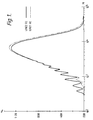
- the molecular-weight distribution of the polyester mixture was determined by gel-permeation chromatography both before and after the molecular distillation.
- the curves thus obtained, which are shown in Fig. 1, indicate that the finished polyester mixture (UNI1.RI), which had an acid value of 0.2 and a hydroxyl value of 15, was virtually free of short-chain polyesters, containing at most 2.0% of polyesters with a molecular weight of less than 800. As the data in Table 1 show, this ensured a greatly reduced volatility in the open-cup test.
- This polyester mixture was used to produce a PVC sheet containing 66 parts (p.h.r.) of polyester per hundred parts of PVC and additives.
- a mixture with the following composition was made up: 85 parts of adipic acid 21 parts of a dimer acid (saturated C36 acid having a 98% purity), and 59 parts of propylene glycol.
- the mixture was esterified and re-esterified as described in Example 1.
- the target viscosity for the end of the re-esterification was 40 Pa.sec at 25°C.
- the resulting polyester mixture had an acid value of 0.3 and a hydroxyl value of 31.
- the molecular distillation was also carried out as in Example 1, but the temperature was now 245°C.
- the distillate amounted to about 4 wt% of the starting polyester mixture.
- the polyester mixture thus obtained had an acid value of 0.3 and a hydroxyl value of 28 and contained at most 2.0 wt% of lower polyesters with a molecular weight of up to 800.
- the drop in the volatility exhibited by the resulting polyester mixture in the open-cut method is shown in Table 1.
- a mixture with the following composition was made up: 58 parts of adipic acid 7 parts of a dimer fatty acid (saturated C36 fatty acid having a 98% purity) 36 parts of propylene glycol, and 23 parts of 2-ethylhexanol.
- the mixture was esterified and re-esterified as described in Example 1.
- the target viscosity for the end of the re-esterification was 1.2 Pa.sec at 25°C.
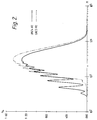
- Fig. 2 shows the curves for the molecular-weight distribution before (UNI4.RI) and after (UNI3.RI) the molecular distillation.
- the resulting polyester mixture had an acid value of 0.2 and a hydroxyl value of 16 and contained at most 1.5 wt% of low-molecular polyesters having a molecular weight of under 800.
- the volatility was determined by the open-cup method both for this polyester mixture and for a PVC sheet that comprised 66 p.h.r. parts of it (see Table 1).
- Table 1 Weight loss occurring during the volatility test 1 h at 150°C (open-cup) 3 days at 105°C (0.5-mm-thick PVC sheet with a 66 p.h.r. polyester content)
- Example 2 before mol. dist. 0.14% - after mol. dist. 0.00% -
- Example 3 after mol. dist. 0.02% 0.4% Mol. dist. molecular distillation
Landscapes
- Chemical & Material Sciences (AREA)
- Health & Medical Sciences (AREA)
- Chemical Kinetics & Catalysis (AREA)
- Medicinal Chemistry (AREA)
- Polymers & Plastics (AREA)
- Organic Chemistry (AREA)
- Polyesters Or Polycarbonates (AREA)
- Compositions Of Macromolecular Compounds (AREA)
- Materials For Medical Uses (AREA)
- Processes Of Treating Macromolecular Substances (AREA)
- Manufacture Of Macromolecular Shaped Articles (AREA)
Claims (7)
- Mélange de polyester utile comme plastifiant qui est le produit réactionnel de· un composant a. consistant en au moins un diol en C₂-C₇ à chaîne linéaire ou ramifiée et· un composant b. consistant en au moins un acide dicarboxylique en C₄-C₄₅ à chaîne linaire ou ramifiée dans des quantités approximativement équivalentes, et· facultativement au moins un alcool monohydroxylique en C₄-C₂₀ ou un acide monocarboxylique en C₄-C₂₀ agissant comme interrupteur de chaîne,· ledit mélange de polyester ayant une valeur acide inférieure à 5 et une valeur hydroxylique inférieure à 35,caractérisé en ce que le composant b. consiste au moins en partie en un dimère en C₃₆-C₄₄ d'un acide gras insaturé et en ce que le mélange de polyester a une masse moléculaire moyenne en nombre comprise entre 1 000 et 10 000 et contient moins de 3 % en poids de composés d'esters plus petits de masse moléculaire allant jusqu'à 800.
- Mélange de polyester selon la revendication 1, caractérisé en ce qu'il contient moins de 1,5 % en poids de composés d'esters plus petits de masse moléculaire allant jusqu'à 800.
- Mélange de polyester selon la revendication 1, caractérisé en ce que la masse moléculaire moyenne est comprise entre 2 000 et 8 000.
- Procédé de préparation d'un plastifiant en polyester comprenant les étapes de :I) estérification et/ou re-estérification :
d'un composant a. consistant en au moins un diol en C₂-C₇ à chaîne linéaire ou ramifiée avec
un composant b. consistant en au moins un acide dicarboxylique en C₄-C₄₅ à chaîne linéaire ou ramifiée, lequel composant b. consiste au moins en partie en un dimère en C₃₆-C₄₄ d'un acide gras insaturé, dans des quantités approximativement équivalentes,
et facultativement un composant c. consistant au moins en un alcool monohydroxylique en C₄-C₂₀ ou un acide monocarboxylique en C₄-C₂₀ agissant comme interrupteur de chaîne,
jusqu'à ce qu'un mélange de polyester ayant une valeur acide inférieure à 5 et une valeur hydroxylique inférieure à 35 ait été obtenu,II) séparation des composés volatiles du mélange de polyester, en particulier du diol qui n'a pas réagi, etIII) soumission du mélange de polyester à une distillation moléculaire pour enlever une fraction consistant en de 4 % à 25 % en poids d'un mélange de polyester, qui consiste en des composés des plus petits esters de masse moléculaire allant jusqu'à 800, obtenant ainsi un polyester ayant une masse moléculaire moyenne en nombre comprise entre entre 1 000 et 10 000. - Procédé selon la revendication 4, caractérisé en ce que les composés des plus petits esters de masse moléculaire allant jusqu'à 800 sont enlevés du mélange de polyester par distillation moléculaire par le procédé en couche mince sous vide élevé.
- Procédé de préparation d'une composition de résine plastifiée, caractérisé en ce que 10 % à 40 % en poids d'un mélange de polyester comme revendiqué dans l'une quelconque des revendications précédentes 1 à 3 ou comme préparé par un procédé revendiqué dans l'une quelconque des revendications précédentes 4 et 5 sont incorporés dans la composition de résine.
- Produits en plastique moulé qui peuvent être utilisés comme composants d'intérieurs d'automobile, caractérisés en ce qu'ils consistent en partie ou totalement en une résine plastifiée obtenue par le procédé selon la revendication 6.
Applications Claiming Priority (2)
| Application Number | Priority Date | Filing Date | Title |
|---|---|---|---|
| NL8902625A NL8902625A (nl) | 1989-10-23 | 1989-10-23 | Polyestermengsel, bereiding en toepassing. |
| NL8902625 | 1989-10-23 |
Publications (2)
| Publication Number | Publication Date |
|---|---|
| EP0425201A1 EP0425201A1 (fr) | 1991-05-02 |
| EP0425201B1 true EP0425201B1 (fr) | 1995-09-06 |
Family
ID=19855503
Family Applications (1)
| Application Number | Title | Priority Date | Filing Date |
|---|---|---|---|
| EP90311486A Expired - Lifetime EP0425201B1 (fr) | 1989-10-23 | 1990-10-19 | Mélange de polyester, sa préparation et son utilisation |
Country Status (14)
| Country | Link |
|---|---|
| US (1) | US5786442A (fr) |
| EP (1) | EP0425201B1 (fr) |
| JP (1) | JPH03140323A (fr) |
| KR (1) | KR960000946B1 (fr) |
| AT (1) | ATE127488T1 (fr) |
| AU (1) | AU629703B2 (fr) |
| BR (1) | BR9005352A (fr) |
| CA (1) | CA2027788C (fr) |
| DE (1) | DE69022162T2 (fr) |
| DK (1) | DK0425201T3 (fr) |
| ES (1) | ES2078318T3 (fr) |
| GR (1) | GR3017711T3 (fr) |
| NL (1) | NL8902625A (fr) |
| ZA (1) | ZA908476B (fr) |
Families Citing this family (13)
| Publication number | Priority date | Publication date | Assignee | Title |
|---|---|---|---|---|
| GB9225054D0 (en) * | 1992-11-30 | 1993-01-20 | Baxenden Chem | Enzymatic synthesis |
| US5496923A (en) * | 1993-09-20 | 1996-03-05 | Mitsui Toatsu Chemicals, Inc. | Purification process of aliphatic polyester |
| GB9323603D0 (en) * | 1993-11-16 | 1994-01-05 | Baxenden Chem | Low fogging polyester polyurethane foams |
| US6339217B1 (en) | 1995-07-28 | 2002-01-15 | General Nanotechnology Llc | Scanning probe microscope assembly and method for making spectrophotometric, near-field, and scanning probe measurements |
| US6677427B1 (en) | 2000-06-13 | 2004-01-13 | Hercules Incorporated | Enzyme-catalyzed polyamides and compositions and processes of preparing and using the same |
| JP4999231B2 (ja) * | 2001-01-15 | 2012-08-15 | ロックペイント株式会社 | ラミネーション用接着剤組成物及びその製造方法 |
| EP1316575A1 (fr) * | 2001-11-29 | 2003-06-04 | Sika Schweiz AG | Agents plastifiants obtenu par transesterification de PET avec des composés monohydroxy et/ou avec des composés monohydroxy polyéthers, et objets contenant les ces plastifiants |
| JP2005162890A (ja) * | 2003-12-03 | 2005-06-23 | Mitsubishi Chemicals Corp | 脂肪族ポリエステル樹脂及びその製造方法 |
| JP2013234273A (ja) * | 2012-05-09 | 2013-11-21 | Adeka Corp | セルロース系樹脂組成物 |
| US10329393B2 (en) | 2012-12-12 | 2019-06-25 | Eastman Chemical Company | Copolysters plasticized with polymeric plasticizer for shrink film applications |
| US20150368429A1 (en) * | 2013-01-25 | 2015-12-24 | Dic Corporation | Polyester modifier composition for cellulose ester resin, cellulose ester optical film, and polarizing plate protective film |
| JP6075776B2 (ja) * | 2013-06-26 | 2017-02-08 | 株式会社Adeka | ポリエステル系可塑剤およびセルロース系樹脂組成物 |
| CN115715305B (zh) * | 2020-07-02 | 2024-06-14 | Dic株式会社 | 氯乙烯树脂用增塑剂、氯乙烯树脂组合物及其成形品 |
Family Cites Families (22)
| Publication number | Priority date | Publication date | Assignee | Title |
|---|---|---|---|---|
| FR1085982A (fr) * | 1952-06-30 | 1955-02-08 | Goodrich Co B F | Perfectionnements relatifs à l'extraction par l'eau de polyesters polymérisés |
| US3419511A (en) * | 1965-07-19 | 1968-12-31 | Atlantic Refining Co | Plasticized polyvinyl chloride compositions containing an acrylonitrile-butadiene rubber and flexible, oil resistant films and sheets produced therefrom |
| DE1593577B2 (de) * | 1966-05-02 | 1978-09-07 | Technochemie Gmbh, Verfahrenstechnik, 6901 Dossenheim | Verfahren zur Reinigung höhermolekularer Ester |
| JPS4842232A (fr) * | 1971-10-01 | 1973-06-20 | ||
| JPS4871496A (fr) * | 1971-12-28 | 1973-09-27 | ||
| JPS496554A (fr) * | 1972-05-10 | 1974-01-21 | ||
| JPS5250426B2 (fr) * | 1972-05-24 | 1977-12-24 | ||
| JPS5015507A (fr) * | 1973-06-07 | 1975-02-19 | ||
| JPS5015508A (fr) * | 1973-06-07 | 1975-02-19 | ||
| JPS5015510A (fr) * | 1973-06-08 | 1975-02-19 | ||
| NL7614132A (nl) * | 1975-12-22 | 1977-06-24 | Monsanto Co | Werkwijze voor de bereiding van een hoog mole- culaire polyester weekmaker en voorwerpen, ver- vaardigd onder toepassing van de aldus bereide weekmaker. |
| JPS5432559A (en) * | 1977-08-19 | 1979-03-09 | Miyoshi Yushi Kk | Improved polyvinyl chloride composition |
| SU840056A1 (ru) * | 1979-09-06 | 1981-06-23 | Предприятие П/Я М-5885 | Способ очистки полиэфиров |
| JPS58189226A (ja) * | 1982-04-30 | 1983-11-04 | Mitsubishi Monsanto Chem Co | ポリエステル系可塑剤 |
| JPS58225122A (ja) * | 1982-06-24 | 1983-12-27 | Mitsubishi Monsanto Chem Co | ポリエステルの製法 |
| US4504652A (en) * | 1983-08-26 | 1985-03-12 | Sherex Chemical Company, Inc. | Polyester plasticizer |
| JPS6158487A (ja) * | 1984-08-28 | 1986-03-25 | Tokyo Electric Co Ltd | サ−ボモ−タ装置 |
| US4582895A (en) * | 1984-12-04 | 1986-04-15 | Henkel Corporation | Fatty segmented polyester elastomers |
| DE3503330A1 (de) * | 1985-02-01 | 1986-08-07 | Herberts Gmbh, 5600 Wuppertal | Verfahren zur verminderung des geruchs von polyesterharzen und deren verwendung |
| CA1280538C (fr) * | 1986-05-15 | 1991-02-19 | William J. Mertz | Plastifieurs a base de copolyester pour le chlorure de polyvinyle |
| JPH01294730A (ja) * | 1988-05-23 | 1989-11-28 | Mitsubishi Kasei Vinyl Co | ポリエステル系可塑剤 |
| JPH0366727A (ja) * | 1989-08-07 | 1991-03-22 | Adeka Argus Chem Co Ltd | ポリエステル系可塑剤の改質方法及び改質されたポリエステル系可塑剤 |
-
1989
- 1989-10-23 NL NL8902625A patent/NL8902625A/nl not_active Application Discontinuation
-
1990
- 1990-10-16 CA CA002027788A patent/CA2027788C/fr not_active Expired - Fee Related
- 1990-10-19 DE DE69022162T patent/DE69022162T2/de not_active Expired - Fee Related
- 1990-10-19 EP EP90311486A patent/EP0425201B1/fr not_active Expired - Lifetime
- 1990-10-19 ES ES90311486T patent/ES2078318T3/es not_active Expired - Lifetime
- 1990-10-19 JP JP2279545A patent/JPH03140323A/ja active Pending
- 1990-10-19 AU AU64804/90A patent/AU629703B2/en not_active Ceased
- 1990-10-19 DK DK90311486.6T patent/DK0425201T3/da active
- 1990-10-19 AT AT90311486T patent/ATE127488T1/de not_active IP Right Cessation
- 1990-10-22 KR KR1019900016825A patent/KR960000946B1/ko not_active Expired - Fee Related
- 1990-10-23 ZA ZA908476A patent/ZA908476B/xx unknown
- 1990-10-23 BR BR909005352A patent/BR9005352A/pt not_active IP Right Cessation
- 1990-10-23 US US07/601,130 patent/US5786442A/en not_active Expired - Fee Related
-
1995
- 1995-10-11 GR GR950402820T patent/GR3017711T3/el unknown
Also Published As
| Publication number | Publication date |
|---|---|
| BR9005352A (pt) | 1991-09-17 |
| KR910008006A (ko) | 1991-05-30 |
| EP0425201A1 (fr) | 1991-05-02 |
| ZA908476B (en) | 1992-06-24 |
| GR3017711T3 (en) | 1996-01-31 |
| ES2078318T3 (es) | 1995-12-16 |
| JPH03140323A (ja) | 1991-06-14 |
| CA2027788C (fr) | 2000-03-14 |
| DE69022162D1 (de) | 1995-10-12 |
| DK0425201T3 (da) | 1996-01-02 |
| CA2027788A1 (fr) | 1991-04-24 |
| DE69022162T2 (de) | 1996-02-15 |
| AU6480490A (en) | 1991-04-26 |
| AU629703B2 (en) | 1992-10-08 |
| KR960000946B1 (ko) | 1996-01-15 |
| ATE127488T1 (de) | 1995-09-15 |
| NL8902625A (nl) | 1991-05-16 |
| US5786442A (en) | 1998-07-28 |
Similar Documents
| Publication | Publication Date | Title |
|---|---|---|
| EP0425201B1 (fr) | Mélange de polyester, sa préparation et son utilisation | |
| US5281647A (en) | Polymeric plasticizers and a process for preparing the same | |
| US4425458A (en) | Polyguerbet alcohol esters | |
| US4157990A (en) | Lubricating and anti-tack compositions useful in the shaping of thermoplastics containing mixed esters and esters of C32-72 monoalcohols with C18-72 monoacids | |
| US20070049685A1 (en) | Thermoplastic polyurethanes | |
| DE1745695C3 (de) | Verfahren zur Herstellung von linearen, thermoplastischen Mischpolyester mit Erweichungstemperaturen über 100 Grad C | |
| US3331802A (en) | Polyesters from dibasic acids, monobasic acids, glycols, and trihydric alcohols as plasticizers for vinyl resins | |
| US5011629A (en) | Hydroxystearic polyesters of guerbet alcohols as polycarbonate lubricants | |
| US4596886A (en) | Polyester containing impure 1,2-butanediol | |
| CN116745088A (zh) | 氯乙烯树脂组合物、氯乙烯树脂成型体以及层叠体 | |
| US4661622A (en) | Method for producing composite ester | |
| DE1643978A1 (de) | Verfahren zur Herstellung von Neopentylglykol-carbonsaeurekohlensaeure-Mischestern | |
| DE1495265B2 (de) | Verfahren zur herstellung linearer, thermoplastischer polyester mit einfriertemperatur ueber 100 grad c | |
| US4857216A (en) | Lubricant system for the processing of polyvinyl chloride | |
| DE1694549A1 (de) | Thermostabilisierte lineare Polyester oder Copolyester | |
| US3424726A (en) | Linear thermoplastic polyesters | |
| JP3082231B2 (ja) | 可塑剤及びそれを含むハロゲン含有樹脂組成物 | |
| US3595835A (en) | Thermostabilized linear polyesters or copolyesters | |
| US3663512A (en) | Process for the preparation of high molecular weight polyesters for injection moulding purposes | |
| JPH01294730A (ja) | ポリエステル系可塑剤 | |
| JPH09279129A (ja) | 防曇剤 | |
| US7211140B1 (en) | Low temperature plasticizers for flexible polyvinyl chloride resin applications | |
| EP0331280A1 (fr) | Méthode d'estérification d'acides carboxyliques à encombrement stérique | |
| US5621033A (en) | Polyvinylchloride processing and compositions using a polyol reacted with a monocarboxylic acid and a dicarboxylic acid | |
| JPH0718167A (ja) | 可塑剤及びポリエステル系樹脂組成物 |
Legal Events
| Date | Code | Title | Description |
|---|---|---|---|
| PUAI | Public reference made under article 153(3) epc to a published international application that has entered the european phase |
Free format text: ORIGINAL CODE: 0009012 |
|
| AK | Designated contracting states |
Kind code of ref document: A1 Designated state(s): AT BE CH DE DK ES FR GB GR IT LI NL SE |
|
| 17P | Request for examination filed |
Effective date: 19910927 |
|
| 17Q | First examination report despatched |
Effective date: 19940711 |
|
| GRAA | (expected) grant |
Free format text: ORIGINAL CODE: 0009210 |
|
| AK | Designated contracting states |
Kind code of ref document: B1 Designated state(s): AT BE CH DE DK ES FR GB GR IT LI NL SE |
|
| REF | Corresponds to: |
Ref document number: 127488 Country of ref document: AT Date of ref document: 19950915 Kind code of ref document: T |
|
| PGFP | Annual fee paid to national office [announced via postgrant information from national office to epo] |
Ref country code: CH Payment date: 19950913 Year of fee payment: 6 |
|
| PGFP | Annual fee paid to national office [announced via postgrant information from national office to epo] |
Ref country code: AT Payment date: 19950914 Year of fee payment: 6 |
|
| PGFP | Annual fee paid to national office [announced via postgrant information from national office to epo] |
Ref country code: SE Payment date: 19950918 Year of fee payment: 6 |
|
| PGFP | Annual fee paid to national office [announced via postgrant information from national office to epo] |
Ref country code: DK Payment date: 19950919 Year of fee payment: 6 |
|
| PGFP | Annual fee paid to national office [announced via postgrant information from national office to epo] |
Ref country code: BE Payment date: 19950925 Year of fee payment: 6 |
|
| PGFP | Annual fee paid to national office [announced via postgrant information from national office to epo] |
Ref country code: ES Payment date: 19951009 Year of fee payment: 6 |
|
| PGFP | Annual fee paid to national office [announced via postgrant information from national office to epo] |
Ref country code: GR Payment date: 19951011 Year of fee payment: 6 |
|
| REF | Corresponds to: |
Ref document number: 69022162 Country of ref document: DE Date of ref document: 19951012 |
|
| ET | Fr: translation filed | ||
| ITF | It: translation for a ep patent filed | ||
| REG | Reference to a national code |
Ref country code: ES Ref legal event code: FG2A Ref document number: 2078318 Country of ref document: ES Kind code of ref document: T3 |
|
| REG | Reference to a national code |
Ref country code: GR Ref legal event code: FG4A Free format text: 3017711 |
|
| REG | Reference to a national code |
Ref country code: DK Ref legal event code: T3 |
|
| PLBE | No opposition filed within time limit |
Free format text: ORIGINAL CODE: 0009261 |
|
| STAA | Information on the status of an ep patent application or granted ep patent |
Free format text: STATUS: NO OPPOSITION FILED WITHIN TIME LIMIT |
|
| 26N | No opposition filed | ||
| PG25 | Lapsed in a contracting state [announced via postgrant information from national office to epo] |
Ref country code: DK Effective date: 19961019 Ref country code: AT Effective date: 19961019 |
|
| REG | Reference to a national code |
Ref country code: DK Ref legal event code: EBP |
|
| PG25 | Lapsed in a contracting state [announced via postgrant information from national office to epo] |
Ref country code: SE Effective date: 19961020 |
|
| PG25 | Lapsed in a contracting state [announced via postgrant information from national office to epo] |
Ref country code: ES Free format text: LAPSE BECAUSE OF THE APPLICANT RENOUNCES Effective date: 19961021 |
|
| PG25 | Lapsed in a contracting state [announced via postgrant information from national office to epo] |
Ref country code: LI Effective date: 19961031 Ref country code: CH Effective date: 19961031 Ref country code: BE Effective date: 19961031 |
|
| BERE | Be: lapsed |
Owner name: UNICHEMA CHEMIE B.V. Effective date: 19961031 |
|
| PG25 | Lapsed in a contracting state [announced via postgrant information from national office to epo] |
Ref country code: GR Free format text: THE PATENT HAS BEEN ANNULLED BY A DECISION OF A NATIONAL AUTHORITY Effective date: 19970430 |
|
| REG | Reference to a national code |
Ref country code: GR Ref legal event code: MM2A Free format text: 3017711 |
|
| REG | Reference to a national code |
Ref country code: CH Ref legal event code: PL |
|
| EUG | Se: european patent has lapsed |
Ref document number: 90311486.6 |
|
| REG | Reference to a national code |
Ref country code: ES Ref legal event code: FD2A Effective date: 19991007 |
|
| REG | Reference to a national code |
Ref country code: GB Ref legal event code: IF02 |
|
| PGFP | Annual fee paid to national office [announced via postgrant information from national office to epo] |
Ref country code: FR Payment date: 20020906 Year of fee payment: 13 |
|
| PGFP | Annual fee paid to national office [announced via postgrant information from national office to epo] |
Ref country code: GB Payment date: 20020916 Year of fee payment: 13 |
|
| PGFP | Annual fee paid to national office [announced via postgrant information from national office to epo] |
Ref country code: NL Payment date: 20020919 Year of fee payment: 13 |
|
| PGFP | Annual fee paid to national office [announced via postgrant information from national office to epo] |
Ref country code: DE Payment date: 20020924 Year of fee payment: 13 |
|
| PG25 | Lapsed in a contracting state [announced via postgrant information from national office to epo] |
Ref country code: GB Free format text: LAPSE BECAUSE OF NON-PAYMENT OF DUE FEES Effective date: 20031019 |
|
| PG25 | Lapsed in a contracting state [announced via postgrant information from national office to epo] |
Ref country code: NL Free format text: LAPSE BECAUSE OF NON-PAYMENT OF DUE FEES Effective date: 20040501 Ref country code: DE Free format text: LAPSE BECAUSE OF NON-PAYMENT OF DUE FEES Effective date: 20040501 |
|
| GBPC | Gb: european patent ceased through non-payment of renewal fee |
Effective date: 20031019 |
|
| PG25 | Lapsed in a contracting state [announced via postgrant information from national office to epo] |
Ref country code: FR Free format text: LAPSE BECAUSE OF NON-PAYMENT OF DUE FEES Effective date: 20040630 |
|
| NLV4 | Nl: lapsed or anulled due to non-payment of the annual fee |
Effective date: 20040501 |
|
| REG | Reference to a national code |
Ref country code: FR Ref legal event code: ST |
|
| PG25 | Lapsed in a contracting state [announced via postgrant information from national office to epo] |
Ref country code: IT Free format text: LAPSE BECAUSE OF NON-PAYMENT OF DUE FEES Effective date: 20051019 |