EP0428107A2 - Use of quinolyl-and isoquinolyloxanole-2-ones for the production of a medicament for the treatment of multi-drug resistant tumors - Google Patents
Use of quinolyl-and isoquinolyloxanole-2-ones for the production of a medicament for the treatment of multi-drug resistant tumors Download PDFInfo
- Publication number
- EP0428107A2 EP0428107A2 EP90121634A EP90121634A EP0428107A2 EP 0428107 A2 EP0428107 A2 EP 0428107A2 EP 90121634 A EP90121634 A EP 90121634A EP 90121634 A EP90121634 A EP 90121634A EP 0428107 A2 EP0428107 A2 EP 0428107A2
- Authority
- EP
- European Patent Office
- Prior art keywords
- quinolyl
- formula
- group
- compound
- quinolinyl
- Prior art date
- Legal status (The legal status is an assumption and is not a legal conclusion. Google has not performed a legal analysis and makes no representation as to the accuracy of the status listed.)
- Granted
Links
Classifications
-
- A—HUMAN NECESSITIES
- A61—MEDICAL OR VETERINARY SCIENCE; HYGIENE
- A61K—PREPARATIONS FOR MEDICAL, DENTAL OR TOILETRY PURPOSES
- A61K31/00—Medicinal preparations containing organic active ingredients
- A61K31/33—Heterocyclic compounds
- A61K31/395—Heterocyclic compounds having nitrogen as a ring hetero atom, e.g. guanethidine or rifamycins
- A61K31/41—Heterocyclic compounds having nitrogen as a ring hetero atom, e.g. guanethidine or rifamycins having five-membered rings with two or more ring hetero atoms, at least one of which being nitrogen, e.g. tetrazole
- A61K31/42—Oxazoles
-
- A—HUMAN NECESSITIES
- A61—MEDICAL OR VETERINARY SCIENCE; HYGIENE
- A61K—PREPARATIONS FOR MEDICAL, DENTAL OR TOILETRY PURPOSES
- A61K31/00—Medicinal preparations containing organic active ingredients
- A61K31/70—Carbohydrates; Sugars; Derivatives thereof
-
- A—HUMAN NECESSITIES
- A61—MEDICAL OR VETERINARY SCIENCE; HYGIENE
- A61K—PREPARATIONS FOR MEDICAL, DENTAL OR TOILETRY PURPOSES
- A61K31/00—Medicinal preparations containing organic active ingredients
- A61K31/33—Heterocyclic compounds
- A61K31/395—Heterocyclic compounds having nitrogen as a ring hetero atom, e.g. guanethidine or rifamycins
- A61K31/435—Heterocyclic compounds having nitrogen as a ring hetero atom, e.g. guanethidine or rifamycins having six-membered rings with one nitrogen as the only ring hetero atom
- A61K31/47—Quinolines; Isoquinolines
-
- A—HUMAN NECESSITIES
- A61—MEDICAL OR VETERINARY SCIENCE; HYGIENE
- A61K—PREPARATIONS FOR MEDICAL, DENTAL OR TOILETRY PURPOSES
- A61K31/00—Medicinal preparations containing organic active ingredients
- A61K31/33—Heterocyclic compounds
- A61K31/395—Heterocyclic compounds having nitrogen as a ring hetero atom, e.g. guanethidine or rifamycins
- A61K31/435—Heterocyclic compounds having nitrogen as a ring hetero atom, e.g. guanethidine or rifamycins having six-membered rings with one nitrogen as the only ring hetero atom
- A61K31/47—Quinolines; Isoquinolines
- A61K31/475—Quinolines; Isoquinolines having an indole ring, e.g. yohimbine, reserpine, strychnine, vinblastine
-
- A—HUMAN NECESSITIES
- A61—MEDICAL OR VETERINARY SCIENCE; HYGIENE
- A61K—PREPARATIONS FOR MEDICAL, DENTAL OR TOILETRY PURPOSES
- A61K38/00—Medicinal preparations containing peptides
- A61K38/04—Peptides having up to 20 amino acids in a fully defined sequence; Derivatives thereof
- A61K38/14—Peptides containing saccharide radicals; Derivatives thereof, e.g. bleomycin, phleomycin, muramylpeptides or vancomycin
-
- A—HUMAN NECESSITIES
- A61—MEDICAL OR VETERINARY SCIENCE; HYGIENE
- A61P—SPECIFIC THERAPEUTIC ACTIVITY OF CHEMICAL COMPOUNDS OR MEDICINAL PREPARATIONS
- A61P35/00—Antineoplastic agents
-
- A—HUMAN NECESSITIES
- A61—MEDICAL OR VETERINARY SCIENCE; HYGIENE
- A61P—SPECIFIC THERAPEUTIC ACTIVITY OF CHEMICAL COMPOUNDS OR MEDICINAL PREPARATIONS
- A61P43/00—Drugs for specific purposes, not provided for in groups A61P1/00-A61P41/00
-
- C—CHEMISTRY; METALLURGY
- C07—ORGANIC CHEMISTRY
- C07D—HETEROCYCLIC COMPOUNDS
- C07D413/00—Heterocyclic compounds containing two or more hetero rings, at least one ring having nitrogen and oxygen atoms as the only ring hetero atoms
- C07D413/02—Heterocyclic compounds containing two or more hetero rings, at least one ring having nitrogen and oxygen atoms as the only ring hetero atoms containing two hetero rings
- C07D413/04—Heterocyclic compounds containing two or more hetero rings, at least one ring having nitrogen and oxygen atoms as the only ring hetero atoms containing two hetero rings directly linked by a ring-member-to-ring-member bond
Definitions
- This invention relates to the use of certain quinolyl- and isoquinolyloxazole-2-ones in the treatment of multi-drug resistant tumors.
- Effective tumor treatment is frequently thwarted by the lack of sensitivity of certain tumors to standard chemotherapeutic agents (intrinsic resistance) or by the ability of certain tumors to develop a lack of chemotherapeutic sensitivity during the course of treatment (acquired resistance).
- the cause of this phenomena has, at least in part, been demonstrated to result from the existance of an energy-dependent efflux pump which acts to remove the chemotherapeutic agent from the target cell.
- the pump consists of P-glycoprotein found as a constitutent of cell membrane, and it has been suggested that the normal function of P-glycoprotein is to remove toxins from within the cell. This theory is supported by the observation that P-glycoprotein is found as a cell membrane constitutent in cells such as liver, kidney, colon, and jejunum. It has been suggested that P-glycoprotein in the cell membrane of such normal tissues could act to remove toxins or to assist in the transport of nutrients and solutes and in secreting a variety of protein and steroid substances. Natural presence of P-glycoprotein in tumor cells derived from these tissues as well as its presence in tumor cells derived from other tissue types could explain, at least in part, resistance of various tumors to therapy with standard chemotheraputic agents.
- quinolyl- and isoquinolyloxazole-2-ones having PKC inhibiting activity are useful in the treatment of multi-drug resistant tumors.
- the quinolyl- and isoquinolyloxazolone-2-ones of this invention act to reverse drug resistance and therby allow standard chemotherapeutic agents to exhibit normal toxicity on tumors.
- the present invention is directed to the use of certain quinolyl- and isoquinolyloxazole-2-ones of the formula wherein R and R1 are each independently selected from the group consisting of hydrogen, C1-C6 alkyl, and phenyl or C1-C3 alkylphenyl wherein the phenyl ring is optionally substituted with one, two or three of the substituents selected from the group consisting of fluorine, chlorine, bromine, C1-C4 alkyl, and C1-C4 alkoxy; and R2 is a 2-, 3-, or 4-quinolyl group or a 1-, 3-, or 4-isoquinolyl group wherein the quinolyl or isoquinolyl group is optionally substituted with one, two or three of the substituents selected from the group consisting of fluorine, chlorine, bromine, C1-C4 alkyl, C1-C4 alkoxy, nitro, trifluoromethyl, or phenyl wherein the phenyl is optionally
- This invention concerns the use of the compounds of Formula I as agents effective in the treatment of multi-drug resistant tumors.
- the compounds of formula I when administered together with standard chemotherapeutic agents, can be used in the treatment of tumors which are intrinsically or extrinsically drug resistant.
- C1-C3 alkyl mean straight or branched chain alkyl groups having from one to three, from one to four, or from one to six carbon atoms respectively, and include such groups as methyl, ethyl, n -propyl, isopropyl, n -butyl, isobutyl, sec -butyl, tert -butyl, and the like, as well as vinyl, allyl, propynyl, butenyl, butadienyl, isopropenyl, and the like.
- C1-C4 alkoxy means alkoxy groups having from one to four carbon atoms, and includes such groups as methoxy, ethoxy, n -propoxy, isopropoxy, n -butoxy, isobutoxy, sec -butoxy, tert -butoxy, and the like.
- R or R1 is "optionally substituted phenyl or C1-C3 alkylphenyl"
- the one, two or three substituent(s) can be located at any available position on the phenyl ring.
- R2 is 2-, 3-, or 4-quinolyl or 1-, 3-, or 4-isoquinolyl
- the optional substituent(s) can be located at any available position(s) on the quinolyl or isoquinolyl ring.
- a pharmaceutically acceptable acid addition salt is intended to apply to any non-toxic organic or inorganic acid addition salt of the base compounds.
- Illustrative inorganic acids which form suitable salts include hydrochloric, hydrobromic, sulfuric, and phosphoric acids and acid metal salts such as sodium monohydrogen orthophosphate and potassium hydrogen sulfate.
- Illustrative organic acids which form suitable salts include the mono, di, and tricarboxylic acids.
- Such acids are, for example, acetic, glycolic, lactic, pyruvic, malonic, succinic, glutaric, fumaric, malic, tartaric, citric, ascorbic, maleic, hydroxymaleic, benzoic, hydroxybenzoic, phenylacetic, cinnamic, salicylic, and 2-phenoxybenzoic acids.
- Other organic acids which form suitable salts are the sulfonic acids such as methane sulfonic acid and 2-hydroxyethane sulfonic acid.
- the acid salts are prepared by standard techniques such as by dissolving the free base in aqueous or aqueous-alcohol solution or other suitable solvent containing the appropriate acid and isolating by evaporating the solution, or by reacting the free base in an organic solvent in which case the salt separates directly or can be obtained by concentration of the solution.
- the acid addition salts of the compounds of this invention are crystalline materials which are soluble in water and various hydrophilic organic solvents and which in comparison to their free base forms, demonstrate higher melting points and an increased solubility.
- isoquinolyl derivatives are also intended. As is true for most classes of therapeutically effective compounds, certain subclasses and certain species which are especially effective are preferred over others. In this instance, those compounds of Formula I wherein R2 is optionally substituted 2-, 3-, or 4-quinolyl are preferred. Also preferred are compounds wherein R is C1-C6 alkyl, as well as compounds wherein R1 is hydrogen. Most preferred are the compounds wherein R2 is an unsubstituted 2-, 3-, or 4-quinolyl group, R is ethyl or propyl and R1 is hydrogen.
- Reaction Scheme 1 illustrates that the 2-, 3-, or 4-quinolyloxazole-2-ones of Formula I can be prepared by reacting the appropriate and readily available 2-, 3-, or 4-quinoline carboxaldehyde (II) in tetrahydrofuran (THF) with alkylmagnesium chloride or with optionally substituted phenylalkyl-magnesium chloride [RMgCl] to produce 2-, 3-, or 4-quinoline alkanol (III), which is in turn oxidized with oxalyl chloride (ClCOCOCl), methyl sulfoxide [(CH3)2SO] and triethylamine (Et3N) in dichloromethane (CH2Cl2) to produce quinolyl-alkanone (IV).
- the alkanone (IV) can alternately be brominated to compound (VIII a ) and further treated with triethylamine in dimethylformamide (DMF) in the presence of potassium cyanate (KCNO) to form the compounds of Formula I according to procedures well known in the art and illustrated in the examples herein; or compound IV can be converted to oxime (V) by refluxing with hydroxylamine hydrochloride (H2NOH ⁇ HCl) and pyridine in ethanol (EtOH). Compound (V) is then reacted with p-toluenesulfonyl chloride and triethylamine in dichloromethane to produce compound (VI).
- DMF dimethylformamide
- KCNO potassium cyanate
- the amine (VII) is then produced by reacting compound (VI) with sodium ethoxide in ethanol (NaOEt/EtOH), followed by ether and aqueous hydrochloric acid (HCl) extraction.
- the amine (VII) is further reacted with 1,1′-carbonyldiimidazole at about 0°C to form compound (VIII b ), which is then heated to about 170°C to yield the appropriate 2-, 3-, or 4-quinolyloxazole-2-ones of Formula I.
- Reaction Scheme 2 illustrates that the 5-, 6-, 7-, or 8-quinolyloxazole-2-ones of Formula I can be prepared in essentially the same manner as described for Reaction Scheme 1.
- the alkanone starting material (IX) is prepared by metalating 5-, 6-, 7- or 8-bromoquinoline according to a procedure by H. Gilman and T. Suddy set forth in J. Org. Chem. 23 , 1584-9 (1958), and then reacting it with N-alkoxy-N-alkylamine.
- the 5-, 6-, 7-, or 8-bromoquinoline compounds are prepared by following procedures set forth in "The Chemistry of Heterocyclic Compounds" by Gurnos Jones, as found in Quinolines , Part 1, vol. 32, p.
- the formula (IV) and formula (IX) compounds of Reaction Schemes 1 or 2 can also be prepared by reacting the appropriate bromoquinoline with butyl lithium in an appropriate solvent such as THF or diethyl ether at -70°C to 0°C, preferably at -50°C, and then reacting the lithiated compound with wherein R is as described in Formula I. This reaction is further specifically exemplified in Example 8.
- Compound (XIV) can be prepared by a procedure set forth in Tetrahedron Letters , 22 , 3815 (1981).
- R1 is C1-C6 alkyl or optionally substituted C1-C3 alkylphenyl are produced by subsequent reaction of the compound of Formula I of either Reaction Scheme 1 or Reaction Scheme 2 with sodium hydride and the appropriate alkyl iodide or phenylalkyl iodide in tetrahydrofuran according to procedures well known in the art.
- VBL vinblastine
- CHO R cells were plated at a density of 1X10⁵/35mm dish and were allowed to grow overight at 37°C in a CO2 incubator. The medium was replaced with medium containing the compounds and vinblastine (0.2 ⁇ g/ml). The cells were allowed to grow for further 72 hr and the cell number was determined by Coulter counter after trypsiunization. VLB alone at 0.2 ⁇ g/ml did not have any effect on cell growth.
- Table 1 The results of such a study employing 4-propyl-5-(4-quinolinyl)-2(3H)-oxozolone is tabulated in Table 1.
- patient used herein is taken to mean mammals such as primates, including humans, sheep, horses, cattle, pigs, dogs, cats, rats and mice.
- the amount of the oxazolone derivative of formula 1 to be administered can vary widely according to the particular dosage unit employed, the period of treatment, the age and sex of the patient treated, the nature and extent of the drug resistance in the tumor to be treated, and the particular oxazolone derivative selected.
- the oxazolone derivative is used in conjunction with other chemotherapeutic agents known to be useful in the treatment of tumors.
- the amount of a oxazolone derivative of formula 1 effective to reverse drug resistance will generally range from about 15 mg/kg to 500 mg/kg.
- a unit dosage may contain from 25 to 500 mg of the oxazolone derivative, and can be taken one or more times per day.
- the oxazolone derivative can be administered with a pharmaceutical carrier using conventional dosage unit forms either orally or parenterally.
- Tumors which can be treated by the method of this invention include both benign and malignant tumors or neoplasms, and include melanomas, lymphomas, leukemias, and sarcomas.
- tumors are cutaneous tumors, such as malignant melanomas and mycosis fungoides; hematologic tumors such as leukemias, for example, acute lymphoblastic, acute myelocytic or chronic myelocytic leukemia; lymphomas, such as Hodgkin's disease or malignant lymphoma; gynecologic tumors, such as ovarian and uterine tumors; urologic tumors, such as those of the prostate, bladder or testis; soft tissue sarcomas, osseus or non-osseus sarcomas, breast tumors; tumors of the pituitary, thyroid and adrenal cortex; gastrointestinal tumors, such as those of the esophagus, stomach, intestine and colon; pancreatic and hepatic tumors; laryngeae papillomestasas and lung tumors.
- those tumors which typically are or become multi-drug resistant are most beneficially treated with the method of this invention.
- chemotherapeutic agents used together with the quinolyl- and isoquinolyloxazol-2-ones of formula I are those cytotoxic agents commonly used in the treatment of tumors.
- Illustrative examples of chemotherapeutic agents are: cyclophosphamide, methotrexate, prednisone, 6-mercaptopurine, procarbazine, daunorubicin, vincristine, vinblastine, chlorambucil, cytosine arabinoside, 6-thioguanine, thio TEPA, 5-fluorouracil, 5-fluoro-2-deoxyudirinde, 5-azacytidine, nitrogen mustard, 1,3-bis(2-chloroethyl)-1-nitrosourea (BCNU), (1-(2-chloroethyl)-3-cyclohexyl-1-nitrosourea) (CCNU), busulfan, adreamycin, bleomycin, vindesine, cycloleucine or methylg
- chemotherapeutic agent used in the method of this invention varies widely and depends on factors such as the patient, the tumor tissue type and its size, and the particular chemotherapeutic agent selected.
- the amount is any effective amount and can be readily determined by those skilled in the art. In general, less chemotherpeutic agent will be required when administered with the oxazolones of Formula 1, primarily because the problem of drug resistance need not addressed by the addition of larger quantities of chemotherapeutic agent.
- mixtures of chemotherapeutic agents may be employed and surgical excission and radiation therapy may be useful adjuvents as in any tumor therapy.
- the preferred route of administration is oral administration.
- the oxazolone derivative can be formulated into solid or liquid preparations such as capsules, pills, tablets, troches, lozenges, melts, powders, solutions, suspensions, or emulsions.
- the solid unit dosage forms can be a capsule which can be of the ordinary hard- or soft-shelled gelatin type containing, for example, surfactants, lubricants, and inert fillers such as lactose, sucrose, calcium phosphate, and cornstarch.
- the compounds of this invention can be tableted with conventional tablet bases such as lactose, sucrose, and cornstarch in combination with binders such as acacia, cornstarch, or gelatin, disintegrating agents intended to assist the break-up and dissolution of the tablet following administration such as potato starch, alginic acid, corn starch, and guar gum, lubricants intended to improve the flow of tablet granulations and to prevent the adhesion of tablet material to the surfaces of the tablet dies and punches, for example, talc, stearic acid, or magnesium, calcium, or zinc stearate, dyes, coloring agents, and flavoring agents intended to enhance the aesthetic qualities of the tablets and make them more acceptable to the patient.
- conventional tablet bases such as lactose, sucrose, and cornstarch in combination with binders such as acacia, cornstarch, or gelatin
- disintegrating agents intended to assist the break-up and dissolution of the tablet following administration such as potato starch, alginic acid, corn starch,
- Suitable excipients for use in oral liquid dosage forms include diluents such as water and alcohols, for example, ethanol, benzyl alcohol, and the polyethylene alcohols, either with or without the addition of a pharmaceutically acceptably surfactant, suspending agent, or emulsifying agent.
- diluents such as water and alcohols, for example, ethanol, benzyl alcohol, and the polyethylene alcohols, either with or without the addition of a pharmaceutically acceptably surfactant, suspending agent, or emulsifying agent.
- oxazolone derivatives of this invention may also be administered parenterally, that is, subcutaneously, intravenously, intramuscularly, or interperitoneally, as injectable dosages of the compound in a physiologically acceptable diluent with a pharmaceutical carrier which can be a sterile liquid or mixture of liquids such as water, saline, aqueous dextrose and related sugar solutions, an alcohol such as ethanol, isopropanol, or hexadecyl alcohol, glycols such as propylene glycol or polyethylene glycol, glycerol ketals such as 2,2-dimethyl-1,3-dioxolane-4-methanol, ethers such as poly(ethylene-glycol) 400, an oil, a fatty acid, a fatty acid ester or glyceride, or an acetylated fatty acid glyceride with or without the addition of a pharmaceutically acceptable surfactant such as a soap or a detergent, suspending agent such
- Suitable fatty acids include oleic acid, stearic acid, and isostearic acid.
- Suitable fatty acid esters are, for example, ethyl oleate and isopropyl myristate.
- Suitable soaps include fatty alkali metal, ammonium, and triethanolamine salts and suitable detergents include cationic detergents, for example, dimethyl dialkyl ammonium halides, alkyl pyridinium halides, and alkylamines acetates; anionic detergents, for example, alkyl, aryl, and olefin sulfonates, alkyl, olefin, ether, and monoglyceride sulfates, and sulfosuccinates; nonionic detergents, for example, fatty amine oxides, fatty acid alkanolamides, and polyoxyethylenepolypropylene copolymers; and amphoteric detergents, for example, alkyl-beta-aminopropionates, and 2-alkylimidazoline quarternary ammonium salts, as well as mixtures.
- suitable detergents include cationic detergents, for example, dimethyl dialkyl ammonium halides
- compositions of this invention will typically contain from about 0.5 to about 25% by weight of the oxazolone derivative of formula 1 in solution. Preservatives and buffers may also be used advantageously. In order to minimize or eliminate irritation at the site of injection, such compositions may contain a non-ionic surfactant having a hydrophile-lipophile balance (HLB) of from about 12 to about 17. The quantity of surfactant in such formulations ranges from about 5 to about 15% by weight.
- the surfactant can be a single component having the above HLB or can be a mixture of two or more components having the desired HLB.
- surfactants used in parenteral formulations are the class of polyethylene sorbitan fatty acid esters, for example, sorbitan monooleate and the high molecular weight adducts of ethylene oxide with a hydrophobic base, formed by the condensation of propylene oxide with propylene glycol.
- Triethylamine (35.6 ml) was then added and the mixture was allowed to stir cold for about 1 hour. After the mixture had been allowed to warm to room temperature, it was poured into a flask containing about 600 ml water. The CH2Cl2 layer was separated and the aqueous layer extracted with CH2Cl2 (2 times, 100 ml each). The combined CH2Cl2 layers were washed with saturated sodium chloride and dried over magnesium sulfate. The inorganic matter was filtered off and the solvent evaporated leaving a residue that was flash chromatographed as in Example 1. Evaporation left 9.0 grams of title compound.
- Example 5 The compound of Example 5 (19.8 grams) was dissolved in about 300 ml water, and the solution filtered by gravity into a 1 liter, 3-necked flask equipped with a mechanical stirrer and a thermometer. The solution was cooled to 0°C with stirring in an ice/methanol bath, and 29.87 grams (0.185 M) 1,1′-carbonyldiimidazole was added over a 5 minute period. The mixture was allowed to stir cold for about 15 minutes. The resulting precipitate was taken up in about 500 ml ethyl acetate and separated from the water. The solution was washed with saturated sodium chloride and dried over magnesium sulfate, and the inorganic matter filtered off using diatomaceous earth under vacuum. The solvent was evaporated leaving the title compound.
- Example 6 The compound of Example 6 (12 grams) was heated under vacuum to 170°C for about 30 minutes, allowed to cool to room temperature and washed with water. The water was decanted and the residue was treated with CH2Cl2 (20 ml). The CH2Cl2 was evaporated leaving 7.8 grams of residue. The product was purified by means of flash chromatography on silica, eluting with ethyl acetate. The solvent was evaporated and the residue dissolved in 48 ml hot 50% ethanol, filtered and allowed to cool to room temperature. The precipitate was collected by vacuum filtration and dried in vacuo at 78°C, leaving 1.97 grams (21%) title compound. M.p. 188-190°C dec.; analysis calced. for C15H14N2O2: C, 70.85; H, 5.55; N, 11.02; analysis found: C, 71.10; H, 5.73; N, 10.76.
- n-butyl lithium (0.0025 M, 0.021 ml) was added to 150 ml diethylether. Then 4.16 grams 3-bromoquinoline in 2 ml THF was added dropwise while stirring and maintaining the temperature at -60°C to -55°C. The solution was stirred for 30 minutes, and 2.3 grams N-methyl-N-methoxybutyramide were then added dropwise at -50°C and the solution was stirred an additional 30 minutes. The solution was then allowed to warm to 0°C and stirred for one hour.
- EXAMPLE 9 A tablet is prepared from 4-Methyl-5-(3-quinolinyl)-1-(3H)-oxazolone 250 mg Starch 40 mg Talc 10 mg Magnesium 10 mg EXAMPLE 10 A capsule is prepared from 4-phenyl-5-(2-quinolinyl)-1-(3H)-oxazolone 400 mg Talc 40 mg Sodium Carboxymethyl celulose 40 mg Starch 120 mg
Landscapes
- Health & Medical Sciences (AREA)
- Chemical & Material Sciences (AREA)
- Life Sciences & Earth Sciences (AREA)
- Medicinal Chemistry (AREA)
- Pharmacology & Pharmacy (AREA)
- Animal Behavior & Ethology (AREA)
- General Health & Medical Sciences (AREA)
- Public Health (AREA)
- Veterinary Medicine (AREA)
- Epidemiology (AREA)
- Organic Chemistry (AREA)
- Nuclear Medicine, Radiotherapy & Molecular Imaging (AREA)
- Bioinformatics & Cheminformatics (AREA)
- Chemical Kinetics & Catalysis (AREA)
- General Chemical & Material Sciences (AREA)
- Engineering & Computer Science (AREA)
- Molecular Biology (AREA)
- Gastroenterology & Hepatology (AREA)
- Immunology (AREA)
- Proteomics, Peptides & Aminoacids (AREA)
- Pharmaceuticals Containing Other Organic And Inorganic Compounds (AREA)
- Plural Heterocyclic Compounds (AREA)
- Medicines That Contain Protein Lipid Enzymes And Other Medicines (AREA)
Abstract
Description
- This invention relates to the use of certain quinolyl- and isoquinolyloxazole-2-ones in the treatment of multi-drug resistant tumors.
- Effective tumor treatment is frequently thwarted by the lack of sensitivity of certain tumors to standard chemotherapeutic agents (intrinsic resistance) or by the ability of certain tumors to develop a lack of chemotherapeutic sensitivity during the course of treatment (acquired resistance). The cause of this phenomena has, at least in part, been demonstrated to result from the existance of an energy-dependent efflux pump which acts to remove the chemotherapeutic agent from the target cell.
- The pump consists of P-glycoprotein found as a constitutent of cell membrane, and it has been suggested that the normal function of P-glycoprotein is to remove toxins from within the cell. This theory is supported by the observation that P-glycoprotein is found as a cell membrane constitutent in cells such as liver, kidney, colon, and jejunum. It has been suggested that P-glycoprotein in the cell membrane of such normal tissues could act to remove toxins or to assist in the transport of nutrients and solutes and in secreting a variety of protein and steroid substances. Natural presence of P-glycoprotein in tumor cells derived from these tissues as well as its presence in tumor cells derived from other tissue types could explain, at least in part, resistance of various tumors to therapy with standard chemotheraputic agents.
- The use of therapeutic agents which inactivate the P-glycoprotein pump would be invaluable in the treatment of multidrug-resistant tumors. Quinidine and reserpine as well as the calcium channel blockers verapamil and diltiazem have been reported to reverse drug resistance in multidrug-resistant tumors. Such agents could function by, for example, interfering with transcription of the P-glycoprotein gene, blocking the drug binding site on the P-glycoprotein or by decoupling the energy dependent driving mechanism of the efflux pump.
- Applicants have determined that certain quinolyl- and isoquinolyloxazole-2-ones having PKC inhibiting activity are useful in the treatment of multi-drug resistant tumors. The quinolyl- and isoquinolyloxazolone-2-ones of this invention act to reverse drug resistance and therby allow standard chemotherapeutic agents to exhibit normal toxicity on tumors.
- The present invention is directed to the use of certain quinolyl- and isoquinolyloxazole-2-ones of the formula

R and R¹ are each independently selected from the group consisting of hydrogen, C₁-C₆ alkyl, and phenyl or C₁-C₃ alkylphenyl wherein the phenyl ring is optionally substituted with one, two or three of the substituents selected from the group consisting of fluorine, chlorine, bromine, C₁-C₄ alkyl, and C₁-C₄ alkoxy; and
R² is a 2-, 3-, or 4-quinolyl group or a 1-, 3-, or 4-isoquinolyl group wherein the quinolyl or isoquinolyl group is optionally substituted with one, two or three of the substituents selected from the group consisting of fluorine, chlorine, bromine, C₁-C₄ alkyl, C₁-C₄ alkoxy, nitro, trifluoromethyl, or phenyl wherein the phenyl is optionally substituted by a member of the group consisting of fluorine, chlorine, bromine, C₁-C₄ alkyl, and C₁-C₄ alkoxy; or R² is a 5-, 6-, 7-, or 8-quinolyl or isoquinolyl group;
and the pharmaceutically-acceptable salts thereof in the treatment of multidrug-resistant tumors. - This invention concerns the use of the compounds of Formula I as agents effective in the treatment of multi-drug resistant tumors. Specifically the compounds of formula I, when administered together with standard chemotherapeutic agents, can be used in the treatment of tumors which are intrinsically or extrinsically drug resistant.
- As used herein, the terms "C₁-C₃ alkyl", "C₁-C₄ alkyl" and "C₁-C₆ alkyl" mean straight or branched chain alkyl groups having from one to three, from one to four, or from one to six carbon atoms respectively, and include such groups as methyl, ethyl, n-propyl, isopropyl, n-butyl, isobutyl, sec-butyl, tert-butyl, and the like, as well as vinyl, allyl, propynyl, butenyl, butadienyl, isopropenyl, and the like. The term "C₁-C₄ alkoxy" means alkoxy groups having from one to four carbon atoms, and includes such groups as methoxy, ethoxy, n-propoxy, isopropoxy, n-butoxy, isobutoxy, sec-butoxy, tert-butoxy, and the like. When R or R¹ is "optionally substituted phenyl or C₁-C₃ alkylphenyl", the one, two or three substituent(s) can be located at any available position on the phenyl ring. When R² is 2-, 3-, or 4-quinolyl or 1-, 3-, or 4-isoquinolyl the optional substituent(s) can be located at any available position(s) on the quinolyl or isoquinolyl ring.
- The expression "a pharmaceutically acceptable acid addition salt" is intended to apply to any non-toxic organic or inorganic acid addition salt of the base compounds. Illustrative inorganic acids which form suitable salts include hydrochloric, hydrobromic, sulfuric, and phosphoric acids and acid metal salts such as sodium monohydrogen orthophosphate and potassium hydrogen sulfate. Illustrative organic acids which form suitable salts include the mono, di, and tricarboxylic acids. Illustrative of such acids are, for example, acetic, glycolic, lactic, pyruvic, malonic, succinic, glutaric, fumaric, malic, tartaric, citric, ascorbic, maleic, hydroxymaleic, benzoic, hydroxybenzoic, phenylacetic, cinnamic, salicylic, and 2-phenoxybenzoic acids. Other organic acids which form suitable salts are the sulfonic acids such as methane sulfonic acid and 2-hydroxyethane sulfonic acid. These salts and the base compounds can exist in either a hydrated or a substantially anhydrous form. The acid salts are prepared by standard techniques such as by dissolving the free base in aqueous or aqueous-alcohol solution or other suitable solvent containing the appropriate acid and isolating by evaporating the solution, or by reacting the free base in an organic solvent in which case the salt separates directly or can be obtained by concentration of the solution. In general the acid addition salts of the compounds of this invention are crystalline materials which are soluble in water and various hydrophilic organic solvents and which in comparison to their free base forms, demonstrate higher melting points and an increased solubility.
- Illustrative examples of the compounds of this invention include compounds of Formula I wherein the R groups are designated as follows:
R R¹ R² hydrogen hydrogen 2-, 3-, or 4-quinolyl ethyl hydrogen 2-, 3-, or 4-quinolyl propyl hydrogen 5-, 6-, 7-, or 8-quinolyl methyl benzyl 2-, 3-, or 4-quinolyl phenethyl hydrogen 2-, 3-, or 4-quinolyl propyl hydrogen 2-, 3-, or 4-(6,7-dimethyl)-quinolyl propyl hydrogen 2-, 3-, or 4-(6-phenyl)-quinolyl 4-methoxyphenethyl hydrogen 2-, 3-, or 4-quinolyl benzyl benzyl 2-, 3-, or 4-(7-ethoxy)-quinolyl benzyl benzyl 2-, 3-, or 4-(7-phenyl)-quinolyl butyl hydrogen 2-, 3-, or 4-quinolyl 3,5-dichloro)phenylpropyl methyl 5-, 6-, 7-, or 8-quinolyl propyl methyl 2-, 3-, or 4-quinolyl 3,5-dimethoxybenzyl ethyl 5-, 6-, 7-, or 8 quinolyl methyl propyl 2-, 3-, or 4-(5-ethoxy-7-methyl)-quinolyl methyl propyl 2-, 3-, or 4-(5-phenyl)-quinolyl butyl butyl 5-, 6-, 7-, or 8-quinolyl hydrogen phenethyl 2-, 3-, or 4-(6-trifluoromethyl)-quinolyl hydrogen phenethyl 2-, 3-, or 4-(6-phenyl)-quinolyl methyl 4-methoxyphenethyl 2-, 3-, or 4-quinolyl - Equivalently substituted isoquinolyl derivatives are also intended. As is true for most classes of therapeutically effective compounds, certain subclasses and certain species which are especially effective are preferred over others. In this instance, those compounds of Formula I wherein R² is optionally substituted 2-, 3-, or 4-quinolyl are preferred. Also preferred are compounds wherein R is C₁-C₆ alkyl, as well as compounds wherein R¹ is hydrogen. Most preferred are the compounds wherein R² is an unsubstituted 2-, 3-, or 4-quinolyl group, R is ethyl or propyl and R¹ is hydrogen.
- The 2-, 3-, or 4-quinolyloxazole-2-ones of this invention can readily be prepared by the reaction depicted in Reaction Scheme 1.

- In essence, Reaction Scheme 1 illustrates that the 2-, 3-, or 4-quinolyloxazole-2-ones of Formula I can be prepared by reacting the appropriate and readily available 2-, 3-, or 4-quinoline carboxaldehyde (II) in tetrahydrofuran (THF) with alkylmagnesium chloride or with optionally substituted phenylalkyl-magnesium chloride [RMgCl] to produce 2-, 3-, or 4-quinoline alkanol (III), which is in turn oxidized with oxalyl chloride (ClCOCOCl), methyl sulfoxide [(CH₃)₂SO] and triethylamine (Et₃N) in dichloromethane (CH₂Cl₂) to produce quinolyl-alkanone (IV). The alkanone (IV) can alternately be brominated to compound (VIIIa) and further treated with triethylamine in dimethylformamide (DMF) in the presence of potassium cyanate (KCNO) to form the compounds of Formula I according to procedures well known in the art and illustrated in the examples herein; or compound IV can be converted to oxime (V) by refluxing with hydroxylamine hydrochloride (H₂NOH·HCl) and pyridine in ethanol (EtOH). Compound (V) is then reacted with p-toluenesulfonyl chloride and triethylamine in dichloromethane to produce compound (VI). The amine (VII) is then produced by reacting compound (VI) with sodium ethoxide in ethanol (NaOEt/EtOH), followed by ether and aqueous hydrochloric acid (HCl) extraction. The amine (VII) is further reacted with 1,1′-carbonyldiimidazole at about 0°C to form compound (VIIIb), which is then heated to about 170°C to yield the appropriate 2-, 3-, or 4-quinolyloxazole-2-ones of Formula I. The unsubstituted 5-, 6-, 7- or 8-quinolyloxazole-2-ones of this invention can readily be prepared by the reaction depicted in Reaction Scheme 2.wherein R is as in Formula I, R³ is the optional R² group substituent of Formula I, and other symbols are as defined for Reaction Scheme 1.
- The unsubstituted 5-, 6-, 7- or 8-quinolyloxazole-2-ones of this invention can readily be prepared by the reaction depicted in Reaction Scheme 2.
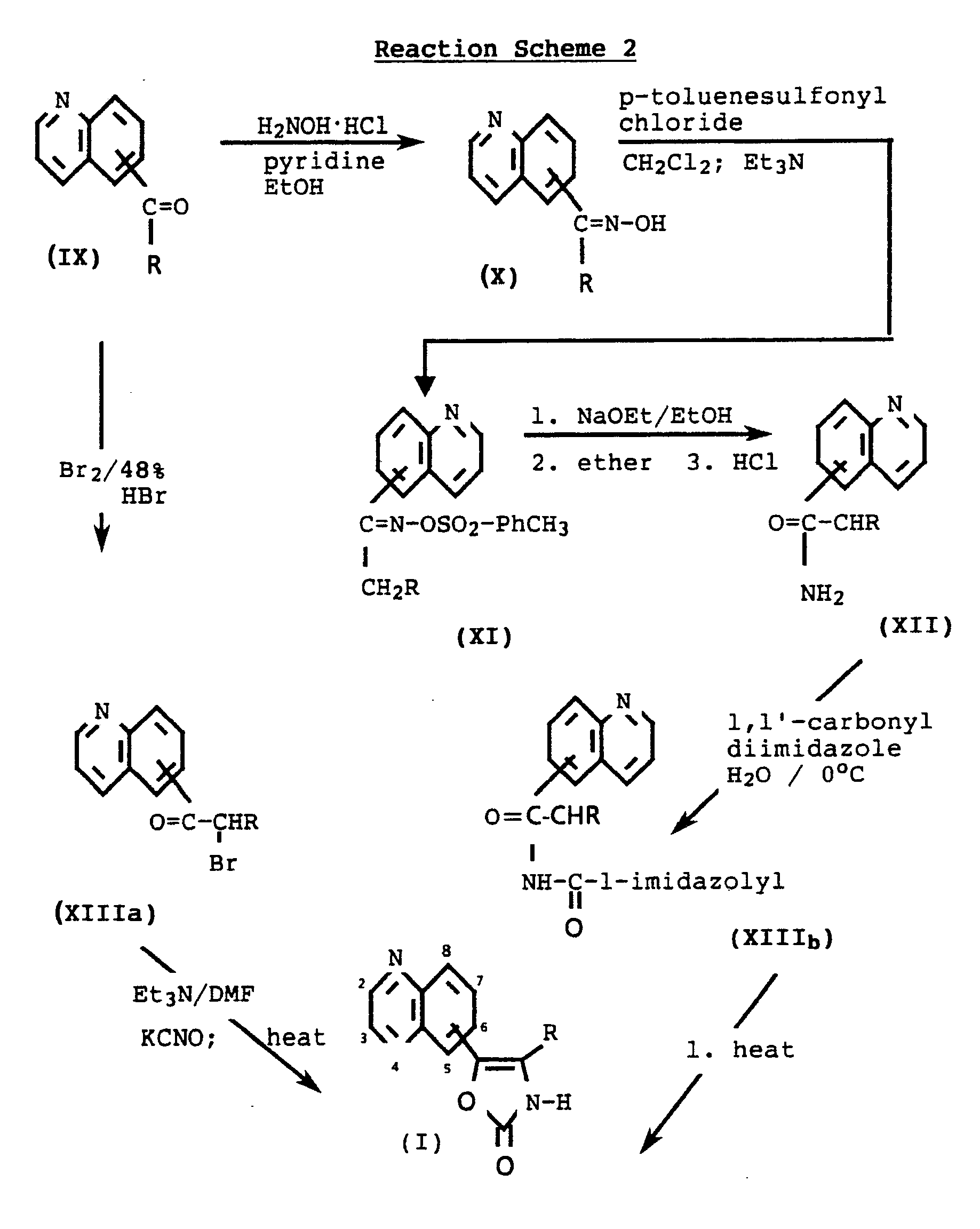
- In essence, Reaction Scheme 2 illustrates that the 5-, 6-, 7-, or 8-quinolyloxazole-2-ones of Formula I can be prepared in essentially the same manner as described for Reaction Scheme 1. The alkanone starting material (IX) is prepared by metalating 5-, 6-, 7- or 8-bromoquinoline according to a procedure by H. Gilman and T. Suddy set forth in J. Org. Chem. 23, 1584-9 (1958), and then reacting it with N-alkoxy-N-alkylamine. The 5-, 6-, 7-, or 8-bromoquinoline compounds are prepared by following procedures set forth in "The Chemistry of Heterocyclic Compounds" by Gurnos Jones, as found in Quinolines, Part 1, vol. 32, p. 100-117 and 247-258, ed. A. Weissberger and E.C. Taylor, John Wiley and Sons, London, 1977. These procedures can also be utilized for preparing 2-,3-, or 4-bromoquinolines and their corresponding 2-, 3-, or 4-quinolinyl alkanones such as those of formula (IV) in Reaction Scheme 1.
- Alternatively, the formula (IV) and formula (IX) compounds of Reaction Schemes 1 or 2 can also be prepared by reacting the appropriate bromoquinoline with butyl lithium in an appropriate solvent such as THF or diethyl ether at -70°C to 0°C, preferably at -50°C, and then reacting the lithiated compound with

- The compounds wherein R¹ is C₁-C₆ alkyl or optionally substituted C₁-C₃ alkylphenyl are produced by subsequent reaction of the compound of Formula I of either Reaction Scheme 1 or Reaction Scheme 2 with sodium hydride and the appropriate alkyl iodide or phenylalkyl iodide in tetrahydrofuran according to procedures well known in the art.
- Likewise, one of ordinary skill will readily be able to modify these procedures to obtain isoquinoline derivatives of formula 1.
- The ability of the oxazolone derivatives of this invention to reverse drug resistance in multi-drug resistant tumors can be demonstrated by the ability of test compounds to reduce acell growth in vinblastine (VBL) resistant tumor cell line.
- CHOR cells were plated at a density of 1X10⁵/35mm dish and were allowed to grow overight at 37°C in a CO₂ incubator. The medium was replaced with medium containing the compounds and vinblastine (0.2 µg/ml). The cells were allowed to grow for further 72 hr and the cell number was determined by Coulter counter after trypsiunization. VLB alone at 0.2 µg/ml did not have any effect on cell growth. The results of such a study employing 4-propyl-5-(4-quinolinyl)-2(3H)-oxozolone is tabulated in Table 1.
TABLE 1 REVERSAL OF MULTIDRUG RESISTANCE (MDR) IN CHOR CELLS BY 4-PROPYL-5-(4-QUINOLINYL)-2(3H)-OXAZOLONE Concentration (µg/ml) % Inhibition of Cell Growth Compound Only Compound + VLB 10 14 93 5 0 93 1 0 43 0.1 0 4 - The term "patient" used herein is taken to mean mammals such as primates, including humans, sheep, horses, cattle, pigs, dogs, cats, rats and mice.
- The amount of the oxazolone derivative of formula 1 to be administered can vary widely according to the particular dosage unit employed, the period of treatment, the age and sex of the patient treated, the nature and extent of the drug resistance in the tumor to be treated, and the particular oxazolone derivative selected. The oxazolone derivative is used in conjunction with other chemotherapeutic agents known to be useful in the treatment of tumors. The amount of a oxazolone derivative of formula 1 effective to reverse drug resistance will generally range from about 15 mg/kg to 500 mg/kg. A unit dosage may contain from 25 to 500 mg of the oxazolone derivative, and can be taken one or more times per day. The oxazolone derivative can be administered with a pharmaceutical carrier using conventional dosage unit forms either orally or parenterally.
- Treatment of tumors by the method of this invention requires that an anti-tumor effective amount of a chemotherapeutic agent be administered together with a compound of formula 1. Tumors which can be treated by the method of this invention include both benign and malignant tumors or neoplasms, and include melanomas, lymphomas, leukemias, and sarcomas. Illustrative examples of tumors are cutaneous tumors, such as malignant melanomas and mycosis fungoides; hematologic tumors such as leukemias, for example, acute lymphoblastic, acute myelocytic or chronic myelocytic leukemia; lymphomas, such as Hodgkin's disease or malignant lymphoma; gynecologic tumors, such as ovarian and uterine tumors; urologic tumors, such as those of the prostate, bladder or testis; soft tissue sarcomas, osseus or non-osseus sarcomas, breast tumors; tumors of the pituitary, thyroid and adrenal cortex; gastrointestinal tumors, such as those of the esophagus, stomach, intestine and colon; pancreatic and hepatic tumors; laryngeae papillomestasas and lung tumors. Of course those tumors which typically are or become multi-drug resistant are most beneficially treated with the method of this invention. Such tumors include colon tumors, lung tumors, stomach tumors, and liver tumors.
- The chemotherapeutic agents used together with the quinolyl- and isoquinolyloxazol-2-ones of formula I are those cytotoxic agents commonly used in the treatment of tumors. Illustrative examples of chemotherapeutic agents are: cyclophosphamide, methotrexate, prednisone, 6-mercaptopurine, procarbazine, daunorubicin, vincristine, vinblastine, chlorambucil, cytosine arabinoside, 6-thioguanine, thio TEPA, 5-fluorouracil, 5-fluoro-2-deoxyudirinde, 5-azacytidine, nitrogen mustard, 1,3-bis(2-chloroethyl)-1-nitrosourea (BCNU), (1-(2-chloroethyl)-3-cyclohexyl-1-nitrosourea) (CCNU), busulfan, adreamycin, bleomycin, vindesine, cycloleucine or methylglyoxal bix(guanylhydrazone) (i.e., MGBG). The effective amount of chemotherapeutic agent used in the method of this invention varies widely and depends on factors such as the patient, the tumor tissue type and its size, and the particular chemotherapeutic agent selected. The amount is any effective amount and can be readily determined by those skilled in the art. In general, less chemotherpeutic agent will be required when administered with the oxazolones of Formula 1, primarily because the problem of drug resistance need not addressed by the addition of larger quantities of chemotherapeutic agent. Of course mixtures of chemotherapeutic agents may be employed and surgical excission and radiation therapy may be useful adjuvents as in any tumor therapy. While the compound of Formula 1 and the chemotherapeutic agent are said to be administered together, this does not necessarily mean that the compounds are formulated into the same dosage form or are administered concurrently. Rather, the expression "together" means that a compound of formula 1 and the chemotherapeutic agent(s) are administered in a combined dosage form or separately during the course of therapy.
- The preferred route of administration is oral administration. For oral administration the oxazolone derivative can be formulated into solid or liquid preparations such as capsules, pills, tablets, troches, lozenges, melts, powders, solutions, suspensions, or emulsions. The solid unit dosage forms can be a capsule which can be of the ordinary hard- or soft-shelled gelatin type containing, for example, surfactants, lubricants, and inert fillers such as lactose, sucrose, calcium phosphate, and cornstarch. In another embodiment the compounds of this invention can be tableted with conventional tablet bases such as lactose, sucrose, and cornstarch in combination with binders such as acacia, cornstarch, or gelatin, disintegrating agents intended to assist the break-up and dissolution of the tablet following administration such as potato starch, alginic acid, corn starch, and guar gum, lubricants intended to improve the flow of tablet granulations and to prevent the adhesion of tablet material to the surfaces of the tablet dies and punches, for example, talc, stearic acid, or magnesium, calcium, or zinc stearate, dyes, coloring agents, and flavoring agents intended to enhance the aesthetic qualities of the tablets and make them more acceptable to the patient. Suitable excipients for use in oral liquid dosage forms include diluents such as water and alcohols, for example, ethanol, benzyl alcohol, and the polyethylene alcohols, either with or without the addition of a pharmaceutically acceptably surfactant, suspending agent, or emulsifying agent.
- The oxazolone derivatives of this invention may also be administered parenterally, that is, subcutaneously, intravenously, intramuscularly, or interperitoneally, as injectable dosages of the compound in a physiologically acceptable diluent with a pharmaceutical carrier which can be a sterile liquid or mixture of liquids such as water, saline, aqueous dextrose and related sugar solutions, an alcohol such as ethanol, isopropanol, or hexadecyl alcohol, glycols such as propylene glycol or polyethylene glycol, glycerol ketals such as 2,2-dimethyl-1,3-dioxolane-4-methanol, ethers such as poly(ethylene-glycol) 400, an oil, a fatty acid, a fatty acid ester or glyceride, or an acetylated fatty acid glyceride with or without the addition of a pharmaceutically acceptable surfactant such as a soap or a detergent, suspending agent such as pectin, carbomers, methylcellulose, hydroxypropyl-methylcellulose, or carboxymethylcellulose, or emulsifying agent and other pharmaceutically adjuvants. Illustrative of oils which can be used in the parenteral formulations of this invention are those of petroleum, animal, vegetable, or synthetic origin, for example, peanut oil, soybean oil, sesame oil, cottonseed oil, corn oil, olive oil, petrolatum, and mineral oil. Suitable fatty acids include oleic acid, stearic acid, and isostearic acid. Suitable fatty acid esters are, for example, ethyl oleate and isopropyl myristate. Suitable soaps include fatty alkali metal, ammonium, and triethanolamine salts and suitable detergents include cationic detergents, for example, dimethyl dialkyl ammonium halides, alkyl pyridinium halides, and alkylamines acetates; anionic detergents, for example, alkyl, aryl, and olefin sulfonates, alkyl, olefin, ether, and monoglyceride sulfates, and sulfosuccinates; nonionic detergents, for example, fatty amine oxides, fatty acid alkanolamides, and polyoxyethylenepolypropylene copolymers; and amphoteric detergents, for example, alkyl-beta-aminopropionates, and 2-alkylimidazoline quarternary ammonium salts, as well as mixtures. The parenteral compositions of this invention will typically contain from about 0.5 to about 25% by weight of the oxazolone derivative of formula 1 in solution. Preservatives and buffers may also be used advantageously. In order to minimize or eliminate irritation at the site of injection, such compositions may contain a non-ionic surfactant having a hydrophile-lipophile balance (HLB) of from about 12 to about 17. The quantity of surfactant in such formulations ranges from about 5 to about 15% by weight. The surfactant can be a single component having the above HLB or can be a mixture of two or more components having the desired HLB. Illustrative of surfactants used in parenteral formulations are the class of polyethylene sorbitan fatty acid esters, for example, sorbitan monooleate and the high molecular weight adducts of ethylene oxide with a hydrophobic base, formed by the condensation of propylene oxide with propylene glycol.
- The following specific examples are presented to illustrate the synthesis of the compounds of this invention, but they should not be construed as limiting the scope of this invention in any way.
- In a 1 liter, 3-necked flask equipped with a mechanical stirrer, dropping funnel, reflux condenser (all dried under argon), and thermometer, were placed 15.0 grams (0.0954 M) of 4-quinoline carboxaldehyde and 400 ml of dry tetrahydrofuran (THF). The mixture was cooled by means of stirring in a dry ice/methanol bath to -70°C. Butylmagnesium chloride (100 ml of 2 M) was added through the funnel at a fast drop rate over a period of about 45 minutes, and the mixture was allowed to stir at -70°C for about an hour. Then, 100 ml saturated ammonium chloride (NH₄Cl) was added dropwise through the funnel and the mixture was allowed to warm to room temperature whereupon the resulting semi-solid material was filtered off under vacuum and washed with about 100 ml THF. The THF layers were combined and washed with saturated sodium chloride solution and then dried over magnesium sulfate. The inorganic matter was filtered off by vacuum through diatomaceous earth and the solvent evaporated. The residue was flash chromatographed on silica (1:1 ethyl acetate/hexane) and, after evaporation of the solvent, about 5.0 gram of purified title compound was recovered.
- In a 1 liter, 3-necked flask equipped with a mechanical stirrer, dropping funnel, reflux condenser (all dried under argon), and thermometer, were placed 50 ml of dry dichloromethane and 3.79 ml (0.043 M) oxalyl chloride. The resulting mixture was stirred in a dry ice/methanol bath to maintain a temperature of -70°C. Methyl sulfoxide (6.17 ml, 0.043 M) was added dropwise and subsequently a solution of 9.26 grams (0.043 M) of the compound of Example 1 in dry dichloromethane (CH₂Cl₂) was added and the mixture allowed to stir cold for about 15 minutes. Triethylamine (35.6 ml) was then added and the mixture was allowed to stir cold for about 1 hour. After the mixture had been allowed to warm to room temperature, it was poured into a flask containing about 600 ml water. The CH₂Cl₂ layer was separated and the aqueous layer extracted with CH₂Cl₂ (2 times, 100 ml each). The combined CH₂Cl₂ layers were washed with saturated sodium chloride and dried over magnesium sulfate. The inorganic matter was filtered off and the solvent evaporated leaving a residue that was flash chromatographed as in Example 1. Evaporation left 9.0 grams of title compound.
- In a 500 ml, 3-necked flask equipped with a mechanical stirrer, dropping funnel, reflux condenser (all dried under argon), were placed 8.3 grams (0.03892 M) of the compound of Example 2, 4.12 grams (0.0584 M) of hydroxylamine hydrochloride, 40 ml of dry pyridine, and about 200 ml of dry ethanol. The mixture was refluxed for 6 hours, then the solvent was evaporated leaving a residue which was treated with about 400 ml ether and 200 ml water. The ether layer was separated and washed several times with water, washed with saturated sodium chloride and dried over magnesium sulfate. The inorganic matter was filtered off and the solvent evaporated, leaving 8.42 grams (94.7%) of the title compound.
- In a 250 ml erhlenmeyer flask filled with argon were placed 8.42 grams (0.0369 M) of the compound of Example 3 and about 130 ml dry CH₂Cl₂. While stirring and cooling to about 0°C in an ice/methanol bath, about 20 ml of triethylamine was added over a 5 minute period, then 10.55 grams (0.0554 M) toluenesulfonyl chloride was added and the mixture allowed to stir for 3 hours. The solution was then evaporated to dryness which left a residue that was treated with ether and water. The ether phase was separated and the water phase extracted twice more with ether. The combined ether layers were extracted with dilute sodium hydroxide, washed with saturated sodium chloride and dried over magnesium sulfate. The inorganic matter was filtered off using vacuum, and the solvent was evaporated leaving 15.1 grams of the title compound.
- In a 250 ml, 3-necked flask equipped with a mechanical stirrer, dropping funnel, reflux condenser (all dried under argon), was placed 60 ml dry ethanol. While stirring, 2.55 grams (0.111 M) of sodium spheres were added and allowed to continue to stir under argon until the sodium dissolved. A solution of 15.1 grams of the compound of Example 4 in ethanol was then added and the mixture stirred for 4 hours at room temperature. The mixture was then poured into a flask containing 1200 ml absolute ether. The resulting precipitate was filtered off under vacuum through diatomaceous earth, and the filtrate extracted with 2N hydrochloric acid (3 times, 170 ml each). The extract was evaporated leaving 19.8 grams of the title compound.
- The compound of Example 5 (19.8 grams) was dissolved in about 300 ml water, and the solution filtered by gravity into a 1 liter, 3-necked flask equipped with a mechanical stirrer and a thermometer. The solution was cooled to 0°C with stirring in an ice/methanol bath, and 29.87 grams (0.185 M) 1,1′-carbonyldiimidazole was added over a 5 minute period. The mixture was allowed to stir cold for about 15 minutes. The resulting precipitate was taken up in about 500 ml ethyl acetate and separated from the water. The solution was washed with saturated sodium chloride and dried over magnesium sulfate, and the inorganic matter filtered off using diatomaceous earth under vacuum. The solvent was evaporated leaving the title compound.
- The compound of Example 6 (12 grams) was heated under vacuum to 170°C for about 30 minutes, allowed to cool to room temperature and washed with water. The water was decanted and the residue was treated with CH₂Cl₂ (20 ml). The CH₂Cl₂ was evaporated leaving 7.8 grams of residue. The product was purified by means of flash chromatography on silica, eluting with ethyl acetate. The solvent was evaporated and the residue dissolved in 48 ml hot 50% ethanol, filtered and allowed to cool to room temperature. The precipitate was collected by vacuum filtration and dried in vacuo at 78°C, leaving 1.97 grams (21%) title compound. M.p. 188-190°C dec.; analysis calced. for C₁₅H₁₄N₂O₂: C, 70.85; H, 5.55; N, 11.02; analysis found: C, 71.10; H, 5.73; N, 10.76.
- In a dry 3-necked flask under argon at -50°C, n-butyl lithium (0.0025 M, 0.021 ml) was added to 150 ml diethylether. Then 4.16 grams 3-bromoquinoline in 2 ml THF was added dropwise while stirring and maintaining the temperature at -60°C to -55°C. The solution was stirred for 30 minutes, and 2.3 grams N-methyl-N-methoxybutyramide were then added dropwise at -50°C and the solution was stirred an additional 30 minutes. The solution was then allowed to warm to 0°C and stirred for one hour. The reaction was quenched with a saturated solution of ammonium chloride and the THF layer separated, washed with brine, separated, and dried over magnesium sulfate. Filtration through diatomaceous earth, followed by concentration and subsequent thin layer chromatography (35% ethylacetate/65% CH₂Cl₂) gave a total yield of 2.03 g (51%) of the title compound.
- By substituting the following starting materials for the 4-quinoline carboxaldehyde and/or the butylmagnesium chloride of Example 1, and following the procedures set forth in Examples 1 through 7, the following end products can be made in a like manner.
- A. 6- or 8-methoxy-4-quinoline carboxaldehyde and methylmagnesium chloride, to yield 5-(6- or 8-methoxy-4-quinolinyl)-1-(3H)-oxazolone
- B. 2-quinololine carboxaldehyde and methylmagnesium chloride, to yield 5-(2-quinolinyl)-1-(3H)-oxazolone
- C. 7- or 8-chloro-4-quinoline carboxaldehyde and propylmagnesium chloride, to yield 4-ethyl-5-(7- or 8-chloro-4-quinolinyl)-1-(3H)-oxazolone
- D. 6,8-dichloro or dibromo-4-quinoline carboxaldehyde and butylmagnesium chloride, to yield 4-propyl-5-(6,8-dichloro or dibromo-4-quinolinyl)-1-(3H)-oxazolone
- E. 7- or 8-nitro-4-quinoline carboxaldehyde and pentylmagnesium chloride, to yield 4-butyl-5-(7- or 8-nitro-4-quinolinyl)-1-(3H)-oxazolone
- F. 7-trifluoromethyl-4-quinoline carboxaldehyde and hexylmagnesium chloride, to yield 4-pentyl-5-(7-trifluoromethyl-4-quinolinyl)-1-(3H)-oxazolone
- G. 5,8-dimethoxy-4-quinoline carboxaldehyde and benzylmagnesium chloride, to yield 4-phenyl-5-(5,8-dimethoxy-4-quinolinyl)-1-(3H)-oxazolone
- H. 5,8-dimethoxy-6-nitro-4-quinoline carboxaldehyde and ethylmagnesium chloride, to yield 4-methyl-5-(5,8-dimethoxy-6-nitro-4-quinolinyl )-1-(3H)-oxazolone
- I. 6-methoxy-8-nitro-4-quinoline carboxaldehyde and propylmagnesium chloride, to yield 4-ethyl-5-(6-methoxy-8-nitro-4-quinolinyl)-1-(3H)-oxazolone
- J. 5,6-dimethoxy-8-nitro-4-quinoline carboxaldehyde and pentylmagnesium chloride, to yield 4-butyl-5-(5,6-dimethoxy-8-nitro-4-quinolinyl)-1-(3H)-oxazolone
- K. 5-methyl-4-quinoline carboxaldehyde and benzylmagnesium chloride, to yield 4-phenyl-5-(5-methyl-4-quinolinyl)-1-(3H)-oxazolone
- L. 2-(4-methoxy)phenyl-4-quinoline carboxaldehyde and 3,5-dimethoxybenzymagnesium chloride, to yield 4-(3,5-dimethoxyphenyl)-5-[1-(4-methoxyphenyl)-4-quinolinyl]-1-(3H)-oxazolone
- M. 6,8-dimethoxy-4-quinoline carboxaldehyde and 4-methylbenzylmagnesium chloride, to yield 4-(4-methylphenyl)-5-(6,8-dimethoxy-4-quinolinyl)-1-(3H)-oxazolone
- N. 4-quinolinecarboxaldehyde and propylmagnesium chloride, to yield 4-ethyl-5-(4-quinolinyl)-1(3H)-oxazolone (mp 273-76°C)
- O. 4-quinolinecarboxaldehyde and pentylmagnesium chloride, to yield 4-butyl-5-(4-quinolyl-1(3H)-oxazolone (mp 196-98°C)
- P. 3-quinolinecarboxaldehyde and butylmagnesium chlopride, to yield 4-propyl-5-(3-quinolyl)-1(3H)-oxazolone (mp 193-95°C)
- Q. 4-isoquinolinecarboxaldehyde and butylmagnesium chloride to yield 4-propyl-5-(4-isoquinolyl)-1(3H)-oxazolone (mp 122-24°C).
- By substituting 1-(3-quinolinyl)-1-pentanone for the compound of Example 2 and by following the procedure set forth in Examples 3 through 7, 4-propyl-5-(3-quinolinyl)-(3H)-oxazolone is produced.
- In a like manner, by substituting the following starting materials for 1-(4-quinolinyl)-1-pentanone of Example 2 and following the procedure set forth in the preceding paragraph, the following end products can be made.
- R. 1-(5-quinolinyl)-1-pentanone, to yield 4-propyl-5-(5-quinolinyl)-1-(3H)-oxazolone
- S. 1-(6-quinolinyl)-1-butanone, to yield 4-ethyl-5-(6-quinolinyl)-1-(3H)-oxazolone
- T. 1-(7-quinolinyl)-1-ethanone, to yield 5-(7-quinolinyl)-1-(3H)-oxazolone
- U. 1-(8-quinolinyl)-1-phenylethanone, to yield 4-phenyl-5-(8-quinolinyl)-1-(3H)-oxazolone
- V. 1-(5,8-dimethoxy-3-quinolinyl)-1-propanone, to yield 4-methyl-5-(5,8-dimethoxy-3-quinolinyl )-1-(3H)-oxazolone.
- The following specific examples are presented to illustrate compositions of this invention, but they should not be construed as limiting the scope of this invention in any way.
EXAMPLE 9 A tablet is prepared from 4-Methyl-5-(3-quinolinyl)-1-(3H)-oxazolone 250 mg Starch 40 mg Talc 10 mg Magnesium 10 mg EXAMPLE 10 A capsule is prepared from 4-phenyl-5-(2-quinolinyl)-1-(3H)-oxazolone 400 mg Talc 40 mg Sodium Carboxymethyl celulose 40 mg Starch 120 mg - It should be apparent to one of ordinary skill in the art that changes and modifications can be made to this invention without departing from the spirit or scope of the invention as it is set forth herein.
Claims (10)

R and R¹ are each independently selected from the group consisting of hydrogen, C₁-C₆ alkyl, and phenyl or C₁-C₃ alkylphenyl wherein the phenyl ring is optionally substituted with one, two or three of the substituents selected from the group consisting of fluorine, chlorine, bromine, C₁-C₄ alkyl, and C₁-C₄ alkoxy; and
R² is a 2-, 3-, or 4-quinolyl group or 1-,3-, or 4-isoquinolyl group wherein the quinolyl or isoquinolyl group is optionally substituted with one, two or three of the substituents selected from the group consisting of fluorine, chlorine, bromine, C₁-C₄ alkyl, C₁-C₄ alkoxy, nitro and trifluoromethyl or phenyl wherein the phenyl is optionally substituted by a member of the group consisting of fluorine, chlorine, bromine, C₁-C₄ alkyl, and C₁-C₄ alkoxy; or
R² is a 5-, 6-, 7-, or 8-quinolyl or isoquinolyl group;
and the pharmaceutically acceptable salts thereof for the production of a medicament for the treatment of a drug resistant tumor.
Applications Claiming Priority (2)
| Application Number | Priority Date | Filing Date | Title |
|---|---|---|---|
| US43626289A | 1989-11-13 | 1989-11-13 | |
| US436262 | 1989-11-13 |
Publications (3)
| Publication Number | Publication Date |
|---|---|
| EP0428107A2 true EP0428107A2 (en) | 1991-05-22 |
| EP0428107A3 EP0428107A3 (en) | 1991-12-11 |
| EP0428107B1 EP0428107B1 (en) | 1994-01-19 |
Family
ID=23731760
Family Applications (1)
| Application Number | Title | Priority Date | Filing Date |
|---|---|---|---|
| EP90121634A Expired - Lifetime EP0428107B1 (en) | 1989-11-13 | 1990-11-12 | Use of quinolyl-and isoquinolyloxanole-2-ones for the production of a medicament for the treatment of multi-drug resistant tumors |
Country Status (10)
| Country | Link |
|---|---|
| EP (1) | EP0428107B1 (en) |
| JP (1) | JP2927931B2 (en) |
| KR (1) | KR0168645B1 (en) |
| AT (1) | ATE100319T1 (en) |
| AU (1) | AU629423B2 (en) |
| DE (1) | DE69006188T2 (en) |
| DK (1) | DK0428107T3 (en) |
| ES (1) | ES2062267T3 (en) |
| IE (1) | IE63850B1 (en) |
| ZA (1) | ZA908936B (en) |
Cited By (3)
| Publication number | Priority date | Publication date | Assignee | Title |
|---|---|---|---|---|
| US5863977A (en) * | 1993-10-12 | 1999-01-26 | H. B. Fuller Licensing & Financing, Inc. | High molecular weight S-EB-S hot melt adhesive |
| WO2000013681A3 (en) * | 1998-09-04 | 2000-11-23 | Vernalis Res Ltd | 4-quinolinemethanol derivatives as purine receptor antagonists (i) |
| US6693099B2 (en) | 2000-10-17 | 2004-02-17 | The Procter & Gamble Company | Substituted piperazine compounds optionally containing a quinolyl moiety for treating multidrug resistance |
Families Citing this family (1)
| Publication number | Priority date | Publication date | Assignee | Title |
|---|---|---|---|---|
| US6376514B1 (en) | 2000-10-17 | 2002-04-23 | The Procter & Gamble Co. | Substituted six-membered heterocyclic compounds useful for treating multidrug resistance and compositions and methods thereof |
Family Cites Families (2)
| Publication number | Priority date | Publication date | Assignee | Title |
|---|---|---|---|---|
| DE3827974A1 (en) * | 1988-08-18 | 1990-02-22 | Boehringer Mannheim Gmbh | COMBINATION PREPARATIONS OF PROTEINKINASE-C INHIBITORS WITH LIPIDS, LIPID ANALOGS, CYTOSTATICA OR INHIBITORS OF PHOSPHOLIPASES |
| US4886811A (en) * | 1988-10-24 | 1989-12-12 | Merrell Dow Pharmaceuticals | Qunolyloxazole-2-ones useful as proteinkinase C inhibitors |
-
1990
- 1990-11-07 ZA ZA908936A patent/ZA908936B/en unknown
- 1990-11-08 AU AU65928/90A patent/AU629423B2/en not_active Ceased
- 1990-11-12 KR KR1019900018248A patent/KR0168645B1/en not_active Expired - Fee Related
- 1990-11-12 IE IE407790A patent/IE63850B1/en not_active IP Right Cessation
- 1990-11-12 DK DK90121634.1T patent/DK0428107T3/en active
- 1990-11-12 ES ES90121634T patent/ES2062267T3/en not_active Expired - Lifetime
- 1990-11-12 AT AT90121634T patent/ATE100319T1/en not_active IP Right Cessation
- 1990-11-12 DE DE69006188T patent/DE69006188T2/en not_active Expired - Fee Related
- 1990-11-12 EP EP90121634A patent/EP0428107B1/en not_active Expired - Lifetime
- 1990-11-13 JP JP2304166A patent/JP2927931B2/en not_active Expired - Lifetime
Cited By (5)
| Publication number | Priority date | Publication date | Assignee | Title |
|---|---|---|---|---|
| US5863977A (en) * | 1993-10-12 | 1999-01-26 | H. B. Fuller Licensing & Financing, Inc. | High molecular weight S-EB-S hot melt adhesive |
| WO2000013681A3 (en) * | 1998-09-04 | 2000-11-23 | Vernalis Res Ltd | 4-quinolinemethanol derivatives as purine receptor antagonists (i) |
| US6583156B1 (en) | 1998-09-04 | 2003-06-24 | Vernalis Research Limited | 4-Quinolinemethanol derivatives as purine receptor antagonists (1) |
| US6693099B2 (en) | 2000-10-17 | 2004-02-17 | The Procter & Gamble Company | Substituted piperazine compounds optionally containing a quinolyl moiety for treating multidrug resistance |
| US7304053B2 (en) | 2000-10-17 | 2007-12-04 | H. Lee Moffitt Cancer Center & Research Institute, Inc. | Substituted heterocyclic compounds for treating multidrug resistance |
Also Published As
| Publication number | Publication date |
|---|---|
| IE904077A1 (en) | 1991-05-22 |
| JP2927931B2 (en) | 1999-07-28 |
| IE63850B1 (en) | 1995-06-14 |
| DE69006188D1 (en) | 1994-03-03 |
| AU6592890A (en) | 1991-05-16 |
| EP0428107A3 (en) | 1991-12-11 |
| AU629423B2 (en) | 1992-10-01 |
| ZA908936B (en) | 1991-09-25 |
| ATE100319T1 (en) | 1994-02-15 |
| KR0168645B1 (en) | 1999-01-15 |
| EP0428107B1 (en) | 1994-01-19 |
| DK0428107T3 (en) | 1994-02-28 |
| JPH03170429A (en) | 1991-07-24 |
| DE69006188T2 (en) | 1994-05-26 |
| ES2062267T3 (en) | 1994-12-16 |
| KR910009261A (en) | 1991-06-28 |
Similar Documents
| Publication | Publication Date | Title |
|---|---|---|
| EP0365863B1 (en) | Novel quinolyloxazole-2-ones useful as proteinkinase C inhibitors | |
| US5190957A (en) | Treatment of multi-drug resistant tumors with quinolyl-and isoquinolyloxazole-2-ones | |
| EP0428107B1 (en) | Use of quinolyl-and isoquinolyloxanole-2-ones for the production of a medicament for the treatment of multi-drug resistant tumors | |
| KR100377280B1 (en) | Multi-drug resistant tumor therapeutic efficacy-enhancing pharmaceutical composition containing diarylalkylpiperidine | |
| US5182293A (en) | Treatment of multi-drug resistant tumors with pyridyloxazole-2-ones | |
| US4990519A (en) | Method of using quinolyloxazole-2-ones as proteinkinase C inhibitors | |
| AU662602B2 (en) | Reversal of multi-drug resistance by triphenyl-azacycloalkane derivatives | |
| US5061715A (en) | Prevention of glycoprotein enveloped virus infectivity by quinolyl- and isoquinolyloxazole-2-zones | |
| JP2947919B2 (en) | Treatment of multidrug resistant tumors with pyridinyl oxazol-2-ones | |
| US4999431A (en) | Process for preparing quinoline aldehyde and ketone derivatives | |
| EP0495226A2 (en) | 3-Aryl-5-alkylthio-4H-1,2,4-triazoles for treatment of hyperreflexia due to spinal trauma | |
| US5670521A (en) | Reversal of multi-drug resistance by triphenyl-azacycloalkane derivatives | |
| EP0428106A1 (en) | Novel pyridyloxazole 2-ones useful as proteinkinase C inhibitors | |
| JPH0511112B2 (en) | ||
| CA2214533C (en) | Quinolyloxazole-2-ones useful as proteinkinase c inhibitors | |
| EP0428105A2 (en) | Use of quinolyl- and isoquinolyloxazole-2-ones for the production of a medicament for the prevention of glycoprotein enveloped virus infectivity |
Legal Events
| Date | Code | Title | Description |
|---|---|---|---|
| PUAI | Public reference made under article 153(3) epc to a published international application that has entered the european phase |
Free format text: ORIGINAL CODE: 0009012 |
|
| 17P | Request for examination filed |
Effective date: 19901228 |
|
| AK | Designated contracting states |
Kind code of ref document: A2 Designated state(s): AT BE CH DE DK ES FR GB GR IT LI LU NL SE |
|
| PUAL | Search report despatched |
Free format text: ORIGINAL CODE: 0009013 |
|
| AK | Designated contracting states |
Kind code of ref document: A3 Designated state(s): AT BE CH DE DK ES FR GB GR IT LI LU NL SE |
|
| 17Q | First examination report despatched |
Effective date: 19920728 |
|
| GRAA | (expected) grant |
Free format text: ORIGINAL CODE: 0009210 |
|
| AK | Designated contracting states |
Kind code of ref document: B1 Designated state(s): AT BE CH DE DK ES FR GB GR IT LI LU NL SE |
|
| PG25 | Lapsed in a contracting state [announced via postgrant information from national office to epo] |
Ref country code: GR Free format text: LAPSE BECAUSE OF FAILURE TO SUBMIT A TRANSLATION OF THE DESCRIPTION OR TO PAY THE FEE WITHIN THE PRESCRIBED TIME-LIMIT Effective date: 19940119 |
|
| REF | Corresponds to: |
Ref document number: 100319 Country of ref document: AT Date of ref document: 19940215 Kind code of ref document: T |
|
| REG | Reference to a national code |
Ref country code: DK Ref legal event code: T3 |
|
| REF | Corresponds to: |
Ref document number: 69006188 Country of ref document: DE Date of ref document: 19940303 |
|
| ET | Fr: translation filed | ||
| ITF | It: translation for a ep patent filed | ||
| REG | Reference to a national code |
Ref country code: GR Ref legal event code: FG4A Free format text: 3011149 |
|
| PG25 | Lapsed in a contracting state [announced via postgrant information from national office to epo] |
Ref country code: ES Free format text: LAPSE BECAUSE OF NON-PAYMENT OF DUE FEES Effective date: 19941113 |
|
| PLBE | No opposition filed within time limit |
Free format text: ORIGINAL CODE: 0009261 |
|
| STAA | Information on the status of an ep patent application or granted ep patent |
Free format text: STATUS: NO OPPOSITION FILED WITHIN TIME LIMIT |
|
| REG | Reference to a national code |
Ref country code: ES Ref legal event code: FG2A Ref document number: 2062267 Country of ref document: ES Kind code of ref document: T3 |
|
| 26N | No opposition filed | ||
| EAL | Se: european patent in force in sweden |
Ref document number: 90121634.1 |
|
| REG | Reference to a national code |
Ref country code: GR Ref legal event code: MM2A Free format text: 3011149 |
|
| PGFP | Annual fee paid to national office [announced via postgrant information from national office to epo] |
Ref country code: DK Payment date: 19990913 Year of fee payment: 10 |
|
| PGFP | Annual fee paid to national office [announced via postgrant information from national office to epo] |
Ref country code: NL Payment date: 19990921 Year of fee payment: 10 |
|
| PGFP | Annual fee paid to national office [announced via postgrant information from national office to epo] |
Ref country code: GB Payment date: 19991004 Year of fee payment: 10 |
|
| PGFP | Annual fee paid to national office [announced via postgrant information from national office to epo] |
Ref country code: AT Payment date: 19991005 Year of fee payment: 10 |
|
| PGFP | Annual fee paid to national office [announced via postgrant information from national office to epo] |
Ref country code: LU Payment date: 19991013 Year of fee payment: 10 |
|
| PGFP | Annual fee paid to national office [announced via postgrant information from national office to epo] |
Ref country code: SE Payment date: 19991103 Year of fee payment: 10 Ref country code: FR Payment date: 19991103 Year of fee payment: 10 |
|
| PGFP | Annual fee paid to national office [announced via postgrant information from national office to epo] |
Ref country code: DE Payment date: 19991125 Year of fee payment: 10 |
|
| PGFP | Annual fee paid to national office [announced via postgrant information from national office to epo] |
Ref country code: BE Payment date: 19991214 Year of fee payment: 10 |
|
| PGFP | Annual fee paid to national office [announced via postgrant information from national office to epo] |
Ref country code: CH Payment date: 19991220 Year of fee payment: 10 |
|
| PG25 | Lapsed in a contracting state [announced via postgrant information from national office to epo] |
Ref country code: LU Free format text: LAPSE BECAUSE OF NON-PAYMENT OF DUE FEES Effective date: 20001112 Ref country code: GB Free format text: LAPSE BECAUSE OF NON-PAYMENT OF DUE FEES Effective date: 20001112 Ref country code: DK Free format text: LAPSE BECAUSE OF NON-PAYMENT OF DUE FEES Effective date: 20001112 Ref country code: AT Free format text: LAPSE BECAUSE OF NON-PAYMENT OF DUE FEES Effective date: 20001112 |
|
| PG25 | Lapsed in a contracting state [announced via postgrant information from national office to epo] |
Ref country code: SE Free format text: THE PATENT HAS BEEN ANNULLED BY A DECISION OF A NATIONAL AUTHORITY Effective date: 20001129 |
|
| PG25 | Lapsed in a contracting state [announced via postgrant information from national office to epo] |
Ref country code: LI Free format text: LAPSE BECAUSE OF NON-PAYMENT OF DUE FEES Effective date: 20001130 Ref country code: CH Free format text: LAPSE BECAUSE OF NON-PAYMENT OF DUE FEES Effective date: 20001130 Ref country code: BE Free format text: LAPSE BECAUSE OF NON-PAYMENT OF DUE FEES Effective date: 20001130 |
|
| BERE | Be: lapsed |
Owner name: MERRELL DOW PHARMACEUTICALS INC. Effective date: 20001130 |
|
| PG25 | Lapsed in a contracting state [announced via postgrant information from national office to epo] |
Ref country code: NL Free format text: LAPSE BECAUSE OF NON-PAYMENT OF DUE FEES Effective date: 20010601 |
|
| GBPC | Gb: european patent ceased through non-payment of renewal fee |
Effective date: 20001112 |
|
| REG | Reference to a national code |
Ref country code: CH Ref legal event code: PL |
|
| EUG | Se: european patent has lapsed |
Ref document number: 90121634.1 |
|
| REG | Reference to a national code |
Ref country code: DK Ref legal event code: EBP |
|
| PG25 | Lapsed in a contracting state [announced via postgrant information from national office to epo] |
Ref country code: FR Free format text: LAPSE BECAUSE OF NON-PAYMENT OF DUE FEES Effective date: 20010731 |
|
| NLV4 | Nl: lapsed or anulled due to non-payment of the annual fee |
Effective date: 20010601 |
|
| PG25 | Lapsed in a contracting state [announced via postgrant information from national office to epo] |
Ref country code: DE Free format text: LAPSE BECAUSE OF NON-PAYMENT OF DUE FEES Effective date: 20010801 |
|
| REG | Reference to a national code |
Ref country code: FR Ref legal event code: ST |
|
| REG | Reference to a national code |
Ref country code: ES Ref legal event code: FD2A Effective date: 19951214 |
|
| PG25 | Lapsed in a contracting state [announced via postgrant information from national office to epo] |
Ref country code: IT Free format text: LAPSE BECAUSE OF NON-PAYMENT OF DUE FEES;WARNING: LAPSES OF ITALIAN PATENTS WITH EFFECTIVE DATE BEFORE 2007 MAY HAVE OCCURRED AT ANY TIME BEFORE 2007. THE CORRECT EFFECTIVE DATE MAY BE DIFFERENT FROM THE ONE RECORDED. Effective date: 20051112 |