EP0432089B1 - Compositions lubrifiantes - Google Patents
Compositions lubrifiantes Download PDFInfo
- Publication number
- EP0432089B1 EP0432089B1 EP90810831A EP90810831A EP0432089B1 EP 0432089 B1 EP0432089 B1 EP 0432089B1 EP 90810831 A EP90810831 A EP 90810831A EP 90810831 A EP90810831 A EP 90810831A EP 0432089 B1 EP0432089 B1 EP 0432089B1
- Authority
- EP
- European Patent Office
- Prior art keywords
- alkyl
- tert
- phenyl
- bis
- compounds
- Prior art date
- Legal status (The legal status is an assumption and is not a legal conclusion. Google has not performed a legal analysis and makes no representation as to the accuracy of the status listed.)
- Expired - Lifetime
Links
- 0 CC(C)NCC*C* Chemical compound CC(C)NCC*C* 0.000 description 8
- BPZXIMXHLOSTAF-UHFFFAOYSA-N CC1[N](C)(C)C1 Chemical compound CC1[N](C)(C)C1 BPZXIMXHLOSTAF-UHFFFAOYSA-N 0.000 description 1
Classifications
-
- C—CHEMISTRY; METALLURGY
- C10—PETROLEUM, GAS OR COKE INDUSTRIES; TECHNICAL GASES CONTAINING CARBON MONOXIDE; FUELS; LUBRICANTS; PEAT
- C10M—LUBRICATING COMPOSITIONS; USE OF CHEMICAL SUBSTANCES EITHER ALONE OR AS LUBRICATING INGREDIENTS IN A LUBRICATING COMPOSITION
- C10M141/00—Lubricating compositions characterised by the additive being a mixture of two or more compounds covered by more than one of the main groups C10M125/00 - C10M139/00, each of these compounds being essential
- C10M141/10—Lubricating compositions characterised by the additive being a mixture of two or more compounds covered by more than one of the main groups C10M125/00 - C10M139/00, each of these compounds being essential at least one of them being an organic phosphorus-containing compound
-
- C—CHEMISTRY; METALLURGY
- C10—PETROLEUM, GAS OR COKE INDUSTRIES; TECHNICAL GASES CONTAINING CARBON MONOXIDE; FUELS; LUBRICANTS; PEAT
- C10M—LUBRICATING COMPOSITIONS; USE OF CHEMICAL SUBSTANCES EITHER ALONE OR AS LUBRICATING INGREDIENTS IN A LUBRICATING COMPOSITION
- C10M129/00—Lubricating compositions characterised by the additive being an organic non-macromolecular compound containing oxygen
- C10M129/02—Lubricating compositions characterised by the additive being an organic non-macromolecular compound containing oxygen having a carbon chain of less than 30 atoms
- C10M129/04—Hydroxy compounds
- C10M129/10—Hydroxy compounds having hydroxy groups bound to a carbon atom of a six-membered aromatic ring
-
- C—CHEMISTRY; METALLURGY
- C10—PETROLEUM, GAS OR COKE INDUSTRIES; TECHNICAL GASES CONTAINING CARBON MONOXIDE; FUELS; LUBRICANTS; PEAT
- C10M—LUBRICATING COMPOSITIONS; USE OF CHEMICAL SUBSTANCES EITHER ALONE OR AS LUBRICATING INGREDIENTS IN A LUBRICATING COMPOSITION
- C10M129/00—Lubricating compositions characterised by the additive being an organic non-macromolecular compound containing oxygen
- C10M129/02—Lubricating compositions characterised by the additive being an organic non-macromolecular compound containing oxygen having a carbon chain of less than 30 atoms
- C10M129/04—Hydroxy compounds
- C10M129/10—Hydroxy compounds having hydroxy groups bound to a carbon atom of a six-membered aromatic ring
- C10M129/14—Hydroxy compounds having hydroxy groups bound to a carbon atom of a six-membered aromatic ring containing at least 2 hydroxy groups
-
- C—CHEMISTRY; METALLURGY
- C10—PETROLEUM, GAS OR COKE INDUSTRIES; TECHNICAL GASES CONTAINING CARBON MONOXIDE; FUELS; LUBRICANTS; PEAT
- C10M—LUBRICATING COMPOSITIONS; USE OF CHEMICAL SUBSTANCES EITHER ALONE OR AS LUBRICATING INGREDIENTS IN A LUBRICATING COMPOSITION
- C10M129/00—Lubricating compositions characterised by the additive being an organic non-macromolecular compound containing oxygen
- C10M129/02—Lubricating compositions characterised by the additive being an organic non-macromolecular compound containing oxygen having a carbon chain of less than 30 atoms
- C10M129/68—Esters
- C10M129/76—Esters containing free hydroxy or carboxyl groups
-
- C—CHEMISTRY; METALLURGY
- C10—PETROLEUM, GAS OR COKE INDUSTRIES; TECHNICAL GASES CONTAINING CARBON MONOXIDE; FUELS; LUBRICANTS; PEAT
- C10M—LUBRICATING COMPOSITIONS; USE OF CHEMICAL SUBSTANCES EITHER ALONE OR AS LUBRICATING INGREDIENTS IN A LUBRICATING COMPOSITION
- C10M133/00—Lubricating compositions characterised by the additive being an organic non-macromolecular compound containing nitrogen
- C10M133/02—Lubricating compositions characterised by the additive being an organic non-macromolecular compound containing nitrogen having a carbon chain of less than 30 atoms
-
- C—CHEMISTRY; METALLURGY
- C10—PETROLEUM, GAS OR COKE INDUSTRIES; TECHNICAL GASES CONTAINING CARBON MONOXIDE; FUELS; LUBRICANTS; PEAT
- C10M—LUBRICATING COMPOSITIONS; USE OF CHEMICAL SUBSTANCES EITHER ALONE OR AS LUBRICATING INGREDIENTS IN A LUBRICATING COMPOSITION
- C10M133/00—Lubricating compositions characterised by the additive being an organic non-macromolecular compound containing nitrogen
- C10M133/02—Lubricating compositions characterised by the additive being an organic non-macromolecular compound containing nitrogen having a carbon chain of less than 30 atoms
- C10M133/38—Heterocyclic nitrogen compounds
- C10M133/40—Six-membered ring containing nitrogen and carbon only
-
- C—CHEMISTRY; METALLURGY
- C10—PETROLEUM, GAS OR COKE INDUSTRIES; TECHNICAL GASES CONTAINING CARBON MONOXIDE; FUELS; LUBRICANTS; PEAT
- C10M—LUBRICATING COMPOSITIONS; USE OF CHEMICAL SUBSTANCES EITHER ALONE OR AS LUBRICATING INGREDIENTS IN A LUBRICATING COMPOSITION
- C10M135/00—Lubricating compositions characterised by the additive being an organic non-macromolecular compound containing sulfur, selenium or tellurium
- C10M135/20—Thiols; Sulfides; Polysulfides
- C10M135/22—Thiols; Sulfides; Polysulfides containing sulfur atoms bound to acyclic or cycloaliphatic carbon atoms
- C10M135/26—Thiols; Sulfides; Polysulfides containing sulfur atoms bound to acyclic or cycloaliphatic carbon atoms containing carboxyl groups; Derivatives thereof
-
- C—CHEMISTRY; METALLURGY
- C10—PETROLEUM, GAS OR COKE INDUSTRIES; TECHNICAL GASES CONTAINING CARBON MONOXIDE; FUELS; LUBRICANTS; PEAT
- C10M—LUBRICATING COMPOSITIONS; USE OF CHEMICAL SUBSTANCES EITHER ALONE OR AS LUBRICATING INGREDIENTS IN A LUBRICATING COMPOSITION
- C10M135/00—Lubricating compositions characterised by the additive being an organic non-macromolecular compound containing sulfur, selenium or tellurium
- C10M135/20—Thiols; Sulfides; Polysulfides
- C10M135/28—Thiols; Sulfides; Polysulfides containing sulfur atoms bound to a carbon atom of a six-membered aromatic ring
- C10M135/30—Thiols; Sulfides; Polysulfides containing sulfur atoms bound to a carbon atom of a six-membered aromatic ring containing hydroxy groups; Derivatives thereof
-
- C—CHEMISTRY; METALLURGY
- C10—PETROLEUM, GAS OR COKE INDUSTRIES; TECHNICAL GASES CONTAINING CARBON MONOXIDE; FUELS; LUBRICANTS; PEAT
- C10M—LUBRICATING COMPOSITIONS; USE OF CHEMICAL SUBSTANCES EITHER ALONE OR AS LUBRICATING INGREDIENTS IN A LUBRICATING COMPOSITION
- C10M135/00—Lubricating compositions characterised by the additive being an organic non-macromolecular compound containing sulfur, selenium or tellurium
- C10M135/32—Heterocyclic sulfur, selenium or tellurium compounds
- C10M135/36—Heterocyclic sulfur, selenium or tellurium compounds the ring containing sulfur and carbon with nitrogen or oxygen
-
- C—CHEMISTRY; METALLURGY
- C10—PETROLEUM, GAS OR COKE INDUSTRIES; TECHNICAL GASES CONTAINING CARBON MONOXIDE; FUELS; LUBRICANTS; PEAT
- C10M—LUBRICATING COMPOSITIONS; USE OF CHEMICAL SUBSTANCES EITHER ALONE OR AS LUBRICATING INGREDIENTS IN A LUBRICATING COMPOSITION
- C10M137/00—Lubricating compositions characterised by the additive being an organic non-macromolecular compound containing phosphorus
- C10M137/02—Lubricating compositions characterised by the additive being an organic non-macromolecular compound containing phosphorus having no phosphorus-to-carbon bond
- C10M137/04—Phosphate esters
- C10M137/06—Metal salts
-
- C—CHEMISTRY; METALLURGY
- C10—PETROLEUM, GAS OR COKE INDUSTRIES; TECHNICAL GASES CONTAINING CARBON MONOXIDE; FUELS; LUBRICANTS; PEAT
- C10M—LUBRICATING COMPOSITIONS; USE OF CHEMICAL SUBSTANCES EITHER ALONE OR AS LUBRICATING INGREDIENTS IN A LUBRICATING COMPOSITION
- C10M137/00—Lubricating compositions characterised by the additive being an organic non-macromolecular compound containing phosphorus
- C10M137/02—Lubricating compositions characterised by the additive being an organic non-macromolecular compound containing phosphorus having no phosphorus-to-carbon bond
- C10M137/04—Phosphate esters
- C10M137/10—Thio derivatives
-
- C—CHEMISTRY; METALLURGY
- C10—PETROLEUM, GAS OR COKE INDUSTRIES; TECHNICAL GASES CONTAINING CARBON MONOXIDE; FUELS; LUBRICANTS; PEAT
- C10M—LUBRICATING COMPOSITIONS; USE OF CHEMICAL SUBSTANCES EITHER ALONE OR AS LUBRICATING INGREDIENTS IN A LUBRICATING COMPOSITION
- C10M2207/00—Organic non-macromolecular hydrocarbon compounds containing hydrogen, carbon and oxygen as ingredients in lubricant compositions
- C10M2207/02—Hydroxy compounds
- C10M2207/023—Hydroxy compounds having hydroxy groups bound to carbon atoms of six-membered aromatic rings
-
- C—CHEMISTRY; METALLURGY
- C10—PETROLEUM, GAS OR COKE INDUSTRIES; TECHNICAL GASES CONTAINING CARBON MONOXIDE; FUELS; LUBRICANTS; PEAT
- C10M—LUBRICATING COMPOSITIONS; USE OF CHEMICAL SUBSTANCES EITHER ALONE OR AS LUBRICATING INGREDIENTS IN A LUBRICATING COMPOSITION
- C10M2207/00—Organic non-macromolecular hydrocarbon compounds containing hydrogen, carbon and oxygen as ingredients in lubricant compositions
- C10M2207/02—Hydroxy compounds
- C10M2207/023—Hydroxy compounds having hydroxy groups bound to carbon atoms of six-membered aromatic rings
- C10M2207/024—Hydroxy compounds having hydroxy groups bound to carbon atoms of six-membered aromatic rings having at least two phenol groups but no condensed ring
-
- C—CHEMISTRY; METALLURGY
- C10—PETROLEUM, GAS OR COKE INDUSTRIES; TECHNICAL GASES CONTAINING CARBON MONOXIDE; FUELS; LUBRICANTS; PEAT
- C10M—LUBRICATING COMPOSITIONS; USE OF CHEMICAL SUBSTANCES EITHER ALONE OR AS LUBRICATING INGREDIENTS IN A LUBRICATING COMPOSITION
- C10M2207/00—Organic non-macromolecular hydrocarbon compounds containing hydrogen, carbon and oxygen as ingredients in lubricant compositions
- C10M2207/02—Hydroxy compounds
- C10M2207/023—Hydroxy compounds having hydroxy groups bound to carbon atoms of six-membered aromatic rings
- C10M2207/026—Hydroxy compounds having hydroxy groups bound to carbon atoms of six-membered aromatic rings with tertiary alkyl groups
-
- C—CHEMISTRY; METALLURGY
- C10—PETROLEUM, GAS OR COKE INDUSTRIES; TECHNICAL GASES CONTAINING CARBON MONOXIDE; FUELS; LUBRICANTS; PEAT
- C10M—LUBRICATING COMPOSITIONS; USE OF CHEMICAL SUBSTANCES EITHER ALONE OR AS LUBRICATING INGREDIENTS IN A LUBRICATING COMPOSITION
- C10M2207/00—Organic non-macromolecular hydrocarbon compounds containing hydrogen, carbon and oxygen as ingredients in lubricant compositions
- C10M2207/02—Hydroxy compounds
- C10M2207/023—Hydroxy compounds having hydroxy groups bound to carbon atoms of six-membered aromatic rings
- C10M2207/027—Neutral salts thereof
-
- C—CHEMISTRY; METALLURGY
- C10—PETROLEUM, GAS OR COKE INDUSTRIES; TECHNICAL GASES CONTAINING CARBON MONOXIDE; FUELS; LUBRICANTS; PEAT
- C10M—LUBRICATING COMPOSITIONS; USE OF CHEMICAL SUBSTANCES EITHER ALONE OR AS LUBRICATING INGREDIENTS IN A LUBRICATING COMPOSITION
- C10M2207/00—Organic non-macromolecular hydrocarbon compounds containing hydrogen, carbon and oxygen as ingredients in lubricant compositions
- C10M2207/28—Esters
- C10M2207/287—Partial esters
-
- C—CHEMISTRY; METALLURGY
- C10—PETROLEUM, GAS OR COKE INDUSTRIES; TECHNICAL GASES CONTAINING CARBON MONOXIDE; FUELS; LUBRICANTS; PEAT
- C10M—LUBRICATING COMPOSITIONS; USE OF CHEMICAL SUBSTANCES EITHER ALONE OR AS LUBRICATING INGREDIENTS IN A LUBRICATING COMPOSITION
- C10M2207/00—Organic non-macromolecular hydrocarbon compounds containing hydrogen, carbon and oxygen as ingredients in lubricant compositions
- C10M2207/28—Esters
- C10M2207/287—Partial esters
- C10M2207/288—Partial esters containing free carboxyl groups
-
- C—CHEMISTRY; METALLURGY
- C10—PETROLEUM, GAS OR COKE INDUSTRIES; TECHNICAL GASES CONTAINING CARBON MONOXIDE; FUELS; LUBRICANTS; PEAT
- C10M—LUBRICATING COMPOSITIONS; USE OF CHEMICAL SUBSTANCES EITHER ALONE OR AS LUBRICATING INGREDIENTS IN A LUBRICATING COMPOSITION
- C10M2207/00—Organic non-macromolecular hydrocarbon compounds containing hydrogen, carbon and oxygen as ingredients in lubricant compositions
- C10M2207/28—Esters
- C10M2207/287—Partial esters
- C10M2207/289—Partial esters containing free hydroxy groups
-
- C—CHEMISTRY; METALLURGY
- C10—PETROLEUM, GAS OR COKE INDUSTRIES; TECHNICAL GASES CONTAINING CARBON MONOXIDE; FUELS; LUBRICANTS; PEAT
- C10M—LUBRICATING COMPOSITIONS; USE OF CHEMICAL SUBSTANCES EITHER ALONE OR AS LUBRICATING INGREDIENTS IN A LUBRICATING COMPOSITION
- C10M2215/00—Organic non-macromolecular compounds containing nitrogen as ingredients in lubricant Compositions
-
- C—CHEMISTRY; METALLURGY
- C10—PETROLEUM, GAS OR COKE INDUSTRIES; TECHNICAL GASES CONTAINING CARBON MONOXIDE; FUELS; LUBRICANTS; PEAT
- C10M—LUBRICATING COMPOSITIONS; USE OF CHEMICAL SUBSTANCES EITHER ALONE OR AS LUBRICATING INGREDIENTS IN A LUBRICATING COMPOSITION
- C10M2215/00—Organic non-macromolecular compounds containing nitrogen as ingredients in lubricant Compositions
- C10M2215/02—Amines, e.g. polyalkylene polyamines; Quaternary amines
- C10M2215/06—Amines, e.g. polyalkylene polyamines; Quaternary amines having amino groups bound to carbon atoms of six-membered aromatic rings
-
- C—CHEMISTRY; METALLURGY
- C10—PETROLEUM, GAS OR COKE INDUSTRIES; TECHNICAL GASES CONTAINING CARBON MONOXIDE; FUELS; LUBRICANTS; PEAT
- C10M—LUBRICATING COMPOSITIONS; USE OF CHEMICAL SUBSTANCES EITHER ALONE OR AS LUBRICATING INGREDIENTS IN A LUBRICATING COMPOSITION
- C10M2215/00—Organic non-macromolecular compounds containing nitrogen as ingredients in lubricant Compositions
- C10M2215/02—Amines, e.g. polyalkylene polyamines; Quaternary amines
- C10M2215/06—Amines, e.g. polyalkylene polyamines; Quaternary amines having amino groups bound to carbon atoms of six-membered aromatic rings
- C10M2215/062—Amines, e.g. polyalkylene polyamines; Quaternary amines having amino groups bound to carbon atoms of six-membered aromatic rings containing hydroxy groups bound to the aromatic ring
-
- C—CHEMISTRY; METALLURGY
- C10—PETROLEUM, GAS OR COKE INDUSTRIES; TECHNICAL GASES CONTAINING CARBON MONOXIDE; FUELS; LUBRICANTS; PEAT
- C10M—LUBRICATING COMPOSITIONS; USE OF CHEMICAL SUBSTANCES EITHER ALONE OR AS LUBRICATING INGREDIENTS IN A LUBRICATING COMPOSITION
- C10M2215/00—Organic non-macromolecular compounds containing nitrogen as ingredients in lubricant Compositions
- C10M2215/02—Amines, e.g. polyalkylene polyamines; Quaternary amines
- C10M2215/06—Amines, e.g. polyalkylene polyamines; Quaternary amines having amino groups bound to carbon atoms of six-membered aromatic rings
- C10M2215/064—Di- and triaryl amines
-
- C—CHEMISTRY; METALLURGY
- C10—PETROLEUM, GAS OR COKE INDUSTRIES; TECHNICAL GASES CONTAINING CARBON MONOXIDE; FUELS; LUBRICANTS; PEAT
- C10M—LUBRICATING COMPOSITIONS; USE OF CHEMICAL SUBSTANCES EITHER ALONE OR AS LUBRICATING INGREDIENTS IN A LUBRICATING COMPOSITION
- C10M2215/00—Organic non-macromolecular compounds containing nitrogen as ingredients in lubricant Compositions
- C10M2215/02—Amines, e.g. polyalkylene polyamines; Quaternary amines
- C10M2215/06—Amines, e.g. polyalkylene polyamines; Quaternary amines having amino groups bound to carbon atoms of six-membered aromatic rings
- C10M2215/064—Di- and triaryl amines
- C10M2215/065—Phenyl-Naphthyl amines
-
- C—CHEMISTRY; METALLURGY
- C10—PETROLEUM, GAS OR COKE INDUSTRIES; TECHNICAL GASES CONTAINING CARBON MONOXIDE; FUELS; LUBRICANTS; PEAT
- C10M—LUBRICATING COMPOSITIONS; USE OF CHEMICAL SUBSTANCES EITHER ALONE OR AS LUBRICATING INGREDIENTS IN A LUBRICATING COMPOSITION
- C10M2215/00—Organic non-macromolecular compounds containing nitrogen as ingredients in lubricant Compositions
- C10M2215/22—Heterocyclic nitrogen compounds
-
- C—CHEMISTRY; METALLURGY
- C10—PETROLEUM, GAS OR COKE INDUSTRIES; TECHNICAL GASES CONTAINING CARBON MONOXIDE; FUELS; LUBRICANTS; PEAT
- C10M—LUBRICATING COMPOSITIONS; USE OF CHEMICAL SUBSTANCES EITHER ALONE OR AS LUBRICATING INGREDIENTS IN A LUBRICATING COMPOSITION
- C10M2215/00—Organic non-macromolecular compounds containing nitrogen as ingredients in lubricant Compositions
- C10M2215/22—Heterocyclic nitrogen compounds
- C10M2215/221—Six-membered rings containing nitrogen and carbon only
-
- C—CHEMISTRY; METALLURGY
- C10—PETROLEUM, GAS OR COKE INDUSTRIES; TECHNICAL GASES CONTAINING CARBON MONOXIDE; FUELS; LUBRICANTS; PEAT
- C10M—LUBRICATING COMPOSITIONS; USE OF CHEMICAL SUBSTANCES EITHER ALONE OR AS LUBRICATING INGREDIENTS IN A LUBRICATING COMPOSITION
- C10M2215/00—Organic non-macromolecular compounds containing nitrogen as ingredients in lubricant Compositions
- C10M2215/22—Heterocyclic nitrogen compounds
- C10M2215/221—Six-membered rings containing nitrogen and carbon only
- C10M2215/222—Triazines
-
- C—CHEMISTRY; METALLURGY
- C10—PETROLEUM, GAS OR COKE INDUSTRIES; TECHNICAL GASES CONTAINING CARBON MONOXIDE; FUELS; LUBRICANTS; PEAT
- C10M—LUBRICATING COMPOSITIONS; USE OF CHEMICAL SUBSTANCES EITHER ALONE OR AS LUBRICATING INGREDIENTS IN A LUBRICATING COMPOSITION
- C10M2215/00—Organic non-macromolecular compounds containing nitrogen as ingredients in lubricant Compositions
- C10M2215/22—Heterocyclic nitrogen compounds
- C10M2215/225—Heterocyclic nitrogen compounds the rings containing both nitrogen and oxygen
-
- C—CHEMISTRY; METALLURGY
- C10—PETROLEUM, GAS OR COKE INDUSTRIES; TECHNICAL GASES CONTAINING CARBON MONOXIDE; FUELS; LUBRICANTS; PEAT
- C10M—LUBRICATING COMPOSITIONS; USE OF CHEMICAL SUBSTANCES EITHER ALONE OR AS LUBRICATING INGREDIENTS IN A LUBRICATING COMPOSITION
- C10M2215/00—Organic non-macromolecular compounds containing nitrogen as ingredients in lubricant Compositions
- C10M2215/22—Heterocyclic nitrogen compounds
- C10M2215/225—Heterocyclic nitrogen compounds the rings containing both nitrogen and oxygen
- C10M2215/226—Morpholines
-
- C—CHEMISTRY; METALLURGY
- C10—PETROLEUM, GAS OR COKE INDUSTRIES; TECHNICAL GASES CONTAINING CARBON MONOXIDE; FUELS; LUBRICANTS; PEAT
- C10M—LUBRICATING COMPOSITIONS; USE OF CHEMICAL SUBSTANCES EITHER ALONE OR AS LUBRICATING INGREDIENTS IN A LUBRICATING COMPOSITION
- C10M2215/00—Organic non-macromolecular compounds containing nitrogen as ingredients in lubricant Compositions
- C10M2215/24—Organic non-macromolecular compounds containing nitrogen as ingredients in lubricant Compositions having hydrocarbon substituents containing thirty or more carbon atoms, e.g. nitrogen derivatives of substituted succinic acid
- C10M2215/30—Heterocyclic compounds
-
- C—CHEMISTRY; METALLURGY
- C10—PETROLEUM, GAS OR COKE INDUSTRIES; TECHNICAL GASES CONTAINING CARBON MONOXIDE; FUELS; LUBRICANTS; PEAT
- C10M—LUBRICATING COMPOSITIONS; USE OF CHEMICAL SUBSTANCES EITHER ALONE OR AS LUBRICATING INGREDIENTS IN A LUBRICATING COMPOSITION
- C10M2219/00—Organic non-macromolecular compounds containing sulfur, selenium or tellurium as ingredients in lubricant compositions
- C10M2219/08—Thiols; Sulfides; Polysulfides; Mercaptals
- C10M2219/082—Thiols; Sulfides; Polysulfides; Mercaptals containing sulfur atoms bound to acyclic or cycloaliphatic carbon atoms
- C10M2219/084—Thiols; Sulfides; Polysulfides; Mercaptals containing sulfur atoms bound to acyclic or cycloaliphatic carbon atoms containing hydroxy groups; Derivatives thereof
-
- C—CHEMISTRY; METALLURGY
- C10—PETROLEUM, GAS OR COKE INDUSTRIES; TECHNICAL GASES CONTAINING CARBON MONOXIDE; FUELS; LUBRICANTS; PEAT
- C10M—LUBRICATING COMPOSITIONS; USE OF CHEMICAL SUBSTANCES EITHER ALONE OR AS LUBRICATING INGREDIENTS IN A LUBRICATING COMPOSITION
- C10M2219/00—Organic non-macromolecular compounds containing sulfur, selenium or tellurium as ingredients in lubricant compositions
- C10M2219/08—Thiols; Sulfides; Polysulfides; Mercaptals
- C10M2219/082—Thiols; Sulfides; Polysulfides; Mercaptals containing sulfur atoms bound to acyclic or cycloaliphatic carbon atoms
- C10M2219/085—Thiols; Sulfides; Polysulfides; Mercaptals containing sulfur atoms bound to acyclic or cycloaliphatic carbon atoms containing carboxyl groups; Derivatives thereof
-
- C—CHEMISTRY; METALLURGY
- C10—PETROLEUM, GAS OR COKE INDUSTRIES; TECHNICAL GASES CONTAINING CARBON MONOXIDE; FUELS; LUBRICANTS; PEAT
- C10M—LUBRICATING COMPOSITIONS; USE OF CHEMICAL SUBSTANCES EITHER ALONE OR AS LUBRICATING INGREDIENTS IN A LUBRICATING COMPOSITION
- C10M2219/00—Organic non-macromolecular compounds containing sulfur, selenium or tellurium as ingredients in lubricant compositions
- C10M2219/08—Thiols; Sulfides; Polysulfides; Mercaptals
- C10M2219/082—Thiols; Sulfides; Polysulfides; Mercaptals containing sulfur atoms bound to acyclic or cycloaliphatic carbon atoms
- C10M2219/087—Thiols; Sulfides; Polysulfides; Mercaptals containing sulfur atoms bound to acyclic or cycloaliphatic carbon atoms containing hydroxy groups; Derivatives thereof, e.g. sulfurised phenols
-
- C—CHEMISTRY; METALLURGY
- C10—PETROLEUM, GAS OR COKE INDUSTRIES; TECHNICAL GASES CONTAINING CARBON MONOXIDE; FUELS; LUBRICANTS; PEAT
- C10M—LUBRICATING COMPOSITIONS; USE OF CHEMICAL SUBSTANCES EITHER ALONE OR AS LUBRICATING INGREDIENTS IN A LUBRICATING COMPOSITION
- C10M2219/00—Organic non-macromolecular compounds containing sulfur, selenium or tellurium as ingredients in lubricant compositions
- C10M2219/08—Thiols; Sulfides; Polysulfides; Mercaptals
- C10M2219/082—Thiols; Sulfides; Polysulfides; Mercaptals containing sulfur atoms bound to acyclic or cycloaliphatic carbon atoms
- C10M2219/087—Thiols; Sulfides; Polysulfides; Mercaptals containing sulfur atoms bound to acyclic or cycloaliphatic carbon atoms containing hydroxy groups; Derivatives thereof, e.g. sulfurised phenols
- C10M2219/088—Neutral salts
-
- C—CHEMISTRY; METALLURGY
- C10—PETROLEUM, GAS OR COKE INDUSTRIES; TECHNICAL GASES CONTAINING CARBON MONOXIDE; FUELS; LUBRICANTS; PEAT
- C10M—LUBRICATING COMPOSITIONS; USE OF CHEMICAL SUBSTANCES EITHER ALONE OR AS LUBRICATING INGREDIENTS IN A LUBRICATING COMPOSITION
- C10M2219/00—Organic non-macromolecular compounds containing sulfur, selenium or tellurium as ingredients in lubricant compositions
- C10M2219/10—Heterocyclic compounds containing sulfur, selenium or tellurium compounds in the ring
- C10M2219/104—Heterocyclic compounds containing sulfur, selenium or tellurium compounds in the ring containing sulfur and carbon with nitrogen or oxygen in the ring
- C10M2219/106—Thiadiazoles
-
- C—CHEMISTRY; METALLURGY
- C10—PETROLEUM, GAS OR COKE INDUSTRIES; TECHNICAL GASES CONTAINING CARBON MONOXIDE; FUELS; LUBRICANTS; PEAT
- C10M—LUBRICATING COMPOSITIONS; USE OF CHEMICAL SUBSTANCES EITHER ALONE OR AS LUBRICATING INGREDIENTS IN A LUBRICATING COMPOSITION
- C10M2219/00—Organic non-macromolecular compounds containing sulfur, selenium or tellurium as ingredients in lubricant compositions
- C10M2219/10—Heterocyclic compounds containing sulfur, selenium or tellurium compounds in the ring
- C10M2219/104—Heterocyclic compounds containing sulfur, selenium or tellurium compounds in the ring containing sulfur and carbon with nitrogen or oxygen in the ring
- C10M2219/108—Phenothiazine
-
- C—CHEMISTRY; METALLURGY
- C10—PETROLEUM, GAS OR COKE INDUSTRIES; TECHNICAL GASES CONTAINING CARBON MONOXIDE; FUELS; LUBRICANTS; PEAT
- C10M—LUBRICATING COMPOSITIONS; USE OF CHEMICAL SUBSTANCES EITHER ALONE OR AS LUBRICATING INGREDIENTS IN A LUBRICATING COMPOSITION
- C10M2223/00—Organic non-macromolecular compounds containing phosphorus as ingredients in lubricant compositions
- C10M2223/02—Organic non-macromolecular compounds containing phosphorus as ingredients in lubricant compositions having no phosphorus-to-carbon bonds
- C10M2223/04—Phosphate esters
-
- C—CHEMISTRY; METALLURGY
- C10—PETROLEUM, GAS OR COKE INDUSTRIES; TECHNICAL GASES CONTAINING CARBON MONOXIDE; FUELS; LUBRICANTS; PEAT
- C10M—LUBRICATING COMPOSITIONS; USE OF CHEMICAL SUBSTANCES EITHER ALONE OR AS LUBRICATING INGREDIENTS IN A LUBRICATING COMPOSITION
- C10M2223/00—Organic non-macromolecular compounds containing phosphorus as ingredients in lubricant compositions
- C10M2223/02—Organic non-macromolecular compounds containing phosphorus as ingredients in lubricant compositions having no phosphorus-to-carbon bonds
- C10M2223/04—Phosphate esters
- C10M2223/041—Triaryl phosphates
-
- C—CHEMISTRY; METALLURGY
- C10—PETROLEUM, GAS OR COKE INDUSTRIES; TECHNICAL GASES CONTAINING CARBON MONOXIDE; FUELS; LUBRICANTS; PEAT
- C10M—LUBRICATING COMPOSITIONS; USE OF CHEMICAL SUBSTANCES EITHER ALONE OR AS LUBRICATING INGREDIENTS IN A LUBRICATING COMPOSITION
- C10M2223/00—Organic non-macromolecular compounds containing phosphorus as ingredients in lubricant compositions
- C10M2223/02—Organic non-macromolecular compounds containing phosphorus as ingredients in lubricant compositions having no phosphorus-to-carbon bonds
- C10M2223/04—Phosphate esters
- C10M2223/042—Metal salts thereof
-
- C—CHEMISTRY; METALLURGY
- C10—PETROLEUM, GAS OR COKE INDUSTRIES; TECHNICAL GASES CONTAINING CARBON MONOXIDE; FUELS; LUBRICANTS; PEAT
- C10M—LUBRICATING COMPOSITIONS; USE OF CHEMICAL SUBSTANCES EITHER ALONE OR AS LUBRICATING INGREDIENTS IN A LUBRICATING COMPOSITION
- C10M2223/00—Organic non-macromolecular compounds containing phosphorus as ingredients in lubricant compositions
- C10M2223/02—Organic non-macromolecular compounds containing phosphorus as ingredients in lubricant compositions having no phosphorus-to-carbon bonds
- C10M2223/04—Phosphate esters
- C10M2223/045—Metal containing thio derivatives
-
- C—CHEMISTRY; METALLURGY
- C10—PETROLEUM, GAS OR COKE INDUSTRIES; TECHNICAL GASES CONTAINING CARBON MONOXIDE; FUELS; LUBRICANTS; PEAT
- C10N—INDEXING SCHEME ASSOCIATED WITH SUBCLASS C10M RELATING TO LUBRICATING COMPOSITIONS
- C10N2010/00—Metal present as such or in compounds
- C10N2010/02—Groups 1 or 11
Definitions
- the invention relates to lubricant compositions which are stabilized against oxidative degradation. Stabilization is achieved by adding at least three specific additives to the lubricant.
- thermo-oxidative requirement profile of modern engine oils has changed as a result of new engine designs in the field of internal combustion engines with internal or external ignition.
- engines with spark ignition with today's engine design and mode of operation, nitrogen oxides are increasingly formed, which in turn enter the crankcase as blow-by gases.
- the lubricating oil in the upper piston ring and cylinder area takes over the fine sealing to the combustion chamber. This can lead to contamination with high-boiling fuel components. These conditions are exacerbated by the presence of NO x .
- Mineral lubricating oil mixtures and in particular steam turbine oils with improved stability are known for example from DE-AS 1 594 405.
- Steam turbine oils are described which contain an aliphatic carboxylic acid with at least 12 carbon atoms, an alkylphenol, an aromatic amine and a dialkyldithiophosphate.
- the alkali metal salts of dialkylthiophosphates are mentioned, preferred and only the zinc dialkyldithiophosphates have found their way into the practical examples.
- Lubricant compositions are known from EP-A 239 536 which, in addition to a metal deactivator of the azole type and a hydroxyalkylalkanolamine corrosion inhibitor, contain a phenolic and / or an aminic antioxidant in a mineral lubricating oil.
- compositions according to the invention are able, in particular, to prevent or reduce the oil thickening which occurs under high-temperature stress.
- composition according to the invention is a lubricant which contains at least one ternary mixture as an antioxidant additive.
- R x , M ⁇ , X, X 1 , X 2 , a and b in compounds of the general formula I have the following meanings, for example.
- R x is C 1 -C 24 -alkyl, it is straight-chain or branched alkyl radicals, such as methyl, ethyl, n-propyl, isopropyl, n-butyl, isobutyl, sec-butyl, tert-butyl, 2-methylpropyl, pentyl, hexyl, heptyl, octyl, 2-ethylhexyl, nonyl, decyl, undecyl, dodecyl, tetradecyl, hexadecyl, heptadecyl, octadecyl or eicosyl. Residues with 3 to 12 carbon atoms are preferred, residues with 3 to 8 carbon atoms are particularly preferred.
- R x is C 2 -C 12 -alkyl which is interrupted by -O-, -S- or -C (O) O-
- the hetero atom or the C (O) O group can be in any possible position Position
- the C 2 -C 12 alkyl radical can be interrupted one or more times
- the interruption can be carried out both by the same or different heteroatoms and by C (O) O groups.
- An interruption is preferred.
- R x represents phenyl substituted by C 1 -C 12 alkyl
- the phenyl radical can be substituted one or more times, but preferably one or two times;
- C 1 -C 12 alkyl is, for example, methyl, ethyl, n-propyl, isopropyl, n-butyl, isobutyl, sec-butyl, tert-butyl, straight-chain or branched nonyl or dodecyl.
- Monosubstituted phenyl is preferred, the alkyl radical expediently having 3-12 C atoms and preferably 8-12 C atoms. Nonylphenyl is particularly useful.
- R x is C 5 -C 12 -cycloalkyl, it is, for example, cyclopentyl, cyclohexyl, cycloheptyl, cyclooctyl, cyclononyl, cyclodecyl, cycloundecyl or cyclododecyl, preferably cyclohexyl.
- R x represents C 5 -C 12 -cycloalkyl which is substituted by C 1 -C 4 -alkyl, it can be a simple or multiple substitution, but is preferably a simple substitution; such as methylcyclohexyl, trimethylcyclohexyl, butylcyclohexyl or propylcyclopentyl.
- R x represents C 7 -C 13 aralkyl, for example benzyl, 1- or 2-phenethyl, 3-phenylpropyl, ⁇ , ⁇ -dimethylbenzyl, 2-phenylisopropyl, 2-phenylhexyl, benzhydryl or naphthylmethyl, preferably however, about benzyl.
- R x represents C 7 -C 13 aralkyl which is interrupted in the alkyl radical with -O- or -S-, a typical example of this is a phenoxyethyl group.
- the dimethylene or trimethylene group expediently carries one, two or three alkyl groups with 1, 2, 3 or 4 carbon atoms and preferably one or two alkyl groups with 1, 2 or 4 carbon atoms.
- a suitable embodiment is represented by compositions in which, in the compounds of the formula IR x C 1 -C 12 -alkyl, which is optionally interrupted by -O-, -S- or -C (O) O-, or unsubstituted or by C 1 -C 12 alkyl, especially C 8 -C 12 alkyl, substituted phenyl; Cyclohexyl or benzyl, and for R x C 3 -C 12 alkyl, which is optionally interrupted by -C (O) O-, or phenyl or nonylphenyl, is preferred.
- compositions in which oxygen in the compounds of the formula IX is furthermore those in which in the compounds of the formula IX 1 and X 2 are oxygen or those in which in the compounds of the formula IX and X 2 are sulfur and X 1 Mean oxygen.
- compositions in which in the compounds of the formula IM ⁇ means Na ⁇ are also of interest.
- compositions in which in the compounds of formula IX is sulfur furthermore those in which in the compounds of formula IX are sulfur and X 1 and X 2 are oxygen; or those in which in the compounds of the formula IX are sulfur, X 1 is oxygen and X 2 is sulfur.
- M can mean sodium.
- X 2 R 1 is H or CH 3 and r is 1 or 2.
- Particularly preferred groups are, for example, -S-CH 2 -COO ⁇ , -O-CH 2 -COO ⁇ , -S-CH 2 -CH 2 -COO ⁇ , -O-CH 2 -CH 2 -COO ⁇ ,
- R 3 as C 1 -C 12 alkyl can be linear or branched alkyl and can be, for example, methyl, ethyl, propyl, n-butyl, tert-butyl, pentyl, hexyl, octyl, 2-ethylhexyl, nonyl, decyl or dodecyl .
- R 1 , R a , R b and R c as C 1 -C 18 alkyl can also be, for example, tetradecyl, pentadecyl, hexadecyl or octadecyl.
- R a can expediently represent C 4 -C 18 , for example n-butyl, tert-butyl, n-hexyl, 2-ethylhexyl, nonyl, n-dodecyl or octadecyl.
- R 1 , R b and R c as C 7 -C 9 phenylalkyl can be, for example, benzyl, 2-phenylethyl, ⁇ -methylbenzyl, 2-phenylpropyl or ⁇ , ⁇ -dimethylbenzyl.
- R 1 and R g as cycloalkyl having 5 to 12 carbon atoms represent, for example, cyclopentyl, cyclohexyl, cycloheptyl, cyclooctyl, cyclononyl, cyclodecyl, cycloundecyl or cyclododecyl. Cyclohexyl is preferred.
- R 1 and R 2 as C 7 -C 18 alkylphenyl can be mono- or polysubstituted phenyl which have linear or branched alkyl groups. Phenyl radicals which are substituted by one or two alkyl groups are expedient. Examples are tolyl, ethylphenyl, isopropylphenyl, tert-butylphenyl, sec-pentylphenyl, n-hexylphenyl, tert-octylphenyl, iso-nonylphenyl or n-dodecylphenyl. R 1 and R 2 can also be mixtures of alkylphenyl groups, such as those formed in technical alkylations of diphenylamine using olefins.
- the alkyl group is preferably in the para position of the aromatic amine.
- R 1 and R 2 are C 7 -C 18 alkoxyphenyl, examples of these are methoxyphenyl and ethoxyphenyl.
- R a is expediently C 4 -C 18 alkyl or -CH 2 COO (C 8 -C 18 alkyl).
- R 1 and R 2 independently of one another are phenyl or C 10 -C 18 -alkylphenyl, in particular mono- or di-tert-butylphenyl or tert-octylphenyl, and R 3 is hydrogen are particularly preferred .
- R a is hydrogen and R b and R c independently of one another are H or C 4 -C 12 -alkyl are particularly preferred.
- a particularly preferred diphenylamine mixture as component C) contains 3.2% diphenylamine, 13.2% mono-t-butyldiphenylamine, 25.3% mono-t-octyldiphenylamine and di-t-butyldiphenylamine, 24.2% t-butyl -t-octyldiphenylamines, 24.3% di-t-octyldiphenylamines and others higher alkylated diphenylamines, the content of 4,4'-di-t-octyldiphenylamine being 18.2%, and further smaller amounts of diphenylamines with partially modified side chains and polymers to 100%.
- Component (D) can be any cyclic or non-cyclic hindered amine.
- (D) is preferably a cyclic sterically hindered amine, in particular a compound which has at least one group of the formula (VI) contains, wherein R is hydrogen or methyl.
- R is preferably hydrogen.
- These are derivatives of polyalkylpiperidines, in particular 2,2,6,6-tetramethylpiperidine. These polyalkylpiperidines preferably carry one or two polar substituents or a polar spiro ring system in the 4-position.
- n is a number from 1 to 4, preferably 1 or 2
- R is hydrogen or methyl
- R 11 is hydrogen, oxyl, hydroxyl, C 1 -C 12 alkyl, C 3 -C 8 alkenyl, C 3 -C 8 - Alkynyl, C 7 -C 12 aralkyl, C 1 -C 18 alkoxy, C 5 -C 8 cycloalkoxy, C 7 -C 9 phenylalkoxy, C 1 -C 8 alkanoyl, C 3 -C 5 alkenoyl, C 1 -C 18 alkanoyloxy, benzyloxy, glycidyl or a group -CH 2 CH (OH) -Z, where Z is hydrogen, methyl or phenyl, where R 11 is preferably H, C 1 -C 4 alkyl, allyl , Benzyl, acetyl or acryloyl and R 12 , when n is
- any substituents are C 1 -C 12 -alkyl, they are, for example, methyl, ethyl, n-propyl, n-butyl, sec-butyl, tert-butyl, n-hexyl, n-octyl, 2-ethyl-hexyl , n-nonyl, n-decyl, n-undecyl or n-dodecyl.
- R 11 or R 12 can represent, for example, the groups mentioned above and, in addition, for example n-tridecyl, n-tetradecyl, n-hexadecyl or n-octadecyl.
- R 11 is C 3 -C 8 alkenyl, it can be, for example, 1-propenyl, allyl, methallyl, 2-butenyl, 2-pentenyl, 2-hexenyl, 2-octenyl, 4-tert-butyl-2 -butenyl act.
- R 11 as C 3 -C 8 alkynyl is preferably propargyl.
- R 11 is especially phenethyl and especially benzyl.
- R 11 is as C 1 -C 8 alkanoyl, for example formyl, propionyl, butyryl, octanoyl, but preferably acetyl and as C 3 -C 5 alkenoyl, in particular acryloyl.
- R 12 is a monovalent radical of a carboxylic acid, it is, for example, acetic, caproic, stearic, acrylic, methacrylic, benzoic or ⁇ - (3,5-di-tert-butyl-4-hydroxyphenyl) -propionic acid residue.
- R 12 is a divalent residue of a dicarboxylic acid, it represents, for example, malonic, succinic, glutaric, adipic, suberic, sebacic, maleic, itaconic, phthalic, dibutylmalonic, dibenzylmalonic, butyl ( 3,5-di-tert-butyl-4-hydroxybenzyl) -malonic acid or bicycloheptenedicarboxylic acid residue.
- R 12 represents a trivalent carboxylic acid residue, it means, for example, a trimellitic acid, citric acid or nitrilotriacetic acid residue.
- R 12 represents a tetravalent residue of a tetracarboxylic acid, it means, for example, the tetravalent residue of butane-1,2,3,4-tetracarboxylic acid or of pyromellitic acid.
- R 12 is a divalent radical of a dicarbamic acid, it represents, for example, a hexamethylene dicarbamic acid or a 2,4-tolylene dicarbamic acid radical.
- R 13 is hydrogen, C 1 -C 12 alkyl, C 2 -C 5 hydroxyalkyl, C 5 -C 7 cycloalkyl, C 7 -C 8 aralkyl, C 2 -C 18 alkanoyl, C 3 -C 5 alkenoyl, benzoyl or a group of the formula and R 14 when n is 1 is hydrogen, C 1 -C 18 alkyl, C 3 -C 8 alkenyl, C 5 -C 7 cycloalkyl, C 1 substituted with a hydroxy, cyano, alkoxycarbonyl or carbamide group -C 4 alkyl, glycidyl, a group of the formula -CH 2 -CH (OH) -Z or of the formula -CONH-Z, wherein Z is hydrogen, methyl or phenyl; when n is 2, C 2 -C 5 hydroxyalkyl, C 5 -C 7 cycloalkyl, C 7 -C 8 aral
- any substituents are C 5 -C 7 cycloalkyl, they are in particular cyclohexyl.
- R 13 is in particular phenylethyl or especially benzyl.
- R 13 is in particular 2-hydroxyethyl or 2-hydroxypropyl.
- R 13 as C 2 -C 18 alkanoyl is, for example, propionyl, butyryl, octanoyl, dodecanoyl, hexadecanoyl, octadecanoyl, but preferably acetyl, and as C 3 -C 5 alkenoyl especially acryloyl.
- R 14 is C 2 -C 8 alkenyl, then it is, for example, allyl, methallyl, 2-butenyl, 2-pentenyl, 2-hexenyl or 2-octenyl.
- R 14 as a C 1 -C 4 alkyl substituted by a hydroxyl, cyano, alkoxycarbonyl or carbamide group can, for example, 2-hydroxyethyl, 2-hydroxypropyl, 2-cyanoethyl, methoxycarbonylmethyl, 2-ethoxycarbonylethyl, 2-aminocarbonylpropyl or 2- ( Be dimethylaminocarbonyl) ethyl.
- Any C 2 -C 12 alkylene substituents are, for example, ethylene, propylene, 2,2-dimethylpropylene, tetramethylene, hexamethylene, octamethylene, decamethylene or dodecamethylene.
- Any C 6 -C 15 arylene substituents are, for example, o-, m- or p-phenylene, 1,4-naphthylene or 4,4'-diphenylene.
- D is in particular cyclohexylene.
- R 15 is C 2 -C 8 -alkylene or -hydroxyalkylene, it is, for example, ethylene, 1-methyl-ethylene, propylene, 2-ethyl-propylene or 2-ethyl-2-hydroxymethylpropylene.
- R 15 means, for example, 2-ethyl-2-acetoxymethylpropylene.
- R 16 is hydrogen, C 1 -C 12 alkyl, allyl, benzyl, glycidyl or C 2 -C 6 alkoxyalkyl and R 17 , when n is 1, hydrogen, C 1 -C 12 alkyl, C 3 -C 5 alkenyl, C 7 -C 9 aralkyl, C 5 -C 7 cycloalkyl, C 2 -C 4 hydroxyalkyl, C 2 - C 6 alkoxyalkyl, C 6 -C 10 aryl, glycidyl or a group of the formula - (CH2) p -COO-Q or of the formula - (CH 2 ) p -O-CO-Q, where p is 1 or 2 and QC 1 -C 4 alkyl or phenyl, when n is 2, C 2
- any substituents are C 1 -C 12 -alkyl, they are, for example, methyl, ethyl, n-propyl, n-butyl, sec-butyl, tert-butyl, n-hexyl, n-octyl, 2-ethyl-hexyl , n-nonyl, n-decyl, n-undecyl or n-dodecyl.
- C 1 -C 18 alkyl can represent, for example, the groups mentioned above and, for example, n-tridecyl, n-tetradecyl, n-hexadecyl or n-octadecyl.
- any substituents are C 2 -C 6 -alkoxyalkyl, they are, for example, methoxymethyl, ethoxymethyl, propoxymethyl, tert-butoxymethyl, ethoxyethyl, ethoxypropyl, n-butoxyethyl, tert-butoxyethyl, isopropoxyethyl or propoxypropyl.
- R 17 is C 3 -C 5 alkenyl, it means, for example, 1-propenyl, allyl, methallyl, 2-butenyl or 2-pentenyl.
- R 17 , T 1 and T 2 are in particular phenethyl or especially benzyl. If T 1 and T 2 form a cycloalkane ring together with the C atom, this can be, for example, a cyclopentane, cyclohexane, cyclooctane or cyclododecane ring.
- R 17 is C 2 -C 4 -hydroxyalkyl, it is, for example, 2-hydroxyethyl, 2-hydroxypropyl, 2-hydroxybutyl or 4-hydroxybutyl.
- R 17 , T 1 and T 2 are in particular phenyl, ⁇ - or ⁇ -naphthyl, which are optionally substituted by halogen or C 1 -C 4 alkyl.
- R 17 is C 2 -C 12 alkylene, it is, for example, ethylene, propylene, 2,2-dimethylpropylene, tetramethylene, hexamethylene, octamethylene, decamethylene or dodecamethylene.
- R 17 is in particular 2-butenylene, 2-pentenylene or 3-hexenylene.
- R 17 is C 6 -C 12 arylene, it is, for example, o-, m- or p-phenylene, 1,4-naphthylene or 4,4'-diphenylene.
- Z ′ is C 2 -C 12 alkanoyl, it is, for example, propionyl, butyryl, octanoyl, dodecanoyl, but preferably acetyl.
- C 2 -C 10 alkylene, C 6 -C 15 arylene or C 6 -C 12 cycloalkylene has the meaning given under b).
- R 18 is a group of the formula means in which R and R 11 have the meaning given under a)
- E is -O- or -NR 11 -, AC 2 -C 6 alkylene or - (CH 2 ) 3 -O- and x is the number 0 or 1
- R 19 is R 18 or one of the groups -NR 21 R 22 , -OR 23 , -NHCH 2 OR 23 or -N (CH 2 OR 23 ) 2
- any substituents are C 1 -C 12 -alkyl, they are, for example, methyl, ethyl, n-propyl, n-butyl, sec-butyl, tert-butyl, n-hexyl, n-octyl, 2-ethylhexyl, n -Nonyl, n-decyl, n-undecyl or n-dodecyl.
- substituents are C 1 -C 4 -hydroxyalkyl, they are, for example, 2-hydroxyethyl, 2-hydroxypropyl, 3-hydroxypropyl, 2-hydroxybutyl or 4-hydroxybutyl.
- AC 2 -C 6 denotes alkylene, it represents, for example, ethylene, propylene, 2,2-dimethylpropylene, tetramethylene or hexamethylene.
- R 21 and R 22 together represent C 4 -C 5 alkylene or oxaalkylene, this means, for example, tetramethylene, pentamethylene or 3-oxapentamethylene.
- polyalkylpiperidine compounds of this class are the compounds of the following formulas:
- oligomers or polymeric compounds whose recurring structural unit contains a 2,2,6,6-tetraalkylpiperidine radical of the formula (VI), in particular polyesters, polyethers, polyamides, polyamines, polyurethanes, polyureas, polyaminotriazines, poly (meth) acrylates, poly ( meth) acrylamides and their copolymers which contain such radicals.
- 2,2,6,6-polyalkylpiperidine light stabilizers of this class are the compounds of the following formulas, where m is a number from 2 to about 200.
- Preferred compounds of the formula XII are those in which R is hydrogen or methyl and R 11 is hydrogen or methyl.
- Component (D) can also be a phenol of the general formula V, as described above.
- R 7 preferably represents represents.
- compositions containing compounds of the formula V in which R 4 has the meaning of hydrogen or alkyl having 1 to 4 C atoms and preferably the meaning of alkyl having 1 to 4 C atoms and in particular tert-butyl are particularly useful.
- compositions which correspond to an expedient embodiment are those in which R 5 in compounds of the formula V has the meaning of alkyl having 1 to 4 carbon atoms and preferably tert-butyl.
- R n C 6 -C 18 alkyl and in particular iC 8 H 17 or iC 13 H 27 .
- R 4 , R 5 , R 6 , R 7 , A, R 'and R ⁇ are alkyl having 1 to 24 carbon atoms, for example methyl, ethyl, propyl, isopropyl, n-butyl, isobutyl, 2-butyl , tert-butyl, pentyl, isopentyl, hexyl, heptyl, 3-heptyl, octyl, 2-ethylhexyl, nonyl, decyl, undecyl, dodecyl, tridecyl, tetradecyl, pentadecyl, hexadecyl, heptadecyl or octadecyl, and further isoamyl, 2-ethylbutyl , 1-methylpentyl, 1,3-dimethylbutyl, 1,1,3,3-tetramethylbutyl, 1-methylhex
- Preferred alkyl for R 7 is C 1 -C 18 alkyl, methyl, octyl, nonyl, tridecyl and octadecyl being particularly interesting.
- cycloalkyl having 5 to 12 carbon atoms for R 4 and R 5 can be cyclopentyl, cyclohexyl, cycloheptyl, cyclooctyl, cyclononyl, cyclodecyl, cycloundecyl or cyclododecyl, preferably cyclohexyl, or moreover the C 5 -C 12 cycloalkyl group can be C 1 -C 4 alkyl may be substituted and represent, for example, 2- or 4-methylcyclohexyl, dimethylcyclohexyl, trimethylcyclohexyl or t-butylcyclohexyl.
- C 1 to C 18 alkyl for Y or R 10 can be taken from the above list of alkyl radicals.
- Alkyl radicals with 8 to 13 carbon atoms, as they are called for R 6 can be found in the examples above, iso compounds are 2-ethylhexyl, 1,1,3,3-tetramethylbutyl, 1-methylheptyl, 1,1,3 -Trimethylhexyl and 1-methylundecyl.
- alkyl and cycloalkyl groups mentioned for R 8 and R 9 examples from the lists above can also be assigned according to the C chain length.
- Preferred alkyl groups for A are methyl, ethyl, propyl and butyl groups; methyl and tert-butyl are particularly preferred.
- A is -C q H 2q -N (R ') (R ")
- typical examples are -CH 2 -N (C 1 -C 4 alkyl) 2 and in particular -CH 2 -N (CH 3 ) 2 .
- the compounds B) of the general formula I are known per se and can be prepared, for example, as described in Houben-Weyl "Methods of Organic Chemistry", Volume 12, Part 2, 4th Edition, G. Thieme Verlag, Stuttgart 1964 pages 53-77, 143-210, 226-274, 299-376, and 587-748.
- the compounds of the general formula II are also known per se and can be prepared, for example, by alkylating diphenylamine.
- a preferred process for the production of particularly valuable industrial mixtures of alkylated diphenylamines, as described above, is characterized by the reaction of diphenylamine with diisobutylene, the reaction of diphenylamine with an excess of diisobutylene being carried out in the presence of an active alumina catalyst, the concentration of diisobutylene is kept substantially constant over the reaction period, the reaction temperature is at least 160 ° C., the reaction is carried out until the 4,4'-di-tert-octyldiphenylamine content, based on the reaction mass without catalyst, is below 29% by weight, preferably below 25% by weight, and the diphenylamine content below 5% by weight, the catalyst and unreacted diisobutylene are removed and the resulting liquid product is isolated.
- the most important process steps are characterized, for example, by the fact that the reaction is expediently carried out by pouring the diphenylamine and the catalyst into the reaction vessel and by heating the mixture to at least 160 ° C., preferably to at least 165 ° C., and preferably with stirring. Diisobutylene can then be metered into the hot mixture of diphenylamine and catalyst in such a way that the temperature of the mixture does not drop below 160 ° C., preferably not below 165 ° C.
- the temperature is kept at at least 160 ° C. with frequent sampling until the product, without catalyst, less than 29% by weight of 4,4′-di-tert-octyldiphenylamine and less than 10% by weight contains diphenylamine.
- the temperature at which the process is carried out is at least 160 ° C, but can be considerably higher, e.g. up to 250 ° C.
- the usual maximum temperature is around 190 ° C.
- the time over which the diisobutylene can be added to the hot mixture of diphenylamine and catalyst can vary within a wide range depending on the reaction temperature, but is usually within 3-30 hours.
- the molar ratio of diphenylamine to diisobutylene can vary over a wide range, but is preferably kept in the range from 1: 1.11 to 1: 2.5, particularly preferably 1: 1.3 to 1: 1.75, in order to reduce the cost of To reduce the starting material and to keep the addition time of diisobutylene as short as possible.
- the catalyst is expediently recovered by vacuum filtration of the hot reaction mixture. Excess diisobutylene can easily be recovered by vacuum distillation of the reaction mixture.
- the active alumina catalyst used in the process preferably has a free moisture content of less than 10% by weight, particularly preferably one of less than 5% by weight.
- Fulcat ® 14 Fulmont® 700C, Fulmont® 237, catalyst K-10 (Süd-Chemie) and preferably Fulcat® 22B (an alumina activated with sulfuric acid).
- Fulcat and Fulmont catalysts are commercially available from Laporte Industries.
- the compounds of the formula III can be obtained, for example, by reacting diphenylamine with sulfur (US 2,433,658).
- the compounds of the cyclic sterically hindered amine series are obtainable by processes which are known per se and which can be found in the relevant literature.
- the compounds of the phenol series with the general formula V can be prepared, for example, by the processes according to DE-A 23 64 121 or DE-A 23 64 126.
- compositions A) according to the invention contain a lubricant and an at least ternary mixture of compounds which are named B), C) and D) and are explained in more detail above.
- compositions according to the present invention can contain A) a lubricant and, for example, 0.01 to 10% by weight, based on the composition, of a mixture of B), C) and D), as described above.
- the mixture of B), C) and D) can contain, for example, 20 to 88% by weight of B), 10 to 60% by weight of C) and 2 to 20% by weight of D), the percentages are based on the mixture.
- B) 30 to 80% by weight, C) 10 to 60% by weight and D) 4 to 15% by weight are preferably present in the mixture of B), C) and D).
- Mixtures of B), C) and D) containing 40 to 65% by weight of B), 15-50% by weight of C) and 4 to 10% by weight of D) are very particularly preferred.
- Mixtures of B), C) and D) containing 60 to 65% by weight of B), 25 to 35% by weight of C) and 5-10% by weight of D) are particularly preferred.
- the technical diphenylamine mixture indicated above under C) is preferably a mixture containing 3.2% diphenylamine, 13.2% mono-t-butyldiphenylamine, 25.3% mono-t-octyldiphenylamine and di-t-butyldiphenylamine, 24. 2% t-butyl-t-octyldiphenylamines, 24.3% di-t-octyldiphenylamines and other higher alkylated diphenylamines, the 4,4'-di-t-octyldiphenylamine content being 18.2%, and other smaller ones Amounts of diphenylamines with partially modified side chains and polymers to 100%.
- the additives B), C) and D) can be added to the lubricant in a manner known per se.
- the additives B), C) and D) can be added to the lubricant individually or premixed in the proportions indicated.
- the compounds are readily soluble in oil, for example. It is also possible to produce a so-called masterbatch, which can be diluted to the appropriate concentration with the appropriate lubricant depending on the consumption.
- the lubricants in question are based, for example, on mineral or synthetic oils or mixtures thereof.
- the lubricants are familiar to the person skilled in the art and are found in the relevant specialist literature, for example in Dieter Klamann, "Lubricants and Related Products” (Verlag Chemie, Weinheim, 1982), in Schewe-Kobek, "The Lubricant Pocket Book” (Dr. Alfred Hüthig- Verlag, Heidelberg, 1974) and in "Ullmann's Encyclopedia of Technical Chemistry", vol. 13, pages 85-94 (Verlag Chemie, Weinheim, 1977).
- the lubricants are especially oils. Fats, for example based on a mineral oil, are included.
- lubricants that can be used are vegetable or animal oils, fats, tallow and waxes or their mixtures with one another or mixtures with the mineral or synthetic oils mentioned.
- the mineral oils are based in particular on hydrocarbon compounds.
- Examples of synthetic lubricants include lubricants based on the aliphatic or aromatic carboxyl esters, the polymeric esters, the polyalkylene oxides, the phosphoric acid esters, the poly- ⁇ -olefins or the silicones, a diester of a dibasic acid with a monohydric alcohol, e.g. Dioctyl sebacate or dinonyl adipate, a triester of trimethylolpropane with a monohydric acid or with a mixture of such acids, e.g.
- mineral oils e.g. Poly- ⁇ -olefins, ester-based lubricants, phosphates, glycols, polyglycols and polyalkylene glycols, and mixtures thereof with water.
- partially synthetic lubricants are preferred and synthetic lubricants are particularly preferred.
- the synthetic lubricants of particular interest are the trimellitic acid esters, pentaerytrite esters, poly- ⁇ -olefins and adipic acid esters, and mixtures of such lubricants with one another.
- the lubricants can, for example, also contain solid lubricants in the usual amounts.
- Solid lubricants of this type can be, for example, graphite, boron nitride, molybdenum disulfide or polytetrafluoroethylene.
- the lubricants can additionally contain other additives which are added in order to further improve the basic properties thereof. These include other antioxidants, metal deactivators, rust inhibitors, viscosity index improvers, pour point depressants, dispersants, detergents and other wear protection additives. Examples include:
- Aliphatic or aromatic phosphites esters of thiodipropionic acid or thiodiacetic acid, or salts of dithiocarbamide or dithiophosphoric acid.
- metal deactivators e.g. for copper
- metal deactivators e.g. for copper
- Triazoles benzotriazoles and their derivatives, tolutriazoles and their derivatives, 2-mercaptobenzthiazole, 2-mercaptobenztriazole, 2,5-dimercaptobenztriazole, 2,5-dimercaptobenzthiadiazole, 5,5'-methylenebisbenzotriazole, 4,5,6,7-tetrahydrobenztriazole, salicylides -propylenediamine, salicylaminoguanidine and its salts.
- rust inhibitors are:
- viscosity index improvers examples are:
- Polyacrylates polymethacrylates, vinyl pyrrolidone / methacrylate copolymers, polyvinyl pyrrolidones, polybutenes, olefin copolymers, styrene / acrylate copolymers, polyethers.
- pour point depressants examples are:
- dispersants / surfactants examples are:
- wear protection additives are:
- Compounds containing sulfur and / or phosphorus and / or halogen such as sulfurized vegetable oils, zinc dialkyldithiophosphates, tritolylphosphate, chlorinated paraffins, alkyl and aryldi- and tri-sulfides, triphenylphosphorothionates, diethanolaminomethyltolyltriazole, di (2-ethylhexylolyl) aminol.
- the present invention also includes the use of mixtures of B), C) and D) according to the present invention as antioxidants in lubricants and in particular in lubricants based on synthetic or partially synthetic oils. Particularly preferred is the use of the mixtures of B), C) and D) according to the present invention in lubricants for internal combustion engines with self-ignition, e.g. for internal combustion engines based on the diesel principle.
- the lubricants are preferably intended for use in crankcase lubrication.
- Component C) technical diphenylamine mixture, from 3.2% diphenylamine, 13.2% mono-t-butyldiphenylamine, 25.3% mono-t-octyldiphenylamine and di-t-butyldiphenylamine, 24.2% t-butyl t-octyldiphenylamines, 24.3% di-t-octyldiphenylamines and other higher alkylated diphenylamines, the content of 4,4'-di-t-octyldiphenylamine being 18.2%, and other smaller amounts of diphenylamines with partially modified ones Side chains and polymers to 100%.
- the wear protection effect is determined with a commercial vibratory friction wear device (SRV device) from Optimol GmbH, Kunststoff.
- This device is based on the following principle: A steel ball (100 Cr 6), on which a force F N acts, oscillates on a steel cylinder.
- the ball is fixed in a holder and therefore carries out an oscillating sliding movement.
- the horizontal and vertical force is determined by a piezoelectric force transducer.
- the maximum Hertzian normal stress is 2740 N / mm 2
- the maximum shear stress is 850 N / mm 2 .
- Ball and cylinder are made from the same tool steel.
- a cross section is recorded after the end of the test with a stylus device (Talysurf from Rank Taylor Hobson, Leicester, England).
- the integrated cross profile surface serves as a measure of wear.
- the specified values are a relative measure of wear.
- Examples 9-14 Thermal stabilization of a synthetic oil.
- the thermal aging of the formulations is performed in a pressure differential calorimeter (P ressure- D ifferential- S canning C alorimetry, PDSC).
- the process works according to the following principle:
- the PDSC cell (thermal analysis system 1090 from DuPont) consists of a heating block made of silver. A constantan plate containing the thermocouples (Chromel-Alumel) is inserted in this heating block. Sample pans and reference pans are placed on the slightly elevated thermocouples. The interior of the DSC cell is covered with a thin gold film (corrosion protection). The reference pan remains empty, and three drops of the respective formulation are poured into the sample pan. The temperature difference between sample and reference pans is determined under isothermal conditions. The enthalpy change dH / dt is given in mW. All measurements are in air, containing 400 ppm NO x . The pressure is 8 bar.
- Aral RL 136 a commercially available "black sludge reference oil", is used as the base oil. In order to increase the susceptibility to oxidation of the oil, 1% 1-decene is added to this oil.
- Example 15 Thermal stabilization of a mineral oil.
- the thermal aging of the formulation according to Example 7 is determined using a PDSC cell, as in Examples 9-14.
- Test conditions 190 ° C, 8 bar, air + 400 ppm NO x
- Base oil A 2) mineral oil + 8% of the additive package (see above) Table 3: Composition, formulation according to the example Induction time (min.) Oil A 2), comparison 28 7 36
Landscapes
- Chemical & Material Sciences (AREA)
- Chemical Kinetics & Catalysis (AREA)
- General Chemical & Material Sciences (AREA)
- Oil, Petroleum & Natural Gas (AREA)
- Organic Chemistry (AREA)
- Lubricants (AREA)
Claims (24)
- Composition contenantA) un lubrifiant et un mélangeB) au moins un composé de formule générale I


et dans laquelle M⊕ représente Na+ ou K+ à la condition que lorsque a est égal à 1, il peut y avoir deux radicaux M⊕ différents,C) au moins un composé de la série des amines aromatiques de formules II et III R2 représente phényle, (alkyl en C7-C18)phényle, (alcoxy en C7-C18)phényle ou naphtyle,R3 représente l'hydrogène, alkyle en C1-C12, benzyle, allyle, méthallyle, phényle ou un groupe -CH2SRg, Rg étant -H, alkyle avec 1 à 8 atomes de carbone, phényle ou cycloalkyle avec 5 à 12 atomes de carbone,Ra représente H, alkyle en C1-C18, -CH2COO(alkyl en C4-C18) ou -CH2CH2COO(alkyl en C4-C18), etRb et Rc, indépendamment l'un de l'autre, représentent -H, alkyle en C1-C18 ou phénylalkyle en C7-C9, etD) au moins un composé de la série des amines cycliques à encombrement stérique, des amines non cycliques à encombrement stérique et des phénols de formule générale V
 R4 ayant la signification de H, alkyle avec 1 à 24 atomes de carbone, cycloalkyle avec 5 à 12 atomes de carbone, cycloalkyle avec 5 à 12 atomes de carbone substitué par alkyle en C1-C4, phényle ou -CH2-S-R10,R5 aayant la signification d'alkyle avec 1 à 24 atomes de carbone, cycloalkyle avec 5 à 12 atomes de carbone, cycloalkyle avec 5 à 12 atomes de carbone substitué par alkyle en C1-C4, phényle ou -CH2-S-R10, etA ayant la signification de -H, alkyle avec 1 à 24 atomes de carbone, -CqH2q-N(R')(R"), -CqH2q-Sz-Y,
 Y représente -H, alkyle avec 1 à 18 atomes de carbone, phényle, phényle substitué par alkyle en C1-C24, benzyle,
 R4 et R5 ayant chaque fois la signification donnée ci-dessus,R' et R" sont identiques ou différents et représentent -H ou alkyle en C1-C24, etf = 1 ou 2,d = 0, 1, 2 ou 3,q = 0, 1, 2 ou 3,z = 1, 2, 3 ou 4,R6 représente alkyle en C1-C24,R7 représente alkyle avec 1 à 24 atomes de carbone,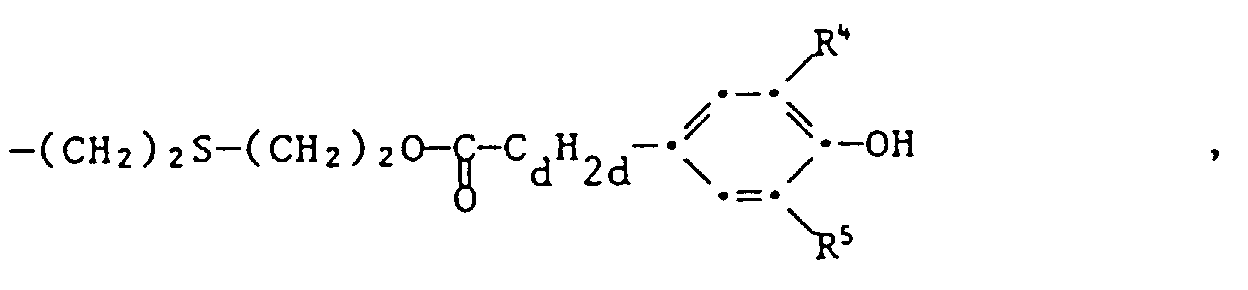


 d étant chaque fois = 0, 1, 2 ou 3 et t = 2, 3, 4, 5 ou 6, et R4 et R5 ayant chaque fois la signification donnée ci-dessus etR8 et R9, indépendamment l'un de l'autre, représentent H, alkyle avec 1 à 12 atomes de carbone, phényle ou phényle substitué par 1 ou 2 groupes alkyle en C1 à C4 et/ou -OH, ouR8 et R9, ensemble avec l'atome de carbone qui les relie, forment un groupe cycloalkyle en C5-C12, etR10 représente alkyle en C1-C18, phényle ou
- Composition selon la revendication 1 contenant B) au moins un composé de formule générale I dans lequel X est le soufre, X1 est l'oxygène, X2 est le soufre ou l'oxygène, Rx est alkyle en C3-C8 ou phényle substitué par alkyle en C8-C12, a est le nombre 2 et M⊕ représente Na⊕ ou K⊕.
- Composition selon la revendication 2 contenant B) au moins un composé de formule générale I dans lequel M signifie Na.
- Composition selon la revendication 1 contenant B) au moins un composé O,O-bis-éthylhexyl-dithiophosphate de sodium, O,O-bis-2-éthylhexyl-thionophosphate de sodium, O,O-bis-2-méthylpropyl-dithiophosphate de sodium, O,O-bis-nonylphényl-dithiophosphate de sodium ou S-[O,O-bis-2-éthylhexyl-thiophosphoryl]-thioglycolate de sodium.
- Composition selon la revendication 1 contenant C) au moins un composé de la série des amines aromatiques de formules II et III dans lesquellesR1 représente alkyle en C1-C4, phénylalkyle en C7-C9, cyclohexyle, phényle, (alkyl en C10-C18)phényle ou naphtyle,R2 représente (alkyl en C10-C18)phényle ou phényle,R3 représente l'hydrogène, alkyle en C1-C8, benzyle, allyle ou un groupe -CH2SRg, Rg représentant -H, alkyle en C1-C4, phényle ou cyclohexyle,Ra représente -H, alkyle en C1-C18 ou -CH2COO(alkyle en C8-C18), etRb et Rc, indépendamment l'un de l'autre, représentent -H, alkyle en C1-C12 ou phénylalkyle en C7-C9.
- Composition selon la revendication 1 contenant C) au moins un composé de la série des amines aromatiques de formule II dans laquelle R1 et R2, indépendamment l'un de l'autre, représentent phényle ou (alkyl en C8-C18)Phényle et R3 est l'hydrogène.
- Composition selon la revendication 1 contenant C) au moins un composé de la série des amines aromatiques de formule III dans laquelle Ra est l'hydrogène et Rb et Rc, indépendamment l'un de l'autre, représentent -H ou alkyle en C4-C12.
- Composition selon la revendication 1 contenant comme C) la 4,4'-di-tert-octyl-diphénylamine ou la 3,7-di-tert-octyl-phénothiazine ou leur mélange.
- Composition selon la revendication 1 contenant comme C) un mélange de composés de diphénylamines contenant1 à 5 % en poids a) Diphénylamine8 à 18 % en poids b) 4-tert-Butyldiphénylamine21 à 31 % en poids c) un ou plusieurs des composési) 4-tert-Octyldiphénylamineii) 4,4'-Di-tert-butyldiphénylamineiii) 2,4,4'-Tris-tert-butyldiphénylamine20 à 31 % en poids d) un ou plusieurs des composési) 4-tert-Butyl-4'-tert-octyldiphénylamineii) 2,2'- ou 4,4'-Di-tert-octyldiphénylamineiii) 2,4-Di-tert-butyl-4'-tert-octyldiphénylamine et15 à 29 % en poids e) du composéi) 4,4'-Di-tert-octyldiphénylamine ou du composéi) 4,4'-Di-tert-octyldiphénylamine etii) 2,4-Di-tert-octyl-4'-tert-butyldiphénylamine.
- Composition selon la revendication 1 contenant comme D) au moins un composé de la série des amines cycliques à encombrement stérique qui contiennent au moins un groupe de formule VI

- Composition selon la revendication 1 contenant D) au moins un composé de la série des amines cycliques à encombrement stérique qui contiennent au moins un groupe de formule VII

- Composition selon la revendication 1 contenant D) au moins un composé de la série des amines cycliques à encombrement stérique de formule VIII


- Composition selon la revendication 1 contenant D) au moins un composé de la série des amines cycliques à encombrement stérique de formule XII

- Composition selon la revendication 1 contenant D) au moins un composé de la série des phénols de formule V, dans lesquels A représente -CqH2q-Sz-Y, q = 0 ou 1 et z = 1 ou 2 et Y représente alkyle avec 4 à 18 atomes de carbone, phényle, phényle substitué par alkyle en C2 à C8 ou
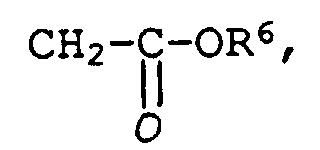
- Composition selon la revendication 1 où A dans les composés de formule V

- Composition selon la revendication 1 où A dans les composés de formule V a la signification de


- Composition selon la revendication 1 où R4 dans la formule V a la signification d'hydrogène ou d'alkyle avec 1 à 4 atomes de carbone et R5 a la signification d'alkyle avec 1 à 4 atomes de carbone.
- Composition selon la revendication 1 où R4 et R5 dans la formule V ont la signification de tert-butyle.
- Composition selon la revendication 1 dans laquelle sont contenus en tant que composé de formule V

- Composition selon la revendication 1 contenant comme B) O,O-bis-éthylhexyl-dithiophosphate de sodium, O,O-bis-2-éthylhexyl-thionophosphate de sodium, O,O-bis-2-méthylpropyl-dithiophosphate de sodium, O,O-bis-nonylphényl-dithiophosphate de sodium ou S-[O,O-bis-2-éthylhexyl-thiophosphoryl]-thioglycolate de sodium, comme C) un mélange de composés de diphénylamines1 à 5 % en poids a) Diphénylamine8 à 18 % en poids b) 4-tert-Butyldiphénylamine21 à 31 % en poids c) un ou plusieurs des composési) 4-tert-Octyldiphénylamineii) 4,4'-Di-tert-butyldiphénylamineiii) 2,4,4'-Tris-tert-butyldiphénylamine20 à 31 % en poids d) un ou plusieurs des composési) 4-tert-Butyl-4'-tert-octyldiphénylamineii) 2,2'- ou 4,4'-Di-tert-octyldiphénylamineiii) 2,4-Di-tert-butyl-4'-tert-octyldiphénylamine et15 à 29 % en poids e) du composéet comme D) un des composé sébacate de di-(2,2,6,6-tétraméthylpipéridin-4-yle), N,N'-bis-(2,2,6,6-tétraméthylpipéridin-4-yl)-hexaméthylèn-1,6-diamine ou bis-(3,5-di-tert-butyl-4-hydroxy-hydrocinnamate) de 2,2-thiodiéthylèn-glycol ou tétrakis-[3-(3,5-di-tert-butyl-4-hydroxy-phényl)-propionate] de pentaérythritol.i) 4,4'-Di-tert-octyldiphénylamine ou du composéi) 4,4'-Di-tert-octyldiphénylamine etii) 2,4-Di-tert-octyl-4'-tert-butyldiphénylamine.
- Composition selon la revendication 1, contenant A) un lubrifiant et de 0,01 à 10 % en poids par rapport à la composition d'un mélange de B), C) et D).
- Composition selon la revendication 21, dans laquelle le mélange de B), C) et D) est contenu dans une quantité de 20 à 88 % en poids de B), de 10 à 60 % en poids de C) et de 2 à 20 % en poids de D).
- Composition selon la revendication 22, dans laquelle le rapport pondéral des composés de la série C) aux composés de la série D) est de 3-5:1.
- Utilisation des mélanges de B), C) et D) selon la revendication 1 en tant qu'anti-oxydants dans des lubrifiants.
Applications Claiming Priority (2)
| Application Number | Priority Date | Filing Date | Title |
|---|---|---|---|
| CH4018/89 | 1989-11-08 | ||
| CH401889 | 1989-11-08 |
Publications (2)
| Publication Number | Publication Date |
|---|---|
| EP0432089A1 EP0432089A1 (fr) | 1991-06-12 |
| EP0432089B1 true EP0432089B1 (fr) | 1996-09-04 |
Family
ID=4268282
Family Applications (1)
| Application Number | Title | Priority Date | Filing Date |
|---|---|---|---|
| EP90810831A Expired - Lifetime EP0432089B1 (fr) | 1989-11-08 | 1990-10-30 | Compositions lubrifiantes |
Country Status (6)
| Country | Link |
|---|---|
| US (1) | US5167844A (fr) |
| EP (1) | EP0432089B1 (fr) |
| JP (1) | JPH03168297A (fr) |
| CA (1) | CA2029402A1 (fr) |
| DE (1) | DE59010484D1 (fr) |
| ES (1) | ES2091236T3 (fr) |
Cited By (1)
| Publication number | Priority date | Publication date | Assignee | Title |
|---|---|---|---|---|
| CN107090068A (zh) * | 2010-03-18 | 2017-08-25 | 范德比尔特化学品有限责任公司 | 聚氨酯泡沫烧焦抑制剂 |
Families Citing this family (17)
| Publication number | Priority date | Publication date | Assignee | Title |
|---|---|---|---|---|
| GB2253411B (en) * | 1991-01-08 | 1994-12-07 | Ciba Geigy Ag | Lubricant compositions |
| DE4138481A1 (de) * | 1991-11-22 | 1993-05-27 | Kempten Elektroschmelz Gmbh | Wiederaufarbeitung von gebrauchten verdampferschiffchen |
| JP2859077B2 (ja) * | 1993-04-09 | 1999-02-17 | 出光興産株式会社 | 潤滑油組成物 |
| JP3401349B2 (ja) * | 1994-12-07 | 2003-04-28 | 新日本石油株式会社 | 潤滑油組成物 |
| JP3527555B2 (ja) * | 1994-12-09 | 2004-05-17 | 出光興産株式会社 | 熱処理油組成物 |
| JP3508785B2 (ja) * | 1994-12-13 | 2004-03-22 | 出光興産株式会社 | ギヤ用潤滑油組成物 |
| JP3527556B2 (ja) * | 1994-12-14 | 2004-05-17 | 出光興産株式会社 | 内燃機関用潤滑油組成物 |
| US5912212A (en) * | 1995-12-28 | 1999-06-15 | Nippon Oil Co., Ltd. | Lubricating oil composition |
| GB0011189D0 (en) * | 2000-05-10 | 2000-06-28 | Great Lakes Chemical Europ | Anti-oxidant additives |
| EP1507826A4 (fr) | 2002-05-17 | 2007-11-07 | Othera Pharmaceuticals Inc | Amelioration de l'evolution des cataractes et d'autres maladies ophtalmiques |
| US6797677B2 (en) | 2002-05-30 | 2004-09-28 | Afton Chemical Corporation | Antioxidant combination for oxidation and deposit control in lubricants containing molybdenum and alkylated phenothiazine |
| US6599865B1 (en) | 2002-07-12 | 2003-07-29 | Ethyl Corporation | Effective antioxidant combination for oxidation and deposit control in crankcase lubricants |
| US7825134B2 (en) | 2003-05-19 | 2010-11-02 | Othera Holding, Inc. | Amelioration of cataracts, macular degeneration and other ophthalmic diseases |
| US8466096B2 (en) * | 2007-04-26 | 2013-06-18 | Afton Chemical Corporation | 1,3,2-dioxaphosphorinane, 2-sulfide derivatives for use as anti-wear additives in lubricant compositions |
| JP2009024123A (ja) * | 2007-07-23 | 2009-02-05 | Showa Shell Sekiyu Kk | バイオ燃料対応ディーゼルエンジン用潤滑油組成物。 |
| RU2493243C2 (ru) * | 2009-02-02 | 2013-09-20 | Ар.Ти. ВАНДЕРБИЛТ КОМПАНИ, ИНК. | Беззольная смазывающая композиция |
| CN114657545B (zh) * | 2021-03-12 | 2023-11-24 | 塞尔纳新材料(武汉)有限公司 | 一种生态除鳞型快速沉降钝化液及其制备工艺 |
Family Cites Families (12)
| Publication number | Priority date | Publication date | Assignee | Title |
|---|---|---|---|---|
| US2758086A (en) * | 1952-06-28 | 1956-08-07 | California Research Corp | Lubricant composition |
| US3412118A (en) * | 1962-08-31 | 1968-11-19 | Hooker Chemical Corp | Salts of 2, 6-and 2, 4, 6-substituted primary aryl phosphites |
| DE1594405B2 (de) * | 1966-07-20 | 1974-03-07 | Deutsche Shell Ag, 2000 Hamburg | Schmieröl |
| US3791985A (en) * | 1970-10-13 | 1974-02-12 | Gaf Corp | Lubricating compositions containing sulfur containing phosphate esters |
| DE2364121A1 (de) * | 1972-12-27 | 1974-07-11 | Ciba Geigy Ag | Verfahren zur herstellung von hydroxyalkylphenylderivaten |
| US3951829A (en) * | 1975-05-05 | 1976-04-20 | Cities Service Company | Two-cycle and rotary combustion engine lubricant |
| US4085132A (en) * | 1975-06-24 | 1978-04-18 | Ciba-Geigy Corporation | Process for the production of hydroxyalkylphenyl derivatives |
| EP0059168B1 (fr) * | 1981-02-19 | 1985-10-02 | Ciba-Geigy Ag | Elastomères organiques et huiles lubrifiantes minérales et synthétiques contenant des esters phénolmercaptocarboxyliques comme stabilisants |
| GB8607157D0 (en) * | 1986-03-22 | 1986-04-30 | Ciba Geigy Ag | Lubricating compositions |
| US4917809A (en) * | 1986-11-11 | 1990-04-17 | Ciba-Geigy Corporation | High-temperature lubricants |
| US5091099A (en) * | 1988-06-09 | 1992-02-25 | Ciba-Geigy Corporation | Lubricating oil composition |
| US5073278A (en) * | 1988-07-18 | 1991-12-17 | Ciba-Geigy Corporation | Lubricant composition |
-
1990
- 1990-10-30 ES ES90810831T patent/ES2091236T3/es not_active Expired - Lifetime
- 1990-10-30 EP EP90810831A patent/EP0432089B1/fr not_active Expired - Lifetime
- 1990-10-30 DE DE59010484T patent/DE59010484D1/de not_active Expired - Fee Related
- 1990-10-31 US US07/606,401 patent/US5167844A/en not_active Expired - Fee Related
- 1990-11-06 CA CA002029402A patent/CA2029402A1/fr not_active Abandoned
- 1990-11-08 JP JP2303732A patent/JPH03168297A/ja active Pending
Cited By (1)
| Publication number | Priority date | Publication date | Assignee | Title |
|---|---|---|---|---|
| CN107090068A (zh) * | 2010-03-18 | 2017-08-25 | 范德比尔特化学品有限责任公司 | 聚氨酯泡沫烧焦抑制剂 |
Also Published As
| Publication number | Publication date |
|---|---|
| EP0432089A1 (fr) | 1991-06-12 |
| CA2029402A1 (fr) | 1991-05-09 |
| US5167844A (en) | 1992-12-01 |
| ES2091236T3 (es) | 1996-11-01 |
| JPH03168297A (ja) | 1991-07-22 |
| DE59010484D1 (de) | 1996-10-10 |
Similar Documents
| Publication | Publication Date | Title |
|---|---|---|
| EP0432089B1 (fr) | Compositions lubrifiantes | |
| EP0356677B1 (fr) | Composition lubrifiante | |
| EP0346283B1 (fr) | Composition lubrifiante | |
| EP0376889B1 (fr) | Composition lubrifiante | |
| KR101275425B1 (ko) | 다중 항산화제로 안정화된 윤활 조성물 | |
| EP0160620A2 (fr) | Désactivateurs de métaux | |
| DE19824790A1 (de) | Nonylierte Diphenylamine | |
| DE4200192A1 (de) | Schmiermittelzusammensetzungen | |
| DE68903468T2 (de) | Schmiermittelzusammensetzungen. | |
| EP0512954A1 (fr) | Naphthalène diamine comme stabilisants | |
| US5273669A (en) | Lubricant composition | |
| CA1300587C (fr) | Fluides fonctionnels | |
| EP0406826B1 (fr) | Composition de lubrifiant | |
| DE4317980A1 (de) | Bis-Dithiophosphorsäurederivate als Schmiermitteladditive | |
| EP0368803A1 (fr) | Composition lubrifiante | |
| EP0466639B1 (fr) | Composition de lubrifiant | |
| EP0480875B1 (fr) | Composition de lubrifiant | |
| DE69007214T2 (de) | Butenylaromatische Aminstabilisatoren. | |
| EP0512949B1 (fr) | 2,3-dihydropérimidines substitués, comme stabilisants | |
| EP0322362A1 (fr) | Dérivés de thiadiazoles comme additifs pour lubrifiants | |
| DE4317911A1 (de) | Trisamidodithionodiphosphate | |
| EP0406825B1 (fr) | Composition de lubrifiant | |
| DE102008022483A1 (de) | Schmiermittelzusammensetzung | |
| EP0323403A2 (fr) | Composition lubrifiante | |
| DE102007051531A1 (de) | Schmiermittelzusammensetzung |
Legal Events
| Date | Code | Title | Description |
|---|---|---|---|
| PUAI | Public reference made under article 153(3) epc to a published international application that has entered the european phase |
Free format text: ORIGINAL CODE: 0009012 |
|
| 17P | Request for examination filed |
Effective date: 19901102 |
|
| AK | Designated contracting states |
Kind code of ref document: A1 Designated state(s): DE ES FR GB IT |
|
| 17Q | First examination report despatched |
Effective date: 19920803 |
|
| GRAH | Despatch of communication of intention to grant a patent |
Free format text: ORIGINAL CODE: EPIDOS IGRA |
|
| GRAH | Despatch of communication of intention to grant a patent |
Free format text: ORIGINAL CODE: EPIDOS IGRA |
|
| GRAA | (expected) grant |
Free format text: ORIGINAL CODE: 0009210 |
|
| AK | Designated contracting states |
Kind code of ref document: B1 Designated state(s): DE ES FR GB IT |
|
| ITF | It: translation for a ep patent filed | ||
| REF | Corresponds to: |
Ref document number: 59010484 Country of ref document: DE Date of ref document: 19961010 |
|
| REG | Reference to a national code |
Ref country code: ES Ref legal event code: FG2A Ref document number: 2091236 Country of ref document: ES Kind code of ref document: T3 |
|
| ET | Fr: translation filed | ||
| GBT | Gb: translation of ep patent filed (gb section 77(6)(a)/1977) |
Effective date: 19961202 |
|
| REG | Reference to a national code |
Ref country code: GB Ref legal event code: 732E |
|
| PLBE | No opposition filed within time limit |
Free format text: ORIGINAL CODE: 0009261 |
|
| STAA | Information on the status of an ep patent application or granted ep patent |
Free format text: STATUS: NO OPPOSITION FILED WITHIN TIME LIMIT |
|
| PGFP | Annual fee paid to national office [announced via postgrant information from national office to epo] |
Ref country code: FR Payment date: 19970826 Year of fee payment: 8 |
|
| 26N | No opposition filed | ||
| PGFP | Annual fee paid to national office [announced via postgrant information from national office to epo] |
Ref country code: DE Payment date: 19970904 Year of fee payment: 8 |
|
| PGFP | Annual fee paid to national office [announced via postgrant information from national office to epo] |
Ref country code: GB Payment date: 19970923 Year of fee payment: 8 |
|
| PGFP | Annual fee paid to national office [announced via postgrant information from national office to epo] |
Ref country code: ES Payment date: 19971015 Year of fee payment: 8 |
|
| REG | Reference to a national code |
Ref country code: FR Ref legal event code: TP |
|
| REG | Reference to a national code |
Ref country code: ES Ref legal event code: PC2A |
|
| PG25 | Lapsed in a contracting state [announced via postgrant information from national office to epo] |
Ref country code: GB Free format text: LAPSE BECAUSE OF NON-PAYMENT OF DUE FEES Effective date: 19981030 |
|
| PG25 | Lapsed in a contracting state [announced via postgrant information from national office to epo] |
Ref country code: ES Free format text: LAPSE BECAUSE OF EXPIRATION OF PROTECTION Effective date: 19981031 |
|
| GBPC | Gb: european patent ceased through non-payment of renewal fee |
Effective date: 19981030 |
|
| PG25 | Lapsed in a contracting state [announced via postgrant information from national office to epo] |
Ref country code: FR Free format text: LAPSE BECAUSE OF NON-PAYMENT OF DUE FEES Effective date: 19990630 |
|
| REG | Reference to a national code |
Ref country code: FR Ref legal event code: ST |
|
| PG25 | Lapsed in a contracting state [announced via postgrant information from national office to epo] |
Ref country code: DE Free format text: LAPSE BECAUSE OF NON-PAYMENT OF DUE FEES Effective date: 19990803 |
|
| REG | Reference to a national code |
Ref country code: ES Ref legal event code: FD2A Effective date: 20010201 |
|
| PG25 | Lapsed in a contracting state [announced via postgrant information from national office to epo] |
Ref country code: IT Free format text: LAPSE BECAUSE OF NON-PAYMENT OF DUE FEES;WARNING: LAPSES OF ITALIAN PATENTS WITH EFFECTIVE DATE BEFORE 2007 MAY HAVE OCCURRED AT ANY TIME BEFORE 2007. THE CORRECT EFFECTIVE DATE MAY BE DIFFERENT FROM THE ONE RECORDED. Effective date: 20051030 |