EP0434423B1 - System zum Lernen eines externen Auswertungsstandards - Google Patents
System zum Lernen eines externen Auswertungsstandards Download PDFInfo
- Publication number
- EP0434423B1 EP0434423B1 EP90314012A EP90314012A EP0434423B1 EP 0434423 B1 EP0434423 B1 EP 0434423B1 EP 90314012 A EP90314012 A EP 90314012A EP 90314012 A EP90314012 A EP 90314012A EP 0434423 B1 EP0434423 B1 EP 0434423B1
- Authority
- EP
- European Patent Office
- Prior art keywords
- evaluation
- input
- pattern
- output
- external
- Prior art date
- Legal status (The legal status is an assumption and is not a legal conclusion. Google has not performed a legal analysis and makes no representation as to the accuracy of the status listed.)
- Expired - Lifetime
Links
Images







Classifications
-
- G—PHYSICS
- G06—COMPUTING OR CALCULATING; COUNTING
- G06N—COMPUTING ARRANGEMENTS BASED ON SPECIFIC COMPUTATIONAL MODELS
- G06N20/00—Machine learning
Definitions
- This invention relates to a learning system of a neural network.
- a learning system such as a neural network has been applied to alphabetical font recognition, pattern recognition such as image recognition, and control of an adaptation filter or a robot.
- a learning system requiring teacher data, since it is difficult or even impossible to manually create teacher data, a learning system which automatically adapts to an outside environment is sought.
- a neural network as a learning system capable of learning a desired pattern is applied in a wide variety of fields.
- a hierarchical neural network of a perceptron comprises three hierarchies, e.g. an input hierarchy, an intermediate hierarchy, and an output hierarchy.
- the output hierarchy outputs an output pattern in response to an input pattern to the input hierarchy.
- learning by the neural network is performed using a desired pattern. That is, weighting in the neural network is determined, e.g. by a back propagation method, so that a proper output pattern is presented for an input pattern and a proper output pattern is outputted.
- the neural network performs its learning by using the desired pattern manually prepared beforehand.
- the system in a system capable of creating a desired pattern according to an internal evaluation standard, for a method without an interface for receiving an external evaluation for the output of the system itself, the system must be equipped with a predetermined internal evaluation standard. Therefore, when the system is applied to a variety of fields, there are problems. For example, the internal evaluation standard must be changed according to the particular application field. Thus, the system lacks flexibility.
- An object of the present invention is to provide a learning system capable of creating a desired pattern using an internal evaluation standard to learn an evaluation for the system's external output as the internal evaluation standard.
- a system as set out in claim 1 for learning an external learning standard said system having an internal evaluation standard and a function for evaluating the correspondence between external information and external output, produced from processing the external information according to input information of the internal evaluation standard, and for learning an evaluation standard of an external evaluation by using the external output and the internal evaluation standard
- a learning system of an external evaluation standard for learning the evaluation standard of an external evaluation used in a system having the function of evaluating the correspondence between external input information and the external output produced by processing the external input information, for taking an external evaluation from the external output into the internal evaluation standard.
- the present invention enables a learning system to learn the evaluation standard of the external evaluation system by using a simple external evaluation (reinforcement signal) and to use it as an internal evaluation standard of its own system.
- the learning system creates a desired pattern according to the internal evaluation standard, with which it learns of the processing of the external information inputted to its own system. Consequently, there is no need to replace the internal evaluation standard of the learning system from outside. Instead, by monitoring the performance of the learning system, only evaluation by a reinforcement signal needs to be supplied from outside. Therefore, when a learning system needs to be applied in various fields, the internal evaluation standard no longer needs to be replaced for each of the application fields, and a highly flexible learning system is built.
- This invention is applicable to any system utilizing a learning feature such as of a neural network, e.g. various robot control systems and image processing systems.
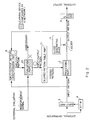
- Figure 1 is a principle block diagram of a self learning system for learning a evaluation standard of an external evaluation, used in a learning system having a function for evaluating the correspondence between external input information and the external output produced by processing the external input information by the system itself, e.g. a neural network, according to the internal evaluation standard, for taking the external evaluation for its external output into its internal evaluation standard.
- a self learning system for learning a evaluation standard of an external evaluation, used in a learning system having a function for evaluating the correspondence between external input information and the external output produced by processing the external input information by the system itself, e.g. a neural network, according to the internal evaluation standard, for taking the external evaluation for its external output into its internal evaluation standard.
- an internal evaluation means 1 evaluates input information, e.g. an input pattern to a neural network and a system output result of the input information, at a particular point in time during system execution, i.e. a evaluation input pattern including input information at the next point in time externally inputted for an output pattern, as evaluation object information according to an internal evaluation standard, and outputs the evaluation result, i.e. good or bad, as an evaluation signal.
- input information e.g. an input pattern to a neural network and a system output result of the input information, at a particular point in time during system execution, i.e. a evaluation input pattern including input information at the next point in time externally inputted for an output pattern, as evaluation object information according to an internal evaluation standard, and outputs the evaluation result, i.e. good or bad, as an evaluation signal.
- An evaluation desired pattern memory means 2 receives an external evaluation from the earlier described external output, has the external evaluation correspond with the evaluation input pattern, and has the internal evaluation means 1 memorize it as a desired pattern for learning the evaluation standard of the external evaluation.
- the evaluation desired pattern memorized in the evaluation desired pattern memory means 2 at a system execution time i.e. the evaluation input pattern and its corresponding external evaluation
- the internal evaluation means 1 e.g. a neural network, at a learning time or period
- the external evaluation for the system output is taken into the internal evaluation standard of the internal evaluation means 1.
- a system which realizes an object of this invention comprises a self learning method for learning a evaluation standard of an external evaluation, used in a learning system having the function of evaluating the correspondence between external input information, e.g. an input pattern, and the processing part of its own system for the input pattern, e.g. the external output of the processing result of the neural network, according to the internal evaluation standard.
- the internal evaluation means 1 performs the evaluation.
- the internal evaluation means 1 evaluates the evaluation input pattern by using the evaluation input pattern including the input pattern to the system at a particular point in time, e.g. time t, and the input pattern to the system at the next point in time, i.e. time t+1. What is actually evaluated is the correspondence between the system processing part, e.g. the output pattern outputted by the neural network, and the input pattern at time t.
- the input/output pattern at time t is temporarily memorized in the system.
- the evaluation signal outputted by the internal evaluation means 1 at time t+1 is good, the input/output pattern is stored, e.g. in a desired pattern table for the system processing part.
- the desired pattern stored in the desired pattern table is used for learning by the system processing part, e.g. the neural network.
- the evaluation signal by the internal evaluation means 1 at time t+1 for the input/output pattern at time t is bad, the input/output pattern is not stored in the desired pattern table. Hence, the learning by the system processing part is performed only for the input/output pattern whose evaluation signal outputted by the internal evaluation means 1 is good.
- this invention enables the external evaluation of the system for the evaluation input pattern to be learned by the internal evaluation means 1 as the evaluation desired pattern.
- FIG. 2 is a block diagram showing the system configuration of an embodiment of the learning system of this invention.
- the system comprises an input part 3 for receiving external information; a memory (STM) 4 for memorizing past external information as necessary; a processing part, e.g. a neural network, 5 for processing an input pattern created by the input part 3; a noise generating part 6 for generating noise to be added to the output of the processing part 5; an adder 7; an output part 8 for converting the output from the adder 7 to an external output; an input/output corresponding part 9 for having the input pattern outputted from the input part 3 correspond with the conforming output from the adder 7, i.e.
- STM memory
- an evaluation part 10 for judging whether the input/output pattern outputted from the input/output pattern corresponding part 9 is good or bad, by using the input/output pattern outputted from the input/output corresponding part 9 and the external evaluation supplied from the outside of the system, i.e. a reinforcement signal or the like and for outputting an input/output pattern whose judging result is good; and a desired pattern table part 11 for memorizing the input/output pattern whose evaluation outputted from the evaluation part 10 is good and for outputting the input/output pattern as a desired pattern at a learning time of the processing part 5.
- the noise outputted from the noise generating part 6 is added to the output from the processing part 5 for actively discovering the desired pattern for the processing part 5.
- the processing part 5 e.g. the neural network
- the processing part 5 always outputs the same output pattern for a particular input.
- the noise is added to the output from the processing part 5 and the external output for the output pattern is outputted to the outside of the system, so that the system is disturbed. Since the change in the external information for the disturbance is evaluated by the internal evaluation standard described earlier, it becomes easier to search the proper output pattern, i.e. the desired pattern.
- Figure 3 is a configuration block diagram showing an embodiment of the evaluation part 10 shown in Figure 2.
- the evaluation part 10 comprises an internal evaluation part 12 corresponding to the internal evaluation means 1 shown in Figure 1; an evaluation desired pattern table part 13 corresponding to the evaluation desired pattern memory means 2 shown in Figure 1; a short term memory means 14 for temporarily memorizing the input/output pattern; an evaluation input part 15 for creating the evaluation input pattern including a current input pattern and a past input pattern by using the past input/output pattern outputted from the short term memory part 14 and the input/output pattern; and an evaluation output part 16 for outputting the past input/output pattern to the desired pattern table part 11 shown in Figure 2 when the evaluation signal outputted from the internal evaluation part 12 is good.
- the processing part 5 e.g. the neural network, performs a processing for an input pattern created from external information inputted to the system.
- the output part 8 converts an output pattern, to which a noise generated by the the noise generating part 6 is added, to an external output and outputs it to the outside of the system.
- the input/output pattern corresponding part 9 outputs the input pattern and the output pattern outputted from the adder 7 as the input/output pattern to the evaluation part 10. If the above actions are executed at time t, since the external output changes the external environment, new external information is given to the input part 3 at time t+1. By using this external information, the input/output pattern corresponding part 9 gives an input/output pattern to the evaluation part 10 at time t+1 in a similar manner to the case at time t.
- the input/output pattern at time t is temporarily memorized in the short term memory part 14.
- the input/output pattern at time t+1 and the output from the short term memory part 14, i.e. the input/output pattern at time t, are inputted to the the evaluation input part 15, which gives the evaluation input pattern including the input pattern at time t+1 and the input pattern at time t to the internal evaluation part 12 and the evaluation desired pattern table part 13.
- the internal evaluation part 12 evaluates the inputted evaluation input pattern according to the internal evaluation standard and outputs the evaluation signal indicating good or bad to the evaluation output part 16.
- the evaluation output part 16 outputs the input/output pattern at time t, i.e. the past input/output pattern to the desired pattern table part 11 shown in Figure 2.
- the evaluation desired pattern table part 13 memorizes the correspondence between the external evaluation given from the outside of the system at time t+1, i.e. the reinforcement signal, and the evaluation input pattern.
- the learning of the processing part 5, e.g. the neural network is performed by using the desired pattern stored in the desired pattern table part 11.
- the learning of the internal evaluation part 12 is performed by using the evaluation desired pattern memorized in the evaluation desired pattern table part 13.
- Figure 4 shows an embodiment for a robot control using the learning method of this invention.
- a robot 17 performs a capturing action by approaching a target 18 and capturing it.
- the robot 17 has a visual sensor 19 and gives its output to the input part 3 shown in Figure 2 as the external information.
- the output part 8 converts the output pattern, i.e. the output from the processing part 5 added to the noise generated from the noise generating part 6, to the rotating angle of the robot's motor.
- a robot's proceeding direction angle 20 is determined according to the rotating angle, and the robot 17 moves one step in that angular direction.
- Figure 5 shows an embodiment for a robot's movement locus from a starting position to a target.
- Figure 5 shows the movement locus of the robot's step by step movement from its starting position to its target 18.
- one trial is defined as sequences of the robot until it captures the target.
- a simulation described later is performed in which the trial is deemed to be a failure if the number of movement steps exceeds 100 or the robot hits a wall in the movement.
- Figure 5 shows the movement locus of the result.
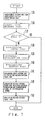
- Figure 6 is a flowchart showing a system processing embodiment of the learning method of this invention.
- the input part 3 converts external information to an input pattern in S21.
- This input pattern is sent to the input/output corresponding part 9 in S22, and the processing part 5, e.g. the neural network, performs the processing for the input pattern in S23.
- the processing part 5 comprises e.g. a neural network with three hierarchies.
- the noise generating part 6 For the output from the processing part 5, the noise generating part 6 generates a noise in S24, and this noise is added to the adder 7 in S25.
- the output pattern to which the noise is added is sent to the input/output pattern corresponding part 9 in S26, where it corresponds with the input pattern sent to S22, and the input/output pattern corresponding part 9 outputs it as the input/output pattern in S27.
- the evaluation part 10 evaluates this input/output pattern according to the internal evaluation standard in S28. If the evaluation result is good, the input/output pattern is sent to the desired pattern table part 11 in S29.
- the output part 8 converts the output pattern outputted from the adder 7 to the external output in S30, and is outputted to the outside of the system.
- the external output changes the external environment in S31. In case of a robot control, for example, the output from the visual sensor 19 changes. It is judged in S32 whether any action terminating conditions, e.g. the capturing of the target, the movement steps in excess of 100 or the robot hitting the wall in case of the robot described earlier, is met. If none is met, the processes from S21 are repeated.
- Figure 7 is a flowchart showing a processing embodiment of the evaluation part.
- the processes begin, first the input/output pattern is sent from the input/output pattern corresponding part 9 in S35, and its input/output pattern is memorized in the short term memory part 14 in S36. Then in S37, it is judged whether or not the current step is the first step of the robot movement, and the processing is terminated in case of the initial step, because the evaluation input pattern described earlier cannot be obtained.
- the evaluation input part 15 creates the evaluation input pattern in S38 and the internal evaluation part 12 evaluates the evaluation input pattern in S39, and the resultant evaluation signal is outputted to the evaluation output part 16 in S40.
- the evaluation input pattern is sent to the evaluation desired pattern table part 13 in S41.
- the external evaluation supplied from outside the system i.e. the reinforcement signal given to the evaluation input pattern in S42, and the external evaluation in correspondence with the evaluation input pattern is memorized in the evaluation desired pattern table part 13 in S43, and the processings are terminated.
- the visual sensor 19 of the robot 17 has a plurality of sensor elements in a row, and the sensor element that captures the target 18 reacts.
- the output of the reacted sensor element is 1 and the output of the non-reacted element is 0.
- the visual sensor 19 comprises eleven (11) sensor elements.
- the visual field of the visual sensor 19 is forty-five (45) degrees right and left.
- the visual field of one sensor element is approximately eight (8) degrees.
- an input to the processing part 5 shown in Figure 2 i.e.
- an input to the neural network is not limited to the current input of the visual sensor 19, but a past sensor output is also inputted.
- visual sensor information up to two steps before is inputted to the processing part 5. Therefore, the input hierarchy of the processing part 5 which is a three hierarchy neural network comprising an input hierarchy, an intermediate hierarchy and an output hierarchy comprises a total of thirty-three (33) units for three time series of the eleven visual sensor elements and one unit for threshold.
- the intermediate hierarchy comprises ten (10) units, and the output hierarchy comprises one unit for determining the robot's rotating angle.
- the processing part 5 since the processing part 5 is supplied with the input pattern including the past sensor output, the external information to the system is temporarily stored in the memory (STM) 4, and the current external information and the past information taken out from the memory (STM) 4 are sent to the input part 3 which is assembled into the input pattern by the input part 3 to be outputted to the processing part 5.
- An output pattern is obtained by adding the noise to the output from the processing part 5.
- the output part 8 converts the output pattern into the robot's motor rotating angle which is outputted as the external output.
- the present simulation is provided with a forty-five (45) degree limit right and left.
- the internal evaluation part 12 shown in Figure 3 comprises a neural network, i.e. a three-hierarchy network comprising an input hierarchy, an intermediate hierarchy and an output hierarchy.
- the input hierarchy comprises a total of twenty-three (23) units to which eleven (11) current visual sensor inputs, and eleven (11) visual sensor inputs of a step earlier, and a robot's motor rotating angle of a step earlier are inputted.
- the intermediate hierarchy comprises five units.
- the output hierarchy comprises a unit for determining whether the evaluation signal is good or bad.
- the evaluation input part 15 extracts the current sensor input, the visual sensor input of a step earlier, and the rotating angle output of a step earlier, and gives them as the evaluation input pattern to the internal evaluation part 12.
- the internal evaluation part 12 processes the evaluation input pattern and has the evaluation output part 16 select whether or not to have the desired pattern table part 11 memorize the input/output pattern of a step earlier memorized in the short term memory part 14 by outputting the evaluation signal.
- the learning of the internal evaluation standard in the internal evaluation part 12 in this case is performed by using the evaluation desired pattern stored in the evaluation desired pattern table part 13 at a learning time.
- Figure 8 shows a data embodiment of an input pattern or an output pattern in the processing part 5 shown in Figure 2.
- Figure 9 shows a data embodiment of an evaluation signal as an input pattern or an output pattern in the internal evaluation part 12 shown in Figure 3.
- the processing part 5 receives current visual sensor output A, one step earlier visual sensor output B and two steps earlier visual sensor output C, as its input patterns. Assume that the robot's starting time is step 0. Then, data B and C at step 0 are all 0.
- Data E indicate an evaluation signal of the internal evaluation part 12 shown in Figure 3 for the input/output pattern composed of data D, namely, the input patterns including data A, B and C and their corresponding output patterns.
- This evaluation signal is actually outputted from the internal evaluation part 12 at the next step, i.e. step 1, and is an evaluation signal for the input/output pattern at step 0 whose value is shown at the position of step 0.
- the input/output pattern corresponding to this value being 1 is stored in the desired pattern table part 11 and learned at a learning time. That is, a learning is performed such that output pattern D is realized for input patterns A, B and C whose data E are 1.
- the evaluation input pattern supplied to the internal evaluation part 12 shown in Figure 9 comprises current sensor output F, one step earlier visual sensor output G, and the one step earlier output pattern from the processing part 5, i.e. output H from the adder 7, whereas the output pattern outputted from the internal evaluation part 12, i.e. the evaluation signal, is data I, and the external evaluation provided to the system from outside, i.e. the reinforcement signal, is data J.
- data A at step 0, data A at step 1 and data D at step 0 respectively become data G, data F and data H at step 1.
- the evaluation input part 15 regards them as the evaluation input patterns and inputs them to the internal evaluation part 12.
- the internal evaluation part 12, i.e. the neural network processes these input patterns and outputs data I as their evaluation signals which are 1.00 in this case. As described earlier, these values become data E at step 0 shown in Figure 8.
- the external evaluation for the external output outputted from the output part 8 at step 0 is provided to the evaluation desired pattern table part 13 as data J, and a learning is performed at a learning time such that output pattern J is realized for input patterns F, G and H. This learning is performed for all evaluation desired patterns memorized in the evaluation desired pattern table part 13. When proper output pattern J is outputted for input patterns F, G and H, however, the learning of the back propagation method is not performed for the evaluation desired pattern already studied. Because data at and after step 2 are identical to those at step 1, their explanation is omitted.
- the robot moves from its starting position step by step, e.g. as shown in Figure 5.
- the external evaluation for the external output of the system and its evaluation object i.e. the evaluation input pattern
- the evaluation desired pattern table part 13 as the evaluation desired pattern.
- the evaluation signal of the internal evaluation part 12 for the evaluation input pattern is good
- the one step earlier input/output pattern is stored as the desired pattern in the desired pattern table part 11.
- this learning is performed according to the back propagation method which gives the weight updating quantity, e.g. for the connecting weight W ji from unit i in the input hierarchy to unit j in the intermediate hierarchy, by the following equation.
- ⁇ W ji (n+1) n ⁇ j O i + ⁇ W ji (n)
- ⁇ W ij (n) indicates the updating quantity at the weight updating time at the n-th time
- ⁇ j indicates the error of unit j
- O i indicates the output from unit i.
- the first term of the above equation is for proportioning the weight updating quantity to the weight W ji 's effect E P /w ji on the second power error E P , and the proportional constant n is called the learning constant.
- the second term is an inertia term added to the weight changing equation for preventing the weight oscillation, and its constant ⁇ is called the learning speed constant. This term is for determining the magnitude of the effect by the one time earlier weight updating quantity on the current updating quantity.
- the learning constant values 0.03 and the learning speed constant values 0.01 are set for both the processing part 5 and the neural network of the internal evaluation part 12 in the learning.
- the following two standards are used for the external evaluation standards for the system's external output.
- Second external evaluation standard The robot approaching the target is good until it is close. When it is close, the robot approaching the target by circling the target is good. All others are bad.
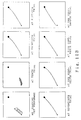
- Figures 10A and 10B are diagrams for explaining embodiments of the robot's learning effect using the first external evaluation standard.
- Figure 10A shows a case in which the output pattern, to which a noise generated by the noise generating part 6 shown in Figure 2 is added at a testing time, is used for testing.
- Figure 10B shows a case in which the output from the processing part 5 is used "as is" as the output pattern without adding a noise.
- the noise generated from the noise generating part 6 is always added at an executing time.
- Figures 10A and 10B respectively show a state in which a learning is not yet performed and the respective testing results after 10, 30, 50, 70, 100, 500, and 1,000 trials are terminated.
- the robot At the fiftieth trial, the robot almost certainly approaches the target. In a test in which a noise is applied to the network output, the target is also approached.
- Figures 11A and 11B are diagrams for explaining embodiments of the robot's learning effect using a second external evaluation standard.
- the embodiments shown in Figures 11A and 11B utilizes the second external evaluation standard, in which the robot approaches the target.
- the robot approaches the target initially, but it moves away from the target when it comes close to it.
- the learning of the internal evaluation part 12 and the processing part 5 are assumed to be performed after the termination of the actions of one trial by the robot. However, they could naturally be performed at each step.
- the input timing to the evaluation desired pattern table part 13 of the external evaluation from outside of the system can also be appropriately varied according to the actual application.
Landscapes
- Engineering & Computer Science (AREA)
- Theoretical Computer Science (AREA)
- Software Systems (AREA)
- Evolutionary Computation (AREA)
- General Physics & Mathematics (AREA)
- Medical Informatics (AREA)
- Computer Vision & Pattern Recognition (AREA)
- Physics & Mathematics (AREA)
- Computing Systems (AREA)
- General Engineering & Computer Science (AREA)
- Data Mining & Analysis (AREA)
- Mathematical Physics (AREA)
- Artificial Intelligence (AREA)
- Image Analysis (AREA)
- Feedback Control In General (AREA)
- Manipulator (AREA)
- Image Processing (AREA)
Claims (9)
- Ein System zum Lernen eines externen Auswertungsstandards, welches System einen internen Auswertungsstandard und eine Funktion zum Auswerten der Entsprechung zwischen einer externen Information und einer externen Ausgabe aufweist, die aus einer Verarbeitung der externen Information gemäß einer Eingabeinformation des internen Auswertungsstandards erzeugt wird, und zum Lernen eines Auswertungsstandards einer externen Auswertung durch Verwenden der externen Ausgabe und des internen Auswertungsstandards, welches System umfaßt:neuronal-Netzwerk-Verarbeitungsmittel (5) zum Verarbeiten eines Eingabemusters beruhend auf einem gewünschten Muster als Eingabeinformation des internen Auswertungsstandards und Liefern eines Ausgabemusters;Eingabe/Ausgabemuster-Vergleichsmittel (9) zum Vergleichen des Eingabemusters mit dem Ausgabemuster und zum Ausgeben einer entsprechenden Beziehung als ein Eingabe/Ausgabemuster;ein internes Auswertungsmittel (10) zum Beurteilen, ob das Eingabe/Ausgabemuster korrekt ist, durch Verwenden eines Verstärkungssignals als die externe Auswertung, die von außerhalb des Systems geliefert wird, und des Eingabe/Ausgabemusters von dem Eingabe/Ausgabemuster-Entsprechungsmittel und zum Ausgeben des beurteilten Eingabe/Ausgabemusters, wenn das Beurteilungsergebnis korrekt ist; undSpeichermittel (11) für ein gewünschtes Auswertungsmuster, enthaltend Tabellenmittel zum Speichern des beurteilten Eingabe/Ausgabemusters, dessen von dem Auswertungsmittel ausgegebene Auswertung korrekt ist, und zum Ausgeben des beurteilten Eingabe/Ausgabemusters als das gewünschte Muster während einer Lernperiode des neuronal-Netzwerk-Verarbeitungsmittels,wobei das interne Auswertungsmittel ferner umfaßt:einen Kurzzeitspeicher (14), um das Eingabe/Ausgabemuster, das von dem Eingabe/Ausgabemuster-Entsprechungsmittel ausgegeben wird, vorübergehend zu speichern;Auswertungs-Eingabemittel (15) zum Erzeugen eines Auswertungs-Eingabemusters, das ein aktuelles Eingabemuster und ein früheres Eingabemuster enthält, durch Verwenden eines aktuellen Eingabe/Ausgabemusters und eines früheren Eingabe/Ausgabemusters, das von dem Kurzzeitspeichermittel (14) ausgegeben wird;ein internes neuronal-Netzwerk-Auswertungsmittel (12) zum Empfangen eines Auswertungs-Eingabemusters, das eine Information in einer ersten Periode und eine Eingabeinformation bei einer zweiten Periode enthält, welche später als die erste Periode ist, und zum Auswerten des Auswertungs-Eingabemusters gemäß dem internen Auswertungsstandard und zum Ausgeben eines Auswertungssignals, das anzeigt, ob die Auswertung korrekt ist;Auswertungs-Ausgabemittel (16) zum Ausgeben des früheren Eingabe/Ausgabemusters, das in dem Kurzzeitspeichermittel gespeichert ist, an das Tabellenmittel für ein gewünschtes Muster, wenn das Auswertungssignal eine korrekte Auswertung anzeigt, die von dem internen neuronal-Netzwerk-Auswertungsmittel ausgegeben wird; undSpeichermittel (13) für ein gewünschtes Auswertungsmuster zum Empfangen des Verstärkungssignals als die externe Auswertung für die externe Ausgabe von dem Ausgabemittel, um das Verstärkungssignal dem Auswertungs-Eingabemuster entsprechen zu machen, und zum Speichern des Auswertungs-Eingabemusters als das gewünschte Auswertungsmuster, um das interne neuronal-Netzwerk-Auswertungsmittel den Auswertungsstandard der externen Auswertung lernen zu lassen.
- Das System zum Lernen des externen Auswertungsstandards nach Anspruch 1, ferner umfassend:Eingabemittel (3) zum Empfangen externer Information und zum Umwandeln der externen Information in das Eingabemuster;einen Speicher (4) zum Speichern einer früheren externen Information und zum Ausgeben der früheren externen Information an das Eingabemittel;ein Rauschen erzeugendes Mittel (6) zum Erzeugen von Rauschen;Addiermittel (7) zum Hinzufügen eines Ausgabemusters von dem neuronal-Netzwerk-Verarbeitungsmittel zu dem erzeugten Rauschen;Ausgabemittel (8) zum Umwandeln eines Ausgabemusters, dem ein Rauschen hinzugefügt ist, von der Addiervorrichtung in eine externe Ausgabe, worineine Ausgabe des Addiermittels an das Eingabe/Ausgabemuster-Komparatormittel geliefert wird zum Vergleichen mit dem Eingabemuster.
- Das System zum Lernen des externen Auswertungsstandards nach Anspruch 2, worindas Eingabemittel Mittel zum Umwandeln der eingegebenen externen Information in das Eingabemuster und zum Senden des Eingabemusters an das Eingabe/Ausgabemuster-Vergleichsmittel enthält;und worin das interne Auswertungsmittel Mittel enthält zum Auswerten des Eingabe/Ausgabemusters gemäß dem internen Auswertungsstandard und zum Senden des Eingabe/Ausgabemusters an das Tabellenmittel für ein gewünschtes Muster, wenn das Auswertungsergebnis korrekt ist;und worin das Ausgabemittel Mittel enthält zum Umwandeln des Ausgabemusters, das von dem Addiermittel ausgegeben wird, in die externe Ausgabe und zum Liefern der externen Ausgabe an außerhalb des Systems;und worin das System Mittel enthält zum Ändern der externen Umgebung durch Verwenden der externen Ausgabe zum Beurteilen, ob die externe Ausgabe wegen der Umgebungsänderung beendet werden sollte, zum Wiederholen von Aktionen in einer späteren Umwandlung der externen Information in das Eingabemuster, wenn die externe Ausgabe nicht beendet werden sollte, und zum Senden des gewünschten Musters, das in dem Tabellenmittel für ein gewünschtes Muster gespeichert ist, an das neuronal-Netzwerk-Verarbeitungsmittel, wenn die externe Ausgabe beendet werden sollte, so daß ein Lernen unter Verwendung eines Rückwärts-Ausbreitungsverfahrens stattfindet.
- Das System zum Lernen des externen Auswertungsstandards nach Anspruch 3, ferner umfassend:Kurzzeitspeichermittel zum Speichern des gesendeten Eingabe/Ausgabemusters bei einer dritten Periode gemäß einem internen Auswertungsstandard durch das Auswertungsmittel;Auswertungs-Eingabemittel zum Bestimmen, ob eine Eingabe der externen Information anfänglich ist, zum Beenden einer Verarbeitung, falls die externe Information anfänglich ist, und zum Erzeugen eines Auswertungs-Eingabemusters, falls die externe Information nicht anfänglich ist;ein internes neuronal-Netzwerk-Auswertungsmittel zum Auswerten des Auswertungs-Eingabemusters;Auswertungs-Ausgabemittel zum Senden des Eingabe/Ausgabemusters in dem Kurzzeitspeichermittel an das Tabellenmittel für ein gewünschtes Muster, wenn die Auswertung gut ist; undworin das Auswertungs-Eingabemittel Mittel zum Liefern des Auswertungs-Eingabemusters an das Speichermittel für ein gewünschtes Auswertungsmuster enthält, worindas Speichermittel für ein gewünschtes Auswertungsmuster Mittel enthält, um das Verstärkungssignal, als die von außerhalb des Systems gelieferte Auswertung, dem Auswertungs-Eingabemuster entsprechen zu machen, und zum Speichern der Entsprechung als ein gewünschtes Auswertungsmuster; unddas gewünschte Auswertungsmuster, das in dem Speichermittel für ein gewünschtes Auswertungsmuster gespeichert ist, durch das interne neuronal-Netzwerk-Auswertungsmittel verwendet wird, um ein Lernen unter Verwendung des Rückwärts-Ausbreitungsverfahrens durchzuführen, wenn die Beendigungsbedingung der externen Ausgabe erfüllt ist.
- Das System zum Lernen des externen Auswertungsstandards nach Anspruch 4, worin
das neuronal-Netzwerk-Verarbeitungsmittel Mittel enthält zum Empfangen des Eingabemusters, das ein aktuelles Eingabemuster und mindestens ein früheres Eingabemuster enthält, welche als ein Ergebnis des Eingabemittels erhalten werden, das die externe Information bei einer aktuellen Periode und die externe Information mindestens bei einer früheren Periode umwandelt. - Das System zum Lernen des externen Auswertungsstandards nach Anspruch 1, worin
das interne neuronal-Netzwerk-Auswertungsmittel Mittel umfaßt zum Empfangen des Auswertungs-Eingabemusters, enthaltend ein aktuelles Eingabemuster und ein früheres Eingabemuster, die als ein Ergebnis des Eingabemittels erhalten werden, das die externe Information bei einer aktuellen Periode und aus einer früheren externen Information, die in dem Speicher gespeichert ist, umwandelt, ebenso wie ein Ausgabemuster, das als eine Ausgabe von dem Addiermittel bei der gleichen früheren Periode wie das frühere Eingabemuster gespeichert ist. - Ein System zum Lernen des externen Auswertungsstandards nach irgendeinem vorhergehenden Anspruch, wobei das System mit einem Roboter verbunden ist, worin:das Eingabemittel Mittel zum Empfangen der externen Information umfaßt, welche Ausgaben von einer Vielzahl optischer Sensoren enthält, die an dem Roboter angebracht sind; unddie externe Ausgabe die Richtung einer Bewegung des Roboters anzeigt.
- Das System zum Lernen des externen Auswertungsstandards nach Anspruch 3, worin
das neuronal-Netzwerk-Verarbeitungsmittel Mittel enthält zum Empfangen des Eingabemusters, das ein aktuelles Eingabemuster und mindestens ein früheres Eingabemuster enthält, das als ein Ergebnis des Eingabemittels erhalten wird, welches die externe Information mindestens bei einer früheren Periode umwandelt. - Das System zum Lernen des externen Auswertungsstandards nach Anspruch 8, worin
das interne neuronal-Netzwerk-Auswertungsmittel Mittel umfaßt zum Empfangen des Auswertungs-Eingabemusters, das ein aktuelles Eingabemuster und ein früheres Eingabemuster enthält, wobei die aktuellen und früheren Eingabemuster als ein Ergebnis des Eingabemittels erhalten werden, das die externe Information bei einer aktuellen Periode und zu einer früheren Zeit umwandelt, und in dem Speicher gespeichert werden, und von dem Ausgabemuster von dem Addiermittel, welches dem früheren Eingabemuster entspricht.
Applications Claiming Priority (2)
| Application Number | Priority Date | Filing Date | Title |
|---|---|---|---|
| JP1328401A JPH03189856A (ja) | 1989-12-20 | 1989-12-20 | 外部評価基準の学習方式 |
| JP328401/89 | 1989-12-20 |
Publications (3)
| Publication Number | Publication Date |
|---|---|
| EP0434423A2 EP0434423A2 (de) | 1991-06-26 |
| EP0434423A3 EP0434423A3 (en) | 1993-02-03 |
| EP0434423B1 true EP0434423B1 (de) | 1996-02-28 |
Family
ID=18209844
Family Applications (1)
| Application Number | Title | Priority Date | Filing Date |
|---|---|---|---|
| EP90314012A Expired - Lifetime EP0434423B1 (de) | 1989-12-20 | 1990-12-20 | System zum Lernen eines externen Auswertungsstandards |
Country Status (4)
| Country | Link |
|---|---|
| US (1) | US5420964A (de) |
| EP (1) | EP0434423B1 (de) |
| JP (1) | JPH03189856A (de) |
| DE (1) | DE69025576T2 (de) |
Families Citing this family (12)
| Publication number | Priority date | Publication date | Assignee | Title |
|---|---|---|---|---|
| US5673367A (en) * | 1992-10-01 | 1997-09-30 | Buckley; Theresa M. | Method for neural network control of motion using real-time environmental feedback |
| US6000827A (en) * | 1993-09-10 | 1999-12-14 | Fujitsu Limited | System identifying device and adaptive learning control device |
| JP3633642B2 (ja) * | 1994-02-28 | 2005-03-30 | 富士通株式会社 | 情報の処理装置 |
| US5761387A (en) * | 1994-09-12 | 1998-06-02 | Fuji Xerox Co., Ltd. | System controller |
| US5802506A (en) * | 1995-05-26 | 1998-09-01 | Hutchison; William | Adaptive autonomous agent with verbal learning |
| EP0935202A1 (de) * | 1998-01-19 | 1999-08-11 | Sony France S.A. | Hardware- oder Software-Architektur mit selbstvorgespannter Konditionierung |
| US7577631B2 (en) * | 2001-09-10 | 2009-08-18 | Feldhake Michael J | Cognitive image filtering |
| US9015093B1 (en) | 2010-10-26 | 2015-04-21 | Michael Lamport Commons | Intelligent control with hierarchical stacked neural networks |
| US8775341B1 (en) | 2010-10-26 | 2014-07-08 | Michael Lamport Commons | Intelligent control with hierarchical stacked neural networks |
| CN106205244A (zh) * | 2016-07-04 | 2016-12-07 | 杭州医学院 | 基于信息融合与机器学习的智能计算机辅助教学系统 |
| JP2018018226A (ja) * | 2016-07-26 | 2018-02-01 | 富士通株式会社 | 制御方法、制御プログラム及び情報処理装置 |
| US20200143261A1 (en) * | 2018-11-02 | 2020-05-07 | Unchained Logic, LLC | Systems and methods for processing content using a pattern language |
Family Cites Families (2)
| Publication number | Priority date | Publication date | Assignee | Title |
|---|---|---|---|---|
| US4884216A (en) * | 1987-11-09 | 1989-11-28 | Michael Kuperstein | Neural network system for adaptive sensory-motor coordination of multijoint robots for single postures |
| US4933871A (en) * | 1988-12-21 | 1990-06-12 | Desieno Duane | Graded learning device and method |
-
1989
- 1989-12-20 JP JP1328401A patent/JPH03189856A/ja active Pending
-
1990
- 1990-12-20 EP EP90314012A patent/EP0434423B1/de not_active Expired - Lifetime
- 1990-12-20 DE DE69025576T patent/DE69025576T2/de not_active Expired - Fee Related
-
1992
- 1992-10-14 US US07/961,055 patent/US5420964A/en not_active Expired - Fee Related
Non-Patent Citations (1)
| Title |
|---|
| INTERNATIONAL WORKSHOP OF NEURAL NETWORKS & THEIR APPLICATIONS 13 November 1989, New York, US, pages 407-427; BOCK "The project alias: an application of collective learning systems theory to an adaptive learning image analysis system" * |
Also Published As
| Publication number | Publication date |
|---|---|
| US5420964A (en) | 1995-05-30 |
| EP0434423A2 (de) | 1991-06-26 |
| EP0434423A3 (en) | 1993-02-03 |
| DE69025576D1 (de) | 1996-04-04 |
| JPH03189856A (ja) | 1991-08-19 |
| DE69025576T2 (de) | 1996-07-11 |
Similar Documents
| Publication | Publication Date | Title |
|---|---|---|
| EP0434423B1 (de) | System zum Lernen eines externen Auswertungsstandards | |
| Lin et al. | Memory approaches to reinforcement learning in non-Markovian domains | |
| Ghaboussi et al. | Active control of structures using neural networks | |
| Jagannathan et al. | Multilayer discrete-time neural-net controller with guaranteed performance | |
| US6484133B1 (en) | Sensor response rate accelerator | |
| KR101961421B1 (ko) | 소스 시스템들의 운영 데이터를 사용하여 초기에 트레이닝되는 제 1 재귀 신경망 모델 및 제 2 재귀 신경망 모델을 별도로 트레이닝함으로써 타겟 시스템을 제어하기 위한 방법, 제어기, 및 컴퓨터 프로그램 제품 | |
| EP3502978A1 (de) | Meta-lernsystem | |
| EP0463630A2 (de) | Regelanrufmechanismus für induktive Lernmaschine | |
| US11561326B1 (en) | System and method for generating accurate hyperlocal nowcasts | |
| CN118466232A (zh) | 一种机器人运动控制模型训练方法和机器人运动控制方法 | |
| Sjoberg | On estimation of nonlinear black-box models: How to obtain a good initialization | |
| Bao et al. | Model-free control design using policy gradient reinforcement learning in LPV framework | |
| CN120343401A (zh) | 一种摄像头模组自适应光学防抖控制方法 | |
| Monsion et al. | An expert system for industrial process identification | |
| Yerramalla et al. | Lyapunov stability analysis of the quantization error for DCS neural networks | |
| JP2966076B2 (ja) | 学習装置の自己学習方法 | |
| EP0567983B1 (de) | Lernende Wellenformerkennungseinrichtung | |
| Jungbeck et al. | Optimal neural network output feedback control for robot manipulators | |
| Samad et al. | Parameter estimation for process control with neural networks | |
| Mazák | Transition control based on grey, neural states | |
| Abdollahi et al. | State estimation for flexible-joint manipulators using stable neural networks | |
| Bucak et al. | Application of reinforcement learning control to a nonlinear dexterous robot | |
| Tsirigotis et al. | The anticipatory aspect in neural network control | |
| Hu et al. | A State History Queue for Efficient Implementation of a Reinforcement Learning System | |
| Sørheim | ART2/BP architecture for adaptive estimation of dynamic processes |
Legal Events
| Date | Code | Title | Description |
|---|---|---|---|
| PUAI | Public reference made under article 153(3) epc to a published international application that has entered the european phase |
Free format text: ORIGINAL CODE: 0009012 |
|
| AK | Designated contracting states |
Kind code of ref document: A2 Designated state(s): DE FR GB |
|
| PUAL | Search report despatched |
Free format text: ORIGINAL CODE: 0009013 |
|
| AK | Designated contracting states |
Kind code of ref document: A3 Designated state(s): DE FR GB |
|
| 17P | Request for examination filed |
Effective date: 19930528 |
|
| 17Q | First examination report despatched |
Effective date: 19940422 |
|
| GRAA | (expected) grant |
Free format text: ORIGINAL CODE: 0009210 |
|
| AK | Designated contracting states |
Kind code of ref document: B1 Designated state(s): DE FR GB |
|
| PG25 | Lapsed in a contracting state [announced via postgrant information from national office to epo] |
Ref country code: FR Effective date: 19960228 |
|
| REF | Corresponds to: |
Ref document number: 69025576 Country of ref document: DE Date of ref document: 19960404 |
|
| EN | Fr: translation not filed | ||
| PLBE | No opposition filed within time limit |
Free format text: ORIGINAL CODE: 0009261 |
|
| STAA | Information on the status of an ep patent application or granted ep patent |
Free format text: STATUS: NO OPPOSITION FILED WITHIN TIME LIMIT |
|
| 26N | No opposition filed | ||
| REG | Reference to a national code |
Ref country code: GB Ref legal event code: IF02 |
|
| PGFP | Annual fee paid to national office [announced via postgrant information from national office to epo] |
Ref country code: GB Payment date: 20041215 Year of fee payment: 15 |
|
| PGFP | Annual fee paid to national office [announced via postgrant information from national office to epo] |
Ref country code: DE Payment date: 20041216 Year of fee payment: 15 |
|
| PG25 | Lapsed in a contracting state [announced via postgrant information from national office to epo] |
Ref country code: GB Free format text: LAPSE BECAUSE OF NON-PAYMENT OF DUE FEES Effective date: 20051220 |
|
| PG25 | Lapsed in a contracting state [announced via postgrant information from national office to epo] |
Ref country code: DE Free format text: LAPSE BECAUSE OF NON-PAYMENT OF DUE FEES Effective date: 20060701 |
|
| GBPC | Gb: european patent ceased through non-payment of renewal fee |
Effective date: 20051220 |