EP0435084B1 - Verfahren zur Herstellung von Aldehyden - Google Patents
Verfahren zur Herstellung von Aldehyden Download PDFInfo
- Publication number
- EP0435084B1 EP0435084B1 EP90124029A EP90124029A EP0435084B1 EP 0435084 B1 EP0435084 B1 EP 0435084B1 EP 90124029 A EP90124029 A EP 90124029A EP 90124029 A EP90124029 A EP 90124029A EP 0435084 B1 EP0435084 B1 EP 0435084B1
- Authority
- EP
- European Patent Office
- Prior art keywords
- rhodium
- radical
- mmol
- radicals
- different
- Prior art date
- Legal status (The legal status is an assumption and is not a legal conclusion. Google has not performed a legal analysis and makes no representation as to the accuracy of the status listed.)
- Expired - Lifetime
Links
- 238000000034 method Methods 0.000 title claims description 30
- 230000008569 process Effects 0.000 title claims description 25
- 150000001299 aldehydes Chemical class 0.000 title abstract description 11
- 239000010948 rhodium Substances 0.000 claims abstract description 117
- -1 sulfonated phosphorous acid triester Chemical class 0.000 claims abstract description 88
- 229910052703 rhodium Inorganic materials 0.000 claims abstract description 60
- MHOVAHRLVXNVSD-UHFFFAOYSA-N rhodium atom Chemical compound [Rh] MHOVAHRLVXNVSD-UHFFFAOYSA-N 0.000 claims abstract description 60
- 239000003054 catalyst Substances 0.000 claims abstract description 48
- 238000006243 chemical reaction Methods 0.000 claims abstract description 38
- 150000001875 compounds Chemical class 0.000 claims abstract description 28
- 150000003863 ammonium salts Chemical class 0.000 claims abstract description 15
- 238000002360 preparation method Methods 0.000 claims abstract description 5
- YXFVVABEGXRONW-UHFFFAOYSA-N Toluene Chemical compound CC1=CC=CC=C1 YXFVVABEGXRONW-UHFFFAOYSA-N 0.000 claims description 79
- UHOVQNZJYSORNB-UHFFFAOYSA-N Benzene Chemical compound C1=CC=CC=C1 UHOVQNZJYSORNB-UHFFFAOYSA-N 0.000 claims description 23
- 150000003254 radicals Chemical class 0.000 claims description 19
- 125000004432 carbon atom Chemical group C* 0.000 claims description 18
- 125000001931 aliphatic group Chemical group 0.000 claims description 14
- 125000003118 aryl group Chemical group 0.000 claims description 14
- UFWIBTONFRDIAS-UHFFFAOYSA-N Naphthalene Chemical compound C1=CC=CC2=CC=CC=C21 UFWIBTONFRDIAS-UHFFFAOYSA-N 0.000 claims description 12
- ZUOUZKKEUPVFJK-UHFFFAOYSA-N diphenyl Chemical compound C1=CC=CC=C1C1=CC=CC=C1 ZUOUZKKEUPVFJK-UHFFFAOYSA-N 0.000 claims description 12
- UGFAIRIUMAVXCW-UHFFFAOYSA-N Carbon monoxide Chemical compound [O+]#[C-] UGFAIRIUMAVXCW-UHFFFAOYSA-N 0.000 claims description 11
- 229910002091 carbon monoxide Inorganic materials 0.000 claims description 11
- 239000008096 xylene Substances 0.000 claims description 11
- 229910052739 hydrogen Inorganic materials 0.000 claims description 10
- 239000001257 hydrogen Substances 0.000 claims description 10
- 239000011541 reaction mixture Substances 0.000 claims description 10
- UFHFLCQGNIYNRP-UHFFFAOYSA-N Hydrogen Chemical compound [H][H] UFHFLCQGNIYNRP-UHFFFAOYSA-N 0.000 claims description 9
- 150000002903 organophosphorus compounds Chemical class 0.000 claims description 8
- 125000000623 heterocyclic group Chemical group 0.000 claims description 7
- JUJWROOIHBZHMG-UHFFFAOYSA-N Pyridine Chemical compound C1=CC=NC=C1 JUJWROOIHBZHMG-UHFFFAOYSA-N 0.000 claims description 6
- 239000004305 biphenyl Substances 0.000 claims description 6
- 235000010290 biphenyl Nutrition 0.000 claims description 6
- 229910052757 nitrogen Inorganic materials 0.000 claims description 6
- 229910052698 phosphorus Inorganic materials 0.000 claims description 6
- 239000011574 phosphorus Substances 0.000 claims description 6
- 229920006395 saturated elastomer Polymers 0.000 claims description 6
- 125000004433 nitrogen atom Chemical group N* 0.000 claims description 5
- QGZKDVFQNNGYKY-UHFFFAOYSA-O Ammonium Chemical compound [NH4+] QGZKDVFQNNGYKY-UHFFFAOYSA-O 0.000 claims description 4
- YNQLUTRBYVCPMQ-UHFFFAOYSA-N Ethylbenzene Chemical compound CCC1=CC=CC=C1 YNQLUTRBYVCPMQ-UHFFFAOYSA-N 0.000 claims description 4
- 125000004429 atom Chemical group 0.000 claims description 4
- ZDZHCHYQNPQSGG-UHFFFAOYSA-N binaphthyl group Chemical group C1(=CC=CC2=CC=CC=C12)C1=CC=CC2=CC=CC=C12 ZDZHCHYQNPQSGG-UHFFFAOYSA-N 0.000 claims description 4
- LFQSCWFLJHTTHZ-UHFFFAOYSA-N Ethanol Chemical compound CCO LFQSCWFLJHTTHZ-UHFFFAOYSA-N 0.000 claims description 3
- QJGQUHMNIGDVPM-UHFFFAOYSA-N nitrogen group Chemical group [N] QJGQUHMNIGDVPM-UHFFFAOYSA-N 0.000 claims description 3
- UMJSCPRVCHMLSP-UHFFFAOYSA-N pyridine Natural products COC1=CC=CN=C1 UMJSCPRVCHMLSP-UHFFFAOYSA-N 0.000 claims description 3
- SLRMQYXOBQWXCR-UHFFFAOYSA-N 2154-56-5 Chemical compound [CH2]C1=CC=CC=C1 SLRMQYXOBQWXCR-UHFFFAOYSA-N 0.000 claims description 2
- 150000001335 aliphatic alkanes Chemical class 0.000 claims description 2
- 125000002877 alkyl aryl group Chemical group 0.000 claims description 2
- 125000003710 aryl alkyl group Chemical group 0.000 claims description 2
- 150000005347 biaryls Chemical group 0.000 claims description 2
- 125000001624 naphthyl group Chemical group 0.000 claims description 2
- 150000003738 xylenes Chemical class 0.000 claims description 2
- 125000002485 formyl group Chemical class [H]C(*)=O 0.000 claims 1
- 238000007037 hydroformylation reaction Methods 0.000 abstract description 35
- HVLLSGMXQDNUAL-UHFFFAOYSA-N triphenyl phosphite Chemical compound C=1C=CC=CC=1OP(OC=1C=CC=CC=1)OC1=CC=CC=C1 HVLLSGMXQDNUAL-UHFFFAOYSA-N 0.000 description 68
- KWOLFJPFCHCOCG-UHFFFAOYSA-N Acetophenone Chemical compound CC(=O)C1=CC=CC=C1 KWOLFJPFCHCOCG-UHFFFAOYSA-N 0.000 description 61
- CSCPPACGZOOCGX-UHFFFAOYSA-N Acetone Chemical compound CC(C)=O CSCPPACGZOOCGX-UHFFFAOYSA-N 0.000 description 36
- AYEKOFBPNLCAJY-UHFFFAOYSA-O thiamine pyrophosphate Chemical compound CC1=C(CCOP(O)(=O)OP(O)(O)=O)SC=[N+]1CC1=CN=C(C)N=C1N AYEKOFBPNLCAJY-UHFFFAOYSA-O 0.000 description 33
- 239000000243 solution Substances 0.000 description 31
- BMTDZORNBFQUEA-UHFFFAOYSA-K 2-ethylhexanoate;rhodium(3+) Chemical compound [Rh+3].CCCCC(CC)C([O-])=O.CCCCC(CC)C([O-])=O.CCCCC(CC)C([O-])=O BMTDZORNBFQUEA-UHFFFAOYSA-K 0.000 description 20
- OJMIONKXNSYLSR-UHFFFAOYSA-N phosphorous acid Chemical compound OP(O)O OJMIONKXNSYLSR-UHFFFAOYSA-N 0.000 description 20
- OBDUMNZXAIUUTH-HWKANZROSA-N (e)-tetradec-2-ene Chemical compound CCCCCCCCCCC\C=C\C OBDUMNZXAIUUTH-HWKANZROSA-N 0.000 description 18
- CTQNGGLPUBDAKN-UHFFFAOYSA-N O-Xylene Chemical compound CC1=CC=CC=C1C CTQNGGLPUBDAKN-UHFFFAOYSA-N 0.000 description 18
- AQSJGOWTSHOLKH-UHFFFAOYSA-N phosphite(3-) Chemical class [O-]P([O-])[O-] AQSJGOWTSHOLKH-UHFFFAOYSA-N 0.000 description 18
- LIKMAJRDDDTEIG-UHFFFAOYSA-N 1-hexene Chemical compound CCCCC=C LIKMAJRDDDTEIG-UHFFFAOYSA-N 0.000 description 16
- 150000001336 alkenes Chemical class 0.000 description 15
- 230000035484 reaction time Effects 0.000 description 12
- 239000002904 solvent Substances 0.000 description 12
- HFDVRLIODXPAHB-UHFFFAOYSA-N 1-tetradecene Chemical compound CCCCCCCCCCCCC=C HFDVRLIODXPAHB-UHFFFAOYSA-N 0.000 description 9
- 239000003446 ligand Substances 0.000 description 9
- 230000015572 biosynthetic process Effects 0.000 description 7
- 150000003839 salts Chemical class 0.000 description 7
- VXNZUUAINFGPBY-UHFFFAOYSA-N 1-Butene Chemical compound CCC=C VXNZUUAINFGPBY-UHFFFAOYSA-N 0.000 description 6
- 239000007789 gas Substances 0.000 description 6
- XMGQYMWWDOXHJM-UHFFFAOYSA-N limonene Chemical compound CC(=C)C1CCC(C)=CC1 XMGQYMWWDOXHJM-UHFFFAOYSA-N 0.000 description 6
- 150000003284 rhodium compounds Chemical class 0.000 description 6
- 239000011734 sodium Substances 0.000 description 6
- 238000003786 synthesis reaction Methods 0.000 description 6
- GGQQNYXPYWCUHG-RMTFUQJTSA-N (3e,6e)-deca-3,6-diene Chemical compound CCC\C=C\C\C=C\CC GGQQNYXPYWCUHG-RMTFUQJTSA-N 0.000 description 5
- HGINCPLSRVDWNT-UHFFFAOYSA-N acrylaldehyde Natural products C=CC=O HGINCPLSRVDWNT-UHFFFAOYSA-N 0.000 description 5
- 150000002148 esters Chemical group 0.000 description 5
- 229910052751 metal Inorganic materials 0.000 description 5
- 239000002184 metal Substances 0.000 description 5
- BYGQBDHUGHBGMD-UHFFFAOYSA-N 2-methylbutanal Chemical compound CCC(C)C=O BYGQBDHUGHBGMD-UHFFFAOYSA-N 0.000 description 4
- XKRFYHLGVUSROY-UHFFFAOYSA-N Argon Chemical compound [Ar] XKRFYHLGVUSROY-UHFFFAOYSA-N 0.000 description 4
- DGAQECJNVWCQMB-PUAWFVPOSA-M Ilexoside XXIX Chemical compound C[C@@H]1CC[C@@]2(CC[C@@]3(C(=CC[C@H]4[C@]3(CC[C@@H]5[C@@]4(CC[C@@H](C5(C)C)OS(=O)(=O)[O-])C)C)[C@@H]2[C@]1(C)O)C)C(=O)O[C@H]6[C@@H]([C@H]([C@@H]([C@H](O6)CO)O)O)O.[Na+] DGAQECJNVWCQMB-PUAWFVPOSA-M 0.000 description 4
- PPBRXRYQALVLMV-UHFFFAOYSA-N Styrene Chemical compound C=CC1=CC=CC=C1 PPBRXRYQALVLMV-UHFFFAOYSA-N 0.000 description 4
- 229910000147 aluminium phosphate Inorganic materials 0.000 description 4
- IAQRGUVFOMOMEM-UHFFFAOYSA-N butene Natural products CC=CC IAQRGUVFOMOMEM-UHFFFAOYSA-N 0.000 description 4
- LVGLLYVYRZMJIN-UHFFFAOYSA-N carbon monoxide;rhodium Chemical group [Rh].[Rh].[Rh].[Rh].[O+]#[C-].[O+]#[C-].[O+]#[C-].[O+]#[C-].[O+]#[C-].[O+]#[C-].[O+]#[C-].[O+]#[C-].[O+]#[C-].[O+]#[C-].[O+]#[C-].[O+]#[C-] LVGLLYVYRZMJIN-UHFFFAOYSA-N 0.000 description 4
- HGCIXCUEYOPUTN-UHFFFAOYSA-N cyclohexene Chemical compound C1CCC=CC1 HGCIXCUEYOPUTN-UHFFFAOYSA-N 0.000 description 4
- 230000007062 hydrolysis Effects 0.000 description 4
- 238000006460 hydrolysis reaction Methods 0.000 description 4
- 239000000203 mixture Substances 0.000 description 4
- 150000003003 phosphines Chemical class 0.000 description 4
- NBIIXXVUZAFLBC-UHFFFAOYSA-N phosphoric acid Substances OP(O)(O)=O NBIIXXVUZAFLBC-UHFFFAOYSA-N 0.000 description 4
- 229910052708 sodium Inorganic materials 0.000 description 4
- IAQRGUVFOMOMEM-ONEGZZNKSA-N trans-but-2-ene Chemical compound C\C=C\C IAQRGUVFOMOMEM-ONEGZZNKSA-N 0.000 description 4
- RIOQSEWOXXDEQQ-UHFFFAOYSA-N triphenylphosphine Chemical compound C1=CC=CC=C1P(C=1C=CC=CC=1)C1=CC=CC=C1 RIOQSEWOXXDEQQ-UHFFFAOYSA-N 0.000 description 4
- ZWEHNKRNPOVVGH-UHFFFAOYSA-N 2-Butanone Chemical compound CCC(C)=O ZWEHNKRNPOVVGH-UHFFFAOYSA-N 0.000 description 3
- WEVYAHXRMPXWCK-UHFFFAOYSA-N Acetonitrile Chemical compound CC#N WEVYAHXRMPXWCK-UHFFFAOYSA-N 0.000 description 3
- RGSFGYAAUTVSQA-UHFFFAOYSA-N Cyclopentane Chemical compound C1CCCC1 RGSFGYAAUTVSQA-UHFFFAOYSA-N 0.000 description 3
- OKKJLVBELUTLKV-UHFFFAOYSA-N Methanol Chemical compound OC OKKJLVBELUTLKV-UHFFFAOYSA-N 0.000 description 3
- ZMXDDKWLCZADIW-UHFFFAOYSA-N N,N-Dimethylformamide Chemical compound CN(C)C=O ZMXDDKWLCZADIW-UHFFFAOYSA-N 0.000 description 3
- QAOWNCQODCNURD-UHFFFAOYSA-N Sulfuric acid Chemical class OS(O)(=O)=O QAOWNCQODCNURD-UHFFFAOYSA-N 0.000 description 3
- 239000002253 acid Substances 0.000 description 3
- 125000000217 alkyl group Chemical group 0.000 description 3
- 150000001412 amines Chemical class 0.000 description 3
- 230000008901 benefit Effects 0.000 description 3
- JFDZBHWFFUWGJE-UHFFFAOYSA-N benzonitrile Chemical compound N#CC1=CC=CC=C1 JFDZBHWFFUWGJE-UHFFFAOYSA-N 0.000 description 3
- 229910017052 cobalt Inorganic materials 0.000 description 3
- 239000010941 cobalt Substances 0.000 description 3
- GUTLYIVDDKVIGB-UHFFFAOYSA-N cobalt atom Chemical compound [Co] GUTLYIVDDKVIGB-UHFFFAOYSA-N 0.000 description 3
- 230000000694 effects Effects 0.000 description 3
- 235000001510 limonene Nutrition 0.000 description 3
- 229940087305 limonene Drugs 0.000 description 3
- XTTGYFREQJCEML-UHFFFAOYSA-N tributyl phosphite Chemical compound CCCCOP(OCCCC)OCCCC XTTGYFREQJCEML-UHFFFAOYSA-N 0.000 description 3
- BDZBKCUKTQZUTL-UHFFFAOYSA-N triethyl phosphite Chemical compound CCOP(OCC)OCC BDZBKCUKTQZUTL-UHFFFAOYSA-N 0.000 description 3
- CYTQBVOFDCPGCX-UHFFFAOYSA-N trimethyl phosphite Chemical compound COP(OC)OC CYTQBVOFDCPGCX-UHFFFAOYSA-N 0.000 description 3
- 239000004711 α-olefin Substances 0.000 description 3
- 239000001893 (2R)-2-methylbutanal Substances 0.000 description 2
- MYRTYDVEIRVNKP-UHFFFAOYSA-N 1,2-Divinylbenzene Chemical compound C=CC1=CC=CC=C1C=C MYRTYDVEIRVNKP-UHFFFAOYSA-N 0.000 description 2
- BZJTUOGZUKFLQT-UHFFFAOYSA-N 1,3,5,7-tetramethylcyclooctane Chemical group CC1CC(C)CC(C)CC(C)C1 BZJTUOGZUKFLQT-UHFFFAOYSA-N 0.000 description 2
- CTMHWPIWNRWQEG-UHFFFAOYSA-N 1-methylcyclohexene Chemical compound CC1=CCCCC1 CTMHWPIWNRWQEG-UHFFFAOYSA-N 0.000 description 2
- JLIDVCMBCGBIEY-UHFFFAOYSA-N 1-penten-3-one Chemical compound CCC(=O)C=C JLIDVCMBCGBIEY-UHFFFAOYSA-N 0.000 description 2
- DCTOHCCUXLBQMS-UHFFFAOYSA-N 1-undecene Chemical compound CCCCCCCCCC=C DCTOHCCUXLBQMS-UHFFFAOYSA-N 0.000 description 2
- HECLRDQVFMWTQS-RGOKHQFPSA-N 1755-01-7 Chemical compound C1[C@H]2[C@@H]3CC=C[C@@H]3[C@@H]1C=C2 HECLRDQVFMWTQS-RGOKHQFPSA-N 0.000 description 2
- FXNDIJDIPNCZQJ-UHFFFAOYSA-N 2,4,4-trimethylpent-1-ene Chemical compound CC(=C)CC(C)(C)C FXNDIJDIPNCZQJ-UHFFFAOYSA-N 0.000 description 2
- MHNNAWXXUZQSNM-UHFFFAOYSA-N 2-methylbut-1-ene Chemical compound CCC(C)=C MHNNAWXXUZQSNM-UHFFFAOYSA-N 0.000 description 2
- IJGRMHOSHXDMSA-UHFFFAOYSA-N Atomic nitrogen Chemical compound N#N IJGRMHOSHXDMSA-UHFFFAOYSA-N 0.000 description 2
- KAKZBPTYRLMSJV-UHFFFAOYSA-N Butadiene Chemical compound C=CC=C KAKZBPTYRLMSJV-UHFFFAOYSA-N 0.000 description 2
- VTYYLEPIZMXCLO-UHFFFAOYSA-L Calcium carbonate Chemical compound [Ca+2].[O-]C([O-])=O VTYYLEPIZMXCLO-UHFFFAOYSA-L 0.000 description 2
- OKTJSMMVPCPJKN-UHFFFAOYSA-N Carbon Chemical compound [C] OKTJSMMVPCPJKN-UHFFFAOYSA-N 0.000 description 2
- VQTUBCCKSQIDNK-UHFFFAOYSA-N Isobutene Chemical group CC(C)=C VQTUBCCKSQIDNK-UHFFFAOYSA-N 0.000 description 2
- KFZMGEQAYNKOFK-UHFFFAOYSA-N Isopropanol Chemical compound CC(C)O KFZMGEQAYNKOFK-UHFFFAOYSA-N 0.000 description 2
- BAPJBEWLBFYGME-UHFFFAOYSA-N Methyl acrylate Chemical compound COC(=O)C=C BAPJBEWLBFYGME-UHFFFAOYSA-N 0.000 description 2
- NINIDFKCEFEMDL-UHFFFAOYSA-N Sulfur Chemical compound [S] NINIDFKCEFEMDL-UHFFFAOYSA-N 0.000 description 2
- YRKCREAYFQTBPV-UHFFFAOYSA-N acetylacetone Chemical compound CC(=O)CC(C)=O YRKCREAYFQTBPV-UHFFFAOYSA-N 0.000 description 2
- 230000002378 acidificating effect Effects 0.000 description 2
- 150000001298 alcohols Chemical class 0.000 description 2
- 150000007824 aliphatic compounds Chemical class 0.000 description 2
- 229910052784 alkaline earth metal Inorganic materials 0.000 description 2
- XXROGKLTLUQVRX-UHFFFAOYSA-N allyl alcohol Chemical compound OCC=C XXROGKLTLUQVRX-UHFFFAOYSA-N 0.000 description 2
- 229910052786 argon Inorganic materials 0.000 description 2
- QVGXLLKOCUKJST-UHFFFAOYSA-N atomic oxygen Chemical compound [O] QVGXLLKOCUKJST-UHFFFAOYSA-N 0.000 description 2
- GPMUMMNTAZMBEC-UHFFFAOYSA-N bis(oxomethylidene)rhodium Chemical compound [Rh].[O+]#[C-].[O+]#[C-] GPMUMMNTAZMBEC-UHFFFAOYSA-N 0.000 description 2
- XCEBJLPHHAEUJR-UHFFFAOYSA-N butyl diethyl phosphite Chemical compound CCCCOP(OCC)OCC XCEBJLPHHAEUJR-UHFFFAOYSA-N 0.000 description 2
- 125000002915 carbonyl group Chemical group [*:2]C([*:1])=O 0.000 description 2
- 239000000470 constituent Substances 0.000 description 2
- ZSWFCLXCOIISFI-UHFFFAOYSA-N cyclopentadiene Chemical compound C1C=CC=C1 ZSWFCLXCOIISFI-UHFFFAOYSA-N 0.000 description 2
- LPIQUOYDBNQMRZ-UHFFFAOYSA-N cyclopentene Chemical compound C1CC=CC1 LPIQUOYDBNQMRZ-UHFFFAOYSA-N 0.000 description 2
- IDUSTNHRSGBKQU-UHFFFAOYSA-N diethyl phenyl phosphite Chemical compound CCOP(OCC)OC1=CC=CC=C1 IDUSTNHRSGBKQU-UHFFFAOYSA-N 0.000 description 2
- XLGKKDZDZBIMRD-UHFFFAOYSA-N dimethyl phenyl phosphite Chemical compound COP(OC)OC1=CC=CC=C1 XLGKKDZDZBIMRD-UHFFFAOYSA-N 0.000 description 2
- FJKIXWOMBXYWOQ-UHFFFAOYSA-N ethenoxyethane Chemical compound CCOC=C FJKIXWOMBXYWOQ-UHFFFAOYSA-N 0.000 description 2
- 125000000524 functional group Chemical group 0.000 description 2
- 229910052736 halogen Inorganic materials 0.000 description 2
- 150000002367 halogens Chemical class 0.000 description 2
- 125000005842 heteroatom Chemical group 0.000 description 2
- 150000002576 ketones Chemical class 0.000 description 2
- JRZJOMJEPLMPRA-UHFFFAOYSA-N olefin Natural products CCCCCCCC=C JRZJOMJEPLMPRA-UHFFFAOYSA-N 0.000 description 2
- SJLOMQIUPFZJAN-UHFFFAOYSA-N oxorhodium Chemical class [Rh]=O SJLOMQIUPFZJAN-UHFFFAOYSA-N 0.000 description 2
- 229910052760 oxygen Inorganic materials 0.000 description 2
- 239000001301 oxygen Substances 0.000 description 2
- HGBOYTHUEUWSSQ-UHFFFAOYSA-N pentanal Chemical compound CCCCC=O HGBOYTHUEUWSSQ-UHFFFAOYSA-N 0.000 description 2
- 239000000047 product Substances 0.000 description 2
- 239000000376 reactant Substances 0.000 description 2
- 239000012429 reaction media Substances 0.000 description 2
- 229910003450 rhodium oxide Inorganic materials 0.000 description 2
- SVOOVMQUISJERI-UHFFFAOYSA-K rhodium(3+);triacetate Chemical compound [Rh+3].CC([O-])=O.CC([O-])=O.CC([O-])=O SVOOVMQUISJERI-UHFFFAOYSA-K 0.000 description 2
- VXNYVYJABGOSBX-UHFFFAOYSA-N rhodium(3+);trinitrate Chemical compound [Rh+3].[O-][N+]([O-])=O.[O-][N+]([O-])=O.[O-][N+]([O-])=O VXNYVYJABGOSBX-UHFFFAOYSA-N 0.000 description 2
- 238000007086 side reaction Methods 0.000 description 2
- 229910052717 sulfur Inorganic materials 0.000 description 2
- 239000011593 sulfur Substances 0.000 description 2
- 235000007586 terpenes Nutrition 0.000 description 2
- ISIJQEHRDSCQIU-UHFFFAOYSA-N tert-butyl 2,7-diazaspiro[4.5]decane-7-carboxylate Chemical compound C1N(C(=O)OC(C)(C)C)CCCC11CNCC1 ISIJQEHRDSCQIU-UHFFFAOYSA-N 0.000 description 2
- 150000005691 triesters Chemical class 0.000 description 2
- QOQNJVLFFRMJTQ-UHFFFAOYSA-N trioctyl phosphite Chemical compound CCCCCCCCOP(OCCCCCCCC)OCCCCCCCC QOQNJVLFFRMJTQ-UHFFFAOYSA-N 0.000 description 2
- QOPBTFMUVTXWFF-UHFFFAOYSA-N tripropyl phosphite Chemical compound CCCOP(OCCC)OCCC QOPBTFMUVTXWFF-UHFFFAOYSA-N 0.000 description 2
- ILLOBGFGKYTZRO-UHFFFAOYSA-N tris(2-ethylhexyl) phosphite Chemical compound CCCCC(CC)COP(OCC(CC)CCCC)OCC(CC)CCCC ILLOBGFGKYTZRO-UHFFFAOYSA-N 0.000 description 2
- XLYOFNOQVPJJNP-UHFFFAOYSA-N water Substances O XLYOFNOQVPJJNP-UHFFFAOYSA-N 0.000 description 2
- RRKODOZNUZCUBN-CCAGOZQPSA-N (1z,3z)-cycloocta-1,3-diene Chemical compound C1CC\C=C/C=C\C1 RRKODOZNUZCUBN-CCAGOZQPSA-N 0.000 description 1
- NOYRGONWBIVLEL-SNAWJCMRSA-N (e)-1,1-dimethoxybut-2-ene Chemical compound COC(OC)\C=C\C NOYRGONWBIVLEL-SNAWJCMRSA-N 0.000 description 1
- MBVAQOHBPXKYMF-LNTINUHCSA-N (z)-4-hydroxypent-3-en-2-one;rhodium Chemical compound [Rh].C\C(O)=C\C(C)=O.C\C(O)=C\C(C)=O.C\C(O)=C\C(C)=O MBVAQOHBPXKYMF-LNTINUHCSA-N 0.000 description 1
- PRBHEGAFLDMLAL-UHFFFAOYSA-N 1,5-Hexadiene Natural products CC=CCC=C PRBHEGAFLDMLAL-UHFFFAOYSA-N 0.000 description 1
- VYXHVRARDIDEHS-UHFFFAOYSA-N 1,5-cyclooctadiene Chemical compound C1CC=CCCC=C1 VYXHVRARDIDEHS-UHFFFAOYSA-N 0.000 description 1
- 239000004912 1,5-cyclooctadiene Substances 0.000 description 1
- AFFLGGQVNFXPEV-UHFFFAOYSA-N 1-decene Chemical compound CCCCCCCCC=C AFFLGGQVNFXPEV-UHFFFAOYSA-N 0.000 description 1
- CRSBERNSMYQZNG-UHFFFAOYSA-N 1-dodecene Chemical compound CCCCCCCCCCC=C CRSBERNSMYQZNG-UHFFFAOYSA-N 0.000 description 1
- NTNWNMJBZYLXDJ-UHFFFAOYSA-N 1-ethenyl-3-hexylbenzene Chemical compound CCCCCCC1=CC=CC(C=C)=C1 NTNWNMJBZYLXDJ-UHFFFAOYSA-N 0.000 description 1
- NEQQUZIHFXJYLI-UHFFFAOYSA-N 1-ethenyl-4-prop-2-enylbenzene Chemical compound C=CCC1=CC=C(C=C)C=C1 NEQQUZIHFXJYLI-UHFFFAOYSA-N 0.000 description 1
- XBGUIVFBMBVUEG-UHFFFAOYSA-N 1-methyl-4-(1,5-dimethyl-4-hexenylidene)-1-cyclohexene Chemical compound CC(C)=CCCC(C)=C1CCC(C)=CC1 XBGUIVFBMBVUEG-UHFFFAOYSA-N 0.000 description 1
- ZMYIIHDQURVDRB-UHFFFAOYSA-N 1-phenylethenylbenzene Chemical group C=1C=CC=CC=1C(=C)C1=CC=CC=C1 ZMYIIHDQURVDRB-UHFFFAOYSA-N 0.000 description 1
- WGLLSSPDPJPLOR-UHFFFAOYSA-N 2,3-dimethylbut-2-ene Chemical compound CC(C)=C(C)C WGLLSSPDPJPLOR-UHFFFAOYSA-N 0.000 description 1
- DBWWINQJTZYDFK-UHFFFAOYSA-N 2-ethenyl-1,4-dimethylbenzene Chemical group CC1=CC=C(C)C(C=C)=C1 DBWWINQJTZYDFK-UHFFFAOYSA-N 0.000 description 1
- XGCRQUBGQPXCPL-AATRIKPKSA-N 2-methyl-2-[(e)-prop-1-enoxy]propane Chemical compound C\C=C\OC(C)(C)C XGCRQUBGQPXCPL-AATRIKPKSA-N 0.000 description 1
- FHVRTMVXBVDWCK-UHFFFAOYSA-N 2-methyl-2-prop-2-enoxypropane Chemical compound CC(C)(C)OCC=C FHVRTMVXBVDWCK-UHFFFAOYSA-N 0.000 description 1
- BKOOMYPCSUNDGP-UHFFFAOYSA-N 2-methylbut-2-ene Chemical compound CC=C(C)C BKOOMYPCSUNDGP-UHFFFAOYSA-N 0.000 description 1
- IRUDSQHLKGNCGF-UHFFFAOYSA-N 2-methylhex-1-ene Chemical compound CCCCC(C)=C IRUDSQHLKGNCGF-UHFFFAOYSA-N 0.000 description 1
- ILPBINAXDRFYPL-UHFFFAOYSA-N 2-octene Chemical compound CCCCCC=CC ILPBINAXDRFYPL-UHFFFAOYSA-N 0.000 description 1
- 125000003903 2-propenyl group Chemical group [H]C([*])([H])C([H])=C([H])[H] 0.000 description 1
- KXYAVSFOJVUIHT-UHFFFAOYSA-N 2-vinylnaphthalene Chemical compound C1=CC=CC2=CC(C=C)=CC=C21 KXYAVSFOJVUIHT-UHFFFAOYSA-N 0.000 description 1
- XFJRTFAUGYGSKV-UHFFFAOYSA-N 3,3-diethoxy-2-methylpropanal Chemical compound CCOC(OCC)C(C)C=O XFJRTFAUGYGSKV-UHFFFAOYSA-N 0.000 description 1
- WTNRVUPCMVRILD-UHFFFAOYSA-N 3,3-diethoxybutanal Chemical compound CCOC(C)(CC=O)OCC WTNRVUPCMVRILD-UHFFFAOYSA-N 0.000 description 1
- MCIPQLOKVXSHTD-UHFFFAOYSA-N 3,3-diethoxyprop-1-ene Chemical compound CCOC(C=C)OCC MCIPQLOKVXSHTD-UHFFFAOYSA-N 0.000 description 1
- YHQXBTXEYZIYOV-UHFFFAOYSA-N 3-methylbut-1-ene Chemical compound CC(C)C=C YHQXBTXEYZIYOV-UHFFFAOYSA-N 0.000 description 1
- LDTAOIUHUHHCMU-UHFFFAOYSA-N 3-methylpent-1-ene Chemical compound CCC(C)C=C LDTAOIUHUHHCMU-UHFFFAOYSA-N 0.000 description 1
- YKGBNAGNNUEZQC-UHFFFAOYSA-N 6-methyl-n,n-bis(6-methylheptyl)heptan-1-amine Chemical compound CC(C)CCCCCN(CCCCCC(C)C)CCCCCC(C)C YKGBNAGNNUEZQC-UHFFFAOYSA-N 0.000 description 1
- NLHHRLWOUZZQLW-UHFFFAOYSA-N Acrylonitrile Chemical compound C=CC#N NLHHRLWOUZZQLW-UHFFFAOYSA-N 0.000 description 1
- ROFVEXUMMXZLPA-UHFFFAOYSA-N Bipyridyl Chemical compound N1=CC=CC=C1C1=CC=CC=N1 ROFVEXUMMXZLPA-UHFFFAOYSA-N 0.000 description 1
- 0 COc1ccc(*)cc1-c1cc(*)ccc1O*N* Chemical compound COc1ccc(*)cc1-c1cc(*)ccc1O*N* 0.000 description 1
- PHLSZZJPMMNIKI-UHFFFAOYSA-L Cl[Rh](Cl)C1=CC=CCCCC1 Chemical compound Cl[Rh](Cl)C1=CC=CCCCC1 PHLSZZJPMMNIKI-UHFFFAOYSA-L 0.000 description 1
- XDTMQSROBMDMFD-UHFFFAOYSA-N Cyclohexane Chemical compound C1CCCCC1 XDTMQSROBMDMFD-UHFFFAOYSA-N 0.000 description 1
- IEPRKVQEAMIZSS-UHFFFAOYSA-N Di-Et ester-Fumaric acid Natural products CCOC(=O)C=CC(=O)OCC IEPRKVQEAMIZSS-UHFFFAOYSA-N 0.000 description 1
- IEPRKVQEAMIZSS-WAYWQWQTSA-N Diethyl maleate Chemical compound CCOC(=O)\C=C/C(=O)OCC IEPRKVQEAMIZSS-WAYWQWQTSA-N 0.000 description 1
- JIGUQPWFLRLWPJ-UHFFFAOYSA-N Ethyl acrylate Chemical compound CCOC(=O)C=C JIGUQPWFLRLWPJ-UHFFFAOYSA-N 0.000 description 1
- KBEBGUQPQBELIU-CMDGGOBGSA-N Ethyl cinnamate Chemical compound CCOC(=O)\C=C\C1=CC=CC=C1 KBEBGUQPQBELIU-CMDGGOBGSA-N 0.000 description 1
- CERQOIWHTDAKMF-UHFFFAOYSA-N Methacrylic acid Chemical class CC(=C)C(O)=O CERQOIWHTDAKMF-UHFFFAOYSA-N 0.000 description 1
- VVQNEPGJFQJSBK-UHFFFAOYSA-N Methyl methacrylate Chemical compound COC(=O)C(C)=C VVQNEPGJFQJSBK-UHFFFAOYSA-N 0.000 description 1
- BAVYZALUXZFZLV-UHFFFAOYSA-O Methylammonium ion Chemical compound [NH3+]C BAVYZALUXZFZLV-UHFFFAOYSA-O 0.000 description 1
- JDRJCBXXDRYVJC-UHFFFAOYSA-N OP(O)O.N.N.N Chemical compound OP(O)O.N.N.N JDRJCBXXDRYVJC-UHFFFAOYSA-N 0.000 description 1
- 229910019142 PO4 Inorganic materials 0.000 description 1
- OAICVXFJPJFONN-UHFFFAOYSA-N Phosphorus Chemical compound [P] OAICVXFJPJFONN-UHFFFAOYSA-N 0.000 description 1
- ZLMJMSJWJFRBEC-UHFFFAOYSA-N Potassium Chemical compound [K] ZLMJMSJWJFRBEC-UHFFFAOYSA-N 0.000 description 1
- KVOZXXSUSRZIKD-UHFFFAOYSA-N Prop-2-enylcyclohexane Chemical compound C=CCC1CCCCC1 KVOZXXSUSRZIKD-UHFFFAOYSA-N 0.000 description 1
- 239000007983 Tris buffer Substances 0.000 description 1
- XTXRWKRVRITETP-UHFFFAOYSA-N Vinyl acetate Chemical compound CC(=O)OC=C XTXRWKRVRITETP-UHFFFAOYSA-N 0.000 description 1
- DGEZNRSVGBDHLK-UHFFFAOYSA-N [1,10]phenanthroline Chemical compound C1=CN=C2C3=NC=CC=C3C=CC2=C1 DGEZNRSVGBDHLK-UHFFFAOYSA-N 0.000 description 1
- NTDQECXVEKMBFD-UHFFFAOYSA-K [Rh+3].CCC([O-])=O.CCC([O-])=O.CCC([O-])=O Chemical compound [Rh+3].CCC([O-])=O.CCC([O-])=O.CCC([O-])=O NTDQECXVEKMBFD-UHFFFAOYSA-K 0.000 description 1
- WVIVIPPDKDWCKI-UHFFFAOYSA-H [Rh+3].[Rh+3].[O-]C(=O)CC([O-])=O.[O-]C(=O)CC([O-])=O.[O-]C(=O)CC([O-])=O Chemical compound [Rh+3].[Rh+3].[O-]C(=O)CC([O-])=O.[O-]C(=O)CC([O-])=O.[O-]C(=O)CC([O-])=O WVIVIPPDKDWCKI-UHFFFAOYSA-H 0.000 description 1
- 150000007513 acids Chemical class 0.000 description 1
- 150000001252 acrylic acid derivatives Chemical class 0.000 description 1
- 230000009471 action Effects 0.000 description 1
- 238000006136 alcoholysis reaction Methods 0.000 description 1
- 239000003513 alkali Substances 0.000 description 1
- 150000003973 alkyl amines Chemical class 0.000 description 1
- XYLMUPLGERFSHI-UHFFFAOYSA-N alpha-Methylstyrene Chemical compound CC(=C)C1=CC=CC=C1 XYLMUPLGERFSHI-UHFFFAOYSA-N 0.000 description 1
- YHBUQBJHSRGZNF-HNNXBMFYSA-N alpha-bisabolene Natural products CC(C)=CCC=C(C)[C@@H]1CCC(C)=CC1 YHBUQBJHSRGZNF-HNNXBMFYSA-N 0.000 description 1
- GJYJYFHBOBUTBY-UHFFFAOYSA-N alpha-camphorene Chemical compound CC(C)=CCCC(=C)C1CCC(CCC=C(C)C)=CC1 GJYJYFHBOBUTBY-UHFFFAOYSA-N 0.000 description 1
- PNEYBMLMFCGWSK-UHFFFAOYSA-N aluminium oxide Inorganic materials [O-2].[O-2].[O-2].[Al+3].[Al+3] PNEYBMLMFCGWSK-UHFFFAOYSA-N 0.000 description 1
- VSCWAEJMTAWNJL-UHFFFAOYSA-K aluminium trichloride Chemical compound Cl[Al](Cl)Cl VSCWAEJMTAWNJL-UHFFFAOYSA-K 0.000 description 1
- 150000001491 aromatic compounds Chemical class 0.000 description 1
- 150000004945 aromatic hydrocarbons Chemical class 0.000 description 1
- 150000005840 aryl radicals Chemical class 0.000 description 1
- 229910052788 barium Inorganic materials 0.000 description 1
- DSAJWYNOEDNPEQ-UHFFFAOYSA-N barium atom Chemical compound [Ba] DSAJWYNOEDNPEQ-UHFFFAOYSA-N 0.000 description 1
- 150000007514 bases Chemical class 0.000 description 1
- 229930003493 bisabolene Natural products 0.000 description 1
- 238000009835 boiling Methods 0.000 description 1
- 150000003842 bromide salts Chemical class 0.000 description 1
- 229910000019 calcium carbonate Inorganic materials 0.000 description 1
- GGRQQHADVSXBQN-FGSKAQBVSA-N carbon monoxide;(z)-4-hydroxypent-3-en-2-one;rhodium Chemical compound [Rh].[O+]#[C-].[O+]#[C-].C\C(O)=C\C(C)=O GGRQQHADVSXBQN-FGSKAQBVSA-N 0.000 description 1
- 239000012018 catalyst precursor Substances 0.000 description 1
- 238000006555 catalytic reaction Methods 0.000 description 1
- 239000007809 chemical reaction catalyst Substances 0.000 description 1
- 239000007795 chemical reaction product Substances 0.000 description 1
- 150000001805 chlorine compounds Chemical class 0.000 description 1
- KBEBGUQPQBELIU-UHFFFAOYSA-N cinnamic acid ethyl ester Natural products CCOC(=O)C=CC1=CC=CC=C1 KBEBGUQPQBELIU-UHFFFAOYSA-N 0.000 description 1
- MLUCVPSAIODCQM-NSCUHMNNSA-N crotonaldehyde Chemical compound C\C=C\C=O MLUCVPSAIODCQM-NSCUHMNNSA-N 0.000 description 1
- MLUCVPSAIODCQM-UHFFFAOYSA-N crotonaldehyde Natural products CC=CC=O MLUCVPSAIODCQM-UHFFFAOYSA-N 0.000 description 1
- 125000004093 cyano group Chemical group *C#N 0.000 description 1
- CFBGXYDUODCMNS-UHFFFAOYSA-N cyclobutene Chemical compound C1CC=C1 CFBGXYDUODCMNS-UHFFFAOYSA-N 0.000 description 1
- ZXIJMRYMVAMXQP-UHFFFAOYSA-N cycloheptene Chemical compound C1CCC=CCC1 ZXIJMRYMVAMXQP-UHFFFAOYSA-N 0.000 description 1
- URYYVOIYTNXXBN-UPHRSURJSA-N cyclooctene Chemical compound C1CCC\C=C/CC1 URYYVOIYTNXXBN-UPHRSURJSA-N 0.000 description 1
- 239000004913 cyclooctene Substances 0.000 description 1
- NLDGJRWPPOSWLC-UHFFFAOYSA-N deca-1,9-diene Chemical compound C=CCCCCCCC=C NLDGJRWPPOSWLC-UHFFFAOYSA-N 0.000 description 1
- 230000003111 delayed effect Effects 0.000 description 1
- IEPRKVQEAMIZSS-AATRIKPKSA-N diethyl fumarate Chemical compound CCOC(=O)\C=C\C(=O)OCC IEPRKVQEAMIZSS-AATRIKPKSA-N 0.000 description 1
- ZJIPHXXDPROMEF-UHFFFAOYSA-N dihydroxyphosphanyl dihydrogen phosphite Chemical class OP(O)OP(O)O ZJIPHXXDPROMEF-UHFFFAOYSA-N 0.000 description 1
- WQABCVAJNWAXTE-UHFFFAOYSA-N dimercaprol Chemical compound OCC(S)CS WQABCVAJNWAXTE-UHFFFAOYSA-N 0.000 description 1
- KGQCLZJFUIPDGS-UHFFFAOYSA-N dioxaphospholane Chemical class C1CPOO1 KGQCLZJFUIPDGS-UHFFFAOYSA-N 0.000 description 1
- 230000032050 esterification Effects 0.000 description 1
- 238000005886 esterification reaction Methods 0.000 description 1
- 150000002170 ethers Chemical class 0.000 description 1
- CASMCKLJGNCLNZ-UHFFFAOYSA-N ethyl diphenyl phosphite Chemical compound C=1C=CC=CC=1OP(OCC)OC1=CC=CC=C1 CASMCKLJGNCLNZ-UHFFFAOYSA-N 0.000 description 1
- 238000002474 experimental method Methods 0.000 description 1
- 238000004817 gas chromatography Methods 0.000 description 1
- 125000004997 halocarbonyl group Chemical group 0.000 description 1
- DMEGYFMYUHOHGS-UHFFFAOYSA-N heptamethylene Natural products C1CCCCCC1 DMEGYFMYUHOHGS-UHFFFAOYSA-N 0.000 description 1
- 150000002391 heterocyclic compounds Chemical class 0.000 description 1
- PYGSKMBEVAICCR-UHFFFAOYSA-N hexa-1,5-diene Chemical compound C=CCCC=C PYGSKMBEVAICCR-UHFFFAOYSA-N 0.000 description 1
- 229930195733 hydrocarbon Natural products 0.000 description 1
- 150000002430 hydrocarbons Chemical class 0.000 description 1
- 125000004435 hydrogen atom Chemical group [H]* 0.000 description 1
- XMBWDFGMSWQBCA-UHFFFAOYSA-N hydrogen iodide Chemical compound I XMBWDFGMSWQBCA-UHFFFAOYSA-N 0.000 description 1
- 238000005984 hydrogenation reaction Methods 0.000 description 1
- 230000003301 hydrolyzing effect Effects 0.000 description 1
- 150000002440 hydroxy compounds Chemical class 0.000 description 1
- 230000001771 impaired effect Effects 0.000 description 1
- 238000011065 in-situ storage Methods 0.000 description 1
- 150000007529 inorganic bases Chemical class 0.000 description 1
- 150000004694 iodide salts Chemical class 0.000 description 1
- 238000006317 isomerization reaction Methods 0.000 description 1
- 150000002739 metals Chemical class 0.000 description 1
- JFZUABNDWZQLIJ-UHFFFAOYSA-N methyl 2-[(2-chloroacetyl)amino]benzoate Chemical compound COC(=O)C1=CC=CC=C1NC(=O)CCl JFZUABNDWZQLIJ-UHFFFAOYSA-N 0.000 description 1
- NYCZNDFWFCCTPA-UHFFFAOYSA-N methyl diphenyl phosphite Chemical compound C=1C=CC=CC=1OP(OC)OC1=CC=CC=C1 NYCZNDFWFCCTPA-UHFFFAOYSA-N 0.000 description 1
- XJRBAMWJDBPFIM-UHFFFAOYSA-N methyl vinyl ether Chemical compound COC=C XJRBAMWJDBPFIM-UHFFFAOYSA-N 0.000 description 1
- YULMNMJFAZWLLN-UHFFFAOYSA-N methylenecyclohexane Chemical compound C=C1CCCCC1 YULMNMJFAZWLLN-UHFFFAOYSA-N 0.000 description 1
- WPHGSKGZRAQSGP-UHFFFAOYSA-N methylenecyclohexane Natural products C1CCCC2CC21 WPHGSKGZRAQSGP-UHFFFAOYSA-N 0.000 description 1
- 150000002825 nitriles Chemical class 0.000 description 1
- CCCMONHAUSKTEQ-UHFFFAOYSA-N octadec-1-ene Chemical compound CCCCCCCCCCCCCCCCC=C CCCMONHAUSKTEQ-UHFFFAOYSA-N 0.000 description 1
- 150000007530 organic bases Chemical class 0.000 description 1
- 239000003960 organic solvent Substances 0.000 description 1
- QNEIVTNMGMUAEX-UHFFFAOYSA-H oxalate rhodium(3+) Chemical compound [Rh+3].[Rh+3].[O-]C(=O)C([O-])=O.[O-]C(=O)C([O-])=O.[O-]C(=O)C([O-])=O QNEIVTNMGMUAEX-UHFFFAOYSA-H 0.000 description 1
- 230000003647 oxidation Effects 0.000 description 1
- 238000007254 oxidation reaction Methods 0.000 description 1
- 150000002926 oxygen Chemical class 0.000 description 1
- HVAMZGADVCBITI-UHFFFAOYSA-M pent-4-enoate Chemical compound [O-]C(=O)CCC=C HVAMZGADVCBITI-UHFFFAOYSA-M 0.000 description 1
- YWAKXRMUMFPDSH-UHFFFAOYSA-N pentene Chemical compound CCCC=C YWAKXRMUMFPDSH-UHFFFAOYSA-N 0.000 description 1
- PNJWIWWMYCMZRO-UHFFFAOYSA-N pent‐4‐en‐2‐one Natural products CC(=O)CC=C PNJWIWWMYCMZRO-UHFFFAOYSA-N 0.000 description 1
- 230000000737 periodic effect Effects 0.000 description 1
- 125000001997 phenyl group Chemical group [H]C1=C([H])C([H])=C(*)C([H])=C1[H] 0.000 description 1
- 229930015698 phenylpropene Natural products 0.000 description 1
- 235000021317 phosphate Nutrition 0.000 description 1
- 150000003013 phosphoric acid derivatives Chemical class 0.000 description 1
- 239000011591 potassium Substances 0.000 description 1
- 229910052700 potassium Inorganic materials 0.000 description 1
- QROGIFZRVHSFLM-UHFFFAOYSA-N prop-1-enylbenzene Chemical compound CC=CC1=CC=CC=C1 QROGIFZRVHSFLM-UHFFFAOYSA-N 0.000 description 1
- POSICDHOUBKJKP-UHFFFAOYSA-N prop-2-enoxybenzene Chemical compound C=CCOC1=CC=CC=C1 POSICDHOUBKJKP-UHFFFAOYSA-N 0.000 description 1
- HJWLCRVIBGQPNF-UHFFFAOYSA-N prop-2-enylbenzene Chemical compound C=CCC1=CC=CC=C1 HJWLCRVIBGQPNF-UHFFFAOYSA-N 0.000 description 1
- BDERNNFJNOPAEC-UHFFFAOYSA-N propan-1-ol Chemical compound CCCO BDERNNFJNOPAEC-UHFFFAOYSA-N 0.000 description 1
- FVSKHRXBFJPNKK-UHFFFAOYSA-N propionitrile Chemical compound CCC#N FVSKHRXBFJPNKK-UHFFFAOYSA-N 0.000 description 1
- KJBRZWADVLEUIE-UHFFFAOYSA-N propyl oct-7-enoate Chemical compound CCCOC(=O)CCCCCC=C KJBRZWADVLEUIE-UHFFFAOYSA-N 0.000 description 1
- 230000009467 reduction Effects 0.000 description 1
- 238000011946 reduction process Methods 0.000 description 1
- VUQUDSGNROHLBN-UHFFFAOYSA-H rhodium(3+) triselenate Chemical compound [Se](=O)(=O)([O-])[O-].[Rh+3].[Se](=O)(=O)([O-])[O-].[Se](=O)(=O)([O-])[O-].[Rh+3] VUQUDSGNROHLBN-UHFFFAOYSA-H 0.000 description 1
- LCAWZYUJRNVLIG-UHFFFAOYSA-K rhodium(3+);triperchlorate Chemical compound [Rh+3].[O-]Cl(=O)(=O)=O.[O-]Cl(=O)(=O)=O.[O-]Cl(=O)(=O)=O LCAWZYUJRNVLIG-UHFFFAOYSA-K 0.000 description 1
- YWFDDXXMOPZFFM-UHFFFAOYSA-H rhodium(3+);trisulfate Chemical compound [Rh+3].[Rh+3].[O-]S([O-])(=O)=O.[O-]S([O-])(=O)=O.[O-]S([O-])(=O)=O YWFDDXXMOPZFFM-UHFFFAOYSA-H 0.000 description 1
- PJRGNVSDUQPLCM-UHFFFAOYSA-H rhodium(3+);trisulfite Chemical compound [Rh+3].[Rh+3].[O-]S([O-])=O.[O-]S([O-])=O.[O-]S([O-])=O PJRGNVSDUQPLCM-UHFFFAOYSA-H 0.000 description 1
- 229930195734 saturated hydrocarbon Natural products 0.000 description 1
- 238000010517 secondary reaction Methods 0.000 description 1
- 150000003346 selenoethers Chemical class 0.000 description 1
- 229910001220 stainless steel Inorganic materials 0.000 description 1
- 239000010935 stainless steel Substances 0.000 description 1
- 239000007858 starting material Substances 0.000 description 1
- 239000000126 substance Substances 0.000 description 1
- 125000001424 substituent group Chemical group 0.000 description 1
- 239000000758 substrate Substances 0.000 description 1
- 150000004772 tellurides Chemical class 0.000 description 1
- 150000003512 tertiary amines Chemical class 0.000 description 1
- 150000003568 thioethers Chemical class 0.000 description 1
- 150000003608 titanium Chemical class 0.000 description 1
- PJANXHGTPQOBST-UHFFFAOYSA-N trans-Stilbene Natural products C=1C=CC=CC=1C=CC1=CC=CC=C1 PJANXHGTPQOBST-UHFFFAOYSA-N 0.000 description 1
- PJANXHGTPQOBST-VAWYXSNFSA-N trans-stilbene Chemical group C=1C=CC=CC=1/C=C/C1=CC=CC=C1 PJANXHGTPQOBST-VAWYXSNFSA-N 0.000 description 1
- 238000005809 transesterification reaction Methods 0.000 description 1
- IVIIAEVMQHEPAY-UHFFFAOYSA-N tridodecyl phosphite Chemical compound CCCCCCCCCCCCOP(OCCCCCCCCCCCC)OCCCCCCCCCCCC IVIIAEVMQHEPAY-UHFFFAOYSA-N 0.000 description 1
- GETQZCLCWQTVFV-UHFFFAOYSA-N trimethylamine Chemical compound CN(C)C GETQZCLCWQTVFV-UHFFFAOYSA-N 0.000 description 1
- MJOVEPJSFHDSOJ-UHFFFAOYSA-N tris(1,1,1,3,3,3-hexafluoropropan-2-yl) phosphite Chemical compound FC(F)(F)C(C(F)(F)F)OP(OC(C(F)(F)F)C(F)(F)F)OC(C(F)(F)F)C(F)(F)F MJOVEPJSFHDSOJ-UHFFFAOYSA-N 0.000 description 1
- FEVFLQDDNUQKRY-UHFFFAOYSA-N tris(4-methylphenyl) phosphite Chemical compound C1=CC(C)=CC=C1OP(OC=1C=CC(C)=CC=1)OC1=CC=C(C)C=C1 FEVFLQDDNUQKRY-UHFFFAOYSA-N 0.000 description 1
- 230000007306 turnover Effects 0.000 description 1
- 229930195735 unsaturated hydrocarbon Natural products 0.000 description 1
- 125000000391 vinyl group Chemical group [H]C([*])=C([H])[H] 0.000 description 1
Classifications
-
- C—CHEMISTRY; METALLURGY
- C07—ORGANIC CHEMISTRY
- C07C—ACYCLIC OR CARBOCYCLIC COMPOUNDS
- C07C47/00—Compounds having —CHO groups
- C07C47/02—Saturated compounds having —CHO groups bound to acyclic carbon atoms or to hydrogen
-
- C—CHEMISTRY; METALLURGY
- C07—ORGANIC CHEMISTRY
- C07C—ACYCLIC OR CARBOCYCLIC COMPOUNDS
- C07C45/00—Preparation of compounds having >C = O groups bound only to carbon or hydrogen atoms; Preparation of chelates of such compounds
- C07C45/49—Preparation of compounds having >C = O groups bound only to carbon or hydrogen atoms; Preparation of chelates of such compounds by reaction with carbon monoxide
- C07C45/50—Preparation of compounds having >C = O groups bound only to carbon or hydrogen atoms; Preparation of chelates of such compounds by reaction with carbon monoxide by oxo-reactions
Definitions
- the present invention relates to a process for the preparation of aldehydes by reacting olefinic compounds with hydrogen and carbon monoxide at elevated temperatures and elevated pressure in a homogeneous phase.
- the reaction takes place in the presence of a rhodium and a catalyst system containing an organic phosphorus compound, the organic phosphorus compound being an ammonium salt of a sulfonated phosphoric acid triester which is soluble in organic media.
- hydroformylation oxosynthesis
- rhodium In addition to cobalt, which is widely used as a catalyst metal, rhodium has recently become increasingly important. Unlike cobalt, rhodium allows the reaction to be carried out at low pressure; moreover, straight-chain aldehydes which are only branched to a minor extent are preferably formed. Finally, the hydrogenation of the olefins to saturated hydrocarbons is significantly lower when using rhodium catalysts than when using cobalt catalysts.
- the rhodium catalyst is used in the form of modified hydridorhodium carbonyls which contain additional and possibly excess ligands. Tertiary organic phosphines and phosphites have proven particularly useful as ligands.
- EP 01 49 894 B1 confirms the excellent suitability of the Rh / triphenylphosphine catalyst for the hydroformylation of alpha-olefins.
- internal olefins such as butene-2 poses problems because it only leads to significant sales if higher temperatures are used. Under these conditions, however, the olefin isomerization increases sharply. Butene-2 therefore partially changes into butene-1 with the result that, in addition to the desired 2-methylbutyraldehyde, n-valeraldehyde is also formed to a considerable extent in the hydroformylation.
- aldehydes by hydroformylation of olefins in the presence of rhodium compounds which contain carbon monoxide in a complex bond and contain a triaryl, trialkyl or tricycloalkyl phosphite as ligand, with at least 2 mol of free ligand per g atom of rhodium being present in the reaction medium DE 17 93 069 B2.
- rhodium compounds which contain carbon monoxide in a complex bond and contain a triaryl, trialkyl or tricycloalkyl phosphite as ligand, with at least 2 mol of free ligand per g atom of rhodium being present in the reaction medium DE 17 93 069 B2.
- Examples relate both to the reaction of olefins and of olefinically unsaturated compounds.
- Alkyl and aryl compounds are used as phosphites.
- the hydroformylation of 3,3-dialkoxy-1-propenes is the subject of DE 34 03 427 A1.
- the claimed method of working e.g. from 3,3-diethoxy-1-propene in the presence of Rh / triphenyl phosphite at 110 ° C and 0.3 MPa pressure 3,3-diethoxybutanal and 2-methyl-3,3-diethoxypropanal in a molar ratio of 8.5 to 1 ; the turnover is 99.5%.
- Rhodium together with triphenyl phosphite as a catalyst is also used according to EP 00 03 753 A1 in the reaction of cyclic acrolein acetals with carbon monoxide and hydrogen to give the corresponding aldehydes.
- the hydroformylation of alpha, beta-unsaturated nitriles is described in US 43 44 896.
- the reaction takes place in the presence of rhodium, carbon monoxide and the like in a complex bond.
- the phosphorus compound can be a phosphite such as triphenyl phosphite, tri-4-tolyl phosphite, tri-4-chlorophenyl phosphite, triethyl phosphite or tributyl phosphite.
- the proportion of linear aldehydes as products of the hydroformylation of alpha or beta olefins is particularly high when rhodium complex compounds are used as catalysts which contain fluorinated organic phosphites as ligands (US Pat. No. 4,330,678).
- hydroformylated less reactive olefins in the presence of a Group VIII A metal as a catalyst which among other things. is modified by a triaryl phosphite as a ligand. At least one aryl radical of the phosphite is substituted by an optionally fluorinated alkyl or by an aryl group.
- Van Leeuwen and Roobeek in J. Organomet also deal with the hydroformylation of non-reactive olefins such as 2-methyl-1-hexene, limonene, cyclohexene, methylene cyclohexane. Chem. 258 (1983), 343 ff.
- the implementation of such olefins under mild conditions (90 ° , 1 MPa) succeeds in the presence of rhodium catalysts which are modified by phosphite.
- phosphite ligands examples are tris (ot-butylphenyl) phosphite and tris (hexafluorisopropyl) phosphite; they are characterized by special steric and electronic properties.
- the organic phosphites have a number of advantages over the organic phosphines as a constituent of catalysts for oxosynthesis, they are only used industrially to a limited extent. Their limited use is due to the fact that the activity of rhodium / phosphite catalysts deteriorates over time, especially when working in the upper range of the recommended temperature interval. At the same time, higher-boiling compounds are increasingly formed. Both phenomena are caused, at least in part, by side reactions which convert the organic phosphite into inactive secondary products.
- phosphoric acid triesters are very sensitive to hydrolysis.
- the water formed in traces during the hydroformylation by reduction processes is sufficient to saponify the triesters to di- and monoesters and to free phosphorous acid.
- the acidic mono- and diphosphites catalyze the hydrolysis of the triester, so that the reaction proceeds autocatalytically.
- Trimethyl phosphite is the most unstable, with increasing length of the alkyl residues, the phosphites become more resistant to hydrolytic influences.
- the effectiveness of the catalyst system is further impaired by the fact that the acidic monoester is able to protonate the rhodium / phosphite complex, i.e. converted into a form that is also catalytically inactive.
- the hydrolysis of the phosphorous acid esters can be carried out by adding organic or inorganic bases, e.g. tertiary amines (EP-A-0 149 894) to the reaction mixture can be prevented or at least delayed.
- organic or inorganic bases e.g. tertiary amines (EP-A-0 149 894)
- EP 02 85 136 A1 e.g. secondary organic phosphites selectively from solutions in which they are contained together with tertiary organic phosphites by adding an amine and separating the ammonium phosphite formed.
- This procedure cannot easily be used in the hydroformylation of olefinic compounds in the presence of rhodium / phosphite catalysts. It requires the addition of a non-reactive substance to the reaction mixture, which can give rise to undesirable secondary reactions.
- This object is achieved by a process for the preparation of aldehydes by reacting olefinically unsaturated compounds with carbon monoxide and hydrogen in a homogeneous phase at 20 to 150 ° C. and 0.1 to 20 MPa in the presence of a catalyst system containing rhodium and an organic phosphorus compound. It is characterized in that an ammonium salt of a sulfonated phosphoric acid triester which is soluble in organic media is used as the organic phosphorus compound and at least 2 mol of phosphorus compound are present in the catalyst system per g-atom of rhodium.
- the organic phosphorus compounds used according to the invention are subject to olefinically unsaturated compounds with carbon monoxide and during the catalytic reaction Hydrogen has no side reactions.
- the catalyst therefore remains unchanged over a very long period of time.
- ammonium salts of sulfonated phosphoric acid triesters used according to the invention can be formally derived from the phosphorous acid by esterification with the ammonium salts of hydroxysulfonic acids of the general formula deduce.
- Y stands for an organic radical. Accordingly, they include sulfonated hydroxy compounds which are derived from aliphatic, cycloaliphatic, aromatic and heterocyclic basic structures.
- the aliphatic compounds can be straight-chain or branched and, like the cycloaliphatic compounds, can be saturated or unsaturated.
- the cycloaliphatic and aromatic compounds include both mononuclear and multinuclear structures.
- the hydroxysulfonic acids of the phosphites used according to the invention include aliphatic-aromatic as well as aromatic-aliphatic compounds. Saturated or unsaturated five- or six-membered rings with nitrogen, oxygen or sulfur as the hetero atom are suitable as heterocyclic compounds.
- the molecule can also contain two identical or different heteroatoms.
- the heterocycle can be fused with another heterocyclic five or six ring or with a benzene ring. All compounds can also carry further substituents which the person skilled in the art knows that they are inert in the reaction.
- Y in formula (1) above represents straight-chain or branched saturated aliphatic radicals having 2 to 20 carbon atoms, mono- and dinuclear cycloaliphatic radicals having 5 to 12 carbon atoms and mono- and dinuclear aromatic radicals.
- the aromatic radicals are preferably derived from benzene, biphenyl, naphthalene and binaphthyl.
- the easily accessible benzyl radical has proven particularly useful as the alkylaryl radical.
- Arylalkyl radicals are preferably derived from toluene, ethylbenzene and the isomeric xylenes.
- residues of nitrogen-containing, saturated or unsaturated five- or six-membered rings are of importance, in particular pyridine.
- m is an integer from 1 to 3 and n is an integer from 1 to 4.
- R 1 is preferably a straight-chain or branched alkyl radical and the sum of all carbon atoms in the y radicals R 1 is 4 to 60.
- Compounds in which R 1 is the n-octyl, i-octyl, i-nonyl, i-decyl or i-tridecyl radical are particularly suitable.
- a group of important ammonium salts of sulfonated phosphoric acid triesters which are used according to the invention corresponds to the general formula (2) in which Y has the meaning given under formula (1) and is the same or different.
- R is also the same or different and stands for aliphatic, cycloaliphatic, aromatic, araliphatic or heterocyclic radicals.
- R is preferably a straight-chain or branched alkyl radical, the three radicals R which are connected to the sulfonic acid radical via the nitrogen atom together containing 10 to 60 and preferably 12 to 36 carbon atoms.
- Compounds corresponding to the general formula (2) include ammonium sulfonates of trialkyl phosphites such as trimethyl phosphite, triethyl phosphite, butyl diethyl phosphite, tri-n-propyl phosphite, tri-n-butyl phosphite, tri-2-ethylhexyl phosphite, tri-n-octyl phosphite, tri-n-dodecyl phosphite , from Dialkylarylphosphi ten such as dimethylphenyl phosphite, diethylphenyl phosphite, of alkyldiaryl phosphites such as methyldiphenylphosphite, ethyldiphenylphosphite and of triarylphosphites such as triphenylphosphite and trinaphthy
- Y has the meaning given under formula (1); it preferably represents radicals which are derived from benzene, biphenyl, naphthalene or binaphthyl.
- n i stands for the integers mentioned under formula (2).
- R is also shown under formula (2).
- Preferred ammonium sulfonates of phosphites according to formula (3) are: Also important are ammonium salts of sulfonated phosphoric acid triesters of the general formula (4)
- Y has the meaning given under formula (1)
- Y 1 is the same or different and stands for arylalkyl, alkylaryl, aryl, biaryl, naphthyl or binaphthyl radicals, in particular for the benzene radical.
- Z is -CH 2 -, - (CH 2 ) 2 - or - (CH 2 ) 3 - and ni corresponds to the definition given under formula (2).
- ammonium sulfonates of phosphites according to formula (4) are:
- ammonium salts of sulfonated phosphoric acid triesters of the general formula (5) are also of great importance.
- Y stands for the organic radicals shown under formula (1), in particular for those which are derived from benzene, biphenyl and naphthalene and from alkanes having 2 to 6 carbon atoms.
- ni and R have the meanings listed under formula (2).
- Preferred ammonium sulfonates of phosphites corresponding to formula (5) are:
- the ammonium salts of sulfonated phosphoric acid triesters used according to the invention can be obtained by transesterification (alcoholysis) of phosphoric acid triesters with the ammonium salt of a hydroxysulfonic acid.
- the ammonium salt dissolved in an organic solvent is reacted with the phosphorous triester at 20 to 200 ° C., preferably 80 to 160 ° C.
- the reactants are usually used in equivalent amounts, although it is also possible to use one of the two reactants in excess.
- reaction is accelerated by catalysts such as amines, sodium, sodium alcoholates, aluminum trichloride, titanium esters or dialkyl phosphates.
- catalysts such as amines, sodium, sodium alcoholates, aluminum trichloride, titanium esters or dialkyl phosphates.
- phosphites examples include trimethyl phosphite, triethyl phosphite, n-butyl diethyl phosphite, tri-n-propyl phosphite, tri-n-butyl phosphite, tri-2-ethylhexyl phosphite, tri-n-octyl phosphite, tri-n-dodecyclophosphite, dimethylphenyl phosphite, diethylphenyl phosphite.
- the preferred organic phosphite is triphenyl phosphite.
- the second component of the catalyst system can either be used as a metal, preferably on a support such as activated carbon, calcium carbonate, alumina or similar substrates, or as a rhodium compound.
- Rhodium compounds which dissolve in organic media under the reaction conditions are suitable.
- inorganic or organic rhodium compounds in which the rhodium can be present in various oxidation states are the rhodium oxides Rh 2 0, Rh 2 0 3 , Rh0 2 , Rh0 3 , the salts of the inorganic hydrogen acids such as the chlorides, bromides, iodides, sulfides, Selenides and tellurides RhCl 3 , RhBr 3 , RhJ 3 , Rh 2 S 3 , Rh 2 Se 5 , Rh 2 Te 5 , the salts of inorganic oxygen acids such as rhodium sulfite Rh 2 (SO 3 ) 3 , rhodium sulfate Rh 2 (SO 4 ) 3 , Rhodium nitrate Rh (NO 3 ) 3 , rhodium perchlorate Rh (OH) 2 CI0 4 and rhodium selenate and salts of aliphatic mono- or polycarboxylic acids such as rhodium acetate,
- Salts of heteropolyacids which contain rhodium are also suitable, for example alkali or alkaline earth metal salts, ammonium salts or amine salts such as sodium hexachlororhodate Na 3 (RhCl 6 ), potassium hexachlororhodate K 3 (RhCl 6 ), barium hexachlororhodate Ba 3 (RhCl 6 ) 2 , ammonium hexachloror NH 4 ) 3 [ RhC1 6] , sodium hexabromorhodate Na 3 (RhBr 6 ), monomethylammonium pentachlororhodate (NH 3 CH 3 ) 2 [RhCl 5 ] and trimethylammonium hexachlororhodate [NH (CH 3 ) 3 ] 3 [RhCl 6 ].
- alkali or alkaline earth metal salts such as sodium hexachlororhodate Na 3 (RhCl 6 ), potassium he
- carbonyl and halocarbonyl compounds of rhodium such as tricarbonyl rhodium Rh (CO) 3 , tetracarbonyl rhodium [Rh (CO 4] 2 , tetrarhodium dodecacarbonyl Rh 4 (CO) 12 , [Rh (CO) 2 CI] 2 , dicarbonyl rhodium bromide [Rh (CO ) 2] Br and dicarbonylrhodium iodide [Rh (CO) 2] J.
- rhodium Rh (CO) 3 such as tricarbonyl rhodium Rh (CO) 3 , tetracarbonyl rhodium [Rh (CO 4] 2 , tetrarhodium dodecacarbonyl Rh 4 (CO) 12 , [Rh (CO) 2 CI] 2 , dicarbonyl rhodium bromide [Rh (CO ) 2] Br and dicarbonylrh
- complex salts of rhodium in particular trivalent rhodium, can also be used as a catalyst precursor.
- These compounds contain one-, two- or three-ligand ligands such as ⁇ -diketones, for example acetylacetone, alkylamines, alkyl- or aryldiamines, nitrogen-containing heterocytes such as pyridine, 2,2'-dipyridine or 1,10-phenanthroline, aliphatic or cycloaliphatic and diethylenically unsaturated hydrocarbons such as cyclopentadiene and 1,5-cyclooctadiene.
- ⁇ -diketones for example acetylacetone
- alkylamines alkyl- or aryldiamines
- nitrogen-containing heterocytes such as pyridine, 2,2'-dipyridine or 1,10-phenanthroline
- Rhodium compounds which are particularly suitable for use in the process according to the invention are Rh 4 (CO), 2 , Rh6 (CO) 16, Rh (CO) a, [Rh (CO) 4] 2 , [Rh (CO) 2 CI] 2 , rhodium -2-ethylhexanoate, rhodium (III) acetylacetonate, rhodium (I) dicarbonylacetylacetonate, cyclooctadienylrhodium chloride [Rh (C 8 H i2 ) C!] 2 , rhodium acetate Rh (CH 3 C0 2 ) 3 , [Rh (OCOCH 3 ) 2 .H 2 0] 2 , rhodium nitrate Rh (N0 3 ) 3 and rhodium oxide Rh 2 0 3 .
- the catalyst can be prepared in advance as a solution and then introduced into the reaction zone.
- the desired amount of rhodium is added to the organic solution of the sulfonated phosphite and the starting materials are allowed to react with one another in the presence of synthesis gas under elevated pressure and at elevated temperature. It is also possible to dissolve or suspend rhodium as metal or compound and the sulfonated phosphite in a suitable organic medium and to prepare the catalyst solution in situ by simply mixing these components.
- the concentration of the rhodium in the reaction mixture which essentially consists of olefin, dissolved synthesis gas, reaction product, catalyst and optionally solvent, is 5 to 500 ppm, preferably 10 to 150 ppm of rhodium, based on the reaction mixture.
- the ammonium salt of the sulfonated phosphite is used in a ratio of 2: 1 to 200: 1, preferably 10: 1 to 100: 1 mol, of phosphite salt per g-atom of rhodium.
- the hydroformylation of the olefinic compounds takes place at 20 to 150 ° C., in particular from 50 to 120 ° C. and 0.1 to 20 MPa, in particular 1 to 10 MPa.
- the proportion of olefinic compound in the reaction medium is not critical.
- reaction conditions to be used in individual cases also depend on the type of olefinic compound. In this way, reactive feedstocks can be reacted even at relatively low temperatures and pressures in the presence of small amounts of catalyst, while less reactive compounds require correspondingly stricter reaction conditions.
- reactive olefins are n-hexene-1, n-octene-1, n-decene-1, n-dodecene-1, n-tetradecene-1 and styrene.
- inert olefins are n-octene-4, tripropylene, tetrapropylene, dicyclopentadiene and limonene.
- the olefinic compound can be fed to the hydroformylation as such or in solution.
- Suitable solvents are ketones such as acetophenone, acetone, methyl ethyl ketone; lower aliphatic nitriles such as acetonitrile, propionitrile or benzonitrile; Dimethylformamide; linear or branched aliphatic saturated monohydroxy compounds such as methanol, ethanol, propanol and isopropanol; aromatic hydrocarbons such as benzene or toluene and saturated cycloaliphatic hydrocarbons such as cyclopentane or cyclohexane.
- the pH of the reaction mixture can drop during the reaction, especially if it contains traces of water or if halogen-containing rhodium compounds are used.
- the pH of the reaction mixture should advantageously not be less than 2.
- the pH is adjusted to 2 to 13, preferably 4 to 8.
- the appropriate pH value for the respective reaction is achieved by adding a certain amount of a basic compound that is soluble in an organic medium, for example by adding amines.
- composition of the synthesis gas can be varied within wide limits.
- a mixture is used in which the volume ratio of carbon monoxide to hydrogen is 5: 1 to 1: 5. This ratio is appropriately 1: 1 or deviates only slightly from this value.
- the process can be carried out batchwise or continuously. It is successfully used for the hydroformylation of a wide variety of olefinically unsaturated compounds.
- aliphatic, cycloaliphatic or araliphatic compounds having 2 to 20 carbon atoms, which have one or more olefinic double bonds and optionally also contain functional groups, can be reacted.
- aliphatic compounds are straight-chain or branched alpha-olefins having 2 to 20 carbon atoms, such as ethylene, propylene, butene-1, isobutylene, pentene-1, 2-methylbutene-1, hexene-1, heptene-1, octene-1 , 2,4,4-trimethylpentene-1, nonene-1,2-propylhexene-1, decene-1, undecene-1, dodecene-1, n-tetradecene-1, octadecene-1, eicosen-1,3-methylbutene -1, 3-methylpentene-1, 3-ethyl-4-methylpentene-1, 3-ethylhexene-1
- acyclic terpenes such as diisobutylene, tripropylene, tetrapropylene, dimersol and aliphatic dienes such as 1,3-butadiene, 1,5-hexadiene and 1,9-decadiene.
- araliphatic olefins examples include styrene, alpha-methylstyrene, 1,1-diphenylethylene, divinylbenzene and m-hexylstyrene.
- cycloaliphatic feedstocks are Cyclooctadiene, dicyclopentadiene and cyclic terpenes such as limonene, pinene, camphorene and bisabolene are considered.
- olefinic compounds with functional groups are allyl compounds, in particular the alcohols and esters such as allyl alcohol, allylcyclohexane, allylbenzene, 1-allyl-4-vinylbenzene, allylethyl ether, allyl-t-butyl ether, allylphenyl ether and allyl acetate; Vinyl compounds, especially esters and ethers such as vinyl methyl ether, vinyl ethyl ether, ⁇ -vinylnaphthalene, o-vinyl-p-xylene and vinyl acetate; Acrylic acid derivatives, especially the esters such as methyl acrylate, ethyl acrylate, n-propyloct-7-enoate; Methacrylic acid derivatives, especially the esters such as methyl methacrylate; Hex-1-en-4-01 and Oct-1-en-4-01; Acrolein and acrolein derivatives such as acrolein dimethyl and diethyl
- Internal olefins which are free of halogen and sulfur are preferred.
- Examples of internal olefins are cis and trans-butene-2,2-methylpropene, 2-methylbutene-2, 2,3-dimethylbutene-2, 1,2-diphenylethylene, hexene-2, hexene-3, cis and trans -Hepten-2, octene-2, octene-3, octene-4, 3-methylheptene-2, 3-methylheptene-3, 3-methylheptene-5, 3,4-dimethylhexene-2, decene-2, tetradecen-2 , 4-amyldecen-2, 4-methyltridecen-2, octadecen-2, 6,6-dipropyldecen-3, prop-1-enyl-benzene, 3-benzylhepten-3, cyclobutene, cyclopentene, cyclohexene,
- TPPpS-TIOA means a mixture of 21% by weight TPPpMS-TIOA, 46% by weight TPPpDS-TIOA and 33% by weight TPPpTS-TIOA.
- the catalyst solution is prepared in an evacuated, heated and argon-filled Schlenk tube.
- the calculated amount of phosphorus compound, dissolved in two thirds of the total amount of acetophenone used, and then the calculated amount of rhodium, as Rh-2-ethylhexanoate, are weighed into this vessel.
- the autoclave is equipped with a pressure sensor that allows the pressure drop during the reaction to be monitored continuously and recorded using a recorder.
- the mixture is cooled to about 25 ° C., the excess gas is let down, the contents of the reactor are discharged and analyzed by gas chromatography.
- Example 1 In order to obtain a direct comparison between TPPpS-TIOA and TPP as cocatalysts, the conditions of Example 1 are used.
- n-Tetradecen-1 is hydroformylated with Rh-2-ethylhexanoate and TPPp as cocatalyst under the conditions of Example 1 in order to be able to compare the action of TPPpS-TIOA and TPPp as cocatalysts.
- n-tetradecene-1 The hydroformylation of n-tetradecene-1 is carried out under the conditions of Example 1, but at pH 6.
- the pH is adjusted by adding triisooctylamine.
- Example 1 is repeated with the difference that the rhodium concentration is reduced from 50 to 20 ppm and the pressure is increased from 0.6 MPa to 5.0 MPa.
- Example 5 is repeated with the difference that the reaction temperature is 110 ° C instead of 125 ° C.
- Example 1 is repeated with the difference that n-hexene-1 is used and the process is carried out at 2.5 MPa.
- n-Hexen-1 is hydroformylated with Rh 4 (CO), 2 and triphenyl phosphite (TPPp) as a cocatalyst under the same conditions as in Examples 10 and 11 in order to compare the effectiveness of TPPpS-TIOA and TPP as a cocatalyst.
- CO Rh 4
- TPPp triphenyl phosphite
Landscapes
- Chemical & Material Sciences (AREA)
- Organic Chemistry (AREA)
- Chemical Kinetics & Catalysis (AREA)
- Organic Low-Molecular-Weight Compounds And Preparation Thereof (AREA)
- Low-Molecular Organic Synthesis Reactions Using Catalysts (AREA)
- Catalysts (AREA)
Description
- Die vorliegende Erfindung betrifft ein Verfahren zur Herstellung von Aldehyden durch Umsetzung olefinischer Verbindungen mit Wasserstoff und Kohlenmonoxid bei erhöhten Temperaturen und erhöhtem Druck in homogener Phase. Die Reaktion erfolgt in Gegenwart eines Rhodium sowie eine organische Phosphorverbindung enthaltenden Katalysatorsystems, wobei die organische Phosphorverbindung ein in organischen Medien lösliches Ammoniumsalz eines sulfonierten Phosphorigsäuretriesters ist.
- Es ist bekannt, durch Umsetzung von Olefinen mit Kohlenmonoxid und Wasserstoff Aldehyde und Alkohole herzustellen. Allgemein wird diese, Hydroformylierung (Oxosynthese) genannte Reaktion durch Hydridometallcarbonyle, vorzugsweise solche, die sich von Metallen der Gruppe VIII A des Periodensystems ableiten, katalysiert.
- Neben Kobalt, das als Katalysatormetall in großem Umfang technische Anwendung findet, gewinnt in letzter Zeit Rhodium zunehmende Bedeutung. Im Gegensatz zu Kobalt gestattet Rhodium, die Reaktion bei niedrigem Druck durchzuführen; darüberhinaus werden vorzugsweise geradkettige und nur in untergeordnetem Maß verzweigte Aldehyde gebildet. Schließlich ist auch die Hydrierung der Olefine zu gesättigten Kohlenwasserstoffen bei Anwendung von Rhodium-Katalystoren deutlich niedriger als bei Anwendung von Kobalt-Katalysatoren. Bei den in der Technik eingeführten Verfahren wird der Rhodium-Katalysator in Form modifizierter Hydridorhodiumcarbonyle eingesetzt, die zusätzliche und gegebenenfalls überschüssige Liganden enthalten. Besonders bewährt haben sich als Liganden tertiäre organische Phosphine und Phosphite.
- So wird das aus HRh(CO) (PPh3)3 und überschüssigem PPh3 (Ph = C6Hs) bestehende Katalysatorsystem z.B. für die Hydroformylierung von alpha-Olefinen wie Ethylen, Propylen und Buten-1 bei Temperaturen zwischen 90 und 120°C eingesetzt (vgl. US 3 527 809).
- In der EP 01 49 894 B1 wird die hervorragende Eignung des Rh/Triphenylphosphin-Katalysators für die Hydroformylierung von alpha-Olefinen bestätigt. Gleichzeitig wird aber darauf hingewiesen, daß die Umsetzung innenständiger Olefine wie Buten-2 Probleme aufwirft, weil sie nur bei Anwendung höherer Temperaturen zu nennenswerten Umsätzen führt. Unter diesen Bedingungen nimmt aber die Isomerisierung des Olefins stark zu. Buten-2 geht daher teilweise in Buten-1 über mit der Folge, daß bei der Hydroformylierung neben dem erwünschten 2-Methylbutyraldehyd in erheblichem Umfang auch n-Valeraldehyd gebildet wird. Gleichzeitig nehmen auch Aktivität und Stabilität des Katalysatorsystems ab, wie in der EP 00 96 987 B1 ebenfalls am Beispiel der Hydroformylierung von Buten-2 gezeigt wird. Daher ist das Katalysatorsystem Rhodium/Triphenylphosphin für die Hydroformylierung innenständiger Olefine im technischen Maßstab ungeeignet.
- Die vorstehend beschriebenen Schwierigkeiten lassen sich vermeiden, wenn man anstelle von Trialkyl- bzw. Triarylphosphinen Trialkyl- oder Triarylphosphite als Katalysatorkomponente einsetzt. Organische Phosphite haben nämlich den Vorteil, daß in ihrer Gegenwart die Hydroformylierung von Olefinen bei niedrigeren Temperaturen abläuft als bei Verwendung von organischen Phosphinen. So reagiert nach Beispiel 1 der EP 00 96 988 B1 Buten-2 mit Rhodium und cyclischen Phosphiten als Katalysator schon bei 2,86 MPa und 98,5 ° C mit Kohlenmonoxid und Wasserstoff zu 2-Methylbutyraldehyd.
- Die Herstellung von Aldehyden durch Hydroformylierung von Olefinen in Gegenwart von Rhodiumverbindungen, die in komplexer Bindung Kohlenmonoxid und als Ligand ein Triaryl-, Trialkyl- oder Tricycloalkylphosphit enthalten, wobei im Reaktionsmedium mindestens 2 mol freier Ligand je g-Atom Rhodium anwesend sind, wird in der DE 17 93 069 B2 beschrieben. Beispiele betreffen sowohl die Umsetzung von Olefinen als auch von olefinisch ungesättigten Verbindungen. Als Phosphite gelangen Alkyl- und Arylverbindungen zur Anwendung.
- Die Hydroformylierung von 3,3-Dialkoxy-1-propenen ist Gegenstand der DE 34 03 427 A1. Nach der beanspruchten Arbeitsweise erhält man z.B. aus 3,3-Diethoxy-1-propen in Gegenwart von Rh/Triphenylphosphit bei 110°C und 0,3 MPa Druck 3,3-Diethoxybutanal und 2-Methyl-3,3-diethoxypropa- nal im Molverhältnis 8,5 zu 1; der Umsatz beträgt 99,5 %.
- Ebenfalls Rhodium zusammen mit Triphenylphosphit als Katalysator wird nach der EP 00 03 753 A1 bei der Umsetzung cyclischer Acroleinacetale mit Kohlenmonoxid und Wasserstoff zu den korrespondierenden Aldehyden verwendet.
- Die Hydroformylierung alpha,beta-ungesättigter Nitrile wird in der US 43 44 896 beschrieben. Die Reaktion erfolgt in Gegenwart von Rhodium, das in komplexer Bindung Kohlenmonoxid und u.a. eine organische Phosphorverbindung enthält. Die Phosphorverbindung kann ein Phosphit wie Triphenylphosphit, Tri-4-tolylphosphit, Tri-4-chlorphenylphosphit, Triethylphosphit oder Tributylphosphit sein.
- Zahlreiche Veröffentlichungen betreffen den Einsatz spezieller Phosphite als Bestandteil von Hydroformylierungskatalysatoren.
- Der Anteil linearer Aldehyde als Produkte der Hydroformylierung von alpha- oder beta-Olefinen ist besonders hoch, wenn Rhodiumkomplexverbindungen als Katalysatoren eingesetzt werden, die fluorierte organische Phosphite als Liganden enthalten (US 43 30 678).
- Nach der US 44 67 116 hydroformyliert man weniger reaktive Olefine in Gegenwart eines Metalls der Gruppe VIII A als Katalysator, das u.a. durch ein Triarylphosphit als Ligand modifiziert ist. Mindestens ein Arylrest des Phosphits ist durch eine gegebenenfalls fluorierte Alkyl- oder durch eine Arylgruppe substituiert.
- Mit der Hydroformylierung nicht reaktiver Olefine wie 2-Methyl-1-hexen, Limonen, Cyclohexen, Methylencyclohexan befassen sich auch van Leeuwen und Roobeek in J. Organomet. Chem. 258 (1983), 343 ff. Die Umsetzung solcher Olefine unter milden Bedingungen (90°, 1 MPa) gelingt in Gegenwart von Rhodiumkatalysatoren, die durch Phosphit modifiziert sind. Beispiele für die eingesetzten Phosphitliganden sind Tris(o-t-butylphenyl)phosphit und Tris(hexafluorisopropyl)phosphit; sie zeichnen sich durch spezielle sterische und elektronische Eigenschaften aus.
- Obgleich die organischen Phosphite gegenüber den organischen Phosphinen als Bestandteil von Katalysatoren für die Oxosynthese eine Reihe Vorteile aufweisen, finden sie nur in beschränktem Umfang technische Anwendung. Ihr begrenzter Einsatz ist darauf zurückzuführen, daß die Aktivität von Rhodium/Phosphit-Katalysatoren im Laufe der Zeit nachläßt, insbesondere wenn im oberen Bereich des jeweils empfohlenen Temperaturintervalls gearbeitet wird. Gleichzeitig bilden sich in verstärktem Maße höhersiedende Verbindungen. Ursache beider Erscheinungen sind zumindest teilweise Nebenreaktionen, die das organische Phosphit in inaktive Folgeprodukte umwandeln.
- In diesem Zusammenhang ist zu berücksichtigen, daß Phosphorigsäuretriester sehr hydrolyseempfindlich sind. Das während der Hydroformylierung durch Reduktionsprozesse in Spuren gebildete Wasser reicht aus, die Triester zu Di- und Monoestern und zur freien phosphorigen Säure zu verseifen. Überdies katalysieren die sauren Mono- und Diphosphite die Hydrolyse des Triesters, so daß die Reaktion autokatalytisch abläuft.
- Die Hydrolysegeschwindigkeit hängt stark von der Art der Esterreste ab. Trimethylphosphit ist am instabilsten, mit zunehmender Länge der Alkylreste werden die Phosphite gegenüber hydrolytischen Einflüssen beständiger.
- Die Wirksamkeit des Katalysatorsystems wird weiterhin dadurch beeinträchtigt, daß der saure Monoester den Rhodium/Phosphit-Komplex zu protonieren vermag, d.h. in eine Form umwandelt, die ebenfalls katalytisch inaktiv ist.
- Die Hydrolyse der Phosphorigsäureester kann durch Zugabe organischer oder anorganischer Basen, wie z.B. tertiärer Amine (EP-A-0 149 894) zum Reaktionsgemisch verhindert oder zumindest doch verzögert werden. Nach dem Verfahren der EP 02 85 136 A1 entfernt man z.B. sekundäre organische Phosphite selektiv aus Lösungen, in denen sie zusammen mit tertiären organischen Phosphiten enthalten sind durch Zugabe eines Amins und Abtrennung des entstandenen Ammoniumphosphits. Diese Arbeitsweise läßt sich bei der Hydroformylierung olefinischer Verbindungen in Gegenwart von Rhodium/Phosphit-Katalysatoren nicht ohne weiteres anwenden. Sie erfordert die Zugabe eines reaktionsfremden Stoffes zum Reaktionsgemisch, der zu unerwünschten Folgereaktionen Anlaß geben kann.
- Weitere Phosphitverluste können durch Reaktion der Phosphorverbindung mit Aldehyden eintreten. Wie F. Ramirez zeigte (Synthesis, 1974, 90 ff), bilden Phosphorigsäuretriester mit Aldehyden bei niedriger Temperatur 4,4,4-Trialkoxy-1,3,4-dioxaphospholane, bei erhöhter Temperatur überwiegend 2,2,2-Trialkoxy-1,3,2-dioxaphospholane. Beide Verbindungsklassen sind katalytisch unwirksam, ihre Bildung beeinflußt das Verhältnis Rhodium zu Phosphit im Katalysatorsystem und führt dadurch zu einer Minderung der Aktivität des Hydroformylierungskatalysators.
- Es bestand daher die Aufgabe, einen Prozeß zur Hydroformylierung olefinisch ungesättigter Verbindungen zu entwickeln, bei dem Rhodium in Kombination mit solchen Verbindungen des dreiwertigen Phosphors als Katalysator eingesetzt wird, die die Vorteile organischer Phosphine - geringe Neigung zur Reaktion mit den Bestandteilen des Reaktionsgemischs - mit denen organischer Phosphite - hohe Wirksamkeit bereits bei niedrigen Temperaturen - miteinander verbinden.
- Diese Aufgabe wird gelöst durch ein Verfahren zur Herstellung von Aldehyden durch Umsetzung olefinisch ungesättigter Verbindungen mit Kohlenmonoxid und Wasserstoff in homogener Phase bei 20 bis 150°C und 0,1 bis 20 MPa in Gegenwart eines Rhodium und eine organische Phosphorverbindung enthaltenden Katalysatorsystems. Es ist dadurch gekennzeichnet, daß als organische Phosphorverbindung ein in organischen Medien lösliches Ammoniumsalz eines sulfonierten Phosphorigsäuretriesters eingesetzt wird und in dem Katalysatorsystem je g-Atom Rhodium mindestens 2 mol Phosphorverbindung vorliegen.
- Überraschenderweise unterliegen die erfindungsgemäß eingesetzten organischen Phosphorverbindungen während der katalytischen Umsetzung olefinisch ungesättigter Verbindungen mit Kohlenmonoxid und Wasserstoff keinen Nebenreaktionen. Daher behält der Katalysator seine Aktivität über einen sehr langen Zeitraum unverändert bei.
- Die gemäß der Erfindung eingesetzten Ammoniumsalze sulfonierter Phosphorigsäuretriester lassen sich formal von der phosphorigen Säure durch Veresterung mit den Ammoniumsalzen von Hydroxysulfonsäuren der allgemeinen Formel

- Insbesondere steht Y in der obigen Formel (1) für geradkettige oder verzweigte gesättigte aliphatische Reste mit 2 bis 20 Kohlenstoffatomen, für ein- und zweikernige cycloaliphatische Reste mit 5 bis 12 Kohlenstoffatomen und für ein- und zweikernige aromatische Reste. Die aromatischen Reste leiten sich vorzugsweise vom Benzol, vom Biphenyl, vom Naphthalin und vom Binaphthyl ab. Als Alkylarylrest hat sich vor allem der leicht zugängliche Benzylrest bewährt. Arylalkylreste gehen bevorzugt auf Toluol, Ethylbenzol und die isomeren Xylole zurück. Unter den Heterocyclen sind Reste Stickstoff enthaltender, gesättigter oder ungesättigter Fünf- oder Sechsringe von Bedeutung, insbesondere Pyridin. Schließlich bedeuten m eine ganze Zahl von 1 bis 3 und n eine ganze Zahl von 1 bis 4.
- M bedeutet ein Ammoniumion der allgemeinen Formel

- Eine Gruppe wichtiger Ammoniumsalze sulfonierter Phosphorigsäuretriester, die erfindungsgemäß eingesetzt werden, entspricht der allgemeinen Formel (2)

- Zu den der allgemeinen Formel (2) entsprechenden Verbindungen gehören Ammoniumsulfonate von Trialkylphosphiten wie Trimethylphosphit, Triethylphosphit, Butyldiethylphosphit, Tri-n-propylphosphit, Tri-n-butylphosphit, Tri-2-ethylhexylphosphit, Tri-n-octylphosphit, Tri-n-dodecylphosphit, von Dialkylarylphosphiten wie Dimethylphenylphosphit, Diethylphenylphosphit, von Alkyldiarylphosphiten wie Methyldiphenylphosphit, Ethyldiphenylphosphit und von Triarylphosphiten wie Triphenylphosphit und Trinaphtylphosphit. Das bevorzugte Phosphit dieser Gruppe ist das Triphenylphosphittrisulfonsäure-triisooctylammoniumsalz.
- Eine weitere Gruppe wichtiger Ammoniumsalze sulfonierter Phosphorigsäuretriester folgt der allgemeinen Formel (3)

- Bevorzugte Ammoniumsulfonate von Phosphiten gemäß Formel (3) sind:
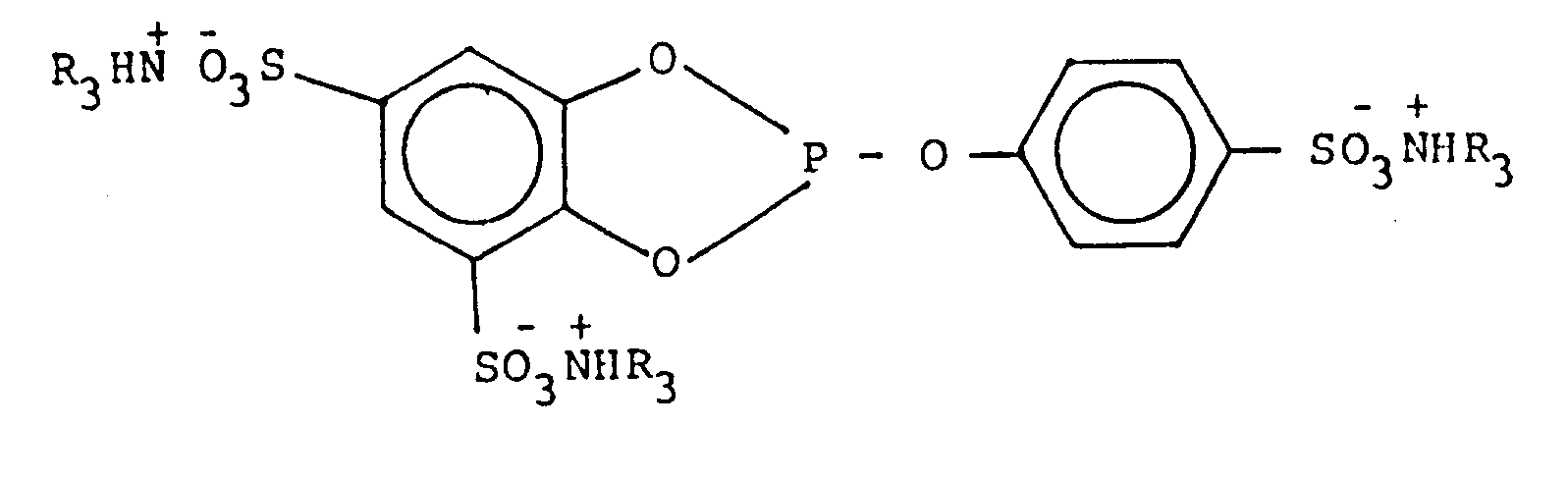


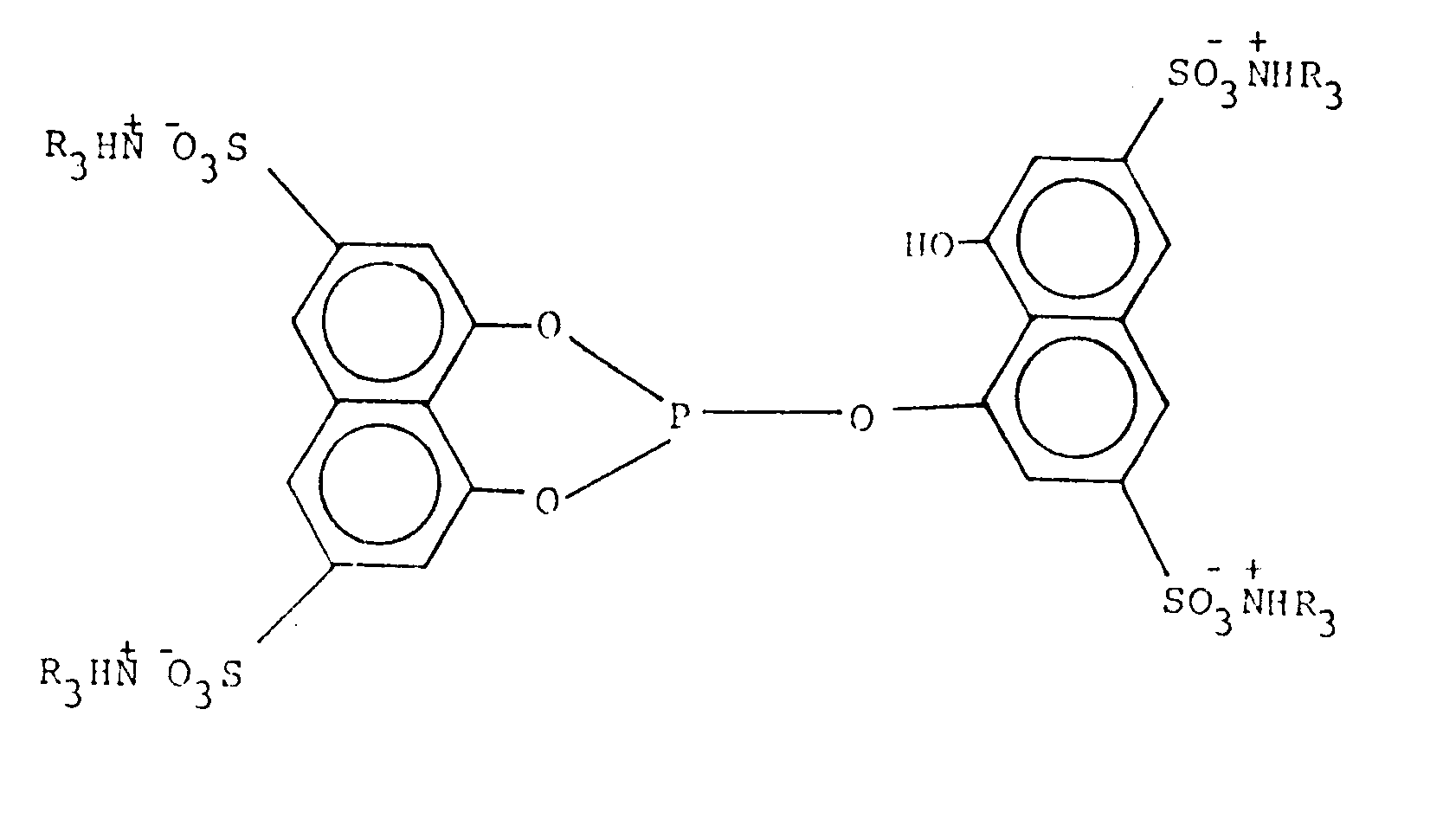


- Bevorzugte Ammoniumsulfonate von Phosphiten gemäß Formel (4) sind:


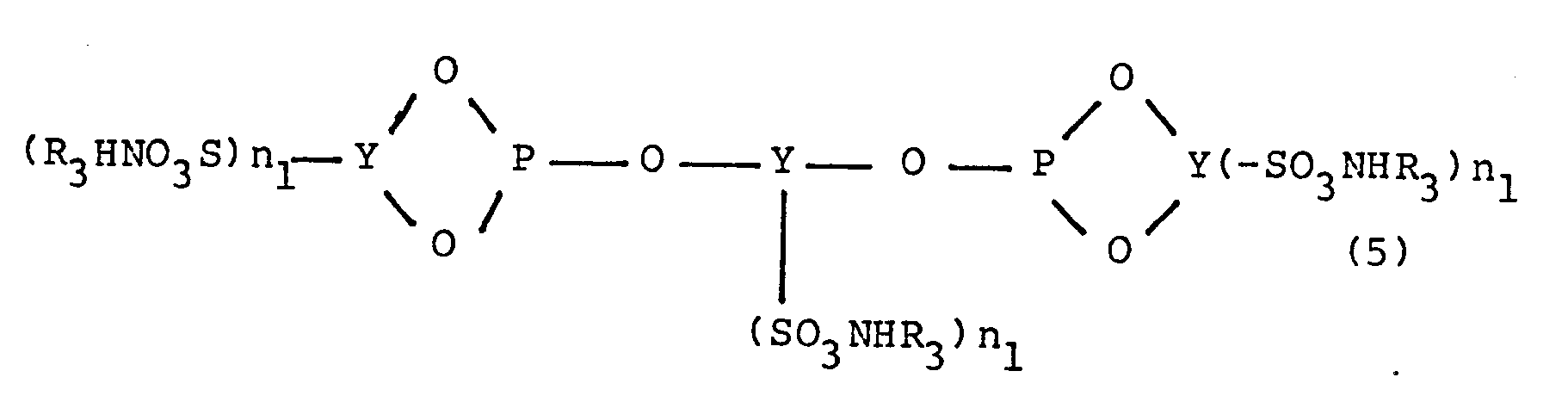
- Bevorzugte Ammoniumsulfonate von Phosphiten entsprechend Formel (5) sind:


- Die zweite Komponente des Katalysatorsystems, das Rhodium, kann entweder als Metall, vorzugsweise auf einem Träger wie Aktivkohle, Calciumcarbonat, Tonerde oder ähnlichen Substraten oder als Rhodiumverbindung eingesetzt werden. Geeignet sind Rhodiumverbindungen, die sich unter den Reaktionsbedingungen in organischen Medien lösen. Beispiele für anorganische oder organische Rhodiumverbindungen, bei denen das Rhodium in verschiedenen Oxidationsstufen vorliegen kann, sind die Rhodiumoxide Rh20, Rh203, Rh02, Rh03, die Salze der anorganischen Wasserstoffsäuren wie die Chloride, Bromide, Jodide, Sulfide, Selenide und Telluride RhCl3, RhBr3, RhJ3, Rh2S3, Rh2Se5, Rh2Te5, die Salze anorganischer Sauerstoffsäuren wie Rhodiumsulfit Rh2(SO3)3, Rhodiumsulfat Rh2(SO4)3, Rhodiumnitrat Rh(NO3)3, Rhodiumperchlorat Rh(OH)2CI04 und Rhodiumselenat sowie Salze aliphatischer Mono- oder Polycarbonsäuren wie Rhodiumacetat Rh(CH3C02)3, Rhodiumpropionat, Rhodiumoxalat Rh2(C204)3, Rhodiummalonat oder Rhodium-2-ethylhexanoat. Auch Salze von Heteropolysäuren, die Rhodium enthalten, kommen in Betracht, beispielsweise Alkali- oder Erdalkalisalze, Ammoniumsalze oder Aminsalze wie Natriumhexachlororhodat Na3(RhCl6), Kaliumhexachlororhodat K3(RhCl6), Bariumhexachlororhodat Ba3(RhCl6)2, Ammoniumhexachlororhodat (NH4)3[RhC16], Natriumhexabromorhodat Na3(RhBr6), Monomethylammoniumpentachlororhodat (NH3CH3)2[RhCl5] und Trimethylammoniumhexachlororhodat [NH(CH3)3]3[RhCl6]. Weiterhin haben sich Carbonyl- und Halogencarbonylverbindungen des Rhodiums bewährt wie Tricarbonylrhodium Rh(CO)3, Tetracarbonylrhodium [Rh(CO4]2,Tetrarhodiumdodekacarbonyl Rh4(CO)12, [Rh(CO)2CI]2, Dicarbonylrhodiumbromid [Rh(CO)2]Br und Dicarbonylrhodiumjodid [Rh(CO)2]J.
- Außer einfachen können auch komplexe Salze des Rhodiums, insbesondere des dreiwertigen Rhodiums, als Katalysatorvorstufe verwendet werden. Diese Verbindungen enthalten ein-, zwei- oder dreibindige Liganden wie β-Diketone, z.B. Acetylaceton, Alkylamine, Alkyl- oder Aryldiamine, stickstoffhaltige Heterocyden wie Pyridin, 2,2'-Dipyridin oder 1,10-Phenanthrolin, aliphatische oder cycloaliphatische und diethylenisch ungesättigte Kohlenwasserstoffe wie Cyclopentadien und 1,5-Cyclooctadien.
- Für den Einsatz im erfindungsgemäßen Verfahren besonders geeignete Rhodiumverbindungen sind Rh4(CO),2, Rh6 (CO)16, Rh(CO)a, [Rh(CO)4]2, [Rh(CO)2CI]2, Rhodium-2-ethylhexanoat, Rhodium(III)-acetylacetonat, Rhodium(I)-dicarbonylacetylacetonat, Cyclooctadienylrhodiumchlorid [Rh(C8Hi2)C!]2,Rhodiumacetat Rh(CH3C02)3, [Rh(OCOCH3)2.H20]2, Rhodiumnitrat Rh(N03)3 und Rhodiumoxid Rh203.
- Der Katalysator kann als Lösung im voraus hergestellt und darauf in die Reaktionszone eingebracht werden. Beispielsweise gibt man die gewünschte Menge Rhodium zu der organischen Lösung des sulfonierten Phosphits und läßt die Ausgangsstoffe in Gegenwart von Synthesegas unter erhöhtem Druck und bei erhöhter Temperatur miteinander reagieren. Es ist auch möglich, Rhodium als Metall oder Verbindung und das sulfonierte Phosphit in einem geeigneten organischen Medium zu lösen oder zu suspendieren und die Katalysatorlösung in situ durch einfaches Vermischen dieser Komponenten herzustellen.
- Die Konzentration des Rhodiums im Reaktionsgemisch, das im wesentlichen aus Olefin, gelöstem Synthesegas, Reaktionsprodukt, Katalysator und gegebenenfalls Lösungsmittel besteht, beträgt 5 bis 500 ppm, vorzugsweise 10 bis 150 ppm Rhodium, bezogen auf das Reaktionsgemisch. Das Ammoniumsalz des sulfonierten Phosphits wird im Verhältnis 2 : 1 bis 200 : 1, vorzugsweise 10 : 1 bis 100 : 1 mol Phosphitsalz je g-Atom Rhodium eingesetzt.
- Die Hydroformylierung der olefinischen Verbindungen erfolgt bei 20 bis 150 °C, insbesondere von 50 bis 120°C und 0,1 bis 20 MPa, insbesondere 1 bis 10 MPa. Der Anteil olefinischer Verbindung im Reaktionsmedium ist nicht kritisch.
- Die im Einzelfall anzuwendenden Reaktionsbedingungen hängen auch von der Art der olefinischen Verbindung ab. So lassen sich reaktionsfähige Einsatzstoffe bereits bei relativ niedrigen Temperaturen und Drücken in Gegenwart geringer Katalysatormengen umsetzen, während reaktionsträgere Verbindungen entsprechend schärfere Reaktionsbedingungen erfordern. Beispiele für reaktive Olefine sind n-Hexen-1, n-Octen-1, n-Decen-1, n-Dodecen-1, n-Tetradecen-1 und Styrol. Beispiele für reaktionsträge Olefine sind n-Octen-4, Tripropylen, Tetrapropylen, Dicyclopentadien und Limonen.
- Die olefinische Verbindung kann als solche oder in Lösung der Hydroformylierung zugeführt werden. Geeignete Lösungsmittel sind Ketone wie Acetophenon, Aceton, Methylethylketon; niedere aliphatische Nitrile wie Acetonitril, Propionitril oder Benzonitril; Dimethylformamid; lineare oder verzweigte aliphatische gesättigte Monohydroxyverbindungen wie Methanol, Ethanol, Propanol und Isopropanol; aromatische Kohlenwasserstoffe wie Benzol oder Toluol und gesättigte cycloaliphatische Kohlenwasserstoffe wie Cyclopentan oder Cyclohexan.
- Es hat sich gezeigt, daß der pH-Wert des Reaktionsgemisches während der Umsetzung absinken kann, vor allem, wenn es Wasserspuren enthält oder wenn Halogen enthaltende Rhodiumverbindungen eingesetzt werden. Vorteilhafterweise soll der pH-Wert des Reaktionsgemisches nicht weniger als 2 betragen. Allgemein wird der pH-Wert auf 2 bis 13, vorzugsweise von 4 bis 8 eingestellt. Den für die jeweilige Umsetzung zweckmäßigen pH-Wert erreicht man durch Zugabe einer bestimmten Menge einer in einem organischen Medium löslichen basischen Verbindung, beispielsweise durch Zugabe von Aminen.
- Die Zusammensetzung des Synthesegases kann in weiten Grenzen variiert werden. Im allgemeinen setzt man ein Gemisch ein, in dem das Volumenverhältnis von Kohlenmonoxid zu Wasserstoff 5 : 1 bis 1 : 5 beträgt. Zweckmäßig ist dieses Verhältnis 1 : 1 oder weicht von diesem Wert nur wenig ab.
- Das Verfahren kann sowohl absatzweise als auch kontinuierlich durchgeführt werden. Es wird mit Erfolg zur Hydroformylierung der verschiedensten olefinisch ungesättigten Verbindungen angewandt.
- Dementsprechend können aliphatische, cycloaliphatische oder araliphatische Verbindungen mit 2 bis 20 Kohlenstoffatomen, die eine oder mehrere olefinische Doppelbindungen besitzen und gegebenenfalls auch noch funktionelle Gruppen enthalten, umgesetzt werden. Beispiele für aliphatische Verbindungen sind geradkettige oder verzweigte alpha-Olefine mit 2 bis 20 Kohlenstoffatomen wie Ethylen, Propylen, Buten-1, iso-Butylen, Penten-1, 2-Methylbuten-1, Hexen-1, Hepten-1, Octen-1, 2,4,4-Trimethylpenten-1, Nonen-1, 2-Propylhexen-1, Decen-1, Undecen-1, Dodecen-1, n-Tetradecen-1, Octadecen-1, Eicosen-1, 3-Methylbuten-1, 3-Methylpenten-1, 3-Ethyl-4-methylpenten-1, 3-Ethylhexen-1, 4,4-Dimethylnonen-1 und 6-Propyldecen-1.
- Geeignet sind auch acyclische Terpene, verzweigte Olefine wie Diisobutylen, Tripropylen, Tetrapropylen, Dimersol und aliphatische Diene wie 1,3-Butadien, 1,5-Hexadien und 1,9-Decadien.
- Beispiele für araliphatische Olefine sind Styrol, alpha-Methylstyrol, 1,1-Diphenylethylen, Divinylbenzol und m-Hexylstyrol.
- Als cycloaliphatische Einsatzstoffe kommen z.B. Cyclooctadien, Dicyclopentadien und cyclische Terpene wie Limonen, Pinen, Camphoren und Bisabolen in Betracht.
- Beispiele für olefinische Verbindungen mit funktionellen Gruppen sind Allylverbindungen, insbesondere die Alkohole und Ester wie Allylalkohol, Allylcyclohexan, Allylbenzol, 1-Allyl-4-vinylbenzol, Allylethylether, Allyl-t-butylether, Allylphenylether und Allylacetat; Vinylverbindungen, insbesondere Ester und Ether wie Vinylmethylether, Vinylethylether, β-Vinylnaphthalin, o-Vinyl-p-xylol und Vinylacetat; Acrylsäurederivate, insbesondere die Ester wie Methylacrylat, Ethylacrylat, n-Propyloct-7-enoate; Methacrylsäurederivate, insbesondere die Ester wie Methylmethacrylat; Hex-1-en-4-01 und Oct-1-en-4-01; Acrolein sowie Acroleinderivate wie Acroleindimethyl- und -diethylacetale; Cyanoverbindungen, insbesondere Acrylnitril und ungesättigte Ketone wie Vinylethylketon.
- Mit besonderem Erfolg werden nach dem neuen Verfahren innenständige Olefine mit 4 bis 20 Kohlenstoffatomen der allgemeinen Formel R'R"C=CR"'R"", wobei R' und R"' unabhängig voneinander ein H-Atom oder ein organischer Rest sein können und zusammen auch einen cycloaliphatischen, aromatischen oder heterocyclischen Ring bilden können, R" und R"" können unabhängig voneinander ein organischer Rest sein oder zusammen einen aliphatischen, cycloaliphatischen, aromatischen oder heterocyclischen Ring bilden, hydroformyliert.
- Bevorzugt werden innenständige Olefine, die halogen- und schwefelfrei sind. Beispiele für innenständige Olefine sind cis- und trans-Buten-2,2-Methylpropen, 2-Methylbuten-2, 2,3-Dimethylbuten-2, 1,2-Diphenylethylen, Hexen-2, Hexen-3, cis- und trans-Hepten-2, Octen-2, Octen-3, Octen-4, 3-Methylhepten-2, 3-Methylhepten-3, 3-Methylhepten-5, 3,4-Dimethylhexen-2, Decen-2, Tetradecen-2, 4-Amyldecen-2, 4-Methyltridecen-2, Octadecen-2, 6,6-Dipropyldecen-3, Prop-1-enyl-benzol, 3-Benzylhepten-3, Cyclobuten, Cyclopenten, Cyclohexen, Cyclohepten, Cycloocten, 1-Methylcyclohexen, Maleinsäurediethylester, Fumarsäurediethylester, Crotonaldehyd, Crotonaldehyddimethylacetal, Zimtsäureethylester und cis- und trans-Prop-1-enyl-t-butylether.
- Die nachstehenden Beispiele erläutern die Erfindung, ohne sie auf die beschriebenen Ausführungsformen zu begrenzen. In den nachstehenden Beispielen werden folgende Abkürzungen verwendet:

- Alle Versuche werden in einem mit Rührvorrichtung und Einlaßstutzen versehenen Edelstahlautoklav durchgeführt. Zur Entfernung des Sauerstoffs wird der Autoklav evakuiert, mit Argon gefüllt und auf die jeweilige Reaktionstemperatur aufgeheizt. Sodann preßt man mehrfach Synthesegas auf und entspannt wieder. Anschließend gibt man in den Autoklav die vorbereitete Katalysatorlösung, n-Tetradecen-1 und ein Drittel der berechneten Menge Acetophenon, das als Lösungsmittel verwendet wird.
- Die Katalysatorlösung stellt man in einem evakuierten, ausgeheizten und mit Argon gefüllten Schlenkrohr her. In dieses Gefäß wiegt man die berechnete Menge Phosphorverbindung, gelöst in zwei Dritteln der insgesamt eingesetzten Acetophenonmenge und darauf die berechnete Menge Rhodium, als Rh-2-ethylhe- xanoat, ein.
- Der Inhalt des Autoklav wird bei Reaktionstemperatur durch Aufpressen von Synthesegas (CO/H2 = 1 :
- 1) auf den gewünschten Reaktionsdruck gebracht und darauf gerührt.
- Der Autoklav ist mit einem Drucksensor ausgerüstet, der es gestattet, die Druckabnahme während der Reaktion kontinuierlich zu verfolgen und mittels eines Schreibers aufzuzeichnen.
- Nach beendeter Reaktion (3 Stunden) wird auf etwa 25 °C abgekühlt, das überschüssige Gas entspannt, der Reaktorinhalt ausgetragen und gaschromatographisch analysiert.
- Die Reaktionsbedingungen und die Ergebnisse sind in den Tabellen zusammengestellt. In allen Beispielen sind die Rhodiumkonzentrationen auf das Reaktionsgemisch bezogen.
- Hydroformylierung von n-Tetradecen-1 in Gegenwart von Rhodium-2-ethylhexanoat/TPPpS-TIOA als Katalysator.
- Reaktionsbedingungen:
- 125 °C, 0,6 MPa, 3 h Reaktionszeit, CO/H2 = 1 : 1,
- 20 g (= 0,098 mol) n-Tetradecen (94,1 % n-Tetradecen-1, 2,5 % andere n-Tetradecenisomere)
- 190,47 mg 1,05 %ige Rhodium-2-ethylhexanoat-Lösung (Lösungsmittel Xylol), d.h. 2 mg (= 0,0194 mmol) Rhodium; Rhodiumkonzentration: 50 ppm
- Der pH-Wert liegt bei 4,2 - 4,7 in
- 1/1: 0,2389g (=0,1943 mmol) TPPpS-TIOA in 17,66g Acetophenon
- 1/2: 0,4778g (=0,3886 mmol) TPPpS-TIOA in 17,24g Acetophenon
- 1/3: 0,9556g (=0,7772 mmol) TPPpS-TIOA in 16,45g Acetophenon
- 1/4: 1,8985g (=1,544 mmol) TPPpS-TIOA in 15,02g Acetophenon
- 1/5: 2,3891 g (=1,943 mmol) TPPpS-TIOA in 14,04g Acetophenon
- Hydroformylierung von n-Tetradecen-1 in Gegenwart von Rhodium-2-ethylhexanoat/TPP als Katalysator.
- Um einen direkten Vergleich zwischen TPPpS-TIOA und TPP als Cokatalysatoren zu erhalten, wird unter den Bedingungen des Beispiels 1 gearbeitet.
- Reaktionsbedingungen:
- 125°C, 0,6 MPa, 3 h Reaktionszeit, CO/H2 = 1 : 1
- 20 g (= 0,098 mol) n-Tetradecen (94,1 % n-Tetradecen-1, 2,5 % andere n-Tetradecenisomere)
- 190,47 mg 1,05 %ige Rhodium-2-ethylhexanoat-Lösung (Lösungsmittel Xylol), d.h. 2 mg (= 0,01943 mmol) Rhodium, Rhodiumkonzentration: 50 ppm
in - 2/1 : 0,0509 g (= 0,1943 mmol) TPP in 17,9 g Acetophenon
- 2/2 : 0,1019 g (= 0,3886 mmol) TPP in 17,6 g Acetophenon
- 2/3 : 0,2038 g (= 0,7772 mmol) TPP in 17,8 g Acetophenon
- 2/4 : 0,4077 g (= 1,5544 mmol) TPP in 17,2 g Acetophenon
- 2/5 : 0,5096 g (= 1,943 mmol) TPP in 17,4 g Acetophenon
- Hydroformylierung von n-Tetradecen-1 in Gegenwart von Rhodium-2-ethylhexanoat/TPPp als Katalysator.
- n-Tetradecen-1 wird mit Rh-2-ethylhexanoat und TPPp als Cokatalysator unter den Bedingungen des Beispiels 1 hydroformyliert, um die Wirkung von TPPpS-TIOA und TPPp als Cokatalysatoren vergleichen zu können.
- Reaktionsbedingungen:
- 125°C, 0,6 MPa, 3 h Reaktionszeit, CO/H2 = 1 : 1,
- 20 g (= 0,098 mol) n-Tetradecen (94,1 % n-Tetradecen-1, 2,5 % andere n-Tetradecenisomere)
- 190,47 mg 1,05 %ige Rhodium-2-ethylhexanoat-Lösung (Lösungsmittel Xylol), d.h. 2 mg (= 0,01943 mmol) Rhodium; Rhodiumkonzentration: 50 ppm
- in
- 3/1 : 0,060 g (= 0,1943 mmol) TPPp in 17,9 g Toluol
- 3/2 : 0,1205 g (= 0,3886 mmol) TPPp in 18,0 g Toluol
- 3/3 : 0,2411 g (= 0,7772 mmol) TPPp in 17,9 g Toluol
- 3/4 : 0,4823 g (= 1,5544 mmol) TPPp in 17,4 g Toluol
- 3/5 : 0,6029 g (= 1,943 mmol) TPPp in 17,5 g Toluol
- Hydroformylierung von n-Tetradecen-1 in Gegenwart von Rhodium-2-ethylhexanoat/TPPpS-TIOA als Katalysator.
- Die Hydroformylierung von n-Tetradecen-1 wird unter den Bedingungen des Beispiels 1, jedoch bei pH 6, durchgeführt. Der pH-Wert wird durch Zugabe von Triisooctylamin eingestellt.
- Reaktionsbedingungen:
- 125°C, 0,6 MPa, 3 h Reaktionszeit, CO/H2 = 1 : 1,
- 20 g (= 0,098 mol) n-Tetradecen (94,1 % n-Tetradecen-1, 2,5 % andere n-Tetradecenisomere)
- 190,47 mg 1,05 %ige Rhodium-2-ethylhexanoat-Lösung (Lösungsmittel Xylol), d.h. 2 mg (= 0,0194 mmol) Rhodium, Rhodiumkonzentration: 50 ppm
- Der pH-Wert wird durch Zugabe von 0,1 bis 0,27 g TIOA auf 6,0 eingestellt
- in
- 4/1: 0,3131 g(=0,1943 mmol) TPPpS-TIOA in 17,4 g Acetophenon
- 4/2: 0,6262 g(= 0,3886 mmol) TPPpS-TIOA in 17,2 g Acetophenon
- 4/3: 1,2524 g(= 0,7772 mmol) TPPpS-TIOA in 16,1 g Acetophenon
- 4/4: 2,5049 g( =1,544 mmol) TPPpS-TIOA in 14,4 g Acetophenon
- 4/5: 3,1311 g(= 1,943 mmol) TPPpS-TIOA in 13,8 g Acetophenon
- Hydroformylierung von n-Tetradecen-1 in Gegenwart von Rhodium-2-ethylhexanoat/TPPpS-TIOA als Katalysator.
- Beispiel 1 wird wiederholt mit dem Unterschied, daß man die Rhodiumkonzentration von 50 auf 20 ppm erniedrigt und den Druck von 0,6 MPa auf 5,0 MPa erhöht.
- Reaktionsbedingungen:
- 125°C, 5,0 MPa, 3 h Reaktionszeit, CO/H2 = 1 : 1
- 20 g (= 0,098 mol) n-Tetradecen (93,9 % n-Tetradecen-1, 2,8 % andere n-Tetradecenisomere)
- 95,23 mg einer 1,05 %igen Rhodium-2-ethylhexanoat-Lösung (Lösungsmittel Xylol), d.h. 1 mg (= 0,00971 mmol) Rh, Rhodiumkonzentration: 20 ppm
- in
- 5/1 : 0,4775g (=0,388 mmol) TPPpS-TIOA in 27,25 g Aceton
- 5/2 : 0,9551g (=0,7768mmol) TPPpS-TIOA in 27,77 g Aceton
- Das verwendete Aceton in 5/1 und 5/2 wird nur über CaC12 vorgetrocknet.
-
- Hydroformylierung von n-Tetradecen-1 in Gegenwart von Rhodium-2-ethylhexanoat/TPP als Katalysator.
- Um die Wirksamkeit von TPPpS-TIOA und TPP als Cokatalysatoren zu vergleichen, wird wie in Beispiel 5 gearbeitet.
- Reaktionsbedingungen:
- 125°C, 5,0 MPa, 3 h Reaktionszeit, CO/H2 = 1 : 1,
- 20 g (= 0,098 mol) n-Tetradecen (93,9 % n-Tetradecen-1, 2,8 % andere n-Tetradecenisomere)
- 95,23 mg einer 1,05 %igen Rhodium-2-ethylhexanoat-Lösung (Lösungsmittel Xylol), d.h. 1 mg (= 0,00971 mmol) Rh, Rhodiumkonzentration: 20 ppm
- in
- 6/1 : 0,1018 g (= 0,388 mmol) TPP in 27,76 g Aceton
- 6/2 : 0,2037 g (= 0,7768 mmol) TPP in 27,92 g Aceton
- Hydroformylierung von n-Tetradecen-1 in Gegenwart von Rhodium-2-ethylhexanoat/TPPpS-TIOA als Katalysator.
- Beispiel 5 wird wiederholt mit dem Unterschied, daß die Reaktionstemperatur 110°C statt 125°C beträgt.
- Reaktionsbedingungen:
- 110°C, 5,0 MPa, 3 h Reaktionszeit, CO/H2 = 1 : 1,
- 20 g (= 0,098 mol) n-Tetradecen (93,9 % n-Tetradecen-1, 2,8 % andere n-Tetradecenisomere),
- 95,23 mg einer 1,05 %igen Rhodium-2-ethylhexanoat-Lösung (Lösungsmittel Xylol), d.h. 1 mg (0,00971 mmol) Rh, Rhodiumkonzentration: 20 ppm
- in
- 7/1:0,4775 g (=0,3884 mmol) TPPpS-TIOA in 27,02 g Aceton
- 7/2:0,9551 g (=0,7768 mmol) TPPpS-TIOA in 26,7 g Aceton
- Hydroformylierung von n-Tetradecen-1 in Gegenwart von Rhodium-2-ethylhexanoat/TPP als Katalysator.
- Um die Wirksamkeit von TPPpS-TIOA und TPP als Cokatalysatoren bei niedrigeren Temperaturen zu vergleichen, wird wie in Beispiel 7 gearbeitet.
- Reaktionsbedingungen:
- 110°C, 5,0 MPa, 3 h Reaktionszeit, CO/H2 = 1 : 1;
- 20 g (= 0,098 mol) n-Tetradecen (93,9 % n-Tetradecen-1 und 2,8 % andere n-Tetradecenisomere);
- 95,23 mg einer 1,05 %igen Rhodium-2-ethylhexanoat-Lösung (Lösungsmittel Xylol), d.h. 1 mg (= 0,00971 mmol) Rh, Rhodiumkonzentration: 20 ppm
- in
- 8/1 : 0,1018 g (= 0,3884 mmol) TPP in 27,98 g Aceton
- 8/2 : 0,2037 g (= 0,7768 mmol) TPP in 27,75 g Aceton
- Hydroformylierung von n-Tetradecen-1 in Gegenwart von Rhodium-2-ethylhexanoat/TPPp als Katalysator.
- In diesem Beispiel wird die Wirksamkeit von TPPp als Cokatalysator (Beispiele 7 und 8) bei der Hydroformylierung von n-Tetradecen-1 unter den Bedingungen der Beispiele 7 und 8 untersucht.
- Reaktionsbedingungen:
- 110°C, 5,0 MPa, 3 h Reaktionszeit, CO/H2 = 1 : 1;
- 20 g (= 0,098 mol) n-Tetradecen (93,9 % n-Tetradecen-1 und 2,8 % andere n-Tetradecenisomere);
- 95,23 mg einer 1,05 %igen Rhodium-2-ethylhexanoat-Lösung (Lösungsmittel Xylol), d.h. 1 mg (= 0,00971 mmol) Rh, Rhodiumkonzentration: 20 ppm
- in
- 9/1 : 0,1205 g (= 0,388 mmol) TPPp in 28,03 g Aceton
- 9/2 : 0,2410 g (= 0,7768 mmol) TPPp in 27,82 g Aceton
- Hydroformylierung von n-Hexen-1 in Gegenwart von Rh4(CO)12/TPPpS-TIOA als Katalysator.
- Beispiel 1 wird wiederholt mit dem Unterschied, daß man n-Hexen-1 einsetzt und bei 2,5 MPa arbeitet.
- Reaktionsbedingungen:
- 125°C, 2,5 MPa, 3 h Reaktionszeit, CO/H2 = 1 : 1;
- 16,66 g (= 0,194 mol) n-Hexen (97,07 % aus n-Hexen-1 und 0,87 % andere n-Hexenisomere);
- 1,81 ml einer Rh4(CO)12-Lösung (300 mg Rh4(CO)12 in 300 ml Toluol), d.h. 1 mg (= 0,00971 mmol) Rh, Rhodiumkonzentration: 20 ppm
- in
- 10/1: 0,1194 g(= 0,09717mmol)TPPpS-TIOA in 29,56g Acetophenon
- 10/2: 0,4779 g(= 0,3887 mmol)TPPpS-TIOA in 27,80g Acetophenon
- 10/3: 0,9558 g(=0,7774 mmol)TPPpS-TIOA in 26,20g Acetophenon
- 10/4: 1,1948 g(=0,9717 mmol)TPPpS-TIOA in 25,86g Acetophenon
- Hydroformylierung von n-Hexen-1 in Gegenwart von Rh4(CO)12/TPP als Katalysator.
- Um die Wirksamkeit von TPPpS-TIOA und TPP als Cokatalysatoren zu vergleichen, wird wie in Beispiel 10 gearbeitet.
- Reaktionsbedingungen:
- 125°C, 2,5 MPa, 3 h Reaktionszeit, CO/H2 = 1 : 1;
- 16,66 g (= 0,194 mol) n-Hexen (97,07 % n-Hexen-1 und 0,87 % andere n-Hexenisomere);
- 1,81 ml einer Rh4(CO)12-Lösung (300 mg Rh4(CO)12 in 300 ml Toluol), d.h. 1 mg (= 0,009717 mmol) Rh, Rhodiumkonzentration: 20 ppm
- in
- 11/1 : 0,025 g (= 0,09717 mmol) TPP in 30,25 g Toluol
- 11/2 : 0,1019 g (= 0,3887 mmol) TPP in 29,90 g Toluol
- 11/3 : 0,2548 g (= 0,9717 mmol) TPP in 29,80 g Toluol
- Hydroformylierung von n-Hexen-1 in Gegenwart von Rh4(CO)12/TPPp als Katalysator.
- n-Hexen-1 wird mit Rh4(CO),2 und Triphenylphosphit (TPPp) als Cokatalysator unter gleichen Bedingungen wie in den Beispielen 10 und 11 hydroformyliert, um die Wirksamkeit von TPPpS-TIOA und TPP als Cokatalysator zu vergleichen.
- Reaktionsbedingungen:
- 125°C, 2,5 MPa, 3 h Reaktionszeit, CO/H2 = 1 : 1;
- 16,66 g (= 0,194 mol) n-Hexen (97,07 % n-Hexen-1, 0,87 % andere n-Hexenisomere);
- 1,81 ml einer Rh4(CO)12-Lösung (300 mg Rh4(CO)12 in 300 ml Toluol), d.h. 1 mg (= 0,00971 mmol) Rh, Rhodiumkonzentration: 20 ppm
- in
- 12/1 : 0,030 g (= 0,0971 mmol) TPPp in 30,0 g Toluol
- 12/2 : 0,120 g (= 0,3887 mmol) TPPp in 29,8 g Toluol
- 12/3 : 0,301 g (= 0,9717 mmol) TPPp in 26,5 g Toluol


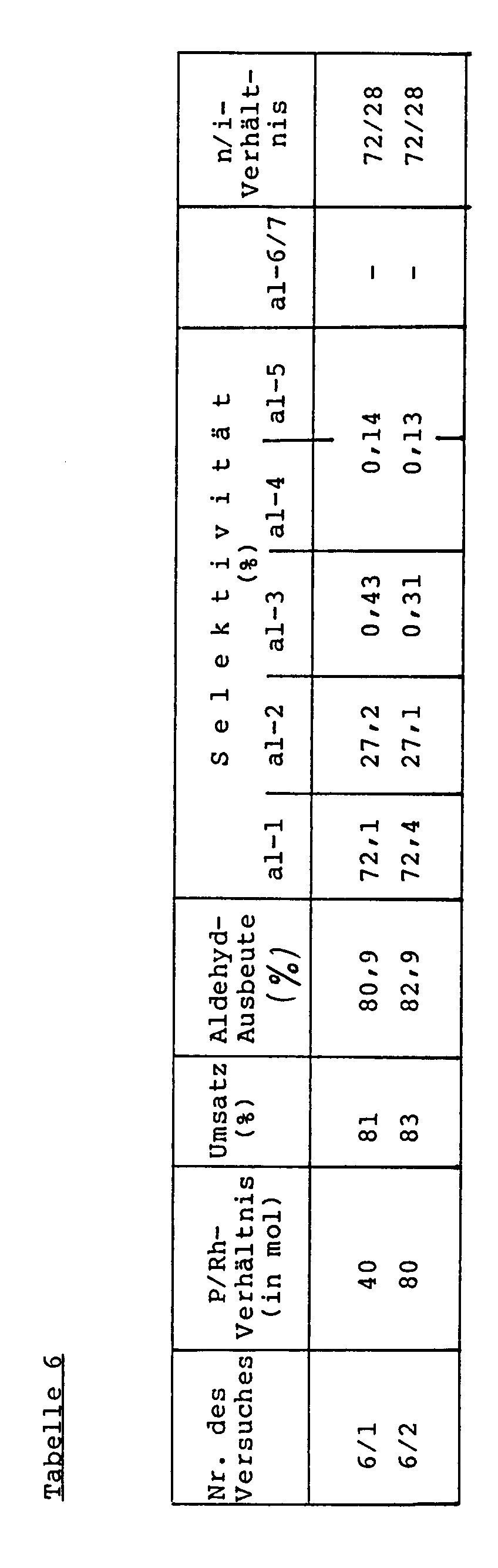


Claims (15)
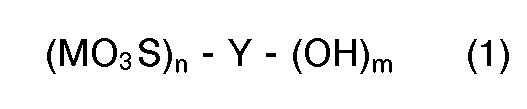

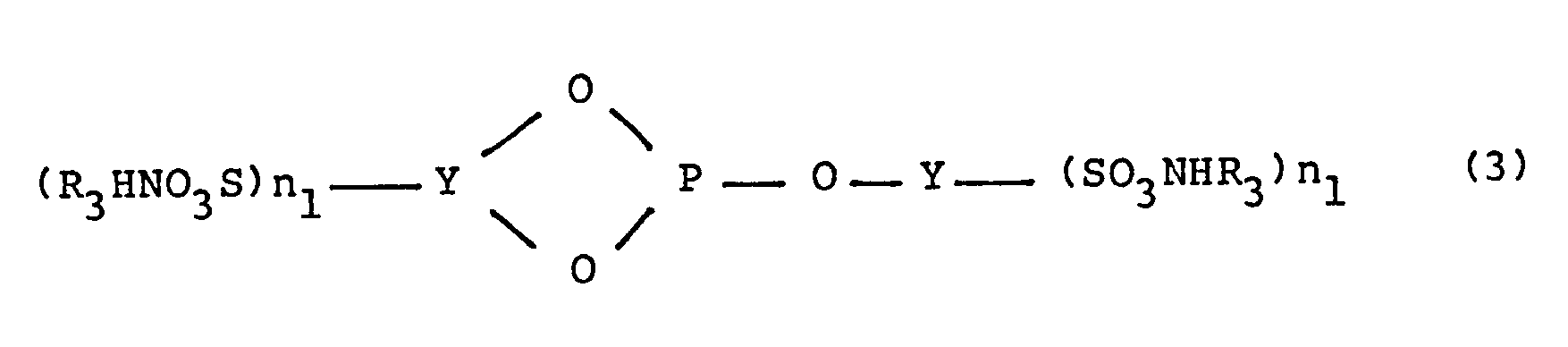


Priority Applications (1)
| Application Number | Priority Date | Filing Date | Title |
|---|---|---|---|
| AT9090124029T ATE104943T1 (de) | 1989-12-23 | 1990-12-13 | Verfahren zur herstellung von aldehyden. |
Applications Claiming Priority (2)
| Application Number | Priority Date | Filing Date | Title |
|---|---|---|---|
| DE3942954 | 1989-12-23 | ||
| DE3942954A DE3942954A1 (de) | 1989-12-23 | 1989-12-23 | Verfahren zur herstellung von aldehyden |
Publications (3)
| Publication Number | Publication Date |
|---|---|
| EP0435084A1 EP0435084A1 (de) | 1991-07-03 |
| EP0435084B1 true EP0435084B1 (de) | 1994-04-27 |
| EP0435084B2 EP0435084B2 (de) | 1997-09-24 |
Family
ID=6396438
Family Applications (1)
| Application Number | Title | Priority Date | Filing Date |
|---|---|---|---|
| EP90124029A Expired - Lifetime EP0435084B2 (de) | 1989-12-23 | 1990-12-13 | Verfahren zur Herstellung von Aldehyden |
Country Status (10)
| Country | Link |
|---|---|
| US (1) | US5118867A (de) |
| EP (1) | EP0435084B2 (de) |
| JP (1) | JPH0672114B2 (de) |
| KR (1) | KR930003936B1 (de) |
| AT (1) | ATE104943T1 (de) |
| AU (1) | AU633170B2 (de) |
| BR (1) | BR9006444A (de) |
| CA (1) | CA2032372C (de) |
| DE (2) | DE3942954A1 (de) |
| ES (1) | ES2055856T3 (de) |
Cited By (1)
| Publication number | Priority date | Publication date | Assignee | Title |
|---|---|---|---|---|
| EP2014752A1 (de) | 2007-06-23 | 2009-01-14 | Cognis IP Management GmbH | Herstellungsverfahren für saturierte Fettsäureester in Gegenwart einem homogenen Katalysator enthaltend ein Metall der VIII-Gruppe und ein sulphoniertes Phosphit |
Families Citing this family (25)
| Publication number | Priority date | Publication date | Assignee | Title |
|---|---|---|---|---|
| EP0730574B1 (de) * | 1993-11-23 | 1998-08-19 | E.I. Du Pont De Nemours And Company | Verfahren und katalysator-zusammensetzungen für die anlagerung von cyanwassenstoff an monoolefine |
| DE19532393A1 (de) * | 1995-09-02 | 1997-03-06 | Hoechst Ag | Verfahren zur Hydroformylierung olefinisch ungesättigter Verbindungen |
| DE19919495A1 (de) | 1999-04-29 | 2000-11-02 | Celanese Chem Europe Gmbh | Verfahren zur Herstellung von Aldehyden |
| DE102006032317A1 (de) | 2006-07-11 | 2008-01-24 | Symrise Gmbh & Co. Kg | In alpha-Stellung durch Alkylreste substituierte Aldehyde als Riech- und Aromastoffe |
| KR102903446B1 (ko) | 2011-02-14 | 2025-12-24 | 미메딕스 그룹 인크. | 마이크로화된 태반 조직 조성물 및 이의 제조 및 사용 방법 |
| US20140205646A1 (en) | 2011-02-14 | 2014-07-24 | Mimedx Group, Inc. | Tissue grafts modified with a cross-linking agent and method of making and using the same |
| US12290613B2 (en) | 2011-10-06 | 2025-05-06 | Mimedx Group, Inc. | Micronized compositions composed of bone grafts and methods of making and using the same |
| EP2793745B1 (de) | 2011-12-22 | 2019-07-31 | MIMEDX Group Inc. | Vernetzte entwässerte plazentagewebetransplantate und verfahren zu ihrer herstellung und verwendung |
| US8904664B2 (en) | 2012-08-15 | 2014-12-09 | Mimedx Group, Inc. | Dehydration device and methods for drying biological materials |
| US11338063B2 (en) | 2012-08-15 | 2022-05-24 | Mimedx Group, Inc. | Placental tissue grafts modified with a cross-linking agent and methods of making and using the same |
| US10857266B2 (en) | 2012-08-15 | 2020-12-08 | Mimedx Group, Inc. | Reinforced placental tissue grafts and methods of making and using the same |
| US9943551B2 (en) | 2012-08-15 | 2018-04-17 | Mimedx Group, Inc. | Tissue grafts composed of micronized placental tissue and methods of making and using the same |
| US9180145B2 (en) | 2012-10-12 | 2015-11-10 | Mimedx Group, Inc. | Compositions and methods for recruiting and localizing stem cells |
| US9155799B2 (en) | 2012-11-19 | 2015-10-13 | Mimedx Group, Inc. | Cross-linked collagen with at least one bound antimicrobial agent for in vivo release of the agent |
| US8946163B2 (en) | 2012-11-19 | 2015-02-03 | Mimedx Group, Inc. | Cross-linked collagen comprising metallic anticancer agents |
| US9827293B2 (en) | 2013-01-17 | 2017-11-28 | Mimedx Group, Inc. | Non-surgical, localized delivery of compositions for placental growth factors |
| US10517931B2 (en) | 2013-01-17 | 2019-12-31 | Mimedx Group, Inc. | Non-surgical, localized delivery of compositions for placental growth factors |
| US9655948B1 (en) | 2013-01-17 | 2017-05-23 | Mimedx Group, Inc. | Non-surgical, localized delivery of compositions for placental growth factors |
| US10111910B2 (en) | 2013-01-18 | 2018-10-30 | Mimedx Group, Inc. | Methods for treating cardiac conditions |
| US10206977B1 (en) | 2013-01-18 | 2019-02-19 | Mimedx Group, Inc. | Isolated placental stem cell recruiting factors |
| US10029030B2 (en) | 2013-03-15 | 2018-07-24 | Mimedx Group, Inc. | Molded placental tissue compositions and methods of making and using the same |
| US10335433B2 (en) | 2013-04-10 | 2019-07-02 | Mimedx Group, Inc. | NDGA polymers and metal complexes thereof |
| US9446142B2 (en) | 2013-05-28 | 2016-09-20 | Mimedx Group, Inc. | Polymer chelator conjugates |
| EP3094336A4 (de) | 2014-01-17 | 2018-02-14 | MIMEDX Group Inc. | Verfahren zur induzierung von angiogenese |
| EP3185918B1 (de) | 2014-08-28 | 2021-08-18 | MiMedx Group, Inc. | Collagenverstärkte gewebetransplantate |
Family Cites Families (10)
| Publication number | Priority date | Publication date | Assignee | Title |
|---|---|---|---|---|
| US4330678A (en) * | 1980-02-04 | 1982-05-18 | Shell Oil Company | Process for the hydroformylation of olefins |
| US4467116A (en) * | 1981-11-20 | 1984-08-21 | Shell Oil Company | Process for the hydroformylation of olefins |
| ATE16475T1 (de) * | 1982-06-11 | 1985-11-15 | Davy Mckee London | Hydroformylierungsverfahren. |
| ATE28183T1 (de) * | 1982-06-11 | 1987-07-15 | Davy Mckee London | Hydroformylierungsverfahren. |
| DE3371067D1 (en) * | 1982-06-11 | 1987-05-27 | Davy Mckee London | Hydroformylation process |
| GB8334359D0 (en) * | 1983-12-23 | 1984-02-01 | Davy Mckee Ltd | Process |
| DE3420491A1 (de) * | 1984-06-01 | 1985-12-05 | Ruhrchemie Ag, 4200 Oberhausen | Verfahren zur herstellung von aldehyden |
| US4716250A (en) * | 1986-07-10 | 1987-12-29 | Union Carbide Corporation | Hydroformylation using low volatile/organic soluble phosphine ligands |
| US4731486A (en) * | 1986-11-18 | 1988-03-15 | Union Carbide Corporation | Hydroformylation using low volatile phosphine ligands |
| US5059710A (en) * | 1988-08-05 | 1991-10-22 | Union Carbide Chemicals And Plastics Technology Corporation | Ionic phosphites and their use in homogeneous transition metal catalyzed processes |
-
1989
- 1989-12-23 DE DE3942954A patent/DE3942954A1/de not_active Withdrawn
-
1990
- 1990-12-13 EP EP90124029A patent/EP0435084B2/de not_active Expired - Lifetime
- 1990-12-13 ES ES90124029T patent/ES2055856T3/es not_active Expired - Lifetime
- 1990-12-13 KR KR1019900020528A patent/KR930003936B1/ko not_active Expired - Fee Related
- 1990-12-13 AT AT9090124029T patent/ATE104943T1/de not_active IP Right Cessation
- 1990-12-13 DE DE59005530T patent/DE59005530D1/de not_active Expired - Fee Related
- 1990-12-14 CA CA002032372A patent/CA2032372C/en not_active Expired - Fee Related
- 1990-12-17 JP JP2402869A patent/JPH0672114B2/ja not_active Expired - Lifetime
- 1990-12-18 BR BR909006444A patent/BR9006444A/pt not_active IP Right Cessation
- 1990-12-21 AU AU68367/90A patent/AU633170B2/en not_active Ceased
- 1990-12-21 US US07/632,464 patent/US5118867A/en not_active Expired - Fee Related
Cited By (1)
| Publication number | Priority date | Publication date | Assignee | Title |
|---|---|---|---|---|
| EP2014752A1 (de) | 2007-06-23 | 2009-01-14 | Cognis IP Management GmbH | Herstellungsverfahren für saturierte Fettsäureester in Gegenwart einem homogenen Katalysator enthaltend ein Metall der VIII-Gruppe und ein sulphoniertes Phosphit |
Also Published As
| Publication number | Publication date |
|---|---|
| CA2032372A1 (en) | 1991-06-24 |
| ES2055856T3 (es) | 1994-09-01 |
| DE59005530D1 (de) | 1994-06-01 |
| KR910011727A (ko) | 1991-08-07 |
| EP0435084B2 (de) | 1997-09-24 |
| JPH0672114B2 (ja) | 1994-09-14 |
| CA2032372C (en) | 1997-09-23 |
| EP0435084A1 (de) | 1991-07-03 |
| US5118867A (en) | 1992-06-02 |
| KR930003936B1 (ko) | 1993-05-17 |
| DE3942954A1 (de) | 1991-06-27 |
| AU633170B2 (en) | 1993-01-21 |
| BR9006444A (pt) | 1991-10-01 |
| JPH04305547A (ja) | 1992-10-28 |
| ATE104943T1 (de) | 1994-05-15 |
| AU6836790A (en) | 1991-06-27 |
Similar Documents
| Publication | Publication Date | Title |
|---|---|---|
| EP0435084B1 (de) | Verfahren zur Herstellung von Aldehyden | |
| DE69505612T2 (de) | Stabilisierung von Phosphiteliganden in das Hydroformylierungsverfahren | |
| DE68905452T2 (de) | Hydroformylation von Olefinen unter schwachem Druck mit einem Rhodium-Katalysator. | |
| DE69307240T2 (de) | Hydroformylierungsverfahren | |
| EP2802550B1 (de) | Langzeitstabiles verfahren zur herstellung von c5-aldehyden | |
| EP1586577B1 (de) | Neue Phosphitverbindungen und neue Phosphitmetallkomplexe | |
| DE1793069B2 (de) | Verfahren zur Herstellung von Aldehyden | |
| DE60304034T2 (de) | Bisphosphit-ligande für carbonylierungsverfahren | |
| EP2091958A1 (de) | Bisphosphitliganden für die übergangsmetallkatalysierte hydroformylierung | |
| DE3232557C2 (de) | ||
| EP0761635B1 (de) | Verfahren zur Hydroformylierung olefinisch ungesättigter Verbindungen | |
| DE2834742A1 (de) | Verfahren zur hydroformylierung von aethylenisch ungesaettigten verbindungen | |
| EP1924357B1 (de) | Carbonylierungsverfahren unter zusatz von sterisch gehinderten sekundären aminen | |
| EP0163234B1 (de) | Verfahren zur Herstellung von Aldehyden | |
| DE60304449T2 (de) | Stabilisierung von fluorphosphit enthaltenden katalysatoren | |
| EP0157316A2 (de) | Verfahren zur Herstellung von Aldehyden | |
| DE69915669T2 (de) | Hydroformylierungsverfahren unter verwendung eines chlorphosphit-metall katalysatorsystems | |
| DE69916560T2 (de) | Verfahren zur Herstellung von Aldehyden | |
| DE69419567T2 (de) | Hydroformylierungs-Verfahren unter Benutzung eines neuen Phosphin-Rhodium Katalysator-Systems | |
| EP1177163B1 (de) | Verfahren zur herstellung von aldehyden | |
| EP0761634B1 (de) | Verfahren zur Herstellung von Pentenalen | |
| DE60319725T2 (de) | Bischelatligand und seine verwendung in carbonylierungs-verfahren | |
| EP0160249B1 (de) | Verfahren zur Herstellung von Aldehyden | |
| DE3534317A1 (de) | Verfahren zur herstellung von nonadecandiolen | |
| DE10164720A1 (de) | Verfahren zur Herstellung von Aldehyden |
Legal Events
| Date | Code | Title | Description |
|---|---|---|---|
| PUAI | Public reference made under article 153(3) epc to a published international application that has entered the european phase |
Free format text: ORIGINAL CODE: 0009012 |
|
| AK | Designated contracting states |
Kind code of ref document: A1 Designated state(s): AT BE CH DE ES FR GB IT LI NL SE |
|
| 17P | Request for examination filed |
Effective date: 19910724 |
|
| 17Q | First examination report despatched |
Effective date: 19930702 |
|
| GRAA | (expected) grant |
Free format text: ORIGINAL CODE: 0009210 |
|
| AK | Designated contracting states |
Kind code of ref document: B1 Designated state(s): AT BE CH DE ES FR GB IT LI NL SE |
|
| PG25 | Lapsed in a contracting state [announced via postgrant information from national office to epo] |
Ref country code: FR Free format text: LAPSE BECAUSE OF FAILURE TO SUBMIT A TRANSLATION OF THE DESCRIPTION OR TO PAY THE FEE WITHIN THE PRESCRIBED TIME-LIMIT Effective date: 19940427 |
|
| REF | Corresponds to: |
Ref document number: 104943 Country of ref document: AT Date of ref document: 19940515 Kind code of ref document: T |
|
| REF | Corresponds to: |
Ref document number: 59005530 Country of ref document: DE Date of ref document: 19940601 |
|
| ITF | It: translation for a ep patent filed | ||
| ET | Fr: translation filed | ||
| GBT | Gb: translation of ep patent filed (gb section 77(6)(a)/1977) |
Effective date: 19940801 |
|
| REG | Reference to a national code |
Ref country code: ES Ref legal event code: FG2A Ref document number: 2055856 Country of ref document: ES Kind code of ref document: T3 |
|
| PLBI | Opposition filed |
Free format text: ORIGINAL CODE: 0009260 |
|
| EAL | Se: european patent in force in sweden |
Ref document number: 90124029.1 |
|
| 26 | Opposition filed |
Opponent name: UNION CARBIDE CORPORATION Effective date: 19950125 |
|
| NLR1 | Nl: opposition has been filed with the epo |
Opponent name: UNION CARBIDE CORPORATION |
|
| PGFP | Annual fee paid to national office [announced via postgrant information from national office to epo] |
Ref country code: CH Payment date: 19951211 Year of fee payment: 6 |
|
| PGFP | Annual fee paid to national office [announced via postgrant information from national office to epo] |
Ref country code: AT Payment date: 19951218 Year of fee payment: 6 |
|
| ITTA | It: last paid annual fee | ||
| PLBQ | Unpublished change to opponent data |
Free format text: ORIGINAL CODE: EPIDOS OPPO |
|
| PLAB | Opposition data, opponent's data or that of the opponent's representative modified |
Free format text: ORIGINAL CODE: 0009299OPPO |
|
| R26 | Opposition filed (corrected) |
Opponent name: UNION CARBIDE CORPORATION Effective date: 19950125 |
|
| NLR1 | Nl: opposition has been filed with the epo |
Opponent name: UNION CARBIDE CORPORATION |
|
| PLAW | Interlocutory decision in opposition |
Free format text: ORIGINAL CODE: EPIDOS IDOP |
|
| PG25 | Lapsed in a contracting state [announced via postgrant information from national office to epo] |
Ref country code: AT Effective date: 19961213 |
|
| PG25 | Lapsed in a contracting state [announced via postgrant information from national office to epo] |
Ref country code: LI Effective date: 19961231 Ref country code: CH Effective date: 19961231 |
|
| PLAW | Interlocutory decision in opposition |
Free format text: ORIGINAL CODE: EPIDOS IDOP |
|
| PUAH | Patent maintained in amended form |
Free format text: ORIGINAL CODE: 0009272 |
|
| STAA | Information on the status of an ep patent application or granted ep patent |
Free format text: STATUS: PATENT MAINTAINED AS AMENDED |
|
| REG | Reference to a national code |
Ref country code: CH Ref legal event code: PL |
|
| 27A | Patent maintained in amended form |
Effective date: 19970924 |
|
| AK | Designated contracting states |
Kind code of ref document: B2 Designated state(s): AT BE CH DE ES FR GB IT LI NL SE |
|
| REG | Reference to a national code |
Ref country code: CH Ref legal event code: AEN Free format text: AUFRECHTERHALTUNG DES PATENTES IN GEAENDERTER FORM |
|
| NLR2 | Nl: decision of opposition | ||
| PGFP | Annual fee paid to national office [announced via postgrant information from national office to epo] |
Ref country code: FR Payment date: 19971121 Year of fee payment: 8 |
|
| ITF | It: translation for a ep patent filed | ||
| PG25 | Lapsed in a contracting state [announced via postgrant information from national office to epo] |
Ref country code: ES Free format text: LAPSE BECAUSE OF FAILURE TO SUBMIT A TRANSLATION OF THE DESCRIPTION OR TO PAY THE FEE WITHIN THE PRESCRIBED TIME-LIMIT Effective date: 19980104 |
|
| GBTA | Gb: translation of amended ep patent filed (gb section 77(6)(b)/1977) |
Effective date: 19971224 |
|
| EN | Fr: translation not filed | ||
| NLR3 | Nl: receipt of modified translations in the netherlands language after an opposition procedure | ||
| PGFP | Annual fee paid to national office [announced via postgrant information from national office to epo] |
Ref country code: SE Payment date: 19991027 Year of fee payment: 10 |
|
| PGFP | Annual fee paid to national office [announced via postgrant information from national office to epo] |
Ref country code: BE Payment date: 19991130 Year of fee payment: 10 |
|
| PGFP | Annual fee paid to national office [announced via postgrant information from national office to epo] |
Ref country code: GB Payment date: 19991208 Year of fee payment: 10 |
|
| PGFP | Annual fee paid to national office [announced via postgrant information from national office to epo] |
Ref country code: ES Payment date: 19991230 Year of fee payment: 10 |
|
| PGFP | Annual fee paid to national office [announced via postgrant information from national office to epo] |
Ref country code: NL Payment date: 19991231 Year of fee payment: 10 |
|
| PG25 | Lapsed in a contracting state [announced via postgrant information from national office to epo] |
Ref country code: GB Free format text: LAPSE BECAUSE OF NON-PAYMENT OF DUE FEES Effective date: 20001213 |
|
| PG25 | Lapsed in a contracting state [announced via postgrant information from national office to epo] |
Ref country code: SE Free format text: LAPSE BECAUSE OF NON-PAYMENT OF DUE FEES Effective date: 20001214 |
|
| PG25 | Lapsed in a contracting state [announced via postgrant information from national office to epo] |
Ref country code: BE Free format text: LAPSE BECAUSE OF NON-PAYMENT OF DUE FEES Effective date: 20001231 |
|
| BERE | Be: lapsed |
Owner name: HOECHST A.G. Effective date: 20001231 |
|
| PG25 | Lapsed in a contracting state [announced via postgrant information from national office to epo] |
Ref country code: NL Free format text: LAPSE BECAUSE OF NON-PAYMENT OF DUE FEES Effective date: 20010701 |
|
| GBPC | Gb: european patent ceased through non-payment of renewal fee |
Effective date: 20001213 |
|
| EUG | Se: european patent has lapsed |
Ref document number: 90124029.1 |
|
| NLV4 | Nl: lapsed or anulled due to non-payment of the annual fee |
Effective date: 20010701 |
|
| PGFP | Annual fee paid to national office [announced via postgrant information from national office to epo] |
Ref country code: DE Payment date: 20021206 Year of fee payment: 13 |
|
| PG25 | Lapsed in a contracting state [announced via postgrant information from national office to epo] |
Ref country code: DE Free format text: LAPSE BECAUSE OF NON-PAYMENT OF DUE FEES Effective date: 20040701 |
|
| PG25 | Lapsed in a contracting state [announced via postgrant information from national office to epo] |
Ref country code: IT Free format text: LAPSE BECAUSE OF NON-PAYMENT OF DUE FEES Effective date: 20051213 |