EP0437774B1 - Verfahren zur Herstellung von modifizierten Nukleinsäuren - Google Patents
Verfahren zur Herstellung von modifizierten Nukleinsäuren Download PDFInfo
- Publication number
- EP0437774B1 EP0437774B1 EP90124754A EP90124754A EP0437774B1 EP 0437774 B1 EP0437774 B1 EP 0437774B1 EP 90124754 A EP90124754 A EP 90124754A EP 90124754 A EP90124754 A EP 90124754A EP 0437774 B1 EP0437774 B1 EP 0437774B1
- Authority
- EP
- European Patent Office
- Prior art keywords
- nucleic acid
- primer
- group
- nucleic acids
- detectable
- Prior art date
- Legal status (The legal status is an assumption and is not a legal conclusion. Google has not performed a legal analysis and makes no representation as to the accuracy of the status listed.)
- Expired - Lifetime
Links
Images
Classifications
-
- C—CHEMISTRY; METALLURGY
- C12—BIOCHEMISTRY; BEER; SPIRITS; WINE; VINEGAR; MICROBIOLOGY; ENZYMOLOGY; MUTATION OR GENETIC ENGINEERING
- C12Q—MEASURING OR TESTING PROCESSES INVOLVING ENZYMES, NUCLEIC ACIDS OR MICROORGANISMS; COMPOSITIONS OR TEST PAPERS THEREFOR; PROCESSES OF PREPARING SUCH COMPOSITIONS; CONDITION-RESPONSIVE CONTROL IN MICROBIOLOGICAL OR ENZYMOLOGICAL PROCESSES
- C12Q1/00—Measuring or testing processes involving enzymes, nucleic acids or microorganisms; Compositions therefor; Processes of preparing such compositions
- C12Q1/68—Measuring or testing processes involving enzymes, nucleic acids or microorganisms; Compositions therefor; Processes of preparing such compositions involving nucleic acids
- C12Q1/6844—Nucleic acid amplification reactions
- C12Q1/686—Polymerase chain reaction [PCR]
-
- C—CHEMISTRY; METALLURGY
- C12—BIOCHEMISTRY; BEER; SPIRITS; WINE; VINEGAR; MICROBIOLOGY; ENZYMOLOGY; MUTATION OR GENETIC ENGINEERING
- C12P—FERMENTATION OR ENZYME-USING PROCESSES TO SYNTHESISE A DESIRED CHEMICAL COMPOUND OR COMPOSITION OR TO SEPARATE OPTICAL ISOMERS FROM A RACEMIC MIXTURE
- C12P19/00—Preparation of compounds containing saccharide radicals
- C12P19/26—Preparation of nitrogen-containing carbohydrates
- C12P19/28—N-glycosides
- C12P19/30—Nucleotides
- C12P19/34—Polynucleotides, e.g. nucleic acids, oligoribonucleotides
-
- C—CHEMISTRY; METALLURGY
- C12—BIOCHEMISTRY; BEER; SPIRITS; WINE; VINEGAR; MICROBIOLOGY; ENZYMOLOGY; MUTATION OR GENETIC ENGINEERING
- C12Q—MEASURING OR TESTING PROCESSES INVOLVING ENZYMES, NUCLEIC ACIDS OR MICROORGANISMS; COMPOSITIONS OR TEST PAPERS THEREFOR; PROCESSES OF PREPARING SUCH COMPOSITIONS; CONDITION-RESPONSIVE CONTROL IN MICROBIOLOGICAL OR ENZYMOLOGICAL PROCESSES
- C12Q1/00—Measuring or testing processes involving enzymes, nucleic acids or microorganisms; Compositions therefor; Processes of preparing such compositions
- C12Q1/68—Measuring or testing processes involving enzymes, nucleic acids or microorganisms; Compositions therefor; Processes of preparing such compositions involving nucleic acids
- C12Q1/6844—Nucleic acid amplification reactions
- C12Q1/6846—Common amplification features
-
- C—CHEMISTRY; METALLURGY
- C12—BIOCHEMISTRY; BEER; SPIRITS; WINE; VINEGAR; MICROBIOLOGY; ENZYMOLOGY; MUTATION OR GENETIC ENGINEERING
- C12Q—MEASURING OR TESTING PROCESSES INVOLVING ENZYMES, NUCLEIC ACIDS OR MICROORGANISMS; COMPOSITIONS OR TEST PAPERS THEREFOR; PROCESSES OF PREPARING SUCH COMPOSITIONS; CONDITION-RESPONSIVE CONTROL IN MICROBIOLOGICAL OR ENZYMOLOGICAL PROCESSES
- C12Q1/00—Measuring or testing processes involving enzymes, nucleic acids or microorganisms; Compositions therefor; Processes of preparing such compositions
- C12Q1/68—Measuring or testing processes involving enzymes, nucleic acids or microorganisms; Compositions therefor; Processes of preparing such compositions involving nucleic acids
- C12Q1/6844—Nucleic acid amplification reactions
- C12Q1/6853—Nucleic acid amplification reactions using modified primers or templates
Definitions
- the invention relates to a process for the production of modified nucleic acids, a process for the detection of nucleic acids, which comprises this production process, reagents for carrying out these processes, and a nucleic acid which is produced in the processes mentioned.
- nucleic acids have increasingly become a sensitive alternative to immunoassays in clinical diagnostics, for example in the field of human diagnostics, such as, for. B. virus diagnostics and bacterial diagnostics.
- methods for the detection of nucleic acids are also used in food diagnostics and histology.
- the material containing the nucleic acid to be detected is brought into contact with a nucleic acid complementary to the nucleic acid to be detected.
- the formation of a nucleic acid hybrid can then be visualized in various ways. Such a method is described for example in DE-A-2801582 or US-A-4358535.
- EP-A-0 324 474 proposes a blotting method in which hybridization with a labeled nucleic acid probe can be dispensed with because of the incorporation of a labeled mononucleotide into the newly formed nucleic acid.
- this method has the disadvantage that the nucleic acids are separated by means of gel chromatography. This is complex in terms of equipment and time-consuming.
- US Pat. No. 4,851,331 describes a method in which a primer hybridizes to a nucleic acid to be detected and is elongated with the incorporation of labeled mononucleotides.
- the nucleic acid strand formed is detected by means of radioactively labeled mononucleotides which have been incorporated into the strand.
- This method has the disadvantage that the use of radioactive materials is necessary.
- the object of the present invention was to avoid the disadvantages of the prior art and in particular to provide simpler and more sensitive methods for the detection of nucleic acids which require fewer steps.
- the invention relates to a method for producing nucleic acid by hybridizing at least one primer to a template nucleic acid and enzymatically extending the primer to a nucleic acid strand which is complementary to the template nucleic acid by reaction with different types of mononucleotides, at least one type of mononucleotide being detectable , biospecific group and the same or at least one other type of mononucleotides carries a biospecific group which enables immobilization.
- the invention also relates to a method for the detection of nucleic acids, a reagent for the production of nucleic acids, a reagent kit for the detection of nucleic acids and a nucleic acid produced in one of the above methods.
- Template nucleic acids in the sense of the invention are in particular DNA and RNA of prokaryotic or eukaryotic origin. This also includes viral and bacterial nucleic acids as well as nucleic acids from viroids. They can be single or double-stranded. It can be episomal nucleic acids, such as plasmids, or genomic, chromosomal nucleic acids. The nucleic acids can be characteristic of a particular organism or group of organisms. The nucleic acids can also be pre-treated nucleic acids, for example nucleic acids cut using restriction enzymes. In the case of RNA, cDNA should be prepared beforehand. It has proven to be advantageous if the nucleic acids are in single-stranded form or are brought into single-stranded form before the reaction is carried out.
- template nucleic acids are the special nucleic acids present in the sample, on which the detection or production reaction is to be based.
- the template nucleic acid can be present in purified form or can also be present in a mixture with other nucleic acids which are not to be detected or used.
- nucleic acids can be contained in a solid or liquid, pretreated or non-pretreated sample.
- the template nucleic acids are preferably contained in a sample which is obtained by lysing an organism, for example a cell, and which contains a number of very different compounds, including other nucleic acids.
- the sample which contains a template nucleic acid is mixed under suitable conditions with at least one, preferably one, primer per single nucleic acid strand.
- This primer is preferably an oligonucleotide of 12 to 60, in particular 15 to 30 nt (nucleotides) in length.
- the primer can hybridize with a specific region of the template nucleic acid. This is possible if the primer has a nucleotide sequence which is essentially complementary to a region of the template nucleic acid.
- the primer is preferably composed of deoxyribonucleotides or ribonucleotides, whereby these nucleotides can be modified or unmodified. Most of the nucleotides of the primer are preferably unmodified.
- Unmodified nucleotides are the naturally occurring nucleotides, for example adenosine, guanosine, thymidine, uridine and cytidine.
- Modified nucleotides are nucleotide analogs, such as 7-desazaadenosine or 7-desazaguanosine, or derivatives of the unmodified nucleotides mentioned, which contain an immobilizing or a detectable group.
- Biospecific groups which enable immobilization are groups or parts of molecules which can be recognized and bound by another molecule or part of a molecule via group-specific interactions. Such groups are therefore e.g. Haptens, antigens and antibodies, glycoproteins, for example lectins, or also the binding partners of binding proteins, such as biotin or iminobiotin. Haptens and vitamins are preferred, and biotin or steroids such as digoxigenin are particularly preferred.
- Detectable biospecific groups are, for example, covalently bound, directly detectable groups or parts of molecules, such as fluorescent dyes or chromophoric substances, or groups which can be detected indirectly via a subsequent reaction. These include, in particular, those biospecific groups as described above for the groups capable of immobilization. Digoxigenin is particularly preferred.
- the primer may contain one or more such immobilizing or detectable groups. It can also include both one or more immobilizing groups and one or more detectable groups. The primer preferably does not contain any of these groups.
- Such primers can be prepared in a manner known to those skilled in the art, for example by chemical synthesis analogous to WO 84/03285 or by enzymatic incorporation analogous to EP-A-0063879.
- the modification can be applied to the primer at any point, but preferably not at the 3 'end. It is possible, for example, to modify at the 5 'end (for example according to Molecular Cloning, p. 239 (1982) Ed. Maniatis et al., CSH) or / and via the nucleobases, for example via an ⁇ -aminocaproic acid linker and / or via random priming according to Feinberg et al. (Anal. Biochem. 132, 6 (1983)). In principle, all primers which are described in EP-A-0200362 are also suitable.
- the conditions under which the primer hybridizes with the matching part of the template nucleic acid are known to the person skilled in the art, for example, from EP-A-0200362. They depend on the length of the primer and the extent of complementarity.
- the primer should in particular have at its 3 'end at least one nucleotide which is complementary to the corresponding nucleotide of the template nucleic acid.
- the primer can, preferably at the 5 'end, also contain a nucleotide sequence which is not complementary to the template nucleic acid. It can also contain recognition sites for enzymes, for example polymerases; proteins can also be bound for this purpose.
- the nucleotide sequence of the primer is chosen so that the single-stranded nucleotide sequence of the template nucleic acid extends beyond the 3 'end of the primer after hybridization.
- the hybrid nucleic acid formed from template nucleic acid and primer is extended at the 3 'end of the primer by forming a nucleic acid piece which is complementary to the above-mentioned single-stranded region of the template nucleic acid and adjoins the primer.
- the procedure can be analogous to that of EP-A-0200362. There the extension is described using four mononucleoside triphosphates.
- Modified nucleoside triphosphates are the triphosphates of the modified nucleotides described above. Examples of such modified mononucleoside triphosphates are digoxigenin-dUTP (EP-A-0 324 474) or biotin-dUTP. Those nucleoside triphosphates which carry a group capable of immobilization and those nucleoside triphosphates which carry a detectable group can simultaneously be used as modified nucleoside triphosphates in the extension reaction. The group capable of immobilization and the detectable group are preferably different groups.
- nucleoside triphosphates are preferably modified. It is particularly preferred that, in addition to the 4 natural types of nucleoside triphosphates, a type of nucleoside triphosphate in modified form is used.
- the unmodified amount of the nucleoside triphosphate which is also used in modified form, is preferably reduced by the amount of modified nucleoside triphosphate used, so that the total amount of this type of nucleoside triphosphate is approximately retained.
- the amount of the different types of mononucleoside triphosphates is approximately the same in each case and known to the person skilled in the art. For example, in the case of an extension analogous to EP-A-0 200 362, it is preferably 100 ⁇ M - 300 ⁇ M, particularly preferably approximately 200 ⁇ M.
- Enzymes which have DNA or RNA-dependent DNA or RNA polymerase activity are suitable as an enzyme for extending the primer.
- Thermostable DNA polymerases are preferred. These include, for example, Taq DNA polymerase or Klenow fragment of E. coli DNA polymerase.
- the extension reaction generally ends preferably at the 5 'end of the template nucleic acid. However, if desired, it can also be prematurely by using stop reagents, e.g. Stop nucleotides. Finally, if necessary, the newly formed piece of nucleic acid is ligated to the primer, for example via the ligase reaction.
- the enzyme-catalyzed reaction extends the primer by using modified and unmodified mononucleoside triphosphates by a piece of nucleic acid that is complementary to the corresponding part of the template nucleic acid.
- the newly formed nucleic acid then contains two or more groups capable of immobilization and one or more detectable groups. It has been found that it is very advantageous if two or more immobilizing groups are contained in one strand of the newly formed nucleic acid. In particular, such nucleic acids can be immobilized more efficiently than those which only have one such group. This facilitates quantification of the initial amount of template nucleic acid by more precise quantification of the newly formed nucleic acids.
- the number of detectable groups in each newly formed strand is preferably greater than 1 and particularly preferably approximately every 15th to 30th nucleotide has a detectable group.
- the method according to the invention can be used, for example, to produce nucleic acids which have a length of 100 to 8000 bp. However, it is practically only limited by the enzyme system which carries out the extension.
- the polymerase can be purified, for example by phenolization. This is not necessary for analysis alone in the Southern blot, dot blot or in the MTP.
- the newly formed nucleic acids are preferably separated as a double or as a single strand from the unconverted mononucleoside triphosphates and primers by gel chromatography, on affinity materials or by precipitation.
- the method according to the invention which works without a primer modified with an immobilizable group, is particularly advantageous since the separation of the newly formed nucleic acids from unmodified primers on solid phases which bind the immobilizable group is particularly simple.
- the nucleic acids formed can be separated from the template nucleic acid, for example by denaturing the double strand or by means of a replacement reaction.
- the newly formed nucleic acids can be the subject of further reactions, for example fragmentations by restriction enzymes, as in EP-A-0300796. They can also be used as template nucleic acid to form nucleic acids in the method according to the invention described above; these nucleic acids are then at least partially complementary to them and homologous to the original template nucleic acid.
- a primer that can be hybridized with the newly formed nucleic acid must then be used as the primer. Otherwise, it must meet the conditions outlined above.
- the original template nucleic acid is again available as a template for the formation of a new nucleic acid, there is an at least approximately exponential increase in the two newly formed nucleic acid strands when each of the nucleic acids is used in the manner according to the invention.
- This can be done in individual temperature and / or reagent cycles, but also homogeneously.
- the reaction can be stopped at any time by adding stop reagents (for example EDTA).
- stop reagents for example EDTA
- the processes can also be carried out in such a way that the amount of nucleoside triphosphate capable of immobilization available for incorporation is limited in the last reaction cycles. This has the advantage that the unincorporated bio-nucleotides are largely consumed in the reaction and therefore no longer compete with the biomarked amplification products for SA binding sites. An upstream separation of the non-incorporated nucleotides (column or precipitation) is therefore no longer necessary.
- Nucleic acids or fragments thereof can also be used as template nucleic acids for the method according to the invention, as they result from nucleic acid amplification reactions, for example EP-A-0310229, EP-A-0300796, WO 88/10315, EP -A-0201184, EP-A-0329822, EP-A-0272098 or EP-A-0303155 arise. In these cases, it is possible to produce a large amount of nucleic acids modified according to the invention even with only one execution of the extension reaction according to the inventive method.
- a particularly preferred embodiment of the method is the implementation of the method according to EP-A-0201184 using two differently labeled mononucleoside triphosphates, for example biotin-16-dUTP (immobilizable, Leary et al., Proc. Natl. Acad. Sci. USA 80, 4045 -49 (1983)) and digoxigenin-11-dUTP (detectable).
- biotin-16-dUTP immobilizable, Leary et al., Proc. Natl. Acad. Sci. USA 80, 4045 -49 (1983)
- digoxigenin-11-dUTP detecttable
- volume of the reaction 50-100 ⁇ l; Concentration of the labeled primer 200 nM-1 ⁇ M; Total concentration of the dNTP species: 100-300 ⁇ M; Taq DNA polymerase: 1-3 U or another thermostable polymerase; Buffer: 30-100 mM KCl; 5-20 nM Tris, pH 8.2-8.7 at RT; 0.5-2 mM MgCl 2 ; optionally stabilizers such as gelatin or nuclease-free BSA; PCR cycles: 20-60, preferably 20-30; Denaturation: before start 2-10 ', 92-95 ° C (optional; if highly complex DNA), during PCR 1-5 ', 92-95 °; Primer hybridization 1-5 ', 35-55 ° C, elongation: 1-10', 65-75 ° C, preferably 3 '.
- the modified dNTPs can be added from the first cycle, but only in the last 3-5 cycles. The latter procedure is recommended if Bio-dUTP is added as a limit.
- the quantitative ratio of the primers specific to each single strand is preferably approximately 1: 1.
- the invention therefore furthermore relates to a method for detecting nucleic acids by forming a strand which is complementary to at least part of a strand of the nucleic acid to be detected, binding the nucleic acid formed to a solid phase and detecting the nucleic acid formed, the complementary strand being hybridized by at least one primer to a template nucleic acid and enzymatic extension of the primer to form a nucleic acid strand complementary to the template nucleic acid by reaction with different types, preferably at least four types, of mononucleotides using the nucleic acid to be detected as template nucleic acid and the complementary nucleic acid strand at least one Biospecific group that enables immobilization and carries at least one detectable biospecific group.
- the nucleic acid to be detected or a part thereof, which has optionally been pretreated, for example amplified as described above, serves as the template nucleic acid of the production method according to the invention.
- the nucleic acid strands formed as a result of the method can then be detected in a very simple manner.
- double strands can be split into single strands if desired.
- the doubly modified nucleic acids formed can be detected, for example, by gel chromatography. However, they are preferably brought into contact with a suitable solid phase and immobilized there.
- the type of solid phase depends on the group that enables immobilization. If the immobilizable group is, for example, a hapten, then a solid phase can be used which has antibodies against this hapten on its surface. Is the immobilizable group a vitamin, such as. B. biotin, then the solid phase can contain binding proteins such as avidin or streptavidin immobilized. Immobilization via a group on the modified nucleic acid is particularly advantageous since it can take place under milder conditions than, for example, hybridization reactions.
- the reaction mixture is preferably filled into a vessel after the process for producing the nucleic acids has ended, which can react on its surface with the immobilizable group.
- the vessel can be a cuvette or a microtiter plate, for example.
- a solid phase in the form of a porous material, such as a membrane, a fabric or a nonwoven, to which the reaction mixture is applied.
- beads so-called beads, is also possible.
- the liquid phase is removed from the vessel, the porous material or the pelleted beads.
- the solid phase can then be washed with a suitable buffer, since the binding of the nucleic acid according to the invention to the solid phase is very firm.
- the amount of the modified nucleic acid bound to the solid phase can be determined in a manner known in principle, the steps to be carried out depending on the type of the detectable group. If the detectable group is a hapten, the modified nucleic acid is preferably reacted with a labeled antibody against the hapten, as described analogously in EP-A-0 324 474.
- the label can be, for example, an enzyme label, such as ⁇ -galactosidase, alkaline phosphatase or peroxidase. In the case of enzyme labeling, the amount of nucleic acid is measured by mostly photometric, chemiluminometric or fluorometric monitoring of a reaction of the enzyme with a chromogenic, chemiluminogenic or fluorogenic substrate.
- the necessary reagents for example a labeled antibody directed against a hapten
- the necessary reagents can also be added to the reaction mixture before the washing step.
- the detection of the nucleic acid can be carried out both qualitatively and quantitatively. In the case of a quantitative evaluation, it has proven to be expedient to carry out at least one comparison test with a sample of known nucleic acid content. The creation of a calibration curve is also possible and recommended.
- the detection method according to the invention can be used in all areas mentioned in EP-A-0 200 362.
- the method can also be used in virus and bacterial diagnostics according to EP-A-0 229 701 and EP-A-0 131 052.
- a particularly preferred embodiment of the detection method according to the invention comprises the particularly preferred embodiment of the production method and subsequent detection of the newly formed nucleic acid.
- the following general conditions have proven to be particularly advantageous for the detection: Separation of the nucleic acids formed on a streptavidin surface (DE-A-3817716) for 1 to 4 hours at 37 ° C .; Washing with buffer; Incubation with solution of an AK against digoxigenin labeled with alkaline phosphatase; Washing with buffer; Incubation 4-methylumbelliferyl phosphate, 0.05 to 0.2 M; Measuring in a fluorescence meter; Comparison against a calibration curve.
- the invention also relates to a single-stranded or double-stranded nucleic acid, characterized in that it has 1 or more detectable biospecific groups and 2 or more biospecific groups which enable immobilization in one strand of nucleic acid.
- modified nucleic acids have the advantage, for example, that they can be immobilized very firmly on suitable solid phases. They can be produced using a template nucleic acid in a manner according to the invention. However, they can also be produced in other ways, for example by transcription analogous to DE-A-3726934, if appropriate mononucleoside triphosphates (immobilizable and detectable groups) are used. Often no primers are required for this.
- it preferably contains all other reagents that are required to extend primers to nucleic acids that are complementary to a nucleic acid strand.
- these include in particular at least one primer, which is specific for the nucleic acid or nucleic acid species to be detected, and all other mononucleoside triphosphates.
- it can contain pH buffer substances, denaturing solutions and washing solutions suitable as auxiliary substances.
- It also preferably contains a specific nucleotide sequence that can hybridize with the primer as a control.
- the reagent kit may also contain the reagents required to determine the detectable group. If haptens are used, for example, a labeled antibody is preferably contained in a separate container.
- It also preferably contains all other reagents that are required to extend primers to nucleic acids. These include in particular the other mononucleoside triphosphates.
- the auxiliary substances, control nucleic acids and reagents mentioned for the detection of the group are also preferably contained therein.
- the PCR is carried out in a thermal cycler (DNA thermal cycler Perkin Elmer Cetus). To protect against evaporation, the reaction volumes are covered with 30 ⁇ l paraffin.
- 2x SSC 3x 10 'at 37 ° C and with conjugate buffer (Tris-HCl, pH 7.5, 100 mM; NaCl 0.9%; BSA, 1%; Pluronic T68, 0.5% ) washed once 10 'at 37 ° C.
- conjugate buffer Tris-HCl, pH 7.5, 100 mM; NaCl 0.9%; BSA, 1%; Pluronic T68, 0.5%
- the mixture is then incubated with 40 U ⁇ digoxigenin> alkaline phosphatase conjugate 30 'at 37 ° C. and then 5 times with 200 ⁇ l of Tris HCl, 100 mM; and NaCl, 150 mM. Finally, incubate 30 'at 37 ° C with 4-methylumbelliferyl phosphate (0.1 mM) and measure in the Dynatech microfluor reader.
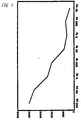
- FIG. 1 shows the detection of 1/5 of the amplification batch in the streptavidin tube.
- the fluorescence signal is plotted against the concentration of template nucleic acid. Signals between 100 and 500 fg are easily measurable.
- the PCR is carried out with the same target in the same concentrations as in Example 1.
- the reaction volume is tris, pH 8.5, 10 mM; made up to 300 ⁇ l, centrifuged in a Sephadex G75 column at 2,000 rpm 5 'and the eluate precipitated with 30 ⁇ l 4 M LiCl in 750 ⁇ l ethanol 30' at - 70 ° C centrifuged and resuspended as in Example 1.
- the detection reaction with ⁇ Digoxigenin> alkaline phosphatase conjugate is carried out as in Example 1.
- Sandwich hybridization experiments are carried out with recombinant hepatitis B virus (HBV) DNA as template (0, 1, 5, 10, 20, 40 and 80 ng), an HBV-specific digoxigenin-labeled oligonucleotide (40 nucleotides, digoxigenin Labeling with a digoxigenin molecule during synthesis) as a detection sample and as a capture sample with either a single biotin-labeled HBV-specific oligonucleotide (40 nucleotides) or a sequence-identical multiple biotin-labeled oligonucleotide (8 biotin molecules / oligonucleotide).
- the template DNA is 10 min before hybridization.
- each of the capture or detection oligonucleotides are in sodium phosphate, pH 6.8, 50 mM; 2xSSC (NaCl, 300 mM; Na 3 citrate 30 mM); 5x Denhardt's solution (0.1% polyvinylpyrrolidone; 0.1% bovine serum albumin; 0.1% Ficoll 400) and with the specified amounts of recombinant HBV-DNA in a total volume of 200 ⁇ l in a streptavidin-coated tube for 60 min hybridized at 37 ° C.
Landscapes
- Chemical & Material Sciences (AREA)
- Life Sciences & Earth Sciences (AREA)
- Organic Chemistry (AREA)
- Health & Medical Sciences (AREA)
- Engineering & Computer Science (AREA)
- Zoology (AREA)
- Wood Science & Technology (AREA)
- Proteomics, Peptides & Aminoacids (AREA)
- Molecular Biology (AREA)
- Chemical Kinetics & Catalysis (AREA)
- Bioinformatics & Cheminformatics (AREA)
- Genetics & Genomics (AREA)
- Microbiology (AREA)
- General Health & Medical Sciences (AREA)
- Biotechnology (AREA)
- General Engineering & Computer Science (AREA)
- Biochemistry (AREA)
- Analytical Chemistry (AREA)
- Physics & Mathematics (AREA)
- Biophysics (AREA)
- Immunology (AREA)
- General Chemical & Material Sciences (AREA)
- Measuring Or Testing Involving Enzymes Or Micro-Organisms (AREA)
- Saccharide Compounds (AREA)
- Preparation Of Compounds By Using Micro-Organisms (AREA)
- Medicines Containing Antibodies Or Antigens For Use As Internal Diagnostic Agents (AREA)
- Absorbent Articles And Supports Therefor (AREA)
Description
- Gegenstand der Erfindung ist ein Verfahren zur Herstellung von modifizierten Nukleinsäuren, ein Verfahren zum Nachweis von Nukleinsäuren, welches dieses Herstellungsverfahren umfaßt, Reagenzien zur Durchführung dieser Verfahren, sowie eine Nukleinsäure, welche in den genannten Verfahren hergestellt wird.
- Verfahren zum Nachweis von Nukleinsäuren haben sich in der klinischen Diagnostik immer mehr zu einer empfindlichen Alternative zu Immuntests, beispielsweise auf dem Gebiet der Humandiagnostik, wie z. B. Virusdiagnostik und Bakteriendiagnostik, erwiesen. Jedoch auch in der Lebensmitteldiagnostik und der Histologie finden Verfahren zum Nachweis von Nukleinsäuren Verwendung. In diesen Verfahren wird das die nachzuweisende Nukleinsäure enthaltende Material mit einier zu der nachzuweisenden Nukleinsäure komplementären Nukleinsäure in Kontakt gebracht. Die Bildung eines Nukleinsäurehybrids kann anschließend auf verschiedene Weise sichtbar gemacht werden. Ein solches Verfahren ist beispielsweise in der DE-A-2801582 oder der US-A-4358535 beschrieben.
- Diese Verfahren sind jedoch zum Nachweis sehr geringer Mengen an Nukleinsäure weniger gut geeignet. Zur Verbesserung dieser Verfahren wurde in der EP-A-0200362 vorgeschlagen, die nachzuweisende Nukleinsäure in einem der Hybridisierungsreaktion vorangehenden Schritt durch ein in-vitro-System zu vermehren. Dazu wird der Probe pro nachzuweisendem Nukleinsäure-Einzelstrang mindestens ein sogenannter Primer zugesetzt. Durch eine enzymatische Verlängerungsreaktion wird zu jedem der Nukleinsäure-Einzelstränge ausgehend von dem Primer durch Reaktion mit Mononukleotiden ein zu der template-Nukleinsäure komplementärer Nukleinsäurestrang gebildet. Diese Reaktion kann mehrmals hintereinander durchgeführt werden, wobei auch die neu gebildeten Nukleinsäurestränge vermehrt werden können. Wie die oben geschilderten Verfahren des Standes der Technik hat auch dieses Verfahren den Nachteil, daß im Anschluß an die Vermehrungsreaktion eine Hybridsierungsreaktion mit einer markierten Nukleinsäure ausgeführt wird.
- In der EP-A-0 324 474 wird ein Blotting-Verfahren vorgeschlagen, bei dem wegen des Einbaus eines markierten Mononukleotids in die neu gebildeten Nukleinsäure auf eine Hybridisierung mit einer markierten Nukleinsäuresonde verzichtet werden kann. Dieses Verfahren hat jedoch den Nachteil, daß die Nukleinsäuren mittels Gelchromatographie aufgetrennt werden. Dies ist apparativ aufwendig und zeitintensiv.
- In der Patentschrift US-4,851,331 wird ein Verfahren beschrieben, bei dem ein Primer an eine nachzuweisende Nukleinsäure hybridisiert und unter Einbau von markierten Mononukleotiden elongiert wird. Der Nachweis des gebildeten Nukleinsäurestranges erfolgt über radioaktiv markierte Mononukleotide, die in den Strang eingebaut wurden. Dieses Verfahren besitzt den Nachteil, daß eine Verwendung radioaktiver Materialien notwendig ist.
- Aufgabe der vorliegenden Erfindung war es, die Nachteile des Standes der Technik zu vermeiden und insbesondere einfachere und weniger Schritte erfordernde besonders empfindliche Verfahren zum Nachweis von Nukleinsäuren bereitzustellen.
- Gegenstand der Erfindung ist ein Verfahren zur Herstellung von Nukleinsäure durch Hybridisierung mindestens eines Primers an eine template-Nukleinsäure und enzymatische Verlängerung des Primers zu einem zu der template-Nukleinsäure komplementären Nukleinsäurestrang durch Reaktion mit verschiedenen Arten von Mononukleotiden, wobei mindestens eine Art von Mononukleotiden eine nachweisbare, biospezifische Gruppe und die gleiche oder mindestens eine andere Art von Mononukleotiden eine zur Immobilisierung befähigende biospezifische Gruppe trägt. Ebenfalls Gegenstand der Erfindung sind ein Verfahren zum Nachweis von Nukleinsäuren, ein Reagenz zur Herstellung von Nukleinsäuren, ein Reagenzkit zum Nachweis von Nukleinsäuren und eine in einem der obigen Verfahren hergestellte Nukleinsäure.
- template-Nukleinsäuren im Sinne der Erfindung sind insbesondere DNA und RNA prokaryontischer oder eukaryontischer Herkunft. Dazu gehören auch virale und bakterielle Nukleinsäuren sowie Nukleinsäuren von Viroiden. Sie können einzel- oder doppelsträngig sein. Es kann sich um episomale Nukleinsäuren, wie Plasmide, oder genomische, chromosomale Nukleinsäuren handeln. Die Nukleinsäuren können für einen bestimmten Organismus oder eine Gruppe von Organismen charakteristisch sein. Es kann sich bei den Nukleinsäuren auch um schon vorbehandelte Nukleinsäuren handeln, beispielsweise um mittels Restriktionsenzymen geschnittene Nukleinsäuren. Im Falle von RNA sollte vorher cDNA hergestellt werden. Als vorteilhaft hat es sich erwiesen, wenn die Nukleinsäuren vor der Durchführung der Reaktion in einzelsträngiger Form vorliegen oder in einzelsträngige Form gebracht werden.
- Als template-Nukleinsäuren werden im folgenden die in der Probe vorliegenden speziellen Nukleinsäuren, auf die sich die Nachweis- oder Herstellungsreaktion stützen soll, bezeichnet.
- Die template-Nukleinsäure kann gereinigt vorliegen oder in einem Gemisch auch mit anderen Nukleinsäuren vorhanden sein, die nicht nachgewiesen oder benutzt werden sollen.
- Diese Nukleinsäuren können in einer festen oder flüssigen, vorbehandelten oder nicht-vorbehandelten Probe enthalten sein. Bevorzugt sind die template-Nukleinsäuren in einer Probe enthalten, die durch Lyse eines Organismus, beispielsweise einer Zelle, erhalten wird und die eine Reihe verschiedenster Verbindungen, unter anderem auch andere Nukleinsäuren, enthält.
- Zur Durchführung des erfindungsgemäßen Verfahrens zur Herstellung von Nukleinsäuren wird die Probe, welche eine template-Nukleinsäure enthält, unter geeigneten Bedingungen mit mindestens einem, bevorzugt einem Primer pro Nukleinsäureeinzelstrang versetzt. Dieser Primer ist bevorzugt ein Oligonukleotid von 12 bis 60, insbesondere 15 bis 30 nt (Nukleotiden) Länge. Der Primer kann mit einem bestimmten Bereich der template-Nukleinsäure hybridisieren. Dies ist möglich, wenn der Primer eine Nukleotidsequenz aufweist, welche im wesentlichen komplementär ist zu einem Bereich der template-Nukleinsäure.
- Der Primer ist bevorzugt aus Deoxyribonukleotiden oder Ribonukleotiden aufgebaut, wobei diese Nukleotide modifiziert oder unmodifiziert sein können. Bevorzugt sind die meisten Nukleotide des Primers unmodifiziert.
- Unmodifizierte Nukleotide sind die natürlich vorkommenden Nukleotide, beispielsweise Adenosin, Guanosin, Thymidin, Uridin und Cytidin. Modifizierte Nukleotide sind Nukleotidanaloge, wie 7-Desazaadenosin oder 7-Desazaguanosin, oder Derivate der genannten unmodifizierten Nukleotide, die eine zur Immobilisierung befähigende (immobilisierbare) oder eine nachweisbare Gruppe enthalten.
- Zur Immobilisierung befähigende biospezifische Gruppen sind Gruppen bzw. Molekülteile, die über gruppenspezifische Wechselwirkungen von einem anderen Molekül oder Molekülteil erkannt und gebunden werden können. Solche Gruppen sind daher z.B. Haptene, Antigene und Antikörper, Glykoproteine, beispielsweise Lectine, oder auch die Bindungspartner von Bindeproteinen, wie Biotin oder Iminobiotin. Bevorzugt sind Haptene und Vitamine, besonders bevorzugt sind Biotin oder Steroide, wie Digoxigenin.
- Nachweisbare biospezifische Gruppen sind beispielsweise kovalent gebundene, direkt nachweisbare Gruppen oder Molekülteile, wie Fluoreszenzfarbstoffe oder chromophore Substanzen, oder auch Gruppen, die über eine nachgeschaltete Reaktion indirekt nachweisbar sind. Dazu gehören insbesondere solche biospezifischen Gruppen, wie sie auch oben für die zur Immobilisierung befähigende Gruppen beschrieben sind. Besonders bevorzugt ist Digoxigenin.
- Der Primer kann eine oder mehrere solche zur Immobilisierung befähigende oder nachweisbare Gruppen enthalten. Er kann auch sowohl eine oder mehrere zur Immobilisierung befähigende als auch eine oder mehrere nachweisbare Gruppen beinhalten. Bevorzugt enthält der Primer gar keine dieser Gruppen.
- Solche Primer können auf dem Fachmann bekannte Weise hergestellt werden, beispielsweise durch chemische Synthese analog zu WO 84/03285 oder durch enzymatischen Einbau analog zu EP-A-0063879. Die Modifizierung kann an den Primer an beliebiger Stelle angebracht sein, bevorzugt jedoch nicht am 3'-Ende. Möglich ist, beispielsweise die Modifizierung am 5'-Ende (beispielsweise nach Molecular Cloning, S. 239 (1982) Ed. Maniatis et al., CSH) oder/und über die Nukleobasen, beispielsweise über einenε-Aminocapronsäurelinker und/oder über Random-priming nach Feinberg et al. (Anal. Biochem. 132, 6 (1983)). Prinzipiell sind auch alle Primer geeignet, die in der EP-A-0200362 beschrieben sind.
- Die Bedingungen, unter welchen eine Hybridisierung des Primers mit dem dazu passenden Teil der template-Nukleinsäure stattfindet, sind dem Fachmann beispielsweise aus der EP-A-0200362 bekannt. Sie richten sich nach der Länge des Primers sowie dem Ausmaß der Komplementarität.
- Der Primer sollte insbesondere an seinem 3'-Ende mindestens ein Nukleotid aufweisen, welches zu dem entsprechenden Nukleotid der template-Nukleinsäure komplementär ist. Der Primer kann, bevorzugt am 5'-Ende, außerdem eine Nukleotidsequenz enthalten, die nicht komplementär zu der template-Nukleinsäure ist. Er kann auch Erkennungsstellen für Enzyme, beispielsweise Polymerasen, enthalten; es können dazu auch Proteine gebunden sein.
- Die Nukleotidsequenz des Primers wird so gewählt, daß die Einzelstrang-Nukleotidsequenz der template-Nukleinsäure nach der Hybridisierung über das 3'-Ende des Primers hinausgeht.
- In dem erfindungsgemäßen Verfahren zur Herstellung von Nukleinsäuren wird die aus template-Nukleinsäure und Primer gebildete Hybrid-Nukleinsäure am 3'-Ende des Primers verlängert, indem ein zu dem oben genannten einzelsträngigen Bereich der template-Nukleinsäure komplementäres an den Primer anschließendes Nukleinsäurestück gebildet wird. Es kann hierbei analog zur EP-A-0200362 vorgegangen werden. Dort wird die Verlängerung mittels vierer Mononukleosidtriphosphate beschrieben.
- Im erfindungsgemäßen Verfahren werden als Mononukleosidtriphosphate neben nicht modifizierten auch modifizierte Nukleosidtriphosphate eingesetzt. Modifizierte Nukleosidtriphosphate sind die Triphosphate der oben geschilderten modifizierten Nukleotide. Beispiele solcher modifizierter Mononukleosidtriphosphate sind Digoxigenin-dUTP (EP-A-0 324 474) oder Biotin-dUTP. Als modifizierte Nukleosidtriphosphate können in der Verlängerungsreaktion gleichzeitig solche Nukleosidtriphosphate, die eine zur Immobilisierung befähigende Gruppe tragen, und solche Nukleosidtriphosphate eingesetzt werden, die eine nachweisbare Gruppe tragen. Bei der zur Immobilisierung befähigenden Gruppe und der nachweisbaren Gruppe handelt es sich hier bevorzugt um unterschiedliche Gruppen. Bei einer Verlängerung um mehr als ca. 30 - 40 Nukleotide kann durch Einhaltung bestimmter Versuchsbedingungen gewährleistet werden, daß mehrere zur Immobilisierung befähigende Gruppen in die neu gebildete Nukleotidsequenz eingebaut werden. Bevorzugt sind nicht alle Nukleosidtriphosphate modifiziert. Besonders bevorzugt ist der Fall, daß neben den 4 natürlichen Nukleosidtriphosphatarten eine Nukleosidtriphosphatart in modifizierter Form eingesetzt wird.
- Die unmodifizierte Menge des Nukleosidtriphosphats, das auch in modifizierter Form eingesetzt wird, wird bevorzugt um die Menge an eingesetztem modifziertem Nukleosidtriphosphat verringert, so daß die Gesamtmenge dieser Nukleosidtriphosphatart ungefähr erhalten bleibt. Die Menge der verschiedenen Mononukleosidtriphosphatarten ist jeweils ungefähr gleich und dem Fachmann bekannt. Sie beträgt beispielsweise bei Verlängerung analog zu EP-A-0 200 362 bevorzugt 100 µM - 300 µM, besonders bevorzugt ca. 200 µM.
- Über folgende Ausführungsformen des erfindungsgemäßen Verfahrens ist es möglich, Nukleinsäuren herzustellen, welche mindestens eine nachweisbare biospezifische und mindestens eine zur Immobilisierung befähigende biospezifische Gruppe beinhalten und zu mindestens einem Teil einer template-Nukleinsäure komplementär sind:
- Einsatz eines Primers, der mindestens eine nachweisbare Gruppe enthält, und einer Nukleosidtriphosphatart, die eine immobilisierbare Gruppe enthält. Dabei kann der Primer zusätzlich noch eine oder mehrere immobilisierbare Gruppen enthalten und außerdem eine Nukleosidtriphosphatart eingesetzt werden, die eine nachweisbare Gruppe enthält. Bevorzugt sind jedoch die Ausführungsformen, bei denen der Primer nicht zusätzlich eine nachweisbare Gruppe aufweist.
- Einsatz eines Primers, der mindestens eine immobilisierbare Gruppe enthält, und Nukleosidtriphosphaten, die eine nachweisbare Gruppe enthalten, sowie Nukleosidtriphosphaten, die ein immobilisierbare Gruppe enhalten. Auch hier kann der Primer außerdem noch eine nachweisbare Gruppe enthalten.
- Einsatz eines Primers, welcher mehr als eine immobilisierbare Gruppe enthält, und Nukleosidtriphosphaten, die eine nachweisbare Gruppe enthalten. Zusätzlich können noch Nukleosidtriphosphate eingesetzt werden, die eine immobilisierbare Gruppe enthalten.
- Einsatz eines Primers, der keine immobilisierbare und keine nachweisbare Gruppe enthält, und Mononukleosidtriphosphaten, die eine nachweisbare Gruppe enthalten, sowie Mononukleosidtriphosphaten, die eine immobilisierbare Gruppe enthalten. Dieser Fall ist bevorzugt, da hier eine Reaktion zur Modifizierung des Primers wegfällt. Außerdem ist durch den Einbau sowohl nachweisbarer als auch immobilisierbarer Mononukleotide gewährleistet, daß die gebildete Nukleinsäure eine Vielzahl von immobilisierbaren Gruppen und mindestens eine nachweisbare Gruppe enthält. Ein weiterer Vorteil dieser Variante ist die erheblich erleichterte Abtrennbarkeit der gebildeten Nukleinsäuren von nicht umgesetzten Primern.
- Als Enzym zur Verlängerung des Primers kommen Enzyme in Frage, die DNA- bzw. RNA-abhängige DNA- oder RNA-Polymerase-Aktivität aufweisen. Bevorzugt sind thermostabile DNA-Polymerasen. Dazu gehört beispielsweise Taq-DNA-Polymerase oder Klenow-Fragment der E. coli DNA-Polymerase.
- Die Verlängerungsreaktion endet im allgemeinen bevorzugt am 5'-Ende der template-Nukleinsäure. Sie kann jedoch gewünschtenfalls auch schon vorzeitig durch Verwendung von Stopreagenzien, z.B. Stopnukleotiden, abgebrochen werden. Falls erforderlich wird zum Schluß das neugebildete Nukleinsäurestück an den Primer ligiert, beispielsweise über die Ligasereaktion.
- Durch die enzymkatalysierte Reaktion wird der Primer unter Verwendung von modifizierten und unmodifizierten Mononukleosidtriphosphaten um ein Nukleinsäurestück verlängert, das komplementär zu dem entsprechenden Teil der template-Nukleinsäure ist. Die neu entstandene Nukleinsäure enthält dann zwei oder mehr zur Immobilisierung befähigende Gruppen und eine oder mehr nachweisbare Gruppen. Es hat sich herausgestellt, daß es sehr vorteilhaft ist, wenn zwei oder mehr zur Immobilisierung befähigende Gruppen in einem Strang der neu gebildeten Nukleinsäure enthalten sind. Insbesondere können solche Nukleinsäuren effizienter immobilisiert werden als solche, die nur eine solche Gruppe aufweisen. Dies erleichtert eine Quantifizierung der Ausgangsmenge an template-Nukleinsäure durch genauere Quantifizierung der neu gebildeten Nukleinsäuren.
- Die Zahl der nachweisbaren Gruppen in jedem neugebildeten Strang ist bevorzugt größer als 1 und besonders bevorzugt weist ca. jedes 15. bis 30. Nukleotid eine nachweisbare Gruppe auf.
- Mit dem erfindungsgemäßen Verfahren können beispielsweise Nukleinsäuren hergestellt werden, die eine Länge von 100 bis 8000 bp aufweisen. Sie ist jedoch praktisch nur begrenzt durch das Enzymsystem, welches die Verlängerung ausführt.
- Je nach weiterer Anwendung der Amplifikationsprodukte kann die Polymerase beispielsweise durch Phenolisierung abgereinigt werden. Bei alleiniger Analytik im Southernblot, Dot Blot oder in der MTP ist dies nicht notwendig.
- Bevorzugt werden die neugebildeten Nukleinsäuren als Doppel- oder als Einzelstrang von den nicht umgesetzten Mononukleosidtriphosphaten und Primern durch Gelchromatographie, an Affinitätsmaterialien oder durch Fällung abgetrennt. Dabei ist das erfindungsgemäße Verfahren, welches ohne mit einer immobilisierbaren Gruppe modifizierten Primer arbeitet, besonders vorteilhaft, da die Abtrennung der neu gebildeten Nukleinsäuren von unmodifizierten Primern an Festphasen, die die immobilisierbare Gruppe binden, besonders einfach ist.
- Die gebildeten Nukleinsäuren können gewünschtenfalls von der template-Nukleinsäure getrennt werden, beispielsweise durch Denaturierung des Doppelstrangs oder über eine Replacement-Reaktion Die neu gebildeten Nukleinsäuren können Gegenstand weiterer Reaktionen sein, beispielsweise von Fragmentierungen durch Restriktionsenzyme, wie in der EP-A-0300796. Sie können auch selbst als template-Nukleinsäure zur Bildung von Nukleinsäuren in dem oben geschilderten erfindungsgemäßen Verfahren eingesetzt werden; diese Nukleinsäuren sind dann wiederum mindestens zum Teil zu ihnen komplementär und zu der ursprünglichen template-Nukleinsäure homolog. Als Primer muß dann anstelle einer zur template-Nukleinsäure komplementären Nukleotidsequenz ein mit der neu gebildeten Nukleinsäure hybridisierbarer Primer eingesetzt werden. Ansonsten muß er die oben geschilderten Bedingungen erfüllen. Da auch die ursprüngliche template-Nukleinsäure wieder als Matrize für die Bildung einer neuen Nukleinsäure zur Verfügung steht, ergibt sich eine zumindest annähernd exponentielle Vermehrung der beiden neu gebildeten Nukleinsäurestränge, wenn jede der Nukleinsäuren auf erfindungsgemäße Weise eingesetzt wird. Dies kann in einzelnen Temperatur- oder/und Reagenzzyklen, aber auch homogen geschehen. Prinzipiell kann die Reaktion zu jedem Zeitpunkt durch Zugabe von Stopreagenzien (beispielsweise EDTA) gestoppt werden. Außerdem ist es möglich, das erfindungsgemäße Verfahren dahingehend zu modifizieren, daß analog zu EP-A-0201184 nach einiger Zeit sogenannte "nested" Primer eingesetzt werden. Von diesem Zeitpunkt an wird dann nur noch ein Teil der bisher neu hergestellten Nukleinsäuresequenz amplifiziert.
- Die Verfahren können auch so geführt werden, daß die zum Einbau zur Verfügung stehende Menge an zur Immobilisierung befähigendem Nukleosidtriphosphat in den letzten Reaktionszyklen limitiert wird. Dies hat den Vorteil, daß die nichteingebauten Bio-Nukleotide zum größten Teil in der Reaktion verbraucht sind, daher nicht mehr mit den biomarkierten Amplifikationsprodukten um SA-Bindungsstellen konkurrieren. Daher ist eine vorgeschaltete Abtrennung der nichteingebauten Nukleotide (Säule oder Fällung) nicht mehr notwendig.
- Als template-Nukleinsäuren für das erfindungsgemäße Verfahren können auch Nukleinsäuren bzw. Fragmente davon eingesetzt werden, wie sie als Ergebnis von Nukleinsäure-Amplifikationsreaktionen, beispielsweise der EP-A-0310229, der EP-A-0300796, der WO 88/10315, der EP-A-0201184, der EP-A-0329822, der EP-A-0272098 oder der EP-A-0303155 entstehen. In diesen Fällen ist es möglich, sogar mit nur einmaliger Ausführung der Verlängerungsreaktion gemäß dem erfindungsgemäßen Verfahren eine große Menge an erfindungsgemäß modifizierten Nukleinsäuren herzustellen.
- Eine besonders bevorzugte Ausführungsform des Verfahrens stellt die Durchführung des Verfahrens gemäß EP-A-0201184 unter Verwendung zweier unterschiedlich markierter Mononukleosidtriphosphate, beispielsweise Biotin-16-dUTP (immobilisierbar, Leary et al., Proc. Natl. Acad. Sci. USA 80, 4045-49 (1983)) und Digoxigenin-11-dUTP (nachweisbar), dar.
- Als Versuchsbedingungen hierzu haben sich als besonders zweckmäßig erwiesen:
- Volumen der Reaktion: 50-100 µl; Konzentration des markierten Primers 200 nM-1 µM; Gesamtkonzentration der dNTP-Arten: 100-300 µM; Taq-DNA-Polymerase: 1-3 U oder eine andere thermostabile Polymerase; Puffer: 30-100 mM KCl; 5-20 nM Tris, pH 8.2-8.7 bei RT; 0,5-2 mM MgCl2; gegebenenfalls Stabilisatoren wie Gelatine oder Nuklease-freies BSA; PCR-Zyklen: 20-60, bevorzugt 20-30; Denaturierung: vor dem Start 2-10', 92-95°C (fakultativ; wenn hochkomplexe DNA), während PCR 1-5', 92-95°; Primer Hybridisierung 1-5', 35-55°C, Elongation: 1-10', 65-75°C, bevorzugt 3'. Trennung der nicht eingebauten dNTP's und Primer-Moleküle von den gebildeten Nukleinsäuren am Ende der PCR: Sephadex G 75 oder G 100 (Pharmacia) oder Streptavidin-Festphase (beispielsweise gemäß DE-A-3817716). Die modifizierten dNTP's können schon ab dem 1. Zyklus, aber auch erst in den letzten 3-5 Zyklen zugegeben werden. Letztere Vorgehensweise empfiehlt sich bei limitierender Zugabe von Bio-dUTP. Mengenverhältnis der für jeden Einzelstrang spezifischen Primer zueinander bevorzugt ca. 1:1. Verhältnis Dig-dUTP:Bio-dUTP:dTTP von 3:3:1 bis 1:1:3, bevorzugt 1:1:2 bis 1:1:1. Verhältnis Dig-dUTP (bzw. Bio-dUTP):dTTP (bei Verwendung eines modifizierten Primers): 3:1 bis 1:3 bevorzugt 1:2.
- Die oben angegebenen Werte sind Richtwerte. Ein Fachmann kann ohne weiteres erkennen, ob im Einzelfall auch davon abweichende Bedingungen möglich sind.
- Es war überraschend, daß es möglich war, auf erfindungsgemäße Weise Nukleinsäuren herstellen zu können, die besser immobiliserbar sind als erwartet und den Vorteil haben, auf einfache Weise quantitativ nachgewiesen werden zu können.
- Diese Vorteile können besonders gut in Verfahren zum Nachweis von Nukleinsäuren angewendet werden. Weiterer Gegenstand der Erfindung ist daher ein Verfahren zum Nachweis von Nukleinsäuren durch Bildung eines zu mindestens einem Teil eines Stranges der nachzuweisenden Nukleinsäure komplementären Stranges, Bindung der gebildeten Nukleinsäure an eine feste Phase und Nachweis der gebildeten Nukleinsäure, wobei der komplementäre Strang durch Hybridisierung mindestens eines Primers an eine template-Nukleinsäure und enzymatische Verlängerung des Primers zu einem zu der template-Nukleinsäure komplementären Nukleinsäurestrang durch Reaktion mit verschiedenen Arten, bevorzugt mindestens vier Arten, von Mononukleotiden unter Verwendung der nachzuweisenden Nukleinsäure als template-Nukleinsäure gebildet wird und der komplementäre Nukleinsäurestrang mindestens eine zur Immobilisierung befähigende biospezifische Gruppe und mindestens eine nachweisbare biospezifische Gruppe trägt.
- Als template-Nukleinsäure des erfindungsgemäßen Herstellungsverfahrens dient dabei die nachzuweisende Nukleinsäure bzw. ein Teil davon, die gegebenenfalls wie oben beschrieben, vorbehandelt, beispielsweise amplifiziert wurde.
- Die als Ergebnis des Verfahrens gebildeten Nukleinsäurestränge können anschließend in sehr einfacher Weise nachgewiesen werden. Dazu können Doppelstränge gewünschtenfalls in Einzelstränge gespalten werden. Die gebildeten doppelt modifizierten Nukleinsäuren können beispielsweise gelchromatographisch nachgewiesen werden. Bevorzugt werden sie jedoch mit einer geeigneten Festphase in Kontakt gebracht und dort immobilisiert.
- Die Art der Festphase richtet sich nach der zur Immobilisierung befähigenden Gruppe. Ist die immobilisierbare Gruppe beispielsweise ein Hapten, dann kann eine Festphase verwendet werden, die an ihrer Oberfläche Antikörper gegen dieses Hapten aufweist. Ist die immobilisierbare Gruppe ein Vitamin, wie z. B. Biotin, dann kann die Festphase bindende Proteine, wie Avidin oder Streptavidin immobilisiert enthalten. Die Immobilisierung über eine Gruppe an der modifizierten Nukleinsäure ist besonders vorteilhaft, da sie unter milderen Bedingungen stattfinden kann als beispielsweise Hybridisierungsreaktionen.
- Bevorzugt wird zur Immobilisierung der gebildeten Nukleinsäuren die Reaktionsmischung nach Beendigung des Verfahrens zur Herstellung der Nukleinsäuren in ein Gefäß gefüllt, welches an seiner Oberfläche mit der immobilisierbaren Gruppe reagieren kann. Das Gefäß kann beispielsweise eine Küvette oder eine Miktrotiterplatte sein. Es ist jedoch auch möglich, eine Festphase in Form eines porösen Materials, wie einer Membran, eines Gewebes oder eines Vlieses, zu verwenden, auf welche die Reaktionsmischung aufgegeben wird. Ebenso ist die Verwendung von Perlen, sogenannten beads, möglich.
- Nach einer Inkubationszeit, während der die Immobilisierungsreaktion stattfindet, wird die flüssige Phase aus dem Gefäß, dem porösen Material oder den pelletierten beads entfernt. Die Festphase kann anschließend mit einem geeigneten Puffer gewaschen werden, da die Bindung der erfindungsgemäßen Nukleinsäure an der Festphase sehr fest ist.
- Die Menge der an die Festphase gebundenen modifizierten Nukleinsäure kann auf im Prinzip bekannte Weise bestimmt werden, wobei sich die durchzuführenden Schritte nach der Art der nachweisbaren Gruppe richten. Ist die nachweisbare Gruppe ein Hapten, so wird die modifizierte Nukleinsäure bevorzugt mit einem markierten Antikörper gegen das Hapten umgesetzt, wie analog in der EP-A-0 324 474 beschrieben. Die Markierung kann beispielsweise eine Enzymmarkierung, wie β-Galaktosidase, alkalische Phosphatase oder Peroxidase sein. Im Fall der Enzymmarkierung wird die Menge an Nukleinsäure über die meist photometrische, chemoluminometrische oder fluorometrische Verfolgung einer Reaktion des Enzyms mit einem chromogenen, chemoluminogenen oder fluorogenen Substrat gemessen.
- Bei indirekt nachweisbaren Gruppen können die erforderlichen Reagenzien (beispielsweise ein gegen ein Hapten gerichteteter markierter Antikörper) auch schon vor dem Waschschritt zu der Reaktionsmischung zugegeben werden.
- Der Nachweis der Nukleinsäure kann sowohl qualitativ als auch quantitativ geführt werden. Im Falle einer quantitativen Auswertung hat es sich als zweckmäßig herausgestellt, mindestens einen Vergleichsversuch mit einer Probe bekannten Nukleinsäuregehalts durchzuführen. Auch die Erstellung einer Eichkurve ist möglich und empfehlenswert.
- Das erfindungsgemäße Nachweisverfahren kann auf allen in der EP-A-0 200 362 genannten Gebieten eingesetzt werden. Auch in der Virus- und Bakteriendiagnostik gemäß EP-A-0 229 701 und EP-A-0 131 052 ist das Verfahren einsetzbar.
- Eine besonders bevorzugte Ausführungsform des erfindungsgemäßen Nachweisverfahrens umfaßt die besonders bevorzugte Ausführungsform des Herstellungsverfahrens und eine anschließende Detektion der neu gebildeten Nukleinsäure. Für die Detektion haben sich folgende Rahmenbedingungen als besonders vorteilhaft erwiesen:
Abtrennung der gebildeten Nukleinsäuren an einer Streptavidin-Oberfläche (DE-A-3817716) 1 bis 4 Stunden bei 37°C; Waschen mit Puffer; Inkubation mit Lösung eines AK gegen Digoxigenin, der mit alkalischer Phosphatase markiert ist; Waschen mit Puffer; Inkubation 4-Methylumbelliferyl-Phosphat, 0,05 bis 0,2 M; Messen in einem Fluoreszenzmeter; Vergleich gegen eine Eichkurve. - Ebenfalls Gegenstand der Erfindung ist eine einzel- oder doppelsträngige Nukleinsäure, dadurch gekennzeichnet, daß sie 1 oder mehrere nachweisbare biospezifische Gruppen und 2 oder mehr zur Immobilisierung befähigende biospezifische Gruppen in einem Nukleinsäurestrang aufweisen. Diese modifzierten Nukleinsäuren haben beispielsweise den Vorteil, daß sie sehr fest an geeigneten Festphasen immobilisierbar sind. Sie können unter Verwendung einer template-Nukleinsäure in erfindungsgemäßer Weise hergestellt werden. Sie können jedoch auch auf andere Weise hergestellt werden, beispielsweise durch Transkription analog zu DE-A-3726934, wenn entsprechende Mononukleosidtriphosphate (immobilisierbare und nachweisbare Gruppen) eingesetzt werden. Oft sind hierzu keine Primer erforderlich.
- Weitere Gegenstände der Erfindung sind Reagenzkits zur Durchführung des erfindungsgemäßen Verfahrens zum Nachweis von Nukleinsäuren. Eines dieser Reagenzkits enthält in getrennten Behältern
- ein erstes Mononukleosidtriphosphat, das eine nachweisbare biospezifische Gruppe trägt
- ein zweites Mononukleosidtriphosphat, welches eine zur Immobilisierung befähigende biospezifische Gruppe trägt und
- ein Enzym, welches unter Verwendung einer template-Nukleinsäure und vier Mononukleotiden eine zu der template-Nukleinsäure komplementäre Nukleinsäure bilden kann.
- Außerdem enthält es bevorzugt alle sonstigen Reagenzien, die zur Verlängerung von Primern zu Nukleinsäuren, die zu einem Nukleinsäurestrang komplementär sind, benötigt werden. Dazu gehören insbesondere mindestens ein Primer, welcher für die nachzuweisende Nukleinsäure oder Nukleinsäurespezies spezifisch ist sowie alle übrigen Mononukleosidtriphosphate. Außerdem kann es als Hilfsstoffe geeignet pH-Puffer-Substanzen, Denaturierungslösungen und Waschlösungen enthalten.
- Es enthält außerdem bevorzugt eine spezifische Nukleotid-Sequenz, welche mit dem Primer hybridisieren kann, als Kontrolle.
- Gegebenenfalls enthält das Reagenzkit auch die Reagenzien, welche zur Bestimmung der nachweisbaren Gruppe erforderlich sind. Im Falle der Verwendung von Haptenen ist beispielsweise bevorzugt ein markierter Antikörper in einem getrennten Behälter enthalten.
- Ein anderes Reagenzkit enthält in getrennten Behältern:
- mindestens einen zu der nachzuweisenden Nukleinsäure im wesentlichen komplementären Primer, welcher mindestens eine zur Immobilisierung befähigende biospezifische Gruppe trägt,
- mindestens ein Mononukleosidtriphosphat, welches eine nachweisbare biospezifische Gruppe trägt und
- ein Enzym, welches unter Verwendung einer template-Nukleinsäure eines Primers und vier Mononukleotiden eine zur template-Nukleinsäure komplementäre Nukleinsäure bilden kann.
- Auch es enthält bevorzugt alle sonstigen Reagenzien, die zur Verlängerung von Primern zu Nukleinsäuren benötigt werden. Dazu gehören hier insbesondere die übrigen Mononukleosidtriphosphate. Auch die genannten Hilfsstoffe, Kontrollnukleinsäuren und Reagenzien zum Nachweis der Gruppe sind bevorzugt darin enthalten.
- Fig. 1 zeigt das Ergebnis einer Bestimmung von Nukleinsäuren nach dem erfindungsgemäßen Verfahren. Diese Ergebnisse können auch als Eichkurve verwendet werden.
- Die Erfindung wird durch die folgenden Beispiele weiter erläutert:
- Verdünnungen von 10 ng - 100 ag des Plasmids pSPT18neo (template-Nukleinsäure, Herstellung gemäß Beck et al. in Gene 19:327-336 (1982)) werden für die PC-Reaktion gemäß EP-A-0200362 verwendet. pSPT18neo enthält die Sequenz des Neomycin(neo)-Gens in einem 940 bp SmaI-BglI-Fragment in der SmaI-BamHI-Site von pSPT 18. Das spezifisch amplifizierte Fragment in den Plasmid-Verdünnungen entspricht also 2,3 ng - 23 ag. Die Reaktion wird mit in diesem Plasmid die Neo-Sequenz flankierenden T7- und SP6-Promotor spezifischen Primern (Boehringer Mannheim, Best. Nr. 1175122 und 902152) gestartet. In einem Volumen von 50 µl werden 30 PCR-Zyklen in KCl, 50 mM; Tris HCl, pH 8,5, 10 mM; MgCl2, 1,5 mM; Gelatine, 100 µg/ml; dATP, 200 µM; dCTP, 200 µM; dGTP, 200 µM; dTTP, 100 µM; Digoxigenin-11-2'-desoxyuridin-5'-dUTP (Dig-11-dUTP, EP-A-0324474), 50 µM; Biotin-16-2'-desoxyuridin-5'-triphosphat (Bio-16-dUTP, Boehringer Mannheim GmbH, Best.-Nr. 1093070), 50µM; mit T7-Promotor-spezifischem Primer, 300 nM; und SP6-Promotor-spezifischem Primer, 300 nM; mit den angegebenen pSPT18neo-Verdünnungen und 2,5 U Thermus aquaticus (Taq)-DNA-Polymerase durchgeführt.
- Zyklen:
- Denaturierung: 2' 92°C
Primer-Hybridisierung: 2' 42°C
Elongation: 2'75°C - Die PCR wird in einem Thermocycler durchgeführt (DNA-Thermal-Cycler Perkin Elmer Cetus). Die Reaktionsvolumina sind zum Schutz vor Evaporation mit 30 µl Paraffin bedeckt.
- Nach der PC-Reaktion werdendie PCR-Produkte mit 5 µl 4 M LiCl versetzt und in 250 µl Äthanol 30' bei -70°C gefällt, bei 15.000g 5'pelletiert, zweimal mit 70% Äthanol gewaschen, getrocknet, in 50 µl Tris, pH 7,5, 10 mM aufgenommen und in eine mit Streptavidin beschichtete Mikrotiterplatte pipettiert. Die Bindung der Biotin-Digoxigenin-markierten Moleküle an die Streptavidin-Festphase wird bei 37°C 2 Stunden durchgeführt. Nach der Wandbindungsreaktion wird mit 2x SSC 3x 10' bei 37°C und mit Konjugat-Puffer (Tris-HCl, pH 7,5, 100 mM; NaCl 0,9%; BSA, 1%; Pluronic T68, 0,5%) einmal 10'bei 37°C gewaschen. Anschließend wird mit 40 U <Digoxigenin>-Alkalische Phosphatase-Konjugat 30' bei 37°C inkubiert und darauf folgend 5x mit je 200 µl Tris HCl, 100 mM; und NaCl, 150 mM gewaschen. Zuletzt wird 30'bei 37°C mit 4-Methylumbelliferyl-Phosphat (0,1 mM) inkubiert und im Dynatech Microfluor-Reader gemessen.
- In Figur 1 wird die Detektion von je 1/5 des Amplifikationsansatzes im Streptavidin-Tube gezeigt. Aufgetragen ist das FLuoreszenzsignal gegen die Konzentration an template-Nukleinsäure. Signale zwischen 100 und 500 fg sind ohne weiteres messbar.
- Die PCR wird mit dem gleichen Target in denselben Konzentrationen wie in Beispiel 1 durchgeführt. In der PC-Reaktion werden 30 Zyklen in KCl, 50 mM; Tris HCl, pH 8,5, 10 mM; MgCl2, 1,5 mM; Gelatine 100 µg/ml; dATP, 200 µM, dCTP, 200 µM; dGTP, 200 µM; dTTP, 133 µM; Dig-11-dUTP, 66 µM; mit T7-Promotor-spezifischen Primern, 5'-(amidocaproyl)-Biotin-markiert mit N-(3-(N',N'-diisopropylaminomethoxyphosphinyloxy)hexyl)-2,2,2-trifluoroacetamid (Aminolink 2 von Applied Biosystems, USA) gemäß EP-A-0 261 283, 300 nM; und SP6-Promotor-spezifischem Primer, 5'-(amidocaproyl) Biotin-markiert via Aminolink 2, 300 nM; mit den in Beispiel 1 angegebenen pSPT18neo-Verdünnungen und 2,5 U Taq-DNA-Polymerase bei gleichen Zyklusprofilen durchgeführt. Nach PCR wird das Reaktionsvolumen mit Tris, pH 8,5, 10 mM; auf 300 µl aufgefüllt, in einer Sephadex G75-Säule bei 2.000 rpm 5' zentrifugiert und das Eluat mit 30 µl 4 M LiCl in 750 µl Äthanol 30'bei - 70°C gefällt, ebenso zentrifugiert und resuspendiert wie in Beispiel 1. Die Detektionsreaktion mit <Digoxigenin>-Alkalische Phosphatase-Konjugat wird wie in Beispiel 1 durchgeführt.
- Sandwich-Hybridisierungs-Experimente werden mit rekombinanter Hepatitis-B-Virus (HBV) DNA als template (0, 1, 5, 10, 20, 40 und 80 ng), einem HBV-spezifischen Digoxigenin-markierten Oligonukleotid (40 Nukleotide, Digoxigenin-Markierung mit einem Digoxigenin-Molekül während Synthese) als Nachweisprobe und als Fangprobe entweder mit einem einfach Biotin-markiertem HBV-spezifischen Oligonukleotid (40 Nukleotide) oder einem sequenzgleichen mehrfach Biotin-markierten Oligonukletid (8 Biotinmoleküle/Oligonukleotid) durchgeführt. Die template-DNA wird vor der Hybridisierung 10 min. bei 100°C denaturiert und danach sofort auf Eis gebracht. Je 200 ng der Fang- bzw. Nachweisoligonukleotide werden in Natriumphosphat, pH 6,8, 50 mM; 2xSSC (NaCl, 300 mM; Na3-Citrat 30 mM); 5x Denhardt'sche Lösung (0,1 % Polyvinylpyrrolidon; 0,1 % Bovines Serumalbumin; 0,1 % Ficoll 400) und mit den angegebenen Mengen an rekombinanter HBV-DNA in einem Gesamtvolumen von 200 µl im Streptavidin-beschichteten Tube 60 min bei 37°C hybridisiert.
- Danach wird 2x 10 min bei 37°C mit 200 µl SSC, 2x/SDS, 0,2 % und 1x mit 0,9 % NaOH 10 min bei 37°C gewaschen. Anschließend folgt 30 min Inkubation mit 200 µl <Digoxigenin>-Meerrettich-Peroxidase-Konjugat (150 U/ml) bei 37°C in Tris-HCl, pH 7,5, 100 mM; NaCl 0,9 %; BSA, 1 %; Pluronic T68 0,5 % und 5x Waschen mit 0,9 % NaCl. Anschließend wird mit 0,1 % 2,2-Azino-di-{3-ethylbenzthiazolin-sulfonat (6)] (ABTS, BM Nr. 756407) in 200 µl ABTS-Puffer (BM-Nr. 1112597) inkubiert und die Extinktion bei 405 nm gemessen.
- In Tabelle I ist zu sehen, daß die meßbare Extinktion (d.h. die Zahl der vorhandenen Streptavidin-gebundenen Sandwichmoleküle) bei Verwendung von mehrfach-markierten Fangprobes höher ist (bei sonst völlig identischen Bedingungen). Das weist auf eine effizientere Bindung der mehrfach Biotin-markierten Moleküle hin.
Tabelle 1 HBV-Template ng Extinktion Oligo-Fangprobe 1 Biotinmolekül Extinktion Oligo-Fangprobe 8 Biotinmoleküle 0 121 113 1 126 135 5 135 148 10 146 180 20 179 232 40 231 332 80 319 672
Claims (11)
- Verfahren zur Herstellung von Nukleinsäuren durch Hybridisierung mindestens eines Primers an eine template-Nukleinsäure und enzymatische Verlängerung des Primers zu einem zu der template-Nukleinsäure komplementären Nukleinsäurestrang durch Reaktion mit verschiedenen Arten von Mononukleotiden, dadurch gekennzeichnet, daß mindestens eine Art von Mononukleotiden eine nachweisbare, biospezifische Gruppe und die gleiche oder mindestens eine andere Art von Mononukleotiden eine zur Immobilisierung befähigende, biospezifische Gruppe trägt.
- Verfahren gemäß Anspruch 1, dadurch gekennzeichnet, daß der Primer ein oder mehrere zur Immobilisierung befähigende biospezifische Gruppen trägt.
- Verfahren gemäß einem der Ansprüche 1 oder 2, dadurch gekennzeichnet, daß sowohl die hergestellte Nukleinsäure als auch die ursprüngliche template-Nukleinsäure als template-Nukleinsäuren zur Bildung weiterer Nukleinsäuren eingesetzt werden.
- Verfahren zum Nachweis von Nukleinsäuren durch Bildung eines zu mindestens einem Teil eines Stranges der nachzuweisenden Nukleinsäure komplementären Stranges, Bindung der gebildeten Nukleinsäure an eine feste Phase und Nachweis der gebildeten Nukleinsäure, dadurch gekennzeichnet, daß der komplementäre Strang durch Hybridisierung mindestens eines Primers an eine template-Nukleinsäure und enzymatische Verlängerung des Primers zu einem zu der template-Nukleinsäure im wesentlichen komplementären Nukleinsäurestrang durch Reaktion mit verschiedenen Arten von Mononukleotiden unter Verwendung der nachzuweisenden Nukleinsäure als template-Nukleinsäure gebildet wird, dadurch gekennzeichnet, daß mindestens eine Art von Mononukleotiden eine nachweisbare, biospezifische Gruppe und die gleiche oder mindestens eine andere Art von Mononukleotiden eine zur Immobilisierung befähigende, biospezifische Gruppe trägt.
- Reagenz zur Herstellung von Nukleinsäuren, enthaltend ein Mononukleosidtriphosphat, welches eine nachweisbare, biospezifische Gruppe trägt, und ein Mononukleosidtriphosphat, welches eine zur Immobilisierung befähigende biospezifische Gruppe trägt.
- Reagenzkit zum Nachweis von Nukleinsäuren, enthaltend in getrennten Behältern:- ein erstes Mononukleosidtriphosphat, das eine nachweisbare, biospezifische Gruppe trägt- ein zweites Mononukleosidtriphosphat, welches eine zu Immobilisierung befähigende, biospezifische Gruppe trägt und- ein Enzym, welches unter Verwendung einer template-Nukleinsäure und vier Mononukleotiden eine zu der template-Nukleinsäure komplementäre Nukleinsäure bilden kann.
- Reagenzkit gemäß Anspruch 6, dadurch gekennzeichnet, daß es außerdem eine Kontrollnukleinsäure enthält.
- Verfahren zur Herstellung modifizierter Nukleinsäuren durch Hybridisierung mindestens eines Primers an eine template-Nukleinsäure und enzymatische Verlängerung des Primers zu einem zu der template-Nukleinsäure komplementären Nukleinsäurestrang durch Reaktion mit verschiedenen Arten von Mononukleotiden, dadurch gekennzeichnet, daß als biospezifisch nachweisbar modifiziertes Mononukleosidtriphosphat Dig-dUTP als biospezifisch immobilisierbar modifiziertes Mononukleosidtriphosphat Bio-dUTP und als unmodifiziertes Mononukleosidtriphosphat dTTP im Verhältnis 3:3:1 bis 1:1:3, bevorzugt 1:1:2 bis 1:1:1 eingesetzt wird.
- Verfahren gemäß Anspruch 1, bei dem mindestens eine Nukleotidtriphosphatart mit Biotin als biospezifisch immobilisierbare Gruppe eingesetzt wird.
- Verfahren gemäß Anspruch 1, bei dem mindestens eine Nukleosidtriphosphatart mit Digoxigenin als biospezifisch nachweisbare Gruppe eingesetzt wird.
- Verfahren gemäß Anspruch 1, bei dem der Primer keine nachweisbare oder zur Immobilisierung befähigende Gruppen beinhaltet.
Applications Claiming Priority (2)
| Application Number | Priority Date | Filing Date | Title |
|---|---|---|---|
| DE4001154A DE4001154A1 (de) | 1990-01-17 | 1990-01-17 | Verfahren zur herstellung von modifizierten nukleinsaeuren |
| DE4001154 | 1990-01-17 |
Publications (2)
| Publication Number | Publication Date |
|---|---|
| EP0437774A1 EP0437774A1 (de) | 1991-07-24 |
| EP0437774B1 true EP0437774B1 (de) | 1997-03-05 |
Family
ID=6398219
Family Applications (1)
| Application Number | Title | Priority Date | Filing Date |
|---|---|---|---|
| EP90124754A Expired - Lifetime EP0437774B1 (de) | 1990-01-17 | 1990-12-19 | Verfahren zur Herstellung von modifizierten Nukleinsäuren |
Country Status (8)
| Country | Link |
|---|---|
| US (1) | US5741637A (de) |
| EP (1) | EP0437774B1 (de) |
| JP (1) | JPH0714359B2 (de) |
| AT (1) | ATE149511T1 (de) |
| CA (1) | CA2034313A1 (de) |
| DE (2) | DE4001154A1 (de) |
| ES (1) | ES2100863T3 (de) |
| FI (1) | FI102084B1 (de) |
Families Citing this family (11)
| Publication number | Priority date | Publication date | Assignee | Title |
|---|---|---|---|---|
| GB9122060D0 (en) * | 1991-10-17 | 1991-11-27 | Dynal As | Method of sequencing double stranded dna |
| GB9207598D0 (en) * | 1992-04-03 | 1992-05-20 | Dynal As | Method of sequencing double stranded dna |
| JPH06197798A (ja) * | 1992-08-28 | 1994-07-19 | Aisin Seiki Co Ltd | 蛍光基質によるdna塩基配列決定法 |
| DE4301693A1 (de) * | 1993-01-22 | 1994-07-28 | Cytech Biomedical Inc | Verfahren zur Amplifikation und Verfahren zum Nachweis von Polynucleotidsequenzen an fester Phase |
| US6037127A (en) * | 1994-03-31 | 2000-03-14 | E. I. Du Pont De Nemours And Company | Method for detection of non-denatured nucleic acid fragments |
| US6027879A (en) * | 1995-08-09 | 2000-02-22 | The Regents Of The University Of California | Detection and isolation of nucleic acid sequences using a bifunctional hybridization probe |
| DE19644302A1 (de) * | 1995-11-28 | 1997-06-05 | Boehringer Mannheim Gmbh | Verfahren zum Nachweis von Telomerase-Aktivität |
| DE19548680A1 (de) * | 1995-12-23 | 1997-06-26 | Boehringer Mannheim Gmbh | Verfahren zum quantitativen Nachweis von spezifischen Nukleinsäuresequenzen |
| CA2297661A1 (en) * | 1997-07-22 | 1999-02-04 | Darwin Molecular Corp. | Amplification and other enzymatic reactions performed on nucleic acid arrays |
| US6582936B1 (en) * | 1997-12-12 | 2003-06-24 | The Regents Of The University Of California | Methods for making nucleic acids |
| US6893822B2 (en) | 2001-07-19 | 2005-05-17 | Nanogen Recognomics Gmbh | Enzymatic modification of a nucleic acid-synthetic binding unit conjugate |
Citations (1)
| Publication number | Priority date | Publication date | Assignee | Title |
|---|---|---|---|---|
| US4851331A (en) * | 1986-05-16 | 1989-07-25 | Allied Corporation | Method and kit for polynucleotide assay including primer-dependant DNA polymerase |
Family Cites Families (19)
| Publication number | Priority date | Publication date | Assignee | Title |
|---|---|---|---|---|
| FR2422956A1 (fr) * | 1978-04-13 | 1979-11-09 | Pasteur Institut | Procede de detection et de caracterisation d'un acide nucleique ou d'une sequence de celui-ci, et reactif enzymatique pour la mise en oeuvre de ce procede |
| US4358535A (en) * | 1980-12-08 | 1982-11-09 | Board Of Regents Of The University Of Washington | Specific DNA probes in diagnostic microbiology |
| US4711955A (en) * | 1981-04-17 | 1987-12-08 | Yale University | Modified nucleotides and methods of preparing and using same |
| CA1254525A (en) * | 1983-04-13 | 1989-05-23 | Christine L. Brakel | Kit for terminally chemically labeling dna |
| NO843838L (no) * | 1983-09-26 | 1985-03-27 | Ortho Diagnostic Systems Inc | Fremgangsmaate for detektering av nukleinsyre |
| ES8706823A1 (es) * | 1985-03-28 | 1987-06-16 | Cetus Corp | Un procedimiento para detectar la presencia o ausencia de al menos una secuencia especifica de acidos nucleicos en una muestra |
| US4683195A (en) * | 1986-01-30 | 1987-07-28 | Cetus Corporation | Process for amplifying, detecting, and/or-cloning nucleic acid sequences |
| US4683202A (en) * | 1985-03-28 | 1987-07-28 | Cetus Corporation | Process for amplifying nucleic acid sequences |
| US4965188A (en) * | 1986-08-22 | 1990-10-23 | Cetus Corporation | Process for amplifying, detecting, and/or cloning nucleic acid sequences using a thermostable enzyme |
| IL79112A (en) * | 1985-06-13 | 1992-01-15 | Abbott Lab | Method for the isolation of a nucleic acid sequence and kit for performing a hybridization assay |
| CA1317535C (en) * | 1987-06-30 | 1993-05-11 | Nanibhushan Dattagupta | Assay of sequences using amplified genes |
| FI80476C (fi) * | 1987-10-09 | 1990-06-11 | Orion Yhtymae Oy | Foerbaettrat hybridisationsfoerfarande, vid foerfarandet anvaent redskap och reagensfoerpackning. |
| JPH0775560B2 (ja) * | 1987-12-25 | 1995-08-16 | 湧永製薬株式会社 | 検体中の目的核酸の検出法 |
| DE3813278A1 (de) * | 1988-01-12 | 1989-07-20 | Boehringer Mannheim Gmbh | Verfahren zum nachweis von nukleinsaeuren |
| EP0406280A1 (de) * | 1988-03-25 | 1991-01-09 | Akzo Nobel N.V. | Verfahren zur amplifizierung und zum nachweis von nukleinsäuren in einer flüssigen probe |
| NO165894C (no) * | 1988-05-24 | 1991-04-24 | Gunnar Paulsen | Analysemetode for gener. |
| WO1990002205A1 (en) * | 1988-08-25 | 1990-03-08 | Angenics, Inc. | Detection of nucleic acid sequences using particle agglutination |
| AU629845B2 (en) * | 1988-08-30 | 1992-10-15 | Abbott Laboratories | Detection and amplification of target nucleic acid sequences |
| CA2002076A1 (en) * | 1988-11-21 | 1990-05-21 | Brent A. Burdick | Diagnostic kit and method using a solid phase capture means for detecting nucleic acids |
-
1990
- 1990-01-17 DE DE4001154A patent/DE4001154A1/de not_active Withdrawn
- 1990-12-19 ES ES90124754T patent/ES2100863T3/es not_active Expired - Lifetime
- 1990-12-19 EP EP90124754A patent/EP0437774B1/de not_active Expired - Lifetime
- 1990-12-19 DE DE59010662T patent/DE59010662D1/de not_active Expired - Fee Related
- 1990-12-19 AT AT90124754T patent/ATE149511T1/de not_active IP Right Cessation
-
1991
- 1991-01-16 FI FI910238A patent/FI102084B1/fi active IP Right Grant
- 1991-01-16 JP JP3015786A patent/JPH0714359B2/ja not_active Expired - Lifetime
- 1991-01-16 CA CA002034313A patent/CA2034313A1/en not_active Abandoned
-
1994
- 1994-06-06 US US08/254,422 patent/US5741637A/en not_active Expired - Fee Related
Patent Citations (1)
| Publication number | Priority date | Publication date | Assignee | Title |
|---|---|---|---|---|
| US4851331A (en) * | 1986-05-16 | 1989-07-25 | Allied Corporation | Method and kit for polynucleotide assay including primer-dependant DNA polymerase |
Also Published As
| Publication number | Publication date |
|---|---|
| US5741637A (en) | 1998-04-21 |
| FI102084B (fi) | 1998-10-15 |
| EP0437774A1 (de) | 1991-07-24 |
| JPH0714359B2 (ja) | 1995-02-22 |
| ATE149511T1 (de) | 1997-03-15 |
| FI910238A0 (fi) | 1991-01-16 |
| JPH04211400A (ja) | 1992-08-03 |
| DE59010662D1 (de) | 1997-04-10 |
| FI102084B1 (fi) | 1998-10-15 |
| FI910238L (fi) | 1991-07-18 |
| DE4001154A1 (de) | 1991-07-18 |
| ES2100863T3 (es) | 1997-07-01 |
| CA2034313A1 (en) | 1991-07-18 |
Similar Documents
| Publication | Publication Date | Title |
|---|---|---|
| DE69829328T2 (de) | Strangverdrängungsamplifikation von RNA | |
| DE69122457T2 (de) | Verfahren zur Herstellung eines Polynukleotides zur Verwendung bei Einzelprimeramplifikation | |
| EP0324474B1 (de) | Verfahren zum Nachweis von Nukleinsäuren | |
| DE69018631T2 (de) | Zielabhängige synthese einer replizierbaren rns. | |
| DE69028325T2 (de) | Nukleinsäure-Amplifikation unter Verwendung eines Einzelprimers | |
| DE69130501T2 (de) | Polynukleotid-einfang-assay unter verwendung von in-vitro-amplifikation | |
| DE69307503T2 (de) | Chemisches verfahren zur analyse von dns-sequenzen | |
| DE69128077T2 (de) | Nuklein-säure amplifikation mit dns abhängigen rns polymerasen aktivität von rns-replikasen | |
| DE69706430T2 (de) | Verfahren zur sequenzierung von dna | |
| DE69625461T2 (de) | Fortführende amplifizierungsreaktion | |
| DE69133574T2 (de) | Verfahren zur Unterscheidung von Sequenz Varianten | |
| DE69225074T2 (de) | Verfahren zur vorbereitung von doppel strangiger rna und seine anwendungen | |
| DE69531542T2 (de) | Ligase/polymerase-vermittelte analyse genetischer elemente von einzelnukleotid-polymorphismen und ihre verwendung in der genetischen analyse | |
| DE69713386T2 (de) | Verfahren zur dna sequenzierung auf basis von nachweis der pyrophosphat-freisetzung | |
| DE60029961T2 (de) | Verankerte strangverdrängungs-amplifizierung auf einem elektronisch adressierbaren mikrochip | |
| DE10150121B4 (de) | Echtzeitdetektion von DNA-Amplifikationsprodukten | |
| EP0705905A2 (de) | Verfahren zum sensitiven Nachweis von Nukleinsäuren | |
| EP0628568A2 (de) | Verfahren zur Immobilisierung von Nukleinsäuren | |
| DE69836395T2 (de) | Primern zum Nachweis von HIV-1 | |
| EP1029083A2 (de) | Spezifisches und sensitives nukleinsäurenachweisverfahren | |
| EP0437774B1 (de) | Verfahren zur Herstellung von modifizierten Nukleinsäuren | |
| EP0566050B2 (de) | Verfahren zum Nachweis von Nukleinsäuren | |
| DE69533670T2 (de) | VERFAHREN ZUR VERRINGERUNG VON HINTERGRUNDSIGNALEn in DNA REPLIKATIONs/DETEKTIONS TESTS | |
| EP0552203B1 (de) | Verfahren zum empfindlichen nachweis von nukleinsäuren | |
| DE4041608A1 (de) | Verfahren zum empfindlichen nachweis von nukleinsaeuren |
Legal Events
| Date | Code | Title | Description |
|---|---|---|---|
| PUAI | Public reference made under article 153(3) epc to a published international application that has entered the european phase |
Free format text: ORIGINAL CODE: 0009012 |
|
| 17P | Request for examination filed |
Effective date: 19901219 |
|
| AK | Designated contracting states |
Kind code of ref document: A1 Designated state(s): AT BE CH DE DK ES FR GB GR IT LI LU NL SE |
|
| 17Q | First examination report despatched |
Effective date: 19940214 |
|
| GRAH | Despatch of communication of intention to grant a patent |
Free format text: ORIGINAL CODE: EPIDOS IGRA |
|
| GRAH | Despatch of communication of intention to grant a patent |
Free format text: ORIGINAL CODE: EPIDOS IGRA |
|
| GRAA | (expected) grant |
Free format text: ORIGINAL CODE: 0009210 |
|
| AK | Designated contracting states |
Kind code of ref document: B1 Designated state(s): AT BE CH DE DK ES FR GB GR IT LI LU NL SE |
|
| PG25 | Lapsed in a contracting state [announced via postgrant information from national office to epo] |
Ref country code: GR Free format text: LAPSE BECAUSE OF FAILURE TO SUBMIT A TRANSLATION OF THE DESCRIPTION OR TO PAY THE FEE WITHIN THE PRESCRIBED TIME-LIMIT Effective date: 19970305 Ref country code: DK Effective date: 19970305 |
|
| REF | Corresponds to: |
Ref document number: 149511 Country of ref document: AT Date of ref document: 19970315 Kind code of ref document: T |
|
| REG | Reference to a national code |
Ref country code: CH Ref legal event code: EP |
|
| REF | Corresponds to: |
Ref document number: 59010662 Country of ref document: DE Date of ref document: 19970410 |
|
| REG | Reference to a national code |
Ref country code: CH Ref legal event code: NV Representative=s name: A. BRAUN, BRAUN, HERITIER, ESCHMANN AG PATENTANWAE |
|
| ITF | It: translation for a ep patent filed | ||
| PG25 | Lapsed in a contracting state [announced via postgrant information from national office to epo] |
Ref country code: SE Effective date: 19970605 |
|
| ET | Fr: translation filed | ||
| REG | Reference to a national code |
Ref country code: ES Ref legal event code: FG2A Ref document number: 2100863 Country of ref document: ES Kind code of ref document: T3 |
|
| GBT | Gb: translation of ep patent filed (gb section 77(6)(a)/1977) |
Effective date: 19970717 |
|
| PG25 | Lapsed in a contracting state [announced via postgrant information from national office to epo] |
Ref country code: LU Free format text: LAPSE BECAUSE OF NON-PAYMENT OF DUE FEES Effective date: 19971219 Ref country code: AT Free format text: LAPSE BECAUSE OF NON-PAYMENT OF DUE FEES Effective date: 19971219 |
|
| PG25 | Lapsed in a contracting state [announced via postgrant information from national office to epo] |
Ref country code: BE Free format text: LAPSE BECAUSE OF NON-PAYMENT OF DUE FEES Effective date: 19971231 |
|
| PLBE | No opposition filed within time limit |
Free format text: ORIGINAL CODE: 0009261 |
|
| STAA | Information on the status of an ep patent application or granted ep patent |
Free format text: STATUS: NO OPPOSITION FILED WITHIN TIME LIMIT |
|
| 26N | No opposition filed | ||
| BERE | Be: lapsed |
Owner name: BOEHRINGER MANNHEIM G.M.B.H. Effective date: 19971231 |
|
| PGFP | Annual fee paid to national office [announced via postgrant information from national office to epo] |
Ref country code: FR Payment date: 20011212 Year of fee payment: 12 |
|
| PGFP | Annual fee paid to national office [announced via postgrant information from national office to epo] |
Ref country code: GB Payment date: 20011219 Year of fee payment: 12 |
|
| PGFP | Annual fee paid to national office [announced via postgrant information from national office to epo] |
Ref country code: NL Payment date: 20011228 Year of fee payment: 12 Ref country code: ES Payment date: 20011228 Year of fee payment: 12 |
|
| REG | Reference to a national code |
Ref country code: GB Ref legal event code: IF02 |
|
| PGFP | Annual fee paid to national office [announced via postgrant information from national office to epo] |
Ref country code: CH Payment date: 20020104 Year of fee payment: 12 |
|
| PGFP | Annual fee paid to national office [announced via postgrant information from national office to epo] |
Ref country code: DE Payment date: 20020109 Year of fee payment: 12 |
|
| PG25 | Lapsed in a contracting state [announced via postgrant information from national office to epo] |
Ref country code: GB Free format text: LAPSE BECAUSE OF NON-PAYMENT OF DUE FEES Effective date: 20021219 |
|
| PG25 | Lapsed in a contracting state [announced via postgrant information from national office to epo] |
Ref country code: ES Free format text: LAPSE BECAUSE OF NON-PAYMENT OF DUE FEES Effective date: 20021220 |
|
| PG25 | Lapsed in a contracting state [announced via postgrant information from national office to epo] |
Ref country code: LI Free format text: LAPSE BECAUSE OF NON-PAYMENT OF DUE FEES Effective date: 20021231 Ref country code: CH Free format text: LAPSE BECAUSE OF NON-PAYMENT OF DUE FEES Effective date: 20021231 |
|
| PG25 | Lapsed in a contracting state [announced via postgrant information from national office to epo] |
Ref country code: NL Free format text: LAPSE BECAUSE OF NON-PAYMENT OF DUE FEES Effective date: 20030701 Ref country code: DE Free format text: LAPSE BECAUSE OF NON-PAYMENT OF DUE FEES Effective date: 20030701 |
|
| GBPC | Gb: european patent ceased through non-payment of renewal fee |
Effective date: 20021219 |
|
| REG | Reference to a national code |
Ref country code: CH Ref legal event code: PL |
|
| NLV4 | Nl: lapsed or anulled due to non-payment of the annual fee |
Effective date: 20030701 |
|
| PG25 | Lapsed in a contracting state [announced via postgrant information from national office to epo] |
Ref country code: FR Free format text: LAPSE BECAUSE OF NON-PAYMENT OF DUE FEES Effective date: 20030901 |
|
| REG | Reference to a national code |
Ref country code: FR Ref legal event code: ST |
|
| REG | Reference to a national code |
Ref country code: ES Ref legal event code: FD2A Effective date: 20021220 |
|
| PG25 | Lapsed in a contracting state [announced via postgrant information from national office to epo] |
Ref country code: IT Free format text: LAPSE BECAUSE OF NON-PAYMENT OF DUE FEES;WARNING: LAPSES OF ITALIAN PATENTS WITH EFFECTIVE DATE BEFORE 2007 MAY HAVE OCCURRED AT ANY TIME BEFORE 2007. THE CORRECT EFFECTIVE DATE MAY BE DIFFERENT FROM THE ONE RECORDED. Effective date: 20051219 |