EP0439387A2 - Zweikernige makrozyklische und makrobizyklische Metallkomplexe zur Sauerstofftrennung und zum Sauerstofftransport - Google Patents
Zweikernige makrozyklische und makrobizyklische Metallkomplexe zur Sauerstofftrennung und zum Sauerstofftransport Download PDFInfo
- Publication number
- EP0439387A2 EP0439387A2 EP91400093A EP91400093A EP0439387A2 EP 0439387 A2 EP0439387 A2 EP 0439387A2 EP 91400093 A EP91400093 A EP 91400093A EP 91400093 A EP91400093 A EP 91400093A EP 0439387 A2 EP0439387 A2 EP 0439387A2
- Authority
- EP
- European Patent Office
- Prior art keywords
- lower alkyl
- oxygen
- dialdehyde
- metal complex
- primary amine
- Prior art date
- Legal status (The legal status is an assumption and is not a legal conclusion. Google has not performed a legal analysis and makes no representation as to the accuracy of the status listed.)
- Withdrawn
Links
- 239000001301 oxygen Substances 0.000 title claims description 33
- 229910052760 oxygen Inorganic materials 0.000 title claims description 33
- 229910052751 metal Inorganic materials 0.000 title claims description 29
- 239000002184 metal Substances 0.000 title claims description 29
- QVGXLLKOCUKJST-UHFFFAOYSA-N atomic oxygen Chemical compound [O] QVGXLLKOCUKJST-UHFFFAOYSA-N 0.000 title claims 7
- 238000000926 separation method Methods 0.000 title description 2
- MYMOFIZGZYHOMD-UHFFFAOYSA-N Dioxygen Chemical compound O=O MYMOFIZGZYHOMD-UHFFFAOYSA-N 0.000 claims abstract description 46
- 239000003446 ligand Substances 0.000 claims abstract description 24
- ZNZYKNKBJPZETN-WELNAUFTSA-N Dialdehyde 11678 Chemical compound N1C2=CC=CC=C2C2=C1[C@H](C[C@H](/C(=C/O)C(=O)OC)[C@@H](C=C)C=O)NCC2 ZNZYKNKBJPZETN-WELNAUFTSA-N 0.000 claims abstract description 21
- 150000004696 coordination complex Chemical class 0.000 claims abstract description 16
- 229910001882 dioxygen Inorganic materials 0.000 claims abstract description 13
- 238000006243 chemical reaction Methods 0.000 claims abstract description 10
- 125000000217 alkyl group Chemical group 0.000 claims description 27
- 238000000034 method Methods 0.000 claims description 22
- JUJWROOIHBZHMG-UHFFFAOYSA-N Pyridine Chemical compound C1=CC=NC=C1 JUJWROOIHBZHMG-UHFFFAOYSA-N 0.000 claims description 15
- 239000002262 Schiff base Substances 0.000 claims description 14
- 239000008246 gaseous mixture Substances 0.000 claims description 14
- 150000004753 Schiff bases Chemical class 0.000 claims description 13
- 239000007859 condensation product Substances 0.000 claims description 12
- 239000002739 cryptand Substances 0.000 claims description 12
- 125000001997 phenyl group Chemical group [H]C1=C([H])C([H])=C(*)C([H])=C1[H] 0.000 claims description 12
- NLMDJJTUQPXZFG-UHFFFAOYSA-N 1,4,10,13-tetraoxa-7,16-diazacyclooctadecane Chemical compound C1COCCOCCNCCOCCOCCN1 NLMDJJTUQPXZFG-UHFFFAOYSA-N 0.000 claims description 11
- YLQBMQCUIZJEEH-UHFFFAOYSA-N Furan Chemical compound C=1C=COC=1 YLQBMQCUIZJEEH-UHFFFAOYSA-N 0.000 claims description 10
- KAESVJOAVNADME-UHFFFAOYSA-N Pyrrole Chemical compound C=1C=CNC=1 KAESVJOAVNADME-UHFFFAOYSA-N 0.000 claims description 10
- 150000003141 primary amines Chemical class 0.000 claims description 9
- 125000003545 alkoxy group Chemical group 0.000 claims description 8
- 230000015572 biosynthetic process Effects 0.000 claims description 7
- UMJSCPRVCHMLSP-UHFFFAOYSA-N pyridine Natural products COC1=CC=CN=C1 UMJSCPRVCHMLSP-UHFFFAOYSA-N 0.000 claims description 7
- YTPLMLYBLZKORZ-UHFFFAOYSA-N Thiophene Chemical compound C=1C=CSC=1 YTPLMLYBLZKORZ-UHFFFAOYSA-N 0.000 claims description 6
- 239000001257 hydrogen Substances 0.000 claims description 6
- 229910052739 hydrogen Inorganic materials 0.000 claims description 6
- 238000006467 substitution reaction Methods 0.000 claims description 6
- 125000004178 (C1-C4) alkyl group Chemical group 0.000 claims description 5
- 125000003172 aldehyde group Chemical group 0.000 claims description 5
- 230000000694 effects Effects 0.000 claims description 5
- 229910000033 sodium borohydride Inorganic materials 0.000 claims description 5
- 239000012279 sodium borohydride Substances 0.000 claims description 5
- 239000007787 solid Substances 0.000 claims description 5
- 230000003247 decreasing effect Effects 0.000 claims description 4
- 230000001476 alcoholic effect Effects 0.000 claims description 3
- 239000003638 chemical reducing agent Substances 0.000 claims description 3
- 229910052987 metal hydride Inorganic materials 0.000 claims description 3
- 150000004681 metal hydrides Chemical class 0.000 claims description 3
- 125000000391 vinyl group Chemical group [H]C([*])=C([H])[H] 0.000 claims description 3
- UHOVQNZJYSORNB-UHFFFAOYSA-N Benzene Chemical compound C1=CC=CC=C1 UHOVQNZJYSORNB-UHFFFAOYSA-N 0.000 claims 12
- 125000004435 hydrogen atom Chemical class [H]* 0.000 claims 3
- 150000001412 amines Chemical class 0.000 claims 2
- 229930192474 thiophene Natural products 0.000 claims 2
- 229920002554 vinyl polymer Polymers 0.000 claims 2
- 230000001939 inductive effect Effects 0.000 claims 1
- RAOIDOHSFRTOEL-UHFFFAOYSA-N tetrahydrothiophene Chemical group C1CCSC1 RAOIDOHSFRTOEL-UHFFFAOYSA-N 0.000 claims 1
- 125000002924 primary amino group Chemical class [H]N([H])* 0.000 abstract 1
- 239000000243 solution Substances 0.000 description 17
- 238000009833 condensation Methods 0.000 description 7
- 150000003839 salts Chemical class 0.000 description 7
- 238000002371 ultraviolet--visible spectrum Methods 0.000 description 7
- WEVYAHXRMPXWCK-UHFFFAOYSA-N Acetonitrile Chemical compound CC#N WEVYAHXRMPXWCK-UHFFFAOYSA-N 0.000 description 6
- OKKJLVBELUTLKV-UHFFFAOYSA-N Methanol Chemical compound OC OKKJLVBELUTLKV-UHFFFAOYSA-N 0.000 description 6
- 230000005494 condensation Effects 0.000 description 6
- 238000010668 complexation reaction Methods 0.000 description 5
- 150000001875 compounds Chemical class 0.000 description 5
- 239000000047 product Substances 0.000 description 5
- XKRFYHLGVUSROY-UHFFFAOYSA-N Argon Chemical compound [Ar] XKRFYHLGVUSROY-UHFFFAOYSA-N 0.000 description 4
- VEXZGXHMUGYJMC-UHFFFAOYSA-N Hydrochloric acid Chemical compound Cl VEXZGXHMUGYJMC-UHFFFAOYSA-N 0.000 description 4
- 238000002835 absorbance Methods 0.000 description 4
- 150000002926 oxygen Chemical class 0.000 description 4
- QTBSBXVTEAMEQO-UHFFFAOYSA-N Acetic acid Chemical compound CC(O)=O QTBSBXVTEAMEQO-UHFFFAOYSA-N 0.000 description 3
- RPNUMPOLZDHAAY-UHFFFAOYSA-N Diethylenetriamine Chemical compound NCCNCCN RPNUMPOLZDHAAY-UHFFFAOYSA-N 0.000 description 3
- -1 Schiff base compounds Chemical class 0.000 description 3
- KRKNYBCHXYNGOX-UHFFFAOYSA-N citric acid Chemical compound OC(=O)CC(O)(C(O)=O)CC(O)=O KRKNYBCHXYNGOX-UHFFFAOYSA-N 0.000 description 3
- 150000002431 hydrogen Chemical class 0.000 description 3
- BVKZGUZCCUSVTD-UHFFFAOYSA-L Carbonate Chemical compound [O-]C([O-])=O BVKZGUZCCUSVTD-UHFFFAOYSA-L 0.000 description 2
- IAZDPXIOMUYVGZ-UHFFFAOYSA-N Dimethylsulphoxide Chemical compound CS(C)=O IAZDPXIOMUYVGZ-UHFFFAOYSA-N 0.000 description 2
- LFQSCWFLJHTTHZ-UHFFFAOYSA-N Ethanol Chemical compound CCO LFQSCWFLJHTTHZ-UHFFFAOYSA-N 0.000 description 2
- QAOWNCQODCNURD-UHFFFAOYSA-N Sulfuric acid Chemical compound OS(O)(=O)=O QAOWNCQODCNURD-UHFFFAOYSA-N 0.000 description 2
- 239000002253 acid Substances 0.000 description 2
- 230000002378 acidificating effect Effects 0.000 description 2
- 150000007513 acids Chemical class 0.000 description 2
- 229910052786 argon Inorganic materials 0.000 description 2
- 229910052500 inorganic mineral Inorganic materials 0.000 description 2
- 229910021645 metal ion Inorganic materials 0.000 description 2
- 239000011707 mineral Substances 0.000 description 2
- 230000007935 neutral effect Effects 0.000 description 2
- 239000003960 organic solvent Substances 0.000 description 2
- 238000002360 preparation method Methods 0.000 description 2
- 239000011541 reaction mixture Substances 0.000 description 2
- 239000002904 solvent Substances 0.000 description 2
- 125000001424 substituent group Chemical group 0.000 description 2
- MBYLVOKEDDQJDY-UHFFFAOYSA-N tris(2-aminoethyl)amine Chemical compound NCCN(CCN)CCN MBYLVOKEDDQJDY-UHFFFAOYSA-N 0.000 description 2
- 0 *CCCCNCCNCC* Chemical compound *CCCCNCCNCC* 0.000 description 1
- 238000004435 EPR spectroscopy Methods 0.000 description 1
- 238000005481 NMR spectroscopy Methods 0.000 description 1
- GRYLNZFGIOXLOG-UHFFFAOYSA-N Nitric acid Chemical compound O[N+]([O-])=O GRYLNZFGIOXLOG-UHFFFAOYSA-N 0.000 description 1
- 150000001242 acetic acid derivatives Chemical class 0.000 description 1
- 239000012445 acidic reagent Substances 0.000 description 1
- 229910052783 alkali metal Inorganic materials 0.000 description 1
- 229910000102 alkali metal hydride Inorganic materials 0.000 description 1
- 150000008046 alkali metal hydrides Chemical class 0.000 description 1
- 150000008044 alkali metal hydroxides Chemical class 0.000 description 1
- 150000001340 alkali metals Chemical class 0.000 description 1
- 125000002947 alkylene group Chemical group 0.000 description 1
- IYABWNGZIDDRAK-UHFFFAOYSA-N allene Chemical group C=C=C IYABWNGZIDDRAK-UHFFFAOYSA-N 0.000 description 1
- 238000004458 analytical method Methods 0.000 description 1
- 239000007864 aqueous solution Substances 0.000 description 1
- 229910052799 carbon Chemical class 0.000 description 1
- 150000001721 carbon Chemical class 0.000 description 1
- 238000009903 catalytic hydrogenation reaction Methods 0.000 description 1
- 239000003153 chemical reaction reagent Substances 0.000 description 1
- 230000009918 complex formation Effects 0.000 description 1
- 238000002425 crystallisation Methods 0.000 description 1
- 230000008025 crystallization Effects 0.000 description 1
- 150000004985 diamines Chemical class 0.000 description 1
- 238000010494 dissociation reaction Methods 0.000 description 1
- 230000005593 dissociations Effects 0.000 description 1
- 230000007613 environmental effect Effects 0.000 description 1
- 239000012458 free base Substances 0.000 description 1
- 150000002240 furans Chemical class 0.000 description 1
- 239000007789 gas Substances 0.000 description 1
- 150000004820 halides Chemical class 0.000 description 1
- 125000000623 heterocyclic group Chemical group 0.000 description 1
- XLYOFNOQVPJJNP-UHFFFAOYSA-M hydroxide Chemical compound [OH-] XLYOFNOQVPJJNP-UHFFFAOYSA-M 0.000 description 1
- 238000005259 measurement Methods 0.000 description 1
- 238000012986 modification Methods 0.000 description 1
- 230000004048 modification Effects 0.000 description 1
- WWECJGLXBSQKRF-UHFFFAOYSA-N n,n-dimethylformamide;methanol Chemical compound OC.CN(C)C=O WWECJGLXBSQKRF-UHFFFAOYSA-N 0.000 description 1
- 150000002823 nitrates Chemical class 0.000 description 1
- 229910017604 nitric acid Inorganic materials 0.000 description 1
- IJGRMHOSHXDMSA-UHFFFAOYSA-N nitrogen Substances N#N IJGRMHOSHXDMSA-UHFFFAOYSA-N 0.000 description 1
- 150000002829 nitrogen Chemical class 0.000 description 1
- 229910052757 nitrogen Inorganic materials 0.000 description 1
- 150000007524 organic acids Chemical class 0.000 description 1
- 235000005985 organic acids Nutrition 0.000 description 1
- 230000003647 oxidation Effects 0.000 description 1
- 238000007254 oxidation reaction Methods 0.000 description 1
- VLTRZXGMWDSKGL-UHFFFAOYSA-N perchloric acid Chemical class OCl(=O)(=O)=O VLTRZXGMWDSKGL-UHFFFAOYSA-N 0.000 description 1
- 125000004805 propylene group Chemical group [H]C([H])([H])C([H])([*:1])C([H])([H])[*:2] 0.000 description 1
- 230000005588 protonation Effects 0.000 description 1
- PMWXGSWIOOVHEQ-UHFFFAOYSA-N pyridine-2,6-dicarbaldehyde Chemical compound O=CC1=CC=CC(C=O)=N1 PMWXGSWIOOVHEQ-UHFFFAOYSA-N 0.000 description 1
- 125000004076 pyridyl group Chemical group 0.000 description 1
- 150000003467 sulfuric acid derivatives Chemical class 0.000 description 1
- 238000010189 synthetic method Methods 0.000 description 1
- AGGKEGLBGGJEBZ-UHFFFAOYSA-N tetramethylenedisulfotetramine Chemical compound C1N(S2(=O)=O)CN3S(=O)(=O)N1CN2C3 AGGKEGLBGGJEBZ-UHFFFAOYSA-N 0.000 description 1
- 238000002411 thermogravimetry Methods 0.000 description 1
- XLYOFNOQVPJJNP-UHFFFAOYSA-N water Chemical compound O XLYOFNOQVPJJNP-UHFFFAOYSA-N 0.000 description 1
Images



Classifications
-
- C—CHEMISTRY; METALLURGY
- C07—ORGANIC CHEMISTRY
- C07D—HETEROCYCLIC COMPOUNDS
- C07D487/00—Heterocyclic compounds containing nitrogen atoms as the only ring hetero atoms in the condensed system, not provided for by groups C07D451/00 - C07D477/00
- C07D487/02—Heterocyclic compounds containing nitrogen atoms as the only ring hetero atoms in the condensed system, not provided for by groups C07D451/00 - C07D477/00 in which the condensed system contains two hetero rings
- C07D487/08—Bridged systems
-
- C—CHEMISTRY; METALLURGY
- C01—INORGANIC CHEMISTRY
- C01B—NON-METALLIC ELEMENTS; COMPOUNDS THEREOF; METALLOIDS OR COMPOUNDS THEREOF NOT COVERED BY SUBCLASS C01C
- C01B13/00—Oxygen; Ozone; Oxides or hydroxides in general
- C01B13/02—Preparation of oxygen
- C01B13/0229—Purification or separation processes
- C01B13/0233—Chemical processing only
- C01B13/0244—Chemical processing only by complexation
-
- C—CHEMISTRY; METALLURGY
- C07—ORGANIC CHEMISTRY
- C07D—HETEROCYCLIC COMPOUNDS
- C07D259/00—Heterocyclic compounds containing rings having more than four nitrogen atoms as the only ring hetero atoms
-
- C—CHEMISTRY; METALLURGY
- C01—INORGANIC CHEMISTRY
- C01B—NON-METALLIC ELEMENTS; COMPOUNDS THEREOF; METALLOIDS OR COMPOUNDS THEREOF NOT COVERED BY SUBCLASS C01C
- C01B2210/00—Purification or separation of specific gases
- C01B2210/0043—Impurity removed
- C01B2210/0046—Nitrogen
Definitions
- the present invention pertains to binuclear metal macrocyclic and macrobicyclic complexes for oxygen separation and transport.
- Te uncomplexed ligands have the formulas:
- Lehn et al introduced a synthetic method for the preparation of macrocyclic ligands analogous to BISDIEN and OBISTREN.
- Motekaitis et al and Lehn et al have only been used to synthesize a very limited number of ligand compounds, most of which are Schiff base compounds and not polyazamacrocycles or cryptands.
- binuclear metal complexes which react reversibly with molecular oxygen, and which may advantageously be used to separate oxygen from gaseous mixtures.
- binuclear metal complexes which react reversibly with molecular oxygen.
- these complexes may be advantageously used to separate oxygen from gaseous mixtures such as air, by complexation of oxygen with the binuclear metal complex, and release of pure oxygen therefrom.
- the binuclear metal complexes of the present invention can be conveniently induced to release oxygen in pure form by only small changes in conditions, such as a decrease in pressure, an increase in temperature or, when in solution, by oxidation at an anode.
- the precise conditions required to effect this result vary from one complex to another.
- the complexation of the metal complexes of the present invention with oxygen may be effected either in solution or in the solid state.
- complexation may be effected by passing a gaseous mixture containing oxygen through a solution of the ligand or ligands at a substantially neutral or alkaline pH.
- complexation may be effected by exposing the metal complex or complexes directly to the gaseous mixture containing oxygen.
- a method of producing diverse macrocyclic and macrobicyclic binucleating ligands is provided.
- a dialdehyde is reacted with a poly primary amine in a suitable organic solvent at ambient temperature to form macrocyclic or macrobicyclic ligand compounds by Schiff base condensation.
- the resulting Schiff base is then reduced to form the corresponding cryptand.
- the reaction of the dialdehyde and poly primary amine is usually conducted at ambient temperature, temperatures in the range of about 10°C to about 50°C may be used. However, a temperature of about room temperature is preferred.
- the resulting cryptand may then be mixed with a solution of metal ions to form the corresponding binuclear metal complex.
- dialdehydes and bis-primary amines may be condensed to form a tetra-condensation product. This result appears to occur when about two moles of a dialdehyde react with about two moles of a bis-primary amine in accordance with the following general schematic:
- dialdehydes and tris-primary amines may be condensed to form a hexa-condensation product. This result appears to occur when about three moles of dialdehyde react with about two moles of tris-primary amine in accordance with the following general schematic:
- the choice of the poly primary amine will depend upon the condensation pattern.
- a diamine of the formula: will follow a tetra-condensation pattern when reacted with a dialdehyde because of the rigidity induced by the condensed rings.
- the bis-primary amine equivalent of the formula: would be expected to follow the classical condensation pattern inasmuch as free rotations are possible which will let the two primary amine groups achieve close proximity to each other, thereby facilitating condensation with two aldehyde groups of the same dialdehyde molecule.
- dialdehydes used in the present process have the general formula: OHC-Q-CHO wherein Q is a C1-C4 alkyl group; a C1 -C4 alkyl group, itself, having one or more lower alkyl substituent groups; a vinyl group; a benzene group with either 1,2 or 1,3-substitution; or a pyridine, pyrrole, furan or thiophene ring having 2,5-substitution, wherein each of the above rings are unsubstituted or substituted by lower alkyl groups.
- dialdehydes are those having the formula:
- R1 and R2 are independently each hydrogen, lower alkyl, lower alkoxy, lower alkyl substituted by lower alkyl, phenyl or phenyl substituted by lower alkyl or lower alkoxy.
- R1 and R2 may be used provided that they do not interface with condensation.
- the poly primary amines which react with the above dialdehydes are preferably bis- and tri-primary amines. These compounds generally have the formula: S( ⁇ X-NH2) n wherein n is 2 or 3, and S is a substituted nitrogen or carbon atom, a benzene ring, a pyridine ring or a larger heterocyclic ring system, all of which rings may be either unsubstituted or substituted by lower alkyl groups, and X is a lower alkylene group, preferably a methylene, ethylene or propylene group.
- R is hydrogen, lower alkyl, lower alkyl substituted by lower alkyl, phenyl, pyridine or phenyl and pyridine each substituted by lower alkyl.
- dialdehyde compounds and poly primary amines as described above are reacted using a molar ratio of about 10:1 to 1:10, respectively.
- a molar ratio of about 10:1 to 1:10 thereby, a diverse group of macrocyclic and macrobicyclic binucleating ligands can be synthesized.
- organic solvents which may be used are those which are capable of solvating dialdehydes and poly primary amines. Such solvents are well known to those skilled in the art and may be readily identified by reference to standard laboratory solubility tables used in organic chemistry. As an example, acetonitrile, methanol dimethylformamide and dimethylsulfoxide may be used as such solvents.
- dialdehydes have been condensed with the tris-primary amine TREN of the formula: to afford, after reduction, the following respective cryptand macrobicyclic ligands FUBISTREN, MXBISTREN and PYBISTREN.
- the Schiff base product may be reduced using a variety of reducing agents provided that they are relatively selective for imine bonds.
- catalytic hydrogenation may be used, metal hydrides and borohydrides have been found to be particularly advantageous.
- alkali metal hydrides such as NaH and KH
- alkali metal borohydrides NaBH4 and KH4 It is most preferred, however, to use an alcoholic solution of NaBH4, such as in methanol.
- the corresponding binuclear metal complexes may be prepared by combining the ligand compounds with about 11 ⁇ 2 to 3 equivalents of a water-soluble metal (II) salt.
- a water-soluble metal (II) salt Preferably, about two equivalents of a metal (II) salt are combined with one or more of the present ligands in an acidic aqueous solution.
- the metal salts which may be used in accordance with the present invention are generally of the metal (II) salts which are capable of forming metal-complexes.
- Non-limitative and illustrative examples of such salts are the halides, acetates,nitrates, perchlorates and sulfates of Ni+2, Mn+2, Fe+2 and Cu+2, for example.
- any metal (II) salt may be used provided that the salt is water-soluble and the metal ion is capable of forming complexes with the ligands of the present invention.
- the pH of the solution is then raised by the gradual addition of an alkali metal hydroxide or carbonate or an alkaline earth hydroxide or carbonate. Then, oxygen is passed through the solution under either neutral or alkaline conditions, i.e., a pH of about 7.0 or greater, and the brown coloration of the binuclear metal dioxygen complex appears.
- the brown coloration is the characteristic color of binuclear metal dioxygen complexes.
- the brown color disappears due to the dissociation of the binuclear metal dioxygen complexes upon protonation thereof.
- the bound oxygen can be gradually released by gradually lowering the pH, or more quickly released by quickly lowering the pH. It is usually not necessary to decrease the pH to less than about 2 or 3 in order to effect the release of oxygen.
- the extent to which the pH must be raised and then lowered in order to obtain optimal oxygen complexation and release will vary depending upon which ligand is used.
- the optimal alkaline and acidic pH values for any particular ligand used may be readily determined by one of ordinary skill in the art using well-known analytical techniques.
- Any acidic reagent may be used to lower pH as long as it is inert with respect to the metal-complexed cryptand and is soluble in the cryptand solution.
- various organic acids such as acetic acid or citric acid, or mineral acids such as sulfuric acid, nitric acid or hydrochloric acid. Of all reagents, however, the mineral acids are most preferred.
- the binuclear metal complexes of the present invention also may, in the form of dry complexes, form oxygen adducts when exposed directly to gaseous mixtures containing oxygen.
- the present binuclear metal complexes will form oxygen adducts when exposed to gaseous mixtures containing oxygen, such as air, and will release oxygen when the gas pressure is decreased.
- the release of dioxygen may be facilitated by the presence of water vapor in the gaseous mixture used during the O2 adduct formation step.
- the binuclear metal complexes of the present invention may be exposed to a air at a pressure of about 1 atm. or greater for a time sufficient to ensure oxygen adduct formation. Generally, several minutes to several hours is adequate. However, the precise time required in order to achieve optimal results will vary from complex to complex. Thereafter, upon reducing the pressure to less than the pressure used for adduct formation, the oxygen adduct will release oxygen. Generally, it is sufficient to reduce the pressure to about one-fourth atm., and it is usually not necessary to reduce the pressure below about 0.07 atm.
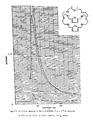
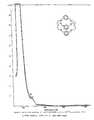
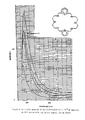
- the formation of the dioxygen complex is evidenced by measurement of the UV-visible spectra in the absence and in the presence of oxygen. in particular, the increase of absorbance between 300 and 400 nm is indicative of dioxygen complex formation because of the intense oxygen to metal charge transfer band which occurs in this wavelength region. The following descriptions will illustrate the same.
- Figures 1 and 2 illustrate the absorbance curves for the dicobalt complexes of FUBISDIEN and FUBISTREN, respectively, in the presence and absence of molecular oxygen.
- Figures 3 and 4 illustrate the absorbance curves for the dicobalt complexes of MYBISDIEN and MXBISIREN, respectively, in the presence and absence of molecular oxygen.
- Figures 5 and 6 illustrate the absorbance curves for the dicobalt complexes of PYBISDIEN and PYBISTREN, respectively, in the presence and absence of molecular oxygen.
- oxygen may be recovered from all of the present macrocyclic and macrobicyclic metal complexes by changing the pH when the complex is formed in solution, or by increasing the temperature, or by decreasing the pressure of a gaseous mixture contacting the solid metal complexes of the present invention.
- the present macrocyclic and macrobicyclic metal complexes can be charged or complexed with oxygen in solution at a pH of substantially about 7.0 or greater.
- the solution is acidified to a pH of substantially about 7.0 or less, pure oxygen is released from the metal complexes.
- the binuclear metal complexes and oxygen adducts thereof of the present invention may be generally detected and characterized using conventional and well-known techniques of of electron spin resonance (ESR), nuclear magnetic resonance (NMR) spectroscopies and thermogravimetry.
- ESR electron spin resonance
- NMR nuclear magnetic resonance
Landscapes
- Chemical & Material Sciences (AREA)
- Organic Chemistry (AREA)
- Chemical Kinetics & Catalysis (AREA)
- General Chemical & Material Sciences (AREA)
- Analytical Chemistry (AREA)
- Inorganic Chemistry (AREA)
- Organic Low-Molecular-Weight Compounds And Preparation Thereof (AREA)
- Nitrogen Condensed Heterocyclic Rings (AREA)
- Heterocyclic Carbon Compounds Containing A Hetero Ring Having Oxygen Or Sulfur (AREA)
- Nitrogen And Oxygen Or Sulfur-Condensed Heterocyclic Ring Systems (AREA)
- Oxygen, Ozone, And Oxides In General (AREA)
Applications Claiming Priority (2)
| Application Number | Priority Date | Filing Date | Title |
|---|---|---|---|
| US468938 | 1990-01-23 | ||
| US07/468,938 US5114688A (en) | 1990-01-23 | 1990-01-23 | Binuclear metal macrocyclic and macrobicyclic complexes for oxygen separation and transport |
Publications (2)
| Publication Number | Publication Date |
|---|---|
| EP0439387A2 true EP0439387A2 (de) | 1991-07-31 |
| EP0439387A3 EP0439387A3 (en) | 1992-05-06 |
Family
ID=23861830
Family Applications (1)
| Application Number | Title | Priority Date | Filing Date |
|---|---|---|---|
| EP19910400093 Withdrawn EP0439387A3 (en) | 1990-01-23 | 1991-01-17 | Binuclear metal macrocyclic and macrobicyclic complexes for oxygen separation and transport |
Country Status (6)
| Country | Link |
|---|---|
| US (1) | US5114688A (de) |
| EP (1) | EP0439387A3 (de) |
| JP (1) | JPH04253968A (de) |
| AU (1) | AU645050B2 (de) |
| CA (1) | CA2034742A1 (de) |
| ZA (1) | ZA91429B (de) |
Cited By (7)
| Publication number | Priority date | Publication date | Assignee | Title |
|---|---|---|---|---|
| US5274090A (en) * | 1992-11-09 | 1993-12-28 | The Board Of Trustees Of The Leland Stanford Junior University | Tetraphenylporphyrin compounds and method |
| EP0391766B1 (de) * | 1989-03-24 | 1995-05-24 | Guerbet S.A. | Makrocyclische Stickstoffliganden Verfahren zu ihrer Herstellung, ihre Metallkomplexe, sie enthaltende Diagnostische und therapeutische Mittel |
| EP0656362A1 (de) * | 1993-12-03 | 1995-06-07 | Lilly Industries Limited | Chemische Verbindungen |
| EP0783035A2 (de) | 1996-01-04 | 1997-07-09 | Hoechst Aktiengesellschaft | Bleichmittelsysteme enthaltend Bis- und Tris-(mu-oxo)-di-Mangan-Komplexsalze |
| EP0791647A2 (de) | 1996-02-21 | 1997-08-27 | Hoechst Aktiengesellschaft | Bleichmittel |
| US5847227A (en) * | 1995-02-28 | 1998-12-08 | Mitsui Petrochemical Industries, Ltd. | Method for producing aryl alkyl hydroperoxides |
| DE102011010818A1 (de) | 2011-02-10 | 2012-08-16 | Clariant International Ltd. | Verwendung von Übergangsmetallkomplexen als Bleichkatalysatoren in Wasch- und Reinigungsmitteln |
Families Citing this family (4)
| Publication number | Priority date | Publication date | Assignee | Title |
|---|---|---|---|---|
| US5286887A (en) * | 1991-09-24 | 1994-02-15 | Regents Of The University Of California | Polymers of macrocyclic metal chelators and methods for the preparation and use thereof |
| US6436171B1 (en) * | 1999-07-22 | 2002-08-20 | The Boc Group, Inc. | Oxygen-selective adsorbents |
| DE102004003710A1 (de) * | 2004-01-24 | 2005-08-11 | Clariant Gmbh | Verwendung von Übergangsmetallkomplexen als Bleichkatalysatoren in Wasch- und Reinigungsmitteln |
| MX2021010121A (es) * | 2019-02-22 | 2021-12-10 | Plastipak Belgium Bvba | Barreras para preformas o recipientes de plastico moldeados por inyeccion y preformas o recipientes de plastico moldeados por inyeccion hechos con las mismas. |
Family Cites Families (7)
| Publication number | Priority date | Publication date | Assignee | Title |
|---|---|---|---|---|
| US2450276A (en) * | 1944-07-07 | 1948-09-28 | Little Inc A | Process for production of oxygen |
| US3432574A (en) * | 1963-12-23 | 1969-03-11 | Gen Mills Inc | Schiff bases prepared by reacting unsaturated carbonyl compounds with amine-terminated polymeric fats |
| US4032617A (en) * | 1975-12-03 | 1977-06-28 | Olin Corporation | Bis(3,5-difluorosalicylaldehyde)ethylenediimine-Co+2 compound and use |
| US4542010A (en) * | 1982-06-30 | 1985-09-17 | Bend Research, Inc. | Method and apparatus for producing oxygen and nitrogen and membrane therefor |
| US4746748A (en) * | 1985-12-13 | 1988-05-24 | Mitsubishi Rayon Co., Ltd. | Method for reducing hydroxocobalt (III) Schiff base complex |
| US4735634A (en) * | 1986-08-28 | 1988-04-05 | Air Products And Chemicals, Inc. | Pillared cobalt complexes for oxygen separation |
| US4680037A (en) * | 1986-08-28 | 1987-07-14 | Air Products And Chemicals, Inc. | Lacunar cobalt complexes for oxygen separation |
-
1990
- 1990-01-23 US US07/468,938 patent/US5114688A/en not_active Expired - Fee Related
-
1991
- 1991-01-17 EP EP19910400093 patent/EP0439387A3/en not_active Withdrawn
- 1991-01-21 JP JP3047238A patent/JPH04253968A/ja active Pending
- 1991-01-21 ZA ZA91429A patent/ZA91429B/xx unknown
- 1991-01-22 AU AU69867/91A patent/AU645050B2/en not_active Ceased
- 1991-01-22 CA CA002034742A patent/CA2034742A1/en not_active Abandoned
Non-Patent Citations (4)
| Title |
|---|
| HELVETICA CHIMICA ACTA, vol. 72, 1989, pages 1066-1077, Verlag Helvetica Chimica Acta, Basel, CH; M.W. HOSSEINI et al.: "Synthesis of polyaza macrocyclic ligands incorporating pyridine units" * |
| INORGANIC CHEMISTRY, vol. 29, no. 23, 14th November 1990, pages 4723-4729, American Chemical Society, Washington, DC, US; R. MENIF et al.: "New hexaaza macrocyclic binucleating ligands. Oxygen insertion with a dicopper(I) schiff base macrocyclic complex" * |
| JOURNAL OF THE CHEMICAL SOCIETY. CHEMICAL COMMUNICATIONS, no. 14, 15th July 1988, pages 915-916, Royal Society of Chemistry, London, GB; A.E. MARTELL et al.: "Formation and degradation of an oxalato and peroxo bridged dicobalt bisdien dioxygen complex: A binuclear complex as host for the activation of two co-ordinated guests" * |
| JOURNAL OF THE CHEMICAL SOCIETY. CHEMICAL COMMUNICATIONS, no. 20, 15th October 1989, pages 1521-1523, Royal Society of Chemistry, London, GB; R. MENIF et al.: "Oxygen insertion by a new tyrosinase model binuclear CuI macrocyclic complex" * |
Cited By (13)
| Publication number | Priority date | Publication date | Assignee | Title |
|---|---|---|---|---|
| EP0391766B1 (de) * | 1989-03-24 | 1995-05-24 | Guerbet S.A. | Makrocyclische Stickstoffliganden Verfahren zu ihrer Herstellung, ihre Metallkomplexe, sie enthaltende Diagnostische und therapeutische Mittel |
| US5274090A (en) * | 1992-11-09 | 1993-12-28 | The Board Of Trustees Of The Leland Stanford Junior University | Tetraphenylporphyrin compounds and method |
| US5384397A (en) * | 1992-11-09 | 1995-01-24 | The Board Of Trustees Of The Leland Stanford Junior University | Tetraphenylporphyrin compounds and method |
| EP0656362A1 (de) * | 1993-12-03 | 1995-06-07 | Lilly Industries Limited | Chemische Verbindungen |
| US5580900A (en) * | 1993-12-03 | 1996-12-03 | Lilly Industries Limited | Macrocyclic compounds |
| US6028193A (en) * | 1995-02-28 | 2000-02-22 | Mitsui Chemicals, Inc. | Method for producing aryl aklyl hydroperoxides |
| US5847227A (en) * | 1995-02-28 | 1998-12-08 | Mitsui Petrochemical Industries, Ltd. | Method for producing aryl alkyl hydroperoxides |
| US5945572A (en) * | 1995-02-28 | 1999-08-31 | Mitsui Chemicals, Inc. | Method for producing aryl alkyl hydroperoxides |
| EP0783035A2 (de) | 1996-01-04 | 1997-07-09 | Hoechst Aktiengesellschaft | Bleichmittelsysteme enthaltend Bis- und Tris-(mu-oxo)-di-Mangan-Komplexsalze |
| EP0791647A2 (de) | 1996-02-21 | 1997-08-27 | Hoechst Aktiengesellschaft | Bleichmittel |
| DE102011010818A1 (de) | 2011-02-10 | 2012-08-16 | Clariant International Ltd. | Verwendung von Übergangsmetallkomplexen als Bleichkatalysatoren in Wasch- und Reinigungsmitteln |
| WO2012107187A1 (de) | 2011-02-10 | 2012-08-16 | Clariant International Ltd | Verwendung von übergangsmetallkomplexen als bleichkatalysatoren in wasch- und reinigungsmitteln |
| US9102903B2 (en) | 2011-02-10 | 2015-08-11 | Weylchem Switzerland Ag | Use of transition metal complexes as bleach catalysts in washing and cleaning compositions |
Also Published As
| Publication number | Publication date |
|---|---|
| CA2034742A1 (en) | 1991-07-24 |
| AU6986791A (en) | 1991-07-25 |
| AU645050B2 (en) | 1994-01-06 |
| EP0439387A3 (en) | 1992-05-06 |
| ZA91429B (en) | 1991-11-27 |
| JPH04253968A (ja) | 1992-09-09 |
| US5114688A (en) | 1992-05-19 |
Similar Documents
| Publication | Publication Date | Title |
|---|---|---|
| Chen et al. | The synthesis of new binucleating polyaza macrocyclic and macrobicyclic ligands: dioxygen affinities of the cobalt complexes | |
| Diamond et al. | Ruthenium promoted oxidation of amines | |
| US5114688A (en) | Binuclear metal macrocyclic and macrobicyclic complexes for oxygen separation and transport | |
| CN112062756B (zh) | 麦氏酸活化的呋喃和3-吡啶乙胺的Stenhouse供体-受体加合物及其合成方法 | |
| Murase et al. | Synthesis and characterization of copper (II), nickel (II), and cobalt (II) binuclear complexes with a new tricyclic octadentate ligand, 1, 5, 8, 12, 15, 19, 22, 26-octaazatricyclo [17.9. 2.25, 15] dotriacontane (tcoa): trapping of carbon dioxide in a neutral aqueous solution | |
| Bartyzel et al. | Synthesis, crystal structure, thermal, spectroscopic and theoretical studies of N3O2-donor Schiff base and its complex with CuII ions | |
| Ishikawa et al. | Hydrazones Derived from Dithiamonoaza and Tetrathiamonoaza Analogs of Polyethers as Silver Ion Selective Ionophores: Syntheses, Proton-Dissociation Behaviors, and Metal Ion Complexing Properties in 1, 4-Dioxane-Water Acidic Solution. | |
| Casellato et al. | Cyclic and acyclic compartmental Schiff bases, their reduced analogues and related mononuclear and heterodinuclear complexes | |
| Beves et al. | Vectorial property dependence in bis {4′-(n-pyridyl)-2, 2′: 6′, 2 ″-terpyridine} iron (II) and ruthenium (II) complexes with n= 2, 3 and 4 | |
| WO1994024123A1 (en) | Ion-sensitive bipyridine complexes | |
| US3962131A (en) | Rhodium containing catalyst and use thereof in preparation of 6-deoxy-5-oxytetracycline | |
| JP4091135B2 (ja) | 置換3−(フェニルイミノ)−3h−フェノチアジン類およびフェノキサジン類の製造方法 | |
| CN114478351B (zh) | 一种合成α-烷基取代吲哚-3-甲醛类化合物的方法 | |
| CN113214144B (zh) | 基于偶极有机配体的金属有机框架材料、合成方法及其应用 | |
| Wang et al. | Unusual stabilities of 6, 6′-bis (aminomethyl)-2, 2′-bipyridyl chelates of transition-metal ions and crystal structures of the ligand and its copper (II) and nickel (II) complexes | |
| Chen et al. | The synthesis of binucleating polyaza macrocyclic and macrobicyclic ligands and the dioxygen affinities of their cobalt complexes | |
| Markó | Mixed iron cobalt carbonyl sulphides | |
| Camus et al. | Copper (II) nitrito complexes with 2, 2′-dipyridylamine. Crystal structures of the [(acetato)(2, 2′-dipyridylamine)(nitrito-O, O′) copper (II)] and [(2, 2′-dipyridylamine)(nitrito-O, O′)(μ-nitrito-O) copper (II)] 2· 2 (acetonitrile) | |
| Kang et al. | Synthesis and characterization of copper (II) and nickel (II) complexes of tetraaza macrocyclic ligands containing one C-nitromethyl or-aminomethyl pendant arm | |
| AU640759B2 (en) | A method of reducing a carbonyl containing acridine | |
| Chung et al. | Preparation and reactions of new dioxygen bridged complexes of palladium | |
| Ziessel et al. | Synthesis of polydendate acyclic and macrocyclic polyamine ligands bearing 2, 2′-bipyridine or 2, 2′-bipyridine N, N′-dioxide moieties | |
| JPH03504134A (ja) | 酸素の固定に使用し得る多窒素含有化合物及びその金属錯体 | |
| Collinson et al. | SYNTHESIS AND CHARACTERIZATION OF THE NOVEL BRIDGED LIGAND 5, 8-DIMETHYL-1, 5, 8, 12-TETRAAZABICYCLO [10.3. 2] HEPTADECANE AND ITS COMPLEXES WITH IRON (II) AND MANAGANESE (II) IONS | |
| CN112778272A (zh) | 一种2,2′-联氮杂芳环类双齿配体及其制备方法和应用 |
Legal Events
| Date | Code | Title | Description |
|---|---|---|---|
| PUAI | Public reference made under article 153(3) epc to a published international application that has entered the european phase |
Free format text: ORIGINAL CODE: 0009012 |
|
| 17P | Request for examination filed |
Effective date: 19910122 |
|
| AK | Designated contracting states |
Kind code of ref document: A2 Designated state(s): AT BE CH DE DK ES FR GB GR IT LI LU NL SE |
|
| PUAL | Search report despatched |
Free format text: ORIGINAL CODE: 0009013 |
|
| AK | Designated contracting states |
Kind code of ref document: A3 Designated state(s): AT BE CH DE DK ES FR GB GR IT LI LU NL SE |
|
| D17Q | First examination report despatched (deleted) | ||
| STAA | Information on the status of an ep patent application or granted ep patent |
Free format text: STATUS: THE APPLICATION IS DEEMED TO BE WITHDRAWN |
|
| 18D | Application deemed to be withdrawn |
Effective date: 19941007 |