EP0439927B1 - Fernsprechsysteme mit verbesserter Geheimhaltung - Google Patents
Fernsprechsysteme mit verbesserter Geheimhaltung Download PDFInfo
- Publication number
- EP0439927B1 EP0439927B1 EP90313210A EP90313210A EP0439927B1 EP 0439927 B1 EP0439927 B1 EP 0439927B1 EP 90313210 A EP90313210 A EP 90313210A EP 90313210 A EP90313210 A EP 90313210A EP 0439927 B1 EP0439927 B1 EP 0439927B1
- Authority
- EP
- European Patent Office
- Prior art keywords
- caller
- station
- call
- controlling
- called
- Prior art date
- Legal status (The legal status is an assumption and is not a legal conclusion. Google has not performed a legal analysis and makes no representation as to the accuracy of the status listed.)
- Expired - Lifetime
Links
Images

Classifications
-
- H—ELECTRICITY
- H04—ELECTRIC COMMUNICATION TECHNIQUE
- H04M—TELEPHONIC COMMUNICATION
- H04M1/00—Substation equipment, e.g. for use by subscribers
- H04M1/66—Substation equipment, e.g. for use by subscribers with means for preventing unauthorised or fraudulent calling
- H04M1/663—Preventing unauthorised calls to a telephone set
-
- H—ELECTRICITY
- H04—ELECTRIC COMMUNICATION TECHNIQUE
- H04M—TELEPHONIC COMMUNICATION
- H04M3/00—Automatic or semi-automatic exchanges
- H04M3/42—Systems providing special services or facilities to subscribers
- H04M3/436—Arrangements for screening incoming calls, i.e. evaluating the characteristics of a call before deciding whether to answer it
-
- H—ELECTRICITY
- H04—ELECTRIC COMMUNICATION TECHNIQUE
- H04M—TELEPHONIC COMMUNICATION
- H04M1/00—Substation equipment, e.g. for use by subscribers
- H04M1/57—Arrangements for indicating or recording the number of the calling subscriber at the called subscriber's set
- H04M1/571—Blocking transmission of caller identification to called party
-
- H—ELECTRICITY
- H04—ELECTRIC COMMUNICATION TECHNIQUE
- H04M—TELEPHONIC COMMUNICATION
- H04M2203/00—Aspects of automatic or semi-automatic exchanges
- H04M2203/60—Aspects of automatic or semi-automatic exchanges related to security aspects in telephonic communication systems
- H04M2203/609—Secret communication
-
- H—ELECTRICITY
- H04—ELECTRIC COMMUNICATION TECHNIQUE
- H04M—TELEPHONIC COMMUNICATION
- H04M2242/00—Special services or facilities
- H04M2242/22—Automatic class or number identification arrangements
-
- H—ELECTRICITY
- H04—ELECTRIC COMMUNICATION TECHNIQUE
- H04M—TELEPHONIC COMMUNICATION
- H04M3/00—Automatic or semi-automatic exchanges
- H04M3/42—Systems providing special services or facilities to subscribers
- H04M3/42025—Calling or Called party identification service
- H04M3/42034—Calling party identification service
- H04M3/42042—Notifying the called party of information on the calling party
-
- H—ELECTRICITY
- H04—ELECTRIC COMMUNICATION TECHNIQUE
- H04M—TELEPHONIC COMMUNICATION
- H04M3/00—Automatic or semi-automatic exchanges
- H04M3/42—Systems providing special services or facilities to subscribers
- H04M3/42025—Calling or Called party identification service
- H04M3/42034—Calling party identification service
- H04M3/42059—Making use of the calling party identifier
-
- H—ELECTRICITY
- H04—ELECTRIC COMMUNICATION TECHNIQUE
- H04M—TELEPHONIC COMMUNICATION
- H04M3/00—Automatic or semi-automatic exchanges
- H04M3/42—Systems providing special services or facilities to subscribers
- H04M3/487—Arrangements for providing information services, e.g. recorded voice services or time announcements
-
- H—ELECTRICITY
- H04—ELECTRIC COMMUNICATION TECHNIQUE
- H04Q—SELECTING
- H04Q3/00—Selecting arrangements
- H04Q3/70—Identification of class of calling subscriber
Definitions
- This invention relates to methods of screening a telecommunications call from a caller station to a called station, and to switching systems having a privacy arrangement.
- Telephone switching systems exchange information, such as the telephone number of a called customer, by signaling such information using a variety of signaling arrangements.
- SS7 Signaling System 7
- CITT Consultative Committee on International Telephone and Telephone
- a problem with such systems that forward a calling customer's number is that of protecting the privacy of telephone customers who do not wish to have their telephone numbers known. These are customers who typically use unlisted telephone numbers and who may wish to be protected from receiving unwanted calls. In some present arrangements, such customers may invoke either a permanent private service or privacy on a per-call basis; the permanent privacy feature can be overridden at the caller's option for any specific call.
- privacy is invoked by either of these methods, the calling number is forwarded to a terminating switching system connected to the called customer but is prevented from reaching the called customer who, in the case of a display unit, receives an indication, in this case a display of the letter P, indicating privacy instead of a telephone number.
- the forwarded telephone number can still be used for features such as selective call forwarding, distinctive ringing, selective call rejection, automatic recall and automatic callback.
- the called customer must already have knowledge of the private number of the calling customer or have used the calling number delivered from a previous call; and for the case of auto callback and auto recall, the calling customer who wanted privacy has already placed a call and as long as the called customer is not informed of the calling number, there should be no objection to completing that call.
- German Patent document DE 3 815 908 Al discloses arrangements whereby a caller may inhibit the transmission of his/her calling number identification.
- U.S. patent 4,277,649 discloses arrangements whereby a called customer can selectively accept or reject calls based on the identity of the calling line.
- the invention provides called customers with a new class of service for providing a call screening service whereby such called customers will receive only calls from calling customers who are willing to have their telephone number identified.
- a call screening service whereby such called customers will receive only calls from calling customers who are willing to have their telephone number identified.
- such an arrangement protects such customers from harassment by callers unwilling to identify themselves.
- the calling customer may receive an announcement indicating the privacy status of the called customer.
- the calling customer illustratively may effect a completion of the call in a non-privacy mode either by invoking a per-call privacy override if the calling customer is in the permanently private mode, or simply reverting to the public mode, if the calling customer originally placed the call in the privacy mode.
- the calling customer may key a special digit, for example, the digit 1, to override the caller's privacy for this call and allow the calling number to be displayed to or be recalled by the called customer and therefore allow the call to be completed.
- a special digit for example, the digit 1
- the access to the called customer is protected since the called customer is enabled to receive calls only from callers willing to identify themselves, and the privacy of the calling customer is protected since the calling party is identified only when the calling party specifically grants permission for such identification.
- Certain public service agencies such as the police, fire department, and substance or personal abuse centers may wish to have a feature whereby the privacy request of the caller is overridden. Such agencies may be provided with another special class of service.
- For a called customer with this other special class of service if the calling customer has placed a call with privacy, the called customer signals to have the switching system automatically override this privacy and have the calling customer number displayed or otherwise provided.
- a call setup message is sent from an originating switching system to a terminating switching system.
- the call setup message includes the privacy information of the call, i.e., whether the caller number, or other caller identification such as a name, is to be provided to the called station.
- the privacy information is obtained from a special privacy code dialed from the caller station or from the class of service of the caller stored in the originating switching system.
- the called customer's class of service is consulted; if the call setup message specifies privacy and the called station has the new class of service, as recorded in the terminating switching system, then the call cannot be established unless the calling station signals to have the calling customer identification privacy instruction removed for this call.
- both switching systems are operative under the control of a stored program. If the called station has, as part of its class of service, the privacy override feature, then the call is completed without additional signals from the calling station, and the called station can request the calling identification; alternatively, the calling identification can be automatically provided to such a called station without a special request.
- a called station may request an announcement or display of a calling station identification by sending a request message to its connected switching system. This allows for deferred access and announcement access to the calling station identification.
- a call is set up from a caller station 101 to a called station 111 over a telecommunications network that includes switching systems 121 and 131.
- the stations are conventional telephone subsets operating under human control or computer terminals or personal computers, operating under program as well as human control.
- Called station 111 is provided with a display device 113 or receives communications from the connected switch via an announcement.
- Caller station 101 is connected to an originating switching system 121 in which the class of service of the caller is stored (block 123). This caller class identifies whether the caller wishes to have his telephone number or other caller identification such as a name maintained private or whether he is willing to have it displayed or otherwise provided to the called customer station.
- the caller class information stored in the switching system is arranged to include a class of permanent private/public and a class of optional per-call private/public.
- the privacy class of a call for a customer having permanent private is changed for one call by the dialing of a special privacy toggle code.
- the optional privacy can at the discretion of the operating telephone company, be provided to all customers or only to customers who subscribe to that service.
- the originating switch 121 is connected to that terminating switch by message signaling information facilities 161 and voice transmission facilities 163.
- the originating switch 121 and terminating switch 131 are both stored program controlled switches, specifically, 1A ESSTM switches, whose operation is similar to that of the 1 ESS described in The Bell System Technical Journal , September, 1964, adapted to use a 1A processor described in The Bell System Technical Journal , February, 1977.
- the description of the 1 ESS includes a description of translations for storing a class of service and of methods for controlling establishment of call connections.
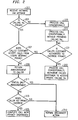
- the terminating switch comprises a processor 133 which includes a program 134 for controlling the execution of a program for implementing the invention in accordance with the steps outlined in the flow diagram of FIG. 2.
- Processor 133 further comprises a plurality of memory blocks for storing incoming calling party directory numbers and associated privacy data and the class of service of called customer 111 information (block 135).
- terminating switching system 131 includes an audio signal processing unit 140 comprising a detector 142 for detecting dual tone multifrequency (DTMF) signals keyed from customer stations and an announcement unit 144 for generating announcements.
- DTMF dual tone multifrequency
- originating switching system 121 checks the caller class information 123 to determine whether caller station 101 desires to have its number maintained private for this call. After originating switching system 121 has received the dialed information for the call, it sends an initial address message (IAM) 151 over message link 161 to terminating switch 131.
- IAM initial address message
- the IAM message is a standard SS7 message.
- Message 151 includes the calling number 153 (included whether or not the calling customer requested privacy), caller privacy data 155 which will indicate privacy if the caller has requested privacy for this call, and the called number 157.
- terminating switching system 131 Upon receipt of IAM message 151, terminating switching system 131 checks the message 151 and checks the class of service 135 of the called number received in the IAM message. If the caller had requested privacy and the called customer has a class of service whereby it only accepts calls from customers willing to provide their identification, then the call is tentatively blocked. The caller receives a message, such as an announcement identifying the reason for the blocking of the call. For working within automatic stations such as personal computers, the message would be a data message. In response to this message, the caller can key in an override indication, in this specific embodiment, the number 1, which is detected by detector 142. If this 1 is detected, then the call is completed and the called customer is provided with the caller station telephone number.
- the caller fails to provide the keyed 1, then the call attempt is disconnected. If the class of service 135 of the called customer is such that the called customer will accept calls from stations unwilling to identify themselves, then the call is completed without providing the identification of the caller to the called customer station.
- FIG. 2 is a flow diagram of a program implemented in the processor 133 of the terminating switching system 131.
- Terminating switching system 131 receives an IAM message (action block 201). It examines segment 155 of the incoming IAM message to determine whether the caller has requested that the calling number be maintained private (test 203). If not, then the call is processed conventionally as in the prior art (action block 205). If the result of test 203 is positive, then the class of service of the called customer is examined to determine whether the called customer will accept calls from users wishing to maintain their privacy (test 207). If the result of test 207 is negative then an announcement is returned to the caller (action block 209). Two types of announcements are available for two alternative implementations of applicants' invention.
- Test 211 determines which implementation is being used. If the announcement is a status only announcement (positive result of test 211) then the call is abandoned after the announcement has been delivered (action block 213) using normal call abandonment procedures as in the prior art. If the announcement not only indicates the status of the call but invites the customer to override his privacy request for this call (negative result of test 211), then a detector is attached to the call (action block 221) to check whether the calling customer keys the privacy override signal. If the caller does key the privacy override signal (positive result of test 223) then the call is completed with privacy overridden (action block 225). If the caller fails to key the privacy override signal then the call is abandoned (action block 213).
- the call would be automatically completed, including the privacy override, if the originating customer fails to disconnect within a specified interval of, perhaps, 10 seconds; for this alternative sequence, the call is disconnected only in response to receipt of a disconnect signal from the caller.
- the announcement would be provided from the originating switch 121, and would be requested by a message from terminating switch 131. If the call is then to be established, another message is sent to switch 131.
- Some public service agencies such as the police department, fire department, drug abuse centers, may be granted authority to override the calling customer's request for maintaining the privacy of his number. If that service is provided in terminating switch 131, then following the detection in test 207 that the called customer accepts calls from users wishing privacy, a further test 231 is performed to check whether the called customer is authorized to automatically override the privacy request. If not, then the call is processed conventionally (action block 205). If so, then the call is completed and the called customer is authorized to access the private data for that call (action block 233). In some cases, the called customer will automatically be provided with the caller identification.
- Switch 131 stores the caller identification during and after the call. If the called customer has a display, the information may be simply transmitted and displayed. If the called customer does not have a display and perhaps may not always want the identification of the caller, the called customer has the option of keying a calling number request to terminating switch 131. In response to this keyed request, terminating switch 131 connects announce unit 144 to the called customer and controls announce unit 144 to announce the number of the caller of the immediately preceding call or controls a display to display the number if the customer has a display. The keyed request can also be used to access caller identifications of earlier calls.
Landscapes
- Engineering & Computer Science (AREA)
- Computer Security & Cryptography (AREA)
- Signal Processing (AREA)
- Telephonic Communication Services (AREA)
- Interface Circuits In Exchanges (AREA)
- Telephone Function (AREA)
Claims (14)
- Verfahren zum Aussieben einer Telekommunikationsverbindung von einer Anruferstelle zu einer Gegenstelle in einem Telekommunikationsvermittlungssystem mit folgenden Schritten:Empfangen einer Rufmeldenachricht (201, 151) für die besagte Verbindung, wobei die besagte Nachricht Daten (203, 155) umfaßt, die anzeigen, daß die Anruferstelle die Unterdrückung einer Kennzeichnung der Rufnummer des Anrufers zu einer Gegenstelle in besagtem Telekommunikationssystem angefordert hat;gekennzeichnet durch automatisches gezieltes Steuern einer Abweisung der besagten Verbindung (207, 209) wenn die besagte Gegenstelle keine Verbindungen annimmt, für die die Anruferstelle Unterdrückung einer Kennzeichnung der Rufnummer des Anrufers zu einer Gegenstelle angefordert hat; undSteuern einer Herstellung der besagten Verbindung (207, 231, 232), wenn besagte Gegenstelle Verbindungen annimmt, für die eine Kennzeichnung des besagten Anrufers nicht vorgesehen ist.
- Verfahren nach Anspruch 1, wobei besagte Daten von einer Berechtigungsklasse der besagten Anruferstelle abgeleitet werden.
- Verfahren nach Anspruch 1, wobei besagtes gezieltes Steuern einer Abweisung und Steuern einer Herstellung der besagten Verbindung auf einer Berechtigungsklasse (135) der besagten Gegenstelle beruhen.
- Verfahren nach Anspruch 1, wobei das besagte gezielte Steuern einer Abweisung folgende Schritte umfaßt:Bereitstellen einer Meldungsnachricht (211), die ein Rückwärtszeichen anfordert, in Richtung der besagten Anruferstelle;als Reaktion auf ein von der besagten Anruferstelle empfangbares vorgegebenes Zeichen (223, 225), Steuern der Herstellung der besagten Verbindung und Steuern der Bereitstellung einer Kennzeichnung (225) des besagten Anrufers zur besagten Gegenstelle; undin Abwesenheit eines Empfangens des besagten vorgegebenen empfangbaren Signals Steuern der Abschaltung der besagten Verbindung (213).
- Verfahren nach Anspruch 1, wobei das besagte gezielte Steuern einer Abweisung folgende Schritte umfaßt:Bereitstellen einer Meldungsnachricht, die ein Rückwärtszeichen anfordert, in Richtung der besagten Anruferstelle;als Reaktion auf ein von der besagten Anruferstelle empfangbares vorgegebenes Zeichen, Steuern der Herstellung der besagten Verbindung und Steuern der Bereitstellung einer Kennzeichnung der besagten Anruferkennzeichnung zur besagten Gegenstelle; undals Reaktion auf ein von der besagten Anruferstelle empfangbares Abschaltesignal Steuern des Abschaltens der besagten Verbindung.
- Verfahren nach Anspruch 1, wobei das besagte gezielte Steuern einer Abweisung folgende Schritte umfaßt:Bereitstellen einer Meldungsnachricht, die ein Rückwärtszeichen anfordert, in Richtung der besagten Anruferstelle;als Reaktion auf ein von der besagten Anruferstelle empfangbares vorgegebenes Zeichen Steuern der Herstellung der besagten Verbindung und Steuern der Bereitstellung einer Kennzeichnung des besagten Anrufers zur besagten Gegenstelle; undin Abwesenheit eines Empfangs des besagten vorgegebenen Zeichens für eine vorbestimmte Zeitdauer Steuern der Herstellung der besagten Verbindung und Steuern der Bereitstellung der besagten Kennzeichnung des besagten Anrufers.
- Verfahren nach Anspruch 1, wobei das besagte gezielte Steuern einer Abweisung folgendes umfaßt:Steuern der Bereitstellung einer mündlichen Verbindungszustandsansage, die anzeigt, daß die besagte Gegenstelle keine unbekannten Anrufe annimmt, zur besagten Anruferstelle.
- Verfahren nach Anspruch 1, weiterhin mit dem Steuern einer Herstellung der besagten Verbindung und Bereitstellen der Anruferkennzeichnung für eine Gegenstelle, die zum Empfang einer Anruferkennzeichnung berechtigt ist, selbst wenn die besagte Anruferstelle Unterdrückung der Übertragung einer Kennzeichnung der Rufnummer des Anrufers zu einer Gegenstelle angefordert hat.
- Verfahren nach Anspruch 8, wobei die besagte Gegenstelle durch eine Berechtigungsklasse berechtigt ist.
- Verfahren nach Anspruch 1, weiterhin mit folgenden Schritten:Bestimmen, ob besagte Gegenstelle zum Übersteuern einer Geheimhaltungsanzeige berechtigt ist; undals Reaktion auf die Bestimmung, daß die besagte Gegenstelle zum Übersteuern der Geheimhaltung berechtigt ist, Steuern der Herstellung der besagten Verbindung und Bereitstellung der besagten Anruferkennzeichnung für die besagte Gegenstelle.
- Verfahren nach Anspruch 10, wobei die besagte Steuerungsbereitstellung folgendes umfaßt:als Reaktion auf ein von der besagten Gegenstelle empfangbares Anruferkennzeichnungsanforderungssignal Steuern der Bereitstellung der besagten Anruferkennzeichnung in Richtung der besagten Gegenstelle.
- Vermittlungssystem (131) mit einer Fernsprechgeheimhaltungsanordnung mit folgenden:ein unter Steuerung eines Programms betreibbares Prozessormittel (133) zum Empfang einer Rufmeldenachricht (151) für eine Verbindung, wobei die besagte Nachricht Daten (155) umfaßt, die anzeigen, daß eine Anruferstelle Unterdrückung der Übertragung einer Kennzeichnung der Rufnummer des Anrufers zu einer Gegenstelle angefordert hat;dadurch gekennzeichnet, daß das System weiterhin Mittel zum Speichern einer Berechtigungsklassenanzeige (135) mit Daten, die eine Gegenstelle des besagten Vermittlungssystems kennzeichnen, die keine Verbindungen von Anruferstellen annimmt, die keine Übertragung ihrer Anruferkennzeichnung zu einem gerufenen Teilnehmer wünschen, umfaßt;wobei das besagte Prozessormittel auf die Erkennung (207) reagiert, daß eine Gegenstelle eine Berechtigungsklasse aufweist, die keine Verbindungen von Anruferstellen annimmt, die keine Übertragung ihrer Anruferkennzeichnung zu einem gerufenen Teilnehmer wünschen, und darauf, daß die besagte Nachricht die besagten Daten zum Steuern der Abweisung (209) der besagten Verbindung für die besagte Gegenstelle umfaßt.
- System nach Anspruch 12, weiterhin mit Mitteln zur Bereitstellung einer Ansage (144);wobei das besagte Prozessormittel weiterhin unter der Steuerung des besagten Programms zur Steuerung des besagten Mittels zur Bereitstellung einer Ansage zur Bereitstellung einer Verbindungszustandsansage in Richtung der besagten Anruferstelle (209) betrieben wird.
- System nach Anspruch 12, weiterhin mit Mitteln zur Bereitstellung einer Ansage zur besagten Anruferstelle (144) und Mitteln zum Erkennen (142) eines von der besagten Anruferstelle empfangbaren Zeichens;wobei das besagte Prozessormittel weiterhin unter der Steuerung eines Programms betrieben wird, um die Verbindung des besagten Mittels zur Bereitstellung einer Ansage zur besagten Anruferstelle (209) zu steuern, wobei die besagte Ansage anzeigt, daß eine Gegenstelle keine unbekannten Anrufe annehmen wird, und Verbinden des besagten Mittels zur Erkennung mit der besagten Verbindung und als Reaktion auf die Erkennung eines von der besagten Anruferstelle (223) empfangbaren vorgegebenen Signals zur Steuerung der Herstellung der besagten Verbindung und zur Bereitstellung der besagten Anruferkennzeichnung für die besagte Gegenstelle (225).
Applications Claiming Priority (2)
| Application Number | Priority Date | Filing Date | Title |
|---|---|---|---|
| US07/473,003 US5033076A (en) | 1990-01-31 | 1990-01-31 | Enhanced privacy feature for telephone systems |
| US473003 | 1990-01-31 |
Publications (3)
| Publication Number | Publication Date |
|---|---|
| EP0439927A2 EP0439927A2 (de) | 1991-08-07 |
| EP0439927A3 EP0439927A3 (en) | 1993-01-27 |
| EP0439927B1 true EP0439927B1 (de) | 1996-06-12 |
Family
ID=23877784
Family Applications (1)
| Application Number | Title | Priority Date | Filing Date |
|---|---|---|---|
| EP90313210A Expired - Lifetime EP0439927B1 (de) | 1990-01-31 | 1990-12-05 | Fernsprechsysteme mit verbesserter Geheimhaltung |
Country Status (5)
| Country | Link |
|---|---|
| US (1) | US5033076A (de) |
| EP (1) | EP0439927B1 (de) |
| JP (1) | JP2872416B2 (de) |
| CA (1) | CA2030439C (de) |
| DE (1) | DE69027417T2 (de) |
Families Citing this family (119)
| Publication number | Priority date | Publication date | Assignee | Title |
|---|---|---|---|---|
| US5793846A (en) | 1985-07-10 | 1998-08-11 | Ronald A. Katz Technology Licensing, Lp | Telephonic-interface game control system |
| US6678360B1 (en) | 1985-07-10 | 2004-01-13 | Ronald A. Katz Technology Licensing, L.P. | Telephonic-interface statistical analysis system |
| US5359645A (en) | 1985-07-10 | 1994-10-25 | First Data Corporation Inc. | Voice-data telephonic interface control system |
| US4845739A (en) | 1985-07-10 | 1989-07-04 | Fdr Interactive Technologies | Telephonic-interface statistical analysis system |
| US5828734A (en) | 1985-07-10 | 1998-10-27 | Ronald A. Katz Technology Licensing, Lp | Telephone interface call processing system with call selectivity |
| US6868150B1 (en) | 1990-01-03 | 2005-03-15 | Morris Reese | Method for use with caller ID system |
| US6427009B1 (en) * | 1990-01-03 | 2002-07-30 | Morris Reese | Enhanced apparatus for use with caller ID system |
| US6970544B1 (en) | 1990-01-03 | 2005-11-29 | Morris Reese | Method and apparatus for caller ID system |
| US5228080A (en) * | 1990-06-25 | 1993-07-13 | Colonial Data Technologies Corp. | Method and apparatus for processing an incoming telephone call signal which may include a data message |
| JPH0652914B2 (ja) * | 1990-09-21 | 1994-07-06 | 橋本コーポレイション株式会社 | 発呼者電話番号表示装置 |
| US5341414A (en) * | 1992-02-05 | 1994-08-23 | Fred Popke | Calling number verification service |
| US5311569A (en) * | 1992-06-05 | 1994-05-10 | At&T Bell Laboratories | Line-based public safety answering point |
| US5274699A (en) * | 1992-07-24 | 1993-12-28 | Motorola, Inc. | Method for providing caller identification to a call recipient |
| US5309508A (en) * | 1992-09-23 | 1994-05-03 | Howard Rosen | Apparatus and method for automatically blocking the transmission of identifying information concerning a telephone calling party |
| US5588049A (en) * | 1993-01-25 | 1996-12-24 | Detering; Greig R. | Method for the automatic insertion of removal of a calling number identification (CNID) blocking prefix from within a telephone number in a personal computer based telephone management system |
| JP2905358B2 (ja) * | 1993-05-18 | 1999-06-14 | 富士通株式会社 | 通信サービス方式及び通信サービスを実施するための交換システム |
| US5559868A (en) * | 1993-08-30 | 1996-09-24 | Lucent Technologies Inc. | Method for sending and receiving video images |
| JPH0787196A (ja) * | 1993-09-14 | 1995-03-31 | Fujitsu Ltd | コーリングナンバーデリバリーサービス機能付電子交換機 |
| US5550904A (en) * | 1993-09-30 | 1996-08-27 | Lucent Technologies Inc. | Method for identifying the originating network at the terminating network for transnetwork calls |
| CA2107546C (en) * | 1993-10-01 | 1999-06-22 | Douglas Hartley | Security system using call display |
| US5509006A (en) * | 1994-04-18 | 1996-04-16 | Cisco Systems Incorporated | Apparatus and method for switching packets using tree memory |
| US5519704A (en) * | 1994-04-21 | 1996-05-21 | Cisco Systems, Inc. | Reliable transport protocol for internetwork routing |
| US5497414A (en) * | 1994-05-04 | 1996-03-05 | Bell Atlantic Network Services, Inc. | Telephone system processing of designated caller ID private calls |
| US5533106A (en) * | 1994-06-27 | 1996-07-02 | Us West Technologies, Inc. | Method and system for processing calls wherein the display of calling party ID information has been inhibited |
| US5867666A (en) * | 1994-12-29 | 1999-02-02 | Cisco Systems, Inc. | Virtual interfaces with dynamic binding |
| US5590184A (en) * | 1995-03-03 | 1996-12-31 | Lucent Technologies Inc. | Communications privacy protection system by replacing calling party number with non-assigned number |
| US6097718A (en) * | 1996-01-02 | 2000-08-01 | Cisco Technology, Inc. | Snapshot routing with route aging |
| US6147996A (en) | 1995-08-04 | 2000-11-14 | Cisco Technology, Inc. | Pipelined multiple issue packet switch |
| US6182224B1 (en) | 1995-09-29 | 2001-01-30 | Cisco Systems, Inc. | Enhanced network services using a subnetwork of communicating processors |
| US7246148B1 (en) | 1995-09-29 | 2007-07-17 | Cisco Technology, Inc. | Enhanced network services using a subnetwork of communicating processors |
| US6917966B1 (en) | 1995-09-29 | 2005-07-12 | Cisco Technology, Inc. | Enhanced network services using a subnetwork of communicating processors |
| US5796810A (en) * | 1995-10-10 | 1998-08-18 | Lim; Boon Chen | Apparatus for dialing of caller ID block code and receiving call waiting caller-ID-signal |
| US5751800A (en) * | 1995-12-15 | 1998-05-12 | Lucent Technologies Inc. | Screening of incoming telephone calls prior to call completion to the destination party |
| US6091725A (en) | 1995-12-29 | 2000-07-18 | Cisco Systems, Inc. | Method for traffic management, traffic prioritization, access control, and packet forwarding in a datagram computer network |
| US6035105A (en) | 1996-01-02 | 2000-03-07 | Cisco Technology, Inc. | Multiple VLAN architecture system |
| US6243667B1 (en) | 1996-05-28 | 2001-06-05 | Cisco Systems, Inc. | Network flow switching and flow data export |
| US6308148B1 (en) | 1996-05-28 | 2001-10-23 | Cisco Technology, Inc. | Network flow data export |
| US5781613A (en) * | 1996-06-17 | 1998-07-14 | Casio Phonemate, Inc. | Telephone answering device and method for screening incoming telephone calls with blocked calling party identification information |
| US6212182B1 (en) | 1996-06-27 | 2001-04-03 | Cisco Technology, Inc. | Combined unicast and multicast scheduling |
| US6434120B1 (en) | 1998-08-25 | 2002-08-13 | Cisco Technology, Inc. | Autosensing LMI protocols in frame relay networks |
| US6343120B1 (en) * | 1996-10-08 | 2002-01-29 | At&T Wireless Services, Inc. | Method and apparatus for providing a caller ID alias |
| GB2319430A (en) * | 1996-11-11 | 1998-05-20 | Ericsson Telefon Ab L M | Handling telephone calls |
| EP0844773A3 (de) * | 1996-11-20 | 2001-07-18 | Cybiotronics, Inc. | Telefonanrufbeantworter mit Nachrichtenvermittlung in Abhängigkeit von der Anruferidentifizierung |
| US5883942A (en) * | 1996-11-20 | 1999-03-16 | Cybiotronics, Ltd. | Voice caller I.D. apparatus |
| US6891939B1 (en) * | 1996-11-27 | 2005-05-10 | Sbc Properties, L.P. | Method and system for providing calling name identification with advanced intelligent network |
| US5832072A (en) * | 1996-11-27 | 1998-11-03 | Bell Communications Research, Inc. | Communication network with hidden calling number capability |
| US6101251A (en) * | 1996-12-16 | 2000-08-08 | Ericsson Inc | Method and apparatus for routing an anonymous call |
| US6304546B1 (en) | 1996-12-19 | 2001-10-16 | Cisco Technology, Inc. | End-to-end bidirectional keep-alive using virtual circuits |
| US5937052A (en) * | 1997-02-18 | 1999-08-10 | Ericsson Inc. | Anonymous call rejection override |
| US6122272A (en) * | 1997-05-23 | 2000-09-19 | Cisco Technology, Inc. | Call size feedback on PNNI operation |
| US6356530B1 (en) | 1997-05-23 | 2002-03-12 | Cisco Technology, Inc. | Next hop selection in ATM networks |
| US6862284B1 (en) | 1997-06-17 | 2005-03-01 | Cisco Technology, Inc. | Format for automatic generation of unique ATM addresses used for PNNI |
| GB2327318A (en) * | 1997-07-14 | 1999-01-20 | Ericsson Telefon Ab L M | A method of tracing anonymous telephone calls |
| US6078590A (en) | 1997-07-14 | 2000-06-20 | Cisco Technology, Inc. | Hierarchical routing knowledge for multicast packet routing |
| US6456706B1 (en) * | 1997-07-18 | 2002-09-24 | Carolyn S. Blood | Automatic telephone silent call screening system |
| US6330599B1 (en) | 1997-08-05 | 2001-12-11 | Cisco Technology, Inc. | Virtual interfaces with dynamic binding |
| US6512766B2 (en) | 1997-08-22 | 2003-01-28 | Cisco Systems, Inc. | Enhanced internet packet routing lookup |
| US6157641A (en) * | 1997-08-22 | 2000-12-05 | Cisco Technology, Inc. | Multiprotocol packet recognition and switching |
| US6212183B1 (en) | 1997-08-22 | 2001-04-03 | Cisco Technology, Inc. | Multiple parallel packet routing lookup |
| JPH1174964A (ja) | 1997-08-29 | 1999-03-16 | Sharp Corp | 通信装置 |
| US6343072B1 (en) | 1997-10-01 | 2002-01-29 | Cisco Technology, Inc. | Single-chip architecture for shared-memory router |
| US7570583B2 (en) | 1997-12-05 | 2009-08-04 | Cisco Technology, Inc. | Extending SONET/SDH automatic protection switching |
| US6115457A (en) * | 1997-12-12 | 2000-09-05 | Northern Telcom Limited | Marking and screening telephone calls |
| US6111877A (en) * | 1997-12-31 | 2000-08-29 | Cisco Technology, Inc. | Load sharing across flows |
| US6424649B1 (en) | 1997-12-31 | 2002-07-23 | Cisco Technology, Inc. | Synchronous pipelined switch using serial transmission |
| US6498841B2 (en) * | 1998-03-19 | 2002-12-24 | Ameritech Corporation | Method and system for providing enhanced call waiting and caller identification |
| US20010016036A1 (en) * | 1998-07-24 | 2001-08-23 | Teresa Farias Latter | Method and system for providing enhanced caller identification |
| US6853638B2 (en) | 1998-04-01 | 2005-02-08 | Cisco Technology, Inc. | Route/service processor scalability via flow-based distribution of traffic |
| US6920112B1 (en) | 1998-06-29 | 2005-07-19 | Cisco Technology, Inc. | Sampling packets for network monitoring |
| US6370121B1 (en) | 1998-06-29 | 2002-04-09 | Cisco Technology, Inc. | Method and system for shortcut trunking of LAN bridges |
| US6377577B1 (en) | 1998-06-30 | 2002-04-23 | Cisco Technology, Inc. | Access control list processing in hardware |
| US8416932B2 (en) | 1998-07-24 | 2013-04-09 | At&T Intellectual Property I, L.P. | Convenience features in a method and system for providing enhanced caller identification |
| US7388951B2 (en) * | 2003-01-21 | 2008-06-17 | Sbc Properties, L.P. | Access code enhancement for caller preview service |
| US6178232B1 (en) * | 1998-07-24 | 2001-01-23 | Ameritech Corporation | Method and system for providing enhanced caller identification |
| US6182147B1 (en) | 1998-07-31 | 2001-01-30 | Cisco Technology, Inc. | Multicast group routing using unidirectional links |
| US6308219B1 (en) | 1998-07-31 | 2001-10-23 | Cisco Technology, Inc. | Routing table lookup implemented using M-trie having nodes duplicated in multiple memory banks |
| US6389506B1 (en) | 1998-08-07 | 2002-05-14 | Cisco Technology, Inc. | Block mask ternary cam |
| US6101115A (en) * | 1998-08-07 | 2000-08-08 | Cisco Technology, Inc. | CAM match line precharge |
| US6360102B1 (en) * | 1998-09-10 | 2002-03-19 | Ericsson Inc. | System and method for defining a subscriber location privacy profile |
| GB2342003A (en) * | 1998-09-21 | 2000-03-29 | Riva Limited | Telephone apparatus for handling anonymous calls |
| US6587553B1 (en) * | 1998-12-14 | 2003-07-01 | Siemens Information & Communications Networks, Inc. | Method and apparatus for protecting call privacy |
| US6771642B1 (en) | 1999-01-08 | 2004-08-03 | Cisco Technology, Inc. | Method and apparatus for scheduling packets in a packet switch |
| US6618474B1 (en) | 1999-03-08 | 2003-09-09 | Morris Reese | Method and apparatus for providing to a customer a promotional message between ringing signals or after a call waiting tone |
| US6496569B2 (en) * | 1999-03-19 | 2002-12-17 | Ameritech Corporation | Method and system for providing enhanced caller identification and privacy management |
| US7065762B1 (en) | 1999-03-22 | 2006-06-20 | Cisco Technology, Inc. | Method, apparatus and computer program product for borrowed-virtual-time scheduling |
| US6757791B1 (en) | 1999-03-30 | 2004-06-29 | Cisco Technology, Inc. | Method and apparatus for reordering packet data units in storage queues for reading and writing memory |
| US6603772B1 (en) | 1999-03-31 | 2003-08-05 | Cisco Technology, Inc. | Multicast routing with multicast virtual output queues and shortest queue first allocation |
| US6760331B1 (en) | 1999-03-31 | 2004-07-06 | Cisco Technology, Inc. | Multicast routing with nearest queue first allocation and dynamic and static vector quantization |
| GB2350258B (en) * | 1999-05-17 | 2004-04-21 | Ericsson Telefon Ab L M | Telecommunications networks |
| US6542596B1 (en) | 1999-08-12 | 2003-04-01 | Bellsouth Intellectual Property Corporation | System and method for privacy management |
| US6742126B1 (en) | 1999-10-07 | 2004-05-25 | Cisco Technology, Inc. | Method and apparatus for identifying a data communications session |
| US7043553B2 (en) * | 1999-10-07 | 2006-05-09 | Cisco Technology, Inc. | Method and apparatus for securing information access |
| US6700969B1 (en) | 1999-10-15 | 2004-03-02 | Siemens Information & Communication Networks, Inc. | Method and apparatus for protecting call privacy across telecommunication networks |
| JP3386027B2 (ja) * | 1999-12-28 | 2003-03-10 | ヤマハ株式会社 | 携帯電話機 |
| KR100702772B1 (ko) * | 1999-12-30 | 2007-04-03 | 주식회사 케이티 | 전전자교환기에서 발신자 정보 표시 방법 |
| US6459780B1 (en) | 2000-02-15 | 2002-10-01 | Verizon Services Corp. | Methods and apparatus for providing a called party call disposition options in real time |
| US6697461B1 (en) | 2000-02-15 | 2004-02-24 | Bell Atlantic Services Network | Methods and apparatus for providing call screening and other communication services |
| FI109259B (fi) | 2000-03-17 | 2002-06-14 | Nokia Corp | Ilkivaltaisen kutsun jäljittäminen |
| US20020085698A1 (en) * | 2000-12-29 | 2002-07-04 | Gateway, Inc. | Communication device with privacy mode |
| US20020146104A1 (en) * | 2001-04-05 | 2002-10-10 | International Business Machines Corporation | Selective call forwarding |
| JP4552366B2 (ja) * | 2001-07-09 | 2010-09-29 | 日本電気株式会社 | 移動携帯端末、位置検索システム及びその位置検索方法並びにそのプログラム |
| US20030072426A1 (en) * | 2001-09-26 | 2003-04-17 | Richard Davidson | Method for processing potentially unwanted calls |
| US7753908B2 (en) | 2002-02-19 | 2010-07-13 | Endoscopic Technologies, Inc. (Estech) | Apparatus for securing an electrophysiology probe to a clamp |
| US7076543B1 (en) | 2002-02-13 | 2006-07-11 | Cisco Technology, Inc. | Method and apparatus for collecting, aggregating and monitoring network management information |
| US6996217B2 (en) * | 2002-02-21 | 2006-02-07 | Unblockable, Inc. | Converting automatic number identification information to caller ID information |
| US7103162B1 (en) * | 2002-08-12 | 2006-09-05 | Bellsouth Intellectual Property Corp. | Exempting certain incoming callers from screening by a privacy system |
| US7418091B1 (en) | 2003-10-24 | 2008-08-26 | Nortel Networks Limited | Selective call waiting caller ID |
| US20050111648A1 (en) * | 2003-11-26 | 2005-05-26 | Roome William D. | Multi-stage telephone number dialing system and method for providing limited access to a telephone subscriber |
| GB2412270A (en) * | 2004-03-17 | 2005-09-21 | Joseph Abraham | Anonymous call rejection when caller line identification is not present |
| US8472599B1 (en) | 2004-08-24 | 2013-06-25 | Leebert White | Electronic device for blocking telephone calls |
| US7551731B2 (en) * | 2004-08-31 | 2009-06-23 | Alcatel-Lucent Usa Inc. | Flexible caller ID and calling name information presentation |
| US20070036139A1 (en) * | 2005-08-09 | 2007-02-15 | Ashish Patel | System and method for authenticating internetwork resource requests |
| DE102007005002B4 (de) * | 2007-02-01 | 2022-06-23 | Deutsche Telekom Ag | Verfahren und System zur Durchführung einer Kommunikation mit unterdrückter Netzwerkkennung |
| US20100067677A1 (en) * | 2008-09-15 | 2010-03-18 | Apollo Quan Fong | Device for Filtering Out Unwanted Phone Solicitations |
| JP5365149B2 (ja) * | 2008-11-12 | 2013-12-11 | 日本電気株式会社 | 呼中継方法 |
| US9591131B2 (en) | 2015-04-20 | 2017-03-07 | Youmail, Inc. | System and method for identifying unwanted callers and rejecting or otherwise disposing of calls from same |
| US10051121B2 (en) | 2015-04-20 | 2018-08-14 | Youmail, Inc. | System and method for identifying unwanted communications using communication fingerprinting |
| EP3491813B1 (de) | 2016-08-01 | 2022-02-09 | Youmail, Inc | System und verfahren zur einrichtung von und teilnahme an telefonkonferenzen |
| US10200969B2 (en) * | 2017-05-09 | 2019-02-05 | Qualcomm Incorporated | Methods and apparatus for selectively providing alerts to paired devices |
Family Cites Families (9)
| Publication number | Priority date | Publication date | Assignee | Title |
|---|---|---|---|---|
| US4277649A (en) * | 1980-01-18 | 1981-07-07 | Bell Telephone Laboratories, Incorporated | Method and apparatus for screening telephone calls |
| US4320258A (en) * | 1980-07-07 | 1982-03-16 | Bell Telephone Laboratories, Incorporated | Arrangement for requesting service for called telephone subscribers |
| US4551581B1 (en) * | 1983-07-12 | 1995-06-20 | Bell Telephone Labor Inc | Method and apparatus for sending a data message to a selected station during a silent interval between ringing |
| US4591665A (en) * | 1983-07-12 | 1986-05-27 | At&T Bell Laboratories | Method and apparatus for providing call tracing service |
| US4782508A (en) * | 1986-03-03 | 1988-11-01 | American Telephone And Telegraph Company, At&T Bell Laboratories | Method of discouraging the completion of wrong-number calls |
| JPS63245050A (ja) * | 1987-03-31 | 1988-10-12 | Toshiba Corp | 通信端末システム |
| DE3815908A1 (de) * | 1988-05-10 | 1989-11-23 | Telefonbau & Normalzeit Gmbh | Verfahren zur wahrung der anonymitaet eines anrufenden teilnehmers in kommunikationsvermittlungsanlagen |
| US4922490A (en) * | 1988-08-08 | 1990-05-01 | American Telephone And Telegraph Company | Telephone station set |
| JP2851635B2 (ja) * | 1989-06-02 | 1999-01-27 | キヤノン株式会社 | 通信方法及び通信装置 |
-
1990
- 1990-01-31 US US07/473,003 patent/US5033076A/en not_active Expired - Lifetime
- 1990-11-21 CA CA002030439A patent/CA2030439C/en not_active Expired - Lifetime
- 1990-12-05 EP EP90313210A patent/EP0439927B1/de not_active Expired - Lifetime
- 1990-12-05 DE DE69027417T patent/DE69027417T2/de not_active Expired - Lifetime
-
1991
- 1991-01-29 JP JP3026736A patent/JP2872416B2/ja not_active Expired - Fee Related
Also Published As
| Publication number | Publication date |
|---|---|
| US5033076A (en) | 1991-07-16 |
| JPH04330898A (ja) | 1992-11-18 |
| DE69027417T2 (de) | 1996-11-28 |
| CA2030439A1 (en) | 1991-08-01 |
| EP0439927A3 (en) | 1993-01-27 |
| EP0439927A2 (de) | 1991-08-07 |
| JP2872416B2 (ja) | 1999-03-17 |
| CA2030439C (en) | 1994-09-13 |
| DE69027417D1 (de) | 1996-07-18 |
Similar Documents
| Publication | Publication Date | Title |
|---|---|---|
| US5033076A (en) | Enhanced privacy feature for telephone systems | |
| US6014436A (en) | Telecommunications answering feature method and apparatus | |
| US5764746A (en) | Holding party call back subscriber feature | |
| US5590184A (en) | Communications privacy protection system by replacing calling party number with non-assigned number | |
| US6160877A (en) | Method of screening and prioritizing an incoming call | |
| US5283824A (en) | Calling line identification | |
| EP0493427B1 (de) | System zum aufbau eines anrufes | |
| CA2076286C (en) | Use of incoming caller line identification | |
| US5825867A (en) | Enhanced call waiting | |
| US5550904A (en) | Method for identifying the originating network at the terminating network for transnetwork calls | |
| US5872840A (en) | Enhancement do not disturb subscriber feature within a telecommunications network | |
| US5668853A (en) | Telecommunications calling feature method and apparatus | |
| US6529737B1 (en) | Apparatus and method for sending a customized message to a telephony subscriber and establishing a direct operative connection therewith within the same telephone call | |
| US6542591B1 (en) | Method and system for caller identification callback lists | |
| EP1068717B1 (de) | Rechnertelefonierer integration | |
| US6453023B1 (en) | Voice mail intervention | |
| CA2266574A1 (en) | One number voice, fax, data pbx call discrimination | |
| EP0781059B1 (de) | Anwendung des Teilnehmer-Dienstmerkmals in einem Fernmeldenetz | |
| US6510217B1 (en) | Methods and systems for forwarding anonymous and unknown calls | |
| KR100702772B1 (ko) | 전전자교환기에서 발신자 정보 표시 방법 | |
| JPH1168952A (ja) | 発信番号非通知呼応答方式及び方法 | |
| CA2255848C (en) | Holding party call back subscriber feature | |
| JPH02268053A (ja) | 留守番電話機 | |
| US20030021401A1 (en) | Method for signaling a connection set-up emanating from a calling terminal via a communications network to a called terminal | |
| JPH04321360A (ja) | 発呼者番号通知方式 |
Legal Events
| Date | Code | Title | Description |
|---|---|---|---|
| PUAI | Public reference made under article 153(3) epc to a published international application that has entered the european phase |
Free format text: ORIGINAL CODE: 0009012 |
|
| AK | Designated contracting states |
Kind code of ref document: A2 Designated state(s): DE FR GB IT |
|
| PUAL | Search report despatched |
Free format text: ORIGINAL CODE: 0009013 |
|
| AK | Designated contracting states |
Kind code of ref document: A3 Designated state(s): DE FR GB IT |
|
| 17P | Request for examination filed |
Effective date: 19930719 |
|
| RAP3 | Party data changed (applicant data changed or rights of an application transferred) |
Owner name: AT&T CORP. |
|
| 17Q | First examination report despatched |
Effective date: 19950510 |
|
| GRAH | Despatch of communication of intention to grant a patent |
Free format text: ORIGINAL CODE: EPIDOS IGRA |
|
| GRAA | (expected) grant |
Free format text: ORIGINAL CODE: 0009210 |
|
| AK | Designated contracting states |
Kind code of ref document: B1 Designated state(s): DE FR GB IT |
|
| ITF | It: translation for a ep patent filed | ||
| ET | Fr: translation filed | ||
| REF | Corresponds to: |
Ref document number: 69027417 Country of ref document: DE Date of ref document: 19960718 |
|
| PLBE | No opposition filed within time limit |
Free format text: ORIGINAL CODE: 0009261 |
|
| STAA | Information on the status of an ep patent application or granted ep patent |
Free format text: STATUS: NO OPPOSITION FILED WITHIN TIME LIMIT |
|
| 26N | No opposition filed | ||
| REG | Reference to a national code |
Ref country code: GB Ref legal event code: IF02 |
|
| PGFP | Annual fee paid to national office [announced via postgrant information from national office to epo] |
Ref country code: IT Payment date: 20091223 Year of fee payment: 20 Ref country code: GB Payment date: 20091218 Year of fee payment: 20 Ref country code: FR Payment date: 20100108 Year of fee payment: 20 |
|
| PGFP | Annual fee paid to national office [announced via postgrant information from national office to epo] |
Ref country code: DE Payment date: 20091222 Year of fee payment: 20 |
|
| REG | Reference to a national code |
Ref country code: GB Ref legal event code: PE20 Expiry date: 20101204 |
|
| PG25 | Lapsed in a contracting state [announced via postgrant information from national office to epo] |
Ref country code: GB Free format text: LAPSE BECAUSE OF EXPIRATION OF PROTECTION Effective date: 20101204 |
|
| PG25 | Lapsed in a contracting state [announced via postgrant information from national office to epo] |
Ref country code: DE Free format text: LAPSE BECAUSE OF EXPIRATION OF PROTECTION Effective date: 20101205 |