EP0440472A1 - Fibres élastiques à bouffant élevé obtenues par réticulation de fibres de pâte de bois avec des acides polycarboxyliques - Google Patents
Fibres élastiques à bouffant élevé obtenues par réticulation de fibres de pâte de bois avec des acides polycarboxyliques Download PDFInfo
- Publication number
- EP0440472A1 EP0440472A1 EP91300760A EP91300760A EP0440472A1 EP 0440472 A1 EP0440472 A1 EP 0440472A1 EP 91300760 A EP91300760 A EP 91300760A EP 91300760 A EP91300760 A EP 91300760A EP 0440472 A1 EP0440472 A1 EP 0440472A1
- Authority
- EP
- European Patent Office
- Prior art keywords
- fibers
- wood pulp
- crosslinked
- cellulosic fibers
- cellulosic
- Prior art date
- Legal status (The legal status is an assumption and is not a legal conclusion. Google has not performed a legal analysis and makes no representation as to the accuracy of the status listed.)
- Granted
Links
- 239000000835 fiber Substances 0.000 title claims abstract description 195
- 239000002253 acid Substances 0.000 title claims abstract description 38
- 238000004132 cross linking Methods 0.000 title claims abstract description 33
- 229920001131 Pulp (paper) Polymers 0.000 title claims abstract description 30
- 150000007513 acids Chemical class 0.000 title abstract description 11
- KRKNYBCHXYNGOX-UHFFFAOYSA-N citric acid group Chemical group C(CC(O)(C(=O)O)CC(=O)O)(=O)O KRKNYBCHXYNGOX-UHFFFAOYSA-N 0.000 claims description 123
- 238000000034 method Methods 0.000 claims description 36
- 239000000123 paper Substances 0.000 claims description 16
- 239000007864 aqueous solution Substances 0.000 claims description 14
- 238000001035 drying Methods 0.000 claims description 14
- 229920003043 Cellulose fiber Polymers 0.000 claims description 7
- 239000002250 absorbent Substances 0.000 claims description 7
- 230000002745 absorbent Effects 0.000 claims description 7
- 238000010438 heat treatment Methods 0.000 claims description 7
- 239000000126 substance Substances 0.000 claims description 6
- GGAUUQHSCNMCAU-ZXZARUISSA-N (2s,3r)-butane-1,2,3,4-tetracarboxylic acid Chemical compound OC(=O)C[C@H](C(O)=O)[C@H](C(O)=O)CC(O)=O GGAUUQHSCNMCAU-ZXZARUISSA-N 0.000 claims description 5
- 230000000694 effects Effects 0.000 claims description 5
- 229910000403 monosodium phosphate Inorganic materials 0.000 claims description 5
- 235000019799 monosodium phosphate Nutrition 0.000 claims description 5
- AJPJDKMHJJGVTQ-UHFFFAOYSA-M sodium dihydrogen phosphate Chemical group [Na+].OP(O)([O-])=O AJPJDKMHJJGVTQ-UHFFFAOYSA-M 0.000 claims description 5
- 230000008569 process Effects 0.000 claims description 4
- 239000001488 sodium phosphate Substances 0.000 claims description 4
- 229910019142 PO4 Inorganic materials 0.000 claims description 3
- 239000003518 caustics Substances 0.000 claims description 3
- 239000003431 cross linking reagent Substances 0.000 claims description 3
- 239000007789 gas Substances 0.000 claims description 3
- 239000002655 kraft paper Substances 0.000 claims description 3
- 238000002156 mixing Methods 0.000 claims description 3
- 238000003825 pressing Methods 0.000 claims description 3
- 239000011122 softwood Substances 0.000 claims description 3
- 235000011180 diphosphates Nutrition 0.000 claims description 2
- TWNIBLMWSKIRAT-VFUOTHLCSA-N levoglucosan Chemical compound O[C@@H]1[C@@H](O)[C@H](O)[C@H]2CO[C@@H]1O2 TWNIBLMWSKIRAT-VFUOTHLCSA-N 0.000 claims description 2
- 125000005341 metaphosphate group Chemical group 0.000 claims description 2
- 239000011087 paperboard Substances 0.000 claims description 2
- ACVYVLVWPXVTIT-UHFFFAOYSA-N phosphinic acid Chemical class O[PH2]=O ACVYVLVWPXVTIT-UHFFFAOYSA-N 0.000 claims description 2
- AQSJGOWTSHOLKH-UHFFFAOYSA-N phosphite(3-) Chemical class [O-]P([O-])[O-] AQSJGOWTSHOLKH-UHFFFAOYSA-N 0.000 claims description 2
- 239000002904 solvent Substances 0.000 claims description 2
- 229920002522 Wood fibre Polymers 0.000 claims 1
- 235000021317 phosphate Nutrition 0.000 claims 1
- 150000003013 phosphoric acid derivatives Chemical group 0.000 claims 1
- 239000002025 wood fiber Substances 0.000 claims 1
- HEMHJVSKTPXQMS-UHFFFAOYSA-M Sodium hydroxide Chemical compound [OH-].[Na+] HEMHJVSKTPXQMS-UHFFFAOYSA-M 0.000 description 15
- 238000011282 treatment Methods 0.000 description 13
- 229920002678 cellulose Polymers 0.000 description 10
- 239000001913 cellulose Substances 0.000 description 10
- 238000006243 chemical reaction Methods 0.000 description 10
- YXFVVABEGXRONW-UHFFFAOYSA-N Toluene Chemical compound CC1=CC=CC=C1 YXFVVABEGXRONW-UHFFFAOYSA-N 0.000 description 9
- 239000000047 product Substances 0.000 description 8
- 238000002360 preparation method Methods 0.000 description 7
- WSFSSNUMVMOOMR-UHFFFAOYSA-N Formaldehyde Chemical compound O=C WSFSSNUMVMOOMR-UHFFFAOYSA-N 0.000 description 6
- 239000004971 Cross linker Substances 0.000 description 5
- 239000000243 solution Substances 0.000 description 5
- XKRFYHLGVUSROY-UHFFFAOYSA-N Argon Chemical compound [Ar] XKRFYHLGVUSROY-UHFFFAOYSA-N 0.000 description 4
- IJGRMHOSHXDMSA-UHFFFAOYSA-N Atomic nitrogen Chemical compound N#N IJGRMHOSHXDMSA-UHFFFAOYSA-N 0.000 description 4
- 239000000654 additive Substances 0.000 description 4
- LEQAOMBKQFMDFZ-UHFFFAOYSA-N alpha-ketodiacetal Natural products O=CC=O LEQAOMBKQFMDFZ-UHFFFAOYSA-N 0.000 description 4
- 238000005102 attenuated total reflection Methods 0.000 description 4
- 230000008901 benefit Effects 0.000 description 4
- 239000003795 chemical substances by application Substances 0.000 description 4
- 238000010348 incorporation Methods 0.000 description 4
- 238000001000 micrograph Methods 0.000 description 4
- 230000009467 reduction Effects 0.000 description 4
- 229920005989 resin Polymers 0.000 description 4
- 239000011347 resin Substances 0.000 description 4
- 230000015572 biosynthetic process Effects 0.000 description 3
- 125000002091 cationic group Chemical group 0.000 description 3
- 239000003153 chemical reaction reagent Substances 0.000 description 3
- 150000001875 compounds Chemical class 0.000 description 3
- 229920001577 copolymer Polymers 0.000 description 3
- XLYOFNOQVPJJNP-UHFFFAOYSA-N water Substances O XLYOFNOQVPJJNP-UHFFFAOYSA-N 0.000 description 3
- HGINCPLSRVDWNT-UHFFFAOYSA-N Acrolein Chemical compound C=CC=O HGINCPLSRVDWNT-UHFFFAOYSA-N 0.000 description 2
- 229920000742 Cotton Polymers 0.000 description 2
- SXRSQZLOMIGNAQ-UHFFFAOYSA-N Glutaraldehyde Chemical compound O=CCCCC=O SXRSQZLOMIGNAQ-UHFFFAOYSA-N 0.000 description 2
- 238000004566 IR spectroscopy Methods 0.000 description 2
- 229910052786 argon Inorganic materials 0.000 description 2
- GCAIEATUVJFSMC-UHFFFAOYSA-N benzene-1,2,3,4-tetracarboxylic acid Chemical compound OC(=O)C1=CC=C(C(O)=O)C(C(O)=O)=C1C(O)=O GCAIEATUVJFSMC-UHFFFAOYSA-N 0.000 description 2
- -1 bisacrylamides Chemical compound 0.000 description 2
- 150000002148 esters Chemical class 0.000 description 2
- 229960000587 glutaral Drugs 0.000 description 2
- 229940015043 glyoxal Drugs 0.000 description 2
- 230000006872 improvement Effects 0.000 description 2
- 239000011261 inert gas Substances 0.000 description 2
- 238000004519 manufacturing process Methods 0.000 description 2
- WSFSSNUMVMOOMR-NJFSPNSNSA-N methanone Chemical compound O=[14CH2] WSFSSNUMVMOOMR-NJFSPNSNSA-N 0.000 description 2
- 239000000203 mixture Substances 0.000 description 2
- 229910052757 nitrogen Inorganic materials 0.000 description 2
- NBIIXXVUZAFLBC-UHFFFAOYSA-K phosphate Chemical compound [O-]P([O-])([O-])=O NBIIXXVUZAFLBC-UHFFFAOYSA-K 0.000 description 2
- 239000010452 phosphate Substances 0.000 description 2
- 230000002829 reductive effect Effects 0.000 description 2
- 238000001228 spectrum Methods 0.000 description 2
- 239000004753 textile Substances 0.000 description 2
- 238000004448 titration Methods 0.000 description 2
- 230000001988 toxicity Effects 0.000 description 2
- 231100000419 toxicity Toxicity 0.000 description 2
- CEGRHPCDLKAHJD-UHFFFAOYSA-N 1,1,1-propanetricarboxylic acid Chemical compound CCC(C(O)=O)(C(O)=O)C(O)=O CEGRHPCDLKAHJD-UHFFFAOYSA-N 0.000 description 1
- RBTBFTRPCNLSDE-UHFFFAOYSA-N 3,7-bis(dimethylamino)phenothiazin-5-ium Chemical compound C1=CC(N(C)C)=CC2=[S+]C3=CC(N(C)C)=CC=C3N=C21 RBTBFTRPCNLSDE-UHFFFAOYSA-N 0.000 description 1
- KWSLGOVYXMQPPX-UHFFFAOYSA-N 5-[3-(trifluoromethyl)phenyl]-2h-tetrazole Chemical compound FC(F)(F)C1=CC=CC(C2=NNN=N2)=C1 KWSLGOVYXMQPPX-UHFFFAOYSA-N 0.000 description 1
- BRLQWZUYTZBJKN-UHFFFAOYSA-N Epichlorohydrin Chemical compound ClCC1CO1 BRLQWZUYTZBJKN-UHFFFAOYSA-N 0.000 description 1
- 229920000877 Melamine resin Polymers 0.000 description 1
- VGGLHLAESQEWCR-UHFFFAOYSA-N N-(hydroxymethyl)urea Chemical compound NC(=O)NCO VGGLHLAESQEWCR-UHFFFAOYSA-N 0.000 description 1
- OFOBLEOULBTSOW-UHFFFAOYSA-N Propanedioic acid Natural products OC(=O)CC(O)=O OFOBLEOULBTSOW-UHFFFAOYSA-N 0.000 description 1
- 229920001807 Urea-formaldehyde Polymers 0.000 description 1
- 230000001133 acceleration Effects 0.000 description 1
- 125000000129 anionic group Chemical group 0.000 description 1
- 239000004202 carbamide Substances 0.000 description 1
- 235000013877 carbamide Nutrition 0.000 description 1
- 125000003178 carboxy group Chemical group [H]OC(*)=O 0.000 description 1
- 230000015556 catabolic process Effects 0.000 description 1
- 210000002421 cell wall Anatomy 0.000 description 1
- 238000010382 chemical cross-linking Methods 0.000 description 1
- 238000004587 chromatography analysis Methods 0.000 description 1
- 230000006835 compression Effects 0.000 description 1
- 238000007906 compression Methods 0.000 description 1
- 239000007859 condensation product Substances 0.000 description 1
- STZIXLPVKZUAMV-UHFFFAOYSA-N cyclopentane-1,1,2,2-tetracarboxylic acid Chemical compound OC(=O)C1(C(O)=O)CCCC1(C(O)=O)C(O)=O STZIXLPVKZUAMV-UHFFFAOYSA-N 0.000 description 1
- 238000006731 degradation reaction Methods 0.000 description 1
- 230000002939 deleterious effect Effects 0.000 description 1
- 239000006185 dispersion Substances 0.000 description 1
- 238000009826 distribution Methods 0.000 description 1
- AFOSIXZFDONLBT-UHFFFAOYSA-N divinyl sulfone Chemical compound C=CS(=O)(=O)C=C AFOSIXZFDONLBT-UHFFFAOYSA-N 0.000 description 1
- 230000001747 exhibiting effect Effects 0.000 description 1
- 239000004744 fabric Substances 0.000 description 1
- 238000001914 filtration Methods 0.000 description 1
- 238000003621 hammer milling Methods 0.000 description 1
- 231100001261 hazardous Toxicity 0.000 description 1
- 229920001519 homopolymer Polymers 0.000 description 1
- 230000007062 hydrolysis Effects 0.000 description 1
- 238000006460 hydrolysis reaction Methods 0.000 description 1
- 238000005342 ion exchange Methods 0.000 description 1
- 238000004255 ion exchange chromatography Methods 0.000 description 1
- 150000002500 ions Chemical class 0.000 description 1
- 230000000670 limiting effect Effects 0.000 description 1
- FSQQTNAZHBEJLS-UPHRSURJSA-N maleamic acid Chemical compound NC(=O)\C=C/C(O)=O FSQQTNAZHBEJLS-UPHRSURJSA-N 0.000 description 1
- VZCYOOQTPOCHFL-UPHRSURJSA-N maleic acid Chemical compound OC(=O)\C=C/C(O)=O VZCYOOQTPOCHFL-UPHRSURJSA-N 0.000 description 1
- 239000011976 maleic acid Substances 0.000 description 1
- 239000000463 material Substances 0.000 description 1
- 150000007974 melamines Chemical class 0.000 description 1
- 229960000907 methylthioninium chloride Drugs 0.000 description 1
- 238000012986 modification Methods 0.000 description 1
- 230000004048 modification Effects 0.000 description 1
- 238000006386 neutralization reaction Methods 0.000 description 1
- 231100000252 nontoxic Toxicity 0.000 description 1
- 230000003000 nontoxic effect Effects 0.000 description 1
- 230000036961 partial effect Effects 0.000 description 1
- 229910052698 phosphorus Inorganic materials 0.000 description 1
- 239000011574 phosphorus Substances 0.000 description 1
- 229920000642 polymer Polymers 0.000 description 1
- 239000000843 powder Substances 0.000 description 1
- 239000002243 precursor Substances 0.000 description 1
- 230000000717 retained effect Effects 0.000 description 1
- 238000012216 screening Methods 0.000 description 1
- 229910001379 sodium hypophosphite Inorganic materials 0.000 description 1
- 238000010561 standard procedure Methods 0.000 description 1
- 239000000758 substrate Substances 0.000 description 1
- VZCYOOQTPOCHFL-UHFFFAOYSA-N trans-butenedioic acid Natural products OC(=O)C=CC(O)=O VZCYOOQTPOCHFL-UHFFFAOYSA-N 0.000 description 1
Images


Classifications
-
- D—TEXTILES; PAPER
- D21—PAPER-MAKING; PRODUCTION OF CELLULOSE
- D21C—PRODUCTION OF CELLULOSE BY REMOVING NON-CELLULOSE SUBSTANCES FROM CELLULOSE-CONTAINING MATERIALS; REGENERATION OF PULPING LIQUORS; APPARATUS THEREFOR
- D21C9/00—After-treatment of cellulose pulp, e.g. of wood pulp, or cotton linters ; Treatment of dilute or dewatered pulp or process improvement taking place after obtaining the raw cellulosic material and not provided for elsewhere
- D21C9/001—Modification of pulp properties
- D21C9/002—Modification of pulp properties by chemical means; preparation of dewatered pulp, e.g. in sheet or bulk form, containing special additives
- D21C9/005—Modification of pulp properties by chemical means; preparation of dewatered pulp, e.g. in sheet or bulk form, containing special additives organic compounds
-
- D—TEXTILES; PAPER
- D21—PAPER-MAKING; PRODUCTION OF CELLULOSE
- D21H—PULP COMPOSITIONS; PREPARATION THEREOF NOT COVERED BY SUBCLASSES D21C OR D21D; IMPREGNATING OR COATING OF PAPER; TREATMENT OF FINISHED PAPER NOT COVERED BY CLASS B31 OR SUBCLASS D21G; PAPER NOT OTHERWISE PROVIDED FOR
- D21H11/00—Pulp or paper, comprising cellulose or lignocellulose fibres of natural origin only
- D21H11/16—Pulp or paper, comprising cellulose or lignocellulose fibres of natural origin only modified by a particular after-treatment
- D21H11/20—Chemically or biochemically modified fibres
Definitions
- the present invention relates generally to fibers exhibiting improved resilient bulking and absorbent properties. More particularly, this invention relates to an improved method of preparing resilient bulking fibers by crosslinking wood pulp fibers with polycarboxylic acids.
- resilient bulking fibers are useful for the preparation of bulkier and more absorbent paper structures. Such paper structures are useful for the manufacture of products such as handsheets, towels, tissues, filters, paperboard, diapers, sanitary napkins, hospital dressings and the like.
- One method for obtaining resilient bulking fibers is by crosslinking cellulose fibers by treatment with a chemical compound.
- U.S. Patent No. 3,819,470 discloses modified cellulosic fibers characterized by reduced swellability and a reduced capability of natural fiber-to-fiber bonding when compared to unmodified cellulosic fibers and having a substantive polymeric compound reacted with and attached to the fibers.
- 4,431,481 discloses modified cellulosic fibers produced by treating the fibers with copolymers of maleamic acid.
- Other known techniques include treatment of fibers with cationic urea formaldehyde resins, (U.S. Patent No. 3,756,913), methylol ureas and melamines (U.S. Patent No. 3,440,135), formaldehyde (U.S. Patent No. 3,224,926), with the condensation product of acrolein and formaldehyde, (U.S. Patent No. 3,183,054), bis-acrylamides (Eur. Patent No. 0,213,415), and treatment with glyoxal or glutaric dialdehyde (WO 88104704, U.S. Patent No. 4,822,453 and U.S. Patent No. 4,853,086).
- crosslinking methods of the prior art tend to suffer from the disadvantages of toxicity, high coat, or poor effectiveness. Of these, toxicity is especially disadvantageous in view of the mounting concerns over the environment and safety of the workers. Because of these concerns, most currently available bulking fibers and the methods for making them are not commercially acceptable or will be challenged.
- crosslinkers such as epichlorohydrin, divinyl-sulfone, bisacrylamides, formaldehyde, and formaldehyde-based reagents such as 4,5-dihydroxy-1,2-dimethylol-ethylene urea (common textile finish) present serious hazards to workers and consumers.
- Formaldehyde-free reagents such as 4,5-dihydroxy-1, 2-dimethyl-ethylene urea, while safer, are very expensive.
- Other formaldehyde-free reagents such as glyoxal, glutaric dialdehyde, and various resins, while generally considered non-hazardous and reasonably priced, are less effective at producing bulking resilient fibers.
- Nit formation is particularly prevalent when faster reacting agents, such as aldehydic compounds, or when polymeric agents are used.
- Practitioners of the art usually employ debonding agents, mechanical defibration such as hammermilling, and screening to reduce the nit and knot contents of treated fibers. Such measures tend to be costly and can be deleterious to fiber and paper quality.
- the present invention overcomes the problems and disadvantages of the prior art directed to papermaking by providing high bulking resilient fibers with little or no nits or knots obtained through crosslinking of wood pulp fibers with polycarboxylic acids such as citric acid.
- Another object of the present invention is to increase the anionicity of the fibers such that the fibers are more receptive to specific additives and are themselves more conducive to making acceptable paper substrates.
- a resilient bulking fiber comprising individualized wood pulp cellulosic fibers crosslinked by a polycarboxylic acid, wherein the degree of crosslinking is at least that sufficient to induce twisting and curling and/or resilient bulking tendency in said individualized fibers.
- a method for preparing resilient bulking fibers comprising individualized cellulosic fibers crosslinked by a polycarboxylic acid comprising the steps of treating wood pulp cellulosic fibers by contact with a polycarboxylic acid; individualizing the cellulosic fibers so treated; and heating individualized cellulosic fibers to effect individualized crosslinking of the cellulosic fibers by the polycarboxylic acid.
- Individualizing the treated fibers prior to heating them to effect crosslinking ensures that the crosslinking is intra-fiber; that is, the crosslink bonds are primarily between cellulose molecules of a single fiber. This is in contrast to inter-fiber crosslinking where the bonds are formed between cellulose molecules of different fibers.
- the resulting dry bulking fibers can be incorporated into products through conventional papermaking techniques. These fibers resist relaxation during papermaking, retaining their bulking behaviour throughout the papermaking process.
- the invention also includes an improved paper product comprising on a weight basis a majority of wood pulp fiber and sufficient crosslinked wood pulp fiber to impart improved bulk and absorbency properties.
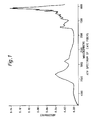
- Fig. 1 graphically depicts the Attenuated Total Reflectance (ATR) of CAFC fibers (cf Example 4).
- Fig. 2 graphically depicts the ATR spectrum of TC fibers (cf Example 2).
- Fig. 3 graphically depicts the ATR spectrum of CA fibers (cf Example 6).
- Fig. 4 is a microphotograph of fibers that were oven dried and cured without citric acid.
- Fig. 5 is a microphotograph of fibers that were oven dried and cured with citric acid.
- resilient bulking fibers and a method for their preparation by crosslinking individualized wood pulp cellulose fibers with polycarboxylic acids.
- individualized crosslinked fibers refers to cellulosic fibers that have primarily intrafiber chemical crosslink bonds. That is, the crosslink bonds are primarily between cellulose molecules of a single fiber, rather than between cellulose molecules of separate fibers.
- the cellulose fibers are treated with an aqueous solution comprising a polycarboxylic acid and, if desired, an additional agent such as sodium hydroxide or other caustic agent or a coreactant/accelerator. It is preferable to select the coreactant/accelerat compounds. It is more preferable to select the coreactant/accelerator from the g phosphites, hypophosphites, pyrophosphates and metaphosphates. It is most preferable to use an inorganic phosphorus compound such as monosodium phosphate.
- Dry lap or never dried wood pulp fibers can be used, although it is preferable to use never dried fibers. It is our experience that starting with the never-dried fiber results in maximum bulking levels after crosslinking regardless of the type of cellulose crosslinker used. Not wishing to be bound by any theory, it is believed that never-dried fibers allow for homogeneous distribution of crosslinking chemical in the cell wall, remain in a more individualized state during the crosslinking process, and more readily adopt twisted and curled configurations than do predried fibers.
- wood pulp fibers may be used, although it is preferable to use chemical thermal mechanical pulps, Southern and Northern softwood bleached kraft pulps, and secondary fibers.
- individualized wood pulp cellulosic fibers are crosslinked by a polycarboxylic acid.
- the degree of crosslinking is at least that sufficient to induce twisting and curling and/or resilient bulking tendency in said individualized fibers.
- the upper limit would be reached when the degree of crosslinking renders the fibers unfit for the intended use.
- Individualized crosslinked fibers according to this invention thus include those crosslinked by from less than 1 mole % to more than 25 mole %, calculated on a cellulosic anhydroglucose molar basis, of a polycarboxylic acid crosslinking agent.
- any polycarboxylic acid known to crosslink cellulose may be used to crosslink the fibers according to the present invention.
- Preferred polycarboxylic acids include citric acid, propane tricarboxylic acid, maleic acid, butanetetracarboxylic acid, cyclopentanetetracarboxylic acid and benzene tetracarboxylic acid. It is also contemplated to use polycarboxylic acid precursors and derivatives that will produce the polycarboxylic acid under the reaction conditions utilized to crosslink the fibers, as well as homopolymers and copolymers of polycarboxylic acids.
- the most preferred polycarboxylic acid is citric acid because it is an inexpensive, nontoxic, environmentally safe, readily available, naturally occurring polycarboxylic acid.
- the polycarboxylic acid may be present in any concentration in the aqueous solution to allow for a sufficient number of crosslinks. It is advantageous to use in the range of a 3-10% aqueous solution of polycarboxylic acid, with about a 5% aqueous solution being most preferred.
- a caustic agent may be used, if desired, including sodium hydroxide.
- the fibers may be dewatered by conventional papermaking techniques, for example, through the use of a screw press.
- the dewatering is done to any consistency, although higher consistencies are desirable for economical drying.
- the fibers are dewatered to a consistency of at least 30%.
- it is important to minimize compression forces experienced by the fibers prior to crosslinking and particularly during dewatering.
- the dewatered fibers may be dried by any method that allows individualization of fibers (i.e., minimizes nits, knots, fisheyes, etc.).
- the fibers may be azeotropically dried in a solvent, preferably toluene.
- the filtered fibers may be fluff dried using a hot gas such as air or superheated steam.
- the fibers After the fibers have been dried to an individualized state, they are then cured by conventionally known means to bring about the crosslinking reaction.
- the fibers may be cured by heating them at a temperature in the range of from about 150°C to about 180°C for in the range of about one-half of a minute to about ten minutes.
- Drying and curing can be accomplished either separately or concurrently in either batch or continuous operations.
- Drying and curing of the treated fibers can be achieved by any means that allows heating of the fibers to elevated temperatures, for example, ovens, or heating in hot gas streams such as air, steam, superheated steam, or inert gases such as argon or nitrogen. It is preferred to use reducing atmospheres during drying and curing, such as is achievable with systems like superheated steam or inert gases like nitrogen and argon, to minimize charring, darkening, and degradation of the fibers.
- the cured fibers thus prepared can then be dispersed for use.
- the dispersion step involves contacting the cured fibers with water at an elevated temperature.
- These bulking fibers may then be used -- alone or in blends -- to prepare products that exhibit improved bulking and absorbent properties.
- the improvement in absorbency relates both to faster rate of absorbency and to increased fluid-holding capacity.
- the amounts of crosslinked fibers used to prepare the products are readily determinable by those skilled in the art. For instance, filtration and absorbent product applications will often be made 100% from the fibers of the present invention.
- towel and tissue paper products may be made by blending fibers according to the present invention with a majority of conventional wood pulp fibers. In such applications, it may be preferable to use crosslinked fibers in an amount of about 25% or less by weight of the paper product.
- NSWK Northern bleached softwood kraft fibers
- Example 1 was repeated without citric acid to produce fibers hereafter referred to as "TC".
- Example 1 was repeated except that no sodium hydroxide was added to the citric acid solution the fibers were fluff dried with hot air in lieu of azeotrope drying in toluene, and curing was done at 180°C for 2.8 minutes.
- the resultant fibers are hereafter referred to as "CAFC".
- Example 4 was repeated without citric acid to generate fibers hereafter referred to as "FC".
- Example 4 was repeated without the oven curing step to generate fibers hereafter referred to as "CA".
- Example 4 was repeated without citric acid and without the oven curing step to generate fibers hereafter referred to as "FD".
- the citric acid crosslinking reaction rendered the NSWK fiber more anionic. This was readily apparent by treating the crosslinked fibers with methylene blue. A deep blue color was retained in the crosslinked fibers, whereas little dye was taken up by the untreated NSWK fibers.
- the total charge of citric acid crosslinked fibers, made according to Example 4 was 76 meq/100 g.
- the total charge of untreated fibers was 4 meq/100 g.
- This anionicity is a further advantage of the fibers of the present invention over those prepared according to the past art, as the polycarboxylic acid crosslinked fibers should be more receptive to cationic additives important to papermaking. For example, the strength of sheets made from the corsslinked fibers should be recoverable without compromising the bulk enhancement by incorporation of a cationic strength resin.
- the polycarboxylic acid crosslinking reaction did not appear to damage the NSWK fibers. Thus, the average fiber length was not changed by the crosslinking reaction. Furthermore, the integrity of the fibers was unchanged by the crosslinking reaction as evidenced by microscopic examination (compare Figures 4 and 5). There was some brightness reduction due to the crosslinking reaction (see Table 1).
- Example 4 Partial neutralization of the citric acid prior to fiber treatment is not necessary (See Example 4) for the successful preparation of high bulking resilient fibers as described above.
- Examples 1-3 were repeated without the use of sodium hydroxide in the preparation of the treatment solution, and the resultant fibers (i.e. CAT fibers) had equivalent performance to that of the CATC fibers (compare data in Table 4 with that in Table 1). Since the citric acid treated fibers were at 25% consistency prior to drying, 39% of available citric acid (i.e. that acid contained in the dry fiber prior to curing) had reacted with the NSWK fibers to produce the CAT fibers described in this example.
- Example 10 was repeated except a treatment solution containing only 5 wt% citric acid was used.
- Table 4 comparable bulking performance is observed with the resultant CAT fibers relative to those prepared with solutions having twice the level of citric acid. Furthermore, there is a marked improvement in brightness accompanying the reduction of citric acid in the treatment bath. It should also be noted that 53% of the available citric acid had reacted with the NSWK fibers to produce the CAT fibers described in this example.
- Example 10 was repeated except a 3 wt% aqueous solution of citric acid was used for the treatment. As can be seen in Table 4, there was a slight reduction in the bulking ability realized with the CAT fiber prepared under these conditions. Nevertheless, a 2% bulk enhancement is predicted for every 1% incorporation of these fibers in a NSWK furnish. Furthermore, essentially no reduction in brightness was observed with these fibers relative to the control. As was the case with the CAT fibers prepared according to Example 10, about 39% of the available citric acid had reacted with the NSWK fibers to produce the CAT fibers described in this example.
- the percent bound citric acid levels as determined by titration (7) are consistently lower than those determined by ion chromatography.
- the latter method is considered to be more reliable as it is not predicated on an assumption of the number of active equivalents of carboxyl functionality during base hydrolysis.
- the citric acid crosslinking treatment is effective at producing bulk and resiliency enhancement in a wide variety of wood pulps. Different wood pulps were treated according to Example 13, unless otherwise stated, and made into pressed 65 g/m2 handsheets. The bulk data is provided in Table 6.
Landscapes
- Life Sciences & Earth Sciences (AREA)
- Chemical & Material Sciences (AREA)
- Wood Science & Technology (AREA)
- Chemical Kinetics & Catalysis (AREA)
- General Chemical & Material Sciences (AREA)
- Engineering & Computer Science (AREA)
- Biochemistry (AREA)
- Paper (AREA)
- Treatments For Attaching Organic Compounds To Fibrous Goods (AREA)
- Dry Formation Of Fiberboard And The Like (AREA)
- Measurement Of Radiation (AREA)
- Addition Polymer Or Copolymer, Post-Treatments, Or Chemical Modifications (AREA)
- Polyesters Or Polycarbonates (AREA)
Applications Claiming Priority (2)
| Application Number | Priority Date | Filing Date | Title |
|---|---|---|---|
| US47340490A | 1990-02-01 | 1990-02-01 | |
| US473404 | 1990-02-01 |
Publications (2)
| Publication Number | Publication Date |
|---|---|
| EP0440472A1 true EP0440472A1 (fr) | 1991-08-07 |
| EP0440472B1 EP0440472B1 (fr) | 1995-08-16 |
Family
ID=23879389
Family Applications (1)
| Application Number | Title | Priority Date | Filing Date |
|---|---|---|---|
| EP91300760A Expired - Lifetime EP0440472B1 (fr) | 1990-02-01 | 1991-01-31 | Fibres élastiques à bouffant élevé obtenues par réticulation de fibres de pâte de bois avec des acides polycarboxyliques |
Country Status (6)
| Country | Link |
|---|---|
| EP (1) | EP0440472B1 (fr) |
| AT (1) | ATE126556T1 (fr) |
| CA (1) | CA2035402A1 (fr) |
| DE (1) | DE69112089T2 (fr) |
| ES (1) | ES2075339T3 (fr) |
| FI (1) | FI910467A7 (fr) |
Cited By (20)
| Publication number | Priority date | Publication date | Assignee | Title |
|---|---|---|---|---|
| WO1994018385A1 (fr) * | 1993-02-12 | 1994-08-18 | James River Corporation Of Virginia | Procede de reticulation de fibres cellulosiques |
| WO1994023121A1 (fr) * | 1993-03-26 | 1994-10-13 | James River Corporation Of Virginia | Procede de reticulation de fibres cellulosiques |
| WO1995026440A1 (fr) * | 1994-03-25 | 1995-10-05 | Weyerhaeuser Company | Produits cellulosiques fabriques a l'aide de fibres cellulosiques gonflees |
| WO1995026441A1 (fr) * | 1994-03-25 | 1995-10-05 | Weyerhaeuser Company | Produits cellulosiques a plusieurs nappes utilisant des fibres cellulosiques gonflantes |
| WO1997000354A1 (fr) * | 1995-06-15 | 1997-01-03 | The Procter & Gamble Company | Procede de preparation de fibres reticluees et individualisees d'acide polycarboxylique a odeur limitee et brillance accrue |
| WO2003045293A1 (fr) * | 2001-11-21 | 2003-06-05 | The United States Of America, As Represented By The Secretary Of Agriculture | Pansement souple et absorbant a base d'alginate |
| WO2003062818A1 (fr) * | 2002-01-23 | 2003-07-31 | Lenzing Aktiengesellschaft | Procede de determination spectroscopique de constituants de viscose |
| US6627041B2 (en) | 2000-03-06 | 2003-09-30 | Georgia-Pacific Corporation | Method of bleaching and providing papermaking fibers with durable curl |
| EP1400626A1 (fr) * | 2002-09-19 | 2004-03-24 | Weyerhaeuser Company | Fibres cellulosiques traitées par du polysaccharide |
| US6899790B2 (en) | 2000-03-06 | 2005-05-31 | Georgia-Pacific Corporation | Method of providing papermaking fibers with durable curl |
| EP1582624A1 (fr) * | 2004-03-31 | 2005-10-05 | Weyerhaeuser Company | Fibres de cellulose blanchies reticulés de l'acide polyacrylique |
| US7018490B2 (en) | 1992-08-17 | 2006-03-28 | Weyerhaeuser Company | Method of binding binder treated particles to fibers |
| US7144474B1 (en) | 1992-08-17 | 2006-12-05 | Weyerhaeuser Co. | Method of binding particles to binder treated fibers |
| US7147446B2 (en) | 2003-01-02 | 2006-12-12 | Weyerhaeuser Company | Crosslinking agent application method and system |
| WO2009121926A1 (fr) | 2008-04-03 | 2009-10-08 | Organoclick Ab | Matériau fibreux en feuille ayant une propriété de résistance mécanique améliorée |
| EP2309059A1 (fr) * | 2009-10-02 | 2011-04-13 | Organoclick Aktiebolag | Procédé pour améliorer les propriétés de matériaux formés de feuilles fibreuses à base de cellulose |
| WO2014102637A1 (fr) * | 2012-12-26 | 2014-07-03 | Kimberly-Clark Worldwide, Inc. | Tissu doux ayant des liaisons hydrogène réduites |
| US9410292B2 (en) | 2012-12-26 | 2016-08-09 | Kimberly-Clark Worldwide, Inc. | Multilayered tissue having reduced hydrogen bonding |
| US9416494B2 (en) | 2012-12-26 | 2016-08-16 | Kimberly-Clark Worldwide, Inc. | Modified cellulosic fibers having reduced hydrogen bonding |
| EP3277240A4 (fr) * | 2015-04-03 | 2018-09-12 | Resolute FP US Inc. | Procédés de production d'une fibre cellulosique présentant un indice de frisure élevé et couche d'absorption et de répartition en comprenant |
Families Citing this family (29)
| Publication number | Priority date | Publication date | Assignee | Title |
|---|---|---|---|---|
| US5437418A (en) * | 1987-01-20 | 1995-08-01 | Weyerhaeuser Company | Apparatus for crosslinking individualized cellulose fibers |
| US5366591A (en) * | 1987-01-20 | 1994-11-22 | Jewell Richard A | Method and apparatus for crosslinking individualized cellulose fibers |
| US5190563A (en) * | 1989-11-07 | 1993-03-02 | The Proctor & Gamble Co. | Process for preparing individualized, polycarboxylic acid crosslinked fibers |
| US5137537A (en) * | 1989-11-07 | 1992-08-11 | The Procter & Gamble Cellulose Company | Absorbent structure containing individualized, polycarboxylic acid crosslinked wood pulp cellulose fibers |
| US5183707A (en) * | 1989-11-07 | 1993-02-02 | The Procter & Gamble Cellulose Company | Individualized, polycarboxylic acid crosslinked fibers |
| US5360420A (en) * | 1990-01-23 | 1994-11-01 | The Procter & Gamble Company | Absorbent structures containing stiffened fibers and superabsorbent material |
| US5217445A (en) * | 1990-01-23 | 1993-06-08 | The Procter & Gamble Company | Absorbent structures containing superabsorbent material and web of wetlaid stiffened fibers |
| US5199953A (en) * | 1990-09-14 | 1993-04-06 | Ortec, Inc. | Process for reducing discoloration of cellulosic fibers, treated at a high temperature with a solution of a polycarboxylic acid and boric acid or borate |
| EP0555226A1 (fr) * | 1990-10-31 | 1993-08-18 | Weyerhaeuser Company | Appareil pour le traitement de fibres |
| US5087324A (en) * | 1990-10-31 | 1992-02-11 | James River Corporation Of Virginia | Paper towels having bulky inner layer |
| US5234423A (en) * | 1991-06-13 | 1993-08-10 | The Procter & Gamble Company | Absorbent article with elastic waist feature and enhanced absorbency |
| US5387207A (en) * | 1991-08-12 | 1995-02-07 | The Procter & Gamble Company | Thin-unit-wet absorbent foam materials for aqueous body fluids and process for making same |
| US5147345A (en) * | 1991-08-12 | 1992-09-15 | The Procter & Gamble Company | High efficiency absorbent articles for incontinence management |
| US5308896A (en) * | 1992-08-17 | 1994-05-03 | Weyerhaeuser Company | Particle binders for high bulk fibers |
| US6391453B1 (en) | 1992-08-17 | 2002-05-21 | Weyernaeuser Company | Binder treated particles |
| US5352480A (en) * | 1992-08-17 | 1994-10-04 | Weyerhaeuser Company | Method for binding particles to fibers using reactivatable binders |
| US5998032A (en) | 1992-08-17 | 1999-12-07 | Weyerhaeuser Company | Method and compositions for enhancing blood absorbence by superabsorbent materials |
| US6340411B1 (en) | 1992-08-17 | 2002-01-22 | Weyerhaeuser Company | Fibrous product containing densifying agent |
| US5300192A (en) * | 1992-08-17 | 1994-04-05 | Weyerhaeuser Company | Wet laid fiber sheet manufacturing with reactivatable binders for binding particles to fibers |
| US5998511A (en) * | 1994-03-25 | 1999-12-07 | Weyerhaeuser Company | Polymeric polycarboxylic acid crosslinked cellulosic fibers |
| US6184271B1 (en) | 1994-03-25 | 2001-02-06 | Weyerhaeuser Company | Absorbent composite containing polymaleic acid crosslinked cellulosic fibers |
| US5906894A (en) * | 1994-03-25 | 1999-05-25 | Weyerhaeuser Company | Multi-ply cellulosic products using high-bulk cellulosic fibers |
| US6020536A (en) * | 1996-06-28 | 2000-02-01 | Sca Hygiene Products Ab | Absorbent body for absorbent articles |
| US6695950B1 (en) | 1999-08-17 | 2004-02-24 | National Starch And Chemical Investment Holding Corporation | Aldehyde modified cellulose pulp for the preparation of high strength paper products |
| WO2001023668A1 (fr) | 1999-09-28 | 2001-04-05 | University Of Georgia Research Foundation, Inc. | Additifs polymere-aldehyde destines a ameliorer les proprietes du papier |
| US6533989B1 (en) | 2000-08-03 | 2003-03-18 | Kimberly-Clark Worldwide, Inc. | Multi-chamber process and apparatus for forming a stabilized absorbent web |
| US6533978B1 (en) | 2000-08-03 | 2003-03-18 | Kimberly-Clark Worldwide, Inc. | Process and apparatus for forming a stabilized absorbent web |
| US6524653B1 (en) | 2000-11-01 | 2003-02-25 | Niponi, Llc | Cellulose-based fire retardant composition |
| US9127408B2 (en) * | 2014-01-31 | 2015-09-08 | Kimberly-Clark Worldwide, Inc. | Tissue having reduced hydrogen bonding |
Citations (14)
| Publication number | Priority date | Publication date | Assignee | Title |
|---|---|---|---|---|
| US2759787A (en) | 1953-05-15 | 1956-08-21 | Eastman Kodak Co | Cellulose citrates and their preparation |
| US2987434A (en) * | 1958-09-09 | 1961-06-06 | Paper Chemistry Inst | Method of making pulp |
| US3183054A (en) | 1959-07-24 | 1965-05-11 | Shell Oil Co | Aldehyde condensation products and their use in treating fibrous materials |
| US3224926A (en) | 1962-06-22 | 1965-12-21 | Kimberly Clark Co | Method of forming cross-linked cellulosic fibers and product thereof |
| US3440135A (en) | 1965-12-13 | 1969-04-22 | Kimberly Clark Co | Process for crosslinking cellulosic fibers during gas suspension of fibers |
| US3526048A (en) | 1967-06-07 | 1970-09-01 | Us Agriculture | Cellulose fibers cross-linked and esterified with polycarboxylic acids |
| US3756913A (en) | 1971-06-18 | 1973-09-04 | Scott Paper Co | Modified cellulosic fibers and products containing said fibers |
| US3819470A (en) | 1971-06-18 | 1974-06-25 | Scott Paper Co | Modified cellulosic fibers and method for preparation thereof |
| EP0090588A1 (fr) * | 1982-03-29 | 1983-10-05 | Scott Paper Company | Méthode pour la préparation de fibres cellulosiques modifiées |
| EP0192216A1 (fr) * | 1985-02-16 | 1986-08-27 | Taiyo Fishery Co., Ltd. | Produit fibreux absorbant l'eaut et méthode pour sa production |
| EP0213415A2 (fr) | 1985-08-02 | 1987-03-11 | Scott Paper Company | Procédé pour la préparation de fibres cellulosiques modifiées |
| WO1988004704A1 (fr) | 1986-12-15 | 1988-06-30 | Weyerhaeuser Company | Produit cellulosique hydrophile et son procede de fabrication |
| US4820307A (en) | 1988-06-16 | 1989-04-11 | The United States Of America As Represented By The Secretary Of Agriculture | Catalysts and processes for formaldehyde-free durable press finishing of cotton textiles with polycarboxylic acids |
| US4822453A (en) | 1986-06-27 | 1989-04-18 | The Procter & Gamble Cellulose Company | Absorbent structure containing individualized, crosslinked fibers |
-
1991
- 1991-01-31 DE DE69112089T patent/DE69112089T2/de not_active Expired - Fee Related
- 1991-01-31 EP EP91300760A patent/EP0440472B1/fr not_active Expired - Lifetime
- 1991-01-31 FI FI910467A patent/FI910467A7/fi not_active Application Discontinuation
- 1991-01-31 ES ES91300760T patent/ES2075339T3/es not_active Expired - Lifetime
- 1991-01-31 CA CA002035402A patent/CA2035402A1/fr not_active Abandoned
- 1991-01-31 AT AT91300760T patent/ATE126556T1/de not_active IP Right Cessation
Patent Citations (16)
| Publication number | Priority date | Publication date | Assignee | Title |
|---|---|---|---|---|
| US2759787A (en) | 1953-05-15 | 1956-08-21 | Eastman Kodak Co | Cellulose citrates and their preparation |
| US2987434A (en) * | 1958-09-09 | 1961-06-06 | Paper Chemistry Inst | Method of making pulp |
| US3183054A (en) | 1959-07-24 | 1965-05-11 | Shell Oil Co | Aldehyde condensation products and their use in treating fibrous materials |
| US3224926A (en) | 1962-06-22 | 1965-12-21 | Kimberly Clark Co | Method of forming cross-linked cellulosic fibers and product thereof |
| US3440135A (en) | 1965-12-13 | 1969-04-22 | Kimberly Clark Co | Process for crosslinking cellulosic fibers during gas suspension of fibers |
| US3526048A (en) | 1967-06-07 | 1970-09-01 | Us Agriculture | Cellulose fibers cross-linked and esterified with polycarboxylic acids |
| US3756913A (en) | 1971-06-18 | 1973-09-04 | Scott Paper Co | Modified cellulosic fibers and products containing said fibers |
| US3819470A (en) | 1971-06-18 | 1974-06-25 | Scott Paper Co | Modified cellulosic fibers and method for preparation thereof |
| EP0090588A1 (fr) * | 1982-03-29 | 1983-10-05 | Scott Paper Company | Méthode pour la préparation de fibres cellulosiques modifiées |
| US4431481A (en) | 1982-03-29 | 1984-02-14 | Scott Paper Co. | Modified cellulosic fibers and method for preparation thereof |
| EP0192216A1 (fr) * | 1985-02-16 | 1986-08-27 | Taiyo Fishery Co., Ltd. | Produit fibreux absorbant l'eaut et méthode pour sa production |
| EP0213415A2 (fr) | 1985-08-02 | 1987-03-11 | Scott Paper Company | Procédé pour la préparation de fibres cellulosiques modifiées |
| US4822453A (en) | 1986-06-27 | 1989-04-18 | The Procter & Gamble Cellulose Company | Absorbent structure containing individualized, crosslinked fibers |
| WO1988004704A1 (fr) | 1986-12-15 | 1988-06-30 | Weyerhaeuser Company | Produit cellulosique hydrophile et son procede de fabrication |
| US4853086A (en) | 1986-12-15 | 1989-08-01 | Weyerhaeuser Company | Hydrophilic cellulose product and method of its manufacture |
| US4820307A (en) | 1988-06-16 | 1989-04-11 | The United States Of America As Represented By The Secretary Of Agriculture | Catalysts and processes for formaldehyde-free durable press finishing of cotton textiles with polycarboxylic acids |
Non-Patent Citations (3)
| Title |
|---|
| TEXT. CHEM. COLOR., vol. 21, no. 2, 1989, pages 13 |
| TEXT. RES. J., vol. 37, 1967, pages 933 |
| TEXT. RES. J., vol. 37,42, 1967, pages 933 |
Cited By (34)
| Publication number | Priority date | Publication date | Assignee | Title |
|---|---|---|---|---|
| US7144474B1 (en) | 1992-08-17 | 2006-12-05 | Weyerhaeuser Co. | Method of binding particles to binder treated fibers |
| US7018490B2 (en) | 1992-08-17 | 2006-03-28 | Weyerhaeuser Company | Method of binding binder treated particles to fibers |
| WO1994018385A1 (fr) * | 1993-02-12 | 1994-08-18 | James River Corporation Of Virginia | Procede de reticulation de fibres cellulosiques |
| WO1994023121A1 (fr) * | 1993-03-26 | 1994-10-13 | James River Corporation Of Virginia | Procede de reticulation de fibres cellulosiques |
| US6736933B2 (en) | 1994-03-25 | 2004-05-18 | Weyerhaeuser Company | Multi-ply cellulosic products using high-bulk cellulosic fibers |
| WO1995026440A1 (fr) * | 1994-03-25 | 1995-10-05 | Weyerhaeuser Company | Produits cellulosiques fabriques a l'aide de fibres cellulosiques gonflees |
| WO1995026441A1 (fr) * | 1994-03-25 | 1995-10-05 | Weyerhaeuser Company | Produits cellulosiques a plusieurs nappes utilisant des fibres cellulosiques gonflantes |
| EP0899377A3 (fr) * | 1994-03-25 | 1999-09-01 | Weyerhaeuser Company | Fibres cellulosiques à gonflant élevé et leur procédé de préparation |
| EP1217124A3 (fr) * | 1994-03-25 | 2004-06-02 | Weyerhaeuser Company | Fibres cellulosiques à gonflant élevé et leur procédé de préparation |
| US6716306B2 (en) * | 1994-03-25 | 2004-04-06 | Weyerhaeuser Company | High bulk cellulose fibers crosslinked with tartaric acid and method of making same |
| WO1997000354A1 (fr) * | 1995-06-15 | 1997-01-03 | The Procter & Gamble Company | Procede de preparation de fibres reticluees et individualisees d'acide polycarboxylique a odeur limitee et brillance accrue |
| CN1071823C (zh) * | 1995-06-15 | 2001-09-26 | 普罗克特和甘保尔公司 | 气味降低亮度提高的、多元羧酸交联的单根纤维的制备方法 |
| US6899790B2 (en) | 2000-03-06 | 2005-05-31 | Georgia-Pacific Corporation | Method of providing papermaking fibers with durable curl |
| US8277606B2 (en) | 2000-03-06 | 2012-10-02 | Georgia-Pacific Consumer Products Lp | Method of providing paper-making fibers with durable curl and absorbent products incorporating same |
| US6627041B2 (en) | 2000-03-06 | 2003-09-30 | Georgia-Pacific Corporation | Method of bleaching and providing papermaking fibers with durable curl |
| US7291247B2 (en) | 2000-03-06 | 2007-11-06 | Georgia-Pacific Consumer Operations Llc | Absorbent sheet made with papermaking fibers with durable curl |
| US6809231B2 (en) * | 2001-11-21 | 2004-10-26 | The United States Of America As Represented By The Secretary Of Agriculture | Flexible and absorbent alginate wound dressing |
| WO2003045293A1 (fr) * | 2001-11-21 | 2003-06-05 | The United States Of America, As Represented By The Secretary Of Agriculture | Pansement souple et absorbant a base d'alginate |
| WO2003062818A1 (fr) * | 2002-01-23 | 2003-07-31 | Lenzing Aktiengesellschaft | Procede de determination spectroscopique de constituants de viscose |
| EP1400626A1 (fr) * | 2002-09-19 | 2004-03-24 | Weyerhaeuser Company | Fibres cellulosiques traitées par du polysaccharide |
| US7147446B2 (en) | 2003-01-02 | 2006-12-12 | Weyerhaeuser Company | Crosslinking agent application method and system |
| EP1582624A1 (fr) * | 2004-03-31 | 2005-10-05 | Weyerhaeuser Company | Fibres de cellulose blanchies reticulés de l'acide polyacrylique |
| US7513973B2 (en) | 2004-03-31 | 2009-04-07 | Weyerhaeuser Nr Company | Bleached polyacrylic acid crosslinked cellulosic fibers |
| WO2009121926A1 (fr) | 2008-04-03 | 2009-10-08 | Organoclick Ab | Matériau fibreux en feuille ayant une propriété de résistance mécanique améliorée |
| EP2108676A1 (fr) | 2008-04-03 | 2009-10-14 | Organoclick AB | Polysacharides hétérogènes réticulés |
| US8568564B2 (en) | 2008-04-03 | 2013-10-29 | Organoclick Ab | Sheet-formed fibrous material with improved strength property |
| EP2309059A1 (fr) * | 2009-10-02 | 2011-04-13 | Organoclick Aktiebolag | Procédé pour améliorer les propriétés de matériaux formés de feuilles fibreuses à base de cellulose |
| WO2011039325A3 (fr) * | 2009-10-02 | 2011-05-26 | Organoclick Aktiebolag | Procédé d'amélioration de propriétés de matières fibreuses à base de cellulose mises sous forme de feuilles |
| WO2014102637A1 (fr) * | 2012-12-26 | 2014-07-03 | Kimberly-Clark Worldwide, Inc. | Tissu doux ayant des liaisons hydrogène réduites |
| US8980054B2 (en) | 2012-12-26 | 2015-03-17 | Kimberly-Clark Worldwide, Inc. | Soft tissue having reduced hydrogen bonding |
| US9410292B2 (en) | 2012-12-26 | 2016-08-09 | Kimberly-Clark Worldwide, Inc. | Multilayered tissue having reduced hydrogen bonding |
| US9416494B2 (en) | 2012-12-26 | 2016-08-16 | Kimberly-Clark Worldwide, Inc. | Modified cellulosic fibers having reduced hydrogen bonding |
| EP3277240A4 (fr) * | 2015-04-03 | 2018-09-12 | Resolute FP US Inc. | Procédés de production d'une fibre cellulosique présentant un indice de frisure élevé et couche d'absorption et de répartition en comprenant |
| US10266989B2 (en) | 2015-04-03 | 2019-04-23 | Resolute Fp Us Inc. | Methods for producing a cellulosic fiber having a high curl index and acquisition and distribution layer containing same |
Also Published As
| Publication number | Publication date |
|---|---|
| ATE126556T1 (de) | 1995-09-15 |
| ES2075339T3 (es) | 1995-10-01 |
| FI910467L (fi) | 1991-08-02 |
| DE69112089D1 (de) | 1995-09-21 |
| FI910467A7 (fi) | 1991-08-02 |
| DE69112089T2 (de) | 1996-01-11 |
| CA2035402A1 (fr) | 1991-08-02 |
| EP0440472B1 (fr) | 1995-08-16 |
| FI910467A0 (fi) | 1991-01-31 |
Similar Documents
| Publication | Publication Date | Title |
|---|---|---|
| EP0440472B1 (fr) | Fibres élastiques à bouffant élevé obtenues par réticulation de fibres de pâte de bois avec des acides polycarboxyliques | |
| US6592717B2 (en) | Carboxylated cellulosic fibrous web and method of making the same | |
| US4431481A (en) | Modified cellulosic fibers and method for preparation thereof | |
| US7018511B2 (en) | Crossed-linked pulp and method of making same | |
| CA2305194C (fr) | Fibres mercerisees traitees a la resine et produits prepares avec ces dernieres | |
| CA2649304C (fr) | Fibres cellulosiques traitees et articles absorbants fabriques de ces dernieres | |
| US6300259B1 (en) | Crosslinkable cellulosic fibrous product | |
| US5755828A (en) | Method and composition for increasing the strength of compositions containing high-bulk fibers | |
| WO2001031124A1 (fr) | Traitement eclair de bandes fibreuses | |
| WO2001031122A1 (fr) | Papier a hautes performances a l'etat humide, utilisant des composes anioniques polymeres, et son procede de production | |
| EP2206523B1 (fr) | Fibres cellulosiques traitées et articles absorbants les contenant | |
| US6488809B1 (en) | Resin-treated mercerized fibers and products thereof | |
| CA1240670A (fr) | Materiaux de polysaccharides modifies | |
| CA1090060A (fr) | Fibres cellulosiques traitees aux vapeurs de formaldehyde |
Legal Events
| Date | Code | Title | Description |
|---|---|---|---|
| PUAI | Public reference made under article 153(3) epc to a published international application that has entered the european phase |
Free format text: ORIGINAL CODE: 0009012 |
|
| AK | Designated contracting states |
Kind code of ref document: A1 Designated state(s): AT BE CH DE DK ES FR GB GR IT LI LU NL SE |
|
| 17P | Request for examination filed |
Effective date: 19920123 |
|
| K1C3 | Correction of patent application (complete document) published |
Effective date: 19910807 |
|
| 17Q | First examination report despatched |
Effective date: 19930622 |
|
| GRAA | (expected) grant |
Free format text: ORIGINAL CODE: 0009210 |
|
| AK | Designated contracting states |
Kind code of ref document: B1 Designated state(s): AT BE CH DE DK ES FR GB GR IT LI LU NL SE |
|
| PG25 | Lapsed in a contracting state [announced via postgrant information from national office to epo] |
Ref country code: NL Free format text: LAPSE BECAUSE OF FAILURE TO SUBMIT A TRANSLATION OF THE DESCRIPTION OR TO PAY THE FEE WITHIN THE PRESCRIBED TIME-LIMIT Effective date: 19950816 Ref country code: LI Effective date: 19950816 Ref country code: GR Free format text: LAPSE BECAUSE OF FAILURE TO SUBMIT A TRANSLATION OF THE DESCRIPTION OR TO PAY THE FEE WITHIN THE PRESCRIBED TIME-LIMIT Effective date: 19950816 Ref country code: DK Effective date: 19950816 Ref country code: CH Effective date: 19950816 Ref country code: BE Effective date: 19950816 Ref country code: AT Effective date: 19950816 |
|
| REF | Corresponds to: |
Ref document number: 126556 Country of ref document: AT Date of ref document: 19950915 Kind code of ref document: T |
|
| ITF | It: translation for a ep patent filed | ||
| RAP2 | Party data changed (patent owner data changed or rights of a patent transferred) |
Owner name: JAMES RIVER CORPORATION OF VIRGINIA |
|
| REF | Corresponds to: |
Ref document number: 69112089 Country of ref document: DE Date of ref document: 19950921 |
|
| REG | Reference to a national code |
Ref country code: ES Ref legal event code: FG2A Ref document number: 2075339 Country of ref document: ES Kind code of ref document: T3 |
|
| ET | Fr: translation filed | ||
| NLT2 | Nl: modifications (of names), taken from the european patent patent bulletin |
Owner name: JAMES RIVER CORPORATION OF VIRGINIA |
|
| PG25 | Lapsed in a contracting state [announced via postgrant information from national office to epo] |
Ref country code: SE Effective date: 19951116 |
|
| PG25 | Lapsed in a contracting state [announced via postgrant information from national office to epo] |
Ref country code: LU Free format text: LAPSE BECAUSE OF NON-PAYMENT OF DUE FEES Effective date: 19960131 Ref country code: GB Effective date: 19960131 |
|
| NLV1 | Nl: lapsed or annulled due to failure to fulfill the requirements of art. 29p and 29m of the patents act | ||
| PG25 | Lapsed in a contracting state [announced via postgrant information from national office to epo] |
Ref country code: ES Free format text: LAPSE BECAUSE OF THE APPLICANT RENOUNCES Effective date: 19960201 |
|
| PLBE | No opposition filed within time limit |
Free format text: ORIGINAL CODE: 0009261 |
|
| STAA | Information on the status of an ep patent application or granted ep patent |
Free format text: STATUS: NO OPPOSITION FILED WITHIN TIME LIMIT |
|
| 26N | No opposition filed | ||
| GBPC | Gb: european patent ceased through non-payment of renewal fee |
Effective date: 19960131 |
|
| PG25 | Lapsed in a contracting state [announced via postgrant information from national office to epo] |
Ref country code: FR Effective date: 19960930 |
|
| PG25 | Lapsed in a contracting state [announced via postgrant information from national office to epo] |
Ref country code: DE Effective date: 19961001 |
|
| REG | Reference to a national code |
Ref country code: FR Ref legal event code: ST |
|
| REG | Reference to a national code |
Ref country code: ES Ref legal event code: FD2A Effective date: 19991102 |
|
| PG25 | Lapsed in a contracting state [announced via postgrant information from national office to epo] |
Ref country code: IT Free format text: LAPSE BECAUSE OF NON-PAYMENT OF DUE FEES;WARNING: LAPSES OF ITALIAN PATENTS WITH EFFECTIVE DATE BEFORE 2007 MAY HAVE OCCURRED AT ANY TIME BEFORE 2007. THE CORRECT EFFECTIVE DATE MAY BE DIFFERENT FROM THE ONE RECORDED. Effective date: 20050131 |