EP0441491A1 - Boronic acid adducts of rhenium dioxime and technetium-99M dioxime complexes containing a biochemically active group - Google Patents
Boronic acid adducts of rhenium dioxime and technetium-99M dioxime complexes containing a biochemically active group Download PDFInfo
- Publication number
- EP0441491A1 EP0441491A1 EP91300414A EP91300414A EP0441491A1 EP 0441491 A1 EP0441491 A1 EP 0441491A1 EP 91300414 A EP91300414 A EP 91300414A EP 91300414 A EP91300414 A EP 91300414A EP 0441491 A1 EP0441491 A1 EP 0441491A1
- Authority
- EP
- European Patent Office
- Prior art keywords
- boronic acid
- accordance
- alkyl
- adduct
- formula
- Prior art date
- Legal status (The legal status is an assumption and is not a legal conclusion. Google has not performed a legal analysis and makes no representation as to the accuracy of the status listed.)
- Ceased
Links
Classifications
-
- C—CHEMISTRY; METALLURGY
- C07—ORGANIC CHEMISTRY
- C07F—ACYCLIC, CARBOCYCLIC OR HETEROCYCLIC COMPOUNDS CONTAINING ELEMENTS OTHER THAN CARBON, HYDROGEN, HALOGEN, OXYGEN, NITROGEN, SULFUR, SELENIUM OR TELLURIUM
- C07F5/00—Compounds containing elements of Groups 3 or 13 of the Periodic Table
- C07F5/02—Boron compounds
-
- C—CHEMISTRY; METALLURGY
- C07—ORGANIC CHEMISTRY
- C07J—STEROIDS
- C07J51/00—Normal steroids with unmodified cyclopenta(a)hydrophenanthrene skeleton not provided for in groups C07J1/00 - C07J43/00
-
- A—HUMAN NECESSITIES
- A61—MEDICAL OR VETERINARY SCIENCE; HYGIENE
- A61K—PREPARATIONS FOR MEDICAL, DENTAL OR TOILETRY PURPOSES
- A61K51/00—Preparations containing radioactive substances for use in therapy or testing in vivo
- A61K51/02—Preparations containing radioactive substances for use in therapy or testing in vivo characterised by the carrier, i.e. characterised by the agent or material covalently linked or complexing the radioactive nucleus
- A61K51/04—Organic compounds
- A61K51/0474—Organic compounds complexes or complex-forming compounds, i.e. wherein a radioactive metal (e.g. 111In3+) is complexed or chelated by, e.g. a N2S2, N3S, NS3, N4 chelating group
- A61K51/0478—Organic compounds complexes or complex-forming compounds, i.e. wherein a radioactive metal (e.g. 111In3+) is complexed or chelated by, e.g. a N2S2, N3S, NS3, N4 chelating group complexes from non-cyclic ligands, e.g. EDTA, MAG3
-
- A—HUMAN NECESSITIES
- A61—MEDICAL OR VETERINARY SCIENCE; HYGIENE
- A61K—PREPARATIONS FOR MEDICAL, DENTAL OR TOILETRY PURPOSES
- A61K51/00—Preparations containing radioactive substances for use in therapy or testing in vivo
- A61K51/02—Preparations containing radioactive substances for use in therapy or testing in vivo characterised by the carrier, i.e. characterised by the agent or material covalently linked or complexing the radioactive nucleus
- A61K51/04—Organic compounds
- A61K51/0497—Organic compounds conjugates with a carrier being an organic compounds
-
- C—CHEMISTRY; METALLURGY
- C07—ORGANIC CHEMISTRY
- C07F—ACYCLIC, CARBOCYCLIC OR HETEROCYCLIC COMPOUNDS CONTAINING ELEMENTS OTHER THAN CARBON, HYDROGEN, HALOGEN, OXYGEN, NITROGEN, SULFUR, SELENIUM OR TELLURIUM
- C07F13/00—Compounds containing elements of Groups 7 or 17 of the Periodic Table
- C07F13/005—Compounds without a metal-carbon linkage
-
- C—CHEMISTRY; METALLURGY
- C07—ORGANIC CHEMISTRY
- C07F—ACYCLIC, CARBOCYCLIC OR HETEROCYCLIC COMPOUNDS CONTAINING ELEMENTS OTHER THAN CARBON, HYDROGEN, HALOGEN, OXYGEN, NITROGEN, SULFUR, SELENIUM OR TELLURIUM
- C07F5/00—Compounds containing elements of Groups 3 or 13 of the Periodic Table
- C07F5/02—Boron compounds
- C07F5/025—Boronic and borinic acid compounds
-
- A—HUMAN NECESSITIES
- A61—MEDICAL OR VETERINARY SCIENCE; HYGIENE
- A61K—PREPARATIONS FOR MEDICAL, DENTAL OR TOILETRY PURPOSES
- A61K2123/00—Preparations for testing in vivo
Definitions
- Radiolabeled biochemically active groups are of increasing interest in the field of diagnostic imaging.
- a biochemically active group is a metabolic substrate or inhibitor or a molecule with an affinity for a specific receptor.
- Knowledge of certain properties, such as receptor binding or metabolism, involving various biochemically active groups suggest, at least in theory, that radiolabeled versions of such groups may be useful in imaging the function and/or condition of a specific organ, rather than merely the blood flow to that organ.
- An effective complex is one wherein the radionuclide and biochemically active group are stably bound to each other and further, wherein the complex behaves, or is "taken up", substantially as the free biochemically active group would behave.
- Free fatty acids are primary substrates of the normally perfused myocardium and, as such, are viewed as potentially useful in studying free fatty acid metabolism via the beta-oxidation pathway. Accordingly, van der Wall et al. ( Eur. J. Nucl. Med. , 1986, 12 , p. S11-S15, "Myocardial imaging with radiolabeled free fatty acids: Applications and limitations”) have studied free fatty acid labeled with positron emitting isotopes, e.g., 11C, 13N and 15O, as well as with the gamma-emitting isotope 123I. Additionally, Jones et al. ( J. Nucl. Med. , 1988, 29(5) , p.
- hypoxia-mediated nitro-heterocyclic groups e.g., nitroimidazoles, and derivatives thereof are known to be retained in tissue in the body which is hypoxic, i.e., deficient in oxygen.
- hypoxic tissue in the brain or heart typically follows ischemic episodes produced by, for example, arterial occlusions or by a combination of increased demand and insufficient flow. Additionally, Koh et al., ( J. Nucl. Med. , 1989, 30 , p. 789, "Hypoxia Imaging of Tumors Using [F-18]Fluoromisonidazole”) have attempted diagnostic imaging of tumors using a nitroimidazole radio-labeled with 18F.
- the above-mentioned attempts at diagnostic imaging with various radiolabeled biochemically active groups have provided less than ideal results to this point.
- the positron emitting isotopes are cyclotron produced and require extensive equipment for imaging which is not widely available.
- 123I has a thirteen hour half life and is expensive to produce.
- the 99m Tc complexes with fatty acids have not demonstrated the characteristics of the free fatty acids in myocardial uptake.
- the tritium labeled nitroimidazoles are beta-emitting nuclides useful only for autoradiographic studies and not suitable for diagnostic imaging.
- Radiolabeled complexes of biochemically active groups which retain the biochemical behavior and affinity of such groups, and which are labeled with a suitable, easy-to-use radionuclide would be a useful addition to the art.
- boronic acid adducts of rhenium dioxime and technetium-99m dioxime complexes are bonded to a biochemically active group and are useful, for example, as diagnostic imaging agents in the case of technetium-99m and as agents for radiotherapy in the case of rhenium radionuclides.
- These novel complexes are represented by the formula I MX(Y3)Z, wherein M is technetium-99m or rhenium.
- rhenium includes 186Re and 188Re radionuclides, including mixtures thereof, and may also include amounts of 185Re and 187Re.
- formula I and throughout the specification, the symbols are as defined below
- X is an anion
- Y is a vicinal dioxime having the formula or a pharmaceutically acceptable salt thereof, and R1 and R2 are each independently hydrogen, halogen, alkyl, aryl, amino or a 5- or 6-membered nitrogen or oxygen containing heterocycle, or together R1 and R2 are -(CR8R9) n - wherein n is 3, 4, 5 or 6 and R8 and R9 are each independently hydrogen or alkyl;
- the biochemically active group in its action by the close proximity of the remainder of the complex, it (the biochemically active group) can be bound to the complex via the spacer or linking group, (A1) p .
- This spacer group can be any chemical moiety which can serve to physically distance, or otherwise isolate, the biochemically active group at R3 from the rest of the complex of formula I.
- p could be any convenient value depending upon the design choices for the desired complex.
- p is ⁇ 100 and most preferably p ⁇ 20.
- alkyl alkenyl and alkoxy refer to both straight and branched chain groups. Those groups having 1 to 10 carbon atoms are preferred.
- aryl refers to phenyl and substituted phenyl. Preferred are phenyl and phenyl substituted with 1, 2 or 3 alkyl, haloalkyl, aminoalkyl, alkylaminoalkyl, dialkylaminoalkyl, alkoxy, alkoxyalkyl, halogen, amino, hydroxy, or formyl groups.
- halide refers to fluorine, chlorine, bromine and iodine.
- 5- or 6-membered nitrogen containing heterocycle refers to all 5- and 6-membered rings containing at least one nitrogen atom.
- exemplary aliphatic groups are dehydro derivatives of a compound having the formula wherein m is 0 or 1 and A is -O-, -N-R6, -S- or -CH-R6 wherein R6 is hydrogen, alkyl, aryl or arylalkyl.
- Such groups include pyrrolidinyl, piperidinyl, morpholinyl, piperazinyl, 4-alkyl-piperazinyl, 4-alkylpiperidinyl, and 3-alkyl-pyrrolidinyl groups.
- aromatic groups are pyrrolyl, imidazolyl, oxazolyl, pyrazolyl, pyridinyl, and pyrimidinyl groups.
- the above groups can be linked via a hetero atom or a carbon atom.
- 5- or 6-membered nitrogen or oxygen containing heterocycle refers to all 5- and 6-membered rings containing at least one nitrogen or oxygen atom.
- Exemplary groups are those described above under the definition of the expression "5- or 6-membered nitrogen containing heterocycle”. Additional exemplary groups are 1,4-dioxanyl and furanyl.
- the biochemically active group is bound to complexes as defined in U. S. 4,871,836 issued October 3, 1989.
- the biochemically active group is bound to a complex as defined in U. S. 4,705,849, issued November 10, 1987.
- the present invention provides complexes comprising radiolabeled biochemically active groups.
- a biochemically active group suitable for use in the present invention is any metabolic substrate or inhibitor, or a molecule with an affinity for a specific receptor. It is understood that for the purpose of this invention the category of biochemically active groups which are molecules with an affinity for specific receptor sites is limited to those groups capable of being incorporated into the complexes of formula I by the methodology described hereinafter.
- biochemically active groups include, but are not limited to, hypoxiamediated nitro-heterocyclic groups, amphetamines, steroids (such as an estrogen or estradiol), sugars (e.g. glucose derivatives), fatty acids, barbiturates, sulfonamides, monoamine oxidase substrates and inhibitors, antihypertensives, substrates for muscarinic receptors (e.g., 3-quinuclidinyl benzilate), and substrates for dopamine receptors (e.g., spiperone).
- Complexes of the present invention have not been heretofore disclosed and are useful in that they utilize properties, e.g., receptor binding, metabolism, etc., of a particular biochemically active group to provide imaging or treatment of a particular site.
- the complexes of the present invention wherein M is 99m Tc provide highly effective, relatively easy to use diagnostic imaging products which are characterized by a covalent bond between the radionuclide complex and the biochemically active group while substantially retaining the uptake properties of the free biochemical group.
- typical examples of diagnostic uses for the complexes of the present invention when M is 99m Tc include, but are not limited to, imaging of hypoxic tissue, e.g., in the heart, brain, lungs or in tumors when the biochemically active group is a nitro-heterocyclic group trapped by hypoxiamediated reduction of the nitro moiety (hereinafter referred to as "hypoxia-mediated nitro-heterocyclic group"); imaging of the brain and lungs when the biochemically active group is a lipophilic amine-containing compound, e.g.
- an amphetamine imaging of the brain, heart or tumors when the biochemically active group is a sugar (e.g., a glucose derivative); imaging of the heart when the biochemically active group is a fatty acid; and imaging of steroid receptor sites when the biochemically active group is a steroid (e.g., an estrogen for imaging breast carcinoma).
- a sugar e.g., a glucose derivative
- steroid receptor sites when the biochemically active group is a steroid (e.g., an estrogen for imaging breast carcinoma).
- the present invention provides stably bound complexes when M is Re for radiotherapeutic indications.
- Re complexes of the present invention which include estradiols can be used in the treatment of breast carcinoma.
- Re complexes of the present invention wherein the biochemically active group is a hypoxia-mediated nitro-heterocyclic group are suitable for radiotherapy.
- the compounds of this invention when M is Re for use in radiotherapy can be injected into humans and concentrate at the desired site. This allows for the targeting of radionuclides to the desired sites with great specificity. It is understood, however, that radiotherapy will only be possible in those areas where a sufficient quantity of interacting sites (i.e., estrogen receptors or hypoxic tissue) are present so as to provide therapeutic levels of rhenium to the area needing treatment.
- hypoxia-mediated nitro-heterocyclic groups examples include those described in "The Metabolic Activation of Nitro-Heterocyclic Therapeutic Agents", G. L. Kedderis et al., Drug Metabolism Reviews , 19(1), p. 33-62 (1988), "Hypoxia Mediated Nitro-Heterocyclic Drugs in the Radio- and Chemotherapy of Cancer", G. E. Adams, et al., Biochem. Pharmacology , Vol. 35, No.
- nitro-heterocyclic compounds suitable for use at R3 in the complexes of the present invention and are incorporated herein by reference. These compounds comprise a nitro-heterocyclic group which may include a sidechain, A1, which can serve as the spacer group linking the nitro-heterocyclic portion to the boron atom and the rest of the complex of formula I of this invention.
- the spacer-R3 portion of the complex can be represented by or the ring portion being a 5- or 6-membered cyclic or aromatic ring, wherein n is the total number of substitution positions available on the 5- or 6-membered ring;
- the one or more R substituents are independently selected from hydrogen, halogen, alkyl, aryl, alkoxy, oxa-alkyl, hydroxyalkoxy, alkenyl, arylalkyl, arylalkylamide, alkylamide, alkylamine and (alkylamine)alkyl;
- (A1) p can be absent in which case the R3 group of formula IV, IV′ or IV ⁇ is linked to the rest of the complex of this invention via a nitrogen or carbon atom, or (A1) p is the linking group and (A1) p can be as defined above.
- hypoxia-mediated nitro-heterocyclic groups serve to illustrate that the present thinking in the art is that the reduction potential of the nitro-heterocyclic group directly affects its retention in hypoxic tissue.
- the spacer group, (A1) p may therefore (in the case where R3 is a hypoxia-mediated nitro-heterocyclic group) be selected not only according to its capacity to distance R3 from the rest of the complex, but also in accordance with its effect on the reduction potential of the hypoxia-mediated nitro-heterocyclic group.
- Preferred hypoxia-mediated nitro-heterocyclic groups are 2-, 4- and 5-nitroimidazoles which can be represented by and nitrofuran and nitrothiazole derivatives, such Exemplary groups (including (A1) p spacers) include, but are not limited to, Most preferred when R3 is a hypoxia-mediated nitro-heterocyclic group are 2-nitroimidazoles and derivatives thereof.
- the biochemically active group at R3 is a steroid it is understood that either a steroid, a substituted steroid derivative or a non-steroidal derivative can be employed provided that the R3 group chosen has an affinity for the steroid receptor.
- R3 estradiol
- the estradiol molecule may be substituted at available positions by one or more of R, wherein R is as defined above.
- the steroid molecule can be replaced by a non-steroidal diol with a known affinity for the estrogen receptor, such as wherein (A1) p and R are as defined above.
- the spacer-R3 portion of the complex can be represented by wherein (A1) p and R are as defined above and R′ is a tertiary or quaternary amine, such as 3-quinuclidinol or substituted 3-quinuclidinol.
- carrier rhenium means that the rhenium compounds used contain non-radioactive rhenium at concentrations of 10 ⁇ 7M to 10 ⁇ 5M.
- Preparation of the complexes of this invention wherein M is rhenium can be accomplished using rhenium in the +3, +4, +5 or +7 oxidation state.
- Re(IV) is available as K2ReCl6 and Re(VII) is available as NH4ReO4 or KReO4.
- Re(V) is available as [ReOCl4] (NBu4) and [ReOCl4] (AsPh4) and as ReOCl3(PPh3)2 and as ReO2(pyridine)4 ⁇ .
- Other Re(III), Re(IV), Re(V), Re(VII) reagents known to those skilled in the art can also be used.
- Detailed preparations which may be adapted to produce the rhenium complexes of this invention are described in European Patent Application EP-A-311891 (and European Patent Application 90115971.5 discussed below).
- the Re complexes of this invention are prepared using Re intermediate complexes of the formula V ReX(Y)3 (wherein X and Y are as defined above) which have been described in European Patent Application 90115971.5 (corresponding to U.S. Ser. No. 398,879) filed on August 21, 1990 and entitled "RHENIUM TRIS DIOXIME COMPLEX".
- ReX(Y)3 wherein X and Y are as defined above
- European Patent Application 90115971.5 corresponding to U.S. Ser. No. 398,879
- the rhenium complexes of the present invention are provided.
- Intermediates of formula V can be prepared using Re(III), Re(IV), Re(V) or Re(VII) reagents as described above, combined with a source of anion moiety (X), and a vicinal dioxime of formula II.
- This mixture should be reacted/heated at about 25°C to 100°C for about 5 minutes to 8 hours. If Re(IV), Re(V) or Re(VII) are used, known methodologies for adding a reducing agent sufficient to reduce these starting materials to Re(III) should be employed.
- Preparation of the complexes of this invention wherein M is technetium-99m can best be accomplished using technetium-99m in the form of the pertechnetate ion.
- the pertechnetate ion can be obtained from commercially available technetium-99m parent-daughter generators; such technetium is in the +7 oxidation state.
- the generation of the pertechnetate ion using this type of generator is well known in the art, and is described in more detail in U. S. Patent No. 3,369,121 and 3,920,995. These generators are usually eluted with saline solution and the pertechnetate ion is obtained as the sodium salt.
- a method to prepare 99m Tc complexes which is an alternative method to prepare Re complexes of this invention, includes the combining of the Re or technetium-99m source such as Re(III), Re(IV), Re(V), Re(VII) or pertechnetate ion (in the form of a salt) with a source of anion, a boronic acid derivative having formula VI or a pharmaceutically acceptable salt thereof, (wherein R7 and R7′ are each independently hydrogen, alkyl or aryl, or where R7 and R7′ taken together are -(CR8R9) n - wherein n is 2-6) and a dioxime having the formula or a pharmaceutically acceptable salt thereof.
- the Re or technetium-99m source such as Re(III), Re(IV), Re(V), Re(VII) or pertechnetate ion (in the form of a salt)
- a source of anion such as Re(III), Re(IV), Re(V), Re(VII) or pertechnetate
- novel intermediates of formula VII This is the preferred method for preparing the novel intermediates of formula VII.
- the novel intermediates of formula VII′ and VII ⁇ can be prepared by coupling a compound of the formula with a compound of the formula or generally in a solvent and in the presence of a base.
- the source of the anion moiety (X) can be water or it can be an acid or salt which dissociates to release an appropriate anion.
- the preferred anionic moieties are the halides, and chloride is the most preferred halide. If the source of the anion is not water, the source should be present in an appropriate concentration to compete effectively with any water that may be present during the reaction. It has been found that the source of anion should generally be present in the reaction mixture in a concentration of about 0.1 to about 2.0 molar.
- the boronic acid derivative of formula VI, VII, VII′ or VII ⁇ should preferably be present in a concentration of about 5 to 400 millimolar.
- the dioxime of formula II should preferably be present in a concentration of about 9 to 250 millimolar.
- the formation of the 99m Tc complexes proceeds best if the mixture of pertechnetate ion, source of anion, boronic acid derivative, and dioxime is heated at about 25°C to 100°C for about 5 minutes to about 3 hours.
- the reaction is preferably run in an aqueous medium or aqueous alcohol mixture at a pH of less than, or equal to, about 5.
- Re complexes starting with Re(III), Re(IV), Re(V) or Re(VII) can also be formed using this methodology.
- an intermediate complex MX(Y)3 with a boronic acid derivative of formula VI, VII, VII′ or VII ⁇ . This can be done in an aqueous medium or aqueous alcohol mixture at about 25-100°C for about 5 minutes to 8 hours at a pH ⁇ 5.
- the reaction mixture should also contain a reducing agent.
- Stannous ion is the preferred reducing agent, and can be introduced in the form of a stannous salt such as a stannous halide (e.g., stannous chloride or stannous fluoride).
- the reducing agent should be present in a concentration of about 10 millimolar to 150 millimolar.
- complexing agents also known in the art as chelating agents
- the complexing agent should, of course, be pharmaceutically acceptable.
- Exemplary complexing agents are diethylenetriamine-pentaacetic acid (DTPA), ethylene glycol-bis( ⁇ -aminoethyl ether)-N,N′-tetraacetic acid (EGTA), ethylenediamine tetraacetic acid (EDTA), citric acid, tartaric acid, malonic acid, etc.
- the complexing reaction mixture can also include an accelerator (catalyst) which serves to improve the radiochemical purity (i.e., percent of the radioactivity that is in the desired chemical form) of the product.
- accelerators are the ⁇ -hydroxycarboxylic acids such as citric acid, tartaric acid, and malonic acid.
- kits having all of the components, other than the Rhenium or Technetium ion, needed to prepare the boronic adducts of Rhenium or Technetium dioxime complexes of formula I is an integral part of this invention.
- Such a kit contains a source of anion, a boronic acid derivative of formula VI, VII, VII′ or VII ⁇ (or compounds which can react in situ to form such a derivative), or a pharmaceutically acceptable salt thereof, a dioxime of formula II, or a pharmaceutically acceptable salt thereof, and optionally a reducing agent. It may optionally contain a complexing agent.
- kits of this invention where M is technetium can be formulated by combining the specified ingredients normally in solution and preferably in aqueous solution.
- the preferred preparation is as follows.
- the compounds are heated at about 100°C for about 10 to about 30 minutes.
- the pH of the kit should be adjusted to fall within the range of about 2.0 to 5.5 using a pharmaceutically acceptable acid or base (e.g., hydrochloric acid or sodium hydroxide).
- a pharmaceutically acceptable acid or base e.g., hydrochloric acid or sodium hydroxide.
- the pH of the kit will be about 3.0.
- the kit be in lyophilized form. While kits containing some or all components in solution can be used, they are not as efficacious as the corresponding lyophilized kit.
- separation methods well known in the art are used.
- the complexes of this invention can be administered to a host by bolus intravenous injection.
- the amount injected will be determined by the desired uses, e.g. to produce a useful diagnostic image or a desired radiotherapeutic effect, as is known in the art.
- Preferred complexes of this invention are those wherein R3 is a hypoxia-mediated nitro-heterocyclic group, an amphetamine, a steroid, or a substrate for the muscarinic receptor. Most preferred are those wherein R3 is 2-nitroimidazole or a derivative thereof, [4-[2-[(1-methylethyl)-amino]propylphenyl], estradiol or a derivative thereof, or 3-quinuclidinyl benzilate.
- the preferred values for (A1) p are alkyl, oxa-alkyl, hydroxyalkyl, hydroxyalkoxy, alkenyl, arylalkyl, arylalkylamide, alkylamide, alkylamine and (alkylamine)alkyl.
- 0.20429 g (1.76 mmol) of dimethylglyoxime and 0.13508 g (0.6 mmol) of [4-[2-[(1-methylethyl)-amino]propyl]phenyl]boronic acid were dissolved in 20 mL of ethanol and 5 mL of water.
- 0.09035 g (0.5 mmol) of ammonium pertechnetate dissolved in 6 mL of 3 M HCl was added.
- 0.21492 g (1.1 mmol) of stannous chloride dissolved in 5 mL of 4 M HCl was added dropwise over 5 minutes. The solution became an intense orange-brown in color.
- Samples were prepared containing both 99Tc and 99m Tc in order to determine the specific activity (Ci/mmol) accurately. Samples were prepared in the following manner: 2 mg of estradiol boronic acid, 0.2 mL of dimethylglyoxime (10 mg/mL of ethanol), 0.2 mL of citric acid (100 mg/mL of H2O), 0.2 mL of saturated NaCl (in H2O), 0.100 mL of NH499TcO4 (3.66 x 10 ⁇ 4 M in H2O) and 0.1 mL to 0.5 mL of 99m TcO4 - (eluent from a Mo99/Tc99m generator), to give the desired specific activity, were combined in a 5 mL siliconized vial.
- Samples were prepared containing both 99Tc and 99m Tc in order to determine the specific activity (Ci/mmol) accurately. Samples were prepared in the following manner: 2 mg of 3-Quinuclidinyl-(4-boronobenzilate) (QNB-boronic acid prepared as described by G. W. Kabalka et al., Nucl. Med. Biol.
- This Grignard reagent was added dropwise over a period of 1.5 hours into a solution of trimethylborate (10.4 g, 0.1 mole) in 200 mL of ether at -78°C under nitrogen gas. After stirring overnight at ambient temperature, the resultant off-white reaction mixture was hydrolysed with 200 mL of water and acidified with 35 mL of 3N sulfuric acid. The aqueous layer was extracted with ether (4 x 80 mL). The combined organic layer was washed and dried over sodium sulfate. Removal of solvent afforded a white solid which was recrystallized from water. Yield 6.1 g (45%), m.p. 251-256°C (Lit. 259°C) 1HNMR (DMSO) ⁇ 2.25 (s, 3H,-CH3); 7.12 and 7.64 (d, 4H, ArH); 7.86 (s, 2H,-BOH).
- redox potential for nitro-heterocyclic groups is considered to be an indicator of the degree to which such groups can be retained by hypoxic tissue.
- Sample solutions typically 0.3-1.2 mM, contained 0.1M tetrabutylammonium tetrafluoroborate supporting electrolyte, and were degassed with solvent-saturated N2 before measurements.
- nitroimidazole containing compounds Previous in vitro and in vivo studies with nitroimidazole containing compounds have demonstrated that a probable mechanism for intracellular binding of nitroimidazoles results from enzymatic reduction of the nitro group to a chemically reactive species (for example, Clarke, Wardman, and Goulding, Biochem. Pharmacol. (1980) 29, 2684 - 2687).
- the nitroimizole boronic acids in this invention were examined in an assay using the enzyme xanthine oxidase. Assay solutions contained the following
- Reactions were initiated by adding enzyme to a solution of all other reagents in a septum-sealed cuvette. All reagents were degassed prior to mixing by passage of argon over the surface for 20 minutes. Loss of the nitro group (an indication of reduction) was monitored every 5 minutes using a UV/Visible spectrophotometer set at 326nm. The half-lives of disappearance of the nitro compounds were determined by plotting log (concentration) mmole/ml vs time for all compounds studied. The results are shown in table 2, with data on two the two reference compounds, misonidazole and metronidazole shown for comparison.
- Example 14 The title compound was prepared as described in Example 14, except that 4 mg of BpropNO2 (example 20) was substituted for the 1-(2-nitroimidazolyl)-benzyl boronic acid.
- Example 19 The title compound was prepared as described in Example 14, except that 3 mg of BpropenNO2 (Example 19) was substituted for the 1-(2-nitroimidazolyl)-benzyl boronic acid.
- Example 21 The title compound was prepared as described in Example 14, except that 3 mg of BB4NO2 (Example 21) was substituted for the 1-(2-nitroimidazolyl)-benzyl boronic acid.
- IR (KBr) (cm ⁇ 1): 3505 br, 1634, 1545, 1491, 1399, 1338, 1228, 1206 s, 1089 s, 990 s, 928, 909, 824, 808.
- UV-VIS (CH3CN): ⁇ max(Log ⁇ ) 288(4.08), 382(3.80), 460(3.41).
- Example 21 The title compound was prepared as described in Example 12, except that 3 mg of BBNO2 (Example 21) was substituted for the 1-(2-nitroimidazolyl)-benzyl boronic acid.
- IR (KBr) (cm ⁇ 1): 3450 br, 1631, 1546, 1446, 1430, 1380, 1337, 1286, 1229, 1203 s, 1061 s, 960 s, 924, 902, 866, 847.
- UV-VIS (CH3CN): ⁇ max(Log ⁇ ) 290(4.35), 386(4.11), 462(3.76).
- the compound 99m Tc(chlorine)(dimethylglyoxime)3-1-(2-nitroimidazolyl)benzylboron was prepared as described in Example 14. It was then purified by adsorption onto PRP-1 reverse phase resin. The resin was washed with 1 ml of saline and 1 ml of 1:1 ethanol/saline, and then the complex was eluted with 0.4 ml of 95% ethanol. A 400 ⁇ l aliquot of pH 8.0 phosphate buffer (0.1M) was added and the mixture was heated at 37°C for 30 minutes. During this time, theaxial chloro ligand was replaced by a hydroxyl group in 96% yield as determined by HPLC.
- Example 20 The title compound was prepared as described in Example 12, except that 3 mg of BpropNO2 (Example 20) was substituted for the 1-(2-nitroimidazolyl)-benzyl boronic acid.
- Example 19 The title compound was prepared as described in Example 12, except that 3 mg of BpropenNO2 (Example 19) was substituted for the 1-(2-nitroimidazolyl)-benzyl boronic acid.
- the quinidine salt (1g, 1.68 mmol) was then treated with an excess of 6M hydrochloric acid and extracted with ethyl acetate. The extract was dried over anhydrous MgSO4 and the solvent was removed under reduced pressure to afford a past which was then loaded onto a silica gel (8 g) column and eluted with CH2Cl2-MeOH (95:5). The fractions with compound were pooled together and evaporated to a colorless paste which crystallized slowly to a cream colored solid.
- the iodobenzilic acid was prepared by adding dropwise over 30 minutes a solution of soidum nitrite (1.7 g, 24.64 mmol) in water (10 ml) to a solution of (R)-4-aminobenzilic acid (3.0 g, 12.35 mmol) in 10% hydrochloric acid (100 ml) at -5°C. Stirring was continued for an additional 30 minutes at -5°C, then a solution of potassium iodide (4.09 g, 24.64 mmol) in water (10 ml) was added slowly. The reaction mixture was then stirred at 0°C for 1 hour, then at ambient temperature for 1 hour.
- the resultant mixture was extracted with exthyl acetate (3 x 75 ml), and the combined extracts were washed with aqueous sodium thiosulfate (10%, 2 x 50 ml), water (2 x 50 ml) and dried over sodium sulfate. Removal of solvent afforded a brown past, which was purified by column chromatography (silica gel, eluted with ethanol/dichloromethant) to give the product as a light yellow solid.
- This compound was prepared by the reaction scheme outline in Example 33, substituting S-quinuclidinol for R-quinuclidinol.
- Example 33A The mother liquors from Example 33A (preparation of (R)-3-acetoxyquinuclidine), were concentrated in vacuo and the residue was made alkaline with potassium carbonate.
- the ester was extracted with chloroform (3 x 50 ml) and dried with sodium sulfate. The solvent was evaporated yielding 7.5g of the crude ester.
- the ester was added to a solution of (-)-tartaric acid 6.5 g in 80% ethanol and the salt formed was purified as described in Example 33A. mp. 95 - 96°C. lit(Cohen et al. J. Pharm. Sci., (1989), 78, 833 - 836) mp 94 - 96°C.
- N,N′-Carbonyldiimidazole (0.810 g, 0.005 mol) was added to solution of racemic p-bromobenzilic acid (1.53 g, 0.005 mol) in dimethylformamide (5 ml) under nitrogen atmosphere and the mixture was stirred for 1 hour at 40°C.
- S-Qui-nuclidinol (0.8 g, 0.0063 mol) was added and the mixture was stirred at 40°C for 24 hours. Workup afforded 1.12 g of 3-S-quinuclidinyl 4′-bromobenzilate. mp. 151-53°C.
- This compound was prepared by the reaction scheme shown in Example 35.
- N,N′-Carbonyldiimidazole (0.810g, 0.005 mmol) was added to a solution of p-bromobenzilic acid (Example 35A, 1.53 g, 0.005 mmol) in dimethylformamide (5 ml) under nitrogen and the mixture was stirred for 1 hour at 40°C.
- R-Quinuclidinol (0.8 g, 0.0063 mol) was added and the mixture was stirred at 40°C for 24 hours. Dimethylformamide was removed under vacuum and the residue was poured into water. The precipitated solid was filtered and air dried. Yield 1.2 g (58%).
Landscapes
- Chemical & Material Sciences (AREA)
- Organic Chemistry (AREA)
- Health & Medical Sciences (AREA)
- Life Sciences & Earth Sciences (AREA)
- General Health & Medical Sciences (AREA)
- Epidemiology (AREA)
- Optics & Photonics (AREA)
- Pharmacology & Pharmacy (AREA)
- Medicinal Chemistry (AREA)
- Animal Behavior & Ethology (AREA)
- Physics & Mathematics (AREA)
- Public Health (AREA)
- Veterinary Medicine (AREA)
- Proteomics, Peptides & Aminoacids (AREA)
- Medicines Containing Antibodies Or Antigens For Use As Internal Diagnostic Agents (AREA)
- Pharmaceuticals Containing Other Organic And Inorganic Compounds (AREA)
Abstract
Boronic acid adducts of technetium-99m and radioactive rhenium dioxime complexes, each of which include biochemically active groups, are useful as diagnostic and therapeutic agents, respectively.
Description
- Radiolabeled biochemically active groups are of increasing interest in the field of diagnostic imaging. Essentially, a biochemically active group is a metabolic substrate or inhibitor or a molecule with an affinity for a specific receptor. Knowledge of certain properties, such as receptor binding or metabolism, involving various biochemically active groups suggest, at least in theory, that radiolabeled versions of such groups may be useful in imaging the function and/or condition of a specific organ, rather than merely the blood flow to that organ. An effective complex is one wherein the radionuclide and biochemically active group are stably bound to each other and further, wherein the complex behaves, or is "taken up", substantially as the free biochemically active group would behave.
- Numerous attempts to prepare effective complexes of this nature have been reported. For example, Fowler et al. (Int. J. Appl. Radiat. Isot., 1986, 27, p. 663-8, "2-deoxy-2[¹⁸F]fluoro-D-glucose for metabolic studies: current status") have investigated the radiolabeling of the metabolic substrate, deoxyglucose, with ¹⁸F for use in diagnostic imaging of the brain. Brain and lung imaging has also been attempted by Winchell et al. (J. Nucl. Med., 1980, 21, p. 940-6, "Development of I-123-Labeled Amines for Brain Studies: Localization of I-123 Iodophenylalkyl Amines in Rat Brain" and J. Nucl. Med., 1980, 21, p. 947-52, "N-Isopropyl-[¹²³I]p-Iodoamphetamine: Single-Pass Brain Uptake and Washout; Binding to Brain Synaptosomes; and Localization in Dog and Monkey Brain") who report radiolabeling of amphetamines, known to interact with specific receptors, with ¹²³I. The radio-iodinated amphetamine known as "spectamine" is currently marketed for brain imaging.
- Free fatty acids are primary substrates of the normally perfused myocardium and, as such, are viewed as potentially useful in studying free fatty acid metabolism via the beta-oxidation pathway. Accordingly, van der Wall et al. (Eur. J. Nucl. Med., 1986, 12, p. S11-S15, "Myocardial imaging with radiolabeled free fatty acids: Applications and limitations") have studied free fatty acid labeled with positron emitting isotopes, e.g., ¹¹C, ¹³N and ¹⁵O, as well as with the gamma-emitting isotope ¹²³I. Additionally, Jones et al. (J. Nucl. Med., 1988, 29(5), p. 935, "Synthesis of a Novel [Tc99m]-Diaminodithiol-Fatty Acid (TcN₂S₂FA) Complex and Its Evaluation as a Myocardial Imaging Agent") have disclosed attempts to image normal myocardium utilizing fatty acids with technetium-99m (99mTc).
- The discovery of specific estrogen receptors in breast carcinoma has led to work in the radiolabeling of various steroids, e.g., estrogens or derivatives thereof, e.g., estradiols. It is believed that a radiolabeled estrogen may be able to indicate receptor levels and help determine types and levels of therapy for breast carcinoma. In this regard, Jagoda et al., (J. Nucl. Med., 1984, 25, p. 472-7, "[¹²⁵I]-17-Iodovinyl 11-Methoxyestradiol: In vivo and In vitro Properties of a High Affinity Estrogen-Receptor Radiopharmaceutical") have studied ¹²⁵I labeled methoxy estradiol for such diagnostic uses.
- Gibson et al. (Biochem Pharm., Vol. 32, No. 12, p. 1851-56, 1983, "Differences in Affinities of Muscarinic Acetylcholine Receptor Antagonists for Brain and Heart Receptors" and J. Nucl. Med., Vol. 25, No. 2, p. 214-222, February 1984, "The Characteristics of I-125 4-IQNB and H-3QNB In vivo and In vitro") have studied the substrates for muscarinic receptors, e.g. 3-quinuclidinyl benzilate (QNB) and derivatives thereof, radiolabeled with ¹²⁵I and ³H in heart and brain tissue.
- As reported by Martin et al. ("Enhanced Binding of the Hypoxic Cell Marker [³H] Fluoro-misonidazole", J. Nucl. Med., Vol 30, No. 2, 194-201 (1989)) and Hoffman et al. ("Binding of the Hypoxic Tracer [H-3] Misonidazole in Cerebral Ischemia", Stroke, 1987, 18, 168), hypoxia-mediated nitro-heterocyclic groups (e.g., nitroimidazoles, and derivatives thereof) are known to be retained in tissue in the body which is hypoxic, i.e., deficient in oxygen. Hypoxic tissue in the brain or heart typically follows ischemic episodes produced by, for example, arterial occlusions or by a combination of increased demand and insufficient flow. Additionally, Koh et al., (J. Nucl. Med., 1989, 30, p. 789, "Hypoxia Imaging of Tumors Using [F-18]Fluoromisonidazole") have attempted diagnostic imaging of tumors using a nitroimidazole radio-labeled with ¹⁸F.
- The above-mentioned attempts at diagnostic imaging with various radiolabeled biochemically active groups have provided less than ideal results to this point. For example, the positron emitting isotopes are cyclotron produced and require extensive equipment for imaging which is not widely available. Similarly, ¹²³I has a thirteen hour half life and is expensive to produce. Further, the 99mTc complexes with fatty acids have not demonstrated the characteristics of the free fatty acids in myocardial uptake. Finally, the tritium labeled nitroimidazoles are beta-emitting nuclides useful only for autoradiographic studies and not suitable for diagnostic imaging.
- Radiolabeled complexes of biochemically active groups which retain the biochemical behavior and affinity of such groups, and which are labeled with a suitable, easy-to-use radionuclide would be a useful addition to the art.
- In accordance with the present invention, boronic acid adducts of rhenium dioxime and technetium-99m dioxime complexes are bonded to a biochemically active group and are useful, for example, as diagnostic imaging agents in the case of technetium-99m and as agents for radiotherapy in the case of rhenium radionuclides. These novel complexes are represented by the formula
I MX(Y₃)Z,
wherein M is technetium-99m or rhenium. Unless otherwise noted, rhenium includes ¹⁸⁶Re and ¹⁸⁸Re radionuclides, including mixtures thereof, and may also include amounts of ¹⁸⁵Re and ¹⁸⁷Re. In formula I, and throughout the specification, the symbols are as defined below - X is an anion;
- Y is a vicinal dioxime having the formula

or a pharmaceutically acceptable salt thereof, and R₁ and R₂ are each independently hydrogen, halogen, alkyl, aryl, amino or a 5- or 6-membered nitrogen or oxygen containing heterocycle, or together R₁ and R₂ are -(CR₈R₉)n- wherein n is 3, 4, 5 or 6 and R₈ and R₉ are each independently hydrogen or alkyl; - Z is a boron derivative having the formula
III B-(A₁)p-R₃
wherein R₃ is, or contains, a biochemically active group, and wherein (A₁)p is absent when p = 0 or is a spacer group when p is ≧ 1. - As shown, in the case where the biochemically active group may be inhibited in its action by the close proximity of the remainder of the complex, it (the biochemically active group) can be bound to the complex via the spacer or linking group, (A₁)p. This spacer group can be any chemical moiety which can serve to physically distance, or otherwise isolate, the biochemically active group at R₃ from the rest of the complex of formula I. For example, in the spacer group, wherein p is one, A₁, or the various A₁ units in forming a straight or branched chain if p > 1, are independently selected from -CH₂-, -CHR₄-, -CR₄R₅-, -CH=CH=, -CH=CR₄-, -CR₄=CR₅-, -C≡C-, cycloalkyl, cycloalkenyl, aryl, heterocyclo,

- In considering the various spacer groups known in the art, it is understood that p could be any convenient value depending upon the design choices for the desired complex. Preferably, p is ≦ 100 and most preferably p ≦ 20.
- Listed below are definitions of the terms used to describe the complexes of this invention. These definitions apply to the terms as they are used throughout the specification (unless they are otherwise limited in specific instances) either individually or as part of a larger group.
- The terms "alkyl", "alkenyl" and "alkoxy" refer to both straight and branched chain groups. Those groups having 1 to 10 carbon atoms are preferred.
- The term "aryl" refers to phenyl and substituted phenyl. Preferred are phenyl and phenyl substituted with 1, 2 or 3 alkyl, haloalkyl, aminoalkyl, alkylaminoalkyl, dialkylaminoalkyl, alkoxy, alkoxyalkyl, halogen, amino, hydroxy, or formyl groups.
- The terms "halide", "halo" and "halogen" refer to fluorine, chlorine, bromine and iodine.
- The expression "5- or 6-membered nitrogen containing heterocycle" refers to all 5- and 6-membered rings containing at least one nitrogen atom. Exemplary aliphatic groups are dehydro derivatives of a compound having the formula

wherein m is 0 or 1 and A is -O-, -N-R₆, -S- or -CH-R₆ wherein R₆ is hydrogen, alkyl, aryl or arylalkyl. Such groups include pyrrolidinyl, piperidinyl, morpholinyl, piperazinyl, 4-alkyl-piperazinyl, 4-alkylpiperidinyl, and 3-alkyl-pyrrolidinyl groups. Also included within the expression "5- or 6-membered nitrogen containing heterocycle" are aromatic groups. Exemplary aromatic groups are pyrrolyl, imidazolyl, oxazolyl, pyrazolyl, pyridinyl, and pyrimidinyl groups. The above groups can be linked via a hetero atom or a carbon atom. - The expression "5- or 6-membered nitrogen or oxygen containing heterocycle" refers to all 5- and 6-membered rings containing at least one nitrogen or oxygen atom. Exemplary groups are those described above under the definition of the expression "5- or 6-membered nitrogen containing heterocycle". Additional exemplary groups are 1,4-dioxanyl and furanyl.
- Preferred features of the invention will now be described.
- For those complexes of the present invention wherein M is rhenium, the biochemically active group is bound to complexes as defined in U. S. 4,871,836 issued October 3, 1989. For those complexes of formula I where M is Tc-99m, the biochemically active group is bound to a complex as defined in U. S. 4,705,849, issued November 10, 1987.
- The present invention provides complexes comprising radiolabeled biochemically active groups. A biochemically active group suitable for use in the present invention is any metabolic substrate or inhibitor, or a molecule with an affinity for a specific receptor. It is understood that for the purpose of this invention the category of biochemically active groups which are molecules with an affinity for specific receptor sites is limited to those groups capable of being incorporated into the complexes of formula I by the methodology described hereinafter.
- Examples of suitable biochemically active groups include, but are not limited to, hypoxiamediated nitro-heterocyclic groups, amphetamines, steroids (such as an estrogen or estradiol), sugars (e.g. glucose derivatives), fatty acids, barbiturates, sulfonamides, monoamine oxidase substrates and inhibitors, antihypertensives, substrates for muscarinic receptors (e.g., 3-quinuclidinyl benzilate), and substrates for dopamine receptors (e.g., spiperone).
- Complexes of the present invention have not been heretofore disclosed and are useful in that they utilize properties, e.g., receptor binding, metabolism, etc., of a particular biochemically active group to provide imaging or treatment of a particular site. The complexes of the present invention wherein M is 99mTc provide highly effective, relatively easy to use diagnostic imaging products which are characterized by a covalent bond between the radionuclide complex and the biochemically active group while substantially retaining the uptake properties of the free biochemical group. It can be appreciated that typical examples of diagnostic uses for the complexes of the present invention when M is 99mTc include, but are not limited to, imaging of hypoxic tissue, e.g., in the heart, brain, lungs or in tumors when the biochemically active group is a nitro-heterocyclic group trapped by hypoxiamediated reduction of the nitro moiety (hereinafter referred to as "hypoxia-mediated nitro-heterocyclic group"); imaging of the brain and lungs when the biochemically active group is a lipophilic amine-containing compound, e.g. an amphetamine; imaging of the brain, heart or tumors when the biochemically active group is a sugar (e.g., a glucose derivative); imaging of the heart when the biochemically active group is a fatty acid; and imaging of steroid receptor sites when the biochemically active group is a steroid (e.g., an estrogen for imaging breast carcinoma).
- Additionally, the present invention provides stably bound complexes when M is Re for radiotherapeutic indications. For example, the above-mentioned U. S. 4,871,836 issued October 3, 1989 describes Re complexes for radiotherapy. Re complexes of the present invention which include estradiols can be used in the treatment of breast carcinoma. Also, to the extent that hypoxic tissue is known to be present in tumors, Re complexes of the present invention wherein the biochemically active group is a hypoxia-mediated nitro-heterocyclic group are suitable for radiotherapy. The compounds of this invention when M is Re for use in radiotherapy can be injected into humans and concentrate at the desired site. This allows for the targeting of radionuclides to the desired sites with great specificity. It is understood, however, that radiotherapy will only be possible in those areas where a sufficient quantity of interacting sites (i.e., estrogen receptors or hypoxic tissue) are present so as to provide therapeutic levels of rhenium to the area needing treatment.
- Examples of hypoxia-mediated nitro-heterocyclic groups, (i.e., nitro-heterocyclic groups trapped by hypoxia-mediated reduction of the nitro moiety), in addition to the Koh et al. and Hoffman et al. references above, include those described in "The Metabolic Activation of Nitro-Heterocyclic Therapeutic Agents", G. L. Kedderis et al., Drug Metabolism Reviews, 19(1), p. 33-62 (1988), "Hypoxia Mediated Nitro-Heterocyclic Drugs in the Radio- and Chemotherapy of Cancer", G. E. Adams, et al., Biochem. Pharmacology, Vol. 35, No. 1, pages 71-76 (1986); "Structure-Activity Relationships of 1-Substituted 2-Nitroimidazoles: Effect of Partition Coefficient and Sidechain Hydroxyl Groups on Radiosensitization In vitro", D. M. Brown et al., Rad. Research, 90, 98-108 (1982); "Structure-Activity relationships in the Development of Hypoxic Cell Radiosensitizers", G. E. Adams et al., Int. J. Radiat. Biol., Vol. 35, No. 2, 133-150 (1979); and "Structure-Activity Relationships in the Development of Hypoxic Cell Radiosensitizers", G. E. Adams et al., Int. J. Radiat. Biol., Vol. 38, No. 6, 613-626 (1980). These all disclose various nitro-heterocyclic compounds suitable for use at R₃ in the complexes of the present invention and are incorporated herein by reference. These compounds comprise a nitro-heterocyclic group which may include a sidechain, A₁, which can serve as the spacer group linking the nitro-heterocyclic portion to the boron atom and the rest of the complex of formula I of this invention.
- When the biochemically active group is a hypoxia-mediated nitro-heterocyclic group, the spacer-R₃ portion of the complex can be represented by

or
the ring portion being a 5- or 6-membered cyclic or aromatic ring, wherein
n is the total number of substitution positions available on the 5- or 6-membered ring;
the one or more R substituents are independently selected from hydrogen, halogen, alkyl, aryl, alkoxy, oxa-alkyl, hydroxyalkoxy, alkenyl, arylalkyl, arylalkylamide, alkylamide, alkylamine and (alkylamine)alkyl; - X₁ can be nitrogen, oxygen, sulfur, -CR= or -CRR-; and
- (A₁)p can be absent in which case the R₃ group of formula IV, IV′ or IV˝ is linked to the rest of the complex of this invention via a nitrogen or carbon atom, or (A₁)p is the linking group and (A₁)p can be as defined above.
- The references, above, regarding hypoxia-mediated nitro-heterocyclic groups serve to illustrate that the present thinking in the art is that the reduction potential of the nitro-heterocyclic group directly affects its retention in hypoxic tissue. The spacer group, (A₁)p, may therefore (in the case where R₃ is a hypoxia-mediated nitro-heterocyclic group) be selected not only according to its capacity to distance R₃ from the rest of the complex, but also in accordance with its effect on the reduction potential of the hypoxia-mediated nitro-heterocyclic group. Similarly, the present knowledge in this art provides that one skilled in the art would understand to select the values and/or positions for A₁, R, X₁ and -NO₂ in the groups of formula IV, IV′ and IV˝ according to their known effects on the reduction potential as pointed out in the literature.
- Preferred hypoxia-mediated nitro-heterocyclic groups are 2-, 4- and 5-nitroimidazoles which can be represented by

and nitrofuran and nitrothiazole derivatives, such
Exemplary groups (including (A₁)p spacers) include, but are not limited to,

Most preferred when R₃ is a hypoxia-mediated nitro-heterocyclic group are 2-nitroimidazoles and derivatives thereof. - When the biochemically active group at R₃ is a steroid it is understood that either a steroid, a substituted steroid derivative or a non-steroidal derivative can be employed provided that the R₃ group chosen has an affinity for the steroid receptor. For example, when R₃ is estradiol
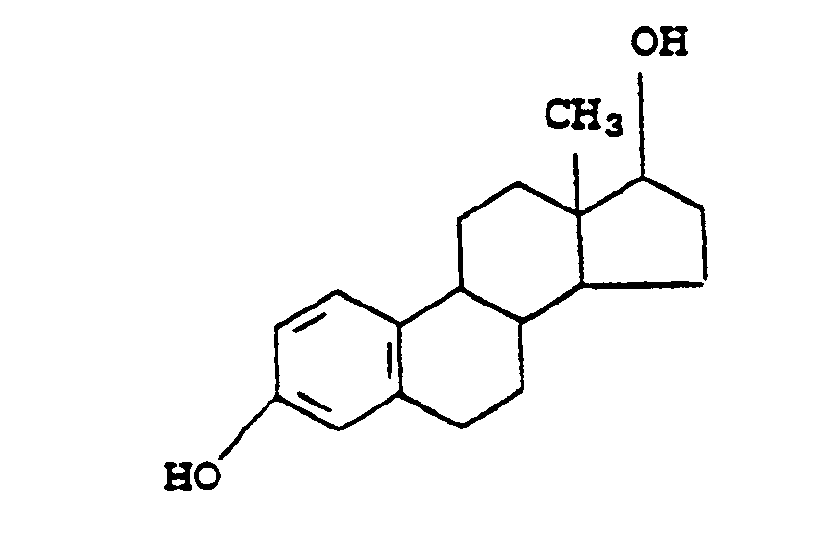
the (A₁)p linking group, or the boron atom in the case where p = 0, can be at any available position on the molecule but preferably A₁ is linked either to an atom in the B ring or to an atom in the D ring. Additionally, the estradiol molecule may be substituted at available positions by one or more of R, wherein R is as defined above. Alternatively, the steroid molecule can be replaced by a non-steroidal diol with a known affinity for the estrogen receptor, such as
wherein (A₁)p and R are as defined above. - When the biochemically active group is a substrate for a muscarinic receptor, the spacer-R₃ portion of the complex can be represented by

wherein (A₁)p and R are as defined above and R′ is a tertiary or quaternary amine, such as 3-quinuclidinol or substituted 3-quinuclidinol. - All of the examples and the following process description in the case where M is rhenium involve the use of "carrier rhenium" except as otherwise noted. The phrase "carrier rhenium" means that the rhenium compounds used contain non-radioactive rhenium at concentrations of 10⁻⁷M to 10⁻⁵M.
- Preparation of the complexes of this invention wherein M is rhenium can be accomplished using rhenium in the +3, +4, +5 or +7 oxidation state. Examples of compounds in which rhenium is available in the +3 oxidation state are ReCl₃(CH₃CN) (PPh₃)₂ and [Re₂Cl₈] (NBu₄)₂ wherein Ph = phenyl and Bu = butyl. Re(IV) is available as K₂ReCl₆ and Re(VII) is available as NH₄ReO₄ or KReO₄. Re(V) is available as [ReOCl₄] (NBu₄) and [ReOCl₄] (AsPh₄) and as ReOCl₃(PPh₃)₂ and as ReO₂(pyridine)4⊕. Other Re(III), Re(IV), Re(V), Re(VII) reagents known to those skilled in the art can also be used. Detailed preparations which may be adapted to produce the rhenium complexes of this invention are described in European Patent Application EP-A-311891 (and European Patent Application 90115971.5 discussed below).
- Preferably, the Re complexes of this invention are prepared using Re intermediate complexes of the formula
V ReX(Y)₃
(wherein X and Y are as defined above) which have been described in European Patent Application 90115971.5 (corresponding to U.S. Ser. No. 398,879) filed on August 21, 1990 and entitled "RHENIUM TRIS DIOXIME COMPLEX". By reacting intermediates of formula V with a boronic acid derivative of the formula
the rhenium complexes of the present invention are provided. Intermediates of formula V can be prepared using Re(III), Re(IV), Re(V) or Re(VII) reagents as described above, combined with a source of anion moiety (X), and a vicinal dioxime of formula II. This mixture should be reacted/heated at about 25°C to 100°C for about 5 minutes to 8 hours. If Re(IV), Re(V) or Re(VII) are used, known methodologies for adding a reducing agent sufficient to reduce these starting materials to Re(III) should be employed. - Preparation of the complexes of this invention wherein M is technetium-99m can best be accomplished using technetium-99m in the form of the pertechnetate ion. The pertechnetate ion can be obtained from commercially available technetium-99m parent-daughter generators; such technetium is in the +7 oxidation state. The generation of the pertechnetate ion using this type of generator is well known in the art, and is described in more detail in U. S. Patent No. 3,369,121 and 3,920,995. These generators are usually eluted with saline solution and the pertechnetate ion is obtained as the sodium salt.
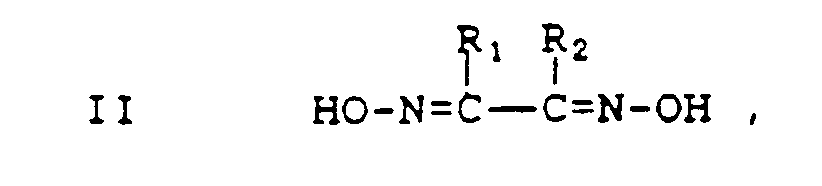
- A method to prepare 99mTc complexes, which is an alternative method to prepare Re complexes of this invention, includes the combining of the Re or technetium-99m source such as Re(III), Re(IV), Re(V), Re(VII) or pertechnetate ion (in the form of a salt) with a source of anion, a boronic acid derivative having formula VI or a pharmaceutically acceptable salt thereof, (wherein R₇ and R₇′ are each independently hydrogen, alkyl or aryl, or where R₇ and R₇′ taken together are -(CR₈R₉)n- wherein n is 2-6) and a dioxime having the formula
or a pharmaceutically acceptable salt thereof. - Compounds of formula VI wherein R₃ is a hypoxia-mediated nitro-heterocyclic group as defined in formula IV, IV′ or IV˝, that is,


are novel intermediates and are considered a part of the present invention. These can be prepared using known methodology. For example, a boronic acid derivative of the formula
where L is a leaving group, e.g., halogen, etc., can be coupled with a compound of the formula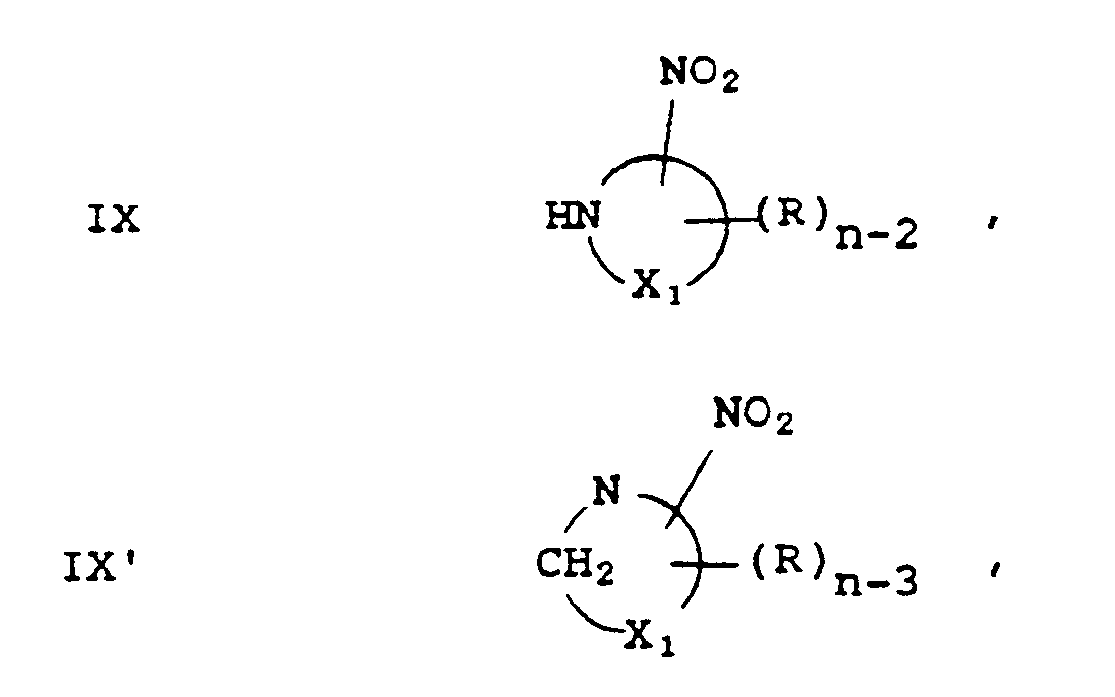
or
generally in a solvent, e.g., dimethylformamide and in the presence of a base, e.g., potassium carbonate. - This is the preferred method for preparing the novel intermediates of formula VII. Preferably, the novel intermediates of formula VII′ and VII˝ can be prepared by coupling a compound of the formula

with a compound of the formula
or
generally in a solvent and in the presence of a base. - The source of the anion moiety (X) can be water or it can be an acid or salt which dissociates to release an appropriate anion. Exemplary anionic moieties are hydroxyl, halide, isothiocyanato (N=C=Sϑ) and thiocyanato (S-C=Nϑ). The preferred anionic moieties are the halides, and chloride is the most preferred halide. If the source of the anion is not water, the source should be present in an appropriate concentration to compete effectively with any water that may be present during the reaction. It has been found that the source of anion should generally be present in the reaction mixture in a concentration of about 0.1 to about 2.0 molar.
- The boronic acid derivative of formula VI, VII, VII′ or VII˝ should preferably be present in a concentration of about 5 to 400 millimolar. The dioxime of formula II should preferably be present in a concentration of about 9 to 250 millimolar.
- The formation of the 99mTc complexes proceeds best if the mixture of pertechnetate ion, source of anion, boronic acid derivative, and dioxime is heated at about 25°C to 100°C for about 5 minutes to about 3 hours. The reaction is preferably run in an aqueous medium or aqueous alcohol mixture at a pH of less than, or equal to, about 5. Re complexes starting with Re(III), Re(IV), Re(V) or Re(VII) can also be formed using this methodology. However, as mentioned previously, for Re complexes, and also for Tc-99m complexes wherein the R₃ or (A₁)p group may be sensitive to the above-described temperature and pH parameters, it is preferable to react an intermediate complex MX(Y)₃ with a boronic acid derivative of formula VI, VII, VII′ or VII˝. This can be done in an aqueous medium or aqueous alcohol mixture at about 25-100°C for about 5 minutes to 8 hours at a pH ≦5.
- If pertechnetate or Re(IV), Re(V) or Re(VII) containing compounds are employed, then the reaction mixture should also contain a reducing agent. Stannous ion is the preferred reducing agent, and can be introduced in the form of a stannous salt such as a stannous halide (e.g., stannous chloride or stannous fluoride). The reducing agent should be present in a concentration of about 10 millimolar to 150 millimolar.
- When kits are prepared, various complexing agents (also known in the art as chelating agents) can be included as part of the complexing reaction. The complexing agent should, of course, be pharmaceutically acceptable. Exemplary complexing agents are diethylenetriamine-pentaacetic acid (DTPA), ethylene glycol-bis(β-aminoethyl ether)-N,N′-tetraacetic acid (EGTA), ethylenediamine tetraacetic acid (EDTA), citric acid, tartaric acid, malonic acid, etc.
- The complexing reaction mixture can also include an accelerator (catalyst) which serves to improve the radiochemical purity (i.e., percent of the radioactivity that is in the desired chemical form) of the product. Exemplary accelerators are the α-hydroxycarboxylic acids such as citric acid, tartaric acid, and malonic acid.
- Working with technetium-99 or rhenium, the structure of the complexes of this invention has been investigated and is believed to be:

wherein M = 99mTc or Re. - It is convenient to prepare the complexes of this invention at, or near, the site where they are to be used. A kit having all of the components, other than the Rhenium or Technetium ion, needed to prepare the boronic adducts of Rhenium or Technetium dioxime complexes of formula I is an integral part of this invention. Such a kit contains a source of anion, a boronic acid derivative of formula VI, VII, VII′ or VII˝ (or compounds which can react in situ to form such a derivative), or a pharmaceutically acceptable salt thereof, a dioxime of formula II, or a pharmaceutically acceptable salt thereof, and optionally a reducing agent. It may optionally contain a complexing agent.
- The kits of this invention where M is technetium can be formulated by combining the specified ingredients normally in solution and preferably in aqueous solution.
- The preferred preparation is as follows.
The compounds are heated at about 100°C for about 10 to about 30 minutes. To optimize the stability of the kit, and to optimize the radiochemical purity of the labeled product, the pH of the kit should be adjusted to fall within the range of about 2.0 to 5.5 using a pharmaceutically acceptable acid or base (e.g., hydrochloric acid or sodium hydroxide). Preferably, the pH of the kit will be about 3.0. It is also preferred that the kit be in lyophilized form. While kits containing some or all components in solution can be used, they are not as efficacious as the corresponding lyophilized kit. To isolate the desired complex, separation methods well known in the art are used. - The complexes of this invention can be administered to a host by bolus intravenous injection. The amount injected will be determined by the desired uses, e.g. to produce a useful diagnostic image or a desired radiotherapeutic effect, as is known in the art.
- Preferred complexes of this invention are those wherein R₃ is a hypoxia-mediated nitro-heterocyclic group, an amphetamine, a steroid, or a substrate for the muscarinic receptor. Most preferred are those wherein R₃ is 2-nitroimidazole or a derivative thereof, [4-[2-[(1-methylethyl)-amino]propylphenyl], estradiol or a derivative thereof, or 3-quinuclidinyl benzilate.
- In the complexes of the present invention the preferred values for (A₁)p are alkyl, oxa-alkyl, hydroxyalkyl, hydroxyalkoxy, alkenyl, arylalkyl, arylalkylamide, alkylamide, alkylamine and (alkylamine)alkyl.
- The most preferred values for (A₁)p are selected from -(CH₂)


-(A₃-O-A₃′)

- The following examples are specific embodiments of this invention.
- 0.20429 g (1.76 mmol) of dimethylglyoxime and 0.13508 g (0.6 mmol) of [4-[2-[(1-methylethyl)-amino]propyl]phenyl]boronic acid were dissolved in 20 mL of ethanol and 5 mL of water. 0.09035 g (0.5 mmol) of ammonium pertechnetate dissolved in 6 mL of 3 M HCl was added. While stirring, 0.21492 g (1.1 mmol) of stannous chloride dissolved in 5 mL of 4 M HCl was added dropwise over 5 minutes. The solution became an intense orange-brown in color. 20 mL of water were added and the reaction mixture was stirred at reflux for 2 hours. The reaction mixture was exhaustively extracted with dichloromethane, the combined CH₂Cl₂ fractions were dried through anhydrous sodium sulfate, and concentrated by rotoevaporation. Methanol, 4 M HCl and NH₄PF₆ in methanol were added to the CH₂Cl₂ concentrate. The desired product, as the PF₆⁻ salt, precipitated on evaporation. The orange precipitate was collected by filtration, washed with water and vacuum dried. Yield: 0.122 g (31%).
Elemental analyses calc'd for TcClC₂₄H₃₉N₇O₆BPF₆ - ½ CH₂Cl₂:
- C, 34.43; H, 4.68; N, 11.48;
- Found:
- C, 34.25; H, 4.45; N, 11.66.
- Into a 5 mL siliconized serum vial were measured 1.7 mg of dimethylglyoxime, 7.0 mg of [4-[2-[(1-methyl-ethyl)amino]propyl]phenyl]boronic acid, 20 mg of citric acid, 2 mg of DTPA, 100 mg of NaCl, and 50 µg of SnCl₂ (in 4 M HCl) in a total volume of 0.5 mL of saline. 0.5 mL of 99mTcO₄⁻ generator eluent was added and the mixture was heated at 100°C for 15 minutes, yielding 76% of the desired product as determined by HPLC. The product was purified chromatographically to give the product with 91% purity.
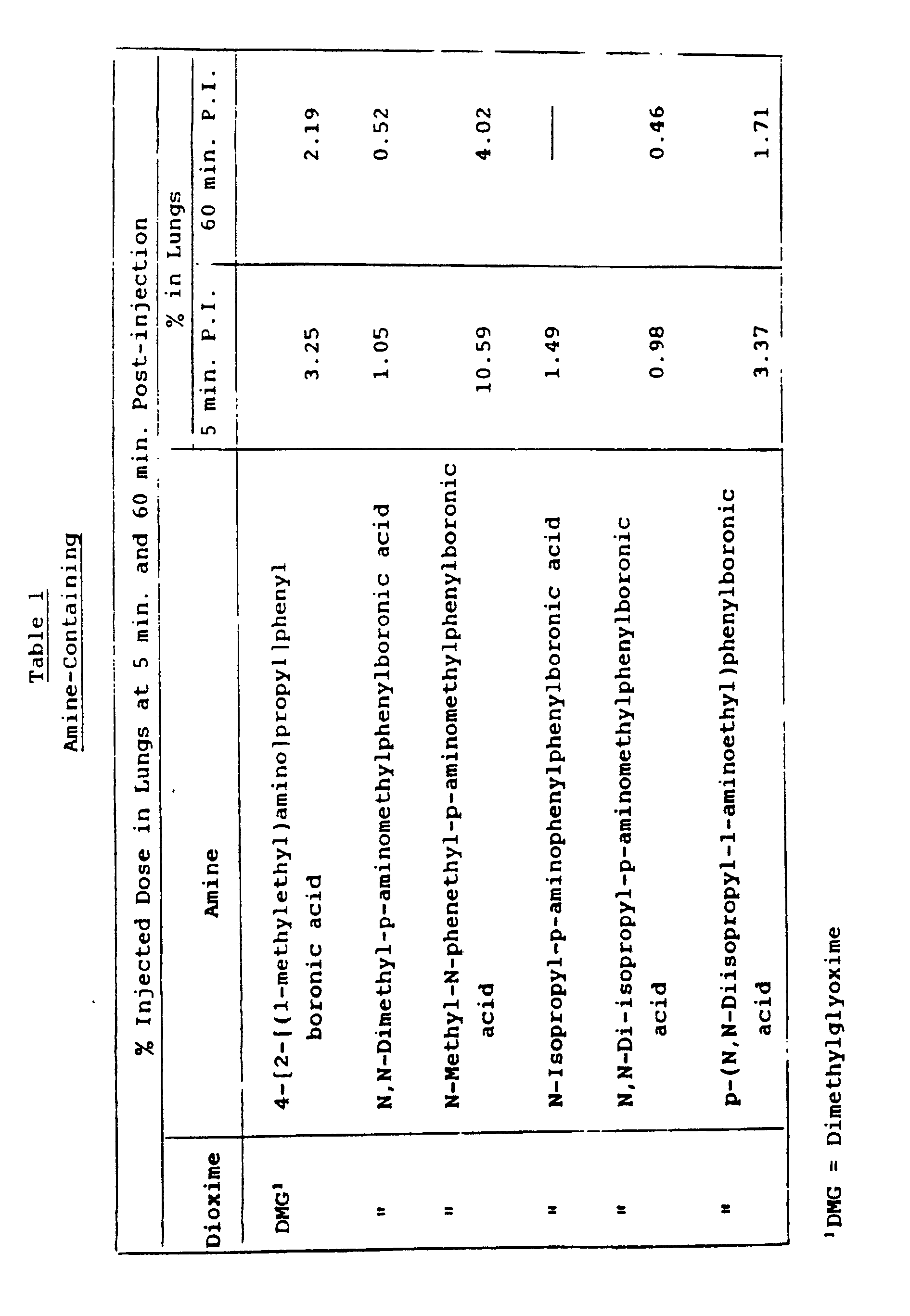
- Since it is well known that lipophilic amines demonstrate high lung uptake through specific binding, the lung uptake of a series of (BATO) complexes containing amine substituents in the boronic acid "cap", including the complex described in Example 2, were determined in rats. The other complexes listed were prepared using the methodology described in Example 2. Lung uptake at 5 and 60 minutes post I.V. administration of these compounds was noted. Table 1 below shows the lung uptake of the amine-containing complexes.

- 0.02796 g (0.058 mmol) of ⁹⁹Tc(chloride)-dimethylglyoxime)₃ was dissolved in 10 mL of acetonitrile. While stirring, 0.02449 g (0.072 mmol) of estradiol boronic acid, [17α(E)-3,17-dihydroxy-1,3,5(10)-estratrien-17-yl]ethenyl-boronic acid, was added as a solid. 2 mL of 1 M HCl were added and the reaction mixture was stirred with gentle heating for 1 to 2 hours. Addition of 1 M HCl (3 to 5 mL) resulted in the precipitation of the product. The product was recrystallized from acetonitrile/1 M HCl. Yield: 0.022 g (48%).
Elemental analyses calc'd for: TcClC₃₂H₄₅N₆O₈B - ½ H₂O:
- C, 48.27; H, 5.78; N, 10.56;
- Found:
- C, 48.26; H, 5.70; N, 10.50.
- Into a 5 mL siliconized serum vial were measured 2.0 mg of dimethylglyoxime, 2.2 mg of estradiol boronic acid, 20 mg of citric acid, 100 mg of NaCl and 100 ug of SnCl₂ (in 4 M HCl) in a total volume of 0.6 mL of 33% ethanol/saline. 0.5 mL of 99mTcO₄- generator eluent was added and the mixture was heated at 100°C for 15 minutes, yielding 70% of the desired compound as determined by HPLC.
- Samples were prepared containing both ⁹⁹Tc and 99mTc in order to determine the specific activity (Ci/mmol) accurately. Samples were prepared in the following manner: 2 mg of estradiol boronic acid, 0.2 mL of dimethylglyoxime (10 mg/mL of ethanol), 0.2 mL of citric acid (100 mg/mL of H₂O), 0.2 mL of saturated NaCl (in H₂O), 0.100 mL of NH₄⁹⁹TcO₄ (3.66 x 10⁻⁴ M in H₂O) and 0.1 mL to 0.5 mL of 99mTcO₄- (eluent from a Mo99/Tc99m generator), to give the desired specific activity, were combined in a 5 mL siliconized vial. 10 µL of SnCl₂ (0.100 g dissolved in 1 mL of conc. HCl and diluted to 4 mL with H₂O) were added to the reaction vial. The sample was heated for 15 minutes at 100°C, cooled for 5 minutes and purified chromatographically (PRP-1 resin) to yield the product in >95% purity.
- The methods used for the receptor binding studies have been previously described by E. M. Jagoda et al., J. Nucl. Med. 1984, 25 472-7.
"[¹²⁵I]-17-Iodovinyl-11-Methoxyestradiol: In Vivo and In Vitro Properties of a High Affinity Estrogen-Receptor Radiopharmaceutical". Receptor binding studies using cytosolic preparations of isolated rat uteri from 20-25 day old female rats were performed to determine the affinity of the technetium labeled estradiol for the estrogen receptor. Preparations of the compound ranged in specific activity from 400 to 2000 Ci/mmol and the specific binding ranged from 10-30% of the total bound activity. - Samples were prepared containing both ⁹⁹Tc and 99mTc in order to determine the specific activity (Ci/mmol) accurately. Samples were prepared in the following manner: 2 mg of 3-Quinuclidinyl-(4-boronobenzilate) (QNB-boronic acid prepared as described by G. W. Kabalka et al., Nucl. Med. Biol. 1989, 16(4), 359-360), 0.2 mL of dimethylglyoxime (10 mg/mL of ethanol), 0.2 mL of citric acid (100 mg/mL of H₂O), 0.2 mL of saturated NaCl (in H₂O), 0.1 mL of DTPA (20 mg/mL of 0.5 M NaOH), 0.2 mL of gamma-cyclodextrin (25% w/v H₂O), 0.100 mL of NH₄⁹⁹TcO₄ (3.66 x 10⁻⁴ M in H₂O) and 0.1 to 0.5 mL of 99mTcO₄- (eluent from a Mo99/Tc99m generator), to give the desired specific activity, were combined in a 5 mL siliconized vial. 10 µL of SnCl₂ (0.100 g dissolved in 1 mL of concentrated HCl and diluted to 4 mL with H₂O) were added to the reaction vial. The sample was heated for 15 minutes at 100°C, cooled for 5 minutes and purified chromatographically (PRP-1 resin) to yield the product in 90-95% purity.
- The methods used for the receptor binding studies have been previously described by R. E. Gibson, W. J. Rzeszotarski, W. C. Eckelman, E. M. Jagoda, D. J. Weckstein, R. C. Reba, Biochemical Pharmacology, 1983, 32(12), 1851-1856. Receptor binding studies using rat caudate putamen isolated from rat brain were performed to determine the affinity of the technetium labeled QNB for the muscarinic receptor. Preparations of the compound ranged in specific activity from 600-1000 Ci/mmol and the specific binding ranged from 5-20% of the total bound activity.
- p-Bromotoluene (17.1 g, 0.1 mole) in 150 mL of ether was added dropwise into a mixture of magnesium (2.5 g, 0.105 mole) in 30 mL of ether in a 200 ml reaction vessel. The reaction mixture was stirred overnight at room temperature. The dark brown solution was transferred into an addition funnel via a transfer needle, by nitrogen gas pressure.
- This Grignard reagent was added dropwise over a period of 1.5 hours into a solution of trimethylborate (10.4 g, 0.1 mole) in 200 mL of ether at -78°C under nitrogen gas. After stirring overnight at ambient temperature, the resultant off-white reaction mixture was hydrolysed with 200 mL of water and acidified with 35 mL of 3N sulfuric acid. The aqueous layer was extracted with ether (4 x 80 mL). The combined organic layer was washed and dried over sodium sulfate. Removal of solvent afforded a white solid which was recrystallized from water. Yield 6.1 g (45%), m.p. 251-256°C (Lit. 259°C) ¹HNMR (DMSO) δ 2.25 (s, 3H,-CH₃); 7.12 and 7.64 (d, 4H, ArH); 7.86 (s, 2H,-BOH).
- 5 mL of bromine solution (2.4 g, 1.5 x 10⁻² mole) in 20 mL of carbon tetrachloride was added to a solution of p-tolylboronic acid (2.0 g, 1.47 x 10⁻² mole) in 40 mL of carbon tetrachloride. The reaction was initiated by illumination with a 150 Watt light bulb. The bromine color faded in 5 minutes and the remaining bromine solution was added over 15 minutes. A solid product precipitated during bromine addition. The solid was filtered and crystallized from chloroform. Yield 1.5 g (49%), m.p. 154-156°C, ¹HNMR (DMSO) δ 4.18(s, 2H, -CH₂Br); 7.37 and 7.74(d, 4H, -ArH).
- 2-Nitroimidazole (100 mg, 8.85 x 10⁻⁴ mole, previously purified by sublimation) and p-bromo-methylbenzeneboronic acid (190 mg, 8.85 x 10⁻⁴ mole) were mixed with 20 mg of potassium carbonate in 30 mL of dry acetone in a 50 mL one neck round bottom flask equipped with a reflux condenser. The reaction mixture was stirred and heated under reflux, under nitrogen gas, for 16 hours. The light green-yellow solution was filtered and the filtrate evaporated to dryness under reduced pressure to afford a light yellow solid. The product was recrystallized from water. Yield 150 mg (69%). m.p. 212-214°C, ¹HNMR (DMSO) δ 5.6 (s, 2H, CH₂Ar), 7.1 and 7.75 (d, 4H, ArH); 7.25 and 7.75 (s, 2H, CH=CH).
- 4-Bromophenyl ethyl alcohol (4.0 g, 20 mmol) and imidazole (3.4 g, 50 mmol) were dissolved in dry dichloromethane (100 ml), treated with t-butyl dimethyl silylchloride (3.1 g, 20 mmol) and stirred for 6 hours under nitrogen at room temperature. The resultant product was washed with water, dried, concentrated and distilled under vacuum. Yield 6.0 g (95%), b.p. 115-117°C/0.7 mm, M.S. 314 and 316(m/e) ¹H NMR (CDCl₃), 0.05 (s, 6H), 0.9 (s, 9H), 2.8 (t, 2H), 3.85 (t, 2H) and 7.5 (AB q, 4H).
- To a suspension of magnesium (0.264 g, 11 mmol) in dry tetrahydrofuran (10 ml) under nitrogen gas was added dropwise over ½ hour the t-butyl dimethyl silyl ether of 4-bromophenyl ethyl alcohol (a, 3.45 g, 10.9 mmol) in tetrahydrofuran (10 ml). Magnesium was then activated by the addition of dibromoethane (0.1 g). The metal went into solution slowly over a period of 8 hours. The Grignard reagent was then cooled to -78°C and treated with freshly distilled trimethyl borate (1.15 g, 11 mmol) added dropwise with stirring. The reaction mixture was then warmed to room temperature and stirred overnight. It was then treated with 2N hydrochloric acid till acidic and the tetrahydrofuran layer was separated from the aqueous layer. The aqueous portion was thoroughly extracted with ethyl acetate (5 x 50 ml) and the combined organic layer was washed with water and finally with saturated sodium chloride. The organic phase was then dried, concentrated and chromatographed (flash silica gel). Elution with ethyl acetate/methanol (95:5) provided the boronic acid, which was recrystallized from ethyl acetate/hexane. Yield: 0.69 g (38%), m.p. 218-220°C, M.S. 184 (M+NH₄), 156, 140, ¹H NMR (DMSO-d₆): 2.7 (t, 2H), 4.6 (t, 2H), 7.1 and 7.7 (2d, 4H) and 7.9 (s, 2H).
- To a solution of 4-(2-hydroxyethyl)phenyl boronic acid (1.66 g, 10 mmol) in dry dimethylformamide (25 ml), was added ethylene glycol (0.62 g, 10 mmol). The mixture was stirred under nitrogen at room temperature for 16 hours. Dimethylformamide was removed under reduced pressure and the resulting oil was kept under vacuum for 6 hours more. The oil was dissolved again in dry dimethylformamide (10 ml), cooled in an ice-bath, treated with triphenyl phosphine (5.25 g, 20 mmol) and N-bromosuccinimide (3.56 g, 20 mmol), and stirred under nitrogen for 6 hours at room temperature. Solvent was removed under reduced pressure and the residue was taken up in ether (100 ml). This was washed with water, dried and concentrated to give an oil which was chromatographed to furnish the bromo boronic acid as a colorless solid (flash silica gel, 1:1 ethyl acetate/Hexane). The product was recrystallized from dichloromethane/hexane. Yield: 1.4 g, m.p. 146-148°C.
- 4-(2-Bromoethyl)phenyl boronic acid (0.525 g, 2.72 mmol) and 2-nitroimidazole (0.3 g, 2.72 mmol) were heated in dry dimethylformamide (15 ml) in presence of anhydrous potassium carbonate (1.38 g, 10 mmol) under nitrogen with stirring at 60-70°C for 48 hours. Dimethylformamide was removed under reduced pressure and the resulting gum was dissolved in a minimum amount of water and acidified with 2N hydrochloric acid. The precipitated solid was filtered off and washed with water. The combined aqueous portion was again extracted with ethyl acetate (5 x 50 ml). The organic layer was dried, concentrated and combined with the previously precipitated solid and then chromatographed (flash silica gel). Elution with 1:1 ethyl acetate/hexane yielded some unreacted starting bromide (0.1 g); continued elution with 2:1 ethyl acetate/hexane provided the required boronic acid as a pale yellow crystalline solid. The product was recrystallized from tetrahydrofuran/hexane. Yield: 0.25 g (36%), m.p. 229-231°C, M.S. (M+H)⁺ 262.
¹H NMR (DMSO-d₆): 3.1 (t, 2H), 4.65 (t, 2H), 7.11 (d, 2H), 7.14 (s, 1H), 7.5 (s, 1H), 7.69 (d, 2H) and 7.94 (s, 2H). - To a mixture of 10 mg citric acid, 100 mg of sodium chloride, 2 mg of 1,2-cyclohexanedione dioxime, 2 mg of diethylenetriamine-penta-acetic acid, 50 mg of gammacyclodextrin, 50 ug of stannous chloride, and 3 mg of 1-(2-nitroimidazoyl)benzyl boronic acid was added 1 mL of sodium pertechnetate (99mTcO₄- ) in physiological saline. The kit was heated at 100°C for 15 minutes. The yield of the title compound, as determined by high pressure liquid chromatography (HPLC), was 91.4%. Samples of this complex coeluted from Nucleosil HPLC columns at a retention time identical to that of an authentic ⁹⁹Tc standard that was prepared as described below.
- To 90.3 mg (0.11 mmol) of 99Tc(1,2-cyclohexanedione dioxime)₃(u-OH)SnCl₃ dissolved in 10 mL of warm acetonitrile was added 1-(2-nitroimidazoyl)benzylboronic acid (31 mg, 0.125 mmol) and 1.5 mL of 3N hydrochloric acid. The solution was heated gently, with stirring. After 30 minutes, 10 mL of 1M hydrochloric acid was added, and the solution was cooled to room temperature. The resulting orange precipitate (61 mg, 78% yield) was recrystallized from warm acetonitrile/1M hydrochloric acid.
Analysis calc'd for C₂₈H₃₄N₉BClO₈Tc:
C, 43.59; H, 4.43; N, 16.20;
Found: C, 43.68; H, 4.45; N, 16.37. - A strong protonated molecular ion (M+H)⁺ was observed at m/z = 770. Samples of this complex eluted from Nucleosil HPLC columns at a retention time of 2.34 minutes (80/20 ACN/0.1 M citric acid, 1.5 mL/minutes).
- To a freeze-dried mixture of 2 mg of dimethylglyoxime, 18 mg citric acid, 100 mg of sodium chloride, 1 mg of diethylenetriamine-penta-acetic acid, 50 mg of gammacyclodextrin, 50 ug of stannous chloride, and 3 mg of 1-(2-nitroimidazoyl)-benzyl boronic acid was added 1 mL of sodium pertechnetate (99mTcO₄⁻) in physiological saline. The kit was heated at 100°C for 15 minutes. The yield of the title compound, as determined by high pressure liquid chromatography (HPLC), was 73.4%. Samples of this complex eluted from Nucleosil HPLC columns at a retention time identical to that of an authentic ⁹⁹Tc standard that was prepared as described below.
- To 55 mg of 99Tc(dimethylglyoxime)₃(u-OH)SnCl₃ (0.074 mmol) was added 25 mg (0.10 mmol) of 1-(2-nitroimidazoyl)benzylboronic acid, dissolved in 10 mL of acetonitrile. One mL of 3N hydrochloric acid was added, and the solution was heated gently for 30 minutes. Ten mL of 1M hydrochloric acid was added, and the solution was cooled to room temperature. The resultant orange crystals (32 mg, 62.3% yield) were recrystallized from a warm acetonitrile/1M hydrochloric acid solution to give analytically pure complex, isolated as the 0.5 H₂O hydrate.
Analysis calc'd for C₂₂H₂₂N₂₉BClO8.₅Tc:
C, 37.62; H, 4.33; N, 17.63;
Found: C, 37.71; H, 4.17; N, 17.99. - Samples of this complex eluted from Nucleosil HPLC columns at a retention time of 3.45 minutes (60/40 ACN/0.1 M citric acid, 1.5 mL/minutes).
- To a mixture of 18 mg citric acid, 100 mg of sodium chloride, 2 mg of dimethylglyoxime, 1 mg of diethylenetriamine-penta-acetic acid, 50 mg of gammacyclodextrin, 50 µg of stannous chloride and 3 mg of 4-(2-nitroimidazolyl ethyl)phenyl boronic acid was added 20 mCi of 99mTcO₄⁻ in 1 ml of physiological saline. The kit was heated at 100°C for 15 minutes to give 93% yield of the title complex, as determined by HPLC.
- Compounds containing nitro-heterocyclic groups are retained in hypoxic tissue by reduction of the nitro-moiety in such groups. Therefore, redox potential for nitro-heterocyclic groups is considered to be an indicator of the degree to which such groups can be retained by hypoxic tissue.
- Cyclic voltammetry studies in DMF solvents were performed using a standard 3-electrode configuration (Heinze, J. Ang. Chem. Int., Ed. Eng., 23, 831, 1984). Data were obtained using a PAR 174A polarographic analyzer interfaced with PAR 303 static mercury drop electrode apparatus and recorded on a PAR RE0074 X-Y recorder. The reference electrode was Ag/AgNO₃ in acetonitrile ; the working electrode was mercury.
- Sample solutions, typically 0.3-1.2 mM, contained 0.1M tetrabutylammonium tetrafluoroborate supporting electrolyte, and were degassed with solvent-saturated N₂ before measurements.

- Previous in vitro and in vivo studies with nitroimidazole containing compounds have demonstrated that a probable mechanism for intracellular binding of nitroimidazoles results from enzymatic reduction of the nitro group to a chemically reactive species (for example, Clarke, Wardman, and Goulding, Biochem. Pharmacol. (1980) 29, 2684 - 2687). The nitroimizole boronic acids in this invention were examined in an assay using the enzyme xanthine oxidase. Assay solutions contained the following
- Hypoxanthine
- 1 ml of 0.01M solution = 10 µmoles of substrate
- xanthine oxidase
- 0.5 Units of 500 µl of pH 7.4 Na phosphate
- Na phosphate buffer
- 1.0 ml, 0.1M, pH 7.4, 10 mg/L Na2EDTA
- Nitro compound
- 0.25 µMoles in 20 µl of dimethylformamide
- Reactions were initiated by adding enzyme to a solution of all other reagents in a septum-sealed cuvette. All reagents were degassed prior to mixing by passage of argon over the surface for 20 minutes. Loss of the nitro group (an indication of reduction) was monitored every 5 minutes using a UV/Visible spectrophotometer set at 326nm. The half-lives of disappearance of the nitro compounds were determined by plotting log (concentration) mmole/ml vs time for all compounds studied. The results are shown in table 2, with data on two the two reference compounds, misonidazole and metronidazole shown for comparison.

- 2-Nitroimidazole (1.0 g, 8.84 mmol) in dry dimethylformamide (15 ml) was treated with anhydrous potassium carbonate (6.9 g, 50 mmol) and stirred for 0.5 hr. at room temperature under nitrogen. The solution was cooled to 0°C and then treated with 2-bromoethyl-2-ethenyl-1,3,2-benzo-dioxoborole (4.23 g, 17.7 mmol) in dry tetrahydrofuran (10 ml) over a period of 1 hour with stirring under nitrogen at 0°C. The reaction mixture was then heated at 60 - 70°C for 48 hours with stirring under nitrogen, dimethylformamide was removed under reduced pressure and the residue was dissolved in methanol (100 ml). The solution was acidified with Dowex 50X8 resin (H+) and filtered. The resin was washed with methanol and the combined filtrate and wash was concentrated and chromatographed to yield a semi solid (silica gel, 230 - 400 mesh, 2% methanol in EtOAc) which was recrystallized from dichloromethane to give a pale yellow crystalline solid. Yield: 0.3 g, m.p. 138 - 140°C.
¹HNMR (DMSO-d₆): δ 5.2 (d, 2H), 6.6 (m, 1H), 7.15 (s, 1H), 7.4 (s, 1H) and 7.7 (s, 2H) Analysis: Calculated for C₆H₈BN₃O₄, C 36.59, H 4.09, N 21.34, Found C 36.79, H 3.66, N 21.41. - A mixture of hydroxylamine hydrochloride (0.417 g, 6 mmol), sodium acetate (0.492g, 6 mmol), ethylacetate (0.176 g, 2 mmol) and BpropenNO₂ (Example 19, 0.2 g, 1 mmol) in ethanol (25 ml) was refluxed with stirring under argon for 30 hours. After cooling, the solvent was removed, and the crude product was directly loaded on to a flash silica gel column and chromatographed. The isolated product was rechromatographed twice more to yield the product as a pale yellow solid. Yield: 0.02 to 0.025 g (20 - 25%) m.p. 122 - 124°C.
¹H NMR (DMSO-d₆): δ 0.8 (t, 2H, B-CH₂), 1.9 (m, 2H), 4.4 (t, 2H, N-CH₂), 7.2 (s, 1H), 7.8 (s, 2H, B-OH) and 7.85 (s, 1H) M.S. (M + H)⁺ - 200, 172, 154 and 109. Analysis: Calculated for C₆H₁₀N₃BO₄:: C 36.22, H 5.02, N 21.11 Found: C 36.87, H 4.84, N 21.56. - This compound was prepared by reaction of 4-nitroimidazole (1.13 g, 10mmol) and 4-bromo-methylphenyl boric acid (3.25 g, 15 mmol), by the method described in Example 10. Yield: 1.7 g m.p 163 - 165°C.
¹H NMR [DMSO-d₆]: δ 5.4 (s, 2H), 7.4 (d, 2H), 7.9 (d, 2H), 8.2 (bs, 2H) and 8.6 (s, 1H). ¹³C NMR [DMSO-d₆]: δ 50.76, 121.59, 126.86, 134.54, 134.66, 137.45, 137.89 and 147.18. Analysis : Calculated for C₁₀H₁₀BN₃O₄ C 48.62, H 4.08 N 17.01. Found C 49.39, H 4.21, N 16.83. M.S. [M+Gly-2 H₂O + H]⁺ 304. - To Tc(DMG)₃(µ-OHSnCl₃.3H₂O (77.1 mg, 0.104 mmol) in 5 ml of acetonitrile was added (OH)₂BPhEtNO₂ (Example 11, 28.8 mg, 0.11 mmol), followed by 2 drops of conc. HCl. The solution was heated at a boil for 30 minutes during which time an orange solid precipirated (68 mg, 93°% yield). The precipitate was isolated by filtration and was washed well with acetonitrile and dried in vacuo. This solid was dissolved in 1 ml of dimethylformamide, 2 ml of acetonitrile and 1 ml of 1M hydrochloric acid and the solution was boiled for 30 minutes. Crystals of the product (31 mg, 40% overall yield) formed upon cooling overnight. Anal. Calcd for TcCl(DMG)₃BPhEtNO₂. 0.5DMF, C24.5H₃₃N9.5BClO8.5Tc. Found: C, 39.80, H, 4.60; N, 17.55. Calcd: C, 39.64; H, 4.81; N, 17.92.
- The title compound was prepared as described in Example 14, except that 4 mg of BpropNO₂ (example 20) was substituted for the 1-(2-nitroimidazolyl)-benzyl boronic acid. The yield of title complex, as determined by high pressure liquid chromatography (HPLC), was 52%. Samples of this complex eluted from a Nucleosil HPLC, was 52%. Samples of this complex eluted from a Nuclesil HPLC column with a retention time identical to that of an authentic ⁹⁹Tc standard that was prepared as described in Example 24.
- To Tc(DMG)₃(µ-OH)SnCl₃-3H₂O in 10 ml of acetonitrile was added (OH)₂BPropNO₂ (example 20, 41.8 mg, 0.21 mmol), followed by 3 ml of 2N HCl. The reaction mixture was heated gently for 30 minutes, 50 ml of 1N hydrochlorice acid was added, and the solution was cooled to room temperature. The resultant flocculant orange solid was isolated by suction filtration, washed with 1M hydrochloric acid and H₂O and dried in vacuo to yield 97 mg (78%) crude product. This was dissolved in 1 ml of CHCl₃ and chromatographed on a 1 x 10 cm silica gel column that was conditioned and eluted with CHCl₃. The major orange band was evaporated to dryness, redissolved in 3 ml of CH₂Cl₂ and treated with 30 ml of hexane. Analytically pure solid was isolated in 57% yield overall. Anal. Calc for C₁₈H₂₈N₉BClO₈Tc. Found: C, 33.66; H, 4.20; N, 19.28. Calc: C, 33.58; H, 4.38; N, 19.58.
- The title compound was prepared as described in Example 14, except that 3 mg of BpropenNO₂ (Example 19) was substituted for the 1-(2-nitroimidazolyl)-benzyl boronic acid. The yield of title complex, as determined by high pressure liquid chromatography (HPLC), was 58%.
- The title compound was prepared as described in Example 14, except that 3 mg of BB4NO₂ (Example 21) was substituted for the 1-(2-nitroimidazolyl)-benzyl boronic acid. The yield of the title complex, as determined by high pressure liquid chromatography (HPLC), was 82%. Samples of this complex eluted from a PRP-1 HPLC column with a retention time identical to that of any authentic ⁹⁹Tc standard, prepared as described in Example 27.
- A mixture of TcCl(DMG)₃(32.7 mg, 0.068 mmol) and BB4NO₂ (example 21, 17.7 mg, 0.073 mmol) in 5 ml of acetonitrile and 0.5 ml of 2N HCl was heated with stirring for 15 minutes. Solvents were then removed by evaporation. The product was purified on a silica gel column eluted with 40/60 ACN/CH₂Cl₂. The major orange band was evaporated to dryness and recrystallized from ether (61% yield). Anal. Calcd for TcCl(DMG)₃BB4NO₂.0.2 C₄H₁₀O (C₂₂H₈N₉O₈BCITc.0.2C₄H₁₀O. Found: C, 38.39; H, 4.21; N, 17.44. Calcd: C, 38.75; H, 4.28; N, 17.84. FAB-MS(+): m/z 692, [M+H]; 656, [M-Cl; 579, [M-4-nitroimidazole]. ¹H NMR (270 MHz, CDCl₃): δ 2.9 (m, 12H, CDO), 3.0 (m, 12 H, CDO), 5.2 (s, 2H, Bz), 7.2 (d, 2H, Ph), 7.4 (s, 1H, imidazole), 7.7 (s, 1H, imidazole), 7.8 (d, 2H, Ph), 14.8 (s, 2H, oxime). IR (KBr) (cm⁻¹): 3505 br, 1634, 1545, 1491, 1399, 1338, 1228, 1206 s, 1089 s, 990 s, 928, 909, 824, 808. UV-VIS (CH₃CN):λmax(Logε) 288(4.08), 382(3.80), 460(3.41).
- The title compound was prepared as described in Example 12, except that 3 mg of BBNO₂ (Example 21) was substituted for the 1-(2-nitroimidazolyl)-benzyl boronic acid. The yield of title complex, as determined by high pressure liquid chromatography (HPLC), was 86%. Samples of this complex eluted from PRP-1 HPLC columns at a retention time identical to that of an authentic ⁹⁹Tc standard that was prepared as described below.
- A mixture of TcCl(CDO)₃ (25.7 mg, 0.046 mmol) and BB4NO₂ (Example 21, 11.6 mg, 0.48 mmol) was dissolved in 5 ml of ACN and 0.5 ml of 3M hydrochloric acid and heated with stirring for 30 minutes. Orange solid was precipitated by adding 5 ml of 1M hydrochloric acid and collected by filtration (crude yield, 83%).
Anal. Calcd. for C₂₈H₃₄N₉O₈C1BTc. 0.5 C₄H₁₀O: C, 44.65; H, 4.87; N, 15.62. Found: C, 44.81; H, 4.95; N, 16.05. FAB-MS(+): m/z 769, M; 734, [M-Cl]; 657, [M-4-nitroimidazole]. ¹H NMR (270 MHz, CDCl₃): δ 2.4 (m, 18H, Me), 5.2 (s, 2H, Bz), 7.2 (d, 2H, Ph), 7.5 (s, 1H, imidazole), 7.7 (s, 1H, imidazole), 7.8 (d, 2H, Ph), 14.8 (s, 2H, oxime). IR (KBr) (cm⁻¹): 3450 br, 1631, 1546, 1446, 1430, 1380, 1337, 1286, 1229, 1203 s, 1061 s, 960 s, 924, 902, 866, 847. UV-VIS (CH₃CN):λmax(Log ε) 290(4.35), 386(4.11), 462(3.76). - The compound 99mTc(chlorine)(dimethylglyoxime)₃-1-(2-nitroimidazolyl)benzylboron was prepared as described in Example 14. It was then purified by adsorption onto PRP-1 reverse phase resin. The resin was washed with 1 ml of saline and 1 ml of 1:1 ethanol/saline, and then the complex was eluted with 0.4 ml of 95% ethanol. A 400 µl aliquot of pH 8.0 phosphate buffer (0.1M) was added and the mixture was heated at 37°C for 30 minutes. During this time, theaxial chloro ligand was replaced by a hydroxyl group in 96% yield as determined by HPLC. Sample of this complex coeluted with authrntic samples of ⁹⁹Tc(OH(dimethyl glyoxime)₃-1-(2-nitroimidaoyl)-benzyl boron, prepared by treatment of the ⁹⁹Tc-chloro complex with aqueous sodium hydroxide.
- The title compound was prepared as described in Example 12, except that 3 mg of BpropNO₂ (Example 20) was substituted for the 1-(2-nitroimidazolyl)-benzyl boronic acid. The yield of title complex, as determined by high pressure liquid chromatography (HPLC), was 95%.
- The title compound was prepared as described in Example 12, except that 3 mg of BpropenNO₂ (Example 19) was substituted for the 1-(2-nitroimidazolyl)-benzyl boronic acid. The yield of title complex, as determined by high pressure liquid chromatography (HPLC), was 83%.
- This compound was prepared by the following reaction scheme:


- A solution of (RS)-3-quinuclidinol (25 g, 0.2 mmol) in pyridine (100 ml) was treated with acetic anhydride (100 ml), kept at 50°C for 4 hours and left at room temperature for 15 hours. After removal of the pyridine and excess acetic anhydride under vacuum, the clear light brown oil was then dissolved in water (25 ml) and made slightly alkaline with saturated potassium carbonate. The ester was then extracted with chloroform (5 x 50 ml) and extracts were dried over K₂CO₃. After evaporation of the solvent in vacuo the residue was distilled yielding 20.6 g (62%) of (RS)-3-acetoxyquinuclidine as a colorless liquid.
¹HNMR (CDCl₃) δ 1.31 - 2.01 (m, 6H), 2.11 (s, 3H, OCOCH₃), 2.62 - 2.95 (m, 5H), 3.18 - 3.31 (m, 1H), 4.80 (m, 1H, 3H). - (RS)-3-Acetoxyquinuclidine (34 g, 0.2 mmol) was added to a solution of L-(+)-tartaric acid (30.13 g, 0.2 mmol) dissolved in ethanol (80%, 142 ml). The solution was kept overnight at room temperature. The colorless crystalline solid (40 g) filtered and recrystallized twice from ethanol (80%), 280 ml) providing 25.5 g (65%) of resolved tartrate salt of (R)-(+)-3-acetoxyquinuclidine mp 96 - 98°C. Lit. 2 mp 94 - 95.5°C. The resolved tartrate salt of (R)-(+)--3-acetoxyquinuclidine (25.0 g) was dissolved in water (5 ml) and the solution made faintly alkaline with saturated K₂CO₃, and extracted with chloroform (5 x 25 ml). The combined CHCl₃ extracts were dried over anhydrous Na₂SO₄ and filtered. After evaporation of the solvent in vacuo the residue was distilled to provide (R)-(+)-3-acetoxyquinuclidine as a colorless liquid. Yield: 10.7 g (88%) [α]D₂₅+29.96° (c 2.93, ethanol). Lit. (Cohen et al. J. Pharm. Sci., (1989), 78, 833 - 836 [α]D₂₅+29.8°(c 3.0, ethanol).
¹HNMR (CDCl₃) δ 1.30 - 2.01 (m, 6H), 2.13 (s, 3H, OCOCH₃), 2.62 - 2.98 (m, 5H), 3.18 - 3.30 (m, 1H), 4.82 (m, 1H, 3-H). - To a suspension of quinidine (39.6 g, 90%, 1.1 mmol) in boiling ethyl acetate (250 ml) was added the racemic (RS)-4-nitrobenzilic acid (30.0 g, 1.1 mmol) and kept at room temperature for 18 hours. The salt which crystallized was filtered, and after four crystallization from ethyl acetate had a constant melting point of 120 - 122°C; Yield 19.5 g (59.4%) TLC [silica gel, toluene-HOAc 9:1] Rf 0.24.
- The quinidine salt (1g, 1.68 mmol) was then treated with an excess of 6M hydrochloric acid and extracted with ethyl acetate. The extract was dried over anhydrous MgSO₄ and the solvent was removed under reduced pressure to afford a past which was then loaded onto a silica gel (8 g) column and eluted with CH₂Cl₂-MeOH (95:5). The fractions with compound were pooled together and evaporated to a colorless paste which crystallized slowly to a cream colored solid. Yield: 0.35 (77%) mp 104 - 106 C thin layer chromatography [silica gel, toluene-HOAc 9:1]Rf 0.3; [α]D₂₅ + 50.11° (c 1.34, acetone). Lit. (Rzeszotarski et al. J. Med. Chem., (1981), 27, 156 - 160). [α]D24 + 49.4° (c 1.34, acetone).
¹H NMR (CDCl₃) δ4.80(bs, 2H, COOH and OH, 7.35 (m, 5H, C₆H₅), 7.71 and 8.21 (2d, 4H, C₆H₄). - A solution of (R)-4-nitrobenzilic acid (2.0 g, 7.33 mmol) in ethanol (25 ml) was treated with hydrazine (1.0 ml) and Raney-Ni (0.8 g) and stirred at room temperature for 18 hours unders nitrogen atmosphere. The Raney-Ni powder was removed by filtration, washed with ethanol, the ethanol layer concentrated to a small volume and diluted with water (75 ml). The aqueous layer was extracted with ether (2 x 50 ml) and the aqueous layer was evaporated under vacuum to provide a light yellow solid of (R)-4-aminobenzilic acid in 82% yield (1.46 g); mp 139 - 140°C (decomp); TLC [silica gel, acetone]Rf 0.20; ¹H NMR (D₂O) δ 6.75 and 7.18 (2d, 4H, C₆H₄) and 7.31 (s, 5H, C₆H₅).
- The iodobenzilic acid was prepared by adding dropwise over 30 minutes a solution of soidum nitrite (1.7 g, 24.64 mmol) in water (10 ml) to a solution of (R)-4-aminobenzilic acid (3.0 g, 12.35 mmol) in 10% hydrochloric acid (100 ml) at -5°C. Stirring was continued for an additional 30 minutes at -5°C, then a solution of potassium iodide (4.09 g, 24.64 mmol) in water (10 ml) was added slowly. The reaction mixture was then stirred at 0°C for 1 hour, then at ambient temperature for 1 hour. The resultant mixture was extracted with exthyl acetate (3 x 75 ml), and the combined extracts were washed with aqueous sodium thiosulfate (10%, 2 x 50 ml), water (2 x 50 ml) and dried over sodium sulfate. Removal of solvent afforded a brown past, which was purified by column chromatography (silica gel, eluted with ethanol/dichloromethant) to give the product as a light yellow solid. Yield 2.18 g (50%); mp 80 - 81°C; TLC [silica gel, toluene-acetic acid 9:1] Rf 0.40; [a]D25 + 24.7° (c 0.132, acetone); ¹H NMR (CDCl₃) δ 5.50 (bs, 2H, COOH and OH), 7.21 and 7.69 (2d; 4H, C₆H₄) and 7.41 (s, 5H, C₆H₅).
- A solution of (R)-4-iodobenzilic acid (0.26 g, 0.74 mmol) in dry dimethylformamide (2 ml) was treated with 1,1′-carbonyldiimidazole (0.12 g, 0.74 mmol) in small portions and stirred at room temperature for 1 hour under nitrogen atmosphere.
- To this light yellow colored solution, was added (R)-3-quinuclidinol (0.93 g, 0.73 mmol) and stirring was continued for an additional 15 hours at room temperature. The reaction mixture was concentrated under vacuum and added to water (50 ml) and extracted with ether (3 x 30 ml). The combined ether extracts were washed with saturated sodium bicarbonate (2 x 20 ml), water (2 x 20 ml) and dried over anhydrous sodium sulfate. To the paste thus obtained, added silica gel (0.5 g), ether (5 ml) and dried. The dry silica gel powder with compound was loaded onto a silica gel column (10 g) and eluted with 5% methanol in dichloromethane solvent mixture. The fractions with compound were pooled together and evaporated on a rotary evaporator to afford a light yellow solid in 75% yield (0.256 g); mp 124 - 127°C; TLC[silica gel, MeOH-NH₄OH 98:2] Rf 0.65; ¹H NMR (CDCl₃) δ 1.15 - 1.89 (m, 4H), 2.01 (s, 1H) 2.42 - 2.81 (m, 5H), 3.21 (m, 1H), 4.52 (bs, 1H, OH), 5.01 (m, 1H), 5.01 (m, 1H) and 7.15 - 7.82 (m, 9H, Ar-H).
- To a solution of (R)-3-quinuclidinyl-(R)-4-iodobenzilate (0.60 g, 1.3 mmol) in freshly distilled tetrahydrofuran (2.0 ml) in dry 10 ml RB flask at -78°C was added via syringe n-BuLi (0.2 g, 2.5 M, 1.25 ml, 3.13 mmol) slowly and stirred at the same temperature for 20 minutes. Then a freshly distilled triethyl borate (0.378 g, 0.441 ml, 2.59 mmol) was added to this reaction mixture and stirred for an additional 1 hour at -78°C, allowed to raise its temperature to ambient condition, and stirred for 18 hours. The reaction mixture was then treated with few drops of water, decanted to remove solution phase from the semi-solid which was then repeatedly washed with ether and finally triturated with ether to a colorless solid. The solid was then dissolved in water containing <5% acetonitrile, filtered and loaded onto a reverse phase C₁₈ HPLC column (Dynamax C₁₈, 4.14 x 25 cm, 8 micron) and eluted under isocratic condition with 12.5% acetonitrile containing 0.1% trifluoroacetic acid/H₂O. The fractions were checked via analytical HPLC (Dynamax C₁₈, 0.46 x 25 cm, 8 micron, 18% acetonitrile with 0.1% trifluoroacetic acid in 0.1% trifluoroacetic acid/water) and the fractions with the title compound in >98% purity were pooled, and freeze-dried to afford (RR)-QNB boronic acid as a colorless solid in trifluoroacetic acid salt form; yield: 0.025 g (4.4%); ¹H NMR (CD₃OD) δ 1.68 (m, 2H), 1.95 (m, 2H), 2.35 (s, 1H), 2.81 - 3.35 (m, 5H), 3.80 (m, 1H), 5.31 (m, 1H) and 7.28 - 7.71 (m, 9H, Ar-H). MS: Exact Mass calculated for C₂₄H₂₉O₆NB: 438.2092; experimental, 438.2088.
- This compound was prepared by the reaction scheme outline in Example 33, substituting S-quinuclidinol for R-quinuclidinol.
- The mother liquors from Example 33A (preparation of (R)-3-acetoxyquinuclidine), were concentrated in vacuo and the residue was made alkaline with potassium carbonate. The ester was extracted with chloroform (3 x 50 ml) and dried with sodium sulfate. The solvent was evaporated yielding 7.5g of the crude ester. The ester was added to a solution of (-)-tartaric acid 6.5 g in 80% ethanol and the salt formed was purified as described in Example 33A. mp. 95 - 96°C. lit(Cohen et al. J. Pharm. Sci., (1989), 78, 833 - 836) mp 94 - 96°C.
- The title compound was prepared as a colorless past in 73% yield (0.25 g) from (R)-4-iodobenzilic acid (0.26 g, 0.73 mmol), 1,1′-carbonyldiimidazole (0.12 g, 0.74 mmol) and (R)-3-quinuclidinol (0.93 g, 0.73 mmol) in dry dimethyl (2 ml) as described for the synthesis of (R)-3-quinuclidinyl-(R)-4-iodobenzilate (Example 33); TLC [silica gel, MeOH-NH₄OH 98:2]Rf 0.69; ¹H NMR (CDCl₃) δ 1.15 - 1.89 (m, 4H), 2.01 (s, 1H), 2.42 - 2.81 (m, 5H), 3.21 (m, 1H), 4.52 (bs, 1H, OH), 5.01 (m, 1H), 5.01 (m, 1H) and 7.15 - 7.82 (m, 9H, Ar-H).
- The above mentioned compound was synthesized as a colorless solid (TFA salt form) in 11% yield (58 mg) from (S)-3-quinuclidinyl-(R)-4-iodobenzilate (0.6 g, 1.3 mmol), n-BuLi (0.2 g, 2.5 M, 1.25 ml, 3.13 mmol) and triethyl borate (0.378 g, 0.441 ml, 2.59 mmol) in dry tetrahydrofuran at -78°C as described for the synthesis of (RR)-QNB boronic acid (Example 33); ¹H NMR (CD₃OD) δ 1.68(m, 2H), 1.95(m, 2H), 2.35(s, 1H), 2.81 - 3.35(m, 5H), 3.80 (m, 1H), 5.31(m, 1H)) and 7.28 - 7.71 (m, 9H, Ar-H). MS: Exact Mass calculated for C₂₄H₂₉O₆NB: 438.2092; experimental, 438.1190.
- This compound was prepared by the following reaction scheme:

- To a solution of 4-bromobenzophenone (54.81 g, 0.21 mol) in dry dichloromethane (500 ml) was added zinc iodide (0.5 g) and stirred at room temperature under N₂ atmosphere. Then trimethylsilyl cyanide (25 g, 0.25 mol) was added in drops from an addition flask over a period of 1 hour and stirred at room temperature for 72 hours. The reaction mixture was then treated with saturated sodiumbicarbonate (200 ml) and stirred for 1 hour. The organic layer was separated, washed with water (2 x 150 ml) and concentrated. The residue was suspended in H₂O:HCl:AcOH (1: 3L3; 500 ml) and heated at 85 - 90°C via an oil-bath for 48 hours. The solution was then concentrated under vacuum to about 100 ml and treated with saturated sodiumbicarbonate (400 ml) and extracted with ether (3 x 100 ml). The aqueous layer was then acidified with 6N hydrochloric acid and the separated solid was dissolved in ether (300 ml). This organic layer was washed with water, filtered and the filtrate was evaporated to provide a colorless crystalline solid of (RS)-4-bromobenzilic acid in 19% yield (12 g); mp 125 - 126°C; TLC[silica gel, toluene-acetic acid] Rf 0.32; ¹H NMR (DMSO-d₆) δ 2.38 (bs, 2H, COOH and OH) and 7.38 - 7.70 (m, 9H, AR-H).
- N,N′-Carbonyldiimidazole (0.810 g, 0.005 mol) was added to solution of racemic p-bromobenzilic acid (1.53 g, 0.005 mol) in dimethylformamide (5 ml) under nitrogen atmosphere and the mixture was stirred for 1 hour at 40°C. S-Qui-nuclidinol (0.8 g, 0.0063 mol) was added and the mixture was stirred at 40°C for 24 hours. Workup afforded 1.12 g of 3-S-quinuclidinyl 4′-bromobenzilate. mp. 151-53°C. ¹H NMR (DMSO-d₆) δ 1.3 - 3.3 (m, Quinuclidinylprotons), 4.9 (m, 1H,CHO), 7.3 - 7.7 (m, 9H, ArH). MS: (M2 + H)⁺ = 416+ and 418+.
- To a cooled (-78°C) solution of 3-S-quinuclidinyl 4′-bromobenzilate (417 mg, 0.001 mol) in dry tetrahydrofuran (30 ml) was added n-BuLi (2.5 M solution in hexane, 1.0 ml, 0.165 g, 0.0025 mol) via a syringe. The mixture was stirred for 1 hour at -78°C and triethylborate (2 ml) was added at -78°C. The mixture was stirred for an additional 1 hour at -78°C and 4 hours at room temperature. Tetrahydrofuran was removed and the residue was treated with water and extracted with ethyl acetate and dried with sodium sulfate. The solvent was evaporated to yield a semisolid which was triturated with ether to give 100 mg of (RS),S-QNB-boronic acid. mp 212 - 215°C (decomp). The S,S stereoisomer was isolated from this mixture of diastereoisomers by preparative HPLC, as described in Example 33G. ¹H NMR of the S,S-stereoisomer (D₂O): δ 1.40 -1.70 (m, 2H), 1.17 -3.03 (m, 2H), 2.32 (s, 1H), 2.65 - 2.85 (m, 1H), 3.)) - 3.22 (m, 4H), 3.60 (m, 1H), 5.28 (m, 1H), 7.35 (m, 7H), 7.72 (d, 2H).
- This compound was prepared by the reaction scheme shown in Example 35.
- N,N′-Carbonyldiimidazole (0.810g, 0.005 mmol) was added to a solution of p-bromobenzilic acid (Example 35A, 1.53 g, 0.005 mmol) in dimethylformamide (5 ml) under nitrogen and the mixture was stirred for 1 hour at 40°C. R-Quinuclidinol (0.8 g, 0.0063 mol) was added and the mixture was stirred at 40°C for 24 hours. Dimethylformamide was removed under vacuum and the residue was poured into water. The precipitated solid was filtered and air dried. Yield 1.2 g (58%). ¹H NMR (DMSO-d₆) δ 1.3 - 3.3 (m, Quinuclidinyl protons), 4.9 (m, 1H, CHO), 7.3 - 7.7 (m, 9H, ArH). MS M2 - H)⁺ = 416⁺ and 418⁺.
- To a cooled (-78°C) solution of 3-quinuclidinyl 4′-bromobenzilate (316 mg, 0.00076 mol) in dry tetrahydrofuran (30 ml) was added n-BuLi (2.5 M solution in hexane, 0.72 ml, 0.12, 0.0018 mol) via a syringe. The mixture was stirred for 1 hour at -78°C and triethylborate (1 ml) was added at -78°C. The mixture was stirred for an additional 1 hour at -78°C and 4 hours at room temperature. Tetrahydrofuran was removed and the residue was treated with water and extracted with ethyl acetate and dried with sodium sulfate. The solvent was evaporated to yield a semisolid which was triturated with ether to give a solid. Yield 50 mg. The S,R stereoisomer was isolated from this mixture of diastereoisomers by preparative HPLC, as described in Example 33G. mp 213 - 215°C (decomp). ¹H NMR (D₂O) δ 1.41 - 1.70 (m, 2H), 1.71 - 2.02 (m, 2H), 2.32 (s, 1H), 2.65 - 2.85 (m, 1H), 3.00 - 3.22 (m, 4H), 3.60 (m, 1H), 5.28 (m, 1H), 7.35 (m, 7H), 7.72 (d, 2H).
- Into a 5 ml siliconized serum vial were measured 2.0 mg of dimethyl glyoxime, 1.5 mg of 3-R-quinuclidinyl-(4-borono-Rbenzilate) (RR-QNB-boronic acid) or 3-R-quinuclidinyl-(4-borono-S-benzilate) (RS-QNB-boronic acid), 20 mg of citric acid, 100 mg of NaCl, 2.0 mg of diethylenetriaminepenta-acetic acid, and 125 µg of SnCl₂ (in 4 M HCl) in a total volume 0.7 ml of 28% ethanol/saline. 0.5 ml of 99mTcO₄-generator eluent was added and the mixture was heated at 70°C for 15 minutes, yielding 60 - 70% of the desired compound as determined by HPLC. Chromatographic purification of the reaction mixture on PRP-1 resin yielded the product in >90% purity.
- Into a 5 ml siliconized serum vial were measured 2.0 mg of 1,2-cyclohexanedione dioxime, 1.5 mg of 3-quinuclidinyl-(4-borono-benzilate) (QNB-boronic acid), 20 mg of citric acid, 100 mg of NaCl, 2.0 mg of diethylenetriaminepenta-acetic acid, and 125 µg of SnCl₂ (in 4M HCL) in a total volume 0.7 ml of 28% ethanol/saline. 0.5 ml of 99mTcO₄- generator eluent was added and the mixture was heated at 70°C for 15 minutes, yielding 83% of the desired compound as determined by HPLC. Chromatographic purification of the reaction mixture on PRP-1 resin yielded the product in >90% purity.

Claims (53)
1. A boronic acid adduct of technetium-99m dioxime or rhenium dioxime complexes having the formula

wherein M is technetium-99m or a radionuclide of rhenium, X is an anion; Y is a vicinal dioxime having the formula

or a pharmaceutically acceptable salt thereof,
wherein R₁ and R₂ are each independently hydrogen, halogen, alkyl, aryl, amino or a 5- or 6-membered nitrogen or oxygen containing heterocycle, or together R₁ and R₂ are -(CR₈R₉)n- wherein n is 3, 4, 5 or 6 and R₈ and R₉ are each independently hydrogen or alkyl; and Z is a boron derivative of the formula 
wherein R₃ is, or contains, a biochemically active group, and wherein (A₁)p is absent when p is zero or is a spacer group when p is an integer ≧ one.
wherein R₁ and R₂ are each independently hydrogen, halogen, alkyl, aryl, amino or a 5- or 6-membered nitrogen or oxygen containing heterocycle, or together R₁ and R₂ are -(CR₈R₉)n- wherein n is 3, 4, 5 or 6 and R₈ and R₉ are each independently hydrogen or alkyl; and Z is a boron derivative of the formula
2. The boronic acid adduct of claim 1 wherein said biochemically active group at R₃ is a metabolic substrate or inhibitor, or a molecule with an affinity for a specific receptor.
3. The boronic acid adduct of claim 1 wherein said biochemically active group at R₃ is selected from hypoxia-mediated nitro-heterocyclic groups, lipophilic amine-containing compounds, steroids, sugars, fatty acids, barbiturates, sulfonamides, monoamine oxidase substrates and inhibitors, antihypertensives, substrates for muscarinic receptors and substrates for dopamine receptors.
4. The boronic acid adduct of claim 1, 2 or 3 containing the spacer (A₁)p wherein p is an integer greater than zero, and the various A₁ units (which form a straight or branched chain) are independently selected from -CH₂-, -CHR₄-, -CR₄R₅-, -CH=CH=, -CH=CR₄-, -CR₄=CR₅-, -C≡C-, cycloalkyl, cycloalkenyl, aryl, heterocyclo,

-NR₄-, -CS-; wherein R₄ and R₅ are independently selected from alkyl, alkenyl, alkoxy, aryl, 5- or 6-membered nitrogen or oxygen containing heterocycle, halogen, hydroxy or hydroxyalkyl.
5. The boronic acid adduct of claim 1, 2 or 3 wherein (A₁)p is absent or is selected from alkyl, oxa-alkyl, hydroxyalkyl, hydroxyalkoxy, alkenyl arylalkyl, alkenyl, arylalkylamide, alkylamide, alkylamine and (alkylamine)alkyl.
6. The boronic acid adduct of claim 5 wherein (A₁)p is absent or is selected from

-(A₃-NH-A₃′)₁₋₃-;
wherein A₃ and A₃′ are the same or different alkyl.
wherein A₃ and A₃′ are the same or different alkyl.
7. A boronic acid adduct in accordance with any one of claims 1-6 wherein X is a halide.
8. A boronic acid adduct in accordance with claim 7 wherein X is chloride or bromide.
9. A boronic acid adduct in accordance with claim 8 wherein X is chloride.
10. A boronic acid adduct in accordance with any one of claims 1-6 wherein X is hydroxy.
11. A boronic acid adduct in accordance with any one of claims 1-10 wherein Y is dimethylglyoxime, 1,2-cyclohexanedione dioxime, 1,2-cyclopentanedione dioxime, or 3-methyl-1,2-cyclopentanedione dioxime.
12. A boronic acid adduct in accordance with any one of claims 1-11 wherein R₃ is a steroid.
13. A boronic acid adduct in accordance with claim 12 wherein R₃ is estradiol, [17α(E)-3,17-dihydroxy-1,3,5(10)-estratrien-17-yl]ethenyl.
14. A boronic acid adduct in accordance with claim 13 wherein R₃ is MIVE, [[11-β, 17-α(E)]-3,17-dihydroxy-11-methoxy-1,3,5(10)-estratrien-17-yl]ethenyl.
15. A boronic acid adduct in accordance with any one of claims 1-11 wherein R₃ is 4-[2-[(1-methylethyl)-amino]propyl]phenyl.
16. A boronic acid adduct in accordance with any one of claims 1-11 wherein R₃ is a substrate for a muscarinic receptor.
17. A boronic acid adduct of claim 16 wherein R₃ is 3-quinuclidinyl benzilate.
18. A boronic acid adduct in accordance with any one of claims 1-11 wherein R₃ is a hypoxia-mediated nitro-heterocyclic group.
19. A boronic acid adduct in accordance with claim 18 wherein R₃ is a hypoxia-mediated nitro-heterocyclic group and the spacer-R₃ portion of the complex are selected from

the ring portion being a 5- or 6-membered cyclic or aromatic ring, wherein;
n is the total number of substitution positions available on the 5- or 6-membered ring;
said one or more R groups are independently hydrogen, halogen, alkyl, aryl, alkoxy, oxa-alkyl, hydroxyalkoxy, alkenyl, arylalkyl, arylalkylamide, alkylamide, alkylamine and (alkylamine)alkyl;
X₁ is nitrogen, sulfur, oxygen, -CR= or -CRR-; and
(A₁)p can be absent in which case the R₃ group is linked to the rest of the adduct of claim 1 via a nitrogen or carbon atom, or (A₁)p comprises the link between R₃ and said rest of the adduct of claim 1.
n is the total number of substitution positions available on the 5- or 6-membered ring;
said one or more R groups are independently hydrogen, halogen, alkyl, aryl, alkoxy, oxa-alkyl, hydroxyalkoxy, alkenyl, arylalkyl, arylalkylamide, alkylamide, alkylamine and (alkylamine)alkyl;
X₁ is nitrogen, sulfur, oxygen, -CR= or -CRR-; and
(A₁)p can be absent in which case the R₃ group is linked to the rest of the adduct of claim 1 via a nitrogen or carbon atom, or (A₁)p comprises the link between R₃ and said rest of the adduct of claim 1.
20. The boronic acid adduct of claim 19 wherein said hypoxia-mediated nitro-heterocyclic group is selected from 2-, 4- or 5-nitroimidazoles, nitrofurans, nitrothiazoles and derivatives thereof.
21. An adduct according to claim 1 which is
Tc (chloride) (dimethylglyoxime)₃(estradiol boron) ;
TcCl(cyclohexanedionedioxime)₃(estradiol boron);
[TcCl(dimethylglyoxime)₃[4-[2-[(1-methyl-ethyl)amino]propyl]phenyl]boron;
[TcCl(dimethylglyoxime)₃[3-quinuclidinyl-(4-boronobenzilate)]];
99mTc(chlorine)(1,2-cyclohexanedionedioxime)₃1-(2-nitroimidazoyl)benzylboron;
99mTc(chlorine)(dimethylglyoxime)₃1-(2-nitroimidazoyl)benzylboron; or
99mTc(chlorine)(dimethylglyoxime)₃-4-(2-nitroimidazole ethyl)phenyl boron.
Tc (chloride) (dimethylglyoxime)₃(estradiol boron) ;
TcCl(cyclohexanedionedioxime)₃(estradiol boron);
[TcCl(dimethylglyoxime)₃[4-[2-[(1-methyl-ethyl)amino]propyl]phenyl]boron;
[TcCl(dimethylglyoxime)₃[3-quinuclidinyl-(4-boronobenzilate)]];
99mTc(chlorine)(1,2-cyclohexanedionedioxime)₃1-(2-nitroimidazoyl)benzylboron;
99mTc(chlorine)(dimethylglyoxime)₃1-(2-nitroimidazoyl)benzylboron; or
99mTc(chlorine)(dimethylglyoxime)₃-4-(2-nitroimidazole ethyl)phenyl boron.
22. A kit suitable for labelling with technetium-99m or a radionuclide of rhenium, said kit comprising:
(i) a source of anion;
(ii) a boronic acid derivative, (or compounds which can react in situ to form a boronic acid derivative) having the formula

or a pharmaceutically acceptable salt thereof, wherein R₇ and R₇′ are each independently hydrogen, alkyl, or aryl, or where R₇ and R₇′ taken together are -(CR₈R₉)₂₋₆- and R₈ and R₉ are independently hydrogen or alkyl; and wherein R₃ is or contains a biochemically active group;
and wherein (A₁)p is absent or is a spacer group;
and wherein (A₁)p is absent or is a spacer group;
(iii) a dioxime having the formula

or a pharmaceutically acceptable salt thereof,
wherein R₁ and R₂ are each independently hydrogen, halogen, alkyl, aryl, amino or a 5- or 6-membered nitrogen or oxygen containing heterocycle, or together R₁ and R₂ are -(CR₈R₉)n-wherein n is 3, 4, 5 or 6 and R₈ and R₉ are each independently hydrogen or alkyl; and,
wherein R₁ and R₂ are each independently hydrogen, halogen, alkyl, aryl, amino or a 5- or 6-membered nitrogen or oxygen containing heterocycle, or together R₁ and R₂ are -(CR₈R₉)n-wherein n is 3, 4, 5 or 6 and R₈ and R₉ are each independently hydrogen or alkyl; and,
(iv) optionally a reducing agent.
23. A kit in accordance with claim 22 wherein the source of anion is a source of halide.
24. A kit in accordance with claim 22 wherein the source of anion is chloride or bromide.
25. A kit in accordance with claim 22, 23 or 24 wherein the dioxime is dimethylglyoxime, 1,2-cyclohexanedione dioxime, 1,2-cyclopentanedione dioxime, or 3-methyl-1,2-cyclopentanedione dioxime.
26. A kit in accordance with claim 22, 23, 24 or 25 wherein the reducing agent is present and is a stannous salt.
27. A kit in accordance with any one of claims 22-26 wherein said biochemically active group is a metabolic substrate or inhibitor, or a molecule with an affinity for a receptor site.
28. A kit in accordance with any one of claims 22-26 wherein said biochemically active group is selected from hypoxia-mediated nitro- heterocyclic groups, lipophilic amine-containing compounds, steroids, fatty acids, barbiturates, sulfonamides, monoamine oxidase substrates or inhibitors, antihypertensives, substrates for muscarinic receptors and substrates for dopamine receptors.
29. A kit in accordance with any one of claims 22-26 wherein R₃ is a steroid.
30. A kit in accordance with any one of claims 22-26 wherein R₃ is estradiol, [17α(E)-3,17-dihydroxy-1,3,5(10)-estratrien-17-yl]ethenyl.
31. A kit in accordance with any one of claims 22-26 wherein R₃ is MIVE, [[11-β, 17-α(E)]-3,17-dihydroxy-11-methoxy-1,3,5(10)-estratrien-17-yl]ethenyl.
32. A kit in accordance with any one of claims 22-26 wherein R₃ is 4-[2-[(1-methylethyl)amino]propyl]-phenyl.
33. A kit in accordance with any one of claims 22-26 wherein R₃ is a substrate for a muscarinic receptor.
34. A kit in accordance with any one of claims 22-26 wherein R₃ is 3-quinuclidinyl benzilate.
35. A nitro-heterocyclic compound of the formula

or

wherein the ring portion is a 5- or 6-membered cyclic or aromatic ring;
n is the total number of substitution positions available on said 5- or 6-membered ring;
said one or more R groups are independently hydrogen, halogen, alkyl, aryl, alkoxy, oxa-alkyl, hydroxyalkoxy, alkenyl, arylalkyl, arylalkylamide, alkylamide, alkylamine and (alkylamine)alkyl;
X₁ is nitrogen, sulfur, oxygen, -CR= or -CRR-; and
(A₁)p can be absent when p is zero in which case said ring is linked to the boron atom via a nitrogen or carbon atom, or (A₁)p, when p is an integer greater than zero, comprises the link between said ring and the boron atom; wherein A₁, or the various A₁ units in forming a straight or branched chain if p > 1, are independently selected from -CH₂-, -CHR₄-, -CR₄R₅-, -CH=CH=, -CH=CR₄-, -CR₄=CR₅-, -C≡C-, cycloalkyl, cycloalkenyl, aryl, 
-CR₄=N, -NR₄-, -CS-; wherein R₄ and R₅ are independently selected from alkyl, alkenyl, alkoxy, aryl, 5- or 6-membered nitrogen or oxygen containing heterocycle, halogen, hydroxy or hydroxyalkyl.
n is the total number of substitution positions available on said 5- or 6-membered ring;
said one or more R groups are independently hydrogen, halogen, alkyl, aryl, alkoxy, oxa-alkyl, hydroxyalkoxy, alkenyl, arylalkyl, arylalkylamide, alkylamide, alkylamine and (alkylamine)alkyl;
X₁ is nitrogen, sulfur, oxygen, -CR= or -CRR-; and
(A₁)p can be absent when p is zero in which case said ring is linked to the boron atom via a nitrogen or carbon atom, or (A₁)p, when p is an integer greater than zero, comprises the link between said ring and the boron atom; wherein A₁, or the various A₁ units in forming a straight or branched chain if p > 1, are independently selected from -CH₂-, -CHR₄-, -CR₄R₅-, -CH=CH=, -CH=CR₄-, -CR₄=CR₅-, -C≡C-, cycloalkyl, cycloalkenyl, aryl,
36. A compound of claim 35 wherein said ring portion is a 2-, 4-, or 5-nitroimidazole, a nitrofuran or a nitrothiazole, including derivatives thereof.
37. A compound of claim 35 or 36 wherein (A₁)p is absent or is selected from alkyl, alkyl with one or more ether linkages, hydroxyalkyl, hydroxyalkoxy, alkenyl, arylalkyl, arylalkylamide, alkylamide, alkylamine and (alkylamine)alkyl.
38. A compound of claim 35 wherein said ring portion is a 2-nitroimidazole;
(A₁)p is selected from -(CH₂)₂₋₃-, 
-(A₃-NH-A₃′)₁₋₃- wherein A₃ and A₃′ are the same or different alkyl.
(A₁)p is selected from -(CH₂)₂₋₃-,
39. A compound of claim 35 which is 1-(2-nitroimidazole)-benzylboronic acid; or 4-(2-nitroimidazolyl ethyl)phenyl boronic acid.
40. A method for the diagnostic imaging of hypoxic tissue in a mammalian species comprising the administration of an adduct of any one of claims 1-21 wherein M is technetium 99m and R₃ is or contains a hypoxia-mediated nitro-heterocyclic group.
41. An adduct of any one of claims 1-21 for use in radiotherapy in a mammalian species in need thereof wherein M is a radionuclide of rhenium and wherein R₃ is or contains a hypoxia-mediated nitro-heterocyclic group or is selected from estrogen, estradiols and derivatives thereof.
42. A method for the diagnostic imaging of the heart in a mammalian species comprising the administration of an adduct of any one of claims 1-21 wherein M is technetium 99m and R₃ is or contains a biochemically active group selected from free fatty acids, sugars and substrates for muscarinic receptors.
43. A method for the diagnostic imaging of the brain in a mammalian species comprising the administration of an adduct of any one of claims 1-21 wherein M is technetium 99m and R₃ is or contains a biochemically active group selected from substrates for muscarinic receptors, sugars and amphetamines.
44. A method for the diagnostic imaging of the lungs in a mammalian species comprising the administration of an adduct of any one of claims 1-21 wherein M is technetium 99m and R₃ is or contains an amine or amphetamine group.
45. A method for the diagnostic imaging of carcinoma in a mammalian species comprising the administration of an adduct of any one of claims 1-21 wherein M is technetium 99m and R₃ is or contains a hypoxia-mediated nitro-heterocyclic group, a sugar, an amino acid or a steroid or molecule with an affinity for a steroid receptor site.
46. A method for the diagnostic imaging of estrogen receptor sites in a mammalian species in need thereof comprising the administration of an adduct of any one of claims 1-21 wherein M is technetium 99m and R₃ is selected from estrogen, estradiols and estradiol derivatives.
47. The method of claim 46 wherein the estrogen receptor site is selected from breast and uterine carcinoma.
48. A compound according to claim 35 which is
2-nitroimidazolyl-N₁-[2-propenyl]-3-boronic acid (BpropeNO₂);
2-nitroimidazolyl-N₁-propyl-3-boronic acid (BpropNO₂); or
1-(4-nitroimidazole)-benzylboronic acid (BB4NO₂).
2-nitroimidazolyl-N₁-[2-propenyl]-3-boronic acid (BpropeNO₂);
2-nitroimidazolyl-N₁-propyl-3-boronic acid (BpropNO₂); or
1-(4-nitroimidazole)-benzylboronic acid (BB4NO₂).
49. A compound according to claim 1 which is
⁹⁹TcCl(DMG)₃BPhEtNO₂;
99mTc(chlorine)(dimethylglyoxime)₃-1-(n-propyl-2-nitroimidazolyl)boron;
⁹⁹Tc(chlorine)(dimethylglyoxime)₃-1-(n-propyl-2-nitroimidazolyl)boron;
99mTc(chlorine)(dimethylglyoxime)₃-1-(propene-2-nitroimidazolyl)boron (KL L498-178);
99mTc(chlorine)(dimethylglyoxime)₃-1-(4-nitroimidazolyl)benzylboron;
⁹⁹Tc(chlorine)(dimethylglyoxime)₃-1-(4-nitroimidazolyl)benzylboron;
99mTc(chlorine)(1,2-cyclohexane-dionedioxime)₃-1-(4-nitroimidazolyl)benzylboron;
⁹⁹Tc(chlorine)(1,2-cyclohexane-dionedioxime)₃-1-(4-nitroimidazolyl)benzylboron;
99mTc(hydroxy)dimethylglyoxime)₃-1-(2-nitroimidazolyl)benzylboron;
99mTc(chlorine)(1,2-cyclohexane-dionedioxime)₃-1-(propane-nitroimidazolyl)boron;
99mTc(chlorine)(1,2-cyclohexane-dionedioxime)₃-1-(propane-nitroimidazolyl)boron;
99mTCTl(DMG)₃[(RR or RS)QNB boron]; or 99mTcCl(CDO)₃(QNB-boron).
⁹⁹TcCl(DMG)₃BPhEtNO₂;
99mTc(chlorine)(dimethylglyoxime)₃-1-(n-propyl-2-nitroimidazolyl)boron;
⁹⁹Tc(chlorine)(dimethylglyoxime)₃-1-(n-propyl-2-nitroimidazolyl)boron;
99mTc(chlorine)(dimethylglyoxime)₃-1-(propene-2-nitroimidazolyl)boron (KL L498-178);
99mTc(chlorine)(dimethylglyoxime)₃-1-(4-nitroimidazolyl)benzylboron;
⁹⁹Tc(chlorine)(dimethylglyoxime)₃-1-(4-nitroimidazolyl)benzylboron;
99mTc(chlorine)(1,2-cyclohexane-dionedioxime)₃-1-(4-nitroimidazolyl)benzylboron;
⁹⁹Tc(chlorine)(1,2-cyclohexane-dionedioxime)₃-1-(4-nitroimidazolyl)benzylboron;
99mTc(hydroxy)dimethylglyoxime)₃-1-(2-nitroimidazolyl)benzylboron;
99mTc(chlorine)(1,2-cyclohexane-dionedioxime)₃-1-(propane-nitroimidazolyl)boron;
99mTc(chlorine)(1,2-cyclohexane-dionedioxime)₃-1-(propane-nitroimidazolyl)boron;
99mTCTl(DMG)₃[(RR or RS)QNB boron]; or 99mTcCl(CDO)₃(QNB-boron).
49. (R)-1-azabicyclo[2,2,2]oct-3-yl-(R)-α-hydroxy-α-(4)-phenylboronic acid-α-phenylacetate (R,R-QNB boronic acid);
(S)-1-azabicyclo[2,2,2]oct-3-yl-(R)-α-hydroxy-α-(4)-phenylboronic acid-α-phenylacetate (R,S-QNB boronic acid),
(S)-1-azabicyclo[2,2,2]oct-3-yl-(S)-α-hydroxy-α-(4)-phenylboronic acid-α-phenylacetate (S,S-QNB boronic acid); or
(R)-1-azabicyclo[2,2,2]oct-3-yl-α-hydroxy-α-(4)-phenylboronic acid-α-phenylacetate (S,R-QNB boronic acid).
(S)-1-azabicyclo[2,2,2]oct-3-yl-(R)-α-hydroxy-α-(4)-phenylboronic acid-α-phenylacetate (R,S-QNB boronic acid),
(S)-1-azabicyclo[2,2,2]oct-3-yl-(S)-α-hydroxy-α-(4)-phenylboronic acid-α-phenylacetate (S,S-QNB boronic acid); or
(R)-1-azabicyclo[2,2,2]oct-3-yl-α-hydroxy-α-(4)-phenylboronic acid-α-phenylacetate (S,R-QNB boronic acid).
50. A process for preparing an adduct according to claim 1 or any claim dependent thereon, which process comprises
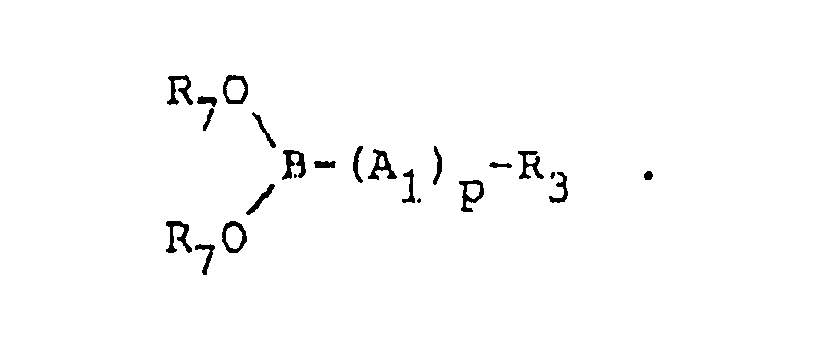
a)combining the following
1) technetium-99m (or a source thereof) or rhenium (or a source thereof)
2) a source of anion;
3) a boronic acid derivative of the formula

4) a dioxime having the formula

or a pharmaceutically acceptable salt thereof;
OR
OR
b) alternatively, where M - rhenium, reacting a compound of the formula 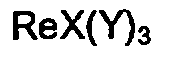
with a boronic acid derivative of the formula
51. A process for preparing a compound according to claim 35 or any claim dependent thereon or claim 49, wich process comprises

a)for compounds of formula VII, VII′ or VII˝ reacting a compound of the formula

(where L is a leaving group)
with a corresponding intermediate of the formula 
with a corresponding intermediate of the formula
b) alternatively, for compounds of formula VII′ or VII˝, reacting a compond of the formula

with a corresponding intermediate of the formula
52. A method for preparing a kit according to claim 22 or any claim dependent thereon which process comprises
combining
combining
a) a source of anion;
b) a boronic acid derivative of formula VI, VII, VII′, VII˝ or salt thereof;
c) a dioxime of formula II or salt thereof; and
d) optionally a reducing agent and/or a complexing agent.
Applications Claiming Priority (2)
| Application Number | Priority Date | Filing Date | Title |
|---|---|---|---|
| US466884 | 1983-02-16 | ||
| US46688490A | 1990-01-18 | 1990-01-18 |
Publications (1)
| Publication Number | Publication Date |
|---|---|
| EP0441491A1 true EP0441491A1 (en) | 1991-08-14 |
Family
ID=23853463
Family Applications (1)
| Application Number | Title | Priority Date | Filing Date |
|---|---|---|---|
| EP91300414A Ceased EP0441491A1 (en) | 1990-01-18 | 1991-01-18 | Boronic acid adducts of rhenium dioxime and technetium-99M dioxime complexes containing a biochemically active group |
Country Status (18)
| Country | Link |
|---|---|
| US (1) | US5387409A (en) |
| EP (1) | EP0441491A1 (en) |
| JP (1) | JPH04212099A (en) |
| KR (1) | KR100191568B1 (en) |
| CN (3) | CN1034078C (en) |
| AU (2) | AU651076B2 (en) |
| CA (1) | CA2034042C (en) |
| FI (1) | FI910274L (en) |
| HU (1) | HU910155D0 (en) |
| IE (1) | IE910133A1 (en) |
| IL (1) | IL96946A (en) |
| MX (1) | MX24177A (en) |
| MY (1) | MY105482A (en) |
| NO (1) | NO910201L (en) |
| NZ (1) | NZ236789A (en) |
| PT (1) | PT96518B (en) |
| YU (1) | YU26691A (en) |
| ZA (1) | ZA91300B (en) |
Cited By (6)
| Publication number | Priority date | Publication date | Assignee | Title |
|---|---|---|---|---|
| EP0565449A1 (en) * | 1992-04-10 | 1993-10-13 | La Region Wallonne | Rhenium and Technetium labelling of hormones |
| EP0609374A4 (en) * | 1991-10-23 | 1996-07-10 | Guerbet Sa | CONTRAST AGENTS AND COMPOSITIONS FOR RADIOLOGICAL IMAGING, AND RADIOLOGICAL IMAGING METHOD USING THE SAME |
| US5608110A (en) * | 1993-06-15 | 1997-03-04 | Bracco International B.V. | Heteroatom-bearing ligands and metal complexes thereof |
| US5651954A (en) * | 1994-01-12 | 1997-07-29 | Bracco International B.V. | Method of using hydrazone containing ligands and metal complexes thereof |
| US5808091A (en) * | 1991-10-29 | 1998-09-15 | Bracco International B.V. | Rhenium and technetium complexes containing a hypoxia localizing moiety |
| US6699458B2 (en) | 1991-10-29 | 2004-03-02 | Bracco International B.V. | Rhenium and technetium complexes containing a hypoxia-localizing moiety |
Families Citing this family (57)
| Publication number | Priority date | Publication date | Assignee | Title |
|---|---|---|---|---|
| WO1995009844A1 (en) * | 1993-10-04 | 1995-04-13 | Board Of Regents, The University Of Texas System | Rapid synthesis and use of 18f-fluoromisonidazole and analogs |
| JPH11505504A (en) * | 1994-06-27 | 1999-05-21 | イオニックス・コーポレーション | Hormone analogs containing boron and methods of using them to image or kill cells having hormone receptors |
| KR100430061B1 (en) * | 2000-03-21 | 2004-05-03 | 재단법인 아산사회복지재단 | Radioisotope labeled complex of glucose derivatives and kit for preparation thereof |
| US8565860B2 (en) * | 2000-08-21 | 2013-10-22 | Biosensors International Group, Ltd. | Radioactive emission detector equipped with a position tracking system |
| WO2005119025A2 (en) | 2004-06-01 | 2005-12-15 | Spectrum Dynamics Llc | Radioactive-emission-measurement optimization to specific body structures |
| US8489176B1 (en) | 2000-08-21 | 2013-07-16 | Spectrum Dynamics Llc | Radioactive emission detector equipped with a position tracking system and utilization thereof with medical systems and in medical procedures |
| US8909325B2 (en) * | 2000-08-21 | 2014-12-09 | Biosensors International Group, Ltd. | Radioactive emission detector equipped with a position tracking system and utilization thereof with medical systems and in medical procedures |
| CA2666005C (en) | 2002-03-01 | 2016-01-19 | Dyax Corp. | Kdr and vegf/kdr binding peptides and their use in diagnosis and therapy |
| US7261876B2 (en) | 2002-03-01 | 2007-08-28 | Bracco International Bv | Multivalent constructs for therapeutic and diagnostic applications |
| US20050100963A1 (en) | 2002-03-01 | 2005-05-12 | Dyax Corporation | KDR and VEGF/KDR binding peptides and their use in diagnosis and therapy |
| US7794693B2 (en) * | 2002-03-01 | 2010-09-14 | Bracco International B.V. | Targeting vector-phospholipid conjugates |
| US8623822B2 (en) | 2002-03-01 | 2014-01-07 | Bracco Suisse Sa | KDR and VEGF/KDR binding peptides and their use in diagnosis and therapy |
| US7211240B2 (en) * | 2002-03-01 | 2007-05-01 | Bracco International B.V. | Multivalent constructs for therapeutic and diagnostic applications |
| US20040204646A1 (en) * | 2002-11-04 | 2004-10-14 | V-Target Technologies Ltd. | Intracorporeal-imaging head |
| US7226577B2 (en) | 2003-01-13 | 2007-06-05 | Bracco Imaging, S. P. A. | Gastrin releasing peptide compounds |
| PT2949658T (en) | 2003-03-03 | 2018-10-18 | Bracco Suisse Sa | Peptides that specifically bind hgf receptor (cmet) and uses thereof |
| CA2526556C (en) * | 2003-07-24 | 2012-09-25 | Bracco Imaging S.P.A. | Stable radiopharmaceutical compositions and methods for their preparation |
| US9040016B2 (en) * | 2004-01-13 | 2015-05-26 | Biosensors International Group, Ltd. | Diagnostic kit and methods for radioimaging myocardial perfusion |
| US9470801B2 (en) * | 2004-01-13 | 2016-10-18 | Spectrum Dynamics Llc | Gating with anatomically varying durations |
| US7968851B2 (en) | 2004-01-13 | 2011-06-28 | Spectrum Dynamics Llc | Dynamic spect camera |
| US8586932B2 (en) * | 2004-11-09 | 2013-11-19 | Spectrum Dynamics Llc | System and method for radioactive emission measurement |
| WO2005067383A2 (en) * | 2004-01-13 | 2005-07-28 | Spectrum Dynamics Llc | Multi-dimensional image reconstruction |
| US8571881B2 (en) * | 2004-11-09 | 2013-10-29 | Spectrum Dynamics, Llc | Radiopharmaceutical dispensing, administration, and imaging |
| EP1827505A4 (en) * | 2004-11-09 | 2017-07-12 | Biosensors International Group, Ltd. | Radioimaging |
| US8615405B2 (en) | 2004-11-09 | 2013-12-24 | Biosensors International Group, Ltd. | Imaging system customization using data from radiopharmaceutical-associated data carrier |
| US9316743B2 (en) | 2004-11-09 | 2016-04-19 | Biosensors International Group, Ltd. | System and method for radioactive emission measurement |
| US8423125B2 (en) * | 2004-11-09 | 2013-04-16 | Spectrum Dynamics Llc | Radioimaging |
| US9943274B2 (en) | 2004-11-09 | 2018-04-17 | Spectrum Dynamics Medical Limited | Radioimaging using low dose isotope |
| EP1824520B1 (en) * | 2004-11-17 | 2016-04-27 | Biosensors International Group, Ltd. | Methods of detecting prostate cancer |
| WO2008059489A2 (en) * | 2006-11-13 | 2008-05-22 | Spectrum Dynamics Llc | Radioimaging applications of and novel formulations of teboroxime |
| US8837793B2 (en) | 2005-07-19 | 2014-09-16 | Biosensors International Group, Ltd. | Reconstruction stabilizer and active vision |
| EP1909853B1 (en) * | 2005-07-19 | 2015-03-18 | Biosensors International Group, Ltd. | Imaging protocols |
| US8894974B2 (en) * | 2006-05-11 | 2014-11-25 | Spectrum Dynamics Llc | Radiopharmaceuticals for diagnosis and therapy |
| WO2008073458A2 (en) | 2006-12-11 | 2008-06-19 | Bracco Imaging S.P.A. | Fibrin-binding peptides and conjugates thereof |
| US9275451B2 (en) * | 2006-12-20 | 2016-03-01 | Biosensors International Group, Ltd. | Method, a system, and an apparatus for using and processing multidimensional data |
| US8521253B2 (en) * | 2007-10-29 | 2013-08-27 | Spectrum Dynamics Llc | Prostate imaging |
| EP2147684A1 (en) | 2008-07-22 | 2010-01-27 | Bracco Imaging S.p.A | Diagnostic Agents Selective Against Metalloproteases |
| US20120045393A1 (en) | 2009-03-17 | 2012-02-23 | Linder Karen E | Lhrh-ii peptide analogs |
| US8338788B2 (en) | 2009-07-29 | 2012-12-25 | Spectrum Dynamics Llc | Method and system of optimized volumetric imaging |
| CN102030797B (en) * | 2009-09-24 | 2013-03-20 | 中国科学院上海应用物理研究所 | Technetium-labeled estradiol derivative and reference compound thereof, and preparation method, application and intermediate thereof |
| WO2015171543A1 (en) | 2014-05-05 | 2015-11-12 | California Institute Of Technology | Mutant akt-specific capture agents, compositions, and methods of using and making |
| CN115112898B (en) | 2015-07-15 | 2026-03-24 | 加州理工学院 | IL-17F-specific trapping agent, composition, and methods of use and manufacture |
| IL260957B2 (en) | 2016-02-09 | 2023-11-01 | Bracco Suisse Sa | Recombinant chimeric p-selectin glycoprotein ligand-1 (psgl-1) proteins, conjugates and compositions comprising same and uses of same |
| CN115109120A (en) | 2016-04-04 | 2022-09-27 | 英蒂分子公司 | CD8-specific capture agents, compositions and methods of use and preparation |
| US11884707B2 (en) | 2016-09-29 | 2024-01-30 | Regeneron Pharmaceuticals, Inc. | Compositions for detection, inhibition and imaging of indoleamine 2, 3-dioxygenase 1 (IDO1) and methods of making and using same |
| EP3535278A4 (en) | 2016-11-01 | 2020-06-24 | Ohio State Innovation Foundation | Methods for the iodination of biomolecules |
| EP3638687A1 (en) | 2017-06-15 | 2020-04-22 | Indi Molecular, Inc. | Il-17f and il-17a-specific capture agents, compositions, and methods of using and making |
| CN107674098B (en) * | 2017-06-26 | 2021-12-07 | 中国医学科学院阜外医院 | Aryl-containing boronic acids99mTc complex, its medicine box formula and application |
| US11638764B2 (en) | 2018-11-08 | 2023-05-02 | Indi Molecular, Inc. | Theranostic capture agents, compositions, and methods of using and making |
| WO2020186091A1 (en) | 2019-03-12 | 2020-09-17 | Indi Molecular, Inc. | Cross-linked epitopes and methods of use thereof |
| EP3972646A4 (en) | 2019-05-20 | 2023-06-14 | Ohio State Innovation Foundation | APOHEMOGLOBIN-HAPTOGLOBIN COMPLEXES AND METHODS OF USE THEREOF |
| WO2020236969A1 (en) | 2019-05-20 | 2020-11-26 | Indi Molecular, Inc. | Compositions and methods relating to detection, inhibition, and imaging of indoleamine 2,3-dioxygenase 1 (ido1) |
| US11414460B2 (en) | 2019-07-19 | 2022-08-16 | Institute For Systems Biology | KRAS-specific capture agents, compositions, and methods of making and using |
| CN111377968B (en) * | 2020-03-09 | 2023-07-25 | 中国医学科学院阜外医院 | A Class of 99mTc(Ⅲ) Complex Containing Arylboronic Acid and Its Kit Formula and Application |
| WO2022098743A1 (en) | 2020-11-03 | 2022-05-12 | Indi Molecular, Inc. | Compositions, imaging, and therapeutic methods targeting folate receptor 1 (folr1) |
| WO2022098745A1 (en) | 2020-11-03 | 2022-05-12 | Indi Molecular, Inc. | Compositions, delivery systems, and methods useful in tumor therapy |
| CN115197261B (en) * | 2022-07-06 | 2024-05-03 | 重庆医科大学 | Synthesis method of oxadiazine boron derivative |
Citations (4)
| Publication number | Priority date | Publication date | Assignee | Title |
|---|---|---|---|---|
| US3369121A (en) | 1966-04-06 | 1968-02-13 | Squibb & Sons Inc | Radioactive package and container therefor |
| US3920995A (en) | 1973-05-04 | 1975-11-18 | Squibb & Sons Inc | Radioactive material generator |
| EP0199260A2 (en) * | 1985-04-15 | 1986-10-29 | E.R. Squibb & Sons, Inc. | Boronic acid adducts of technetium-99M dioxime complexes |
| EP0311891A1 (en) | 1987-10-13 | 1989-04-19 | E.R. Squibb & Sons, Inc. | Boronic acid adducts of rhenium and radioactive isotopes of rhenium dioxime complexes |
Family Cites Families (2)
| Publication number | Priority date | Publication date | Assignee | Title |
|---|---|---|---|---|
| US4431627A (en) * | 1980-06-03 | 1984-02-14 | Research Corporation | Gamma-emitting receptor-binding 3-quinuclidinyl glycolates; methods of preparation thereof and imaging and assay methods utilizing same |
| CN1022562C (en) * | 1989-04-08 | 1993-10-27 | 中国人民解放军第二军医大学 | Synthetic method of tumor-eliminating medicine metronidazole |
-
1991
- 1991-01-11 CA CA002034042A patent/CA2034042C/en not_active Expired - Fee Related
- 1991-01-14 MY MYPI91000058A patent/MY105482A/en unknown
- 1991-01-15 ZA ZA91300A patent/ZA91300B/en unknown
- 1991-01-15 IL IL9694691A patent/IL96946A/en not_active IP Right Cessation
- 1991-01-16 NZ NZ236789A patent/NZ236789A/en unknown
- 1991-01-16 AU AU69385/91A patent/AU651076B2/en not_active Ceased
- 1991-01-16 IE IE013391A patent/IE910133A1/en unknown
- 1991-01-17 NO NO91910201A patent/NO910201L/en unknown
- 1991-01-17 MX MX2417791A patent/MX24177A/en unknown
- 1991-01-17 HU HU91155A patent/HU910155D0/en unknown
- 1991-01-18 CN CN91101146A patent/CN1034078C/en not_active Expired - Fee Related
- 1991-01-18 YU YU26691A patent/YU26691A/en unknown
- 1991-01-18 FI FI910274A patent/FI910274L/en not_active Application Discontinuation
- 1991-01-18 JP JP3019465A patent/JPH04212099A/en active Pending
- 1991-01-18 EP EP91300414A patent/EP0441491A1/en not_active Ceased
- 1991-01-18 KR KR1019910000787A patent/KR100191568B1/en not_active Expired - Fee Related
- 1991-01-18 PT PT96518A patent/PT96518B/en not_active IP Right Cessation
-
1992
- 1992-01-07 US US07/818,705 patent/US5387409A/en not_active Expired - Lifetime
-
1994
- 1994-12-01 AU AU79147/94A patent/AU7914794A/en not_active Abandoned
-
1995
- 1995-03-22 CN CN95103488A patent/CN1111621A/en active Pending
- 1995-08-01 CN CN95109333A patent/CN1120437A/en active Pending
Patent Citations (6)
| Publication number | Priority date | Publication date | Assignee | Title |
|---|---|---|---|---|
| US3369121A (en) | 1966-04-06 | 1968-02-13 | Squibb & Sons Inc | Radioactive package and container therefor |
| US3920995A (en) | 1973-05-04 | 1975-11-18 | Squibb & Sons Inc | Radioactive material generator |
| EP0199260A2 (en) * | 1985-04-15 | 1986-10-29 | E.R. Squibb & Sons, Inc. | Boronic acid adducts of technetium-99M dioxime complexes |
| US4705849A (en) | 1985-04-15 | 1987-11-10 | E. R. Squibb & Sons, Inc. | Boronic acid adducts of technetium-99m dioxime complexes |
| EP0311891A1 (en) | 1987-10-13 | 1989-04-19 | E.R. Squibb & Sons, Inc. | Boronic acid adducts of rhenium and radioactive isotopes of rhenium dioxime complexes |
| US4871836A (en) | 1987-10-13 | 1989-10-03 | E. R. Squibb & Sons, Inc. | Boronic acid adducts of rhenium and radioactive isotopes of rhenium dioxime complexes |
Non-Patent Citations (25)
| Title |
|---|
| "N-Isopropyl-[123I]p-Iodoamphetamine: Single-Pass Brain Uptake and Washout; Binding to Brain Synaptosomes; and Localization in Dog and Monkey Brain", J. NUCL. MED., vol. 21, 1980, pages 947 - 52 |
| "The Characteristics of 1-125 4-IQNB and H-3QNB In vivo and In vitro", J. NUCL. MED., vol. 25, no. 2, February 1984 (1984-02-01), pages 214 - 222 |
| CHEMICAL ABSTRACTS, vol. 70, 1969, page 293, abstr. 11735q, Columbus, Ohio, US, J. NAMTVEDT et al.: 'Heteroaromatic boron compounds. III. Nitration of some derivatives of barazarothienopyridines' & ACTA CHEM. SCAND. 1968, 22(5), 1611-22 * |
| CHEMICAL ABSTRACTS, vol. 84, 1976, page 545, abstr. 59625v, Columbus, Ohio, US, S. GRONOWITZ et al.: 'Heteroaromatic boron compounds. XIII Bromination and nitration of some thieno-fused 3,2-borazaropyridines' & ACTA CHEM. SCAND., SER. B 1975, B29(10), 990-8 * |
| CLARKE; WARDMAN; GOULDING, BIOCHEM. PHARMACOL., vol. 29, 1980, pages 2684 - 2687 |
| COHEN ET AL., J. PHARM. SCI., vol. 78, 1989, pages 833 - 836 |
| D. M. BROWN ET AL.: "Structure-Activity Relationships of I-Substituted 2-Nitroimidazoles: Effect of Partition Coefficient and Sidechain Hydroxyl Groups on Radiosensitization In vitro", RAD. RESEARCH, vol. 90, 1982, pages 98 - 108 |
| E. M. JAGODA ET AL., J. NUCL. MED., vol. 25, 1984, pages 472 - 7 |
| FOWLER ET AL.: "2-deoxy-2[18F]fluoro-D-glucose for metabolic studies: current status", INT. J. APPL. RADIAT. ISOT., vol. 27, 1986, pages 663 - 8, XP024706170, DOI: doi:10.1016/0883-2889(86)90259-5 |
| G. E. ADAMS ET AL.: "Hypoxia Mediated Nitro-Heterocyclic Drugs in the Radio- and Chemotherapy of Cancer", BIOCHEM. PHARMACOLOGY, vol. 35, no. I, 1986, pages 71 - 76, XP023730856, DOI: doi:10.1016/0006-2952(86)90560-5 |
| G. E. ADAMS ET AL.: "Structure-Activity Relationships in the Development of Hypoxic Cell Radiosensitizers", INT. J. RADIAT. BIOL., vol. 35, no. 2, 1979, pages 133 - 150 |
| G. E. ADAMS ET AL.: "Structure-Activity Relationships in the Development of Hypoxic Cell Radiosensitizers", INT. J. RADIAT. BIOL., vol. 38, no. 6, 1980, pages 613 - 626 |
| G. L. KEDDERIS ET AL.: "The Metabolic Activation of Nitro-Heterocyclic Therapeutic Agents", DRUG METABOLISM REVIEWS, vol. 19, no. 1, 1988, pages 33 - 62 |
| G. W. KABALKA ET AL., NUCL. MED. BIOL., vol. 16, no. 4, 1989, pages 359 - 360 |
| GIBSON ET AL.: "Differences in Affinities of Muscarinic Acetylcholine Receptor Antagonists for Brain and Heart Receptors", BIOCHEM PHARM., vol. 32, no. 12, 1983, pages 1851 - 56, XP023728386, DOI: doi:10.1016/0006-2952(83)90049-7 |
| HEINZE, J. ANG. CHEM. INT., ED. ENG., vol. 23, 1984, pages 831 |
| HOFFMAN ET AL.: "Binding of the Hypoxic Tracer [H-3] Misonidazole in Cerebral Ischemia", STROKE, vol. 18, 1987, pages 168 |
| JAGODA ET AL., J. NUCL. MED., vol. 25, 1984, pages 472 - 7 |
| JONES ET AL.: "Synthesis of a Novel [Tc99m]-Diaminodithiol-Fatty Acid (TcN2S2FA) Complex and Its Evaluation as a Myocardial Imaging Agent", J. NUCL. MED., vol. 29, no. 5, 1988, pages 935, XP009014045 |
| KOH ET AL.: "Hypoxia Imaging of Tumors Using [F-18]Fluoromisonidazole", J. NUCL. MED., vol. 30, 1989, pages 789 |
| MARTIN ET AL.: "Enhanced Binding of the Hypoxic Cell Marker [3H] Fluoro- misonidazole", J. NUCL. MED., vol. 30, no. 2, 1989, pages 194 - 201 |
| R. E. GIBSON; W. J. RZESZOTARSKI; W. C. ECKELMAN; E. M. JAGODA; D. J. WECKSTEIN; R. C. REBA, BIOCHEMICAL PHARMACOLOGY, vol. 32, no. 12, 1983, pages 1851 - 1856 |
| RZESZOTARSKI ET AL., J. MED. CHEM., vol. 27, 1981, pages 156 - 160 |
| VAN DER WALL ET AL.: "Myocardial imaging with radiolabeled free fatty acids: Applications and limitations", EUR. J. NUCL. MED., vol. 12, 1986, pages S11 - S15 |
| WINCHELL ET AL.: "Development of I-123-Labeled Amines for Brain .Studies: Localization of 1-123 Iodophenylalkyl Amines in Rat Brain", J. NUCL. MED., vol. 21, 1980, pages 940 - 6 |
Cited By (16)
| Publication number | Priority date | Publication date | Assignee | Title |
|---|---|---|---|---|
| EP0609374A4 (en) * | 1991-10-23 | 1996-07-10 | Guerbet Sa | CONTRAST AGENTS AND COMPOSITIONS FOR RADIOLOGICAL IMAGING, AND RADIOLOGICAL IMAGING METHOD USING THE SAME |
| US5808091A (en) * | 1991-10-29 | 1998-09-15 | Bracco International B.V. | Rhenium and technetium complexes containing a hypoxia localizing moiety |
| US6958141B2 (en) | 1991-10-29 | 2005-10-25 | Bracco International B.V. | Rhenium and technetium complexes containing a hypoxia-localizing moiety |
| US6699458B2 (en) | 1991-10-29 | 2004-03-02 | Bracco International B.V. | Rhenium and technetium complexes containing a hypoxia-localizing moiety |
| US6184361B1 (en) | 1991-10-29 | 2001-02-06 | Bracco International B.V. | Rhenium and technetium complexes containing a hypoxia-localizing moiety |
| FR2690443A1 (en) * | 1992-04-10 | 1993-10-29 | Wallone Region | Marking of hormones with rhenium and technetium. |
| US5554602A (en) * | 1992-04-10 | 1996-09-10 | Laregion Wallone | Labelling of hormones with rhenium and tecnetium |
| EP0565449A1 (en) * | 1992-04-10 | 1993-10-13 | La Region Wallonne | Rhenium and Technetium labelling of hormones |
| US5608110A (en) * | 1993-06-15 | 1997-03-04 | Bracco International B.V. | Heteroatom-bearing ligands and metal complexes thereof |
| US5665329A (en) * | 1993-06-15 | 1997-09-09 | Bracco International B.V. | Heteroatom-bearing ligands and metal complexes thereof |
| US5741912A (en) * | 1993-06-15 | 1998-04-21 | Bracco International B.V. | Methods for preparing heteroatom-bearing ligands and metal complexes thereof |
| US5656254A (en) * | 1993-06-15 | 1997-08-12 | Bracco International B.V. | Polyaza heteroatom-bearing ligands and metal complexes thereof for imaging or radiotherapy |
| US5627286A (en) * | 1993-06-15 | 1997-05-06 | Bracco International B.V. | Heteroatom-bearing ligands and metal complexes thereof |
| US5663307A (en) * | 1994-01-12 | 1997-09-02 | Bracco International B.V. | Hydrazone containing ligands and metal complexes thereof |
| US6660246B1 (en) | 1994-01-12 | 2003-12-09 | Bracco International, Bv | Ligands and metal complexes thereof |
| US5651954A (en) * | 1994-01-12 | 1997-07-29 | Bracco International B.V. | Method of using hydrazone containing ligands and metal complexes thereof |
Also Published As
| Publication number | Publication date |
|---|---|
| FI910274A7 (en) | 1991-07-19 |
| KR100191568B1 (en) | 1999-06-15 |
| AU7914794A (en) | 1995-02-16 |
| YU26691A (en) | 1994-05-10 |
| IL96946A0 (en) | 1992-03-29 |
| HU910155D0 (en) | 1991-08-28 |
| CA2034042A1 (en) | 1991-07-19 |
| CA2034042C (en) | 1999-08-17 |
| US5387409A (en) | 1995-02-07 |
| CN1034078C (en) | 1997-02-19 |
| PT96518B (en) | 1998-06-30 |
| KR910014385A (en) | 1991-08-31 |
| IE910133A1 (en) | 1991-07-31 |
| AU6938591A (en) | 1991-07-25 |
| NO910201D0 (en) | 1991-01-17 |
| NZ236789A (en) | 1995-03-28 |
| NO910201L (en) | 1991-07-19 |
| IL96946A (en) | 1995-12-08 |
| JPH04212099A (en) | 1992-08-03 |
| AU651076B2 (en) | 1994-07-14 |
| MX24177A (en) | 1993-12-01 |
| ZA91300B (en) | 1991-11-27 |
| FI910274L (en) | 1991-07-19 |
| CN1111621A (en) | 1995-11-15 |
| PT96518A (en) | 1991-10-15 |
| CN1054070A (en) | 1991-08-28 |
| CN1120437A (en) | 1996-04-17 |
| MY105482A (en) | 1994-10-31 |
| FI910274A0 (en) | 1991-01-18 |
Similar Documents
| Publication | Publication Date | Title |
|---|---|---|
| US5387409A (en) | Boronic acid adducts of rhenium dioxime and technetium-99m dioxime complexes containing a biochemically active group | |
| EP0123504B1 (en) | Complexes of technetium-99m with alkylene amine oximes | |
| US5183653A (en) | Boronic acid adducts of metal dioxime complexes useful in labelling proteins and other amine-containing compounds | |
| EP0107734A1 (en) | ISONITRILE RADIONUCLIDE COMPLEXES FOR LABELING AND IMAGE AGENTS. | |
| US4705849A (en) | Boronic acid adducts of technetium-99m dioxime complexes | |
| EP0426759B1 (en) | Novel tc-99m complexes | |
| US4871836A (en) | Boronic acid adducts of rhenium and radioactive isotopes of rhenium dioxime complexes | |
| US5538712A (en) | Cyclopentadienylcarbonyl 99MTC complexes, process for their production as well as their use in diagnostics | |
| US5688485A (en) | Radiolabelled complexes of ester-substituted diaminethiols | |
| EP0395695B1 (en) | Tris(isonitrile)copper(i) adducts for preparing radionuclide complexes | |
| EP0713513B1 (en) | Tris(isonitrile)copper(i) sulfates for preparing radionuclide complexes | |
| US5651954A (en) | Method of using hydrazone containing ligands and metal complexes thereof | |
| Maresca et al. | Synthesis, characterization, and biodistribution of a Technetium-99m ‘3+ 1’fatty acid derivative. The crystal and molecular structures of a series of oxorhenium model complexes | |
| Gniazdowska et al. | Synthesis, radiochemistry and stability of the conjugates of technetium-99m complexes with Substance P | |
| US5069900A (en) | Boronic acid adducts of technetium-99m dioxime-imine complexes | |
| IL114175A (en) | Nitroheterocyclic boronic acid derivatives | |
| NZ247699A (en) | Boronic acid derivatives | |
| Katti et al. | A new neutral-lipophilic 99mTc complex with a bis-hydrazide-phosphine (BHP) ligand | |
| US5602236A (en) | Metal-containing steroid mimics and ligands useful in the preparation thereof | |
| US5324824A (en) | Metal-isonitrile adducts for preparing radionuclide complexes | |
| US20060062725A1 (en) | Methods for preparing metal-carborane complexes for radioimaging and radiotherapy | |
| CN101775038A (en) | Marked cyclofenil derivative and referential compound and midbody thereof, and preparation method and application | |
| Uccelli et al. | Design and synthesis of a redox-active tc-99m radiopharmaceutical with ferrocenedithiocarboxylate [FcCS= Fe (C5H4CS2)(C5H5)−] | |
| WO1995005388A1 (en) | AZIDE DERIVATIVES SUITABLE FOR PREPARATION OF 99mTc COMPLEXES FOR IMAGING AND THEIR USE | |
| JPS615065A (en) | brain imaging agent |
Legal Events
| Date | Code | Title | Description |
|---|---|---|---|
| PUAI | Public reference made under article 153(3) epc to a published international application that has entered the european phase |
Free format text: ORIGINAL CODE: 0009012 |
|
| AK | Designated contracting states |
Kind code of ref document: A1 Designated state(s): AT BE CH DE DK ES FR GB GR IT LI LU NL SE |
|
| 17P | Request for examination filed |
Effective date: 19920123 |
|
| 17Q | First examination report despatched |
Effective date: 19950214 |
|
| RAP1 | Party data changed (applicant data changed or rights of an application transferred) |
Owner name: BRACCO INTERNATIONAL B.V. |
|
| STAA | Information on the status of an ep patent application or granted ep patent |
Free format text: STATUS: THE APPLICATION HAS BEEN REFUSED |
|
| 18R | Application refused |
Effective date: 19970929 |