EP0442522A1 - Verfahren zur Züchtung von Chlorella - Google Patents
Verfahren zur Züchtung von Chlorella Download PDFInfo
- Publication number
- EP0442522A1 EP0442522A1 EP91102177A EP91102177A EP0442522A1 EP 0442522 A1 EP0442522 A1 EP 0442522A1 EP 91102177 A EP91102177 A EP 91102177A EP 91102177 A EP91102177 A EP 91102177A EP 0442522 A1 EP0442522 A1 EP 0442522A1
- Authority
- EP
- European Patent Office
- Prior art keywords
- chlorella
- culturing
- whey
- lactose
- culture medium
- Prior art date
- Legal status (The legal status is an assumption and is not a legal conclusion. Google has not performed a legal analysis and makes no representation as to the accuracy of the status listed.)
- Withdrawn
Links
Images
Classifications
-
- C—CHEMISTRY; METALLURGY
- C12—BIOCHEMISTRY; BEER; SPIRITS; WINE; VINEGAR; MICROBIOLOGY; ENZYMOLOGY; MUTATION OR GENETIC ENGINEERING
- C12N—MICROORGANISMS OR ENZYMES; COMPOSITIONS THEREOF; PROPAGATING, PRESERVING, OR MAINTAINING MICROORGANISMS; MUTATION OR GENETIC ENGINEERING; CULTURE MEDIA
- C12N1/00—Microorganisms; Compositions thereof; Processes of propagating, maintaining or preserving microorganisms or compositions thereof; Processes of preparing or isolating a composition containing a microorganism; Culture media therefor
- C12N1/12—Unicellular algae; Culture media therefor
Definitions
- the present invention relates to a method for culturing a chlorella aerobically by using enzymatically treated whey as an organic carbon source.
- chlorella cells contain 50% or more proteins, chlorella has potential as a possible food source and many related studies have been done.
- a chlorella To culture a chlorella, there are (1) a method wherein a chlorella is cultured by photosynthesis (autotrophism), (2) a method wherein a chlorella is cultured by causing the chlorella to utilize organic carbon aerobically in darkness (heterotrophism), and a method wherein the methods (1) and (2) are combined so that photosynthesis can be carried out in light and organic carbon can be utilized aerobically (mixotrophism).
- autotrophism a method wherein a chlorella is cultured by photosynthesis
- heterotrophism a method wherein a chlorella is cultured by causing the chlorella to utilize organic carbon aerobically in darkness
- mixedotrophism a method wherein the methods (1) and (2) are combined so that photosynthesis can be carried out in light and organic carbon can be utilized aerobically
- the method (2) is used industrially.
- the obtained chlorella is too expensive to be used as a food protein source, at present it is only used in health foods, as a food additive (the cells or the extract liquid is used as a colorant or a sapid component), and in feeds for culture and artificial feeds for silkworms and an inexpensive method for culturing a chlorella has been in need of development.
- whey also called milk serum
- milk serum is a transparent light-yellow aqueous solution that is obtained by adding, to skim milk produced from milk by removing the fat, an acid or rennet so that casein, the main protein of milk, may be removed.
- the aqueous solution obtained by causing an acid or rennet to work directly on milk to remove curd made up of fat and casein is also called whey.
- Whey comprises mainly lactose, and it contains milk serum proteins, inorganic materials, and vitamins.
- Whey is produced in a large amount as a by-product in the process of making, for example, cheese and casein from milk. Although part of the whey is recovered as whey powder and used as food and feed, most of it is discarded as waste liquor. In recent years, the production of cheese and casein has increased throughout the world, and as a result the amount of whey has increased. However, when whey is discarded as waste liquor, expensive waste liquor treatment facilities are required from the standpoint of the environmental protection standards, and therefore the development of an effective use of whey is desired.
- This method is one wherein a chlorella capable of utilizing lactose is cultured under aerobic conditions in a whey culture medium to which nitrogen compounds and inorganic salts have been added.
- chlorellas capable of utilizing lactose in whey are only particular ones, and therefore in the above method a general chlorella could not be used without considering the kind. Further, the culturing method wherein chlorellas capable of utilizing lactose are used is slow in the multiplication rate of the chlorella, so that it has been difficult to culture a chlorella in a large amount industrially.
- the present invention has been made taking the above problems into account and the object of the present invention is to provide a method for culturing a chlorella so that a chlorella can be industrially cultured by using whey to provide the chlorella inexpensively and also whey can be used effectively.
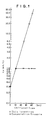
- Fig. 1 is a diagram showing courses of culturing chlorella.
- the present method for culturing a chlorella aerobically in a culture medium containing an organic carbon source is characterized in that, as the said organic carbon source, whey treated with a lactose-decomposing enzyme (lactase) is used.
- lactose-decomposing enzyme lactose-decomposing enzyme
- the present invention uses, as an organic carbon source, whey that has been treated with a lactose-decomposing enzyme to decompose the lactose in the whey into lactose and galactose.
- whey also called milk serum
- milk serum is a transparent light-yellow aqueous solution that is obtained by adding, to skim milk produced from milk by removing the fat, an acid or rennet so that casein, the main protein of milk, may be removed.
- the aqueous solution obtained by causing an acid or rennet to work directly on milk to remove curd made up of fat and casein is also called whey.
- wheys there are, for example, cheese whey, casein whey, and lactose-fermented whey. Waste liquor obtained, for example, by heat treatment or ultrafiltration of whey to recover milk serum proteins is also called whey.
- Whey contains 5 to 7% solids and the component composition, for example, of cheese whey, whose production is largest, is such that the water content is about 93.7%, the lactose content is about 4.50%, the nitrogen compound content is about 0.70%, the inorganic component content is about 0.60%, the fat content is about 0.30%, and the lactic acid content is about 0.20%, and water-soluble vitamins are also contained.
- the inorganic components are salts of potassium, sodium, calcium, phosphorus, magnesium, and others.
- whey produced as a by-product in the process of making, for example, cheese and casein can be used as it is, for example, in the case of whey whose lactose content is low, it may be used after increasing the lactose content by condensing it by ultrafiltration, reverse osmometry, or the like; one also can be used that is obtained by dissolving whey powder in water until a desired concentration is obtained, and whey can also be used wherein a condensed liquid of whey, powder whey, or lactose is added to increase the lactose concentration.
- lactose-decomposing enzymes for example, ⁇ -galactosidases and galactosyltransferases can be mentioned.
- enzymes that originate from, for example, Aspergillus oryzae, Aspergillus nigar, Kluyveromyces lactis, Kluyveromyces fragilis, and Bacillus circulans are known.
- “Lactase Y-AO” that is a trade name and it is manufactured by Yakult Honsha Co., Ltd.
- “Lactozym” that is a trade name and it is manufactured by Novo Industrias
- “Maxilact” that is a trade name and it is manufactured by Gist-Brocades n.v.
- Biolacta that is a trade name and it is manufactured by Daiwa Kasei Co., Ltd.
- Whey may be pretreated with a lactose-decomposing enzyme to be used as a culture medium component before a chlorella is cultured, or a lactose-decomposing enzyme is may be added to a culture medium containing whey and the culturing of the chlorella and the treatment of the whey with the lactose-decomposing enzyme may be allowed to proceed simultaneously.
- the lactose decomposing enzyme is added to the whey and preferably they are reacted at 5 to 60°C for 2 to 24 hours.
- the amount of the enzyme to be added is not particularly limited, preferably the amount is 1 to 100 units per gram of the content of the lactose in the whey.
- the decomposition rate of the lactose in the whey is in the order of 70 to 80%.
- the amount of the enzyme may be about 1/10 to 1/100 of that used when whey is pretreated with an enzyme. Since the lactose in whey is decomposed with the enzyme and is consumed immediately as the organic carbon source of the chlorella, an equilibrium reaction does not take place, and almost all of the lactose in the whey is decomposed into glucose and galactose. According to the inventor's finding, when the treatment of whey by a lactose-decomposing enzyme and the culture of a chlorella are caused to proceed simultaneously, the multiplication of the chlorella is not inhibited by the presence of enzyme.
- auxiliary nutrients for example, as auxiliary nutrients, inorganic salts of potassium, phosphorus, magnesium, iron, etc., a nitrogen source, such as urea and potassium nitrate, and a vitamin source, such as yeast extract, into the culture medium.
- auxiliary nutrients are not necessarily required because whey contains inorganic salts of potassium, sodium, calcium, phosphorus, magnesium, etc. and water-soluble vitamins such as vitamins B1, B2, and C and nicotinic acid.
- an iron salt is required, so that it is preferable to add an iron salt, such as ferrous sulfate.
- whey depending on the kind of whey, it is preferable to add trace amounts of magnesium sulfate and metal salts of zinc, manganese, copper, boron, molybdenum, etc.
- nitrogen compounds are present in whey, since the amount thereof is short of the required amount of nitrogen compounds for the growth of a chlorella, it is preferable to cover this deficiency by adding, for example, urea, a nitrate, and an ammonium salt.
- the amount of nitrogen compounds to be added if urea is used as nitrogen, the amount is preferably about 5% of lactose in the whey. Further when a nutrient rich in vitamins, such as yeast extract, is added, the multiplication rate of the chlorella and the yield thereof to lactose can be improved.
- the chlorella to be used is not a special one capable of utilizing lactose; rather it may be a common one that can multiply by using glucose and galactose.
- chlorella many kinds of chlorellas, such as Chlorella vulgaris, Chlorella protothecoides, Chlorella regularis, and Chlorella pyrenoidosa can be mentioned, which can be taken out from outdoors and can be multiplied or can be obtained from the National Pollution Institute (Kokuritsu Kogai Kenkyusho).
- the culture medium prepared in the above manner is sterilized by heating it, preferably to about 120°C, for example, by treating it in an autoclave or by blowing live steam into it; then after cooling it, it is inoculated with a chlorella, and the culturing is effected aerobically in darkness.
- the enzyme is added to the culture medium after sterilization, for example, by filtering through a germ-removing filter.
- a culturing vessel a culturing tank wherein aerated culturing can be done may be used.
- the culturing conditions are kept such that the pH is 6 to 8, preferably 6 to 7, the temperature is 25 to 37°C, and the amount of air to be passed is 0.5 to 1 VVM (Volume Volume Minute), and when the pH lowers along with the process of the culturing, it is preferable to adjust the pH to 6 to 8 by adding NaOH (caustic soda) or the like.
- NaOH caustic soda
- the broth After the completion of the culturing, the broth is subjected to centrifugation to separate the chlorella, followed by condensation, washing with water, and drying to obtain dried chlorella.
- the liquid after the culturing can also be used as it is, without separating the chlorella, as feed for cattle or fish.
- the kind of the chlorella to be used is not a particular one capable of utilizing lactose, and any one capable of multiplying heterotrophically by using glucose and galactose can be used, so that many various common kinds of chlorellas can be used.
- chlorellas high in capability of multiplication can be used, and since lactose in whey can be utilized well by treatment with an enzyme, the multiplication and yield of the chlorella can be made higher than the case wherein whey is used as it is to culture a chlorella capable of utilizing lactose.
- the decomposition ratio of the lactose in whey can be increased further, the yield of the chlorella can be increased further, and the amount of required enzyme is less.
- whey that is presently discarded as waste liquor at present is utilized, a chlorella can be cultured inexpensively and since whey is effectively utilized without being discarded as waste liquor, this culturing method can contribute to the protection of the environment.
- Whey obtained in the process of making cheese was used.
- the composition of the whey was as follows:
- a culture medium was prepared by adding the components shown below to the above-mentioned whey.
- the components shown below were added to whey obtained in the process of making cheese to prepare a culture medium.
- the As solution was a solution prepared by mixing the following components:
- Example 1 was repeated, except that the culture medium prepared as in Example 1 was used without adding lactose, thereby culturing the chlorella.
- Fig. 1 is a diagram showing the course of the culturing wherein a chlorella is cultured according to the present method and the course of the culturing wherein a chlorella is cultured according to the method of Comparative Example 1, o-o showing the course of the culturing wherein a chlorella is cultured according to the present method and x-x showing the course of the culturing wherein a chlorella is cultured according to the method of Comparative Example 1.
- Fig. 1 the numbers on the abscissa indicate cultured time in hour of chlorella, and by Vp on the ordinate is meant packed cell volume (wet cell concentration) in 1 liter which, is abbreviated to PCV and indicates cell concentration.
- Vp 3 indicates that 1 liter of a suspension contains 3 ml of live cells (with respect to the method of the measurement, see “Sourui Jikken-ho," page 186, Nanko-do).
- the pH of 1 l of whey was adjusted to 6.5, 1,000 units of "Lactozym” (which is a trade name and is manufactured by Novo Industrias, which is ⁇ -galactosidases, was added thereto, and the whey was treated therewith at 40°C for 5 hours, thereby obtaining enzymatically treated whey.
- "Lactozym” which is a trade name and is manufactured by Novo Industrias, which is ⁇ -galactosidases
Landscapes
- Engineering & Computer Science (AREA)
- Life Sciences & Earth Sciences (AREA)
- Health & Medical Sciences (AREA)
- Biotechnology (AREA)
- Chemical & Material Sciences (AREA)
- Bioinformatics & Cheminformatics (AREA)
- Genetics & Genomics (AREA)
- Organic Chemistry (AREA)
- Zoology (AREA)
- Wood Science & Technology (AREA)
- Botany (AREA)
- Biomedical Technology (AREA)
- Cell Biology (AREA)
- Microbiology (AREA)
- Virology (AREA)
- Tropical Medicine & Parasitology (AREA)
- Biochemistry (AREA)
- General Engineering & Computer Science (AREA)
- General Health & Medical Sciences (AREA)
- Medicinal Chemistry (AREA)
- Micro-Organisms Or Cultivation Processes Thereof (AREA)
- Preparation Of Compounds By Using Micro-Organisms (AREA)
Applications Claiming Priority (2)
| Application Number | Priority Date | Filing Date | Title |
|---|---|---|---|
| JP35511/90 | 1990-02-16 | ||
| JP3551190A JPH03240484A (ja) | 1990-02-16 | 1990-02-16 | クロレラの培養方法 |
Publications (1)
| Publication Number | Publication Date |
|---|---|
| EP0442522A1 true EP0442522A1 (de) | 1991-08-21 |
Family
ID=12443786
Family Applications (1)
| Application Number | Title | Priority Date | Filing Date |
|---|---|---|---|
| EP91102177A Withdrawn EP0442522A1 (de) | 1990-02-16 | 1991-02-15 | Verfahren zur Züchtung von Chlorella |
Country Status (5)
| Country | Link |
|---|---|
| EP (1) | EP0442522A1 (de) |
| JP (1) | JPH03240484A (de) |
| AU (1) | AU628251B2 (de) |
| CA (1) | CA2036235A1 (de) |
| NZ (1) | NZ237112A (de) |
Cited By (1)
| Publication number | Priority date | Publication date | Assignee | Title |
|---|---|---|---|---|
| EP2241615A4 (de) * | 2008-02-07 | 2011-12-28 | Snow Brand Milk Products Co Ltd | Mikroorganismen-schutzmittel und verfahren zur herstellung gefrorener oder lyophilisierter mikrobieller zellen |
Families Citing this family (1)
| Publication number | Priority date | Publication date | Assignee | Title |
|---|---|---|---|---|
| FR3031987B1 (fr) * | 2015-01-26 | 2019-05-24 | Corbion Biotech, Inc. | Procede de fractionnement des composants d'une biomasse de microalgues riches en proteines |
-
1990
- 1990-02-16 JP JP3551190A patent/JPH03240484A/ja active Pending
-
1991
- 1991-02-13 CA CA 2036235 patent/CA2036235A1/en not_active Abandoned
- 1991-02-13 AU AU71003/91A patent/AU628251B2/en not_active Ceased
- 1991-02-13 NZ NZ23711291A patent/NZ237112A/en unknown
- 1991-02-15 EP EP91102177A patent/EP0442522A1/de not_active Withdrawn
Non-Patent Citations (2)
| Title |
|---|
| CHEMICAL ABSTRACTS, vol. 89, no. 11, September 11, 1978, Columbus, Ohio, USA H. ENDO et al. "Utilization of whey" page 308, left column, abstract-No. 88 831t * |
| CHEMICAL ABSTRACTS, vol. 91, no. 19, November 5, 1979, Columbus, Ohio, USA O.N. AL'BITSKAYA et al. "Culture medium for culti- vating microalgae" page 333, right column, abstract-No. 154 220n * |
Cited By (1)
| Publication number | Priority date | Publication date | Assignee | Title |
|---|---|---|---|---|
| EP2241615A4 (de) * | 2008-02-07 | 2011-12-28 | Snow Brand Milk Products Co Ltd | Mikroorganismen-schutzmittel und verfahren zur herstellung gefrorener oder lyophilisierter mikrobieller zellen |
Also Published As
| Publication number | Publication date |
|---|---|
| AU628251B2 (en) | 1992-09-10 |
| NZ237112A (en) | 1992-03-26 |
| AU7100391A (en) | 1991-08-22 |
| JPH03240484A (ja) | 1991-10-25 |
| CA2036235A1 (en) | 1991-08-17 |
Similar Documents
| Publication | Publication Date | Title |
|---|---|---|
| Malathi et al. | Production of alkaline protease by a new Aspergillus flavus isolate under solid-substrate fermentation conditions for use as a depilation agent | |
| US3961078A (en) | Soluble waste conversion process and pasteurized proteinaceous products | |
| US4119495A (en) | Method for processing activated sludge into useful products | |
| NZ504429A (en) | Fermentative lactic acid preparative method to produce at least 40g/litre free lactic acid | |
| US2749279A (en) | Enzymatic production of l-glutamic acid | |
| US4062732A (en) | Process of producing acid stable protease | |
| JPS63269990A (ja) | 畜肥からのアミノ酸の抽出又は製造方法 | |
| US3981774A (en) | Fermentation of oxygenated hydrocarbon compounds with thermophilic microorganisms | |
| KR850004267A (ko) | 폴리-d-(-)-3-하이드록시부티르산의 제조방법 | |
| US3960659A (en) | Treatment of proteinaceous material | |
| CN104357340A (zh) | 一种生物转化富马酸生产l-苹果酸的方法 | |
| EP0079241B1 (de) | Verfahren zur Herstellung von Glutathion | |
| EP0442522A1 (de) | Verfahren zur Züchtung von Chlorella | |
| Zayed et al. | Lactic acid production from salt whey using free and agar immobilized cells | |
| Amrane | Evaluation of lactic acid bacteria autolysate for the supplementation of lactic acid bacteria fermentation | |
| JP2952604B2 (ja) | 発酵法によるアミノ酸の製造法 | |
| US3778349A (en) | Production of single cell protein material | |
| US3829363A (en) | Process for the production of high quality fungal protein from starch and starchy processing wastes | |
| CA1302931C (en) | Preparation of pyruvic acid | |
| Martin et al. | Studies on the production of Scytalidium acidophilum biomass | |
| US3345269A (en) | Process for the production of proteolytic enzymes | |
| USRE30965E (en) | Fermentation of oxygenated hydrocarbon compounds with thermophilic microorganisms and microorganisms therefor | |
| US3310475A (en) | Method for producing l-aspartic acid | |
| Thanikachalam et al. | Protein enrichment of rice straw by fermentation with Cellulomonas sp. | |
| KR102124585B1 (ko) | 단백질 발효를 통한 아미노산 액비의 제조방법 및 그 방법에 의한 액비 |
Legal Events
| Date | Code | Title | Description |
|---|---|---|---|
| PUAI | Public reference made under article 153(3) epc to a published international application that has entered the european phase |
Free format text: ORIGINAL CODE: 0009012 |
|
| AK | Designated contracting states |
Kind code of ref document: A1 Designated state(s): CH DE ES FR GB LI NL |
|
| 17P | Request for examination filed |
Effective date: 19910813 |
|
| STAA | Information on the status of an ep patent application or granted ep patent |
Free format text: STATUS: THE APPLICATION HAS BEEN WITHDRAWN |
|
| 18W | Application withdrawn |
Withdrawal date: 19940321 |