EP0442592A2 - Plasmides pour la production de plantes transgéniques à apparance et rendement modifiés - Google Patents
Plasmides pour la production de plantes transgéniques à apparance et rendement modifiés Download PDFInfo
- Publication number
- EP0442592A2 EP0442592A2 EP91250035A EP91250035A EP0442592A2 EP 0442592 A2 EP0442592 A2 EP 0442592A2 EP 91250035 A EP91250035 A EP 91250035A EP 91250035 A EP91250035 A EP 91250035A EP 0442592 A2 EP0442592 A2 EP 0442592A2
- Authority
- EP
- European Patent Office
- Prior art keywords
- plant
- dna sequence
- gene
- plasmid
- plants
- Prior art date
- Legal status (The legal status is an assumption and is not a legal conclusion. Google has not performed a legal analysis and makes no representation as to the accuracy of the status listed.)
- Withdrawn
Links
Images
Classifications
-
- C—CHEMISTRY; METALLURGY
- C12—BIOCHEMISTRY; BEER; SPIRITS; WINE; VINEGAR; MICROBIOLOGY; ENZYMOLOGY; MUTATION OR GENETIC ENGINEERING
- C12N—MICROORGANISMS OR ENZYMES; COMPOSITIONS THEREOF; PROPAGATING, PRESERVING, OR MAINTAINING MICROORGANISMS; MUTATION OR GENETIC ENGINEERING; CULTURE MEDIA
- C12N9/00—Enzymes; Proenzymes; Compositions thereof; Processes for preparing, activating, inhibiting, separating or purifying enzymes
- C12N9/14—Hydrolases (3)
- C12N9/24—Hydrolases (3) acting on glycosyl compounds (3.2)
- C12N9/2402—Hydrolases (3) acting on glycosyl compounds (3.2) hydrolysing O- and S- glycosyl compounds (3.2.1)
- C12N9/2405—Glucanases
- C12N9/2408—Glucanases acting on alpha -1,4-glucosidic bonds
-
- C—CHEMISTRY; METALLURGY
- C07—ORGANIC CHEMISTRY
- C07K—PEPTIDES
- C07K14/00—Peptides having more than 20 amino acids; Gastrins; Somatostatins; Melanotropins; Derivatives thereof
- C07K14/81—Protease inhibitors
- C07K14/8107—Endopeptidase (E.C. 3.4.21-99) inhibitors
- C07K14/811—Serine protease (E.C. 3.4.21) inhibitors
- C07K14/8114—Kunitz type inhibitors
-
- C—CHEMISTRY; METALLURGY
- C12—BIOCHEMISTRY; BEER; SPIRITS; WINE; VINEGAR; MICROBIOLOGY; ENZYMOLOGY; MUTATION OR GENETIC ENGINEERING
- C12N—MICROORGANISMS OR ENZYMES; COMPOSITIONS THEREOF; PROPAGATING, PRESERVING, OR MAINTAINING MICROORGANISMS; MUTATION OR GENETIC ENGINEERING; CULTURE MEDIA
- C12N15/00—Mutation or genetic engineering; DNA or RNA concerning genetic engineering, vectors, e.g. plasmids, or their isolation, preparation or purification; Use of hosts therefor
- C12N15/09—Recombinant DNA-technology
- C12N15/63—Introduction of foreign genetic material using vectors; Vectors; Use of hosts therefor; Regulation of expression
- C12N15/79—Vectors or expression systems specially adapted for eukaryotic hosts
- C12N15/82—Vectors or expression systems specially adapted for eukaryotic hosts for plant cells, e.g. plant artificial chromosomes (PACs)
- C12N15/8241—Phenotypically and genetically modified plants via recombinant DNA technology
- C12N15/8242—Phenotypically and genetically modified plants via recombinant DNA technology with non-agronomic quality (output) traits, e.g. for industrial processing; Value added, non-agronomic traits
- C12N15/8243—Phenotypically and genetically modified plants via recombinant DNA technology with non-agronomic quality (output) traits, e.g. for industrial processing; Value added, non-agronomic traits involving biosynthetic or metabolic pathways, i.e. metabolic engineering, e.g. nicotine, caffeine
- C12N15/8245—Phenotypically and genetically modified plants via recombinant DNA technology with non-agronomic quality (output) traits, e.g. for industrial processing; Value added, non-agronomic traits involving biosynthetic or metabolic pathways, i.e. metabolic engineering, e.g. nicotine, caffeine involving modified carbohydrate or sugar alcohol metabolism, e.g. starch biosynthesis
-
- Y—GENERAL TAGGING OF NEW TECHNOLOGICAL DEVELOPMENTS; GENERAL TAGGING OF CROSS-SECTIONAL TECHNOLOGIES SPANNING OVER SEVERAL SECTIONS OF THE IPC; TECHNICAL SUBJECTS COVERED BY FORMER USPC CROSS-REFERENCE ART COLLECTIONS [XRACs] AND DIGESTS
- Y02—TECHNOLOGIES OR APPLICATIONS FOR MITIGATION OR ADAPTATION AGAINST CLIMATE CHANGE
- Y02A—TECHNOLOGIES FOR ADAPTATION TO CLIMATE CHANGE
- Y02A40/00—Adaptation technologies in agriculture, forestry, livestock or agroalimentary production
- Y02A40/10—Adaptation technologies in agriculture, forestry, livestock or agroalimentary production in agriculture
- Y02A40/146—Genetically Modified [GMO] plants, e.g. transgenic plants
Definitions
- the present invention relates to new plasmids for the production of transgenic plants, and to the plants which are altered by the transfer and expression of genes which affect the sugar metabolism or the sugar partitioning within a plant and which are localized on these plasmids.
- the growth, development and yield of a crop or ornamental plant depends on the energy that this plant gains by fixing CO2 in carbohydrates during photosynthesis.
- the primary places for photosynthesis are the leaf and, to a lesser extent, the stem tissue, whereas other organs of plants, such as roots, seeds or tubers, do not contribute significantly to the formation of photoassimilates, but on the contrary in their growth from the supply by photosynthetically active organs are dependent. This means that there is a flow of photosynthetically generated energy from photosynthetically active tissues to photosynthetically inactive parts of a plant.
- the photosynthetically active tissues are called sources. They are defined as net exporters of fixed carbon dioxide.
- the photosynthetically inactive parts of a plant are called sinks. They are defined as net importers of photosynthetically fixed carbon dioxide.
- the habit of plants is an example. Newly developing organs such as very young leaves or other areas such as roots and seeds are completely dependent on the photosynthetic performance of the "sources". This means that the development of such organs depends on the distribution of the photoassimilates formed in the "sources" within the plant.
- the possibility of young leaves or roots forming could have a drastic impact on the habit of a plant such as the size of a plant, the distance between internodes, the size and shape of a leaf, the appearance of a leaf and the amount and shape of the root formed to have.
- Furthermore should the distribution of photoassimilates can be of crucial importance for the yield of a plant.
- the changes in the plant habit represent significant improvements compared to known plants. For example, shortening the trunk should result in less wind-sensitive varieties.
- these changes can also be applied to ornamental and garden plants, which leads to plants with a completely new habit.
- the object of the present invention is now. To provide plasmids for the production of plants which are changed in their habit such as size, leaf shape, internode spacing and root formation, and in their harvest yield. It is also an object of the invention to provide plants which contain these plasmids.
- a particularly strong change in the habit and yield of the plant e.g. the potato and tobacco plant could be achieved with plasmids containing DNA sequences of a gene of a sucrose-modifying enzyme, this gene being an invertase gene, e.g. is the invertase gene Suc2 from yeast, and the sequences of these genes to the regulatory regions of other genes, which ensure expression of the invertase gene in plant cells and plants, and optionally to a DNA sequence which directs the direction of the invertase Proteins in vacuoles of the plant and plant cells ensures fused.
- this gene being an invertase gene
- Suc2 the invertase gene Suc2 from yeast
- the DNA sequence of the invertase gene can optionally be preceded by a further DNA sequence which is fused to a signal peptide necessary for inclusion in the endoplasmic reticulum of plants and plant cells.
- the regulatory regions are promoters and termination signals of plant genes.
- Promoters which have an approximately constitutive expression such as, for example, the promoter of the 35 S RNA cauliflower mosaic virus, and promoters which have a Expression only in certain tissues, such as in photosynthetically active cells, such as the promoter of the ST-LS1 gene or in storage "sinks", such as tubers, beets or fruits, such as the promoter of the class I patatin gene B33 or in Storage "sinks” such as seeds, such as, for example, seed-specifically expressed promoters, can be used.
- signal peptide e.g. the proteinase inhibitor 11 gene from Solanum tuberosum
- this signal peptide optionally with parts of other genes, e.g. the octopine synthase gene.
- the DNA sequence that the direction of foreign proteins such as of the invertase protein in vacuoles of the plant and plant cells e.g. a DNA sequence of the patatin gene pgT5 from Solanum tuberosum.
- the DNA sequence that ensures the direction of the foreign protein in vacuoles will usually result in a fusion protein with the foreign protein.
- cloning vectors which include a replication system in E. coli and a marker which allows selection of the transformed cells.
- the vectors include, for example, pBR 332, pUC series, M13 mp series, pACY 184 etc. Accordingly, the sequence can be inserted into the vector at a suitable restriction site.
- the plasmid obtained is used for transformation into E. coli.
- the E. coli cells are grown in a suitable nutrient medium, then harvested and lysed. The plasmid is recovered. Sequence analysis, restriction analysis, electrophoresis and other biochemical-molecular biological methods are generally carried out as analysis methods.
- the DNA sequence used can be cleaved and linked to the next DNA sequence.
- Each plasmid sequence can be cloned into the same or different plasmids. Depending on the method of introducing desired genes into the plant, additional DNA sequences may be required. If, for example, the Ti or Ri plasmid is used for the transformation of the plant cell, at least the right boundary must be used, but often the right and left boundaries of the Ti and Ri plasmid T-DNA, as the flank region of the genes to be introduced, are connected.
- T-DNA for the transformation of plant cells has been intensively investigated and is sufficiently described in EP 120 516; Hoekema, In: The Binary Plant Vector System Offset-drukkerij Kanters B.V., Alblasserdam, 1985, Chapter V; Fraley, et al., Crit. Rev. Plant Sci., 4: 1-46 and An et al., EMBO J. (1985) 4: 277-287.
- the inserted DNA is integrated in the genome, it is also relatively stable there and usually does not pop out. It usually contains a selection marker that shows the transformed plant cells resistance to a biocide or an antibiotic such as Kanamycin, G 418, Bleomycin, Hygromycin or Chloramphenicol and others. mediated.
- the individually used marker should therefore allow the selection of transformed cells from cells that lack the inserted DNA.
- a variety of techniques are available for introducing DNA into a plant host cell. These techniques include transformation with T-DNA using Agrobacterium tumefaciens or Agrobacterium rhizogenes as a transformation agent, fusion, injection or electroporation, and other options. If agrobacteria are used for the transformation, the DNA to be introduced must be cloned into special plasmids, either in an intermediate vector or a binary vector. The intermediate vectors can be integrated into the Ti or Ri plasmid by homologous recombination on the basis of sequences which are homologous to sequences in the T-DNA. This also contains the vir region necessary for the transfer of the 7-DNA. Intermediate vectors cannot replicate in agrobacteria.
- the intermediate vector can be transferred to Agrobacterium tumefaciens (conjugation).
- Binary vectors can replicate in both E. coli and agrobacteria. They contain a selection marker gene and a linker or polylinker, which are framed by the right and left T-DNA border region. They can be transformed directly into the agrobacteria (Holsters et al., Mol. Gen. Genet. (1978), 163: 181-187).
- the agrobacterium serving as the host cell is said to contain a plasmid carrying a vir region. The vir region is necessary for the transfer of the T-DNA into the plant cell. Additional T-DNA can be included.
- the bacterium transformed in this way is used to transform plant cells.
- plant explants can expediently be cultivated with Agrobacterium tumefaciens or Agrobacterium rhizogenes.
- Whole plants can then be regenerated from the infected plant material (for example leaf pieces, stem segments, roots, but also protoplasts or suspension-cultivated cells) in a suitable medium, which can contain antibiotics or biocides for selection.
- the plants thus obtained can then be tested for the presence of the introduced DNA.
- plasmids during injection and electroporation.
- Simple plasmids such as pUC derivatives, can be used.
- the transformed cells grow within the plants in the usual way. These plants can be grown normally and crossed with plants that have the same transformed genetic makeup or other genetic makeup. The resulting hybrid individuals have the corresponding phenotypic properties.
- Plasmid p 35 S - Cy-INV (DSM 5785) Plasmid p 35 S - CW-INV (DSM 5788) Plasmid p 33 - CW-INV (DSM 5787) Plasmid pl 700 - CW-INV DSM 5789) Plasmid p 33 - Cy-INV (DSM 5786)
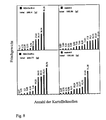
- each vertical bar represents a tuber, the weight of which is given in g above the bar.
- the total weight (total) is also given in g.
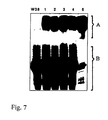
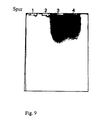
- Lane 1 Protoplasts of untransformed tobacco plants
- Lane 2 vacuoles of untransformed tobacco plants
- Lane 3 protoplasts of transgenic tobacco plants
- Lane 4 vacuoles of transgenic tobacco plants.
- Sucrose is split into the two hexoses glucose and fructose by the enzyme invertase. These two hexoses are not in chemical equilibrium with the sucrose and therefore do not lead to a backlog in relation to the discharge of the phloem with respect to the sucrose.
- a DNA sequence from yeast which codes for the suc2 gene, is provided with a constitutive expression promoter of the 35S RNA of the Cauliflower mosaic virus and a plant termination signal.
- the plant termination signal includes the 3 'end of the poly-A side of the octopine synthase gene.
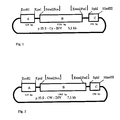
- the plasmid p35S-Cy-INV consists of the three fragments A, B and C, which were cloned into the sites for restriction enzymes of the polylinker of pUC18 (see FIG. 1).
- Fragment A contains the 35S promoter of the Cauliflower Mosaic Virus (CaMV). It contains a fragment which comprises the nucleotides 6909 to 7437 of the CaMV (Franck et al., (1980) Cell 21 , 285-294) and was generated as an EcoRI-KpnI fragment from the plasmid pDH51 (Pietrzak et al (1986) Nucleic Acids Res. 14 , 5857-5868) isolated and cloned between the Eco RI-KpnI sites of the plasmid pUC18.
- CaMV Cauliflower Mosaic Virus
- the fragment B contains 23 nucleotides of a proteinase inhibitor II gene from potato (Solanum tuberosum) (nucleotides 923-945, Keil et al (1986), Nucleic Acids Res. 14 , 5641-5650), which binds to the via a linker of 7 base pairs Sequence AGCTTTC to the yeast suc2 gene comprising the nucleotides +64 to +1765 (Taussig and Carlson (1983) Nucleic Acids Res. 11 , 1943-1954) fused.
- potato Solanum tuberosum
- Sequence AGCTTTC to the yeast suc2 gene comprising the nucleotides +64 to +1765 (Taussig and Carlson (1983) Nucleic Acids Res. 11 , 1943-1954) fused.
- Fragment B was placed as a Sca / XmnI fragment between the SmaI / PstI interfaces of the polylinker of pUC18, the 3 'overhanging ends of the PstI interface being blunted by incubation with T4-DNA polymerase prior to ligation.
- Fragment C contains the polyadenylation signal of gene 3 of the T-DNA of the Ti plasmid pTiACH5 (Gielen et al. (1984); EMBO J. 3 , 835-846), nucleotides 11749-11939, which as a PvuII-HindIII fragment from the Plasmid pAGV 40 (Herrera-Estrella et al (1983) Nature 303 , 209-213) was isolated and after addition of SphI linkers to the PvuII site between the SphI-HindIII sites of the polylinker of pUC18 had been cloned.
- the plasmid p 35 S-Cy-INV has a size of 5.1 kb (see FIG. 1).
- the section of plasmid p35S-Cy-INV comprising fragments A, B and C is introduced into binary vectors and introduced into tobacco and potato plants with the aid of the Agrobacterium system. Intact and fertile plants were regenerated from transformed cells. The analysis of the regenerated plants showed an invertase activity in all analyzed tissues (leaf, stem), which was missing in non-transformed plants. It could be demonstrated by immunological methods that this invertase is yeast invertase. This invertase is located in the cytosol or cytoplasm. Thus, transgenic tobacco and potato plants were produced which contained a new invertase activity in all organs and cells, which originates from the yeast invertase gene introduced into these plants.
- the regenerated tobacco and potato plants showed a clear difference in relation to non-transformed plants.
- the leaves showed a variation in the green color.
- individual transformed plants showed dwarfism of different strengths, which is essentially due to a shortening of the internode distance with the same number of leaves. It was also observed that the young leaves were rolled slightly inwards.
- the plasmid p35S-CW-INV was produced in an analogous procedure as described in Example 1, but with the modification that before the coding sequence of the invertase gene is a signal peptide necessary for inclusion in the endoplasmic reticulum of a plant gene (proteinase inhibitor II gene from potato (Solanum tuberosum), Keil et al, 1986).
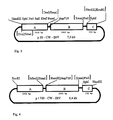
- the plasmid p35S-CW-INV has a size of 7.1 kb and consists of the three fragments A, B and C, which have been cloned into the given interfaces for restriction enzymes of the polylinker of pMPK110 (see FIG. 2).
- Fragment A contains the 355 promoter of the Cauliflower Mosaic Virus (CaMV). It contains a fragment which comprises the nucleotides 6909 to 7437 of the CaMV (Franck et al (1980) Cell 21 , 285-294) and was developed as an EcoRI-KpnI fragment from the plasmid pDH51 (Pietrzak et al (1986) Nucleic Acids Res. 14 , 5857-5868) isolated and cloned between the EcoRI-KpnI sites of the plasmid pMPK110.
- CaMV Cauliflower Mosaic Virus
- Fragment B contains nucleotides 923-1159 of a proteinase inhibitor II gene from the potato (Solanum tuberosum) (Keil et al (1986) Nucleic Acids Res. 14 , 5641-5650). which fuses via a linker with the sequence ACC GAA TTG GGG ATC CCA GCT TTC to the suc2 gene from yeast, which comprises nucleotides +64 to +1765 (Taussig and Carlson (1983) Nucleic Acids Res. 11 , 1943-1954) is.
- a signal peptide of a vegetable protein necessary for the uptake of proteins into the endoplasmic reticulum is fused to the invertase sequence at the N-terminal.
- Fragment B was placed as a Sca / XmnI fragment between the SmaI / PstI sites of the polylinker of pMPK110, the 3 'overhanging ends of the PstI site being blunted by incubation with T4 DNA polymerase prior to ligation.
- Fragment C contains the polyadenylation signal of gene 3 of the T-DNA of the Ti plasmid pTiACH5 (Gielen et al (1984) EMBO J. 3 , 835-846, nucleotides 11748-11939), which as a PvuII-HindIII fragment from the plasmid pAGV 40 (Herrera-Estrella et al (1983) Nature 303 , 209-213) and after addition of SphI linkers to the PvuII interface between the SphI-HindIII interfaces of the polylinker of pMPK110 had been cloned (see FIG. 2).
- the section of plasmid p35S-CW-INV comprising fragments A, B and C was introduced into the plants in an analogous manner to that described in Example 1.
- Analysis of the transgenic plants using a Western blot and activity test showed that the invertase encoded by the suc2 gene is now located in the extracellular space.
- Transgenic tobacco and potato plants which contain this chimeric gene in addition to a compression of the plants due to a reduced internode spacing, show a new leaf phenotype, which ranges from the formation of a mosaic pattern from green and chlorotic areas to the formation of necrotic areas. Furthermore, they show a greatly reduced root formation.
- the plasmid p33-CW -INV manufactured in a procedure analogous to that described in Example 2, but with the replacement of the 35S promoter for the promoter of the class I patatin gene B33 (Rocha-Sosa et al (1989) EMBO J. 8 , 23-29).
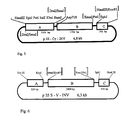
- the plasmid p33S-CW-INV has a size of 7.0 kb and consists of the three fragments A, B and C, which were cloned into the sites for restriction enzymes of the polylinker of pUC118 (see FIG. 3).
- Fragment A contains the DraI-DraI fragment (position -1512 to position +14) of the promoter region of the patatin gene B33 (Rocha-Sosa et al (1989) EMBO J, 8 , 23-29), which is in the SmaI site of the polylinker was cloned from pUC118.
- Fragments B and C correspond to fragments B and C in plasmid p35S-CW-INV (see FIG. 2).
- the plasmid p35S-CW-INV was digested with Asp718 (partial) and HindIII, the rear ends of the HindIII site were filled with DNA polymerase (Klenow fragment) and the fragment containing the two intact fragments B and C was filled separated from other fragments by gel electrophoresis. This fragment was then placed between the with DNA polymerase (Klenow fragment) partially filled with G + A EcoRI interface and the Asp718 interface cloned. The HindIII interface was obtained by partial filling.
- the plasmid p33-CW-INV was introduced into the plants in an analogous manner to that described in Example 1.
- the chimeric gene led to tuber-specific expression of the invertase.
- the plasmid p1700-CW-INV has a size of 8.4 kb and consists of the three fragments A, B and C, which were cloned into the sites for restriction enzymes of the polylinker of pMPK110 (see FIG. 4).
- Fragment A contains the EcoRI-MboII fragment of the ST-LS1 gene from potato.
- the position of the MboII side in relation to the published sequence (Eckes et al (1986) Mol. Gen. Genetics 205 , 14-22) is at position 1585 (position +1 to position +1585).
- This fragment was cloned between the EcoRI-SmaI sites of the polylinker of PUC18, whereby the overhanging 3 'end of the MboII site had previously been blunted by T4-DNA polymerase.
- Fragments B and C correspond to fragments B and C in plasmid p35S-CW-INV (see FIG. 2).
- the plasmid p35S-CW-INV was partially digested with Asp 718, the remaining 3 'ends were filled in with DNA polymerase (Klenow fragment) and the plasmid was cleaved with HindIII.
- the fragment containing the two intact fragments B and C was separated from other fragments by gel electrophoresis, purified and cloned between the BamHI-HindIII sites of the polylinker of pMPK 110.
- the BamHI interface had previously been blunted by filling with DNA polymerase I.
- the plasmid p33-Cy-INV has a size of 6.8 kb and consists of the three fragments A, B and C, which were cloned into the sites for restriction enzymes of the polylinker of pUC118 (see FIG. 5).
- Fragment A contains the DraI-DraI fragment (position -1512 to position +14) of the promoter region of the patatin gene B33 (Rocha-Sosa et al (1989) EMBO J. 8, 23-29), which is in the SmaI site of the polylinker was cloned from pUC118.
- Fragments B and C correspond to fragments B and C in plasmid p35S-Cy-INV.
- the plasmid p35S-Cy-INV was digested with HindIII, the remaining 3 'end was filled in with DNA polymerase (Klenow fragment), the plasmid was partially digested with Asp 718 and the two intact fragments B and C containing fragment separated from other fragments by gel electrophoresis. This fragment was then cloned between the Asp718 and the EcoRI site of the pUG118 polylinker partially filled with G + A with DNA polymerase. The HindIII interface was obtained by partial filling.
- the plasmid p33-Cy-INV was introduced into the plant using a procedure analogous to that described in Example 1.
- the plasmid p35S-V-INV was prepared.
- the plasmid p35S-V-INV has a size of 6.3 kb and consists of the three fragments A, B and C, which were cloned into the indicated sites of the polylinker of pUC 18 (see FIG. 6).
- Fragment A contains the 35S promoter of the Cauliflower Mosaic Virus (CaMV).
- the fragment comprises nucleotides 6909 to 7437 of the CaMV (Franck et al., Cell 21, 285-2941). and was isolated as an Eco RI-Kpn I fragment from the plasmid pDH5l (Pietrzak et al., Nucleic Acid Research 14, 5857-5868) and cloned between the Eco RI-Kpn I sites of the polylinker of the plasmid pUC 18 (see FIG 6).
- Fragment B contains the nucleotides 707 to 1895 of the sequence of the genomic patatin clone pgT5 (Rosahl et al., 1986), which is linked to the suc 2 gene from yeast via a linker with the sequence AGCTTTC and which contains the nucleotides +64 to +1765 (thousand and Carlson, (1983) Nucleic Acid Res. 11, 1943-1954).
- a peptide which directs proteins into the vacuole of higher plants is hereby fused to the invertase sequence with corresponding vacuolar targetting signals at the N-terminal.
- Fragment B was placed as an Eco RV-Xmn I fragment between the SmaI / Pst I interfaces of the polylinker of pUC 18 (see FIG. 6), the 3 ′ overhanging ends of the Pst I interface being incubated with T4 prior to ligation DNA polymerase had been blunted.
- Fragment C (192 bp) contains the polyadenylation signal of gene 3 of the T-DNA of the Ti plasmid pTiACH5 (Gielen et al., EMBO J. 3, 835-846) with the Nucleotides 11749-11939, which was isolated as a Pvu II-Hind III fragment from the plasmid pAGV 40 (Herrera-Estrella et al. (1983) Nature 303, 209-213) and after addition of Sph I linkers to the Pvu II interface between the Sph I-Hind III sites of the polylinker of pUC 18 had been cloned.
- Transgenic tobacco plants showed that the invertase encoded by the suc 2 gene is now located in the vacuole (see FIG. 9).
- Transgenic tobacco plants showed a new leaf phenotype in addition to a compression of the plants. This manifests itself in the fact that older leaves, starting from the tip of the leaf, developed chlorotic areas.
Landscapes
- Health & Medical Sciences (AREA)
- Life Sciences & Earth Sciences (AREA)
- Genetics & Genomics (AREA)
- Chemical & Material Sciences (AREA)
- Organic Chemistry (AREA)
- Engineering & Computer Science (AREA)
- Molecular Biology (AREA)
- Bioinformatics & Cheminformatics (AREA)
- Biotechnology (AREA)
- Zoology (AREA)
- Wood Science & Technology (AREA)
- Biochemistry (AREA)
- General Health & Medical Sciences (AREA)
- General Engineering & Computer Science (AREA)
- Biomedical Technology (AREA)
- Microbiology (AREA)
- Biophysics (AREA)
- Medicinal Chemistry (AREA)
- Nutrition Science (AREA)
- Cell Biology (AREA)
- Plant Pathology (AREA)
- Gastroenterology & Hepatology (AREA)
- Physics & Mathematics (AREA)
- Proteomics, Peptides & Aminoacids (AREA)
- Breeding Of Plants And Reproduction By Means Of Culturing (AREA)
- Micro-Organisms Or Cultivation Processes Thereof (AREA)
Applications Claiming Priority (2)
| Application Number | Priority Date | Filing Date | Title |
|---|---|---|---|
| DE4004800 | 1990-02-13 | ||
| DE4004800A DE4004800C2 (de) | 1990-02-13 | 1990-02-13 | Im Habitus und Ertrag veränderte transgene Pflanzen |
Publications (2)
| Publication Number | Publication Date |
|---|---|
| EP0442592A2 true EP0442592A2 (fr) | 1991-08-21 |
| EP0442592A3 EP0442592A3 (en) | 1992-05-27 |
Family
ID=6400273
Family Applications (1)
| Application Number | Title | Priority Date | Filing Date |
|---|---|---|---|
| EP19910250035 Withdrawn EP0442592A3 (en) | 1990-02-13 | 1991-02-08 | Plasmids for the production of transgenic plants altered in appearance and yield |
Country Status (9)
| Country | Link |
|---|---|
| US (1) | US5436394A (fr) |
| EP (1) | EP0442592A3 (fr) |
| JP (1) | JP3288395B2 (fr) |
| AU (1) | AU650639B2 (fr) |
| CA (1) | CA2036103A1 (fr) |
| DE (1) | DE4004800C2 (fr) |
| HU (1) | HU218048B (fr) |
| IE (1) | IE910480A1 (fr) |
| IL (1) | IL97157A0 (fr) |
Cited By (13)
| Publication number | Priority date | Publication date | Assignee | Title |
|---|---|---|---|---|
| EP0462065A3 (en) * | 1990-06-15 | 1992-05-20 | Ciba-Geigy Ag | New signal sequences |
| EP0485044A3 (en) * | 1990-11-08 | 1992-07-08 | Institut Fuer Genbiologische Forschung Berlin Gmbh | Plasmids for the production of transgenic plants that are modified in habit and yield |
| EP0550162A1 (fr) * | 1991-12-31 | 1993-07-07 | University of Kentucky Research Foundation | Altération d'acides gras par une desaturase dans des tissus transgéniques de plantes |
| WO1996024679A1 (fr) * | 1995-02-10 | 1996-08-15 | Monsanto Company | Expression de la phosphorylase du sucrose dans des plantes |
| US5576428A (en) * | 1991-02-22 | 1996-11-19 | The Salk Institute Biotechnology/Industrial Associates, Inc. | Invertase gene(s) and uses thereof |
| WO1997007221A1 (fr) * | 1995-08-11 | 1997-02-27 | Planttec Biotechnologie Gmbh | Cellules vegetales transgeniques et plantes a taux de glycolyse augmente |
| US5646023A (en) * | 1993-04-15 | 1997-07-08 | J.R. Simplot Company | Modulation of sugar content in plants |
| DE19630738A1 (de) * | 1996-07-30 | 1998-02-05 | Univ Heidelberg | Invertase-Inhibitoren |
| WO1997042326A3 (fr) * | 1996-05-03 | 1998-03-12 | Mogen Int | Regulation du metabolisme par modification du taux de trehalose-6-phosphate |
| WO1999029881A1 (fr) * | 1997-12-11 | 1999-06-17 | Zeneca Limited | Methode genetique |
| WO2000009719A1 (fr) * | 1998-08-12 | 2000-02-24 | Thomas Rausch | Plantes transgeniques et cellules vegetales presentant une expression reduite des inhibiteurs d'invertase |
| US6087161A (en) * | 1990-06-07 | 2000-07-11 | Zeneca Mogen B.V. | Polynucleotide encoding osmotin modified for apoplast targeting |
| US7514598B2 (en) | 1998-08-12 | 2009-04-07 | Thomas Rausch | Transgenic plants and plant cells with reduced expression of invertase inhibitors |
Families Citing this family (18)
| Publication number | Priority date | Publication date | Assignee | Title |
|---|---|---|---|---|
| US5917127A (en) * | 1990-02-13 | 1999-06-29 | Hoechst Schering Agrevo Gmbh | Plasmids useful for and methods of preparing transgenic plants with modifications of habit and yield |
| US6420629B1 (en) * | 1996-09-09 | 2002-07-16 | B.C. Research Inc. | Process of increasing plant growth and yield and modifying cellulose production in plants |
| US6518486B1 (en) | 1998-06-12 | 2003-02-11 | University Of Guelph | Enhanced storage organ production in plants |
| AU5756800A (en) * | 1999-06-21 | 2001-01-09 | Pioneer Hi-Bred International, Inc. | Enhanced floral sink strength and increased stability of seed set in plants |
| EP3546588A3 (fr) * | 2007-06-01 | 2019-12-18 | Corbion Biotech, Inc. | Cellule d'algue recombinante et son utilisation pour la production de lipides |
| DK2169054T3 (en) | 2007-07-03 | 2016-03-07 | Idemitsu Kosan Co | A vaccine against edema disease in swine |
| MX338039B (es) | 2008-04-09 | 2016-03-30 | Solazyme Inc | Modificacion quimica directa de biomasa bacteriana y aceites microbianos. |
| US20100303989A1 (en) | 2008-10-14 | 2010-12-02 | Solazyme, Inc. | Microalgal Flour |
| CN102271525B (zh) * | 2008-10-14 | 2015-01-07 | 索拉兹米公司 | 微藻生物质的食品组合物 |
| EP2370555B1 (fr) | 2008-11-28 | 2016-04-20 | Solazyme, Inc. | Production d huiles personnalisées dans des micro-organismes hétérotrophes |
| SG185780A1 (en) | 2010-05-28 | 2013-01-30 | Solazyme Inc | Tailored oils produced from recombinant heterotrophic microorganisms |
| AU2011323288B2 (en) | 2010-11-03 | 2016-05-26 | Corbion Biotech, Inc. | Microbial oils with lowered pour points, dielectric fluids produced therefrom, and related methods |
| CA2825691C (fr) | 2011-02-02 | 2020-08-25 | Solazyme, Inc. | Huiles personnalisees produites a partir de microorganismes oleagineux recombinants |
| SG10201702442RA (en) | 2012-04-18 | 2017-05-30 | Terravia Holdings Inc | Tailored oils |
| US10098371B2 (en) | 2013-01-28 | 2018-10-16 | Solazyme Roquette Nutritionals, LLC | Microalgal flour |
| FR3009619B1 (fr) | 2013-08-07 | 2017-12-29 | Roquette Freres | Compositions de biomasse de microalgues riches en proteines de qualite sensorielle optimisee |
| JP6517196B2 (ja) | 2013-10-04 | 2019-05-22 | テラヴィア ホールディングス, インコーポレイテッド | 調整油 |
| BR112017000414A2 (pt) | 2014-07-10 | 2017-11-07 | Terravia Holdings Inc | genes cetoacil-acp sintase e utilizações dos mesmos |
Family Cites Families (11)
| Publication number | Priority date | Publication date | Assignee | Title |
|---|---|---|---|---|
| US4771002A (en) * | 1984-02-24 | 1988-09-13 | Lubrizol Genetics, Inc. | Transcription in plants and bacteria |
| US4801540A (en) * | 1986-10-17 | 1989-01-31 | Calgene, Inc. | PG gene and its use in plants |
| GB8927048D0 (en) * | 1989-11-30 | 1990-01-31 | Ici Plc | Dna,constructs,cells and plants derived therefrom |
| NZ224787A (en) * | 1987-05-26 | 1990-08-28 | Calgene Inc | A dna construct for specifically modifying the phenotype of fruit as distinct from other plant tissue |
| EP0319353B1 (fr) * | 1987-10-20 | 1996-10-02 | Plant Genetic Systems N.V. | Procédé pour la production de peptide biologiquement actif par l'expression de gènes de protéines de réserves modifiées dans les plantes transgèniques |
| DE3810286A1 (de) * | 1988-03-25 | 1989-10-12 | Max Planck Gesellschaft | Transgene pflanze mit modifizierter physiologie, morphologie und modifiziertem hormonmetabolismus, gewebekulturen dieser pflanze und verfahren zu ihrer herstellung |
| AU3852089A (en) * | 1988-06-21 | 1990-01-12 | Calgene, Inc. | Methods and compositions for altering physical characteristics of fruit and fruit products |
| WO1990001551A1 (fr) * | 1988-07-29 | 1990-02-22 | Washington University School Of Medicine | Production de polypeptides pour usage commercial au moyen d'un tissu d'endosperme transforme genetiquement |
| EP1103616A3 (fr) * | 1989-02-24 | 2001-06-27 | Monsanto Company | Gènes synthétiques de plantes et méthode pour leur préparation |
| AU644619B2 (en) * | 1989-12-21 | 1993-12-16 | Advanced Technologies (Cambridge) Limited | Modification of plant metabolism |
| EP0462065B1 (fr) * | 1990-06-15 | 2005-03-02 | Syngenta Participations AG | Nouvelles séquences de signal |
-
1990
- 1990-02-13 DE DE4004800A patent/DE4004800C2/de not_active Expired - Lifetime
-
1991
- 1991-02-06 IL IL97157A patent/IL97157A0/xx unknown
- 1991-02-08 AU AU70898/91A patent/AU650639B2/en not_active Ceased
- 1991-02-08 EP EP19910250035 patent/EP0442592A3/de not_active Withdrawn
- 1991-02-11 CA CA002036103A patent/CA2036103A1/fr not_active Abandoned
- 1991-02-12 HU HU68/91A patent/HU218048B/hu not_active IP Right Cessation
- 1991-02-13 IE IE048091A patent/IE910480A1/en not_active Application Discontinuation
- 1991-02-13 JP JP01998491A patent/JP3288395B2/ja not_active Expired - Fee Related
-
1993
- 1993-11-23 US US08/156,876 patent/US5436394A/en not_active Expired - Fee Related
Cited By (28)
| Publication number | Priority date | Publication date | Assignee | Title |
|---|---|---|---|---|
| US6087161A (en) * | 1990-06-07 | 2000-07-11 | Zeneca Mogen B.V. | Polynucleotide encoding osmotin modified for apoplast targeting |
| EP0462065A3 (en) * | 1990-06-15 | 1992-05-20 | Ciba-Geigy Ag | New signal sequences |
| US6054637A (en) * | 1990-06-15 | 2000-04-25 | Novartis Finance Corporation | Signal sequences for vacuolar sorting |
| EP0485044A3 (en) * | 1990-11-08 | 1992-07-08 | Institut Fuer Genbiologische Forschung Berlin Gmbh | Plasmids for the production of transgenic plants that are modified in habit and yield |
| US5492820A (en) * | 1990-11-08 | 1996-02-20 | Institut Fur Genbiologische Forschung Berlin Gmbh | Plasmids for the production of transgenic plants that are modified in habit and yield |
| US5576428A (en) * | 1991-02-22 | 1996-11-19 | The Salk Institute Biotechnology/Industrial Associates, Inc. | Invertase gene(s) and uses thereof |
| US5665579A (en) * | 1991-02-22 | 1997-09-09 | The Salk Institute Biotechnology/Industrial Associates, Inc. | Invertase genes and uses thereof |
| EP0550162A1 (fr) * | 1991-12-31 | 1993-07-07 | University of Kentucky Research Foundation | Altération d'acides gras par une desaturase dans des tissus transgéniques de plantes |
| US5646023A (en) * | 1993-04-15 | 1997-07-08 | J.R. Simplot Company | Modulation of sugar content in plants |
| WO1996024679A1 (fr) * | 1995-02-10 | 1996-08-15 | Monsanto Company | Expression de la phosphorylase du sucrose dans des plantes |
| US5716837A (en) * | 1995-02-10 | 1998-02-10 | Monsanto Company | Expression of sucrose phosphorylase in plants |
| USRE39114E1 (en) | 1995-02-10 | 2006-05-30 | Monsanto Technology Llc | Expression of sucrose phosphorylase in plants |
| US6476295B2 (en) | 1995-02-10 | 2002-11-05 | Monsanto Technology, Llc | Expression of sucrose phosphorylase in plants |
| EA000634B1 (ru) * | 1995-02-10 | 1999-12-29 | Монсанто Компани | Рекомбинантная двухцепочечная последовательность днк для экспрессии сахарозофосфорилазы в растении, способ получения трансгенного растения с повышенной экспрессией сахарозофосфорилазы в различных частях растения и линия трансформированных клеток растения |
| US6235971B1 (en) | 1995-02-10 | 2001-05-22 | Monsanto Company | Expression of sucrose phoshorylase in plants |
| US6222098B1 (en) | 1995-02-10 | 2001-04-24 | Monsanto Company | Expression of sucrose phosphorylase in plants |
| WO1997007221A1 (fr) * | 1995-08-11 | 1997-02-27 | Planttec Biotechnologie Gmbh | Cellules vegetales transgeniques et plantes a taux de glycolyse augmente |
| AU719452B2 (en) * | 1995-08-11 | 2000-05-11 | Planttec Biotechnologie Gmbh | Transgenic plant cells and plants with an increased glycolysis rate |
| US6833490B1 (en) | 1996-05-03 | 2004-12-21 | Mogen International N.V. | Regulating metabolism by modifying the level of trehalose-6-phosphate |
| WO1997042326A3 (fr) * | 1996-05-03 | 1998-03-12 | Mogen Int | Regulation du metabolisme par modification du taux de trehalose-6-phosphate |
| US7247770B2 (en) | 1996-05-03 | 2007-07-24 | Syngenta Mogen B.V. | Regulating metabolism by modifying the level of trehalose-6-phosphate |
| US8124840B2 (en) | 1996-05-03 | 2012-02-28 | Syngenta Mogen B.V. | Regulating metabolism by modifying the level of trehalose-6-phosphate |
| DE19630738A1 (de) * | 1996-07-30 | 1998-02-05 | Univ Heidelberg | Invertase-Inhibitoren |
| WO1999029881A1 (fr) * | 1997-12-11 | 1999-06-17 | Zeneca Limited | Methode genetique |
| US7470831B1 (en) | 1997-12-11 | 2008-12-30 | Syngenta Limited | Genetic method |
| US7777099B2 (en) | 1997-12-11 | 2010-08-17 | Syngenta Limited | Genetic method |
| WO2000009719A1 (fr) * | 1998-08-12 | 2000-02-24 | Thomas Rausch | Plantes transgeniques et cellules vegetales presentant une expression reduite des inhibiteurs d'invertase |
| US7514598B2 (en) | 1998-08-12 | 2009-04-07 | Thomas Rausch | Transgenic plants and plant cells with reduced expression of invertase inhibitors |
Also Published As
| Publication number | Publication date |
|---|---|
| DE4004800C2 (de) | 2000-12-21 |
| DE4004800A1 (de) | 1991-08-14 |
| JPH0549482A (ja) | 1993-03-02 |
| HU910468D0 (en) | 1991-08-28 |
| US5436394A (en) | 1995-07-25 |
| IL97157A0 (en) | 1992-05-25 |
| CA2036103A1 (fr) | 1991-08-14 |
| AU650639B2 (en) | 1994-06-30 |
| IE910480A1 (en) | 1991-08-14 |
| AU7089891A (en) | 1991-08-15 |
| HU218048B (hu) | 2000-05-28 |
| EP0442592A3 (en) | 1992-05-27 |
| HUT58810A (en) | 1992-03-30 |
| JP3288395B2 (ja) | 2002-06-04 |
Similar Documents
| Publication | Publication Date | Title |
|---|---|---|
| DE4004800C2 (de) | Im Habitus und Ertrag veränderte transgene Pflanzen | |
| EP0375092B1 (fr) | Régulation de transcription spécifique pour des tubercules de pomme de terre | |
| DE4104782B4 (de) | Neue Plasmide, enthaltend DNA-Sequenzen, die Veränderungen der Karbohydratkonzentration und Karbohydratzusammensetzung in Pflanzen hervorrufen, sowie Pflanzen und Pflanzenzellen enthaltend dieses Plasmide | |
| DE68918533T2 (de) | Überexpression von Phytochrom in transgenen Pflanzen. | |
| EP0375091A1 (fr) | Régulation de transcription inductible par blessure spécifique pour des tubercules de pommes de terre | |
| DE4447387A1 (de) | Debranching-Enzyme aus Pflanzen und DNA-Sequenzen kodierend diese Enzyme | |
| DE19509695A1 (de) | Verfahren zur Herstellung einer modifizieren Stärke in Pflanzen, sowie die aus den Pflanzen isolierbare modifizierte Stärke | |
| DE4013144A1 (de) | Neue plasmide, enthaltend dna-sequenzen, die veraenderungen der karbohydrat- und proteinkonzentration und der karbohydrat- und proteinzusammensetzung in kartoffelknollen hervorrufen, sowie zellen einer kartoffelpflanze, enthaltend diese plasmide | |
| DE69132758T2 (de) | Plasmide zur Herstellung von transgenen Pflanzen welche in Habitus und Ertrag verändert sind | |
| DE69432988T2 (de) | Für ammonium-transporter kodierende dna-sequenzen und dieser enthaltende, plasmide, bakterien, hefen und pflanzenzellen | |
| DE19734218A1 (de) | Verfahren zur Ertragssteigerung in Pflanzen | |
| DE4040954C2 (de) | Verfahren zur Erzeugung von pathogen-resistenten Pflanzen | |
| DE4439748A1 (de) | Verfahren zur Veränderung des Blühverhaltens bei Pflanzen | |
| DE10047286B4 (de) | Isomalt produzierende transgene Pflanze | |
| EP1276882A2 (fr) | Procede de modification genetique d'une plante | |
| DE19732926C2 (de) | DNA-Sequenzen, kodierend einen Glukose-6-phosphat-Phosphat-Translokator, sowie Plasmide, Bakterien, Hefen und Pflanzen, enthaltend diesen Transporter | |
| Dolgov et al. | Phytopathogen resistance improvement of horticultural crops by plant-defensin gene introduction | |
| WO1997045547A2 (fr) | Mort cellulaire localisee dans des plantes | |
| EP1346054B1 (fr) | Acides nucleiques codant pour des invertases vacuolaires, cellules vegetales et plantes contenant ces acides nucleiques, ainsi que leur utilisation | |
| DE19826444C1 (de) | DNA-Sequenzen kodierend einen Glukose-Translokator, Plasmide, Bakterien, Hefen und Pflanzen enthaltend diesen Transporter | |
| DE19741375C2 (de) | Transgene Pflanzen, deren oberirdische Teile früher reifen und vollständig absterben | |
| DE4408629A1 (de) | Verfahren zur Inhibierung der Blütenbildung in Pflanzen | |
| DE10050233A1 (de) | Verfahren zur genetischen Modifizierung einer Pflanze | |
| DE4438821A1 (de) | Verfahren zur Inhibierung sowie zur Induktion der Blütenbildung in Pflanzen (III) | |
| DE4435366A1 (de) | Verfahren zur Inhibierung der Blütenbildung in Pflanzen |
Legal Events
| Date | Code | Title | Description |
|---|---|---|---|
| PUAI | Public reference made under article 153(3) epc to a published international application that has entered the european phase |
Free format text: ORIGINAL CODE: 0009012 |
|
| 17P | Request for examination filed |
Effective date: 19910208 |
|
| AK | Designated contracting states |
Kind code of ref document: A2 Designated state(s): AT BE CH DE DK ES FR GB GR IT LI LU NL SE |
|
| PUAL | Search report despatched |
Free format text: ORIGINAL CODE: 0009013 |
|
| AK | Designated contracting states |
Kind code of ref document: A3 Designated state(s): AT BE CH DE DK ES FR GB GR IT LI LU NL SE |
|
| 17Q | First examination report despatched |
Effective date: 19950807 |
|
| RAP1 | Party data changed (applicant data changed or rights of an application transferred) |
Owner name: HOECHST SCHERING AGREVO GMBH |
|
| RAP1 | Party data changed (applicant data changed or rights of an application transferred) |
Owner name: AVENTIS CROPSCIENCE GMBH |
|
| RAP1 | Party data changed (applicant data changed or rights of an application transferred) |
Owner name: AVENTIS CROPSCIENCE GMBH |
|
| RAP1 | Party data changed (applicant data changed or rights of an application transferred) |
Owner name: BAYER CROPSCIENCE GMBH |
|
| STAA | Information on the status of an ep patent application or granted ep patent |
Free format text: STATUS: THE APPLICATION HAS BEEN WITHDRAWN |
|
| 18W | Application withdrawn |
Effective date: 20040816 |