EP0443503B1 - Mobiles Kommunikationssystem - Google Patents
Mobiles Kommunikationssystem Download PDFInfo
- Publication number
- EP0443503B1 EP0443503B1 EP91102299A EP91102299A EP0443503B1 EP 0443503 B1 EP0443503 B1 EP 0443503B1 EP 91102299 A EP91102299 A EP 91102299A EP 91102299 A EP91102299 A EP 91102299A EP 0443503 B1 EP0443503 B1 EP 0443503B1
- Authority
- EP
- European Patent Office
- Prior art keywords
- general call
- station
- mobile
- base station
- communication
- Prior art date
- Legal status (The legal status is an assumption and is not a legal conclusion. Google has not performed a legal analysis and makes no representation as to the accuracy of the status listed.)
- Expired - Lifetime
Links
Images




Classifications
-
- H—ELECTRICITY
- H04—ELECTRIC COMMUNICATION TECHNIQUE
- H04W—WIRELESS COMMUNICATION NETWORKS
- H04W36/00—Hand-off or reselection arrangements
- H04W36/08—Reselecting an access point
- H04W36/083—Reselecting an access point wherein at least one of the access points is a moving node
-
- H—ELECTRICITY
- H04—ELECTRIC COMMUNICATION TECHNIQUE
- H04W—WIRELESS COMMUNICATION NETWORKS
- H04W36/00—Hand-off or reselection arrangements
- H04W36/24—Reselection being triggered by specific parameters
- H04W36/30—Reselection being triggered by specific parameters by measured or perceived connection quality data
- H04W36/302—Reselection being triggered by specific parameters by measured or perceived connection quality data due to low signal strength
Definitions
- the present invention relates to a mobile communication system constituted by a switching station; a plurality of base stations connected to said switching station; and a plurality of mobile stations moving in a service area formed by combination of communication zones constituted by said base stations; wherein each base stations and each mobile stations having a speech radio channel for speech and a control radio channel for communication of control signals, said speech radio channel and said control radio channel being constituted by an upward channel from the mobile station to the base station and a downward channel from the base station to the mobile station, respectively, each communication zones contains a plurality of base stations, and said switching station transmits a general call command to said base stations in accordance with information included in a general call request signal.
- Such a mobile communication system is known from the European patent application EP-A-0 293 014, for example.
- This document shows a mobile communication system comprising connecting equipment units functioning as a plurality of base stations for use in carrying out communication with a plurality of radio telephone sets in a service zone by the use of a control channel and a plurality of speech channels.
- the document shows a control station for use in processing a call in a radio communication network system to carry out communication with a radio telephone set movable in a service area defined by the control station, with a control radio channel and a plurality of speech radio channels preassigned to the control station.
- the control station comprises first means selectively operable in first and second control modes and a speech mode for selectively accessing the control and the speech radio channels to allow reception of the call in the first control mode, not to allow the reception of the call in the second control mode, and to form a speech pass through a selected one of the speech channels in the speech mode and second means coupled to the first means for successively controlling the first means to switch either one of the first and the second control modes and the speech mode to another.
- FIG. 1 is a system constitution diagram showing a mobile communication system in the prior art disclosed in Japanese patent application JP-A-60038940.
- the mobile communication system comprises a switching station 1, base stations 2a - 2j connected to the switching station 1, a wired network 3 connecting between the switching station 1 and the base stations 2a - 2j, communication zones 4a - 4j of the base stations 2a - 2j, a crossover zone 5 where the communication zones 4a - 4j intersect each other, and a mobile station 6 moving in a service area 7 formed by the communication zones 4a - 4j.
- the base stations 2a - 2j and the mobile stations 6 have a speech radio channel (hereinafter referred to as "S-ch”) for speech, and a control radio channel (hereinafter referred to as "C-ch”) for communication of communication control signals.
- S-ch speech radio channel
- C-ch control radio channel
- These channels S-ch and C-ch are constituted by an upward channel from the mobile station 6 to the base stations 2a - 2j, and a downward channel from the base stations 2a - 2j to the mobile station 6, respectively.
- FIG. 2 is a timing chart showing signals transmitted or received between the base stations 2a - 2j and the mobile stations 6 in the mobile communication system in such constitution. The operation will be described in an example of position registration as follows.
- the base stations 2a - 2j transmit the position registration request signals (a) continuously using the downward channel of C-ch.
- the mobile station 6 at non-speaking state waits the position registration request signals (a) from the base stations 2a - 2j.
- the position registration request signal (a) is received in the communication zone where the mobile station 6 is located at present, for example, in the downward channel of C-ch from the base station 2a of the communication zone 4a, if the base station identification code included in the position registration information signal (a) is different from that stored by the mobile station 6 at the last position registration before then, the downward channel of S-ch with an empty signal (b) transmitted from the base station 2a is detected.
- the mobile station 6 When the mobile station 6 detects a signal of the downward channel of S-ch with the empty signal (b) transmitted, the mobile station 6 transmits a position registration signal (c) in the upward channel of S-ch corresponding thereto.
- the switching station 1 performs the position registration based on the position information. From taking synchronization of the position registration signal (c) until finishing its reception, the base station 2a transmits a transmission inhibiting signal (d) to the downward channel corresponding to the upward channel of S-ch where the position registration signal (c) is transmitted. Thereby the transmission of the position registration signal (c) to the same upward channel from other mobile station 6 can be prevented.
- the collision of C-ch of these stations causes the communication failure. Even if the time difference is taken for the transmission of C-ch in order to avoid such collision of C-ch, since the base station identification code is different per each base station, the mobile station 6 even in the same communication zone responds to the position registration request signal from each base station of the communication zone. Also the mobile station 6 storing the base station identification code of the base station of some communication zone waits signals in the communication processing including the base station identification code and does not respond to signals in the same communication processing including the base station identification code from other base station in the same communication zone thereby a long time is required until the execution of the communication processing.
- FIG. 3 is a system constitution diagram of another mobile communication system in the prior art disclosed, for example, in Japanese patent application JP-A-5214703.
- the mobile communication system comprises a switching station 1, base stations 2a, 2b connected to the switching station 1, a telephone terminal 20 incorporated in the switching station 1, communication zones 4a, 4b of the base stations 2a, 2b, a mobile station 6 moving in a service area formed by the communication zones 4a, 4b, wired networks 3a, 3b connecting the base stations 2a, 2b to the switching station 1, information of signal-to-noise ratio (hereinafter referred to as "SN ratio") 17a, 17b transmitted from the base station 2a or 2b to the switching station 1, base station control signals 18a, 18b for the switching station 1 to control the base stations 2a, 2b, and speech paths 19a, 19b installed in the switching station 1 for connecting the base stations 2a, 2b to the telephone terminal 20.
- SN ratio signal-to-noise ratio
- the base stations 2a, 2b and the mobile station 6 have a speech radio channel (hereinafter referred to as "S-ch”) for speech, and a control radio channel (hereinafter referred to as "C-ch”) for communication of communication control signals.
- S-ch speech radio channel
- C-ch control radio channel
- These channels S-ch and C-ch are constituted by an upward channel from the mobile station 6 to the base stations 2a, 2b, and a downward channel from the base stations 2a, 2b to the mobile stations 2a, 2b to the mobile station 6, respectively.
- the switching station 1 detects the movement of the mobile station 6 in following manner. That is, the base station 2b always measures the SN ratio of signals from the mobile station 6, and if the measured value is the standard value or more, the SN ratio information 17b is transmitted, for example, as "1" to the switching station 1. If the mobile station 6 is moved to the communication zone 4a, the measured value of the SN ratio in the base station 2b becomes the standard value or less. Consequently, the SN ratio information 17b from the base station 2b becomes "0" for example.
- the switching station 1 Since the SN ratio information 17b becomes "0", the switching station 1 detects the movement of the mobile station 6 to the outside of the communication zone of the base station 2b, and executes changing of the channel during speech. The switching station transmits the control signal 18a to the base station 2a adjacent to the communication zone, and commands the reception of the channel S-ch with frequency used by the mobile station 6 in the communication zone 4b. The base station 2a receives the channel S-ch, and if the SN ratio is the standard value or more, the SN ratio information 17a is transmitted as "1" to the switching station 1. On receiving the information, the switching station 1 changes the speech path 19a into the speech path 19b, and realizes the speech in the mobile station 6 - the base station 2a - the switching station 1 - the telephone terminal 20, and restores the base station 2b.
- the switching station 1 Since other mobile communication system in the prior art is constituted as above described, the switching station 1 must always measure and monitor the SN ratio of the received signals from the mobile station 6 regarding all base stations 2a, 2b. Also when the movement of the mobile station between the communication zones 4a, 4b is detected, the SN ratio information must be collected regarding all base stations at the periphery of the communication zone 4b before the movement, simultaneously or in sequence, in matching with the channel S-ch of frequency used by the mobile station 6 and the base station 2b within the communication zone 4b before the movement, until the communication zone 4a of the movement destination can be found. Consequently, problems exist in that large burden is applied to the processing.
- an object of the invention is to provide a mobile communication system wherein even when speech by channel S-ch between a mobile station and a base station is performed within the same communication zone the general call service can be normally realized.
- a mobile communication system as described at the beginning which is characterized in that a radio channel for building up a communication line on receipt of respective general call request signal from a mobile station is dedicated to one base station for each communication zone normally residing in a receiving state, said base station on receipt of said general call request signal from the requesting mobile station within said communication zone at the upward channel of said radio channel transmits the general call request signal to said switching sation, and said base stations on receipt of said command from said switching station transmit general call signal to said mobile stations on the speech radio channel or the control radio channel in use.
- the base station with the radio channel to be used only in the specific case allocated thereto is in the normally receiving state, and if a general call request signal exists on an upward channel of the radio channel from a mobile station within the communication zone, in accordance with the information included in the general call request signal, the switching station commands the general call to the base stations of all communication zones or the specific communication zone, and the base station receiving the command of the general call towards the general call signal to the mobile station using the upward channel of Cn-ch or S-ch, thereby the mobile communication system is realized in that while ordinary service of the mobile communication system using Cn-ch and S-ch is performed for each mobile station within the corresponding communication zone, performing of service such as the general call with higher priority can be always secured.
- a mobile communication system in the embodiment comprises a switching station 1, base stations 2a - 2g, a wired network 3, communication zones 4a, 4d - 4g, and a service area 7.
- Parts in FIG. 4 designated by the same reference numerals as those in FIG. 1 are the same as or similar to the parts in the prior art, and the detailed description shall be omitted.
- mobile stations 6a - 6g corresponding to the mobile station 6 shown in FIG. 1 move in the service area 7.
- the mobile communication system in the embodiment is different from the system of the prior art in that one communication zone (for example, 4a) is constituted by a plurality of (for example, three) base stations (for example, 2a - 2c).
- one base station 6d - 6g is shown for the simplification.
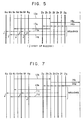
- FIG. 5 is a timing chart showing processing sequence of the general call
- FIG. 6 is an explanation diagram showing format of signals transmitted or received in this case.
- the base stations 2a - 2c combined in a group constitute the same communication zone 4a, and when the communication is performed between the mobile stations 6a - 6c within the communication zone 4a, the base stations 2a - 2c have the same base station identification code imaginarily, and the communication with the mobile stations 6a - 6c by Cn-ch (channels excluding Ce-ch among C channels) is performed by stations not performing the communication on the S-ch among the base stations 2a, 2b, and the base station 2c is allocated by the radio channel (hereinafter referred to as "Ce-ch") to be used only in the specific case among the C channel and is in the normally communication state.
- Ce-ch radio channel
- the mobile station 6c transmits the general call request signal 12a onto the Ce-ch by operation of the functional key installed on the mobile station 6c.
- the general call request signal 12a as shown in FIG. 6(a) includes the identification code (C) of the mobile station 6c, the base station identification code Ba of the base stations 2a - 2c, and the general call request code (A).
- the general call request signal 12a is received by the base station 2c, and the information of the signal shown in FIG. 6(b) is transmitted to the switching station 1, and further the switching station 1 receiving the information 14a transmits the general call command 14b also shown in FIG. 6(b) to each of the base stations 2a - 2g.
- the base station 2c receiving the general call command 14b transmits the general call request receiving signal 13a to the mobile station 6c.
- the general call request signal 13a includes the general call request receiving code (E) and the base station identification code Ba.
- each of other base stations 2a, 2b, 2d - 2g transmits the general call signal 11a or 11b onto the channel S-ch or Cn-ch in use.
- the general call signal 11a is transmitted from the base stations 2a, 2e, 2g during communication by S-ch shown by double line in FIG. 5 onto the S-ch
- the general call signal 11b is transmitted from the base stations 2b, 2d, 2f not performing communication by S-ch shown by single line in FIG.
- the general call signals 11a, 11b as shown in FIG. 6(d) include the base station identification code Bn (n: a, d, e, f or g) of each communication zone.
- Bn base station identification code
- Each of the mobile stations 6a, 6b, 6d - 6g receiving the general call signals 11a, 11b rumbles a buzzer provided therewith and informs a user of the general call. The buzzer keeps rumbling unless the user stops it.
- the communication after stopping the rumbling of the buzzer may be one-directional speech from one mobile station transmitting request of general call to other mobile station or teleconference communication between these mobile stations.
- the general call is performed for all mobile stations 6a - 6g within the service area 7, the mobile stations 6a - 6g may be divided into groups and the general call may be performed only for the specific group.
- FIG. 7 is a sequence chart showing the processing sequence of the general call in such embodiment
- FIG. 8 is an explanation diagram showing format of signals transmitted or received then.
- the mobile stations 6a, 6c, 6e, 6g are made the first group
- the mobile stations 6b, 6d, 6f are made the second group
- each group is supplied with mobile station group identification code FN1 or FN2 peculiar thereto respectively.
- Each of the mobile stations 6a - 6g stores the mobile station group identification code FN1 or FN2 of the group to which each station belongs.
- the general call request signal 12b with the mobile station group identification code FN1 shown in FIG. 8(a) added thereto is transmitted onto the Ce-ch by operation of a functional key provided on the mobile station 6c and subsequently by operation of a mobile station group identification code transmission key.
- the general call request signal 12b is received by the base station 2c and the information 14c of the signal is transmitted to the switching station 1, which transmits the general call command 14d to each of the base stations 2a - 2g.
- the mobile station group identification code FN1 is added also to the information 14c and the general call command 14d as shown in FIG. 8(b).
- the base station 2c On receiving the general call command 14d, the base station 2c transmits the general call request receiving signal 13b with the mobile station group identification code FN1 added thereto as shown in FIG. 8(c) to the mobile station 6c.
- other base stations 2a, 2b, 2d - 2g transmit the general call signal 11c or 11d with the mobile station group identification code FN1 added thereto as shown in FIG. 8(d) onto the channel S-ch or Cn-ch in use.
- Each of the mobile stations 6a, 6b, 6d - 6g receiving the general call signals 11c, 11d rumbles a buzzer and informs a user of the general call, only when the mobile station group identification code FN1 on the general call signals 11c, 11d is coincident with the mobile station group identification code FN1 or FN2 stored in each mobile station. Consequently, the buzzer rumbles in the mobile stations 6a, 6e, 6g included in the same group as that of the mobile station 6c.
- the switching station 1 may have the mobile station group identification code FN1 or FN2 and the information of the mobile stations included in the group and the communication to each mobile station of the group may be performed by processing of the switching station 1.
- the embodiment has been described where the mobile stations 6a - 6g are divided into groups.
- the communication zones 4a, 4d - 4g may be divided into groups and the general call may be performed only to the specific group.
- FIG. 9 is a sequence chart showing processing sequence of the general call in such embodiment
- FIG. 10 is an explanation diagram showing format of signals transmitted or received then.
- the communication zones 4a, 4d are made the first group and the communication zones 4e - 4g are made the second group, and each group is allocated with the base station group identification code HN1 or HN2 peculiar thereto respectively.
- Each of the base stations 2a - 2g within the communication zones 4a, 4d - 4g stores the base station group identification code HN1 or HN2 of the group to which the communication zones 4a, 4d - 4g belong.
- the general call request signal 12c with the base station group identification code HN1 shown in FIG. 10(a) added thereto is transmitted onto the Ce-ch by operation of a functional key provided on the mobile station 6c and subsequently by operation of a mobile station group identification code transmission key.
- the general call request signal 12c is received by the base station 2c and the information 14e of the signal is transmitted to the switching station 1, which transmits the general call command 14f to each of the base stations 2a - 2g.
- the base station group identification code HN1 is added to the information 14e and the general call command 14f as shown in FIG. 10(b).
- the base station 2c On receiving the general call command 14f, the base station 2c transmits the general call request receiving signal 13c with the base station group identification code HN1 added thereto as shown in FIG. 10(c) to the mobile station 6c.
- other base stations 2a, 2b, 2d - 2g transmit the general call signals 11a, 11b shown in FIG. 10(d), only when the base station group identification code HN1 on the general call command 14f is coincident with the base station identification information HN1 or HN2 stored in each base station. Consequently, the general call signals 11a, 11b are transmitted from the base stations 2a, 2b, 2d having the identification information HN1.
- Each of the mobile stations 6a - 6d moving in the communication zones 4a, 4b receiving the general call signals 11a, 11b rumbles a buzzer and informs a user of the general call.
- the switching station 1 may have the base station group identification code HN1 or HN2 and the information of the base stations included in the group, and the general call command 14f may be transmitted to each of the base stations of the group by processing of the switching station 1 and the general call may be applied to the communication zone. Further, the communication zone of the destination station may be assigned not only from the base station previously set but also from the mobile station at the start state of the general call.
- a plurality of base stations are arranged in one communication zone, and one of the base stations is made the normally receiving state and the radio channel to be used only in the specific case is allocated to the base station and used for the communication of the emergency signal such as general call request, thereby the mobile communication system can be obtained in that the emergency signal does not collide with a signal for ordinary speech control and the general call of high accuracy can be performed.
- FIG. 11 is a system constitution diagram showing a mobile communication system in another embodiment of the invention.
- the mobile communication system comprises a switching station 1, a wired network 3, communication zones 4a - 4j, a crossover zone 5, and a mobile station 6.
- Parts in FIG. 11 designated by the same reference numerals as those in FIG. 1 are the same as or similar to the parts in the prior art, and the detailed description shall be omitted.
- Numerals 27a - 27j designate base station groups each comprising plural base stations or single base station, and the communication zones 4a - 4j are constituted by these base station groups 27a - 27j.
- the communication destination of the mobile station is the telephone terminal, it may be other terminal connected through the mobile station or public network, or the direction of transmission and reception of the connection confirmation signal and the connection confirmation response signal may be made the reverse direction.
Landscapes
- Engineering & Computer Science (AREA)
- Computer Networks & Wireless Communication (AREA)
- Signal Processing (AREA)
- Mobile Radio Communication Systems (AREA)
Claims (4)
- Mobiles Kommunikationssystem mit einer Schaltstation (1);einer Mehrzahl von Basisstationen (2a-2g), die an die Schaltstation (1) angeschlossen sind; undeiner Mehrzahl von Mobilstationen (6a-6g), die sich in einem Service-Bereich bewegen, der aus einer Kombination von Kommunikationszonen (4a-4g) besteht, die durch die Basisstationen (2a-2g) gebildet werden;bei dem jede Basisstation (2a-2g) und jede Mobilstation (6a-6g) einen Sprachfunkkanal zur Übertragung von Sprache und einen Steuerfunkkanal zur Übertragung von Steuersignalen aufweist, wobei der Sprachfunkkanal und der Steuerfunkkanal aus einem Aufwärtskanal von der Mobilstation zur Basisstation bzw. aus einem Abwärtskanal von der Basisstation zur Mobilstation bestehen, und jede Kommunikationszone (4a-4g) eine Mehrzahl von Basisstationen (2a-2g) enthält unddie Schaltstation (1) dazu ausgebildet ist, in Übereinstimmung mit in einem allgemeinen Rufanforderungssignal (12a-12c) enthaltenen Informationen einen allgemeinen Rufbefehl (14b) an die Basisstationen (2a-2g) auszusenden, dadurch gekennzeichnet,daß bei dem Empfang eines entsprechenden Rufanforderungssignals (12a-12c) von einer Mobilstation (6c) einer Basisstation (2c) einer jeden Kommunkationszone (4a-4g) ein normalerweise im Empfangszustand stehender Funkkanal zum Aufbau eines Übertragungsweges zugeordnet wird,daß diese Basisstation (2c) beim Empfang des allgemeinen Rufanforderungssignals (12a-12c) von der anfordernden Mobilstation (6c) innerhalb dieser Kommunikationszone (4a-4g) über den Aufwärtskanal des Funkkanals dazu ausgebildet ist, das allgemeine Rufanforderungssignal (12a-12c) an die Schaltstation (1) auszusenden unddaß die Basisstationen (2a,2b,2d-2g) beim Empfang des Befehls (14b) von der Schaltstation (1) dazu ausgebildet sind, ein allgemeines Rufsignal (11a;11b) an die Mobilstationen (6a,6b,6d-6g) auf dem benutzten Sprachfunkkanal oder dem Steuerfunkkanal auszusenden.
- Mobiles Kommunikationssystem nach Anspruch 1, bei dem die den allgemeinen Ruf anfordernde Mobilstation (6a-6g) dazu ausgebildet ist, einen der Kommunikationszone (4a-4g), in der die Mobilstation (6a-6g) zu dem Zeitpunkt vorhanden ist, zugeordneten Basisstation-ldentifikationscode zusammen mit einem Code für eine allgemeine Rufanforderung auszusenden, und jede Basisstation (2a-2g) innerhalb des Service-Bereiches (7) dazu ausgebildet ist, den Basisstation-ldentifikationscode auszusenden, der der aus Basisstation (2a-2g) und Kommunikationszone (4a-4g) bestehenden Kommunikationszone (4a-4g) zugeordnet ist.
- Mobiles Kommunikationssystem nach Anspruch 1, bei dem alle Mobilstationen (6a-6g) innerhalb des Service-Bereiches (7) im voraus in Gruppen eingeteilt sind und jeder Gruppe ein Gruppenidentifikationscode zugeordnet ist; bei dem die den allgemeinen Ruf anfordernde Mobilstation (6a-6g) dazu ausgebildet ist, einen Gruppenidentifikationscode der Gruppe als Ziel des allgemeinen Rufes zusammen mit einem Code für eine allgemeine Rufanforderung auszusenden, und bei dem jede Basisstation (2a-2g) innerhalb des Service-Bereiches (7) dazu ausgebildet ist, den Gruppenidentifikationscode der Gruppe als Ziel des allgemeines Rufes zusammen mit dem Code für die allgemeinen Rufanforderung auszugeben.
- Mobiles Kommunikationssystem nach Anspruch 1, bei dem eine Mobilstation (6a-6g), die den allgemeinen Ruf anfordert, dazu ausgebildet ist, einen Basisstation-Gruppenidentifikationscode, der die Kommunikationszone (4a-4g) als Ziel des allgemeines Rufes anzeigt, zusammen mit einem Code für eine allgemeine Rufanforderung auszusenden, und bei dem nur jede Basisstation (2a-2g) innerhalb der Basisstationsgruppe (27a-27j), die von den Basisstationen (2a-2g) des Service-Bereiches (7) dem Basisstation-Gruppenidentifikationscode entspricht, dazu ausgebildet ist, das allgemeine Rufsignal auszugeben.
Priority Applications (1)
| Application Number | Priority Date | Filing Date | Title |
|---|---|---|---|
| EP96117574A EP0760586A3 (de) | 1990-02-23 | 1991-02-19 | Mobiles Kommunikationssystem |
Applications Claiming Priority (8)
| Application Number | Priority Date | Filing Date | Title |
|---|---|---|---|
| JP2043718A JP2785229B2 (ja) | 1990-02-23 | 1990-02-23 | 移動体通信方式 |
| JP2043717A JP2552931B2 (ja) | 1990-02-23 | 1990-02-23 | 移動体通信方式 |
| JP43719/90 | 1990-02-23 | ||
| JP43718/90 | 1990-02-23 | ||
| JP43717/90 | 1990-02-23 | ||
| JP2043719A JP2833628B2 (ja) | 1990-02-23 | 1990-02-23 | 通話中チャネル切換方式 |
| JP242901/90 | 1990-09-13 | ||
| JP2242901A JPH04122195A (ja) | 1990-09-13 | 1990-09-13 | 移動体通信交換システム |
Related Child Applications (1)
| Application Number | Title | Priority Date | Filing Date |
|---|---|---|---|
| EP96117574.2 Division-Into | 1996-11-02 |
Publications (3)
| Publication Number | Publication Date |
|---|---|
| EP0443503A2 EP0443503A2 (de) | 1991-08-28 |
| EP0443503A3 EP0443503A3 (en) | 1993-02-24 |
| EP0443503B1 true EP0443503B1 (de) | 1997-07-30 |
Family
ID=27461411
Family Applications (2)
| Application Number | Title | Priority Date | Filing Date |
|---|---|---|---|
| EP96117574A Withdrawn EP0760586A3 (de) | 1990-02-23 | 1991-02-19 | Mobiles Kommunikationssystem |
| EP91102299A Expired - Lifetime EP0443503B1 (de) | 1990-02-23 | 1991-02-19 | Mobiles Kommunikationssystem |
Family Applications Before (1)
| Application Number | Title | Priority Date | Filing Date |
|---|---|---|---|
| EP96117574A Withdrawn EP0760586A3 (de) | 1990-02-23 | 1991-02-19 | Mobiles Kommunikationssystem |
Country Status (4)
| Country | Link |
|---|---|
| US (1) | US5327574A (de) |
| EP (2) | EP0760586A3 (de) |
| CA (1) | CA2036852C (de) |
| DE (1) | DE69127006T2 (de) |
Cited By (1)
| Publication number | Priority date | Publication date | Assignee | Title |
|---|---|---|---|---|
| US10672039B2 (en) | 2005-08-11 | 2020-06-02 | Pulsepoint, Inc. | Assembling internet display pages with content provided from multiple servers after failure of one server |
Families Citing this family (30)
| Publication number | Priority date | Publication date | Assignee | Title |
|---|---|---|---|---|
| EP0475348B1 (de) * | 1990-09-11 | 1999-03-10 | Nec Corporation | Schnurlose Reihenanlage mit Zonen-Umschaltfunktion |
| JPH06112889A (ja) * | 1992-09-29 | 1994-04-22 | Uniden Corp | コードレスシステム電話装置 |
| FI100044B (fi) * | 1993-09-03 | 1997-08-29 | Nokia Telecommunications Oy | Menetelmä kanavan valitsemiseksi radiopuhelinjärjestelmässä ja radiopu helinjärjestelmän tukiasema |
| US5644621A (en) * | 1994-01-11 | 1997-07-01 | Matsushita Electric Industrial Co., Ltd. | Point to multipoint radiotelephone system |
| FI96259C (fi) * | 1994-03-28 | 1996-05-27 | Nokia Telecommunications Oy | Dekoodausmenetelmä |
| DE69535140T2 (de) * | 1994-06-30 | 2006-12-07 | Casio Computer Co., Ltd. | Apparat zur Funkkommunikation mit mehrfachen Identifikationscodes |
| US6400752B1 (en) * | 1994-09-29 | 2002-06-04 | Ricoh Company, Ltd. | Wireless computer network communication system and method which determines an available spreading code |
| JP2692618B2 (ja) * | 1994-12-16 | 1997-12-17 | 日本電気株式会社 | メッセージの出力方法 |
| US6035197A (en) | 1994-12-29 | 2000-03-07 | Cellco Partnership | Method and system for providing a handoff from a CDMA cellular telephone system |
| JPH09102977A (ja) * | 1995-10-03 | 1997-04-15 | Mitsubishi Electric Corp | 基地局システム |
| US6072779A (en) * | 1997-06-12 | 2000-06-06 | Aware, Inc. | Adaptive allocation for variable bandwidth multicarrier communication |
| US6798735B1 (en) | 1996-06-12 | 2004-09-28 | Aware, Inc. | Adaptive allocation for variable bandwidth multicarrier communication |
| US6493561B1 (en) | 1996-06-24 | 2002-12-10 | Fujitsu Limited | Mobile communication system enabling efficient use of small-zone base stations |
| JPH10136439A (ja) * | 1996-10-30 | 1998-05-22 | Fujitsu Ltd | 移動体通信システム及び移動体端末及び基地局及び移動体交換局及び移動体通信制御方法 |
| JPH10304453A (ja) * | 1997-04-25 | 1998-11-13 | Nec Corp | 移動体通信システム |
| DE19720237C1 (de) * | 1997-05-14 | 1998-12-03 | Deutsche Telekom Mobil | Verfahren und Anordnung für Funkkommunikationsnetze mit definierten Funkzellenkennzeichen |
| DE69841324D1 (de) | 1997-10-10 | 2010-01-07 | Daphimo Co B V Llc | Teilerloses mehrträgermodem |
| US20030026282A1 (en) * | 1998-01-16 | 2003-02-06 | Aware, Inc. | Splitterless multicarrier modem |
| ES2258246T3 (es) * | 1998-06-26 | 2006-08-16 | Aware, Inc. | Comunicacion multiportadora con tasa de transmision variable. |
| EP1161820B1 (de) * | 1999-03-12 | 2006-04-19 | Aware, Inc. | Stufenloses ratenadaptives mehrträger-modulationssystem und protokolle |
| US20060274840A1 (en) | 2005-06-06 | 2006-12-07 | Marcos Tzannes | Method for seamlessly changing power modes in an ADSL system |
| US20040044942A1 (en) * | 1999-03-12 | 2004-03-04 | Aware, Inc. | Method for seamlessly changing power modes in an ADSL system |
| US6778596B1 (en) * | 1999-03-12 | 2004-08-17 | Aware, Inc. | Method and multi-carrier transceiver with stored application profiles for supporting multiple applications |
| US6748016B1 (en) | 1999-07-16 | 2004-06-08 | Aware, Inc. | System and method for transmitting messages between transceivers using electromagnetically coupled signals |
| JP2002051050A (ja) * | 2000-08-02 | 2002-02-15 | Sony Corp | 無線伝送方法及び無線伝送装置 |
| WO2002037220A2 (en) * | 2000-10-31 | 2002-05-10 | Contextweb | Internet contextual communication system |
| US20020178445A1 (en) * | 2001-04-03 | 2002-11-28 | Charles Eldering | Subscriber selected advertisement display and scheduling |
| AU2005241847B2 (en) * | 2004-05-07 | 2008-10-09 | Nokia Technologies Oy | Method for receiving broadcast service using broadcast zone identifier in a mobile communication system |
| US9066309B2 (en) * | 2008-09-23 | 2015-06-23 | Qualcomm Incorporated | Method and apparatus for reducing successive pre-registration attempts by access terminals |
| US9609680B2 (en) * | 2014-03-18 | 2017-03-28 | Qualcomm Incorporated | Signaling flows and buffer status report for a group in device-to-device broadcast communication |
Citations (2)
| Publication number | Priority date | Publication date | Assignee | Title |
|---|---|---|---|---|
| US4811380A (en) * | 1988-01-29 | 1989-03-07 | Motorola, Inc. | Cellular radiotelephone system with dropped call protection |
| GB2211699A (en) * | 1987-10-23 | 1989-07-05 | Mitsubishi Electric Corp | Mobile radio telephone system with common control channel |
Family Cites Families (3)
| Publication number | Priority date | Publication date | Assignee | Title |
|---|---|---|---|---|
| US4723266A (en) * | 1987-01-21 | 1988-02-02 | General Electric Company | Cellular communication system sharing control channels between cells to reduce number of control channels |
| FI97010C (fi) * | 1987-05-29 | 1996-09-25 | Nec Corp | Ohjausasema ja radiotiedonsiirtoverkkojärjestelmä, joka sisältää eri toimintatiloissa toimivia kytkentälaiteyksiköitä |
| US5042082A (en) * | 1989-06-26 | 1991-08-20 | Telefonaktiebolaget L. M. Ericsson | Mobile assisted handoff |
-
1991
- 1991-02-19 EP EP96117574A patent/EP0760586A3/de not_active Withdrawn
- 1991-02-19 DE DE69127006T patent/DE69127006T2/de not_active Expired - Fee Related
- 1991-02-19 EP EP91102299A patent/EP0443503B1/de not_active Expired - Lifetime
- 1991-02-20 US US07/658,481 patent/US5327574A/en not_active Expired - Fee Related
- 1991-02-21 CA CA002036852A patent/CA2036852C/en not_active Expired - Fee Related
Patent Citations (2)
| Publication number | Priority date | Publication date | Assignee | Title |
|---|---|---|---|---|
| GB2211699A (en) * | 1987-10-23 | 1989-07-05 | Mitsubishi Electric Corp | Mobile radio telephone system with common control channel |
| US4811380A (en) * | 1988-01-29 | 1989-03-07 | Motorola, Inc. | Cellular radiotelephone system with dropped call protection |
Cited By (1)
| Publication number | Priority date | Publication date | Assignee | Title |
|---|---|---|---|---|
| US10672039B2 (en) | 2005-08-11 | 2020-06-02 | Pulsepoint, Inc. | Assembling internet display pages with content provided from multiple servers after failure of one server |
Also Published As
| Publication number | Publication date |
|---|---|
| DE69127006D1 (de) | 1997-09-04 |
| EP0760586A3 (de) | 1997-09-03 |
| EP0760586A2 (de) | 1997-03-05 |
| US5327574A (en) | 1994-07-05 |
| CA2036852C (en) | 1995-02-14 |
| EP0443503A2 (de) | 1991-08-28 |
| DE69127006T2 (de) | 1998-01-22 |
| EP0443503A3 (en) | 1993-02-24 |
Similar Documents
| Publication | Publication Date | Title |
|---|---|---|
| CA2036852C (en) | Mobile communication system | |
| US5438608A (en) | Mobile radio communication system having base stations and radio terminals each having tenant identification data storage for storing tenant ID data | |
| US6266537B1 (en) | Radio communication system | |
| KR100444565B1 (ko) | 제어 부하를 감소시키는 이동 무선 통신의 핸드오버 제어방법 | |
| EP0475348A2 (de) | Schnurlose Reihenanlage mit Zonen-Umschaltfunktion | |
| KR100254575B1 (ko) | 이동통신 시스템의 채널대체방법, 이동통신망 및 이동국 | |
| JPH07307965A (ja) | 無線呼出方式 | |
| US20020187785A1 (en) | Mobile telephone communication system capable of curtailing request for hand off to a mobile telephone exchange | |
| US5481591A (en) | Private branch radio extension terminating system | |
| KR100291613B1 (ko) | 전기통신시스템및이전기통신시스템에사용하기위한주국및종국 | |
| JPS6355824B2 (de) | ||
| WO1987001897A1 (en) | Cellular mobile telephone system and method of controlling a cellular mobile telephone system | |
| JP2632550B2 (ja) | Isdn加入者無線通信方式 | |
| JPS63203025A (ja) | 移動無線の位置登録方式 | |
| JP2978320B2 (ja) | 無線通信システム | |
| KR970008672B1 (ko) | 무선 사설교환기간의 존절체 방법 | |
| JPS6310618B2 (de) | ||
| JPH10136446A (ja) | デジタル移動通信システムの単信通信制御方法 | |
| JPH1094020A (ja) | 移動体通信システムのハンドオーバ方式 | |
| JPH06351062A (ja) | ハンドオーバー時の秘話機能継続方式 | |
| JP2833628B2 (ja) | 通話中チャネル切換方式 | |
| KR0143049B1 (ko) | 구내 무선전화 시스템의 핸드 오버방법 | |
| JPH02119326A (ja) | マルチゾーン移動通信方式 | |
| JPH03247029A (ja) | 移動体通信方式 | |
| JPH01238328A (ja) | 移動無線装置の無線チャネル切り替え方式 |
Legal Events
| Date | Code | Title | Description |
|---|---|---|---|
| PUAI | Public reference made under article 153(3) epc to a published international application that has entered the european phase |
Free format text: ORIGINAL CODE: 0009012 |
|
| AK | Designated contracting states |
Kind code of ref document: A2 Designated state(s): DE FR GB |
|
| PUAL | Search report despatched |
Free format text: ORIGINAL CODE: 0009013 |
|
| PUAF | Information related to the publication of a search report (a3 document) modified or deleted |
Free format text: ORIGINAL CODE: 0009199SEPU |
|
| AK | Designated contracting states |
Kind code of ref document: A3 Designated state(s): DE FR GB |
|
| D17D | Deferred search report published (deleted) | ||
| PUAL | Search report despatched |
Free format text: ORIGINAL CODE: 0009013 |
|
| AK | Designated contracting states |
Kind code of ref document: A3 Designated state(s): DE FR GB |
|
| 17P | Request for examination filed |
Effective date: 19930819 |
|
| 17Q | First examination report despatched |
Effective date: 19940629 |
|
| GRAG | Despatch of communication of intention to grant |
Free format text: ORIGINAL CODE: EPIDOS AGRA |
|
| RHK1 | Main classification (correction) |
Ipc: H04Q 7/38 |
|
| GRAH | Despatch of communication of intention to grant a patent |
Free format text: ORIGINAL CODE: EPIDOS IGRA |
|
| GRAH | Despatch of communication of intention to grant a patent |
Free format text: ORIGINAL CODE: EPIDOS IGRA |
|
| GRAA | (expected) grant |
Free format text: ORIGINAL CODE: 0009210 |
|
| AK | Designated contracting states |
Kind code of ref document: B1 Designated state(s): DE FR GB |
|
| XX | Miscellaneous (additional remarks) |
Free format text: TEILANMELDUNG 96117574.2 EINGEREICHT AM 02/11/96. |
|
| REF | Corresponds to: |
Ref document number: 69127006 Country of ref document: DE Date of ref document: 19970904 |
|
| ET | Fr: translation filed | ||
| PLBE | No opposition filed within time limit |
Free format text: ORIGINAL CODE: 0009261 |
|
| 26N | No opposition filed | ||
| REG | Reference to a national code |
Ref country code: GB Ref legal event code: IF02 |
|
| PGFP | Annual fee paid to national office [announced via postgrant information from national office to epo] |
Ref country code: FR Payment date: 20020212 Year of fee payment: 12 |
|
| PGFP | Annual fee paid to national office [announced via postgrant information from national office to epo] |
Ref country code: GB Payment date: 20020220 Year of fee payment: 12 |
|
| PGFP | Annual fee paid to national office [announced via postgrant information from national office to epo] |
Ref country code: DE Payment date: 20020306 Year of fee payment: 12 |
|
| PG25 | Lapsed in a contracting state [announced via postgrant information from national office to epo] |
Ref country code: GB Free format text: LAPSE BECAUSE OF NON-PAYMENT OF DUE FEES Effective date: 20030219 |
|
| PG25 | Lapsed in a contracting state [announced via postgrant information from national office to epo] |
Ref country code: DE Free format text: LAPSE BECAUSE OF NON-PAYMENT OF DUE FEES Effective date: 20030902 |
|
| GBPC | Gb: european patent ceased through non-payment of renewal fee | ||
| PG25 | Lapsed in a contracting state [announced via postgrant information from national office to epo] |
Ref country code: FR Free format text: LAPSE BECAUSE OF NON-PAYMENT OF DUE FEES Effective date: 20031031 |
|
| REG | Reference to a national code |
Ref country code: FR Ref legal event code: ST |