EP0444706A2 - Aryl-propyl-amines having antifungal activity - Google Patents
Aryl-propyl-amines having antifungal activity Download PDFInfo
- Publication number
- EP0444706A2 EP0444706A2 EP91103131A EP91103131A EP0444706A2 EP 0444706 A2 EP0444706 A2 EP 0444706A2 EP 91103131 A EP91103131 A EP 91103131A EP 91103131 A EP91103131 A EP 91103131A EP 0444706 A2 EP0444706 A2 EP 0444706A2
- Authority
- EP
- European Patent Office
- Prior art keywords
- dimethyl
- groups
- morpholine
- phenyl
- alkyl
- Prior art date
- Legal status (The legal status is an assumption and is not a legal conclusion. Google has not performed a legal analysis and makes no representation as to the accuracy of the status listed.)
- Ceased
Links
- 0 CC(*)CN(C)C Chemical compound CC(*)CN(C)C 0.000 description 1
Classifications
-
- C—CHEMISTRY; METALLURGY
- C07—ORGANIC CHEMISTRY
- C07D—HETEROCYCLIC COMPOUNDS
- C07D265/00—Heterocyclic compounds containing six-membered rings having one nitrogen atom and one oxygen atom as the only ring hetero atoms
- C07D265/28—1,4-Oxazines; Hydrogenated 1,4-oxazines
- C07D265/30—1,4-Oxazines; Hydrogenated 1,4-oxazines not condensed with other rings
-
- C—CHEMISTRY; METALLURGY
- C07—ORGANIC CHEMISTRY
- C07D—HETEROCYCLIC COMPOUNDS
- C07D213/00—Heterocyclic compounds containing six-membered rings, not condensed with other rings, with one nitrogen atom as the only ring hetero atom and three or more double bonds between ring members or between ring members and non-ring members
- C07D213/02—Heterocyclic compounds containing six-membered rings, not condensed with other rings, with one nitrogen atom as the only ring hetero atom and three or more double bonds between ring members or between ring members and non-ring members having three double bonds between ring members or between ring members and non-ring members
- C07D213/04—Heterocyclic compounds containing six-membered rings, not condensed with other rings, with one nitrogen atom as the only ring hetero atom and three or more double bonds between ring members or between ring members and non-ring members having three double bonds between ring members or between ring members and non-ring members having no bond between the ring nitrogen atom and a non-ring member or having only hydrogen or carbon atoms directly attached to the ring nitrogen atom
- C07D213/60—Heterocyclic compounds containing six-membered rings, not condensed with other rings, with one nitrogen atom as the only ring hetero atom and three or more double bonds between ring members or between ring members and non-ring members having three double bonds between ring members or between ring members and non-ring members having no bond between the ring nitrogen atom and a non-ring member or having only hydrogen or carbon atoms directly attached to the ring nitrogen atom with hetero atoms or with carbon atoms having three bonds to hetero atoms with at the most one bond to halogen, e.g. ester or nitrile radicals, directly attached to ring carbon atoms
- C07D213/62—Oxygen or sulfur atoms
- C07D213/63—One oxygen atom
- C07D213/64—One oxygen atom attached in position 2 or 6
- C07D213/643—2-Phenoxypyridines; Derivatives thereof
-
- A—HUMAN NECESSITIES
- A01—AGRICULTURE; FORESTRY; ANIMAL HUSBANDRY; HUNTING; TRAPPING; FISHING
- A01N—PRESERVATION OF BODIES OF HUMANS OR ANIMALS OR PLANTS OR PARTS THEREOF; BIOCIDES, e.g. AS DISINFECTANTS, AS PESTICIDES OR AS HERBICIDES; PEST REPELLANTS OR ATTRACTANTS; PLANT GROWTH REGULATORS
- A01N33/00—Biocides, pest repellants or attractants, or plant growth regulators containing organic nitrogen compounds
- A01N33/02—Amines; Quaternary ammonium compounds
- A01N33/08—Amines; Quaternary ammonium compounds containing oxygen or sulfur
- A01N33/10—Amines; Quaternary ammonium compounds containing oxygen or sulfur having at least one oxygen or sulfur atom directly attached to an aromatic ring system
-
- A—HUMAN NECESSITIES
- A01—AGRICULTURE; FORESTRY; ANIMAL HUSBANDRY; HUNTING; TRAPPING; FISHING
- A01N—PRESERVATION OF BODIES OF HUMANS OR ANIMALS OR PLANTS OR PARTS THEREOF; BIOCIDES, e.g. AS DISINFECTANTS, AS PESTICIDES OR AS HERBICIDES; PEST REPELLANTS OR ATTRACTANTS; PLANT GROWTH REGULATORS
- A01N43/00—Biocides, pest repellants or attractants, or plant growth regulators containing heterocyclic compounds
- A01N43/34—Biocides, pest repellants or attractants, or plant growth regulators containing heterocyclic compounds having rings with one nitrogen atom as the only ring hetero atom
- A01N43/40—Biocides, pest repellants or attractants, or plant growth regulators containing heterocyclic compounds having rings with one nitrogen atom as the only ring hetero atom six-membered rings
-
- A—HUMAN NECESSITIES
- A01—AGRICULTURE; FORESTRY; ANIMAL HUSBANDRY; HUNTING; TRAPPING; FISHING
- A01N—PRESERVATION OF BODIES OF HUMANS OR ANIMALS OR PLANTS OR PARTS THEREOF; BIOCIDES, e.g. AS DISINFECTANTS, AS PESTICIDES OR AS HERBICIDES; PEST REPELLANTS OR ATTRACTANTS; PLANT GROWTH REGULATORS
- A01N43/00—Biocides, pest repellants or attractants, or plant growth regulators containing heterocyclic compounds
- A01N43/48—Biocides, pest repellants or attractants, or plant growth regulators containing heterocyclic compounds having rings with two nitrogen atoms as the only ring hetero atoms
- A01N43/54—1,3-Diazines; Hydrogenated 1,3-diazines
-
- A—HUMAN NECESSITIES
- A01—AGRICULTURE; FORESTRY; ANIMAL HUSBANDRY; HUNTING; TRAPPING; FISHING
- A01N—PRESERVATION OF BODIES OF HUMANS OR ANIMALS OR PLANTS OR PARTS THEREOF; BIOCIDES, e.g. AS DISINFECTANTS, AS PESTICIDES OR AS HERBICIDES; PEST REPELLANTS OR ATTRACTANTS; PLANT GROWTH REGULATORS
- A01N43/00—Biocides, pest repellants or attractants, or plant growth regulators containing heterocyclic compounds
- A01N43/72—Biocides, pest repellants or attractants, or plant growth regulators containing heterocyclic compounds having rings with nitrogen atoms and oxygen or sulfur atoms as ring hetero atoms
- A01N43/84—Biocides, pest repellants or attractants, or plant growth regulators containing heterocyclic compounds having rings with nitrogen atoms and oxygen or sulfur atoms as ring hetero atoms six-membered rings with one nitrogen atom and either one oxygen atom or one sulfur atom in positions 1,4
-
- A—HUMAN NECESSITIES
- A01—AGRICULTURE; FORESTRY; ANIMAL HUSBANDRY; HUNTING; TRAPPING; FISHING
- A01N—PRESERVATION OF BODIES OF HUMANS OR ANIMALS OR PLANTS OR PARTS THEREOF; BIOCIDES, e.g. AS DISINFECTANTS, AS PESTICIDES OR AS HERBICIDES; PEST REPELLANTS OR ATTRACTANTS; PLANT GROWTH REGULATORS
- A01N55/00—Biocides, pest repellants or attractants, or plant growth regulators, containing organic compounds containing elements other than carbon, hydrogen, halogen, oxygen, nitrogen and sulfur
-
- C—CHEMISTRY; METALLURGY
- C07—ORGANIC CHEMISTRY
- C07D—HETEROCYCLIC COMPOUNDS
- C07D239/00—Heterocyclic compounds containing 1,3-diazine or hydrogenated 1,3-diazine rings
- C07D239/02—Heterocyclic compounds containing 1,3-diazine or hydrogenated 1,3-diazine rings not condensed with other rings
- C07D239/24—Heterocyclic compounds containing 1,3-diazine or hydrogenated 1,3-diazine rings not condensed with other rings having three or more double bonds between ring members or between ring members and non-ring members
- C07D239/28—Heterocyclic compounds containing 1,3-diazine or hydrogenated 1,3-diazine rings not condensed with other rings having three or more double bonds between ring members or between ring members and non-ring members with hetero atoms or with carbon atoms having three bonds to hetero atoms with at the most one bond to halogen, directly attached to ring carbon atoms
- C07D239/32—One oxygen, sulfur or nitrogen atom
- C07D239/34—One oxygen atom
-
- C—CHEMISTRY; METALLURGY
- C07—ORGANIC CHEMISTRY
- C07D—HETEROCYCLIC COMPOUNDS
- C07D295/00—Heterocyclic compounds containing polymethylene-imine rings with at least five ring members, 3-azabicyclo [3.2.2] nonane, piperazine, morpholine or thiomorpholine rings, having only hydrogen atoms directly attached to the ring carbon atoms
- C07D295/04—Heterocyclic compounds containing polymethylene-imine rings with at least five ring members, 3-azabicyclo [3.2.2] nonane, piperazine, morpholine or thiomorpholine rings, having only hydrogen atoms directly attached to the ring carbon atoms with substituted hydrocarbon radicals attached to ring nitrogen atoms
- C07D295/08—Heterocyclic compounds containing polymethylene-imine rings with at least five ring members, 3-azabicyclo [3.2.2] nonane, piperazine, morpholine or thiomorpholine rings, having only hydrogen atoms directly attached to the ring carbon atoms with substituted hydrocarbon radicals attached to ring nitrogen atoms substituted by singly bound oxygen or sulfur atoms
- C07D295/096—Heterocyclic compounds containing polymethylene-imine rings with at least five ring members, 3-azabicyclo [3.2.2] nonane, piperazine, morpholine or thiomorpholine rings, having only hydrogen atoms directly attached to the ring carbon atoms with substituted hydrocarbon radicals attached to ring nitrogen atoms substituted by singly bound oxygen or sulfur atoms with the ring nitrogen atoms and the oxygen or sulfur atoms separated by carbocyclic rings or by carbon chains interrupted by carbocyclic rings
-
- C—CHEMISTRY; METALLURGY
- C07—ORGANIC CHEMISTRY
- C07D—HETEROCYCLIC COMPOUNDS
- C07D413/00—Heterocyclic compounds containing two or more hetero rings, at least one ring having nitrogen and oxygen atoms as the only ring hetero atoms
- C07D413/02—Heterocyclic compounds containing two or more hetero rings, at least one ring having nitrogen and oxygen atoms as the only ring hetero atoms containing two hetero rings
- C07D413/12—Heterocyclic compounds containing two or more hetero rings, at least one ring having nitrogen and oxygen atoms as the only ring hetero atoms containing two hetero rings linked by a chain containing hetero atoms as chain links
-
- C—CHEMISTRY; METALLURGY
- C07—ORGANIC CHEMISTRY
- C07F—ACYCLIC, CARBOCYCLIC OR HETEROCYCLIC COMPOUNDS CONTAINING ELEMENTS OTHER THAN CARBON, HYDROGEN, HALOGEN, OXYGEN, NITROGEN, SULFUR, SELENIUM OR TELLURIUM
- C07F7/00—Compounds containing elements of Groups 4 or 14 of the Periodic Table
- C07F7/02—Silicon compounds
- C07F7/08—Compounds having one or more C—Si linkages
-
- C—CHEMISTRY; METALLURGY
- C07—ORGANIC CHEMISTRY
- C07F—ACYCLIC, CARBOCYCLIC OR HETEROCYCLIC COMPOUNDS CONTAINING ELEMENTS OTHER THAN CARBON, HYDROGEN, HALOGEN, OXYGEN, NITROGEN, SULFUR, SELENIUM OR TELLURIUM
- C07F7/00—Compounds containing elements of Groups 4 or 14 of the Periodic Table
- C07F7/02—Silicon compounds
- C07F7/08—Compounds having one or more C—Si linkages
- C07F7/0803—Compounds with Si-C or Si-Si linkages
- C07F7/081—Compounds with Si-C or Si-Si linkages comprising at least one atom selected from the elements N, O, halogen, S, Se or Te
- C07F7/0812—Compounds with Si-C or Si-Si linkages comprising at least one atom selected from the elements N, O, halogen, S, Se or Te comprising a heterocyclic ring
-
- C—CHEMISTRY; METALLURGY
- C07—ORGANIC CHEMISTRY
- C07F—ACYCLIC, CARBOCYCLIC OR HETEROCYCLIC COMPOUNDS CONTAINING ELEMENTS OTHER THAN CARBON, HYDROGEN, HALOGEN, OXYGEN, NITROGEN, SULFUR, SELENIUM OR TELLURIUM
- C07F7/00—Compounds containing elements of Groups 4 or 14 of the Periodic Table
- C07F7/02—Silicon compounds
- C07F7/08—Compounds having one or more C—Si linkages
- C07F7/18—Compounds having one or more C—Si linkages as well as one or more C—O—Si linkages
- C07F7/1804—Compounds having Si-O-C linkages
-
- C—CHEMISTRY; METALLURGY
- C07—ORGANIC CHEMISTRY
- C07C—ACYCLIC OR CARBOCYCLIC COMPOUNDS
- C07C2601/00—Systems containing only non-condensed rings
- C07C2601/02—Systems containing only non-condensed rings with a three-membered ring
-
- C—CHEMISTRY; METALLURGY
- C07—ORGANIC CHEMISTRY
- C07C—ACYCLIC OR CARBOCYCLIC COMPOUNDS
- C07C2601/00—Systems containing only non-condensed rings
- C07C2601/06—Systems containing only non-condensed rings with a five-membered ring
- C07C2601/08—Systems containing only non-condensed rings with a five-membered ring the ring being saturated
Definitions
- the present invention relates to aryl-propyl-amines endowed with a high antifungal activity, to a process for preparing them and to their use as fungicides in agriculture.
- the compounds of general formula (I) contain at least one asymmetric centre; the pure enantiomers or pure diastereoisomers, as well as mixtures thereof in any ratios, are comprised within the scope of the instant invention.
- halogen or "halo" denotes F, Cl, Br and I, if not specified otherwise.
- aryl groups are phenyl, naphthyl and higher homologues.
- Preferred examples of groups Ar-B are benzyl and 3-phenyl-propyl.
- Preferred examples of groups of formula wherein N, R1 and R2 together represent a (C3-C8)- or (C2-C7)-heterocyclic group as defined above, are those groups which are derived from morpholine, 2,6-dimethyl-morpholine, piperidine, 2,6-dimethyl-piperidine and thiomorpholine. Said groups can also be substituted as defined above.
- Preferred examples of 5- or 6-membered heterocyclic groups Y are those derived from pyridine, pyrimidine, thiophene, thiazole, oxazole, isoxazole and derivatives thereof which contain a fused benzene ring. Said groups may optionally be substituted as defined above.
- the cyclohexyl, cyclopropyl, cyclopentyl and cyclobutyl groups optionally substituted as defined above, such as 1-methyl-2,2-dichloro-cyclopropyl, may be mentioned.
- silyl groups of formula SiCDE trimethyl-silyl, tert.-butyl-dimethyl-silyl and dimethyl-phenyl-silyl groups are preferred examples.
- the compounds of general formula (I) can be prepared by known, i.e., conventional methods.
- the allyl alcohol (II) is reacted with the phenol (III), wherein X represents halogen (particularly Br or I) or an activated ester group (preferably derived from trifluoromethane-sulfonic ester), in the presence of a Pd-(II) salt [such as Pd-(II) chloride and Pd-(II) acetate] and an organic base (such as triethylamine and tributylamine) or an inorganic base (such as sodium bicarbonate and potassium bicarbonate), in a dipolar protic solvent (such as water and ethanol) or aprotic solvent (such as N,N-dimethyl-formamide and N-methyl-pyrrolidone), or mixtures of such solvents, at a temperature of from about 0°C to about the boiling temperature of the solution.
- a Pd-(II) salt such as Pd-(II) chloride and Pd-(II) acetate
- an organic base such as tri
- phosphines such as tris-(ortho-tolyl)-phosphine or triphenyl-phosphine may prove advantageous (see JOC 41 1206, 1976).
- a conventional hydrogenation catalyst such as Pd supported on charcoal and Raney-nickel
- the hydrogen pressure usually ranges from about 1 to about 10 atmospheres, and the temperature is usually in the range of from about 0°C to about 60°C (see J. March "Advanced Organic Chemistry", 2nd Edition, Int. St. Edition, page 819).
- compound (I) By reacting the amine (VI) with the compound (VII), compound (I) is obtained.
- G stands for halogen (preferably Cl, Br or I) or an activated ester group (preferably methane-sulfonic ester or p-toluene-sulfonic ester).
- the reaction is carried out in the presence of an organic base (such as triethylamine and pyridine) or an inorganic base (such as sodium carbonate and sodium bicarbonate) in a dipolar protic solvent (such as water and ethanol) or aprotic solvent (such as N,N-dimethyl-formamide and N-methyl-pyrrolidone) at temperatures of from about 25°C to the boiling temperature of the solution (see J. March "Advanced Organic Chemistry", 2nd Edition, Int. St. Edition, page 357).
- the metal salts and/or complexes of compounds (I) can then be prepared according to well-known techniques.
- the alcohols (II) and phenols (III) are commercially available or can be prepared according to known techniques.
- the compounds (VII) are also commercially available.
- Y represents the group and at least one of the radicals C, D and E is (C1-C4)-perfluoroalkyl
- compound (VII) can be obtained according to methods known from the literature [JACS 73, 3518 (1951), Tetrahedron Letters 25 , 2195 (1984)].
- the amines (V) are products available on the market or they can easily be synthesized (see J. March “Advanced Organic Chemistry", 2nd Edition, Int. St. Edition, page 357).
- the compounds of general formula (I) are endowed with a high activity as growth inhibitors of several species of pathogenic fungi which attack the cultivations of useful plants.
- the compounds of formula (I) show both a preventive and a curative activity, and are particularly effective in preventing diseases caused by pathogenic fungi, such as, e.g., those belonging to the genera Erysiphe and Helminthosporium.
- Examples of plant diseases which can be controlled by the compounds according to the present invention are:
- compositions may take place on any part of the plant, such as, e.g., leaves, stems, branches and roots, or on the seeds, before sowing, or also on the soil in which the plant grows.
- the compositions can be used in the form of dry powders, wettable powders, emulsifiable concentrates, pastes, granulates, solutions, suspensions, and the like; the selection of the particular type of composition will depend on the specific use.
- compositions may be prepared in known manner, for example by diluting or dissolving the active substance with/in a solvent medium and/or a solid diluent, optionally in the presence of surfactants.
- solid diluents, or supports the following may, for instance, be used: silica, kaolin, bentonite, talc, fossil meal, dolomite, calcium carbonate, magnesium oxide, gypsum, clays, synthetic silicates, attapulgite and sepiolite.
- the liquid diluents may be selected from water and various types of (organic) solvents such as, e.g., aromatic solvents (such as benzene, xylenes and mixtures of alkyl-benzenes), chloroaromatic compounds (such as chlorobenzene), paraffins (such as petroleum cuts), alcohols (such as methanol, propanol and butanol), amines, amides (e.g. dimethylformamide), ketones (e.g. cyclohexanone, acetophenone, isophorone and ethyl-amylketone) and esters (e.g. isobutyl acetate).
- aromatic solvents such as benzene, xylenes and mixtures of alkyl-benzenes
- chloroaromatic compounds such as chlorobenzene
- paraffins such as petroleum cuts
- alcohols such as methanol, propanol and butanol
- amines such
- surfactants the following may, for instance, be used: sodium, calcium or triethanolamine salts of alkyl-sulfates, alkyl-sulfonates, alkyl-aryl-sulfonates, polyethoxylated alkylphenols, adducts of ethylene oxide with fatty alcohols, polyethoxylated fatty acids, polyethoxylated sorbitol esters, polyethoxylated fats and ligno-sulfonates.
- compositions may also contain special additives for particular purposes, such as, e.g., binders such as gum arabic, polyvinyl alcohol and polyvinylpyrrolidone.
- binders such as gum arabic, polyvinyl alcohol and polyvinylpyrrolidone.
- compositions according to the present invention can be added to the compositions according to the present invention.
- active substances such as fungicides, plant growth regulators, herbicides, insecticides, fertilizers etc.
- concentration of the active substance of formula (I) in the above compositions may vary as a function of the active compound, of the culture, of the pathogen, of environmental conditions and of the type of formulation adopted. Generally, however, the concentration of active agent will range from about 0.1% to about 95%, and preferably from about 0.5% to about 90% by weight.
- both faces of the leaves of the plants were sprayed with an aqueous suspension of Helminthosporium teres (250,000 conidia/ml). After a further 24 hours in an atmosphere saturated with humidity, at 21°C, the plants were kept in a conditioned environment for fungus incubation.
- the severity of the infection was examined visually and rated according to a scale ranging from 100 (healthy plant) to 0 (completely infected plant).
Landscapes
- Organic Chemistry (AREA)
- Chemical & Material Sciences (AREA)
- Life Sciences & Earth Sciences (AREA)
- Environmental Sciences (AREA)
- Agronomy & Crop Science (AREA)
- Engineering & Computer Science (AREA)
- Dentistry (AREA)
- General Health & Medical Sciences (AREA)
- Wood Science & Technology (AREA)
- Zoology (AREA)
- Plant Pathology (AREA)
- Pest Control & Pesticides (AREA)
- Health & Medical Sciences (AREA)
- Agricultural Chemicals And Associated Chemicals (AREA)
- Plural Heterocyclic Compounds (AREA)
- Heterocyclic Carbon Compounds Containing A Hetero Ring Having Nitrogen And Oxygen As The Only Ring Hetero Atoms (AREA)
- Pharmaceuticals Containing Other Organic And Inorganic Compounds (AREA)
- Organic Low-Molecular-Weight Compounds And Preparation Thereof (AREA)
- Pyridine Compounds (AREA)
- Acyclic And Carbocyclic Compounds In Medicinal Compositions (AREA)
Abstract

wherein:
- R₁ and R₂,
- among others, represent hydrogen, (C₁-C₆)-alkyl groups and groups Ar-B in which
Ar
is a (C₆-C₁₀)-(halo)-aryl group and
B
is an (alkyl)-(C₁-C₄)-alkylene group, - R₃
- is a (C₁-C₃)-alkyl group;
- R₄
- represents halogen or (C₁-C₃)-(halo)-alkyl;
- m
- ranges from 0 to 4;
- R',R'',
- represent H, (C₁-C₃)-alkyl or halogen;
- n
- ranges from 0 to 3;
- Y
- represents an optionally substituted -CH=CH₂, (C₃-C₆)-cycloalkyl, 5- or 6-membered heterocyclic or silyl group.
Description
- The present invention relates to aryl-propyl-amines endowed with a high antifungal activity, to a process for preparing them and to their use as fungicides in agriculture.
- Therefore, one object of the present invention are compounds of general formula (I):

wherein: - R₁ and R₂,
- the same of different from each other, represent hydrogen, linear or branched (C₁-C₆)-alkyl groups, groups Ar-B in which
A
is a (C₆-C₁₀)-aryl or (C₆-C₁₀)-halo-aryl group (e.g. phenyl, naphthyl and the corresponding groups having one or more halogen, particularly chloro, substituents) and
B
is a (C₁-C₄)-alkylene or (C₁-C₂)-alkyl-(C₁-C₄)-alkylene group,
or, taken together with each other and with the N atom, represent a (C₃-C₈)-heterocyclic group or a (C₂-C₇)-heterocyclic group containing a second heteroatom selected from 0 and S, said heterocyclic groups being optionally substituted, preferably with one or more (C₁-C₄)-alkyl groups, halogen atoms (e.g. F, Cl, Br, I, particularly Cl), (C₆-C₁₀)-aryl groups, and groups Ar-B as defined above; - R₃
- represents a (C₁-C₃)-alkyl group (e.g. methyl or ethyl);
- R₄
- represents halogen, (C₁-C₃)-alkyl or (C₁-C₃)-halo-alkyl groups (e.g. methyl, ethyl and the corresponding groups having one or more halogen, particularly Cl substituents); in case m is ≧ 2 the groups R₄ being the same or different from each other;
- m
- is an integer of from 0 to 4, particularly 0, 1 or 2;
- R', R'',
- the same or different from each other, represent hydrogen, (C₁-C₃)-alkyl (e.g. methyl or ethyl) and halogen atoms (particularly F and Cl);
- n
- is an integer of from 0 to 3;
- y
- represents a -CH=CH₂ (ethenyl) group, a (C₃-C₆)-cycloalkyl group (e.g. cyclopentyl and cyclohexyl), a 5- or 6-membered heterocyclic group, said groups being optionally substituted, preferably with one or more groups selected from halogen atoms, (C₁-C₄)-alkyl groups, (e.g. methyl or ethyl), (C₁-C₂)-haloalkyl groups (see above), (C₁-C₃)-alkoxy groups (e.g. methoxy or ethoxy) and (C₁-C₃)-halo-alkoxy groups; or represents a group of formula
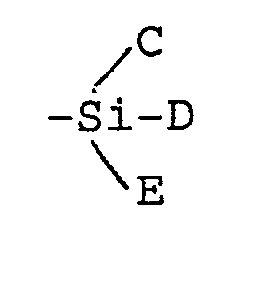
C, D, E,
the same or different from one another, represent hydrogen, (C₁-C₄)-alkyl groups, (C₁-C₄) -haloalkyl groups, (C₁-C₄) -alkoxy groups, (c₁-C₄)-haloalkoxy groups, (C₆-C₁₀)-aryl groups, and (C₆-C₁₀)-haloaryl groups (for specific examples of said groups see above). - The compounds of general formula (I) contain at least one asymmetric centre; the pure enantiomers or pure diastereoisomers, as well as mixtures thereof in any ratios, are comprised within the scope of the instant invention.
- As used herein, "halogen" or "halo" denotes F, Cl, Br and I, if not specified otherwise.
- Examples of aryl groups are phenyl, naphthyl and higher homologues.
- Preferred examples of groups Ar-B are benzyl and 3-phenyl-propyl. Preferred examples of groups of formula

wherein N, R₁ and R₂ together represent a (C₃-C₈)- or (C₂-C₇)-heterocyclic group as defined above, are those groups which are derived from morpholine, 2,6-dimethyl-morpholine, piperidine, 2,6-dimethyl-piperidine and thiomorpholine. Said groups can also be substituted as defined above. - Preferred examples of 5- or 6-membered heterocyclic groups Y are those derived from pyridine, pyrimidine, thiophene, thiazole, oxazole, isoxazole and derivatives thereof which contain a fused benzene ring. Said groups may optionally be substituted as defined above.
- Among the groups Y which represent (C₃-C₆)-cycloalkyl groups, the cyclohexyl, cyclopropyl, cyclopentyl and cyclobutyl groups, optionally substituted as defined above, such as 1-methyl-2,2-dichloro-cyclopropyl, may be mentioned.
- Among the silyl groups of formula SiCDE, trimethyl-silyl, tert.-butyl-dimethyl-silyl and dimethyl-phenyl-silyl groups are preferred examples.
- Further objects of the present invention are:
- the salts of the compounds of general formula (I) deriving from an inorganic acid such as, e.g., a hydrogen halide (e.g. hydroiodic, hydrobromic or hydrochloric acid); sulfuric acid, nitric acid, thiocyanic acid and phosphoric acid; or from an organic acid such as, e.g., acetic acid, propanoic acid, ethane-dicarboxylic acid, propane-dicarboxylic acid, benzoic acid, salicyclic acid, saccharin, methane-sulfonic acid and 4-methyl-benzene-sulfonic acid;
- the metal complexes obtainable by a complex-forming reaction between the compounds of general formula (I) and an organic or inorganic metal salt such as, e.g., a halide, nitrate, sulfate, phosphate of, e.g., copper, manganese, zinc or iron. Said salts and complexes may be prepared according to well-known techniques.
- The compounds of general formula (I) can be prepared by known, i.e., conventional methods.
A preferred method can be schematically represented as follows (for n = 1):
- More specifically, the allyl alcohol (II) is reacted with the phenol (III), wherein X represents halogen (particularly Br or I) or an activated ester group (preferably derived from trifluoromethane-sulfonic ester), in the presence of a Pd-(II) salt [such as Pd-(II) chloride and Pd-(II) acetate] and an organic base (such as triethylamine and tributylamine) or an inorganic base (such as sodium bicarbonate and potassium bicarbonate), in a dipolar protic solvent (such as water and ethanol) or aprotic solvent (such as N,N-dimethyl-formamide and N-methyl-pyrrolidone), or mixtures of such solvents, at a temperature of from about 0°C to about the boiling temperature of the solution.
- The addition of phosphines such as tris-(ortho-tolyl)-phosphine or triphenyl-phosphine may prove advantageous (see JOC 41 1206, 1976).
- The thus obtained aldehyde (IV), after the addition of the amine (V), is hydrogenated in situ to yield the amine (VI). The addition of a conventional hydrogenation catalyst (such as Pd supported on charcoal and Raney-nickel) may prove advantageous. The hydrogen pressure usually ranges from about 1 to about 10 atmospheres, and the temperature is usually in the range of from about 0°C to about 60°C (see J. March "Advanced Organic Chemistry", 2nd Edition, Int. St. Edition, page 819).
- In the above preparation scheme the symbols R₁, R₂, R₃, R₄, R', R'', Y and m have the meanings defined above.
- By reacting the amine (VI) with the compound (VII), compound (I) is obtained. In compound (VII), G stands for halogen (preferably Cl, Br or I) or an activated ester group (preferably methane-sulfonic ester or p-toluene-sulfonic ester). The reaction is carried out in the presence of an organic base (such as triethylamine and pyridine) or an inorganic base (such as sodium carbonate and sodium bicarbonate) in a dipolar protic solvent (such as water and ethanol) or aprotic solvent (such as N,N-dimethyl-formamide and N-methyl-pyrrolidone) at temperatures of from about 25°C to the boiling temperature of the solution (see J. March "Advanced Organic Chemistry", 2nd Edition, Int. St. Edition, page 357).
- If desired, the metal salts and/or complexes of compounds (I) can then be prepared according to well-known techniques.
- The alcohols (II) and phenols (III) are commercially available or can be prepared according to known techniques.
- The compounds (VII) are also commercially available. When Y represents the group

and at least one of the radicals C, D and E is (C₁-C₄)-perfluoroalkyl, compound (VII) can be obtained according to methods known from the literature [JACS 73, 3518 (1951), Tetrahedron Letters 25, 2195 (1984)]. - The amines (V) are products available on the market or they can easily be synthesized (see J. March "Advanced Organic Chemistry", 2nd Edition, Int. St. Edition, page 357).
- The compounds of general formula (I) are endowed with a high activity as growth inhibitors of several species of pathogenic fungi which attack the cultivations of useful plants.
- When they are applied to useful plants or parts thereof such as, e.g., leaves, the compounds of formula (I) show both a preventive and a curative activity, and are particularly effective in preventing diseases caused by pathogenic fungi, such as, e.g., those belonging to the genera Erysiphe and Helminthosporium.
- Examples of plant diseases which can be controlled by the compounds according to the present invention are:
- Erysiphe graminis on cereals,
- Sphaeroteca fuliginea on Cucurbitaceae (e.g., cucumber),
- Puccinia on cereals,
- Septoria on cereals,
- Helminthosporium on cereals,
- Rhynchosporium on cereals,
- Podosphaera leucotricha on apple-trees,
- Uncinula necator on vines,
- Venturia inaequalis on apple-trees,
- Pyricularia oryzae on rice,
- Botrytis cinerea,
- Fusarium on cereals,
- For practical use in agriculture, it is often useful to have available antifungal compositions containing one or more components of formula (I) as active substances.
- The application of these compositions may take place on any part of the plant, such as, e.g., leaves, stems, branches and roots, or on the seeds, before sowing, or also on the soil in which the plant grows. The compositions can be used in the form of dry powders, wettable powders, emulsifiable concentrates, pastes, granulates, solutions, suspensions, and the like; the selection of the particular type of composition will depend on the specific use.
- The above compositions may be prepared in known manner, for example by diluting or dissolving the active substance with/in a solvent medium and/or a solid diluent, optionally in the presence of surfactants. As solid diluents, or supports, the following may, for instance, be used: silica, kaolin, bentonite, talc, fossil meal, dolomite, calcium carbonate, magnesium oxide, gypsum, clays, synthetic silicates, attapulgite and sepiolite.
- The liquid diluents may be selected from water and various types of (organic) solvents such as, e.g., aromatic solvents (such as benzene, xylenes and mixtures of alkyl-benzenes), chloroaromatic compounds (such as chlorobenzene), paraffins (such as petroleum cuts), alcohols (such as methanol, propanol and butanol), amines, amides (e.g. dimethylformamide), ketones (e.g. cyclohexanone, acetophenone, isophorone and ethyl-amylketone) and esters (e.g. isobutyl acetate).
- As surfactants, the following may, for instance, be used: sodium, calcium or triethanolamine salts of alkyl-sulfates, alkyl-sulfonates, alkyl-aryl-sulfonates, polyethoxylated alkylphenols, adducts of ethylene oxide with fatty alcohols, polyethoxylated fatty acids, polyethoxylated sorbitol esters, polyethoxylated fats and ligno-sulfonates.
- The compositions may also contain special additives for particular purposes, such as, e.g., binders such as gum arabic, polyvinyl alcohol and polyvinylpyrrolidone.
- If desired, also other active substances such as fungicides, plant growth regulators, herbicides, insecticides, fertilizers etc. can be added to the compositions according to the present invention.
- The concentration of the active substance of formula (I) in the above compositions may vary as a function of the active compound, of the culture, of the pathogen, of environmental conditions and of the type of formulation adopted. Generally, however, the concentration of active agent will range from about 0.1% to about 95%, and preferably from about 0.5% to about 90% by weight.
- The following examples are to illustrate the present invention without being a limitation thereof.
- 1 g of 4-[3-(4-(hydroxy-phenyl)-2-methylpropyl]-2,6-dimethyl-morpholine is dissolved in 10 ml of dimethylformamide. To the resulting solution 0.7 g of anhydrous sodium carbonate are added, the resulting mixture is heated to 80°C under a nitrogen blanketing atmosphere, and is kept heated at this temperature for 30 minutes. Then 0.6 g of potassium iodide and 0.65 g of chloromethyl-trimethyl-silane are added and the heating of the mixture is continued for a further 4 hours. The reaction mixture is poured into water and then extracted with ethyl ether. The etheral extract is then thoroughly dried and evaporated under reduced pressure. The resulting crude product is purified by chromatography on silica gel, with hexane/ethyl acetate = 9:1 as the eluent. Thus 0.5 g of compound 1 are obtained.
- NMR (60 MHz) in CDCl₃:

-
- 1.1 g of p-iodo-phenol is added to a solution of beta-methallyl alcohol (0.6 g) in 20 ml of deionized water and 2.5 ml of N-methyl-pyrrolidone. The solution is purged with nitrogen, and then potassium carbonate (2.07 g) and palladium acetate (0.011 g) are added. The resulting mixture is heated to 80°C and is kept at this temperature for 10 hours. Then 2,6-dimethyl-morpholine (1.8 g) is added and the atmosphere inside the reaction vessel is replaced by hydrogen (1.5 atm), with the reaction mixture being kept vigorously stirred at a temperature of 40°C. When the reaction is complete, the reaction mixture is extracted with methylene chloride, the extract is thoroughly dried and is evaporated under reduced pressure.
- The resulting crude product is purified by chromatography on silica gel, with hexane/ethyl acetate = 3:2 as the eluent. Thus 0.9 g of desired product are obtained.
- NMR (60 MHz) in CDCl₃:

- In similar manner, employing the corresponding starting materials, the following compounds 2 to 11 where synthesized.
- 4-{3-[3-(2-(4,6-Dichloro)-pyridyloxy)-phenyl]-2-methylpropyl}-2,6-dimethyl-morpholine.
NMR (60 MHz) in CDCl₃:
- 4-{3-[3-(2-(4-Nitro)-pyridyloxy)-phenyl]-2-methylpropyl}-2,6-dimethyl-morpholine.
NMR (60 MHz) in CDCl₃:
- 4-{3-[3-(Cyclopentyloxy)-phenyl]-2-methylpropyl}-2,6-dimethyl-morpholine.
NMR (60 MHz) in CDCl₃:
- 4-{3-[3-(Cyclopropylmethoxy)-phenyl]-2-methylpropyl)-2,6-dimethyl-morpholine.
NMR (60 MHz) in CDCl₃:
- 4-{3-[3-(Trimethylsilylmethoxy)-phenyl]-2-methylpropyl}-2,6-dimethyl-morpholine.
NMR (60 MHz) in CDCl₃:
- 4-{3-[4-(2-(4,6-(Dichloro)-pyridyloxy)-phenyl]-2-methylpropyl}-2,6-dimethyl-morpholine.
NMR (60 MHz) in CDCl₃:
- 4-{3-[4-(2-Pyrimidyloxy)-phenyl]2-methylpropyl}-2,6-dimethyl-morpholine.
NMR (60 MHz) in CDCl₃:
- 4-{3-[4-(Cyclopropyl-methoxy)-phenyl]-2-methylpropyl}-2,6-dimethyl-morpholine.
NMR (60 MHz) in CDCl₃:
- 4-{3-[3-(Cyclohexyl-methoxy)-phenyl]-2-methylpropyl}-2,6-dimethyl-morpholine.
NMR (60 MHz) in CDCl₃:
- 4-{3-[4-(tert.-Butyl-dimethyl-silyl-oxy)-phenyl]-2-methylpropyl}-2,6-dimethyl-morpholine.
NMR (60 MHz) in CDCl₃:
- Both faces of leaves of plants of barley cv. Arna, grown in pots in a conditioned atmosphere, were sprayed with the tested products (Compounds Nos. 5 and 10) in water-acetone solution at 20% of acetone (volume/volume).
- After 2 days in an atmosphere conditioned at 20°C and 70% R.H., both faces of the leaves of the plants were sprayed with an aqueous suspension of Helminthosporium teres (250,000 conidia/ml). After a further 24 hours in an atmosphere saturated with humidity, at 21°C, the plants were kept in a conditioned environment for fungus incubation.
- At the end of said period (12 days), the severity of the infection was examined visually and rated according to a scale ranging from 100 (healthy plant) to 0 (completely infected plant).
- The data obtained is summarized in Table 1.

- Both faces of leaves of plants of corn cv. Irnerio, grown in pots in a conditioned environment, were sprayed with the tested products (Compounds Nos. 1 and 9) in water-acetone solution at 20% of acetone (volume/volume).
- After 1 day in an atmosphere conditioned at 20°C and 70% R.H., both faces of the leaves of the plants were sprayed with an aqueous suspension of Erysiphe graminis (200,000 conidia/ml). After a further 24 hours in an atmosphere saturated with humidity, at 21°C, the plants were kept in a conditioned atmosphere for fungus incubation.
- At the end of said incubation period (12 days), the severity of the infection was examined visually and rated according to a scale ranging from 100 (healthy plant) down to 0 (completely infected plant).
- Both faces of leaves of plants of corn cv. Irnerio, grown in pots in a conditioned atmosphere, were sprayed with an aqueous suspension of Erysiphe graminis (200,000 conidia/ml). After 24 hours in an atmosphere saturated with humidity, at 21°C, the leaves were sprayed with the tested products (Compounds Nos. 1 and 9) in water-acetone solution at 20% of acetone (volume/ volume).
- At the end of the fungus incubation period (12 days), the severity of the infection was examined visually and rated according to a scale ranging from 100 (healthy plant) down to 0 (completely infected plant).
The data obtained is summarized in Table 2.
as well as other diseases.
Claims (10)
- Compounds of general formula (I):
 R₁ and R₂, the same or different from each other, represent hydrogen, linear or branched (C₁-C₆)-alkyl groups, groups Ar-B in which
Ar
is a (C₆-C₁₀)-aryl or (C₆-C₁₀)-halo-aryl group and
B
is a (C₁-C₄)-alkylene or (C₁-C₂)-alkyl-(C₁-C₄)-alkylene group,
or, together with the N atom to which they are bound, represent a (C₃-C₈)-heterocyclic group or a (C₂-C₇)-heterocyclic group containing a second heteroatom selected from 0 and S, said heterocyclic groups being optionally substituted;R₃ represents a (C₁-C₃)-alkyl group;R₄ represents halogen, (C₁-C₃)-alkyl or (C₁-C₃)-halo-alkyl;m is an integer of from 0 to 4;R',R'', the same or different from each other, represent hydrogen, (C₁-C₃)-alkyl or halogen;n is an integer of from 0 to 3;Y represents an optionally substituted ethenyl, (C₃-C₆)-cycloalkyl or 5- or 6-membered heterocyclic group; or represents a group of formulaas well as enantiomers, diastereoisomers, metal salts and complexes thereof.
C, D, E,
the same or different from one another, represent hydrogen, (C₁-C₄)-alkyl groups, (C₁-C₄)-haloalkyl groups, (C₁-C₄)-alkoxy groups, (C₁-C₄)-haloalkoxy groups, (C₆-C₁₀)-aryl groups or (C₆-C₁₀)-haloaryl groups; - Compounds according to claim 1, in which said (C₃-C₈)-or (C₂-C₇)-heterocyclic group NR₁R₂ is selected from morpholinyl, 2,6-dimethyl-morpholinyl, piperidinyl, 2,6-dimethyl-piperidinyl and thiomorpholinyl, said groups being optionally (further) substituted.
- Compounds according to any one of the preceding claims, in which said (C₃-C₈)- or (C₂-C₇)-heterocyclic group NR₁R₂ is substituted with at least one group selected from (C₁-C₄)-alkyl, (C₆-C₁₀)-aryl, halogen and groups Ar-B in which Ar and B are as defined above.
- Compounds according to any one of the preceding claims, in which the group Ar-B is selected from benzyl and 3-phenylpropyl.
- Compounds according to any one of claims 1 to 4, in which Y is selected from pyridinyl, pyrimidinyl, thienyl, thiazolyl, oxazolyl, isoxazolyl, derivatives of said groups which contain a fused benzene ring, cyclohexyl, cyclopropyl, cyclopentyl, cyclobutyl, 1-methyl-2,2-dichloro-cyclopropyl, trimethylsilyl, tert.-butyl-dimethyl-silyl and dimethyl-phenylsilyl.
- Compounds according to any one of claims 1 to 4, in which Y is selected from ethenyl, (C₃-C₆)-cycloalkyl and heterocyclic groups, said groups being substituted with at least one group selected from (C₁-C₄)-alkyl, (C₁-C₂)-haloalkenyl, (C₁-C₃)-alkoxy, (C₁-C₃)-halo-alkoxy and halogen.
- Compound according to claim 1, i.e., 4-{3-[4-(trimethyl-silylmethoxy)-phenyl]-2-methylpropyl}-2,6-dimethyl-morpholine; 4-{3-[3-(2-(4,6-dichloro)-pyridyloxy)-phenyl]-2-methylpropyl}-2,6-dimethyl-morpholine; 4-{3-[3-(2-(4-nitro)-pyridyloxy)-phenyl]-2-methylpropyl}-2,6-dimethyl-morpholine; 4-{3-[3-(cyclopentyloxy)-phenyl]-2-methyl-propyl}-2,6-dimethyl-morpholine; 4-{3-[3-(cyclopropyl-methoxy)-phenyl]-2-methylpropyl}-2,6-dimethyl-morpholine; 4-{3-[3-(trimethylsilylmethoxy)-phenyl]-2-methylpropyl}-2,6-dimethyl-morpholine; 4-{3-[4-(2-(4,6-dichloro)-pyridyloxy)-phenyl]-2-methylpropyl}-2,6-dimethyl-morpholine; 4-{3-[4-(2-pyrimidyloxy)-phenyl]-2-methylpropyl}-2,6-dimethyl-morpholine; 4-{3-[4-(cyclopropyl-methoxy)-phenyl]-2-methylpropyl]-2,6-dimethyl-morpholine; 4-{3-[3-(cyclohexyl-methoxy)-phenyl]-2-methylpropyl}-2,6-dimethyl-morpholine; or 4-{3-[4-(tert.-butyl-dimethyl-silyloxy)-phenyl]-2-methylpropyl}-2,6-dimethyl-morpholine.
- Process for preparing the compounds defined in any one of the preceding claims comprising the reaction of an allyl alcohol of general formula (II)


G - (CR'R'')n-Y (VII)
wherein n, R', R'' and Y are as defined in claim 1 and G = Cl, Br, I, a methanesulfonic ester or p-toluene sulfonic ester group; in the presence of a dipolar protic or aprotic solvent at a temperature of from about 25°C to the boiling point of the reaction mixture, yields the compound of general formula (I); and, optionally, the conversion of the obtained compound of general formula (I) into its corresponding salt or metal complex by conventional methods. - Fungicidal compositions, containing at least one of the compounds according to any one of claims 1 to 7 along with a solvent and/or diluent.
- Use of the compounds according to any one of claims 1 to 7, as agents for inhibiting the growth of pathogenic fungi in cultivations of useful plants, in particular of fungi belonging to the genera Erysiphe and Helminthosporium.
Applications Claiming Priority (2)
| Application Number | Priority Date | Filing Date | Title |
|---|---|---|---|
| IT1954090 | 1990-03-02 | ||
| IT19540A IT1240427B (en) | 1990-03-02 | 1990-03-02 | ARILPROPILAMINE WITH ANTI-Fungal Action |
Publications (2)
| Publication Number | Publication Date |
|---|---|
| EP0444706A2 true EP0444706A2 (en) | 1991-09-04 |
| EP0444706A3 EP0444706A3 (en) | 1993-03-17 |
Family
ID=11158893
Family Applications (1)
| Application Number | Title | Priority Date | Filing Date |
|---|---|---|---|
| EP19910103131 Ceased EP0444706A3 (en) | 1990-03-02 | 1991-03-01 | Aryl-propyl-amines having antifungal activity |
Country Status (14)
| Country | Link |
|---|---|
| US (2) | US5314879A (en) |
| EP (1) | EP0444706A3 (en) |
| JP (1) | JPH0741468A (en) |
| KR (1) | KR970002878B1 (en) |
| AR (1) | AR247390A1 (en) |
| AU (1) | AU631972B2 (en) |
| BR (1) | BR9100829A (en) |
| CA (1) | CA2037361A1 (en) |
| HU (1) | HU209801B (en) |
| IL (1) | IL97366A (en) |
| IT (1) | IT1240427B (en) |
| NO (1) | NO180048C (en) |
| RU (1) | RU2001912C1 (en) |
| ZA (1) | ZA911449B (en) |
Families Citing this family (5)
| Publication number | Priority date | Publication date | Assignee | Title |
|---|---|---|---|---|
| IT1270882B (en) * | 1993-10-05 | 1997-05-13 | Isagro Srl | FUNGICIDE-BASED OLIGOPEPTIDES |
| MX2010003667A (en) | 2007-10-05 | 2010-09-28 | Acucela Inc | Alkoxy compounds for disease treatment. |
| ES2897527T3 (en) | 2009-07-02 | 2022-03-01 | Acucela Inc | Pharmacology of visual cycle modulators |
| EP2804605A4 (en) | 2012-01-20 | 2015-07-08 | Acucela Inc | SUBSTITUTED HETEROCYCLIC COMPOUNDS FOR THE TREATMENT OF DISEASE |
| EA024384B1 (en) * | 2013-06-27 | 2016-09-30 | Институт Нефтехимических Процессов Им. Академика Ю. Мамедалиева, Нан Азербайджана | Use of complex 2-morpholylmethyl-5-methylphenol salt as pesticide against oidium in grape fruits and leaves |
Family Cites Families (8)
| Publication number | Priority date | Publication date | Assignee | Title |
|---|---|---|---|---|
| AT354187B (en) * | 1976-11-22 | 1979-12-27 | Hoffmann La Roche | FUNGICIDE AGENT |
| DE2656747C2 (en) * | 1976-12-15 | 1984-07-05 | Basf Ag, 6700 Ludwigshafen | Morpholine derivatives |
| US4628048A (en) * | 1982-04-24 | 1986-12-09 | Basf Aktiengesellschaft | Organosilyl compounds fungicidal compositions and use |
| FI874121A7 (en) * | 1986-09-24 | 1988-03-25 | Sumitomo Chemical Co | HETEROCYCLISKA FOERENINGAR, OCH DERAS FRAMSTAELLNING OCH ANVAENDNING. |
| JPS646245A (en) * | 1987-02-20 | 1989-01-10 | Sumitomo Chemical Co | Benzylamine derivative, production thereof and germicide containing said derivative as active ingredient |
| US5135955A (en) * | 1988-04-25 | 1992-08-04 | Eli Lilly And Company | Propanamine derivatives |
| IL89997A0 (en) * | 1988-04-25 | 1989-12-15 | Lilly Co Eli | Propanamine derivatives |
| EP0405440A1 (en) * | 1989-06-29 | 1991-01-02 | Ciba-Geigy Ag | Microbicides |
-
1990
- 1990-03-02 IT IT19540A patent/IT1240427B/en active IP Right Grant
-
1991
- 1991-02-27 IL IL9736691A patent/IL97366A/en not_active IP Right Cessation
- 1991-02-27 ZA ZA911449A patent/ZA911449B/en unknown
- 1991-02-28 AU AU72005/91A patent/AU631972B2/en not_active Ceased
- 1991-02-28 US US07/661,935 patent/US5314879A/en not_active Expired - Fee Related
- 1991-02-28 BR BR919100829A patent/BR9100829A/en not_active Application Discontinuation
- 1991-02-28 CA CA002037361A patent/CA2037361A1/en not_active Abandoned
- 1991-03-01 NO NO910823A patent/NO180048C/en unknown
- 1991-03-01 EP EP19910103131 patent/EP0444706A3/en not_active Ceased
- 1991-03-01 JP JP3057690A patent/JPH0741468A/en not_active Withdrawn
- 1991-03-01 RU SU914894789A patent/RU2001912C1/en active
- 1991-03-01 HU HU91697A patent/HU209801B/en not_active IP Right Cessation
- 1991-03-01 AR AR91319142A patent/AR247390A1/en active
- 1991-03-02 KR KR1019910003445A patent/KR970002878B1/en not_active Expired - Fee Related
-
1993
- 1993-11-22 US US08/155,545 patent/US5378707A/en not_active Expired - Fee Related
Also Published As
| Publication number | Publication date |
|---|---|
| HU910697D0 (en) | 1991-09-30 |
| IL97366A (en) | 1997-01-10 |
| AU7200591A (en) | 1991-09-05 |
| IT9019540A1 (en) | 1991-09-03 |
| NO910823L (en) | 1991-09-03 |
| JPH0741468A (en) | 1995-02-10 |
| NO180048C (en) | 1997-02-05 |
| BR9100829A (en) | 1991-11-05 |
| CA2037361A1 (en) | 1991-09-03 |
| NO180048B (en) | 1996-10-28 |
| KR910016722A (en) | 1991-11-05 |
| US5314879A (en) | 1994-05-24 |
| EP0444706A3 (en) | 1993-03-17 |
| IT9019540A0 (en) | 1990-03-02 |
| HUT56692A (en) | 1991-10-28 |
| KR970002878B1 (en) | 1997-03-12 |
| IL97366A0 (en) | 1992-05-25 |
| ZA911449B (en) | 1991-11-27 |
| NO910823D0 (en) | 1991-03-01 |
| US5378707A (en) | 1995-01-03 |
| IT1240427B (en) | 1993-12-15 |
| AU631972B2 (en) | 1992-12-10 |
| AR247390A1 (en) | 1994-12-29 |
| HU209801B (en) | 1994-11-28 |
| RU2001912C1 (en) | 1993-10-30 |
Similar Documents
| Publication | Publication Date | Title |
|---|---|---|
| JP2888882B2 (en) | Oxime ether derivatives, their production and fungicides containing them | |
| US4518600A (en) | Combating fungi with 1-phenoxy-2-pyrimidinyl alkanols | |
| US4079143A (en) | Fungicidal 1H-1,2,4-triazoles | |
| US4130409A (en) | Triazolyl butandiones | |
| EP0092158A2 (en) | Thiazolidine compound and fungicidal composition containing it | |
| WO1988003756A1 (en) | Amino-alkylated hydroxy compounds and their use as fungicides | |
| US5314879A (en) | Silanyl oxypropylamines endowed with antifungal activity | |
| RU2154629C2 (en) | Oxime derivatives, method of preparing thereof, fungicidal agent, and method of controlling fungal diseases | |
| US5464836A (en) | Benzophenones having an antifungal activity | |
| US4721786A (en) | β-naphthylalkylamines | |
| EP0446873B1 (en) | Amines showing fungicidal activity | |
| CA1059024A (en) | 1,2-dialkyl-3(or 3,5)-n-heterocyclic pyrazolium salts or derivatives thereof as fungicidal agents | |
| US4829063A (en) | Saccharine salts of substituted amines | |
| US5212183A (en) | 4-(p-tert.-butylphenyl)-3-methylpiperidines substituted at the nitrogen, their quaternary salts and their use as fungicides | |
| US4952595A (en) | Heterocyclic amide derivatives | |
| JPS63154679A (en) | Saccharin salt of substituted hydroxypropylamine | |
| CA1276023C (en) | O-substituted 3-oxypyridinium salts, their preparation and their use as fungicides for crop protection | |
| HU206591B (en) | Fungicide compositions containing pyridine derivatives as active components and process for producing the active components | |
| RU2237406C1 (en) | Application of derivatives of 1-pyridinyl-2-azolyl-1-phenylethanol as fungicide | |
| US4552890A (en) | Plant phytopathogenic fungicidal agents based on maleimide | |
| JPS6061555A (en) | Alpha-substituted acrylonitrile derivative | |
| JPS6323849A (en) | Schiff base compound |
Legal Events
| Date | Code | Title | Description |
|---|---|---|---|
| PUAI | Public reference made under article 153(3) epc to a published international application that has entered the european phase |
Free format text: ORIGINAL CODE: 0009012 |
|
| AK | Designated contracting states |
Kind code of ref document: A2 Designated state(s): AT BE CH DE DK ES FR GB GR LI NL SE |
|
| PUAL | Search report despatched |
Free format text: ORIGINAL CODE: 0009013 |
|
| AK | Designated contracting states |
Kind code of ref document: A3 Designated state(s): AT BE CH DE DK ES FR GB GR LI NL SE |
|
| 17P | Request for examination filed |
Effective date: 19930414 |
|
| 17Q | First examination report despatched |
Effective date: 19950925 |
|
| GRAG | Despatch of communication of intention to grant |
Free format text: ORIGINAL CODE: EPIDOS AGRA |
|
| STAA | Information on the status of an ep patent application or granted ep patent |
Free format text: STATUS: THE APPLICATION HAS BEEN REFUSED |
|
| 18R | Application refused |
Effective date: 19990325 |