EP0444899A2 - Catechol derivatives, their physiologically acceptable salts, esters and their use in the treatment of tissue damage induced by lipid peroxidation - Google Patents
Catechol derivatives, their physiologically acceptable salts, esters and their use in the treatment of tissue damage induced by lipid peroxidation Download PDFInfo
- Publication number
- EP0444899A2 EP0444899A2 EP91301587A EP91301587A EP0444899A2 EP 0444899 A2 EP0444899 A2 EP 0444899A2 EP 91301587 A EP91301587 A EP 91301587A EP 91301587 A EP91301587 A EP 91301587A EP 0444899 A2 EP0444899 A2 EP 0444899A2
- Authority
- EP
- European Patent Office
- Prior art keywords
- dihydroxy
- nitrophenyl
- cyano
- optionally substituted
- compound
- Prior art date
- Legal status (The legal status is an assumption and is not a legal conclusion. Google has not performed a legal analysis and makes no representation as to the accuracy of the status listed.)
- Granted
Links
- 150000005206 1,2-dihydroxybenzenes Chemical class 0.000 title claims abstract description 8
- 238000011282 treatment Methods 0.000 title claims abstract description 8
- 230000003859 lipid peroxidation Effects 0.000 title claims abstract description 7
- 230000000451 tissue damage Effects 0.000 title claims abstract description 5
- 231100000827 tissue damage Toxicity 0.000 title claims abstract description 5
- 150000003839 salts Chemical class 0.000 title claims description 15
- 150000002148 esters Chemical class 0.000 title claims description 14
- 206010028980 Neoplasm Diseases 0.000 claims abstract description 4
- 201000011510 cancer Diseases 0.000 claims abstract description 4
- 230000002265 prevention Effects 0.000 claims abstract description 4
- 230000032683 aging Effects 0.000 claims abstract description 3
- 238000006243 chemical reaction Methods 0.000 claims abstract description 3
- 208000019622 heart disease Diseases 0.000 claims abstract description 3
- 208000027866 inflammatory disease Diseases 0.000 claims abstract description 3
- 208000028867 ischemia Diseases 0.000 claims abstract description 3
- 210000000056 organ Anatomy 0.000 claims abstract description 3
- 206010039073 rheumatoid arthritis Diseases 0.000 claims abstract description 3
- 150000001875 compounds Chemical class 0.000 claims description 42
- 125000000217 alkyl group Chemical group 0.000 claims description 31
- 125000000623 heterocyclic group Chemical group 0.000 claims description 18
- 125000003545 alkoxy group Chemical group 0.000 claims description 17
- 125000003118 aryl group Chemical group 0.000 claims description 17
- -1 cyano, formyl Chemical group 0.000 claims description 14
- 125000002252 acyl group Chemical group 0.000 claims description 13
- 229910052736 halogen Inorganic materials 0.000 claims description 12
- 125000000449 nitro group Chemical group [O-][N+](*)=O 0.000 claims description 12
- 125000003342 alkenyl group Chemical group 0.000 claims description 11
- 125000006254 cycloalkyl carbonyl group Chemical group 0.000 claims description 10
- 150000002367 halogens Chemical class 0.000 claims description 10
- 125000003178 carboxy group Chemical group [H]OC(*)=O 0.000 claims description 9
- 125000000753 cycloalkyl group Chemical group 0.000 claims description 9
- 125000004453 alkoxycarbonyl group Chemical group 0.000 claims description 8
- 239000001257 hydrogen Substances 0.000 claims description 8
- 229910052739 hydrogen Inorganic materials 0.000 claims description 8
- 125000003435 aroyl group Chemical group 0.000 claims description 7
- 125000004093 cyano group Chemical group *C#N 0.000 claims description 7
- RLPFJGCLLIGOMQ-UHFFFAOYSA-N n-(1-adamantyl)-3-cyano-4,5-dihydroxybenzamide Chemical compound N#CC1=C(O)C(O)=CC(C(=O)NC23CC4CC(CC(C4)C2)C3)=C1 RLPFJGCLLIGOMQ-UHFFFAOYSA-N 0.000 claims description 7
- BBFJODMCHICIAA-UHFFFAOYSA-N 3,4-dihydroxy-5-nitrobenzaldehyde Chemical compound OC1=CC(C=O)=CC([N+]([O-])=O)=C1O BBFJODMCHICIAA-UHFFFAOYSA-N 0.000 claims description 6
- PNLAJNRGHNFIDP-UHFFFAOYSA-N 3-[(3,4-dihydroxy-5-nitrophenyl)methyl]pentane-2,4-dione Chemical compound CC(=O)C(C(C)=O)CC1=CC(O)=C(O)C([N+]([O-])=O)=C1 PNLAJNRGHNFIDP-UHFFFAOYSA-N 0.000 claims description 6
- 125000004181 carboxyalkyl group Chemical group 0.000 claims description 6
- 125000002485 formyl group Chemical group [H]C(*)=O 0.000 claims description 6
- 150000002431 hydrogen Chemical group 0.000 claims description 6
- 238000000034 method Methods 0.000 claims description 6
- 125000002924 primary amino group Chemical group [H]N([H])* 0.000 claims description 6
- AZYNFSRMITUGFB-UHFFFAOYSA-N 1-(3,4-dihydroxy-5-nitrophenyl)-2-methylprop-2-en-1-one Chemical compound CC(=C)C(=O)C1=CC(O)=C(O)C([N+]([O-])=O)=C1 AZYNFSRMITUGFB-UHFFFAOYSA-N 0.000 claims description 5
- DEXUZVPREMLCFS-UHFFFAOYSA-N 1-(3,4-dihydroxy-5-nitrophenyl)-4-methyl-2-phenylpent-1-en-3-one Chemical compound C=1C=CC=CC=1C(C(=O)C(C)C)=CC1=CC(O)=C(O)C([N+]([O-])=O)=C1 DEXUZVPREMLCFS-UHFFFAOYSA-N 0.000 claims description 5
- HQKXEYUCNKNTMH-UHFFFAOYSA-N 3-nitro-5-(sulfanylmethyl)benzene-1,2-diol Chemical compound OC1=CC(CS)=CC([N+]([O-])=O)=C1O HQKXEYUCNKNTMH-UHFFFAOYSA-N 0.000 claims description 5
- ALWIABFWRLEAKP-UHFFFAOYSA-N 5-(hydroxymethyl)-3-nitrobenzene-1,2-diol Chemical compound OCC1=CC(O)=C(O)C([N+]([O-])=O)=C1 ALWIABFWRLEAKP-UHFFFAOYSA-N 0.000 claims description 5
- 125000000304 alkynyl group Chemical group 0.000 claims description 5
- 125000003917 carbamoyl group Chemical group [H]N([H])C(*)=O 0.000 claims description 5
- 125000002768 hydroxyalkyl group Chemical group 0.000 claims description 5
- NIHRYSIRCOJZFE-UHFFFAOYSA-N 2,3-dihydroxy-5-(3-oxo-2-propanoylpent-1-enyl)benzonitrile Chemical compound CCC(=O)C(C(=O)CC)=CC1=CC(O)=C(O)C(C#N)=C1 NIHRYSIRCOJZFE-UHFFFAOYSA-N 0.000 claims description 4
- JRURYQJSLYLRLN-UHFFFAOYSA-N 2-cyano-3-(3,4-dihydroxy-5-nitrophenyl)-N,N-diethyl-2-propenamide Chemical compound CCN(CC)C(=O)C(C#N)=CC1=CC(O)=C(O)C([N+]([O-])=O)=C1 JRURYQJSLYLRLN-UHFFFAOYSA-N 0.000 claims description 4
- VDCDWNDTNSWDFJ-UHFFFAOYSA-N 3,5-dinitrocatechol Chemical compound OC1=CC([N+]([O-])=O)=CC([N+]([O-])=O)=C1O VDCDWNDTNSWDFJ-UHFFFAOYSA-N 0.000 claims description 4
- YAVGAFPZQLNICP-UHFFFAOYSA-N 3-[(3-chloro-4,5-dihydroxyphenyl)methylidene]pentane-2,4-dione Chemical compound CC(=O)C(C(C)=O)=CC1=CC(O)=C(O)C(Cl)=C1 YAVGAFPZQLNICP-UHFFFAOYSA-N 0.000 claims description 4
- SWLXKQKTIPGUAW-UHFFFAOYSA-N 4,5-dihydroxybenzene-1,3-dicarbonitrile Chemical compound OC1=CC(C#N)=CC(C#N)=C1O SWLXKQKTIPGUAW-UHFFFAOYSA-N 0.000 claims description 4
- ASZKLWYYYUFXSP-UHFFFAOYSA-N 4-[(3,4-dihydroxy-5-nitrophenyl)methyl]heptane-3,5-dione Chemical compound CCC(=O)C(C(=O)CC)CC1=CC(O)=C(O)C([N+]([O-])=O)=C1 ASZKLWYYYUFXSP-UHFFFAOYSA-N 0.000 claims description 4
- MYQZAGTULBAOSS-UHFFFAOYSA-N 5-(2-formyl-3-oxopent-1-enyl)-2,3-dihydroxybenzonitrile Chemical compound CCC(=O)C(C=O)=CC1=CC(O)=C(O)C(C#N)=C1 MYQZAGTULBAOSS-UHFFFAOYSA-N 0.000 claims description 4
- UPMRZALMHVUCIN-UHFFFAOYSA-N Nitecapone Chemical compound CC(=O)C(C(C)=O)=CC1=CC(O)=C(O)C([N+]([O-])=O)=C1 UPMRZALMHVUCIN-UHFFFAOYSA-N 0.000 claims description 4
- RGJOEKWQDUBAIZ-HDCXRZRFSA-N [[(2r,3s,4r,5r)-5-(6-aminopurin-9-yl)-4-hydroxy-3-phosphonooxyoxolan-2-yl]methoxy-hydroxyphosphoryl] [(3s)-3-hydroxy-2,2-dimethyl-4-oxo-4-[[3-oxo-3-(2-sulfanylethylamino)propyl]amino]butyl] hydrogen phosphate Chemical compound O[C@@H]1[C@H](OP(O)(O)=O)[C@@H](COP(O)(=O)OP(O)(=O)OCC(C)(C)[C@H](O)C(=O)NCCC(=O)NCCS)O[C@H]1N1C2=NC=NC(N)=C2N=C1 RGJOEKWQDUBAIZ-HDCXRZRFSA-N 0.000 claims description 4
- 125000003710 aryl alkyl group Chemical group 0.000 claims description 4
- 125000006255 cyclopropyl carbonyl group Chemical group [H]C1([H])C([H])([H])C1([H])C(*)=O 0.000 claims description 4
- 239000003814 drug Substances 0.000 claims description 4
- 125000003431 oxalo group Chemical group 0.000 claims description 4
- 125000002023 trifluoromethyl group Chemical group FC(F)(F)* 0.000 claims description 4
- KANXHIGRABCNET-UHFFFAOYSA-N 5-formyl-2,3-dihydroxybenzonitrile Chemical compound OC1=CC(C=O)=CC(C#N)=C1O KANXHIGRABCNET-UHFFFAOYSA-N 0.000 claims description 3
- 238000004519 manufacturing process Methods 0.000 claims description 3
- RQPAUNZYTYHKHA-UHFFFAOYSA-N (3,4-dihydroxy-5-nitrophenyl)-(2-fluorophenyl)methanone Chemical compound [O-][N+](=O)C1=C(O)C(O)=CC(C(=O)C=2C(=CC=CC=2)F)=C1 RQPAUNZYTYHKHA-UHFFFAOYSA-N 0.000 claims description 2
- VAUSFAKTFGVZIL-UHFFFAOYSA-N (4,5-dihydroxy-2-nitrophenyl)-(4-piperidin-1-ylpiperidin-1-yl)methanone Chemical compound C1=C(O)C(O)=CC(C(=O)N2CCC(CC2)N2CCCCC2)=C1[N+]([O-])=O VAUSFAKTFGVZIL-UHFFFAOYSA-N 0.000 claims description 2
- VZFZQLAXSDTXED-UHFFFAOYSA-N 1,3-dicyclopropyl-2-[(3,4-dihydroxy-5-nitrophenyl)methylidene]propane-1,3-dione Chemical compound [O-][N+](=O)C1=C(O)C(O)=CC(C=C(C(=O)C2CC2)C(=O)C2CC2)=C1 VZFZQLAXSDTXED-UHFFFAOYSA-N 0.000 claims description 2
- RZTRFWLYXYIRAX-UHFFFAOYSA-N 1-(3,4-dihydroxy-5-nitrophenyl)ethanone Chemical compound CC(=O)C1=CC(O)=C(O)C([N+]([O-])=O)=C1 RZTRFWLYXYIRAX-UHFFFAOYSA-N 0.000 claims description 2
- AXMCFMRWTCCPDA-UHFFFAOYSA-N 2,2-dimethylpropyl 2-cyano-3-(3,4-dihydroxy-5-nitrophenyl)prop-2-enoate Chemical compound CC(C)(C)COC(=O)C(C#N)=CC1=CC(O)=C(O)C([N+]([O-])=O)=C1 AXMCFMRWTCCPDA-UHFFFAOYSA-N 0.000 claims description 2
- PEXWUOAXEBSNAU-UHFFFAOYSA-N 2-[(3,4-dihydroxy-5-nitrophenyl)methyl]-2-hydroxybutanedinitrile Chemical compound OC1=CC(CC(O)(CC#N)C#N)=CC([N+]([O-])=O)=C1O PEXWUOAXEBSNAU-UHFFFAOYSA-N 0.000 claims description 2
- SBPVYFCVGGEBHS-UHFFFAOYSA-N 2-[(3,4-dihydroxy-5-nitrophenyl)methyl]-3-hydroxypropanenitrile Chemical compound OCC(C#N)CC1=CC(O)=C(O)C([N+]([O-])=O)=C1 SBPVYFCVGGEBHS-UHFFFAOYSA-N 0.000 claims description 2
- BVNUFRQBMSNFBH-UHFFFAOYSA-N 2-[3-(3,4-dihydroxy-5-nitrophenyl)prop-2-enoyl]benzoic acid Chemical compound OC(=O)C1=CC=CC=C1C(=O)C=CC1=CC(O)=C(O)C([N+]([O-])=O)=C1 BVNUFRQBMSNFBH-UHFFFAOYSA-N 0.000 claims description 2
- WCXPSMYVWFMUPT-UHFFFAOYSA-N 2-cyano-3-(3,4-dihydroxy-5-nitrophenyl)-n,n-dimethylprop-2-enamide Chemical compound CN(C)C(=O)C(C#N)=CC1=CC(O)=C(O)C([N+]([O-])=O)=C1 WCXPSMYVWFMUPT-UHFFFAOYSA-N 0.000 claims description 2
- NUDNKWSJIXVGSR-UHFFFAOYSA-N 2-cyano-3-(3,4-dihydroxy-5-nitrophenyl)-n-propan-2-ylprop-2-enamide Chemical compound CC(C)NC(=O)C(C#N)=CC1=CC(O)=C(O)C([N+]([O-])=O)=C1 NUDNKWSJIXVGSR-UHFFFAOYSA-N 0.000 claims description 2
- IZXCSWDOAKESAA-UHFFFAOYSA-N 2-cyano-3-(3,4-dihydroxy-5-nitrophenyl)prop-2-enamide Chemical compound NC(=O)C(C#N)=CC1=CC(O)=C(O)C([N+]([O-])=O)=C1 IZXCSWDOAKESAA-UHFFFAOYSA-N 0.000 claims description 2
- JRBDMOJXCREXNN-UHFFFAOYSA-N 3,4-dihydroxy-5-nitrobenzonitrile Chemical compound OC1=CC(C#N)=CC([N+]([O-])=O)=C1O JRBDMOJXCREXNN-UHFFFAOYSA-N 0.000 claims description 2
- AJRXNFCZYZBKKT-UHFFFAOYSA-N 3,4-dihydroxy-n-(3-hydroxypropyl)-5-nitrobenzamide Chemical compound OCCCNC(=O)C1=CC(O)=C(O)C([N+]([O-])=O)=C1 AJRXNFCZYZBKKT-UHFFFAOYSA-N 0.000 claims description 2
- WMVQYGLKWBXMMT-UHFFFAOYSA-N 3-(3,4-dihydroxy-5-nitrophenyl)-1-(2-hydroxyphenyl)prop-2-en-1-one Chemical compound OC1=CC=CC=C1C(=O)C=CC1=CC(O)=C(O)C([N+]([O-])=O)=C1 WMVQYGLKWBXMMT-UHFFFAOYSA-N 0.000 claims description 2
- DRUCSFHPUMZHFZ-UHFFFAOYSA-N 3-(3,4-dihydroxy-5-nitrophenyl)-1-(3,4,5-trimethoxyphenyl)prop-2-en-1-one Chemical compound COC1=C(OC)C(OC)=CC(C(=O)C=CC=2C=C(C(O)=C(O)C=2)[N+]([O-])=O)=C1 DRUCSFHPUMZHFZ-UHFFFAOYSA-N 0.000 claims description 2
- GQBUCKFJGCPIAT-UHFFFAOYSA-N 3-(3,4-dihydroxy-5-nitrophenyl)-1-(3,4-dimethoxyphenyl)prop-2-en-1-one Chemical compound C1=C(OC)C(OC)=CC=C1C(=O)C=CC1=CC(O)=C(O)C([N+]([O-])=O)=C1 GQBUCKFJGCPIAT-UHFFFAOYSA-N 0.000 claims description 2
- XFNCZWUJTMVCCW-UHFFFAOYSA-N 3-(3,4-dihydroxy-5-nitrophenyl)-1-(4-methoxyphenyl)prop-2-en-1-one Chemical compound C1=CC(OC)=CC=C1C(=O)C=CC1=CC(O)=C(O)C([N+]([O-])=O)=C1 XFNCZWUJTMVCCW-UHFFFAOYSA-N 0.000 claims description 2
- KEEJYRVPFGKFOM-UHFFFAOYSA-N 3-(3,4-dihydroxy-5-nitrophenyl)-1-(4-methylphenyl)prop-2-en-1-one Chemical compound C1=CC(C)=CC=C1C(=O)C=CC1=CC(O)=C(O)C([N+]([O-])=O)=C1 KEEJYRVPFGKFOM-UHFFFAOYSA-N 0.000 claims description 2
- LBDCLHWQPHVBTC-UHFFFAOYSA-N 3-(3,4-dihydroxy-5-nitrophenyl)-1-(4-nitrophenyl)prop-2-en-1-one Chemical compound [O-][N+](=O)C1=C(O)C(O)=CC(C=CC(=O)C=2C=CC(=CC=2)[N+]([O-])=O)=C1 LBDCLHWQPHVBTC-UHFFFAOYSA-N 0.000 claims description 2
- GOWRJXXUELPHCD-UHFFFAOYSA-N 3-(3,4-dihydroxy-5-nitrophenyl)-1-phenylprop-2-en-1-one Chemical compound [O-][N+](=O)C1=C(O)C(O)=CC(C=CC(=O)C=2C=CC=CC=2)=C1 GOWRJXXUELPHCD-UHFFFAOYSA-N 0.000 claims description 2
- WIGNVYQMAXKHTQ-UHFFFAOYSA-N 3-(3,4-dihydroxy-5-nitrophenyl)prop-2-enoic acid Chemical compound OC(=O)C=CC1=CC(O)=C(O)C([N+]([O-])=O)=C1 WIGNVYQMAXKHTQ-UHFFFAOYSA-N 0.000 claims description 2
- VPCLKKWUDVSKID-UHFFFAOYSA-N 3-(3,4-dihydroxy-5-nitrophenyl)propanethioic s-acid Chemical compound OC(=S)CCC1=CC(O)=C(O)C([N+]([O-])=O)=C1 VPCLKKWUDVSKID-UHFFFAOYSA-N 0.000 claims description 2
- POYNJBCGTQIKOG-UHFFFAOYSA-N 3-[3,4-dihydroxy-5-(trifluoromethyl)phenyl]prop-2-enal Chemical compound OC1=CC(C=CC=O)=CC(C(F)(F)F)=C1O POYNJBCGTQIKOG-UHFFFAOYSA-N 0.000 claims description 2
- UVNLFDRZXWSAQU-UHFFFAOYSA-N 3-cyano-4,5-dihydroxybenzoic acid Chemical compound OC(=O)C1=CC(O)=C(O)C(C#N)=C1 UVNLFDRZXWSAQU-UHFFFAOYSA-N 0.000 claims description 2
- JSTMJRRWBOVARV-UHFFFAOYSA-N 3-nitro-5-(1h-pyrrol-2-ylmethyl)benzene-1,2-diol Chemical compound [O-][N+](=O)C1=C(O)C(O)=CC(CC=2NC=CC=2)=C1 JSTMJRRWBOVARV-UHFFFAOYSA-N 0.000 claims description 2
- MQOJOPBNUNCZGI-UHFFFAOYSA-N 3-nitro-5-(2-pyridin-4-ylethenyl)benzene-1,2-diol Chemical compound [O-][N+](=O)C1=C(O)C(O)=CC(C=CC=2C=CN=CC=2)=C1 MQOJOPBNUNCZGI-UHFFFAOYSA-N 0.000 claims description 2
- MMZFRAKTJBSPMM-UHFFFAOYSA-N 3-nitro-5-(2-quinolin-4-ylethenyl)benzene-1,2-diol Chemical compound [O-][N+](=O)C1=C(O)C(O)=CC(C=CC=2C3=CC=CC=C3N=CC=2)=C1 MMZFRAKTJBSPMM-UHFFFAOYSA-N 0.000 claims description 2
- YZJVWIUMDDXVEA-UHFFFAOYSA-N 4,5-dihydroxybenzene-1,3-dicarbaldehyde Chemical compound OC1=CC(C=O)=CC(C=O)=C1O YZJVWIUMDDXVEA-UHFFFAOYSA-N 0.000 claims description 2
- KRPOYUUBZXFYOJ-UHFFFAOYSA-N 4-(3,4-dihydroxy-5-nitrophenyl)-3-methylbut-3-en-2-one Chemical compound CC(=O)C(C)=CC1=CC(O)=C(O)C([N+]([O-])=O)=C1 KRPOYUUBZXFYOJ-UHFFFAOYSA-N 0.000 claims description 2
- SNQFMNUMODTUJX-UHFFFAOYSA-N 5-(3,4-dihydroxy-5-nitrophenyl)-n-methyl-n-prop-2-ynylpentanamide Chemical compound C#CCN(C)C(=O)CCCCC1=CC(O)=C(O)C([N+]([O-])=O)=C1 SNQFMNUMODTUJX-UHFFFAOYSA-N 0.000 claims description 2
- NMLXKCGWGRMMJM-UHFFFAOYSA-N 5-(3,4-dihydroxy-5-nitrophenyl)-n-propan-2-ylpentanamide Chemical compound CC(C)NC(=O)CCCCC1=CC(O)=C(O)C([N+]([O-])=O)=C1 NMLXKCGWGRMMJM-UHFFFAOYSA-N 0.000 claims description 2
- MJUWWBJMGJMFRR-UHFFFAOYSA-N 5-(3,4-dihydroxy-5-nitrophenyl)pentanoic acid Chemical compound OC(=O)CCCCC1=CC(O)=C(O)C([N+]([O-])=O)=C1 MJUWWBJMGJMFRR-UHFFFAOYSA-N 0.000 claims description 2
- WWDJBWMMHXMHND-UHFFFAOYSA-N 5-(3-hydroxy-2-methylbut-1-enyl)-3-nitrobenzene-1,2-diol Chemical compound CC(O)C(C)=CC1=CC(O)=C(O)C([N+]([O-])=O)=C1 WWDJBWMMHXMHND-UHFFFAOYSA-N 0.000 claims description 2
- GXHFTPOHUPPXDP-UHFFFAOYSA-N 5-[3-[3-(3,4-dihydroxy-5-nitrophenyl)-2-methoxypropoxy]-2-methoxypropyl]-3-nitrobenzene-1,2-diol Chemical compound C=1C(O)=C(O)C([N+]([O-])=O)=CC=1CC(OC)COCC(OC)CC1=CC(O)=C(O)C([N+]([O-])=O)=C1 GXHFTPOHUPPXDP-UHFFFAOYSA-N 0.000 claims description 2
- YUMZFEGWCGNXHR-UHFFFAOYSA-N 5-chloro-3-nitrobenzene-1,2-diol Chemical compound OC1=CC(Cl)=CC([N+]([O-])=O)=C1O YUMZFEGWCGNXHR-UHFFFAOYSA-N 0.000 claims description 2
- UFHFLCQGNIYNRP-UHFFFAOYSA-N Hydrogen Chemical compound [H][H] UFHFLCQGNIYNRP-UHFFFAOYSA-N 0.000 claims description 2
- FGMBOCPPYYFLJB-UHFFFAOYSA-N [2-acetyloxy-3-nitro-5-(3-oxo-3-phenylprop-1-enyl)phenyl] acetate Chemical compound [O-][N+](=O)C1=C(OC(C)=O)C(OC(=O)C)=CC(C=CC(=O)C=2C=CC=CC=2)=C1 FGMBOCPPYYFLJB-UHFFFAOYSA-N 0.000 claims description 2
- UBAVSEMCOMZATK-UHFFFAOYSA-N [2-hydroxy-3-nitro-5-(3-oxo-3-phenylprop-1-enyl)phenyl] 2,2-dimethylpropanoate Chemical compound [O-][N+](=O)C1=C(O)C(OC(=O)C(C)(C)C)=CC(C=CC(=O)C=2C=CC=CC=2)=C1 UBAVSEMCOMZATK-UHFFFAOYSA-N 0.000 claims description 2
- MNAQSDCWEZWEAF-UHFFFAOYSA-N butyl 3-cyano-4,5-dihydroxybenzoate Chemical compound CCCCOC(=O)C1=CC(O)=C(O)C(C#N)=C1 MNAQSDCWEZWEAF-UHFFFAOYSA-N 0.000 claims description 2
- 125000005019 carboxyalkenyl group Chemical group 0.000 claims description 2
- 125000001309 chloro group Chemical group Cl* 0.000 claims description 2
- BSSKJZZQJGXADF-UHFFFAOYSA-N cyclohexyl-[1-(3,4-dihydroxy-5-nitrobenzoyl)piperidin-4-yl]methanone Chemical compound [O-][N+](=O)C1=C(O)C(O)=CC(C(=O)N2CCC(CC2)C(=O)C2CCCCC2)=C1 BSSKJZZQJGXADF-UHFFFAOYSA-N 0.000 claims description 2
- UYKNRFZAPJUGPB-UHFFFAOYSA-N cyclohexyl-[1-(4,5-dihydroxy-2-nitrobenzoyl)piperidin-4-yl]methanone Chemical compound C1=C(O)C(O)=CC(C(=O)N2CCC(CC2)C(=O)C2CCCCC2)=C1[N+]([O-])=O UYKNRFZAPJUGPB-UHFFFAOYSA-N 0.000 claims description 2
- YSKILQPVKFEWDD-UHFFFAOYSA-N ethyl 2-[[2-hydroxy-3-nitro-5-(3-oxo-3-phenylprop-1-enyl)phenoxy]carbonylamino]acetate Chemical compound [O-][N+](=O)C1=C(O)C(OC(=O)NCC(=O)OCC)=CC(C=CC(=O)C=2C=CC=CC=2)=C1 YSKILQPVKFEWDD-UHFFFAOYSA-N 0.000 claims description 2
- KZGBADQGBKGUGS-UHFFFAOYSA-N ethyl 2-cyano-3-(3,4-dihydroxy-5-nitrophenyl)prop-2-enoate Chemical compound CCOC(=O)C(C#N)=CC1=CC(O)=C(O)C([N+]([O-])=O)=C1 KZGBADQGBKGUGS-UHFFFAOYSA-N 0.000 claims description 2
- PLQOHSJGIYXROC-UHFFFAOYSA-N ethyl 2-cyano-3-(3,4-dihydroxy-5-nitrophenyl)propanoate Chemical compound CCOC(=O)C(C#N)CC1=CC(O)=C(O)C([N+]([O-])=O)=C1 PLQOHSJGIYXROC-UHFFFAOYSA-N 0.000 claims description 2
- YUYXUNQTIKONFA-UHFFFAOYSA-N methyl 3-[(3,4-dihydroxy-5-nitrophenyl)methylidene]-4-oxopentanoate Chemical compound COC(=O)CC(C(C)=O)=CC1=CC(O)=C(O)C([N+]([O-])=O)=C1 YUYXUNQTIKONFA-UHFFFAOYSA-N 0.000 claims description 2
- XMKRFHKZKCPMEJ-UHFFFAOYSA-N n-(1-adamantyl)-2-chloro-4,5-dihydroxybenzamide Chemical compound C1=C(O)C(O)=CC(Cl)=C1C(=O)NC1(C2)CC(C3)CC2CC3C1 XMKRFHKZKCPMEJ-UHFFFAOYSA-N 0.000 claims description 2
- IALCRFZLEQENBW-UHFFFAOYSA-N n-(1-adamantyl)-3,4-dihydroxy-5-nitrobenzamide Chemical compound [O-][N+](=O)C1=C(O)C(O)=CC(C(=O)NC23CC4CC(CC(C4)C2)C3)=C1 IALCRFZLEQENBW-UHFFFAOYSA-N 0.000 claims description 2
- YLRRYFLYJYRKJG-UHFFFAOYSA-N n-(1-adamantyl)-3-chloro-4,5-dihydroxybenzamide Chemical compound ClC1=C(O)C(O)=CC(C(=O)NC23CC4CC(CC(C4)C2)C3)=C1 YLRRYFLYJYRKJG-UHFFFAOYSA-N 0.000 claims description 2
- PDDORDHFMPCGCN-UHFFFAOYSA-N n-(1-adamantyl)-4,5-dihydroxy-2-nitrobenzamide Chemical compound C1=C(O)C(O)=CC(C(=O)NC23CC4CC(CC(C4)C2)C3)=C1[N+]([O-])=O PDDORDHFMPCGCN-UHFFFAOYSA-N 0.000 claims description 2
- OENSXLFBMLMJOF-UHFFFAOYSA-N n-(1-adamantyl)-5-(3,4-dihydroxy-5-nitrophenyl)pentanamide Chemical compound [O-][N+](=O)C1=C(O)C(O)=CC(CCCCC(=O)NC23CC4CC(CC(C4)C2)C3)=C1 OENSXLFBMLMJOF-UHFFFAOYSA-N 0.000 claims description 2
- CCRNCWDQAOTBHN-UHFFFAOYSA-N n-benzyl-3,4-dihydroxy-5-nitrobenzamide Chemical compound [O-][N+](=O)C1=C(O)C(O)=CC(C(=O)NCC=2C=CC=CC=2)=C1 CCRNCWDQAOTBHN-UHFFFAOYSA-N 0.000 claims description 2
- 229910052757 nitrogen Inorganic materials 0.000 claims description 2
- MIQPIUSUKVNLNT-UHFFFAOYSA-N tolcapone Chemical compound C1=CC(C)=CC=C1C(=O)C1=CC(O)=C(O)C([N+]([O-])=O)=C1 MIQPIUSUKVNLNT-UHFFFAOYSA-N 0.000 claims description 2
- 125000002887 hydroxy group Chemical group [H]O* 0.000 claims 2
- VNTWJPNLLBXHIY-UHFFFAOYSA-N 1-(4-benzylpiperazin-1-yl)-5-(3,4-dihydroxy-5-nitrophenyl)pentan-1-one;hydrochloride Chemical compound Cl.[O-][N+](=O)C1=C(O)C(O)=CC(CCCCC(=O)N2CCN(CC=3C=CC=CC=3)CC2)=C1 VNTWJPNLLBXHIY-UHFFFAOYSA-N 0.000 claims 1
- HQZWPEZZRTUBQY-UHFFFAOYSA-N 2-cyano-3-(3,4-dihydroxy-5-nitrophenyl)-N-(3-hydroxypropyl)prop-2-enamide 5-(4,5-dihydroxy-2-nitrophenyl)pentanoic acid Chemical compound OC=1C=C(C(=CC1O)[N+](=O)[O-])CCCCC(=O)O.OCCCNC(C(=CC1=CC(=C(C(=C1)[N+](=O)[O-])O)O)C#N)=O HQZWPEZZRTUBQY-UHFFFAOYSA-N 0.000 claims 1
- ZPXDAYCKOAHUCE-UHFFFAOYSA-N 3,4-dihydroxy-5-(trifluoromethyl)benzaldehyde Chemical compound OC1=CC(C=O)=CC(C(F)(F)F)=C1O ZPXDAYCKOAHUCE-UHFFFAOYSA-N 0.000 claims 1
- WVECYZIRUQVEGW-UHFFFAOYSA-N [2-benzoyloxy-3-nitro-5-(3-oxo-3-phenylprop-1-enyl)phenyl] benzoate Chemical compound C=1C(OC(=O)C=2C=CC=CC=2)=C(OC(=O)C=2C=CC=CC=2)C([N+](=O)[O-])=CC=1C=CC(=O)C1=CC=CC=C1 WVECYZIRUQVEGW-UHFFFAOYSA-N 0.000 claims 1
- 238000003745 diagnosis Methods 0.000 claims 1
- 239000003085 diluting agent Substances 0.000 claims 1
- 239000003937 drug carrier Substances 0.000 claims 1
- 125000005843 halogen group Chemical group 0.000 claims 1
- 125000004433 nitrogen atom Chemical group N* 0.000 claims 1
- 239000008194 pharmaceutical composition Substances 0.000 claims 1
- 238000001356 surgical procedure Methods 0.000 claims 1
- 238000002560 therapeutic procedure Methods 0.000 claims 1
- 239000003963 antioxidant agent Substances 0.000 abstract description 5
- 201000010099 disease Diseases 0.000 abstract 1
- 208000037265 diseases, disorders, signs and symptoms Diseases 0.000 abstract 1
- RTZKZFJDLAIYFH-UHFFFAOYSA-N Diethyl ether Chemical compound CCOCC RTZKZFJDLAIYFH-UHFFFAOYSA-N 0.000 description 19
- YMWUJEATGCHHMB-UHFFFAOYSA-N Dichloromethane Chemical compound ClCCl YMWUJEATGCHHMB-UHFFFAOYSA-N 0.000 description 18
- 239000000243 solution Substances 0.000 description 18
- QTBSBXVTEAMEQO-UHFFFAOYSA-N Acetic acid Chemical compound CC(O)=O QTBSBXVTEAMEQO-UHFFFAOYSA-N 0.000 description 15
- KFZMGEQAYNKOFK-UHFFFAOYSA-N Isopropanol Chemical compound CC(C)O KFZMGEQAYNKOFK-UHFFFAOYSA-N 0.000 description 15
- 239000000203 mixture Substances 0.000 description 14
- YXFVVABEGXRONW-UHFFFAOYSA-N Toluene Chemical compound CC1=CC=CC=C1 YXFVVABEGXRONW-UHFFFAOYSA-N 0.000 description 12
- 239000002904 solvent Substances 0.000 description 12
- VEXZGXHMUGYJMC-UHFFFAOYSA-N Hydrochloric acid Chemical compound Cl VEXZGXHMUGYJMC-UHFFFAOYSA-N 0.000 description 9
- ZMANZCXQSJIPKH-UHFFFAOYSA-N Triethylamine Chemical compound CCN(CC)CC ZMANZCXQSJIPKH-UHFFFAOYSA-N 0.000 description 9
- 125000001424 substituent group Chemical group 0.000 description 9
- NQRYJNQNLNOLGT-UHFFFAOYSA-N Piperidine Chemical compound C1CCNCC1 NQRYJNQNLNOLGT-UHFFFAOYSA-N 0.000 description 8
- 239000000047 product Substances 0.000 description 7
- XLYOFNOQVPJJNP-UHFFFAOYSA-N water Substances O XLYOFNOQVPJJNP-UHFFFAOYSA-N 0.000 description 7
- OKKJLVBELUTLKV-UHFFFAOYSA-N Methanol Chemical compound OC OKKJLVBELUTLKV-UHFFFAOYSA-N 0.000 description 6
- 235000011054 acetic acid Nutrition 0.000 description 6
- 239000007832 Na2SO4 Substances 0.000 description 5
- PMZURENOXWZQFD-UHFFFAOYSA-L Sodium Sulfate Chemical compound [Na+].[Na+].[O-]S([O-])(=O)=O PMZURENOXWZQFD-UHFFFAOYSA-L 0.000 description 5
- 125000004432 carbon atom Chemical group C* 0.000 description 5
- 238000001816 cooling Methods 0.000 description 5
- 229910052938 sodium sulfate Inorganic materials 0.000 description 5
- 235000011152 sodium sulphate Nutrition 0.000 description 5
- OKTJSMMVPCPJKN-UHFFFAOYSA-N Carbon Chemical group [C] OKTJSMMVPCPJKN-UHFFFAOYSA-N 0.000 description 4
- JUJWROOIHBZHMG-UHFFFAOYSA-N Pyridine Chemical compound C1=CC=NC=C1 JUJWROOIHBZHMG-UHFFFAOYSA-N 0.000 description 4
- DTQVDTLACAAQTR-UHFFFAOYSA-N Trifluoroacetic acid Chemical compound OC(=O)C(F)(F)F DTQVDTLACAAQTR-UHFFFAOYSA-N 0.000 description 4
- YRKCREAYFQTBPV-UHFFFAOYSA-N acetylacetone Chemical compound CC(=O)CC(C)=O YRKCREAYFQTBPV-UHFFFAOYSA-N 0.000 description 4
- 235000006708 antioxidants Nutrition 0.000 description 4
- 229910052799 carbon Inorganic materials 0.000 description 4
- 125000004356 hydroxy functional group Chemical group O* 0.000 description 4
- 239000012074 organic phase Substances 0.000 description 4
- 239000011541 reaction mixture Substances 0.000 description 4
- QAOWNCQODCNURD-UHFFFAOYSA-N sulfuric acid group Chemical class S(O)(O)(=O)=O QAOWNCQODCNURD-UHFFFAOYSA-N 0.000 description 4
- ZMXDDKWLCZADIW-UHFFFAOYSA-N N,N-Dimethylformamide Chemical compound CN(C)C=O ZMXDDKWLCZADIW-UHFFFAOYSA-N 0.000 description 3
- 125000001072 heteroaryl group Chemical group 0.000 description 3
- 239000004615 ingredient Substances 0.000 description 3
- 229940097156 peroxyl Drugs 0.000 description 3
- 238000002360 preparation method Methods 0.000 description 3
- BDERNNFJNOPAEC-UHFFFAOYSA-N propan-1-ol Chemical compound CCCO BDERNNFJNOPAEC-UHFFFAOYSA-N 0.000 description 3
- FYSNRJHAOHDILO-UHFFFAOYSA-N thionyl chloride Chemical compound ClS(Cl)=O FYSNRJHAOHDILO-UHFFFAOYSA-N 0.000 description 3
- ILPVJJCXDFZBNQ-UHFFFAOYSA-N 2-bromo-1-(3,4-dihydroxy-5-nitrophenyl)-2-methylpropan-1-one Chemical compound CC(C)(Br)C(=O)C1=CC(O)=C(O)C([N+]([O-])=O)=C1 ILPVJJCXDFZBNQ-UHFFFAOYSA-N 0.000 description 2
- RGUVKVVBTSDTMP-UHFFFAOYSA-N 2-bromo-1-(3,4-dimethoxyphenyl)-2-methylpropan-1-one Chemical compound COC1=CC=C(C(=O)C(C)(C)Br)C=C1OC RGUVKVVBTSDTMP-UHFFFAOYSA-N 0.000 description 2
- LUFUZWIANHAFCD-UHFFFAOYSA-N 2-bromo-1-(4-hydroxy-3-methoxyphenyl)-2-methylpropan-1-one Chemical compound COC1=CC(C(=O)C(C)(C)Br)=CC=C1O LUFUZWIANHAFCD-UHFFFAOYSA-N 0.000 description 2
- LBCCPKFTHIBIKU-UHFFFAOYSA-N 3,4-Heptanedione Chemical compound CCCC(=O)C(=O)CC LBCCPKFTHIBIKU-UHFFFAOYSA-N 0.000 description 2
- BMYNFMYTOJXKLE-UHFFFAOYSA-N 3-azaniumyl-2-hydroxypropanoate Chemical compound NCC(O)C(O)=O BMYNFMYTOJXKLE-UHFFFAOYSA-N 0.000 description 2
- XSSGNRKLZIEGIK-UHFFFAOYSA-N 4-[(3,4-dihydroxy-5-nitrophenyl)methylidene]heptane-3,5-dione Chemical compound CCC(=O)C(C(=O)CC)=CC1=CC(O)=C(O)C([N+]([O-])=O)=C1 XSSGNRKLZIEGIK-UHFFFAOYSA-N 0.000 description 2
- 241000282414 Homo sapiens Species 0.000 description 2
- 125000003282 alkyl amino group Chemical group 0.000 description 2
- 125000004414 alkyl thio group Chemical group 0.000 description 2
- PQLAYKMGZDUDLQ-UHFFFAOYSA-K aluminium bromide Chemical compound Br[Al](Br)Br PQLAYKMGZDUDLQ-UHFFFAOYSA-K 0.000 description 2
- VSCWAEJMTAWNJL-UHFFFAOYSA-K aluminium trichloride Chemical compound Cl[Al](Cl)Cl VSCWAEJMTAWNJL-UHFFFAOYSA-K 0.000 description 2
- 125000002619 bicyclic group Chemical group 0.000 description 2
- 230000015572 biosynthetic process Effects 0.000 description 2
- DKPFZGUDAPQIHT-UHFFFAOYSA-N butyl acetate Chemical compound CCCCOC(C)=O DKPFZGUDAPQIHT-UHFFFAOYSA-N 0.000 description 2
- 230000003197 catalytic effect Effects 0.000 description 2
- 239000013078 crystal Substances 0.000 description 2
- MSQDVGOEBXMPRF-UHFFFAOYSA-N cyclohexane;propan-2-one Chemical compound CC(C)=O.C1CCCCC1 MSQDVGOEBXMPRF-UHFFFAOYSA-N 0.000 description 2
- 238000009472 formulation Methods 0.000 description 2
- 238000007429 general method Methods 0.000 description 2
- DGCTVLNZTFDPDJ-UHFFFAOYSA-N heptane-3,5-dione Chemical compound CCC(=O)CC(=O)CC DGCTVLNZTFDPDJ-UHFFFAOYSA-N 0.000 description 2
- 150000002632 lipids Chemical class 0.000 description 2
- 239000012528 membrane Substances 0.000 description 2
- 125000002950 monocyclic group Chemical group 0.000 description 2
- 230000003617 peroxidasic effect Effects 0.000 description 2
- 238000011321 prophylaxis Methods 0.000 description 2
- UMJSCPRVCHMLSP-UHFFFAOYSA-N pyridine Natural products COC1=CC=CN=C1 UMJSCPRVCHMLSP-UHFFFAOYSA-N 0.000 description 2
- 150000003573 thiols Chemical class 0.000 description 2
- RNKASWAJLYXZCN-UHFFFAOYSA-N 1,2-dimethoxybenzene;1,3-dimethoxybenzene Chemical compound COC1=CC=CC(OC)=C1.COC1=CC=CC=C1OC RNKASWAJLYXZCN-UHFFFAOYSA-N 0.000 description 1
- QSEFTOYPSHMMDG-UHFFFAOYSA-N 1,3-dicyclopropylpropane-1,3-dione Chemical compound C1CC1C(=O)CC(=O)C1CC1 QSEFTOYPSHMMDG-UHFFFAOYSA-N 0.000 description 1
- NOXKUHSBIXPZBJ-UHFFFAOYSA-N 1-(4-methylphenyl)propan-2-one Chemical compound CC(=O)CC1=CC=C(C)C=C1 NOXKUHSBIXPZBJ-UHFFFAOYSA-N 0.000 description 1
- KLCGMDWRXACELA-UHFFFAOYSA-N 1-cyclopropylbutane-1,3-dione Chemical compound CC(=O)CC(=O)C1CC1 KLCGMDWRXACELA-UHFFFAOYSA-N 0.000 description 1
- CCTFAOUOYLVUFG-UHFFFAOYSA-N 2-(1-amino-1-imino-2-methylpropan-2-yl)azo-2-methylpropanimidamide Chemical group NC(=N)C(C)(C)N=NC(C)(C)C(N)=N CCTFAOUOYLVUFG-UHFFFAOYSA-N 0.000 description 1
- RAXKUAFOAXOBGB-UHFFFAOYSA-N 2-bromo-1-(4-hydroxy-3-methoxy-5-nitrophenyl)-2-methylpropan-1-one Chemical compound COC1=CC(C(=O)C(C)(C)Br)=CC([N+]([O-])=O)=C1O RAXKUAFOAXOBGB-UHFFFAOYSA-N 0.000 description 1
- YOCIJWAHRAJQFT-UHFFFAOYSA-N 2-bromo-2-methylpropanoyl bromide Chemical compound CC(C)(Br)C(Br)=O YOCIJWAHRAJQFT-UHFFFAOYSA-N 0.000 description 1
- NGYPAALNWRGOQF-UHFFFAOYSA-N 2-cyano-3-(3,4-dihydroxy-5-nitrophenyl)-n-(3-hydroxypropyl)prop-2-enamide Chemical compound OCCCNC(=O)C(C#N)=CC1=CC(O)=C(O)C([N+]([O-])=O)=C1 NGYPAALNWRGOQF-UHFFFAOYSA-N 0.000 description 1
- WXWAAQMUALBCDM-UHFFFAOYSA-N 3,4-diacetyloxy-5-cyanobenzoic acid Chemical compound CC(=O)OC1=CC(C(O)=O)=CC(C#N)=C1OC(C)=O WXWAAQMUALBCDM-UHFFFAOYSA-N 0.000 description 1
- RNNPYEYJHJEDLU-UHFFFAOYSA-N 3-chloro-4,5-dihydroxybenzaldehyde Chemical compound OC1=CC(C=O)=CC(Cl)=C1O RNNPYEYJHJEDLU-UHFFFAOYSA-N 0.000 description 1
- ZATIMOAGKJEVGN-UHFFFAOYSA-N 3-methyl-1-phenylbutan-2-one Chemical compound CC(C)C(=O)CC1=CC=CC=C1 ZATIMOAGKJEVGN-UHFFFAOYSA-N 0.000 description 1
- ZNNXJRURXWWGLN-UHFFFAOYSA-N 3-oxopentanal Chemical compound CCC(=O)CC=O ZNNXJRURXWWGLN-UHFFFAOYSA-N 0.000 description 1
- IPDYWESEXZHWHD-UHFFFAOYSA-N 4-(3,4-dihydroxy-5-nitrophenyl)-3-(4-methylphenyl)but-3-en-2-one Chemical compound C=1C=C(C)C=CC=1C(C(=O)C)=CC1=CC(O)=C(O)C([N+]([O-])=O)=C1 IPDYWESEXZHWHD-UHFFFAOYSA-N 0.000 description 1
- IVZHDCZYAAUSMH-UHFFFAOYSA-N 4-(3,4-dihydroxy-5-nitrophenyl)-3-phenylbut-3-en-2-one Chemical compound C=1C=CC=CC=1C(C(=O)C)=CC1=CC(O)=C(O)C([N+]([O-])=O)=C1 IVZHDCZYAAUSMH-UHFFFAOYSA-N 0.000 description 1
- BGSDHTIDQRCJLZ-UHFFFAOYSA-N 4-[hydroxy(nitro)methyl]benzene-1,2-diol Chemical compound [O-][N+](=O)C(O)C1=CC=C(O)C(O)=C1 BGSDHTIDQRCJLZ-UHFFFAOYSA-N 0.000 description 1
- DPVNKDYUGCLIPX-UHFFFAOYSA-N 5-(4,5-dihydroxy-2-nitrophenyl)pentanoic acid Chemical compound OC(=O)CCCCC1=CC(O)=C(O)C=C1[N+]([O-])=O DPVNKDYUGCLIPX-UHFFFAOYSA-N 0.000 description 1
- QMIYENGOGARNKF-UHFFFAOYSA-N 5-(bromomethyl)-3-nitrobenzene-1,2-diol Chemical compound OC1=CC(CBr)=CC([N+]([O-])=O)=C1O QMIYENGOGARNKF-UHFFFAOYSA-N 0.000 description 1
- QGZKDVFQNNGYKY-UHFFFAOYSA-O Ammonium Chemical compound [NH4+] QGZKDVFQNNGYKY-UHFFFAOYSA-O 0.000 description 1
- OYPRJOBELJOOCE-UHFFFAOYSA-N Calcium Chemical compound [Ca] OYPRJOBELJOOCE-UHFFFAOYSA-N 0.000 description 1
- FKLJPTJMIBLJAV-UHFFFAOYSA-N Compound IV Chemical compound O1N=C(C)C=C1CCCCCCCOC1=CC=C(C=2OCCN=2)C=C1 FKLJPTJMIBLJAV-UHFFFAOYSA-N 0.000 description 1
- DGAQECJNVWCQMB-PUAWFVPOSA-M Ilexoside XXIX Chemical compound C[C@@H]1CC[C@@]2(CC[C@@]3(C(=CC[C@H]4[C@]3(CC[C@@H]5[C@@]4(CC[C@@H](C5(C)C)OS(=O)(=O)[O-])C)C)[C@@H]2[C@]1(C)O)C)C(=O)O[C@H]6[C@@H]([C@H]([C@@H]([C@H](O6)CO)O)O)O.[Na+] DGAQECJNVWCQMB-PUAWFVPOSA-M 0.000 description 1
- WSMYVTOQOOLQHP-UHFFFAOYSA-N Malondialdehyde Chemical compound O=CCC=O WSMYVTOQOOLQHP-UHFFFAOYSA-N 0.000 description 1
- SECXISVLQFMRJM-UHFFFAOYSA-N N-Methylpyrrolidone Chemical compound CN1CCCC1=O SECXISVLQFMRJM-UHFFFAOYSA-N 0.000 description 1
- 208000027089 Parkinsonian disease Diseases 0.000 description 1
- 206010034010 Parkinsonism Diseases 0.000 description 1
- ZLMJMSJWJFRBEC-UHFFFAOYSA-N Potassium Chemical compound [K] ZLMJMSJWJFRBEC-UHFFFAOYSA-N 0.000 description 1
- 241000700159 Rattus Species 0.000 description 1
- GLEVLJDDWXEYCO-UHFFFAOYSA-N Trolox Chemical compound O1C(C)(C(O)=O)CCC2=C1C(C)=C(C)C(O)=C2C GLEVLJDDWXEYCO-UHFFFAOYSA-N 0.000 description 1
- 208000025865 Ulcer Diseases 0.000 description 1
- FGDKGGWWCARTIR-UHFFFAOYSA-N [2-acetyloxy-5-(1-adamantylcarbamoyl)-3-cyanophenyl] acetate Chemical compound N#CC1=C(OC(C)=O)C(OC(=O)C)=CC(C(=O)NC23CC4CC(CC(C4)C2)C3)=C1 FGDKGGWWCARTIR-UHFFFAOYSA-N 0.000 description 1
- 125000000218 acetic acid group Chemical group C(C)(=O)* 0.000 description 1
- 230000002378 acidificating effect Effects 0.000 description 1
- 125000005236 alkanoylamino group Chemical group 0.000 description 1
- 125000005090 alkenylcarbonyl group Chemical group 0.000 description 1
- 125000002877 alkyl aryl group Chemical group 0.000 description 1
- 125000005115 alkyl carbamoyl group Chemical group 0.000 description 1
- 125000004448 alkyl carbonyl group Chemical group 0.000 description 1
- 125000005119 alkyl cycloalkyl group Chemical group 0.000 description 1
- WOLHOYHSEKDWQH-UHFFFAOYSA-N amantadine hydrochloride Chemical compound [Cl-].C1C(C2)CC3CC2CC1([NH3+])C3 WOLHOYHSEKDWQH-UHFFFAOYSA-N 0.000 description 1
- 230000003078 antioxidant effect Effects 0.000 description 1
- 125000006615 aromatic heterocyclic group Chemical group 0.000 description 1
- 125000004658 aryl carbonyl amino group Chemical group 0.000 description 1
- 125000005129 aryl carbonyl group Chemical group 0.000 description 1
- 125000005228 aryl sulfonate group Chemical group 0.000 description 1
- QVGXLLKOCUKJST-UHFFFAOYSA-N atomic oxygen Chemical compound [O] QVGXLLKOCUKJST-UHFFFAOYSA-N 0.000 description 1
- 239000011575 calcium Substances 0.000 description 1
- 229910052791 calcium Inorganic materials 0.000 description 1
- 239000002775 capsule Substances 0.000 description 1
- 230000015556 catabolic process Effects 0.000 description 1
- 239000003054 catalyst Substances 0.000 description 1
- 230000005779 cell damage Effects 0.000 description 1
- 230000030833 cell death Effects 0.000 description 1
- 239000003610 charcoal Substances 0.000 description 1
- 239000003795 chemical substances by application Substances 0.000 description 1
- 235000015165 citric acid Nutrition 0.000 description 1
- KRKNYBCHXYNGOX-UHFFFAOYSA-N citric acid group Chemical class C(CC(O)(C(=O)O)CC(=O)O)(=O)O KRKNYBCHXYNGOX-UHFFFAOYSA-N 0.000 description 1
- 239000003086 colorant Substances 0.000 description 1
- 229940125904 compound 1 Drugs 0.000 description 1
- 229940125890 compound Ia Drugs 0.000 description 1
- 239000012043 crude product Substances 0.000 description 1
- 238000006731 degradation reaction Methods 0.000 description 1
- GOUZWOPDZOFEKT-UHFFFAOYSA-N dichloromethane;nitric acid Chemical compound ClCCl.O[N+]([O-])=O GOUZWOPDZOFEKT-UHFFFAOYSA-N 0.000 description 1
- USLKCMBGQFYUFI-UHFFFAOYSA-N dichloromethane;tribromoborane Chemical compound ClCCl.BrB(Br)Br USLKCMBGQFYUFI-UHFFFAOYSA-N 0.000 description 1
- 229960004132 diethyl ether Drugs 0.000 description 1
- 239000006185 dispersion Substances 0.000 description 1
- 239000002552 dosage form Substances 0.000 description 1
- 239000008298 dragée Substances 0.000 description 1
- 238000001378 electrochemiluminescence detection Methods 0.000 description 1
- 239000000839 emulsion Substances 0.000 description 1
- 239000012259 ether extract Substances 0.000 description 1
- 239000000284 extract Substances 0.000 description 1
- 238000001914 filtration Methods 0.000 description 1
- 239000007789 gas Substances 0.000 description 1
- 210000001035 gastrointestinal tract Anatomy 0.000 description 1
- 230000002140 halogenating effect Effects 0.000 description 1
- 125000005842 heteroatom Chemical group 0.000 description 1
- IXCSERBJSXMMFS-UHFFFAOYSA-N hydrogen chloride Substances Cl.Cl IXCSERBJSXMMFS-UHFFFAOYSA-N 0.000 description 1
- 229910000041 hydrogen chloride Inorganic materials 0.000 description 1
- OUUQCZGPVNCOIJ-UHFFFAOYSA-N hydroperoxyl Chemical compound O[O] OUUQCZGPVNCOIJ-UHFFFAOYSA-N 0.000 description 1
- 238000001727 in vivo Methods 0.000 description 1
- 230000003902 lesion Effects 0.000 description 1
- HWYHZTIRURJOHG-UHFFFAOYSA-N luminol Chemical compound O=C1NNC(=O)C2=C1C(N)=CC=C2 HWYHZTIRURJOHG-UHFFFAOYSA-N 0.000 description 1
- 159000000003 magnesium salts Chemical class 0.000 description 1
- 229940118019 malondialdehyde Drugs 0.000 description 1
- OFOBLEOULBTSOW-UHFFFAOYSA-N malonic acid group Chemical group C(CC(=O)O)(=O)O OFOBLEOULBTSOW-UHFFFAOYSA-N 0.000 description 1
- 239000000463 material Substances 0.000 description 1
- 125000002757 morpholinyl group Chemical group 0.000 description 1
- IJGRMHOSHXDMSA-UHFFFAOYSA-N nitrogen Substances N#N IJGRMHOSHXDMSA-UHFFFAOYSA-N 0.000 description 1
- QJGQUHMNIGDVPM-UHFFFAOYSA-N nitrogen group Chemical group [N] QJGQUHMNIGDVPM-UHFFFAOYSA-N 0.000 description 1
- 150000007524 organic acids Chemical class 0.000 description 1
- 235000005985 organic acids Nutrition 0.000 description 1
- 239000001301 oxygen Substances 0.000 description 1
- 229910052760 oxygen Inorganic materials 0.000 description 1
- 125000004430 oxygen atom Chemical group O* 0.000 description 1
- 230000035699 permeability Effects 0.000 description 1
- 238000005502 peroxidation Methods 0.000 description 1
- 239000003208 petroleum Substances 0.000 description 1
- 239000012071 phase Substances 0.000 description 1
- 239000002530 phenolic antioxidant Substances 0.000 description 1
- QCCDLTOVEPVEJK-UHFFFAOYSA-N phenylacetone Chemical compound CC(=O)CC1=CC=CC=C1 QCCDLTOVEPVEJK-UHFFFAOYSA-N 0.000 description 1
- 230000004962 physiological condition Effects 0.000 description 1
- 125000004193 piperazinyl group Chemical group 0.000 description 1
- 125000005936 piperidyl group Chemical group 0.000 description 1
- 235000020777 polyunsaturated fatty acids Nutrition 0.000 description 1
- 239000011591 potassium Substances 0.000 description 1
- 229910052700 potassium Inorganic materials 0.000 description 1
- 125000004076 pyridyl group Chemical group 0.000 description 1
- 125000000168 pyrrolyl group Chemical group 0.000 description 1
- 125000005493 quinolyl group Chemical group 0.000 description 1
- 229920006395 saturated elastomer Polymers 0.000 description 1
- 239000011734 sodium Substances 0.000 description 1
- 229910052708 sodium Inorganic materials 0.000 description 1
- 229910000033 sodium borohydride Inorganic materials 0.000 description 1
- 239000012279 sodium borohydride Substances 0.000 description 1
- HYHCSLBZRBJJCH-UHFFFAOYSA-M sodium hydrosulfide Chemical compound [Na+].[SH-] HYHCSLBZRBJJCH-UHFFFAOYSA-M 0.000 description 1
- 238000003756 stirring Methods 0.000 description 1
- 125000005017 substituted alkenyl group Chemical group 0.000 description 1
- 125000003107 substituted aryl group Chemical group 0.000 description 1
- 235000011149 sulphuric acid Nutrition 0.000 description 1
- 239000000829 suppository Substances 0.000 description 1
- 239000000725 suspension Substances 0.000 description 1
- 239000003826 tablet Substances 0.000 description 1
- LMBFAGIMSUYTBN-MPZNNTNKSA-N teixobactin Chemical compound C([C@H](C(=O)N[C@@H]([C@@H](C)CC)C(=O)N[C@@H](CO)C(=O)N[C@H](CCC(N)=O)C(=O)N[C@H]([C@@H](C)CC)C(=O)N[C@@H]([C@@H](C)CC)C(=O)N[C@@H](CO)C(=O)N[C@H]1C(N[C@@H](C)C(=O)N[C@@H](C[C@@H]2NC(=N)NC2)C(=O)N[C@H](C(=O)O[C@H]1C)[C@@H](C)CC)=O)NC)C1=CC=CC=C1 LMBFAGIMSUYTBN-MPZNNTNKSA-N 0.000 description 1
- 238000005979 thermal decomposition reaction Methods 0.000 description 1
- 231100000331 toxic Toxicity 0.000 description 1
- 230000002588 toxic effect Effects 0.000 description 1
- 231100000397 ulcer Toxicity 0.000 description 1
- 125000003774 valeryl group Chemical group O=C([*])C([H])([H])C([H])([H])C([H])([H])C([H])([H])[H] 0.000 description 1
- 150000003712 vitamin E derivatives Chemical class 0.000 description 1
Classifications
-
- C—CHEMISTRY; METALLURGY
- C07—ORGANIC CHEMISTRY
- C07C—ACYCLIC OR CARBOCYCLIC COMPOUNDS
- C07C255/00—Carboxylic acid nitriles
- C07C255/49—Carboxylic acid nitriles having cyano groups bound to carbon atoms of six-membered aromatic rings of a carbon skeleton
- C07C255/53—Carboxylic acid nitriles having cyano groups bound to carbon atoms of six-membered aromatic rings of a carbon skeleton containing cyano groups and hydroxy groups bound to the carbon skeleton
-
- A—HUMAN NECESSITIES
- A61—MEDICAL OR VETERINARY SCIENCE; HYGIENE
- A61K—PREPARATIONS FOR MEDICAL, DENTAL OR TOILETRY PURPOSES
- A61K31/00—Medicinal preparations containing organic active ingredients
- A61K31/045—Hydroxy compounds, e.g. alcohols; Salts thereof, e.g. alcoholates
- A61K31/05—Phenols
- A61K31/06—Phenols the aromatic ring being substituted by nitro groups
-
- A—HUMAN NECESSITIES
- A61—MEDICAL OR VETERINARY SCIENCE; HYGIENE
- A61K—PREPARATIONS FOR MEDICAL, DENTAL OR TOILETRY PURPOSES
- A61K31/00—Medicinal preparations containing organic active ingredients
- A61K31/095—Sulfur, selenium, or tellurium compounds, e.g. thiols
-
- A—HUMAN NECESSITIES
- A61—MEDICAL OR VETERINARY SCIENCE; HYGIENE
- A61K—PREPARATIONS FOR MEDICAL, DENTAL OR TOILETRY PURPOSES
- A61K31/00—Medicinal preparations containing organic active ingredients
- A61K31/12—Ketones
-
- A—HUMAN NECESSITIES
- A61—MEDICAL OR VETERINARY SCIENCE; HYGIENE
- A61K—PREPARATIONS FOR MEDICAL, DENTAL OR TOILETRY PURPOSES
- A61K31/00—Medicinal preparations containing organic active ingredients
- A61K31/16—Amides, e.g. hydroxamic acids
- A61K31/165—Amides, e.g. hydroxamic acids having aromatic rings, e.g. colchicine, atenolol, progabide
-
- A—HUMAN NECESSITIES
- A61—MEDICAL OR VETERINARY SCIENCE; HYGIENE
- A61K—PREPARATIONS FOR MEDICAL, DENTAL OR TOILETRY PURPOSES
- A61K31/00—Medicinal preparations containing organic active ingredients
- A61K31/33—Heterocyclic compounds
- A61K31/395—Heterocyclic compounds having nitrogen as a ring hetero atom, e.g. guanethidine or rifamycins
- A61K31/435—Heterocyclic compounds having nitrogen as a ring hetero atom, e.g. guanethidine or rifamycins having six-membered rings with one nitrogen as the only ring hetero atom
- A61K31/44—Non condensed pyridines; Hydrogenated derivatives thereof
-
- A—HUMAN NECESSITIES
- A61—MEDICAL OR VETERINARY SCIENCE; HYGIENE
- A61K—PREPARATIONS FOR MEDICAL, DENTAL OR TOILETRY PURPOSES
- A61K31/00—Medicinal preparations containing organic active ingredients
- A61K31/33—Heterocyclic compounds
- A61K31/395—Heterocyclic compounds having nitrogen as a ring hetero atom, e.g. guanethidine or rifamycins
- A61K31/435—Heterocyclic compounds having nitrogen as a ring hetero atom, e.g. guanethidine or rifamycins having six-membered rings with one nitrogen as the only ring hetero atom
- A61K31/44—Non condensed pyridines; Hydrogenated derivatives thereof
- A61K31/445—Non condensed piperidines, e.g. piperocaine
-
- A—HUMAN NECESSITIES
- A61—MEDICAL OR VETERINARY SCIENCE; HYGIENE
- A61K—PREPARATIONS FOR MEDICAL, DENTAL OR TOILETRY PURPOSES
- A61K31/00—Medicinal preparations containing organic active ingredients
- A61K31/33—Heterocyclic compounds
- A61K31/395—Heterocyclic compounds having nitrogen as a ring hetero atom, e.g. guanethidine or rifamycins
- A61K31/435—Heterocyclic compounds having nitrogen as a ring hetero atom, e.g. guanethidine or rifamycins having six-membered rings with one nitrogen as the only ring hetero atom
- A61K31/47—Quinolines; Isoquinolines
-
- A—HUMAN NECESSITIES
- A61—MEDICAL OR VETERINARY SCIENCE; HYGIENE
- A61K—PREPARATIONS FOR MEDICAL, DENTAL OR TOILETRY PURPOSES
- A61K31/00—Medicinal preparations containing organic active ingredients
- A61K31/33—Heterocyclic compounds
- A61K31/395—Heterocyclic compounds having nitrogen as a ring hetero atom, e.g. guanethidine or rifamycins
- A61K31/495—Heterocyclic compounds having nitrogen as a ring hetero atom, e.g. guanethidine or rifamycins having six-membered rings with two or more nitrogen atoms as the only ring heteroatoms, e.g. piperazine or tetrazines
-
- A—HUMAN NECESSITIES
- A61—MEDICAL OR VETERINARY SCIENCE; HYGIENE
- A61P—SPECIFIC THERAPEUTIC ACTIVITY OF CHEMICAL COMPOUNDS OR MEDICINAL PREPARATIONS
- A61P29/00—Non-central analgesic, antipyretic or antiinflammatory agents, e.g. antirheumatic agents; Non-steroidal antiinflammatory drugs [NSAID]
-
- A—HUMAN NECESSITIES
- A61—MEDICAL OR VETERINARY SCIENCE; HYGIENE
- A61P—SPECIFIC THERAPEUTIC ACTIVITY OF CHEMICAL COMPOUNDS OR MEDICINAL PREPARATIONS
- A61P37/00—Drugs for immunological or allergic disorders
- A61P37/02—Immunomodulators
- A61P37/06—Immunosuppressants, e.g. drugs for graft rejection
-
- A—HUMAN NECESSITIES
- A61—MEDICAL OR VETERINARY SCIENCE; HYGIENE
- A61P—SPECIFIC THERAPEUTIC ACTIVITY OF CHEMICAL COMPOUNDS OR MEDICINAL PREPARATIONS
- A61P39/00—General protective or antinoxious agents
- A61P39/06—Free radical scavengers or antioxidants
-
- A—HUMAN NECESSITIES
- A61—MEDICAL OR VETERINARY SCIENCE; HYGIENE
- A61P—SPECIFIC THERAPEUTIC ACTIVITY OF CHEMICAL COMPOUNDS OR MEDICINAL PREPARATIONS
- A61P43/00—Drugs for specific purposes, not provided for in groups A61P1/00-A61P41/00
-
- A—HUMAN NECESSITIES
- A61—MEDICAL OR VETERINARY SCIENCE; HYGIENE
- A61P—SPECIFIC THERAPEUTIC ACTIVITY OF CHEMICAL COMPOUNDS OR MEDICINAL PREPARATIONS
- A61P9/00—Drugs for disorders of the cardiovascular system
-
- A—HUMAN NECESSITIES
- A61—MEDICAL OR VETERINARY SCIENCE; HYGIENE
- A61P—SPECIFIC THERAPEUTIC ACTIVITY OF CHEMICAL COMPOUNDS OR MEDICINAL PREPARATIONS
- A61P9/00—Drugs for disorders of the cardiovascular system
- A61P9/10—Drugs for disorders of the cardiovascular system for treating ischaemic or atherosclerotic diseases, e.g. antianginal drugs, coronary vasodilators, drugs for myocardial infarction, retinopathy, cerebrovascula insufficiency, renal arteriosclerosis
-
- C—CHEMISTRY; METALLURGY
- C07—ORGANIC CHEMISTRY
- C07C—ACYCLIC OR CARBOCYCLIC COMPOUNDS
- C07C205/00—Compounds containing nitro groups bound to a carbon skeleton
- C07C205/13—Compounds containing nitro groups bound to a carbon skeleton the carbon skeleton being further substituted by hydroxy groups
- C07C205/26—Compounds containing nitro groups bound to a carbon skeleton the carbon skeleton being further substituted by hydroxy groups and being further substituted by halogen atoms
-
- C—CHEMISTRY; METALLURGY
- C07—ORGANIC CHEMISTRY
- C07C—ACYCLIC OR CARBOCYCLIC COMPOUNDS
- C07C205/00—Compounds containing nitro groups bound to a carbon skeleton
- C07C205/45—Compounds containing nitro groups bound to a carbon skeleton the carbon skeleton being further substituted by at least one doubly—bound oxygen atom, not being part of a —CHO group
-
- C—CHEMISTRY; METALLURGY
- C07—ORGANIC CHEMISTRY
- C07C—ACYCLIC OR CARBOCYCLIC COMPOUNDS
- C07C45/00—Preparation of compounds having >C = O groups bound only to carbon or hydrogen atoms; Preparation of chelates of such compounds
- C07C45/45—Preparation of compounds having >C = O groups bound only to carbon or hydrogen atoms; Preparation of chelates of such compounds by condensation
- C07C45/46—Friedel-Crafts reactions
-
- C—CHEMISTRY; METALLURGY
- C07—ORGANIC CHEMISTRY
- C07C—ACYCLIC OR CARBOCYCLIC COMPOUNDS
- C07C45/00—Preparation of compounds having >C = O groups bound only to carbon or hydrogen atoms; Preparation of chelates of such compounds
- C07C45/61—Preparation of compounds having >C = O groups bound only to carbon or hydrogen atoms; Preparation of chelates of such compounds by reactions not involving the formation of >C = O groups
- C07C45/67—Preparation of compounds having >C = O groups bound only to carbon or hydrogen atoms; Preparation of chelates of such compounds by reactions not involving the formation of >C = O groups by isomerisation; by change of size of the carbon skeleton
- C07C45/673—Preparation of compounds having >C = O groups bound only to carbon or hydrogen atoms; Preparation of chelates of such compounds by reactions not involving the formation of >C = O groups by isomerisation; by change of size of the carbon skeleton by change of size of the carbon skeleton
-
- C—CHEMISTRY; METALLURGY
- C07—ORGANIC CHEMISTRY
- C07C—ACYCLIC OR CARBOCYCLIC COMPOUNDS
- C07C49/00—Ketones; Ketenes; Dimeric ketenes; Ketonic chelates
- C07C49/20—Unsaturated compounds containing keto groups bound to acyclic carbon atoms
- C07C49/24—Unsaturated compounds containing keto groups bound to acyclic carbon atoms containing hydroxy groups
- C07C49/245—Unsaturated compounds containing keto groups bound to acyclic carbon atoms containing hydroxy groups containing six-membered aromatic rings
- C07C49/248—Unsaturated compounds containing keto groups bound to acyclic carbon atoms containing hydroxy groups containing six-membered aromatic rings having unsaturation outside the aromatic rings
-
- C—CHEMISTRY; METALLURGY
- C07—ORGANIC CHEMISTRY
- C07C—ACYCLIC OR CARBOCYCLIC COMPOUNDS
- C07C49/00—Ketones; Ketenes; Dimeric ketenes; Ketonic chelates
- C07C49/527—Unsaturated compounds containing keto groups bound to rings other than six-membered aromatic rings
- C07C49/583—Unsaturated compounds containing keto groups bound to rings other than six-membered aromatic rings containing —CHO groups
-
- C—CHEMISTRY; METALLURGY
- C07—ORGANIC CHEMISTRY
- C07C—ACYCLIC OR CARBOCYCLIC COMPOUNDS
- C07C49/00—Ketones; Ketenes; Dimeric ketenes; Ketonic chelates
- C07C49/76—Ketones containing a keto group bound to a six-membered aromatic ring
- C07C49/84—Ketones containing a keto group bound to a six-membered aromatic ring containing ether groups, groups, groups, or groups
-
- C—CHEMISTRY; METALLURGY
- C07—ORGANIC CHEMISTRY
- C07C—ACYCLIC OR CARBOCYCLIC COMPOUNDS
- C07C65/00—Compounds having carboxyl groups bound to carbon atoms of six—membered aromatic rings and containing any of the groups OH, O—metal, —CHO, keto, ether, groups, groups, or groups
- C07C65/21—Compounds having carboxyl groups bound to carbon atoms of six—membered aromatic rings and containing any of the groups OH, O—metal, —CHO, keto, ether, groups, groups, or groups containing ether groups, groups, groups, or groups
Definitions
- the present invention relates to catechol derivatives and their physiologically acceptable salts and esters, which are useful as medicinal antioxidants.
- Medicinal antioxidants are compounds that may be used for the prevention or treatment of tissue damage induced by lipid peroxidation.
- Cellular damage by oxygen derived radicals especially those associated with lipid peroxidation are generally believed to be a significant factor in heart disease, rheumatoid arthritis, cancer, certain inflammatory diseases, rejection reactions in organ transplants, ischemia and even in the aging process (Halliwell,B., FASEB J. 1:358-364,1987).
- lipid peroxidation free radicals interact with polyunsaturated fatty acids to form lipid peroxyl radicals, which produce lipid hydroperoxides and further lipid peroxyl radicals.
- This peroxidative cascade may eventually consume an essential part of the membrane lipid, which may lead to changes in membrane permeability and ultimately in cell death.
- the peroxidative degradation of lipids also leads to the formation of potentially toxic products such as malondialdehyde (Comporti,M., Lab Invest. 53:599-623, 1985).
- catechol derivatives ar surprisingly effective as medicinal antioxidants.
- the present invention provides the use of a catechol derivative which is a compound of formula I: in which R1 is hydrogen, X is an electronegative substituent such as halogen, nitro, cyano, trifluoromethyl, formyl or carboxyl and R2 is
- the present invention also provides as new compounds catechol derivatives of formula I, in which R1 and X are the same as defined above and R2 is in which R3 is lower acyl or cyclopropyl carbonyl and R4 is optionally substituted aryl or cyclopropyl carbonyl and physiologically acceptable salts and esters thereof.
- the present invention further provides a catechol derivative which is 3-(3,4-dihydroxy-5-nitrobenzyl)-2,4-pentanedione or 4-(3,4-dihydroxy-5-nitrobenzyl)-3,5-heptanedione or a physiologically acceptable salt or ester thereof.
- R2 is especially nitro, cyano, substituted lower alkyl or a group in which R3 is carboxyl, cycloalkyl carbonyl or lower acyl and R4 is carboxyl, lower acyl, formyl, lower alkoxycarbonyl, carboxycarbonyl, one of optionally substituted carbamoyl, cycloalkylcarbonyl, aroyl or COZ, in which Z is an optionally substituted heterocyclic ring.
- R2 is -(CO) n (CH2) m -COR in which n is 0 and m is 0 and R is optionally substituted amino or n is 0, m is 1 to 4 and R is lower alkyl, hydroxy, lower carboxyalkyl, optionally substituted lower alkenyl, optionally substituted heterocyclic ring or aryl, lower alkoxy or optionally substituted amino.
- Also preferred compounds are N-(1-adamantyl)-3,4-dihydroxy -5-cyanobenzamide, 3,4-dihydroxy-5-nitrophenylmethanethiol, 4-[(3,4-dihydroxy-5-cyanophenyl)methylene]-3,5-heptanedione, 5-(3,4-dihydroxy-5-nitrophenyl)-2-methyl-4-phenyl-4-penten-3-one, 4-[(3,4-dihydroxy-5-cyanophenyl)methylene]-3,5-pentane-dione, 1-(3,4-dihydroxy-5-nitrophenyl)-2-methylene-1-propanone, 3-(3,4-dihydroxy-5-nitrobenzyl)-2,4-pentanedione, 3-(3,4-dihydroxy-5-chlorophenyl)methylene-2,4-pentanedione, 4-(3,4-dihydroxy-5-nitrophenyl)methylene-3,5-heptaned
- alkyl as employed herein by itself or as part of another group refers to both straight and branched carbon chain groups.
- lower alkyl refers to an alkyl group of up to 7 carbon atoms, more preferably 1 to 4 carbon atoms, most preferably 1 to 2 carbon atoms.
- alkenyl and alkynyl refer to an alkyl as defined above having at least one carbon to carbon double group and carbon to carbon triple bond, respectively.
- acyl refers to an alkylcarbonyl or alkenylcarbonyl group, the alkyl and alkenyl groups being defined above.
- aroyl refers to an arylcarbonyl group, the aryl group being a monocyclic or bicyclic group containing 6 to 10 carbon atoms in the ring portion.
- alkoxy refers to an alkyl residue as defined above linked to an oxygen atom.
- cycloalkyl refers to saturated cyclic hydrocarbon groups having 3 to 10, preferably 5 to 7 carbon atoms.
- aralkyl refers to alkyl groups as defined above having an aryl substituent.
- heterocyclic ring refers to a monocyclic or bicyclic ring having 1 to 3, preferably 1 to 2 heteroatoms N and/or 0 and /or S.
- the ring may be aromatic or nonaromatic.
- heteromatic refers to an aromatic heterocyclic ring. Specific examples are morpholinyl, piperidyl, piperazinyl, pyridyl, pyrrolyl and quinolyl.
- the "optional substituent" as employed herein refers to halogen, trifluoromethyl, nitro, cyano, hydroxy, carboxy, lower alkyl, lower hydroxyalkyl, thiol, lower alkyl thio, lower carboxyalkyl thio, lower alkoxy, lower alkenyl, lower alkynyl, aryl, heteroaryl, lower alkyl aryl, halogen aryl, cycloalkyl, cycloalkyl carbonyl, lower alkylcycloalkyl, lower alkylamino, lower alkanoylamino, arylcarbonylamino, lower alkoxy lower alkoxy, aryl lower alkyl and alkoxy carbonyl.
- R2 when R2 is lower alkyl the substituents are preferably hydroxy, halogen, cyano, thiol, lower alkyl thio, lower alkoxy lower alkoxy, lower alkoxy, lower carboxyalkyl thio and heteroaryl.
- R4 is optionally substituted carbamoyl
- the substituents are preferably for example lower alkyl and lower hydroxyalkyl.
- the optional substituents of aryl and aroyl are preferably halogen, trifluoromethyl, nitro, cyano, hydroxy, carboxy, lower alkyl, lower hydroxyalkyl, lower alkoxy, lower alkyl amino and those of the heterocyclic ring are preferably the same and further lower alkyl, aryl lower alkyl and cycloalkylcarbonyl.
- the optional substituents of cycloalkyl are preferably lower alkyl and halogen.
- R is optionally substituted alkenyl
- the substituents are preferably halogen, carboxy, alkoxy carbonyl and lower alkoxy.
- the preferred optional substituents for R being a heterocyclic ring and aryl are the same as given above.
- R5 and/or R6 are optionally substituted lower alkyl, lower alkenyl, cycloalkyl, heterocyclic ring or aralkyl
- the optional substituents are preferably the same as given above and those of lower alkynyl the same as for lower alkenyl.
- GB-A-2200109, EP-A-0323162 andEP-A-0237929 disclose a general method whereby the compounds according to the invention can be prepared.
- the compounds of formula I in which R2 is in which R3 and R4 are as defined above, may be prepared by condensing a compound of formula II in which R1 and X are as defined above, and Y is -CHO or -CH2Q, in which Q is hydroxy, halogen or an alkyl or aryl sulfonate group, in the presence of acidic or basic catalyst with a compound of formula III in which R3 and R4 are as defined above, giving the compounds of formula Ia and Ib, respectively, in which R1, X, R3 and R4 are as defined above.
- the compound of formula Ib may be prepared by reducing the double bond of the compound of formula Ia to a single bond, using the known reduction agents, for example sodium borohydride. It is also possible to prepare the compound Ia from the compound Ib by halogenating the compound of formula Ib to give the compound of formula IV in which R1, X, R3 and R4 are as defined above and W is halogen and dehydrohalogenating compound IV to produce a compound of formula Ia.
- esters of the compounds according to the invention have been described in the above mentioned patent applications.
- Preferred esters are lower acyl, lower alkyl carbamoyl or aroyl derivatives which will hydrolyse readily under physiological conditions.
- Salts of these compounds when applicable, may be prepared by known methods. All physiologically acceptable salts are useful as active medicaments, however, sodium, potassium, ammonium, calcium and magnesium salts and salts with hydrochloric, hydrobromic, phosphoric and sulfuric acids and with organic acids like oxalic, fumaric, tartaric, malonic, acetic and citric acids etc. are preferred.
- the effective dose of the compound varies considerably depending on whether the compounds are given for prophylaxis or for treatment, the severity of the condition to be treated, and the route of administration.
- the effective dose for human beings is likely to be from about 1 to 1000 mg per day.
- the compounds used in this invention are formulated into dosage forms using the principles which are known to the man having average skill in the art.
- the compounds according to this invention are given to a patient as such or in combination with suitable pharmaceutical material in the form of tablets, dragees, capsules, suppositories, emulsions, suspensions or solutions whereby the contents of the active compound is in the formulation from 1 to 100 weight %.
- auxiliary ingredients for the formulation is routine for those of ordinary skill in the art. It is evident that suitable solvents, gel forming ingredients, dispersion forming ingredients, colors etc. are used in a normal way.
- compositions may be administered enterally or parenterally.
- the tested compounds were subjected to controlled peroxidation by peroxyl radicals originating from the thermal decomposition of 2,2′-azobis-(2-amidinopropane)*2HCl at 37°C.
- the rate of radical formation was followed by luminol enhanced chemiluminescence (CL).
- CL luminol enhanced chemiluminescence
- the total peroxyl radical trapping antioxidant parameter (TRAP) for the test compound 1 was studied in vivo by dosing 1 mg/kg or 10 mg/kg i.v. to rats. Plasma samples were taken at 0, 5, 15, 30 and 60 min after dosing. The plasma TRAP was calculated as ⁇ M of trapped radicals.
- Example 2 The procedure described in Example 1 was repeated by using 0.81 g of 3-(4-methylphenyl)-2-propanone and 0.92 g of 3,4-dihydroxy-5-nitrobenzaldehyde. Yield 0.82 g, mp 189-194°C.
- Example 2 The procedure described in Example 1 was repeated by using 2.96 g of 2-methyl-4-phenyl-3-butanone and 2.4 g of 3,4-dihydroxy-5-nitrobenzadehyde. Yield 0.52 g, mp 151-156°C.
- Example 4 The procedure described in Example 4 was repeated by using 0.18 g of 3,4-dihydroxynitrobenzylalcohol and 2ml of 1-cyclopropyl-1,3-butanedione. The residue was crystallized from diethylether. Yield 52 mg, mp 98-104 °C.
Landscapes
- Chemical & Material Sciences (AREA)
- Health & Medical Sciences (AREA)
- Organic Chemistry (AREA)
- Life Sciences & Earth Sciences (AREA)
- Medicinal Chemistry (AREA)
- Pharmacology & Pharmacy (AREA)
- Animal Behavior & Ethology (AREA)
- General Health & Medical Sciences (AREA)
- Public Health (AREA)
- Veterinary Medicine (AREA)
- Epidemiology (AREA)
- Chemical Kinetics & Catalysis (AREA)
- General Chemical & Material Sciences (AREA)
- Nuclear Medicine, Radiotherapy & Molecular Imaging (AREA)
- Engineering & Computer Science (AREA)
- Bioinformatics & Cheminformatics (AREA)
- Immunology (AREA)
- Cardiology (AREA)
- Heart & Thoracic Surgery (AREA)
- Toxicology (AREA)
- Biochemistry (AREA)
- Rheumatology (AREA)
- Transplantation (AREA)
- Pain & Pain Management (AREA)
- Urology & Nephrology (AREA)
- Vascular Medicine (AREA)
- Acyclic And Carbocyclic Compounds In Medicinal Compositions (AREA)
- Organic Low-Molecular-Weight Compounds And Preparation Thereof (AREA)
- Hydrogenated Pyridines (AREA)
- Pharmaceuticals Containing Other Organic And Inorganic Compounds (AREA)
- Medicines That Contain Protein Lipid Enzymes And Other Medicines (AREA)
Abstract
Description
- The present invention relates to catechol derivatives and their physiologically acceptable salts and esters, which are useful as medicinal antioxidants.
- Medicinal antioxidants are compounds that may be used for the prevention or treatment of tissue damage induced by lipid peroxidation. Cellular damage by oxygen derived radicals especially those associated with lipid peroxidation are generally believed to be a significant factor in heart disease, rheumatoid arthritis, cancer, certain inflammatory diseases, rejection reactions in organ transplants, ischemia and even in the aging process (Halliwell,B., FASEB J. 1:358-364,1987). During lipid peroxidation free radicals interact with polyunsaturated fatty acids to form lipid peroxyl radicals, which produce lipid hydroperoxides and further lipid peroxyl radicals. This peroxidative cascade may eventually consume an essential part of the membrane lipid, which may lead to changes in membrane permeability and ultimately in cell death. The peroxidative degradation of lipids also leads to the formation of potentially toxic products such as malondialdehyde (Comporti,M., Lab Invest. 53:599-623, 1985).
- It has now been found that some catechol derivatives ar surprisingly effective as medicinal antioxidants. Thus the present invention provides the use of a catechol derivative which is a compound of formula I:

in which R₁ is hydrogen, X is an electronegative substituent such as halogen, nitro, cyano, trifluoromethyl, formyl or carboxyl and R₂ is - a) halogen, substituted lower alkyl, lower alkoxy, an aryl or heterocyclic ring, or a nitro, cyano, formyl or carboxyl group or
- b) a group selected from

- c)


- Most of the above compounds are known and have been described in general in e.g. GB-A-2200109, EP-A-0323162 and in EP-A-0237929. They have been shown to be effective medicaments for treating Parkinsonism as well as in the treatment and prophylaxis of ulcers and lesions in the gastrointestinal tract.
- The present invention also provides as new compounds catechol derivatives of formula I, in which R₁ and X are the same as defined above and R₂ is

in which R₃ is lower acyl or cyclopropyl carbonyl and R₄ is optionally substituted aryl or cyclopropyl carbonyl and physiologically acceptable salts and esters thereof. - The present invention further provides a catechol derivative which is 3-(3,4-dihydroxy-5-nitrobenzyl)-2,4-pentanedione or 4-(3,4-dihydroxy-5-nitrobenzyl)-3,5-heptanedione or a physiologically acceptable salt or ester thereof.
- Among preferred compounds are those in which X is nitro, cyano or chloro, especially in the 5 position. In these compounds R₂ is especially nitro, cyano, substituted lower alkyl or a group

in which R₃ is carboxyl, cycloalkyl carbonyl or lower acyl and R₄ is carboxyl, lower acyl, formyl, lower alkoxycarbonyl, carboxycarbonyl, one of optionally substituted carbamoyl, cycloalkylcarbonyl, aroyl or COZ, in which Z is an optionally substituted heterocyclic ring. Also preferred are compounds in which R₂ is
- Among these compounds may be mentioned e.g.
3-nitro-5-[2-(4-pyridyl)vinyl]catechol,
3-nitro-5-[2-(4-quinolyl)vinyl]catechol,
3,4-dihydroxy-5-nitrocinnamic acid,
3,4-dihydroxy-5-nitro-ω,ω-dicyanostyrene,
4-(3,4-dihydroxy-5-nitrophenyl)-3-methylbut-3-en-2-one,
3-(3,4-dihydroxy-5-nitrophenyl)methylene-2,4-pentanedione,
3-(3,4-dihydroxy-5-nitrophenyl)-1-phenylprop-2-en-1-one,
3-(3,4-dihydroxy-5-nitrophenyl)-1-(4-methoxyphenyl)-prop-2 -en-1-one,
3-(3,4-dihydroxy-5-nitrophenyl)-1-(3,4-dimethoxyphenyl)-prop-2-en-1-one,
3-(3,4-dihydroxy-5-nitrophenyl)-1-(3,4,5-trimethoxyphenyl)-prop-2-en-1-one,
3-(3,4-dihydroxy-5-nitrophenyl)-1-(2-hydroxyphenyl)-prop-2-en-1-one,
3-(3,4-diacetoxy-5-nitrophenyl)-1-phenylprop-2-en-1-one,
3-(3,4-dibenzoyloxy-5-nitrophenyl)-1-phenylpiop-2-en-1-one,
3-(3-pivaloyloxy-4-hydroxy-5-nitrophenyl)-1-phenyl-prop-2-en-1-one,
4-(3,4-dihydroxy-5-nitrophenyl)-3-methylbut-3-en-2-ol,
3′,4′-dihydroxy-5′-nitroacetophenone,
5-(3,4-dihydroxy-5-nitrophenyl)pentanoic acid,
1-benzyl-4-(5-(3,4-dihydroxy-5-nitrophenyl)pentanoyl]-piperazine hydrochloride,
N-isopropyl-5-(3,4-dihydroxy-5-nitrophenyl)pentanoic amide,
N-methyl-N-propargyl-5-(3,4-dihydroxy-5-nitrophenyl)pentanoic amide,
N-(1-adamantyl)-5-(3,4-dihydroxy-5-nitrophenyl)pentanoic amide,
3-(3,4-dihydroxy-5-nitrophenyl)-1-(4-methylphenyl)-prop-2-en-1-one,
N-(1-adamantyl)-3,4-dihydroxy-5-nitrobenzamide,
4-cyclohexylcarbonyl-1-(3,4-dihydroxy-5-nitrobenzoyl)-piperidine,
N-benzyl-3,4-dihydroxy-5-nitrobenzamide,
N-(1-adamantyl)-3,4-dihydroxy-5-chlorobenzamide,
N-(1-adamantyl)-3,4-dihydroxy-5-cyanobenzamide,
1-butyl-3,4-dihydroxy-5-cyanobenzoate,
3-(3-ethoxycarbonylmethylcarbamoyloxy-4-hydroxy-5-nitro-phenyl)-1-phenylprop-2-en-1-one,
3-(3,4-dihydroxy-5-nitrophenyl)-1-(2-carboxyphenyl)-prop-2 -en-1-one,
3-(3,4-dihydroxy-5-nitrophenyl)-1-(4-nitrophenyl)-prop-2 -en-1-one,
ethyl 2-cyano-3-(3,4-dihydroxy-5-nitrophenyl)acrylate,
methyl 3-(3,4-dihydroxy-5-nitrophenyl)methylene-4-ketopentanoate,
3,4-dihydroxy-5-nitrobenzylmalonitrile,
ethyl 3,4-dihydroxy-5-nitrobenzylcyanoacetate,
3-(3,4-dihydroxy-5-trifluoromethylphenyl)-prop-2-en-1-one,
3,4-dihydroxy-5-cyanobenzaldehyde,
3-(3,4-dihydroxy-5-trifluoromethylbenzaldehyde,
2-cyano-3-(3,4-dihydroxy-5-nitrophenyl)acrylamide,
N,N-dimethyl-2-cyano-3-(3,4-dihydroxy-5-nitrophenyl)-acryl-amide,
N,N-diethyl-2-cyano-3-(3,4-dihydroxy-5-nitrophenyl)-acrylamide,
N-isopropyl-2-cyano-3-(3,4-dihydroxy-5-nitrophenyl)-acrylamide,
N′-methyl-N′′-[2-cyano-3-(3,4-dihydroxy-5-nitrophenyl)-acryl] piperazine
3-(3,4-dihydroxy-5-trifluoromethylphenyl)methylene-2,4-pentanedione,
3,4-dihydroxy-5-nitrobenzylalcohol,
3,4-dihydroxy-5-nitrobenzyl-2-methoxyethyl ether,
3,4-dihydroxy-5-nitrobenzylthioacetic acid,
2-(3,4-dihydroxy-5-nitrobenzyl)pyrrole,
2-cyano-3-(3,4-dihydroxy-5-nitrophenyl)propanol,
3,5-dinitrocatechol,
3,4-dihydroxy-5-nitrobenzaldehyde,
3,4-dihydroxy-5-nitrobenzonitrile,
4-chloro-6-nitrocatechol,
4,5-dihydroxyisophtalaldehyde,
3,4-dihydroxy-5-cyanobenzoic acid,
3,5-dicyanocatechol,
N-(3-hydroxypropyl)-3,4-dihydroxy-5-nitrobenzamide,
neopentyl 2-cyano-3-(3,4-dihydroxy-5-nitrophenyl)acrylate,
N-(3-hydroxypropyl)-2-cyano-3-(3,4-dihydroxy-5-nitrophenyl)acrylamide and
5-(3,4-dihydroxy-6-nitrophenyl)pentanoic acid,
N-(1-adamantyl)-3,4-dihydroxy-6-nitrobenzamide,
N-(4-morpholine ethyl)-3,4-dihydroxy-6-nitrobenzamidehydromesylate,
N-(1-adamantyl)-3,4-dihydroxy-6-chlorobenzamide,
1-(3,4-dihydroxy-6-nitrobenzoyl)-4-cyclohexylcarbonyl-piperidine and
1-(3,4-dihydroxy-6-nitrobenzoyl)-4-(1-piperidyl)piperidine hydromesylate. A general method of preparation of the above compounds has been described in GB-A-2200109. - Also preferred compounds are N-(1-adamantyl)-3,4-dihydroxy -5-cyanobenzamide,
3,4-dihydroxy-5-nitrophenylmethanethiol,
4-[(3,4-dihydroxy-5-cyanophenyl)methylene]-3,5-heptanedione,
5-(3,4-dihydroxy-5-nitrophenyl)-2-methyl-4-phenyl-4-penten-3-one,
4-[(3,4-dihydroxy-5-cyanophenyl)methylene]-3,5-pentane-dione,
1-(3,4-dihydroxy-5-nitrophenyl)-2-methylene-1-propanone,
3-(3,4-dihydroxy-5-nitrobenzyl)-2,4-pentanedione,
3-(3,4-dihydroxy-5-chlorophenyl)methylene-2,4-pentanedione,
4-(3,4-dihydroxy-5-nitrophenyl)methylene-3,5-heptanedione and
4-(3,4-dihydroxy-5-nitrobenzyl)-3,5-heptanedione, the preparation of which is described below. - The term "alkyl" as employed herein by itself or as part of another group refers to both straight and branched carbon chain groups. The term "lower alkyl" refers to an alkyl group of up to 7 carbon atoms, more preferably 1 to 4 carbon atoms, most preferably 1 to 2 carbon atoms.
- The terms "alkenyl" and "alkynyl" as employed herein refer to an alkyl as defined above having at least one carbon to carbon double group and carbon to carbon triple bond, respectively.
- The term "acyl" as employed herein refers to an alkylcarbonyl or alkenylcarbonyl group, the alkyl and alkenyl groups being defined above. The term "aroyl" refers to an arylcarbonyl group, the aryl group being a monocyclic or bicyclic group containing 6 to 10 carbon atoms in the ring portion.
- The term "alkoxy" as employed herein refers to an alkyl residue as defined above linked to an oxygen atom.
- The term "cycloalkyl" as employed herein refers to saturated cyclic hydrocarbon groups having 3 to 10, preferably 5 to 7 carbon atoms.
- The term "aralkyl" as employed herein refers to alkyl groups as defined above having an aryl substituent.
- The term "heterocyclic" ring as employed herein refers to a monocyclic or bicyclic ring having 1 to 3, preferably 1 to 2 heteroatoms N and/or 0 and /or S. The ring may be aromatic or nonaromatic. The term "heteroaromatic" refers to an aromatic heterocyclic ring. Specific examples are morpholinyl, piperidyl, piperazinyl, pyridyl, pyrrolyl and quinolyl.
- The "optional substituent" as employed herein refers to halogen, trifluoromethyl, nitro, cyano, hydroxy, carboxy, lower alkyl, lower hydroxyalkyl, thiol, lower alkyl thio, lower carboxyalkyl thio, lower alkoxy, lower alkenyl, lower alkynyl, aryl, heteroaryl, lower alkyl aryl, halogen aryl, cycloalkyl, cycloalkyl carbonyl, lower alkylcycloalkyl, lower alkylamino, lower alkanoylamino, arylcarbonylamino, lower alkoxy lower alkoxy, aryl lower alkyl and alkoxy carbonyl.
- For example, when R₂ is lower alkyl the substituents are preferably hydroxy, halogen, cyano, thiol, lower alkyl thio, lower alkoxy lower alkoxy, lower alkoxy, lower carboxyalkyl thio and heteroaryl.
- When R₄ is optionally substituted carbamoyl the substituents are preferably for example lower alkyl and lower hydroxyalkyl. The optional substituents of aryl and aroyl are preferably halogen, trifluoromethyl, nitro, cyano, hydroxy, carboxy, lower alkyl, lower hydroxyalkyl, lower alkoxy, lower alkyl amino and those of the heterocyclic ring are preferably the same and further lower alkyl, aryl lower alkyl and cycloalkylcarbonyl. The optional substituents of cycloalkyl are preferably lower alkyl and halogen.
- When R is optionally substituted alkenyl the substituents are preferably halogen, carboxy, alkoxy carbonyl and lower alkoxy. The preferred optional substituents for R being a heterocyclic ring and aryl are the same as given above.
- When R₅ and/or R₆ are optionally substituted lower alkyl, lower alkenyl, cycloalkyl, heterocyclic ring or aralkyl the optional substituents are preferably the same as given above and those of lower alkynyl the same as for lower alkenyl.
- GB-A-2200109, EP-A-0323162 andEP-A-0237929 disclose a general method whereby the compounds according to the invention can be prepared. For example the compounds of formula I, in which R₂ is

in which R₃ and R₄ are as defined above, may be prepared by condensing a compound of formula II
in which R₁ and X are as defined above, and Y is -CHO or -CH₂Q, in which Q is hydroxy, halogen or an alkyl or aryl sulfonate group, in the presence of acidic or basic catalyst with a compound of formula III
in which R₃ and R₄ are as defined above, giving the compounds of formula Ia and Ib, respectively,
in which R₁, X, R₃ and R₄ are as defined above. - Alternatively, the compound of formula Ib may be prepared by reducing the double bond of the compound of formula Ia to a single bond, using the known reduction agents, for example sodium borohydride. It is also possible to prepare the compound Ia from the compound Ib by halogenating the compound of formula Ib to give the compound of formula IV

in which R₁, X, R₃ and R₄ are as defined above and W is halogen and dehydrohalogenating compound IV to produce a compound of formula Ia. - Methods for the preparation of esters of the compounds according to the invention have been described in the above mentioned patent applications. Preferred esters are lower acyl, lower alkyl carbamoyl or aroyl derivatives which will hydrolyse readily under physiological conditions.
- Salts of these compounds, when applicable, may be prepared by known methods. All physiologically acceptable salts are useful as active medicaments, however, sodium, potassium, ammonium, calcium and magnesium salts and salts with hydrochloric, hydrobromic, phosphoric and sulfuric acids and with organic acids like oxalic, fumaric, tartaric, malonic, acetic and citric acids etc. are preferred.
- The effective dose of the compound varies considerably depending on whether the compounds are given for prophylaxis or for treatment, the severity of the condition to be treated, and the route of administration. The effective dose for human beings is likely to be from about 1 to 1000 mg per day.
- The compounds used in this invention are formulated into dosage forms using the principles which are known to the man having average skill in the art. The compounds according to this invention are given to a patient as such or in combination with suitable pharmaceutical material in the form of tablets, dragees, capsules, suppositories, emulsions, suspensions or solutions whereby the contents of the active compound is in the formulation from 1 to 100 weight %.
- Choosing the auxiliary ingredients for the formulation is routine for those of ordinary skill in the art. It is evident that suitable solvents, gel forming ingredients, dispersion forming ingredients, colors etc. are used in a normal way.
- The compositions may be administered enterally or parenterally.
- The tested compounds were subjected to controlled peroxidation by peroxyl radicals originating from the thermal decomposition of 2,2′-azobis-(2-amidinopropane)*2HCl at 37°C. The rate of radical formation was followed by luminol enhanced chemiluminescence (CL). From the duration of CL and from the fact that the phenolic antioxidant vitamin E analogue TROLOXR traps two radicals (Barclay,L. et al., J. Am. Chem. Soc. 106: 2479-2481, 1984) the stochiometric factors were calculated. The results are presented in Table 1.

- 1
- 3-(3,4-dihydroxy-5-nitrobenzyl)-2,4-pentanedione
- 2
- 3-(3,4-dihydroxy-5-nitrophenyl)methylene-2,4-pentanedione
- 3
- 3-(3,4-dihydroxy-5-chlorophenyl)methylene-2,4-pentanedione
- 4
- N-(1-adamantyl)-3,4-dihydroxy-5-cyanobenzamide
- 5
- 3,4-dihydroxy-5-nitrophenylmethanethiol
- 6
- 4-[(3,4-dihydroxy-5-cyanophenyl)methylene]-3,5-heptanedione
- 7
- 5-(3,4-dihydroxy-5-nitrophenyl)-2-methyl-4-phenyl-4-penten-3-one
- 8
- 3,5-dicyanocatechol
- 9
- 3,5-dinitrocatechol
- 10
- 4-[(3,4-dihydroxy-5-cyanophenyl)methylene]-3,5-pentane-dione
- 11
- 1-(3,4-dihydroxy-5-nitrophenyl)-2-methylene-1-propanone
- 12
- N,N-diethyl-2-cyano-3-(3,4-dihydroxy-5-nitrophenyl)-acrylamide
- 13
- 3,4-dihydroxy-2′-fluoro-5-nitrobenzophenone
- 14
- 3,4-dihydroxy-4′-methyl-5-nitrobenzophenone
- The total peroxyl radical trapping antioxidant parameter (TRAP) for the test compound 1 was studied in vivo by dosing 1 mg/kg or 10 mg/kg i.v. to rats. Plasma samples were taken at 0, 5, 15, 30 and 60 min after dosing. The plasma TRAP was calculated as µM of trapped radicals.

- The following examples illustrate the production of compounds of use according to the invention.
- A solution containing 2.68 g of 3-phenyl-2-propanone and 3.66 g of 3,4-dihydroxy-5-nitrobenzaldehyde in 80 ml of 2-propanol was saturated with hydrogen chloride gas at 20°C. The mixture was stirred for 4 h at room temperature, filtered and washed with 2-propanol. The product was recrystallized from methanol. Yield 1.34 g, mp 170-176°C.
- The procedure described in Example 1 was repeated by using 0.81 g of 3-(4-methylphenyl)-2-propanone and 0.92 g of 3,4-dihydroxy-5-nitrobenzaldehyde. Yield 0.82 g, mp 189-194°C.
- The procedure described in Example 1 was repeated by using 2.96 g of 2-methyl-4-phenyl-3-butanone and 2.4 g of 3,4-dihydroxy-5-nitrobenzadehyde. Yield 0.52 g, mp 151-156°C.
- A mixture containing 6.0 g of 3,4-dihydroxy-5-nitrobenzyl-alcohol and 1.0 ml of trifluoroacetic acid in 70 ml of 2,4-pentanedione was heated for 20 h at 100°C. The solvents were evaporated in vacuo and the residue was crystallized from 2-propanol. Yield 3.0 g, mp 118-128°C.
- A mixture containing 3.45 g of 3,4-dihydroxy-5-chlorobenzaldehyde, 3.0 ml of 2,4-pentanedione, 0.3 ml of piperidine and 1.0 ml of acetic acid in 100 ml of 1-butyl acetate was refluxed for 2 h with Dean-Stark separator. The solution was filtered and the solvent was evaporated in vacuo. The residue was crystallized from 1-propanol. Yield 0.46 g, mp 167-171°C.
- A mixture 1.6 g of 3,4-dihydroxy-5-cyanobenzalde, 2.5 g of 3,5-heptanedione, 0.2 ml of piperidine and 0.6 ml of acetic acid in 70 ml of toluene was refluxed for 2 h with Dean-Stark separator. The solvent was evaporated in vacuo and the residue was crystallized from acetone-cyclohexane. Yield 0.33 g, mp 165-173°C.
- A mixture containing 2.75 g of 3,4-dihydroxy-5-nitrobenzaldehyde, 3.8 g of 1,3-dicyclopropyl-1,3-propanedione, 0.2 ml of piperidine and 0.4 ml of acetic acid was refluxed for 1 h with a Dean-Stark separator. After cooling the product was filtered and recrystallized from acetic acid. Yield 2.85 g, mp 159-162°C.
- 12.2 g of 3,4-dihydroxy-5-nitrobenzyl alcohol was dissolved in 100 ml of 47 % hydrobromic acid at 50°C. After cooling the product was filtered and washed with 47 % hydrobromic acid. The crude product was dissolved in dichloromethane and dried over Na₂SO₄. The mixture was filtered and the solvent was evaporated in vacuo. Yield 7.1 g.
- 2.5 g of the above product was gradually added to a solution containing 3.0 g of sodiumhydrogen sulfide in 30 ml of N-methylpyrrolidone and 20 ml of water. The solution was stirred for 45 min at 20°C. 100 ml 1N hydrochloric acid was then added and the solution was extracted twice with 100 ml of ether. The ether extract was washed with conc. Na₂SO₄-solution, dried over Na₂SO₄. After filtering the solvent was evaporated in vacuo and the residue was crystallized from water. Yield 0.35 g, mp 179-185°C.
- A solution containing 0.8 g of 3,4-diacetoxy-5-cyanobenzoic acid and 0.32 ml of thionyl chloride and a catalytic amount of N,N-dimethylformamide in 10 ml of toluene was heated for 1 h at 80°C. The solvent was evaporated in vacuo and the residue was dissolved in 5 ml of dichloromethane and added to a mixture containing 0.56 g of 1-aminoadamantane hydrochloride and 0.94 ml of triethylamine in 10 ml of dichloromethane and stirred for 15 min at 0°C and then 15 min at 20°C. Water was added to the reaction mixture and dichloromethane phase was separated. The solvent was evaporated in vacuo yielding yellow viscous oil 1.0 g.
- A solution containing 1.2 g of the above product and a catalytic amount of sulfuric acid in 10 ml of methanol was refluxed for 3 h. 20 ml of water was added and on cooling 0.75 g of the desired product was crystallized, m.p. 253-255°C.
- A mixture 1.6 g of 3,4-dihydroxy-5-cyanobenzaldehyde, 2.0 g of 3,5-pentanedione, 0.2 ml of piperidine and 0.6 ml of acetic acid in 70 ml of toluene was refluxed for 2 h with Dean-Stark separator. The solvent was evaporated in vacuo and the residue was crystallized from acetone-cyclohexane. mp 228-232 °C.
- A mixture of veratrole (1,3-dimethoxybenzene) (13.8 g), 2-bromoisobutyryl bromide (23.0 g) and aluminium chloride (14.0 g) was heated for 1 hour at 70-80°C. After cooling, ice and hydrochloric acid were added to the reaction mixture which was then extracted with ether. The extract was washed first with water and then with 1N NaOH-solution, dried and the solvent evaporated in vacuo, yielding a pale yellow oil (12.3 g).
- A solution of 3′,4′-dimethoxy-2-bromoisobutyrophenone (11.5 g) and aluminium bromide (21.8 g) in toluene (220 ml) was refluxed for 15 min. After cooling the reaction mixture was poured into ice (300 g) and 1N hydrochloric acid (200 ml).
- The organic phase was separated and dried over Na₂SO₄. The solvent was evaporated in vacuo yielding a pale yellow oil (10.0 g).
- To a solution of 4′-hydroxy-3′-methoxy-2-bromoisobutyrophenone (10.0 g) in dichloromethane (80 ml) was gradually added 2 M HNO₃-dichloromethane (19 ml). The mixture was stirred for 2 hours at 10°C after which water (100 ml) was added. The organic phase was separated, dried over Na₂SO₄ and evaporated to dryness. Ether (20 ml) was added. The resulting crystals were filtered and washed with ether. Yield 3.3 g.
- To a solution of 4′-dihydroxy-3′-methoxy-5′-nitro-2-bromoisobutyrophenone (3.0 g) in dichloromethane (60 ml) was gradually added 1 M BBr₃-dichloromethane (30 ml). The solution was stirred over night at room temperature. Water and hydrochloric acid were added to the reaction mixture. The organic phase was separated and evaporated to dryness. Yield 2.6 g.
- A solution of 3′,4′-dihydroxy-5′-nitro-2-bromoisobutyrophenone (2.6 g) and triethylamine (20 ml) in pyridine (20 ml) was heated for 3 hours at 100°C. Triethylamine and pyridine were evaporated in vacuo. Ether and 2N H₂SO₄ were added. The organic phase was separated and dried over Na₂SO₄. The ether solution was treated with charcoal for 2 hours, filtered and evaporated to dryness. The residue was crystallized from dichloromethane-petroleum ether (40-60°C). Yield 0.48 g, mp 98-102°C.
- To a solution of 3,4-dihydroxy-5-nitrobenzaldehyde (7.6 g) and 3,5-heptanedione (8.0 g) in 50 ml of 2-propanol was added thionyl cloride (3.5 ml) with stirring at 20°C. Ether (60 ml) was added and the solution was filtered and allowed to stand overnight. The resulting crystal were filtered. Yield 1.2 g, mp 133-135°C.
- A mixture containing 0.2 g of 3,4-dihydroxy-5-nitrobenzyl alcohol and 0.03 ml of trifluoroacetic acid in 2.5 ml of 3,4-heptanedione was heated for 20 h at 100 °C. The solvent was evaporated in vacuo and the residue was recrystallized from 2-propanol. Yield 0.3 g, mp 126-131 °C.
- The procedure described in Example 4 was repeated by using 0.18 g of 3,4-dihydroxynitrobenzylalcohol and 2ml of 1-cyclopropyl-1,3-butanedione. The residue was crystallized from diethylether. Yield 52 mg, mp 98-104 °C.
Claims (21)
- Use of a catechol derivative which is a compound according to the formula I
 a) halogen, substituted lower alkyl, lower alkoxy, an aryl or a heterocyclic ring, a nitro, cyano, formyl or carboxyl group orb) a group selected from
 c)
c)
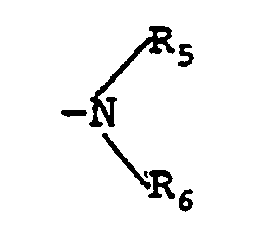
- Use according to claim 1, in which in the compound of formula I, X is nitro, cyano or chloro in the 5-position.
- Use according to claim 1 or 2, in which in the compound of formula I, R₂ is

- Use according to claim 3, in which in the compound of formula I, at least one of R₃ and R₄ is lower acyl.
- Use according to claim 3 or 4, in which in the compound of formula I, R₂ is substituted lower alkyl.
- Use according to claim 1 or 2, in which R₂ is

- Use according to claim 1 or 2, in which R₂ is nitro or cyano.
- Use according to claim 1, in which the compound of formula I is selected from the group comprising
N-(1-adamantyl)-3,4-dihydroxy-5-cyanobenzamide,
3,4-dihydroxy-5-nitrophenylmethanethiol,
4-[(3,4-dihydroxy-5-cyanophenyl)methylene]-3,5-heptanedione,
5-(3,4-dihydroxy-5-nitrophenyl)-2-methyl-4-phenyl-4-penten-3-one,
3,5-dicyanocatechol,
3,5-dinitrocatechol,
4-[(3,4-dihydroxy-5-cyanophenyl)methylene]-3,5-pentane-dione,
1-(3,4-Dihydroxy-5-nitrophenyl)-2-methylene-1-propanone,
N,N-diethyl-2-cyano-3-(3,4-dihydroxy-5-nitrophenyl)-acrylamide,
3,4-dihydroxy-2′-fluoro-5-nitrobenzophenone and
3,4-dihydroxy-4′-methyl-5-nitrobenzophenone. - Use according to claim 1, in which the compound of formula I is selected from the group comprising
3-nitro-5-[2-(4-pyridyl)vinyl]catechol,
3-nitro-5-[2-(4-quinolyl)vinyl]catechol,
3,4-dihydroxy-5-nitrocinnamic acid,
3,4-dihydroxy-5-nitro-ω,ω-dicyanostyrene,
4-(3,4-dihydroxy-5-nitrophenyl)-3-methylbut-3-en-2-one,
3-(3,4-dihydroxy-5-nitrophenyl)methylene-2,4-pentanedione,
3-(3,4-dihydroxy-5-nitrophenyl)-1-phenylprop-2-en-1-one,
3-(3,4-dihydroxy-5-nitrophenyl)-1-(4-methoxyphenyl)-prop-2-en-1-one,
3-(3,4-dihydroxy-5-nitrophenyl)-1-(3,4-dimethoxyphenyl)-prop-2-en-1-one,
3-(3,4-dihydroxy-5-nitrophenyl)-1-(3,4,5-trimethoxyphenyl)-prop-2-en-1-one,
3-(3,4-dihydroxy-5-nitrophenyl)-1-(2-hydroxyphenyl)-prop-2-en-1-one,
3-(3,4-diacetoxy-5-nitrophenyl)-1-phenylprop-2-en-1-one,
3-(3,4-dibenzoyloxy-5-nitrophenyl)-1-phenylprop-2-en-1-one,
3-(3-pivaloyloxy-4-hydroxy-5-nitrophenyl)-1-phenyl-prop-2-en-1-one,
4-(3,4-dihydroxy-5-nitrophenyl)-3-methylbut-3-en-2-ol,
3′,4′-dihydroxy-5′-nitroacetophenone,
5-(3,4-dihydroxy-5-nitrophenyl)pentanoic acid,
1-benzyl-4-[5-(3,4-dihydroxy-5-nitrophenyl)pentanoyl]-piperazine hydrochloride,
N-isopropyl-5-(3,4-dihydroxy-5-nitrophenyl)pentanoic amide,
N-methyl-N-propargyl-5-(3,4-dihydroxy-5-nitrophenyl)pentanoic amide,
N-(1-adamantyl)-5-(3,4-dihydroxy-5-nitrophenyl)pentanoic amide,
3-(3,4-dihydroxy-5-nitrophenyl)-1-(4-methylphenyl)-prop-2-en-1-one,
N-(1-adamantyl)-3,4-dihydroxy-5-nitrobenzamide,
4-cyclohexylcarbonyl-1-(3,4-dihydroxy-5-nitrobenzoyl)-piperidine,
N-benzyl-3,4-dihydroxy-5-nitrobenzamide,
N-(1-adamantyl)-3,4-dihydroxy-5-chlorobenzamide,
N-(1-adamantyl)-3,4-dihydroxy-5-cyanobenzamide,
1-butyl-3,4-dihydroxy-5-cyanobenzoate,
3-(3-ethoxycarbonylmethylcarbamoyloxy-4-hydroxy-5-nitro-phenyl)-1-phenylprop-2-en-1-one,
3-(3,4-dihydroxy-5-nitrophenyl)-1-(2-carboxyphenyl)-prop-2-en-1-one,
3-(3,4-dihydroxy-5-nitrophenyl)-1-(4-nitrophenyl)-prop-2-en-1-one,
ethyl 2-cyano-3-(3,4-dihydroxy-5-nitrophenyl)acrylate,
methyl 3-(3,4-dihydroxy-5-nitrophenyl)methylene-4-ketopentanoate,
3,4-dihydroxy-5-nitrobenzylmalonitrile,
ethyl 3,4-dihydroxy-5-nitrobenzylcyanoacetate,
3-(3,4-dihydroxy-5-trifluoromethylphenyl)-prop-2-en-1-one,
3,4-dihydroxy-5-cyanobenzaldehyde,
3,4-dihydroxy-5-trifluoromethylbenzaldehyde,
2-cyano-3-(3,4-dihydroxy-5-nitrophenyl)acrylamide,
N,N-dimethyl-2-cyano-3-(3,4-dihydroxy-5-nitrophenyl)-acryl-amide,
N,N-diethyl-2-cyano-3-(3,4-dihydroxy-5-nitrophenyl)-acrylamide,
N-isopropyl-2-cyano-3-(3,4-dihydroxy-5-nitrophenyl)-acrylamide,
N′-methyl-N′′-[2-cyano-3-(3,4-dihydroxy-5-nitrophenyl)-acryl] piperazine
3-(3,4-dihydroxy-5-trifluoromethylphenyl)methylene-2,4-pentanedione,
3,4-dihydroxy-5-nitrobenzylalcohol,
3,4-dihydroxy-5-nitrobenzyl-2-methoxyethyl ether,
3,4-dihydroxy-5-nitrobenzylthioacetic acid,
2-(3,4-dihydroxy-5-nitrobenzyl)pyrrole,
2-cyano-3-(3,4-dihydroxy-5-nitrophenyl)propanol,
3,5-dinitrocatechol,
3,4-dihydroxy-5-nitrobenzaldehyde,
3,4-dihydroxy-5-nitrobenzonitrile,
4-chloro-6-nitrocatechol,
4,5-dihydroxyisophtalaldehyde,
3,4-dihydroxy-5-cyanobenzoic acid,
3,5-dicyanocatechol,
N-(3-hydroxypropyl)-3,4-dihydroxy-5-nitrobenzamide,
neopentyl 2-cyano-3-(3,4-dihydroxy-5-nitrophenyl)acrylate and N-(3-hydroxypropyl)-2-cyano-3-(3,4-dihydroxy-5-nitrophenyl)acrylamide
5-(3,4-dihydroxy-6-nitrophenyl)pentanoic acid,
N-(1-adamantyl)-3,4-dihydroxy-6-nitrobenzamide,
N-(4-morpholine ethyl)-3,4-dihydroxy-6-nitrobenzamidehydromesylate,
N-(1-adamantyl)-3,4-dihydroxy-6-chlorobenzamide,
1-(3,4-dihydroxy-6-nitrobenzoyl)-4-cyclohexylcarbonylpiperidine and
1-(3,4-dihydroxy-6-nitrobenzoyl)-4-(1-piperidyl)piperidine hydromesylate. - Use according to claim 4, in which the compound is 3-(3,4-dihydroxy-5-nitrobenzyl)-2,4-pentanedione.
- Use according to claim 4, in which the compound is 3-(3,4-dihydroxy-5-nitrophenyl)methylene-2,4-pentanedione.
- Use according to claim 4, in which the compound is 3-(3,4-dihydroxy-5-chlorophenyl)methylene-2,4-pentanedione.
- Use according any one of claims 1 to 12, in which the tissue damaging condition to be treated is a heart disease, rheumatoid arthritis, cancer, an inflammatory disease, a rejection reaction in an organ transplant, ischemia or aging.
- A catechol derivative which is a compound according to formula I


- 5-(3,4-Dihydroxy-5-nitrophenyl)-2-methyl-4-phenyl-4-penten-3-one or a physiologically acceptable salt or ester thereof.
- 3-(3,4-Dihydroxy-5-nitrobenzyl)-2,4-pentanedione or a physiologically acceptable salt or ester thereof.
- 4-(3,4-Dihydroxy-5-nitrobenzyl)-3,5-heptanedione or a physiologically acceptable salt or ester thereof.
- 1,3-Dicyclopropyl-2-[(3,4-dihydroxy-5-nitrophenyl) methylene]-1,3-propanedione or a physiologically acceptable salt or ester thereof.
- 3-(3,4-Dihydroxy-5-nitrobenzyl)-1-cyclopropyl-1,3-butenedione or a physiologically acceptable salt or ester thereof.
- A pharmaceutical composition comprising a compound according to claim 14 and a pharmaceutically acceptable carrier or diluent.
- A compound as claimed in any one of claims 14 to 19 for use in a method of medical treatment by surgery, therapy or diagnosis.
Applications Claiming Priority (2)
| Application Number | Priority Date | Filing Date | Title |
|---|---|---|---|
| GB9004348 | 1990-02-27 | ||
| GB909004348A GB9004348D0 (en) | 1990-02-27 | 1990-02-27 | New use of catechol derivatives and their physiologically acceptable salts and esters |
Publications (3)
| Publication Number | Publication Date |
|---|---|
| EP0444899A2 true EP0444899A2 (en) | 1991-09-04 |
| EP0444899A3 EP0444899A3 (en) | 1992-11-25 |
| EP0444899B1 EP0444899B1 (en) | 1997-02-05 |
Family
ID=10671658
Family Applications (1)
| Application Number | Title | Priority Date | Filing Date |
|---|---|---|---|
| EP91301587A Expired - Lifetime EP0444899B1 (en) | 1990-02-27 | 1991-02-27 | Catechol derivatives, their physiologically acceptable salts, esters and their use in the treatment of tissue damage induced by lipid peroxidation |
Country Status (5)
| Country | Link |
|---|---|
| EP (1) | EP0444899B1 (en) |
| JP (1) | JP3157846B2 (en) |
| AT (1) | ATE148626T1 (en) |
| DE (1) | DE69124534T2 (en) |
| GB (1) | GB9004348D0 (en) |
Cited By (6)
| Publication number | Priority date | Publication date | Assignee | Title |
|---|---|---|---|---|
| WO1995014464A1 (en) * | 1993-11-24 | 1995-06-01 | Yissum Research Development Company Of The Hebrew University Of Jerusalem | Ssi tyrphostins and pharmaceutical compositions |
| KR100424392B1 (en) * | 2001-07-10 | 2004-03-24 | 한국화학연구원 | Antioxidative and anticancer compositions containing myxochelin a |
| WO2009132889A1 (en) * | 2008-04-30 | 2009-11-05 | Nestec S.A. | Products comprising, and uses of, decarboxylated phenolic acids derived from chlorogenic acids of coffee |
| WO2016036308A1 (en) | 2014-09-04 | 2016-03-10 | Lobsor Pharmaceuticals Aktiebolag | Pharmaceutical compositions comprising levodopa, a dopamine decarboxylase inhibitor and a comt inhibitor and method of administration thereof |
| WO2019182506A1 (en) | 2018-03-23 | 2019-09-26 | Lobsor Pharmaceuticals Aktiebolag | Continuous administration of pharmaceutical composition for treatment of neurodegenerative disorders |
| CN113304129A (en) * | 2021-06-16 | 2021-08-27 | 温州医科大学附属第二医院(温州医科大学附属育英儿童医院) | Application of mono-ketene monocarbonyl curcumin analogue in preparing antioxidant drugs |
Families Citing this family (1)
| Publication number | Priority date | Publication date | Assignee | Title |
|---|---|---|---|---|
| WO2012147099A1 (en) | 2011-04-25 | 2012-11-01 | Suven Nishtaa Pharma Pvt. Ltd. | Pharmaceutical compositions of levodopa, carbidopa and entacapone |
Family Cites Families (4)
| Publication number | Priority date | Publication date | Assignee | Title |
|---|---|---|---|---|
| ES8505914A1 (en) * | 1983-05-13 | 1985-06-16 | Yamanouchi Pharma Co Ltd | Catechol derivatives, their production and intermediates therefor, and pharmaceutical compositions containing them. |
| YU213587A (en) * | 1986-11-28 | 1989-06-30 | Orion Yhtymae Oy | Process for obtaining new pharmacologic active cateholic derivatives |
| MTP1031B (en) * | 1987-12-24 | 1990-10-04 | Orion Yhtymae Oy | New use of cathecol-o-methyl transferase (comt) inhibitors and their physiologically acceptable salts and esters |
| US5070089A (en) * | 1988-01-26 | 1991-12-03 | Nippon Chemiphar Co., Ltd. | Therapeutic agent for liver disease and piperazine derivatives |
-
1990
- 1990-02-27 GB GB909004348A patent/GB9004348D0/en active Pending
-
1991
- 1991-02-26 JP JP03090891A patent/JP3157846B2/en not_active Expired - Fee Related
- 1991-02-27 AT AT91301587T patent/ATE148626T1/en not_active IP Right Cessation
- 1991-02-27 DE DE69124534T patent/DE69124534T2/en not_active Expired - Fee Related
- 1991-02-27 EP EP91301587A patent/EP0444899B1/en not_active Expired - Lifetime
Cited By (7)
| Publication number | Priority date | Publication date | Assignee | Title |
|---|---|---|---|---|
| WO1995014464A1 (en) * | 1993-11-24 | 1995-06-01 | Yissum Research Development Company Of The Hebrew University Of Jerusalem | Ssi tyrphostins and pharmaceutical compositions |
| AU702800B2 (en) * | 1993-11-24 | 1999-03-04 | Kupot-Holim Health Insurance Institute Of The General Federation Of Labour In Eretz-Israel | Ssi tyrphostins and pharmaceutical compositions |
| KR100424392B1 (en) * | 2001-07-10 | 2004-03-24 | 한국화학연구원 | Antioxidative and anticancer compositions containing myxochelin a |
| WO2009132889A1 (en) * | 2008-04-30 | 2009-11-05 | Nestec S.A. | Products comprising, and uses of, decarboxylated phenolic acids derived from chlorogenic acids of coffee |
| WO2016036308A1 (en) | 2014-09-04 | 2016-03-10 | Lobsor Pharmaceuticals Aktiebolag | Pharmaceutical compositions comprising levodopa, a dopamine decarboxylase inhibitor and a comt inhibitor and method of administration thereof |
| WO2019182506A1 (en) | 2018-03-23 | 2019-09-26 | Lobsor Pharmaceuticals Aktiebolag | Continuous administration of pharmaceutical composition for treatment of neurodegenerative disorders |
| CN113304129A (en) * | 2021-06-16 | 2021-08-27 | 温州医科大学附属第二医院(温州医科大学附属育英儿童医院) | Application of mono-ketene monocarbonyl curcumin analogue in preparing antioxidant drugs |
Also Published As
| Publication number | Publication date |
|---|---|
| GB9004348D0 (en) | 1990-04-25 |
| JPH04211627A (en) | 1992-08-03 |
| DE69124534T2 (en) | 1997-07-03 |
| JP3157846B2 (en) | 2001-04-16 |
| EP0444899B1 (en) | 1997-02-05 |
| ATE148626T1 (en) | 1997-02-15 |
| DE69124534D1 (en) | 1997-03-20 |
| EP0444899A3 (en) | 1992-11-25 |
Similar Documents
| Publication | Publication Date | Title |
|---|---|---|
| DE3740383C2 (en) | Catechol derivatives, process for their preparation and their use as medicines | |
| EP0918514B9 (en) | Triaryl methane compounds for the treatment of cancer, actinic keratosis and kaposi's sarcoma | |
| DE69725978T2 (en) | CHALCON DERIVATIVES AND MEDICINES THAT CONTAIN THEM | |
| EP0106462B1 (en) | Dihydropyridines | |
| DE2405658A1 (en) | 4-ARYL-1,4-DIHYDROPYRIDINE, THE PROCESS FOR THE PREPARATION AND MEDICINAL PRODUCTS CONTAINING THESE COMPOUNDS | |
| EP0194548A2 (en) | Sulfonylaminoethyl compounds, medicines containing these compounds and process for their preparation | |
| SI8511419A8 (en) | Process for obtaining 1,4-dihydropyridine | |
| Caliendo et al. | Preparation and local anaesthetic activity of benzotriazinone and benzoyltriazole derivatives | |
| US4885284A (en) | Dihydropyridine-5-phosphonic acid cyclic propylene ester | |
| JPS61233636A (en) | Novel naphthalene derivative having retinoid activation, manufacture and medicinal and cosmetic composition | |
| US5489614A (en) | Catechol derivatives, their physiologically acceptable salts, esters and use | |
| EP0444899B1 (en) | Catechol derivatives, their physiologically acceptable salts, esters and their use in the treatment of tissue damage induced by lipid peroxidation | |
| JPS643185B2 (en) | ||
| EP0624575A1 (en) | Substituted indoles and pharmaceutical compositions containing them | |
| US4981853A (en) | Heterocyclic amides | |
| EP0095640A1 (en) | Alkylene-bridged guanidino-thiazole derivatives, method for their preparation and their use as medicaments | |
| US4397855A (en) | 4-(Substituted)-α, α-dimethyl-1-piperazine pentanoic acids and derivatives as anti-arteriosclerotic agents and method | |
| US5919796A (en) | Hydroximic acid derivatives, pharmaceutical compositions containing them, and processes for preparing the same | |
| US5116851A (en) | Pharmaceutical composition and method for treating cardiovascular diseases using substituted anilides and sulfonamides | |
| DE4220264A1 (en) | Phenyl-1,2,5-oxadiazole-carbonamide-2-oxide | |
| RU2081869C1 (en) | Derivatives of 1,4-dihydropyridine and pharmaceutical composition on their base, possessing vasoactive action | |
| EP0167245B1 (en) | Anti-arrhythmic agents | |
| EP0440324A2 (en) | Substituted beta-diketones and their use | |
| EP0014493B1 (en) | Chlorobenzyl phenoxy alkanoic compounds | |
| CS225823B2 (en) | The production of the pyridine derivates |
Legal Events
| Date | Code | Title | Description |
|---|---|---|---|
| PUAI | Public reference made under article 153(3) epc to a published international application that has entered the european phase |
Free format text: ORIGINAL CODE: 0009012 |
|
| AK | Designated contracting states |
Kind code of ref document: A2 Designated state(s): AT BE CH DE DK ES FR GB GR IT LI LU NL SE |
|
| PUAL | Search report despatched |
Free format text: ORIGINAL CODE: 0009013 |
|
| AK | Designated contracting states |
Kind code of ref document: A3 Designated state(s): AT BE CH DE DK ES FR GB GR IT LI LU NL SE |
|
| 17P | Request for examination filed |
Effective date: 19930107 |
|
| 17Q | First examination report despatched |
Effective date: 19950126 |
|
| GRAG | Despatch of communication of intention to grant |
Free format text: ORIGINAL CODE: EPIDOS AGRA |
|
| GRAH | Despatch of communication of intention to grant a patent |
Free format text: ORIGINAL CODE: EPIDOS IGRA |
|
| GRAH | Despatch of communication of intention to grant a patent |
Free format text: ORIGINAL CODE: EPIDOS IGRA |
|
| GRAA | (expected) grant |
Free format text: ORIGINAL CODE: 0009210 |
|
| AK | Designated contracting states |
Kind code of ref document: B1 Designated state(s): AT BE CH DE DK ES FR GB GR IT LI LU NL SE |
|
| PG25 | Lapsed in a contracting state [announced via postgrant information from national office to epo] |
Ref country code: IT Free format text: LAPSE BECAUSE OF FAILURE TO SUBMIT A TRANSLATION OF THE DESCRIPTION OR TO PAY THE FEE WITHIN THE PRESCRIBED TIME-LIMIT;WARNING: LAPSES OF ITALIAN PATENTS WITH EFFECTIVE DATE BEFORE 2007 MAY HAVE OCCURRED AT ANY TIME BEFORE 2007. THE CORRECT EFFECTIVE DATE MAY BE DIFFERENT FROM THE ONE RECORDED. Effective date: 19970205 Ref country code: ES Free format text: THE PATENT HAS BEEN ANNULLED BY A DECISION OF A NATIONAL AUTHORITY Effective date: 19970205 Ref country code: GR Free format text: LAPSE BECAUSE OF FAILURE TO SUBMIT A TRANSLATION OF THE DESCRIPTION OR TO PAY THE FEE WITHIN THE PRESCRIBED TIME-LIMIT Effective date: 19970205 Ref country code: DK Effective date: 19970205 Ref country code: NL Free format text: LAPSE BECAUSE OF FAILURE TO SUBMIT A TRANSLATION OF THE DESCRIPTION OR TO PAY THE FEE WITHIN THE PRESCRIBED TIME-LIMIT Effective date: 19970205 |
|
| REF | Corresponds to: |
Ref document number: 148626 Country of ref document: AT Date of ref document: 19970215 Kind code of ref document: T |
|
| REG | Reference to a national code |
Ref country code: CH Ref legal event code: EP Ref country code: CH Ref legal event code: NV Representative=s name: A. BRAUN, BRAUN, HERITIER, ESCHMANN AG PATENTANWAE |
|
| ET | Fr: translation filed | ||
| REF | Corresponds to: |
Ref document number: 69124534 Country of ref document: DE Date of ref document: 19970320 |
|
| ET | Fr: translation filed |
Free format text: CORRECTIONS |
|
| PG25 | Lapsed in a contracting state [announced via postgrant information from national office to epo] |
Ref country code: SE Effective date: 19970505 |
|
| NLV1 | Nl: lapsed or annulled due to failure to fulfill the requirements of art. 29p and 29m of the patents act | ||
| PLBE | No opposition filed within time limit |
Free format text: ORIGINAL CODE: 0009261 |
|
| STAA | Information on the status of an ep patent application or granted ep patent |
Free format text: STATUS: NO OPPOSITION FILED WITHIN TIME LIMIT |
|
| 26N | No opposition filed | ||
| REG | Reference to a national code |
Ref country code: GB Ref legal event code: IF02 |
|
| PGFP | Annual fee paid to national office [announced via postgrant information from national office to epo] |
Ref country code: AT Payment date: 20030109 Year of fee payment: 13 |
|
| PGFP | Annual fee paid to national office [announced via postgrant information from national office to epo] |
Ref country code: FR Payment date: 20030113 Year of fee payment: 13 |
|
| PGFP | Annual fee paid to national office [announced via postgrant information from national office to epo] |
Ref country code: GB Payment date: 20030116 Year of fee payment: 13 |
|
| PGFP | Annual fee paid to national office [announced via postgrant information from national office to epo] |
Ref country code: DE Payment date: 20030120 Year of fee payment: 13 |
|
| PGFP | Annual fee paid to national office [announced via postgrant information from national office to epo] |
Ref country code: CH Payment date: 20030121 Year of fee payment: 13 |
|
| PGFP | Annual fee paid to national office [announced via postgrant information from national office to epo] |
Ref country code: BE Payment date: 20030203 Year of fee payment: 13 |
|
| PGFP | Annual fee paid to national office [announced via postgrant information from national office to epo] |
Ref country code: LU Payment date: 20030206 Year of fee payment: 13 |
|
| PG25 | Lapsed in a contracting state [announced via postgrant information from national office to epo] |
Ref country code: LU Free format text: LAPSE BECAUSE OF NON-PAYMENT OF DUE FEES Effective date: 20040227 Ref country code: GB Free format text: LAPSE BECAUSE OF NON-PAYMENT OF DUE FEES Effective date: 20040227 Ref country code: AT Free format text: LAPSE BECAUSE OF NON-PAYMENT OF DUE FEES Effective date: 20040227 |
|
| PG25 | Lapsed in a contracting state [announced via postgrant information from national office to epo] |
Ref country code: BE Free format text: LAPSE BECAUSE OF NON-PAYMENT OF DUE FEES Effective date: 20040228 |
|
| PG25 | Lapsed in a contracting state [announced via postgrant information from national office to epo] |
Ref country code: CH Free format text: LAPSE BECAUSE OF NON-PAYMENT OF DUE FEES Effective date: 20040229 Ref country code: LI Free format text: LAPSE BECAUSE OF NON-PAYMENT OF DUE FEES Effective date: 20040229 |
|
| BERE | Be: lapsed |
Owner name: *ORION-YHTYMA OY Effective date: 20040228 |
|
| PG25 | Lapsed in a contracting state [announced via postgrant information from national office to epo] |
Ref country code: DE Free format text: LAPSE BECAUSE OF NON-PAYMENT OF DUE FEES Effective date: 20040901 |
|
| REG | Reference to a national code |
Ref country code: CH Ref legal event code: PL |
|
| GBPC | Gb: european patent ceased through non-payment of renewal fee | ||
| PG25 | Lapsed in a contracting state [announced via postgrant information from national office to epo] |
Ref country code: FR Free format text: LAPSE BECAUSE OF NON-PAYMENT OF DUE FEES Effective date: 20041029 |
|
| REG | Reference to a national code |
Ref country code: FR Ref legal event code: ST |