EP0446852A2 - Utilisation d'acide polyglycolique et ses dérivés comme agent nucléant de polymères à base de poly-L-lactide - Google Patents
Utilisation d'acide polyglycolique et ses dérivés comme agent nucléant de polymères à base de poly-L-lactide Download PDFInfo
- Publication number
- EP0446852A2 EP0446852A2 EP91103722A EP91103722A EP0446852A2 EP 0446852 A2 EP0446852 A2 EP 0446852A2 EP 91103722 A EP91103722 A EP 91103722A EP 91103722 A EP91103722 A EP 91103722A EP 0446852 A2 EP0446852 A2 EP 0446852A2
- Authority
- EP
- European Patent Office
- Prior art keywords
- polyglycolic acid
- nucleating agent
- general formula
- crystallization
- derivatives
- Prior art date
- Legal status (The legal status is an assumption and is not a legal conclusion. Google has not performed a legal analysis and makes no representation as to the accuracy of the status listed.)
- Withdrawn
Links
Images

Classifications
-
- C—CHEMISTRY; METALLURGY
- C08—ORGANIC MACROMOLECULAR COMPOUNDS; THEIR PREPARATION OR CHEMICAL WORKING-UP; COMPOSITIONS BASED THEREON
- C08L—COMPOSITIONS OF MACROMOLECULAR COMPOUNDS
- C08L67/00—Compositions of polyesters obtained by reactions forming a carboxylic ester link in the main chain; Compositions of derivatives of such polymers
- C08L67/04—Polyesters derived from hydroxycarboxylic acids, e.g. lactones
-
- A—HUMAN NECESSITIES
- A61—MEDICAL OR VETERINARY SCIENCE; HYGIENE
- A61L—METHODS OR APPARATUS FOR STERILISING MATERIALS OR OBJECTS IN GENERAL; DISINFECTION, STERILISATION OR DEODORISATION OF AIR; CHEMICAL ASPECTS OF BANDAGES, DRESSINGS, ABSORBENT PADS OR SURGICAL ARTICLES; MATERIALS FOR BANDAGES, DRESSINGS, ABSORBENT PADS OR SURGICAL ARTICLES
- A61L17/00—Materials for surgical sutures or for ligaturing blood vessels ; Materials for prostheses or catheters
- A61L17/06—At least partially resorbable materials
- A61L17/10—At least partially resorbable materials containing macromolecular materials
- A61L17/12—Homopolymers or copolymers of glycolic acid or lactic acid
-
- A—HUMAN NECESSITIES
- A61—MEDICAL OR VETERINARY SCIENCE; HYGIENE
- A61L—METHODS OR APPARATUS FOR STERILISING MATERIALS OR OBJECTS IN GENERAL; DISINFECTION, STERILISATION OR DEODORISATION OF AIR; CHEMICAL ASPECTS OF BANDAGES, DRESSINGS, ABSORBENT PADS OR SURGICAL ARTICLES; MATERIALS FOR BANDAGES, DRESSINGS, ABSORBENT PADS OR SURGICAL ARTICLES
- A61L31/00—Materials for other surgical articles, e.g. stents, stent-grafts, shunts, surgical drapes, guide wires, materials for adhesion prevention, occluding devices, surgical gloves, tissue fixation devices
- A61L31/04—Macromolecular materials
- A61L31/06—Macromolecular materials obtained otherwise than by reactions only involving carbon-to-carbon unsaturated bonds
-
- C—CHEMISTRY; METALLURGY
- C08—ORGANIC MACROMOLECULAR COMPOUNDS; THEIR PREPARATION OR CHEMICAL WORKING-UP; COMPOSITIONS BASED THEREON
- C08G—MACROMOLECULAR COMPOUNDS OBTAINED OTHERWISE THAN BY REACTIONS ONLY INVOLVING UNSATURATED CARBON-TO-CARBON BONDS
- C08G63/00—Macromolecular compounds obtained by reactions forming a carboxylic ester link in the main chain of the macromolecule
- C08G63/02—Polyesters derived from hydroxycarboxylic acids or from polycarboxylic acids and polyhydroxy compounds
- C08G63/06—Polyesters derived from hydroxycarboxylic acids or from polycarboxylic acids and polyhydroxy compounds derived from hydroxycarboxylic acids
-
- C—CHEMISTRY; METALLURGY
- C08—ORGANIC MACROMOLECULAR COMPOUNDS; THEIR PREPARATION OR CHEMICAL WORKING-UP; COMPOSITIONS BASED THEREON
- C08G—MACROMOLECULAR COMPOUNDS OBTAINED OTHERWISE THAN BY REACTIONS ONLY INVOLVING UNSATURATED CARBON-TO-CARBON BONDS
- C08G63/00—Macromolecular compounds obtained by reactions forming a carboxylic ester link in the main chain of the macromolecule
- C08G63/68—Polyesters containing atoms other than carbon, hydrogen and oxygen
- C08G63/682—Polyesters containing atoms other than carbon, hydrogen and oxygen containing halogens
- C08G63/6822—Polyesters containing atoms other than carbon, hydrogen and oxygen containing halogens derived from hydroxy carboxylic acids
-
- C—CHEMISTRY; METALLURGY
- C08—ORGANIC MACROMOLECULAR COMPOUNDS; THEIR PREPARATION OR CHEMICAL WORKING-UP; COMPOSITIONS BASED THEREON
- C08L—COMPOSITIONS OF MACROMOLECULAR COMPOUNDS
- C08L101/00—Compositions of unspecified macromolecular compounds
Definitions
- the invention relates to the use of polyglycolic acid and its derivatives as nucleating agents in the crystallization of polymers, in particular polylactides.
- Polylactides have a wide range of possible uses - as plastics (biodegradable) from the human or animal organism.
- plastics biodegradable
- solid moldings such as Rails, screws and pins that serve as replacements for the corresponding metal objects - in the foreground of interest.
- high demands are placed on the degree of crystallization of the respective polylactide.
- the degree of crystallization of the plastic used in the manufacture of the implant influences not only the mechanical properties but also the degradation behavior of the molded body in the human or animal organism.
- a cooling process with such long dwell times of the respective molded body (s) in the injection mold is, however, associated with a molecular degradation of the polylactide used, which, in addition to a change in the degradation behavior in the body, is also associated with a reduction in the mechanical stability properties.
- nucleating agents has made it possible to obtain highly crystalline moldings, even when using shorter cooling times.
- nucleating agents are added to the plastic melt, which form so-called heterogeneous germs there.
- a high nucleus density is thus achieved even before the formation of so-called “thermal crystallization nuclei”, with which crystallization is initiated earlier and the crystallization time itself is shortened.
- crystallization starts at a higher temperature than a sample without a nucleating agent.
- the level of the crystallization temperature - which, for example, by DSC investigations (differential scanning calorimetry) can be easily determined - is a measure of the effectiveness of the nucleating agent.
- the hardness, the elastic modulus (elastic modulus), the tensile strength, the elongation at break and the impact resistance are improved in comparison to the corresponding non-nucleated material.
- the shortening of the cycle time during injection molding of nucleated molding compounds is of particular importance. Due to the fact that the crystallization starts at higher temperatures and accordingly ends earlier when cooling, the so-called demolding temperature can be increased and thus the cooling time reduced, which results in the desired shortening of the cycle time.
- halogen In addition to fluorine, bromine and iodine, halogen primarily means chlorine.
- M primarily means sodium.
- a carboxylic acid ester can also be used as the carboxyl end group.
- Alkyl esters may be mentioned as an example.
- the ionic chlorine content is not critical. It can be between 0 and 5%. However, products with less than 1% ionic chlorine are preferred.
- the content of covalently bound chlorine is not critical in itself. However, since it represents a measure of the molecular weight of polyglycolic acid and this should not fall below certain values in order to achieve a sufficiently high melting point, the content of covalently bound chlorine is advantageously between 0 and 2%. This does not exclude that a product with a higher chlorine content can be used for certain applications, but products with less than 1% are preferred. A content of covalently bound chlorine between 0 and 0.6% is particularly preferred.
- the sodium content is composed of the sodium chloride which has not been washed out and the portion bound to the polymer in accordance with formula I. It is not critical and can be 5% or more depending on the product quality. However, products with sodium contents between 0 and 2% are preferred, particularly preferably between 0 and 1%.
- n in Formula I is not critical per se. Reactions such as those used for the production of polyglycolic acid according to the invention, however, produce products with n of about 20 to about 300 due to the reaction kinetics. The production of even higher molecular weight products requires very long reaction times or a complex ring-opening polymerization of glycolide. However, such high molecular weights are not for the process according to the invention required. Products are therefore preferred in which n is between 20 and 300, particularly preferably between 50 and 150.
- X can also mean another halogen, hydrogen, a hydroxyl group or another group, provided that it does not disadvantageously lower the melting point or increase the toxicity.
- M which - as explained - can also be hydrogen or another metal cation.
- An esterified carboxyl end group is also possible, provided this does not lower the melting point. This makes it clear that the synthetic route leading to products of the formula I is not critical.
- Polymers of glycolic acid are, as has been proven many times (for example by their use as a suture material), well tolerated and degradable in the organism.
- mixtures (blends) of such polymers and copolymers are not a limitation of the invention.
- Examples include polyethylene, polypropylene, polybutylene, polyoxymethylene and polyamide.
- the nucleating agent according to the invention can be used in a range from 0.2 to 5% by weight, preferably in a range from 0.4 to 3% by weight and very particularly preferably in a range from 0.5 to 2% by weight Polymers - in the present case poly-L-lactide - are added. Depending on the polymer to be nucleated, however, it may also be necessary to deviate from these percentages and to add the nucleating agent according to the invention in large or small proportions.
- a mixture of raw material and nucleating agent with a nucleating agent content of 1.5% by weight was produced for the injection molding tests.
- a wall temperature of 116 ° C. was set on the injection mold.
- the injection molding tests were carried out using a micro-precision injection molding machine with piston injection, the piston itself being guided in the plasticizing screw.
- An absorption dryer was used for drying, which was connected to the funnel on the injection molding machine. In the circulating air process, the funnel contents were supplied with heated and dried air from the absorption dryer.
- the poly-L-lactide raw material used was first dried at 140 ° C. for a period of 4 h and then mixed with 1.5% by weight of the nucleating agent. In the subsequent pressing process, plates were produced that could be granulated with a cutting mill.
- DSC analysis was also used for the thermal analysis to determine the degree of crystallization, with a sample of approx. 7 mg mass - starting from room temperature - being heated to a temperature of 200 ° C at a heating rate of 20 K / min.
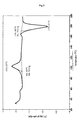
- FIG. 3 shows the graphic representation of a DSC analysis of a sample that was injected without nucleating agent (tool temperature: 107 ° C., cooling time 60 s).
- the amount of heat released during post-crystallization - at a temperature of 103 ° C (H after ) - is approx. 30 J / g.
- the melting temperature is approx. 179 ° C and the heat of fusion (H sc ) required to melt the crystalline areas is 51 J / g.
- Carrying out a temperature variation of the tool (115 ° C., 95 ° C.) during the production of the molded parts without the nucleating agent according to the invention does not increase the degree of crystallization compared to the basic setting of 107 ° C.
- the structure of semi-crystalline plastics is also greatly changed by the use of nucleating agents.
- the following tests were carried out for a more precise analysis of the effect of the nucleating agent according to the invention on the structural structure.
- the mean spherulite diameter of a semicrystalline sample can be determined with the aid of small angle light scattering.
- the thin sections produced for polarization microscopy are used as samples.
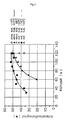
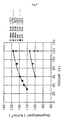
- the small-angle light scattering provides evidence of the substantially smaller spherulite diameter in the samples that were treated with the nucleating agent according to the invention.
- a decrease in the spherulite diameter with decreasing cooling time can be seen in samples which were produced both with and without a nucleating agent. However, the decrease is significantly greater for the samples without nucleating agent.
- the 3-point bending test was carried out in accordance with DIN 53452 or DIN 53457 [German Industry Standard, tests of plastics, determination of the elastic modulus (elastic modulus) in tensile, compression and bending tests].
- the test data were determined at a temperature of 23 ° C and at a test speed of 5 mm / s.
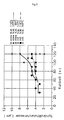
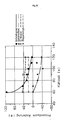
- the modulus of elasticity and bending strength were determined using the 3-point bending test. A clear improvement in the mechanical properties of the nucleated poly-L-lactide compared to the non-nucleated material was found.
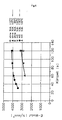
- FIG. 6 shows a graphical representation of the function of the modulus of elasticity as a function of the cooling time.
- the modulus of elasticity of partially crystalline plastics as a function of the degree of crystallization can be mathematically recorded [German industry standard, testing of plastics, determination of the modulus of elasticity in tensile, compression and bending tests], it being generally found that the modulus of elasticity increases with the degree of crystallization increases. An increase in the modulus of elasticity of 40% was observed in the molded parts examined with a cooling time of 60 s.
- Molded parts with good mechanical properties and a degree of crystallization of 46% could be produced by using the nucleating agent according to the invention, with a relatively short cooling time of 50 s.
- polyglycolic acid as a nucleating agent thus results in a significant reduction in cooling time and thus a reduction in cycle time.
Landscapes
- Health & Medical Sciences (AREA)
- Chemical & Material Sciences (AREA)
- Chemical Kinetics & Catalysis (AREA)
- Medicinal Chemistry (AREA)
- Polymers & Plastics (AREA)
- Organic Chemistry (AREA)
- Epidemiology (AREA)
- Public Health (AREA)
- Surgery (AREA)
- Vascular Medicine (AREA)
- Veterinary Medicine (AREA)
- Life Sciences & Earth Sciences (AREA)
- Animal Behavior & Ethology (AREA)
- General Health & Medical Sciences (AREA)
- Engineering & Computer Science (AREA)
- Materials Engineering (AREA)
- Heart & Thoracic Surgery (AREA)
- Compositions Of Macromolecular Compounds (AREA)
- Biological Depolymerization Polymers (AREA)
- Manufacture Of Macromolecular Shaped Articles (AREA)
- Polyesters Or Polycarbonates (AREA)
Applications Claiming Priority (2)
| Application Number | Priority Date | Filing Date | Title |
|---|---|---|---|
| DE19904007882 DE4007882C2 (de) | 1990-03-13 | 1990-03-13 | Verwendung von Polyglycolsäure und ihrer Derivate als Nukleierungsmittel |
| DE4007882 | 1990-03-13 |
Publications (2)
| Publication Number | Publication Date |
|---|---|
| EP0446852A2 true EP0446852A2 (fr) | 1991-09-18 |
| EP0446852A3 EP0446852A3 (en) | 1992-08-19 |
Family
ID=6402043
Family Applications (1)
| Application Number | Title | Priority Date | Filing Date |
|---|---|---|---|
| EP19910103722 Withdrawn EP0446852A3 (en) | 1990-03-13 | 1991-03-12 | Use of polyglycolic acid and its derivatives as nucleating agent |
Country Status (3)
| Country | Link |
|---|---|
| EP (1) | EP0446852A3 (fr) |
| JP (1) | JPH04220456A (fr) |
| DE (1) | DE4007882C2 (fr) |
Cited By (8)
| Publication number | Priority date | Publication date | Assignee | Title |
|---|---|---|---|---|
| EP0592911A1 (fr) * | 1992-10-14 | 1994-04-20 | BASF Aktiengesellschaft | Procédé pour la fabrication par injection et moussage d'objets en polylactide à haute résistance et haute rigidité |
| EP0628586A1 (fr) * | 1993-06-10 | 1994-12-14 | Terumo Kabushiki Kaisha | Composition de polymère d'acide hydroxyalcanoate |
| EP0450777B1 (fr) * | 1990-04-06 | 1996-06-05 | Director-General Of The Agency Of Industrial Science And Technology | Composition de matière plastique biodégradable |
| EP0821036A1 (fr) * | 1996-07-26 | 1998-01-28 | MITSUI TOATSU CHEMICALS, Inc. | Composition de résine et articles moulés produits à partir de celle-ci |
| EP0786259A3 (fr) * | 1996-01-19 | 1999-02-17 | United States Surgical Corporation | Mélanges de polymères absorbables et articles chirurgicaux fabriqués à partir de ceux-ci |
| WO2001067990A1 (fr) * | 2000-03-13 | 2001-09-20 | Keiji Igaki | Tige en fil pour stents intravasculaires et stents intravasculaires ainsi conçus |
| EP1947079A4 (fr) * | 2005-10-26 | 2014-12-10 | Mitsui Chemicals Inc | Procede de production d acide glycolique |
| WO2024261107A1 (fr) | 2023-06-21 | 2024-12-26 | Totalenergies Corbion Bv | Procédé de préparation de copolymères de plga cristallisés |
Families Citing this family (4)
| Publication number | Priority date | Publication date | Assignee | Title |
|---|---|---|---|---|
| EP1507663B1 (fr) * | 2002-05-24 | 2010-04-21 | Kureha Corporation | Produit multicouche oriente |
| WO2004069932A1 (fr) * | 2003-02-04 | 2004-08-19 | Sony Corporation | Composition de resine et procede de production d'un moulage en resine |
| CN1320044C (zh) | 2003-04-25 | 2007-06-06 | 株式会社艾迪科 | 聚乳酸类树脂组合物、成型品及其制备方法 |
| JP4640765B2 (ja) | 2004-09-03 | 2011-03-02 | 株式会社Adeka | ポリ乳酸系樹脂組成物、成形品及びその製造方法 |
Family Cites Families (6)
| Publication number | Priority date | Publication date | Assignee | Title |
|---|---|---|---|---|
| DE1293396C2 (de) * | 1963-10-31 | 1978-06-22 | American Cyanamid Company, Wayne, N.J. (V.St.A.) | Resorbierbares chirurgisches material |
| US3734979A (en) * | 1970-12-30 | 1973-05-22 | Union Carbide Corp | Shaped and molded articles of polymer blends comprising polyolefins and lactone polymer |
| DE2149649A1 (de) * | 1971-10-05 | 1973-04-12 | Hoechst Ag | Thermoplastische polyesterformmassen |
| DE2706128C2 (de) * | 1977-02-14 | 1986-12-11 | Bayer Ag, 5090 Leverkusen | Schnell kristallisierende Polyestermassen und Verfahren zu ihrer Herstellung |
| US4839130A (en) * | 1986-07-17 | 1989-06-13 | United States Surgical Corporation | Process of making an absorbable surgical device |
| US4844854A (en) * | 1987-09-22 | 1989-07-04 | United States Surgical Corporation | Process for making a surgical device using two-phase compositions |
-
1990
- 1990-03-13 DE DE19904007882 patent/DE4007882C2/de not_active Expired - Fee Related
-
1991
- 1991-03-08 JP JP6871691A patent/JPH04220456A/ja active Pending
- 1991-03-12 EP EP19910103722 patent/EP0446852A3/de not_active Withdrawn
Cited By (11)
| Publication number | Priority date | Publication date | Assignee | Title |
|---|---|---|---|---|
| EP0450777B1 (fr) * | 1990-04-06 | 1996-06-05 | Director-General Of The Agency Of Industrial Science And Technology | Composition de matière plastique biodégradable |
| EP0592911A1 (fr) * | 1992-10-14 | 1994-04-20 | BASF Aktiengesellschaft | Procédé pour la fabrication par injection et moussage d'objets en polylactide à haute résistance et haute rigidité |
| EP0628586A1 (fr) * | 1993-06-10 | 1994-12-14 | Terumo Kabushiki Kaisha | Composition de polymère d'acide hydroxyalcanoate |
| US5516565A (en) * | 1993-06-10 | 1996-05-14 | Terumo Kabushiki Kaisha | Hydroxyalkanoate polymer composition |
| EP0786259A3 (fr) * | 1996-01-19 | 1999-02-17 | United States Surgical Corporation | Mélanges de polymères absorbables et articles chirurgicaux fabriqués à partir de ceux-ci |
| EP0821036A1 (fr) * | 1996-07-26 | 1998-01-28 | MITSUI TOATSU CHEMICALS, Inc. | Composition de résine et articles moulés produits à partir de celle-ci |
| US5916950A (en) * | 1996-07-26 | 1999-06-29 | Mitsui Chemicals, Inc. | Resin composition and molded articles thereof |
| WO2001067990A1 (fr) * | 2000-03-13 | 2001-09-20 | Keiji Igaki | Tige en fil pour stents intravasculaires et stents intravasculaires ainsi conçus |
| US7070615B1 (en) | 2000-03-13 | 2006-07-04 | Keiji Igaki | Linear material for blood vessel stent and blood vessel stent utilizing same |
| EP1947079A4 (fr) * | 2005-10-26 | 2014-12-10 | Mitsui Chemicals Inc | Procede de production d acide glycolique |
| WO2024261107A1 (fr) | 2023-06-21 | 2024-12-26 | Totalenergies Corbion Bv | Procédé de préparation de copolymères de plga cristallisés |
Also Published As
| Publication number | Publication date |
|---|---|
| DE4007882A1 (de) | 1991-09-19 |
| EP0446852A3 (en) | 1992-08-19 |
| JPH04220456A (ja) | 1992-08-11 |
| DE4007882C2 (de) | 1994-03-10 |
Similar Documents
| Publication | Publication Date | Title |
|---|---|---|
| EP2263707B1 (fr) | Polyetheresters resorbables et leur utilisation pour produire des implants medicaux | |
| DE60119374T2 (de) | Methode zur herstellung von bioabbaubaren polyhydroxyalkanoat-copolymeren mit verbesserten kristallisationseigenschaften | |
| DE69916839T2 (de) | Mischung von bioresorbierbaren polymeren enthaltend ein pga-haltiges blockcopolymer und ein zweites makrophasengetrenntes polymer | |
| DE68929425T2 (de) | Absorbierbare Mischung für gesteuerte Abgabe | |
| DE69728307T2 (de) | Absorbierbare polymer Mischungen und chirurgische Gegenstände daraus | |
| DE69414640T2 (de) | Hydroxyalkanoatpolymerzusammensetzungen | |
| DE69133073T2 (de) | Verformbarer chirurgischer Artikel | |
| DE60222415T2 (de) | Resorbierbare polymerzusammensetzungen | |
| DE69119919T2 (de) | Kristalline Copolyester aus amorphem (Laktid/Glykolid) und p-Dioxanon | |
| DE69328018T2 (de) | Schmelzstabile lactid-polymerfilme und verfahren zu ihrer herstellung | |
| DE102004003879B4 (de) | Zusammensetzungen enthaltend Polymilchsäure, daraus geformte Gegenstände und Verfahren zu deren Herstellung | |
| DE4007882C2 (de) | Verwendung von Polyglycolsäure und ihrer Derivate als Nukleierungsmittel | |
| DE602004011759T2 (de) | Formteile, die ein polyhydroxyalkanoatcopolymer und ein in der umwelt abbaubares thermoplastisches polymer enthalten | |
| DE2552804C2 (de) | Polyamidharzmasse | |
| DE60111567T2 (de) | Bioabbaubare polyhydroxyalkanoat-copolymere mit verbesserten kristallisationseigenschaften | |
| DE69512291T2 (de) | Verstärkte absorbierbare Polymere | |
| DE69215592T2 (de) | Weicher elastischer und bioabsorbierbarer Film aus Milchsäurepolymer, insbesondere verwendbar zur Herstellung von medizinischen Verbänden | |
| DE2827289A1 (de) | Mischpolymerisate aus lactiden und glykoliden und verfahren zu deren herstellung | |
| EP0401844A2 (fr) | Articles moulés résorbables et leur procédé de préparation | |
| DE1794333A1 (de) | Formbare Mischung und deren Verwendung | |
| US12163020B2 (en) | Biodegradable polymer blends for manufacturing medical devices | |
| DE1769425A1 (de) | Verfahren zur Herstellung von dickwandigen Formteilen aus Polyaethylenterephthalat | |
| CH628664A5 (de) | Feuerhemmende polyamid-grundmischung und -masse. | |
| DD139794A5 (de) | Verfahren zur herstellung steriler chirurgischer gegenstaende | |
| DE102005018086A1 (de) | Verfahren zur Erzeugung eines durchsichtigen Materials aus Polymilchsäure sowie durchsichtiges Material aus Polymilchsäure |
Legal Events
| Date | Code | Title | Description |
|---|---|---|---|
| PUAI | Public reference made under article 153(3) epc to a published international application that has entered the european phase |
Free format text: ORIGINAL CODE: 0009012 |
|
| AK | Designated contracting states |
Kind code of ref document: A2 Designated state(s): AT BE CH DE DK ES FR GB GR IT LI LU NL SE |
|
| PUAL | Search report despatched |
Free format text: ORIGINAL CODE: 0009013 |
|
| AK | Designated contracting states |
Kind code of ref document: A3 Designated state(s): AT BE CH DE DK ES FR GB GR IT LI LU NL SE |
|
| 17P | Request for examination filed |
Effective date: 19920902 |
|
| 17Q | First examination report despatched |
Effective date: 19941130 |
|
| GRAH | Despatch of communication of intention to grant a patent |
Free format text: ORIGINAL CODE: EPIDOS IGRA |
|
| STAA | Information on the status of an ep patent application or granted ep patent |
Free format text: STATUS: THE APPLICATION IS DEEMED TO BE WITHDRAWN |
|
| 18D | Application deemed to be withdrawn |
Effective date: 19960705 |