EP0447063B1 - Amélioration de la sécurité dans un processeur de données par l'utilisation d'un paramètre d'authentification dynamique - Google Patents
Amélioration de la sécurité dans un processeur de données par l'utilisation d'un paramètre d'authentification dynamique Download PDFInfo
- Publication number
- EP0447063B1 EP0447063B1 EP91301583A EP91301583A EP0447063B1 EP 0447063 B1 EP0447063 B1 EP 0447063B1 EP 91301583 A EP91301583 A EP 91301583A EP 91301583 A EP91301583 A EP 91301583A EP 0447063 B1 EP0447063 B1 EP 0447063B1
- Authority
- EP
- European Patent Office
- Prior art keywords
- signal
- data
- processing
- decryption key
- scrambler
- Prior art date
- Legal status (The legal status is an assumption and is not a legal conclusion. Google has not performed a legal analysis and makes no representation as to the accuracy of the status listed.)
- Expired - Lifetime
Links
- 230000015654 memory Effects 0.000 claims abstract description 60
- 230000004044 response Effects 0.000 claims description 11
- 238000000034 method Methods 0.000 claims description 9
- 238000013478 data encryption standard Methods 0.000 description 4
- 238000010586 diagram Methods 0.000 description 4
- 230000002708 enhancing effect Effects 0.000 description 2
- 230000005540 biological transmission Effects 0.000 description 1
Images

Classifications
-
- H—ELECTRICITY
- H04—ELECTRIC COMMUNICATION TECHNIQUE
- H04L—TRANSMISSION OF DIGITAL INFORMATION, e.g. TELEGRAPHIC COMMUNICATION
- H04L9/00—Cryptographic mechanisms or cryptographic arrangements for secret or secure communications; Network security protocols
- H04L9/12—Transmitting and receiving encryption devices synchronised or initially set up in a particular manner
-
- H—ELECTRICITY
- H04—ELECTRIC COMMUNICATION TECHNIQUE
- H04L—TRANSMISSION OF DIGITAL INFORMATION, e.g. TELEGRAPHIC COMMUNICATION
- H04L9/00—Cryptographic mechanisms or cryptographic arrangements for secret or secure communications; Network security protocols
- H04L9/08—Key distribution or management, e.g. generation, sharing or updating, of cryptographic keys or passwords
Definitions
- the present invention generally pertains to secure data processing systems and is particularly directed to enhancing the security of a given data processing routine in which an essential predetermined signal is utilized.
- the invention is particularly, but not exclusively, directed to enhancing the security of a data processing routine in which the essential predetermined signal is a decryption key used for descrambling scrambled information signals.
- GB-A-2 161 680 describes a data processing system that includes an exclusive-OR gate for descrambling a scrambled signal in accordance with a data processing routine by which the scrambled signal is exclusive-OR'd with a descramble signal; a random number generator for processing data in accordance with a second data processing routine; and a memory for storing data for use in said data processing routines.
- the data processing system is adapted to respond to an instruction to generate the descramble signal that is essential to the data processing routine performed by the exclusive-OR gate by causing the random number generator to process an initial signal with a tier key in accordance with the second data processing routine to generate the descramble signal. At least a portion of the tier key is provided for said processing with the initial signal by retrieving a cipher signal from a portion of the memory identified by a dynamic reference page flag pointer received by the data processing system with the scrambled signal.
- a secure data processing system comprises processing means for processing data in accordance with a number of different data processing routines; and memory means for storing data for use in the data processing routines; wherein the processing means includes means for responding to an instruction to generate a predetermined decryption key that is essential to the descrambling of a scrambled information signal in accordance with at least one of the said data processing routines by processing a first signal with a second signal in accordance with one of the data processing routines to generate the predetermined decryption key; and means for providing at least a portion of the second signal for processing with the first signal by retrieving a portion of the stored data from a portion of the memory means identified by a dynamic pointer; characterised by means operable to provide the dynamic pointer from the said instruction whereby the security of the said at least one data processing routine is enhanced.
- the second signal may include the pointer and the retrieved data.
- a method of operating a secure data processing system having a processor for processing data in accordance with a number of data processing routines, and a memory for storing data for use in the data processing routines, wherein the method comprises receiving an instruction in the processor, causing the processor to respond to the instruction to generate a predetermined decryption key that is essential to the descrambling of a scrambled information signal in accordance with at least one of the said data processing routines by processing a first signal with a second signal in accordance with one of the data processing routines to generate the said predetermined decryption key, and causing the processor to provide at least a portion of the second signal for processing with the said portion with the first signal by retrieving a portion of the said stored data from a portion of the memory identified by a dynamic pointer, characterised in that the dynamic pointer is provided from the said instruction whereby the security of said at least one data processing routine is enhanced.
- Security of the data processing routines executed by the data processing system may be further enhanced by including in said retrieved data dynamic data that is also used in a said data processing routine other than said routine for generating said predetermined decryption key.
- Dynamic is used to indicate a changeable parameter.
- a dynamic pointer is a pointer that may be changed from time to time.
- Dynamic data is data that may change with time and/or with execution of the data processing routines.
- the preferred embodiment of the invention is a communication system including a descrambler as described above in combination with a scrambler for scrambling information signals.
- the scrambler includes processing means for processing data in accordance with a number of different data processing routines, including a routine for scrambling said information signals and a routine for encrypting a predetermined decryption key that is required for descrambling said scrambled information signals; and memory means for storing data for use in said data processing routines; and wherein the scrambler processing means includes means for responding to an instruction to encrypt said predetermined decryption key, by processing said predetermined decryption key with a second signal to encrypt said predetermined decryption key; and means for providing said second signal.
- Figure 1 is a block diagram of a preferred embodiment of the system of the data processing system of the present invention embodied as a descrambler.
- FIG 2 is a block diagram of a preferred embodiment of a scrambler that is combined with the descrambler of Figure 1 in a communication system.
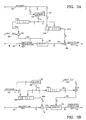
- Figure 3A is a block diagram of a preferred embodiment of a portion of the descrambler of Figure 1 utilized for decrypting an encrypted decryption key.
- Figure 3B is a block diagram of a preferred embodiment of a portion of the scrambler of Figure 2 utilized for encrypting the decryption key that is decrypted in the portion of the descrambler shown in Figure 3A.
- a preferred embodiment of a data processing system of the present invention is embodied as a descrambler in a microprocessor, as shown in Figure 1.
- the descrambler descrambles scrambled information signals 10 through use of a predetermined decryption key 12.
- the microprocessor includes a central processing unit (CPU) 13 and a memory 14.
- the memory 14 may include a random access memory (RAM) and a read only memory (ROM).
- the CPU 13 is adapted for processing data in accordance with a number of different data processing routines, including a routine 16 for descrambling scrambled information signals that utilizes a predetermined decryption key 12, and a routine 18 for generating the predetermined decryption key 12.
- the CPU 13 also processes data in accordance with other routines (not shown) incident to the descrambling of information signals in accordance with the various data processing steps described in the aforementioned U.S. Patents Nos. 4,613,901; 4,712,238 and 4,864,615.
- the predetermined decryption key may be any of the decryption keys described in these patents, including intermediate keys and signals created at different stages during the generation of such decryption keys.
- the memory 14 stores data 19 that is used in the data processing routines 16, 18.
- the CPU 13 responds to an instruction 20 for generating the predetermined decryption key by executing the routine 18.
- a first signal 22, such as an encrypted decryption key, provided by the CPU 13 is processed with a second signal 24 to generate the predetermined decryption key 12.
- At least a portion 25 of the second signal 24 is provided by retrieving a portion of the stored data 19 from a portion of the memory 14 that is identified by a dynamic pointer 26 contained in the instruction 20 for generating the predetermined decryption key 12.
- the retrieved second-signal data 25 preferably includes dynamic data that is also used in a data processing routine other than the routine 18 for generating the predetermined decryption key 12.
- the decryption key generation routine 18 of the present invention may be utilized in generating multiple predetermined signals, such as decryption keys, and in generating an intermediate key or signal that is essential to the generation of the ultimate predetermined signal, such as the decryption key 12.
- the data which is retrieved from the memory 14 as the second-signal data 25 may be data that is dynamically stored in the memory 14 as such data is being processed by the CPU 13 in the various data processing routines executed by the CPU 13, such as data 27 which is processed and stored during the descrambling routine 16.
- the data which is retrieved from the memory 14 as the second-signal data 25 may be data that is otherwise stored in the memory 14 for processing by the CPU 13.
- the predetermined decryption key 12 ultimately generated in accordance with the routine 18 is stored in the memory 14.
- the CPU 13 responds to an instruction 28 for descrambling the scrambled information signal 10 by executing the routine 16.
- the predetermined decryption key 12 is retrieved from the memory 14 and utilized in descrambling the scrambled information signal 10 to produce a descrambled information signal 30.
- the descrambler of Figure 1 is used in a communication system that further includes a scrambler, such as shown in Figure 2, and a plurality of such descramblers.
- the scrambler of Figure 2 is embodied in a data processing system that includes a CPU 32, a first memory 34 and a second memory 36.
- the memories 34 and 36 may include RAM and/or ROM.
- the CPU 32 processes data in accordance with a number of different data processing routines, including a routine 38 for scrambling said information signals 30 and a routine 42 for encrypting a predetermined decryption key 12 that is required for descrambling the scrambled information signals 10.
- the CPU 32 also processes data in accordance with other routines (not shown) incident to the scrambling of information signals in accordance with the various data processing steps described in the aforementioned U.S. Patents Nos. 4,613,901; 4,712,238 and 4,864,615.
- the CPU 32 responds to an instruction 43 for scrambling the information signal 30 by executing the routine 38.
- the predetermined decryption key 12 is utilized in scrambling the information signal 30 to produce the scrambled information signal 10.
- the CPU 32 responds to an instruction 44 to encrypt the predetermined decryption key 12 by executing the routine 42.
- the predetermined decryption key 12 is processed with a second signal 46 to encrypt the predetermined decryption key and thereby produce an encrypted decryption key 22.
- the second signal 46 is provided from the memory 36. At least a portion of the second signal 46 is provided by retrieving a portion 48 of the data stored in the memory 14 that is identified by a dynamic pointer 50.
- the encrypted decryption key 22 is transmitted to the descramblers together with the scrambled information signal 10.
- the predetermined decryption key 12 is encrypted differently for different groups of descramblers.
- different second-signal components 48 are stored in the memory 36 for differently encrypting the predetermined decryption key 12 for the different groups of descramblers.
- the different second-signal components 48 are selected from the memory 36 in response to the pointer 50 for use in encrypting the predetermined decryption key 12 to provide different encrypted decryption keys 22 for transmission to the different groups of descramblers.
- the pointer 50 thus serves as a selection-control signal that is different for each of the different groups of descramblers.
- the memory 34 provides different pointers 50 corresponding to the different groups of descramblers in response to a descrambler identification (ID) signal 52 and a pointer data signal 53.
- the pointer data signal 53 is combined with the descrambler ID signal 52 to indicate the portions of the memory 34 from which the pointers 50 and 26 are to be provided so that the pointers 50 and 26 related to a given descrambler can be changed to access the second-signal components 48 (and components 25 in the descrambler of Figure 1) from different portions of the memory 36 (and memory 14 in the descrambler of Figure 1).
- the pointers 26 for the different descramblers are also transmitted to the descramblers, where they are included in the key generation instruction 20.
- the transmitted pointers 26 may or may not be identical to the pointers 50.
- the CPU 32 of the scrambler simulates the operation of a descrambler of each of the different groups of descramblers in order to produce and dynamically store in the memory 36 of the scrambler the same second-signal data as is dynamically stored in the memory 14 of a descrambler in each of the different groups of descramblers.
- the scrambler executes a descrambling routine 54 so as to process the scrambled information signal 10 in the same manner as the scrambled information signal 10 is processed in the descrambler and thereby provide the same data 27 for dynamic storage in the memory 36 and retrieval in response to the pointer 50 as is dynamically stored in the memory 14 of the descrambler and retrieved as second-signal data 25 in response to the pointer 26.
- the stored data 19 used in executing the routines 42 and 54 are provided from the memory 36 in the same manner as said data 19 is provided from the memory 14 in the descrambler for use in executing the routines 16 and 18.
- the data which is retrieved from the memory 36 as the second-signal data 48 may be data that is dynamically stored in the memory 36 as such data is being processed by the CPU 32 in the various data processing routines executed by the CPU 32, such as data 27 which is processed and stored during the descrambling routine 54.
- the data which is retrieved from the memory 32 as the second-signal data 48 may be data that is otherwise stored in the memory 36 for processing by the CPU 32.
- the second signal 46 is provided independently of the memory 36 and/or the pointers 50.
- second-signal data retrieved from the respective memories of the scrambler and the descrambler is divided and used in separate subroutines of the respective encryption and decryption routines.
- the CPU of the descrambler causes thirteen bytes of second signal data 25 to be retrieved from the memory 14 in response to a two-byte pointer 26.
- a first part of the second signal 24a consisting of seven bytes of the retrieved second-signal data 25 is exclusive-ORed (XORed) with a seven-byte unit key 56 in accordance with a subroutine 58 to provide a first intermediate signal 60 of seven bytes.
- the seven-byte unit key 56 is provided within the descrambler CPU in the manner described with reference to Figure 8 in the aforementioned U.S. Patent No. 4,864,615 for providing the unit key identified by reference numeral 148 in said patent.
- the CPU executes a decryption subroutine 62 in which the predetermined decryption key 22 (eight bytes) is processed with the seven-byte first intermediate signal 60 to provide a second intermediate signal 64 of eight bytes.
- the subroutine 62 is in accordance with the Data Encryption Standard (DES) algorithm.
- DES Data Encryption Standard
- a second part of the second signal 24b consisting of six bytes of the retrieved second-signal data 25 and the two-byte pointer 26 is XORed with the eight-byte second intermediate key 64 in accordance with a subroutine 66 to provide the decryption key 12.
- the CPU of the scrambler causes thirteen bytes of second signal data 48 to be retrieved from the memory 36' in response to a two-byte pointer 50.
- the thirteen bytes of second-signal data 48 are identical to the thirteen bytes of second-signal data 25.
- a first part of the second signal 46a consisting of seven bytes of the retrieved second-signal data 48 is exclusive-ORed (XORed) with a seven-byte unit key 68 in accordance with a subroutine 70 to provide the first intermediate signal 60 of seven bytes.
- the unit key 68 is is identical to the unit key 56 provided within the descrambler CPU.
- a second part of the second signal 46b consisting of six bytes of the retrieved second-signal data 48 and the two-byte pointer 50 is XORed with the eight-byte decryption key 12 in accordance with a subroutine 72 to provide the second intermediate key 64.
- the scrambler CPU executes an encryption subroutine 74 in which the second intermediate key 64 (eight bytes) is processed with the seven-byte first intermediate signal 60 to provide the encrypted decryption key 22.
- the subroutine 74 is in accordance with the Data Encryption Standard (DES) algorithm.
- DES Data Encryption Standard
Landscapes
- Engineering & Computer Science (AREA)
- Computer Security & Cryptography (AREA)
- Computer Networks & Wireless Communication (AREA)
- Signal Processing (AREA)
- Storage Device Security (AREA)
- Two-Way Televisions, Distribution Of Moving Picture Or The Like (AREA)
- Collating Specific Patterns (AREA)
- Facsimile Image Signal Circuits (AREA)
- Burglar Alarm Systems (AREA)
- Financial Or Insurance-Related Operations Such As Payment And Settlement (AREA)
Claims (15)
- Système sûr de traitement de données comprenantun moyen (13) de traitement de données pour un traitement de données en fonction d'un certain nombre de programmes différents (16, 18) de traitement de données ; etun moyen (14) formant mémoire pour stocker des données (19, 25, 27) destinées à être utilisées dans lesdits programmes de traitement de données ;dans lequel le moyen de traitement comporte un moyen pour répondre à une instruction (20) pour générer une clé de décryptage prédéterminée (12) qui est essentielle au désembrouillage d'un signal d'information embrouillé (10) en fonction d'au moins l'un desdits programmes (16) de traitement de données par traitement d'un premier signal (22) avec un deuxième signal (24) en fonction de l'un desdits programmes (18) de traitement de données pour générer ladite clé de décryptage prédéterminée (12), et un moyen pour obtenir au moins une partie dudit deuxième signal pour un traitement avec ledit premier signal par recherche d'une partie (25) desdites données stockées en provenance d'une partie dudit moyen formant mémoire identifiée par un pointeur dynamique (26) ;caractérisé par un moyen pouvant fonctionner pour obtenir ledit pointeur dynamique à partir de ladite instruction (20), à la suite de quoi la sécurité dudit au moins un programme de traitement de données est améliorée.
- Système selon la revendication 1, caractérisé en ce que ledit deuxième signal (24) comporte ledit pointeur (26) et lesdites données recherchées (25).
- Système selon l'une quelconque des revendications précédentes, caractérisé par un embrouilleur pour l'embrouillage de signaux d'information (30), comportant un moyen de traitement (32) pour le traitement de données en fonction d'un certain nombre de programmes différents (36, 42, 54) de traitement de données, comportant un programme (38) pour l'embrouillage desdits signaux d'information et un programme (42) pour le cryptage de ladite clé de décryptage prédéterminée (12) qui est requise pour le désembrouillage desdits signaux d'information embrouillés ; dans lequel le moyen de traitement de l'embrouilleur est apte à fournir ledit deuxième signal et à répondre à une instruction (44) pour crypter ladite clé de décryptage prédéterminée, par traitement de ladite clé de décryptage prédéterminée avec ledit deuxième signal (46) pour crypter ladite clé de décryptage prédéterminée.
- Système selon la revendication 3, caractérisé en ce que ledit désembrouilleur comporte un moyen pour stocker de manière dynamique, en tant que lesdites données du deuxième signal, dans ledit moyen (14) formant mémoire du désembrouilleur, des données (27) qui sont traitées par le moyen (13) de traitement du désembrouilleur dans l'un (16) desdits programmes de traitement de données qui est exécuté par le moyen de traitement du désembrouilleur lorsque lesdites données (27) sont en cours de traitement ; et en ce que ledit embrouilleur comporte un moyen (32) pour le traitement dudit signal d'information embrouillé (10) de la même manière que ledit signal d'information embrouillé est traité dans le désembrouilleur afin d'obtenir lesdites données (27) du deuxième signal, et un moyen (36) formant mémoire pour stocker de manière dynamique lesdites données du deuxième signal.
- Système selon la revendication 4, caractérisé en ce que ledit moyen de traitement de l'embrouilleur comporte un moyen pour obtenir au moins une partie dudit deuxième signal (46) par recherche desdites données (48) du deuxième signal à partir d'une partie dudit moyen (36) formant mémoire de l'embrouilleur, identifiée par ledit pointeur (50), et en ce que ledit moyen (14) formant mémoire du désembrouilleur stocke lesdites données (27) du deuxième signal dans des parties auxquelles on accède en réponse audit pointeur (26) correspondant aux parties du moyen (36) formant mémoire de l'embrouilleur à partir desquelles on accède auxdites données (48) du deuxième signal en réponse audit pointeur (50).
- Système selon la revendication 3, caractérisé en ce que ledit moyen de traitement de l'embrouilleur comporte un moyen (36) formant mémoire pour le stockage desdites données (27) du deuxième signal, et un moyen pour obtenir au moins une partie dudit deuxième signal (46) par recherche desdites données (48) du deuxième signal à partir d'une partie dudit moyen formant mémoire de l'embrouilleur identifiée par ledit pointeur (50) ; et en ce que ledit moyen formant mémoire du désembrouilleur stocke lesdites données (27) du deuxième signal dans des parties auxquelles on accède en réponse audit pointeur (26) correspondant aux parties du moyen (36) formant mémoire de l'embrouilleur à partir desquelles on accède auxdites données (48) du deuxième signal en réponse audit pointeur (50).
- Système selon la revendication 3, caractérisé en ce que le moyen pour obtenir le deuxième signal (46) dans l'embrouilleur comprend un moyen (36) formant mémoire pour stocker un certain nombre de composantes différentes et prédéterminées dudit deuxième signal, et un moyen pour obtenir ledit deuxième signal sélectionné (48) par recherche de ladite composante sélectionnée prédéterminée du deuxième signal à partir dudit moyen formant mémoire de l'embrouilleur en réponse à un signal (50) de commande de sélection.
- Système selon la revendication 7, caractérisé par une pluralité desdits désembrouilleurs, et caractérisé en ce que le moyen de traitement de l'embrouilleur est apte à fournir différents signaux (50) de commande de sélection pour sélectionner des composantes différentes (48) dudit deuxième signal prédéterminé, destinées à être utilisées pour crypter différemment ladite clé de décryptage (12) pour différents désembrouilleurs.
- Système selon l'une quelconque des revendications précédentes, caractérisé en ce que le premier signal est ladite clé de décryptage cryptée (22), et en ce que le moyen de traitement du désembrouilleur est apte à générer ladite clé de cryptage prédéterminée (12) par l'exécution des programmes suivants :(a) obtention d'un troisième signal (56) ;(b) traitement dudit troisième signal avec une première partie (24a) dudit deuxième signal qui comporte une première partie desdites données recherchées du deuxième signal pour obtenir un quatrième signal (60) ;(c) traitement de ladite clé de décryptage cryptée (22) avec ledit quatrième signal pour obtenir un cinquième signal (64) ; et(d) traitement dudit cinquième signal avec une deuxième partie (24b) dudit deuxième signal qui comporte au moins une deuxième partie desdites données recherchées du deuxième signal pour obtenir ladite clé de décryptage prédéterminée (12).
- Système selon l'une quelconque des revendications 1, 2, 3 ou 9, caractérisé en ce que lesdites données recherchées (25) comportent des données dynamiques (27) qui sont aussi utilisées dans l'un desdits programmes (16) de traitement de données autre que ledit programme (18) pour générer ladite clé de décryptage prédéterminée (12).
- Système selon la revendication 9, caractérisé en ce que ce programme (d) comprend un traitement dudit cinquième signal (64) avec une deuxième partie (24b) dudit deuxième signal (24) qui comporte à la fois ledit pointeur (26) et au moins une deuxième partie desdites données recherchées (25) du deuxième signal pour obtenir ladite clé de décryptage prédéterminée (12).
- Système selon la revendication 4 et la revendication 9 ou la revendication 11, caractérisé en ce que ledit moyen de traitement de l'embrouilleur est apte à crypter ladite clé de décryptage prédéterminée par exécution des programmes suivants :(a) traitement de ladite clé de décryptage (12) avec ladite deuxième partie (46a) dudit deuxième signal pour obtenir ledit cinquième signal (64) ;(b) obtention dudit troisième signal (68) ;(c) traitement dudit troisième signal avec ladite première partie (46a) dudit deuxième signal pour obtenir ledit quatrième signal (60) ; et(d) traitement dudit cinquième signal avec ledit quatrième signal pour obtenir ladite clé de décryptage cryptée (22).
- Système selon la revendication 1 ou 3, caractérisé en ce que le premier signal est ladite clé de décryptage (22) cryptée, et en ce que le moyen de traitement du désembrouilleur est apte à générer ladite clé de décryptage prédéterminée par exécution des programmes suivants :(a) obtention d'un troisième signal (56) ;(b) traitement dudit troisième signal avec lesdites données recherchées (25) du deuxième signal pour obtenir un quatrième signal (60) ; et(c) traitement de ladite clé de décryptage cryptée (22) avec ledit quatrième signal pour obtenir ladite clé de décryptage prédéterminée (12).
- Système selon les revendications 3 et 13, caractérisé en ce que ledit moyen de traitement de l'embrouilleur est apte à crypter ladite clé de décryptage prédéterminée par exécution des programmes suivants :(a) obtention dudit troisième signal (68) ;(b) traitement dudit troisième signal avec ledites données recherchées (48) du deuxième signal pour obtenir ledit quatrième signal (60) ; et(c) traitement de ladite clé de décryptage (12) avec ledit quatrième signal pour obtenir ladite clé de décryptage cryptée (22).
- Procédé de fonctionnement d'un système sur de traitement de données comportant un processeur (13) pour un traitement de données en fonction d'un certain nombre de programmes (16, 18) de traitement de données, et une mémoire (14) pour stocker des données (19, 25, 27) destinées à être utilisées dans les programmes (16, 18) de traitement de données, le procédé comprenant :caractérisé en ce que le pointeur dynamique est obtenu à partir de ladite instruction (20), à la suite de quoi la sécurité dudit au moins un programme de traitement de données est améliorée.la réception d'une instruction (20) dans le processeur (13),l'amenée du processeur (13) à répondre à l'instruction pour générer une clé de décryptage prédéterminée (12) qui est essentielle au désembrouillage d'un signal d'information embrouillé en fonction d'au moins l'un desdits programmes (16) de traitement de données par un traitement d'un premier signal (22) avec un deuxième signal (24) en fonction de l'un des programmes (18) de traitement de données pour générer ladite clé de décryptage prédéterminée (12), etl'amenée du processeur (13) à obtenir au moins une partie du deuxième signal pour un traitement avec ladite partie avec le premier signal par recherche d'une partie (25) desdites données stockées à partir d'une partie de la mémoire (14) identifiée par un pointeur dynamique,
Applications Claiming Priority (2)
| Application Number | Priority Date | Filing Date | Title |
|---|---|---|---|
| US07/493,006 US5151938A (en) | 1990-03-13 | 1990-03-13 | Security enhancement in a data processor through use of dynamic parameter authentication |
| US493006 | 1990-03-13 |
Publications (3)
| Publication Number | Publication Date |
|---|---|
| EP0447063A2 EP0447063A2 (fr) | 1991-09-18 |
| EP0447063A3 EP0447063A3 (en) | 1992-11-25 |
| EP0447063B1 true EP0447063B1 (fr) | 1998-10-28 |
Family
ID=23958505
Family Applications (1)
| Application Number | Title | Priority Date | Filing Date |
|---|---|---|---|
| EP91301583A Expired - Lifetime EP0447063B1 (fr) | 1990-03-13 | 1991-02-27 | Amélioration de la sécurité dans un processeur de données par l'utilisation d'un paramètre d'authentification dynamique |
Country Status (11)
| Country | Link |
|---|---|
| US (1) | US5151938A (fr) |
| EP (1) | EP0447063B1 (fr) |
| JP (1) | JP3245187B2 (fr) |
| KR (1) | KR100195816B1 (fr) |
| AT (1) | ATE172830T1 (fr) |
| AU (1) | AU639076B2 (fr) |
| CA (1) | CA2037778C (fr) |
| DE (1) | DE69130401T2 (fr) |
| DK (1) | DK0447063T3 (fr) |
| ES (1) | ES2122966T3 (fr) |
| IE (1) | IE76286B1 (fr) |
Families Citing this family (12)
| Publication number | Priority date | Publication date | Assignee | Title |
|---|---|---|---|---|
| US5365587A (en) * | 1993-03-11 | 1994-11-15 | International Business Machines Corporation | Self modifying access code for altering capabilities |
| JP3647907B2 (ja) * | 1994-09-09 | 2005-05-18 | 富士通株式会社 | 暗号化ソフトウェアの解凍システム |
| JP3294739B2 (ja) * | 1995-03-30 | 2002-06-24 | 三洋電機株式会社 | Fm多重放送のスクランブルまたはデスクランブル方法 |
| US5960086A (en) * | 1995-11-02 | 1999-09-28 | Tri-Strata Security, Inc. | Unified end-to-end security methods and systems for operating on insecure networks |
| US5953419A (en) * | 1996-05-06 | 1999-09-14 | Symantec Corporation | Cryptographic file labeling system for supporting secured access by multiple users |
| US6088449A (en) * | 1996-11-05 | 2000-07-11 | Tri-Strata Security, Inc. | Tri-signature security architecture systems and methods |
| JP4268690B2 (ja) * | 1997-03-26 | 2009-05-27 | ソニー株式会社 | 認証システムおよび方法、並びに認証方法 |
| US5991402A (en) * | 1997-09-23 | 1999-11-23 | Aegisoft Corporation | Method and system of dynamic transformation of encrypted material |
| US20010044901A1 (en) * | 1998-03-24 | 2001-11-22 | Symantec Corporation | Bubble-protected system for automatic decryption of file data on a per-use basis and automatic re-encryption |
| US6912655B1 (en) | 1999-08-09 | 2005-06-28 | Tristrata Security Inc. | Network security architecture system utilizing seals |
| US7000119B1 (en) | 2000-04-20 | 2006-02-14 | Realnetworks, Inc. | Instruction/data protection employing derived obscuring instruction/data |
| JP4912797B2 (ja) * | 2006-08-30 | 2012-04-11 | 三菱電機株式会社 | 暗号装置及び復号装置及び暗号方法及び復号方法及びプログラム |
Family Cites Families (6)
| Publication number | Priority date | Publication date | Assignee | Title |
|---|---|---|---|---|
| US4455602A (en) * | 1981-05-22 | 1984-06-19 | Data General Corporation | Digital data processing system having an I/O means using unique address providing and access priority control techniques |
| GB2132860B (en) * | 1982-12-21 | 1987-03-18 | British Broadcasting Corp | Conditional -access broadcast transmission |
| US4613901A (en) * | 1983-05-27 | 1986-09-23 | M/A-Com Linkabit, Inc. | Signal encryption and distribution system for controlling scrambling and selective remote descrambling of television signals |
| US4712238A (en) * | 1984-06-08 | 1987-12-08 | M/A-Com Government Systems, Inc. | Selective-subscription descrambling |
| JPS6120442A (ja) * | 1984-07-09 | 1986-01-29 | Toshiba Corp | 有料放送方式 |
| US4864615A (en) * | 1988-05-27 | 1989-09-05 | General Instrument Corporation | Reproduction of secure keys by using distributed key generation data |
-
1990
- 1990-03-13 US US07/493,006 patent/US5151938A/en not_active Expired - Lifetime
-
1991
- 1991-02-27 EP EP91301583A patent/EP0447063B1/fr not_active Expired - Lifetime
- 1991-02-27 ES ES91301583T patent/ES2122966T3/es not_active Expired - Lifetime
- 1991-02-27 AT AT91301583T patent/ATE172830T1/de not_active IP Right Cessation
- 1991-02-27 DK DK91301583T patent/DK0447063T3/da active
- 1991-02-27 DE DE69130401T patent/DE69130401T2/de not_active Expired - Fee Related
- 1991-03-07 CA CA002037778A patent/CA2037778C/fr not_active Expired - Fee Related
- 1991-03-11 KR KR1019910003824A patent/KR100195816B1/ko not_active Expired - Fee Related
- 1991-03-11 IE IE79291A patent/IE76286B1/en not_active IP Right Cessation
- 1991-03-11 AU AU72790/91A patent/AU639076B2/en not_active Ceased
- 1991-03-12 JP JP07239291A patent/JP3245187B2/ja not_active Expired - Fee Related
Also Published As
| Publication number | Publication date |
|---|---|
| AU639076B2 (en) | 1993-07-15 |
| IE910792A1 (en) | 1991-09-25 |
| ES2122966T3 (es) | 1999-01-01 |
| DE69130401T2 (de) | 1999-04-15 |
| DE69130401D1 (de) | 1998-12-03 |
| EP0447063A2 (fr) | 1991-09-18 |
| JP3245187B2 (ja) | 2002-01-07 |
| JPH04220743A (ja) | 1992-08-11 |
| DK0447063T3 (da) | 1999-07-05 |
| KR100195816B1 (ko) | 1999-06-15 |
| CA2037778A1 (fr) | 1991-09-14 |
| AU7279091A (en) | 1991-09-19 |
| IE76286B1 (en) | 1997-10-08 |
| EP0447063A3 (en) | 1992-11-25 |
| US5151938A (en) | 1992-09-29 |
| ATE172830T1 (de) | 1998-11-15 |
| CA2037778C (fr) | 2001-06-05 |
| KR910017797A (ko) | 1991-11-05 |
Similar Documents
| Publication | Publication Date | Title |
|---|---|---|
| CA1225458A (fr) | Generateur de cle d'abonne pour debrouilleur, ce generateur utilisant des germes de cle stockes dans le debrouilleur | |
| EP0343805B1 (fr) | Reproduction de clés protégées en utilisant des données de génération de clés distribuées | |
| EP0658054B1 (fr) | Appareil et méthode de protection des systèmes de communication | |
| US5144664A (en) | Apparatus and method for upgrading terminals to maintain a secure communication network | |
| US20030084308A1 (en) | Memory encryption | |
| US5151938A (en) | Security enhancement in a data processor through use of dynamic parameter authentication | |
| JPH10271105A5 (fr) | ||
| EP1094633B1 (fr) | Procédé de distribution de clés pour un nombre d'appareils sécurisés, procédé pour communiquer avec un nombre d'appareils sécurisés, système de sécurité, et ensemble d'appareils sécurisés | |
| EP0585833A1 (fr) | Système décodeur de signal vidéo | |
| KR101083200B1 (ko) | 휴대형 보안 모듈 페어링 | |
| US6337912B2 (en) | Method of and system for writing-in key information | |
| EP0910216A1 (fr) | Procédé de transfert de clé d'embrouillage | |
| JPH0728406A (ja) | スクランブル方法 | |
| EP1386442A2 (fr) | Procede et appareil de chiffrage de contenu | |
| HK1003498B (en) | Reproduction of secure keys by using distributed key generation data | |
| HK1012811B (en) | Apparatus and method for securing communication systems | |
| HK1072134B (en) | Method for secure data exchange between two devices | |
| MXPA99008047A (en) | System to transmit data signals in a secure form |
Legal Events
| Date | Code | Title | Description |
|---|---|---|---|
| PUAI | Public reference made under article 153(3) epc to a published international application that has entered the european phase |
Free format text: ORIGINAL CODE: 0009012 |
|
| AK | Designated contracting states |
Kind code of ref document: A2 Designated state(s): AT BE CH DE DK ES FR GB GR IT LI LU NL SE |
|
| PUAL | Search report despatched |
Free format text: ORIGINAL CODE: 0009013 |
|
| AK | Designated contracting states |
Kind code of ref document: A3 Designated state(s): AT BE CH DE DK ES FR GB GR IT LI LU NL SE |
|
| 17P | Request for examination filed |
Effective date: 19930222 |
|
| 17Q | First examination report despatched |
Effective date: 19940711 |
|
| RAP1 | Party data changed (applicant data changed or rights of an application transferred) |
Owner name: GENERAL INSTRUMENT CORPORATION OF DELAWARE |
|
| GRAG | Despatch of communication of intention to grant |
Free format text: ORIGINAL CODE: EPIDOS AGRA |
|
| GRAG | Despatch of communication of intention to grant |
Free format text: ORIGINAL CODE: EPIDOS AGRA |
|
| GRAH | Despatch of communication of intention to grant a patent |
Free format text: ORIGINAL CODE: EPIDOS IGRA |
|
| GRAH | Despatch of communication of intention to grant a patent |
Free format text: ORIGINAL CODE: EPIDOS IGRA |
|
| GRAA | (expected) grant |
Free format text: ORIGINAL CODE: 0009210 |
|
| RAP1 | Party data changed (applicant data changed or rights of an application transferred) |
Owner name: NEXTLEVEL SYSTEMS, INC. |
|
| AK | Designated contracting states |
Kind code of ref document: B1 Designated state(s): AT BE CH DE DK ES FR GB GR IT LI LU NL SE |
|
| PG25 | Lapsed in a contracting state [announced via postgrant information from national office to epo] |
Ref country code: GR Free format text: LAPSE BECAUSE OF NON-PAYMENT OF DUE FEES Effective date: 19981028 |
|
| RAP1 | Party data changed (applicant data changed or rights of an application transferred) |
Owner name: GENERAL INSTRUMENT CORPORATION |
|
| REF | Corresponds to: |
Ref document number: 172830 Country of ref document: AT Date of ref document: 19981115 Kind code of ref document: T |
|
| REG | Reference to a national code |
Ref country code: CH Ref legal event code: EP |
|
| REF | Corresponds to: |
Ref document number: 69130401 Country of ref document: DE Date of ref document: 19981203 |
|
| REG | Reference to a national code |
Ref country code: CH Ref legal event code: NV Representative=s name: AMMANN PATENTANWAELTE AG BERN |
|
| REG | Reference to a national code |
Ref country code: ES Ref legal event code: FG2A Ref document number: 2122966 Country of ref document: ES Kind code of ref document: T3 |
|
| PGFP | Annual fee paid to national office [announced via postgrant information from national office to epo] |
Ref country code: AT Payment date: 19990203 Year of fee payment: 9 |
|
| ET | Fr: translation filed | ||
| PGFP | Annual fee paid to national office [announced via postgrant information from national office to epo] |
Ref country code: DK Payment date: 19990205 Year of fee payment: 9 |
|
| PGFP | Annual fee paid to national office [announced via postgrant information from national office to epo] |
Ref country code: BE Payment date: 19990223 Year of fee payment: 9 |
|
| PG25 | Lapsed in a contracting state [announced via postgrant information from national office to epo] |
Ref country code: LU Free format text: LAPSE BECAUSE OF NON-PAYMENT OF DUE FEES Effective date: 19990227 |
|
| PG25 | Lapsed in a contracting state [announced via postgrant information from national office to epo] |
Ref country code: SE Free format text: LAPSE BECAUSE OF NON-PAYMENT OF DUE FEES Effective date: 19990228 |
|
| REG | Reference to a national code |
Ref country code: DK Ref legal event code: T3 |
|
| PLBE | No opposition filed within time limit |
Free format text: ORIGINAL CODE: 0009261 |
|
| STAA | Information on the status of an ep patent application or granted ep patent |
Free format text: STATUS: NO OPPOSITION FILED WITHIN TIME LIMIT |
|
| 26N | No opposition filed | ||
| EUG | Se: european patent has lapsed |
Ref document number: 91301583.0 |
|
| PG25 | Lapsed in a contracting state [announced via postgrant information from national office to epo] |
Ref country code: DK Free format text: LAPSE BECAUSE OF NON-PAYMENT OF DUE FEES Effective date: 20000227 Ref country code: AT Free format text: LAPSE BECAUSE OF NON-PAYMENT OF DUE FEES Effective date: 20000227 |
|
| PG25 | Lapsed in a contracting state [announced via postgrant information from national office to epo] |
Ref country code: BE Free format text: LAPSE BECAUSE OF NON-PAYMENT OF DUE FEES Effective date: 20000228 |
|
| BERE | Be: lapsed |
Owner name: GENERAL INSTRUMENT CORP. Effective date: 20000228 |
|
| REG | Reference to a national code |
Ref country code: DK Ref legal event code: EBP |
|
| REG | Reference to a national code |
Ref country code: GB Ref legal event code: IF02 |
|
| PGFP | Annual fee paid to national office [announced via postgrant information from national office to epo] |
Ref country code: NL Payment date: 20040112 Year of fee payment: 14 |
|
| PGFP | Annual fee paid to national office [announced via postgrant information from national office to epo] |
Ref country code: ES Payment date: 20040217 Year of fee payment: 14 |
|
| PGFP | Annual fee paid to national office [announced via postgrant information from national office to epo] |
Ref country code: CH Payment date: 20040319 Year of fee payment: 14 |
|
| PG25 | Lapsed in a contracting state [announced via postgrant information from national office to epo] |
Ref country code: IT Free format text: LAPSE BECAUSE OF NON-PAYMENT OF DUE FEES Effective date: 20050227 |
|
| PG25 | Lapsed in a contracting state [announced via postgrant information from national office to epo] |
Ref country code: ES Free format text: LAPSE BECAUSE OF NON-PAYMENT OF DUE FEES Effective date: 20050228 Ref country code: LI Free format text: LAPSE BECAUSE OF NON-PAYMENT OF DUE FEES Effective date: 20050228 Ref country code: CH Free format text: LAPSE BECAUSE OF NON-PAYMENT OF DUE FEES Effective date: 20050228 |
|
| PG25 | Lapsed in a contracting state [announced via postgrant information from national office to epo] |
Ref country code: NL Free format text: LAPSE BECAUSE OF NON-PAYMENT OF DUE FEES Effective date: 20050901 |
|
| REG | Reference to a national code |
Ref country code: CH Ref legal event code: PL |
|
| NLV4 | Nl: lapsed or anulled due to non-payment of the annual fee |
Effective date: 20050901 |
|
| REG | Reference to a national code |
Ref country code: ES Ref legal event code: FD2A Effective date: 20050228 |
|
| PGFP | Annual fee paid to national office [announced via postgrant information from national office to epo] |
Ref country code: GB Payment date: 20070105 Year of fee payment: 17 |
|
| PGFP | Annual fee paid to national office [announced via postgrant information from national office to epo] |
Ref country code: DE Payment date: 20070228 Year of fee payment: 17 |
|
| PGFP | Annual fee paid to national office [announced via postgrant information from national office to epo] |
Ref country code: FR Payment date: 20070201 Year of fee payment: 17 |
|
| GBPC | Gb: european patent ceased through non-payment of renewal fee |
Effective date: 20080227 |
|
| REG | Reference to a national code |
Ref country code: FR Ref legal event code: ST Effective date: 20081031 |
|
| PG25 | Lapsed in a contracting state [announced via postgrant information from national office to epo] |
Ref country code: DE Free format text: LAPSE BECAUSE OF NON-PAYMENT OF DUE FEES Effective date: 20080902 |
|
| PG25 | Lapsed in a contracting state [announced via postgrant information from national office to epo] |
Ref country code: FR Free format text: LAPSE BECAUSE OF NON-PAYMENT OF DUE FEES Effective date: 20080229 |
|
| PG25 | Lapsed in a contracting state [announced via postgrant information from national office to epo] |
Ref country code: GB Free format text: LAPSE BECAUSE OF NON-PAYMENT OF DUE FEES Effective date: 20080227 |
|
| P01 | Opt-out of the competence of the unified patent court (upc) registered |
Effective date: 20230520 |