EP0448056B1 - Méthode de préparation de matières luminescentes contenant des sulfures - Google Patents
Méthode de préparation de matières luminescentes contenant des sulfures Download PDFInfo
- Publication number
- EP0448056B1 EP0448056B1 EP91104258A EP91104258A EP0448056B1 EP 0448056 B1 EP0448056 B1 EP 0448056B1 EP 91104258 A EP91104258 A EP 91104258A EP 91104258 A EP91104258 A EP 91104258A EP 0448056 B1 EP0448056 B1 EP 0448056B1
- Authority
- EP
- European Patent Office
- Prior art keywords
- sulfide
- phosphor
- carbon
- preparing
- sulfide phosphor
- Prior art date
- Legal status (The legal status is an assumption and is not a legal conclusion. Google has not performed a legal analysis and makes no representation as to the accuracy of the status listed.)
- Expired - Lifetime
Links
Images

Classifications
-
- C—CHEMISTRY; METALLURGY
- C09—DYES; PAINTS; POLISHES; NATURAL RESINS; ADHESIVES; COMPOSITIONS NOT OTHERWISE PROVIDED FOR; APPLICATIONS OF MATERIALS NOT OTHERWISE PROVIDED FOR
- C09K—MATERIALS FOR MISCELLANEOUS APPLICATIONS, NOT PROVIDED FOR ELSEWHERE
- C09K11/00—Luminescent materials, e.g. electroluminescent or chemiluminescent
- C09K11/08—Luminescent materials, e.g. electroluminescent or chemiluminescent containing inorganic luminescent materials
- C09K11/0805—Chalcogenides
- C09K11/0816—Chalcogenides with alkaline earth metals
-
- C—CHEMISTRY; METALLURGY
- C09—DYES; PAINTS; POLISHES; NATURAL RESINS; ADHESIVES; COMPOSITIONS NOT OTHERWISE PROVIDED FOR; APPLICATIONS OF MATERIALS NOT OTHERWISE PROVIDED FOR
- C09K—MATERIALS FOR MISCELLANEOUS APPLICATIONS, NOT PROVIDED FOR ELSEWHERE
- C09K11/00—Luminescent materials, e.g. electroluminescent or chemiluminescent
- C09K11/08—Luminescent materials, e.g. electroluminescent or chemiluminescent containing inorganic luminescent materials
- C09K11/0805—Chalcogenides
-
- C—CHEMISTRY; METALLURGY
- C09—DYES; PAINTS; POLISHES; NATURAL RESINS; ADHESIVES; COMPOSITIONS NOT OTHERWISE PROVIDED FOR; APPLICATIONS OF MATERIALS NOT OTHERWISE PROVIDED FOR
- C09K—MATERIALS FOR MISCELLANEOUS APPLICATIONS, NOT PROVIDED FOR ELSEWHERE
- C09K11/00—Luminescent materials, e.g. electroluminescent or chemiluminescent
- C09K11/08—Luminescent materials, e.g. electroluminescent or chemiluminescent containing inorganic luminescent materials
- C09K11/0805—Chalcogenides
- C09K11/0811—Chalcogenides with zinc or cadmium
-
- C—CHEMISTRY; METALLURGY
- C09—DYES; PAINTS; POLISHES; NATURAL RESINS; ADHESIVES; COMPOSITIONS NOT OTHERWISE PROVIDED FOR; APPLICATIONS OF MATERIALS NOT OTHERWISE PROVIDED FOR
- C09K—MATERIALS FOR MISCELLANEOUS APPLICATIONS, NOT PROVIDED FOR ELSEWHERE
- C09K11/00—Luminescent materials, e.g. electroluminescent or chemiluminescent
- C09K11/08—Luminescent materials, e.g. electroluminescent or chemiluminescent containing inorganic luminescent materials
- C09K11/56—Luminescent materials, e.g. electroluminescent or chemiluminescent containing inorganic luminescent materials containing sulfur
- C09K11/562—Chalcogenides
-
- C—CHEMISTRY; METALLURGY
- C09—DYES; PAINTS; POLISHES; NATURAL RESINS; ADHESIVES; COMPOSITIONS NOT OTHERWISE PROVIDED FOR; APPLICATIONS OF MATERIALS NOT OTHERWISE PROVIDED FOR
- C09K—MATERIALS FOR MISCELLANEOUS APPLICATIONS, NOT PROVIDED FOR ELSEWHERE
- C09K11/00—Luminescent materials, e.g. electroluminescent or chemiluminescent
- C09K11/08—Luminescent materials, e.g. electroluminescent or chemiluminescent containing inorganic luminescent materials
- C09K11/56—Luminescent materials, e.g. electroluminescent or chemiluminescent containing inorganic luminescent materials containing sulfur
- C09K11/562—Chalcogenides
- C09K11/565—Chalcogenides with zinc cadmium
-
- C—CHEMISTRY; METALLURGY
- C09—DYES; PAINTS; POLISHES; NATURAL RESINS; ADHESIVES; COMPOSITIONS NOT OTHERWISE PROVIDED FOR; APPLICATIONS OF MATERIALS NOT OTHERWISE PROVIDED FOR
- C09K—MATERIALS FOR MISCELLANEOUS APPLICATIONS, NOT PROVIDED FOR ELSEWHERE
- C09K11/00—Luminescent materials, e.g. electroluminescent or chemiluminescent
- C09K11/08—Luminescent materials, e.g. electroluminescent or chemiluminescent containing inorganic luminescent materials
- C09K11/56—Luminescent materials, e.g. electroluminescent or chemiluminescent containing inorganic luminescent materials containing sulfur
- C09K11/562—Chalcogenides
- C09K11/567—Chalcogenides with alkaline earth metals
-
- C—CHEMISTRY; METALLURGY
- C09—DYES; PAINTS; POLISHES; NATURAL RESINS; ADHESIVES; COMPOSITIONS NOT OTHERWISE PROVIDED FOR; APPLICATIONS OF MATERIALS NOT OTHERWISE PROVIDED FOR
- C09K—MATERIALS FOR MISCELLANEOUS APPLICATIONS, NOT PROVIDED FOR ELSEWHERE
- C09K11/00—Luminescent materials, e.g. electroluminescent or chemiluminescent
- C09K11/08—Luminescent materials, e.g. electroluminescent or chemiluminescent containing inorganic luminescent materials
- C09K11/57—Luminescent materials, e.g. electroluminescent or chemiluminescent containing inorganic luminescent materials containing manganese or rhenium
- C09K11/572—Chalcogenides
-
- C—CHEMISTRY; METALLURGY
- C09—DYES; PAINTS; POLISHES; NATURAL RESINS; ADHESIVES; COMPOSITIONS NOT OTHERWISE PROVIDED FOR; APPLICATIONS OF MATERIALS NOT OTHERWISE PROVIDED FOR
- C09K—MATERIALS FOR MISCELLANEOUS APPLICATIONS, NOT PROVIDED FOR ELSEWHERE
- C09K11/00—Luminescent materials, e.g. electroluminescent or chemiluminescent
- C09K11/08—Luminescent materials, e.g. electroluminescent or chemiluminescent containing inorganic luminescent materials
- C09K11/57—Luminescent materials, e.g. electroluminescent or chemiluminescent containing inorganic luminescent materials containing manganese or rhenium
- C09K11/572—Chalcogenides
- C09K11/574—Chalcogenides with zinc or cadmium
-
- C—CHEMISTRY; METALLURGY
- C09—DYES; PAINTS; POLISHES; NATURAL RESINS; ADHESIVES; COMPOSITIONS NOT OTHERWISE PROVIDED FOR; APPLICATIONS OF MATERIALS NOT OTHERWISE PROVIDED FOR
- C09K—MATERIALS FOR MISCELLANEOUS APPLICATIONS, NOT PROVIDED FOR ELSEWHERE
- C09K11/00—Luminescent materials, e.g. electroluminescent or chemiluminescent
- C09K11/08—Luminescent materials, e.g. electroluminescent or chemiluminescent containing inorganic luminescent materials
- C09K11/57—Luminescent materials, e.g. electroluminescent or chemiluminescent containing inorganic luminescent materials containing manganese or rhenium
- C09K11/572—Chalcogenides
- C09K11/576—Chalcogenides with alkaline earth metals
-
- C—CHEMISTRY; METALLURGY
- C09—DYES; PAINTS; POLISHES; NATURAL RESINS; ADHESIVES; COMPOSITIONS NOT OTHERWISE PROVIDED FOR; APPLICATIONS OF MATERIALS NOT OTHERWISE PROVIDED FOR
- C09K—MATERIALS FOR MISCELLANEOUS APPLICATIONS, NOT PROVIDED FOR ELSEWHERE
- C09K11/00—Luminescent materials, e.g. electroluminescent or chemiluminescent
- C09K11/08—Luminescent materials, e.g. electroluminescent or chemiluminescent containing inorganic luminescent materials
- C09K11/58—Luminescent materials, e.g. electroluminescent or chemiluminescent containing inorganic luminescent materials containing copper, silver or gold
- C09K11/582—Chalcogenides
-
- C—CHEMISTRY; METALLURGY
- C09—DYES; PAINTS; POLISHES; NATURAL RESINS; ADHESIVES; COMPOSITIONS NOT OTHERWISE PROVIDED FOR; APPLICATIONS OF MATERIALS NOT OTHERWISE PROVIDED FOR
- C09K—MATERIALS FOR MISCELLANEOUS APPLICATIONS, NOT PROVIDED FOR ELSEWHERE
- C09K11/00—Luminescent materials, e.g. electroluminescent or chemiluminescent
- C09K11/08—Luminescent materials, e.g. electroluminescent or chemiluminescent containing inorganic luminescent materials
- C09K11/58—Luminescent materials, e.g. electroluminescent or chemiluminescent containing inorganic luminescent materials containing copper, silver or gold
- C09K11/582—Chalcogenides
- C09K11/584—Chalcogenides with zinc or cadmium
-
- C—CHEMISTRY; METALLURGY
- C09—DYES; PAINTS; POLISHES; NATURAL RESINS; ADHESIVES; COMPOSITIONS NOT OTHERWISE PROVIDED FOR; APPLICATIONS OF MATERIALS NOT OTHERWISE PROVIDED FOR
- C09K—MATERIALS FOR MISCELLANEOUS APPLICATIONS, NOT PROVIDED FOR ELSEWHERE
- C09K11/00—Luminescent materials, e.g. electroluminescent or chemiluminescent
- C09K11/08—Luminescent materials, e.g. electroluminescent or chemiluminescent containing inorganic luminescent materials
- C09K11/58—Luminescent materials, e.g. electroluminescent or chemiluminescent containing inorganic luminescent materials containing copper, silver or gold
- C09K11/582—Chalcogenides
- C09K11/586—Chalcogenides with alkaline earth metals
-
- C—CHEMISTRY; METALLURGY
- C09—DYES; PAINTS; POLISHES; NATURAL RESINS; ADHESIVES; COMPOSITIONS NOT OTHERWISE PROVIDED FOR; APPLICATIONS OF MATERIALS NOT OTHERWISE PROVIDED FOR
- C09K—MATERIALS FOR MISCELLANEOUS APPLICATIONS, NOT PROVIDED FOR ELSEWHERE
- C09K11/00—Luminescent materials, e.g. electroluminescent or chemiluminescent
- C09K11/08—Luminescent materials, e.g. electroluminescent or chemiluminescent containing inorganic luminescent materials
- C09K11/60—Luminescent materials, e.g. electroluminescent or chemiluminescent containing inorganic luminescent materials containing iron, cobalt or nickel
- C09K11/602—Chalcogenides
-
- C—CHEMISTRY; METALLURGY
- C09—DYES; PAINTS; POLISHES; NATURAL RESINS; ADHESIVES; COMPOSITIONS NOT OTHERWISE PROVIDED FOR; APPLICATIONS OF MATERIALS NOT OTHERWISE PROVIDED FOR
- C09K—MATERIALS FOR MISCELLANEOUS APPLICATIONS, NOT PROVIDED FOR ELSEWHERE
- C09K11/00—Luminescent materials, e.g. electroluminescent or chemiluminescent
- C09K11/08—Luminescent materials, e.g. electroluminescent or chemiluminescent containing inorganic luminescent materials
- C09K11/60—Luminescent materials, e.g. electroluminescent or chemiluminescent containing inorganic luminescent materials containing iron, cobalt or nickel
- C09K11/602—Chalcogenides
- C09K11/605—Chalcogenides with zinc or cadmium
-
- C—CHEMISTRY; METALLURGY
- C09—DYES; PAINTS; POLISHES; NATURAL RESINS; ADHESIVES; COMPOSITIONS NOT OTHERWISE PROVIDED FOR; APPLICATIONS OF MATERIALS NOT OTHERWISE PROVIDED FOR
- C09K—MATERIALS FOR MISCELLANEOUS APPLICATIONS, NOT PROVIDED FOR ELSEWHERE
- C09K11/00—Luminescent materials, e.g. electroluminescent or chemiluminescent
- C09K11/08—Luminescent materials, e.g. electroluminescent or chemiluminescent containing inorganic luminescent materials
- C09K11/64—Luminescent materials, e.g. electroluminescent or chemiluminescent containing inorganic luminescent materials containing aluminium
- C09K11/641—Chalcogenides
-
- C—CHEMISTRY; METALLURGY
- C09—DYES; PAINTS; POLISHES; NATURAL RESINS; ADHESIVES; COMPOSITIONS NOT OTHERWISE PROVIDED FOR; APPLICATIONS OF MATERIALS NOT OTHERWISE PROVIDED FOR
- C09K—MATERIALS FOR MISCELLANEOUS APPLICATIONS, NOT PROVIDED FOR ELSEWHERE
- C09K11/00—Luminescent materials, e.g. electroluminescent or chemiluminescent
- C09K11/08—Luminescent materials, e.g. electroluminescent or chemiluminescent containing inorganic luminescent materials
- C09K11/64—Luminescent materials, e.g. electroluminescent or chemiluminescent containing inorganic luminescent materials containing aluminium
- C09K11/641—Chalcogenides
- C09K11/642—Chalcogenides with zinc or cadmium
-
- C—CHEMISTRY; METALLURGY
- C09—DYES; PAINTS; POLISHES; NATURAL RESINS; ADHESIVES; COMPOSITIONS NOT OTHERWISE PROVIDED FOR; APPLICATIONS OF MATERIALS NOT OTHERWISE PROVIDED FOR
- C09K—MATERIALS FOR MISCELLANEOUS APPLICATIONS, NOT PROVIDED FOR ELSEWHERE
- C09K11/00—Luminescent materials, e.g. electroluminescent or chemiluminescent
- C09K11/08—Luminescent materials, e.g. electroluminescent or chemiluminescent containing inorganic luminescent materials
- C09K11/64—Luminescent materials, e.g. electroluminescent or chemiluminescent containing inorganic luminescent materials containing aluminium
- C09K11/641—Chalcogenides
- C09K11/643—Chalcogenides with alkaline earth metals
-
- C—CHEMISTRY; METALLURGY
- C09—DYES; PAINTS; POLISHES; NATURAL RESINS; ADHESIVES; COMPOSITIONS NOT OTHERWISE PROVIDED FOR; APPLICATIONS OF MATERIALS NOT OTHERWISE PROVIDED FOR
- C09K—MATERIALS FOR MISCELLANEOUS APPLICATIONS, NOT PROVIDED FOR ELSEWHERE
- C09K11/00—Luminescent materials, e.g. electroluminescent or chemiluminescent
- C09K11/08—Luminescent materials, e.g. electroluminescent or chemiluminescent containing inorganic luminescent materials
- C09K11/66—Luminescent materials, e.g. electroluminescent or chemiluminescent containing inorganic luminescent materials containing germanium, tin or lead
- C09K11/661—Chalcogenides
-
- C—CHEMISTRY; METALLURGY
- C09—DYES; PAINTS; POLISHES; NATURAL RESINS; ADHESIVES; COMPOSITIONS NOT OTHERWISE PROVIDED FOR; APPLICATIONS OF MATERIALS NOT OTHERWISE PROVIDED FOR
- C09K—MATERIALS FOR MISCELLANEOUS APPLICATIONS, NOT PROVIDED FOR ELSEWHERE
- C09K11/00—Luminescent materials, e.g. electroluminescent or chemiluminescent
- C09K11/08—Luminescent materials, e.g. electroluminescent or chemiluminescent containing inorganic luminescent materials
- C09K11/66—Luminescent materials, e.g. electroluminescent or chemiluminescent containing inorganic luminescent materials containing germanium, tin or lead
- C09K11/661—Chalcogenides
- C09K11/662—Chalcogenides with zinc or cadmium
-
- C—CHEMISTRY; METALLURGY
- C09—DYES; PAINTS; POLISHES; NATURAL RESINS; ADHESIVES; COMPOSITIONS NOT OTHERWISE PROVIDED FOR; APPLICATIONS OF MATERIALS NOT OTHERWISE PROVIDED FOR
- C09K—MATERIALS FOR MISCELLANEOUS APPLICATIONS, NOT PROVIDED FOR ELSEWHERE
- C09K11/00—Luminescent materials, e.g. electroluminescent or chemiluminescent
- C09K11/08—Luminescent materials, e.g. electroluminescent or chemiluminescent containing inorganic luminescent materials
- C09K11/66—Luminescent materials, e.g. electroluminescent or chemiluminescent containing inorganic luminescent materials containing germanium, tin or lead
- C09K11/661—Chalcogenides
- C09K11/663—Chalcogenides with alkaline earth metals
-
- C—CHEMISTRY; METALLURGY
- C09—DYES; PAINTS; POLISHES; NATURAL RESINS; ADHESIVES; COMPOSITIONS NOT OTHERWISE PROVIDED FOR; APPLICATIONS OF MATERIALS NOT OTHERWISE PROVIDED FOR
- C09K—MATERIALS FOR MISCELLANEOUS APPLICATIONS, NOT PROVIDED FOR ELSEWHERE
- C09K11/00—Luminescent materials, e.g. electroluminescent or chemiluminescent
- C09K11/08—Luminescent materials, e.g. electroluminescent or chemiluminescent containing inorganic luminescent materials
- C09K11/74—Luminescent materials, e.g. electroluminescent or chemiluminescent containing inorganic luminescent materials containing arsenic, antimony or bismuth
- C09K11/7407—Chalcogenides
-
- C—CHEMISTRY; METALLURGY
- C09—DYES; PAINTS; POLISHES; NATURAL RESINS; ADHESIVES; COMPOSITIONS NOT OTHERWISE PROVIDED FOR; APPLICATIONS OF MATERIALS NOT OTHERWISE PROVIDED FOR
- C09K—MATERIALS FOR MISCELLANEOUS APPLICATIONS, NOT PROVIDED FOR ELSEWHERE
- C09K11/00—Luminescent materials, e.g. electroluminescent or chemiluminescent
- C09K11/08—Luminescent materials, e.g. electroluminescent or chemiluminescent containing inorganic luminescent materials
- C09K11/74—Luminescent materials, e.g. electroluminescent or chemiluminescent containing inorganic luminescent materials containing arsenic, antimony or bismuth
- C09K11/7407—Chalcogenides
- C09K11/7414—Chalcogenides with zinc or cadmium
-
- C—CHEMISTRY; METALLURGY
- C09—DYES; PAINTS; POLISHES; NATURAL RESINS; ADHESIVES; COMPOSITIONS NOT OTHERWISE PROVIDED FOR; APPLICATIONS OF MATERIALS NOT OTHERWISE PROVIDED FOR
- C09K—MATERIALS FOR MISCELLANEOUS APPLICATIONS, NOT PROVIDED FOR ELSEWHERE
- C09K11/00—Luminescent materials, e.g. electroluminescent or chemiluminescent
- C09K11/08—Luminescent materials, e.g. electroluminescent or chemiluminescent containing inorganic luminescent materials
- C09K11/74—Luminescent materials, e.g. electroluminescent or chemiluminescent containing inorganic luminescent materials containing arsenic, antimony or bismuth
- C09K11/7407—Chalcogenides
- C09K11/7421—Chalcogenides with alkaline earth metals
-
- C—CHEMISTRY; METALLURGY
- C09—DYES; PAINTS; POLISHES; NATURAL RESINS; ADHESIVES; COMPOSITIONS NOT OTHERWISE PROVIDED FOR; APPLICATIONS OF MATERIALS NOT OTHERWISE PROVIDED FOR
- C09K—MATERIALS FOR MISCELLANEOUS APPLICATIONS, NOT PROVIDED FOR ELSEWHERE
- C09K11/00—Luminescent materials, e.g. electroluminescent or chemiluminescent
- C09K11/08—Luminescent materials, e.g. electroluminescent or chemiluminescent containing inorganic luminescent materials
- C09K11/77—Luminescent materials, e.g. electroluminescent or chemiluminescent containing inorganic luminescent materials containing rare earth metals
- C09K11/7783—Luminescent materials, e.g. electroluminescent or chemiluminescent containing inorganic luminescent materials containing rare earth metals containing two or more rare earth metals one of which being europium
- C09K11/7784—Chalcogenides
-
- C—CHEMISTRY; METALLURGY
- C09—DYES; PAINTS; POLISHES; NATURAL RESINS; ADHESIVES; COMPOSITIONS NOT OTHERWISE PROVIDED FOR; APPLICATIONS OF MATERIALS NOT OTHERWISE PROVIDED FOR
- C09K—MATERIALS FOR MISCELLANEOUS APPLICATIONS, NOT PROVIDED FOR ELSEWHERE
- C09K11/00—Luminescent materials, e.g. electroluminescent or chemiluminescent
- C09K11/08—Luminescent materials, e.g. electroluminescent or chemiluminescent containing inorganic luminescent materials
- C09K11/77—Luminescent materials, e.g. electroluminescent or chemiluminescent containing inorganic luminescent materials containing rare earth metals
- C09K11/7783—Luminescent materials, e.g. electroluminescent or chemiluminescent containing inorganic luminescent materials containing rare earth metals containing two or more rare earth metals one of which being europium
- C09K11/7784—Chalcogenides
- C09K11/7785—Chalcogenides with zinc or cadmium
-
- C—CHEMISTRY; METALLURGY
- C09—DYES; PAINTS; POLISHES; NATURAL RESINS; ADHESIVES; COMPOSITIONS NOT OTHERWISE PROVIDED FOR; APPLICATIONS OF MATERIALS NOT OTHERWISE PROVIDED FOR
- C09K—MATERIALS FOR MISCELLANEOUS APPLICATIONS, NOT PROVIDED FOR ELSEWHERE
- C09K11/00—Luminescent materials, e.g. electroluminescent or chemiluminescent
- C09K11/08—Luminescent materials, e.g. electroluminescent or chemiluminescent containing inorganic luminescent materials
- C09K11/77—Luminescent materials, e.g. electroluminescent or chemiluminescent containing inorganic luminescent materials containing rare earth metals
- C09K11/7783—Luminescent materials, e.g. electroluminescent or chemiluminescent containing inorganic luminescent materials containing rare earth metals containing two or more rare earth metals one of which being europium
- C09K11/7784—Chalcogenides
- C09K11/7786—Chalcogenides with alkaline earth metals
Definitions
- the present invention relates to a method for preparing sulfide phosphors and, in particular, to a method for preparing sulfide phosphors of high luminance by industrial mass-production by efficiently controlling the firing atmosphere in preparing the sulfide phosphors.
- Phosphors composed of a host material of a sulfide of a formula (Zn 1-x Cd x )S where 0 ⁇ x ⁇ 1, such as zinc sulfide (ZnS) or zinc cadmium sulfide ((Zn,Cd)S), as activated by an activator of silver (Ag), copper (Cu) or gold (Au) are practically used in color picture tubes or fluorescent display tubes and have an extremely long history.
- Phosphors composed of a host material of an alkaline earth metal sulfide, such as calcium sulfide (CaS) or strontium sulfide (SrS), as activated by an activator of a rare earth element, such as cerium (Ce), europium (Eu), samarium (Sm), terbium (Tb), dysprosium (Dy) or thulium (Tm) are also known as regenerative phosphors from the past and, additionally, they are being investigated for use in electroluminescent (EL) devices in these days.
- an alkaline earth metal sulfide such as calcium sulfide (CaS) or strontium sulfide (SrS)
- an activator of a rare earth element such as cerium (Ce), europium (Eu), samarium (Sm), terbium (Tb), dysprosium (Dy) or thulium (Tm) are also known as
- sulfide phosphors (sulfide phosphors" as referred to herein indicate any and every phosphor having a sulfide as a host material thereof, including the above-mentioned phosphors) have a sulfide as its host material
- firing thereof is to be effected in a sulfurizing atmosphere or in a neutral atmosphere for the purpose of preventing them from being oxidized. In general, such firing is effected in a sulfurizing atmosphere.
- the raw material for the phosphor was fired in a hydrogen sulfide stream.
- hydrogen sulfide is toxic and the handling thereof is difficult.
- the present invention has been conducted in view of the above-mentioned situations. Accordingly, it is the object of the present invention to provide a method for preparing a sulfide phosphor of high luminance by industrial mass-production, in which introduction of a toxic gas such as hydrogen sulfide into the firing container from the outward is unnecessary and the atmosphere in the firing container is always kept to be a sulfurizing atmosphere suitable for production of the sulfide phosphor during the step of firing the raw material mixture for the phosphor.
- a toxic gas such as hydrogen sulfide
- the inventors of the present invention conducted various investigations to accomplish the above object. Specifically, they studied such materials that could form a sulfurizing gas in the firing container when fired along with the raw material mixture for phosphor for the purpose of maintaining the sulfurizing atmosphere in the inside of the firing container throughout the firing stage (the material of the kind is hereinafter referred to as an "auxiliary material").
- a method for preparing a sulfide phosphor where a raw material mixture for a sulfide phosphor is placed in an almost closed heat-resistant container and fired therein, the method being characterized in that an auxiliary material (I) composed of carbon and/or a compound capable of being pyrolyzed at a temperature not higher than the firing temperature to form carbon, and a metal sulfide capable of reacting with the carbon and/or the carbon-forming compound at a temperature not lower than 600°C but not higher than the firing temperature to form a carbon sulfide, or an auxiliary material (II) composed of carbon and/or a compound capable of being pyrolyzed at a temperature not higher than the firing temperature to form carbon, a metal sulfide capable of reacting with the carbon and/or the carbon-forming compound at a temperature not lower than 600°C but not higher than the firing temperature to form a carbon sulfide, and sulfur is placed in the
- Figure 1 shows sectional views to outline some embodiments of arrangement of the raw material mixture for phosphor and the auxiliary material in a firing heat-resistant container, which are processed in accordance with the method of the present invention or with the conventional method.
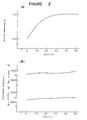
- Figure 2 shows graphs to illustrate the relations between the amount of the auxiliary material to be employed in the method for preparing the sulfide phosphor of the present invention and the relative brightness of the sulfide phosphor to be obtained and the chromaticity coordinates as expressed by CIE standard chromaticity diagram.
- a raw material for the matrix such as ZnS or (Zn,Cd)S
- a raw material for the activator such as a compound of Ag, a compound of Cu or a compound of Au
- a raw material for the co-activator such as a compound of Al or a compound of Ga
- the raw material mixture is filled in the first heat-resistant container, and an auxiliary material composed of carbon and/or a carbon-forming compound capable of being pyrolyzed at a high temperature to give carbon (hereinafter referred to as "carbon") and a metal sulfide capable of reacting with the said "carbon” at a temperature not lower than 600°C but not higher than the firing temperature to give carbon sulfide (hereinafter referred to as "metal sulfide”) or an auxiliary material composed of the said "carbon", the said "metal sulfide" and sulfur is placed in a portion as physically separated from the above-mentioned raw material mixture for the phosphor.
- carbon carbon
- metal sulfide a metal sulfide
- the heat-resistant container is covered with a lid and is put in a high-temperature firing furnace where the raw material mixture and the auxiliary material are fired in an almost closed condition with introducing a neutral gas such as nitrogen gas or argon gas thereinto.
- the firing temperature may vary in accordance with the composition of the sulfide phosphor to be produced (precisely, the composition of the host material of the phosphor matrix, and the kinds of the activator and co-activator) but may fall within a range of 800°C to 1250°C like the case of preparing conventional sulfide phosphors.
- the firing is especially preferably effected at a temperature falling within a range of 900°C to 1100°C.
- the sulfide phosphor to be prepared by the method of the present invention includes sulfide phosphors composed of a sulfide host material of zinc (Zn) and/or cadmium (Cd) of a general formula (Zn 1-x ,Cd x )S where (0 ⁇ x ⁇ 1), such as ZnS or (Zn,Cd)S, the said host material being self-activated, sulfide phosphors composed of the said sulfide matrix as activated with silver (Ag), copper (Cu), gold (Au) or lead (Pb) and co-activated with aluminium (Al), gallium (Ga), indium (In) or thallium (Tl), and sulfide phosphors composed of a matrix of an alkaline earth metal sulfide such as CaS or SrS as activated with a rare earth element such as europium (Eu), cerium (Ce), samarium (Sm) or th
- the method of the present invention is especially effective for preparing sulfide phosphors containing aluminium (Al) as a co-activator, such as ZnS:Cu,Al phosphor, ZnS;Ag,Al phosphor, ZnS:Au,Cu,Al phosphor or (Zn,Cd)S:Cu,Al phosphor, since aluminium (Al) is easily diffused in the phosphor crystals. Accordingly, Al-containing sulfide phosphors having a higher luminance can be prepared by the method of the present invention, than those prepared by the conventional methods.
- sulfide phosphors having a halogen such as chlorine (Cl) , bromine (Br) or iodine (I) as the coactivator may also be prepared by the method of the present invention.
- a halogen such as chlorine (Cl) , bromine (Br) or iodine (I) as the coactivator.
- any improvement of the emission luminance of the phosphors prepared by the method of the present invention could not almost be admitted as compared with the phosphors prepared by the conventional methods.
- the "carbon" to be employed as one auxiliary material in the method for preparing the sulfide phosphors of the present invention includes, for example, particle carbons such as coconut carbon granules and additionally organic compounds which are pyrolyzed during the step of firing the raw material mixture of the phosphor to give a free carbon, such as sugar or wax.
- the "metal sulfide" to be employed as another auxiliary material in the method for preparing the sulfide phosphors of the present invention includes, for example, sulfides of metals such as iron (Fe), copper (Cu), zinc (Zn), lead (Pb), cadmium (Cd), silver (Ag), cobalt (Co), tin (Sn), manganese (Mn), calcium (Ca), strontium (Sr), bismuth (Bi) or antimony (Sb), which react with the co-existing "carbon” at a temperature not lower than 600°C but not higher than the temperature at which the raw material mixture of the desired sulfide phosphor is fired to give a carbon sulfide such as carbon disulfide, dicarbon trisulfide, carbon monosulfide or tricarbon disulfide, and at least one of such metal sulfides is employed as the auxiliary material in the method of the present invention.
- metalsulfides of metals
- At least one selected from the sulfides of metals of iron (Fe), copper (Cu), zinc (Zn), bismuth (Bi) and antimony (Sb) is especially preferably employed, as giving sulfide phosphors of high emission luminance.
- sulfides of iron or zinc are most recommended from the practical viewpoints that they do not almost contaminate the phosphors prepared and they are low-prices.
- the "metal sulfides” may be either definite proportional compounds where the respective metal elements and sulfur are stoichiometrically bonded to form one molecule or indefinite proportional compounds where the respective metal components and sulfur are bonded in any desired proportions.
- the auxiliary material preferably contains sulfur, in addition to the above-mentioned "carbon” and "metal sulfide".
- sulfur-containing auxiliary material a part of the sulfur which has gasified at a relatively low temperature in the initial stage of firing could react with the co-existing "metal sulfide" to be trapped as an indefinite proportional compound of "metal sulfide", and the thus trapped compound could also react with the co-existing "carbon” after the middle stage of firing. Accordingly, employment of such sulfur-containing auxiliary material is more effective for continuously maintaining the sulfurizing atmosphere in the inside of the heat-resistant container throughout the step of firing the phosphors.
- Figure 1 The embodiments of Figure 1 are referred to for firing the raw material mixture for phosphors in accordance with the method of the present invention.
- the raw material mixture for the phosphor and the auxiliary material are put in the heat-resistant container in such a way that they are physically separated from each other, as shown in Figure 1, and the heat-resistant container is covered with a lid, put in a heating furnace and fired therein.
- Figure 1 illustrates the embodiments of the arrangement of the raw material mixture for the phosphor and the auxiliary material in the heat-resistant container, in preparing the sulfide phosphor by the method of the present invention.
- the raw material mixture (2) for the phosphor of a determined amount is filled in the first heat-resistant container (1), and the second heat-resistant container (3) filled with the auxiliary material (4) is put on the raw material mixture (2), and thereafter the container (1) is covered with the lid (5) and fired.
- the wall of the second heat-resistant container (3) which is to be in contact with the raw material mixture (2) may have numerous gas-permeable small through-holes.
- Figure 1(B) illustrates another embodiments, where the raw material mixture (12) for the phosphor is filled in the heat-resistant container (11) while the second heat-resistant container (13) having both open ends is embedded into almost the center of the first heat-resistant container (11) as filled with the raw material mixture (12), the container (13) being filled with the auxiliary material (14) in the inside thereof and the both open ends thereof being sealed with heat-resistant inorganic fibers such as quartz cloth, and the container (11) is then covered with the lid (15) and fired. Also in the case, at least the wall of the second heat-resistant container (13) which is to be in contact with the raw material mixture (12) for the phosphor may have numerous gas-permeable small through-holes.
- Figure 1(C) illustrates still another embodiments where the raw material mixture (22) for the phosphor is filled in the first heat-resistant container (21), the air-permeable partition wall (23) made of heat-resistant inorganic fibers such as quartz cloth is provided thereover, and the auxiliary material (24) is superposed over the wall (25), and finally the container (21) is covered with the lid (25) and fired.
- Figure 2(A) is a graph to show the relation between the amount of the "metal sulfide” (ZnS) in the case of using a combination of zinc sulfide (ZnS) as one auxiliary material of "metal sulfide” and carbon as the other auxiliary material in preparing ZnS:Cu,Al phosphor and the emission luminance of the ZnS:Cu,Al phosphor to be obtained in the case.
- Figure 2(B) is a graph to show the chromaticity points (x value and y value) when the emitted color from the phosphors obtained as above is expressed by the chromaticity coordinates of CIE standard chromaticity diagram.
- the weight of the raw material mixture for the phosphor was 700 g, and this was put in the firing container in the way of Figure 1(A) along with a determined amount of the auxiliary material mixture comprising ZnS ("metal sulfide") and carbon and fired therein.
- the abscissa of both Figure 2(A) and Figure 2(B) indicates the amount of ZnS as filled in the second heat-resistant container as one auxiliary material.
- the point "0" of ZnS means the conventional method, where an auxiliary material of a mixture comprising sulfur and carbon was filled in the second heat-resistant container, in place of the auxiliary material system composed of ZnS ("metal sulfide") and carbon, in the manner of Figure 1(A) and fired along with the raw material mixture for the phosphor to obtain ZnS:Cu,Al phosphor. That is to say, the point "0" of ZnS indicates the emission luminance and the emitted color from the ZnS:Cu,Al phosphor thus prepared by the conventional method.
- the emission luminance of the product could be improved over that of the product to be prepared by the conventional methods without changing the color to be emitted from the sulfide phosphor of the product.
- the minimum limit of the amount of the "metal sulfide" to be employed as the auxiliary material necessary for improving the emission luminance of the sulfide phosphor to be obtained may well be approximately from 1 to 1.5 g as the amount of sulfur(s) in the said "metal sulfide" per 100 g of the raw material mixture for the sulfide phosphor, whereupon the amount of the "carbon” of the other auxiliary material to be employed together is preferably such that may contain 50 atomic % or more carbon atoms to the amount of the sulfur(s) in the said auxiliary material "metal sulfide".
- sulfide phosphors of higher luminance can be prepared more efficiently be the method of the present invention than those to be prepared by the conventional methods without changing the color to be emitted from the sulfide phosphors.
- the above-mentioned raw materials for a phosphor were weighed, and a small amount of water was added thereto to make a paste. This was kneaded, dried and sieved, and 7 g of sodium chloride (NaCl), 7 g of zinc chloride (ZnCl2) and 3.5 g of sulfur (S) were added thereto and well blended in a ball mill to obtain a raw material mixture for a phosphor. The resulting mixture was then filled in a quartz crucible having a capacity of approximately one liter (the first heat-resistant container).
- the porcelain crucible (the second heat-resistant container) as filled with the above-mentioned auxiliary material mixture was put on the above-mentioned raw material mixture for a phosphor as filled in the quartz crucible (the first heat-resistant container), and the quartz crucible (the first heat-resistant container) was covered with a lid and was then put in a high-temperature electric furnace kept at 980°C, where the materials in the containers were fired for 2 hours.
- the thus fired product was then taken out of the furnace and cooled and then washed with water and dried to finally obtain ZnS:Ag,Al phosphor as co-activated by 0.015% of Ag and 0.0075% of Al (Sulfide Phosphor (I)).
- a comparative sample was prepared. Specifically, the same process as above was repeated, except that a mixture comprising 70 g of sulfur and 18 g of active charcoal was employed as the auxiliary materials to be filled in the porcelain container in place of the mixture comprising 17 g of active charcoal, 70 g of sulfur and 70 g of ZnS, and ZnS:Ag,Al phosphor as co-activated with 0.015% of Ag and 0.0075% of Al (Sulfide Phosphor (I-R)) was prepared.
- a mixture comprising 70 g of sulfur and 18 g of active charcoal was employed as the auxiliary materials to be filled in the porcelain container in place of the mixture comprising 17 g of active charcoal, 70 g of sulfur and 70 g of ZnS, and ZnS:Ag,Al phosphor as co-activated with 0.015% of Ag and 0.0075% of Al (Sulfide Phosphor (I-R)) was prepared.
- Sulfide Phosphor (I) and Sulfide Phosphor (I-R) were compared with each other with respect to the emission luminance and the emission color under the excited condition with electron beams. The results obtained are shown in Table 1 below. As is obvious therefrom, Sulfide Phosphor (I) prepared by the method of the present invention showed a higher emission luminance than Sulfide Phosphor (I-R) prepared by the conventional method without changing the emission color therefrom.
- the above-mentioned raw materials for a phosphor were weighed, and a small amount of water was added thereto to make a paste. This was kneaded, dried and sieved, and 7 g of sodium chloride (NaCl) and 7 g of zinc chloride (ZnCl2) and 3.5 g of sulfur (S) were added thereto and well blended in a ball mill to obtain a raw material mixture for a phosphor. The resulting mixture was then filled in a quartz crucible having a capacity of approximately one liter (the first heat-resistant container).
- a comparative sample was prepared in the same manner. Specifically, the same process as above was repeated, except that an auxiliary material mixture comprising 70 g of sulfur and 18 g of active charcoal was put in a porcelain container having a capacity of approximately 150 ml and the container was put on the raw material mixture for the phosphor as filled in the quartz crucible (the first heat-resistant container) as shown in Figure 1(A), in place of employing the auxiliary material mixture comprising 17 g of active charcoal, 70 g of sulfur and 70 g of ZnS as filled in the quartz tube (the second heat-resistant container), and ZnS:Cu,Al phosphor as co-activated with 0.015% of Cu and 0.006% of Al (Sulfide Phosphor (II-R)) was prepared.
- an auxiliary material mixture comprising 70 g of sulfur and 18 g of active charcoal was put in a porcelain container having a capacity of approximately 150 ml and the container was put on the raw material mixture for the phosphor as filled in the quartz crucible
- Sulfide Phosphor (II) and Sulfide Phosphor (II-R) were compared with each other with respect to the emission luminance and the emission color under the excited condition with electron beams. The results obtained are shown in Table 2 below. As is obvious therefrom, Sulfide Phosphor (II) prepared by the method of the present invention showed a higher emission luminance than Sulfide Phosphor (II-R) prepared by the conventional method without changing the emission color therefrom.
- Example 2 The same process as in Example 1 was repeated, except that 70 g of iron sulfide (FeS) was employed in place of 70 g of zinc sulfide (ZnS) as one auxiliary material, and ZnS:Ag,Al phosphor as co-activated with 0.015% of Ag and 0.0075% of Al (Sulfide Phosphor (III)) was obtained.
- FeS iron sulfide
- ZnS zinc sulfide
- ZnS:Ag,Al phosphor as co-activated with 0.015% of Ag and 0.0075% of Al (Sulfide Phosphor (III)
- Example 1 Sulfide Phosphor (I-R) was repeated to obtain ZnS:Ag,Al phosphor as co-activated with 0.015% of Ag and 0.0075% of Al (Sulfide Phosphor (III-R)).
- Sulfide Phosphor (III) and Sulfide Phosphor (III-R) were compared with each other with respect to the emission luminance and the emission color under the excited condition with electron beams. The results obtained are shown in Table 3 below. As is obvious therefrom, Sulfide Phosphor (III) prepared by the method of the present invention showed a higher emission luminance than Sulfide Phosphor (III-R) prepared by the conventional method without changing the emission color therefrom.
Landscapes
- Chemical & Material Sciences (AREA)
- Inorganic Chemistry (AREA)
- Engineering & Computer Science (AREA)
- Materials Engineering (AREA)
- Organic Chemistry (AREA)
- Luminescent Compositions (AREA)
- Electroluminescent Light Sources (AREA)
Claims (14)
- Procédé de préparation d'une matière luminescente à base de sulfure, dans lequel un mélange de matières premières pour une matière luminescente à base de sulfure est placé dans un premier récipient réfractaire pratiquement fermé et y est cuit, le procédé étant caractérisé en ce qu'une matière auxiliaire constituée de carbone et/ou d'un composé formant du carbone, pouvant être pyrolysé à une température non supérieure à la température de cuisson, pour former du carbone, et d'un sulfure métallique pouvant réagir avec le carbone et/ou avec ledit composé formant du carbone, à une température non inférieure à 600°C mais non supérieure à la température de cuisson, pour former un sulfure de carbone, est placée dans la partie dudit premier récipient réfractaire qui est physiquement séparée du mélange de matières premières pour la matière luminescente à base de sulfure, et en ce que la cuisson est effectuée dans des conditions telles que ledit premier récipient réfractaire peut présenter une atmosphère de sulfure de carbone due à la réaction thermique de la matière auxiliaire ainsi cuite.
- Procédé de préparation d'une matière luminescente à base de sulfure selon la revendication 1, dans lequel ledit sulfure métallique est un composé à proportions non définies.
- Procédé de préparation d'une matière luminescente à base de sulfure selon la revendication 1, dans lequel ledit sulfure métallique est un sulfure contenant au moins un métal choisi dans le groupe constitué du fer (Fe), du cuivre (Cu), du zinc (Zn), du bismuth (Bi), de l'antimoine (Sb), du plomb (Pb), du cadmium (Cd), de l'argent (Ag), du cobalt (Co), de l'étain (Sn), du manganèse (Mn), du calcium (Ca) et du strontium (Sr).
- Procédé de préparation d'une matière luminescente à base de sulfure selon la revendication 1, dans lequel ledit sulfure métallique est un sulfure contenant au moins un métal choisi dans le groupe constitué du fer (Fe), du cuivre (Cu), du zinc (Zn), du bismuth (Bi) et de l'antimoine (Sb).
- Procédé de préparation d'une matière luminescente à base de sulfure selon la revendication 1, dans lequel ladite matière luminescente à base de sulfure est une matière luminescente contenant de l'aluminium (Al) comme coactivateur.
- Procédé de préparation d'une matière luminescente à base de sulfure selon la revendication 5, dans lequel ladite matière luminescente à base de sulfure est une matière luminescente auto-activée ou une matière luminescente contenant comme activateur au moins un élément parmi l'argent (Ag), le cuivre (Cu) et l'or (Au).
- Procédé de préparation d'une matière luminescente à base de sulfure selon la revendication 1, dans lequel ladite matière auxiliaire est placée dans un second récipient réfractaire, de manière à être physiquement séparée dudit mélange de matières premières pour la matière luminescente à base de sulfure.
- Procédé de préparation d'une matière luminescente à base de sulfure selon la revendication 7, dans lequel au moins la paroi dudit second récipient réfractaire qui doit être en contact avec ledit mélange de matières premières pour la matière luminescente à base de sulfure présente de petits trous traversants perméables aux gaz.
- Procédé de préparation d'une matière luminescente à base de sulfure selon la revendication 1, dans lequel ladite matière auxiliaire est physiquement séparée dudit mélange de matières premières pour la matière luminescente à base de sulfure, par des fibres inorganiques réfractaires placées entre ladite matière auxiliaire et ledit mélange de matières premières pour la matière luminescente à base de sulfure.
- Procédé de préparation d'une matière luminescente à base de sulfure selon la revendication 1, dans lequel la température limite maximale de cuisson est dans une plage de 900°C à 1100°C.
- Procédé de préparation d'une matière luminescente à base de sulfure, dans lequel un mélange de matières premières pour une matière luminescente à base de sulfure est placé dans un premier récipient réfractaire pratiquement fermé et y est cuit, le procédé étant caractérisé en ce qu'une matière auxiliaire, constituée de carbone et/ou d'un composé formant du carbone, pouvant être pyrolysé à une température non supérieure à la température de cuisson, pour former du carbone, d'un sulfure métallique pouvant réagir avec le carbone et/ou avec ledit composé formant du carbone, à une température non inférieure à 600°C mais non supérieure à la température de cuisson, pour former un sulfure de carbone, et du soufre, est placée dans la partie dudit premier récipient réfractaire qui est physiquement séparée du mélange de matières premières pour la matière luminescente à base de sulfure, et en ce que la cuisson est conduite dans des conditions telles que ledit premier récipient réfractaire peut présenter une atmosphère de sulfure de carbone due à la réaction thermique de ladite matière auxiliaire ainsi cuite.
- Procédé de préparation d'une matière luminescente à base de sulfure selon la revendication 11, dans lequel ledit sulfure métallique est un composé à proportions non définies.
- Procédé de préparation d'une matière luminescente à base de sulfure selon la revendication 11, dans lequel ladite matière luminescente à base de sulfure contient de l'aluminium (Al) comme co-activateur.
- Procédé de préparation d'une matière luminescente à base de sulfure selon la revendication 13, dans lequel ladite matière luminescente à base de sulfure est une matière luminescente auto-activée ou une matière luminescente contenant comme activateur au moins un élément parmi l'argent (Ag), le cuivre (Cu) et l'or (Au).
Applications Claiming Priority (2)
| Application Number | Priority Date | Filing Date | Title |
|---|---|---|---|
| US07/496,949 US5102579A (en) | 1990-03-21 | 1990-03-21 | Method for preparing sulfide phosphors |
| US496949 | 1990-03-21 |
Publications (3)
| Publication Number | Publication Date |
|---|---|
| EP0448056A2 EP0448056A2 (fr) | 1991-09-25 |
| EP0448056A3 EP0448056A3 (en) | 1992-04-01 |
| EP0448056B1 true EP0448056B1 (fr) | 1995-08-30 |
Family
ID=23974854
Family Applications (1)
| Application Number | Title | Priority Date | Filing Date |
|---|---|---|---|
| EP91104258A Expired - Lifetime EP0448056B1 (fr) | 1990-03-21 | 1991-03-19 | Méthode de préparation de matières luminescentes contenant des sulfures |
Country Status (5)
| Country | Link |
|---|---|
| US (1) | US5102579A (fr) |
| EP (1) | EP0448056B1 (fr) |
| JP (1) | JP2957015B2 (fr) |
| KR (1) | KR0175311B1 (fr) |
| DE (1) | DE69112459T2 (fr) |
Families Citing this family (23)
| Publication number | Priority date | Publication date | Assignee | Title |
|---|---|---|---|---|
| US5635048A (en) * | 1996-02-20 | 1997-06-03 | Industrial Technology Research Institute | Method for forming low-energy electron excited fluorescent screen |
| US6072198A (en) * | 1998-09-14 | 2000-06-06 | Planar Systems Inc | Electroluminescent alkaline-earth sulfide phosphor thin films with multiple coactivator dopants |
| US6346326B1 (en) | 1998-10-15 | 2002-02-12 | Sarnoff Corporation | Coated moisture impervious red phosphors |
| US6351069B1 (en) | 1999-02-18 | 2002-02-26 | Lumileds Lighting, U.S., Llc | Red-deficiency-compensating phosphor LED |
| US6680569B2 (en) | 1999-02-18 | 2004-01-20 | Lumileds Lighting U.S. Llc | Red-deficiency compensating phosphor light emitting device |
| US6183102B1 (en) | 1999-03-12 | 2001-02-06 | Global Products Sales And Marketing, L.L.C. | Apparatus and method for producing a transparent tubular member containing a phosphorescent material |
| US7173179B2 (en) * | 2002-07-16 | 2007-02-06 | The Board Of Trustees Of The University Of Arkansas | Solar co-generator |
| US20080057343A1 (en) * | 2004-06-24 | 2008-03-06 | Sumitomo Electric Industries, Ltd. | Phosphor, Method for Manufacturing Same, and Particle Dispersed El Device Using Same |
| US7847302B2 (en) * | 2005-08-26 | 2010-12-07 | Koninklijke Philips Electronics, N.V. | Blue LED with phosphor layer for producing white light and different phosphor in outer lens for reducing color temperature |
| WO2007086310A1 (fr) * | 2006-01-27 | 2007-08-02 | Semiconductor Energy Laboratory Co., Ltd. | Matériau photoémetteur, dispositif photoémetteur et dispositif électronique |
| WO2007086311A1 (fr) * | 2006-01-27 | 2007-08-02 | Semiconductor Energy Laboratory Co., Ltd. | Matériau photoémetteur, élément photoémetteur, dispositif photoémetteur, et appareil électronique |
| US20070190675A1 (en) * | 2006-02-10 | 2007-08-16 | Semiconductor Energy Laboratory Co., Ltd. | Manufacturing method of display device |
| US20070190235A1 (en) * | 2006-02-10 | 2007-08-16 | Semiconductor Energy Laboratory Co., Ltd. | Film forming apparatus, film forming method, and manufacturing method of light emitting element |
| WO2007091500A1 (fr) * | 2006-02-10 | 2007-08-16 | Semiconductor Energy Laboratory Co., Ltd. | Element emetteur de lumiere, dispositif emetteur de lumiere, et dispositif electronique |
| EP1821579A3 (fr) * | 2006-02-17 | 2008-04-02 | Semiconductor Energy Laboratory Co., Ltd. | Élément électroluminescent, dispositif électroluminescent, et appareil électronique |
| US20070194321A1 (en) * | 2006-02-17 | 2007-08-23 | Semiconductor Energy Laboratory Co., Ltd. | Light emitting element, light emitting device, and electronic device |
| WO2007100020A1 (fr) * | 2006-03-02 | 2007-09-07 | Semiconductor Energy Laboratory Co., Ltd. | Element electroluminescent, dispositif electroluminescent, dispositif d'eclairage et appareil electronique |
| US20070205410A1 (en) * | 2006-03-03 | 2007-09-06 | Semiconductor Energy Laboratory Co., Ltd. | Light-emitting element, light-emitting device, and electronic device |
| KR20080110747A (ko) | 2006-03-21 | 2008-12-19 | 가부시키가이샤 한도오따이 에네루기 켄큐쇼 | 발광소자, 표시장치 및 전자기기 |
| US20070281574A1 (en) * | 2006-06-01 | 2007-12-06 | Semiconductor Energy Laboratory Co., Ltd. | Method for manufacturing electroluminescent material |
| US20080012027A1 (en) * | 2006-07-13 | 2008-01-17 | Semiconductor Energy Laboratory Co., Ltd. | Light-emitting element, light-emitting device, and method of fabricating light-emitting element |
| WO2011142385A1 (fr) * | 2010-05-14 | 2011-11-17 | 株式会社クラレ | Substance fluorescente verte à base de sulfure de zinc et son procédé de production |
| JP5763509B2 (ja) * | 2011-11-29 | 2015-08-12 | 住友金属鉱山株式会社 | 希土類添加硫化物蛍光体の製造方法 |
Family Cites Families (4)
| Publication number | Priority date | Publication date | Assignee | Title |
|---|---|---|---|---|
| GB265994A (en) * | 1926-02-16 | 1927-10-27 | Julius Komlos | An improved process for the manufacture of carbon disulphide |
| US2573817A (en) * | 1949-04-29 | 1951-11-06 | Rca Corp | Luminescent zinc oxide containing a small amount of zinc sulfide |
| NL7300382A (fr) * | 1973-01-11 | 1974-07-15 | ||
| JPS5419483A (en) * | 1977-05-19 | 1979-02-14 | Dainippon Toryo Co Ltd | Method of producing green fluorescent material |
-
1990
- 1990-03-21 US US07/496,949 patent/US5102579A/en not_active Expired - Fee Related
-
1991
- 1991-03-19 DE DE69112459T patent/DE69112459T2/de not_active Expired - Fee Related
- 1991-03-19 EP EP91104258A patent/EP0448056B1/fr not_active Expired - Lifetime
- 1991-03-20 JP JP3057053A patent/JP2957015B2/ja not_active Expired - Lifetime
- 1991-03-21 KR KR1019910004483A patent/KR0175311B1/ko not_active Expired - Fee Related
Also Published As
| Publication number | Publication date |
|---|---|
| KR0175311B1 (ko) | 1999-03-20 |
| EP0448056A3 (en) | 1992-04-01 |
| DE69112459T2 (de) | 1996-05-02 |
| US5102579A (en) | 1992-04-07 |
| JP2957015B2 (ja) | 1999-10-04 |
| DE69112459D1 (de) | 1995-10-05 |
| EP0448056A2 (fr) | 1991-09-25 |
| JPH06192655A (ja) | 1994-07-12 |
Similar Documents
| Publication | Publication Date | Title |
|---|---|---|
| US5102579A (en) | Method for preparing sulfide phosphors | |
| US4208299A (en) | Method of preparing zinc sulfide phosphor coactivated with copper and gold | |
| US6090311A (en) | Alkali iodide doped zinc sulfide electroluminescent phoshor | |
| CN1190469C (zh) | 长余辉碱土金属硫化物磷光体 | |
| JPH0458518B2 (fr) | ||
| JPS6254785A (ja) | 硫化物螢光体 | |
| EP0034059B1 (fr) | Tube à rayons cathodiques avec composé sulfure de zinc-phosphore activé de cuivre et d'aluminium et procédé pour produire ce phosphore ainsi qu'utilisation de ce tube à rayons cathodiques pour téléviseurs polychromes | |
| US6113808A (en) | Electroluminescent phosphor with extended life and method of making same | |
| US5958295A (en) | Terbium-activated rare earth oxysulfide phosphor with enhanced blue emission | |
| JPS5879814A (ja) | 硫化亜鉛螢光体 | |
| KR930003383B1 (ko) | ZnS : Ag, Al계 청색발광 형광체의 제조방법 | |
| EP0078538A1 (fr) | Luminophore émettant dans le bleu et présentant une persistance lumineuse de longue durée et un dispositif d'affichage excité par des électrons, utilisant ce luminophore | |
| JPH0625350B2 (ja) | 硫化物螢光体 | |
| JPH072946B2 (ja) | 螢光体 | |
| JPH0412313B2 (fr) | ||
| JPS6351480B2 (fr) | ||
| JPH0129834B2 (fr) | ||
| JPS6021713B2 (ja) | 緑色発光螢光体 | |
| JPS6144116B2 (fr) | ||
| JPH072945B2 (ja) | 残光性硫化亜鉛蛍光体 | |
| JPH058235B2 (fr) | ||
| JPS637593B2 (fr) | ||
| JPS637595B2 (fr) | ||
| JPS6330586A (ja) | 硫化亜鉛蛍光体 | |
| JPS637594B2 (fr) |
Legal Events
| Date | Code | Title | Description |
|---|---|---|---|
| PUAI | Public reference made under article 153(3) epc to a published international application that has entered the european phase |
Free format text: ORIGINAL CODE: 0009012 |
|
| AK | Designated contracting states |
Kind code of ref document: A2 Designated state(s): DE FR GB IT NL |
|
| PUAL | Search report despatched |
Free format text: ORIGINAL CODE: 0009013 |
|
| AK | Designated contracting states |
Kind code of ref document: A3 Designated state(s): DE FR GB IT NL |
|
| 17P | Request for examination filed |
Effective date: 19920921 |
|
| 17Q | First examination report despatched |
Effective date: 19931207 |
|
| GRAA | (expected) grant |
Free format text: ORIGINAL CODE: 0009210 |
|
| AK | Designated contracting states |
Kind code of ref document: B1 Designated state(s): DE FR GB IT NL |
|
| ITF | It: translation for a ep patent filed | ||
| REF | Corresponds to: |
Ref document number: 69112459 Country of ref document: DE Date of ref document: 19951005 |
|
| ET | Fr: translation filed | ||
| PLBE | No opposition filed within time limit |
Free format text: ORIGINAL CODE: 0009261 |
|
| STAA | Information on the status of an ep patent application or granted ep patent |
Free format text: STATUS: NO OPPOSITION FILED WITHIN TIME LIMIT |
|
| 26N | No opposition filed | ||
| PGFP | Annual fee paid to national office [announced via postgrant information from national office to epo] |
Ref country code: FR Payment date: 20010313 Year of fee payment: 11 |
|
| PGFP | Annual fee paid to national office [announced via postgrant information from national office to epo] |
Ref country code: GB Payment date: 20010314 Year of fee payment: 11 |
|
| PGFP | Annual fee paid to national office [announced via postgrant information from national office to epo] |
Ref country code: DE Payment date: 20010327 Year of fee payment: 11 |
|
| PGFP | Annual fee paid to national office [announced via postgrant information from national office to epo] |
Ref country code: NL Payment date: 20010330 Year of fee payment: 11 |
|
| REG | Reference to a national code |
Ref country code: GB Ref legal event code: IF02 |
|
| PG25 | Lapsed in a contracting state [announced via postgrant information from national office to epo] |
Ref country code: GB Free format text: LAPSE BECAUSE OF NON-PAYMENT OF DUE FEES Effective date: 20020319 |
|
| PG25 | Lapsed in a contracting state [announced via postgrant information from national office to epo] |
Ref country code: NL Free format text: LAPSE BECAUSE OF NON-PAYMENT OF DUE FEES Effective date: 20021001 Ref country code: DE Free format text: LAPSE BECAUSE OF NON-PAYMENT OF DUE FEES Effective date: 20021001 |
|
| GBPC | Gb: european patent ceased through non-payment of renewal fee |
Effective date: 20020319 |
|
| PG25 | Lapsed in a contracting state [announced via postgrant information from national office to epo] |
Ref country code: FR Free format text: LAPSE BECAUSE OF NON-PAYMENT OF DUE FEES Effective date: 20021129 |
|
| NLV4 | Nl: lapsed or anulled due to non-payment of the annual fee |
Effective date: 20021001 |
|
| REG | Reference to a national code |
Ref country code: FR Ref legal event code: ST |
|
| PG25 | Lapsed in a contracting state [announced via postgrant information from national office to epo] |
Ref country code: IT Free format text: LAPSE BECAUSE OF NON-PAYMENT OF DUE FEES;WARNING: LAPSES OF ITALIAN PATENTS WITH EFFECTIVE DATE BEFORE 2007 MAY HAVE OCCURRED AT ANY TIME BEFORE 2007. THE CORRECT EFFECTIVE DATE MAY BE DIFFERENT FROM THE ONE RECORDED. Effective date: 20050319 |