EP0448464A1 - Verfahren zur Bestimmung der Fähigkeit eines Spermatozoons der Akrosomalreaktion zu unterziehen - Google Patents
Verfahren zur Bestimmung der Fähigkeit eines Spermatozoons der Akrosomalreaktion zu unterziehen Download PDFInfo
- Publication number
- EP0448464A1 EP0448464A1 EP91400748A EP91400748A EP0448464A1 EP 0448464 A1 EP0448464 A1 EP 0448464A1 EP 91400748 A EP91400748 A EP 91400748A EP 91400748 A EP91400748 A EP 91400748A EP 0448464 A1 EP0448464 A1 EP 0448464A1
- Authority
- EP
- European Patent Office
- Prior art keywords
- sperm
- proteins
- receptor
- acrosomal reaction
- fragment
- Prior art date
- Legal status (The legal status is an assumption and is not a legal conclusion. Google has not performed a legal analysis and makes no representation as to the accuracy of the status listed.)
- Withdrawn
Links
- 238000006243 chemical reaction Methods 0.000 title claims abstract description 41
- 238000000034 method Methods 0.000 title claims abstract description 38
- 239000002609 medium Substances 0.000 claims abstract description 30
- 102000004169 proteins and genes Human genes 0.000 claims abstract description 30
- 108090000623 proteins and genes Proteins 0.000 claims abstract description 30
- 238000000338 in vitro Methods 0.000 claims abstract description 17
- 239000012634 fragment Substances 0.000 claims abstract description 16
- 230000004720 fertilization Effects 0.000 claims abstract description 15
- 239000001963 growth medium Substances 0.000 claims abstract description 4
- 108020003175 receptors Proteins 0.000 claims description 16
- HIYAVKIYRIFSCZ-CYEMHPAKSA-N 5-(methylamino)-2-[[(2S,3R,5R,6S,8R,9R)-3,5,9-trimethyl-2-[(2S)-1-oxo-1-(1H-pyrrol-2-yl)propan-2-yl]-1,7-dioxaspiro[5.5]undecan-8-yl]methyl]-1,3-benzoxazole-4-carboxylic acid Chemical compound O=C([C@@H](C)[C@H]1O[C@@]2([C@@H](C[C@H]1C)C)O[C@@H]([C@@H](CC2)C)CC=1OC2=CC=C(C(=C2N=1)C(O)=O)NC)C1=CC=CN1 HIYAVKIYRIFSCZ-CYEMHPAKSA-N 0.000 claims description 15
- HIYAVKIYRIFSCZ-UHFFFAOYSA-N calcium ionophore A23187 Natural products N=1C2=C(C(O)=O)C(NC)=CC=C2OC=1CC(C(CC1)C)OC1(C(CC1C)C)OC1C(C)C(=O)C1=CC=CN1 HIYAVKIYRIFSCZ-UHFFFAOYSA-N 0.000 claims description 15
- 230000008010 sperm capacitation Effects 0.000 claims description 13
- 230000006698 induction Effects 0.000 claims description 11
- 230000000295 complement effect Effects 0.000 claims description 10
- 210000000582 semen Anatomy 0.000 claims description 8
- 239000003795 chemical substances by application Substances 0.000 claims description 6
- 238000000684 flow cytometry Methods 0.000 claims description 6
- 101710137943 Complement control protein C3 Proteins 0.000 claims description 5
- 101710136899 Replication enhancer protein Proteins 0.000 claims description 5
- 230000003993 interaction Effects 0.000 claims description 5
- 238000002372 labelling Methods 0.000 claims description 5
- 230000008569 process Effects 0.000 claims description 5
- 102100023634 Zona pellucida sperm-binding protein 3 Human genes 0.000 claims description 4
- 108010043837 egg surface sperm receptor Proteins 0.000 claims description 4
- 239000003814 drug Substances 0.000 claims description 3
- 239000003433 contraceptive agent Substances 0.000 claims description 2
- 230000002254 contraceptive effect Effects 0.000 claims description 2
- 229960005486 vaccine Drugs 0.000 claims description 2
- 238000011002 quantification Methods 0.000 claims 1
- 238000002360 preparation method Methods 0.000 abstract description 4
- 238000004519 manufacturing process Methods 0.000 abstract 1
- 102100022133 Complement C3 Human genes 0.000 description 50
- 102000005962 receptors Human genes 0.000 description 11
- CSCPPACGZOOCGX-UHFFFAOYSA-N Acetone Chemical compound CC(C)=O CSCPPACGZOOCGX-UHFFFAOYSA-N 0.000 description 7
- 230000035800 maturation Effects 0.000 description 7
- 210000004027 cell Anatomy 0.000 description 6
- 239000012528 membrane Substances 0.000 description 5
- 239000000047 product Substances 0.000 description 5
- 239000000427 antigen Substances 0.000 description 4
- 102000036639 antigens Human genes 0.000 description 4
- 108091007433 antigens Proteins 0.000 description 4
- 238000001514 detection method Methods 0.000 description 4
- 238000011161 development Methods 0.000 description 4
- 238000010166 immunofluorescence Methods 0.000 description 4
- 238000001727 in vivo Methods 0.000 description 4
- 238000012544 monitoring process Methods 0.000 description 4
- 239000000725 suspension Substances 0.000 description 4
- 108010028780 Complement C3 Proteins 0.000 description 3
- WSFSSNUMVMOOMR-UHFFFAOYSA-N Formaldehyde Chemical compound O=C WSFSSNUMVMOOMR-UHFFFAOYSA-N 0.000 description 3
- 230000004913 activation Effects 0.000 description 3
- 238000011534 incubation Methods 0.000 description 3
- 239000003446 ligand Substances 0.000 description 3
- 239000003550 marker Substances 0.000 description 3
- 238000012360 testing method Methods 0.000 description 3
- 230000035899 viability Effects 0.000 description 3
- IJGRMHOSHXDMSA-UHFFFAOYSA-N Atomic nitrogen Chemical compound N#N IJGRMHOSHXDMSA-UHFFFAOYSA-N 0.000 description 2
- OYPRJOBELJOOCE-UHFFFAOYSA-N Calcium Chemical compound [Ca] OYPRJOBELJOOCE-UHFFFAOYSA-N 0.000 description 2
- 102000015612 Complement 3b Receptors Human genes 0.000 description 2
- 108010024114 Complement 3b Receptors Proteins 0.000 description 2
- LFQSCWFLJHTTHZ-UHFFFAOYSA-N Ethanol Chemical compound CCO LFQSCWFLJHTTHZ-UHFFFAOYSA-N 0.000 description 2
- 102000004142 Trypsin Human genes 0.000 description 2
- 108090000631 Trypsin Proteins 0.000 description 2
- 238000004458 analytical method Methods 0.000 description 2
- 238000003556 assay Methods 0.000 description 2
- 229910052791 calcium Inorganic materials 0.000 description 2
- 239000011575 calcium Substances 0.000 description 2
- 238000003776 cleavage reaction Methods 0.000 description 2
- 238000010586 diagram Methods 0.000 description 2
- BFMYDTVEBKDAKJ-UHFFFAOYSA-L disodium;(2',7'-dibromo-3',6'-dioxido-3-oxospiro[2-benzofuran-1,9'-xanthene]-4'-yl)mercury;hydrate Chemical compound O.[Na+].[Na+].O1C(=O)C2=CC=CC=C2C21C1=CC(Br)=C([O-])C([Hg])=C1OC1=C2C=C(Br)C([O-])=C1 BFMYDTVEBKDAKJ-UHFFFAOYSA-L 0.000 description 2
- 229940079593 drug Drugs 0.000 description 2
- MHMNJMPURVTYEJ-UHFFFAOYSA-N fluorescein-5-isothiocyanate Chemical compound O1C(=O)C2=CC(N=C=S)=CC=C2C21C1=CC=C(O)C=C1OC1=CC(O)=CC=C21 MHMNJMPURVTYEJ-UHFFFAOYSA-N 0.000 description 2
- 238000003018 immunoassay Methods 0.000 description 2
- 210000000287 oocyte Anatomy 0.000 description 2
- 238000004445 quantitative analysis Methods 0.000 description 2
- 230000009257 reactivity Effects 0.000 description 2
- 230000007017 scission Effects 0.000 description 2
- 230000004083 survival effect Effects 0.000 description 2
- 238000010257 thawing Methods 0.000 description 2
- 239000012588 trypsin Substances 0.000 description 2
- 108091003079 Bovine Serum Albumin Proteins 0.000 description 1
- UXVMQQNJUSDDNG-UHFFFAOYSA-L Calcium chloride Chemical compound [Cl-].[Cl-].[Ca+2] UXVMQQNJUSDDNG-UHFFFAOYSA-L 0.000 description 1
- 241000283707 Capra Species 0.000 description 1
- 241000699800 Cricetinae Species 0.000 description 1
- 102000002322 Egg Proteins Human genes 0.000 description 1
- 108010000912 Egg Proteins Proteins 0.000 description 1
- 102000004190 Enzymes Human genes 0.000 description 1
- 108090000790 Enzymes Proteins 0.000 description 1
- 235000010469 Glycine max Nutrition 0.000 description 1
- 244000068988 Glycine max Species 0.000 description 1
- 241000282412 Homo Species 0.000 description 1
- 101001122145 Homo sapiens Odontogenic ameloblast-associated protein Proteins 0.000 description 1
- 108060003951 Immunoglobulin Proteins 0.000 description 1
- 102100027069 Odontogenic ameloblast-associated protein Human genes 0.000 description 1
- 241000283973 Oryctolagus cuniculus Species 0.000 description 1
- GLNADSQYFUSGOU-GPTZEZBUSA-J Trypan blue Chemical compound [Na+].[Na+].[Na+].[Na+].C1=C(S([O-])(=O)=O)C=C2C=C(S([O-])(=O)=O)C(/N=N/C3=CC=C(C=C3C)C=3C=C(C(=CC=3)\N=N\C=3C(=CC4=CC(=CC(N)=C4C=3O)S([O-])(=O)=O)S([O-])(=O)=O)C)=C(O)C2=C1N GLNADSQYFUSGOU-GPTZEZBUSA-J 0.000 description 1
- 101710162629 Trypsin inhibitor Proteins 0.000 description 1
- 229940122618 Trypsin inhibitor Drugs 0.000 description 1
- 230000000890 antigenic effect Effects 0.000 description 1
- 238000000149 argon plasma sintering Methods 0.000 description 1
- 230000008901 benefit Effects 0.000 description 1
- 229940098773 bovine serum albumin Drugs 0.000 description 1
- 239000006227 byproduct Substances 0.000 description 1
- 239000001110 calcium chloride Substances 0.000 description 1
- 229910001628 calcium chloride Inorganic materials 0.000 description 1
- 235000011148 calcium chloride Nutrition 0.000 description 1
- 210000000170 cell membrane Anatomy 0.000 description 1
- 230000001413 cellular effect Effects 0.000 description 1
- 239000003153 chemical reaction reagent Substances 0.000 description 1
- 238000004163 cytometry Methods 0.000 description 1
- 230000001419 dependent effect Effects 0.000 description 1
- 239000012636 effector Substances 0.000 description 1
- 230000000694 effects Effects 0.000 description 1
- 238000001493 electron microscopy Methods 0.000 description 1
- 230000002255 enzymatic effect Effects 0.000 description 1
- 230000007717 exclusion Effects 0.000 description 1
- 210000005002 female reproductive tract Anatomy 0.000 description 1
- 230000035558 fertility Effects 0.000 description 1
- 238000000799 fluorescence microscopy Methods 0.000 description 1
- 210000001733 follicular fluid Anatomy 0.000 description 1
- 238000007710 freezing Methods 0.000 description 1
- 230000008014 freezing Effects 0.000 description 1
- 238000010353 genetic engineering Methods 0.000 description 1
- 230000028996 humoral immune response Effects 0.000 description 1
- 102000018358 immunoglobulin Human genes 0.000 description 1
- 230000002401 inhibitory effect Effects 0.000 description 1
- 230000003834 intracellular effect Effects 0.000 description 1
- 239000007788 liquid Substances 0.000 description 1
- 239000011159 matrix material Substances 0.000 description 1
- 238000005259 measurement Methods 0.000 description 1
- 230000007246 mechanism Effects 0.000 description 1
- 230000004048 modification Effects 0.000 description 1
- 238000012986 modification Methods 0.000 description 1
- 230000000877 morphologic effect Effects 0.000 description 1
- 229940126619 mouse monoclonal antibody Drugs 0.000 description 1
- 229910052757 nitrogen Inorganic materials 0.000 description 1
- 210000004681 ovum Anatomy 0.000 description 1
- 239000002245 particle Substances 0.000 description 1
- 239000008188 pellet Substances 0.000 description 1
- 230000035515 penetration Effects 0.000 description 1
- 230000008823 permeabilization Effects 0.000 description 1
- 238000002135 phase contrast microscopy Methods 0.000 description 1
- 230000001737 promoting effect Effects 0.000 description 1
- 238000000746 purification Methods 0.000 description 1
- 230000002285 radioactive effect Effects 0.000 description 1
- 230000001105 regulatory effect Effects 0.000 description 1
- 230000004044 response Effects 0.000 description 1
- 210000002966 serum Anatomy 0.000 description 1
- 238000010186 staining Methods 0.000 description 1
- 239000006228 supernatant Substances 0.000 description 1
- 231100000331 toxic Toxicity 0.000 description 1
- 230000002588 toxic effect Effects 0.000 description 1
- 210000002993 trophoblast Anatomy 0.000 description 1
- 239000002753 trypsin inhibitor Substances 0.000 description 1
- 238000005406 washing Methods 0.000 description 1
Images
Classifications
-
- C—CHEMISTRY; METALLURGY
- C07—ORGANIC CHEMISTRY
- C07K—PEPTIDES
- C07K14/00—Peptides having more than 20 amino acids; Gastrins; Somatostatins; Melanotropins; Derivatives thereof
- C07K14/435—Peptides having more than 20 amino acids; Gastrins; Somatostatins; Melanotropins; Derivatives thereof from animals; from humans
- C07K14/705—Receptors; Cell surface antigens; Cell surface determinants
-
- G—PHYSICS
- G01—MEASURING; TESTING
- G01N—INVESTIGATING OR ANALYSING MATERIALS BY DETERMINING THEIR CHEMICAL OR PHYSICAL PROPERTIES
- G01N33/00—Investigating or analysing materials by specific methods not covered by groups G01N1/00 - G01N31/00
- G01N33/48—Biological material, e.g. blood, urine; Haemocytometers
- G01N33/50—Chemical analysis of biological material, e.g. blood, urine; Testing involving biospecific ligand binding methods; Immunological testing
- G01N33/53—Immunoassay; Biospecific binding assay; Materials therefor
- G01N33/564—Immunoassay; Biospecific binding assay; Materials therefor for pre-existing immune complex or autoimmune disease, i.e. systemic lupus erythematosus, rheumatoid arthritis, multiple sclerosis, rheumatoid factors or complement components C1-C9
-
- G—PHYSICS
- G01—MEASURING; TESTING
- G01N—INVESTIGATING OR ANALYSING MATERIALS BY DETERMINING THEIR CHEMICAL OR PHYSICAL PROPERTIES
- G01N33/00—Investigating or analysing materials by specific methods not covered by groups G01N1/00 - G01N31/00
- G01N33/48—Biological material, e.g. blood, urine; Haemocytometers
- G01N33/50—Chemical analysis of biological material, e.g. blood, urine; Testing involving biospecific ligand binding methods; Immunological testing
- G01N33/53—Immunoassay; Biospecific binding assay; Materials therefor
- G01N33/569—Immunoassay; Biospecific binding assay; Materials therefor for microorganisms, e.g. protozoa, bacteria, viruses
- G01N33/56966—Animal cells
Definitions
- the subject of the invention is a method for demonstrating the capacity of a spermatozoon to undergo the acrosomal reaction and the use of this method for the development of an optimal medium for in vitro fertilizations.
- the capacitation and the acrosomal reaction are two successive stages essential for a human sperm to be fertile.
- Capacitation takes place in vivo in the female genital tract. This process, which is rather poorly understood, seems to involve a modification of the components of the surface of the sperm head.
- the acrosomal reaction takes place in vivo near the oocyte. It corresponds to an exteriorization of the inner membrane of the acrosome which replaces the plasma membrane of the sperm head and is accompanied by the loss of the outer membrane and the contents of the acrosome.
- Fenichel et al (6) demonstrated the ability of a mouse monoclonal antibody raised against the human trophoblast, called GB24, to recognize an antigenic determinant of the acrosomal region of the head of a human sperm. . They also suggested that the antigen recognized by GB24 was present on the internal acrosomal membrane, which suggests the possibility of using this antibody as a simple and direct clinical marker of the acrosomal reaction and more generally of the evolution of the state of maturation of a sperm.
- the present invention proposes to provide other means for monitoring the acrosomal reaction on a spermatozoon.
- the Applicant has now established that, surprisingly, the C3b component of the complement or the inactivated molecule of C3, iC3, or a fragment of these proteins or the C3 component itself, is capable of binding to the sperm when this- this has undergone an acrosomal reaction.
- the subject of the invention is a process for demonstrating the capacity of a spermatozoon contained in a given medium to undergo the acrosomal reaction characterized in that, on said sperm on which the acrosomal reaction is induced, the binding of the protein C3, C3b or iC3, or of a fragment of these proteins, added to the medium containing said spermatozoon is demonstrated qualitatively and / or quantitatively.
- the complement is a complex enzymatic system playing an important role on the effector mechanism of the humoral immune response.
- the protein C3b is a product of cleavage of the complement while the protein iC3 corresponds to a form of the complement having lost its functional properties and obtained, from the complement C3, by a series of freezings and thawing.
- the principle underlying the invention is therefore the discovery of a receptor for the C3b component or the iC3 protein on the sperm.
- any fragment of said proteins is also suitable for the implementation of the invention, as soon as it attaches to the sperm.
- Demonstration of the fixation of C3b or iC3 on the sperm can be done in different ways. Among the usual techniques, mention may be made in particular of labeling either C3b or iC3 themselves, allowing direct detection of the bond, or preferably an anti-C3 antibody, allowing indirect detection.
- anti-C3 antibodies that is to say directed against the complement
- the acrosomal reaction is induced by adding an appropriate induction agent to the medium containing the sperm.
- this agent is the calcium ionophore A23187.
- the method according to the invention is particularly useful for monitoring the maturation of spermatozoa in a given sperm sample.
- An advantageous embodiment of the invention consists in quantitatively demonstrating the binding of the protein C3, C3b or iC3 to spermatozoa contained in a sperm sample.
- said sperm sample is prepared from a human sperm by separating the spermatozoa from the seminal plasma and by selecting the viable and mobile spermatozoa.
- a preferred technique for the quantitative determination of the binding of the protein C3, C3b or iC3 to a spermatozoon is flow cytometry.
- Flow cytofluorometry because it allows a precise study of the cells in suspension previously marked with a fluorochrome, allows, in addition to the quantitative determination of the spermatozoa having undergone the acrosomal reaction, a simultaneous measurement of the number and the viability of the spermatozoa contained in the semen sample analyzed.
- capacitation is induced prior to the induction of the acrosomal reaction.
- Ménézo allows the survival and maturation of spermatozoa
- the invention therefore also relates to a kit for producing a spermogram characterized in that it contains the protein C3, C3b or iC3 or a fragment thereof. Obviously, when using flow cytofluorometry, the fixation of C3, C3b or iC3 to the sperm is visualized and quantified by an anti-C3 antibody conjugated to a fluorescent marker.
- the proteins C3, C3b or iC3 recognize a receptor on the spermatozoon. These receptors can be obtained by purification from the receptor-ligand complex formed with the proteins C3, C3b or iC3 or also prepared by genetic engineering.
- Antibodies monoclonal or polyclonal, can also be prepared against these receptors.
- the invention also relates to these new products.
- the invention therefore also relates to an in vitro fertilization medium, characterized in that it contains the proteins C3, C3b or iC3 or a fragment thereof or an anti-C3 antibody, or an anti-C3b antibody or an anti-iC3 antibody.
- the fact that the proteins C3, C3b or iC3 bind to the sperm is an indication that these proteins play a role in regulating the fertilization of the sperm.
- the discovery underlying the invention could make it possible to better understand the egg-sperm interactions, and to act on these interactions, either in vitro or in vivo.
- the C3b component could bind covalently to the egg, and the encounter with an activated sperm would give rise to fertilization from the receptor-ligand bond between the C3b bound to the egg and the C3b receptor for the sperm.
- the egg expresses an antigen analogous to the C3b component, and it is this antigen which will bind to the C3b receptor of the sperm.
- the invention also relates to the application of the receptor C3, C3b of the spermatozoon, of the receptor iC3 of the spermatozoon, of antibodies directed against said receptors, of the proteins C3, C3b or iC3, or of fragments thereof.
- anti-C3 antibodies or more specifically anti-C3b or anti-iC3 antibodies to modify the egg / sperm interactions, whether in vivo or in vitro.
- this involves the use of the proteins C3, C3b or iC3 or of anti-C3 antibodies or of the receptor C3, C3b or iC3 of the sperm or of antibodies directed against the receptor of said proteins or of fragments of these on the spermatozoon to control the efficiency or speed of fertilization in culture media for in vitro fertilization.
- the following example describes a quantitative method for determining the proportion of sperm in a semen sample that has undergone the acrosomal reaction.
- Semen samples are taken from donors with established fertility or from men participating in an in vitro fertilization program, the sperm collected meeting the following standard conditions: more than 50 x 106 sperm / ml; more than 70% of mobile sperm; more than 70% of normal shape. We recover viable and mobile sperm using the so-called "swim-up" technique.
- the sperm is liquefied for 30 min at 37 ° C., then it is washed twice in a Tyrode medium (marketed by the company Eurobio, Paris, France) then it is centrifuged at 500 g for 10 min, then we proceed in the "swim-up", that is to say that is deposited on the pellet of spermatozoa from the B2 medium of Ménézo which contains 1% bovine serum albumin and 1.75 mM of CaCl2 then a fraction is recovered from the supernatant enriched with viable and mobile sperm including the final concentration of sperm in the B2 medium is adjusted to around 1 to 10 x 10 10 / ml. Mobility and viability are determined by phase contrast microscopy and by exclusion with Trypan blue. Part of the samples are placed on plates, air-dried and then fixed in acetone for 10 min.
- sperms are incubated in a B2 medium at 37 ° C under 5% CO2 and 95% air for 6 hours to induce capacitation. Then, the acrosomal reaction is induced by incubating the spermatozoa with the calcium ionophore A23187, so as to reach final concentrations in the medium B2 from 1 to 20 micromoles, for periods of 30, 60 and 120 min.
- Component C3b of the complement is obtained by treating the complement C3 marketed by the SIGMA Company with trypsin under the following conditions: 1 mg of trypsin per 1 g of C3, for 1 hour at room temperature. Then, the reaction is stopped by the addition of 2 mg of soybean trypsin inhibitor sold by the company Sigma. The iC3 protein is obtained after a series of 5 freezes in liquid nitrogen and defrosting of the complement C3.
- the sperms are incubated with the component C3b or iC3 in a B2 medium for 30 min at a rate of 5 ⁇ g of C3b or iC3 per 100 ⁇ l of a suspension containing 106 sperm, then the medium is washed with a PBS buffer 0.15 M, pH 7, then the medium is incubated with anti-C3 antibodies obtained from goats. These antibodies are then revealed by a rabbit anti-goat immunoglobulin antibody conjugated to FITC using the method of Johnson & Holborow (9), so as to obtain a final FITC / antibody ratio of 2: 1.
- the apparatus marketed under the designation ATC3000 by the company ODAM, Wissembourg, France, is used to analyze the sperm suspensions obtained after incubation in the B2 medium and to differentiate the cells that have become fluorescent from the entire cell population.
- a "sperm window" is established, in accordance with the technique described by Haas and Cunningham (10), by using a distribution of the spermatozoa according to the light scattering, either in the extension of the beam (corresponding to the size of the cells), either along an axis perpendicular to the beam (corresponding to the density of the cells).
- the fluorescence intensity of 10,000 cells is counted inside the "sperm window", by cytometry.
- a threshold is set so that spermatozoa whose fluorescence intensity is below this threshold are considered negative and not shown.
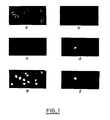
- FIG. 1b The results of the flow cytometry analysis, illustrated in FIG. 1, make it possible to conclude that the protein C3b does not react with recently ejaculated spermatozoa separated from the seminal fluid (Fig. 1b).
- Fig. 1e When the spermatozoa are first fixed and then permeabilized with acetone, a reaction is observed on the acrosomal region of the sperm head (Fig. 1e) which proves that the sperm receptor C3b is actually in the acrosomal region.
- Fig. 1e About 40% of the mobile and viable sperms prepared as indicated above react positively after capacitation and induction of the reaction acrosomal by incubation with A23187 (10 ⁇ M in medium B2, 1/200 ethanol, 1 hour).
- FIG. 1f shows the results obtained with GB24 which recognizes an identical region of the head of the spermatozoon.
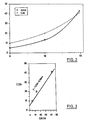
- the reactivity of the component C3b is dependent on the concentration of A23187.
- Figure 2 shows that an optimal response is obtained with a concentration of 20 ⁇ M. The results are similar to those obtained with GB24.
- the percentage of sperm having bound C3b or GB24 was measured (Fig. 3) and it has been established that if we seek to represent the evolution of the percentage of sperm having bound C3b with the evolution of the percentage of spermatozoa having linked GB24, a linear correlation is obtained, which means that, like GB24, C3b is a marker of the acrosomal reaction on human spermatozoa.
Landscapes
- Health & Medical Sciences (AREA)
- Life Sciences & Earth Sciences (AREA)
- Immunology (AREA)
- Chemical & Material Sciences (AREA)
- Engineering & Computer Science (AREA)
- Hematology (AREA)
- Molecular Biology (AREA)
- Urology & Nephrology (AREA)
- Biomedical Technology (AREA)
- Cell Biology (AREA)
- Biochemistry (AREA)
- General Health & Medical Sciences (AREA)
- Medicinal Chemistry (AREA)
- Food Science & Technology (AREA)
- Analytical Chemistry (AREA)
- Organic Chemistry (AREA)
- Pathology (AREA)
- General Physics & Mathematics (AREA)
- Physics & Mathematics (AREA)
- Zoology (AREA)
- Biotechnology (AREA)
- Microbiology (AREA)
- Gastroenterology & Hepatology (AREA)
- Biophysics (AREA)
- Toxicology (AREA)
- Genetics & Genomics (AREA)
- Proteomics, Peptides & Aminoacids (AREA)
- Virology (AREA)
- Tropical Medicine & Parasitology (AREA)
- Rehabilitation Therapy (AREA)
- Rheumatology (AREA)
- Investigating Or Analysing Biological Materials (AREA)
Applications Claiming Priority (2)
| Application Number | Priority Date | Filing Date | Title |
|---|---|---|---|
| FR9003537A FR2660069B1 (fr) | 1990-03-20 | 1990-03-20 | Procede pour la mise en evidence de la capacite d'un spermatozouide a subir la reaction acrosomale. |
| FR9003537 | 1990-03-20 |
Publications (1)
| Publication Number | Publication Date |
|---|---|
| EP0448464A1 true EP0448464A1 (de) | 1991-09-25 |
Family
ID=9394905
Family Applications (1)
| Application Number | Title | Priority Date | Filing Date |
|---|---|---|---|
| EP91400748A Withdrawn EP0448464A1 (de) | 1990-03-20 | 1991-03-20 | Verfahren zur Bestimmung der Fähigkeit eines Spermatozoons der Akrosomalreaktion zu unterziehen |
Country Status (2)
| Country | Link |
|---|---|
| EP (1) | EP0448464A1 (de) |
| FR (1) | FR2660069B1 (de) |
Cited By (4)
| Publication number | Priority date | Publication date | Assignee | Title |
|---|---|---|---|---|
| WO2000015259A1 (en) * | 1998-09-10 | 2000-03-23 | The University Of Virginia Patent Foundation | Antibodies to c3b(i) for delivery of diagnostic and therapeutic agents to cancer cells |
| US6572856B1 (en) | 1998-09-10 | 2003-06-03 | The University Of Virginia Patent Foundation | Methods for the prevention and treatment of cancer using anti-C3b(i) antibodies |
| WO2003046558A3 (en) * | 2001-11-23 | 2003-10-09 | Syn X Pharma Inc | Complement c3 precursor biopolymer markers predictive of type ii diabetes |
| WO2011117685A2 (es) | 2010-03-23 | 2011-09-29 | Universidad De La Frontera | Peptidos anticonceptivos derivados del veneno de la araña |
Citations (2)
| Publication number | Priority date | Publication date | Assignee | Title |
|---|---|---|---|---|
| EP0241444A1 (de) * | 1986-04-11 | 1987-10-14 | Ulf Ragnar Nilsson | Immunologische Methode, inbegriffen die Bildung von [Anti-Rezeptor:Anti-Ligand]-Antikörperkomplex |
| WO1990009802A1 (en) * | 1989-03-03 | 1990-09-07 | Center For Innovative Technology | Human intra-acrosomal sperm antigen for use in a contraceptive vaccine |
-
1990
- 1990-03-20 FR FR9003537A patent/FR2660069B1/fr not_active Expired - Fee Related
-
1991
- 1991-03-20 EP EP91400748A patent/EP0448464A1/de not_active Withdrawn
Patent Citations (2)
| Publication number | Priority date | Publication date | Assignee | Title |
|---|---|---|---|---|
| EP0241444A1 (de) * | 1986-04-11 | 1987-10-14 | Ulf Ragnar Nilsson | Immunologische Methode, inbegriffen die Bildung von [Anti-Rezeptor:Anti-Ligand]-Antikörperkomplex |
| WO1990009802A1 (en) * | 1989-03-03 | 1990-09-07 | Center For Innovative Technology | Human intra-acrosomal sperm antigen for use in a contraceptive vaccine |
Non-Patent Citations (4)
| Title |
|---|
| C.R. ACAD. SC. PARIS, vol. 282, série D, 14 juin 1976, pages 167-170; M.Y. MENEZO: "Milieu synthétique pour la survie et la maturation des gamètes et pour la culture de l'oeuf écondé" * |
| CHEMICAL ABSTRACTS, vol. 104, no. 23, 9 juin 1986, page 556, résumé no. 205057m, Columbus, Ohio, US; T.F. SCHULZ et al.: "Enzyme-linked immunoassay to monitor the purification of, and to screen for monoclonal antibodies against, C3b receptor", & COMPLEMENT 1986, 2(4), 219-229 * |
| J. REPROD. FERT., vol. 87, 1989, pages 699-706; P. FENICHEL et al.: "Evaluation of the human sperm acrosome reaction using a monoclonal antibody, GB24, and fluorescence-activated cell sorter" * |
| PROC. NATL. ACAD. SCI (USA), vol. 82, février 1985, pages 859-863; J.L. COLE et al.: "Identification of an additional class of C3-binding membrane proteins of human peripheral blood leukocytes and cell lines" * |
Cited By (7)
| Publication number | Priority date | Publication date | Assignee | Title |
|---|---|---|---|---|
| WO2000015259A1 (en) * | 1998-09-10 | 2000-03-23 | The University Of Virginia Patent Foundation | Antibodies to c3b(i) for delivery of diagnostic and therapeutic agents to cancer cells |
| US6572856B1 (en) | 1998-09-10 | 2003-06-03 | The University Of Virginia Patent Foundation | Methods for the prevention and treatment of cancer using anti-C3b(i) antibodies |
| AU765585B2 (en) * | 1998-09-10 | 2003-09-25 | University Of Virginia Patent Foundation | Antibodies to C3b(I) for delivery of diagnostic and therapeutic agents to cancer cells |
| WO2003046558A3 (en) * | 2001-11-23 | 2003-10-09 | Syn X Pharma Inc | Complement c3 precursor biopolymer markers predictive of type ii diabetes |
| US7097989B2 (en) | 2001-11-23 | 2006-08-29 | Syn X Pharma, Inc. | Complement C3 precursor biopolymer markers predictive of type II diabetes |
| WO2011117685A2 (es) | 2010-03-23 | 2011-09-29 | Universidad De La Frontera | Peptidos anticonceptivos derivados del veneno de la araña |
| US8980842B2 (en) | 2010-03-23 | 2015-03-17 | Universidad De La Frontera | Contraceptive peptides derived from the venom of the spider Latrodectus mirabilis, nucleotide sequences to transform a microorganism to produce said peptides; methods to obtain the peptides; pharmaceutical compositions containing thereof and use thereof |
Also Published As
| Publication number | Publication date |
|---|---|
| FR2660069A1 (fr) | 1991-09-27 |
| FR2660069B1 (fr) | 1994-03-04 |
Similar Documents
| Publication | Publication Date | Title |
|---|---|---|
| Koehler | The mammalian sperm surface: studies with specific labeling techniques | |
| Tesarik et al. | Acrosin activation follows its surface exposure and precedes membrane fusion in human sperm acrosome reaction | |
| WO2004087177A1 (en) | Process for the staining of sperm | |
| AU2007311444A1 (en) | Method and pharmacological composition for the diagnosis and treatment of male sub-fertility | |
| Baker et al. | Phosphopeptide analysis of rodent epididymal spermatozoa | |
| Bronson et al. | Antisperm antibodies induce polyspermy by promoting adherence of human sperm to zona-free hamster eggs | |
| Stenqvist et al. | An efficient optimized method for isolation of villous trophoblast cells from human early pregnancy placenta suitable for functional and molecular studies | |
| EP1056336B1 (de) | Selektion von reifem sperma durch membranoberflächen-determinanten | |
| EP3384291B1 (de) | Verfahren zur isolierung von krebsstammzellen | |
| Romrell et al. | Capping and ultrastructural localization of sperm surface isoantigens during spermatogenesis | |
| FR2660069A1 (fr) | Procede pour la mise en evidence de la capacite d'un spermatozouide a subir la reaction acrosomale. | |
| Cozzani et al. | Comparative study of indirect immunofluorescence and immunoblotting for the diagnosis of autoimmune pemphigus | |
| EP0971233B1 (de) | Reagenz und Methode zur Permeabilisierung und zur Identifizierung von Erythrozyten | |
| Daniels et al. | Simultaneous isolation of glial and neuronal fractions from rat brain homogenates: comparison of high-affinity L-glutamate transport properties | |
| Ahnonkitpanit et al. | Role of egg sulfolipidimmobilizing protein 1 on mouse sperm-egg plasma membrane binding | |
| EP0030496B1 (de) | Thiolierte Polypeptidverbindung, die von einem Tetanustoxinfragment abstammt, Verfahren zu ihrer Herstellung und ihre Anwendungen | |
| EP0625706B1 (de) | Verfahren zum Schutz von Leukozyten, Schutzzusammensetzung, geschützte Blutzusammensetzung und Blutanalyseverfahren | |
| Kasper et al. | Experimental induction of AGEs in fetal L132 lung cells changes the level of intracellular cathepsin D | |
| EP2005181B1 (de) | C4d/c4b-standard für die quantitative durchflusszytometrie humoraler transplantatabstossung | |
| EP1684788B1 (de) | Peptid-erhöhende fusiogene kapazität eines gameten | |
| US20200399593A1 (en) | Method for obtaining a spermatozoid cell population with improved fitness | |
| Moase et al. | Localization and role of sulfoglycolipid immobilizing protein 1 on the mouse sperm head | |
| Edelman et al. | Chemical dissection and surface mapping of spermatozoa | |
| FR2730744A1 (fr) | Test de matieres actives sur cheveux epiles | |
| US20020182645A1 (en) | Direct selection of cells by secretion product |
Legal Events
| Date | Code | Title | Description |
|---|---|---|---|
| PUAI | Public reference made under article 153(3) epc to a published international application that has entered the european phase |
Free format text: ORIGINAL CODE: 0009012 |
|
| AK | Designated contracting states |
Kind code of ref document: A1 Designated state(s): AT BE CH DE DK ES FR GB GR IT LI LU NL SE |
|
| 17P | Request for examination filed |
Effective date: 19920303 |
|
| 17Q | First examination report despatched |
Effective date: 19940628 |
|
| STAA | Information on the status of an ep patent application or granted ep patent |
Free format text: STATUS: THE APPLICATION IS DEEMED TO BE WITHDRAWN |
|
| 18D | Application deemed to be withdrawn |
Effective date: 19941109 |