EP0449557A2 - Récupération de produits de valeur à partir de déchets de céréales - Google Patents
Récupération de produits de valeur à partir de déchets de céréales Download PDFInfo
- Publication number
- EP0449557A2 EP0449557A2 EP91302586A EP91302586A EP0449557A2 EP 0449557 A2 EP0449557 A2 EP 0449557A2 EP 91302586 A EP91302586 A EP 91302586A EP 91302586 A EP91302586 A EP 91302586A EP 0449557 A2 EP0449557 A2 EP 0449557A2
- Authority
- EP
- European Patent Office
- Prior art keywords
- products
- recovering
- effluent
- bran
- column
- Prior art date
- Legal status (The legal status is an assumption and is not a legal conclusion. Google has not performed a legal analysis and makes no representation as to the accuracy of the status listed.)
- Granted
Links
Images

Classifications
-
- A—HUMAN NECESSITIES
- A21—BAKING; EDIBLE DOUGHS
- A21D—TREATMENT OF FLOUR OR DOUGH FOR BAKING, e.g. BY ADDITION OF MATERIALS; BAKING; BAKERY PRODUCTS
- A21D13/00—Finished or partly finished bakery products
- A21D13/02—Products made from whole meal; Products containing bran or rough-ground grain
-
- A—HUMAN NECESSITIES
- A21—BAKING; EDIBLE DOUGHS
- A21D—TREATMENT OF FLOUR OR DOUGH FOR BAKING, e.g. BY ADDITION OF MATERIALS; BAKING; BAKERY PRODUCTS
- A21D2/00—Treatment of flour or dough by adding materials thereto before or during baking
- A21D2/08—Treatment of flour or dough by adding materials thereto before or during baking by adding organic substances
- A21D2/24—Organic nitrogen compounds
- A21D2/26—Proteins
- A21D2/264—Vegetable proteins
- A21D2/265—Vegetable proteins from cereals, flour, bran
-
- A—HUMAN NECESSITIES
- A23—FOODS OR FOODSTUFFS; TREATMENT THEREOF, NOT COVERED BY OTHER CLASSES
- A23L—FOODS, FOODSTUFFS OR NON-ALCOHOLIC BEVERAGES, NOT OTHERWISE PROVIDED FOR; PREPARATION OR TREATMENT THEREOF
- A23L7/00—Cereal-derived products; Malt products; Preparation or treatment thereof
- A23L7/10—Cereal-derived products
- A23L7/115—Cereal fibre products, e.g. bran, husk
Definitions
- This invention relates to processes for treating cereal grains and recovering bran, flour and minor high value products therefrom.
- the processes are particularly, but not exclusively, useful for the treatment of oat grains.
- An object of the present invention is to provide an aqueous alcoholic treatment process for cereal grains so as to produce a flour and other value added products.
- Another object is to provide a bran product possessing functionality characteristic of its ⁇ -glucan gum component.
- Yet another object is to provide stable bran and flour products having improved anti-rancidity.
- a still further object is to provide an ion exchange technique for treating aqueous ethanolic treatment solutions so as to recover valuable by-products therefrom.
- an aqueous alcoholic process for producing relatively pure bran and flour products from cereal grains comprising:
- wheat and rye grain may be steeped in water containing about 0.1% active sulphur dioxide as described in Canadian Patent 1,179,189 supra, but instead of merely crushing or macerating the steeped grain to release the liquefied endosperm, it has now been found advantageous to macerate the grain with ethanol, such as 95% ethanol so as to provide 83% ethanol concentration in the slurry, for a few minutes in an in-line macerator (Fig. 1).
- ethanol such as 95% ethanol
- endosperm/bran aqueous ethanolic slurry is passed over a 20 mesh screen to separate a coarse bran fraction, which is macerated a second time with the 83% aqueous ethanol, and rescreened to produce a BRAN #1 product.
- Minor amounts of bran and coarse endospermic flour may be recovered on 150 and 325 mesh screens and the bulk of the de-branned endospermic flour can be recovered, by any conventional liquid/solids separation step, from the liquor passing through the 325 mesh screen to produce a wet flour cake product designated FLOUR #1.
- the aqueous alcoholic liquors of the various mash stages, now substantially free of all particulate material can be distilled to recover reusable alcohol or further processed to recover value-added minor soluble components as described in more detail hereinafter.
- the impure coarse bran fraction retained on the 20 mesh was macerated a second time in 3 parts of 83% ethanol solution, passed through a power-sieve fitted with a 20 mesh screen and then dried in a stream of air at 80°C.
- the yield of primary bran flake was 0.67 kg (dm) and is designated as BRAN #1.
- a second bran fraction was obtained from the 150 mesh screen of the vibrating deck and air dried to yield 0.180 kg (dm) as BRAN #2.
- the fraction retained on the 325 mesh screen was observed as a coarse endospermic flour which yielded 0.3 kg (dm) as FLOUR #3.
- the liqour passing through the 325 mesh deck screen contained the bulk of the debranned endospermic flour. This was subjected to any suitable liquid/solids separation step to yield a wet flour cake which gave 1.841 kg (dm) as FLOUR #1.
- the liquor passing the 20 mesh power sieve was passed over a 2 deck vibrating screen (150 and 325 mesh) to yield minor amounts of fractions (0.98 kg (dm) - BRAN#3 and 0.033 kg (dm) - BRAN#4).
- aqueous alcoholic liquors now freed of all particulate matter, were combined. These may either be distilled directly to recover re-usable alcohol or be further processed to recover specific solubles as well as the alcohol.
- the mass balance shows that 87.9% w/w of the starting dry matter of the oat groat was recovered through this process. Solids losses to the steepwater are estimated at 2-3% and the solids soluble in the aqueous alcoholic liquor are in the 9-10% range.
- the major BRAN #1 and FLOUR #1 fractions are microbially acceptable.
- the BRAN #1 and FLOUR #1 from Example 1 were analysed as follows:
- Milling steeped oats in aqueous alcohol has the added advantage of causing the ⁇ -glucan gum component of the sub-aleurone cell walls to be retained in the bran. It is believed that during steeping, this gum becomes hydrated and upon contact with the alcohol is dehydrated. This has the effect of confering on the bran a kind of "instantizing" of the gum such that when a powdered form of the bran is dispersed in water, the slurry quickly thickens into a smooth viscous fluid within one hour.
- commercial oat bran preparations contain the ⁇ -glucan gum component in the range 8-11% w/w, i.e., approximately 50% of the gum content of the alcohol milled steeped bran.
- U.S. patent 4,028,468 to Hohner and Hyldon teaches the isolation of ⁇ -glucan gum from an oat bran by co-extraction of the gum with protein, followed by protein precipitation.
- the gum may be isolated by adding sufficient alcohol to precipitate it.
- the present invention illustrates that it is possible to produce an oat bran preparation which is sufficiently high in ⁇ -glucan gum content where the gum has been "instantized” as a result of the alcohol milling and steeping process.
- This product readily hydrates and produces slurries that display the characteristic viscosity (consistency) and flow behaviour of the isolated gum. Avoiding the need to isolate the gum component offers certain economic savings in both capital equipment and operating costs and results in an oat bran preparation high in dietary fibre, but also possessing unique viscosity building functionality.
- the primary flour (FLOUR #1) 1.07 kg (dm); a flour fraction retained on the 150 mesh screen of the triple vibrating screen deck (0.92 kg dm); a flour fraction retained on the 150 mesh screen of the double vibrating screen deck (0.435 kg dm) and a primary bran fraction from the 20 mesh power screen (0.843 kg dm).
- Total material yield was 80% w/w (dm). Higher than expected losses occured in lines and pump heads since the wheat solids tended to quickly settle out of suspension, necessitating disassembly of the system to clear blockages.
- Examples 3 and 4 while not optimum, do illustrate that the aqueous alcohol wet milling of oats can be extended to other cereals such as wheat and rye. Triticale, although not tested, might be expected to process in a similar fashion.
- bran products of Examples 3 and 4 do not display the functionality (viscosity building) displayed by the oat bran of Example 1.
- Wheat bran does not contain high levels of ⁇ -glucan gum, while rye bran, although containing this component, also contains substantial amounts of rye flour. It is also possible that within the operating parameters of this invention, the rye ⁇ -glucans do not become as hydrated as they do in oats.
- the ethanolic waste solutions from the above treatments may, as indicated, be distilled to recover reusable alcohol directly or they may, according to further embodiments of the invention, be further processed by the use of anionic and/or cationic ion exchange resins to recover further minor but economically valuable products.
- the further processing of the aqueous ethanolic solutions will be illustrated by way of example, it being appreciated that the alcoholic solutions from processing any of the cereal grains amenable to the processing steps described above in details may be used.
- Hull-less whole oats ( Avena sativa L. cult TIBOR) were steeped and commuted with ethanol:water to give various solids (bran, flour, etc.) by the process of Example 1, and a waste ethanol:water stream.
- the amount of effluent waste stream generated was approximately 80 litres per 4.5 kg initial weight of oats being processed.
- the composition of the stream was approximately 80% ethanol containing not more than 6.75 gm/litre total solubles ( ⁇ 12% of initial weight dissolved in 80 litres: 0.12 x 4.5 x 103 x 0.0125 gm/litre).
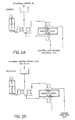
- the column recovery system ( Figure 2) consisted of 16 litres bed volume Sephadex R 25 Anion Exchanger (Quaternary aminoethanol-substituted dextran beads, in the formate form, pre-equilibrate and packed in 80% ethanol).
- the ethanolic waste stream was passed through the column by gravity feed (constant pressure mariot device; 3 meters hydrostatic drop; flow rate approximate 380 ml/min).
- ANIONIC FRACTION This eluate hereafter referred to as the ANIONIC FRACTION, was then evaporated to a thick greenish yellow syrup, resuspended several times in 3 litres of 80% ethanol and re-evaporated to remove the last traces of formic acid. The final syrup ( ⁇ 150 ml) was dispersed in 2 litres of isopropanol:water (2:1 v/v).
- a) Analyses of the ANIONIC FRACTION Quantitative and qualitative proximate analysis were performed as follows: Qualitative analysis of the mixture was carried out by comparative thin-Layer chromatography (TLC) with appropriate standards and chromogenic detecting reagents as shown in Table 5.
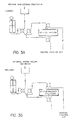
- the NEUTRAL AND CATIONIC FRACTION prepared from the 4.5 kg steep of Example 5 was further fractionated by passing the processing stream outflow, from the Anion exchange column, directly through a cation exchange column consisting of Sephadex R C-25 Cation Exchanger (sulfopropyl-substituted dextran beads in the hydrogen form pre-equilibrated in 50% Ethanol).
- a cation exchange column consisting of Sephadex R C-25 Cation Exchanger (sulfopropyl-substituted dextran beads in the hydrogen form pre-equilibrated in 50% Ethanol).
- the column was washed with a further 2 bed volumes of 50% Ethanol and combined with the eluate to give a non-absorbed fraction which had in effect passed through both anion and cation exchangers and is referred to hereafter as the NEUTRAL FRACTION ( Figure 3b).
- This NEUTRAL FRACTION was stored at room temp. until further analyzed.
- the column was then eluted with the solvent Ethanol:H2O:conc. NH4OH 50:45:5 v/v/v using bed volumes of solvent.
- the resulting eluate, termed the CATIONIC FRACTION was concentrated under reduced pressure, and resuspended and re-evaporated to a reddish-brown laquer and dissolved in 50% aqueous isopropanol.
- a) Analysis of the NEUTRAL FRACTION Qualitative analyses of the neutral fraction was carried out using comparative Thin-Layer Chromatography, with appropriate standards and chromogenic detecting reagents. After the ethanol was recovered from the neutral fraction ( ⁇ 90 litres 80% ethanol) the remaining syrup (bright yellow, butter-like .pa oil) was taken up in 50% aqueous isopropanol and used for analysis.
- the syrup was resuspended and re-evaporated several times with 100 mls 80% ethanol to remove the last traces of acetic acid and the final syrup taken up in isopropanol: water (67:33).
- the column was then eluted with 800 mls (4 bed volumes) of the solvent ethanol:water:formic acid (70:20:10) to give a fraction term the STRONG ANION FRACTION. This fraction was treated as described above for the weak anion fraction to give a deep blue-purple solid solubilized in isopropanol:water (67:33).
- the waste ethanolic effluent from the processing of rye by the process outlined in Examples 1 and 5 was diluted to 50% ethanol from 80% ethanol previously used.
- the purpose of doing so was twofold: First, the presence of alkylresorcinols in rye extracts prepared with non-aqueous solvents (e.g. chloroform, acetone, 100% methanol, 100% ethanol) or extracts containing relatively little water (e.g. 90%, 80% lower alcohols) is known. By diluting the 80% to 50% ethanol it was anticipated that the majority of these lipophilic compound would be precipitated. Secondly, the example of processing the effluent in 50% rather than 80% ethanol would further emphasize the adaptive utility of the ion-exhange procedure to a broader range of processing conditions.
- non-aqueous solvents e.g. chloroform, acetone, 100% methanol, 100% ethanol
- extracts containing relatively little water e.g. 90%, 80% lower alcohols
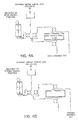
- the column recovery system consisted of separate Sephadex R A-25 and C-25 dextran-gels approximately 200 mls. bed volume each.
- the A-25 gel was prepared in the acetate form and the C-25 gel in the hydrogen ion form. Both gels were pre-equilibrated and packed in 50% ethanol.
- the ethanolic waste stream (approx. 128 litres) was passed through the anion exchange column by gravity feed (3 meter hydrostatic drop) and directly through the cation exchange column. The interstitial liquid remaining in the columns after all effluent had entered was displace by washing the columns with a further 1.0 litre of 50% ethanol.
- the clear, pale yellow effluent from the tandem columns, hereafter referred to as the NEUTRAL FRACTION was concentrated by rotary evaporation to a thick pale greenish-yellow syrup.
- the trapped solvent was used for solvent recovery of the ethanol by distillation (azeotropic ethanol) for re-use.
- Samples of the waste effluent taken at various stages of the ion exchange procedures showed the following pH values. Initial pH 7.0 prior to treatment; effluent after passage through anion exchanger: pH 6.3; effluent after further passage through cation exchanger: pH 6.3; NEUTRAL FRACTION after solubilization in 50% ethanol: pH 7.0.
- the columns were eluted separately to recover the ANIONIC FRACTION (column elution with 4 bed volumes ethanol: water:glacial acetic acid 50:45:4) and the CATIONIC FRACTION (column elution with ethanol:water:conc NH4OH 50:45:5).
- the individual ANIONIC and CATIONIC FRACTIONS were concentrated to brownish yellow lacquers under reduced pressure by rotary evaporation at 40°C. In both cases, the residues were resuspended and re-evaporated several times with 300 mls. 50% ethanol to remove the last traces of either acetic acid (anionic) or ammonia (cationic).
- the cationic fraction from Example 6 was further analysed and shown to contain a minor group of arylamine derivatives, which are herein described as Phenamines, which consist of a series of glycosides of 2-aminophenol.
- the glycosides consist of one or more glucose moieties attached by ⁇ -glycosidic linkage to the phenolic hydroxyl function.
- some phenamines appear to contain glactose as well as glucose. They are readily hydrolyzed non-enzymatically by weak acid and enzymatically with ⁇ -glucosidases (almond, yeast, bacterial) to give the sugar and the unstable aglycone 2-aminophenol.
- This aglycone spontaneously oxidizes in air to give the dimer 2-aminophenoxazin-3-one .
- the phenamines are not restricted to rye, and have been detected in a number of other monocot cereal grains by virtue of the free arylamine function. Using histochemical techniques on sectioned grains, the phenamines have been detected in oats, wheat, barley, rye and corn, and appear to be specifically localized in the aleurone cells. Until recently the exact structures of these phenamines and their spontaneous dimerization to 2-aminophenoxazin-3-one after hydrolysis was not known.
- This dimeric aglycone does not appear to be present in undamaged grains but can readily be produced in broken or damaged grains presumably by the action of endogenous ⁇ -glycohydrolases. Due to their specific localization only in aleurone cell, the content in whole grains and whole grain flours is low but in mill fractions such as bran or bran-enriched mill streams the concentration may be as high as 0.1% dry weight.
- the dimeric aglycone 2-aminophenoxazin-3-one is a well known antibiotic first isolated from Streptomyces spp. and marketed as Questiomycin A R . Preliminary evaluation of 2-aminophenoxazin-3-one from hydrolyzed phenamines in association with ruminant nutrition has shown some remarkable properties and potential applications at this time.
- the avenanthramides described in Table 6 are believed to represent a group of over 50 members (including isomers) of alkaloids present in oat grains, but not in wheat, barley or rye.
- the avenanthramides consist of conjugated forms of the aminophenolic acids, anthranilic, 5-hydroxyanthranilic, 4-hydroxyanthranilic and presumably 5-hydroxy-4-methoxy-anthranilic acid.
- the conjugated forms contain various hydroxy/methoxy-substituted cinnamic or phenylpentadienoic acids attached via "pseudopeptide" linkage to the amine function of the aminophenolic moiety.
Landscapes
- Life Sciences & Earth Sciences (AREA)
- Engineering & Computer Science (AREA)
- Food Science & Technology (AREA)
- Health & Medical Sciences (AREA)
- Nutrition Science (AREA)
- Chemical & Material Sciences (AREA)
- Polymers & Plastics (AREA)
- Medicines Containing Plant Substances (AREA)
- Organic Low-Molecular-Weight Compounds And Preparation Thereof (AREA)
- Cereal-Derived Products (AREA)
Applications Claiming Priority (2)
| Application Number | Priority Date | Filing Date | Title |
|---|---|---|---|
| CA002013190A CA2013190C (fr) | 1990-03-27 | 1990-03-27 | Methode de production de produits de son et de farine stables a partir de grains cerealiers |
| CA2013190 | 1990-03-27 |
Publications (3)
| Publication Number | Publication Date |
|---|---|
| EP0449557A2 true EP0449557A2 (fr) | 1991-10-02 |
| EP0449557A3 EP0449557A3 (en) | 1992-11-25 |
| EP0449557B1 EP0449557B1 (fr) | 1996-09-04 |
Family
ID=4144614
Family Applications (1)
| Application Number | Title | Priority Date | Filing Date |
|---|---|---|---|
| EP91302586A Expired - Lifetime EP0449557B1 (fr) | 1990-03-27 | 1991-03-25 | Récupération de produits de valeur à partir de déchets de céréales |
Country Status (4)
| Country | Link |
|---|---|
| US (1) | US5169660A (fr) |
| EP (1) | EP0449557B1 (fr) |
| CA (1) | CA2013190C (fr) |
| DE (1) | DE69121749T2 (fr) |
Cited By (5)
| Publication number | Priority date | Publication date | Assignee | Title |
|---|---|---|---|---|
| WO2000056170A1 (fr) * | 1999-03-22 | 2000-09-28 | Her Majesty In Right Of Canada, As Represented By The Minister Of Agriculture | Procedes de traitement des gruaux d'avoine |
| US6323338B1 (en) | 1999-02-17 | 2001-11-27 | Nurture, Inc. | Method for concentrating β-glucan |
| WO2000067626A3 (fr) * | 1999-05-06 | 2001-12-27 | Ceapro Inc | Raffinage, compositions et procedes d'utilisation d'extraits d'avoine |
| WO2006133579A1 (fr) * | 2005-06-17 | 2006-12-21 | Bühler AG | Procede pour traiter le son |
| CN108184954A (zh) * | 2018-03-20 | 2018-06-22 | 广州聚澜健康产业研究院有限公司 | 一种花生冻奶蛋糕及其制备方法 |
Families Citing this family (27)
| Publication number | Priority date | Publication date | Assignee | Title |
|---|---|---|---|---|
| FI94015C (fi) * | 1993-06-04 | 1995-07-10 | Exavena Oy | Menetelmä liukoisen ravintokuidun rikastamiseksi |
| US5468491A (en) * | 1994-01-11 | 1995-11-21 | Targan; Ronald G. | Method for producing oat extract |
| US5518710A (en) * | 1994-01-11 | 1996-05-21 | University Of Saskatchewan | Methods for extracting cereal β-glucans |
| US5705618A (en) * | 1995-03-31 | 1998-01-06 | Agriculture And Agri-Food Canada | Process for extracting lignans from flaxseed |
| DE19515609C1 (de) † | 1995-04-28 | 1996-03-28 | Kao Corp Gmbh | Mittel zur Behandlung und Pflege von Haaren und Kopfhaut |
| US5614242A (en) * | 1995-09-27 | 1997-03-25 | Barkley Seed, Inc. | Food ingredients derived from viscous barley grain and the process of making |
| US5817608A (en) * | 1996-08-26 | 1998-10-06 | Brimms Inc. | Cleansing compositions containing conditioning agents and refined agricultural grains |
| US6485945B1 (en) | 1999-02-17 | 2002-11-26 | Nurture, Inc. | Polysaccharide compositions and uses thereof |
| US6264853B1 (en) | 1999-06-21 | 2001-07-24 | Agriculture And Agri-Food Canada | Complex containing lignan, phenolic and aliphatic substances from flax and process for preparing |
| FI113938B (fi) | 1999-10-13 | 2004-07-15 | Suomen Viljava Oy | Menetelmä beta-glukaanin suhteen rikastetun kauratuotteen valmistamiseksi sekä menetelmällä saatavan tuotteen käyttö |
| CA2345606A1 (fr) * | 2000-09-27 | 2002-03-27 | The Governors Of The University Of Alberta | Fractionnement de cereales |
| US6531178B2 (en) | 2000-12-08 | 2003-03-11 | Quaker Oats/Rhone-Poulenc Partnership | β-glucan process, additive and food product |
| AU2004226354C1 (en) * | 2003-04-02 | 2010-12-09 | Cargill, Incorporated | Improved dietary fiber containing materials comprising low molecular weight glucan |
| WO2005017532A1 (fr) * | 2003-08-13 | 2005-02-24 | Ceapro Inc. | Composition diagnostique pour le diabete de type 2 et l'intolerance au glucose, et ses procedes d'utilisation |
| US20060100274A1 (en) * | 2004-11-05 | 2006-05-11 | Trustees Of Tufts College | Therapeutic avenanthramide compounds |
| US20070254055A1 (en) * | 2003-11-21 | 2007-11-01 | Trustees Of Tufts College | Therapeutic Avenanthramide Compounds |
| US20050239892A1 (en) * | 2003-11-21 | 2005-10-27 | Trustees Of Tufts College | Therapeutic avenathramide compounds |
| US8133527B2 (en) * | 2006-06-16 | 2012-03-13 | Kraft Foods Global Brands Llc | Production of stabilized whole grain wheat flour and products thereof |
| US20080131582A1 (en) * | 2006-12-05 | 2008-06-05 | Jan Karwowski | Production of whole grain hot cereal products |
| JP2010528668A (ja) * | 2007-06-13 | 2010-08-26 | ザ ガバナーズ オブ ザ ユニバーシティ オブ アルバータ | 高粘度β−グルカン生産物および調製法 |
| US20100267662A1 (en) * | 2007-11-08 | 2010-10-21 | Ceapro, Inc. | Avenanthramide-containing compositions |
| US20090285970A1 (en) | 2008-04-11 | 2009-11-19 | Thava Vasanthan | Solubility-reduced, beta-glucan containing products and methods of producing and using such products |
| CA3060899C (fr) | 2011-04-14 | 2022-11-15 | Intercontinental Great Brands Llc | Methode de production d'une farine stabilisee au moyen d'un inhibiteur de lipase |
| WO2018158572A1 (fr) | 2017-03-01 | 2018-09-07 | Oat Services Ltd | Extrait de lipide d'avoine |
| AU2019290638B2 (en) | 2018-06-20 | 2024-09-26 | Kellanova | Volatile or semi-volatile natural antioxidants sourced from a comestible byproduct |
| CN108704840B (zh) * | 2018-06-22 | 2024-03-29 | 镇江宝塑高分子材料有限公司 | 一种用于tpu聚氨酯弹性体生产的振动筛专用筛板 |
| BR112022017293A2 (pt) | 2020-03-06 | 2022-10-11 | Symrise Ag | Composição ou extrato de aveia compreendendo avenantramida e ss-glucano |
Family Cites Families (27)
| Publication number | Priority date | Publication date | Assignee | Title |
|---|---|---|---|---|
| US1204869A (en) * | 1916-06-12 | 1916-11-14 | Herman Heuser | Process of manufacturing unfermented beverages. |
| US1564181A (en) * | 1922-10-26 | 1925-12-01 | Kellog Co | Manufacture of bran food |
| US2466261A (en) * | 1944-07-29 | 1949-04-05 | Musher Foundation Inc | Processed oat fraction |
| US2554873A (en) * | 1945-07-31 | 1951-05-29 | Musher Foundation Inc | Oat extract composition |
| US3271160A (en) * | 1963-05-27 | 1966-09-06 | Pacific Vegets Le Oil Corp | Process for preparing feed from undecorticated oil free safflower seed residue |
| US3395019A (en) * | 1965-10-18 | 1968-07-30 | Vylactos Lab Inc | Preparation of animal feed from oat hulls |
| US3573061A (en) * | 1968-03-01 | 1971-03-30 | Nat Bakers Services Inc | Seedcoat flour and method of making and using the same |
| US3630754A (en) * | 1969-05-07 | 1971-12-28 | Truman Benjamin Wayne | Milling of cereal grains and processing of products derived therefrom |
| US3634093A (en) * | 1969-10-14 | 1972-01-11 | Univ Mississippi | Detoxication of tung meal |
| US3895003A (en) * | 1971-06-25 | 1975-07-15 | Procter & Gamble | Process for producing protein concentrate using air classification |
| US3925569A (en) * | 1972-04-20 | 1975-12-09 | Archer Daniels Midland Co | Wet process for making blander high-protein soybean products |
| SE7601543L (sv) * | 1975-02-21 | 1976-08-23 | Snam Progetti | Forfarande for extrahering av fenoler och oligosackarider ur vegetabiliskt material |
| US4211801A (en) * | 1975-06-17 | 1980-07-08 | Du Pont Of Canada Limited | Process for the treatment of comminuted oats |
| US4028468A (en) * | 1975-10-01 | 1977-06-07 | The Quaker Oats Company | Oat groat fractionation process |
| IE48036B1 (en) * | 1977-10-18 | 1984-09-05 | Nordstjernan Ab | Process for the preparation of a hydrolysed product from whole corn,and such a product |
| US4208259A (en) * | 1978-05-09 | 1980-06-17 | Du Pont Of Canada, Limited | Treatment of comminuted oats under the influence of an electric field |
| CA1133748A (fr) * | 1979-09-04 | 1982-10-19 | Molson Breweries, A Partnership | Procede de preparation d'une farine de proteines a partir des dechets de brasserie |
| CA1140918A (fr) * | 1980-05-15 | 1983-02-08 | Richard W. Oughton | Elimination du solvant residuel dans des produits a base d'avoine |
| CA1155110A (fr) * | 1980-11-06 | 1983-10-11 | Ronald E. Murray | Recuperation d'une fraction proteinacee d'avoine dans une dispersion dans un solvant a base d'hydrocarbure |
| DE3133471C2 (de) * | 1981-08-25 | 1985-08-22 | Buckau-Walther AG, 4048 Grevenbroich | Verfahren zur Herstellung eines Mehlzusatzes aus Mais oder verwandten Getreidearten |
| US4435429A (en) * | 1982-02-16 | 1984-03-06 | Canadian Patents And Development Limited | Processing aqueous treated cereals |
| US5013561A (en) * | 1984-08-10 | 1991-05-07 | Barco, Inc. | Process for recovery of products from waxy barley |
| US4810519A (en) * | 1986-08-20 | 1989-03-07 | Uncle Ben's Inc. | Non-aqueous processing of rice |
| DE3671601D1 (de) * | 1986-09-05 | 1990-07-05 | Nestle Sa | Diaetetische staerkehaltige zubereitung. |
| FI84775C (fi) * | 1987-08-12 | 1992-01-27 | Valtion Teknillinen | Foerfarande foer fraktionering av spannmaol saosom industriellt raomaterial. |
| JP2683391B2 (ja) * | 1988-11-30 | 1997-11-26 | 日清製粉株式会社 | 小麦ふすまからのヘミセルロースを基材とする徐放性組成物 |
| US4996063A (en) * | 1989-06-30 | 1991-02-26 | The United States Of America, As Represented By The Secretary Of Agriculture | Method for making a soluble dietary fiber composition from oats |
-
1990
- 1990-03-27 CA CA002013190A patent/CA2013190C/fr not_active Expired - Fee Related
-
1991
- 1991-03-18 US US07/671,073 patent/US5169660A/en not_active Expired - Lifetime
- 1991-03-25 DE DE69121749T patent/DE69121749T2/de not_active Expired - Fee Related
- 1991-03-25 EP EP91302586A patent/EP0449557B1/fr not_active Expired - Lifetime
Cited By (9)
| Publication number | Priority date | Publication date | Assignee | Title |
|---|---|---|---|---|
| US6323338B1 (en) | 1999-02-17 | 2001-11-27 | Nurture, Inc. | Method for concentrating β-glucan |
| WO2000056170A1 (fr) * | 1999-03-22 | 2000-09-28 | Her Majesty In Right Of Canada, As Represented By The Minister Of Agriculture | Procedes de traitement des gruaux d'avoine |
| WO2000067626A3 (fr) * | 1999-05-06 | 2001-12-27 | Ceapro Inc | Raffinage, compositions et procedes d'utilisation d'extraits d'avoine |
| US6818232B1 (en) | 1999-05-06 | 2004-11-16 | Ceapro, Inc. | Oat extracts: refining, compositions and methods of use |
| US7887823B2 (en) | 1999-05-06 | 2011-02-15 | Ceapro, Inc. | Oat extracts: refining, compositions and methods of use |
| US8512719B2 (en) | 1999-05-06 | 2013-08-20 | Ceapro Inc. | Oat extracts: refining, compositions and methods of use |
| US8815268B2 (en) | 1999-05-06 | 2014-08-26 | Ceapro, Inc. | Oat extracts: refining, compositions and methods of use |
| WO2006133579A1 (fr) * | 2005-06-17 | 2006-12-21 | Bühler AG | Procede pour traiter le son |
| CN108184954A (zh) * | 2018-03-20 | 2018-06-22 | 广州聚澜健康产业研究院有限公司 | 一种花生冻奶蛋糕及其制备方法 |
Also Published As
| Publication number | Publication date |
|---|---|
| DE69121749T2 (de) | 1997-04-10 |
| DE69121749D1 (de) | 1996-10-10 |
| EP0449557B1 (fr) | 1996-09-04 |
| CA2013190C (fr) | 2000-06-06 |
| CA2013190A1 (fr) | 1991-09-27 |
| EP0449557A3 (en) | 1992-11-25 |
| US5169660A (en) | 1992-12-08 |
Similar Documents
| Publication | Publication Date | Title |
|---|---|---|
| US5169660A (en) | Method of producing stable bran and flour products from cereal grains | |
| DE69631471T2 (de) | Verfahren zur verflüssigung von stärke | |
| Gil-Ramirez et al. | Integrated process for sequential extraction of saponins, xylan and cellulose from quinoa stalks (Chenopodium quinoa Willd.) | |
| EP0003616B1 (fr) | Nouveaux dérivés aminés de sucres, leur préparation et inhibiteurs d'amylase les contenant | |
| US5705618A (en) | Process for extracting lignans from flaxseed | |
| US6355249B2 (en) | Process for recovery and purification of saponins and sapogenins from quinoa (Chenopodium quinoa) | |
| Carter et al. | Wheat flour lipids: II. Isolation and characterization of glycolipids of wheat flour and other plant sources | |
| EP2007817B1 (fr) | Compositions de beta-glucanes hydrosolubles | |
| US5106640A (en) | Beta-glucane enriched alimentary fiber and a process for preparing the same | |
| DE2347782C3 (de) | Aminozuckerderivate, Verfahren zu ihrer Herstellung sowie diese Verbindungen enthaltende Arzneimittel | |
| FI93859C (fi) | Menetelmä glukoosisiirappien ja puhdistettujen tärkkelysten tuottamiseksi vehnän ja muiden viljakasvien pentosaaneja sisältävistä tärkkelyksistä | |
| CN116209361A (zh) | 用于减少氨产生的动物饲料组合物 | |
| EP0212595B1 (fr) | Complexes de calcium et magnésium de phytohémaglutinine-polyhétéroglycanes, leur obtention et préparations pharmaceutiques | |
| Caransa et al. | A novel enzyme application for corn wet milling | |
| Cui et al. | Preparation and properties of rutin-hydrolyzing enzyme from tartary buckwheat seeds | |
| Feng et al. | C-glycosylflavones from hard red spring wheat bran | |
| CH641813A5 (de) | Verfahren zur herstellung von neuen aminozuckerderivaten. | |
| US20060178344A1 (en) | Glucosamine and N-acetylglucosamine and methods of making the same fungal biomass | |
| CH568386A5 (en) | Antifungal antibiotic A32204 prodn - by aerobic cultivation of Aspergillus nidulans var. echinulatus A32204 | |
| US5965540A (en) | Cinnamoyl-C-glycoside chromone isolated from aloe barbadensis | |
| Hou et al. | Enzymatic synthesis of steryl glucoside by a particulate preparation from immature soybean seeds | |
| CN110241165B (zh) | 一种从玉米蛋白粉酶解胶状物中提取玉米黄素的方法 | |
| CH633043A5 (en) | Process for preparing aminosugar derivatives | |
| Hatfield et al. | 166. 3-Ribosyluric acid. Part II. Isolation of the corresponding nucleotide from beef blood | |
| DE102016112048B4 (de) | Verfahren zur Gewinnung von Phytinsäure und/oder Phytat aus Getreide |
Legal Events
| Date | Code | Title | Description |
|---|---|---|---|
| PUAI | Public reference made under article 153(3) epc to a published international application that has entered the european phase |
Free format text: ORIGINAL CODE: 0009012 |
|
| AK | Designated contracting states |
Kind code of ref document: A2 Designated state(s): DE FR GB |
|
| PUAL | Search report despatched |
Free format text: ORIGINAL CODE: 0009013 |
|
| AK | Designated contracting states |
Kind code of ref document: A3 Designated state(s): DE FR GB |
|
| 17P | Request for examination filed |
Effective date: 19930510 |
|
| 17Q | First examination report despatched |
Effective date: 19940706 |
|
| GRAH | Despatch of communication of intention to grant a patent |
Free format text: ORIGINAL CODE: EPIDOS IGRA |
|
| GRAH | Despatch of communication of intention to grant a patent |
Free format text: ORIGINAL CODE: EPIDOS IGRA |
|
| GRAA | (expected) grant |
Free format text: ORIGINAL CODE: 0009210 |
|
| AK | Designated contracting states |
Kind code of ref document: B1 Designated state(s): DE FR GB |
|
| ET | Fr: translation filed | ||
| REF | Corresponds to: |
Ref document number: 69121749 Country of ref document: DE Date of ref document: 19961010 |
|
| PLBE | No opposition filed within time limit |
Free format text: ORIGINAL CODE: 0009261 |
|
| STAA | Information on the status of an ep patent application or granted ep patent |
Free format text: STATUS: NO OPPOSITION FILED WITHIN TIME LIMIT |
|
| 26N | No opposition filed | ||
| REG | Reference to a national code |
Ref country code: GB Ref legal event code: IF02 |
|
| PGFP | Annual fee paid to national office [announced via postgrant information from national office to epo] |
Ref country code: DE Payment date: 20061228 Year of fee payment: 17 |
|
| PGFP | Annual fee paid to national office [announced via postgrant information from national office to epo] |
Ref country code: GB Payment date: 20070125 Year of fee payment: 17 |
|
| PGFP | Annual fee paid to national office [announced via postgrant information from national office to epo] |
Ref country code: FR Payment date: 20070309 Year of fee payment: 17 |
|
| GBPC | Gb: european patent ceased through non-payment of renewal fee |
Effective date: 20080325 |
|
| REG | Reference to a national code |
Ref country code: FR Ref legal event code: ST Effective date: 20081125 |
|
| PG25 | Lapsed in a contracting state [announced via postgrant information from national office to epo] |
Ref country code: DE Free format text: LAPSE BECAUSE OF NON-PAYMENT OF DUE FEES Effective date: 20081001 |
|
| PG25 | Lapsed in a contracting state [announced via postgrant information from national office to epo] |
Ref country code: FR Free format text: LAPSE BECAUSE OF NON-PAYMENT OF DUE FEES Effective date: 20080331 |
|
| PG25 | Lapsed in a contracting state [announced via postgrant information from national office to epo] |
Ref country code: GB Free format text: LAPSE BECAUSE OF NON-PAYMENT OF DUE FEES Effective date: 20080325 |