EP0451260B1 - Anbringbarer und wieder entfernbarer haftkleber - Google Patents
Anbringbarer und wieder entfernbarer haftkleber Download PDFInfo
- Publication number
- EP0451260B1 EP0451260B1 EP90917459A EP90917459A EP0451260B1 EP 0451260 B1 EP0451260 B1 EP 0451260B1 EP 90917459 A EP90917459 A EP 90917459A EP 90917459 A EP90917459 A EP 90917459A EP 0451260 B1 EP0451260 B1 EP 0451260B1
- Authority
- EP
- European Patent Office
- Prior art keywords
- detackifying
- laminate
- pressure
- resin
- particulate
- Prior art date
- Legal status (The legal status is an assumption and is not a legal conclusion. Google has not performed a legal analysis and makes no representation as to the accuracy of the status listed.)
- Expired - Lifetime
Links
Images


Classifications
-
- B—PERFORMING OPERATIONS; TRANSPORTING
- B32—LAYERED PRODUCTS
- B32B—LAYERED PRODUCTS, i.e. PRODUCTS BUILT-UP OF STRATA OF FLAT OR NON-FLAT, e.g. CELLULAR OR HONEYCOMB, FORM
- B32B7/00—Layered products characterised by the relation between layers; Layered products characterised by the relative orientation of features between layers, or by the relative values of a measurable parameter between layers, i.e. products comprising layers having different physical, chemical or physicochemical properties; Layered products characterised by the interconnection of layers
- B32B7/04—Interconnection of layers
- B32B7/12—Interconnection of layers using interposed adhesives or interposed materials with bonding properties
-
- C—CHEMISTRY; METALLURGY
- C08—ORGANIC MACROMOLECULAR COMPOUNDS; THEIR PREPARATION OR CHEMICAL WORKING-UP; COMPOSITIONS BASED THEREON
- C08G—MACROMOLECULAR COMPOUNDS OBTAINED OTHERWISE THAN BY REACTIONS ONLY INVOLVING UNSATURATED CARBON-TO-CARBON BONDS
- C08G63/00—Macromolecular compounds obtained by reactions forming a carboxylic ester link in the main chain of the macromolecule
- C08G63/02—Polyesters derived from hydroxycarboxylic acids or from polycarboxylic acids and polyhydroxy compounds
- C08G63/06—Polyesters derived from hydroxycarboxylic acids or from polycarboxylic acids and polyhydroxy compounds derived from hydroxycarboxylic acids
- C08G63/08—Lactones or lactides
-
- C—CHEMISTRY; METALLURGY
- C09—DYES; PAINTS; POLISHES; NATURAL RESINS; ADHESIVES; COMPOSITIONS NOT OTHERWISE PROVIDED FOR; APPLICATIONS OF MATERIALS NOT OTHERWISE PROVIDED FOR
- C09J—ADHESIVES; NON-MECHANICAL ASPECTS OF ADHESIVE PROCESSES IN GENERAL; ADHESIVE PROCESSES NOT PROVIDED FOR ELSEWHERE; USE OF MATERIALS AS ADHESIVES
- C09J7/00—Adhesives in the form of films or foils
- C09J7/30—Adhesives in the form of films or foils characterised by the adhesive composition
- C09J7/38—Pressure-sensitive adhesives [PSA]
-
- Y—GENERAL TAGGING OF NEW TECHNOLOGICAL DEVELOPMENTS; GENERAL TAGGING OF CROSS-SECTIONAL TECHNOLOGIES SPANNING OVER SEVERAL SECTIONS OF THE IPC; TECHNICAL SUBJECTS COVERED BY FORMER USPC CROSS-REFERENCE ART COLLECTIONS [XRACs] AND DIGESTS
- Y10—TECHNICAL SUBJECTS COVERED BY FORMER USPC
- Y10T—TECHNICAL SUBJECTS COVERED BY FORMER US CLASSIFICATION
- Y10T428/00—Stock material or miscellaneous articles
- Y10T428/28—Web or sheet containing structurally defined element or component and having an adhesive outermost layer
-
- Y—GENERAL TAGGING OF NEW TECHNOLOGICAL DEVELOPMENTS; GENERAL TAGGING OF CROSS-SECTIONAL TECHNOLOGIES SPANNING OVER SEVERAL SECTIONS OF THE IPC; TECHNICAL SUBJECTS COVERED BY FORMER USPC CROSS-REFERENCE ART COLLECTIONS [XRACs] AND DIGESTS
- Y10—TECHNICAL SUBJECTS COVERED BY FORMER USPC
- Y10T—TECHNICAL SUBJECTS COVERED BY FORMER US CLASSIFICATION
- Y10T428/00—Stock material or miscellaneous articles
- Y10T428/28—Web or sheet containing structurally defined element or component and having an adhesive outermost layer
- Y10T428/2852—Adhesive compositions
-
- Y—GENERAL TAGGING OF NEW TECHNOLOGICAL DEVELOPMENTS; GENERAL TAGGING OF CROSS-SECTIONAL TECHNOLOGIES SPANNING OVER SEVERAL SECTIONS OF THE IPC; TECHNICAL SUBJECTS COVERED BY FORMER USPC CROSS-REFERENCE ART COLLECTIONS [XRACs] AND DIGESTS
- Y10—TECHNICAL SUBJECTS COVERED BY FORMER USPC
- Y10T—TECHNICAL SUBJECTS COVERED BY FORMER US CLASSIFICATION
- Y10T428/00—Stock material or miscellaneous articles
- Y10T428/28—Web or sheet containing structurally defined element or component and having an adhesive outermost layer
- Y10T428/2852—Adhesive compositions
- Y10T428/2861—Adhesive compositions having readily strippable combined with readily readhearable properties [e.g., stick-ons, etc.]
-
- Y—GENERAL TAGGING OF NEW TECHNOLOGICAL DEVELOPMENTS; GENERAL TAGGING OF CROSS-SECTIONAL TECHNOLOGIES SPANNING OVER SEVERAL SECTIONS OF THE IPC; TECHNICAL SUBJECTS COVERED BY FORMER USPC CROSS-REFERENCE ART COLLECTIONS [XRACs] AND DIGESTS
- Y10—TECHNICAL SUBJECTS COVERED BY FORMER USPC
- Y10T—TECHNICAL SUBJECTS COVERED BY FORMER US CLASSIFICATION
- Y10T428/00—Stock material or miscellaneous articles
- Y10T428/28—Web or sheet containing structurally defined element or component and having an adhesive outermost layer
- Y10T428/2852—Adhesive compositions
- Y10T428/2878—Adhesive compositions including addition polymer from unsaturated monomer
-
- Y—GENERAL TAGGING OF NEW TECHNOLOGICAL DEVELOPMENTS; GENERAL TAGGING OF CROSS-SECTIONAL TECHNOLOGIES SPANNING OVER SEVERAL SECTIONS OF THE IPC; TECHNICAL SUBJECTS COVERED BY FORMER USPC CROSS-REFERENCE ART COLLECTIONS [XRACs] AND DIGESTS
- Y10—TECHNICAL SUBJECTS COVERED BY FORMER USPC
- Y10T—TECHNICAL SUBJECTS COVERED BY FORMER US CLASSIFICATION
- Y10T428/00—Stock material or miscellaneous articles
- Y10T428/28—Web or sheet containing structurally defined element or component and having an adhesive outermost layer
- Y10T428/2852—Adhesive compositions
- Y10T428/2878—Adhesive compositions including addition polymer from unsaturated monomer
- Y10T428/2891—Adhesive compositions including addition polymer from unsaturated monomer including addition polymer from alpha-beta unsaturated carboxylic acid [e.g., acrylic acid, methacrylic acid, etc.] Or derivative thereof
Definitions
- This invention relates to pressure-sensitive adhesives for application to substrates or carrier layers to provide laminates having positionable-repositionable properties and to methods of adhering laminates to mounting or application surfaces to provide such properties.
- the pressure-sensitive adhesives and laminates of interest herein are characterized by low initial tack and adhesion properties which enable the laminate to be adhered with pressure to a mounting surface and removed therefrom before any appreciable build-up in adhesion occurs.
- the laminates are initially removable without damage to the substrate or transfer of adhesive to the mounting surface.
- the pressure-sensitive adhesive permits repeated application of the laminate to the surface and removal therefrom during an initial time period of 15 to 30 minutes or longer. Further, the layer of pressure-sensitive adhesive should not stick to itself during such initial time period.
- the adhesion build-up should be sufficient to secure the laminate to the mounting or application surface in accordance with its intended purpose.
- permanent bond systems result in a maximum or ultimate adhesion which prevents removal of the laminate from the mounting surface without laminate damage such as tearing or distortion.
- the development of maximum or ultimate adhesion build-up may take about one week at room temperature.
- adhesion build-up may also be achieved by application of heat. This enables the development of the ultimate adhesion to be expedited.
- the laminates may be used in a wide range of decorative or protective applications.
- the laminates may be used in signs, tapes and vehicle marking such as decorative decals and fleet marking and in architectural applications such as service station canopy decoration.
- the laminates may be used in the form of tapes, sheets or roll stock.
- the substrate or carrier layer may comprise a facestock material which can be printed; coated or over-laminated to provide desired indicia.
- positionable or positionability is used herein to indicate a sufficiently low degree of tack to allow a laminate having its adhesive surface in contact with a mounting surface to be slid across the mounting surface without sticking or grabbing.
- An illustrative test included the manual sliding of a 3" x 8" laminate test sample along a clean aluminum surface without contact pressure other than the weight of the sample. Positionability is indicated by a smooth sliding movement of the test sample without damage to the specimen or removal of adhesive.
- a quantitative test for measurement of pressure-sensitive adhesive tack is set forth in ASTM D 2979-88.
- positionability is considered to be achieved by pressure-sensitive adhesives having tack values ranging up to about 90 g. using a Polyken brand tester in accordance with the test procedure.
- Adhesion build-up may be quantitatively measured by means of the 180° peel test as set forth in PSTC Test Method No. 1.
- 180° peel test values are determined at time intervals ranging from one minute to thirty minutes after the application of the pressure-sensitive adhesive to a mounting surface in order to further characterize tack and adhesion build-up characteristics. Peel values are also measured after one week following the application of the pressure-sensitive adhesive to a surface in order to determine the maximum or ultimate peel strength and degree of adhesion build-up.
- Repositionable or repositionability is used herein to indicate the ability to install a laminate with pressure to the mounting or application surface in a final manner and to remove it therefrom repeatedly prior to a build-up of adhesion during an initial time period and without damage to the laminate. Therefore, repositionability is also a function of the strength of the substrate or facestock material.
- the laminate also retains its positionability characteristics after removal from the mounting surface.
- the mounting surface may be a metallic surface, a painted surface or other suitable surface cleaned for adhesive application.
- Japanese Patent No. 52133339; dated November 8; 1977; is reported to disclose a multi-layered acrylic pressure-sensitive adhesive having silica acid powder of less than 0.1 micron particle size concentrated at the surface thereof.
- a solvent solution of the adhesive containing dispersed particles is evaporated to form a film which is more than 15 microns thick. It is indicated that release paper is not required; positioning may be done at low pressure and final bonding is achieved at high pressure.
- U.S. Patent No. 3,331,729 discloses the use of thin-walled fragile micro-balloons which are randomly distributed over and partially embedded in the surface of the adhesive layer. The micro-balloons space the adhesive from the surface to allow positionability of the laminate. Thereafter, sufficient pressure is applied to crush the micro-balloons and permit the adhesive to adhere to the substrate. The laminate is thereby fully installed and not capable of further movement.
- U.S. Patent No. 4,376,151 also discloses the use of micro-balloons which allow positionability until a threshold pressure is applied to displace the micro-balloons.
- U.S. Patent No. 3,314,838 discloses a monolayer of micro-balloons covered with a thin film of adhesive which provides a slidable pebbled surface prior to the application of pressure. Upon installation, sufficient pressure is applied to crush the micro-balloons and cause the adhesive to contact the application surface.
- U.S. Patent No. 4,415,615 discloses the use of thixotropic agents such as fumed silica in its microbubble-filled cellular adhesive layers. Increased cohesiveness is indicated in U.S. Patent No. 4,710,536 by the addition of hydrophobic silica.
- a positionable-repositionable pressure-sensitive adhesive may be provided by incorporation of a detackifying resin and a detackifying particulate or filler in an adhesive base resin.
- a tackifier may be used in a conventional manner. The detackifying resin and particulate cooperate to temporarily reduce the tack and peel characteristics of the pressure-sensitive adhesive and to allow positionability and repositionability.
- detackifying resin and detackifying particulate refer to non-tacky thermoplastic resins and insoluble solid particles which interact to reduce the tack and suppress adhesion build-up of a normally tacky adhesive base resin and any tackifier present.
- the detackifying resin is believed to act as a mechanical compatibilizer between the particulate and the adhesive which increases the effectiveness of the particulate in reducing the adhesive contact efficiency. Because less particulate is required to reduce the adhesive contact efficiency to enable positionability-repositionability, the reduction in ultimate peel strength due to the particulate is also less.
- the pressure-sensitive adhesives of the invention are substantially non-tacky and positionable. Accordingly, laminates may be slid easily along surfaces to which they are to be applied with the mounting surface and outer adhesive surface in contact. Upon application of an installation pressure, such as that resulting from hand pressing or the use of hand tools to install a laminate, the pressure-sensitive adhesive adheres with a peel strength which is sufficient to retain the laminate in its installed position. This peel strength may range up to 3.0 lb./linear inch or higher depending upon the strength of the substrate.
- the particulate of the present invention is blended with the adhesive components for interaction therewith, and not concentrated at an outer surface of the pressure-sensitive adhesive layer. Accordingly, the pressure-sensitive adhesives disclosed herein do not require preparation or adhering techniques which are limited to specific surface treatments or surface handling procedures. Further, the inventive adhesives are not characterized by a threshold pressure for final installation; but rather, adhesion builds with the passage of time or application of thermal energy.
- the preferred detackifying resins comprise non-tacky thermoplastic resins or polymers having a molecular weight in the range of from about 3,000 to about 350,000.
- the resins are solid at room temperature and they are also characterized by sites for interaction with the detackifying particle and at least one moiety which is compatible with or interacts with the adhesive base resin or tackifier.
- Polycaprolactone polymers are preferred detackifying resins for use with acrylic adhesives. As disclosed in U.S. Patent No.
- each R individually; is selected from the class consisting of hydrogen, alkyl, halo and alkoxy; A is the oxy group; x is an integer from 1 to 4; y is an integer from 1 to 4; z is 0 or 1; with the provisos that (a) the sum of x + y + z is at least 4 and not greater than 7, and (b) the total number of R variables which are substituents other than hydrogen does not exceed 3.
- Illustrative R variables include methyl, ethyl, isopropyl, n-butyl, sec-butyl, t-butyl, hexyl, chloro, bromo, iodo, methoxy, ethoxy, n-butoxy, n-hexoxy, 2-ethylhexoxy, dodecoxy, and the like.
- the preferred polycaprolactone polymers may be characterized by recurring unit I and up to a minor molar amount of the following recurring structural unit II: wherein each R1 is selected from the class consisting of, individually, hydrogen, alkyl, cycloalkyl, aryl and chloroalkyl, and, together with the ethylene moiety of the oxyethylene chain of unit II, a saturated cycloaliphatic hydrocarbon ring having from 4 to 8 carbon atoms.
- the recurring linear unit I is linked by the oxy group with the carbonyl group of the linear unit II.
- the most preferred polycaprolactone polymers are characterized by the oxypentamethylenecarbonyl chain of the following recurring structural unit III: wherein each R1 is hydrogen and water is used as the polymerization initiator to result in hydroxyl termination at both ends of the molecule.
- the detackifying particle should be a solid at room temperature and insoluble in the pressure-sensitive adhesive.
- the average particle size should be in the range of from about 0.01 micron to about 4 microns.
- the particle should have hydrophilic characteristics capable of hydrogen bonding with the preferred detackifying resin. Such particles often have polar surfaces as are provided by the presence of OH groups. Fumed silica is a preferred particle.
- the adhesive base resin may be an acrylic adhesive such as those which are composed of homopolymers, copolymers or cross-linked copolymers of at least one acrylic or methacrylic component, for example acrylic esters such as methyl acrylate, ethyl acrylate, n-propyl acrylate, isopropyl acrylate, n-butyl acrylate, isobutyl acrylate, tert-butyl acrylate, amyl acrylate, hexyl acrylate, octyl acrylate, 2-ethylhexyl acrylate, undecyl acrylate or lauryl acrylate, and optionally as a comonomer, a carboxyl-containing monomer such as (meth)acrylic acid [the expression "(meth)acrylic” acid denotes acrylic acid and methacrylic acid], itaconic acid, crotonic acid, maleic acid, maleic anhydride or butyl maleate, a
- Rubber based adhesives can also be used as the pressure-sensitive adhesive. They may require a detackifying resin which has moieties which are compatible with the rubber based adhesive.
- Preferred acrylic adhesive base resins comprise multi-polymers based upon a mixture of monomers and typified as being composed of lower glass transition temperature esters. Such acrylic adhesives provide sufficient viscoelastic flow to assure adequate build-up of adhesion. Upon passage of time and/or application of thermal energy, the ultimate peel value may be equal to about 90% or more of the value achieved by the base resin and any tackifier without detackifying resin and particle.
- tackifier is optional. Conventional tackifiers such as hydrogenated rosin esters may be used.
- tackifier enables achievement of increased levels of adhesion and peel value, but its use is not necessary to recovery of available peel. Since 90% recovery is achieved in most cases, the use of a tackifier is determined by the need to increase the overall level of adhesion and peel strength.
- Pressure-sensitive adhesives in accordance with the invention may include from about 1 to about 30% detackifying resin on a dry weight basis and, more preferably, from about 4% to about 20%. (Unless otherwise indicated, all weight percentages are on a dry weight basis of the final pressure-sensitive adhesive.)
- the detackifying particle may be used in amounts ranging from about 1% to about 15% by weight and, more preferably from about 3% to about 12%. If a tackifier is used, it may be added in amounts ranging up to about 30% by weight and, more preferably, up to about 20% by weight.
- the tackifier may be used in the pressure-sensitive adhesives of the present invention to increase the ultimate adhesion or peel strength in the same manner as used in conventional pressure-sensitive adhesives.
- the adhesive base resin forms the remainder of the pressure-sensitive adhesive and it ranges in amount from about 25% to about 98% by weight. If a tackifier is not used, the adhesive base resin ranges from about 45% to about 98% by weight of the pressure-sensitive adhesive.
- the substrate is not critical to the invention and may be formed of a wide variety of materials in accordance with the intended application.
- the substrate thickness may range from about 0.5 mil or less to about 20 mils.
- the substrate may comprise plastic film, paper material, metal foil or other suitable sheet or web material.
- the substrate may be a facestock material suitable for display of indicia applied thereto in conventional manners such as printing or coating.
- the pressure-sensitive adhesive may be applied to the substrate by knife-coating, roll-coating and other conventional techniques. Alternatively, the pressure-sensitive adhesive may be applied to a liner or carrier web and then joined to the substrate.
- the thickness of the pressure-sensitive adhesive is not critical to the invention and conventional application thicknesses in the range of from about 0.5 to about 4 mils may be used.
- the pressure-sensitive adhesive as an exterior or overcoat layer on a layer of compatible adhesive which does not have positionable-repositionable properties.
- compatible adhesive may comprise a pressure-sensitive adhesive of the same base resin but without the detackifying resin and particle. Successive coatings may be used to provide such a combined adhesive construction.
- a laminate 10 comprising a substrate or carrier layer 12 secured to a pressure-sensitive adhesive layer 14.
- a conventional release liner 16 having a low energy surface of silicone or the like may be applied to the outer surface 14a of the adhesive layer 14 to protect it from contamination when the laminate 10 is in sheet form or to allow the laminate to be wound in roll form.
- the laminate 10 may be self-wound without the use of a liner 16 depending upon the composition of the substrate layer 12.
- the laminate 10 is shown partially applied or installed to an exterior sidewall 18 of a vehicle body and, more particularly, to a mounting or application surface 18a of the wall 18.
- the laminate 10 is typically applied by hand using a flexible blade squeegee and stiff bristle brush to conform the laminate with the contour of the application surface.
- the laminate may be adhered to the surface with full installation pressure and removed several times.
- the pressure-sensitive adhesives of the present invention enable such installation procedures.
- the pressure-sensitive adhesives also provide a permanent bond suitable for use in vehicle applications and fleet marking.
- the adhesive products of the present invention are illustrated in the following examples. Unless otherwise indicated, the pressure-sensitive adhesives are applied to plastic film substrates to produce laminates suitable as facestock material.
- the facestock materials are repeatedly positionable-repositionable, and the pressure-sensitive adhesive develops a permanent bond.
- An acrylic resin sold by Ashland Chemical Company under the designation A 1930 is used as the adhesive base resin in the pressure-sensitive adhesive of Example 1.
- the adhesive base resin is an acrylate multi-polymer typified by lower glass transition temperature esters.
- the adhesive base resin is solvent borne and cross-links during cure.
- the detackifying resin is a polycaprolactone polymer sold by Union Carbide Corporation under the designation Tone 300. This is a linear polymer having an oxypentamethylenecarbonyl chain of recurring structural unit III as indicated above. The recurring ester groups along the molecule provide a dipole distribution believed to allow interaction with the detackifying particle and/or adhesive base.
- the polycaprolactone polymer has a molecular weight range of 3,000 to 90,000 and weight mean of 10,000.
- the detackifying particulate is silica sold under the designation Cab-O-Sil M-5 by Cabot Corporation. This is a fumed silica having an average particle size of about 0.012 micron.
- the particles are hydrophilic and are believed to undergo hydrogen bonding with the detackifying resin and may nucleate the crystallization of the polycaprolactone.
- a tackifier sold by Ashland Chemical Company under the designation PS 293 was used.
- a hydrogenated rosin ester sold by Hercules Chemical Company under the designation Foral 85 may be used.
- the adhesive base resin 20 parts of the detackifying resin and 30 parts of the tackifier are blended in a toluene and hexane solvent mixture.
- the mixture is heated sufficiently to assure that the detackifying resin is dissolved or dispersed.
- the mixture may be heated to temperatures in the range of about 140° F.
- a smooth homogeneous mixture is obtained with sufficient heating and mixing.
- 13.4 parts of the detackifying particle is added to the mixture and uniformly dispersed with further mixing.
- the pressure-sensitive adhesive is drawn-down on a release sheet and then transfer laminated after cure to a two mil thick vinyl plastic film substrate.
- the coat weight of the adhesives is 33 g/m2 ⁇ 2 g/m2.
- Example 1 and Comparative Examples 1C - 6C were tested for tack using a Polyken tester. Also, the 180° peel values were tested at one minute and 20 minute intervals following installation. (All peel tests were performed using a stainless steel mounting surface.) The maximum peel values ware tested one week after installation. The results of these tests are set forth in Table II. TABLE II NO. TACK(g) PEEL (lb./LINEAR INCH) 1 Min. 20 Min.
- Example 1 has a one week peel value of 5.70 lb./linear in. which is equal to 90% of the one week peel value of Comparative Example 3C.
- Example 1 Comparison of Example 1 with Examples 5C and 6C indicates that the detackifying resin and particulate interact to reduce tack and suppress adhesion build-up in a manner such that neither component alone is required in an amount which will also result in an excessive reduction of peel strength.
- the use of detackifying resin alone in increased amounts does not enable satisfactory tack values and excessive reductions in the ultimate peel strength occur.
- detackifying particles used alone in increased amounts enable satisfactory tack values, excessive reductions in peel strength also occur.
- compositions of Examples 1, 1C, 2C, 3C and 6C were further examined to better characterize the interaction between the detackifying resin and particulate. Samples of the compositions were drawn-down on a silicone release sheet and dried as described above in Example 1 to form adhesive layers of the various compositions.
- Each of the surfaces of the adhesive layers of the compositions of Examples 1 and 1C was examined by X-ray photoelectron spectroscopy. The examination did not detect any sign of silicon characteristic of that found in the silica particulate in the outer 50 angstroms of the layers. This indicates the detackification obtained is not due to any preferential concentration of the particulate at the adhesive surfaces as was required in some prior art techniques.
- the compositions of Examples 1, 1C, 2C, 3C and 6C were also examined using dynamic mechanical spectroscopy.
- the dynamic shear storage modulus (G1) of an adhesive measured at a frequency corresponding to the time scale of bonding, indicates the softness and conformability or contact efficiency of the adhesive.
- Carl Dahlquist has proposed a contact efficiency criteria which translates to the proposition that pressure-sensitive adhesives are contact efficient if G1 at 1 rad/sec is less than 3 x 10⁶ dynes/cm2.
- inert particulate or filler to a pressure-sensitive adhesive will stiffen the adhesive and raise its G1 value so as to make it less contact efficient. This is shown by comparing the increasing G1 values at 1 rad/sec for Examples 3C, 1C and 6C which respectively contain 0, 13.4 and 26.8 parts of particulate and no detackifying resin. Unexpectedly, the addition of detackifying resin in combination with 13.4 parts of particulate in Example 1 raised the G1 value to 74.8 even though the addition of the resin by itself in Example 2C lowered the G1 value to 5.7 as compared with the G1 value of 7.1 in Example 3C which contains neither detackifying resin or particulate.
- Example 1 The unexpected increase in the G1 value and positionability of Example 1 as shown in Table IIA result from the detackifying resin and particulate interaction. More particularly, the polycaprolactone detackifying resin is compatible with the adhesive and interacts with the surface of the silica particulate thereby acting as a mechanical compatibilizer between the adhesive and the silica particles. This increases the effectiveness of the particles in raising the dynamic shear storage modulus of the adhesive.
- inert particulate or filler tends to decrease its ultimate peel strength. This is shown by comparing the decreasing one-week peel strength for Examples 3C, 1C and 6C which respectively contain 0, 13.4 and 26.8 parts of particulate and no detackifying resin.
- the final peel force achieved with pressure, time and/or thermal energy is a function of the level of mechanical dissipation of the volume of polymeric material in the adhesive that can contribute to the mechanical dissipation in the time scale of debonding.
- the inert particulate or fillers do not contribute to the debonding as they do not deform under the applied peel stress.
- the enhancement of the particulate effectiveness in achieving positionability by the detackifying resin enables a reduced amount of particulate to be used and a lesser reduction of the ultimate peel strength as compared with a similar laminate except for the omission of the detackifying resin.
- the detackifying resin may be used to enable positionability and achievement of the desired peel strength.
- the adhesive base resin of the pressure-sensitive adhesive and tackifier of Example 1 were aged for a one week period before repeating the preparation of a corresponding series of laminates. Referring to Table III, the test results are reported for the aged samples. The coaction of the detackifying resin and particles is again demonstrated by the data. TABLE III PEEL (lb./LINEAR INCH) NO. TACK(g) 1 Min. 20 Min.
- Example 3 was prepared in accordance with the invention as a standard for comparison with similar adhesives containing varying amounts of detackifying resin. More particularly, Examples 3-1 to 3-6 were prepared by varying the amount of detackifying resin, Tone 300, between 35% and 160% of the amount used in Example 3 without varying the other components. The twenty minute peel strength of Example 3 was 2.17 lb./linear inch. The peel strength of Examples 3-1 to 3-6 are reported below in Table IV. TABLE IV Example Number 3-1 3-2 3-3 3-4 3-5 3-6 Relative Amount of Detack Resin +60 +40 +20 -45 -55 -65 20 Minute Peel 1.53 1.33 1.63 2.27 1.87 1.90
- Example 4 was prepared as a standard using the procedure and formulation of Example 1 except for the replacement of Tone 300 with a higher molecular weight detackifying resin, Tone 700. This resin is similar to Tone 300, but it has a molecular weight range of 11,000 to 342,000 and a weight mean of 40,000.
- the twenty minute peel strength of Example 4 was 2.67 lb./linear inch.
- Examples 4-1 to 4-3 were prepared and tested for twenty minute peel strength. The results are reported below in Table V. TABLE V Example Number 4-1 4-2 4-3 Relative Amount of Detack Resin -40 -60 -80 20 Minute Peel 2.90 3.05 3.00
- Example V prepared in accordance with the procedures and formulation of Example 1.
- the amount of detackifying resin Tone 300
- the amount of detackifying particle Cab-O-Sil M-5
- the one week peel strength of Examples 5 was 3.8 lb./linear inch.
- Example 1 The procedures of Example 1 were used to prepare the following pressure-sensitive adhesives shown in Table VII.
- TABLE VII EXAMPLE NUMBER ADHESIVE BASE RESIN DETACK RESIN1 DETACK PARTICLE2 TACKIFIER 6 1163 20 13.4 0 7 1164 " " " 305 8 " " " 0 1Tone 300 sold by Union Carbide Corporation 2Cab-O-Sil M-5 sold by Cabot Corporation 3An acrylic polymer sold by Ashland Chemical Company under the designation Aroset 1877 4 An acrylic polymer sold by Monsanto Chemical Company under the designation Gelva 1753 5Tackifier sold by Ashland Chemical Company under the designation PS 293
- Example 6-8 The pressure-sensitive adhesives of Examples 6-8 were transfer laminated onto two mil vinyl substrates to provide laminates useful as positionable-repositionable facestock materials.
- the tack of Example 6 was 36 ⁇ 28 g. as measured using a Polyken tester.
- the 20 minute peel values are reported in Table VIII. TABLE VIII EXAMPLE Peel (lb./LINEAR INCH) 20 Minute 6 2.75 ⁇ .07 7 2.30 ⁇ .00 8 2.20 ⁇ .00
- Repositionability is indicated for Examples 6, 7 and 8 by 20 minute peel values less than 2.75 lb./linear inch. After 3 days, the peel values for each of the examples exceeded 3.0 lbs./linear inch.
- the rate of adhesion build-up of the pressure-sensitive adhesives in accordance with the invention increases with temperature. Temperatures in the range of 150° F. for relatively short intervals of time such as 5 to 10 minutes achieve substantial adhesion build-up as compared with the use of lower temperatures for longer time periods.
Landscapes
- Chemical & Material Sciences (AREA)
- Organic Chemistry (AREA)
- Health & Medical Sciences (AREA)
- Chemical Kinetics & Catalysis (AREA)
- Medicinal Chemistry (AREA)
- Polymers & Plastics (AREA)
- Adhesives Or Adhesive Processes (AREA)
- Adhesive Tapes (AREA)
- Laminated Bodies (AREA)
Claims (18)
- Laminat, das umfaßt ein Substrat (beispielsweise ein Unterlagenmaterial) und eine Schicht aus einem druckempfindlichen (selbstklebenden) Klebstoff zum Aufkleben des Laminats auf eine Trägeroberfläche, wobei der druckempfindliche (selbstklebende) Klebstoff enthält ein druckempfindliches (selbstklebendes) Klebstoff-Basisharz, ein Entklebungsharz und ein teilchenförmiges Entklebungsmaterial, wobei das Entklebungsharz und das teilchenförmige Entklebungsmaterial miteinander in Wechselwirkung treten unter Erhöhung der Wirksamkeit des teilchenförmigen Materials in bezug auf die Erhöhung des dynamischen Scherspeichermoduls des druckempfindlichen (selbstklebenden) Klebstoffes, wodurch das Laminat positionierbar und repositionierbar gemacht wird mit einer geringeren Abnahme der End-Abziehfestigkeit, verglichen mit einem ähnlichen Laminat, bei dem jedoch das Entklebungsharz weggelassen worden ist.
- Laminat nach Anspruch 1, worin der druckempfindliche (selbstklebende) Klebstoff ausreichende Mengen an Entklebungsharz und teilchenförmigem Material enthält, um den dynamischen Scherspeichermodul bei 1 rad/s und bei einer Temperatur von 23 bis 25°C auf etwa 30 x 10⁵ dyn/cm² oder höher zu erhöhen und worin beispielsweise das Entklebungsharz ein mechanischer Kompatibilisator für das entklebende teilchenförmige Material in bezug auf den druckempfindlichen (selbstklebenden) Klebstoff ist.
- Laminat nach Anspruch 2, worin das Entklebungsharz in Abwesenheit des teilchenförmigen Entklebungsmaterials den dynamischen Scherspeichermodul bei 1 rad/s und bei einer Temperatur von 23 bis 25°C herabsetzt.
- Laminat nach Anspruch 1, worin das Entklebungsharz und das teilchenförmige Material miteinander kooperieren unter vorübergehender Herabsetzung der Haftung und Unterdrückung der Haftungsverstärkung für einen Zeitraum von etwa 30 min nach dem Aufbringen des Laminats auf die Trägeroberfläche; und worin beispielsweise die Haftungsverstärkung als Folge des Ablaufs der Zeit und/oder der Zuführung von thermischer Energie dem druckempfindlichen (selbstklebenden) Klebstoff eine Abziehfestigkeit nach einer Woche verleiht, die mindestens etwa 90 % der Abziehfestigkeit eines ähnlichen Klebstoffes entspricht, der das Entklebungsharz und das teilchenförmige Material nicht enthält.
- Laminat nach Anspruch 1, worin (a) die Schicht aus dem druckempfindlichen (selbstklebenden) Klebstoff auf eine kompatible Klebstoffschicht aufgebracht ist, die zwischen der zuerstgenannten Klebstoffschicht und dem Substrat angeordnet ist; oder (b) das Entklebungsharz ein im wesentlichen lineares Polycaprolacton-Polymer mit einem Molekulargewicht in dem Bereich von etwa 3000 bis etwa 342 000 ist, wobei das Entklebungsharz bei Raumtemperatur fest ist und das teilchenförmige Entklebungsmaterial abgerauchtes Siliciumdioxid ist.
- Laminat nach Anspruch 1, worin das Entklebungsharz ein Polycaprolacton-Polymer mit einer überwiegenden molaren Menge an wiederkehrenden Einheiten (I) der Formel ist

bis zu einer geringeren molaren Menge an der folgenden wiederkehrenden Struktureinheit (II) ist: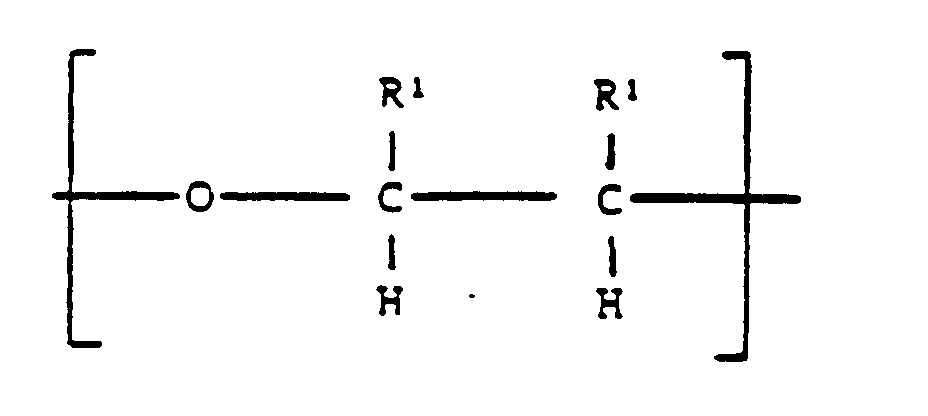
- Laminat nach Anspruch 6, worin das entklebende teilchenförmige Material hydrophiles Siliciumdioxid ist und das Klebstoff-Basisharz ein Acrylklebstoff ist.
- Laminat nach Anspruch 1, worin das entklebende Harz ein Polycaprolacton-Polymer ist, das durch die wiederkehrende Struktureinheit (III) der Formel charakterisiert ist:

- Laminat nach Anspruch 8, worin das Klebstoff-Basisharz ein Acrylklebstoff, beispielsweise ein Multipolymer auf Basis einer Mischung von Monomeren ist und in typischer Weise besteht aus Estern mit einem niedrigen Glasumwandlungspunkt.
- Laminat nach Anspruch 7 oder 9, worin der druckempfindliche (selbstklebende) Klebstoff etwa 1 bis etwa 30 % Entklebungsharz, etwa 1 bis etwa 15 % entklebendes teilchenförmiges Material und etwa 55 bis etwa 98 % Klebstoff-Basisharz, bezogen auf das Trockengewicht des druckempfindlichen (selbstklebenden) Klebstoffes, enthält.
- Laminat nach Anspruch 1, worin die Steigerung der Haftung als Folge des Ablaufs der Zeit und/oder der Zuführung von Wärmeenergie dem druckempfindlichen (selbstklebenden) Klebstoff eine solche Abziehfestigkeit verleiht, daß das Laminat an die Trägeroberfläche permanent gebunden ist und durch Abziehen nicht mehr entfernt werden kann, ohne das Laminat zu beschädigen.
- Laminat, das umfaßt ein Substrat und eine Schicht aus einem druckempfindlichen (selbstklebenden) Klebstoff zum Ankleben des Laminats an einer Trägeroberfläche mit einer vorher festgelegten minimalen End-Abziehfestigkeit, wobei der druckempfindliche (selbstklebende) Klebstoff enthält ein druckempfindliches (selbstklebendes) Klebstoff-Basisharz, ein entklebendes teilchenförmiges Material, das normalerweise sowohl die Haftung als auch die End-Abziehfestigkeit des druckempfindlichen (selbstklebenden) Klebstoffs herabsetzt, und ein Entklebungsharz, wobei das entklebende teilchenförmige Material in einer Menge vorliegt, die im wesentlichen nicht größer ist als diejenige, die der minimalen End-Abziehfestigkeit entspricht, und das Entklebungsharz die Wirksamkeit des entklebenden teilchenförmigen Materials verbessert unter Herabsetzung der Anfangshaftung und unter Unterdrückung der Steigerung der Haftung des Laminats, wodurch (1) das Laminat positionierbar und repositionierbar wird beim Aufbringen auf die Träger-Oberflächen und (2) die minimale End-Abziehfestigkeit erzielt wird.
- Positionierbares und repositionierbares druckempfindliches (selbstklebendes) Harz zum Ankleben eines Substrats an einer Trägeroberfläche, wobei der druckempfindliche (selbstklebende) Klebstoff enthält ein druckempfindliches (selbstklebendes) Klebstoff-Basisharz, ein Entklebungsharz und einen entklebenden Füllstoff, wobei das Entklebungsharz und der Füllstoff in Wechselwirkung miteinander treten unter Erhöhung der Wirksamkeit des Füllstoffes in bezug auf die Erhöhung des dynamischen Scherspeichermoduls des druckempfindlichen (selbstklebenden) Klebstoffes, wodurch das Substrat positionierbar und repositionierbar wird bei einer geringeren Abnahme der End-Abziehfestigkeit, verglichen mit einem ähnlichen druckempfindlichen (selbstklebenden) Klebstoff, bei dem das Entklebungsharz weggelassen worden ist, und wobei beispielsweise das druckempfindliche (selbstklebende) Klebstoff-Basisharz ein Acrylklebstoff ist, das Entklebungsharz ein Polycaprolacton-Harz ist und das entklebende teilchenförmige Material Siliciumdioxid-Teilchen sind.
- Laminat, das umfaßt eine Substratschicht und eine Schicht aus einem druckempfindlichen (selbstklebenden) Klebstoff, dessen äußere Oberfläche an eine Trägeroberfläche angeklebt werden kann, wobei der druckempfindliche (selbstklebende) Klebstoff enthält ein normalerweise klebriges druckempfindliches (selbstklebendes) Klebstoff-Basisharz, ein nicht-klebriges, thermoplastisches Entklebungsharz mit einem niedrigen Molekulargewicht und ein entklebendes festes teilchenförmiges Material mit einer durchschnittlichen Teilchengröße von weniger als etwa 4 µm, wobei das Entklebungsharz und das teilchenförmige Material in Wechselwirkung miteinander treten unter Herabsetzung der Haftung und der Steigerung der Haftung beim Aufkleben des Laminats auf die Trägeroberfläche und wodurch das Laminat auf der Trägeroberfläche positionierbar und repositionierbar wird und wodurch mit dem Ablauf der Zeit und/oder nach der Zuführung von Wärme die Haftung ansteigen kann, so daß das Laminat an die Trägeroberfläche mit einer erhöhten Abziehfestigkeit gebunden ist, und worin beispielsweise das Entklebungsharz und das teilchenförmige Material in Wechselwirkung miteinander treten, um die Wirksamkeit des teilchenförmigen Materials in bezug auf die Erhöhung des dynamischen Scherspeichermoduls des druckempfindlichen (selbstklebenden) Klebstoffes zu erhöhen, wodurch das Laminat positionierbar und repositionierbar wird bei einer geringeren Abnahme der End-Abziehfestigkeit, verglichen mit einem ähnlichen Laminat, welches das Entklebungsharz nicht enthält.
- Positionierbarer und repositionierbarer druckempfindlicher (selbstklebender) Klebstoff, der mit dem Ablauf der Zeit oder nach der Zufuhr von Wärmeenergie eine dauerhafte Bindung ergibt, der umfaßt ein Acrylklebstoff-Basisharz, ein im wesentlichen lineares Polycaprolacton-Entklebungsharz mit einem Molekulargewicht in dem Bereich von etwa 3000 bis etwa 342 000 und ein entklebendes teilchenförmiges Siliciumdioxid-Material mit einer durchschnittlichen Teilchengröße von weniger als etwa 4 µm und worin beispielsweise das Entklebungsharz eine überwiegende Molmenge an wiederkehrenden Struktureinheiten (I) der Formel

bis zu einer geringere Molmenge der folgenden wiederkehrenden Struktureinheit (II) aufweist: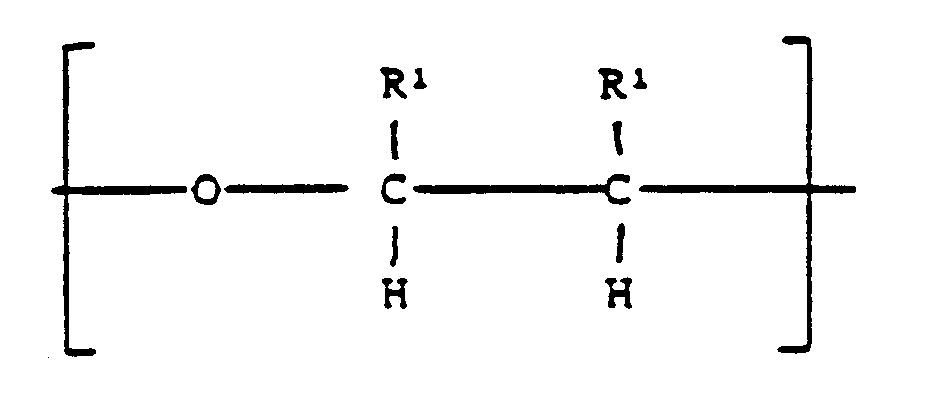
- Positionierbarer und repositionierbarer druckempfindlicher (selbstklebender) Klebstoff nach Anspruch 15, worin das Entklebungsharz charakterisiert ist durch die wiederkehrende Struktureinheit (III) der Formel:

- Verfahren zum Ankleben eines Laminats an einer Trägeroberfläche, wobei das Laminat umfaßt ein Substrat und eine Schicht aus einem druckempfindlichen (selbstklebenden) Klebstoff, der als Zusatz ein entklebendes teilchenförmiges Material enthält, wobei das Laminat eine minimale End-Abziehfestigkeit aufweist, das die Stufen umfaßt:1) Auswahl eines Harzes als zweitem Zusatz zu dem Klebstoff, das in Abwesenheit des teilchenförmigen Materials den dynamischen Scherspeichermodul des Klebstoffs herabsetzt, jedoch in Anwesenheit des teilchenförmigen Materials damit in Wechselwirkung tritt unter Erhöhung des genannten Moduls des Klebstoffes,2) Zugabe des zweiten Zusatzes zu der Formulierung des Klebstoffes, um dadurch eine Wechselwirkung zwischen dem zweiten Zusatz und dem teilchenförmigen Material hervorzurufen,3) Aufbringen des Laminats auf die Trägeroberfläche, wodurch die Wechselwirkung bewirkt, daß das Laminat einen höheren Grad von Positionierbarkeit und Repositionierbarkeit auf der Trägeroberfläche aufweist als dies der Fall wäre beim anfänglichen Aufbringen des Laminats auf die Trägeroberfläche mit dem entklebenden teilchenförmigen Material als einzigem Zusatz zu dem Klebstoff, und4) Ansteigenlassen der Abziehfestigkeit des Laminats mit dem Ablauf der Zeit und/oder durch Zuführung von Wärmeenergie bis auf die minimale End-Abziehfestigkeit in Gegenwart, jedoch ohne Inhibierung durch den zweiten Zusatz.
- Verfahren nach Anspruch 17, worin in der Stufe (2) (a) die genannte Wechselwirkung umfaßt das Wirken des zweiten Zusatzes als mechanischer Kompatibilisator für das teilchenförmige Material; oder (b) die genannte Wechselwirkung den dynamischen Scherspeichermodul bei 1 rad/s und einer Temperatur von 23 bis 25°C auf etwa 30 x 10⁵ dyn/dm² oder höher steigert.
Applications Claiming Priority (5)
| Application Number | Priority Date | Filing Date | Title |
|---|---|---|---|
| US42971989A | 1989-10-31 | 1989-10-31 | |
| US429719 | 1989-10-31 | ||
| US478675 | 1990-02-12 | ||
| US07/478,675 US5192612A (en) | 1989-10-31 | 1990-02-12 | Positionable-repositionable pressure-sensitive adhesive |
| PCT/US1990/006156 WO1991006424A1 (en) | 1989-10-31 | 1990-10-25 | Positionable-repositionable pressure-sensitive adhesive |
Publications (3)
| Publication Number | Publication Date |
|---|---|
| EP0451260A1 EP0451260A1 (de) | 1991-10-16 |
| EP0451260A4 EP0451260A4 (en) | 1992-04-01 |
| EP0451260B1 true EP0451260B1 (de) | 1996-04-10 |
Family
ID=27028313
Family Applications (1)
| Application Number | Title | Priority Date | Filing Date |
|---|---|---|---|
| EP90917459A Expired - Lifetime EP0451260B1 (de) | 1989-10-31 | 1990-10-25 | Anbringbarer und wieder entfernbarer haftkleber |
Country Status (8)
| Country | Link |
|---|---|
| US (2) | US5192612A (de) |
| EP (1) | EP0451260B1 (de) |
| JP (1) | JP3021646B2 (de) |
| KR (1) | KR920700905A (de) |
| AU (1) | AU640436B2 (de) |
| CA (1) | CA2044614C (de) |
| DE (1) | DE69026498T2 (de) |
| WO (1) | WO1991006424A1 (de) |
Families Citing this family (109)
| Publication number | Priority date | Publication date | Assignee | Title |
|---|---|---|---|---|
| US5192612A (en) * | 1989-10-31 | 1993-03-09 | Avery International Corporation | Positionable-repositionable pressure-sensitive adhesive |
| US5464681A (en) * | 1992-09-30 | 1995-11-07 | Service Litho-Print, Inc. | Replaceable adhesive display |
| US5468523A (en) * | 1993-03-15 | 1995-11-21 | Minnesota Mining And Manufacturing Company | Method and apparatus for forming prefabricated self-forming self-adhering pull bow and pull bow formed thereby |
| US7575653B2 (en) * | 1993-04-15 | 2009-08-18 | 3M Innovative Properties Company | Melt-flowable materials and method of sealing surfaces |
| US6485589B1 (en) | 1993-04-15 | 2002-11-26 | 3M Innovative Properties Company | Melt-flowable materials and method of sealing surfaces |
| DE4328348A1 (de) * | 1993-08-24 | 1995-03-02 | Du Pont Deutschland | Tonbares strahlungsempfindliches Gemisch und Verfahren zur Herstellung von Mehrfarbenbildern mittels solch eines Gemischs |
| WO1995014128A1 (en) * | 1993-11-16 | 1995-05-26 | Minnesota Mining And Manufacturing Company | Preformed self-adhering bow |
| US5454909A (en) * | 1994-03-30 | 1995-10-03 | The Dexter Corporation | Low-density hot melt adhesive |
| US5851663A (en) * | 1994-05-25 | 1998-12-22 | Minnesota Mining And Manufacturing Company | Flame retardant pressure-sensitive adhesives and tapes |
| EP0736585B1 (de) * | 1995-04-03 | 1999-09-01 | Minnesota Mining And Manufacturing Company | Druckempfindlicher Klebstoff |
| US5795636A (en) * | 1995-11-15 | 1998-08-18 | Minnesota Mining And Manufacturing Company | Positionable and repositionable adhesive article |
| US5866249A (en) * | 1995-12-18 | 1999-02-02 | Minnesota Mining And Manufacturing Company | Pressure-sensitive adhesive based on partially oriented and partially crystallized elastomer |
| US5693437A (en) * | 1996-01-11 | 1997-12-02 | Xerox Corporation | Simulated photographic-quality prints with a hydrophobic scuff resistant coating which is receptive to certain writing materials |
| US5665504A (en) * | 1996-01-11 | 1997-09-09 | Xerox Corporation | Simulated photographic-quality prints using a plasticizer to reduce curl |
| US5906905A (en) * | 1996-01-11 | 1999-05-25 | Xerox Corporation | Simulated photographic-quality prints using a transparent substrate containing a wrong reading image and a backing sheet containing an ultraviolet light absorber |
| US5714287A (en) * | 1996-01-11 | 1998-02-03 | Xerox Corporation | Simulated photographic-quality prints using a transparent substrate containing a wrong reading image and a backing sheet containing an adhesive coating which enhances image optical density |
| US5660962A (en) * | 1996-01-11 | 1997-08-26 | Xerox Corporation | Simulated photographic-quality prints using a transparent substrate containing a wrong reading image and a backing sheet containing an adhesive coating which enhances image optical density and a hydrophilic wetting agent |
| US5795695A (en) * | 1996-09-30 | 1998-08-18 | Xerox Corporation | Recording and backing sheets containing linear and cross-linked polyester resins |
| US5744273A (en) * | 1996-10-02 | 1998-04-28 | Xerox Corporation | Laminatable backing substrates containing fluoro compounds for improved toner flow |
| US5795696A (en) * | 1996-10-02 | 1998-08-18 | Xerox Corporation | Laminatable backing substrates containing paper desizing agents |
| US6020062A (en) * | 1996-11-08 | 2000-02-01 | D.W. Wallcovering Inc. | Article having slippable adhesive |
| US5980401A (en) * | 1996-11-27 | 1999-11-09 | Warner Bros. Consumer Products | Backboard and rim kit for wall mounting |
| AU5803498A (en) * | 1996-12-18 | 1998-07-15 | Vidacare International, Inc. | Releasable adhesive closure |
| WO1999014041A1 (en) * | 1997-09-18 | 1999-03-25 | D.W. Wallcovering, Inc. | Repositionable article |
| US6194064B1 (en) * | 1997-12-03 | 2001-02-27 | Dyna-Tech Adhesive, Inc. | Pressure sensitive adhesive for decorative films with removable and repositionable properties |
| US6306497B1 (en) | 1998-03-03 | 2001-10-23 | Arkwright Incorporated | Pressure-sensitive adhesive articles for use on transparent imaging films |
| US6335067B1 (en) * | 1998-08-03 | 2002-01-01 | Xyron, Inc. | Adhesive transfer device |
| US6187405B1 (en) | 1998-10-24 | 2001-02-13 | Todd Rudin | Paper and method for displaying multiple page images |
| US6524675B1 (en) | 1999-05-13 | 2003-02-25 | 3M Innovative Properties Company | Adhesive-back articles |
| US6753379B1 (en) | 1999-11-05 | 2004-06-22 | 3M Innovative Properties Company | Heat activated adhesive |
| KR100654267B1 (ko) * | 1999-11-05 | 2006-12-21 | 쓰리엠 이노베이티브 프로퍼티즈 캄파니 | 열활성화 접착제 |
| US6517664B1 (en) | 2000-01-10 | 2003-02-11 | Process Resources Corporation | Techniques for labeling of plastic, glass or metal containers or surfaces with polymeric labels |
| US6565697B1 (en) | 2000-03-01 | 2003-05-20 | Brady Worldwide, Inc. | Manufacturing method for a positionable and repositionable pressure sensitive adhesive product and an article formed therefrom |
| JP2002053835A (ja) * | 2000-07-31 | 2002-02-19 | Three M Innovative Properties Co | ガラス用接着剤、及びガラス接着用物品 |
| JP4768106B2 (ja) | 2000-07-31 | 2011-09-07 | スリーエム イノベイティブ プロパティズ カンパニー | 接着剤組成物及び熱剥離容易な接着構造 |
| US6946177B2 (en) * | 2000-07-31 | 2005-09-20 | 3M Innovative Properties Company | Adhesive composition and adhered structure which thermally peeled with ease |
| US6656319B1 (en) | 2000-10-25 | 2003-12-02 | 3M Innovative Properties Company | Fluid-activatable adhesive articles and methods |
| US7507453B2 (en) * | 2000-10-31 | 2009-03-24 | International Imaging Materials, Inc | Digital decoration and marking of glass and ceramic substrates |
| US7108911B2 (en) * | 2000-11-02 | 2006-09-19 | 3M Innovative Properties Company | Adhesive composition and adhesive sheet |
| US6660352B2 (en) | 2001-01-09 | 2003-12-09 | 3M Innovative Properties Company | Adhesive electrostatic sheets |
| US20040132922A1 (en) * | 2001-05-17 | 2004-07-08 | Hidetoshi Abe | Heat activated adhesive |
| US7165888B2 (en) * | 2001-07-25 | 2007-01-23 | Avery Dennison Corporation | Resealable closures for packages and packages containing the same |
| JP2003073646A (ja) * | 2001-08-31 | 2003-03-12 | Three M Innovative Properties Co | 接着剤組成物、及び低温適用性接着シート |
| US20040219193A1 (en) * | 2001-08-31 | 2004-11-04 | Hidetoshi Abe | Adhesive composition and low temperature applicable adhesive sheet |
| US7709070B2 (en) | 2001-12-20 | 2010-05-04 | The Procter & Gamble Company | Articles and methods for applying color on surfaces |
| US7316832B2 (en) * | 2001-12-20 | 2008-01-08 | The Procter & Gamble Company | Articles and methods for applying color on surfaces |
| US7299657B2 (en) * | 2002-07-12 | 2007-11-27 | Corning Incorporated | Method of making high strain point glass |
| US20060165979A1 (en) * | 2002-12-13 | 2006-07-27 | Kinsey Von A | Articles and methods for applying color on surfaces |
| US9856402B2 (en) | 2003-01-22 | 2018-01-02 | Ccl Lavel, Inc. | Adhesive label liner sheet modifications for retaining unneeded label sections on liner |
| EP1597092A2 (de) * | 2003-02-14 | 2005-11-23 | The Procter & Gamble Company | Artikel zum aufbringen auf einer fläche und verfahren dafür |
| US20040161564A1 (en) | 2003-02-14 | 2004-08-19 | Truog Keith L. | Dry paint transfer laminate |
| WO2004076583A1 (en) * | 2003-02-21 | 2004-09-10 | Metabolix Inc. | Pha adhesive compositions |
| US8283435B2 (en) * | 2003-02-21 | 2012-10-09 | Metabolix, Inc. | PHA adhesive compositions |
| US20040166274A1 (en) * | 2003-02-26 | 2004-08-26 | Specialty Adhesive Film Co. | Removable truck lettering |
| US20040180197A1 (en) * | 2003-03-13 | 2004-09-16 | Everaerts Albert I. | Closure systems with self-adhering adhesives, and articles |
| US20040206857A1 (en) * | 2003-04-16 | 2004-10-21 | Barr Andrew Harvey | Clamp for retaining a probe cable at a desired location and related methods |
| US20050196607A1 (en) * | 2003-06-09 | 2005-09-08 | Shih Frank Y. | Multi-layer dry paint decorative laminate having discoloration prevention barrier |
| US20040247837A1 (en) * | 2003-06-09 | 2004-12-09 | Howard Enlow | Multilayer film |
| DE10326298B4 (de) | 2003-06-11 | 2008-03-20 | Avery Dennison Zweckform Office Products Europe Gmbh | Etikettenbogen |
| EP1550546A1 (de) * | 2003-12-29 | 2005-07-06 | Mactac Europe S.A. | Verfahren zur Mikrostrukturierung einer Oberfläche eines mehrschichtigen flexiblen Substrats, und mikrostrukturiertes Substrat |
| EP1964879B1 (de) * | 2003-12-30 | 2012-06-13 | Metabolix, Inc. | Nukleierungsmittel |
| BRPI0407417A (pt) * | 2004-02-13 | 2006-01-10 | Procter & Gamble | Artigos resistentes à descoloração para a aplicação de cor sobre superfìcies, e métodos para redução de descoloração em artigos para a aplicação de cor sobre superfìcies |
| MXPA05008552A (es) * | 2004-02-13 | 2005-12-05 | Procter & Gamble | Articulo para ser aplicado a una superficie y metodo del mismo. |
| US20050230960A1 (en) * | 2004-03-29 | 2005-10-20 | Bilodeau Wayne L | Security label, secured article and method for making the label and article |
| US20050262787A1 (en) * | 2004-05-28 | 2005-12-01 | Goss Patrick M | Magnetic wall border, system and method |
| US7975404B2 (en) * | 2004-07-01 | 2011-07-12 | Stanbee Company, Inc. | Stiffeners for use in footwear |
| US7910187B2 (en) * | 2004-08-31 | 2011-03-22 | Avery Dennison Corporation | Adhesive articles with improved air egress |
| US20090250164A1 (en) * | 2006-10-03 | 2009-10-08 | The Procter & Gamble Company | Methods of Making Articles for Applying Color on Surfaces |
| US20080081142A1 (en) * | 2006-10-03 | 2008-04-03 | Zeik Douglas B | Articles and methods for applying color on surfaces |
| US20090252937A1 (en) * | 2006-10-03 | 2009-10-08 | The Procter & Gamble Company | Articles for Applying Color on Surfaces |
| US9240131B2 (en) | 2007-06-04 | 2016-01-19 | Avery Dennison Corporation | Adhesive articles having repositionability or slidability characteristics |
| US20100071456A1 (en) * | 2008-09-25 | 2010-03-25 | Silverbrook Research Pty Ltd | Tack adhesion testing device |
| US8322207B2 (en) * | 2008-09-25 | 2012-12-04 | Silverbrook Research Pty Ltd | Tack adhesion testing device |
| US8309207B2 (en) * | 2009-02-05 | 2012-11-13 | Avery Dennison Corporation | Adhesive articles with improved air egress |
| US20100252187A1 (en) * | 2009-04-02 | 2010-10-07 | Jonathan Javier Calderas | Methods of Making Customized Articles for Applying Color on Surfaces |
| AU2012301801B2 (en) * | 2011-08-31 | 2016-02-04 | Avery Dennison Corporation | Self adhesive film and method to minimize or eliminate print defects in such film |
| CN104755538B (zh) | 2012-08-17 | 2018-08-31 | Cj 第一制糖株式会社 | 用于聚合物共混物的生物基橡胶改性剂 |
| EP2900778B1 (de) * | 2012-09-27 | 2017-05-10 | 3M Innovative Properties Company | Spenderanordnung |
| US20160108289A1 (en) | 2013-05-02 | 2016-04-21 | Avery Dennison Corporation | Release liner with structured and repositionable properties |
| US10669417B2 (en) | 2013-05-30 | 2020-06-02 | Cj Cheiljedang Corporation | Recyclate blends |
| JP2017509733A (ja) * | 2014-01-08 | 2017-04-06 | アベリー・デニソン・コーポレイションAvery Dennison Corporation | 選択的に粘着性除去された接着剤を用いる品物、組成物、システム、及び方法 |
| US10611903B2 (en) | 2014-03-27 | 2020-04-07 | Cj Cheiljedang Corporation | Highly filled polymer systems |
| WO2016172277A1 (en) | 2015-04-24 | 2016-10-27 | 3M Innovative Properties Company | Acrylic adhesive compositions and acrylic adhesive tapes which enable clean removal from delicate surfaces |
| CA2983029C (en) | 2015-04-29 | 2023-04-04 | Adrian J. Hulme | Non-silicone additives in release coating materials |
| CA3002979C (en) | 2015-10-23 | 2022-08-16 | Ccl Label, Inc. | Label sheet assembly with improved printer feeding |
| WO2017132035A1 (en) | 2016-01-25 | 2017-08-03 | Corning Incorporated | Adherent laminated glass structures |
| MX2018010175A (es) | 2016-02-22 | 2019-01-21 | Avery Dennison Corp | Etiqueta adhesiva de contenido extendido clara con adhesivo de adherencia selectivamente reducida. |
| EP3420901A1 (de) * | 2016-02-23 | 2019-01-02 | Nitto Denko Corporation | Folie zur identifizierung |
| USD813945S1 (en) | 2016-03-22 | 2018-03-27 | Ccl Label, Inc. | Label sheet |
| USD862601S1 (en) | 2016-07-07 | 2019-10-08 | Ccl Label, Inc. | Carrier assembly |
| CA3044024A1 (en) | 2016-11-15 | 2018-05-24 | Ccl Label, Inc. | Label sheet assembly with surface features |
| USD841087S1 (en) | 2016-11-17 | 2019-02-19 | Ccl Label, Inc. | Label sheet with a feed edge assembly |
| JP6163618B1 (ja) * | 2017-01-16 | 2017-07-12 | パナック株式会社 | 自己粘着フィルム及びその製造方法 |
| US10399722B2 (en) | 2017-03-29 | 2019-09-03 | Flex R&D Inc. | Re-closure tape application on packaging machine |
| US10196544B2 (en) | 2017-03-29 | 2019-02-05 | Flex R&D, Inc. | Tape closure system |
| EP3601089A1 (de) | 2017-03-29 | 2020-02-05 | Flex R&D Inc. | Bandverschlusssystem |
| US10654604B2 (en) | 2017-03-29 | 2020-05-19 | Flex R&D Inc. | Re-closure tape application on packaging machine |
| JP7058106B2 (ja) * | 2017-11-01 | 2022-04-21 | 日東電工株式会社 | 粘着シート |
| CA3035388C (en) | 2018-03-01 | 2026-01-20 | Ccl Label, Inc. | Sheet with feeding perforation |
| USD856414S1 (en) | 2018-03-01 | 2019-08-13 | Ccl Label, Inc. | Label sheet assembly with feed edge dress |
| USD893606S1 (en) | 2018-03-23 | 2020-08-18 | Ccl Label, Inc. | Name badge sheet assembly |
| USD877241S1 (en) | 2018-06-08 | 2020-03-03 | Ccl Label, Inc. | Label sheet layout assembly |
| USD914085S1 (en) | 2018-08-29 | 2021-03-23 | Ccl Label, Inc. | Label sheet layout assemblies |
| US11326026B2 (en) | 2019-04-09 | 2022-05-10 | Xerox Corporation | Removable silicone films and related methods |
| CA3115628A1 (en) | 2020-07-02 | 2022-01-02 | Ccl Label, Inc. | Label sheet assembly with puncture surface features |
| CN112322253B (zh) * | 2020-11-11 | 2022-09-16 | 南京清尚新材料科技有限公司 | 低表面粘性的压敏胶黏剂及其和功能胶带的制备方法 |
| WO2022169832A1 (en) * | 2021-02-02 | 2022-08-11 | Brewster Home Fashions Llc | Repositionable peel-and-stick embellished wall coverings |
| GB2618137B (en) * | 2022-04-29 | 2025-07-30 | Stg Aerospace Ltd | Lighting system for aircraft |
| EP4541865A4 (de) * | 2022-06-17 | 2026-05-20 | Nitto Denko Corp | Dichtungsmaterial |
Family Cites Families (22)
| Publication number | Priority date | Publication date | Assignee | Title |
|---|---|---|---|---|
| US3258454A (en) * | 1962-06-12 | 1966-06-28 | Celanese Corp | Adhesive acrylic acid ester/acrylic acid copolymers crosslinked with polyols |
| US3301741A (en) * | 1963-09-11 | 1967-01-31 | Minnesota Mining & Mfg | Adhesive sheet and method of making |
| US3331729A (en) * | 1963-02-14 | 1967-07-18 | Minnesota Mining & Mfg | Adhesive bonding method and product |
| US3314838A (en) * | 1964-08-26 | 1967-04-18 | Minnesota Mining & Mfg | Pressure sensitive adhesives containing hollow spheroidal particles |
| US3483020A (en) * | 1966-08-30 | 1969-12-09 | United Shoe Machinery Corp | Composite sheet adhesives |
| US3892821A (en) * | 1971-05-06 | 1975-07-01 | Union Carbide Corp | Polyesters blended with cyclic ester polymers |
| JPS52133339A (en) * | 1976-05-01 | 1977-11-08 | Res Inst For Prod Dev | Latent adhesive and its production |
| CA1106993A (en) * | 1976-05-26 | 1981-08-11 | Martin M. Sackoff | Method for making a pressure sensitive adhesive coated laminate |
| US4107380A (en) * | 1976-11-12 | 1978-08-15 | American Can Company | Non-blocking coating composition |
| US4049483A (en) * | 1976-11-18 | 1977-09-20 | Minnesota Mining And Manufacturing Company | Pressure sensitive hot-melt adhesive system |
| US4163077A (en) * | 1978-04-19 | 1979-07-31 | Minnesota Mining And Manufacturing Company | Contamination-tolerant pressure-sensitive adhesive tape |
| US4260659A (en) * | 1979-06-18 | 1981-04-07 | Minnesota Mining And Manufacturing Company | Pressure-sensitive tape having a plurality of adhesive layers |
| US4376151A (en) * | 1981-06-29 | 1983-03-08 | Moore Business Forms, Inc. | Pressure threshold adhesive |
| JPS5813682A (ja) * | 1981-07-16 | 1983-01-26 | Nippon Carbide Ind Co Ltd | 感圧接着剤層 |
| US4415615A (en) * | 1982-01-15 | 1983-11-15 | Minnesota Mining And Manufacturing Co. | Cellular pressure-sensitive adhesive product and method of making |
| US4977003A (en) * | 1985-02-20 | 1990-12-11 | Minnesota Mining And Manufacturing Company | Nontacky acrylonitrile/butadiene adhesive tape |
| US4769285A (en) * | 1985-07-23 | 1988-09-06 | Minnesota Mining And Manufacturing Company | Polyamide-acrylate blends |
| US4710536A (en) * | 1985-08-07 | 1987-12-01 | Minnesota Mining And Manufacturing Company | Pressure-sensitive adhesive tape containing hydrophobic silica |
| US4783354A (en) * | 1986-12-15 | 1988-11-08 | Coated Sales, Inc. | Adherable, yet removable sheet material |
| IT214317Z2 (it) * | 1988-02-08 | 1990-05-03 | Incas S P A Passirana Di Rho M | Foglio autoadesivo staccabile con superficie scrivibile. |
| US4994322A (en) * | 1989-09-18 | 1991-02-19 | Minnesota Mining And Manufacturing | Pressure-sensitive adhesive comprising hollow tacky microspheres and macromonomer-containing binder copolymer |
| US5192612A (en) * | 1989-10-31 | 1993-03-09 | Avery International Corporation | Positionable-repositionable pressure-sensitive adhesive |
-
1990
- 1990-02-12 US US07/478,675 patent/US5192612A/en not_active Expired - Fee Related
- 1990-10-25 AU AU68852/91A patent/AU640436B2/en not_active Ceased
- 1990-10-25 DE DE69026498T patent/DE69026498T2/de not_active Expired - Fee Related
- 1990-10-25 JP JP3500432A patent/JP3021646B2/ja not_active Expired - Fee Related
- 1990-10-25 KR KR1019910700669A patent/KR920700905A/ko not_active Withdrawn
- 1990-10-25 CA CA002044614A patent/CA2044614C/en not_active Expired - Fee Related
- 1990-10-25 WO PCT/US1990/006156 patent/WO1991006424A1/en not_active Ceased
- 1990-10-25 EP EP90917459A patent/EP0451260B1/de not_active Expired - Lifetime
-
1993
- 1993-03-03 US US08/025,948 patent/US5346766A/en not_active Expired - Fee Related
Also Published As
| Publication number | Publication date |
|---|---|
| EP0451260A1 (de) | 1991-10-16 |
| US5346766A (en) | 1994-09-13 |
| JP3021646B2 (ja) | 2000-03-15 |
| CA2044614C (en) | 2002-02-05 |
| CA2044614A1 (en) | 1991-05-01 |
| KR920700905A (ko) | 1992-08-10 |
| EP0451260A4 (en) | 1992-04-01 |
| DE69026498T2 (de) | 1996-08-22 |
| WO1991006424A1 (en) | 1991-05-16 |
| DE69026498D1 (de) | 1996-05-15 |
| JPH04502590A (ja) | 1992-05-14 |
| AU6885291A (en) | 1991-05-31 |
| AU640436B2 (en) | 1993-08-26 |
| US5192612A (en) | 1993-03-09 |
Similar Documents
| Publication | Publication Date | Title |
|---|---|---|
| US5346766A (en) | Positionable-repositionable pressure-sensitive adhesive | |
| EP0106559B1 (de) | Haltbare, vernetzbare, druckempfindliche Klebestreifen | |
| JP2832565B2 (ja) | 自動車塗膜保護用シート | |
| AU662157B2 (en) | Pressure-sensitive adhesives | |
| US20050081993A1 (en) | Method of bonding glass | |
| JPS63308079A (ja) | 感圧接着剤 | |
| JP3876299B2 (ja) | 振動性固体物品に付着された粘弾性材料の少なくとも1層を含む制動構造物 | |
| CN118401624A (zh) | 粘合剂膜、粘合剂体系和相关方法 | |
| EP0109177A1 (de) | Abziehbares, druckempfindliches Klebeband | |
| JPH09310050A (ja) | ウエハ加工用粘着剤とその粘着シ―ト類 | |
| EP1080157B1 (de) | Druckempfindliches klebeband und daraus hergestelltes produkt | |
| USRE40723E1 (en) | Automobile paint film-protective sheet | |
| JP4396998B2 (ja) | 感圧接着剤及び表面保護材 | |
| JP3154739B2 (ja) | 光重合性接着剤組成物とこれを用いた感圧性接着剤およびその接着シ―ト類 | |
| JP3372249B2 (ja) | 粘着剤組成物 |
Legal Events
| Date | Code | Title | Description |
|---|---|---|---|
| PUAI | Public reference made under article 153(3) epc to a published international application that has entered the european phase |
Free format text: ORIGINAL CODE: 0009012 |
|
| AK | Designated contracting states |
Kind code of ref document: A1 Designated state(s): DE FR GB IT NL |
|
| 17P | Request for examination filed |
Effective date: 19911107 |
|
| A4 | Supplementary search report drawn up and despatched |
Effective date: 19920207 |
|
| AK | Designated contracting states |
Kind code of ref document: A4 Designated state(s): DE FR GB IT NL |
|
| 17Q | First examination report despatched |
Effective date: 19950315 |
|
| GRAA | (expected) grant |
Free format text: ORIGINAL CODE: 0009210 |
|
| GRAH | Despatch of communication of intention to grant a patent |
Free format text: ORIGINAL CODE: EPIDOS IGRA |
|
| AK | Designated contracting states |
Kind code of ref document: B1 Designated state(s): DE FR GB IT NL |
|
| ITF | It: translation for a ep patent filed | ||
| REF | Corresponds to: |
Ref document number: 69026498 Country of ref document: DE Date of ref document: 19960515 |
|
| ET | Fr: translation filed | ||
| PLBE | No opposition filed within time limit |
Free format text: ORIGINAL CODE: 0009261 |
|
| STAA | Information on the status of an ep patent application or granted ep patent |
Free format text: STATUS: NO OPPOSITION FILED WITHIN TIME LIMIT |
|
| 26N | No opposition filed | ||
| REG | Reference to a national code |
Ref country code: GB Ref legal event code: IF02 |
|
| PGFP | Annual fee paid to national office [announced via postgrant information from national office to epo] |
Ref country code: NL Payment date: 20031002 Year of fee payment: 14 |
|
| PGFP | Annual fee paid to national office [announced via postgrant information from national office to epo] |
Ref country code: FR Payment date: 20031020 Year of fee payment: 14 |
|
| PGFP | Annual fee paid to national office [announced via postgrant information from national office to epo] |
Ref country code: GB Payment date: 20031022 Year of fee payment: 14 |
|
| PGFP | Annual fee paid to national office [announced via postgrant information from national office to epo] |
Ref country code: DE Payment date: 20031201 Year of fee payment: 14 |
|
| PG25 | Lapsed in a contracting state [announced via postgrant information from national office to epo] |
Ref country code: GB Free format text: LAPSE BECAUSE OF NON-PAYMENT OF DUE FEES Effective date: 20041025 |
|
| PG25 | Lapsed in a contracting state [announced via postgrant information from national office to epo] |
Ref country code: NL Free format text: LAPSE BECAUSE OF NON-PAYMENT OF DUE FEES Effective date: 20050501 |
|
| PG25 | Lapsed in a contracting state [announced via postgrant information from national office to epo] |
Ref country code: DE Free format text: LAPSE BECAUSE OF NON-PAYMENT OF DUE FEES Effective date: 20050503 |
|
| GBPC | Gb: european patent ceased through non-payment of renewal fee |
Effective date: 20041025 |
|
| PG25 | Lapsed in a contracting state [announced via postgrant information from national office to epo] |
Ref country code: FR Free format text: LAPSE BECAUSE OF NON-PAYMENT OF DUE FEES Effective date: 20050630 |
|
| NLV4 | Nl: lapsed or anulled due to non-payment of the annual fee |
Effective date: 20050501 |
|
| REG | Reference to a national code |
Ref country code: FR Ref legal event code: ST |
|
| PG25 | Lapsed in a contracting state [announced via postgrant information from national office to epo] |
Ref country code: IT Free format text: LAPSE BECAUSE OF NON-PAYMENT OF DUE FEES;WARNING: LAPSES OF ITALIAN PATENTS WITH EFFECTIVE DATE BEFORE 2007 MAY HAVE OCCURRED AT ANY TIME BEFORE 2007. THE CORRECT EFFECTIVE DATE MAY BE DIFFERENT FROM THE ONE RECORDED. Effective date: 20051025 |