EP0451476B1 - Administration protégée de clés utilisant le contrÔle d'un vecteur de commande programmable - Google Patents
Administration protégée de clés utilisant le contrÔle d'un vecteur de commande programmable Download PDFInfo
- Publication number
- EP0451476B1 EP0451476B1 EP91102772A EP91102772A EP0451476B1 EP 0451476 B1 EP0451476 B1 EP 0451476B1 EP 91102772 A EP91102772 A EP 91102772A EP 91102772 A EP91102772 A EP 91102772A EP 0451476 B1 EP0451476 B1 EP 0451476B1
- Authority
- EP
- European Patent Office
- Prior art keywords
- control vector
- code
- checking code
- vector checking
- cryptographic facility
- Prior art date
- Legal status (The legal status is an assumption and is not a legal conclusion. Google has not performed a legal analysis and makes no representation as to the accuracy of the status listed.)
- Expired - Lifetime
Links
- 239000013598 vector Substances 0.000 title claims description 146
- 238000000034 method Methods 0.000 claims description 42
- 238000012986 modification Methods 0.000 claims description 22
- 230000004048 modification Effects 0.000 claims description 22
- 238000001514 detection method Methods 0.000 claims description 19
- 239000000872 buffer Substances 0.000 claims description 14
- 238000012545 processing Methods 0.000 claims description 8
- 230000003190 augmentative effect Effects 0.000 claims 3
- 230000005540 biological transmission Effects 0.000 claims 2
- 238000013475 authorization Methods 0.000 description 19
- 238000010586 diagram Methods 0.000 description 11
- 230000006870 function Effects 0.000 description 10
- 238000012360 testing method Methods 0.000 description 8
- 238000007726 management method Methods 0.000 description 6
- 230000008569 process Effects 0.000 description 3
- 238000013459 approach Methods 0.000 description 2
- 206010000210 abortion Diseases 0.000 description 1
- 230000004075 alteration Effects 0.000 description 1
- 238000013500 data storage Methods 0.000 description 1
- 239000000284 extract Substances 0.000 description 1
- 230000007246 mechanism Effects 0.000 description 1
- 238000010200 validation analysis Methods 0.000 description 1
Images



Classifications
-
- H—ELECTRICITY
- H04—ELECTRIC COMMUNICATION TECHNIQUE
- H04L—TRANSMISSION OF DIGITAL INFORMATION, e.g. TELEGRAPHIC COMMUNICATION
- H04L9/00—Cryptographic mechanisms or cryptographic arrangements for secret or secure communications; Network security protocols
- H04L9/08—Key distribution or management, e.g. generation, sharing or updating, of cryptographic keys or passwords
- H04L9/088—Usage controlling of secret information, e.g. techniques for restricting cryptographic keys to pre-authorized uses, different access levels, validity of crypto-period, different key- or password length, or different strong and weak cryptographic algorithms
Definitions
- the invention disclosed broadly relates to data processing systems and methods and more particularly relates to cryptographic systems and methods for use in data processing systems to enhance security.
- control vector checking unit could transmit to the control vector checking unit, only that amount of control vector checking code necessary to perform the particular subsidiary application.
- the control vector checking unit would be programmed with a different control vector checking code sequence by the bank's CPU.
- control vector checking code can be input to the control vector checking unit, which includes modifications to the control vector checking operation.
- the invention includes a control vector checking code repository located either within the same system as the cryptographic facility or alternately remotely from the system containing the cryptographic facility.
- the control vector checking code repository will be linked to the cryptographic facility by one of several means.
- a first means for linking the repository to the cryptographic facility would include a physically secure data communications link.
- a second means for connecting the repository to the cryptographic facility would be by using an insecure channel with authentication, wherein either a modification detection code or alternately a message authentication code would be transmitted to the cryptographic facility and then the desired control vector checking code would be transmitted over the link.
- the cryptographic facility will include a code authorization mechanism to compare the transmitted Message Authentification Code (MAC) or (MDC) Modification Detection Code with a corresponding value computed from the received control vector checking code. If the two values of the MDC or the MAC compare, then the control vector checking code is authenticated and loaded into the control vector checking unit for carrying out the control vector checking operations desired.
- the control vector checking code repository can be located in a remote system connected by means of the communications link to the crypto facility, or alternately the repository can reside in the same system as the crypto facility. This provides for the dynamic updating of control vector checking code, where improvements or alterations are made to the control vector checking sequence. This also provides for a reduced memory size in the crypto facility, being sufficiently large to accommodate subsidiary control vector checking applications, with alternate control vector checking applications requiring the reloading of the control vector checking unit from the repository.
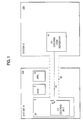
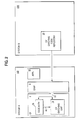
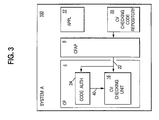
- Figs. 1, 2 and 3 show embodiments of the present invention in block diagram form. These configurations include a first cryptographic system or device A 100 and possibly a second system or device B 200.
- System A 100 contains a cryptographic facility CF 4, a cryptographic facility access program CFAP 8, and a set of application programs APPL 12.
- the programs APPL 12 request cryptographic services from the CF 4 via the CFAP 8.
- the CF 4 accepts or rejects these requests based on the validity of the input parameters with respect to a requested operation.
- the control vector (CV) checking unit 16 in the CF 4 tests the input control vectors for validity.
- the CV checking unit 16 executes a sequence of rules or instructions called CV checking code to perform these validity tests.
- the present invention describes a means to dynamically, securely, and flexibly define, modify, or enhance the CV checking code used by the CV checking unit 16. (Other details of the cryptographic key management environment are described more fully in the above referenced co-pending patent applications.)
- Fig. 1 describes one mode of the present invention in which a control vector checking unit 16 of the CF 4 is initialized with dynamically loaded CV checking code via an input channel 20 from a control vector checking code repository 30 in system B 200.
- the integrity of the CV checking code in input channel 20 is protected by a secure channel 60 which directly links the repository 30 to the physically secure CF 4 in system A 100.
- the secure channel may consist of a physically secure electrical connection or a logically secure communications session between the CV checking code repository 30 and the CF 4.
- the system configuration of Fig. 1 is distinguished by the use of a secure channel to protect the integrity of the dynamically loaded CV checking code as opposed to the use of cryptographic authentication techniques.
- Fig. 2 is a modification of the configuration of Fig. 1 wherein the integrity of the dynamically loaded CV checking code is protected by cryptographic authentication techniques.
- system B 200 transmits a segment of CV checking code from the CV checking code repository 30 to the CFAP 8 in system A 100.
- CFAP 8 in turn routes the downloaded CV checking code via an input channel 22 to the code authenticator 24 and the CV checking unit 16 in the CF 4.
- the code authenticator 24 accepts the downloaded segment of CV checking code as input, performs a cryptographic authentication process on the input data, and outputs a corresponding load authorization signal 40 to the CV checking unit 16.
- the load authorization signal 40 indicates whether or not the downloaded code has been received with integrity.
- the CV checking unit 16 accepts and processes the downloaded segment of CV checking code from input channel 22 if and only if the load authorization signal 40 received from the code authenticator 24 indicates that the downloaded code has been authenticated successfully.
- the cryptographic authentication process may be based on message authentication codes (MACs) or on modification detection codes (MDCs).
- MACs message authentication codes
- MDCs modification detection codes
- system A 100 and system B 200 each have a cryptographic facility, and share a secret authentication key, KDA.
- KDA secret authentication key
- System B 200 computes a MAC value which is a function of KDA and the segment of CV checking code to be downloaded.
- System B 200 then transmits the CV checking code and the computed MAC to system A 100.
- the code authenticator 24 in the CF 4 of system A 100 computes a trial MAC based on the received CV checking code and KDA, compares the MAC value received from system B 200 with the trial MAC, and if equal generates a load authorization signal 40. Otherwise, the trial and received MACs do not match, and no load authorization signal 40 is output.
- KDA should be limited to trusted elements within each of the communicating systems (e.g., KDA might be stored internally within the CF of each system).
- the code authenticator 24 in the CF 4 of system A 100 computes a trial MDC value based on the received segment of CV checking code, compares the trial MDC with the pre-stored reference MDC corresponding to the received code segment, and if equal generates a load authorization signal 40. Otherwise, the trial and reference MDCs do not match, and no load authorization signal 40 is output.
- Fig. 3 is a modification of the configuration of Fig. 2 wherein the CV checking code repository 30 is physically located within system A 100.
- This configuration may be used when it is necessary or advantageous to store the CV checking code outside the CF 4 but directly accessible to the CFAP 8.
- the CV checking code used by the CV checking unit 16 may be physically too large to be stored within the CF 4.
- only those segments of the overall CV checking code which are actually needed to validate a requested operation can be dynamically loaded from a local CV checking code repository 30 through CFAP 8 to the CV checking unit 16.
- the dynamically loaded CV checking code segment will not be accepted by the CV checking unit 16 unless an authorization signal 40 is received from the code authenticator 24.
- the code authenticator 24 may employ either of the authentication methods described above in order to determine the authenticity of the loaded CV checking code segments.
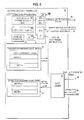
- Fig. 4 provides a further elaboration of the processing described in Fig. 3, in which the CV checking code repository 30 is local to the cryptographic system A 100. The reader will appreciate that Fig. 4 is equally applicable to the configurations described in Figs. 1 and 2 in which the CV checking code repository 30 is located in a remote system B 200.
- an application program APPL C 12 requests a cryptographic service via a CALL to function FUNCi, passing a set of input parameters on an input channel 14 to CFAP 8.
- Function FUNCi in CFAP 8 in turn invokes one or more instructions within the instruction processor 10 of the CF 4.
- the diagram shows the invocation of one such instruction INSTRj to which FUNCi passes a set of input parameters (such as an operation code, encrypted keys, control vectors, and ciphertext) via an input channel 18.
- the instruction processor 10 passes the operation code which corresponds to instruction INSTRj and the set of input control vectors on an input channel 26 to the CV checking unit 16 for validation. If the CV checking unit 16 successfully validates the input control vectors with respect to the operation code associated with INSTRj, then the CV checking unit 16 transmits a positive execution authorization signal 28 back to the instruction processor 10.
- the instruction processor 10 then completes execution of the instruction INSTRj and returns a set of output parameters to FUNCi via an output channel 32.
- FUNCi may invoke additional instructions or return the output parameters to the calling application APPL C 12 via an output channel 34.
- the CV checking unit 16 fails to validate the input control vectors, then the CV checking unit 16 returns a negative execute authorization signal 28 to the instruction processor 10.
- the instruction processor 10 aborts processing of instruction INSTRj and transmits the error condition back to function FUNCi via the output channel 32.
- FUNCi may then return a corresponding error value to the calling application APPL C 12 via output channel 34.
- the present invention describes a flexible, but secure method for implementing a programmable control vector checking unit 16. An elaboration of the components and methods of the control vector checking unit 16 is provided in the following paragraphs.
- a CV checking code processor 70 within the CV checking unit 16 accepts the input operation code and control vectors from the instruction processor 10 and executes a sequence of checking rules or instructions known as CV checking code.
- the CV checking code may be broken up into two parts: an optional fixed part (possibly stored in read only memory) called the resident CV checking code 72, and a variable part (possibly implemented in read-write memory) called the dynamic CV checking code 74.
- the dynamic CV checking code 74 is retrieved from an external CV checking code repository 30 via an optional code access method function 50 within the CFAP 8.
- the code access method 50 ensures that the CV checking code required to perform each requested cryptographic function is available when needed by the CV checking unit 16.
- the code access method 50 may access the CV checking code repository 30 at system startup, on a function-by-function basis, or as requested by the CF 4.
- the accessed CV checking code segments (and MACs or other authentication parameters) are passed by the code access method 50 to the code loader 76 and to the code authenticator 24 within the CV checking unit 16 via an input channel 22.
- the code loader 76 stores the code segments into the dynamic CV checking code 74 buffer if and only if a load authorization signal 40 is received from the code authenticator 24.
- the CV checking code processor 70 begins fetching and executing instructions from the resident CV checking code 72 buffer and from the dynamic CV checking code 74 buffer.
- Fig. 5 describes the components and data flow within the CV checking unit 16.
- the code loader 76 component accepts a load authorization signal 40 and a segment of code via input channel 22 and stores the code segment in the dynamic CV checking code 74 buffer.
- the CV checking code processor 70 accepts a cryptographic instruction operation code (opcode) and a set of control vectors C1,...,Cn and stores the values as required in a set of internal working registers 92.
- the CV checking code processor 70 contains a controller/arithmetic logic unit 94 which sequences the operation of the processor and provides primitive arithmetic, logical, and relational functions used to test and compare fields of the input control vectors C1,...,Cn.
- An instruction register 96 is used to store each CV checking instruction to be executed.
- a program counter (PC) 98 stores the address of the next instruction to be fetched from the resident and dynamic CV checking code buffers 72 and 74, respectively.
- a generate authorization signal 90 component outputs the positive or negative execute authorization signal 28 based on the results of CV checking code execution.
- the reader will appreciate that the CV checking code processor may include other components and storage facilities as needed to support execution or interpretation of the CV checking code.
- the CV checking code itself may consist of a set of machine-level instructions, each containing an operation code and some arguments, a set of high-level language commands to be interpreted, or simply a set of parameters used to control the checking and cross-checking of fields within the input control vectors C1,...,Cn.
- the resident CV checking code 72 may represent a fixed sequence of checking rules which is common to all cryptographic functions, or it may represent the CV checking rules associated with a first CV architecture.
- the dynamic CV checking code 74 may contain function-specific CV checking rules, or it may represent extensions corresponding to a second CV architecture.
- Fig. 6 illustrates one method of control flow linkage between the optional resident CV checking code 72 and the dynamic CV checking code 74.
- the resident CV checking code 72 if present, is executed first to test the input control vectors C1,...,Cn against the fixed CV rules.
- the resident code returns a first validity result RESULT_1 on the basis of its test results.
- RESULT_1 may be in the form of an error code or a simple valid/not-valid flag.
- the CV checking code processor 70 then executes the dynamic CV checking code 74, if loaded (a system flag may be interrogated to determine the state of the dynamic CV checking code 74 buffer), to test the input control vectors C1,...,Cn against a second, variable set of CV rules.
- the dynamic 74 code returns a second validity result RESULT_2 on the basis of its test results.
- the generate authorization signal 90 component of the CV checking code processor 70 combines the results of resident and dynamic CV checking, RESULT_1 and RESULT_2, to generate a positive or negative execute authorization signal 28 for the instruction processor 10.
- a feature of this method is the independence of the resident and dynamic CV checking codes 72 and 74: the control flow linkage and result correlation is performed by the CV checking code processor 70 in the generate authorization signal component 90.
- Fig. 7 illustrates a second, indirect method of control flow linkage between the optional resident CV checking code 72 and the dynamic CV checking code 74.
- the resident CV checking code 72 transfers control to the dynamic CV checking code 74 via a programmed exit.
- the dynamic CV checking code 74 performs additional checking on the input CVs and modifies the RESULT obtained from the resident CV checking code 72.
- the updated RESULT and program control is then returned to the resident CV checking code 72, which, in turn, passes it back to the CV checking code processor.
- This method is distinguished by the fact that the dynamic CV checking code 74 can adjust the results of the fixed resident CV checking code 72 on the basis of enhanced or extended CV checking rules present in the dynamic CV checking code 74.
- this method requires that the implementer plan for such enhancements or extensions by including a programmed control exit in the fixed resident CV checking code 72.
- Fig. 8 illustrates how the resident CV checking code 72 may be used to validate certain fields in a first control vector part and the dynamic CV checking code 74 may be used to validate fields in a second control vector part of an input control vector Ci.
- the first CV part may be associated with a first CV architecture whereas the second CV part may be associated with a second CV architecture.
- Such a second architecture may arise from enhancements or extensions made to the first architecture by the vendor or user of the cryptographic system.
- Fig. 9 illustrates a further extension of this notion in which the resident CV checking code 72 may be used to validate certain fields in a first control vector part, the dynamic CV checking code 74 may be used to validate fields in a second control vector part, and the dynamic CV checking code 74 may also perform CV cross-checking on the first and second control vector parts.
- Cross-checking is a method of validating one or more control vectors or control vector fields on the basis of the contents of other control vectors or control vector fields.
- the rules for cross-checking may include testing fields from the first CV parts for consistency with fields from the second CV parts.
- An application of the invention is to provide bulk storage for the control vector checking code required for operation of a smart card, as illustrated in the system block diagram in Fig. 10.
- a smart card is a cryptographic device in the form of a common consumer credit card. The card is used to authenticate the consumer to other cryptographic devices, such as terminals, automatic teller machines, etc.
- the smart card reader is a cryptographic device or system which accepts and validates an inserted smart card, and provides an electrical interface between the smart card and some system application. Because of its size, a smart card may have limited memory for the storage of its CV checking code. However, by applying this invention the CV checking code may be stored within the smart card reader and securely transferred (in parts, as needed) to the smart card.
- the CV checking code loader 76 in the CV checking unit 16 of the CF 4 of the smart card 110 requests a new segment of code from the code access method 50 in CFAP 8.
- the code access method 50 transmits a corresponding request to the repository manager 55 in the smart card reader 210.
- the repository manager 55 accesses the CV checking code repository 30 (which may be a bulk data storage device such as a local or host-attached hard disk), extracts the requested CV checking code, and transmits the code back to the code access method 50 in the smart card 110.
- the code access method 50 passes the dynamic CV checking code to the code authenticator 24 which uses the MDC operation 80 to compute a modification detection code on the received code.
- the code authenticator 24 also retrieves a pre-loaded reference MDC value from a set of MDC registers 82.
- the MDC registers 82 may contain one trial MDC corresponding to each loadable CV checking code segment.
- the MDC registers were pre-loaded via a physically or logically secure channel by authorized system personnel.
- the code authenticator 24 compares the computed trial MDC with the reference MDC for equality. If the trial MDC matches the reference MDC, an enabling load authorization signal 40 is passed to the code loader 76 to load the dynamic CV checking code segment into the dynamic CV checking code 74 buffer. Otherwise, the code segment is discarded and an authentication error is reported. If loaded successfully, the dynamic CV checking code 74 may then be used by the CV checking code processor 70 as described in prior figures.
Landscapes
- Engineering & Computer Science (AREA)
- Computer Security & Cryptography (AREA)
- Computer Networks & Wireless Communication (AREA)
- Signal Processing (AREA)
- Storage Device Security (AREA)
- Selective Calling Equipment (AREA)
Claims (16)
- Un procédé destiné à être utilisé dans un système de traitement de données, comprenant une ressource cryptographique (4) basée sur un vecteur de commande, pour établir un code de contrôle à vecteur de commande devant être exécuté dans la ressource cryptographique (4), comprenant les étapes consistant à :stocker le code de contrôle de vecteur de commande dans une zone de dépôt de code de contrôle de vecteur de commande (30) couplée à ladite ressource cryptographique (4);transmettre une partie dudit code de contrôle de vecteur de commande à ladite ressource cryptographique (4), depuis ladite zone de dépôt (3);exécuter ledit code de contrôle de vecteur de commande dans ladite ressource cryptographique (4) pour effectuer une opération augmentée de contrôle de vecteur de commande sur ledit vecteur de commande.
- Le procédé selon la revendication 1, comprenant en outre :l'introduction d'un premier code de détection de modification dans ladite ressource cryptographique, caractérisant ladite partie dudit code de contrôle de vecteur de commande;calcul d'un deuxième code de détection de modification sur ladite partie dudit code de contrôle de vecteur de commande ayant été reçu depuis ledit lieu de dépôt (30);comparaison entre ledit premier code de détection de modification et ledit deuxième code de détection de modification;authentification de ladite partie dudit code de contrôle de vecteur de commande reçu à ladite ressource cryptographique (4), si ledit code de détection de modification est comparé audit deuxième code de détection de modification.
- Le procédé selon la revendication 1, dans lequel ladite partie dudit code de contrôle de vecteur de commande est transmise sur une ligne de liaison à sécurité physique (60) depuis ledit lieu de dépôt (30) à ladite ressource cryptographique (4).
- Le procédé selon la revendication 1, comprenant en outre :l'introduction d'un premier code d'authentification de message à ladite ressource cryptographique, caractérisant ladite partie dudit code de contrôle de vecteur de commande;le calcul d'un deuxième code d'identification de message sur ladite partie dudit code de contrôle de vecteur de commande reçu dudit lieu de dépôt;la comparaison entre ledit premier code d'authentification de message et ledit deuxième code d'identification de message:l'authentification de ladite partie dudit code de contrôle de vecteur de commande reçu à ladite source cryptographique (4) si ledit premier code d'authentification de message a été comparé avec ledit deuxième code d'authentification de message.
- Un procédé destiné à être utilisé dans un système de traitement de données, comprenant une ressource cryptographique basée sur un vecteur de commande, pour augmenter le code de contrôle de vecteur de commande à exécuter dans la ressource cryptographique (4), comprenant les étapes consistant à :stocker un code de contrôle de vecteur de commande résident dans un stockage résident (72) dans une ressource cryptographique (4);stocker un code de contrôle de vecteur de commande dynamique dans un lieu de dépôt de code de contrôle de vecteur dynamique (30) couplé à ladite ressource cryptographique (4);transmettre une partie dudit code de contrôle de vecteur de commande dynamique venant dudit lieu de dépôt (30) à ladite ressource cryptographique (4);stocker ladite partie dudit code de contrôle de vecteur de commande dynamique dans un tampon de code dynamique (74) dans ladite ressource cryptographique (4);exécuter ledit code de contrôle de vecteur de commande résident et ledit code de contrôle de vecteur de commande dynamique dans ladite ressource cryptographique (4).
- Le procédé selon la revendication 5, comprenant en outre :l'introduction d'un premier code de détection de modification dans ladite ressource cryptographique, caractérisant ladite partie dudit code de contrôle de vecteur de commande dynamique;le calcul d'un deuxième code de détection de modification sur ladite partie dudit code de contrôle de vecteur de commande dynamique reçu dudit lieu de dépôt;la comparaison entre ledit premier code de détection de modification et ledit deuxième code de détection de modification;l'authentification de ladite partie dudit code de contrôle de vecteur de commande dynamique reçu dans ladite ressource cryptographique (4), si ledit premier code de détection de modification a été comparé audit deuxième code de détection de modification.
- Le procédé selon la revendication 6, comprenant en outre :
l'achèvement de l'exécution dudit code de contrôle de vecteur de commande résident, antérieurement à l'exécution dudit code de contrôle de vecteur de commande dynamique. - Le procédé selon la revendication 6, comprenant en outre :
l'appel, par ledit code de contrôle de vecteur de commande résident, de parties dudit code de contrôle de vecteur de commande dynamique pour exécution, pendant l'exécution dudit code de contrôle de vecteur de commande résident. - Le procédé selon la revendication 6, comprenant en outre :
le contrôle par ledit code de contrôle de vecteur de commande résident d'une première partie d'un vecteur de commande et le contrôle par ledit code de contrôle de vecteur de commande dynamique d'une deuxième partie dudit vecteur de commande. - Le procédé selon la revendication 6, comprenant en outre :
le contrôle par ledit code de contrôle de vecteur de commande résident d'une première partie d'un vecteur de commande et le contrôle par ledit code de contrôle de vecteur de commande dynamique de ladite première partie dudit vecteur de commande et, en plus, contrôle d'une deuxième partie dudit vecteur de commande. - Le procédé selon la revendication 6, comprenant en outre :
le fait que ladite ressource cryptographique (4) réside sur une carte à mémoire et ledit lieu de dépôt (30) de code de contrôle de vecteur de commande réside sur un lecteur de carte mémoire (210) couplé fonctionnellement à ladite carte mémoire. - Un système de traitement de données comprenant une ressource cryptographique (4) basée sur un vecteur de commande, et un appareil pour produire le code de contrôle de vecteur de commande à exécuter dans la ressource cryptographique (4), ledit appareil comprenant :un processeur à code de contrôle de vecteur de commande (70), dans ladite ressource cryptographique, pour exécuter le code de contrôle de vecteur de commande afin de contrôler des vecteurs de commande;un tampon (72) pour le code de contrôle de vecteur de commande résident, dans ladite ressource cryptographique (4), afin de stocker ledit code de contrôle de vecteur de commande résident devant être exécuté par ledit processeur de code de contrôle de vecteur de commande (70);un lieu de dépôt (30) pour code de contrôle de vecteur de commande, couplé à ladite ressource cryptographique (4), pour stocker le code de contrôle de vecteur de commande dynamique;un tampon (74) pour code de contrôle de vecteur de commande dynamique, dans ladite ressource cryptographique (4), pour recevoir une partie dudit code de contrôle de vecteur de commande dynamique transmis depuis ledit lieu de dépôt (30);ledit processeur de code de contrôle de vecteur de commande (70) exécutant ledit code de contrôle de vecteur de commande résident pour effectuer une première opération de contrôle sur ledit vecteur de commande et exécutant ledit code de contrôle de vecteur de commande dynamique pour effectuer une opération de commande améliorée de vecteur de commande sur ledit vecteur de commande.
- Le système selon la revendication 12, comprenant en outre :un authentificateur de code (24) placé dans ladite ressource cryptographique (4), pour recevoir une première valeur d'un code de détection de modification caractérisant ladite partie dudit code de contrôle de vecteur de commande dynamique et pour calculer une deuxième valeur d'un code de détection de modification venant de ladite partie dudit code de contrôle de vecteur de commande dynamique;ledit authentificateur de code (24) ayant une sortie couplée audit tampon (74) pour code de contrôle de vecteur de commande dynamique, afin de permettre la transmission dudit code de contrôle de vecteur de commande dynamique depuis ledit lieu de dépôt (30) audit tampon (74) pour code de contrôle de vecteur de commande dynamique, lorsque ladite première valeur dudit code de détection de modification est comparée à ladite deuxième valeur.
- Le système selon la revendication 13, comprenant en outre :
le fait que ladite ressource cryptographique (4) réside sur une carte à mémoire et ledit lieu de dépôt (30) pour code de contrôle de vecteur de commande réside sur un lecteur de carte à mémoire (210) couplé fonctionnellement à ladite carte à mémoire. - Le système selon la revendication 12, comprenant en outre :un authentificateur de code (24) placé dans ladite ressource cryptographique (4), destiné à recevoir une première valeur d'un code d'authentification de message caractérisant ladite partie dudit code de contrôle de vecteur de commande dynamique et pour calculer une deuxième valeur d'un code d'authentification de message venant de ladite partie dudit code de contrôle de vecteur de commande dynamique;ledit authentificateur de code (24) ayant une sortie couplée audit tampon (74) pour code de contrôle de vecteur de commande dynamique, afin d'établir la transmission dudit code de contrôle de vecteur de commande dynamique depuis ledit lieu de dépôt (30) audit tampon (74) pour code de contrôle de vecteur de commande dynamique lorsque ladite première valeur dudit code d'authentification de message est comparée à ladite deuxième valeur.
- Le système selon la revendication 15, comprenant en outre :
le fait que ladite ressource cryptographique (4) réside sur une carte à mémoire et ledit lieu de dépôt (30) pour code de contrôle de vecteur de commande réside dans un lecteur de carte à mémoire (210) couplé fonctionnellement à ladite carte à mémoire.
Applications Claiming Priority (2)
| Application Number | Priority Date | Filing Date | Title |
|---|---|---|---|
| US506319 | 1990-04-09 | ||
| US07/506,319 US5007089A (en) | 1990-04-09 | 1990-04-09 | Secure key management using programable control vector checking |
Publications (3)
| Publication Number | Publication Date |
|---|---|
| EP0451476A2 EP0451476A2 (fr) | 1991-10-16 |
| EP0451476A3 EP0451476A3 (en) | 1993-02-10 |
| EP0451476B1 true EP0451476B1 (fr) | 1996-05-08 |
Family
ID=24014116
Family Applications (1)
| Application Number | Title | Priority Date | Filing Date |
|---|---|---|---|
| EP91102772A Expired - Lifetime EP0451476B1 (fr) | 1990-04-09 | 1991-02-26 | Administration protégée de clés utilisant le contrÔle d'un vecteur de commande programmable |
Country Status (5)
| Country | Link |
|---|---|
| US (1) | US5007089A (fr) |
| EP (1) | EP0451476B1 (fr) |
| JP (1) | JP2625587B2 (fr) |
| CA (1) | CA2036858C (fr) |
| DE (1) | DE69119290D1 (fr) |
Cited By (1)
| Publication number | Priority date | Publication date | Assignee | Title |
|---|---|---|---|---|
| US9252944B2 (en) | 2014-03-21 | 2016-02-02 | International Business Machines Corporation | Key wrapping for common cryptographic architecture (CCA) key token |
Families Citing this family (40)
| Publication number | Priority date | Publication date | Assignee | Title |
|---|---|---|---|---|
| JPH06501324A (ja) * | 1990-04-27 | 1994-02-10 | スキャンディック・インターナショナル・プロプライエタリー・リミテッド | スマートカード妥当性検証装置および方法 |
| JP2689998B2 (ja) * | 1990-08-22 | 1997-12-10 | インターナショナル・ビジネス・マシーンズ・コーポレイション | 暗号動作を行う装置 |
| US5142578A (en) * | 1991-08-22 | 1992-08-25 | International Business Machines Corporation | Hybrid public key algorithm/data encryption algorithm key distribution method based on control vectors |
| US5231666A (en) * | 1992-04-20 | 1993-07-27 | International Business Machines Corporation | Cryptographic method for updating financial records |
| US5757913A (en) * | 1993-04-23 | 1998-05-26 | International Business Machines Corporation | Method and apparatus for data authentication in a data communication environment |
| US5745759A (en) * | 1994-10-14 | 1998-04-28 | Qnx Software Systems, Ltd. | Window kernel |
| US6397262B1 (en) | 1994-10-14 | 2002-05-28 | Qnx Software Systems, Ltd. | Window kernel |
| GB9503738D0 (en) * | 1995-02-24 | 1995-04-19 | Int Computers Ltd | Cryptographic key management |
| DE19510626A1 (de) * | 1995-03-23 | 1996-09-26 | Giesecke & Devrient Gmbh | Verfahren zur Prüfung der Unversehrtheit von gespeicherten Daten auf einer Verarbeitungsanlage für Blattgut, wie z. B. Banknoten oder Wertpapiere |
| US5600724A (en) * | 1995-05-23 | 1997-02-04 | Masnikosa; V. P. | Method for the protection of messages transmitted using public communication lines |
| US5790821A (en) * | 1996-03-08 | 1998-08-04 | Advanced Micro Devices, Inc. | Control bit vector storage for storing control vectors corresponding to instruction operations in a microprocessor |
| EP0798673A1 (fr) * | 1996-03-29 | 1997-10-01 | Koninklijke KPN N.V. | Méthode pour transférer des commandes dans une carte à circuit intégré |
| US5933503A (en) * | 1996-03-15 | 1999-08-03 | Novell, Inc | Controlled modular cryptography apparatus and method |
| US6463416B1 (en) | 1996-07-15 | 2002-10-08 | Intelli-Check, Inc. | Authentication system for identification documents |
| US6333983B1 (en) | 1997-12-16 | 2001-12-25 | International Business Machines Corporation | Method and apparatus for performing strong encryption or decryption data using special encryption functions |
| US6981149B1 (en) | 1998-01-27 | 2005-12-27 | Spyrus, Inc. | Secure, easy and/or irreversible customization of cryptographic device |
| US6615350B1 (en) | 1998-03-23 | 2003-09-02 | Novell, Inc. | Module authentication and binding library extensions |
| US6701433B1 (en) | 1998-03-23 | 2004-03-02 | Novell, Inc. | Method and apparatus for escrowing properties used for accessing executable modules |
| US6751735B1 (en) | 1998-03-23 | 2004-06-15 | Novell, Inc. | Apparatus for control of cryptography implementations in third party applications |
| US6532451B1 (en) * | 1998-03-23 | 2003-03-11 | Novell, Inc. | Nested strong loader apparatus and method |
| US6920562B1 (en) * | 1998-12-18 | 2005-07-19 | Cisco Technology, Inc. | Tightly coupled software protocol decode with hardware data encryption |
| US7127605B1 (en) * | 1999-05-10 | 2006-10-24 | Axalto, Inc. | Secure sharing of application methods on a microcontroller |
| US6308256B1 (en) * | 1999-08-18 | 2001-10-23 | Sun Microsystems, Inc. | Secure execution of program instructions provided by network interactions with processor |
| AUPQ809600A0 (en) * | 2000-06-09 | 2000-07-06 | Mcom Solutions Inc | Controller and memory for storing and processing security software and data |
| US7032047B2 (en) * | 2001-03-12 | 2006-04-18 | Motorola, Inc. | Method of regulating usage and/or concession eligibility via distributed list management in a smart card system |
| US20040025039A1 (en) * | 2002-04-30 | 2004-02-05 | Adam Kuenzi | Lock box security system with improved communication |
| US7123127B2 (en) * | 2003-01-31 | 2006-10-17 | General Electric Company | System for managing physical assets |
| US7042334B2 (en) * | 2003-01-31 | 2006-05-09 | General Electric Company | Methods for managing access to physical assets |
| US7061367B2 (en) * | 2002-04-30 | 2006-06-13 | General Electric Company | Managing access to physical assets |
| US7708189B1 (en) | 2002-05-17 | 2010-05-04 | Cipriano Joseph J | Identification verification system and method |
| US7274792B2 (en) * | 2002-08-09 | 2007-09-25 | Broadcom Corporation | Methods and apparatus for initialization vector processing |
| US7860318B2 (en) | 2004-11-09 | 2010-12-28 | Intelli-Check, Inc | System and method for comparing documents |
| KR100598795B1 (ko) * | 2004-12-18 | 2006-07-10 | 주식회사 대우일렉트로닉스 | 댐퍼 시스템이 적용된 냉난방 겸용 공기조화장치 |
| US8291224B2 (en) | 2005-03-30 | 2012-10-16 | Wells Fargo Bank, N.A. | Distributed cryptographic management for computer systems |
| US7792522B1 (en) | 2006-01-13 | 2010-09-07 | Positive Access Corporation | Software key control for mobile devices |
| CN100555939C (zh) * | 2006-09-20 | 2009-10-28 | 北京飞天诚信科技有限公司 | 一种基于网络的软件保护方法 |
| US9670694B2 (en) * | 2007-04-12 | 2017-06-06 | Utc Fire & Security Americas Corporation, Inc. | Restricted range lockbox, access device and methods |
| US8953789B2 (en) | 2011-06-01 | 2015-02-10 | International Business Machines Corporation | Combining key control information in common cryptographic architecture services |
| US9954848B1 (en) | 2014-04-04 | 2018-04-24 | Wells Fargo Bank, N.A. | Central cryptographic management for computer systems |
| US10373409B2 (en) | 2014-10-31 | 2019-08-06 | Intellicheck, Inc. | Identification scan in compliance with jurisdictional or other rules |
Family Cites Families (18)
| Publication number | Priority date | Publication date | Assignee | Title |
|---|---|---|---|---|
| US4227253A (en) * | 1977-12-05 | 1980-10-07 | International Business Machines Corporation | Cryptographic communication security for multiple domain networks |
| US4218738A (en) * | 1978-05-05 | 1980-08-19 | International Business Machines Corporation | Method for authenticating the identity of a user of an information system |
| US4223403A (en) * | 1978-06-30 | 1980-09-16 | International Business Machines Corporation | Cryptographic architecture for use with a high security personal identification system |
| US4386233A (en) * | 1980-09-29 | 1983-05-31 | Smid Miles E | Crytographic key notarization methods and apparatus |
| US4578530A (en) * | 1981-06-26 | 1986-03-25 | Visa U.S.A., Inc. | End-to-end encryption system and method of operation |
| US4503287A (en) * | 1981-11-23 | 1985-03-05 | Analytics, Inc. | Two-tiered communication security employing asymmetric session keys |
| US4500750A (en) * | 1981-12-30 | 1985-02-19 | International Business Machines Corporation | Cryptographic application for interbank verification |
| US4723284A (en) * | 1983-02-14 | 1988-02-02 | Prime Computer, Inc. | Authentication system |
| US4620276A (en) * | 1983-06-02 | 1986-10-28 | International Business Machines Corporation | Method and apparatus for asynchronous processing of dynamic replication messages |
| JPH0685517B2 (ja) * | 1985-06-28 | 1994-10-26 | ソニー株式会社 | 情報サ−ビスシステム |
| US4683968A (en) * | 1985-09-03 | 1987-08-04 | Burroughs Corporation | System for preventing software piracy employing multi-encrypted keys and single decryption circuit modules |
| US4850017A (en) * | 1987-05-29 | 1989-07-18 | International Business Machines Corp. | Controlled use of cryptographic keys via generating station established control values |
| US4908861A (en) * | 1987-08-28 | 1990-03-13 | International Business Machines Corporation | Data authentication using modification detection codes based on a public one way encryption function |
| US4941176A (en) * | 1988-08-11 | 1990-07-10 | International Business Machines Corporation | Secure management of keys using control vectors |
| EP0354771B1 (fr) * | 1988-08-11 | 1995-05-31 | International Business Machines Corporation | Traitement du numéro d'identification personnel, utilisant des vecteurs de contrôle |
| US4924514A (en) * | 1988-08-26 | 1990-05-08 | International Business Machines Corporation | Personal identification number processing using control vectors |
| US4924515A (en) * | 1988-08-29 | 1990-05-08 | International Business Machines Coprporation | Secure management of keys using extended control vectors |
| US4918728A (en) * | 1989-08-30 | 1990-04-17 | International Business Machines Corporation | Data cryptography operations using control vectors |
-
1990
- 1990-04-09 US US07/506,319 patent/US5007089A/en not_active Expired - Fee Related
-
1991
- 1991-02-21 CA CA002036858A patent/CA2036858C/fr not_active Expired - Fee Related
- 1991-02-26 EP EP91102772A patent/EP0451476B1/fr not_active Expired - Lifetime
- 1991-02-26 DE DE69119290T patent/DE69119290D1/de not_active Expired - Lifetime
- 1991-03-09 JP JP3068797A patent/JP2625587B2/ja not_active Expired - Lifetime
Cited By (1)
| Publication number | Priority date | Publication date | Assignee | Title |
|---|---|---|---|---|
| US9252944B2 (en) | 2014-03-21 | 2016-02-02 | International Business Machines Corporation | Key wrapping for common cryptographic architecture (CCA) key token |
Also Published As
| Publication number | Publication date |
|---|---|
| DE69119290D1 (de) | 1996-06-13 |
| JPH07160197A (ja) | 1995-06-23 |
| JP2625587B2 (ja) | 1997-07-02 |
| EP0451476A2 (fr) | 1991-10-16 |
| CA2036858C (fr) | 1994-03-01 |
| US5007089A (en) | 1991-04-09 |
| EP0451476A3 (en) | 1993-02-10 |
| CA2036858A1 (fr) | 1991-10-10 |
Similar Documents
| Publication | Publication Date | Title |
|---|---|---|
| EP0451476B1 (fr) | Administration protégée de clés utilisant le contrÔle d'un vecteur de commande programmable | |
| US6640279B2 (en) | Virtual machine with securely distributed bytecode verification | |
| US6226749B1 (en) | Method and apparatus for operating resources under control of a security module or other secure processor | |
| Abraham et al. | Transaction security system | |
| US6328217B1 (en) | Integrated circuit card with application history list | |
| US6742120B1 (en) | System and method for controlling access to computer code in an IC card | |
| EP1318456B1 (fr) | Appareil électronique et méthode d'autorisation de débogage | |
| US6378072B1 (en) | Cryptographic system | |
| US5493613A (en) | Combination pin pad and terminal | |
| US4652698A (en) | Method and system for providing system security in a remote terminal environment | |
| EP1461681B1 (fr) | Protection d'un dispositif contre une utilisation non voulue dans un environnement securise | |
| EP0268141A2 (fr) | Sécurité de station d'accès à distance | |
| EP3394811A1 (fr) | Procédé et système pour améliorer la sécurité d'une transaction | |
| EP3394788B1 (fr) | Procédé et système pour améliorer la sécurité d'une transaction | |
| US20250259158A1 (en) | Systems and methods for terminal device attestation for contactless payments | |
| KR20180007459A (ko) | 화이트박스 암호를 이용한 암/복호화 방법 및 그 장치 | |
| EP1053536B1 (fr) | Systeme et procede de commande d'acces a un code d'ordinateur dans une carte a circuit integre (ic) | |
| Hassler | Java Card for e-payment Applications | |
| Marlet et al. | Demoney: A demonstrative electronic purse–Card specification | |
| WO1998003903A2 (fr) | Procede et appareil d'exploitation de ressources sous la commande d'un module de securite ou autre processeur securise | |
| EP4145325A1 (fr) | Dispositif de cryptographie, procédé permettant de réaliser des opérations cryptographiques, et produit programme informatique | |
| SafesITe | FIPS140-2 Cryptographic Module Security Policy Version 1.9 | |
| Chung | Design of Smart Card Enabled Protocols for Micro-Payment and Rapid Application Development Builder for E-Commerce | |
| Cyberflex | RSA Applets on the Schlumberger Cyberflex Access 64K Platform | |
| Henzl | Bezpečnost protokolů bezkontaktních čipových karet |
Legal Events
| Date | Code | Title | Description |
|---|---|---|---|
| PUAI | Public reference made under article 153(3) epc to a published international application that has entered the european phase |
Free format text: ORIGINAL CODE: 0009012 |
|
| AK | Designated contracting states |
Kind code of ref document: A2 Designated state(s): DE FR GB IT NL |
|
| 17P | Request for examination filed |
Effective date: 19911219 |
|
| PUAL | Search report despatched |
Free format text: ORIGINAL CODE: 0009013 |
|
| AK | Designated contracting states |
Kind code of ref document: A3 Designated state(s): DE FR GB IT NL |
|
| 17Q | First examination report despatched |
Effective date: 19950704 |
|
| GRAH | Despatch of communication of intention to grant a patent |
Free format text: ORIGINAL CODE: EPIDOS IGRA |
|
| GRAA | (expected) grant |
Free format text: ORIGINAL CODE: 0009210 |
|
| AK | Designated contracting states |
Kind code of ref document: B1 Designated state(s): DE FR GB IT NL |
|
| PG25 | Lapsed in a contracting state [announced via postgrant information from national office to epo] |
Ref country code: FR Effective date: 19960508 |
|
| REF | Corresponds to: |
Ref document number: 69119290 Country of ref document: DE Date of ref document: 19960613 |
|
| ITF | It: translation for a ep patent filed | ||
| PG25 | Lapsed in a contracting state [announced via postgrant information from national office to epo] |
Ref country code: DE Effective date: 19960809 |
|
| NLR4 | Nl: receipt of corrected translation in the netherlands language at the initiative of the proprietor of the patent | ||
| EN | Fr: translation not filed | ||
| PLBE | No opposition filed within time limit |
Free format text: ORIGINAL CODE: 0009261 |
|
| STAA | Information on the status of an ep patent application or granted ep patent |
Free format text: STATUS: NO OPPOSITION FILED WITHIN TIME LIMIT |
|
| 26N | No opposition filed | ||
| PGFP | Annual fee paid to national office [announced via postgrant information from national office to epo] |
Ref country code: NL Payment date: 19990228 Year of fee payment: 9 |
|
| PG25 | Lapsed in a contracting state [announced via postgrant information from national office to epo] |
Ref country code: NL Free format text: LAPSE BECAUSE OF NON-PAYMENT OF DUE FEES Effective date: 20000901 |
|
| NLV4 | Nl: lapsed or anulled due to non-payment of the annual fee |
Effective date: 20000901 |
|
| REG | Reference to a national code |
Ref country code: GB Ref legal event code: IF02 |
|
| PGFP | Annual fee paid to national office [announced via postgrant information from national office to epo] |
Ref country code: GB Payment date: 20020204 Year of fee payment: 12 |
|
| PG25 | Lapsed in a contracting state [announced via postgrant information from national office to epo] |
Ref country code: GB Free format text: LAPSE BECAUSE OF NON-PAYMENT OF DUE FEES Effective date: 20030226 |
|
| GBPC | Gb: european patent ceased through non-payment of renewal fee | ||
| PG25 | Lapsed in a contracting state [announced via postgrant information from national office to epo] |
Ref country code: IT Free format text: LAPSE BECAUSE OF NON-PAYMENT OF DUE FEES;WARNING: LAPSES OF ITALIAN PATENTS WITH EFFECTIVE DATE BEFORE 2007 MAY HAVE OCCURRED AT ANY TIME BEFORE 2007. THE CORRECT EFFECTIVE DATE MAY BE DIFFERENT FROM THE ONE RECORDED. Effective date: 20050226 |