EP0452460B1 - Systeme mesomorphe electro-optique - Google Patents
Systeme mesomorphe electro-optique Download PDFInfo
- Publication number
- EP0452460B1 EP0452460B1 EP90916747A EP90916747A EP0452460B1 EP 0452460 B1 EP0452460 B1 EP 0452460B1 EP 90916747 A EP90916747 A EP 90916747A EP 90916747 A EP90916747 A EP 90916747A EP 0452460 B1 EP0452460 B1 EP 0452460B1
- Authority
- EP
- European Patent Office
- Prior art keywords
- liquid crystal
- compounds
- trans
- formulas
- electro
- Prior art date
- Legal status (The legal status is an assumption and is not a legal conclusion. Google has not performed a legal analysis and makes no representation as to the accuracy of the status listed.)
- Expired - Lifetime
Links
- 239000004973 liquid crystal related substance Substances 0.000 title claims abstract description 557
- 150000001875 compounds Chemical class 0.000 claims abstract description 740
- 239000000203 mixture Substances 0.000 claims abstract description 499
- -1 1,4-phenylene, 2-fluor-1,4-phenylene, 3-fluor-1,4-phenylene Chemical group 0.000 claims abstract description 200
- 125000004432 carbon atom Chemical group C* 0.000 claims abstract description 46
- 229910052731 fluorine Inorganic materials 0.000 claims abstract description 34
- 125000000217 alkyl group Chemical group 0.000 claims abstract description 33
- 125000005407 trans-1,4-cyclohexylene group Chemical group [H]C1([H])C([H])([H])[C@]([H])([*:2])C([H])([H])C([H])([H])[C@@]1([H])[*:1] 0.000 claims abstract description 21
- 229910052801 chlorine Inorganic materials 0.000 claims abstract description 18
- 239000000758 substrate Substances 0.000 claims abstract description 14
- 229910052739 hydrogen Inorganic materials 0.000 claims abstract description 11
- 125000000876 trifluoromethoxy group Chemical group FC(F)(F)O* 0.000 claims abstract description 8
- 125000002023 trifluoromethyl group Chemical group FC(F)(F)* 0.000 claims abstract description 8
- 239000011159 matrix material Substances 0.000 claims description 81
- 125000001140 1,4-phenylene group Chemical group [H]C1=C([H])C([*:2])=C([H])C([H])=C1[*:1] 0.000 claims description 29
- 239000000460 chlorine Substances 0.000 claims description 21
- 125000005451 3-fluoro-1,4-phenylene group Chemical group [H]C1=C([*:1])C([H])=C(F)C([*:2])=C1[H] 0.000 claims description 14
- 230000005540 biological transmission Effects 0.000 claims description 8
- 230000007935 neutral effect Effects 0.000 claims description 8
- 125000005449 2-fluoro-1,4-phenylene group Chemical group [H]C1=C([*:2])C([H])=C(F)C([*:1])=C1[H] 0.000 claims description 7
- 239000004983 Polymer Dispersed Liquid Crystal Substances 0.000 claims description 7
- 125000004093 cyano group Chemical group *C#N 0.000 claims description 7
- 230000001427 coherent effect Effects 0.000 claims description 4
- 102100024106 Cyclin-Y Human genes 0.000 claims description 3
- 101000910602 Homo sapiens Cyclin-Y Proteins 0.000 claims description 3
- 125000004786 difluoromethoxy group Chemical group [H]C(F)(F)O* 0.000 claims description 3
- 125000001153 fluoro group Chemical group F* 0.000 claims description 3
- 230000001788 irregular Effects 0.000 claims description 3
- 230000010287 polarization Effects 0.000 claims description 3
- 125000004955 1,4-cyclohexylene group Chemical group [H]C1([H])C([H])([H])C([H])([*:1])C([H])([H])C([H])([H])C1([H])[*:2] 0.000 claims description 2
- 125000005826 2-chloro-1,4-phenylene group Chemical group [H]C1=C([*:2])C([H])=C(Cl)C([*:1])=C1[H] 0.000 claims description 2
- ZAMOUSCENKQFHK-UHFFFAOYSA-N Chlorine atom Chemical group [Cl] ZAMOUSCENKQFHK-UHFFFAOYSA-N 0.000 claims description 2
- LELOWRISYMNNSU-UHFFFAOYSA-N Hydrocyanic acid Natural products N#C LELOWRISYMNNSU-UHFFFAOYSA-N 0.000 claims description 2
- 125000000816 ethylene group Chemical group [H]C([H])([*:1])C([H])([H])[*:2] 0.000 claims description 2
- 239000011737 fluorine Substances 0.000 claims description 2
- 229910052757 nitrogen Inorganic materials 0.000 claims 1
- 125000005714 2,5- (1,3-dioxanylene) group Chemical group [H]C1([H])OC([H])([*:1])OC([H])([H])C1([H])[*:2] 0.000 abstract description 4
- JFDZBHWFFUWGJE-UHFFFAOYSA-N benzonitrile Chemical compound N#CC1=CC=CC=C1 JFDZBHWFFUWGJE-UHFFFAOYSA-N 0.000 description 414
- 238000000034 method Methods 0.000 description 123
- 230000002349 favourable effect Effects 0.000 description 87
- 230000008569 process Effects 0.000 description 59
- PUFNCAACUKXZTR-UHFFFAOYSA-N 4-[2-(4-pentylphenyl)phenyl]benzonitrile Chemical group C1=CC(CCCCC)=CC=C1C1=CC=CC=C1C1=CC=C(C#N)C=C1 PUFNCAACUKXZTR-UHFFFAOYSA-N 0.000 description 49
- QKEBUASRTJNJJS-UHFFFAOYSA-N 4-[4-(4-pentylcyclohexyl)phenyl]benzonitrile Chemical group C1CC(CCCCC)CCC1C1=CC=C(C=2C=CC(=CC=2)C#N)C=C1 QKEBUASRTJNJJS-UHFFFAOYSA-N 0.000 description 43
- 230000000704 physical effect Effects 0.000 description 39
- PJBOOKMLDPERRS-PCYFZWJMSA-N C1C[C@@H](CCCCC)CC[C@@H]1C1=CC=C(C=2C=CC(=CC=2)[C@@H]2CC[C@@H](CCC)CC2)C=C1 Chemical group C1C[C@@H](CCCCC)CC[C@@H]1C1=CC=C(C=2C=CC(=CC=2)[C@@H]2CC[C@@H](CCC)CC2)C=C1 PJBOOKMLDPERRS-PCYFZWJMSA-N 0.000 description 26
- 239000000126 substance Substances 0.000 description 23
- HHPCNRKYVYWYAU-UHFFFAOYSA-N 4-cyano-4'-pentylbiphenyl Chemical group C1=CC(CCCCC)=CC=C1C1=CC=C(C#N)C=C1 HHPCNRKYVYWYAU-UHFFFAOYSA-N 0.000 description 21
- 150000003254 radicals Chemical class 0.000 description 21
- 125000002496 methyl group Chemical group [H]C([H])([H])* 0.000 description 20
- 125000001495 ethyl group Chemical group [H]C([H])([H])C([H])([H])* 0.000 description 19
- PANLHJSWXJODQV-UHFFFAOYSA-N 4-(5-pentylpyridin-2-yl)benzonitrile Chemical compound N1=CC(CCCCC)=CC=C1C1=CC=C(C#N)C=C1 PANLHJSWXJODQV-UHFFFAOYSA-N 0.000 description 18
- HYBZAFSPFHNSAB-UHFFFAOYSA-N 4-(5-propylpyridin-2-yl)benzonitrile Chemical compound N1=CC(CCC)=CC=C1C1=CC=C(C#N)C=C1 HYBZAFSPFHNSAB-UHFFFAOYSA-N 0.000 description 18
- 125000003545 alkoxy group Chemical group 0.000 description 18
- 125000001436 propyl group Chemical group [H]C([*])([H])C([H])([H])C([H])([H])[H] 0.000 description 18
- 125000000484 butyl group Chemical group [H]C([*])([H])C([H])([H])C([H])([H])C([H])([H])[H] 0.000 description 17
- 125000003187 heptyl group Chemical group [H]C([*])([H])C([H])([H])C([H])([H])C([H])([H])C([H])([H])C([H])([H])C([H])([H])[H] 0.000 description 17
- 125000004051 hexyl group Chemical group [H]C([H])([H])C([H])([H])C([H])([H])C([H])([H])C([H])([H])C([H])([H])* 0.000 description 17
- 230000003287 optical effect Effects 0.000 description 17
- 125000001147 pentyl group Chemical group C(CCCC)* 0.000 description 17
- 229920000642 polymer Polymers 0.000 description 17
- 125000002347 octyl group Chemical group [H]C([*])([H])C([H])([H])C([H])([H])C([H])([H])C([H])([H])C([H])([H])C([H])([H])C([H])([H])[H] 0.000 description 16
- BKXSBLROUCJNHD-UHFFFAOYSA-N 4-(5-butylpyridin-2-yl)benzonitrile Chemical compound N1=CC(CCCC)=CC=C1C1=CC=C(C#N)C=C1 BKXSBLROUCJNHD-UHFFFAOYSA-N 0.000 description 15
- 125000005745 ethoxymethyl group Chemical group [H]C([H])([H])C([H])([H])OC([H])([H])* 0.000 description 15
- 125000002704 decyl group Chemical group [H]C([H])([H])C([H])([H])C([H])([H])C([H])([H])C([H])([H])C([H])([H])C([H])([H])C([H])([H])C([H])([H])C([H])([H])* 0.000 description 14
- 125000001400 nonyl group Chemical group [H]C([*])([H])C([H])([H])C([H])([H])C([H])([H])C([H])([H])C([H])([H])C([H])([H])C([H])([H])C([H])([H])[H] 0.000 description 14
- 229910052740 iodine Inorganic materials 0.000 description 13
- AOJIOUFMDYKZAS-UHFFFAOYSA-N 4-[5-(4-pentylphenyl)pyridin-2-yl]benzonitrile Chemical compound C1=CC(CCCCC)=CC=C1C1=CC=C(C=2C=CC(=CC=2)C#N)N=C1 AOJIOUFMDYKZAS-UHFFFAOYSA-N 0.000 description 12
- 125000006225 propoxyethyl group Chemical group [H]C([H])([H])C([H])([H])C([H])([H])OC([H])([H])C([H])([H])* 0.000 description 12
- 125000005767 propoxymethyl group Chemical group [H]C([H])([H])C([H])([H])C([H])([H])[#8]C([H])([H])* 0.000 description 12
- GPGGNNIMKOVSAG-UHFFFAOYSA-N 4-(4-octoxyphenyl)benzonitrile Chemical group C1=CC(OCCCCCCCC)=CC=C1C1=CC=C(C#N)C=C1 GPGGNNIMKOVSAG-UHFFFAOYSA-N 0.000 description 11
- 125000005448 ethoxyethyl group Chemical group [H]C([H])([H])C([H])([H])OC([H])([H])C([H])([H])* 0.000 description 11
- DLLIPJSMDJCZRF-UHFFFAOYSA-N 4-(4-ethylphenyl)benzonitrile Chemical group C1=CC(CC)=CC=C1C1=CC=C(C#N)C=C1 DLLIPJSMDJCZRF-UHFFFAOYSA-N 0.000 description 10
- RDISTOCQRJJICR-UHFFFAOYSA-N 4-(4-pentoxyphenyl)benzonitrile Chemical group C1=CC(OCCCCC)=CC=C1C1=CC=C(C#N)C=C1 RDISTOCQRJJICR-UHFFFAOYSA-N 0.000 description 10
- FURZYCFZFBYJBT-UHFFFAOYSA-N 4-(4-pentylcyclohexyl)benzonitrile Chemical compound C1CC(CCCCC)CCC1C1=CC=C(C#N)C=C1 FURZYCFZFBYJBT-UHFFFAOYSA-N 0.000 description 10
- RZCQJZFWJZHMPK-UHFFFAOYSA-N 4-(4-propoxyphenyl)benzonitrile Chemical group C1=CC(OCCC)=CC=C1C1=CC=C(C#N)C=C1 RZCQJZFWJZHMPK-UHFFFAOYSA-N 0.000 description 10
- STRJVIVMRXTARL-UHFFFAOYSA-N 4-[3-fluoro-4-(4-propylphenyl)phenyl]benzonitrile Chemical group C1=CC(CCC)=CC=C1C1=CC=C(C=2C=CC(=CC=2)C#N)C=C1F STRJVIVMRXTARL-UHFFFAOYSA-N 0.000 description 10
- 0 CC(CC1)CCC1C1*C1 Chemical compound CC(CC1)CCC1C1*C1 0.000 description 10
- 239000000654 additive Substances 0.000 description 10
- 239000011521 glass Substances 0.000 description 10
- 101150040499 icd-2 gene Proteins 0.000 description 9
- 239000000463 material Substances 0.000 description 8
- KZOJYOOUQDHAOL-UHFFFAOYSA-N 2-fluoro-1-[4-[2-(4-fluorophenyl)ethyl]phenyl]-4-pentylbenzene Chemical compound FC1=CC(CCCCC)=CC=C1C(C=C1)=CC=C1CCC1=CC=C(F)C=C1 KZOJYOOUQDHAOL-UHFFFAOYSA-N 0.000 description 7
- 125000003342 alkenyl group Chemical group 0.000 description 7
- QNQQWAKSXLYHAP-UHFFFAOYSA-N 1-[4-[2-(4-chlorophenyl)ethyl]phenyl]-2-fluoro-4-pentylbenzene Chemical compound FC1=CC(CCCCC)=CC=C1C(C=C1)=CC=C1CCC1=CC=C(Cl)C=C1 QNQQWAKSXLYHAP-UHFFFAOYSA-N 0.000 description 6
- HYVLKLKHESOLIU-UHFFFAOYSA-N 2,6-difluoro-4-[2-(4-pentylphenyl)phenyl]benzonitrile Chemical group C1=CC(CCCCC)=CC=C1C1=CC=CC=C1C1=CC(F)=C(C#N)C(F)=C1 HYVLKLKHESOLIU-UHFFFAOYSA-N 0.000 description 6
- GOPXFMDHGFINLS-UHFFFAOYSA-N 2-fluoro-4-[2-[4-(4-pentylphenyl)phenyl]ethyl]benzonitrile Chemical compound C1=CC(CCCCC)=CC=C1C(C=C1)=CC=C1CCC1=CC=C(C#N)C(F)=C1 GOPXFMDHGFINLS-UHFFFAOYSA-N 0.000 description 6
- XXUSEPRYHRDKFV-UHFFFAOYSA-N 4-(4-propylcyclohexyl)benzonitrile Chemical compound C1CC(CCC)CCC1C1=CC=C(C#N)C=C1 XXUSEPRYHRDKFV-UHFFFAOYSA-N 0.000 description 6
- XFMPTZWVMVMELB-UHFFFAOYSA-N 4-(4-propylphenyl)benzonitrile Chemical group C1=CC(CCC)=CC=C1C1=CC=C(C#N)C=C1 XFMPTZWVMVMELB-UHFFFAOYSA-N 0.000 description 6
- 239000005254 4-(trans-4-Propylcyclohexyl)benzonitrile Substances 0.000 description 6
- LCGQBCYKMOSTPH-OJBMAJLDSA-N FC1=C(C=CC(=C1)[C@@H]1CC[C@H](CC1)CCCCC)C1=CC=C(C=C1)CCC1=CC=C(C=C1)Cl Chemical compound FC1=C(C=CC(=C1)[C@@H]1CC[C@H](CC1)CCCCC)C1=CC=C(C=C1)CCC1=CC=C(C=C1)Cl LCGQBCYKMOSTPH-OJBMAJLDSA-N 0.000 description 6
- 125000004184 methoxymethyl group Chemical group [H]C([H])([H])OC([H])([H])* 0.000 description 6
- 125000006850 spacer group Chemical group 0.000 description 6
- ARVIKYSYSDWXFV-UHFFFAOYSA-N 4-(2-fluoro-4-pentylphenyl)benzonitrile Chemical group FC1=CC(CCCCC)=CC=C1C1=CC=C(C#N)C=C1 ARVIKYSYSDWXFV-UHFFFAOYSA-N 0.000 description 5
- ZCZHIMLDHBRGMF-UHFFFAOYSA-N 4-(5-butyl-1,3-dioxan-2-yl)benzonitrile Chemical compound O1CC(CCCC)COC1C1=CC=C(C#N)C=C1 ZCZHIMLDHBRGMF-UHFFFAOYSA-N 0.000 description 5
- SSXIKUCDZOQOKB-UHFFFAOYSA-N 4-(5-pentyl-1,3-dioxan-2-yl)benzonitrile Chemical compound O1CC(CCCCC)COC1C1=CC=C(C#N)C=C1 SSXIKUCDZOQOKB-UHFFFAOYSA-N 0.000 description 5
- RGONNDWSVOCREF-UHFFFAOYSA-N 4-(5-pentylpyrimidin-2-yl)benzonitrile Chemical compound N1=CC(CCCCC)=CN=C1C1=CC=C(C#N)C=C1 RGONNDWSVOCREF-UHFFFAOYSA-N 0.000 description 5
- GQPFCPRCGONDNN-UHFFFAOYSA-N 4-(5-propyl-1,3-dioxan-2-yl)benzonitrile Chemical compound O1CC(CCC)COC1C1=CC=C(C#N)C=C1 GQPFCPRCGONDNN-UHFFFAOYSA-N 0.000 description 5
- VTLKIYXKHKFPLQ-XGAFWQRZSA-N C(CC)[C@@H]1CC[C@H](CC1)C1=CC=C(C=C1)CCC1=CC=C(C=C1)F Chemical compound C(CC)[C@@H]1CC[C@H](CC1)C1=CC=C(C=C1)CCC1=CC=C(C=C1)F VTLKIYXKHKFPLQ-XGAFWQRZSA-N 0.000 description 5
- OTMSDBZUPAUEDD-UHFFFAOYSA-N Ethane Chemical class CC OTMSDBZUPAUEDD-UHFFFAOYSA-N 0.000 description 5
- 230000000875 corresponding effect Effects 0.000 description 5
- 238000004519 manufacturing process Methods 0.000 description 5
- 239000000178 monomer Substances 0.000 description 5
- 125000001997 phenyl group Chemical group [H]C1=C([H])C([H])=C(*)C([H])=C1[H] 0.000 description 5
- 238000006467 substitution reaction Methods 0.000 description 5
- NSGMZTNTQKRAFA-UHFFFAOYSA-N 4-(4-heptylcyclohexyl)benzonitrile Chemical compound C1CC(CCCCCCC)CCC1C1=CC=C(C#N)C=C1 NSGMZTNTQKRAFA-UHFFFAOYSA-N 0.000 description 4
- VADSDVGLFDVIMG-UHFFFAOYSA-N 4-(4-hexylphenyl)benzonitrile Chemical group C1=CC(CCCCCC)=CC=C1C1=CC=C(C#N)C=C1 VADSDVGLFDVIMG-UHFFFAOYSA-N 0.000 description 4
- IIFKMZKOVTUNDE-UHFFFAOYSA-N 4-[2-[4-(4-pentylphenyl)phenyl]ethyl]benzonitrile Chemical compound C1=CC(CCCCC)=CC=C1C(C=C1)=CC=C1CCC1=CC=C(C#N)C=C1 IIFKMZKOVTUNDE-UHFFFAOYSA-N 0.000 description 4
- LUCHFKBTWHPREI-KKLUKGEUSA-N C1C[C@@H](CCC)CC[C@@H]1C1=CC=C(C=2C=CC(=CC=2)[C@@H]2CC[C@@H](CCC)CC2)C=C1 Chemical group C1C[C@@H](CCC)CC[C@@H]1C1=CC=C(C=2C=CC(=CC=2)[C@@H]2CC[C@@H](CCC)CC2)C=C1 LUCHFKBTWHPREI-KKLUKGEUSA-N 0.000 description 4
- QWIGWHFLLZOORA-OJBMAJLDSA-N FC1=C(C=CC(=C1)[C@@H]1CC[C@H](CC1)CCCCC)C1=CC=C(C=C1)CCC1=CC=C(C=C1)F Chemical compound FC1=C(C=CC(=C1)[C@@H]1CC[C@H](CC1)CCCCC)C1=CC=C(C=C1)CCC1=CC=C(C=C1)F QWIGWHFLLZOORA-OJBMAJLDSA-N 0.000 description 4
- 239000004372 Polyvinyl alcohol Substances 0.000 description 4
- 238000006243 chemical reaction Methods 0.000 description 4
- 125000000113 cyclohexyl group Chemical group [H]C1([H])C([H])([H])C([H])([H])C([H])(*)C([H])([H])C1([H])[H] 0.000 description 4
- 238000005191 phase separation Methods 0.000 description 4
- 229920002451 polyvinyl alcohol Polymers 0.000 description 4
- 230000005855 radiation Effects 0.000 description 4
- VNVCPGJKTGFEBX-UHFFFAOYSA-N 4-(2-fluoro-4-propylphenyl)benzonitrile Chemical group FC1=CC(CCC)=CC=C1C1=CC=C(C#N)C=C1 VNVCPGJKTGFEBX-UHFFFAOYSA-N 0.000 description 3
- QSAMUPXVNAEEDD-JOLHVKOESA-N C(CC)[C@@H]1CC[C@H](CC1)[C@@H]1CC[C@H](CC1)CCC1=CC(=C(C=C1)C#N)F Chemical compound C(CC)[C@@H]1CC[C@H](CC1)[C@@H]1CC[C@H](CC1)CCC1=CC(=C(C=C1)C#N)F QSAMUPXVNAEEDD-JOLHVKOESA-N 0.000 description 3
- GITNUDHCNOVRFM-SHTZXODSSA-N C1C[C@@H](CCCCC)CC[C@@H]1C1=CC=C(Cl)C=C1 Chemical compound C1C[C@@H](CCCCC)CC[C@@H]1C1=CC=C(Cl)C=C1 GITNUDHCNOVRFM-SHTZXODSSA-N 0.000 description 3
- NBOMAZVNDYECTP-DANJKSSVSA-N CCCCC[C@H]1CC[C@@H](CC1)c1ccc(cc1)-c1ccc(cc1)[C@H]1CC[C@H](CCCCC)CC1 Chemical group CCCCC[C@H]1CC[C@@H](CC1)c1ccc(cc1)-c1ccc(cc1)[C@H]1CC[C@H](CCCCC)CC1 NBOMAZVNDYECTP-DANJKSSVSA-N 0.000 description 3
- ASNMUDMRSOQMRR-QAQDUYKDSA-N CCC[C@H]1CC[C@@H](CC1)c1ccc(cc1)-c1ccc(OC(F)F)cc1 Chemical group CCC[C@H]1CC[C@@H](CC1)c1ccc(cc1)-c1ccc(OC(F)F)cc1 ASNMUDMRSOQMRR-QAQDUYKDSA-N 0.000 description 3
- OKKJLVBELUTLKV-UHFFFAOYSA-N Methanol Chemical compound OC OKKJLVBELUTLKV-UHFFFAOYSA-N 0.000 description 3
- 238000000149 argon plasma sintering Methods 0.000 description 3
- 150000007942 carboxylates Chemical class 0.000 description 3
- 239000000470 constituent Substances 0.000 description 3
- NZNMSOFKMUBTKW-UHFFFAOYSA-N cyclohexanecarboxylic acid Chemical compound OC(=O)C1CCCCC1 NZNMSOFKMUBTKW-UHFFFAOYSA-N 0.000 description 3
- 150000002012 dioxanes Chemical class 0.000 description 3
- 239000000975 dye Substances 0.000 description 3
- 239000011148 porous material Substances 0.000 description 3
- 229920001169 thermoplastic Polymers 0.000 description 3
- PWXQVCFBGSAERC-UHFFFAOYSA-N (4-heptylphenyl) 4-heptylbenzoate Chemical compound C1=CC(CCCCCCC)=CC=C1OC(=O)C1=CC=C(CCCCCCC)C=C1 PWXQVCFBGSAERC-UHFFFAOYSA-N 0.000 description 2
- ANBMVPQBRCOMBX-UHFFFAOYSA-N (4-pentylphenyl) 4-heptylbenzoate Chemical compound C1=CC(CCCCCCC)=CC=C1C(=O)OC1=CC=C(CCCCC)C=C1 ANBMVPQBRCOMBX-UHFFFAOYSA-N 0.000 description 2
- OUSRURSEKXEDCJ-UHFFFAOYSA-N (4-propylphenyl) 4-heptylbenzoate Chemical compound C1=CC(CCCCCCC)=CC=C1C(=O)OC1=CC=C(CCC)C=C1 OUSRURSEKXEDCJ-UHFFFAOYSA-N 0.000 description 2
- WQEOBOLNUAJZQI-UHFFFAOYSA-N 1-butoxy-4-[2-(4-fluorophenyl)ethynyl]benzene Chemical compound C1=CC(OCCCC)=CC=C1C#CC1=CC=C(F)C=C1 WQEOBOLNUAJZQI-UHFFFAOYSA-N 0.000 description 2
- GAQIPJYDPJVUKE-UHFFFAOYSA-N 1-ethyl-4-phenylcyclohexa-2,4-diene-1-carbonitrile Chemical group C1=CC(CC)(C#N)CC=C1C1=CC=CC=C1 GAQIPJYDPJVUKE-UHFFFAOYSA-N 0.000 description 2
- QEZNXFQJURYHSI-UHFFFAOYSA-N 1-fluoro-4-[2-(4-pentoxyphenyl)ethynyl]benzene Chemical compound C1=CC(OCCCCC)=CC=C1C#CC1=CC=C(F)C=C1 QEZNXFQJURYHSI-UHFFFAOYSA-N 0.000 description 2
- WCJUJMPIFZMWOZ-UHFFFAOYSA-N 1-pentyl-4-phenylcyclohexa-2,4-diene-1-carbonitrile Chemical group C1=CC(CCCCC)(C#N)CC=C1C1=CC=CC=C1 WCJUJMPIFZMWOZ-UHFFFAOYSA-N 0.000 description 2
- IIDPYTLTXUNQJS-UHFFFAOYSA-N 2-fluoro-4-(5-pentylpyrimidin-2-yl)benzonitrile Chemical compound N1=CC(CCCCC)=CN=C1C1=CC=C(C#N)C(F)=C1 IIDPYTLTXUNQJS-UHFFFAOYSA-N 0.000 description 2
- YNMJRJHPPVMIAV-UHFFFAOYSA-N 2-fluoro-4-[2-[4-(4-propylphenyl)phenyl]ethyl]benzonitrile Chemical compound C1=CC(CCC)=CC=C1C(C=C1)=CC=C1CCC1=CC=C(C#N)C(F)=C1 YNMJRJHPPVMIAV-UHFFFAOYSA-N 0.000 description 2
- XMLYCEVDHLAQEL-UHFFFAOYSA-N 2-hydroxy-2-methyl-1-phenylpropan-1-one Chemical compound CC(C)(O)C(=O)C1=CC=CC=C1 XMLYCEVDHLAQEL-UHFFFAOYSA-N 0.000 description 2
- PJPLBHHDTUICNN-UHFFFAOYSA-N 4-(4-butylphenyl)benzonitrile Chemical group C1=CC(CCCC)=CC=C1C1=CC=C(C#N)C=C1 PJPLBHHDTUICNN-UHFFFAOYSA-N 0.000 description 2
- ZGOWXOZNUNZPAV-UHFFFAOYSA-N 4-(4-heptylphenyl)benzonitrile Chemical group C1=CC(CCCCCCC)=CC=C1C1=CC=C(C#N)C=C1 ZGOWXOZNUNZPAV-UHFFFAOYSA-N 0.000 description 2
- AISNYRHBPSXPBZ-UHFFFAOYSA-N 4-(4-phenylphenyl)benzonitrile Chemical group C1=CC(C#N)=CC=C1C1=CC=C(C=2C=CC=CC=2)C=C1 AISNYRHBPSXPBZ-UHFFFAOYSA-N 0.000 description 2
- TUENMDWVPMFBFB-UHFFFAOYSA-N 4-(5-ethylpyridin-2-yl)benzonitrile Chemical compound N1=CC(CC)=CC=C1C1=CC=C(C#N)C=C1 TUENMDWVPMFBFB-UHFFFAOYSA-N 0.000 description 2
- NPDAPMMGPACKRH-UHFFFAOYSA-N 4-(5-ethylpyrimidin-2-yl)benzonitrile Chemical compound N1=CC(CC)=CN=C1C1=CC=C(C#N)C=C1 NPDAPMMGPACKRH-UHFFFAOYSA-N 0.000 description 2
- NHQUJEQINIHXMP-UHFFFAOYSA-N 4-(5-propylpyrimidin-2-yl)benzonitrile Chemical compound N1=CC(CCC)=CN=C1C1=CC=C(C#N)C=C1 NHQUJEQINIHXMP-UHFFFAOYSA-N 0.000 description 2
- 239000005209 4-Butyl-4'-cyanobiphenyl Substances 0.000 description 2
- GFEDCGLXQWSTOX-UHFFFAOYSA-N 4-[4-[2-(4-pentylphenyl)ethyl]phenyl]benzonitrile Chemical compound C1=CC(CCCCC)=CC=C1CCC1=CC=C(C=2C=CC(=CC=2)C#N)C=C1 GFEDCGLXQWSTOX-UHFFFAOYSA-N 0.000 description 2
- VOVNXYXTDNFFHV-UHFFFAOYSA-N 4-phenyl-1-propylcyclohexa-2,4-diene-1-carbonitrile Chemical group C1=CC(CCC)(C#N)CC=C1C1=CC=CC=C1 VOVNXYXTDNFFHV-UHFFFAOYSA-N 0.000 description 2
- CSCPPACGZOOCGX-UHFFFAOYSA-N Acetone Chemical compound CC(C)=O CSCPPACGZOOCGX-UHFFFAOYSA-N 0.000 description 2
- WRPUSXKFHDQLAQ-UHFFFAOYSA-N C(CC)C1=CC=C(C=C1)C=1C(CC=CC=1)(C1=CC=C(C=C1)C#N)F Chemical group C(CC)C1=CC=C(C=C1)C=1C(CC=CC=1)(C1=CC=C(C=C1)C#N)F WRPUSXKFHDQLAQ-UHFFFAOYSA-N 0.000 description 2
- PCLHZTRFRKIYFT-NDTHUXEKSA-N C(CC)[C@@H]1CC[C@H](CC1)[C@@H]1CC[C@H](CC1)C1=CC=C(C=C1)CCC1=CC=C(C=C1)C#N Chemical compound C(CC)[C@@H]1CC[C@H](CC1)[C@@H]1CC[C@H](CC1)C1=CC=C(C=C1)CCC1=CC=C(C=C1)C#N PCLHZTRFRKIYFT-NDTHUXEKSA-N 0.000 description 2
- VULXHDGYVHCLLN-WKILWMFISA-N C1C[C@@H](CCC)CC[C@@H]1C1=CC=C(C=2C=C(F)C(F)=CC=2)C=C1 Chemical group C1C[C@@H](CCC)CC[C@@H]1C1=CC=C(C=2C=C(F)C(F)=CC=2)C=C1 VULXHDGYVHCLLN-WKILWMFISA-N 0.000 description 2
- DEGRSLVEIAAFJY-QAQDUYKDSA-N C1C[C@@H](CCCCCCC)CC[C@@H]1C1=CC=C(Cl)C=C1 Chemical compound C1C[C@@H](CCCCCCC)CC[C@@H]1C1=CC=C(Cl)C=C1 DEGRSLVEIAAFJY-QAQDUYKDSA-N 0.000 description 2
- NQLHGECGZRJQLF-IYARVYRRSA-N CCCCC[C@H]1CC[C@@H](CC1)c1ccc(cc1)-c1ccc(F)c(F)c1 Chemical group CCCCC[C@H]1CC[C@@H](CC1)c1ccc(cc1)-c1ccc(F)c(F)c1 NQLHGECGZRJQLF-IYARVYRRSA-N 0.000 description 2
- CQIBOSGLQWPHGL-WGSAOQKQSA-N CCCCC[C@H]1CC[C@@H](CC1)c1ccc(cc1)-c1ccc(OC(F)F)cc1 Chemical group CCCCC[C@H]1CC[C@@H](CC1)c1ccc(cc1)-c1ccc(OC(F)F)cc1 CQIBOSGLQWPHGL-WGSAOQKQSA-N 0.000 description 2
- HEDRZPFGACZZDS-UHFFFAOYSA-N Chloroform Chemical compound ClC(Cl)Cl HEDRZPFGACZZDS-UHFFFAOYSA-N 0.000 description 2
- XDTMQSROBMDMFD-UHFFFAOYSA-N Cyclohexane Chemical compound C1CCCCC1 XDTMQSROBMDMFD-UHFFFAOYSA-N 0.000 description 2
- JUJWROOIHBZHMG-UHFFFAOYSA-N Pyridine Chemical compound C1=CC=NC=C1 JUJWROOIHBZHMG-UHFFFAOYSA-N 0.000 description 2
- 239000004990 Smectic liquid crystal Substances 0.000 description 2
- 125000004423 acyloxy group Chemical group 0.000 description 2
- 125000004183 alkoxy alkyl group Chemical group 0.000 description 2
- 235000010290 biphenyl Nutrition 0.000 description 2
- 239000004305 biphenyl Substances 0.000 description 2
- 150000004074 biphenyls Chemical class 0.000 description 2
- 125000006226 butoxyethyl group Chemical group 0.000 description 2
- 229910052799 carbon Inorganic materials 0.000 description 2
- 239000012876 carrier material Substances 0.000 description 2
- 230000008859 change Effects 0.000 description 2
- 125000004122 cyclic group Chemical group 0.000 description 2
- HGCIXCUEYOPUTN-UHFFFAOYSA-N cyclohexene Chemical compound C1CCC=CC1 HGCIXCUEYOPUTN-UHFFFAOYSA-N 0.000 description 2
- 239000002019 doping agent Substances 0.000 description 2
- 230000000694 effects Effects 0.000 description 2
- 229920001971 elastomer Polymers 0.000 description 2
- 239000000806 elastomer Substances 0.000 description 2
- 238000005516 engineering process Methods 0.000 description 2
- 230000009477 glass transition Effects 0.000 description 2
- 125000000623 heterocyclic group Chemical group 0.000 description 2
- 125000000959 isobutyl group Chemical group [H]C([H])([H])C([H])(C([H])([H])[H])C([H])([H])* 0.000 description 2
- 125000001972 isopentyl group Chemical group [H]C([H])([H])C([H])(C([H])([H])[H])C([H])([H])C([H])([H])* 0.000 description 2
- 230000004048 modification Effects 0.000 description 2
- 238000012986 modification Methods 0.000 description 2
- 125000005815 pentoxymethyl group Chemical group [H]C([H])([H])C([H])([H])C([H])([H])C([H])([H])C([H])([H])OC([H])([H])* 0.000 description 2
- 125000002914 sec-butyl group Chemical group [H]C([H])([H])C([H])([H])C([H])(*)C([H])([H])[H] 0.000 description 2
- 239000002904 solvent Substances 0.000 description 2
- 239000012798 spherical particle Substances 0.000 description 2
- 150000001911 terphenyls Chemical class 0.000 description 2
- 150000003527 tetrahydropyrans Chemical class 0.000 description 2
- 229920001187 thermosetting polymer Polymers 0.000 description 2
- 239000004416 thermosoftening plastic Substances 0.000 description 2
- 239000012780 transparent material Substances 0.000 description 2
- 125000000391 vinyl group Chemical group [H]C([*])=C([H])[H] 0.000 description 2
- OUXDKZLWCFLOND-UHFFFAOYSA-N (4-heptylphenyl) benzoate Chemical compound C(CCCCCC)C1=CC=C(C=C1)OC(C1=CC=CC=C1)=O OUXDKZLWCFLOND-UHFFFAOYSA-N 0.000 description 1
- JYNLTWJPPFIEFR-UHFFFAOYSA-N 1,2-dicyclohexylcyclohexene Chemical class C1CCCCC1C1=C(C2CCCCC2)CCCC1 JYNLTWJPPFIEFR-UHFFFAOYSA-N 0.000 description 1
- BHXGSRGUUNHMSP-UHFFFAOYSA-N 1,2-difluoro-4-[4-[2-(4-pentylphenyl)ethyl]phenyl]benzene Chemical compound C1=CC(CCCCC)=CC=C1CCC1=CC=C(C=2C=C(F)C(F)=CC=2)C=C1 BHXGSRGUUNHMSP-UHFFFAOYSA-N 0.000 description 1
- YJTKZCDBKVTVBY-UHFFFAOYSA-N 1,3-Diphenylbenzene Chemical group C1=CC=CC=C1C1=CC=CC(C=2C=CC=CC=2)=C1 YJTKZCDBKVTVBY-UHFFFAOYSA-N 0.000 description 1
- QQFSIGWYINAJOB-UHFFFAOYSA-N 1,4-dicyclohexylbenzene Chemical class C1CCCCC1C1=CC=C(C2CCCCC2)C=C1 QQFSIGWYINAJOB-UHFFFAOYSA-N 0.000 description 1
- DIHPKCMKWXFURJ-UHFFFAOYSA-N 1-(2-cyclohexylethyl)-2-phenylbenzene Chemical class C1CCCCC1CCC1=CC=CC=C1C1=CC=CC=C1 DIHPKCMKWXFURJ-UHFFFAOYSA-N 0.000 description 1
- DKECCKUGGFAMBX-UHFFFAOYSA-N 1-(4-butylcyclohexyl)-4-isothiocyanatobenzene Chemical compound C1CC(CCCC)CCC1C1=CC=C(N=C=S)C=C1 DKECCKUGGFAMBX-UHFFFAOYSA-N 0.000 description 1
- YULVCVOIOPOYQX-UHFFFAOYSA-N 1-(4-isothiocyanatophenyl)-5-pentyl-2h-pyrimidine Chemical compound C1N=CC(CCCCC)=CN1C1=CC=C(N=C=S)C=C1 YULVCVOIOPOYQX-UHFFFAOYSA-N 0.000 description 1
- HORLZJFIMXBBBR-UHFFFAOYSA-N 1-(difluoromethoxy)-4-(4-propylphenyl)benzene Chemical group C1=CC(CCC)=CC=C1C1=CC=C(OC(F)F)C=C1 HORLZJFIMXBBBR-UHFFFAOYSA-N 0.000 description 1
- DUXLRXIPHPCRCK-UHFFFAOYSA-N 1-chloro-4-(4-pentylphenyl)benzene Chemical group C1=CC(CCCCC)=CC=C1C1=CC=C(Cl)C=C1 DUXLRXIPHPCRCK-UHFFFAOYSA-N 0.000 description 1
- RFFCUDDJJDOFLS-UHFFFAOYSA-N 1-cyclohexylcyclohexene Chemical class C1CCCCC1C1=CCCCC1 RFFCUDDJJDOFLS-UHFFFAOYSA-N 0.000 description 1
- SPWWAWOPYSOPDE-UHFFFAOYSA-N 1-ethoxy-4-[2-(4-fluorophenyl)ethynyl]benzene Chemical compound C1=CC(OCC)=CC=C1C#CC1=CC=C(F)C=C1 SPWWAWOPYSOPDE-UHFFFAOYSA-N 0.000 description 1
- SRHPKAVXOHBMSG-UHFFFAOYSA-N 1-ethyl-4-[6-fluoro-6-(4-propylphenyl)cyclohexa-1,3-dien-1-yl]benzene Chemical group C(C)C1=CC=C(C=C1)C=1C(CC=CC=1)(C1=CC=C(C=C1)CCC)F SRHPKAVXOHBMSG-UHFFFAOYSA-N 0.000 description 1
- ODPUOQIRPXCQOD-UHFFFAOYSA-N 1-fluoro-4-[2-(4-propoxyphenyl)ethynyl]benzene Chemical compound C1=CC(OCCC)=CC=C1C#CC1=CC=C(F)C=C1 ODPUOQIRPXCQOD-UHFFFAOYSA-N 0.000 description 1
- SWQXYZYWUZHFGJ-UHFFFAOYSA-N 1-isothiocyanato-4-(4-pentylcyclohexyl)benzene Chemical compound C1CC(CCCCC)CCC1C1=CC=C(N=C=S)C=C1 SWQXYZYWUZHFGJ-UHFFFAOYSA-N 0.000 description 1
- IPCQSBSEIBDYIY-UHFFFAOYSA-N 1-isothiocyanato-4-(4-propylcyclohexyl)benzene Chemical compound C1CC(CCC)CCC1C1=CC=C(N=C=S)C=C1 IPCQSBSEIBDYIY-UHFFFAOYSA-N 0.000 description 1
- QOTBRYJVKNEBFF-UHFFFAOYSA-N 1-propyl-4-[2-[4-(trifluoromethoxy)phenyl]ethynyl]benzene Chemical compound C1=CC(CCC)=CC=C1C#CC1=CC=C(OC(F)(F)F)C=C1 QOTBRYJVKNEBFF-UHFFFAOYSA-N 0.000 description 1
- 125000005450 2,3-difluoro-1,4-phenylene group Chemical group [H]C1=C([*:2])C(F)=C(F)C([*:1])=C1[H] 0.000 description 1
- KTBIKJACWUFHMI-UHFFFAOYSA-N 2,6-difluoro-4-(4-propylcyclohexyl)benzonitrile Chemical compound C1CC(CCC)CCC1C1=CC(F)=C(C#N)C(F)=C1 KTBIKJACWUFHMI-UHFFFAOYSA-N 0.000 description 1
- QTVOTIBHDWOQJP-UHFFFAOYSA-N 2-(3,4-difluorophenyl)-5-propylpyrimidine Chemical compound N1=CC(CCC)=CN=C1C1=CC=C(F)C(F)=C1 QTVOTIBHDWOQJP-UHFFFAOYSA-N 0.000 description 1
- RWLYKSJIUZMCNQ-UHFFFAOYSA-N 2-(4-fluorophenyl)-5-pentylpyrimidine Chemical compound N1=CC(CCCCC)=CN=C1C1=CC=C(F)C=C1 RWLYKSJIUZMCNQ-UHFFFAOYSA-N 0.000 description 1
- KUBDPQJOLOUJRM-UHFFFAOYSA-N 2-(chloromethyl)oxirane;4-[2-(4-hydroxyphenyl)propan-2-yl]phenol Chemical compound ClCC1CO1.C=1C=C(O)C=CC=1C(C)(C)C1=CC=C(O)C=C1 KUBDPQJOLOUJRM-UHFFFAOYSA-N 0.000 description 1
- PKNRMUWOPLFUAW-UHFFFAOYSA-N 2-[4-(3,4-difluorophenyl)phenyl]-5-heptylpyrimidine Chemical compound N1=CC(CCCCCCC)=CN=C1C1=CC=C(C=2C=C(F)C(F)=CC=2)C=C1 PKNRMUWOPLFUAW-UHFFFAOYSA-N 0.000 description 1
- SMHSPYVJAUGNOI-UHFFFAOYSA-N 2-cyclohexyl-1,4-dioxane Chemical class C1CCCCC1C1OCCOC1 SMHSPYVJAUGNOI-UHFFFAOYSA-N 0.000 description 1
- ZKTFZNPTAJIXMK-UHFFFAOYSA-N 2-cyclohexylbenzoic acid Chemical compound OC(=O)C1=CC=CC=C1C1CCCCC1 ZKTFZNPTAJIXMK-UHFFFAOYSA-N 0.000 description 1
- HYYFAYFMSHAWFA-UHFFFAOYSA-N 2-cyclohexylethylbenzene Chemical class C1CCCCC1CCC1=CC=CC=C1 HYYFAYFMSHAWFA-UHFFFAOYSA-N 0.000 description 1
- IBLVSWYGUFGDMF-UHFFFAOYSA-N 2-cyclohexylethylcyclohexane Chemical class C1CCCCC1CCC1CCCCC1 IBLVSWYGUFGDMF-UHFFFAOYSA-N 0.000 description 1
- HUTHUTALXJNNRS-UHFFFAOYSA-N 2-cyclohexylpyridine Chemical class C1CCCCC1C1=CC=CC=N1 HUTHUTALXJNNRS-UHFFFAOYSA-N 0.000 description 1
- UZXQSNLFVUSSQW-UHFFFAOYSA-N 2-fluoro-1-[4-[2-(4-fluorophenyl)ethyl]phenyl]-4-propylbenzene Chemical compound FC1=CC(CCC)=CC=C1C(C=C1)=CC=C1CCC1=CC=C(F)C=C1 UZXQSNLFVUSSQW-UHFFFAOYSA-N 0.000 description 1
- WZGTXWQDAPEJRK-UHFFFAOYSA-N 2-fluoro-1-[4-[2-(4-pentylphenyl)ethyl]phenyl]-4-propylbenzene Chemical compound C1=CC(CCCCC)=CC=C1CCC1=CC=C(C=2C(=CC(CCC)=CC=2)F)C=C1 WZGTXWQDAPEJRK-UHFFFAOYSA-N 0.000 description 1
- ONZIUJHDLILAQJ-UHFFFAOYSA-N 2-fluoro-4-(5-propylpyrimidin-2-yl)benzonitrile Chemical compound N1=CC(CCC)=CN=C1C1=CC=C(C#N)C(F)=C1 ONZIUJHDLILAQJ-UHFFFAOYSA-N 0.000 description 1
- VASSXQQUIDPJQD-UHFFFAOYSA-N 2-fluoro-4-[2-(4-pentylphenyl)phenyl]benzonitrile Chemical group C1=CC(CCCCC)=CC=C1C1=CC=CC=C1C1=CC=C(C#N)C(F)=C1 VASSXQQUIDPJQD-UHFFFAOYSA-N 0.000 description 1
- WZYVVDNTPFCWFT-UHFFFAOYSA-N 2-fluoro-4-[2-(4-propylphenyl)phenyl]benzonitrile Chemical group C(CC)C1=CC=C(C=C1)C=1C(=CC=CC=1)C1=CC(=C(C=C1)C#N)F WZYVVDNTPFCWFT-UHFFFAOYSA-N 0.000 description 1
- HIITWDCZLQOEHH-UHFFFAOYSA-N 2-fluoro-4-[2-[4-(5-pentylpyridin-2-yl)phenyl]ethyl]benzonitrile Chemical compound N1=CC(CCCCC)=CC=C1C(C=C1)=CC=C1CCC1=CC=C(C#N)C(F)=C1 HIITWDCZLQOEHH-UHFFFAOYSA-N 0.000 description 1
- DVNSSXWJVNAOBB-UHFFFAOYSA-N 2-fluoro-4-[4-[2-(4-propylphenyl)ethyl]phenyl]benzonitrile Chemical compound C(CC)C1=CC=C(C=C1)CCC1=CC=C(C=C1)C1=CC(=C(C=C1)C#N)F DVNSSXWJVNAOBB-UHFFFAOYSA-N 0.000 description 1
- ODHTUPLCXWRMBT-UHFFFAOYSA-N 2-fluoro-4-pentyl-1-[4-[2-(4-propylphenyl)ethyl]phenyl]benzene Chemical compound FC1=CC(CCCCC)=CC=C1C(C=C1)=CC=C1CCC1=CC=C(CCC)C=C1 ODHTUPLCXWRMBT-UHFFFAOYSA-N 0.000 description 1
- 125000004200 2-methoxyethyl group Chemical group [H]C([H])([H])OC([H])([H])C([H])([H])* 0.000 description 1
- 125000004493 2-methylbut-1-yl group Chemical group CC(C*)CC 0.000 description 1
- 125000005916 2-methylpentyl group Chemical group 0.000 description 1
- VLXSSSFLMFXUJQ-UHFFFAOYSA-N 2-phenylpyridine-3-carbonitrile Chemical class N#CC1=CC=CN=C1C1=CC=CC=C1 VLXSSSFLMFXUJQ-UHFFFAOYSA-N 0.000 description 1
- 125000004975 3-butenyl group Chemical group C(CC=C)* 0.000 description 1
- 125000005917 3-methylpentyl group Chemical group 0.000 description 1
- YYAVXASAKUOZJJ-UHFFFAOYSA-N 4-(4-butylcyclohexyl)benzonitrile Chemical compound C1CC(CCCC)CCC1C1=CC=C(C#N)C=C1 YYAVXASAKUOZJJ-UHFFFAOYSA-N 0.000 description 1
- RINYLKSNGRLNCU-UHFFFAOYSA-N 4-(4-methoxyphenyl)benzonitrile Chemical group C1=CC(OC)=CC=C1C1=CC=C(C#N)C=C1 RINYLKSNGRLNCU-UHFFFAOYSA-N 0.000 description 1
- NJQLLUIPSJLJHY-UHFFFAOYSA-N 4-(4-nonoxyphenyl)benzonitrile Chemical group C1=CC(OCCCCCCCCC)=CC=C1C1=CC=C(C#N)C=C1 NJQLLUIPSJLJHY-UHFFFAOYSA-N 0.000 description 1
- PBMCTXQDYLSLTP-UHFFFAOYSA-N 4-(4-pentylphenyl)-3-phenylbenzonitrile Chemical group C1=CC(CCCCC)=CC=C1C1=CC=C(C#N)C=C1C1=CC=CC=C1 PBMCTXQDYLSLTP-UHFFFAOYSA-N 0.000 description 1
- UCPYMYQUCVEBNO-UHFFFAOYSA-N 4-(4-pentylpyridin-2-yl)benzonitrile Chemical compound CCCCCC1=CC=NC(C=2C=CC(=CC=2)C#N)=C1 UCPYMYQUCVEBNO-UHFFFAOYSA-N 0.000 description 1
- VSNGFYYRBATOTN-UHFFFAOYSA-N 4-(5-heptylpyrimidin-2-yl)benzonitrile Chemical compound N1=CC(CCCCCCC)=CN=C1C1=CC=C(C#N)C=C1 VSNGFYYRBATOTN-UHFFFAOYSA-N 0.000 description 1
- 239000005210 4-(trans-4-Butylcyclohexyl)benzonitrile Substances 0.000 description 1
- 239000005222 4-Cyano-4'-hexylbiphenyl Substances 0.000 description 1
- 239000005212 4-Cyano-4'-pentylbiphenyl Substances 0.000 description 1
- VQJACVHKHSVGIG-UHFFFAOYSA-N 4-[2-(5-pentylpyridin-2-yl)ethyl]benzonitrile Chemical compound N1=CC(CCCCC)=CC=C1CCC1=CC=C(C#N)C=C1 VQJACVHKHSVGIG-UHFFFAOYSA-N 0.000 description 1
- RLSHJSRDLAPOFA-UHFFFAOYSA-N 4-[2-(5-propylpyridin-2-yl)ethyl]benzonitrile Chemical compound N1=CC(CCC)=CC=C1CCC1=CC=C(C#N)C=C1 RLSHJSRDLAPOFA-UHFFFAOYSA-N 0.000 description 1
- YBKKAEMQZIYRKV-UHFFFAOYSA-N 4-[2-[4-(4-propylphenyl)phenyl]ethyl]benzonitrile Chemical compound C1=CC(CCC)=CC=C1C(C=C1)=CC=C1CCC1=CC=C(C#N)C=C1 YBKKAEMQZIYRKV-UHFFFAOYSA-N 0.000 description 1
- PHRNVBOPWQVHOH-UHFFFAOYSA-N 4-[3-fluoro-4-(2-propylphenyl)phenyl]benzonitrile Chemical group CCCC1=CC=CC=C1C1=CC=C(C=2C=CC(=CC=2)C#N)C=C1F PHRNVBOPWQVHOH-UHFFFAOYSA-N 0.000 description 1
- YLPMGRPATSDZOP-UHFFFAOYSA-N 4-[3-fluoro-4-(4-propylcyclohexyl)phenyl]benzonitrile Chemical group C1CC(CCC)CCC1C1=CC=C(C=2C=CC(=CC=2)C#N)C=C1F YLPMGRPATSDZOP-UHFFFAOYSA-N 0.000 description 1
- AITQOXOBSMXBRV-UHFFFAOYSA-N 4-[4-(4-pentylphenyl)phenyl]benzonitrile Chemical group C1=CC(CCCCC)=CC=C1C1=CC=C(C=2C=CC(=CC=2)C#N)C=C1 AITQOXOBSMXBRV-UHFFFAOYSA-N 0.000 description 1
- XGOLGPFRVUAGLX-UHFFFAOYSA-N 4-[4-[2-(4-propylphenyl)ethyl]phenyl]benzonitrile Chemical group C1=CC(CCC)=CC=C1CCC1=CC=C(C=2C=CC(=CC=2)C#N)C=C1 XGOLGPFRVUAGLX-UHFFFAOYSA-N 0.000 description 1
- CFEYFNCCGUJPEM-UHFFFAOYSA-N 4-[4-fluoro-4-(4-propylphenyl)cyclohexa-1,5-dien-1-yl]benzonitrile Chemical group C1=CC(CCC)=CC=C1C1(F)C=CC(C=2C=CC(=CC=2)C#N)=CC1 CFEYFNCCGUJPEM-UHFFFAOYSA-N 0.000 description 1
- 125000004801 4-cyanophenyl group Chemical group [H]C1=C([H])C(C#N)=C([H])C([H])=C1* 0.000 description 1
- BPMBNLJJRKCCRT-UHFFFAOYSA-N 4-phenylbenzonitrile Chemical group C1=CC(C#N)=CC=C1C1=CC=CC=C1 BPMBNLJJRKCCRT-UHFFFAOYSA-N 0.000 description 1
- CCMRFUCSFRRPNT-UHFFFAOYSA-N 4-pyridin-2-ylbenzonitrile Chemical class C1=CC(C#N)=CC=C1C1=CC=CC=N1 CCMRFUCSFRRPNT-UHFFFAOYSA-N 0.000 description 1
- QNGKGXNZGWIDGS-UHFFFAOYSA-N 6-cyclohexyl-5-ethyl-5-phenylcyclohexa-1,3-diene Chemical class C=1C=CC=CC=1C1(CC)C=CC=CC1C1CCCCC1 QNGKGXNZGWIDGS-UHFFFAOYSA-N 0.000 description 1
- FSNWSMIXULUWKS-GARHLSDISA-N C(C)[C@@H]1CC[C@H](CC1)[C@@H]1CC[C@H](CC1)C1=CC(=C(C=C1)OC(F)F)F Chemical compound C(C)[C@@H]1CC[C@H](CC1)[C@@H]1CC[C@H](CC1)C1=CC(=C(C=C1)OC(F)F)F FSNWSMIXULUWKS-GARHLSDISA-N 0.000 description 1
- FFHGNWZUVVLFHT-UHFFFAOYSA-N C(CC)C1=CC=C(C=C1)C=1C(CC=CC=1)(C1=CC=C(C=C1)CC)F Chemical group C(CC)C1=CC=C(C=C1)C=1C(CC=CC=1)(C1=CC=C(C=C1)CC)F FFHGNWZUVVLFHT-UHFFFAOYSA-N 0.000 description 1
- JQKHCVKNAJSAIX-XYWHTSSQSA-N C(CC)[C@@H]1CC[C@H](CC1)C1=CC=C(C=C1)C#CC1=CC=C(C=C1)OC Chemical compound C(CC)[C@@H]1CC[C@H](CC1)C1=CC=C(C=C1)C#CC1=CC=C(C=C1)OC JQKHCVKNAJSAIX-XYWHTSSQSA-N 0.000 description 1
- AFYCKFRCGVCPME-XGAFWQRZSA-N C(CC)[C@@H]1CC[C@H](CC1)C1=CC=C(C=C1)C#CC1=CC=C(C=C1)OC(F)(F)F Chemical compound C(CC)[C@@H]1CC[C@H](CC1)C1=CC=C(C=C1)C#CC1=CC=C(C=C1)OC(F)(F)F AFYCKFRCGVCPME-XGAFWQRZSA-N 0.000 description 1
- ADQFOQFNQXFZLH-JKIUYZKVSA-N C(CC)[C@@H]1CC[C@H](CC1)C1=CC=C(C=C1)C#CC1=CC=C(C=C1)OCC Chemical compound C(CC)[C@@H]1CC[C@H](CC1)C1=CC=C(C=C1)C#CC1=CC=C(C=C1)OCC ADQFOQFNQXFZLH-JKIUYZKVSA-N 0.000 description 1
- ZHDZFSWIWPZWCF-KDNFAQGPSA-N C(CC)[C@@H]1CC[C@H](CC1)[C@@H]1CC[C@H](CC1)CCC1=CC=C(C=C1)C#N Chemical compound C(CC)[C@@H]1CC[C@H](CC1)[C@@H]1CC[C@H](CC1)CCC1=CC=C(C=C1)C#N ZHDZFSWIWPZWCF-KDNFAQGPSA-N 0.000 description 1
- AVTRYIWBSWEMAU-UIWJDPKJSA-N C(CC)[C@@H]1CC[C@H](CC1)[C@@H]1CC[C@H](CC1)CCC1=CC=C(C=C1)C1=CC=C(C=C1)C#N Chemical compound C(CC)[C@@H]1CC[C@H](CC1)[C@@H]1CC[C@H](CC1)CCC1=CC=C(C=C1)C1=CC=C(C=C1)C#N AVTRYIWBSWEMAU-UIWJDPKJSA-N 0.000 description 1
- JZNQKLQKDGTACX-JOLHVKOESA-N C(CC)[C@@H]1CC[C@H](CC1)[C@@H]1CC[C@H](CC1)CCC1=CC=C(C=C1)Cl Chemical compound C(CC)[C@@H]1CC[C@H](CC1)[C@@H]1CC[C@H](CC1)CCC1=CC=C(C=C1)Cl JZNQKLQKDGTACX-JOLHVKOESA-N 0.000 description 1
- JYOOJSKCQGRQSH-VVPTUSLJSA-N C(CCC)[C@@H]1CC[C@H](CC1)[C@@H]1CC[C@H](CC1)C1=CC(=C(C=C1)OC(F)F)F Chemical compound C(CCC)[C@@H]1CC[C@H](CC1)[C@@H]1CC[C@H](CC1)C1=CC(=C(C=C1)OC(F)F)F JYOOJSKCQGRQSH-VVPTUSLJSA-N 0.000 description 1
- QWMOZRKCOSAVQZ-UHFFFAOYSA-N C(CCCC)C1=CC=C(C=C1)C=1C(=CC=CC=1)C1=CC=C(C=C1)OC(F)F Chemical group C(CCCC)C1=CC=C(C=C1)C=1C(=CC=CC=1)C1=CC=C(C=C1)OC(F)F QWMOZRKCOSAVQZ-UHFFFAOYSA-N 0.000 description 1
- OZNMFDLIGTZMTI-UHFFFAOYSA-N C(CCCC)C1=CC=C(C=C1)C=1C(=CC=CC=1)C1=CCC(C=C1)(C#N)F Chemical group C(CCCC)C1=CC=C(C=C1)C=1C(=CC=CC=1)C1=CCC(C=C1)(C#N)F OZNMFDLIGTZMTI-UHFFFAOYSA-N 0.000 description 1
- KLXHRVPIVKPWBB-WGSAOQKQSA-N C(CCCC)[C@@H]1CC[C@H](CC1)C1=CC=C(C=C1)C1=CC=C(C=C1)Cl Chemical group C(CCCC)[C@@H]1CC[C@H](CC1)C1=CC=C(C=C1)C1=CC=C(C=C1)Cl KLXHRVPIVKPWBB-WGSAOQKQSA-N 0.000 description 1
- JHEMJTFZYKPESF-JKIUYZKVSA-N C(CCCC)[C@@H]1CC[C@H](CC1)C1=CC=C(C=C1)CCC1=CC=C(C=C1)F Chemical compound C(CCCC)[C@@H]1CC[C@H](CC1)C1=CC=C(C=C1)CCC1=CC=C(C=C1)F JHEMJTFZYKPESF-JKIUYZKVSA-N 0.000 description 1
- YNPUGICLXGQVLB-IFSQOONMSA-N C(CCCC)[C@@H]1CC[C@H](CC1)[C@@H]1CC[C@H](CC1)C1=CC=C(C=C1)OC(F)F Chemical compound C(CCCC)[C@@H]1CC[C@H](CC1)[C@@H]1CC[C@H](CC1)C1=CC=C(C=C1)OC(F)F YNPUGICLXGQVLB-IFSQOONMSA-N 0.000 description 1
- IZAVEVLFPVTHBA-LTBDPCAISA-N C(CCCC)[C@@H]1CC[C@H](CC1)[C@@H]1CC[C@H](CC1)CCC1=CC=C(C=C1)C#N Chemical compound C(CCCC)[C@@H]1CC[C@H](CC1)[C@@H]1CC[C@H](CC1)CCC1=CC=C(C=C1)C#N IZAVEVLFPVTHBA-LTBDPCAISA-N 0.000 description 1
- FIFCASPBNJYFJU-UHFFFAOYSA-N C(CCCCCCCC)C1=CC=C(C=C1)C=1C(=CC=CC=1)C1=CC(=C(C=C1)C#N)F Chemical group C(CCCCCCCC)C1=CC=C(C=C1)C=1C(=CC=CC=1)C1=CC(=C(C=C1)C#N)F FIFCASPBNJYFJU-UHFFFAOYSA-N 0.000 description 1
- QLYARVJGAYLMLO-UHFFFAOYSA-N C1(=CC=CC=C1)C1=CC=C(C=C1)C=1C(=CC(=CC=1)C#N)C1=CC=CC=C1 Chemical group C1(=CC=CC=C1)C1=CC=C(C=C1)C=1C(=CC(=CC=1)C#N)C1=CC=CC=C1 QLYARVJGAYLMLO-UHFFFAOYSA-N 0.000 description 1
- VCIVJVKSOMDCMN-SHTZXODSSA-N C1C[C@@H](CCCCC)CC[C@@H]1C1=CC=C(F)C=C1 Chemical compound C1C[C@@H](CCCCC)CC[C@@H]1C1=CC=C(F)C=C1 VCIVJVKSOMDCMN-SHTZXODSSA-N 0.000 description 1
- UAEPNZWRGJTJPN-UHFFFAOYSA-N CC1CCCCC1 Chemical compound CC1CCCCC1 UAEPNZWRGJTJPN-UHFFFAOYSA-N 0.000 description 1
- LCQAFSNKNAGTOR-WKILWMFISA-N CCCCCC[C@H]1CC[C@@H](CC1)c1ccc(F)cc1 Chemical compound CCCCCC[C@H]1CC[C@@H](CC1)c1ccc(F)cc1 LCQAFSNKNAGTOR-WKILWMFISA-N 0.000 description 1
- GASGISIBLOFGEW-SHTZXODSSA-N CCCCC[C@H]1CC[C@@H](CC1)c1ccc(OC(F)F)cc1 Chemical compound CCCCC[C@H]1CC[C@@H](CC1)c1ccc(OC(F)F)cc1 GASGISIBLOFGEW-SHTZXODSSA-N 0.000 description 1
- PRYCYWMMSZSXBK-QAQDUYKDSA-N CCCCC[C@H]1CC[C@@H](CC1)c1ccc(cc1)-c1cc(F)c(F)c(F)c1 Chemical group CCCCC[C@H]1CC[C@@H](CC1)c1ccc(cc1)-c1cc(F)c(F)c(F)c1 PRYCYWMMSZSXBK-QAQDUYKDSA-N 0.000 description 1
- YDAYBLXIRBFJDF-QAQDUYKDSA-N CCCCC[C@H]1CC[C@H](CCc2ccc(OC(F)F)cc2)CC1 Chemical compound CCCCC[C@H]1CC[C@H](CCc2ccc(OC(F)F)cc2)CC1 YDAYBLXIRBFJDF-QAQDUYKDSA-N 0.000 description 1
- NSJNMAHQYWYRFF-IYARVYRRSA-N CCCCC[C@H]1CC[C@H](CCc2ccc(cc2)C#N)CC1 Chemical compound CCCCC[C@H]1CC[C@H](CCc2ccc(cc2)C#N)CC1 NSJNMAHQYWYRFF-IYARVYRRSA-N 0.000 description 1
- WHCNPNKLHXTBQY-OPMHRUBESA-N CCCO[C@H]1CC[C@@H](CC1)[C@H]1CC[C@H](CCC)CC1 Chemical compound CCCO[C@H]1CC[C@@H](CC1)[C@H]1CC[C@H](CCC)CC1 WHCNPNKLHXTBQY-OPMHRUBESA-N 0.000 description 1
- LNIMWBMXDLILOV-XGAFWQRZSA-N CCC[C@H]1CC[C@@H](CC1)c1ccc(CCc2ccc(Cl)cc2)cc1 Chemical compound CCC[C@H]1CC[C@@H](CC1)c1ccc(CCc2ccc(Cl)cc2)cc1 LNIMWBMXDLILOV-XGAFWQRZSA-N 0.000 description 1
- RRKRBRVTKIRLHH-SHTZXODSSA-N CCC[C@H]1CC[C@@H](CC1)c1ccc(cc1)-c1cc(F)c(F)c(F)c1 Chemical group CCC[C@H]1CC[C@@H](CC1)c1ccc(cc1)-c1cc(F)c(F)c(F)c1 RRKRBRVTKIRLHH-SHTZXODSSA-N 0.000 description 1
- CVXJRMTWXNBZJP-SHTZXODSSA-N CCC[C@H]1CC[C@H](CCc2ccc(OC(F)F)cc2)CC1 Chemical compound CCC[C@H]1CC[C@H](CCc2ccc(OC(F)F)cc2)CC1 CVXJRMTWXNBZJP-SHTZXODSSA-N 0.000 description 1
- IZQPXKDLSVKAMJ-HDJSIYSDSA-N CC[C@H]1CC[C@@H](CC1)c1ccc(cc1)-c1cc(F)c(F)c(F)c1 Chemical group CC[C@H]1CC[C@@H](CC1)c1ccc(cc1)-c1cc(F)c(F)c(F)c1 IZQPXKDLSVKAMJ-HDJSIYSDSA-N 0.000 description 1
- TYZNCUASDJPXMP-SHTZXODSSA-N CC[C@H]1CC[C@@H](CC1)c1ccc(cc1)-c1ccc(F)c(F)c1 Chemical group CC[C@H]1CC[C@@H](CC1)c1ccc(cc1)-c1ccc(F)c(F)c1 TYZNCUASDJPXMP-SHTZXODSSA-N 0.000 description 1
- 101100232709 Caenorhabditis elegans iff-2 gene Proteins 0.000 description 1
- LOTLLFAUPHOLSA-UHFFFAOYSA-N Cc1cc(C2CCCCC2)cc(C(CC2)=CCC2NC)c1 Chemical compound Cc1cc(C2CCCCC2)cc(C(CC2)=CCC2NC)c1 LOTLLFAUPHOLSA-UHFFFAOYSA-N 0.000 description 1
- URLKBWYHVLBVBO-UHFFFAOYSA-N Cc1ccc(C)cc1 Chemical compound Cc1ccc(C)cc1 URLKBWYHVLBVBO-UHFFFAOYSA-N 0.000 description 1
- YXFVVABEGXRONW-UHFFFAOYSA-N Cc1ccccc1 Chemical compound Cc1ccccc1 YXFVVABEGXRONW-UHFFFAOYSA-N 0.000 description 1
- RWSOTUBLDIXVET-UHFFFAOYSA-N Dihydrogen sulfide Chemical class S RWSOTUBLDIXVET-UHFFFAOYSA-N 0.000 description 1
- SNRUBQQJIBEYMU-UHFFFAOYSA-N Dodecane Natural products CCCCCCCCCCCC SNRUBQQJIBEYMU-UHFFFAOYSA-N 0.000 description 1
- ZIHBRVCZHCSKNZ-UBBSCCEASA-N FC(OC1=C(C=C(C=C1)[C@@H]1CC[C@H](CC1)[C@@H]1CC[C@H](CC1)CCCCC)F)F Chemical compound FC(OC1=C(C=C(C=C1)[C@@H]1CC[C@H](CC1)[C@@H]1CC[C@H](CC1)CCCCC)F)F ZIHBRVCZHCSKNZ-UBBSCCEASA-N 0.000 description 1
- 101150055539 HADH gene Proteins 0.000 description 1
- JRNVZBWKYDBUCA-UHFFFAOYSA-N N-chlorosuccinimide Chemical compound ClN1C(=O)CCC1=O JRNVZBWKYDBUCA-UHFFFAOYSA-N 0.000 description 1
- DHXVGJBLRPWPCS-UHFFFAOYSA-N Tetrahydropyran Chemical compound C1CCOCC1 DHXVGJBLRPWPCS-UHFFFAOYSA-N 0.000 description 1
- DAKWPKUUDNSNPN-UHFFFAOYSA-N Trimethylolpropane triacrylate Chemical compound C=CC(=O)OCC(CC)(COC(=O)C=C)COC(=O)C=C DAKWPKUUDNSNPN-UHFFFAOYSA-N 0.000 description 1
- 238000010521 absorption reaction Methods 0.000 description 1
- 239000002253 acid Substances 0.000 description 1
- 150000001252 acrylic acid derivatives Chemical class 0.000 description 1
- 230000009471 action Effects 0.000 description 1
- 230000006978 adaptation Effects 0.000 description 1
- 239000000853 adhesive Substances 0.000 description 1
- 230000001070 adhesive effect Effects 0.000 description 1
- 230000002411 adverse Effects 0.000 description 1
- 125000003302 alkenyloxy group Chemical group 0.000 description 1
- 125000004453 alkoxycarbonyl group Chemical group 0.000 description 1
- 125000004848 alkoxyethyl group Chemical group 0.000 description 1
- 125000004429 atom Chemical group 0.000 description 1
- 230000008033 biological extinction Effects 0.000 description 1
- 230000033228 biological regulation Effects 0.000 description 1
- 230000015572 biosynthetic process Effects 0.000 description 1
- 150000001732 carboxylic acid derivatives Chemical class 0.000 description 1
- 150000001735 carboxylic acids Chemical class 0.000 description 1
- 230000003098 cholesteric effect Effects 0.000 description 1
- 235000013985 cinnamic acid Nutrition 0.000 description 1
- WBYWAXJHAXSJNI-UHFFFAOYSA-N cinnamic acid group Chemical class C(C=CC1=CC=CC=C1)(=O)O WBYWAXJHAXSJNI-UHFFFAOYSA-N 0.000 description 1
- 239000000084 colloidal system Substances 0.000 description 1
- 239000013065 commercial product Substances 0.000 description 1
- 238000010276 construction Methods 0.000 description 1
- 238000001816 cooling Methods 0.000 description 1
- 230000002596 correlated effect Effects 0.000 description 1
- VZFUCHSFHOYXIS-UHFFFAOYSA-N cycloheptane carboxylic acid Natural products OC(=O)C1CCCCCC1 VZFUCHSFHOYXIS-UHFFFAOYSA-N 0.000 description 1
- DQZKGSRJOUYVPL-UHFFFAOYSA-N cyclohexyl benzoate Chemical class C=1C=CC=CC=1C(=O)OC1CCCCC1 DQZKGSRJOUYVPL-UHFFFAOYSA-N 0.000 description 1
- WVIIMZNLDWSIRH-UHFFFAOYSA-N cyclohexylcyclohexane Chemical compound C1CCCCC1C1CCCCC1 WVIIMZNLDWSIRH-UHFFFAOYSA-N 0.000 description 1
- 101150047356 dec-1 gene Proteins 0.000 description 1
- JHAYEQICABJSTP-UHFFFAOYSA-N decoquinate Chemical group N1C=C(C(=O)OCC)C(=O)C2=C1C=C(OCC)C(OCCCCCCCCCC)=C2 JHAYEQICABJSTP-UHFFFAOYSA-N 0.000 description 1
- 239000000539 dimer Substances 0.000 description 1
- 238000004821 distillation Methods 0.000 description 1
- 125000003438 dodecyl group Chemical group [H]C([H])([H])C([H])([H])C([H])([H])C([H])([H])C([H])([H])C([H])([H])C([H])([H])C([H])([H])C([H])([H])C([H])([H])C([H])([H])C([H])([H])* 0.000 description 1
- 238000001035 drying Methods 0.000 description 1
- 239000000839 emulsion Substances 0.000 description 1
- 239000003822 epoxy resin Substances 0.000 description 1
- 230000032050 esterification Effects 0.000 description 1
- 238000005886 esterification reaction Methods 0.000 description 1
- 229940052296 esters of benzoic acid for local anesthesia Drugs 0.000 description 1
- 238000002474 experimental method Methods 0.000 description 1
- 229910052736 halogen Inorganic materials 0.000 description 1
- 150000002367 halogens Chemical class 0.000 description 1
- LNEPOXFFQSENCJ-UHFFFAOYSA-N haloperidol Chemical compound C1CC(O)(C=2C=CC(Cl)=CC=2)CCN1CCCC(=O)C1=CC=C(F)C=C1 LNEPOXFFQSENCJ-UHFFFAOYSA-N 0.000 description 1
- 230000001939 inductive effect Effects 0.000 description 1
- 229910010272 inorganic material Inorganic materials 0.000 description 1
- 239000011147 inorganic material Substances 0.000 description 1
- 229910052809 inorganic oxide Inorganic materials 0.000 description 1
- 125000001449 isopropyl group Chemical group [H]C([H])([H])C([H])(*)C([H])([H])[H] 0.000 description 1
- 125000000956 methoxy group Chemical group [H]C([H])([H])O* 0.000 description 1
- 238000002156 mixing Methods 0.000 description 1
- UVEWQKMPXAHFST-UHFFFAOYSA-N n,1-diphenylmethanimine Chemical class C=1C=CC=CC=1C=NC1=CC=CC=C1 UVEWQKMPXAHFST-UHFFFAOYSA-N 0.000 description 1
- 125000004108 n-butyl group Chemical group [H]C([H])([H])C([H])([H])C([H])([H])C([H])([H])* 0.000 description 1
- 125000003136 n-heptyl group Chemical group [H]C([H])([H])C([H])([H])C([H])([H])C([H])([H])C([H])([H])C([H])([H])C([H])([H])* 0.000 description 1
- 125000001280 n-hexyl group Chemical group C(CCCCC)* 0.000 description 1
- 125000000740 n-pentyl group Chemical group [H]C([H])([H])C([H])([H])C([H])([H])C([H])([H])C([H])([H])* 0.000 description 1
- 125000004123 n-propyl group Chemical group [H]C([H])([H])C([H])([H])C([H])([H])* 0.000 description 1
- 239000003960 organic solvent Substances 0.000 description 1
- 239000000075 oxide glass Substances 0.000 description 1
- 239000002245 particle Substances 0.000 description 1
- 150000004707 phenolate Chemical class 0.000 description 1
- 150000002989 phenols Chemical class 0.000 description 1
- BOTNYLSAWDQNEX-UHFFFAOYSA-N phenoxymethylbenzene Chemical compound C=1C=CC=CC=1COC1=CC=CC=C1 BOTNYLSAWDQNEX-UHFFFAOYSA-N 0.000 description 1
- 229920003023 plastic Polymers 0.000 description 1
- 239000004033 plastic Substances 0.000 description 1
- 229920000647 polyepoxide Polymers 0.000 description 1
- 239000003505 polymerization initiator Substances 0.000 description 1
- 238000006116 polymerization reaction Methods 0.000 description 1
- 230000000379 polymerizing effect Effects 0.000 description 1
- 229920006389 polyphenyl polymer Polymers 0.000 description 1
- 239000004814 polyurethane Substances 0.000 description 1
- 229920002635 polyurethane Polymers 0.000 description 1
- 238000007639 printing Methods 0.000 description 1
- 239000000047 product Substances 0.000 description 1
- 125000002572 propoxy group Chemical group [*]OC([H])([H])C(C([H])([H])[H])([H])[H] 0.000 description 1
- UMJSCPRVCHMLSP-UHFFFAOYSA-N pyridine Natural products COC1=CC=CN=C1 UMJSCPRVCHMLSP-UHFFFAOYSA-N 0.000 description 1
- 125000000714 pyrimidinyl group Chemical group 0.000 description 1
- 239000005266 side chain polymer Substances 0.000 description 1
- 239000007787 solid Substances 0.000 description 1
- 238000001228 spectrum Methods 0.000 description 1
- 150000001629 stilbenes Chemical class 0.000 description 1
- 238000003756 stirring Methods 0.000 description 1
- 229920003002 synthetic resin Polymers 0.000 description 1
- 239000000057 synthetic resin Substances 0.000 description 1
- 125000006836 terphenylene group Chemical group 0.000 description 1
- 239000004634 thermosetting polymer Substances 0.000 description 1
- 230000007704 transition Effects 0.000 description 1
- 229940096522 trimethylolpropane triacrylate Drugs 0.000 description 1
- 125000002948 undecyl group Chemical group [H]C([*])([H])C([H])([H])C([H])([H])C([H])([H])C([H])([H])C([H])([H])C([H])([H])C([H])([H])C([H])([H])C([H])([H])C([H])([H])[H] 0.000 description 1
- 229920002554 vinyl polymer Polymers 0.000 description 1
- 239000004034 viscosity adjusting agent Substances 0.000 description 1
- XLYOFNOQVPJJNP-UHFFFAOYSA-N water Substances O XLYOFNOQVPJJNP-UHFFFAOYSA-N 0.000 description 1
- 229920003169 water-soluble polymer Polymers 0.000 description 1
Images


Classifications
-
- C—CHEMISTRY; METALLURGY
- C09—DYES; PAINTS; POLISHES; NATURAL RESINS; ADHESIVES; COMPOSITIONS NOT OTHERWISE PROVIDED FOR; APPLICATIONS OF MATERIALS NOT OTHERWISE PROVIDED FOR
- C09K—MATERIALS FOR MISCELLANEOUS APPLICATIONS, NOT PROVIDED FOR ELSEWHERE
- C09K19/00—Liquid crystal materials
- C09K19/04—Liquid crystal materials characterised by the chemical structure of the liquid crystal components, e.g. by a specific unit
- C09K19/06—Non-steroidal liquid crystal compounds
- C09K19/08—Non-steroidal liquid crystal compounds containing at least two non-condensed rings
- C09K19/10—Non-steroidal liquid crystal compounds containing at least two non-condensed rings containing at least two benzene rings
- C09K19/12—Non-steroidal liquid crystal compounds containing at least two non-condensed rings containing at least two benzene rings at least two benzene rings directly linked, e.g. biphenyls
-
- C—CHEMISTRY; METALLURGY
- C09—DYES; PAINTS; POLISHES; NATURAL RESINS; ADHESIVES; COMPOSITIONS NOT OTHERWISE PROVIDED FOR; APPLICATIONS OF MATERIALS NOT OTHERWISE PROVIDED FOR
- C09K—MATERIALS FOR MISCELLANEOUS APPLICATIONS, NOT PROVIDED FOR ELSEWHERE
- C09K19/00—Liquid crystal materials
- C09K19/04—Liquid crystal materials characterised by the chemical structure of the liquid crystal components, e.g. by a specific unit
- C09K19/06—Non-steroidal liquid crystal compounds
- C09K19/08—Non-steroidal liquid crystal compounds containing at least two non-condensed rings
- C09K19/30—Non-steroidal liquid crystal compounds containing at least two non-condensed rings containing saturated or unsaturated non-aromatic rings, e.g. cyclohexane rings
- C09K19/3001—Cyclohexane rings
- C09K19/3003—Compounds containing at least two rings in which the different rings are directly linked (covalent bond)
-
- C—CHEMISTRY; METALLURGY
- C09—DYES; PAINTS; POLISHES; NATURAL RESINS; ADHESIVES; COMPOSITIONS NOT OTHERWISE PROVIDED FOR; APPLICATIONS OF MATERIALS NOT OTHERWISE PROVIDED FOR
- C09K—MATERIALS FOR MISCELLANEOUS APPLICATIONS, NOT PROVIDED FOR ELSEWHERE
- C09K19/00—Liquid crystal materials
- C09K19/04—Liquid crystal materials characterised by the chemical structure of the liquid crystal components, e.g. by a specific unit
- C09K19/06—Non-steroidal liquid crystal compounds
- C09K19/08—Non-steroidal liquid crystal compounds containing at least two non-condensed rings
- C09K19/30—Non-steroidal liquid crystal compounds containing at least two non-condensed rings containing saturated or unsaturated non-aromatic rings, e.g. cyclohexane rings
- C09K19/3001—Cyclohexane rings
- C09K19/3028—Cyclohexane rings in which at least two rings are linked by a carbon chain containing carbon to carbon single bonds
-
- C—CHEMISTRY; METALLURGY
- C09—DYES; PAINTS; POLISHES; NATURAL RESINS; ADHESIVES; COMPOSITIONS NOT OTHERWISE PROVIDED FOR; APPLICATIONS OF MATERIALS NOT OTHERWISE PROVIDED FOR
- C09K—MATERIALS FOR MISCELLANEOUS APPLICATIONS, NOT PROVIDED FOR ELSEWHERE
- C09K19/00—Liquid crystal materials
- C09K19/04—Liquid crystal materials characterised by the chemical structure of the liquid crystal components, e.g. by a specific unit
- C09K19/42—Mixtures of liquid crystal compounds covered by two or more of the preceding groups C09K19/06 - C09K19/40
-
- C—CHEMISTRY; METALLURGY
- C09—DYES; PAINTS; POLISHES; NATURAL RESINS; ADHESIVES; COMPOSITIONS NOT OTHERWISE PROVIDED FOR; APPLICATIONS OF MATERIALS NOT OTHERWISE PROVIDED FOR
- C09K—MATERIALS FOR MISCELLANEOUS APPLICATIONS, NOT PROVIDED FOR ELSEWHERE
- C09K19/00—Liquid crystal materials
- C09K19/04—Liquid crystal materials characterised by the chemical structure of the liquid crystal components, e.g. by a specific unit
- C09K19/42—Mixtures of liquid crystal compounds covered by two or more of the preceding groups C09K19/06 - C09K19/40
- C09K19/44—Mixtures of liquid crystal compounds covered by two or more of the preceding groups C09K19/06 - C09K19/40 containing compounds with benzene rings directly linked
-
- C—CHEMISTRY; METALLURGY
- C09—DYES; PAINTS; POLISHES; NATURAL RESINS; ADHESIVES; COMPOSITIONS NOT OTHERWISE PROVIDED FOR; APPLICATIONS OF MATERIALS NOT OTHERWISE PROVIDED FOR
- C09K—MATERIALS FOR MISCELLANEOUS APPLICATIONS, NOT PROVIDED FOR ELSEWHERE
- C09K19/00—Liquid crystal materials
- C09K19/52—Liquid crystal materials characterised by components which are not liquid crystals, e.g. additives with special physical aspect: solvents, solid particles
- C09K19/54—Additives having no specific mesophase characterised by their chemical composition
- C09K19/542—Macromolecular compounds
- C09K19/544—Macromolecular compounds as dispersing or encapsulating medium around the liquid crystal
Definitions
- liquid crystal mixture in the system can be embedded in more or less separate liquid crystal microdroplets in the optically transparent medium or can form a more or less coherent, continuous phase in which the optically transparent medium e.g. is in the form of particles.
- a continuous phase is e.g. also obtained if the optically transparent medium forms a sponge-like, three-dimensional network, the pores in which the liquid crystal is located merge with one another to a greater or lesser extent.
- the expression liquid crystal microdroplets here denotes small, separate liquid crystal compartments which, however, do not have to have a spherical shape, but can be irregularly shaped and / or deformed.
- the optically transparent medium contains liquid crystal microdroplets, it is referred to below as a matrix; if, on the other hand, there is a more or less continuous phase of the liquid crystal, the medium is characterized by the expression network.
- NCAP and PDLC films are examples of electro-optic liquid crystal systems in which the liquid crystal is embedded in the matrix in the form of microdroplets.
- NCAP films are usually obtained by using the encapsulating polymeric material, e.g. Polyvinyl alcohol, the liquid crystal mixture and a carrier material such as e.g. Water to be mixed intimately in a colloid mill. Then the carrier material is e.g. removed by drying. A corresponding method is described in US 4,435,047. In contrast, e.g. in U.S. 4,688,900, Mol. Cryst. Liq. Cryst. Nonlin.
- the liquid crystal mixture first mixed homogeneously with monomers or oligomers of the matrix-forming material. The mixture is then polymerized and the phase separation induced (so-called PIPS technology; polymerization-induced phase separation).
- PIPS technology phase separation-induced phase separation
- TIPS temperature-induced phase separation
- SIPS solvent-induced phase separation
- the proportion of the liquid crystal mixture in the mass of the light-modulating layer is generally greater than 60% in such systems and is in particular between 70-90%.
- a mixture of the liquid crystal, monomers or oligomers of the material forming the 3-dimensional network and a polymerization initiator, in particular a photoinitiator is usually placed between 2 substrate plates provided with electrodes and then e.g. polymerized by exposure to light.
- the liquid crystal generally has a positive dielectric anisotropy ß E and a relatively high optical anisotropy.
- one of the refractive indices of the liquid crystal usually the ordinary refractive index n o, is chosen so that it more or less coincides with the refractive index n M of the polymeric matrix.
- n M the refractive index of the liquid crystal
- it is not absolutely necessary to adjust the refractive indices because of the usually much higher proportion of liquid crystal in the light-modulating layer, but it can be done to increase the light throughput and the contrast. An electrically switchable light scattering effect is observed on these electro-optic liquid crystal systems.
- WO 89/09807 the use of an optically anisotropic, e.g. Liquid-crystalline-polymeric matrix material have been proposed in order to reduce the haze ("haze", in particular "off-axis haze") frequently observed in the transparent state of the system.
- the refractive indices of liquid crystal and optically anisotropic matrix can be matched to one another in such a way that the transparent state is obtained either when the voltage is applied or when the voltage is switched off.
- Electro-optical liquid crystal systems according to the preamble of claim 1 have been proposed above all for large-area display systems, for architectural applications (windows, room dividers, sunroofs, etc.) and for motor vehicles (windows, sunroofs, etc.), these systems also being used for temperature regulation by controlled shielding suitable for solar radiation. They can be switched by applying a DC or AC voltage.
- liquid crystal mixtures are required which are characterized by a high clearing point, high D E , a wide nematic range, a favorable temperature dependence of the electro-optical parameters and a high UV and temperature stability.
- liquid crystal mixtures with in particular high D E , high electrical resistance, favorable values of the electro-optical parameters and their temperature dependency, advantageous values of viscosity and high UV and temperature stability are required.
- LC mixtures consisting of alkyl or alkoxycyanobiphenyls and -terphenyls have usually been used in microdroplet matrix systems.
- the use of the liquid crystal mixture E8 (produced by BDH, Poole, Great Britain) is described in US Pat. No. 4,688,900, EP 0.205.261 and EP 0.272.585.
- This liquid crystal mixture is characterized by a high value for the optical anisotropy An of 0.247 and a relatively high value for the flow viscosity ⁇ (20 ° C) of 54 mm 2 / s, but at the same time has a relatively low clearing point of only 72 ° C.
- EP 0,313,053 proposes liquid crystal mixtures based on 2- (4-cyanophenyl) pyridines for network systems.
- Such liquid crystal mixtures do have relatively high values for the dielectric anisotropy A E and thus relatively low threshold voltages and high to very high values for the optical anisotropy An.
- these liquid crystals are characterized by a relatively high viscosity ⁇ , a relatively low clearing point T c and a working temperature range which is insufficient for many applications.
- cyanophenyl-pyridine compounds generally have lower UV and temperature stability than cyano-oligophenyl compounds.
- the PN systems described in EP 0.359.146 are based on liquid crystal mixtures which have a high birefringence An between 0.18 and 0.3 and a high dielectric anisotropy ⁇ ⁇ between 15 and 30.
- liquid crystals used so far meet the requirements for a wide nematic range, a high clearing point, very high thermal and UV stability, an absence of smectic phases down to low temperatures, an optical anisotropy and flow viscosity that can be optimized with regard to the respective application and one high ⁇ ⁇ insufficient.
- the previous liquid crystals frequently have insufficient miscibility with the monomers and / or oligomers of the polymer used to form the matrix or the network, which has a considerable adverse effect on the production of PN systems and, in the case of microdroplet matrix systems, in particular the use of PIPS technology significantly limited.
- the liquid crystals are often characterized by too high a solubility in the matrix- or network-forming polymer.
- Another disadvantage of the previous liquid crystals is that the liquid crystal has unfavorable values for the electro-optical parameters such as e.g. the steepness of the electro-optical characteristic and / or the temperature dependence of the electro-optical parameters such as which shows threshold voltage.
- the invention was based on the object of providing electro-optical liquid crystal systems and liquid crystals which do not have the disadvantages of conventional systems mentioned or only have them to a lesser extent. Other objects of the present invention will be apparent to those skilled in the art from the following detailed description.
- the structure of the electro-optic liquid crystal systems according to the invention corresponds to the design customary for such systems.
- the term conventional construction is broad and includes all modifications and modifications.
- the matrix formed by the transparent medium, in which the liquid crystal mixture is microdispersed or microencapsulated, is sandwiched between conductive electrodes.
- the electrodes are generally on substrate plates made of e.g. Glass, plastic or similar upset; if necessary, however, the matrix can also be provided directly with electrodes, so that the use of substrates can be dispensed with.
- the liquid crystal is in the pores of the sponge-like, 3-dimensional network or the optically transparent medium is in the form of smaller ones, e.g. spherical particles in the liquid crystal.
- the network is usually arranged between substrates provided with electrodes in order to prevent the liquid crystal from escaping.
- Both network systems and microdroplet matrix systems can be operated reflectively or transmissively, so that at least one electrode and, if present, the associated substrate are transparent. Both systems usually do not contain any polarizers, which results in a significantly higher light throughput. Furthermore, no orientation layers are required, which means a considerable technological simplification in the production of these systems compared to conventional liquid crystal systems such as e.g. TN or STN cells means.
- the matrix or the 3-dimensional network is based in particular on isotropic thermoplastics, thermosets and elastomers.
- the systems obtained can be flexible, elastic or rigid, depending on the intended use.
- a system based on a thermoplastic polymer can easily be deformed by the application of a mechanical stress at temperatures which are higher than the glass transition temperature of the matrix.
- This can e.g. can be used in microdroplet matrix systems to freeze a specifically deformed shape of the droplets by cooling the matrix to temperatures below the glass transition temperature.
- the matrix is stretched mechanically at temperatures above the glass temperature or oriented by the action of electrical or magnetic fields, this orientation, which is maintained at temperatures below the glass temperature, causing optically anisotropic properties of the matrix.
- thermosetting polymers are preferably used to produce rigid systems. These can e.g. are mechanically deformed during the curing, whereby in the cured matrix e.g. the shape and arrangement of the microdroplets is fixed.
- the literature contains a wide range of information about materials that are particularly suitable for producing the matrix or the network.
- materials that are particularly suitable for producing the matrix or the network.
- water-soluble polymers e.g. Polyvinyl alcohol PVA or latex-like emulsions.
- synthetic resins are mentioned as suitable matrix materials, e.g. Epoxy resins, polyurethanes, e.g. be thermally hardened.
- EP 0,272,585 describes matrix or network materials based on photo-curable vinyl compounds
- WO 89/06264 proposes copolymerized multifunctional acrylates with multifunctional mercaptans. Further information about polymers particularly suitable for matrix systems can be found e.g. in EP 0.165.063, EP 0.345.029, EP 0.357.234 or EP 0.205.261.
- 3-dimensionally crosslinkable monomers such as e.g. Di- and triacrylates listed.
- inorganic oxide glass monoliths US 4,814,211
- other inorganic materials see e.g. Japanese Patent Application 303325/1988 or other materials can be used.
- Preferred embodiments of the electro-optical liquid crystal systems according to the invention are NCAP films, PDLC films and microdroplet matrix systems produced by modified processes. Methods of making these films are e.g. in US 4,688,900, US 4,673,255, US 4,671,618, WO 85/04262, US 4,435,047, EP 0,272,595, Mol. Cryst. Liq. Cryst. Inc. Nonlin. Opt. 157 (1988) 427, Liquid Crystals, 3 (1988) 1543, EP 0.165.063, EP 0.345.029, EP 0.357.234 and EP 0.205.261.
- the network systems are the manufacture of which is described in EP 0,313,053.
- the network systems also include arrangements in which the transparent medium in the form of individual, e.g. spherical particles are dispersed in the liquid crystal, e.g. in GB 1,442,360.
- embodiments of the invention are also included in which the transparent medium has a structure which lies between the network structure on the one hand and the microdroplet matrix configuration on the other hand.
- the thickness d of the electro-optical systems d is usually chosen to be small in order to achieve the lowest possible threshold voltage V th .
- V th threshold voltage
- layer thicknesses 0.8 and 1.6 mm are reported, while for the layer thickness in US 4,688,900 values between 10 ⁇ m and 300 ⁇ m are given and in EP 0.313,053 between 5 ⁇ m and 30 ⁇ m.
- the electro-optical systems according to the invention only have layer thicknesses d that are significantly larger than a few mm in exceptional cases; layer thicknesses d 2 2 mm are preferred.
- the threshold voltage is also influenced by the size of the microdroplets or the mesh size of the network.
- smaller microdroplets cause a higher threshold voltage V th , but shorter switching times t on and t off (US 4,673,255).
- Experimental methods for influencing the mean droplet size are described, for example, in US 4,673,255 and in JL West, Mol. Cryst. Liq. Cryst. Inc. Nonlin. Opt., 157 (1988) 427.
- US Pat. No. 4,673,255 specifies mean droplet diameters between 0.1 ⁇ m and 8 ⁇ m, while, for example, a matrix based on a glass monolith has pores with a diameter between 15 and 2000 ⁇ .
- a preferred range between 0.5 and 2 ⁇ m is specified in EP 0.313.053.
- liquid crystal mixtures according to the invention contain at least one compound of the formula I.
- the compounds of the formula I comprise 2-, 3- and 4-core dielectric positive or dielectric neutral compounds of the sub-formulas 12, 13 and 14:
- X and Y are independently of one another H, F or Cl, but in particular H or F.
- the compounds of the formulas 13 and 14 preferably contain no more than 2 and in particular no more than 1 heterocycle.
- one of the bridges Z 1 and Z 2 is preferably a single bond.
- R 1 and / or, if present, R 2 denotes an alkyl radical and / or an alkoxy radical, this can be straight-chain or branched. It is preferably straight-chain, has 1, 2, 3, 4, 5, 6 or 7 carbon atoms and accordingly preferably means methyl, ethyl, propyl, butyl, pentyl, hexyl, heptyl, methoxy, ethoxy, propoxy, butoxy, pentoxy, Hexoxy or Heptoxy, furthermore methyl, octyl, nonyl, decyl, undecyl, dodecyl, octoxy, nonoxy, decoxy, undecoxy or dodecoxy.
- it means especially vinyl, prop-1-, or prop-2-enyl, but-1-, 2- or but-3-enyl, pent-1-, 2-, 3- or pent-4-enyl, hex -1-, 2-, 3-, 4- or hex-5-enyl, hept-1-, 2-, 3-, 4-, 5- or hept-6-enyl, oct-1-, 2-, 3-, 4-, 5-, 6- or oct-7-enyl, non-1-, 2-, 3-, 4-, 5-, 6-, 7- or non-8-enyl, Dec-1 -, 2-, 3-, 4-, 5-, 6-, 7-, 8- or Dec-9-enyl.
- the radicals R 1 and / or, if present, R 2 can be straight-chain or branched; however, they are preferably straight-chain.
- Compounds of the formula I with branched alkyl or alkoxy radicals can occasionally be of importance because of their better solubility in the customary liquid-crystalline base materials, but in particular as chiral dopants if they are optically active. Electro-optical systems according to the preamble of claim 1, whose liquid crystal contains one or more chiral components, are described in DE 39 11 255.1.
- Branched groups of this type usually contain no more than one chain branch.
- the compounds of the formula I are prepared by methods known per se, as described in the literature (for example in the standard works such as Houben-Weyl, Methods of Organic Chemistry, Georg-Thieme-Verlag, Stuttgart Vol IX, p. 867 ff.) are, under reaction conditions that are known and suitable for the reactions mentioned. Use can also be made of variants which are known per se and are not mentioned here in detail.
- Cyc in the following means trans-1,4-cyclohexylene, Phe 1,4-phenylene, Phe.2F 2-fluoro-1,4-phenylene, Phe.3F 3-fluoro-1,4-phenylene, Phe.
- the compounds of sub-formula la comprise dinuclear compounds, of which those of sub-formulas la2-1-la2-6 are preferred:
- R 1 has the meaning given for the compounds of the formulas I.
- R 1 preferably denotes alkyl, alkenyl or alkoxy with 1-10, but in particular with 1-8 C atoms. Further preferred are n-alkoxyalkyl compounds and in particular n-methoxyalkyl, n-alkoxyethyl and n-alkoxymethyl compounds.
- Liquid crystal media which contain compounds of the formulas la2-2, la2-4 and la2-6 have particularly advantageous values for the dielectric anisotropy.
- Phe can also be laterally fluorinated independently of one another.
- the compounds of sub-formula la comprise trinuclear compounds, of which those of sub-formulas la3-1-la3-16 are preferred:
- R 1 has the meaning given for the compounds of the formula I, but preferably R 1 is n-alkyl, n-alkenyl or n-alkoxy with 1-10 C atoms, in addition also n-alkoxymethyl or n-alkoxyethyl with 1-18 C atoms.
- Phe groups can each be laterally independent, in particular monofluorinated.
- the compounds of the formula la and in particular of the formulas la2-1-la2-6 and la3-1 - la3-18 are largely known and are preferably used according to those described in DE 32 09 178, JP 62-103 057, DE 39 29 418, JP 63-216 858, DE 34 01 320, EP 0 119 756, DE 36 32 411, EP 0 205 998 and in particular by the methods described in DE 39 29 418.
- Liquid crystal mixtures which contain compounds of the formula la and in particular of the formulas la2-1-la2-6 and la3-1 - la3-18 are particularly suitable for use in electro-optical systems according to the invention and are distinguished by advantageous values for the birefringence An and the flow viscosity ⁇ , high stability, low miscibility with the polymer used for the Matix and in particular due to a wide mesogenic range, a relatively high clearing point and advantageous values for the dielectric anisotropy, the threshold voltage and the temperature dependence of the electro-optical parameters.
- the liquid crystals used in the electro-optical liquid crystal systems according to the invention preferably contain 1-40%, in particular 5-30%, of compounds of the sub-formula la and in particular of the sub-formulas la2-1 - la2-6 and la3-1 - la3-18.
- the liquid crystals preferably contain 1-5, but in particular 1-3 compounds of the sub-formula la and in particular of the sub-formals la2-1 - la2-6 and la3-1 - la3-18.
- the compounds of the formulas II-IV are either known and / or are prepared by methods known per se, as described in the literature (for example in the standard works such as Houben-Weyl, Methods of Organic Chemistry, Georg-Thieme-Verlag, Stuttgart Bd IX , Pp. 867 ff.) Are described, under reaction conditions which are known and suitable for the reactions mentioned. Use can also be made of variants which are known per se and are not mentioned here in detail.
- the proportion of one or more compounds selected from the group of compounds of sub-formulas la and in particular of sub-formulas la2-1 - la2-6 and la3-1 - la3-16, and one or more compounds selected from the group of compounds of the formulas II-IV, existing partial mixture of the liquid crystal mixtures used in the electro-optical liquid crystal systems according to the invention is preferably 15% to 100%, but in particular 25% to 100%.
- the part mixtures particularly preferably comprise one or more compounds which are selected from the following smaller group of compounds II1-II25, III1 -III3 and IV1-IV8 can be selected:
- Partial mixtures which, in addition to at least one compound selected from the compounds of the partial formulas la and in particular the partial formulas la2-1-la2-6 and la3-1-la3-16, are one or more compounds selected from the compounds of the partial formals 111-1124, and at least one compound selected from the compounds of the sub-formulas IV1-IV8.
- Liquid crystal mixtures which are based on the following partial mixtures T (Ia) 1-4 and which each contain at least one compound from the compound classes of the formulas listed in each case are preferred.
- the table also shows the preferred mass fraction of these compounds in the partial mixtures.
- the partial mixtures contain 2-38, preferably 2-35 and in particular 2-25 compounds; the sum of the mass fractions of these compounds in the partial mixture is 100%.
- the mass fraction of the partial mixture in the liquid crystal according to the invention is between 10% and 100%, in particular between 15% and 100% and very particularly between 25% and 100%.
- liquid crystal mixture on the compound classes are also particularly preferred based, characterized in that the liquid crystal mixture to increase the dielectric anisotropy 5-60% of one or more compounds of the following formulas contains, where the meaning of R 1 and R is given above and R is in particular an alkyl group having 2-7 C atoms. Mixtures of this type are preferred and are the subject of this invention.
- the constituent of this liquid crystal mixture based on the compounds 111, 115, 119 and 1116 is referred to as its component (i), while that on the compounds 1125, la2-1, la3-9, 1117, 1118, 1126, 1127, 1128 and 1125a based component (ii).
- liquid crystal mixtures can consist exclusively of components (i) and (ii); but it is also possible that the liquid crystal mixture contains further components (iii) and (iv), component (iii) containing further nematic or nematogenic substances which are selected such that the birefringence ⁇ n and / or the ordinary refractive index n ° and / or other refractive indices and / or the viscosity and / or the dielectric anisotropy and / or further parameters of the liquid crystal are specifically optimized with regard to the respective application; a list of nematic or nematogenic substances, which can preferably also be used for component (iii), is given below.
- Component (iv) contains, for example, chiral dopants for inducing a cholesteric phase and / or pleochroic dyes and / or further additives for modifying further properties of the liquid crystal mixture, such as, for example, the conductivity; the compounds of component (iv) can be both mesogenic and non-mesogenic.
- component (i) in the liquid crystal is preferably 10-80%, in particular 15-70% and very particularly 15-65%. If the liquid crystal mixture is to have a high birefringence ⁇ n> 0.24, component (i) preferably contains 4-alkyl- and / or 4-alkoxy-4'-cyanocobiphenyls and / or 4-alkyl- and / or 4- Alkoxy-4 "-cyanotherphenyls and / or 4- (trans-4-alkyl- or trans-4-alkoxycyclohexyl) -4'-cyanobiphenyls.
- the liquid crystal mixture has a birefringence 0.13 ⁇ ⁇ n 0.22, it contains Component (i) preferably 4- (trans-4-alkyl- or trans-4-alkoxycyclohexyl) benzonitrile, in particular in addition to one or more of the high-An compounds of component (i) just listed.
- R 1 is preferably methyl, ethyl, propyl, butyl, pentyl, hexyl, heptyl, methoxy, ethoxy, propoxy, butoxy, pentoxy, hexoxy and heptoxy .
- Component (ii) preferably also contains trinuclear, laterally monofluorinated compounds of the formulas la3-9, 1117, 1118, 1126 and 1127.
- R 1 is preferably alkyl, alkoxy or alkoxyalkyl having 1-7 C atoms, in particular with 2-7 C atoms and very particularly with 2-5 C atoms.
- component (i) preferably contains trinuclear compounds of the formulas 119 and 1116 and / or component (ii) preferably contains trinuclear compounds of the formulas la3-9, 1117, 1118, 1126, 1127 and 1128.
- Particularly preferred are liquid crystal mixtures which contain at least one compound of the formulas 119 and 1116 and at least one compound of the formulas la3-9, 1117, 1118 and 1126-28, since these mixtures generally have a relatively high or high value for ⁇ ⁇ and at the same time have a high clearing point.
- the liquid crystal mixtures containing a component (i) and (ii) preferably have a clearing point T c > 75 ° C., in particular T c > 80 ° C. and very particularly T c > 85 ° C.
- the laterally fluorinated compounds of the formulas 1125, 1125a, la2-1, la3-9, 1118, 1117 and II26-II28 usually have a very good solubility in component (i) and in modified mixtures.
- the solubility of the laterally fluorinated terphenyls of the formulas la3-9, 1118, 1117 and II26-II28 in liquid crystal mixtures is generally much better than that of the non-fluorinated terphenyl of the formula 1116.
- Liquid crystal mixtures which contain one or more laterally fluorinated compounds of the formulas 1125, II25a, la2-1, la3-9, 1118, 1117 and II26-II28 and in particular of the formulas la2-1, la3-9, 1118, 1117, 1125, 1125a and II26-27 are characterized by better UV and temperature stability than the mixtures E7 and E8 known from the prior art or comparable mixtures.
- the liquid crystal mixtures comprising one component (i) and (ii) and optionally also further components (iii) and (iv) and the electro-optical systems containing them have advantageous ones Properties on.
- the mixtures in particular have a high or relatively high birefringence and at the same time have a high or relatively high dielectric anisotropy and / or a high clearing point.
- the compounds of formulas II1, II5, II9, 1116, 1125, 1125a, la2-1, la3-9, 1118, 1117, 1126, 1127 and 1128 are sufficiently stable to thermal and radiation energy for most applications and they are very stable to Chemicals.
- the liquid crystal mixtures containing these compounds are highly nematic, especially at low temperatures, and have advantageous values for ⁇ .
- the electro-optical systems operated with these mixtures have favorable values for the electro-optical parameters and their temperature dependency, a high contrast and a low angle dependence of the contrast as well as good manufacturability.
- Liquid crystal mixtures are particularly preferred which contain one or more compounds of the sub-formulas Ib in which at least one of X 2 or Y 2 F is
- the compounds of the sub-formula IbF comprise binuclear, laterally monofluorinated or laterally difluorinated compounds of the formulas IbF2-1-IbF2-8
- R 1 preferably denotes alkyl or alkoxy with 1-10, but in particular with 1-8 C atoms, also n-alkoxyalkyl and in particular n-alkoxymethyl and n-alkoxyethyl.
- Liquid crystals which contain compounds of the formulas IbF2-2, IbF2-4, IbF2-6 and / or IbF2-8 with a 3,5-difluoro-4-cyanophenyl group have particularly advantageous values for the dielectric anisotropy.
- R 1 is methyl, ethyl, n-propyl, n-butyl, n-pentyl, n-hexyl, n-heptyl, n-octyl, n-nonyl, n-decyl, n-methoxy, n-ethoxy, n-propoxy, n-butoxy, n-pentoxy, n-hexoxy, n-heptoxy, n-octoxy, n-nonoxy, n-decoxy or n-undecoxy.
- the compounds of the formula IbF further preferably comprise trinuclear compounds of the formulas IbF3-1-IbF3-36 which are laterally mono- or difluorinated.
- R 1 preferably denotes n-alkyl or n-alkoxy with 1-10 C atoms, also n-alkoxymethyl or n-alkoxyethyl with 1-8 C atoms.
- the compounds of the formulas IbF3-1 - IbF3-36 which are preferred have high or relatively high values for the dielectric anisotropy ⁇ ie;
- the difluorinated compounds of the formulas IbF3-6, IbF3-8, IbF3-9, IbF3-12, IbF3-30, IbF3-32, IbF3-34 and IbF3-36 stand out for the structural element included, by particularly high values for ⁇ ⁇ .
- the compounds of the formula IbF are preferably prepared by the methods described in DE 32 09 178, DE 40 02 609, DE 40 01 022, DE 40 12 014, DE 40 12 023 and 33 15 295.
- Liquid crystal mixtures which contain one or more compounds of the formula IbF and in particular of the formulas IbF2-1 - IbF2-8 and IbF3-1 - IbF3-36, and electro-optical systems filled with these liquid crystal mixtures are distinguished by advantageous values for the birefringence An and the flow viscosity ⁇ , high stability, low miscibility with the polymer used for the matrix, by a wide mesogenic range, a relatively high clearing point and in particular by advantageous values for the dielectric anisotropy, the threshold voltage and the temperature dependence of the electro-optical parameters.
- the liquid crystal mixtures preferably contain 1-40% and in particular 5-30% of compounds of the formula IbF and in particular of the formulas IbF2-1 - IbF2-8 and IbF3-1 - IbF3-36.
- the liquid crystal mixtures preferably have 1-5 and in particular 1-3 compounds of the formula IbF and in particular of the formulas IbF2-1 - IbF2-8 and IbF3-1 - IbF3-36.
- liquid crystal mixtures which contain one or more compounds selected from the group of compounds of the formula IbF and in particular of the formulas IbF2-1 - IbF2-8 and IbF3-1 - IbF3-36, and additionally at least one compound selected from the group contains the compounds II1-II28, III1-III3 and IV1-IV8.
- Partial mixture of the liquid crystal mixture according to the invention is preferably 15% to 100%, but in particular 25% to 100%.
- Partial mixtures T (IbF) 1 - T (lbF) 8 which, in addition to at least one compound selected from the compounds of the formula IbF and in particular of the formulas IbF2-1 - IbF2-8 and IbF3-1 - IbF3-36, are very particularly preferred.
- at least one compound selected from the class of compounds listed contains:
- Liquid crystal mixtures which are based on the following partial mixtures T (IbF) 9-13 and which each contain at least one compound from the compound classes of the formulas listed in each case are preferred.
- the table also shows the preferred mass fraction of these compounds in the partial mixtures.
- the partial mixtures contain 2-38, preferably 2-35 and in particular 2-25 compounds; the sum of the mass fractions of these compounds in the partial mixture is 100%.
- the mass fraction of the partial mixture in the liquid crystal according to the invention is between 10% and 100%, in particular between 15% and 100% and very particularly between 25% and 100%.
- liquid crystal mixtures which contain one or more compounds of the formula Ib in which the terminal group - O - CN is not fluorinated:
- R 1 preferably denotes alkyl or alkoxy with 1-10, but in particular with 1-8, carbon atoms. Further preferred are n-alkoxyalkyl compounds and in particular n-alkoxymethyl and n-alkoxyethyl compounds.
- the compounds of the formulas IV1-IV2 and IbN2 and in particular the compounds of the formulas IV2 and IbN2-2 have high or relatively high values for the dielectric anisotropy ⁇ .
- the compounds IV1, IV2 and IbN2-1 - IbN2-2 the fiction liquid crystal media preferably contain is largely determined by the intended application of the electro-optical systems according to the invention.
- the compounds of the formulas IV1 and IV2 have a relatively high clearing point and in particular a relatively high optical anisotropy, while the compounds of the formulas IbN2-1 and IbN2-2 are distinguished, for example, by a comparatively low flow viscosity.
- Liquid crystal mixtures which contain compounds of the formulas IV1 and / or IV2 are particularly preferred for matrix systems, but for network systems in general. sometimes less suitable: in contrast, the compounds IbN2-1 - IbN2-2 are generally particularly preferred as components of mixtures for matrix and network.
- the compounds of the formula IbN further comprise trinuclear compounds of the formulas IV3-IV8 and IbN3-1 - IbN3-18:
- R 1 preferably denotes methyl, ethyl, propyl, butyl, pentyl, hexyl, heptyl, octyl, nonyl, decyl, methoxy, ethoxy, propoxy, butoxy, pentoxy, Hexoxy, Heptoxy, Octoxy, Nonoxy, Decoxy, Methoxymethyl, Ethoxymethyl, Propoxymethyl, Butoxymethyl, Methoxyethyl, Ethoxyethyl or Propoxyethyl.
- the compounds of formula IbN are preferably according to those in DE 36 00 052, DE 33 15 295, SU 10 63 100, SU 10 63 101, SU 10 69 413, SU 11 71 456, GB 21 18 934, EP 0 097 033 and DE 34 11 571 described methods described.
- Liquid crystal mixtures which contain one or more compounds selected from the compounds of the formulas IbN and IV and in particular of the formulas IbN2-1 - IbN2-2, IbN3-1 - IbN3-18 and IV1-IV8 are distinguished by advantageous values for the optical Anisotropy ⁇ n, high stability, low miscibility with the polymer used for the matrix, by a wide mesogenic range, a relatively high clearing point and in particular by advantageous values for the dielectric anisotropy and an advantageous temperature dependence of the electro-optical parameters. These mixtures are preferred.
- the liquid crystal mixtures according to the invention preferably contain 1-40% and in particular 5-30% of compounds of the formulas IbN and IV and in particular of the formulas IbN2-1 - IbN2-2, IbN3-1 - IbN3-18 and IV1-IV8.
- the liquid crystal mixtures preferably have 1-5 and in particular 1-3 compounds of the formulas IbN and IV and in particular of the formulas IbN2-1 - IbN2-2, IbN3-1 - IbN3-18 and IV1-IV8.
- the compounds of the formulas IV3-IV4 which are preferred have high or relatively high values for the dielectric anisotropy ⁇ ⁇ ; dabe stand out the compounds of the formulas IV6, IV7, IbN3-8, IbN3-16 and IbN3-18, which are the structural element included, due to particularly high values for ⁇ ⁇ .
- the compounds of the formulas IV3, IV4, IV5, IV6, IbN3-3, IbN3-4, IbN3-7, IbN3-8, IbN3-11, IbN3-12, IbN3-15 and IbN3-16 are particularly preferred, which are characterized by a high optical anisotropy with a relatively high dielectric anisotropy. Liquid crystal mixtures containing these preferred compounds are particularly preferred.
- Liquid crystal mixtures which contain compounds of the formulas IV3, IV4, IV5, IV6 and / or IV7 are sometimes less suitable for network systems. In contrast, such liquid crystal mixtures are generally particularly suitable for matrix applications.
- Liquid crystal mixtures which contain one or more compounds selected from the group of the compounds of the formula IbN and in particular of the formulas IbN2-1-IbN2-2, IbN3-1 - IbN3-18 and IV1-IV8, and additionally one or more compounds are particularly preferred , selected from the group of compounds II1-II28 and III1-III3.
- the mass fraction of at least one compound of the formulas IbN and IV and in particular of the formulas IbN2-1 - IbN2-2, IbN3-1 - IbN3-18 and IV1-IV8 and further from at least one compound of the formulas II1-II28 and III1-III3 existing partial mixture of the liquid crystal mixture used according to the invention is preferably 15% -100%, but in particular 25% -100%.
- T (IbN) which each contain at least one compound from the listed substance classes, are particularly suitable for matrix applications, but are often less suitable for network systems; R has the meaning given above:
- the partial mixtures T (IbN) 9-T (IbN) 12 are preferred for matrix applications.
- Liquid crystal mixtures which contain one or more of the following partial mixtures T (IbN) 13-18, which in turn each contain at least one compound from the listed substance classes, are occasionally less suitable for network applications; in contrast, they can generally be used preferentially for matrix applications:
- liquid crystal mixtures can often be modified by the addition of further compounds so that they are also suitable for network applications.
- Liquid crystal mixtures containing one or more of the above partial mixtures T (IbN) 1-18, one or more compounds selected from the group of the compounds of the formulas la, IbF, Ic, Id and le and in particular the preferred sub-formulas, i.a. suitable for network applications.
- liquid crystal mixtures which, in addition to one of the above partial mixtures, contain one or more compounds of the formula If and in particular the preferred sub-formulas, the mass fraction of the compounds of the formula If in the liquid crystal mixture preferably not less than 5%, in particular greater than 7 , 5% and is particularly larger than 10%.
- Liquid crystal mixtures used according to the invention which contain one or more of the partial mixtures T (IbN) 1-18, are generally particularly preferred for matrix applications.
- liquid crystal mixtures which comprise at least one compound selected from the group of compounds IV1, IV2, IV3, IV4, IV5 and IV6, and furthermore at least one compound selected from the group of compounds 115, 116, 117, 119, 1111, 1114, 1116, 1122 and 1123, generally less preferred; however, such mixtures are particularly suitable for matrix applications.
- liquid crystal mixtures used according to the invention which contain such a partial mixture and furthermore one or more compounds selected from the group of the compounds of the formulas Ia, Ic, Id, Le and IbF and in particular the preferred sub-formulas are generally preferred for network applications.
- liquid crystal mixtures the one or contain several compounds of the formulas If and in particular the preferred sub-formulas, the mass fraction of the compounds of the formula If in the liquid crystal mixture preferably being greater than 5%, in particular greater than 10% and very particularly greater than 12.5%.
- Liquid crystal mixtures which contain at least one compound of the formulas IbN2-1, IbN2-2 and IbN3-3 - IbN3-18 are particularly preferred for network systems and also for matrix systems.
- liquid crystal mixtures which, in addition to one or more compounds of the formula IbN and in particular of the formulas IbN2-1 - IbN2-2, IbN3-1 - IbN3-18 and IV1-IV8, at least one compound selected from the following compound classes II2, II4, 113, 118, II10, II15, II17, II18, II19, 1125, 1126, 1127, II28, II11, II12, II13, II12, II13, II20, 1121, II24, IV7 and IV8, especially for use in electro-optical Systems suitable according to the preamble of claim 1.
- Liquid crystal mixtures which are based on the following partial mixtures T (IbN) 19-23 and which each contain at least one compound from the compound classes of the formulas listed are preferred.
- the table also shows the preferred mass fraction of these compounds in the partial mixtures.
- the partial mixtures contain 2-38, preferably 2-35 and in particular 2-25 compounds; the sum of the mass fractions of these compounds in the partial mixture is 100%.
- the mass fraction of the partial mixture in the liquid crystal according to the invention is between 10% and 100%, in particular between 15% and 100% and very particularly between 25% and 100%.
- the compounds of the formula Ic comprise dinuclear tetrahydropyran derivatives and dioxane derivatives of the formulas IcT2 and IcD2, in which Z 7 and X 3 have the meaning given above and Phe.
- (X) is Phe, Phe.F or Phe.Cl:
- R 1 preferably denotes methyl or alkoxy with 1-10, but in particular with 1-8, carbon atoms. Further preferred are n-alkoxyalkyl compounds and in particular n-alkoxymethyl and n-alkoxyethyl compounds.
- R preferably also means alkenyl with 1-7 C atoms.
- R denotes methyl, ethyl, propyl, butyl, pentyl, hexyl, heptyl, octyl, nonyl, decyl, methoxy, ethoxy, propoxy, butoxy, pentoxy, hexoxy, heptoxy or octoxy .
- Z is -CH 2 CH 2 -, - COO-, -OCO- or a single bond, but in particular -CH 2 -CH 2 -, -COO- or a single bond and very particularly -COO- or a single bond.
- Liquid crystal mixtures which contain one or more compounds selected from the group of the preferred compounds of the formulas IcT2-1 - IcT2-5 and IcD2-1 - IcD2-6 are particularly preferred.
- Liquid crystal mixtures which contain a compound selected from the group of the compounds IcT2-1, IcT2-2, IcT2-4, IcT2-5, IcD2-1, IcD2-2, IcD2-4 and IcD2-6 are very particularly preferred.
- the compounds of the formula Ic further comprise trinuclear tetrahydropyran and dioxane derivatives of the formulas IcT3-1 - IcT3-8 and IcD3-1 - IcD3-8:
- R 1 preferably denotes methyl, ethyl, propyl, butyl, pentyl, hexyl, heptyl, octyl, nonyl, decyl, methoxy, ethoxy, propoxy , Butoxy, pentoxy, hexoxy, heptoxy, octoxy, nonoxy, decoxy, methoxymethyl, ethoxymethyl, propoxymethyl, butoxymethyl, methoxymethyl, ethoxymethyl, propoxymethyl, butoxymethyl, methoxyethyl, ethoxyethyl, propoxyethyl, propoxyethyl
- Z is -COO-, -OCO-, -CH 2 CH 2 - or a single bond, but preferably -COO-, -CH 2 CH 2 - or a single bond and especially a single bond.
- trinuclear compounds are very particularly preferred: Also very particularly preferred are the tetrahydropyrans and dioxanes of the formulas IcT3-1, IcD3-1, IcT3-3, IcD3-3, IcT3-5, IcD3-5, IcT3-6 and IcD3-6, in which Z is -COO- or -CH 2 CH 2 - is.
- the compounds of the formulas IcT2, IcD2, IcT3 and IcD3 have favorable values for the flow viscosity ⁇ , the optical anisotrope An and in particular high values for the dielectric anisotropy ⁇ . Particularly high values for ⁇ ⁇ have compounds of the formulas IcT2, IcD2, IcT3 and IcD3, which are the structural element
- the compounds of the formula IcT or IcD are preferably prepared by the methods described in DE 34 47 359, DE 33 06 960, GB 89 28 583.7 and DE 31 46 249.
- Liquid crystal mixtures which contain at least one compound of the formulas IcT2, IcD2, IcT3, IcD3 and very particularly of the preferred formulas IcT2-1 - IcT2-5, IcD2-1 - IcD2-6, IcT3-1 ab, IcD3-1 ab, IcT3-2a , IcD3-2a, IcT3-3a and IcD3-3a-b contain, are characterized by advantageous values for the birefringence An and the flow viscosity ⁇ , high stability, low miscibility with the polymer used for the matrix, a broad mesogenic range, a relative high clearing point and in particular by advantageous values for the dielectric anisotropy and the temperature dependence of the electro-optical parameters.
- the liquid crystal mixtures used in the electro-optical liquid crystal systems according to the invention preferably contain 1-40%, in particular 5-30%, of compounds of the formulas IcT and IcD and in particular of the preferred sub-formulas; the liquid crystal mixtures preferably contain 1-5, but in particular 1-3 compounds of the formulas IcT and IcD and in particular of the preferred sub-formulas.
- liquid crystal mixtures which contain one or more compounds selected from the group of the compounds of the formulas IcT2, IcD2, IcT3 and IcD3 and in particular the preferred formulas IcT2-1 - IcT2-5, IcD2-1 - IcD2-6, IcT3-1 ab, IcD3-1a-b, IcT3-2a, IcD3-2a, IcT3-3a and IcD3-3a-b, and additionally one or more compounds selected from the group of compounds II1-II28, III1-III3 and IV1-IV8 , contain.
- the mass fraction of the partial mixture of at least one compound of the formulas IcT2, IcD2, IcT3, IcD3 and in particular of the preferred partial formulas mentioned and further of at least one compound of the formulas II1-II28, III1-III3 and IV1-IV8 in the liquid-crystal mixture used according to the invention is preferably 15 % -100%, but especially 25% -100%.
- Liquid crystal mixtures which are based on the following partial mixtures T (Ic) 1-5 and which each contain at least one compound from the compound classes of the formulas listed in each case are preferred.
- the table also shows the preferred mass fraction of these compounds in the partial mixtures.
- the partial mixtures contain 2-38, preferably 2-35 and in particular 2-25 compounds; the sum of the mass fractions of these compounds in the partial mixture is 100%.
- the mass fraction of the partial mixture in the liquid crystal according to the invention is between 10% and 100%, in particular between 15% and 100% and very particularly between 25% and 100%.
- R1 is preferably n-alk or n-alkoxy with 1-10 C atoms, but especially with 1-8 C atoms. Further preferred are n-alkoxyalkyl compounds and in particular n-alkoxymethyl and n-alkoxyethyl compounds.
- R 1 preferably denotes n-alkyl or n-alkoxy with 1-10 C atoms, also n-alkoxymethyl or n-alkoxyethyl, n-alkoxy 1- Contains 6 carbon atoms.
- R 1 is very particularly preferably methyl, ethyl, propyl, butyl, pentyl, hexyl, heptyl, octyl, nonyl, decyl, methoxy, ethoxy, propoxy, butoxy, pentoxy, hexoxy, heptoxy, octoxy, methoxymethyl, ethoxymethyl, propoxymethyl, butoxymethyl, Methoxymethyl, ethoxymethyl or propoxyethyl.
- the compounds of the formulas IdE2 and IdE3 are preferably prepared by the methods described in DE 26 36 684, DE 29 22 236, EP 0.102.047, EP 0.129.177, DE 30 40 362, DE 33 17 597 and US 4,035,056.
- Liquid crystal mixtures which contain at least one compound selected from the compounds of the formulas IdE2-1 and IdE3-1 - IdE3-8 are distinguished by advantageous values for the dielectric anisotropy ⁇ , high stability, low miscibility with that used for the matrix Polymer and in particular by a wide mesogenic range, a relatively high clearing point and favorable values for birefringence.
- the liquid crystal mixtures used in the electro-optical liquid crystal systems according to the invention preferably contain 1-40%, in particular 5-30%, of compounds of the formula and in particular of the preferred sub-formulas; the liquid crystal mixtures preferably contain 1-5, but in particular 1-3 compounds of the formulas Id and in particular of the preferred sub-formulas.
- liquid crystal mixtures which contain one or more compounds selected from the group of compounds of the formulas IdE2-1 and IdE3-1 - IdE3-8 and additionally one or more compounds selected from the group of compounds 111-1128, III1-III3 and IV1-IV8 included.
- the mass fraction of the partial mixtures of at least one compound of the formulas IdE2-1 and IdE3-1 - IdE3-8 and further of at least one compound of the formulas II1-II28, III1-III3 and IV1-IV8 in the liquid-crystal mixtures according to the invention is preferably 15% - 100%, but especially 25% -100%.
- Liquid crystal mixtures which contain at least one compound of the formula IdE2-1 and one or more compounds selected from the group of the compounds 111, 113-115, II7-II28 and IV1-IV6 are preferred both for matrix applications and in particular for network applications.
- the properties of these mixtures can be increased by adding one or more compounds selected from the group of compounds of the formula Ia, IbF, Ic, Id and If and in particular the preferred sub-formulas, i.a. be further improved.
- the following partial mixtures T (IdE) 17 - T (IdE) 19 are furthermore very particularly preferred, each of which contains at least one compound of the formulas listed in the stated mass percentage range;
- the sum of the mass fractions of the partial mixture for each partial mixture is 100%, while the mass fraction of the partial mixture of the liquid crystal mixture used in the system according to the invention is between 10% and 100%, in particular between 10% and 90% and very particularly between 15% and 85 % lies:
- electro-optic liquid crystal systems the liquid crystal of which contains one or more 4-nucleus compounds selected from the group of the carbonitriles of the formulas le4-1-le4-4 wherein each independently 1,4-phenylene, 2-fluoro-1,4-phenylene, 3-fluoro-1,4-phenylene or trans-1,4-cyclohexylene, each independently t 0 or 1 and Are 2-fluoro-1,4-phenylene or 3-fluoro-1,4-phenylene and the meaning of R 1 is given in claim 1.
- R in the compounds of the formulas le4-1 a - le4-1 g, le4-2a - le4-2k, le4-3a - le4-3f and le4-4a - le4-41 preferably alkyl or alkoxy with 1-10, in particular however with 1-8 C atoms. Further preferred are n-alkoxyalkyl compounds and in particular n-alkoxymethyl and n-alkoxyethyl compounds.
- the compounds of the formulas le4-1 - le4-4 are preferably produced by the methods described in DE 34 01 320 and DE 26 17 593.
- Liquid crystal mixtures which comprise one or more compounds selected from the group of the compounds of the formulas le4-1 - le4-4 and in particular of the formulas le4-1a - Ie4-1g, le4-2a - le4-2k, le4-3a - le4-3f and le4-4a - le4-41, are preferred.
- Liquid crystal mixtures which contain one or more compounds selected from the group of the compounds of the formulas le4-1, le4-2 and le4-4 and in particular of the formulas le4-1 a - le4-1g, le4-2a - le4-2k are particularly preferred and le4-4a - le4-41 included.
- the compounds of the formula le4-1 - le4-4 have high clearing points and relatively high values for the flow viscosity.
- the liquid crystals according to the invention preferably contain 2-40%, but in particular 5-30%, of compounds selected from the group of the 4-nucleus carbonistriles of the formulas le4-1a - le4-1 g, le4-2a - 114-2k, le4-3a - le4-3f and le4-4a - le4-41;
- the liquid-crystal mixtures preferably contain 1-5, but in particular 1-3 compounds of the formula le4 and the preferred sub-formulas.
- the compounds of the formulas le4-1-le4-4 and in particular the preferred sub-formulas are selected with a view to the particular desired configuration of the electro-optical system according to the invention.
- the medium contains e.g. in particular one or more laterally unsubstituted compounds of the formulas le4-la, le4-2a, le4-3a and / or le4-4a, while highly clarifying media with comparatively low viscosity and relatively low optical anisotropy preferably one or more laterally monosubstituted compounds of the formulas le4- 1g, le4-2h-k, le4-3f and / or le4-4i-1 included.
- liquid crystal mixtures which contain one or more compounds selected from the group of the compounds of the formulas le4-1 - le4-3, in particular of the formulas le4-1a - le4-1g, le4-2a - le4-2k, le4-3a - le4-3f and le4-4a - le4-41 and especially the formulas le4-1a - le4-1g, le4-2a - le4-2k and le4-4a - le4-41, and one or more compounds selected from the Group of the compounds II1-II28, III1-III3 and IV1-IV8, included.
- the mass fraction of the partial mixture of at least one compound of the formulas le4-1-le4-4 and in particular of the preferred sub-formulas and further of at least one compound of the formulas II1-II28, III1-III3 and IV1-IV8 in the liquid-crystal mixtures used according to the invention is preferably 15 % -100%, but especially 25% -100%.
- partial mixtures T which, in addition to at least one compound selected from the group of the compounds of the formulas le4-1-le4-4 and in particular the preferred partial formulas of these compounds, are very particularly preferred one or more compounds selected from the compounds of the Formulas 111-116, 117, 119, 1111, 1114, 1116, 1123, 1122 and IV1-IV8.
- Liquid crystal mixtures which are based on the following partial mixtures T (Ie4) 1-3 and which each contain at least one compound from the compound classes of the formulas listed in each case are preferred.
- the table also shows the preferred mass fraction of these compounds in the partial mixtures.
- the partial mixtures contain 2-38, preferably 2-35 and in particular 2-25 compounds; the sum of the mass fractions of these compounds in the partial mixture is 100%.
- the mass fraction of the partial mixture in the liquid crystal according to the invention is between 10% and 100%, in particular between 15% and 100% and very particularly between 25% and 100%.
- Phe. (F, 2) means a laterally unsubstituted 1,4-phenylene group, a laterally monofluorinated group in the 2- or 3-position or a 1,4-phenylene group difluorinated in the 3- and 5-position.
- Z 11 preferably denotes a single bond, -CH 2 CH 2 -, COO or OCO.
- Liquid crystal mixtures which contain one or more compounds of the formulas IfI2-3 or IfI2-4, in which Z is a single bond or COO and in particular a single bond, have particularly advantageous values for the dielectric anisotropy ⁇ ⁇ .
- Liquid crystal mixtures which, in addition to one or more laterally non-fluorinated compounds of the formulas IfI2-2a, contain at least one or more compounds selected from the group of compounds of the formulas 115, IV1 and IV2 are particularly suitable for matrix systems, but less suitable for network systems.
- the compounds of the formula Ifl further comprise trinuclear compounds of the formulas IfI3-1 - IfI3-20
- R 1 preferably denotes n-alkyl or n-alkoxy with 1-10 C atoms, and also n-alkoxymethyl or n-alkoxyethyl with 1-8 C atoms.
- the compounds of the formulas IfI3-1, IfI3-5, IfI3-11 and IfI3-15 are particularly preferred.
- the compounds of the formula Ifl are preferably prepared by the methods described in EP 0.169.327, JP 61-189263, EP 0.126.883, EP 0.215.800, DE 327 115 10, EP 0.242.716, DE 35 45 345, EP 0.227.004, EP 0.272.580 and DE 39 29 765.
- the compounds of the formula Ifl and in particular the preferred sub-formulas are selected in view of the particular configuration of the electro-optical system according to the invention.
- the medium contains in particular compounds of the formulas IfI2-1, IfI2-3, IfI3-1, IfI3-3, IfI3-9, IfI3-11, IfI3-13 and / or IfI3 -19, in which Z represents a single bond;
- Compounds in which the terminal 1,4-phenylene group or also another 1,4-phenylene group of the compound in the 2- or 3-position and in particular in the 3-position laterally fluorinate are particularly preferred.
- the person skilled in the art can make a selection from the pool of compounds of the formula Ifl for other embodiments without inventive step.
- Liquid crystal mixtures which contain one or more compounds of the formula Ifl and in particular the preferred sub-formulas are distinguished by advantageous values for the birefringence An and the dielectric anisotropy ⁇ ⁇ , high stability, low miscibility with the polymer used for the matrix and in particular one broad mesogenic range, a relatively high clearing point and advantageous values for the flow viscosity.
- the liquid crystal mixtures preferably contain 1-40% and in particular 5-30% of compounds of the formula Ifl and in particular of the preferred sub-formulas.
- the liquid crystal mixtures preferably have 1-5 and in particular 1-3 compounds of the formula Ifl and in particular of the preferred sub-formulas.
- liquid crystal mixtures which contain one or more compounds selected from the group of compounds of the formula Ifl, in particular the formulas IfI2-1 - IfI2-4 and IfI3-1 - IfI3-20 and very particularly the formulas IfI2-1a, IfI2- 1 b, IfI2-2a, IfI2-2b, IfI3-1a, IfI3-1b, IfI3-5a, IfI3-5b, IfI3-11 a and IfI3-15a, and additionally one or more compounds selected from the group of compounds 111 -1128, III1-III3 and IV1-IV8.
- the mass fraction of the partial mixture of at least one compound of the formulas Ifl2 and Ifl3 and in particular of the preferred sub-formulas of these compounds and further of at least one compound of the formulas II1-II28, III1-III3 and IV1-IV8 in the liquid-crystal mixtures used according to the invention is preferably 15% - 100%, but especially 25% -100%.
- Liquid crystal partial mixtures which, in addition to at least one laterally non-fluorinated compound, selected from the group of compounds of the formulas IfI2-2a, IfI3-5a and IfI3-6a, contain one or more compounds selected from the group of compounds 115, IV1 and IV2 generally particularly suitable for matrix systems, but often less suitable for network systems.
- the properties of such partial mixtures are, however, frequently added by the addition of at least one, preferably not less than 3, selected from the group of the compounds of the formulas Ia, Ib, Ic, Id, Ie, IfF, IfCI and IfCI.F and in particular the preferred ones Sub-formulas significantly improved, so that these mixtures are also preferred for network applications.
- Liquid crystal mixtures which comprise at least one compound selected from the compounds of the formulas IfI2-1 and IfI3-6b and laterally fluorinated compounds of the formulas IfI2-1a and IfI3-6a, and additionally a compound selected from the group of compounds of the formulas 111 , 113, 112, 115, 119, 1111, 1114, 1116, 1122, 1123 and IV1-IV8, are particularly suitable for matrix systems and very particularly for network systems.
- T 2 denotes -UF
- U is a single bond -CF 2 -, -OCF 2 - or -OCHF- and R 1 has the meaning given in claim 1 above.
- the compounds of the formula IfF comprise dinuclear compounds of the formulas IfF2-1 - IfF2-4, which are preferred:
- R 1 preferably denotes alkyl or alkoxy having 1-10, but in particular having 1-8, carbon atoms, the straight-chain radicals being preferred.
- Z11 preferably denotes -CH 2 CH 2 -, -COO- or a single bond, in particular a single bond or -CH 2 CH 2 - and very particularly a single bond. is preferably Cyc, Phe. (F), Pyr or Pyd.
- the compounds of the formula IfF further comprise the following small groups of trinuclear compounds of the formulas IfF3-1 - IfF3-8, which are preferred:
- R 1 preferably denotes n-alkyl or n-alkoxy with 1-10 C atoms, and also n-alkoxymethyl or n-alkoxyethyl with 1-8 C atoms.
- Z 11 and Z 12 in the compounds of the formulas IfF3-1 - IfF3-8 are preferably, independently of one another, -CH 2 CH 2 -, -COO-, a single bond or a combination of 2 or more of these bridge members and in particular -CH 2 CH 2 - or a single bond.
- the compounds of the formula IfF are preferably according to those described in DE 31 020 17, JP 57-140 747, DE 32 33 641, DE 29 37 911, EP 0.097.033, DE 35 092 60, DE 37 32 284, DE 39 28 783, EP 0,194,153, JP 58-126 839, JP 58-210 045, WO 85/04874, DE 33 15 295, EP 0,193,191, JP 63-280 063, DE 38 25 428, DE 39 29 525, DE 40 24 760, DE 40 09 907, DE 40 07 040, DE 40 12 051, DE 39 39 116, PCT / EP 90/00186, WO 90/08757, DE 39 29 764, DE 40 04 650, DE 40 13 854 and DE 39 13 554 Process manufactured.
- liquid-crystal mixtures which contain one or more of the following particularly preferred dinuclear compounds
- Phe. (F, 2) means in particular Phe, Phe.3F or Phe.3F5F.
- Phe.2F Further preferred are compounds of the formulas IfF3-1a-1h, 2a-2h, 3a-3h and 4a-4h, in which Z 12 -CH 2 CH 2 - or a single bond and Phe.
- liquid crystal mixtures which contain at least one of the following particularly preferred trinuclear compounds: Liquid crystal mixtures which contain one or more compounds of the formulas IfF and in particular the preferred sub-formulas are distinguished by a broad mesogenic range, a relatively high clearing point, advantageous values for birefringence and flow viscosity, low miscibility with the polymer used for the matrix and in particular by advantageous values for the dielectric anisotropy and a high UV and temperature stability.
- the liquid crystal mixtures preferably contain 1-40% and in particular 5-30% of compounds of the formula IfF and in particular of the preferred sub-formulas.
- the liquid crystal mixtures preferably have 1-5 and in particular 1-3 compounds of the formula IfF and in particular of the preferred partial formulas.
- liquid crystal mixtures which contain one or more compounds selected from the group of compounds of the formulas IfF, in particular the formulas IfF2-1 - IfF2-4 and IfF3-1 - IfF3-8 and very particularly the preferred sub-formulas, and additionally one or several compounds selected from the group of compounds of the formulas 111-1128, III1-III3 and IV1-IV8, contain.
- the mass fraction of the partial mixture consisting of at least one compound of the formula IfF and in particular of the formulas IfF2 and IfF3 and very particularly the preferred sub-formulas and furthermore of at least one compound of the formulas 111-1128, III1-III3 and IV1-IV8 in the liquid-crystal mixtures used according to the invention is preferably 15% -100% and in particular 25% -100%.
- Liquid crystal mixtures based on the following partial mixtures, each containing at least one compound from the substance classes listed, are particularly suitable for matrix applications, while they are often less suitable for network systems when the mass fraction of the compounds of the formula IfF and in particular the preferred ones Partial formulas or the other terminally fluorinated compounds on the liquid crystal mixture is not more than 10% and in particular not more than 5%.
- liquid crystal mixtures containing such partial mixtures are generally also preferred for network applications if the mass fraction of the compounds of the formula IfF and in particular the preferred sub-formulas or the other terminally fluorinated compounds contained in these partial mixtures is greater than 5%, in particular greater than 10% and entirely especially not less than 12.5%.
- mass fraction of the compounds of the formula IfF and in particular the preferred sub-formulas or the other terminally fluorinated compounds contained in these partial mixtures is greater than 5%, in particular greater than 10% and entirely especially not less than 12.5%.
- the mass fraction of the terminally fluorinated compounds can also be 5% or less.
- Liquid crystal mixtures which are based on the following partial mixtures T (IfF) 30-35 and which each contain at least one compound from the compound classes of the formulas listed are preferred.
- the table also shows the preferred mass fraction of these compounds in the partial mixtures.
- the partial mixtures contain 2-38, preferably 2-35 and in particular 2-25 compounds; the sum of the mass fractions of these compounds in the partial mixture is 100%.
- the mass fraction of the partial mixture in the liquid crystal according to the invention is between 10% and 100%, in particular between 15% and 100% and very particularly between 25% and 100%.
- the compounds of the formula IfCI include the following preferred 2- and 3-ring compounds of the sub-formulas IfCI2-1 - IfCI2-8 and IfCI3-1 - IfCI3-47:
- R 1 preferably denotes alkyl, alkenyl or alkoxy with 1-10, but in particular with 1-8, carbon atoms, the straight-chain radicals being preferred. Further preferred are n-alkoxyalkyl compounds and in particular n-alkoxymethyl and n-alkoxyethyl compounds.
- Liquid crystal mixtures which contain one or more compounds selected from the group of the compounds of the formulas IfCI and in particular the preferred compounds of the formulas IfCI2-1 - IfCl2-8 and IfCI3-1 - IfCI3-47, are distinguished by advantageous values for the birefringence and the dielectric anisotropy, high stability, comparatively easy to produce, low miscibility with the polymer used for the matrix and in particular due to a wide mesogenic range, a relatively high clearing point, advantageous values for the flow viscosity and the temperature dependence of the electro-optical parameters.
- the liquid crystal mixtures according to the invention preferably contain 1-40% and in particular 5-30% of compounds of the formula IfCI and in particular of the preferred partial formulas; the liquid crystal mixtures preferably have 1-5 and in particular 1-3 compounds of the formula IfCI and in particular of the preferred sub-formulas.
- liquid crystal mixtures which contain one or more compounds selected from the group of compounds of the formulas IfCI and in particular of the formulas IfCI2-1 - IfCl2-8 and IfCI3-1 - IfCI3-47, and additionally at least one compound selected from the group of the compounds of the formulas II1-II28, III1-III3 and IV1-IV8.
- the mass fraction of the partial mixture consisting of at least one compound of the formulas IfCI and in particular of the preferred partial formulas and further of at least one compound of the formulas II1-II28, III1-III3 and IV1-IV8 in the liquid crystal mixtures used according to the invention is preferably 15% -100% and in particular 25% -100%.
- Liquid crystal mixtures which contain at least one compound from the following group C and at least one compound from the following group D are very particularly preferred:
- Liquid crystal mixtures which are based on the following partial mixtures T (ICI) 1-3 and which each contain at least one compound from the compound classes of the formulas listed in each case are preferred.
- the table also shows the preferred mass fraction of these compounds in the partial mixtures.
- the partial mixtures contain 2-38, preferably 2-35 and in particular 2-25 compounds; the sum of the mass fractions of these compounds in the partial mixture is 100%.
- the mass fraction of the partial mixture in the liquid crystal according to the invention is between 10% and 100%, in particular between 15% and 100% and very particularly between 25% and 100%.
- the compounds of the formula IfCI.F include 2- and 3-ring compounds of the formulas
- In the 2-ring compounds of the formulas IfCI.F2 means preferably Phe, Phe.F, Cyc, Pyr, Pyd or Dio and in particular Phe, Cyc, Pyd or Dio.
- Z 11 is a single bond, -COO-, -OCO- or -CH 2 CH 2 - and in particular a single bond, -CH 2 CH 2 - or -COO-.
- Z 11 and Z 12 are, independently of one another, a single bond, -COO-, -OCO-, or -CH 2 CH 2 -; one of the bridge groups Z 11 and Z 12 preferably denotes a single bond.
- R 1 preferably denotes alkyl, alkoxy, alkoxyalkyl and alkenyl with 1- 10 carbon atoms.
- R 1 particularly preferably denotes methyl, ethyl, propyl, butyl, pentyl, hexyl, heptyl, octyl, nonyl, decyl, methoxy, ethoxy, propoxy, butoxy, pentoxy, hexoxy, heptoxy, octoxy, nonoxy, decoxy, methoxyethyl, ethoxyethyl or propoxyethyl .
- the compounds of the formula IfCI.F2 and IfCI.F3 are preferably prepared by the processes described in DE 39 29 525.
- Liquid crystal mixtures which contain one or more compounds selected from the group of the compounds of the formula IfCI.F and in particular of the formulas IfCI.F2-1 If CI.F2-19 and IfCI.F3-1 - IfCI.F3-38 advantageous values for the birefringence, the clearing point and the viscosity and in particular characterized by advantageous values for D E , a high UV and temperature stability and a high specific resistance. These mixtures are preferred.
- the liquid crystal mixtures preferably contain 1-40% and in particular 5-30% of compounds of the formula IfCI.F and in particular of the preferred sub-formulas.
- the liquid crystal mixtures preferably have 1-5 and in particular 1-3 compounds of the formula IfCI.F and in particular the preferred sub-formulas.
- the person skilled in the art will preferably select those compounds of the formulas IfCI.F and in particular of the preferred sub-formulas which have no saturated ring systems, such as the compounds of the formulas IfCI.F2-1 IfCI.F2-2, IfCl.2-4, IfCI.F2-5, IfCI.F2-7, IfCI.F2-8, IfCI.F2-12, IfCI.F2-14 , IfCI.F2-15, IfCI.F2-17, IfCI.F2-18, IfCI.F3-1, IfCI.F3-2, IfCI.F3-5, IfCI.F3-6, IfCI.F3-9, IfCI .F3-10, IfCI.F3-13, IfCI.F3-14, IfCI.F3-19, IfCI.F3-20, IfCI.F3-21, IfCI.F3-26, IfCI.F3-29, IfCI.F3 -30, IfCI.F3-31, IfCI.F3-32 and IfCI.F3-36.
- advantageous compounds are used which have a pyridine or pyrimidine ring and / or a Phe.3F5F-CI group.
- liquid crystal mixtures which contain one or more compounds selected from the group of compounds of the formula IfCI.F and in particular the preferred compounds of the formulas IfCI.F2-1 - IfCI.F2-19 and IfCI.F3-1 - IfCI.F3 -38, and additionally one or more compounds selected from the group of compounds 111-1127, III1-III3 and IV1-IV8.
- the mass fraction of the partial mixture of at least one compound of the formula IfCI.F and in particular of the preferred partial formulas and further of at least one compound of the formulas 111-1127, III1-III3 and IV1-IV8 in the liquid crystal mixture used according to the invention is preferably 15% -100% , but especially 25% -100%.
- liquid crystal mixtures which, in addition to a dielectrically positive component A consisting of dielectrically positive compounds with ⁇ ⁇ > 2, a dielectrically neutral component B consisting of compounds with -2 ⁇ ⁇ ⁇ ⁇ +2, and optionally a dielectrically negative component C, consisting of compounds with ⁇ ⁇ ⁇ -2, contains.
- the mass fraction of the dielectrically positive connections to the liquid crystal is designated with a, that of the dielectrically neutral ones with b and that of the dielectrically negative connections with c, then a ⁇ 30% and in particular a> 50%.
- the dielectrically positive component A is based in particular on carbonitriles, the liquid crystal preferably contains a dielectrically neutral component in order to suppress the formation of dimers with dipole moments correlated in an antiparallel manner.
- the liquid crystal is predominantly based on liquid crystal compounds which contain F, Cl, CF3, OCF3, OCHF2 or NCS as the polar terminal group, the proportion of dielectrically neutral compounds can be small or even 0; b is preferably 45%, in particular b ⁇ 35% and very particularly b ⁇ 25%.
- the proportion of dielectric negative connections is generally small, since usually low switching voltages are desired.
- C is preferably 10% and in particular c 5 5%; Liquid crystal mixtures with c 3 3% are generally particularly preferred.
- the compounds of the formula Ig comprise dinuclear compounds of the formulas Ig2-1 and Ig2-2 which are preferred:
- R 1 and R 2 independently of one another preferably denote alkyl or alkoxy having 1-10, but in particular having 1-8 C atoms, further also n-alkoxyalkyl and in particular n-alkoxymethyl and n-alkoxyethyl.
- One of the two 2,4-phenylene groups of the compounds of the formula Ig2-1 and the 1,4-phenylene group of the compound of the formula Ig2-2 can be in the 2- or 3-position by CI or F, but in particular by F and / or in 3-position self-substituted.
- the compounds of the formulas are particularly preferred
- the compounds of the formula Ig further comprise trinuclear compounds in which one of the radicals Q 1 or Q 2 is 1,4-phenylene or trans-1,4-cyclohexylene and the other is.
- R 1 and R 2 are preferably, independently of one another, n-alkyl or n-alkoxy with 1-10 C atoms, and also n-alkoxymethyl or n-alkoxyethyl with 1-8 C -Atoms.
- R 1 and R 2 independently of one another denote methyl, ethyl, propyl, butyl, pentyl, hexyl, heptyl, octyl, methoxy, ethoxy, propoxy, butoxy, pentoxy, hexoxy, methoxymethyl, ethoxymethyl, propoxymethyl, butoxymethyl, pentoxymethyl, methoxyethyl, ethoxyethyl, propoxyethyl, butoxyethyl or pentoxyethyl .
- the compounds of the formula Ig further comprise 4-ring compounds in which the radicals Q 1 and Q 2 are each independent of one another mean.
- R 1 and R 2 in the compounds of the formulas Ig4-1-Ig4-10 are preferred R 1 and R 2 in the compounds of the formulas Ig4-1-Ig4-10 are preferably, independently of one another, methyl, ethyl, propyl, butyl, pentyl, hexyl, heptyl, octyl, nonyl, decyl, methoxy, ethoxy, propoxy, butoxy, pentoxy , Hexoxy, heptoxy, octoxy, methoxymethyl, ethoxymethyl, propoxymethyl, butoxymethyl, methoxyethyl, ethoxyethyl or propoxyethyl.
- the terminally symmetrically substituted compounds of the formula Ig4-1, Ig4-3, Ig4-4 and Ig4-8 are particularly preferred.
- the compounds of the formula Ig4-1-Ig4-10 can be laterally monosubstituted on one of the 1,4-phenylene groups by F or CI, substitution by F in the 2- or 3-position being preferred.
- the compounds of the formula Ig4-9 are also preferred.
- the compounds of the formula Ig are preferably prepared by esterification of appropriately substituted phenols or phenolates with appropriately substituted carboxylic acids or reactive carboxylic acid derivatives, as described e.g. in DE 21 67 252, DE 28 00 553, DE 25 36 046, DE 21 23 175 and DE 21 39 628.
- Liquid crystal mixtures which comprise one or more compounds selected from the group of the compounds of the formula Ig and in particular the preferred sub-formulas Ig2-1, Ig2-2, Ig2-1a-1d, Ig2-2a-2c, Ig3-1 - Ig3-10 and Ig4-1 - Ig4-10, are characterized by advantageous values for the dielectric anisotropy ⁇ ⁇ , high stability, easy to produce, low miscibility with the polymer used for the matrix and in particular by a broad mesogenic range, a relatively high clearing point and advantageous values for birefringence and flow viscosity.
- the liquid crystal mixtures preferably contain 1-40% and in particular 5-30% of compounds of the formula Ig and in particular of the preferred sub-formulas.
- the liquid crystal mixtures preferably have 1-5 and in particular 1-3 compounds of the formula Ig and in particular of the preferred sub-formulas.
- Liquid crystal mixtures are particularly preferred which contain at least one compound selected from the group of the compounds of the formula Ig and in particular the preferred sub-formulas Ig2-1-Ig2-2, Ig2-1a-1d, Ig2-2a-2c, Ig3-1 - Ig3- 10 and Ig4-1 - Ig4-10, and additionally one or more compounds selected from the group of compounds 111-1128, III1-III3 and IV1-IV8.
- the mass fraction of the partial mixture consisting of at least one compound of the formulas Ig and in particular of the preferred partial formulas and further of at least one compound of the formulas 111-1128, III1-III3 and IV1-IV8 in the liquid-crystal mixture used according to the invention is preferably 15% -100%, in particular however 25% -100%,
- Liquid-crystal mixtures which are based on partial mixtures which consist of at least one laterally unsubstituted compound of the formula Ig2-1 and one or more compounds of the formula IV1 are very preferred for matrix systems, but less preferred for network systems.
- liquid crystal mixtures which, in addition to the compounds of these formulas, contain at least one compound selected from the group of the compounds of the formulas la, Ic, Id, le, IfF, IfCI, IfCI.F, Ih or li and in particular the preferred sub-formulas ia also preferred for network systems.
- Liquid crystal mixtures which are based on the following partial mixtures T (Ig) 4-6 and which each contain at least one compound from the compound classes of the formulas listed in each case are preferred.
- the table also shows the preferred mass fraction of these compounds in the partial mixtures.
- the partial mixtures contain 2-38, preferably 2-35 and in particular 2-25 compounds; the sum of the mass fractions of these compounds in the partial mixture is 100%.
- the mass fraction of the partial mixture in the liquid crystal according to the invention is between 10% and 100%, in particular between 15% and 100% and very particularly between 25% and 100%.
- the compounds of the formula Ih comprise dinuclear compounds, those of the formula 12h-1 - 12h-3 being preferred:
- R 1 and R 2 independently of one another preferably denote alkyl or alkoxy with 1-10, but in particular with 1-8 C atoms, further also n- Alkoxyalkyl and especially n-alkoxymethyl and alkoxyethyl.
- One of the 1,4-phenylene groups contained in the formulas Ih2-1 - Ih2-3 can be replaced in the 2- or 3-position by CI or F, but in particular by F.
- R 1 or R 2 is F, Cl, OCF 3 , OCHF 2 or CF 3 and in particular F or CI.
- These compounds have relatively high values for the optical and dielectric anisotropy and at the same time are characterized by relatively low values for the viscosity ⁇ .
- One of the two 1,4-phenylene groups can be replaced in the 2- or 3-position by Cl or F, but in particular by F and / or in the 3-position.
- R 1 is F, Cl, OCF 3 , OCHF 2 or CF 3 and R 2 is alkyl or alkoxy with 1-7 C atoms.
- the compounds of the formula I further comprise trinuclear compounds, of which those of the sub-formulas Ih3-1 - Ih3-10 are preferred:
- R 1 and R 2 in compounds having 2 non-polar radicals are preferably, independently of one another, n-alkyl or n-alkoxy having 1-10 C atoms, and also n-alkoxymethyl or n-Alkoxyethyl with 1-8 C atoms.
- Compounds of the formulas Ih3-1-Ih3-10 are preferred which have a polar radical F, Cl, OCHF 2 , OCF 3 or CF 3 , the other radical being in particular alkyl or alkoxy having 1-8 C atoms.
- X F or CI.
- the following monosubstituted compounds of the formulas Ih3-1a-1d, Ih3-2a-2b, Ih3-5a and Ih3-6a-6b are particularly preferred: where in the compounds of the formulas Ih3-1a-1d, Ih3-5a and Ih3-6a-6b in particular R 2 and in the compounds of the formulas Ih3-2a-2b in particular R 1 mean a polar group.
- the compounds of the formula Ih further comprise tetranuclear compounds, of which those of the sub-formulas Ih4-1-Ih4-5 are preferred:
- one of the two radicals R1 and R2 is preferably polar and the other preferably independently of one another means methyl, ethyl, propyl, butyl, pentyl, hexyl, heptyl, octyl, nonyl, decyl, methoxy , Ethoxy, propoxy, butoxy, pentoxy, hexoxy, heptoxy, octoxy, methoxymethyl, ethoxymethyl or propoxyethyl.
- the compounds of the formulas Ih4-1 and Ih4-3 which are symmetrically substituted by 2 nonpolar radicals are further preferred.
- the compounds of the formulas Ih4-1 -lh4-5 can be laterally monosubstituted on one of the 1,4-phenylene groups by F or CI, a substitution in the 3-position being preferred.
- the compounds of the formula Ih are preferably according to those described in DE 22 26 376, GB 21 55 465, GB 21 89 785, DE 37 11 306, JP 61-260 031, DE 37 10 069, JP 02-062 861, JP 63- 060 972, EP 0,255,700 and EP 0,276,067 described methods.
- Liquid crystal mixtures which comprise one or more compounds selected from the group of the compounds Ih and in particular the preferred compounds Ih2-1 - IH2-3, Ih2-1a-1h, Ih2-2a-2c, Ih2-3a-3c, Ih3-1 - Ih3-10, Ih3-1a-1d, Ih3-2a-2b, Ih3-5a, Ih3-6a-6b and Ih4-1 - Ih4-5 contain, are characterized by a wide mesogenic range, a relatively high clearing point, a high one Stability, low miscibility with the polymer used for the matrix and in particular by advantageous values for the dielectric anisotropy and viscosity and by a high birefringence.
- the liquid crystal mixtures preferably contain 1-40% and in particular 5-30% of compounds of the formula Ih and in particular of the preferred sub-formulas.
- the liquid crystal mixtures preferably have 1-5 and in particular 1-3 compounds of the formula Ih and in particular of the preferred sub-formulas.
- liquid crystal mixtures which contain at least one compound selected from the group of the compounds of the formula Ih and in particular the preferred partial formulas, and additionally one or more compounds selected from the group of the compounds 111-1128, III1-III3 and IV1-IV8, contain.
- the mass fraction of the partial mixture of at least one compound of the formula Ih and in particular of the preferred partial formulas and further of at least one compound of the formulas 111-II28, III1-III3 and IV1-IV8 in the liquid-crystal mixture used according to the invention is preferably 15% -100%, in particular however 25% -100%.
- Liquid crystal mixtures which are based on partial mixtures which contain at least one compound of the formula Ih2-1 and furthermore at least one compound of the formula IV1 and / or IV2 are generally particularly preferred for matrix applications, but are often less suitable for network applications. The same applies to liquid crystals which are based on partial mixtures which contain at least one compound of the formula Ih3-10 and / or Ih3-2 and at least one compound of the formula IV1.
- Liquid crystal mixtures which are based on the following partial mixtures T (Ih) and which each contain at least one compound from the compound classes of the formulas listed in each case are preferred for both matrix and network systems.
- the table also shows the preferred mass fraction of these compounds in the partial mixtures.
- Liquid crystal mixtures which contain one or more compounds of the formula Ii are further preferred wherein R 1 and R 2 each independently have the meaning given in claim 1, and the radicals Q 8 and Q 9 each independently of one another trans-1,4-cyclohexylene, 1,4-phenylene, 4,4'-biphenylyl, 4th , 4'-cyclohexylphenyl, 4,4'-phenylcyclohexyl or trans-, trans-4,4'-bicyclohexylyl, where one of the 1,4-phenylene radicals present in the molecule can also be substituted by fluorine or chlorine.
- the compounds of the formula are particularly preferred
- the compounds of the formula I further comprise trinuclear compounds of the sub-formulas li3, of which those of the sub-formulas li3-1-li3-5 are preferred:
- R 1 and R 2 are preferably, independently of one another, n-alkyl or n-alkoxy with 1-10 C atoms and also n-alkoxymethyl or n-alkoxyethyl with 1-8 C- Atoms.
- the laterally monosubstituted compounds of the formulas li3-1 - li3-6 are generally characterized by a lower flow viscosity than the corresponding unsubstituted compounds.
- the compounds of the formula li are preferably prepared by the methods described in EP 0.084.194, JP 61-087777, GB 2,201,415 and DE 32 37 367.
- Liquid crystal mixtures which comprise one or more compounds selected from the group of the compounds of the formula li and in particular the preferred formulas li2-1, li2-2, li2-1a-1c, li2-2a, li3-1 - li3-5, li3- 1a-1b, li3-2a, li3-6a, li3-3a, li3-5a and li4-1 - li4-5 contain, are characterized by a high stability, low miscibility with the polymer used for the matrix and in particular by a broad mesogenic range, a relatively high clearing point and advantageous values for the optical anisotropy An and the flow viscosity.
- the liquid crystal mixtures preferably contain 1-40% and in particular 5-30% of compounds of the formula II and in particular of the preferred sub-formulas.
- the liquid crystal mixtures preferably have 1-5 and in particular 1-3 compounds of the formula Ii and in particular of the preferred sub-formulas.
- Liquid crystal mixtures are particularly preferred which contain at least one compound selected from the group of the compounds of the formula II and in particular the preferred partial formulas, and additionally one or more compounds selected from the group of compounds of the formulas 111-II28, III1-III3 and IV1- IV8 included.
- the mass fraction of the partial mixture consisting of at least one compound of the formula Ii and in particular of the preferred partial formulas and further of at least one compound of the formulas II1-II28, III1-III3 and IV1-IV8 in the liquid-crystal mixtures used according to the invention is preferably 15% -100%, in particular however 25% -100%. These partial mixtures are preferred for network and matrix systems.
- liquid crystal mixtures according to the invention contain one or more compounds which are selected from the group of the compounds of the formula I and in particular of the formulas Ia-li; liquid crystal mixtures which, in addition to one or more compounds of the formula I and in particular the formulas Ia-li, additionally have one or more compounds selected from the group of the compounds of the formulas II-IV are generally preferred.
- liquid crystal mixtures which each have at least one compound from two different classes of compounds; selected from the group of compound classes of the formulas la-li.
- Liquid crystal mixtures which are based on the following partial mixtures T (li) 9-13 and which each contain at least one compound from the compound classes of the formulas listed in each case are preferred.
- the table also shows the preferred mass fraction of these compounds in the partial mixtures.
- the partial mixtures contain 2-38, preferably 2-35 and in particular 2-25 compounds; the sum of the mass fractions of these compounds in the partial mixture is 100%.
- the mass fraction of the partial mixture in the liquid crystal according to the invention is between 10% and 100%, in particular between 15% and 100% and very particularly between 25% and 100%.
- the partial mixtures T (I) listed below each contain at least one compound from the compound classes mentioned, liquid crystal mixtures which contain one or more of these partial mixtures are very particularly preferred:
- T (I) 1 has a particularly high dielectric anisotropy
- the partial mixture T (I) 16-T (I) 18 has a particularly high stability
- the partial mixtures T (I) 4, T (I) -11 and T (I ) 19 are characterized by relatively high clearing points.
- the selection of suitable partial mixtures presents no difficulties for the person skilled in the art and requires no inventive step.
- liquid crystal mixtures which each have at least one compound from 2 different compound classes, selected from the group of compound classes la-li, and additionally at least one compound, selected from the group of compounds of the formulas II1-II28, III1-III3 and IV1-IV8 contain.
- liquid crystal mixtures containing one of the preferred partial mixtures T (I) 1-T (I) 22 and a compound selected from the compounds of the formulas 111, 112, 113, 114, 115, 116, 117, 118, 119 1110, 1112 , 1113, 1116, 1117, 1118, 1119, 1120, 1121, 1125, 1126, 1127, 1128, 1111, 1112, IV1, IV2, IV3, IV4, IV5 and IV6 are particularly preferred.
- the compounds of the formula Ih * comprise part of the compounds of the formula Ih which have a polar radical F, Cl, CF 3 , OCF 3 or OCHF 2 , and moreover further preferred compounds, of which the following should be mentioned explicitly:
- the preferred liquid crystal mixtures which, in addition to at least one compound of the formulas Ia-Ig, and li and at least one compound of the formulas 11-IV, have at least one compound of the formula Ih * as the third mandatory component, preferably contain one of the preferred compounds just listed and / or one of the preferred compounds of the formulas Ih2-1 -lh2-2, Ih2-1a - -1h, Ih2-2a - 2c, Ih2-3a -3c, Ih3-1 - Ih3-10, Ih3-1 a - 1 d, Ih3-2a - 2b, Ih3-5a, Ih3-6a - 6b and Ih4-1 - 1h4-5.
- the mass fraction of the compounds which are selected from the group of the compounds of the formulas Ih and Ih * is preferably more than 5%, in particular not less than 7.5% and particularly as 10% and very particularly more than 20%.
- the 3rd mandatory component of these liquid crystal mixtures very particularly preferably contains compounds of the formula where the meaning of L and Y 3 is given above.
- the sum of the mass fractions of the compounds from groups E, F and G in the partial mixture is 100%, and the mass fraction of the partial mixtures in the liquid crystal mixtures which can be used according to the invention is preferably 25% -100%.
- the sum of the mass fractions of the partial mixture is 100%, and the mass fraction of the partial mixture of the liquid crystal mixture is preferably 25% - 100%.
- liquid crystal mixtures which, in addition to one or more compounds selected from the group of the compounds of the formula III and II and one or more compounds selected from the group of compounds of the formula II-IV, additionally at least one compound of Formula included if ** wherein trans-1,4-cyclohexylene is 1,4-phenylene or 3-fluoro-1,4-phenylene and the meaning of Z 13 , L 1 , Y 3 , R 3 and e is given above.
- the compounds of the formula If ** represent a preferred smaller subgroup, which is selected from the compounds of the formulas IfF, IfCI and IfCI.F.
- Liquid crystal mixtures which, in addition to a compound of the formulas la-le and lg-li, have a compound of the formulas II-IV and additionally a compound of the formula If **, are characterized by preferred properties and in particular high stability, a favorable working temperature range and advantageous threshold voltage.
- the mass fraction of compounds of the formula If ** in these liquid-crystal mixtures is preferably more than 5%, in particular more than 10% and very particularly more than 15%.
- the following smaller group of compounds of the formula If ** is very particularly preferred:
- the following liquid crystal mixtures, which each contain at least one compound from the groups H, I and K described in more detail below, are very particularly preferred:
- the sum of the mass fractions of the partial mixtures is 100%, and the mass fractions of the partial mixtures of the liquid crystal mixtures used according to the invention is preferably 10% -85%.
- the liquid crystals according to the invention can contain further constituents which are preferably selected from nematic or nematogenic (monotropic or isotropic) substances, in particular substances from the classes of azoxybenzenes, benzylidene anilines , Biphenyls, terphenyls, phenyl- or cyclohexylbenzoates, cyclohexanecarboxylic acid phenyl- or cyclohexyl esters, phenyl- or cyclohexyl esters of cyclohexylbenzoic acid, phenyl- or cyclohexyl esters of cyclohexylcyclohexane carbo acid, cyclohexylphenyl esters of benzoic acid, cyclohexane hexo cyclohexyl, cyclohexane
- the two terminal groups preferably each independently represent alkyl, alkenyl, alkoxy, alkenyloxy or alkanoyloxy having up to 8 carbon atoms.
- R 'and R are different from one another, one of these radicals usually being alkyl or alkenyl.
- one and / or both terminal groups may denote a polar radical -CN, -NCS, -F, -Cl, or (O) i CX k H 3-k , where i is 0 or 1, k 1 , 2 or 3 and XF or CI. If only one of the terminal groups means one of the polar radicals indicated, the other is preferably alkyl or alkenyl.
- the liquid crystals used in the electro-optical liquid crystal systems according to the invention preferably contain 1% -100%, in particular 10% -100% and very particularly 20% -100% of compounds of the formula I.
- Liquid crystal mixtures which are 1-20 and in particular 1 -15 compounds of formula I contain. If the liquid crystal compounds of the formula I are selected from only one subgroup of the formulas la-li, the liquid crystal mixture preferably contains 1-5 and in particular 1-3 compounds of this sub-formula of formula I.
- the liquid crystal mixtures are preferably based on compounds which are selected from the group of the formulas I, II, III and IV.
- the mass fraction of the compounds selected from the group of formulas I, II, III and IV in the liquid crystal mixture is preferably 5% -100%, in particular 10% -100% and very particularly 15% -98%.
- the liquid crystal mixtures according to the invention preferably contain 2-40, but in particular 2-38 and very particularly 2-35 compounds, selected from the group of compounds of the formulas I, II, III, IV and V.
- the dielectric anisotropy of the liquid crystal mixture used is positive ß E > 0 and preferably ß E > 3.
- liquid crystal mixtures based on medium polar compounds and particularly based have particularly advantageous properties and in particular a high temperature and UV stability and a high specific resistance. Mixtures of this type are particularly suitable for systems with a high information content, which are controlled with an active or passive matrix, and furthermore in particular for systems which have to tolerate relatively high operating temperatures (for example systems for out-door applications).
- the mass fraction of medium polar compounds in the liquid crystal mixture is preferably not less than 50%, in particular at least 60% and very particularly at least 65%.
- the present invention provides a person skilled in the art with a limited pool of particularly preferred compounds of the formula I and in particular of the formulas Ia-li as well as particularly preferred liquid crystal partial mixtures.
- Liquid-crystal mixtures which contain one or more compounds of the formula I and in particular of the formulas la-li and very particularly at least one of the partial mixtures indicated have advantageous properties and correspond to the requirements described at the outset which, when used in an electro-optical system, correspond to the preamble of claim 1 can be provided, in a particularly high degree and much better than the liquid crystal mixtures previously used in these systems.
- the person skilled in the art can make a selection from the pool of preferred liquid crystal compounds and partial liquid crystal mixtures described at any time without inventive step in such a way that the birefringence An and / or the ordinary refractive index n o and / or other refractive indices and / or the viscosity and / or the dielectric anisotropy and / or the clearing point and / or further parameters of the liquid crystal and / or the threshold voltage and / or further electro-optical parameters of the system and / or their temperature dependence and / or the working temperature range and / or the solubility of the liquid crystal in the polymerizing monomers or oligomers and / or in the hardened matrix or the hardened network and / or further parameters of the liquid crystal and the system can be optimized with regard to the respective application.
- R 2 and R 3 each independently of one another preferably denote alkyl, methoxy, alkoxycarbonyl or alkanoyloxy with 1-15 C atoms.
- Such additives are known to the person skilled in the art and he can easily select them from the substance classes listed above.
- the person skilled in the art will preferably choose the concentration of such additives such that, in particular, An and / or n o and / or another refractive index and / or ⁇ E and / or others to be adapted to the particular design of the electro-optical system according to the invention, for the particular application important physical parameters can only be influenced to an acceptable and / or small and / or particularly negligible extent.
- the system according to the invention is e.g. Controlled with an alternating voltage, the use of a highly viscous liquid crystal mixture is necessary, since otherwise a flickering display results especially at low to medium frequencies.
- the person skilled in the art can add highly viscous liquid crystal compounds to the liquid crystal mixture. These compounds are preferably selected from the group of the compounds of the formula I and in particular of the formulas Ia-li, but they can also be found in the substance classes mentioned above. In particular, one or more side chain polymers can also be added to increase the viscosity, as described in DE 39 19 942.
- the electro-optical system is e.g. used as a matrix display with a high information content, in particular low-viscosity liquid-crystal mixtures are preferred in order to achieve short switching times.
- the person skilled in the art can e.g. in the case of liquid-crystal mixtures which contain compounds of the formulas II-IV, the relative proportion of these compounds in the mixture varies; for mixtures with very high in particular compounds of the formulas 111, 1116, IV3 or IV4 are used, while e.g. Compounds of the formulas III1-III3 are preferred for liquid crystal mixtures with relatively low values of An.
- the person skilled in the art can of course also make a selection from the compounds of formula 1 which is preferred with regard to the desired value of An.
- Compounds of the formula Ig are generally particularly preferred for mixtures with relatively high or high An, while compounds with 2 or more saturated ring systems are generally particularly suitable according to the invention with relatively low or low values of An.
- liquid crystal mixtures with very high dielectric anisotropy ß E are generally required.
- the person skilled in the art can make a selection from the group of the compounds of the formula I, in particular the formulas la-li, further from the group of the compounds of the formulas II-IV and from the group of the preferred partial mixtures in such a way that a preferred value for ⁇ is obtained becomes.
- a compound of formula 116 to the liquid crystal mixture, for example.
- the person skilled in the art will choose the concentration of such additives in such a way that the liquid crystal mixture is optimally matched to the particular design of the electro-optical system; in particular, he will ensure that An and / or n o and / or one or more further refractive indices of the liquid crystal are influenced only to an acceptable and / or small and / or negligible extent.
- liquid crystals containing compounds of the formula I and in particular of the formulas Ia-li and in particular those liquid-crystal mixtures which contain one or more compounds of the formulas II-IV are particularly suitable for use in electro-optical liquid-crystal systems according to the invention.
- Liquid crystal mixtures which contain one or more of the preferred partial mixtures are very particularly suitable.
- liquid crystal mixtures according to the invention which contain one or more compounds of the formula I and in particular of the formulas Ia-li, also represent "stable framework mixtures" which are particularly suitable for use in electro-optical systems and which are generally considered by the methods and / or additives described can be optimized to special requirements without other parameters of the mixture experiencing a change which is too drastic and which significantly impairs the usability of the mixture in the electro-optical systems.
- liquid crystal mixtures according to the invention are particularly suitable for use in electro-optical systems according to the preamble of claim 1.
- the liquid crystals according to the invention and the electro-optical systems according to the invention are therefore of considerable commercial importance.
- liquid crystal mixtures according to the invention can be modified by further additives so that they can be used in all electro-optical systems according to the preamble of claim 1.
- pleochroic dyes for the production of colored electro-optical systems or substances for changing the dielectric anisotropy, the optical anisotropy, the viscosity and / or the temperature dependence of electro-optical parameters of the liquid crystals are added.
- Such substances are e.g. in H. Kelker, R. Hatz, Handbook of Liquid Crystals, Verlag Chemie, Weinheim, 1980 and in DE-OS 22 09 127, 22 40 864, 23 21 632, 23 38 281, 24 50 088, 26 37 430, 28 53 728 and 29 02 177.
- Electro-optical liquid crystal systems in which pleochroic dyes are added to the liquid crystal in a weight percent range of 0-25%, in particular 0-20% and very particularly 0-15%, are preferred.
- chiral mesogenic or non-mesogenic compounds can be added to the liquid crystal mixtures according to the invention to increase the scatter in the opaque state and / or to influence the steepness of the electro-optical characteristic curve, as is e.g. is described in DE 40 07 039 can be added.
- Liquid crystals according to the invention which contain 0-15% and in particular 0-10% chiral additives are preferred.
- the electro-optic liquid crystal systems according to the invention can be switched by applying a direct or alternating voltage.
- an alternating voltage is preferably used which has an effective alternating voltage amplitude between 1 and 240 volts and an alternating voltage frequency between 10 Hz and 10 kHz. Amplitudes between 2 and 220 volts and frequencies between 20 and 120 Hz are particularly preferred. The amplitude of the alternating voltage is very particularly preferably between 2 and 130 V.
- liquid crystal mixtures which can be used according to the invention are prepared in a manner which is conventional per se.
- the desired amount of the components used in smaller amounts is dissolved in the components which make up the main constituent, advantageously at elevated temperature.
- solutions of the components in an organic solvent e.g. in acetone, chloroform or methanol, and to remove the solvent after thorough mixing, for example by distillation.
- the liquid crystal mixture from a) is made with trimethylol propane triacrylate as the polymerizable compound and 2-hydroxy-2-methyl-1-phenylpropan-1-one (Darocure 1173, commercial product from E. Merck, Darmstadt) as a photoinitiator in a ratio of 80:19 , 8: 0.2 stirred and placed with the addition of spacers with a thickness of 20 .mu.m between 2 glass plates provided with electrode layers.
- the system obtained was moved through the radiation field of a halogen lamp (70 W / cm) at a defined speed (3 m / min).
- the electro-optical systems manufactured according to methods b) 1.1-1.3 and 2 are characterized by a wide working temperature range, favorable values for the electro-optical parameters and their temperature dependency and in particular by a low threshold voltage.
- the electro-optical systems manufactured by the process b) 1.1-1.3 and 2 are characterized by good manufacturability, a wide working temperature range, favorable values for the electro-optical parameters and their temperature dependence, a low threshold voltage and good contrast, and in particular high stability.
- the electro-optical systems produced by this process are characterized by good manufacturability, a wide working temperature range, favorable values for the electro-optical parameters and their temperature dependency, by a low threshold voltage and a high contrast.
- the electro-optical systems produced by this process are characterized by good manufacturability, a wide working temperature range, favorable values for the electro-optical parameters and their temperature dependency, by a low threshold voltage and a high contrast out.
- Example 1 shows the relative transmission for the electro-optical system produced according to the method described in Example 1b), 1.1 as a function of the applied voltage (sinusoidal AC voltage (effective values), frequency 100 Hz). This system is particularly characterized by a good contrast and a low threshold voltage.
- Example 2 shows the relative transmission for the electro-optical system produced according to the method described in Example 1b), 1.1 as a function of the applied voltage (sinusoidal AC voltage (effective value), frequency 100 Hz).
- This system is characterized in particular by a low threshold voltage, an advantageous value for the steepness of the electro-optical characteristic curve and by a high UV stability.
Landscapes
- Chemical & Material Sciences (AREA)
- Crystallography & Structural Chemistry (AREA)
- Engineering & Computer Science (AREA)
- Materials Engineering (AREA)
- Organic Chemistry (AREA)
- Liquid Crystal Substances (AREA)
- Pyridine Compounds (AREA)
Abstract
Claims (26)
caractérisé en ce que
le mélange de cristaux liquides contient un ou plusieurs composés de formule 1


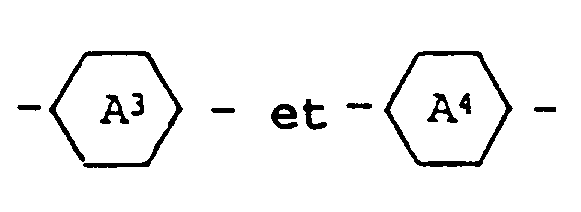


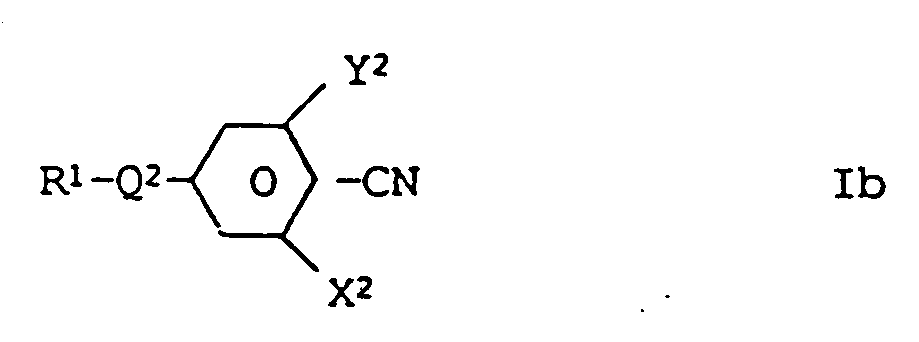


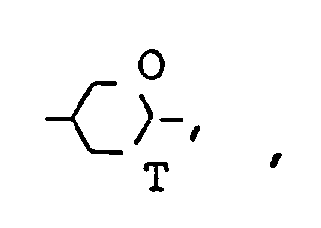








Applications Claiming Priority (33)
| Application Number | Priority Date | Filing Date | Title |
|---|---|---|---|
| GB898922168A GB8922168D0 (en) | 1989-10-02 | 1989-10-02 | Method for increasing the dielectric anisotropy of liquid crystals |
| GB8922168 | 1989-10-02 | ||
| DE3936308 | 1989-11-01 | ||
| DE3936307A DE3936307A1 (de) | 1989-11-01 | 1989-11-01 | Elektrisch schaltbares fluessigkristallsystem enthaltend nematische mikrotroepfchen |
| DE3936308 | 1989-11-01 | ||
| DE3936307 | 1989-11-01 | ||
| DE3940788 | 1989-12-09 | ||
| DE3940788 | 1989-12-09 | ||
| DE4000470 | 1990-01-10 | ||
| DE4000471A DE4000471A1 (de) | 1990-01-10 | 1990-01-10 | Elektrooptisches fluessigkristallsystem |
| DE4000470 | 1990-01-10 | ||
| DE4000471 | 1990-01-10 | ||
| DE4000723A DE4000723B4 (de) | 1990-01-12 | 1990-01-12 | Flüssigkristallmischung sowie deren Verwendung |
| DE4000723 | 1990-01-12 | ||
| DE4001023 | 1990-01-16 | ||
| DE4001023A DE4001023A1 (de) | 1990-01-16 | 1990-01-16 | Elektrooptisches fluessigkristallsystem |
| DE4001540 | 1990-01-19 | ||
| DE4001541A DE4001541A1 (de) | 1990-01-19 | 1990-01-19 | Elektrooptisches fluessigkristallsystem |
| DE4001540A DE4001540A1 (de) | 1990-01-19 | 1990-01-19 | Elektrooptisches fluessigkristallsystem |
| DE4001539A DE4001539A1 (de) | 1990-01-19 | 1990-01-19 | Elektrooptisches fluessigkristallsystem |
| DE4001541 | 1990-01-19 | ||
| DE4001539 | 1990-01-19 | ||
| DE4001683A DE4001683A1 (de) | 1990-01-22 | 1990-01-22 | Elektrooptisches fluessigkristallsystem |
| DE4001683 | 1990-01-22 | ||
| DE4001843 | 1990-01-23 | ||
| DE4001843A DE4001843A1 (de) | 1990-01-23 | 1990-01-23 | Elektrooptisches fluessigkristallsystem |
| DE4002146 | 1990-01-25 | ||
| DE4002146A DE4002146A1 (de) | 1990-01-25 | 1990-01-25 | Elektrooptisches fluessigkristallsystem |
| GB909001944A GB9001944D0 (en) | 1990-01-29 | 1990-01-29 | Method for increasing the dielectric anisotropy of liquid crystals |
| GB9001944 | 1990-01-29 | ||
| DE4005236A DE4005236A1 (de) | 1990-02-20 | 1990-02-20 | Elektrooptisches fluessigkristallsystem |
| DE4005236 | 1990-02-20 | ||
| PCT/EP1990/001649 WO1991005029A1 (fr) | 1989-10-02 | 1990-10-01 | Systeme mesomorphe electro-optique |
Publications (3)
| Publication Number | Publication Date |
|---|---|
| EP0452460A1 EP0452460A1 (fr) | 1991-10-23 |
| EP0452460B1 true EP0452460B1 (fr) | 1995-01-18 |
| EP0452460B2 EP0452460B2 (fr) | 1999-08-11 |
Family
ID=27585595
Family Applications (1)
| Application Number | Title | Priority Date | Filing Date |
|---|---|---|---|
| EP90916747A Expired - Lifetime EP0452460B2 (fr) | 1989-10-02 | 1990-10-01 | Systeme mesomorphe electro-optique |
Country Status (10)
| Country | Link |
|---|---|
| US (1) | US5344587A (fr) |
| EP (1) | EP0452460B2 (fr) |
| JP (1) | JP2962825B2 (fr) |
| KR (1) | KR100204745B1 (fr) |
| CN (1) | CN1051926A (fr) |
| CA (1) | CA2042603A1 (fr) |
| DE (1) | DE59008314D1 (fr) |
| SG (1) | SG26369G (fr) |
| WO (1) | WO1991005029A1 (fr) |
| YU (1) | YU245190A (fr) |
Families Citing this family (86)
| Publication number | Priority date | Publication date | Assignee | Title |
|---|---|---|---|---|
| GB2236759B (en) * | 1989-10-02 | 1993-09-15 | Merck Patent Gmbh | Method for increasing the dielectric anisotropy of liquid crystals |
| GB8928282D0 (en) * | 1989-12-14 | 1990-02-21 | Secr Defence | Pdlc materials |
| EP0449288B1 (fr) * | 1990-03-28 | 1996-09-11 | MERCK PATENT GmbH | Phényléthanes et médium cristallin liquide |
| DE59108431D1 (de) * | 1990-04-13 | 1997-02-06 | Merck Patent Gmbh | Flüssigkristallines medium |
| EP0477329B1 (fr) * | 1990-04-13 | 1996-03-20 | MERCK PATENT GmbH | Milieu de cristaux liquides |
| WO1992001477A1 (fr) * | 1990-07-26 | 1992-02-06 | G.D. Searle & Co. | Systeme d'apport de medicaments comprenant un materiau polymere |
| DE4027982A1 (de) * | 1990-09-04 | 1992-03-05 | Merck Patent Gmbh | Fluessigkristallmischung |
| DE4108448A1 (de) * | 1991-03-13 | 1992-09-17 | Merck Patent Gmbh | Elektrooptisches system |
| DE69225738T2 (de) * | 1991-03-27 | 1998-10-01 | Technology Co Ag | Flüssigkristallanzeigeelement und Projektionsanordnung unter Verwendung desselben |
| EP0700983B1 (fr) * | 1991-04-04 | 2001-07-11 | MERCK PATENT GmbH | Système électro-optique à cristaux liquides |
| EP0541912B1 (fr) * | 1991-09-13 | 1999-07-21 | Sharp Corporation | Système électro-optique |
| DE69229621D1 (de) * | 1991-09-13 | 1999-08-26 | Merck Patent Gmbh | Elektrooptisches System |
| US5233445A (en) * | 1991-12-12 | 1993-08-03 | Raychem Corporation | Active matrix liquid crystal display with average dielectric constant greater than 6 and less than 1.8 meq/g cyano groups |
| EP0564869A1 (fr) * | 1992-03-31 | 1993-10-13 | MERCK PATENT GmbH | Sytèmes électro-optiques à cristaux liquides |
| WO1993022397A1 (fr) | 1992-04-27 | 1993-11-11 | Merck Patent Gmbh | Systeme electro-optique a cristaux liquides |
| DE69310442T2 (de) * | 1992-06-10 | 1997-11-06 | Merck Patent Gmbh | Flüssigkristallverbundschicht vom Dispersions-typ, deren Herstellungsverfahren sowie in ihr zu verwendendes Flüssigkristallmaterial |
| DE4236104A1 (de) * | 1992-10-26 | 1994-04-28 | Hoechst Ag | Bifunktionelle Vorprodukte zur Herstellung von Flüssigkristallen |
| WO1995004789A1 (fr) * | 1993-08-11 | 1995-02-16 | Merck Patent Gmbh | Afficheur a cristaux liquides a rotation complete |
| GB2281566B (en) * | 1993-09-02 | 1998-05-13 | Merck Patent Gmbh | Composite material |
| US5641426A (en) * | 1994-04-29 | 1997-06-24 | Minnesota Mining And Manufacturing Company | Light modulating device having a vinyl ether-based matrix |
| CA2187889A1 (fr) * | 1994-04-29 | 1995-11-09 | Bruce A. Nerad | Dispositif de modulation de lumiere a matrice preparee a partir de reactifs acides |
| JP3579728B2 (ja) * | 1994-06-23 | 2004-10-20 | チッソ株式会社 | 液晶組成物および液晶表示素子 |
| US5972240A (en) * | 1994-07-15 | 1999-10-26 | Seiko Epson Corporation | Liquid crystal composite material and liquid crystal display device(s) which use them |
| JP3579698B2 (ja) * | 1994-09-06 | 2004-10-20 | チッソ株式会社 | 液晶組成物およびこれを用いた液晶表示素子 |
| DE19528107B4 (de) * | 1995-03-17 | 2010-01-21 | Merck Patent Gmbh | Flüssigkristallines Medium und seine Verwendung in einer elektrooptischen Flüssigkristallanzeige |
| JP2000129261A (ja) * | 1998-08-18 | 2000-05-09 | Minolta Co Ltd | 液晶組成物及び液晶光変調素子 |
| DE19855757A1 (de) * | 1998-12-03 | 2000-06-21 | Merck Patent Gmbh | Querverbrückte Cyclohexan-Derivate und flüssigkristallines Medium |
| TWI248968B (en) | 2001-09-28 | 2006-02-11 | Merck Patent Gmbh | Liquid crystalline medium and liquid crystal display |
| TW574350B (en) | 2001-10-23 | 2004-02-01 | Merck Patent Gmbh | Liquid crystalline medium and liquid crystal display |
| EP1438371A4 (fr) * | 2001-10-25 | 2005-03-16 | Samsung Electronics Co Ltd | Compose a cristaux liquides nematiques, et composition de cristaux liquides a haute temperature et ultra-rapide comprenant ce compose |
| KR20040070214A (ko) * | 2001-12-13 | 2004-08-06 | 소니 인터내셔널(유로파) 게엠베하 | 복합 재료 형성 방법 |
| DE10211597A1 (de) | 2002-03-15 | 2003-10-02 | Merck Patent Gmbh | Verfahren zur Herstellung von Ringverbindungen |
| DE50307629D1 (de) * | 2002-11-27 | 2007-08-16 | Merck Patent Gmbh | Tetrahydropyran-derivate |
| EP1482021B1 (fr) * | 2003-05-27 | 2007-01-24 | MERCK PATENT GmbH | Pyranes comme cristaux-liquides |
| KR101198452B1 (ko) * | 2003-08-25 | 2012-11-06 | 메르크 파텐트 게엠베하 | 메소제닉 화합물, 전기-광학 디스플레이용 매질 및전기-광학 디스플레이 |
| JP4997972B2 (ja) | 2004-10-04 | 2012-08-15 | Jnc石油化学株式会社 | テトラヒドロピラン化合物、液晶組成物およびこの液晶組成物を含有する液晶表示素子 |
| JP4794259B2 (ja) | 2005-09-28 | 2011-10-19 | 株式会社Adeka | 調光性液晶素子 |
| US7563492B2 (en) | 2005-11-16 | 2009-07-21 | Chisso Corporation | Liquid crystal composition and liquid crystal display device |
| ATE446350T1 (de) | 2006-01-27 | 2009-11-15 | Merck Patent Gmbh | Flüssigkristallines medium und flüssigkristallanzeige |
| ATE468380T1 (de) | 2006-03-17 | 2010-06-15 | Merck Patent Gmbh | Flüssigkristallines medium und flüssigkristallanzeige |
| EP1842894B1 (fr) | 2006-04-07 | 2011-05-04 | Merck Patent GmbH | Milieu liquide cristallin et dispositif d'affichage à base de cristaux liquides |
| WO2007147516A1 (fr) * | 2006-06-23 | 2007-12-27 | Merck Patent Gmbh | Composés mésogènes, support à cristaux liquides et affichage à cristaux liquides |
| CN100417706C (zh) * | 2006-09-21 | 2008-09-10 | 青岛科技大学 | 液晶化合物-4'-正庚氧基-4-偶氮苯羧酸-3-氟-4-氰基苯酯及其制备方法 |
| CN100417640C (zh) * | 2006-09-21 | 2008-09-10 | 青岛科技大学 | 液晶化合物-4’-正戊氧基-4-偶氮苯羧酸-3-氟-4-氰基苯酯及其制备方法 |
| CN100417704C (zh) * | 2006-09-21 | 2008-09-10 | 青岛科技大学 | 液晶化合物-4'-正丁氧基-4-偶氮苯羧酸-3-氟-4-氰基苯酯及其制备方法 |
| CN100417705C (zh) * | 2006-09-21 | 2008-09-10 | 青岛科技大学 | 液晶化合物-4'-正辛氧基-4-偶氮苯羧酸-3-氟-4-氰基苯酯及其制备方法 |
| CN100417707C (zh) * | 2006-09-21 | 2008-09-10 | 青岛科技大学 | 液晶化合物-4'-正己氧基-4-偶氮苯羧酸-3-氟-4-氰基苯酯及其制备方法 |
| EP1925653B1 (fr) | 2006-11-27 | 2010-02-24 | MERCK PATENT GmbH | Milieu liquide cristallin et affichage à base de cristaux liquides |
| ATE458796T1 (de) | 2006-11-27 | 2010-03-15 | Merck Patent Gmbh | Flüssigkristallines medium und flüssigkristallanzeige |
| EP1935960B1 (fr) | 2006-12-20 | 2010-11-03 | Merck Patent GmbH | Milieu à base de cristaux liquides et affichage à base de cristaux liquides |
| DE102008016053A1 (de) | 2007-04-24 | 2008-10-30 | Merck Patent Gmbh | Flüssigkristallines Medium und Flüssigkristallanzeige |
| JP5657386B2 (ja) | 2007-10-05 | 2015-01-21 | メルク パテント ゲゼルシャフト ミット ベシュレンクテル ハフツングMerck Patent Gesellschaft mit beschraenkter Haftung | 液晶媒体および液晶ディスプレイ |
| US8394292B2 (en) | 2008-02-01 | 2013-03-12 | MERCK Patent Gesellschaft mit beschränkter Haftung | Liquid-crystalline medium and liquid-crystal display |
| TWI506123B (zh) | 2008-02-01 | 2015-11-01 | Merck Patent Gmbh | 液晶介質及液晶顯示器 |
| WO2009100810A1 (fr) | 2008-02-15 | 2009-08-20 | Merck Patent Gmbh | Milieu liquide cristallin et écran à cristaux liquides |
| JP5634879B2 (ja) | 2008-02-18 | 2014-12-03 | メルク パテント ゲゼルシャフト ミット ベシュレンクテル ハフツングMerck Patent Gesellschaft mit beschraenkter Haftung | 液晶媒体および液晶ディスプレイ |
| ATE527333T1 (de) | 2008-03-11 | 2011-10-15 | Merck Patent Gmbh | Flüssigkristallines medium und flüssigkristallanzeige |
| WO2009112153A1 (fr) | 2008-03-11 | 2009-09-17 | Merck Patent Gmbh | Milieu cristal liquide et affichage à cristaux liquides |
| WO2009121458A1 (fr) | 2008-03-31 | 2009-10-08 | Merck Patent Gmbh | Milieu cristallin liquide et affichage à cristaux liquides |
| DE102008046250B4 (de) | 2008-09-08 | 2011-12-01 | Merck Patent Gmbh | Flüssigkristallines Medium und seine Verwendung in Flüssigkristallanzeigen |
| CN101770106B (zh) * | 2008-12-30 | 2012-12-12 | 比亚迪股份有限公司 | 一种聚合物分散液晶层及制备方法、聚合物分散液晶膜及制备方法 |
| US7837897B2 (en) * | 2009-04-27 | 2010-11-23 | Polytronix, Inc. | Polymeric dispersed liquid crystal light shutter device |
| DE102010015824B4 (de) | 2009-04-30 | 2021-12-30 | Merck Patent Gmbh | Flüssigkristallines Medium und Flüssigkristallanzeige |
| DE102010018170A1 (de) | 2009-04-30 | 2010-12-30 | Merck Patent Gmbh | Flüssigkristallines Medium und Flüssigkristallanzeige |
| DE102010052795A1 (de) | 2009-12-21 | 2011-06-22 | Merck Patent GmbH, 64293 | Flüssigkristallines Medium und Flüssigkristallanzeige |
| CN102858917B (zh) | 2010-04-28 | 2015-02-18 | 默克专利股份有限公司 | 包含液晶介质的光开关元件 |
| WO2011144299A1 (fr) | 2010-05-19 | 2011-11-24 | Merck Patent Gmbh | Élément commutateur optique comprenant un milieu cristallin liquide |
| GB201009488D0 (en) | 2010-06-07 | 2010-07-21 | Merck Patent Gmbh | Switch element comprising a liquid-crystaline medium |
| EP2423294A1 (fr) | 2010-08-24 | 2012-02-29 | Merck Patent GmbH | Élément de commutation comportant un support à cristaux liquides |
| EP2630217B1 (fr) | 2010-10-20 | 2016-10-26 | Merck Patent GmbH | Élément commutateur comprenant un milieu cristal liquide |
| DE102010049441B4 (de) | 2010-10-23 | 2019-05-09 | Merck Patent Gmbh | Flüssigkristallines Medium für Flüssigkristallanzeigen |
| DE102011119144A1 (de) | 2010-12-07 | 2012-06-14 | Merck Patent Gmbh | Flüssigkristallines Medium und Flüssigkristallanzeige |
| EP2798397B1 (fr) | 2011-12-27 | 2016-07-13 | Merck Patent GmbH | Dispositif de régulation en fonction de la température du passage d'énergie à travers une surface transparente |
| JP6302464B2 (ja) | 2012-06-05 | 2018-03-28 | メルク パテント ゲゼルシャフト ミット ベシュレンクテル ハフツングMerck Patent Gesellschaft mit beschraenkter Haftung | 液晶媒体および液晶ディスプレイ |
| TWI510506B (zh) * | 2012-12-14 | 2015-12-01 | Lg化學股份有限公司 | 聚合性組成物 |
| CN104130196A (zh) * | 2014-07-21 | 2014-11-05 | 北京大学 | 一种嘧啶类高双折射率液晶化合物及其制备方法 |
| EP3112441B1 (fr) | 2015-07-03 | 2020-04-08 | Merck Patent GmbH | Milieu a cristaux liquides et affichage a cristaux liquides |
| CN106398715A (zh) * | 2016-08-31 | 2017-02-15 | 中节能万润股份有限公司 | 一种高温液晶组合物、高温聚合物分散液晶组合物及高温聚合物分散液晶膜 |
| US20190309225A1 (en) | 2016-12-09 | 2019-10-10 | Merck Patent Gmbh | Liquid crystalline medium |
| CN108676565B (zh) * | 2018-03-19 | 2021-09-10 | 北京八亿时空液晶科技股份有限公司 | 一种液晶材料及其应用 |
| EP3617293B1 (fr) | 2018-08-28 | 2023-03-29 | Merck Patent GmbH | Support à cristaux liquides et affichage à cristaux liquides |
| WO2021127950A1 (fr) * | 2019-12-24 | 2021-07-01 | 北京八亿时空液晶科技股份有限公司 | Composition de cristaux liquides nématiques et son utilisation dans un dispositif d'affichage à cristaux liquides |
| CN117660018B (zh) * | 2022-08-25 | 2025-12-23 | 武汉新兆能科技有限公司 | 一种液晶组合物及其应用 |
| CN117625209B (zh) * | 2022-08-25 | 2025-12-23 | 武汉新兆能科技有限公司 | 一种液晶组合物及其应用 |
| US12055810B2 (en) | 2022-08-30 | 2024-08-06 | Orbotech Ltd. | Enhanced defect detection with planar macrocycle dyes in liquid-crystal films |
| CN117304945A (zh) * | 2023-10-24 | 2023-12-29 | 南昌虚拟现实研究院股份有限公司 | 液晶组合物以及液晶体光栅 |
Family Cites Families (28)
| Publication number | Priority date | Publication date | Assignee | Title |
|---|---|---|---|---|
| DE2831909A1 (de) * | 1978-07-20 | 1980-02-07 | Basf Ag | Fluessig-kristalline polymerphase mit cholesterischer struktur, verfahren zu ihrer herstellung und ihre verwendung |
| DE2832112C2 (de) * | 1978-07-21 | 1985-06-05 | Merck Patent Gmbh, 6100 Darmstadt | Flüssigkristallines Dielektrikum |
| US4228030A (en) * | 1979-02-28 | 1980-10-14 | General Electric Company | Liquid crystal compositions |
| DE3209178A1 (de) * | 1982-03-13 | 1983-09-15 | Merck Patent Gmbh, 6100 Darmstadt | Polyhalogenaromaten |
| EP0106175B1 (fr) * | 1982-09-30 | 1988-12-07 | Showa Denko Kabushiki Kaisha | Substance liquide cristalline et polymère conduisant l'électricité |
| DE3577872D1 (de) * | 1984-03-20 | 1990-06-28 | Taliq Corp | Fluessigkristallzusammensetzung, verfahren und vorrichtung. |
| JPS6168467A (ja) * | 1984-09-11 | 1986-04-08 | Chisso Corp | 正の誘電異方性を有するエステル誘導体 |
| DE3500897A1 (de) * | 1985-01-12 | 1986-07-17 | Merck Patent Gmbh, 6100 Darmstadt | Fluessigkristalline phase |
| EP0213146B1 (fr) * | 1985-01-22 | 1992-03-25 | MERCK PATENT GmbH | Méthode pour l'extension de la portée de température pour la phase sméctique A de compositions de cristaux liquides |
| CA1273192A (fr) * | 1985-06-10 | 1990-08-28 | Nuno A. Vaz | Gouttelettes de cristal liquides dispersees dans des polymeres en couche mince durcissables aux ultraviolets |
| DE3606153A1 (de) * | 1986-02-26 | 1987-08-27 | Merck Patent Gmbh | Fluessigkristallanzeigeelement |
| JPH07100790B2 (ja) * | 1986-09-01 | 1995-11-01 | チッソ株式会社 | ネマチツク液晶組成物 |
| KR950014738B1 (ko) * | 1986-09-08 | 1995-12-14 | 메르크 파텐트 게젤샤프트 미트 베슈랭크터 하트퉁 | 액정상 |
| US4869847A (en) * | 1987-03-16 | 1989-09-26 | Hoechst Celanese Corp. | Microdisperse polymer/liquid crystal composite |
| DE3884545D1 (de) * | 1987-04-03 | 1993-11-04 | Merck Patent Gmbh | Fluessigkristalline phase, tolane enthaltend. |
| GB8712464D0 (en) * | 1987-05-27 | 1987-07-01 | Merck Patent Gmbh | Liquid crystal phase |
| US5087387A (en) * | 1987-08-28 | 1992-02-11 | Kent Research Corporation | Light modulating material and method for preparing same |
| US4888126A (en) * | 1987-08-28 | 1989-12-19 | Linear Optics Company, Inc. | Light modulating material and method for preparing same |
| CA1307576C (fr) * | 1987-10-20 | 1992-09-15 | Yoshi Arai | Dispositifs a cristaux liquides et methode de fabrication de ces dispositifs |
| JPH0684339B2 (ja) * | 1987-11-16 | 1994-10-26 | チッソ株式会社 | シクロヘキサン誘導体 |
| JP2660702B2 (ja) * | 1987-12-14 | 1997-10-08 | チッソ株式会社 | 液晶組成物 |
| US4891152A (en) * | 1987-12-28 | 1990-01-02 | Hughes Aircraft Company | Dispersion of liquid crystal droplets in a photopolymerized matrix and devices made therefrom |
| WO1989006371A2 (fr) * | 1987-12-30 | 1989-07-13 | Hughes Aircraft Company | Materiau a cristaux liquides disperses dans un polymere d'acrylate et dispositifs realises a partir de ce materiau |
| GB8814327D0 (en) * | 1988-06-16 | 1988-07-20 | Secr Defence | Fluorinated 4"-cyano substituted terphenyls |
| EP0359146B1 (fr) * | 1988-09-08 | 1994-08-03 | Dainippon Ink And Chemicals, Inc. | Dispositif à cristal liquide |
| US5015057A (en) * | 1989-09-21 | 1991-05-14 | Tektronix, Inc. | Liquid crystal fiber optic attenuator and process for making same |
| US4971719A (en) * | 1989-09-22 | 1990-11-20 | General Motors Corporation | Polymer dispersed liquid crystal films formed by electron beam curing |
| GB8928282D0 (en) * | 1989-12-14 | 1990-02-21 | Secr Defence | Pdlc materials |
-
1990
- 1990-10-01 WO PCT/EP1990/001649 patent/WO1991005029A1/fr not_active Ceased
- 1990-10-01 YU YU245190A patent/YU245190A/sh unknown
- 1990-10-01 SG SG1995904322A patent/SG26369G/en unknown
- 1990-10-01 DE DE59008314T patent/DE59008314D1/de not_active Expired - Lifetime
- 1990-10-01 JP JP2515321A patent/JP2962825B2/ja not_active Expired - Lifetime
- 1990-10-01 KR KR1019910700549A patent/KR100204745B1/ko not_active Expired - Lifetime
- 1990-10-01 EP EP90916747A patent/EP0452460B2/fr not_active Expired - Lifetime
- 1990-10-01 CA CA002042603A patent/CA2042603A1/fr not_active Abandoned
- 1990-10-02 CN CN90109220A patent/CN1051926A/zh active Pending
-
1991
- 1991-06-03 US US07/687,852 patent/US5344587A/en not_active Expired - Lifetime
Also Published As
| Publication number | Publication date |
|---|---|
| EP0452460A1 (fr) | 1991-10-23 |
| KR100204745B1 (ko) | 1999-06-15 |
| DE59008314D1 (de) | 1995-03-02 |
| KR920701389A (ko) | 1992-08-11 |
| CA2042603A1 (fr) | 1991-04-03 |
| US5344587A (en) | 1994-09-06 |
| JPH04502781A (ja) | 1992-05-21 |
| CN1051926A (zh) | 1991-06-05 |
| EP0452460B2 (fr) | 1999-08-11 |
| JP2962825B2 (ja) | 1999-10-12 |
| WO1991005029A1 (fr) | 1991-04-18 |
| SG26369G (en) | 1995-09-18 |
| YU245190A (sh) | 1992-07-20 |
Similar Documents
| Publication | Publication Date | Title |
|---|---|---|
| EP0452460B1 (fr) | Systeme mesomorphe electro-optique | |
| EP0807153A1 (fr) | Affichage electro-optique a cristaux liquides | |
| US5958290A (en) | Electrooptical liquid crystal system | |
| EP0995787A2 (fr) | Affichage à cristaux liquides électro-optique | |
| DE69123127T2 (de) | Flüssigkristallanzeige | |
| EP0525492B1 (fr) | Agencement électro-optique | |
| DE3919942A1 (de) | Elektrooptisches fluessigkristallsystem | |
| EP0768359A1 (fr) | Affichage à cristaux liquides électro-optique | |
| DE4005869A1 (de) | Elektrooptisches fluessigkristallsystem | |
| EP0700983B1 (fr) | Système électro-optique à cristaux liquides | |
| DE19625100A1 (de) | Elektrooptische Flüssigkristallanzeige | |
| WO1992004421A1 (fr) | Melange de cristaux liquides | |
| DE69211052T2 (de) | Elektrooptisches Flüssigkristallsystem | |
| JPH02278230A (ja) | 電気光学的液晶系 | |
| JP3133737B2 (ja) | 電気光学液晶系 | |
| DE4007039A1 (de) | Elektrooptisches fluessigkristallsystem | |
| DE4000723B4 (de) | Flüssigkristallmischung sowie deren Verwendung | |
| DE4005236A1 (de) | Elektrooptisches fluessigkristallsystem | |
| DE4001540A1 (de) | Elektrooptisches fluessigkristallsystem | |
| DE4002146A1 (de) | Elektrooptisches fluessigkristallsystem | |
| DE4001023A1 (de) | Elektrooptisches fluessigkristallsystem | |
| DE4100237A1 (de) | Elektrooptisches fluessigkristallsystem | |
| DE4000471A1 (de) | Elektrooptisches fluessigkristallsystem | |
| DE4001539A1 (de) | Elektrooptisches fluessigkristallsystem | |
| DE3936307A1 (de) | Elektrisch schaltbares fluessigkristallsystem enthaltend nematische mikrotroepfchen |
Legal Events
| Date | Code | Title | Description |
|---|---|---|---|
| PUAI | Public reference made under article 153(3) epc to a published international application that has entered the european phase |
Free format text: ORIGINAL CODE: 0009012 |
|
| AK | Designated contracting states |
Kind code of ref document: A1 Designated state(s): CH DE DK FR GB IT LI NL SE |
|
| 17P | Request for examination filed |
Effective date: 19910919 |
|
| 17Q | First examination report despatched |
Effective date: 19930121 |
|
| GRAA | (expected) grant |
Free format text: ORIGINAL CODE: 0009210 |
|
| AK | Designated contracting states |
Kind code of ref document: B1 Designated state(s): CH DE DK FR GB IT LI NL SE |
|
| PG25 | Lapsed in a contracting state [announced via postgrant information from national office to epo] |
Ref country code: IT Free format text: LAPSE BECAUSE OF FAILURE TO SUBMIT A TRANSLATION OF THE DESCRIPTION OR TO PAY THE FEE WITHIN THE PRE;WARNING: LAPSES OF ITALIAN PATENTS WITH EFFECTIVE DATE BEFORE 2007 MAY HAVE OCCURRED AT ANY TIME BEFORE 2007. THE CORRECT EFFECTIVE DATE MAY BE DIFFERENT FROM THE ONE RECORDED.SCRIBED TIME-LIMIT Effective date: 19950118 Ref country code: NL Effective date: 19950118 Ref country code: DK Effective date: 19950118 |
|
| GBT | Gb: translation of ep patent filed (gb section 77(6)(a)/1977) |
Effective date: 19950130 |
|
| REF | Corresponds to: |
Ref document number: 59008314 Country of ref document: DE Date of ref document: 19950302 |
|
| ET | Fr: translation filed | ||
| PG25 | Lapsed in a contracting state [announced via postgrant information from national office to epo] |
Ref country code: SE Effective date: 19950418 |
|
| NLV1 | Nl: lapsed or annulled due to failure to fulfill the requirements of art. 29p and 29m of the patents act | ||
| PLBI | Opposition filed |
Free format text: ORIGINAL CODE: 0009260 |
|
| 26 | Opposition filed |
Opponent name: DAINIPPON INK AND CHEMICALS, INC. Effective date: 19951016 |
|
| PLBF | Reply of patent proprietor to notice(s) of opposition |
Free format text: ORIGINAL CODE: EPIDOS OBSO |
|
| PLBF | Reply of patent proprietor to notice(s) of opposition |
Free format text: ORIGINAL CODE: EPIDOS OBSO |
|
| PLAW | Interlocutory decision in opposition |
Free format text: ORIGINAL CODE: EPIDOS IDOP |
|
| PLAW | Interlocutory decision in opposition |
Free format text: ORIGINAL CODE: EPIDOS IDOP |
|
| PUAH | Patent maintained in amended form |
Free format text: ORIGINAL CODE: 0009272 |
|
| STAA | Information on the status of an ep patent application or granted ep patent |
Free format text: STATUS: PATENT MAINTAINED AS AMENDED |
|
| 27A | Patent maintained in amended form |
Effective date: 19990811 |
|
| AK | Designated contracting states |
Kind code of ref document: B2 Designated state(s): CH DE DK FR GB IT LI NL SE |
|
| REG | Reference to a national code |
Ref country code: CH Ref legal event code: AEN Free format text: AUFRECHTERHALTUNG DES PATENTES IN GEAENDERTER FORM |
|
| GBTA | Gb: translation of amended ep patent filed (gb section 77(6)(b)/1977) | ||
| ET3 | Fr: translation filed ** decision concerning opposition | ||
| REG | Reference to a national code |
Ref country code: GB Ref legal event code: IF02 |
|
| PGFP | Annual fee paid to national office [announced via postgrant information from national office to epo] |
Ref country code: CH Payment date: 20040929 Year of fee payment: 15 |
|
| PGFP | Annual fee paid to national office [announced via postgrant information from national office to epo] |
Ref country code: FR Payment date: 20041008 Year of fee payment: 15 |
|
| PG25 | Lapsed in a contracting state [announced via postgrant information from national office to epo] |
Ref country code: LI Free format text: LAPSE BECAUSE OF NON-PAYMENT OF DUE FEES Effective date: 20051031 Ref country code: CH Free format text: LAPSE BECAUSE OF NON-PAYMENT OF DUE FEES Effective date: 20051031 |
|
| REG | Reference to a national code |
Ref country code: CH Ref legal event code: PL |
|
| PG25 | Lapsed in a contracting state [announced via postgrant information from national office to epo] |
Ref country code: FR Free format text: LAPSE BECAUSE OF NON-PAYMENT OF DUE FEES Effective date: 20060630 |
|
| REG | Reference to a national code |
Ref country code: FR Ref legal event code: ST Effective date: 20060630 |
|
| PGFP | Annual fee paid to national office [announced via postgrant information from national office to epo] |
Ref country code: GB Payment date: 20090930 Year of fee payment: 20 |
|
| PGFP | Annual fee paid to national office [announced via postgrant information from national office to epo] |
Ref country code: DE Payment date: 20090923 Year of fee payment: 20 |
|
| REG | Reference to a national code |
Ref country code: GB Ref legal event code: PE20 Expiry date: 20100930 |
|
| PG25 | Lapsed in a contracting state [announced via postgrant information from national office to epo] |
Ref country code: GB Free format text: LAPSE BECAUSE OF EXPIRATION OF PROTECTION Effective date: 20100930 |
|
| PG25 | Lapsed in a contracting state [announced via postgrant information from national office to epo] |
Ref country code: DE Free format text: LAPSE BECAUSE OF EXPIRATION OF PROTECTION Effective date: 20101001 |