EP0452836B1 - Procédé d'amélioration des caractéristiques du fil filé de fibres dans un métier à filer à rotor - Google Patents
Procédé d'amélioration des caractéristiques du fil filé de fibres dans un métier à filer à rotor Download PDFInfo
- Publication number
- EP0452836B1 EP0452836B1 EP91105929A EP91105929A EP0452836B1 EP 0452836 B1 EP0452836 B1 EP 0452836B1 EP 91105929 A EP91105929 A EP 91105929A EP 91105929 A EP91105929 A EP 91105929A EP 0452836 B1 EP0452836 B1 EP 0452836B1
- Authority
- EP
- European Patent Office
- Prior art keywords
- yarn
- user
- rotor
- information
- knowledge system
- Prior art date
- Legal status (The legal status is an assumption and is not a legal conclusion. Google has not performed a legal analysis and makes no representation as to the accuracy of the status listed.)
- Expired - Lifetime
Links
- 238000007383 open-end spinning Methods 0.000 title claims description 73
- 238000000034 method Methods 0.000 title claims description 36
- 239000002994 raw material Substances 0.000 claims description 53
- 239000000835 fiber Substances 0.000 claims description 43
- 238000009987 spinning Methods 0.000 claims description 36
- 229920000742 Cotton Polymers 0.000 claims description 27
- 238000000576 coating method Methods 0.000 claims description 8
- 229920002994 synthetic fiber Polymers 0.000 claims description 8
- 238000004364 calculation method Methods 0.000 claims description 7
- 239000011248 coating agent Substances 0.000 claims description 7
- 230000004044 response Effects 0.000 claims description 7
- 239000002699 waste material Substances 0.000 claims description 7
- 239000000463 material Substances 0.000 claims description 6
- 239000004753 textile Substances 0.000 claims description 3
- 239000012535 impurity Substances 0.000 claims 1
- -1 mixes Substances 0.000 claims 1
- 239000000203 mixture Substances 0.000 description 15
- 239000007795 chemical reaction product Substances 0.000 description 11
- 230000008569 process Effects 0.000 description 9
- 239000000047 product Substances 0.000 description 8
- 239000004744 fabric Substances 0.000 description 7
- 230000001419 dependent effect Effects 0.000 description 4
- 238000004519 manufacturing process Methods 0.000 description 4
- 238000012360 testing method Methods 0.000 description 4
- 206010020112 Hirsutism Diseases 0.000 description 3
- 238000010586 diagram Methods 0.000 description 2
- 238000011156 evaluation Methods 0.000 description 2
- 239000012467 final product Substances 0.000 description 2
- 238000012545 processing Methods 0.000 description 2
- 239000012209 synthetic fiber Substances 0.000 description 2
- 230000003187 abdominal effect Effects 0.000 description 1
- 230000000903 blocking effect Effects 0.000 description 1
- 238000004140 cleaning Methods 0.000 description 1
- 238000012790 confirmation Methods 0.000 description 1
- 238000011109 contamination Methods 0.000 description 1
- 230000001186 cumulative effect Effects 0.000 description 1
- 230000000694 effects Effects 0.000 description 1
- 238000005516 engineering process Methods 0.000 description 1
- 239000002657 fibrous material Substances 0.000 description 1
- 238000009434 installation Methods 0.000 description 1
- 238000012986 modification Methods 0.000 description 1
- 230000004048 modification Effects 0.000 description 1
- 230000008520 organization Effects 0.000 description 1
- 230000003449 preventive effect Effects 0.000 description 1
- 238000012549 training Methods 0.000 description 1
- 210000002268 wool Anatomy 0.000 description 1
- 239000002759 woven fabric Substances 0.000 description 1
Images




Classifications
-
- D—TEXTILES; PAPER
- D01—NATURAL OR MAN-MADE THREADS OR FIBRES; SPINNING
- D01H—SPINNING OR TWISTING
- D01H13/00—Other common constructional features, details or accessories
- D01H13/32—Counting, measuring, recording or registering devices
Definitions
- the present invention relates to a method for selecting components of a rotor spinning device and their operating characteristics.
- the character of a yarn produced in a rotor spinning process is mainly influenced by the raw material from which it is made. For this reason, it is essential that a suitable combination of the rotor spinning device components is provided and, furthermore, that the working characteristics of these components are optimized in accordance with the selected raw material and the desired yarn.
- the invention is therefore based on the object of proposing a method for improving the spinning result of a rotor spinning machine with regard to the yarn properties of the spun yarn and the working characteristics of the rotor spinning machine, which largely excludes subjective errors.
- the present invention relates to a method for specifying the optimum of the components of a rotor spinning unit and their working characteristics with respect to an intended application of the product.
- the method according to the invention includes improvements in the repeatability, completeness and availability compared to the known methods of this type in order to obtain objective information.
- the processor has the ability to output information to a user and also to accept information entered by the user, to provide the user with information regarding the intended product application, and in response to the entered information about the intended product application To confront questions about the desired characteristics of the intended product applications.
- the method includes a request to the user in order to ensure the supply of information relating to the raw material of the yarn used for the intended product, the yarn number corresponding to the selection of the raw material and selected groups of yarn characteristics such as Obtain yarn length, yarn count and waste content.
- the method also includes the calculation of selected dimensions of the rotor spinning device in evaluation of the information entered with respect to the selected yarn characteristics.
- the method includes a request to the user to enter information on the fiber fineness for the calculation of a warpage, based on this predetermined fiber fineness.
- Another aspect of the method according to the invention is also the comparison of the calculated warp area with a predetermined warp area, the calculation of a value for the number of fibers in the yarn cross section and the comparison of the calculated value with a predetermined value, as well as a request to the user, the information entered regarding the yarn to be modified if the calculated warpage does not match the specified warpage.
- the method includes a request to the user to modify the information entered for the yarn in the event that the calculated value of the number of fibers in the cross section of the yarn does not match the predetermined number of fibers.
- the method includes compiling a preliminary list of acceptable components of the rotor spinning device from a selected group of rotor spinning components and the identification of selected components and predetermined working characteristics.
- the selection of predetermined acceptable rotor spinning components includes the selection of a spinning rotor in accordance with information regarding the relative quality level of the yarn spun by the spinning rotor, the rotor speed and the yarn number range.
- the compilation of a preliminary list includes the identification of acceptable yarn take-off components, taking into account information about desired properties of the yarn and information about the raw material.
- FIG. 1 shows a method for determining optimal spinning components for a rotor spinning process according to the prior art.
- a yarn manufacturer 101 provides information 102 regarding the raw material of the fibers, the yarn and the desired yarn destination to technical experts 104 of a rotor spinning part manufacturer.
- fiber information 102 may include information related to fineness, length, or blend of the raw fiber material.
- the desired yarn includes the type of yarn that yarn manufacturer 101 wishes to produce.
- the technical experts 104 summarize their technical knowledge in a technical expertise 105, which can include carrying out various experimental tests with different yarn spinning processes in which the components of the spinning rotor were varied in each test. These experimental tests can be confirmed by the technical experts 104 by means of supplementary so-called confirmation tests.
- the technical experts 104 opt for a selection 106 of optimal spinning components.
- This information is provided for the yarn manufacturer 101 for a practical method 107 in the rotor spinning process in which the proposed optimal spinning components are installed or set as recommended.
- the yarn manufacturer 101 then carries out a production run 108 using the suggested optimal spinning components.
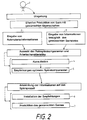
- Fig. 2 is a schematic general overview of the interrelation of the rotor spinning knowledge system according to the present invention and a yarn manufacturer 1.
- the yarn manufacturer 1 provides information 2 relating to the Obtain raw material from which the desired yarn is made as well as information regarding the desired yarn properties 3.However, instead of transmitting this information to technical experts of a rotor spinning part manufacturer for their considerations to determine optimal rotor spinning components and working characteristics, the yarn manufacturer 1 consults the rotor spinning knowledge system in a consultation 4.
- the consultation 4 includes entering known yarn information 2 and the desired yarn destination 3 in accordance with certain prescribed dimensions, which will be discussed later, into a conventional digital computer loaded with, for example, a software version of the rotor spinning knowledge system of the present invention.
- Consultation 4 is associated with a number of questions that must be answered by yarn manufacturer 1 in order to obtain information for the process by the rotor spinning knowledge system of the present invention.
- the data entered are processed by the computer under the control of the rotor spinning knowledge system and recommendations for the proposed optimal spinning components for use in the rotor spinning process are ultimately displayed to the yarn manufacturer 1.
- the yarn manufacturer 1 realizes the suggestions offered by the rotor spinning knowledge system by means of an embodiment 6, which includes the installation or adjustment of identified optimal spinning components and the production 7 of the desired yarn.
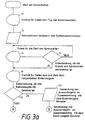
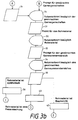
- the series of information from collected questions and answers are collectively referred back to the consultation and are graphically depicted in the flow chart of Fig. 3, which additionally schematically shows the process steps performed by the digital computer in accordance with the instructions of the rotor spinning knowledge system.
- a printout of a representative consultation includes important information entered by the user, questions asked by the user of the rotor spinning knowledge system, a listing of various rules, and the display of values that have been set in accordance with rules and include values that are given by the rules that correspond to user information have been determined and rules that are only applied in circumstances where no user information was available.
- Fig. 3 is a flow chart of the control sequence of the rotor spinning knowledge system.
- the rotor spinning knowledge system of the present invention is designed to operate in the manner of conventional so-called expert systems and, accordingly, includes the use of background and foreground chain rules and control blocks and other conventional characteristics of such expert systems.
- the rotor spinning knowledge system was realized in practical application through the use of conventional expert system software in the form of IBM software and expert system environment software.
- the user is asked for information regarding the type and production capacity of the spinning machine in which the recommended spinning components are to be used by the rotor spinning knowledge system. This query activity is shown as block 10 in FIG. 3. In response to this query from block 10, the user identifies the type of spinning machine.
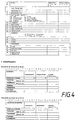
- the user can summarize the information that is requested during the consultation on a form with entries by hand, as is represented representatively in FIG. 4. Then the user would refer to an heading "A machine data" and specifically to the name of the spinning box type and manually enter the aforementioned entries into the computer on the specified form.
- the knowledge base of the rotor spinning knowledge system provides a substitute value in connection with a specified type of a spinning machine if no information has been specified by the yarn manufacturer 1.
- the rotor spinning knowledge system controls the computer to provide a substitute value for a "SE8" type spinning machine in response to the absence of a user response to prompt block 10.
- a block 12 in FIG. 3 represents that Input of the information of the spinning machine type by the user.
- the next step in the control sequence is a prompt, represented by block 14, for data regarding the number of spinning units.
- This prompt is referred to as "ANZ SPINNST" in the tax sequence.
- the knowledge system may include a rule that the number of spinning units must be divisible by a predetermined number, for example 24. If such a rule is applied, the knowledge system makes a distinction, represented by block 16 in FIG. 3, although the number of spinning positions entered by the user fulfills this rule. If the number of spinning positions entered by the user cannot be divided by the predetermined number, the knowledge system forms a replacement number of spinning positions. The replacement number of spinning stations can be checked at a later step in the control sequence to decide whether the number is suitable.
- the next step in the control sequence is a prompt, represented by block 18, for information regarding the final product application of the yarn.
- the rules in the knowledge system related to the end product of the yarn are referred to in the expression as "MISSION M” and "MAKE W".
- Each of the two rules includes a so-called ejection rule, which is used to exclude the application of the other rule if one of the two rules fulfills the information entered by the user.
- the user in response to the prompt shown in block 18, the user must specify whether the end product of the yarn is either a woven or a knitted fabric, with satisfactory application of either rule.
- the premise of the rule "APPLICATION W" is fulfilled and the ejection rule is applied to the knowledge system of parameters of the other application in question (in this example Knitted fabrics) during the rest of the consultation.
- the knowledge base of the knowledge system includes factual knowledge regarding those yarn characteristics that are preferably considered depending on the end product.
- the user is prompted with a prompt requesting information regarding safe yarn characteristics associated with a yarn for use in a fabric, and this prompt is represented by block 26.
- Figure 4 is a listing of selected yarn characteristics which the user can wish in a yarn that will ultimately be used in a fabric.
- the knowledge system allows the user to choose a sequence based on the importance of special yarn properties in the yarn. For example, the user can indicate that a desired yarn property is a high degree of hairiness.
- the rotor spinning knowledge system includes rules that relate the yarn properties to the end product that it is Yarn includes the quality characteristics of the yarn and the type of raw material from which the yarn will be made.
- An example of such a rule is shown below in the printout of the representative consultation:
- the rotor spinning knowledge system determines a selected relative level of each of the desired characteristics. For example, if denim is the type of fabric to be produced and the yarn needs to be processed into a chain in an intermediate process, the rotor spinning knowledge system can apply a rule as follows:
- the rotor spinning knowledge system prompts the user to obtain information regarding the raw material from which the yarn is to be produced, shown as block 30 in Fig. 3.
- the user can provide an answer, shown as block 32 that the raw material of the yarn is, for example, synthetic material, a mixture of synthetic and natural fibers or cotton.
- the printout indicates that cotton was selected as the raw material in the representative consultation:
- the monitor rule "MIX OF INPUT (1)" described above prevents the knowledge system from including parameters of the fiber blend if the selected raw material is not a fiber blend (i.e. a blend of synthetic and natural fibers).
- the knowledge system contains various "DONT CONSIDER" blocking rules regarding each unselected raw material.
- the unselected raw material includes raw materials that consist of a mixture of synthetic and wool fibers and a mixture of synthetic and cotton fibers.
- the knowledge system additionally contains control blocks which contain rules which ensure that the cumulative percentage of the respective raw material is 100.
- the rotor spinning knowledge system can be configured to promptly output to the user for the desired or preferably used yarn number range, represented by block 34 in Fig. 3. If such information is desired, the user sees this information as shown by the Block 36 before.
- the rotor spinning knowledge system then presents questions to the user regarding the properties of the selected raw material.
- a specified chain of rules is applied. For example, if the selected raw material is a synthetic material, the rotor spinning knowledge system applies a predetermined set of rules, represented by block 38. Alternatively, if the raw material is a fiber blend, the rotor spinning knowledge system applies a different chain of rules, represented by block 40. As an additional Alternatively, the rotor spinning knowledge system can branch to yet another predetermined chain of rules about obtaining information that the raw material is cotton, as represented by block 42 in FIG. 3.
- Fig. 3 shows possible control sequences generated by the rotor spinning knowledge system in connection with the identification of the raw material as a synthetic material, a fiber mixture or cotton.
- the knowledge system can promptly provide the user with information about the properties of the synthetic fibers, for example the preferred fiber length and fineness.
- the knowledge system promptly issues to the user, represented by block 46, for information on the proportion of natural fibers, the proportion of synthetic fibers, the amount of fibers preferably used, and the fiber fineness.
- the knowledge system can promptly prompt the user for information on the minimum yarn number. Shown below is an extract from the printout of the representative consultation, which is promptly reproduced by the knowledge system for such information.
- the knowledge system requests a value of "GFH MIN INPUT” and then displays a minimum yarn count based on the user response of "14".
- the knowledge system receives information that the raw material is 100% cotton or, as represented by block 48, that the natural fiber content of a selected fiber blend is cotton, the knowledge system promptly issues a message to the user to inform him of scraps or inform waste in the cotton raw material.
- the knowledge system prompts the user to confirm that the peel or waste content of the cotton material is known. If the shell or waste content of the cotton raw material is not known, the knowledge system allocates a predetermined proportion of dirt, as shown by block 52, and displays this predetermined proportion of dirt to the user. Alternatively, if the user replies in the affirmative, represented by block 50, that the peel or dirt content of the cotton material is known, the knowledge system promptly issues the user with information regarding a preferred or desired level of the peel or dirt content of the cotton material. In this case, the user can enter information into any conventional unit, for example the Shirley Trash Seperator. If desired, the knowledge system can be designed to indicate the tolerances of individual rotor types and sizes with respect to a maximum shell and dirt content of the cotton material, which can still be accepted for the specific type or size of the rotors.
- the rotor spinning knowledge system sets values for the dirt content and shell content of the raw material from which the yarn is to be produced. As shown below, the knowledge system sets the peel and dirt content to a value "0" if the raw material is a synthetic material or a fiber blend that does not contain cotton.
- the knowledge system sets the shell and dirt content to 0 if the user does not explain a specified value. For this reason, the knowledge system displays a corresponding warning that the proposed raw material is not suitable and that the suitable rotor cannot be identified if the raw material is cotton or a fiber mixture that contains cotton and the proportion of shells and dirt is 100 on a scale from 100 to 0.
- the following excerpt from the printout shows this control sequence.
- the knowledge system contains an exception to the control sequence described above, which generates a warning to the user regarding the lack of a usable rotor. If the end product is diapers or flannel, then the knowledge system shows no warning to the user. This is shown in the extract shown above as “AND (ART W IS NOT 'BED LINEN, NAPPED) (FLANELLE” or not, then ART W) ".
- the knowledge system sets the content of the shell and dirt portion to 0, which relates to a raw material that is mainly free of any foreign matter; consequently, all rotors can be used for such a shell and dirt-free raw material. Properties other than shell and dirt content of the raw material will therefore influence the decision made by the knowledge system regarding the coating of the rotor and opening roller.
- the knowledge system decides the value for the twist to be introduced into the yarn as an "alpha” value and represented by block 56 in Fig. 3. More specifically, the knowledge system decides an "alpha” value based on the end product of the yarn tenacity and other required properties. Below is an excerpt from the printout, which shows a possible rule that the knowledge system can use to decide on an "alpha" value.
- the decision of the yarn twist or the "Alpha” value is shown below.
- the knowledge system promptly provides the user with information regarding the desired fiber fineness, as represented by block 58 in Fig. 3.
- the user is specifically asked to provide information regarding the maximum rotor speed.
- the knowledge system uses a large number of rules, by means of which the maximum rotor speed is set to a predetermined value, which is dependent on secured yarn properties, such as the fiber fineness below a predetermined value or fiber length below a predetermined value. If one or more of these specified fiber properties meet the rule, the maximum rotor speed is set to a predetermined value, for example 100 rpm. Below is an extract from the printout regarding the representative consultation on such a rule shown.
- the knowledge system calculates the warpage value in connection with the desired yarn tenacity and the designated maximum rotor speed as shown by block 60 in FIG. 3. If the calculated warpage quantity is a value outside the range of standard values, for example a value of 30 to 212 the knowledge system applies a rule to decide whether the calculated delay value is within a predetermined range, as represented by block 62 in FIG. 3. If the calculated delay value lies outside a predetermined range, the knowledge system promptly issues a message to the user to decide whether another draft zone can be used, including, for example, a rotor that has a larger exhaust nozzle, as shown by block 64 in Fig. 3.
- the knowledge system can be designed to provide the user with individual Provide opportunities for the display if the proposed alternative B ezugwert is acceptable, as shown by block 66.
- the knowledge system will then automatically select a higher delay size in the event that the user does not select an alternative delay size. For example, the knowledge system can automatically evaluate a delay range between 39 and 276.
- the knowledge system calculates the minimum and maximum number of fibers in cross-section, as represented by block 68 in Figure 3.
- the minimum number of fibers in cross-section is expressed as a value per 100 fibers in cross-section.
- the knowledge system compares the calculated minimum number of fibers in cross-section and the maximum number of fibers with current values to decide whether these values can be achieved by the method, as shown by block 70 in Fig. 3. If the calculated number of fibers in cross-section does not reach there is Knowledge system an indication on the display, as shown by block 72 in Fig. 3.
- the user receives a prompt to select or set a useful number of fibers in cross section. Such a display is shown below as an extract from the printout.
- the knowledge system then promptly issues a message to the user for information regarding the desired quality standard of the yarn, as represented by block 74 in FIG. 3.
- the knowledge system provides three quality levels.
- a quality level is called “service life”, and the yarns produced with this quality level have a high level of stability and are of relatively average quality.
- the next higher quality level is referred to as "quality” and refers to a relatively high quality level which is achieved when the speed of the rotor is relatively high.
- the highest quality level is referred to as "extra quality” and relates to the highest quality of the yarn that can be achieved (this quality level can perhaps only be achieved by a rotor speed below the maximum necessary rotor speed).
- the choice of one of these three quality levels by the user affects the type of spinning components that can be suggested as a result of the consultation.
- the selection of the "service life” quality level really results in the last recommendation of spinning components, such as the rotor and opening roller, which are provided with special coatings.
- the selection of the quality level "extra quality” gives a recommendation that the recommended rotor should only work at a speed which is below its maximum speed.
- the rotor spinning knowledge system then describes a first list of acceptable yarn take-off nozzles, as represented by block 76 in Figure 3.
- the first list is acceptable yarn take-off nozzles described, based on information which is preferably provided by the user or was otherwise determined during the consultation regarding the raw material, the properties of the raw material and the selected quality level of the yarn.
- Below is an extract from the representative consultation, which shows the application of a rule for the decision of a possible yarn take-off nozzle:
- the rotor spinning knowledge system collects a preliminary list of acceptable spinning rotors. For this reason, the knowledge system includes information regarding the percentage of contamination of the cotton material, the amount of fibers and properties of the yarn to be produced, taking into account a recommended preliminary list of acceptable spinning rotors. Furthermore, the rotor spinning knowledge system can be designed to determine suitable coating properties of the selected acceptable spinning rotors. For example, if "aggressive" cotton is used as the raw material, use a borated rotor that is included in the list of acceptable spinning rotors. Below is an extract from the printout, which shows a rule for the selection of a suitable rotor coating:
- the rotor spinning knowledge system denotes a rotor Calculation, including in an evaluation information that includes the acceptable dirt content of the cotton raw material, the yarn tenacity, the yarn properties with respect to uniformity and tendency to curl, as represented by block 82 in FIG. 3.
- the rotor spinning knowledge system includes the speed of the identified rotor in relation to the selected raw material in its calculations.
- the knowledge system takes into account the specified quality parameters, such as the standard, both quality or extra quality as well as the thread number range. As shown in the extract from the representative consultation below, the application of such a rule is included for further refinement of the list of identified acceptable rotors.
- the rotor spinning knowledge system applies further rules to decide whether an acceptable rotor is available for a relatively wide range of yarn numbers and a lower one Quality level.
- the rotor spinning knowledge system thus decides whether a rotor can be identified that is able to work in the given yarn number range and to produce a yarn with a lower quality level than the quality level initially identified. In the event that no acceptable rotors can be identified, the rotor spinning knowledge system shows this to the user on a display.
- the rotor spinning knowledge system Based on the refined list of identified acceptable rotors, the rotor spinning knowledge system further identifies those rotors that are optimal for the desired yarn and finished product manufacture, as represented by block 86 in FIG. 3. For this reason, the rotor spinning knowledge system relates productivity and the special properties of the desired yarn in the identification of the optimal rotor. In addition to identifying the optimal rotor, the rotor spinning knowledge system identifies useful components for the identified optimal rotors, such as suitable yarn take-off nozzles.
- the rotor spinning knowledge system specifies the optimal rotor spinning device components and their optimal working conditions, as represented by block 88 in Fig. 3.
- the rotor spinning knowledge system can be designed to specify the rotor type, i.e. the rotor diameter and the preferred use of a rotor coating.
- the last step of the consultation concerns the display of the identified optimal components and their optimal working parameters, as represented by the block 90 in Fig. 3.
- the rotor spinning knowledge system can provide information regarding preferably to be used opening rollers, rotor coating, rotor chamber, Show preventive cleaning, level cleaner, torque stop and maximum possible speed of the optimal rotor.
Landscapes
- Engineering & Computer Science (AREA)
- Mechanical Engineering (AREA)
- Textile Engineering (AREA)
- Spinning Or Twisting Of Yarns (AREA)
Claims (1)
- Procédé pour améliorer le résultat du filage sur un métier à filer à turbine en ce qui concerne les propriétés du fil qui a été filé, caractérisé par le fait que, dans la mémoire d'une installation de traitement des données du métier à filer à turbine, on enregistre la correspondance mutuelle entre des grandeurs caractéristiques qui concernent:a) des propriétés du fil qui sont nécessaires pour atteindre des propriétés déterminées dans le produit textile final, comme le titre du fil, la résistance du fil, le brillant, le nombre de fibres dans la section transversale du fil,b) des composantes du choix du produit brut à l'intérieur de limites de tolérance, comme la matière des fibres, et par exemple du coton, des fibres synthétiques ou des mélanges, la finesse des fibres, la teneur en impuretés, et :c) le dispositif de filage lui-même, comme par exemple les dimensions de la turbine, le revêtement de la turbine et le type de cylindre briseur, ainsi que les paramètres de puissance, comme la vitesse de rotation de la turbine et l'étirage du fil,cependant que le processeur est susceptible de fournir une information à un utilisateur et aussi de recevoir des informations introduites par l'utilisateur, d'alimenter un utilisateur en informations concernant l'utilisation prévue pour le produit et, en réaction à l'information introduite quant à l'utilisation prévue pour le produit, de confronter l'utilisateur à des interrogations quant aux caractéristiques souhaitées des utilisations prévues pour le produit,
par le fait que le procédé inclut en outre à chaque fois une interrogation à l'utilisateur afin de pourvoir l'alimentation d'informations qui ont trait à la matière brute du fil que l'on utilise pour le produit prévu, au titre du fil correspondant au choix de la matière brute et à des groupes sélectionnés de caractéristiques du fil, comme la longueur du fil, la finesse du fil et la teneur en déchets,- qu'en outre, on calcule des dimensions sélectionnées du dispositif de filage à turbine dans l'exploitation des informations introduites en ce qui concerne les caractéristiques du fil que l'on a sélectionnées,- que le procédé inclut en outre une demande à l'utilisateur d'introduire des informations quant à la finesse du fil pour le calcul d'une zone d'étirage sur la base de cette finesse prédéterminée du fil,- et que le procédé comprend aussi la comparaison de la zone d'étirage calculée avec une zone d'étirage prédéterminée, le calcul d'une valeur du nombre de fibres dans la section transversale du fil et la comparaison de la valeur calculée avec une valeur prédéterminée,- ainsi qu'une demande à l'utilisateur de modifier l'information introduite en ce qui concerne le fil, dans le cas où la zone d'étirage calculée ne coïncide pas avec la zone d'étirage prédéterminée,- et qu'en outre le procédé inclut une demande à l'utilisateur de modifier l'information introduite quant au fil dans le cas où la valeur calculée du nombre des fibres dans la section transversale du fil ne coïncide pas avec le nombre de fibres prédéterminé, ainsi qu'enfin l'établissement d'une liste provisoire quant à des composants acceptables du dispositif de filage à turbine à partir d'un groupe sélectionné de composantes du filage à turbine et l'identification de composants sélectionnés et de caractéristiques de travail prédéterminées.
Applications Claiming Priority (2)
| Application Number | Priority Date | Filing Date | Title |
|---|---|---|---|
| US510282 | 1990-04-16 | ||
| US07/510,282 US5258916A (en) | 1990-04-16 | 1990-04-16 | Method for selecting rotor spinning device components and their operational characteristics |
Publications (3)
| Publication Number | Publication Date |
|---|---|
| EP0452836A2 EP0452836A2 (fr) | 1991-10-23 |
| EP0452836A3 EP0452836A3 (en) | 1991-11-06 |
| EP0452836B1 true EP0452836B1 (fr) | 1997-01-22 |
Family
ID=24030117
Family Applications (1)
| Application Number | Title | Priority Date | Filing Date |
|---|---|---|---|
| EP91105929A Expired - Lifetime EP0452836B1 (fr) | 1990-04-16 | 1991-04-13 | Procédé d'amélioration des caractéristiques du fil filé de fibres dans un métier à filer à rotor |
Country Status (3)
| Country | Link |
|---|---|
| US (1) | US5258916A (fr) |
| EP (1) | EP0452836B1 (fr) |
| DE (1) | DE59108493D1 (fr) |
Families Citing this family (14)
| Publication number | Priority date | Publication date | Assignee | Title |
|---|---|---|---|---|
| US5463557A (en) * | 1992-05-15 | 1995-10-31 | Kabushiki Kaisha Toyoda Jidoshokki Seisakusho | Roving machine |
| US5469696A (en) * | 1992-10-29 | 1995-11-28 | Rieter Ingolstadt Spinnereimaschinenbau Ag | Process and device to determine the diameter of a bobbin at a spinning station of a spinning machine |
| DE4431810B4 (de) * | 1994-09-07 | 2006-07-06 | Rieter Ingolstadt Spinnereimaschinenbau Ag | Einstellung der Parameter für optimale Ansetzvorgänge einer Ansetzvorrichtung bei Partiewechsel an einer Rotorspinnmaschine |
| AU1133200A (en) * | 1998-10-26 | 2000-05-15 | Visionary Medical, Inc. | Prescription-controlled data collection system and method |
| DE10327370A1 (de) * | 2003-06-18 | 2005-01-13 | Rieter Ingolstadt Spinnereimaschinenbau Ag | Verfahren und Vorrichtung zum Anspinnen eines Fadens in einer Offenend-Spinnvorrichtung |
| DE10349094A1 (de) * | 2003-10-22 | 2005-05-25 | Rieter Ingolstadt Spinnereimaschinenbau Ag | Textilmaschine und Verfahren zur Verbesserung deren Produktionsablaufs |
| DE102004042115A1 (de) * | 2004-08-30 | 2006-03-02 | Saurer Gmbh & Co. Kg | Verfahren und Vorrichtung zur Optimierung von Spul- und Spleißparametern auf einer Arbeitsstelle einer Kreuzspulen herstellenden Textilmaschine |
| DE102008053751A1 (de) * | 2008-10-29 | 2010-05-06 | Oerlikon Textile Gmbh & Co. Kg | Verfahren und Vorrichtung zur maschinellen Herstellung von ringgesponnenem Garn aus Fasermaterial |
| DE102011101288B4 (de) * | 2011-05-10 | 2013-11-14 | Fette Compacting Gmbh | Verfahren zum Betrieb einer Anlage zur Herstellung von Tabletten sowie entsprechende Anlage |
| CN105568454A (zh) * | 2015-12-16 | 2016-05-11 | 浙江日发纺织机械股份有限公司 | 一种气流纺纱线质量控制系统 |
| DE102019108501A1 (de) * | 2019-04-02 | 2020-10-08 | Maschinenfabrik Rieter Ag | Verfahren zum Betreiben einer Textilmaschine sowie Textilmaschine |
| DE102020106124A1 (de) | 2020-03-06 | 2021-09-09 | Maschinenfabrik Rieter Ag | Verfahren zum Betreiben einer Spinnmaschine sowie Spinnmaschine |
| CN113073408A (zh) * | 2021-05-14 | 2021-07-06 | 江苏圣蓝科技有限公司 | 在线检测和判定转杯纺纱机纺纱部件故障的方法、装置和系统 |
| DE102022104904A1 (de) | 2022-03-02 | 2023-09-07 | Rieter Automatic Winder GmbH | Verfahren und datenbasiertes Assistenzsystem für eine optimale Einstellung einer Textilmaschine |
Family Cites Families (7)
| Publication number | Priority date | Publication date | Assignee | Title |
|---|---|---|---|---|
| CS201779B1 (en) * | 1978-09-06 | 1980-11-28 | Jiri Sloupensky | Method of and apparatus for controlling the operation of open-end spinning machines |
| CS210059B1 (en) * | 1978-12-29 | 1982-01-29 | Karel Mikulecky | Device for the control,adjustment and regulation of the working place e.g.textile production unit or machine with the said units |
| CS227159B1 (en) * | 1981-10-24 | 1984-04-16 | Roman Prazak | Apparatus for continuously inspecting and analyzing the operation of spinning units of open-end spinning machines |
| GB8407466D0 (en) * | 1984-03-22 | 1984-05-02 | Rieter Ag Maschf | Yarn quality monitoring system |
| DE3705925A1 (de) * | 1987-02-25 | 1988-09-08 | Fritz Stahlecker | Verfahren zum betreiben einer oe-friktionsspinnmaschine |
| US4835699A (en) * | 1987-03-23 | 1989-05-30 | Burlington Industries, Inc. | Automated distributed control system for a weaving mill |
| US4916625A (en) * | 1988-09-08 | 1990-04-10 | E. I. Du Pont De Nemours And Company | Inferential time-optimized operation of a fiber producing spinning machine by computerized knowledge based system |
-
1990
- 1990-04-16 US US07/510,282 patent/US5258916A/en not_active Expired - Lifetime
-
1991
- 1991-04-13 DE DE59108493T patent/DE59108493D1/de not_active Expired - Fee Related
- 1991-04-13 EP EP91105929A patent/EP0452836B1/fr not_active Expired - Lifetime
Non-Patent Citations (1)
| Title |
|---|
| 89 - 92; WULFHORST ET AL.: 'Moderne Rotorspinntechnologie unter besonderer Berücksichtigung der Bandherstellung ' * |
Also Published As
| Publication number | Publication date |
|---|---|
| DE59108493D1 (de) | 1997-03-06 |
| EP0452836A2 (fr) | 1991-10-23 |
| US5258916A (en) | 1993-11-02 |
| EP0452836A3 (en) | 1991-11-06 |
Similar Documents
| Publication | Publication Date | Title |
|---|---|---|
| EP0452836A2 (fr) | Procédé d'amélioration des caractéristiques du fil filé de fibres dans un métier à filer à rotor | |
| EP3802927B1 (fr) | Ligne de filature à anneau et son procédé de fonctionnement | |
| EP3760772B1 (fr) | Optimisation du fonctionnement d'un métier à filer | |
| DD292278A5 (de) | Verfahren und vorrichtung zur herstellung eines mischgarnes aus baumwoll- und chemiefasern | |
| EP1006225B2 (fr) | Méthode pour évaluer l'effet des charactéristiques du fil sur l'aspect des surfaces textiles | |
| EP0861931B1 (fr) | Procédé et dispositif pour la production d'un fil d'au moins à deux composants | |
| WO2019227242A1 (fr) | Installation à filer à anneaux automatique et procédé pour son fonctionnement automatique | |
| DE4400031A1 (de) | Einrichtung und Verfahren zur Produktionsplanung | |
| EP3719186A1 (fr) | Procédé de fonctionnement d'une machine textile ainsi que machine textile | |
| WO2005038105A1 (fr) | Procede et dispositif de fabrication d'un fil fantaisie retordu | |
| EP1689918B1 (fr) | Procede et dispositif de gestion d'ordre dans un processus de fabrication d'un produit fibreux | |
| DE3937439A1 (de) | Verfahren und vorrichtung zum bestimmen von wartungsintervallen an einer spinnereimaschine | |
| DE69605488T2 (de) | Spinnverfahren und Spinnmaschine für Mischgarnspinnen | |
| EP2830982B1 (fr) | Procédé de surveillance de fil | |
| EP1709222B1 (fr) | Procede pour produire un file fantaisie | |
| DE10143875B4 (de) | Verfahren zum Einstellen von Betriebsparametern einer Textilmaschine | |
| DE102004041096B4 (de) | Verfahren und Einrichtung zum Erzeugen von Effektgarn an einer Ringspinnmaschine | |
| EP0731200A3 (fr) | Procédé et dispositif pour la fabrification de fils teints à partir de fibres courtes de coton et/ou synthétiques | |
| DE3239289A1 (de) | Verfahren zum rotorspinnen von fasern mit spezifischen eigenschaften sowie vorrichtung zur durchfuehrung dieses verfahrens | |
| DE3243998C2 (fr) | ||
| WO1998028599A1 (fr) | Systeme de surveillance pour appareils a excitation par oscillations | |
| EP3625676A1 (fr) | Procédé de prise en charge d'un usager lors de la création d'une application logicielle et programme informatique pourvu d'une implémentation du procédé et interface de programmation utilisable dans le cadre d'un tel procédé | |
| CH719708A1 (de) | Verfahren zur Optimierung von Einstellungen einer Garnverbindungsvorrichtung. | |
| AT202493B (de) | Verfahren zur Herstellung eines Mehrfach-Kerngarnes | |
| DE1435591A1 (de) | Verfahren zur Herstellung von noppenhaltigem Effektgarn |
Legal Events
| Date | Code | Title | Description |
|---|---|---|---|
| PUAI | Public reference made under article 153(3) epc to a published international application that has entered the european phase |
Free format text: ORIGINAL CODE: 0009012 |
|
| PUAL | Search report despatched |
Free format text: ORIGINAL CODE: 0009013 |
|
| AK | Designated contracting states |
Kind code of ref document: A2 Designated state(s): CH DE FR IT LI |
|
| AK | Designated contracting states |
Kind code of ref document: A3 Designated state(s): CH DE FR IT LI |
|
| 17P | Request for examination filed |
Effective date: 19920213 |
|
| 17Q | First examination report despatched |
Effective date: 19940630 |
|
| GRAG | Despatch of communication of intention to grant |
Free format text: ORIGINAL CODE: EPIDOS AGRA |
|
| GRAH | Despatch of communication of intention to grant a patent |
Free format text: ORIGINAL CODE: EPIDOS IGRA |
|
| GRAH | Despatch of communication of intention to grant a patent |
Free format text: ORIGINAL CODE: EPIDOS IGRA |
|
| ITF | It: translation for a ep patent filed | ||
| GRAA | (expected) grant |
Free format text: ORIGINAL CODE: 0009210 |
|
| AK | Designated contracting states |
Kind code of ref document: B1 Designated state(s): CH DE FR IT LI |
|
| REG | Reference to a national code |
Ref country code: CH Ref legal event code: EP |
|
| REF | Corresponds to: |
Ref document number: 59108493 Country of ref document: DE Date of ref document: 19970306 |
|
| ET | Fr: translation filed | ||
| PLBE | No opposition filed within time limit |
Free format text: ORIGINAL CODE: 0009261 |
|
| STAA | Information on the status of an ep patent application or granted ep patent |
Free format text: STATUS: NO OPPOSITION FILED WITHIN TIME LIMIT |
|
| K1C3 | Correction of patent application (complete document) published |
Effective date: 19911023 |
|
| 26N | No opposition filed | ||
| PGFP | Annual fee paid to national office [announced via postgrant information from national office to epo] |
Ref country code: CH Payment date: 20050425 Year of fee payment: 15 |
|
| PG25 | Lapsed in a contracting state [announced via postgrant information from national office to epo] |
Ref country code: LI Free format text: LAPSE BECAUSE OF NON-PAYMENT OF DUE FEES Effective date: 20060430 Ref country code: CH Free format text: LAPSE BECAUSE OF NON-PAYMENT OF DUE FEES Effective date: 20060430 |
|
| PGFP | Annual fee paid to national office [announced via postgrant information from national office to epo] |
Ref country code: IT Payment date: 20060430 Year of fee payment: 16 |
|
| REG | Reference to a national code |
Ref country code: CH Ref legal event code: PL |
|
| PGFP | Annual fee paid to national office [announced via postgrant information from national office to epo] |
Ref country code: DE Payment date: 20070604 Year of fee payment: 17 |
|
| PGFP | Annual fee paid to national office [announced via postgrant information from national office to epo] |
Ref country code: FR Payment date: 20070413 Year of fee payment: 17 |
|
| PG25 | Lapsed in a contracting state [announced via postgrant information from national office to epo] |
Ref country code: DE Free format text: LAPSE BECAUSE OF NON-PAYMENT OF DUE FEES Effective date: 20081101 |
|
| REG | Reference to a national code |
Ref country code: FR Ref legal event code: ST Effective date: 20081231 |
|
| PG25 | Lapsed in a contracting state [announced via postgrant information from national office to epo] |
Ref country code: FR Free format text: LAPSE BECAUSE OF NON-PAYMENT OF DUE FEES Effective date: 20080430 |
|
| PG25 | Lapsed in a contracting state [announced via postgrant information from national office to epo] |
Ref country code: IT Free format text: LAPSE BECAUSE OF NON-PAYMENT OF DUE FEES Effective date: 20070413 |