EP0453386A2 - Commande hierarchique du déroulement de processus entre des fenêtres - Google Patents
Commande hierarchique du déroulement de processus entre des fenêtres Download PDFInfo
- Publication number
- EP0453386A2 EP0453386A2 EP91480035A EP91480035A EP0453386A2 EP 0453386 A2 EP0453386 A2 EP 0453386A2 EP 91480035 A EP91480035 A EP 91480035A EP 91480035 A EP91480035 A EP 91480035A EP 0453386 A2 EP0453386 A2 EP 0453386A2
- Authority
- EP
- European Patent Office
- Prior art keywords
- panel
- change
- scope
- panels
- child
- Prior art date
- Legal status (The legal status is an assumption and is not a legal conclusion. Google has not performed a legal analysis and makes no representation as to the accuracy of the status listed.)
- Granted
Links
Images


Classifications
-
- G—PHYSICS
- G06—COMPUTING OR CALCULATING; COUNTING
- G06F—ELECTRIC DIGITAL DATA PROCESSING
- G06F9/00—Arrangements for program control, e.g. control units
- G06F9/06—Arrangements for program control, e.g. control units using stored programs, i.e. using an internal store of processing equipment to receive or retain programs
- G06F9/44—Arrangements for executing specific programs
- G06F9/451—Execution arrangements for user interfaces
-
- Y—GENERAL TAGGING OF NEW TECHNOLOGICAL DEVELOPMENTS; GENERAL TAGGING OF CROSS-SECTIONAL TECHNOLOGIES SPANNING OVER SEVERAL SECTIONS OF THE IPC; TECHNICAL SUBJECTS COVERED BY FORMER USPC CROSS-REFERENCE ART COLLECTIONS [XRACs] AND DIGESTS
- Y10—TECHNICAL SUBJECTS COVERED BY FORMER USPC
- Y10S—TECHNICAL SUBJECTS COVERED BY FORMER USPC CROSS-REFERENCE ART COLLECTIONS [XRACs] AND DIGESTS
- Y10S707/00—Data processing: database and file management or data structures
- Y10S707/99941—Database schema or data structure
- Y10S707/99943—Generating database or data structure, e.g. via user interface
-
- Y—GENERAL TAGGING OF NEW TECHNOLOGICAL DEVELOPMENTS; GENERAL TAGGING OF CROSS-SECTIONAL TECHNOLOGIES SPANNING OVER SEVERAL SECTIONS OF THE IPC; TECHNICAL SUBJECTS COVERED BY FORMER USPC CROSS-REFERENCE ART COLLECTIONS [XRACs] AND DIGESTS
- Y10—TECHNICAL SUBJECTS COVERED BY FORMER USPC
- Y10S—TECHNICAL SUBJECTS COVERED BY FORMER USPC CROSS-REFERENCE ART COLLECTIONS [XRACs] AND DIGESTS
- Y10S707/00—Data processing: database and file management or data structures
- Y10S707/99941—Database schema or data structure
- Y10S707/99944—Object-oriented database structure
- Y10S707/99945—Object-oriented database structure processing
Definitions
- the present invention relates, in general, to object-oriented programming systems and, in particular, to a method and system for implementing a hierarchical program and procedure control mechanism in a "messy desk" windowing environment, in which numerous activities take place simultaneously within the same application.
- Panels and windows are used interchangeably to refer to an interface component which presents objects and actions to users on a display screen.
- the multi-tasking capability provided by the OS/2 operating system on the IBM PS/2 computer allows many applications to share the terminal monitor screen through the Presentation Manager component of OS/2.
- the window (panel) the user is currently interacting with is called the active window (panel).
- the primary visual components of the user environment are the screen background, windows (panels), application icons, and a free-moving cursor.
- the concept of point-and-select is fundamental in a user-controlled interface, i.e., the user moves the cursor to a point that is visible anywhere on the screen and then selects it.
- a change of scope occurs when the cursor is moved beyond the range of the currently selected panel or window.
- Selecting another panel brings it into the foreground and makes it active.
- Transparent to the user is the underlying control mechanism which results in the new panel choice being made the active panel. Internal program logic is needed to control this apparently unstructured procedural flow.
- An object is a data structure and a set of operations or functions that can access the data structure.
- the data structure can be represented by a frame containing a number of slots with each slot containing an attribute of the data.
- Each attribute may be a primitive (i.e., an integer or a string) or an object reference, that points to another object's instance or instances.
- Each operation (function) that can access the data structure is called a method.
- Each defined object is usually manifested in a number of instances, with each instance containing the particular data structure for a particular example of the object.
- the primary characteristics of object-oriented programming systems are encapsulation and inheritance.
- a frame is encapsulated by its methods, which means all access to the data structure is handled by the surrounding methods, thus providing data independence.
- the inheritance property allows previously written programs to be broadened by creating new superclasses and subclasses of objects. Each subclass inherits the frame and methods of its superclass.
- Object oriented programming systems typically implement a messy desk environment in which numerous activities take place simultaneously within the same application.
- work is accomplished by sending action request messages to an object which contains (encapsulates) data.
- the object will perform the requested action on the data according to its predefined methods.
- An object's class defines the types and meanings of the data and the action requests (messages) that the object will honor.
- the individual objects containing data are called instances of the class.
- the programs performing the requested actions are called methods of the class.
- Object classes can be defined to be subclasses of other classes. Subclasses inherit all the data characteristics and methods of the parent class. Subclasses can add additional data and methods and can redefine any data elements or methods of the parent class. A message is handled using the data in the object instance and the method in its class or its parent class, as long as the target object either defines a method to handle the message or has a parent class that defines such a method.
- inheritance property of object oriented programming systems is relied upon in the present invention to enable a systematic hierarchical inter-panel process control mechanism.
- the centralized control manager procedure accepts a user initiated command which is defined as an event and determines if the currently active panel can handle the command.
- a user initiated command which is defined as an event and determines if the currently active panel can handle the command.
- Each keyboard or mouse interaction made with the paneled applications by the user represents an event.
- Most important to this invention is the user selection of another application panel which occurs when the user by keyboard input, movement and clicking of the mouse, or by touchscreen input, selects another displayed panel to become the active application panel.
- the active panel When the active panel receives an instruction outside its scope, the instruction is either handled transparently by its child panels or is passed back to its parent panel for handling. In most cases, a sub-tree of the entire tree of panels is executed for each change of scope request. The actual sequence of navigation between panels starts from one of the immediate child panels of the current active panel. If this first child panel cannot handle the requested event, then one of its child panels is tested. This process continues down this hierarchical path emanating from the current active panel until a leaf panel is found, that is, a panel in the path that has no successor panels. Each hierarchical path between the panels is followed in this manner until the panel is found that can handle the user initiated event. If no child panel is found that can handle the user request, the request is passed up to the parent panel of the current active panel and processing continues.
- Figure 1 illustrates a schematic relationship of an object.
- Figure 2 illustrates a schematic relationship of an example of an object.
- Figure 3 illustrates the class inheritance hierarchy of a user interface object.
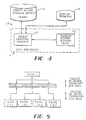
- Figure 4 illustrates a schematic block diagram of an object oriented computer system for implementing the present invention.
- Figure 5 illustrates the hierarchical relationship between a panel and its child panels.
- Figure 1 illustrates a schematic representation of an object in which a frame is encapsulated within its methods.
- Figure 2 illustrates an object class referred to as Employee Header Data Entry Panel which is shown surrounded by a number of programs. These programs include an accept input function, a create function, an initialize function, a validate function, a handle function, and a display function.
- the create function allows a new instance of object class employee to be created; the accept input function allows an object to accept data from a keyboard or mouse device input; the validate function performs checking on the data contained in the new instance of the object class employee, etc.
- Figure 3 illustrates the class inheritance hierarchy for the object class User Interface.
- This object class has the attribute List of Children and defines the methods Action Router and Accept Input which are inherited by all subclasses.
- the Action Router method determines whether or not an action request can be handled by an object class.
- the Accept Input method enables an object class to accept user input from an attached input device.
- the User Interface object 20 has two subclasses in the illustration: the Panel subclass 22 and the Popup subclass 24. Messages are handled by these subclasses using the methods inherited from the User Interface class.
- Subordinate to the Panel class 22 are the List Panel subclass 26, the Tree Panel subclass 30, Application List Panels 34, Application Tree Panels 36, and Application Panels 28.
- Subordinate to the Popup class 24 are Application Popups 32.
- Each of the aforementioned subclasses inherits the Accept Input and Action Router methods. Also relevant to this invention is the Handle method.
- the interface to the Handle method is defined in User Interface class 20; however, implementation of the body of the method is deferred to each child class.
- Figure 4 illustrates a schematic block diagram representing the implementation of an object oriented computer system 10. It includes a data processor 11 for executing the procedures associated with each object, a random access memory (RAM) 13 for providing a working store for active data and intermediate results, a direct access storage device for permanent data storage (14), a display terminal 15 which presents one or more panels associated with each application program, as well as an input device such as a mouse or keyboard as already mentioned in the description of Fig. 2, allowing a user to input commands, and not represented Fig. 4.
- RAM random access memory
- FIG. 4 illustrates a schematic block diagram representing the implementation of an object oriented computer system 10. It includes a data processor 11 for executing the procedures associated with each object, a random access memory (RAM) 13 for providing a working store for active data and intermediate results, a direct access storage device for permanent data storage (14), a display terminal 15 which presents one or more panels associated with each application program, as well as an input device such as a mouse or keyboard as already mentioned in the description of Fig. 2, allowing
- An object oriented program 12 typically includes a table for the methods associated with each object. This method table contains the method number and the corresponding address where the method is located. An object identification table is usually included for each object containing all instances of the object and the corresponding address or object reference (OREF) for each instance. These tables are used in processing for executing the methods and for accessing objects as well as data instances of objects. More detailed discussions of object-oriented programming systems are provided in the already mentionned European Patent Applications.
- Figure 5 illustrates the hierarchical relationship between a panel and its child panels.
- Panel 1 can be the system presentation manager panel or any active sub-panel.
- Panel 1 has three child panels in the illustration, i.e., Panel 1.1, Panel 1.2 and Panel 1.3.
- Panel 1.1.1 is a child panel of Panel 1.1;
- Panels 1.2.1 and 1.2.2 are child panels of Panel 1.2;
- Panel 1.3.1 is a child panel of Panel 1.3.1. Shown on the right side of the figure are arrows indicating that change of scope commands (i.e., events that cannot be handled by a particular panel) and data flow from panel to panel in a hierarchical fashion.
- scope commands i.e., events that cannot be handled by a particular panel
- Panel 1.2 is the active panel and the user selects Panel 1 by dragging the mouse or screen cursor from its position on Panel 1.2 to a point within the visible region of Panel 1.
- Panel 1.2.1 does not have a child panel that can be sent the change of scope command; therefore, it returns to its parent panel with the scope command and data unchanged.
- Panel 1.2 next sends the change of scope command to its other child panel.
- Panel 1.2.2 responds in the same way as Panel 1.2.1. At this point, Panel 1.2 returns to its parent (Panel 1) with the change of scope command and data. Since Panel 1 can handle the change of scope command, it becomes the active panel.
- each panel maintains a list of all its active child panels and contains an inherited centralized control manager routine which (1) accepts a scope command and data as input parameters, (2) handles the scope action itself if possible, (3) asks each child panel, in turn, to handle the scope command if it can't, and (4) returns either the change of scope command or a new action to its caller.
- a panel is able to handle the scope action itself if its panel identification equals the change to panel identification of the change of scope command.
- the panel then becomes the active panel and processes user actions against itself until another change of scope is detected.
- the active panel then continues the above four step control loop process by repeating step (2).
- the first step of accepting a scope command and data as input parameters only occurs when entering an inactive panel's centralized control manager routine.
- This routine is referred to subsequently as the Action Router method.
- An active panel traps all user actions, including the change of scope command as part of its normal processing logic. In order for a panel to become active, one of the following must have occurred:
- the panel flow process is implemented utilizing the object oriented class hierarchy structure.
- the Panel class has the attribute of child panels, which is a linked list of all the child panels of the current panel. In this case, child panels do not refer to the inheritance property, but instead to the secondary panels that emanate from a primary panel. Each panel that inherits from the Panel class inherits this list attribute.
- the Panel class has three methods associated with it and pseudocode for each method is provided in the Appendix.
- the Action Router method is the centralized control manager routine that accepts a change of scope command and determines if it can be handled by the panel itself, or by a child panel, or whether the change of scope command should be passed back to the panel's parent. This is the central component of the hierarchical process flow. Since a panel is only concerned with the list of events that it can handle, actions outside its scope are either handled transparently by its children or passed back up to its parent. Each panel which inherits from the Panel class inherits the Action Router method.
- the Handle method handles commands relevant to the current panel. It is deferred from the Panel class so that each panel defines its own Handle method.
- the third method is the Accept Input method which enables a panel to accept input from the keyboard or an attached input device such as a mouse.
- the key concepts in this invention are that the Action Router and Accept Input methods are defined once in the User Interface 20 and then inherited by all child panels of the User Interface.
- the Handle method is redefined by each child panel of User Interface 20 when the Handle method of a specific child panel is invoked from the Action Router.
- Panel 1.2 As a starting point, consider Panel 1.2 as being the active panel. This means that Panel 1.2 is in the Accept Input method waiting for user input. When the user selects another panel, for example Panel 1, by dragging the cursor from the non-overlapped region of Panel 1.2 to the non-overlapped region of Panel 1 and clicking the mouse button, an event is generated which indicates a change of scope. Panel 1.2 returns from the Accept Input method back to its Action Router method. The Accept Input method returns a change of scope event. The Action Router method of Panel 1.2 sends a request to the Handle method of Panel 1.2 to handle the event.
- the Handle method of Panel 1.2 decides that the scope change is outside the list of events that can be handled by the panel.
- the Handle method returns to the Action Router method of Panel 1.2 which then passes the change of scope information to Panel 1.2.1 by executing the Action Router method of Panel 1.2.1.
- the Action Router method of Panel 1.2.1 is exactly the same as the Action Router method of Panel 1.2, which was inherited by the panel from the Panel parent class.
- the Action Router method of Panel 1.2.1 requests the Handle method of Panel 1.2.1 to handle the change of scope event. Since the Handle method of Panel 1.2.1 could not handle the event, it returns control to the Action Router method of Panel 1.2.1.
- the Action Router method of Panel 1.2.1 next determines that Panel 1.2.1 does not have a child panel to which it can send the change of event scope; therefore, it returns control to the Action Router method of its parent, Panel 1.2, with the scope event unchanged.
- Panel 1.2 continues testing its other child panels by sending the change of scope event to the Action Router method of Panel 1.2.2.
- the Action Router method of Panel 1.2.2 requests the Handle method of Panel 1.2.2 to handle the change of scope event. Since the event is outside the scope of Panel 1.2.2, the Handle method returns control to the Action Router method of Panel 1.2.2.
- the Action Router method of Panel 1.2.2 determines that this panel does not have any child panels, so the change of scope event is sent back to the parent, Panel 1.2, with the scope event unchanged by returning control to Panel 1.2.
- the Action Router method of Panel 1.2 determines that there are no other child panels to which it can send the change of scope event; therefore, since the event could not be handled, control is returned to its parent, Panel 1, with the change of scope event.
- the Action Router method of Panel 1 receives control from the Action Router method of its child, Panel 1.2.
- the Action Router method of Panel 1 requests the Handle method of Panel 1 to handle the change of scope event.
- the Handle method determines that it can handle the change of scope event and sends an affirmative response to the Action Router method of Panel 1.
- the Action Router method of Panel 1 then calls the Accept Input method of Panel 1 to wait for the next user event to be input.
Landscapes
- Engineering & Computer Science (AREA)
- Software Systems (AREA)
- Theoretical Computer Science (AREA)
- Human Computer Interaction (AREA)
- Physics & Mathematics (AREA)
- General Engineering & Computer Science (AREA)
- General Physics & Mathematics (AREA)
- Digital Computer Display Output (AREA)
Applications Claiming Priority (2)
| Application Number | Priority Date | Filing Date | Title |
|---|---|---|---|
| US07/510,350 US5237654A (en) | 1990-04-17 | 1990-04-17 | Hierarchical inter-panel process flow control |
| US510350 | 1995-08-02 |
Publications (3)
| Publication Number | Publication Date |
|---|---|
| EP0453386A2 true EP0453386A2 (fr) | 1991-10-23 |
| EP0453386A3 EP0453386A3 (en) | 1993-04-21 |
| EP0453386B1 EP0453386B1 (fr) | 1998-08-26 |
Family
ID=24030390
Family Applications (1)
| Application Number | Title | Priority Date | Filing Date |
|---|---|---|---|
| EP91480035A Expired - Lifetime EP0453386B1 (fr) | 1990-04-17 | 1991-03-05 | Commande hierarchique du déroulement de processus entre des fenêtres |
Country Status (5)
| Country | Link |
|---|---|
| US (1) | US5237654A (fr) |
| EP (1) | EP0453386B1 (fr) |
| JP (1) | JPH07109585B2 (fr) |
| CA (1) | CA2037750C (fr) |
| DE (1) | DE69130028T2 (fr) |
Cited By (1)
| Publication number | Priority date | Publication date | Assignee | Title |
|---|---|---|---|---|
| EP1922610A4 (fr) * | 2005-08-30 | 2011-09-21 | Microsoft Corp | Procede et support lisible par ordinateur pour l'execution de commandes |
Families Citing this family (41)
| Publication number | Priority date | Publication date | Assignee | Title |
|---|---|---|---|---|
| US5410691A (en) * | 1990-05-07 | 1995-04-25 | Next Computer, Inc. | Method and apparatus for providing a network configuration database |
| DE69032348T2 (de) * | 1990-07-31 | 1998-09-24 | Hewlett Packard Co | Objektbasiertes System |
| JPH04181423A (ja) * | 1990-11-16 | 1992-06-29 | Fujitsu Ltd | バージョン管理方式 |
| WO1993015455A1 (fr) * | 1992-01-24 | 1993-08-05 | Interactive Media Corporation | Systeme appliquant une fonction a une seconde zone suite a l'activation d'une premiere zone associee |
| US5442746A (en) * | 1992-08-28 | 1995-08-15 | Hughes Aircraft Company | Procedural user interface |
| US5506787A (en) * | 1992-08-31 | 1996-04-09 | Siemens Aktiengesellschaft | Configurable man-machine communication structure for machine tool or robot control systems |
| CN1086028A (zh) * | 1992-09-28 | 1994-04-27 | 普拉塞尔技术有限公司 | 知识基础上的诊断报告系统和方法 |
| JP2597460B2 (ja) * | 1992-11-12 | 1997-04-09 | インターナショナル・ビジネス・マシーンズ・コーポレイション | 複合データ構造を生成及び記憶する方法及び装置 |
| US5315703A (en) * | 1992-12-23 | 1994-05-24 | Taligent, Inc. | Object-oriented notification framework system |
| US6259446B1 (en) | 1992-12-23 | 2001-07-10 | Object Technology Licensing Corporation | Menu state system |
| US5805885A (en) | 1992-12-24 | 1998-09-08 | Microsoft Corporation | Method and system for aggregating objects |
| US5588107A (en) * | 1993-03-22 | 1996-12-24 | Island Graphics Corporation | Method and apparatus for selectably expandable menus |
| US5453933A (en) * | 1993-09-08 | 1995-09-26 | Hurco Companies, Inc. | CNC control system |
| US5808611A (en) * | 1993-09-23 | 1998-09-15 | International Business Machines Corporation | Positioning for multiple icons in an object-oriented interface |
| US5974255A (en) * | 1993-10-18 | 1999-10-26 | Motorola, Inc. | Method for state-based oriented testing |
| US5548703A (en) * | 1993-11-30 | 1996-08-20 | International Business Machines Corporation | Navigation within a compound graphical object in a graphical user interface |
| US5659694A (en) * | 1994-06-30 | 1997-08-19 | Canon Kabushiki Kaisha | Method and system for displaying context sensitive child windows independently of their parent window |
| US5537630A (en) * | 1994-12-05 | 1996-07-16 | International Business Machines Corporation | Method and system for specifying method parameters in a visual programming system |
| TW266277B (en) * | 1994-12-31 | 1995-12-21 | Sega Of America Inc | Videogame system and methods for enhanced processing and display of graphical character elements |
| US5911068A (en) * | 1995-03-30 | 1999-06-08 | Microsoft Corporation | Container independent control architecture |
| US5640558A (en) * | 1995-05-31 | 1997-06-17 | International Business Machines Corporation | Identifying and analyzing multiple level class relationships in an object oriented system by parsing source code without compilation |
| US6091395A (en) | 1997-12-15 | 2000-07-18 | International Business Machines Corporation | Computer system and method of manipulating a graphical user interface component on a computer display through collision with a pointer |
| US6308187B1 (en) * | 1998-02-09 | 2001-10-23 | International Business Machines Corporation | Computer system and method for abstracting and accessing a chronologically-arranged collection of information |
| US6874123B1 (en) | 1998-02-09 | 2005-03-29 | International Business Machines Corporation | Three-dimensional model to facilitate user comprehension and management of information |
| US6418445B1 (en) * | 1998-03-06 | 2002-07-09 | Perot Systems Corporation | System and method for distributed data collection and storage |
| US6191790B1 (en) | 1998-04-01 | 2001-02-20 | Microsoft Corporation | Inheritable property shading system for three-dimensional rendering of user interface controls |
| US6169546B1 (en) | 1998-04-01 | 2001-01-02 | Microsoft Corporation | Global viewer scrolling system |
| US6249284B1 (en) | 1998-04-01 | 2001-06-19 | Microsoft Corporation | Directional navigation system in layout managers |
| US6657645B2 (en) * | 1999-06-11 | 2003-12-02 | Microsoft Corporation | System, method, and computer-readable medium for displaying keyboard cues in a window |
| US6741262B1 (en) | 2000-05-12 | 2004-05-25 | Electronics For Imaging, Inc. | Expert color management settings method and interface |
| JP4138462B2 (ja) * | 2002-11-22 | 2008-08-27 | 株式会社東芝 | 階層構造表示装置および階層構造表示方法 |
| EP1573713A4 (fr) * | 2002-12-16 | 2010-03-10 | Microsoft Corp | Systèmes et procédés d'interfa ace avec des dispositifs informatiques |
| WO2004061594A2 (fr) * | 2002-12-16 | 2004-07-22 | Microsoft Corporation | Systemes et procedes permettant d'etablir une interface avec des dispositifs informatiques |
| CN100411007C (zh) * | 2002-12-16 | 2008-08-13 | 微软公司 | 与计算机设备接口的系统和方法 |
| JP2006510136A (ja) * | 2002-12-16 | 2006-03-23 | マイクロソフト コーポレーション | ナビゲーション制御装置のイベント処理 |
| KR100955954B1 (ko) * | 2002-12-16 | 2010-05-04 | 마이크로소프트 코포레이션 | 명령들을 연쇄적으로 수행하기 위한 방법, 컴퓨터 판독가능 저장 매체 및 메모리를 포함하는 장치 |
| US7489306B2 (en) * | 2004-12-22 | 2009-02-10 | Microsoft Corporation | Touch screen accuracy |
| US20070016870A1 (en) * | 2005-07-15 | 2007-01-18 | Microsoft Corporation | Control panel framework |
| US20070092783A1 (en) * | 2005-10-24 | 2007-04-26 | Planview, Inc. | Methods of synchronizing process flows within hierarchical process flows and systems for use with the methods |
| WO2010019128A1 (fr) * | 2008-08-09 | 2010-02-18 | Hewlett-Packard Development Company, L.P. | Propriétés d'un objet programme définies par un espace objet |
| US9582292B2 (en) * | 2008-10-07 | 2017-02-28 | Microsoft Technology Licensing, Llc. | Merged tree-view UI objects |
Family Cites Families (20)
| Publication number | Priority date | Publication date | Assignee | Title |
|---|---|---|---|---|
| US4823108A (en) * | 1984-05-02 | 1989-04-18 | Quarterdeck Office Systems | Display system and memory architecture and method for displaying images in windows on a video display |
| US4688167A (en) * | 1984-09-27 | 1987-08-18 | Wang Laboratories, Inc. | Screen manager for data processing system |
| US4807142A (en) * | 1984-10-09 | 1989-02-21 | Wang Laboratories, Inc. | Screen manager multiple viewport for a multi-tasking data processing system |
| GB8428443D0 (en) * | 1984-11-10 | 1984-12-19 | Int Computers Ltd | Data processing |
| US4843538A (en) * | 1985-04-30 | 1989-06-27 | Prometrix Corporation | Multi-level dynamic menu which suppresses display of items previously designated as non-selectable |
| US4761642A (en) * | 1985-10-04 | 1988-08-02 | Tektronix, Inc. | System for providing data communication between a computer terminal and a plurality of concurrent processes running on a multiple process computer |
| US4868765A (en) * | 1986-01-02 | 1989-09-19 | Texas Instruments Incorporated | Porthole window system for computer displays |
| JPS62276673A (ja) * | 1986-05-26 | 1987-12-01 | Toshiba Corp | マルチウインドウ表示装置 |
| GB2191918B (en) * | 1986-06-16 | 1990-09-05 | Ibm | Data display system |
| US4829294A (en) * | 1986-06-25 | 1989-05-09 | Hitachi, Ltd. | Document processing method and system using multiwindow |
| JP2557358B2 (ja) * | 1986-12-26 | 1996-11-27 | 株式会社東芝 | 情報処理装置 |
| JPS63226723A (ja) * | 1987-03-16 | 1988-09-21 | Nec Corp | マルチウインドウ制御方式 |
| US5072412A (en) * | 1987-03-25 | 1991-12-10 | Xerox Corporation | User interface with multiple workspaces for sharing display system objects |
| US4896290A (en) * | 1987-08-24 | 1990-01-23 | Wang Laboratories, Inc. | Method for routing events from key strokes in a multi-processing computer systems |
| US4862349A (en) * | 1987-10-19 | 1989-08-29 | International Business Machines Corporation | Method for extracting and/or replacing control system information in a computer operating system |
| US4821211A (en) * | 1987-11-19 | 1989-04-11 | International Business Machines Corp. | Method of navigating among program menus using a graphical menu tree |
| US5050105A (en) * | 1988-01-26 | 1991-09-17 | International Business Machines Corporation | Direct cursor-controlled access to multiple application programs and data |
| US5075675A (en) * | 1988-06-30 | 1991-12-24 | International Business Machines Corporation | Method and apparatus for dynamic promotion of background window displays in multi-tasking computer systems |
| US5046001A (en) * | 1988-06-30 | 1991-09-03 | Ibm Corporation | Method for accessing selected windows in a multi-tasking system |
| US5121478A (en) * | 1988-09-08 | 1992-06-09 | Xerox Corporation | Window system with independently replaceable window functionality |
-
1990
- 1990-04-17 US US07/510,350 patent/US5237654A/en not_active Expired - Lifetime
-
1991
- 1991-03-05 DE DE69130028T patent/DE69130028T2/de not_active Expired - Fee Related
- 1991-03-05 EP EP91480035A patent/EP0453386B1/fr not_active Expired - Lifetime
- 1991-03-07 CA CA002037750A patent/CA2037750C/fr not_active Expired - Fee Related
- 1991-03-16 JP JP3076793A patent/JPH07109585B2/ja not_active Expired - Lifetime
Non-Patent Citations (4)
| Title |
|---|
| HEWLETT-PACKARD JOURNAL. vol. 40, no. 4, August 1989, PALO ALTO, CA, US pages 23 - 31 B. LAM ET AL. 'THE NEWWAVE OFFICE' * |
| HEWLETT-PACKARD JOURNAL. vol. 41, no. 5, October 1990, PALO ALTO, CA, US pages 32 - 38 S.P. WITTEN ET AL. 'HP IVIBUILD: INTERACTIVE USER INTERFACE BUILDER FOR HP IVI' * |
| PROCEEDINGS OF THE ACM SIGGRAPH SYMPOSIUM ON USER INTERFACE SOFTWARE. 17 October 1988, BANFF, ALBERTA, CANADA pages 15 - 29 J. RUMBAUGH 'STATE TREES AS STRUCTURED FINITE STATE MACHINES' * |
| USENIX WINTER CONFERENCE. 9 February 1988, DALLAS, TEXAS, US pages 9 - 21 A.J. PALAY ET AL. 'THE ANDREW TOOLKIT - AN OVERVIEW' * |
Cited By (1)
| Publication number | Priority date | Publication date | Assignee | Title |
|---|---|---|---|---|
| EP1922610A4 (fr) * | 2005-08-30 | 2011-09-21 | Microsoft Corp | Procede et support lisible par ordinateur pour l'execution de commandes |
Also Published As
| Publication number | Publication date |
|---|---|
| CA2037750C (fr) | 1995-04-11 |
| JPH07109585B2 (ja) | 1995-11-22 |
| DE69130028D1 (de) | 1998-10-01 |
| US5237654A (en) | 1993-08-17 |
| EP0453386B1 (fr) | 1998-08-26 |
| DE69130028T2 (de) | 1999-04-15 |
| EP0453386A3 (en) | 1993-04-21 |
| JPH05150931A (ja) | 1993-06-18 |
Similar Documents
| Publication | Publication Date | Title |
|---|---|---|
| EP0453386B1 (fr) | Commande hierarchique du déroulement de processus entre des fenêtres | |
| CA2121107C (fr) | Mecanisme de suppression/reexecution a niveaux multiples | |
| US7017118B1 (en) | Method and apparatus for reordering data items | |
| US5535389A (en) | Business process objects with associated attributes such as version identifier | |
| US5214780A (en) | Synchronized journaling system | |
| US6801230B2 (en) | Method to display and manage computer pop-up controls | |
| EP0851345B1 (fr) | Procédé et système pour la persistence automatique des fenêtres dans un environnement de fenêtrage | |
| US6810522B2 (en) | Method and system for associating parameters of containers and contained objects | |
| US5041967A (en) | Methods and apparatus for dynamic menu generation in a menu driven computer system | |
| US8504930B1 (en) | User interface substitution | |
| EP0472444A2 (fr) | Système électronique d'édition de documents | |
| US5896532A (en) | Objects with run-time classes and methods of making them | |
| JPH07200296A (ja) | オブジェクト接続を動的に発生する方法及びシステム | |
| JPH06208448A (ja) | ブラウザ項目を有する集合ブラウザをアプリケーションに供給させる方法およびコンピュータ制御表示装置 | |
| US20030081007A1 (en) | Object oriented explorer type environment | |
| JPH07134765A (ja) | データのグラフ表示の方法 | |
| WO1995004961A1 (fr) | Systeme et procede de manipulation du curseur | |
| US7594192B2 (en) | Method and apparatus for identifying hotkey conflicts | |
| US5604907A (en) | Computer system for executing action slots including multiple action object classes | |
| JP2735780B2 (ja) | オブジェクト指向プログラミング・システムにおけるウィンドウ環境の管理方法及び装置 | |
| CN1248016A (zh) | 在单任务系统中实现图形化界面模拟的方法 | |
| US7065717B1 (en) | Tree-based interface apparatus for display of call dependencies and method therefor | |
| US20030117417A1 (en) | Generic application flow management system and method | |
| US7523404B2 (en) | System and method for generating complex character-based computing interfaces | |
| JPH0695835A (ja) | 内容を検索基準とするナビゲーション機構を提供する方法及びそのための装置 |
Legal Events
| Date | Code | Title | Description |
|---|---|---|---|
| PUAI | Public reference made under article 153(3) epc to a published international application that has entered the european phase |
Free format text: ORIGINAL CODE: 0009012 |
|
| AK | Designated contracting states |
Kind code of ref document: A2 Designated state(s): DE FR GB IT |
|
| 17P | Request for examination filed |
Effective date: 19911219 |
|
| PUAL | Search report despatched |
Free format text: ORIGINAL CODE: 0009013 |
|
| AK | Designated contracting states |
Kind code of ref document: A3 Designated state(s): DE FR GB IT |
|
| 17Q | First examination report despatched |
Effective date: 19961218 |
|
| GRAG | Despatch of communication of intention to grant |
Free format text: ORIGINAL CODE: EPIDOS AGRA |
|
| GRAG | Despatch of communication of intention to grant |
Free format text: ORIGINAL CODE: EPIDOS AGRA |
|
| GRAH | Despatch of communication of intention to grant a patent |
Free format text: ORIGINAL CODE: EPIDOS IGRA |
|
| GRAH | Despatch of communication of intention to grant a patent |
Free format text: ORIGINAL CODE: EPIDOS IGRA |
|
| GRAA | (expected) grant |
Free format text: ORIGINAL CODE: 0009210 |
|
| AK | Designated contracting states |
Kind code of ref document: B1 Designated state(s): DE FR GB IT |
|
| PG25 | Lapsed in a contracting state [announced via postgrant information from national office to epo] |
Ref country code: IT Free format text: LAPSE BECAUSE OF FAILURE TO SUBMIT A TRANSLATION OF THE DESCRIPTION OR TO PAY THE FEE WITHIN THE PRESCRIBED TIME-LIMIT;WARNING: LAPSES OF ITALIAN PATENTS WITH EFFECTIVE DATE BEFORE 2007 MAY HAVE OCCURRED AT ANY TIME BEFORE 2007. THE CORRECT EFFECTIVE DATE MAY BE DIFFERENT FROM THE ONE RECORDED. Effective date: 19980826 Ref country code: FR Free format text: LAPSE BECAUSE OF FAILURE TO SUBMIT A TRANSLATION OF THE DESCRIPTION OR TO PAY THE FEE WITHIN THE PRESCRIBED TIME-LIMIT Effective date: 19980826 |
|
| REF | Corresponds to: |
Ref document number: 69130028 Country of ref document: DE Date of ref document: 19981001 |
|
| EN | Fr: translation not filed | ||
| PLBE | No opposition filed within time limit |
Free format text: ORIGINAL CODE: 0009261 |
|
| STAA | Information on the status of an ep patent application or granted ep patent |
Free format text: STATUS: NO OPPOSITION FILED WITHIN TIME LIMIT |
|
| 26N | No opposition filed | ||
| PGFP | Annual fee paid to national office [announced via postgrant information from national office to epo] |
Ref country code: DE Payment date: 20010316 Year of fee payment: 11 |
|
| REG | Reference to a national code |
Ref country code: GB Ref legal event code: IF02 |
|
| PGFP | Annual fee paid to national office [announced via postgrant information from national office to epo] |
Ref country code: GB Payment date: 20020306 Year of fee payment: 12 |
|
| PG25 | Lapsed in a contracting state [announced via postgrant information from national office to epo] |
Ref country code: DE Free format text: LAPSE BECAUSE OF NON-PAYMENT OF DUE FEES Effective date: 20021001 |
|
| PG25 | Lapsed in a contracting state [announced via postgrant information from national office to epo] |
Ref country code: GB Free format text: LAPSE BECAUSE OF NON-PAYMENT OF DUE FEES Effective date: 20030305 |
|
| GBPC | Gb: european patent ceased through non-payment of renewal fee |
Effective date: 20030305 |