EP0454138A2 - Poudre composite et procédé pour le revêtement de poudres céramiques - Google Patents
Poudre composite et procédé pour le revêtement de poudres céramiques Download PDFInfo
- Publication number
- EP0454138A2 EP0454138A2 EP19910106730 EP91106730A EP0454138A2 EP 0454138 A2 EP0454138 A2 EP 0454138A2 EP 19910106730 EP19910106730 EP 19910106730 EP 91106730 A EP91106730 A EP 91106730A EP 0454138 A2 EP0454138 A2 EP 0454138A2
- Authority
- EP
- European Patent Office
- Prior art keywords
- particles
- boehmite
- oxide
- aluminum
- coated
- Prior art date
- Legal status (The legal status is an assumption and is not a legal conclusion. Google has not performed a legal analysis and makes no representation as to the accuracy of the status listed.)
- Withdrawn
Links
Images















Classifications
-
- C—CHEMISTRY; METALLURGY
- C04—CEMENTS; CONCRETE; ARTIFICIAL STONE; CERAMICS; REFRACTORIES
- C04B—LIME, MAGNESIA; SLAG; CEMENTS; COMPOSITIONS THEREOF, e.g. MORTARS, CONCRETE OR LIKE BUILDING MATERIALS; ARTIFICIAL STONE; CERAMICS; REFRACTORIES; TREATMENT OF NATURAL STONE
- C04B35/00—Shaped ceramic products characterised by their composition; Ceramics compositions; Processing powders of inorganic compounds preparatory to the manufacturing of ceramic products
- C04B35/622—Forming processes; Processing powders of inorganic compounds preparatory to the manufacturing of ceramic products
- C04B35/626—Preparing or treating the powders individually or as batches ; preparing or treating macroscopic reinforcing agents for ceramic products, e.g. fibres; mechanical aspects section B
- C04B35/628—Coating the powders or the macroscopic reinforcing agents
- C04B35/62802—Powder coating materials
- C04B35/62805—Oxide ceramics
- C04B35/62813—Alumina or aluminates
-
- C—CHEMISTRY; METALLURGY
- C04—CEMENTS; CONCRETE; ARTIFICIAL STONE; CERAMICS; REFRACTORIES
- C04B—LIME, MAGNESIA; SLAG; CEMENTS; COMPOSITIONS THEREOF, e.g. MORTARS, CONCRETE OR LIKE BUILDING MATERIALS; ARTIFICIAL STONE; CERAMICS; REFRACTORIES; TREATMENT OF NATURAL STONE
- C04B35/00—Shaped ceramic products characterised by their composition; Ceramics compositions; Processing powders of inorganic compounds preparatory to the manufacturing of ceramic products
- C04B35/622—Forming processes; Processing powders of inorganic compounds preparatory to the manufacturing of ceramic products
- C04B35/626—Preparing or treating the powders individually or as batches ; preparing or treating macroscopic reinforcing agents for ceramic products, e.g. fibres; mechanical aspects section B
- C04B35/628—Coating the powders or the macroscopic reinforcing agents
-
- C—CHEMISTRY; METALLURGY
- C04—CEMENTS; CONCRETE; ARTIFICIAL STONE; CERAMICS; REFRACTORIES
- C04B—LIME, MAGNESIA; SLAG; CEMENTS; COMPOSITIONS THEREOF, e.g. MORTARS, CONCRETE OR LIKE BUILDING MATERIALS; ARTIFICIAL STONE; CERAMICS; REFRACTORIES; TREATMENT OF NATURAL STONE
- C04B35/00—Shaped ceramic products characterised by their composition; Ceramics compositions; Processing powders of inorganic compounds preparatory to the manufacturing of ceramic products
- C04B35/622—Forming processes; Processing powders of inorganic compounds preparatory to the manufacturing of ceramic products
- C04B35/626—Preparing or treating the powders individually or as batches ; preparing or treating macroscopic reinforcing agents for ceramic products, e.g. fibres; mechanical aspects section B
- C04B35/628—Coating the powders or the macroscopic reinforcing agents
- C04B35/62886—Coating the powders or the macroscopic reinforcing agents by wet chemical techniques
-
- C—CHEMISTRY; METALLURGY
- C04—CEMENTS; CONCRETE; ARTIFICIAL STONE; CERAMICS; REFRACTORIES
- C04B—LIME, MAGNESIA; SLAG; CEMENTS; COMPOSITIONS THEREOF, e.g. MORTARS, CONCRETE OR LIKE BUILDING MATERIALS; ARTIFICIAL STONE; CERAMICS; REFRACTORIES; TREATMENT OF NATURAL STONE
- C04B35/00—Shaped ceramic products characterised by their composition; Ceramics compositions; Processing powders of inorganic compounds preparatory to the manufacturing of ceramic products
- C04B35/622—Forming processes; Processing powders of inorganic compounds preparatory to the manufacturing of ceramic products
- C04B35/626—Preparing or treating the powders individually or as batches ; preparing or treating macroscopic reinforcing agents for ceramic products, e.g. fibres; mechanical aspects section B
- C04B35/628—Coating the powders or the macroscopic reinforcing agents
- C04B35/62897—Coatings characterised by their thickness
-
- C—CHEMISTRY; METALLURGY
- C04—CEMENTS; CONCRETE; ARTIFICIAL STONE; CERAMICS; REFRACTORIES
- C04B—LIME, MAGNESIA; SLAG; CEMENTS; COMPOSITIONS THEREOF, e.g. MORTARS, CONCRETE OR LIKE BUILDING MATERIALS; ARTIFICIAL STONE; CERAMICS; REFRACTORIES; TREATMENT OF NATURAL STONE
- C04B41/00—After-treatment of mortars, concrete, artificial stone or ceramics; Treatment of natural stone
- C04B41/009—After-treatment of mortars, concrete, artificial stone or ceramics; Treatment of natural stone characterised by the material treated
-
- C—CHEMISTRY; METALLURGY
- C04—CEMENTS; CONCRETE; ARTIFICIAL STONE; CERAMICS; REFRACTORIES
- C04B—LIME, MAGNESIA; SLAG; CEMENTS; COMPOSITIONS THEREOF, e.g. MORTARS, CONCRETE OR LIKE BUILDING MATERIALS; ARTIFICIAL STONE; CERAMICS; REFRACTORIES; TREATMENT OF NATURAL STONE
- C04B41/00—After-treatment of mortars, concrete, artificial stone or ceramics; Treatment of natural stone
- C04B41/45—Coating or impregnating, e.g. injection in masonry, partial coating of green or fired ceramics, organic coating compositions for adhering together two concrete elements
- C04B41/4584—Coating or impregnating of particulate or fibrous ceramic material
-
- C—CHEMISTRY; METALLURGY
- C04—CEMENTS; CONCRETE; ARTIFICIAL STONE; CERAMICS; REFRACTORIES
- C04B—LIME, MAGNESIA; SLAG; CEMENTS; COMPOSITIONS THEREOF, e.g. MORTARS, CONCRETE OR LIKE BUILDING MATERIALS; ARTIFICIAL STONE; CERAMICS; REFRACTORIES; TREATMENT OF NATURAL STONE
- C04B41/00—After-treatment of mortars, concrete, artificial stone or ceramics; Treatment of natural stone
- C04B41/80—After-treatment of mortars, concrete, artificial stone or ceramics; Treatment of natural stone of only ceramics
- C04B41/81—Coating or impregnation
-
- C—CHEMISTRY; METALLURGY
- C04—CEMENTS; CONCRETE; ARTIFICIAL STONE; CERAMICS; REFRACTORIES
- C04B—LIME, MAGNESIA; SLAG; CEMENTS; COMPOSITIONS THEREOF, e.g. MORTARS, CONCRETE OR LIKE BUILDING MATERIALS; ARTIFICIAL STONE; CERAMICS; REFRACTORIES; TREATMENT OF NATURAL STONE
- C04B2103/00—Function or property of ingredients for mortars, concrete or artificial stone
- C04B2103/0068—Ingredients with a function or property not provided for elsewhere in C04B2103/00
- C04B2103/0086—Chelating or complexing agents
-
- C—CHEMISTRY; METALLURGY
- C04—CEMENTS; CONCRETE; ARTIFICIAL STONE; CERAMICS; REFRACTORIES
- C04B—LIME, MAGNESIA; SLAG; CEMENTS; COMPOSITIONS THEREOF, e.g. MORTARS, CONCRETE OR LIKE BUILDING MATERIALS; ARTIFICIAL STONE; CERAMICS; REFRACTORIES; TREATMENT OF NATURAL STONE
- C04B2103/00—Function or property of ingredients for mortars, concrete or artificial stone
- C04B2103/0068—Ingredients with a function or property not provided for elsewhere in C04B2103/00
- C04B2103/0094—Agents for altering or buffering the pH; Ingredients characterised by their pH
-
- C—CHEMISTRY; METALLURGY
- C04—CEMENTS; CONCRETE; ARTIFICIAL STONE; CERAMICS; REFRACTORIES
- C04B—LIME, MAGNESIA; SLAG; CEMENTS; COMPOSITIONS THEREOF, e.g. MORTARS, CONCRETE OR LIKE BUILDING MATERIALS; ARTIFICIAL STONE; CERAMICS; REFRACTORIES; TREATMENT OF NATURAL STONE
- C04B2235/00—Aspects relating to ceramic starting mixtures or sintered ceramic products
- C04B2235/02—Composition of constituents of the starting material or of secondary phases of the final product
- C04B2235/30—Constituents and secondary phases not being of a fibrous nature
- C04B2235/32—Metal oxides, mixed metal oxides, or oxide-forming salts thereof, e.g. carbonates, nitrates, (oxy)hydroxides, chlorides
- C04B2235/3205—Alkaline earth oxides or oxide forming salts thereof, e.g. beryllium oxide
- C04B2235/3206—Magnesium oxides or oxide-forming salts thereof
-
- C—CHEMISTRY; METALLURGY
- C04—CEMENTS; CONCRETE; ARTIFICIAL STONE; CERAMICS; REFRACTORIES
- C04B—LIME, MAGNESIA; SLAG; CEMENTS; COMPOSITIONS THEREOF, e.g. MORTARS, CONCRETE OR LIKE BUILDING MATERIALS; ARTIFICIAL STONE; CERAMICS; REFRACTORIES; TREATMENT OF NATURAL STONE
- C04B2235/00—Aspects relating to ceramic starting mixtures or sintered ceramic products
- C04B2235/02—Composition of constituents of the starting material or of secondary phases of the final product
- C04B2235/30—Constituents and secondary phases not being of a fibrous nature
- C04B2235/32—Metal oxides, mixed metal oxides, or oxide-forming salts thereof, e.g. carbonates, nitrates, (oxy)hydroxides, chlorides
- C04B2235/3224—Rare earth oxide or oxide forming salts thereof, e.g. scandium oxide
-
- C—CHEMISTRY; METALLURGY
- C04—CEMENTS; CONCRETE; ARTIFICIAL STONE; CERAMICS; REFRACTORIES
- C04B—LIME, MAGNESIA; SLAG; CEMENTS; COMPOSITIONS THEREOF, e.g. MORTARS, CONCRETE OR LIKE BUILDING MATERIALS; ARTIFICIAL STONE; CERAMICS; REFRACTORIES; TREATMENT OF NATURAL STONE
- C04B2235/00—Aspects relating to ceramic starting mixtures or sintered ceramic products
- C04B2235/02—Composition of constituents of the starting material or of secondary phases of the final product
- C04B2235/30—Constituents and secondary phases not being of a fibrous nature
- C04B2235/32—Metal oxides, mixed metal oxides, or oxide-forming salts thereof, e.g. carbonates, nitrates, (oxy)hydroxides, chlorides
- C04B2235/3231—Refractory metal oxides, their mixed metal oxides, or oxide-forming salts thereof
- C04B2235/3232—Titanium oxides or titanates, e.g. rutile or anatase
-
- C—CHEMISTRY; METALLURGY
- C04—CEMENTS; CONCRETE; ARTIFICIAL STONE; CERAMICS; REFRACTORIES
- C04B—LIME, MAGNESIA; SLAG; CEMENTS; COMPOSITIONS THEREOF, e.g. MORTARS, CONCRETE OR LIKE BUILDING MATERIALS; ARTIFICIAL STONE; CERAMICS; REFRACTORIES; TREATMENT OF NATURAL STONE
- C04B2235/00—Aspects relating to ceramic starting mixtures or sintered ceramic products
- C04B2235/02—Composition of constituents of the starting material or of secondary phases of the final product
- C04B2235/30—Constituents and secondary phases not being of a fibrous nature
- C04B2235/32—Metal oxides, mixed metal oxides, or oxide-forming salts thereof, e.g. carbonates, nitrates, (oxy)hydroxides, chlorides
- C04B2235/3231—Refractory metal oxides, their mixed metal oxides, or oxide-forming salts thereof
- C04B2235/3241—Chromium oxides, chromates, or oxide-forming salts thereof
-
- C—CHEMISTRY; METALLURGY
- C04—CEMENTS; CONCRETE; ARTIFICIAL STONE; CERAMICS; REFRACTORIES
- C04B—LIME, MAGNESIA; SLAG; CEMENTS; COMPOSITIONS THEREOF, e.g. MORTARS, CONCRETE OR LIKE BUILDING MATERIALS; ARTIFICIAL STONE; CERAMICS; REFRACTORIES; TREATMENT OF NATURAL STONE
- C04B2235/00—Aspects relating to ceramic starting mixtures or sintered ceramic products
- C04B2235/02—Composition of constituents of the starting material or of secondary phases of the final product
- C04B2235/30—Constituents and secondary phases not being of a fibrous nature
- C04B2235/32—Metal oxides, mixed metal oxides, or oxide-forming salts thereof, e.g. carbonates, nitrates, (oxy)hydroxides, chlorides
- C04B2235/3231—Refractory metal oxides, their mixed metal oxides, or oxide-forming salts thereof
- C04B2235/3244—Zirconium oxides, zirconates, hafnium oxides, hafnates, or oxide-forming salts thereof
-
- C—CHEMISTRY; METALLURGY
- C04—CEMENTS; CONCRETE; ARTIFICIAL STONE; CERAMICS; REFRACTORIES
- C04B—LIME, MAGNESIA; SLAG; CEMENTS; COMPOSITIONS THEREOF, e.g. MORTARS, CONCRETE OR LIKE BUILDING MATERIALS; ARTIFICIAL STONE; CERAMICS; REFRACTORIES; TREATMENT OF NATURAL STONE
- C04B2235/00—Aspects relating to ceramic starting mixtures or sintered ceramic products
- C04B2235/02—Composition of constituents of the starting material or of secondary phases of the final product
- C04B2235/30—Constituents and secondary phases not being of a fibrous nature
- C04B2235/32—Metal oxides, mixed metal oxides, or oxide-forming salts thereof, e.g. carbonates, nitrates, (oxy)hydroxides, chlorides
- C04B2235/327—Iron group oxides, their mixed metal oxides, or oxide-forming salts thereof
- C04B2235/3272—Iron oxides or oxide forming salts thereof, e.g. hematite, magnetite
-
- C—CHEMISTRY; METALLURGY
- C04—CEMENTS; CONCRETE; ARTIFICIAL STONE; CERAMICS; REFRACTORIES
- C04B—LIME, MAGNESIA; SLAG; CEMENTS; COMPOSITIONS THEREOF, e.g. MORTARS, CONCRETE OR LIKE BUILDING MATERIALS; ARTIFICIAL STONE; CERAMICS; REFRACTORIES; TREATMENT OF NATURAL STONE
- C04B2235/00—Aspects relating to ceramic starting mixtures or sintered ceramic products
- C04B2235/02—Composition of constituents of the starting material or of secondary phases of the final product
- C04B2235/30—Constituents and secondary phases not being of a fibrous nature
- C04B2235/32—Metal oxides, mixed metal oxides, or oxide-forming salts thereof, e.g. carbonates, nitrates, (oxy)hydroxides, chlorides
- C04B2235/327—Iron group oxides, their mixed metal oxides, or oxide-forming salts thereof
- C04B2235/3275—Cobalt oxides, cobaltates or cobaltites or oxide forming salts thereof, e.g. bismuth cobaltate, zinc cobaltite
-
- C—CHEMISTRY; METALLURGY
- C04—CEMENTS; CONCRETE; ARTIFICIAL STONE; CERAMICS; REFRACTORIES
- C04B—LIME, MAGNESIA; SLAG; CEMENTS; COMPOSITIONS THEREOF, e.g. MORTARS, CONCRETE OR LIKE BUILDING MATERIALS; ARTIFICIAL STONE; CERAMICS; REFRACTORIES; TREATMENT OF NATURAL STONE
- C04B2235/00—Aspects relating to ceramic starting mixtures or sintered ceramic products
- C04B2235/02—Composition of constituents of the starting material or of secondary phases of the final product
- C04B2235/30—Constituents and secondary phases not being of a fibrous nature
- C04B2235/32—Metal oxides, mixed metal oxides, or oxide-forming salts thereof, e.g. carbonates, nitrates, (oxy)hydroxides, chlorides
- C04B2235/327—Iron group oxides, their mixed metal oxides, or oxide-forming salts thereof
- C04B2235/3279—Nickel oxides, nickalates, or oxide-forming salts thereof
-
- C—CHEMISTRY; METALLURGY
- C04—CEMENTS; CONCRETE; ARTIFICIAL STONE; CERAMICS; REFRACTORIES
- C04B—LIME, MAGNESIA; SLAG; CEMENTS; COMPOSITIONS THEREOF, e.g. MORTARS, CONCRETE OR LIKE BUILDING MATERIALS; ARTIFICIAL STONE; CERAMICS; REFRACTORIES; TREATMENT OF NATURAL STONE
- C04B2235/00—Aspects relating to ceramic starting mixtures or sintered ceramic products
- C04B2235/02—Composition of constituents of the starting material or of secondary phases of the final product
- C04B2235/30—Constituents and secondary phases not being of a fibrous nature
- C04B2235/32—Metal oxides, mixed metal oxides, or oxide-forming salts thereof, e.g. carbonates, nitrates, (oxy)hydroxides, chlorides
- C04B2235/3284—Zinc oxides, zincates, cadmium oxides, cadmiates, mercury oxides, mercurates or oxide forming salts thereof
-
- C—CHEMISTRY; METALLURGY
- C04—CEMENTS; CONCRETE; ARTIFICIAL STONE; CERAMICS; REFRACTORIES
- C04B—LIME, MAGNESIA; SLAG; CEMENTS; COMPOSITIONS THEREOF, e.g. MORTARS, CONCRETE OR LIKE BUILDING MATERIALS; ARTIFICIAL STONE; CERAMICS; REFRACTORIES; TREATMENT OF NATURAL STONE
- C04B2235/00—Aspects relating to ceramic starting mixtures or sintered ceramic products
- C04B2235/02—Composition of constituents of the starting material or of secondary phases of the final product
- C04B2235/30—Constituents and secondary phases not being of a fibrous nature
- C04B2235/38—Non-oxide ceramic constituents or additives
- C04B2235/3804—Borides
- C04B2235/3813—Refractory metal borides
-
- C—CHEMISTRY; METALLURGY
- C04—CEMENTS; CONCRETE; ARTIFICIAL STONE; CERAMICS; REFRACTORIES
- C04B—LIME, MAGNESIA; SLAG; CEMENTS; COMPOSITIONS THEREOF, e.g. MORTARS, CONCRETE OR LIKE BUILDING MATERIALS; ARTIFICIAL STONE; CERAMICS; REFRACTORIES; TREATMENT OF NATURAL STONE
- C04B2235/00—Aspects relating to ceramic starting mixtures or sintered ceramic products
- C04B2235/02—Composition of constituents of the starting material or of secondary phases of the final product
- C04B2235/30—Constituents and secondary phases not being of a fibrous nature
- C04B2235/38—Non-oxide ceramic constituents or additives
- C04B2235/3817—Carbides
- C04B2235/3821—Boron carbides
-
- C—CHEMISTRY; METALLURGY
- C04—CEMENTS; CONCRETE; ARTIFICIAL STONE; CERAMICS; REFRACTORIES
- C04B—LIME, MAGNESIA; SLAG; CEMENTS; COMPOSITIONS THEREOF, e.g. MORTARS, CONCRETE OR LIKE BUILDING MATERIALS; ARTIFICIAL STONE; CERAMICS; REFRACTORIES; TREATMENT OF NATURAL STONE
- C04B2235/00—Aspects relating to ceramic starting mixtures or sintered ceramic products
- C04B2235/02—Composition of constituents of the starting material or of secondary phases of the final product
- C04B2235/30—Constituents and secondary phases not being of a fibrous nature
- C04B2235/38—Non-oxide ceramic constituents or additives
- C04B2235/3817—Carbides
- C04B2235/3826—Silicon carbides
-
- C—CHEMISTRY; METALLURGY
- C04—CEMENTS; CONCRETE; ARTIFICIAL STONE; CERAMICS; REFRACTORIES
- C04B—LIME, MAGNESIA; SLAG; CEMENTS; COMPOSITIONS THEREOF, e.g. MORTARS, CONCRETE OR LIKE BUILDING MATERIALS; ARTIFICIAL STONE; CERAMICS; REFRACTORIES; TREATMENT OF NATURAL STONE
- C04B2235/00—Aspects relating to ceramic starting mixtures or sintered ceramic products
- C04B2235/02—Composition of constituents of the starting material or of secondary phases of the final product
- C04B2235/30—Constituents and secondary phases not being of a fibrous nature
- C04B2235/38—Non-oxide ceramic constituents or additives
- C04B2235/3817—Carbides
- C04B2235/3839—Refractory metal carbides
- C04B2235/3843—Titanium carbides
-
- C—CHEMISTRY; METALLURGY
- C04—CEMENTS; CONCRETE; ARTIFICIAL STONE; CERAMICS; REFRACTORIES
- C04B—LIME, MAGNESIA; SLAG; CEMENTS; COMPOSITIONS THEREOF, e.g. MORTARS, CONCRETE OR LIKE BUILDING MATERIALS; ARTIFICIAL STONE; CERAMICS; REFRACTORIES; TREATMENT OF NATURAL STONE
- C04B2235/00—Aspects relating to ceramic starting mixtures or sintered ceramic products
- C04B2235/02—Composition of constituents of the starting material or of secondary phases of the final product
- C04B2235/30—Constituents and secondary phases not being of a fibrous nature
- C04B2235/38—Non-oxide ceramic constituents or additives
- C04B2235/3852—Nitrides, e.g. oxynitrides, carbonitrides, oxycarbonitrides, lithium nitride, magnesium nitride
- C04B2235/3873—Silicon nitrides, e.g. silicon carbonitride, silicon oxynitride
-
- C—CHEMISTRY; METALLURGY
- C04—CEMENTS; CONCRETE; ARTIFICIAL STONE; CERAMICS; REFRACTORIES
- C04B—LIME, MAGNESIA; SLAG; CEMENTS; COMPOSITIONS THEREOF, e.g. MORTARS, CONCRETE OR LIKE BUILDING MATERIALS; ARTIFICIAL STONE; CERAMICS; REFRACTORIES; TREATMENT OF NATURAL STONE
- C04B2235/00—Aspects relating to ceramic starting mixtures or sintered ceramic products
- C04B2235/02—Composition of constituents of the starting material or of secondary phases of the final product
- C04B2235/30—Constituents and secondary phases not being of a fibrous nature
- C04B2235/44—Metal salt constituents or additives chosen for the nature of the anions, e.g. hydrides or acetylacetonate
- C04B2235/443—Nitrates or nitrites
-
- C—CHEMISTRY; METALLURGY
- C04—CEMENTS; CONCRETE; ARTIFICIAL STONE; CERAMICS; REFRACTORIES
- C04B—LIME, MAGNESIA; SLAG; CEMENTS; COMPOSITIONS THEREOF, e.g. MORTARS, CONCRETE OR LIKE BUILDING MATERIALS; ARTIFICIAL STONE; CERAMICS; REFRACTORIES; TREATMENT OF NATURAL STONE
- C04B2235/00—Aspects relating to ceramic starting mixtures or sintered ceramic products
- C04B2235/02—Composition of constituents of the starting material or of secondary phases of the final product
- C04B2235/30—Constituents and secondary phases not being of a fibrous nature
- C04B2235/44—Metal salt constituents or additives chosen for the nature of the anions, e.g. hydrides or acetylacetonate
- C04B2235/444—Halide containing anions, e.g. bromide, iodate, chlorite
-
- C—CHEMISTRY; METALLURGY
- C04—CEMENTS; CONCRETE; ARTIFICIAL STONE; CERAMICS; REFRACTORIES
- C04B—LIME, MAGNESIA; SLAG; CEMENTS; COMPOSITIONS THEREOF, e.g. MORTARS, CONCRETE OR LIKE BUILDING MATERIALS; ARTIFICIAL STONE; CERAMICS; REFRACTORIES; TREATMENT OF NATURAL STONE
- C04B2235/00—Aspects relating to ceramic starting mixtures or sintered ceramic products
- C04B2235/02—Composition of constituents of the starting material or of secondary phases of the final product
- C04B2235/30—Constituents and secondary phases not being of a fibrous nature
- C04B2235/44—Metal salt constituents or additives chosen for the nature of the anions, e.g. hydrides or acetylacetonate
- C04B2235/448—Sulphates or sulphites
-
- C—CHEMISTRY; METALLURGY
- C04—CEMENTS; CONCRETE; ARTIFICIAL STONE; CERAMICS; REFRACTORIES
- C04B—LIME, MAGNESIA; SLAG; CEMENTS; COMPOSITIONS THEREOF, e.g. MORTARS, CONCRETE OR LIKE BUILDING MATERIALS; ARTIFICIAL STONE; CERAMICS; REFRACTORIES; TREATMENT OF NATURAL STONE
- C04B2235/00—Aspects relating to ceramic starting mixtures or sintered ceramic products
- C04B2235/02—Composition of constituents of the starting material or of secondary phases of the final product
- C04B2235/30—Constituents and secondary phases not being of a fibrous nature
- C04B2235/44—Metal salt constituents or additives chosen for the nature of the anions, e.g. hydrides or acetylacetonate
- C04B2235/449—Organic acids, e.g. EDTA, citrate, acetate, oxalate
-
- C—CHEMISTRY; METALLURGY
- C04—CEMENTS; CONCRETE; ARTIFICIAL STONE; CERAMICS; REFRACTORIES
- C04B—LIME, MAGNESIA; SLAG; CEMENTS; COMPOSITIONS THEREOF, e.g. MORTARS, CONCRETE OR LIKE BUILDING MATERIALS; ARTIFICIAL STONE; CERAMICS; REFRACTORIES; TREATMENT OF NATURAL STONE
- C04B2235/00—Aspects relating to ceramic starting mixtures or sintered ceramic products
- C04B2235/02—Composition of constituents of the starting material or of secondary phases of the final product
- C04B2235/50—Constituents or additives of the starting mixture chosen for their shape or used because of their shape or their physical appearance
- C04B2235/54—Particle size related information
- C04B2235/5418—Particle size related information expressed by the size of the particles or aggregates thereof
- C04B2235/5436—Particle size related information expressed by the size of the particles or aggregates thereof micrometer sized, i.e. from 1 to 100 micron
-
- C—CHEMISTRY; METALLURGY
- C04—CEMENTS; CONCRETE; ARTIFICIAL STONE; CERAMICS; REFRACTORIES
- C04B—LIME, MAGNESIA; SLAG; CEMENTS; COMPOSITIONS THEREOF, e.g. MORTARS, CONCRETE OR LIKE BUILDING MATERIALS; ARTIFICIAL STONE; CERAMICS; REFRACTORIES; TREATMENT OF NATURAL STONE
- C04B2235/00—Aspects relating to ceramic starting mixtures or sintered ceramic products
- C04B2235/02—Composition of constituents of the starting material or of secondary phases of the final product
- C04B2235/50—Constituents or additives of the starting mixture chosen for their shape or used because of their shape or their physical appearance
- C04B2235/54—Particle size related information
- C04B2235/5463—Particle size distributions
- C04B2235/5481—Monomodal
Definitions
- the present invention relates to processes for the production of ceramic composite powders and new composite powder materials, in particular processes for the production of ceramic composite powders, in which finely divided dispersions of metal oxides and / or non-oxide ceramic powders are coated with aluminum oxide in the form of boehmite.
- the starting powder is one of the most critical factors in the production of high-performance ceramics.
- the desired powders must be pure, homogeneous and have a small particle size.
- their manufacture must be inexpensive. With such powders, structural and electrical ceramics can be produced with minimal defects.
- the conversion of the monoclinic to the tetragonal phase is accompanied by a volume change of approx. 5%.
- the heating of the monoclinic ZrO2 to the phase change leads to a 5% decrease in volume
- the cooling of the tetragonal ZrO2 below the conversion temperature leads to a volume increase of 5%.
- the volume expansion is used in the conversion of the tetragonal into the monoclinic phase.
- TiO2-Al2O3 Another two-phase system of growing interest is TiO2-Al2O3, from which aluminum titanate is formed during sintering. This system is important due to its thermal expansion properties and high heat resistance, cf. "Preparation and Sintering of Monosized Al2O3-TiO2 Composite Powder", H. Okamura, EA Barringer and HK Bowen, J. Am. Ceram. Soc., 69 [2] C-22-C-24 (1986).
- the two-phase powder product may lack uniformity and homogeneity at the microscopic level.
- grinding over a long period of time can lead to lattice defects and deformations in the materials.
- the precursors in the manufacture of two-phase powders for high-performance ceramics generally contain finely divided dispersions of metal oxides and / or metal hydroxides. Chemical processes for producing these fine powders at low temperatures are available. These methods can also be used for non-oxide ceramics. For example, a sol-gel technique is used to make finely divided two-phase powders in "Preparation and Sintering of Monosized Al2O3-TiO2 Composite Powder" disclosed, H. Okamura, EA Barringer and HK Bowen. J. Am. Ceram. Soc., 69 [2] C-22-C-24 (1986).
- sol-gel and co-precipitation techniques are often used in powder manufacturing to improve the homogeneity of the powder composition and the microstructural homogeneity of the sintered body.
- the sol-gel process usually leads to the simultaneous hydrolysis of the corresponding metal alkoxides.
- the particle size in the sol is extremely small, with the average particle size being ⁇ 0.1 ⁇ m and the solids content being low.
- the gel product has to be dried and relatively large amounts of water have to be removed during the calcination to the corresponding oxides. The process is very expensive.
- an aqueous solution of an aluminum salt is neutralized using either an acidic or a basic solution containing the second metal oxide component.
- the two-phase precipitation product is usually X-ray amorphous with a high water content (usually> 35% by weight). It can be difficult to filter the precipitate and wash it free of anions introduced with the reaction solutions (e.g. sulfates, chlorides, nitrates). Careful washing is not desirable as this may result in loss or change in the fine precipitate.
- an alternative is to use a coating process, i. H. one component is used in the solid state as seed crystals in a stirred solution containing the second component, the second component being stimulated to crystallize and / or precipitate on the surfaces of the seed crystal.
- This process has a number of advantages for the production of ceramic composite powders.
- the chemical composition of each phase can e.g. B. regulated by selection of the starting powder, the coating material and the quantitative ratio of the two.
- the particle size of the coated final powder could also be regulated by selecting the particle size of the starting powder and by changing the thickness of the coating. The uniform deposition of one phase on the other would more or less ensure a homogeneous distribution of the two phases.
- the metal oxides When coating the metal oxides with aluminum oxide, it is necessary to crystallize aluminum hydroxide and then convert it to aluminum oxide by calcination at high temperatures. This places high demands on the type and shape of the aluminum hydroxide coating.
- the deposited alumina layer must adhere strongly in the hydroxide form (it would crystallize in a homogeneously mixed suspension under the condition that stirring well) and have a structure that allows water to dissolve out without forming macro cracks and / or separation of the deposited layer from the underlying metal oxide surface during the calcination to aluminum oxide.
- a particular difficulty with the prior art processes for producing two-phase powder materials is the form of aluminum hydroxide, which is crystallized and / or precipitated in the presence of metal oxides.
- Two examples of precipitation and / or crystallization processes of aluminum hydroxide in the presence of metal oxides are relevant to the present invention.
- hydrargillite Al2O3 ⁇ 3H2O
- This process is disclosed in U.S. Patent 4,574,001, March 4, 1984, "Process for Producing Finely Divided Dispersion of Metal Oxides in Aluminum Hydroxide," K. Bielfeldt and DJ Braun.
- the aluminum hydroxide that crystallizes should be in the form of crystalline boehmite, since the latter has the lowest constitutional water content, as shown in Table I.
- the present invention provides methods for crystallizing boehmite on the surfaces of finely divided metal oxide (and / or non-oxide ceramic) particles.
- the coating adheres firmly to the metal oxide (and / or non-oxide ceramic) Particle surfaces during the subsequent in situ conversion of boehmite to aluminum oxide by calcination.
- boehmite crystallized from an alkaline alkali under hydrothermal conditions adheres to metal oxide particles. It has also been found that the aforementioned hydrothermal crystallization process can equally be used for coating non-oxide ceramic powders with aluminum oxide (boehmite) since the boehmite also adheres firmly to non-oxide ceramic particles.
- the boehmite crystallization process comprises the following steps:
- an acidic aluminum-containing solution e.g. aluminum sulfate
- an organic acid e.g. tartaric acid
- Adding metal oxide (and / or non-oxide ceramic) particles of specified size and quantity to the alkaline aluminum solution to form a solid / liquid suspension Raising the temperature of the solid / liquid suspension to above 150 ° C.
- the boehmite coating can then (in situ) be converted to aluminum oxide by calcination at elevated temperature (e.g. at a temperature> 400 ° C). During this step, the coating continues to adhere firmly to the core particle surfaces, but also to the non-oxide particle surfaces.
- the process of the present invention comprises hydrothermal crystallization of boehmite under alkaline conditions, elevated temperatures and pressures in the presence of an oxygen-containing gas on finely divided metal oxide powders and / or finely divided non-oxide ceramic particles.
- hydrophilmal conditions here refers to "exposure” or “immersion” in an aqueous liquid at elevated temperature (e.g.> 150 ° C).
- metal oxide powder is monoclinic zirconium oxide, which is available from Riedl de Haen AG, Seelze-Hannover, FRG.
- a preferred non-limiting example of non-oxide particles are silicon carbide (SiC) and titanium diboride (TiB2).
- the average particle size of the zirconium oxide particles is approximately 15 ⁇ m. However, the particle size is in a range from 5 to 50 ⁇ m.
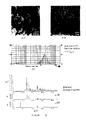
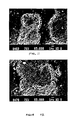
- the zirconium oxide particles of FIGS. 1a and 1b consist of agglomerated zirconium oxide balls, each ball having an average particle size of 1-3 ⁇ m.
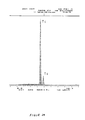
- the X-ray diffractogram (Fig. 1d) confirms that the crystal phase of the zirconium oxide is monoclinic.
- Other suitable metal oxide particles for use in the present invention are titanium oxide, magnesium oxide and the oxides of the metals nickel, cobalt, zinc, chromium, iron or rare earths.
- the average particle size and distribution for non-oxide ceramic powders is shown in FIGS. 17 and 29.
- small boehmite particles of a size and shape similar to those of the monoclinic zirconium oxide particles crystallize hydrothermally under alkaline conditions when starting from an aluminum sulfate solution, in the hydrated Al3+ ions first complexed and in the solution by adding a complexing agent, such as. B. organic acid can be stabilized. Suitable acids are gluconic, tartaric, citric and oxalic acid. The organic acid, which acts as a complexing agent, is added to the solution before the pH of the solution in the alkaline range by adding suitable bases, such as. B. sodium hydroxide is raised.
- the core particles of the present invention generally have a particle size of ⁇ 1000 ⁇ m, preferably between 5 and 25 ⁇ m, regardless of whether these particles are metal oxide particles or non-oxide ceramic particles.
- the boehmite-coated composite powder of the present invention generally has a particle size ⁇ 1000 ⁇ m, preferably between about 0.5 and 50 ⁇ m (average particle size).
- a particularly preferred particle is the monoclinic zirconium oxide coated with boehmite.
- the preferably coated particle has an average particle size of approximately 17.5 ⁇ m.
- a particularly preferred coated particle with a non-oxide ceramic core is a silicon carbide core which has been coated with boehmite.
- the preferred average particle size for these non-oxide core particles is 10 ⁇ m.
- the hydrothermal process of the present invention could be carried out advantageously and economically in a tubular reactor (e.g. a tubular reactor as disclosed in applicant's patent 4,361,541).
- a tubular reactor e.g. a tubular reactor as disclosed in applicant's patent 4,361,541.
- the economic benefits of the tubular reactor are well known in the alumina industry. See e.g. B. "Practical Experiences with the Tube Digester," K. Bielfeldt, Journal of Metals, Sep. 1968, pp. 48-54.
- a stock solution (2 l) of 0.45 M aluminum sulfate was prepared at room temperature by dissolving 600 g Al2 (SO4) 3 ⁇ 18H2O in deionized water.
- the contents of the autoclave were stirred by a permanent magnetic stirrer with a turbine equipped with 6 blades and a speed of 330 revolutions per minute.
- the autoclave was then closed and oxygen gas was introduced at 25 ° C up to a partial pressure of 10 x 105 Pa.
- the system was then heated to a temperature of 250 ° C (the internal pressure of the autoclave was 58 x 105 Pa) and held at this temperature for 60 min.
- the organic carbon-containing complexing agent decomposed to compounds with lower molecular weight (e.g. sodium acetate, format, carbonate), the aluminum ions being released as boehmite for crystallization.
- the lye filtrate (pH ⁇ 7.9) primarily contained sodium sulfate (46.2 g / l SO42 ⁇ ) and sodium salts of the organic carbon degradation products (total carbon concentration ⁇ 25.7 g / l).
- the aluminum content of the alkali filtrate was ⁇ 0.1 g / l.
- the Na2O content of the boehmite product was 0.32% and the SO42 ⁇ content 0.020%.
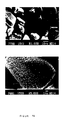
- Scanning electron microscope images (1000x and 5000x magnification) of the boehmite particles, grain size distribution and the X-ray diffractogram are shown in FIGS. 2a-d. The corresponding sub-figures d each show the X-ray diffractogram analyzes.
- a Phillips PW 1820 vertical diffractometer with a PW 1825 generator and APD 1700 software was used for the X-ray diffractogram analysis.
- the instrument works with about 2 g of the powder sample and recognizes the different phases by comparing their diffractograms with a "library" of known diffractograms for standard substances.
- the expression shows the pulses per second versus the diffraction angle using CuK ⁇ radiation.
- the total particle structure of the pure boehmite particles in Fig. 2 is similar to the particle structure of the ZrO2- (monoclinic) particles of Fig. 1.
- the average particle size is about 25 microns.
- the surface structure of the boehmite particles shows a crystal growth type, which is able to form similarly shaped particles with a smaller particle size, which continue to grow into a densified coating.
- This unique crystal growth property is generally applicable to the crystallization of boehmite on metal oxide seed particles.
- Example 2 was carried out in the same way as Example 1, but the system was inoculated with ZrO2 (monoclinic) metal oxide powder.
- ZrO2 monoclinic metal oxide powder.
- This powder has been previously described and is shown in Figures 1a-1e.
- 1 l of the 0.45 M aluminum sulfate / 1.5 M tartaric acid / 10 M NaOH solution was inoculated with 15 g ZrO2 (the monoclinic particles have an average particle size of 15 ⁇ m).
- the hydrothermal treatment of the suspension at 250 ° C led to 35.3 g of boehmite-coated ZrO2 (monoclinic) (this corresponds to an Al2O3: ZrO2 ratio of approx. 50:50).
- the loss on ignition (1100 ° C./1 h) of the zirconium oxide coated with boehmite was 9.7% by weight.
- the Na2O content of the product was 0.23% and the SO42 ⁇ content 0.010%.
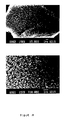
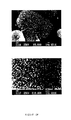
- FIG. 3a shows the SEM image of the monoclinic zirconium oxide coated with boehmite, the grain size distribution of these particles is shown in FIG. 3b and the X-ray diffractogram of the coated particles in FIG. 3c.
- the increase in the average particle size to 17.5 ⁇ m due to the boehmite coating indicates a boehmite layer thickness of approximately 3 ⁇ m.
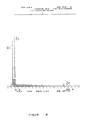
- the term EDAX analysis refers to the analysis of the X-rays emanating from the solid surface by bombarding the surface with an electron beam (“EDAX" is an acronym for "Energy Dispersive Analysis of X-Rays).
- the EDAX analysis is carried out in conjunction with the SEM analyzes using a JEOL-840 scanning electron microscope at an acceleration voltage of 20-25 kV.
- the device used to perform the EDAX analysis is a Links System Model 860 with Si (Li) detector (Link Systems, Why Road, High Wycombe, Bucks, HP12 3SE, England). A Channel width of 10 eV was used.
- the EDAX analysis is a topochemical analysis of the impulses / time unit compared to eV.
- Fig. 4 is thus a confirmation that monoclinic ZrO2 is coated with boehmite.
- the boehmite coating is very polycrystalline, whereby the boehmite crystals grow together and are randomly oriented on the surfaces of the zirconium oxide particles.
- the irregular growth pattern can be advantageous because it allows the water to be released quickly when the boehmite coating is heated (calcined) to form aluminum oxide. This was confirmed in a heat treatment test in which the boehmite-coated monoclinic zirconium oxide was calcined at a temperature of 1240 ° C. over a period of 1 hour. Heating the monoclinic zirconium oxide above the monoclinic ⁇ tetragonal transition temperature of 1170 ° C reduced the volume of the zirconium oxide sample by approx. 5%. Upon cooling below the transition temperature to room temperature, the zirconium oxide regained its original volume.
- 5a, 5b and 5c show SEM images, grain size analysis and the X-ray diffractogram for the calcined monoclinic zirconium oxide coated with boehmite. The results show that the coating converted from boehmite to aluminum oxide on the monoclinic zirconium oxide remained intact despite the heat treatment.
- Example 3 was carried out analogously to example 2.
- titanium oxide in the form of TiO2, anatase
- the titanium oxide which is available from Sachtleben Chemie GmbH, Duisburg-Homberg, FRG, is shown in FIGS. 6a and 6b, together with the particle size analysis (FIG. 6c) and the X-ray diffractogram of the particles (FIG. 6d).
- FIG. 7a and 7b show SEM images of the titanium oxide particles, together with the grain size distribution (FIG. 7c) and the X-ray diffractogram (FIG. 7d).
- the titanium oxide particles are clearly coated with boehmite, although the particle size (average particle size of 7 ⁇ m within a narrow main size distribution) shows that the particles coated with boehmite have not only become larger due to the crystal growth of the boehmite, but also due to subsequent agglomeration.
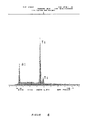
- the EDAX analysis (FIG. 8) showed a generally uniform coating of the boehmite on the titanium oxide particles.
- a heat treatment test was performed to determine whether the coating remained intact after heating at 600 ° C for 1 hour.
- anatase coated with boehmite is first precalcined in practice at a relatively low temperature (e.g. 600 ° C) to remove most of the water from the boehmite. These preliminary powders were then quickly fired at a temperature> 1300 ° C to form aluminum titanate.
- 9a and 9b show SEM images of the heat-treated boehmite-coated titanium oxide, together with the particle size analysis (FIG. 9c) and the X-ray diffractogram (FIG. 9d).
- Figure 10 shows the EDAX analysis for the particles of Figures 9a-c. The results confirm that the calcined boehmite coating on the titanium oxide particles remained intact despite the heat treatment.
- Example 1 The procedure of Example 1 was repeated with the difference that 100 g of the SiC particles were added to the solution in the autoclave.
- the SiC used had the fineness "F400" which is available from Elektro-Schmelzwerk, Kempten, Germany (average particle size 20.5 ⁇ m, particle size range 0.1 to 80 ⁇ m).
- 13a and 13b are SEM images of the SiC (magnification 1000x and 5000x, respectively). 14 shows the grain size distribution of the SiC particles.
- Figure 15 is an EDAX analysis of the same particles.
- the stirring speed for the autoclave was 500 revolutions per minute.
- the oxygen-enriched and pressurized system was heated to 280 ° C. and held at this temperature for 30 minutes.
- the suspension When cooling to atmospheric pressure and a temperature ⁇ 100 ° C, the suspension was removed from the autoclave and the solids filtered, washed with hot deionized water and dried at 110 ° C.
- the dried product weighed 118.7 g and had a boehmite coating of 13.4% (expressed as Al2O3 equivalent).
- the Na2O content of the product was 0.29% and the sulfate (SO42 ⁇ ) content 0.033%.
- FIG. 16 shows the SEM image of the silicon carbide coated with boehmite.
- the grain size distribution is shown in FIG. 17 and the EDAX analysis in FIG. 18.
- the increase in the average particle size to 21.4 ⁇ m due to the boehmite coating indicates a thickness of the boehmite layer of approximately 1 ⁇ m.
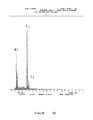
- the EDAX analysis shows that the boehmite was deposited uniformly on the silicon carbide particles.
- the silicon carbide coated with boehmite was then calcined at a temperature of 1100 ° C. for 1 hour to convert the boehmite to aluminum oxide.
- the corresponding SEM image (FIG. 19), the particle size analysis (FIG. 20) and the EDAX analysis (FIG. 21) show that the coating on the silicon carbide converted from boehmite to aluminum oxide remained intact despite the heat treatment.
- Example 5 was carried out in the same way as Example 1, but titanium diboride was used as the non-oxide ceramic powder.
- the titanium diboride used is available from H.C. Stark Berlin, 7887 Laufenburg (Baden), PO Box 1229, FRG. 22 shows the SEM image of the titanium diboride, FIG. 23 the grain size distribution and FIG. 24 the EDAX analysis.
- the average particle size is 11.1 ⁇ m.
- FIG. 25 shows the SEM image of the titanium diboride particles coated with boehmite
- FIG. 26 the grain size distribution
- FIG. 27 the EDAX analysis.
- the titanium diboride particles are clearly coated with boehmite, although the particle size (14.9 ⁇ m on average) showed that the boehmite-coated particles grew not only due to the crystal growth of the boehmite, but also due to slight agglomeration due to the textured surface of the deposited boehmite.
- the EDAX analysis showed an essentially flat coating of the boehmite on the titanium diboride particles.
- the present invention thus provides a method for coating both metal oxide powders and non-oxide ceramic powders with boehmite.
- the coated Particles can then be calcined in situ with little or no destruction of the aluminum oxide layer formed.
- the process of the present invention can therefore be applied to a wide range of metal oxides including zirconium oxide, titanium oxide, magnesium oxide, oxides of the metals nickel, cobalt, zinc, chromium, iron and rare earths and also to non-oxide ceramic powders including titanium carbide, boron carbide, silicon nitride or titanium boride can be used without restriction.
- the particle size of the coated end particles can be controlled by selecting the size of the ceramic starting (core) particles and by changing the thickness of the coating.
- Controlling the thickness of the boehmite layer is achieved by changing the thickness of the boehmite layer, the amount of vaccine and the aluminum concentration of the alkali.
- boehmite crystallization is high under hydrothermal conditions.
- the higher the temperature for the hydrothermal treatment the shorter the residence time under the hydrothermal conditions which is required for the production of the boehmite crystals.
- some temperature-time combinations for the production of boehmite crystals are as follows:
Landscapes
- Chemical & Material Sciences (AREA)
- Engineering & Computer Science (AREA)
- Ceramic Engineering (AREA)
- Manufacturing & Machinery (AREA)
- Materials Engineering (AREA)
- Structural Engineering (AREA)
- Organic Chemistry (AREA)
- Inorganic Chemistry (AREA)
- Chemical Kinetics & Catalysis (AREA)
- General Chemical & Material Sciences (AREA)
- Catalysts (AREA)
Applications Claiming Priority (2)
| Application Number | Priority Date | Filing Date | Title |
|---|---|---|---|
| US51399190A | 1990-04-26 | 1990-04-26 | |
| US513991 | 1990-04-26 |
Publications (1)
| Publication Number | Publication Date |
|---|---|
| EP0454138A2 true EP0454138A2 (fr) | 1991-10-30 |
Family
ID=24045373
Family Applications (1)
| Application Number | Title | Priority Date | Filing Date |
|---|---|---|---|
| EP19910106730 Withdrawn EP0454138A2 (fr) | 1990-04-26 | 1991-04-25 | Poudre composite et procédé pour le revêtement de poudres céramiques |
Country Status (1)
| Country | Link |
|---|---|
| EP (1) | EP0454138A2 (fr) |
Cited By (9)
| Publication number | Priority date | Publication date | Assignee | Title |
|---|---|---|---|---|
| EP0541254A1 (fr) * | 1991-11-02 | 1993-05-12 | Tioxide Group Services Limited | Poudres recouvertes d'oxyde métallique |
| WO1994001762A1 (fr) * | 1992-07-03 | 1994-01-20 | Robert Bosch Gmbh | Ceramique resistant aux temperatures elevees |
| US5681784A (en) * | 1992-07-03 | 1997-10-28 | Robert Bosch Gmbh | Thermal shock resistant ceramic |
| WO2010015298A3 (fr) * | 2008-08-08 | 2011-03-10 | Jesalis Pharma Gmbh | Microparticules de substance active cristalline, leur procédé de fabrication et leur utilisation dans des médicaments |
| CN109749516A (zh) * | 2018-12-29 | 2019-05-14 | 武汉理工大学 | 一种喷墨打印用光致变色陶瓷墨水及其制备方法 |
| CN110526685A (zh) * | 2019-04-09 | 2019-12-03 | 厦门钨业股份有限公司 | 合成超硬复合片用传压元件及其制备方法 |
| CN112408991A (zh) * | 2020-11-27 | 2021-02-26 | 安徽盈锐优材科技有限公司 | 一种新型热喷涂氮化硅粉体的制备方法 |
| CN116143155A (zh) * | 2022-12-30 | 2023-05-23 | 南昌宝弘新材料技术有限公司 | 一种粒径小且纯度高的勃姆石及其制备方法 |
| CN120757326A (zh) * | 2025-09-08 | 2025-10-10 | 宁波大浦新材料科技有限公司 | 一种耐高温陶瓷涂覆浆料及其应用 |
-
1991
- 1991-04-25 EP EP19910106730 patent/EP0454138A2/fr not_active Withdrawn
Cited By (12)
| Publication number | Priority date | Publication date | Assignee | Title |
|---|---|---|---|---|
| EP0541254A1 (fr) * | 1991-11-02 | 1993-05-12 | Tioxide Group Services Limited | Poudres recouvertes d'oxyde métallique |
| US5336521A (en) * | 1991-11-02 | 1994-08-09 | Tioxide Group Services Limited | Metallic oxides |
| WO1994001762A1 (fr) * | 1992-07-03 | 1994-01-20 | Robert Bosch Gmbh | Ceramique resistant aux temperatures elevees |
| US5681784A (en) * | 1992-07-03 | 1997-10-28 | Robert Bosch Gmbh | Thermal shock resistant ceramic |
| WO2010015298A3 (fr) * | 2008-08-08 | 2011-03-10 | Jesalis Pharma Gmbh | Microparticules de substance active cristalline, leur procédé de fabrication et leur utilisation dans des médicaments |
| CN102112113B (zh) * | 2008-08-08 | 2014-06-25 | 约莎丽丝制药股份有限公司 | 活性物质的结晶微粒,产生该活性物质的结晶微粒的方法及其在医药中的使用 |
| US9173843B2 (en) | 2008-08-08 | 2015-11-03 | Jesalis Pharma Gmbh | Crystalline active ingredient microparticles, method for producing the same and use thereof in drugs |
| CN109749516A (zh) * | 2018-12-29 | 2019-05-14 | 武汉理工大学 | 一种喷墨打印用光致变色陶瓷墨水及其制备方法 |
| CN110526685A (zh) * | 2019-04-09 | 2019-12-03 | 厦门钨业股份有限公司 | 合成超硬复合片用传压元件及其制备方法 |
| CN112408991A (zh) * | 2020-11-27 | 2021-02-26 | 安徽盈锐优材科技有限公司 | 一种新型热喷涂氮化硅粉体的制备方法 |
| CN116143155A (zh) * | 2022-12-30 | 2023-05-23 | 南昌宝弘新材料技术有限公司 | 一种粒径小且纯度高的勃姆石及其制备方法 |
| CN120757326A (zh) * | 2025-09-08 | 2025-10-10 | 宁波大浦新材料科技有限公司 | 一种耐高温陶瓷涂覆浆料及其应用 |
Similar Documents
| Publication | Publication Date | Title |
|---|---|---|
| EP0406847B1 (fr) | Matériau fritté à base d'oxyde d'aluminium, son procédé de production et son utilisation | |
| EP1204597B1 (fr) | Procede de production d'oxydes d'aluminium et produits obtenus a partir de ces derniers | |
| EP0823885B1 (fr) | Procede de production de particules nanoscalaires faiblement agglomerees | |
| DE69408921T2 (de) | Verfahren zur Herstellung von kristallinen keramischen Pulvern aus Perowskitverbindungen | |
| DE69214335T2 (de) | Verfahren zur Herstellung von kolloidalen Böhmit | |
| DE3787981T2 (de) | Chemische Herstellung von Zirkonium-Aluminium-Magnesiumoxid-Verbundwerkstoffen. | |
| EP0318111B1 (fr) | Procédé de préparation de titanate sous forme de poudre | |
| DE69115115T2 (de) | Keramische Sinterkörper und Verfahren zu seiner Herstellung. | |
| EP0357959B1 (fr) | Matière première frittable à base de titanate d'aluminium, son procédé de préparation et articles réfractaires préparés à partir de cette matière et leur utilisation | |
| DE69223247T2 (de) | Verfahren zur herstellung von kristallinem pulver aus metalloxidgemischen | |
| DE3633030A1 (de) | Aluminiumoxid-titandioxid-compositpulver und verfahren zu ihrer herstellung | |
| EP1831107B1 (fr) | Particules fines de titanates de zirkonium et de plomb-zirkonium et procédé de préparation utilisant des particules d'hydrate d'oxyde de titanium ayant une surface > 50m^2/g | |
| DE3888241T2 (de) | Verfahren zur Herstellung einer Keramik-Körpers mit guter Bruchzähigkeit. | |
| EP1907323B1 (fr) | Procédé de fabrication de nanoparticules composees d'oxyde d'aluminium et d'oxydes d'elements du premier et du deuxieme groupe principal du tableau periodique | |
| EP2076476A2 (fr) | Fibres polycristallines en corindon et leur procédé de production | |
| DE69112732T2 (de) | Keramische Zusammensetzungen. | |
| DE69211641T2 (de) | Verfahren zur herstellung von submikronischen aluminateilchen | |
| EP0421077A1 (fr) | Poudre de dioxyde de zirconium, son procédé de préparation, son utilisation et corps frittés préparés à partir de celui-ci | |
| DE102005020781A1 (de) | Zirkondioxid und Aluminiumoxid enthaltender Schlicker und daraus erhältlicher Formkörper | |
| DE3308008C1 (de) | Verfahren zur Herstellung feinverteilter Dispersionen von Metalloxiden in Aluminiumhydroxid | |
| EP0421076A1 (fr) | Poudre de dioxyde de zirconium, son procédé de préparation, son utilisation et corps frittés préparés à partir de celui-ci | |
| EP0400306B1 (fr) | Poudre de bioxyde de zirconium, procédé pour sa préparation ainsi que son utilisation dans la formation de corps frittés | |
| DE69214946T2 (de) | Verfahren zur herstellung gemischter oxide | |
| DE3780573T2 (de) | Herstellung von teilweise stabilisiertem tetragonalem zirkondioxid. | |
| WO2005021426A1 (fr) | Production de particules de perovskite |
Legal Events
| Date | Code | Title | Description |
|---|---|---|---|
| PUAI | Public reference made under article 153(3) epc to a published international application that has entered the european phase |
Free format text: ORIGINAL CODE: 0009012 |
|
| AK | Designated contracting states |
Kind code of ref document: A2 Designated state(s): DE FR GB IT |
|
| STAA | Information on the status of an ep patent application or granted ep patent |
Free format text: STATUS: THE APPLICATION HAS BEEN WITHDRAWN |
|
| 18W | Application withdrawn |
Withdrawal date: 19920107 |
|
| R18W | Application withdrawn (corrected) |
Effective date: 19920107 |