EP0455757B1 - Integriertes zellkultur-proteinreinigungssystem zur automatisierten herstellung und reinigung von zellkulturprodukten - Google Patents
Integriertes zellkultur-proteinreinigungssystem zur automatisierten herstellung und reinigung von zellkulturprodukten Download PDFInfo
- Publication number
- EP0455757B1 EP0455757B1 EP90913611A EP90913611A EP0455757B1 EP 0455757 B1 EP0455757 B1 EP 0455757B1 EP 90913611 A EP90913611 A EP 90913611A EP 90913611 A EP90913611 A EP 90913611A EP 0455757 B1 EP0455757 B1 EP 0455757B1
- Authority
- EP
- European Patent Office
- Prior art keywords
- purification
- cell culture
- unit
- sub
- product
- Prior art date
- Legal status (The legal status is an assumption and is not a legal conclusion. Google has not performed a legal analysis and makes no representation as to the accuracy of the status listed.)
- Expired - Lifetime
Links
- 238000000746 purification Methods 0.000 title claims abstract description 76
- 238000004113 cell culture Methods 0.000 title claims abstract description 49
- 238000004519 manufacturing process Methods 0.000 title claims abstract description 17
- 238000001742 protein purification Methods 0.000 title abstract description 5
- 102000004169 proteins and genes Human genes 0.000 claims abstract description 61
- 108090000623 proteins and genes Proteins 0.000 claims abstract description 61
- 239000001963 growth medium Substances 0.000 claims abstract description 24
- 239000006143 cell culture medium Substances 0.000 claims abstract description 20
- 238000001179 sorption measurement Methods 0.000 claims abstract description 14
- 239000000047 product Substances 0.000 claims description 75
- 239000002609 medium Substances 0.000 claims description 41
- 238000000034 method Methods 0.000 claims description 25
- 238000010828 elution Methods 0.000 claims description 15
- 239000012531 culture fluid Substances 0.000 claims description 12
- 239000003446 ligand Substances 0.000 claims description 10
- 238000011027 product recovery Methods 0.000 claims description 9
- 230000010354 integration Effects 0.000 claims description 8
- 239000011347 resin Substances 0.000 claims description 8
- 229920005989 resin Polymers 0.000 claims description 8
- 239000002699 waste material Substances 0.000 claims description 8
- 239000000835 fiber Substances 0.000 claims description 7
- 230000008569 process Effects 0.000 claims description 7
- 239000012530 fluid Substances 0.000 claims description 6
- 239000012528 membrane Substances 0.000 claims description 6
- 238000005406 washing Methods 0.000 claims description 6
- 238000001042 affinity chromatography Methods 0.000 claims description 5
- QVGXLLKOCUKJST-UHFFFAOYSA-N atomic oxygen Chemical compound [O] QVGXLLKOCUKJST-UHFFFAOYSA-N 0.000 claims description 5
- 230000003993 interaction Effects 0.000 claims description 5
- 231100000252 nontoxic Toxicity 0.000 claims description 5
- 230000003000 nontoxic effect Effects 0.000 claims description 5
- 229910052760 oxygen Inorganic materials 0.000 claims description 5
- 239000001301 oxygen Substances 0.000 claims description 5
- SXRSQZLOMIGNAQ-UHFFFAOYSA-N Glutaraldehyde Chemical compound O=CCCCC=O SXRSQZLOMIGNAQ-UHFFFAOYSA-N 0.000 claims description 4
- 239000000126 substance Substances 0.000 claims description 4
- 239000012501 chromatography medium Substances 0.000 claims description 3
- 239000007789 gas Substances 0.000 claims description 3
- 239000000463 material Substances 0.000 claims description 3
- 239000012930 cell culture fluid Substances 0.000 claims description 2
- 239000000470 constituent Substances 0.000 claims description 2
- 238000012258 culturing Methods 0.000 claims description 2
- 238000006213 oxygenation reaction Methods 0.000 claims description 2
- 239000007790 solid phase Substances 0.000 claims description 2
- HEMHJVSKTPXQMS-UHFFFAOYSA-M Sodium hydroxide Chemical compound [OH-].[Na+] HEMHJVSKTPXQMS-UHFFFAOYSA-M 0.000 claims 3
- 239000011534 wash buffer Substances 0.000 claims 2
- 150000001299 aldehydes Chemical group 0.000 claims 1
- 230000001706 oxygenating effect Effects 0.000 claims 1
- 239000012264 purified product Substances 0.000 claims 1
- 238000005057 refrigeration Methods 0.000 claims 1
- 230000001172 regenerating effect Effects 0.000 claims 1
- 230000000717 retained effect Effects 0.000 claims 1
- 238000002798 spectrophotometry method Methods 0.000 claims 1
- 238000005342 ion exchange Methods 0.000 abstract description 6
- 230000002209 hydrophobic effect Effects 0.000 abstract description 4
- 239000012510 hollow fiber Substances 0.000 abstract description 3
- 238000010924 continuous production Methods 0.000 abstract 1
- 210000004027 cell Anatomy 0.000 description 33
- 238000000926 separation method Methods 0.000 description 11
- FAPWRFPIFSIZLT-UHFFFAOYSA-M Sodium chloride Chemical compound [Na+].[Cl-] FAPWRFPIFSIZLT-UHFFFAOYSA-M 0.000 description 10
- 239000011148 porous material Substances 0.000 description 8
- 239000000523 sample Substances 0.000 description 8
- 210000002966 serum Anatomy 0.000 description 8
- 238000004587 chromatography analysis Methods 0.000 description 7
- 238000005516 engineering process Methods 0.000 description 7
- 210000004962 mammalian cell Anatomy 0.000 description 7
- 235000015097 nutrients Nutrition 0.000 description 7
- 230000015556 catabolic process Effects 0.000 description 6
- 238000006731 degradation reaction Methods 0.000 description 6
- 210000004408 hybridoma Anatomy 0.000 description 6
- 239000007983 Tris buffer Substances 0.000 description 5
- 239000000872 buffer Substances 0.000 description 5
- 239000006167 equilibration buffer Substances 0.000 description 5
- 239000011780 sodium chloride Substances 0.000 description 5
- 231100000331 toxic Toxicity 0.000 description 5
- 230000002588 toxic effect Effects 0.000 description 5
- LENZDBCJOHFCAS-UHFFFAOYSA-N tris Chemical compound OCC(N)(CO)CO LENZDBCJOHFCAS-UHFFFAOYSA-N 0.000 description 5
- 108091005804 Peptidases Proteins 0.000 description 4
- 238000011161 development Methods 0.000 description 4
- 230000018109 developmental process Effects 0.000 description 4
- 239000000203 mixture Substances 0.000 description 4
- 150000003839 salts Chemical class 0.000 description 4
- 230000035945 sensitivity Effects 0.000 description 4
- CURLTUGMZLYLDI-UHFFFAOYSA-N Carbon dioxide Chemical compound O=C=O CURLTUGMZLYLDI-UHFFFAOYSA-N 0.000 description 3
- 239000012539 chromatography resin Substances 0.000 description 3
- 238000011109 contamination Methods 0.000 description 3
- 238000010168 coupling process Methods 0.000 description 3
- -1 phenyl- Chemical group 0.000 description 3
- 230000009467 reduction Effects 0.000 description 3
- 230000002441 reversible effect Effects 0.000 description 3
- 102000035195 Peptidases Human genes 0.000 description 2
- 239000004365 Protease Substances 0.000 description 2
- 102100037486 Reverse transcriptase/ribonuclease H Human genes 0.000 description 2
- 230000001594 aberrant effect Effects 0.000 description 2
- 239000002253 acid Substances 0.000 description 2
- 230000001580 bacterial effect Effects 0.000 description 2
- 229910002092 carbon dioxide Inorganic materials 0.000 description 2
- 230000008859 change Effects 0.000 description 2
- 239000000356 contaminant Substances 0.000 description 2
- 230000008878 coupling Effects 0.000 description 2
- 238000005859 coupling reaction Methods 0.000 description 2
- 230000000694 effects Effects 0.000 description 2
- 230000001605 fetal effect Effects 0.000 description 2
- 239000012467 final product Substances 0.000 description 2
- 230000016784 immunoglobulin production Effects 0.000 description 2
- 230000006872 improvement Effects 0.000 description 2
- 238000002347 injection Methods 0.000 description 2
- 239000007924 injection Substances 0.000 description 2
- 230000010412 perfusion Effects 0.000 description 2
- 229940024999 proteolytic enzymes for treatment of wounds and ulcers Drugs 0.000 description 2
- 239000012557 regeneration buffer Substances 0.000 description 2
- 102000004506 Blood Proteins Human genes 0.000 description 1
- 108010017384 Blood Proteins Proteins 0.000 description 1
- 241000283707 Capra Species 0.000 description 1
- 102000004190 Enzymes Human genes 0.000 description 1
- 108090000790 Enzymes Proteins 0.000 description 1
- 108010058683 Immobilized Proteins Proteins 0.000 description 1
- 108010001267 Protein Subunits Proteins 0.000 description 1
- 241000588769 Proteus <enterobacteria> Species 0.000 description 1
- 101150085390 RPM1 gene Proteins 0.000 description 1
- 239000012980 RPMI-1640 medium Substances 0.000 description 1
- 101710120037 Toxin CcdB Proteins 0.000 description 1
- GLNADSQYFUSGOU-GPTZEZBUSA-J Trypan blue Chemical compound [Na+].[Na+].[Na+].[Na+].C1=C(S([O-])(=O)=O)C=C2C=C(S([O-])(=O)=O)C(/N=N/C3=CC=C(C=C3C)C=3C=C(C(=CC=3)\N=N\C=3C(=CC4=CC(=CC(N)=C4C=3O)S([O-])(=O)=O)S([O-])(=O)=O)C)=C(O)C2=C1N GLNADSQYFUSGOU-GPTZEZBUSA-J 0.000 description 1
- 238000001261 affinity purification Methods 0.000 description 1
- 239000012984 antibiotic solution Substances 0.000 description 1
- 210000003567 ascitic fluid Anatomy 0.000 description 1
- 239000013060 biological fluid Substances 0.000 description 1
- 229960000074 biopharmaceutical Drugs 0.000 description 1
- 229940126587 biotherapeutics Drugs 0.000 description 1
- 239000012888 bovine serum Substances 0.000 description 1
- 244000309466 calf Species 0.000 description 1
- 239000001569 carbon dioxide Substances 0.000 description 1
- 230000001925 catabolic effect Effects 0.000 description 1
- 230000030833 cell death Effects 0.000 description 1
- 230000003833 cell viability Effects 0.000 description 1
- 238000006243 chemical reaction Methods 0.000 description 1
- 239000003153 chemical reaction reagent Substances 0.000 description 1
- 231100000481 chemical toxicant Toxicity 0.000 description 1
- 150000001875 compounds Chemical class 0.000 description 1
- 210000004748 cultured cell Anatomy 0.000 description 1
- ATDGTVJJHBUTRL-UHFFFAOYSA-N cyanogen bromide Chemical compound BrC#N ATDGTVJJHBUTRL-UHFFFAOYSA-N 0.000 description 1
- 230000003247 decreasing effect Effects 0.000 description 1
- 239000008367 deionised water Substances 0.000 description 1
- 229910021641 deionized water Inorganic materials 0.000 description 1
- 230000001627 detrimental effect Effects 0.000 description 1
- 238000010586 diagram Methods 0.000 description 1
- 238000009792 diffusion process Methods 0.000 description 1
- 239000013024 dilution buffer Substances 0.000 description 1
- 238000006073 displacement reaction Methods 0.000 description 1
- 239000003814 drug Substances 0.000 description 1
- 229940088598 enzyme Drugs 0.000 description 1
- 239000000706 filtrate Substances 0.000 description 1
- 239000012737 fresh medium Substances 0.000 description 1
- 238000010353 genetic engineering Methods 0.000 description 1
- 125000004051 hexyl group Chemical group [H]C([H])([H])C([H])([H])C([H])([H])C([H])([H])C([H])([H])C([H])([H])* 0.000 description 1
- 238000004191 hydrophobic interaction chromatography Methods 0.000 description 1
- 239000003547 immunosorbent Substances 0.000 description 1
- 230000002779 inactivation Effects 0.000 description 1
- 238000004255 ion exchange chromatography Methods 0.000 description 1
- 150000002500 ions Chemical group 0.000 description 1
- 239000012948 isocyanate Substances 0.000 description 1
- 150000002513 isocyanates Chemical class 0.000 description 1
- 239000012633 leachable Substances 0.000 description 1
- 238000002386 leaching Methods 0.000 description 1
- 239000007788 liquid Substances 0.000 description 1
- 230000007774 longterm Effects 0.000 description 1
- 239000011159 matrix material Substances 0.000 description 1
- 238000005259 measurement Methods 0.000 description 1
- 238000001471 micro-filtration Methods 0.000 description 1
- 238000012544 monitoring process Methods 0.000 description 1
- 230000000269 nucleophilic effect Effects 0.000 description 1
- 238000005498 polishing Methods 0.000 description 1
- 238000004801 process automation Methods 0.000 description 1
- 238000011165 process development Methods 0.000 description 1
- 230000017854 proteolysis Effects 0.000 description 1
- 238000011084 recovery Methods 0.000 description 1
- 230000008929 regeneration Effects 0.000 description 1
- 238000011069 regeneration method Methods 0.000 description 1
- 238000011160 research Methods 0.000 description 1
- 239000012266 salt solution Substances 0.000 description 1
- 230000028327 secretion Effects 0.000 description 1
- 239000004017 serum-free culture medium Substances 0.000 description 1
- 238000002415 sodium dodecyl sulfate polyacrylamide gel electrophoresis Methods 0.000 description 1
- 238000010186 staining Methods 0.000 description 1
- 230000001954 sterilising effect Effects 0.000 description 1
- 238000004659 sterilization and disinfection Methods 0.000 description 1
- 238000003860 storage Methods 0.000 description 1
- 230000001225 therapeutic effect Effects 0.000 description 1
- 239000003104 tissue culture media Substances 0.000 description 1
- 239000003440 toxic substance Substances 0.000 description 1
- 230000035899 viability Effects 0.000 description 1
- 230000003612 virological effect Effects 0.000 description 1
- 238000010792 warming Methods 0.000 description 1
- XLYOFNOQVPJJNP-UHFFFAOYSA-N water Chemical compound O XLYOFNOQVPJJNP-UHFFFAOYSA-N 0.000 description 1
- 210000005253 yeast cell Anatomy 0.000 description 1
Images

Classifications
-
- C—CHEMISTRY; METALLURGY
- C12—BIOCHEMISTRY; BEER; SPIRITS; WINE; VINEGAR; MICROBIOLOGY; ENZYMOLOGY; MUTATION OR GENETIC ENGINEERING
- C12M—APPARATUS FOR ENZYMOLOGY OR MICROBIOLOGY; APPARATUS FOR CULTURING MICROORGANISMS FOR PRODUCING BIOMASS, FOR GROWING CELLS OR FOR OBTAINING FERMENTATION OR METABOLIC PRODUCTS, i.e. BIOREACTORS OR FERMENTERS
- C12M47/00—Means for after-treatment of the produced biomass or of the fermentation or metabolic products, e.g. storage of biomass
- C12M47/10—Separation or concentration of fermentation products
-
- C—CHEMISTRY; METALLURGY
- C12—BIOCHEMISTRY; BEER; SPIRITS; WINE; VINEGAR; MICROBIOLOGY; ENZYMOLOGY; MUTATION OR GENETIC ENGINEERING
- C12M—APPARATUS FOR ENZYMOLOGY OR MICROBIOLOGY; APPARATUS FOR CULTURING MICROORGANISMS FOR PRODUCING BIOMASS, FOR GROWING CELLS OR FOR OBTAINING FERMENTATION OR METABOLIC PRODUCTS, i.e. BIOREACTORS OR FERMENTERS
- C12M47/00—Means for after-treatment of the produced biomass or of the fermentation or metabolic products, e.g. storage of biomass
- C12M47/12—Purification
-
- Y—GENERAL TAGGING OF NEW TECHNOLOGICAL DEVELOPMENTS; GENERAL TAGGING OF CROSS-SECTIONAL TECHNOLOGIES SPANNING OVER SEVERAL SECTIONS OF THE IPC; TECHNICAL SUBJECTS COVERED BY FORMER USPC CROSS-REFERENCE ART COLLECTIONS [XRACs] AND DIGESTS
- Y10—TECHNICAL SUBJECTS COVERED BY FORMER USPC
- Y10S—TECHNICAL SUBJECTS COVERED BY FORMER USPC CROSS-REFERENCE ART COLLECTIONS [XRACs] AND DIGESTS
- Y10S435/00—Chemistry: molecular biology and microbiology
- Y10S435/803—Physical recovery methods, e.g. chromatography, grinding
-
- Y—GENERAL TAGGING OF NEW TECHNOLOGICAL DEVELOPMENTS; GENERAL TAGGING OF CROSS-SECTIONAL TECHNOLOGIES SPANNING OVER SEVERAL SECTIONS OF THE IPC; TECHNICAL SUBJECTS COVERED BY FORMER USPC CROSS-REFERENCE ART COLLECTIONS [XRACs] AND DIGESTS
- Y10—TECHNICAL SUBJECTS COVERED BY FORMER USPC
- Y10S—TECHNICAL SUBJECTS COVERED BY FORMER USPC CROSS-REFERENCE ART COLLECTIONS [XRACs] AND DIGESTS
- Y10S435/00—Chemistry: molecular biology and microbiology
- Y10S435/813—Continuous fermentation
Definitions
- the secreted product needs to be purified from the cell culture medium.
- Most mammalian cells require serum which contains a diverse mixture of proteins, many of which are present at high concentrations. Even in serum-free media systems, numerous other proteins are secreted from the cells. For most of the applications the final product has to meet high levels of purity and activity.
- US-A-4 537 860 discloses a reactor for maintaining cells in a growth-arrested state for secretion of cell products. Fresh nutrient is supplied by perfusion through low porosity tubes. Expended medium and cell product is withdrawn through high porosity tubes. Oxygenation is supplied via a membrane.
- EP-A-0 201 086 discloses a system for cell culture and purification in accordance with the precharacterising portion of claim 1. It discloses a system in which culture medium may be drawn from a culture vessel, ultrafiltered and the liquid which does not pass through the filter is returned, the filtrate being removed.
- Another important aspect of the integration is the availability of appropriate protein separation technologies.
- Current protein purification technologies require significant improvement in order to realise the potentials of the integration concept.
- a major obstacle is that the interaction of the cell culture medium with the protein separation material (chromatography resin) may change the composition of the medium which can be detrimental to the cells in culture. Chromatography media like ion exchange or hydrophobic matrices can drastically change the culture medium composition and thus are unsuitable for an integrated instrument if continuous removal of the product is desired.
- Biospecific, affinity separation is the only method offering the least interference with cell culture.
- current affinity technologies have serious shortcomings which have prevented them from being incorporated into an integrated system.
- the affinity resin may leach other toxic molecules, like isocyanate from CNBr-activated matrices, for long periods of line. This is toxic to the cells in the bioreactor.
- the immobilization method may also increase the protease sensitivity of immobilized protein (antibody) ligand, an issue which is a problem with the traditional coupling chemistries.
- proteins are frequently used as ligand.
- the immunoaffinity chromatography resin must withstand the conditions of cell culture for long periods of time. The warm, highly-oxygenated environment of cell culture medium may diminish the activity of the immunoaffinity column. Many of the cultured mammalian cells, including hybridomas, secrete proteolytic enzymes which may degrade the immobilized antibody ligand. The same applies to dead cells spilling their content into the culture medium. The structure of the support and the method of immobilization also plays an important role in the protease sensitivity of immobilized antibody. The low concentration of secreted proteins in the cell culture medium may also complicate quantitative recovery of the product.
- a cell culture and purification system for producing purified cell culture products, comprising: a cell culture sub-unit for culturing cells, whereby said cells can secrete said product into a culture fluid; a purification sub-unit linked to the cell culture sub-unit adapted to remove said product from said culture fluid; and means for circulating said culture fluid from said cell culture sub-unit to said purification sub-unit; characterised in that: the purification sub-unit comprises a stable, non-toxic and sterilizable activated resin as a solid-phase biospecific affinity medium for separating said product by specific affinity interaction; and in that said cell culture sub-unit, said purification sub-unit and said means for circulating are combined to form an integrated instrument for continuous automated production and purification of cell culture products in a sterile environment without removing said culture fluid from said instrument.
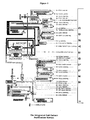
- Figure 1 is the flow diagram of the invention integrated cell culture/purification system.
- Figure 2 is the accumulated production of purified monoclonal antibody in the integrated cell culture/purification system.
- Celle culture is a versatile technique for producing a variety of complex biomolecules including proteins.
- the protein of interest is produced and secreted by the cultured cells into the cell culture fluid of which the product is recovered, in many cases, by using complicated, multi-step purification procedures. This frequently results in significant product losses and an increased possibility of generating aberrant protein molecules.
- We have developed a new integrated instrument which unifies the formerly separate cell culture and protein purification into an integrated, automated operation which significantly reduces the manufacturing cost of high purity cell culture protein products. The product quality is also increased as a result of the integrated production of proteins.
- the integrated cell culture/purification instrument has two subunits, such as the bioreactor and chromatography subunits (Fig. 1).
- the cell culture unit is a hydrophilic hollow fiber bioreactor (Zymax, Microgon (Reg. Trade Mark).
- the bioreactor 2 consists of compact coaxial fibers in a cylindrical housing.
- the fibers are usually 0.2-1.0 mm in diameter with a pore size of 0.2 micron.
- the space within the fibers is called intro-capillary space (ICS) and the outside region is designated extra-capillary space (ECS).
- ICS intro-capillary space
- ECS extra-capillary space
- the cells are detained in ECS whereas ICS has nutrient or culture medium flowing through.
- the pore size of the fibers is small enough to contain the cells (approx. 10 microns in diameter), but allows exchange of nutrients and proteins across the membrane by diffusion.
- the bioreactor environment needs to be carefully controlled because slight changes may lead to decreased productivity or cause cell death.
- the important parameters to be controlled are temperature, pH, dissolved oxygen and nutrient levels of the culture medium. Mammalian cells are very sensitive to chemical contaminants. A wide variety of substances even at ppm level could be highly toxic to the cells. Under the right culture conditions the cells remain active in the bioreactor for a couple of months or even longer.
- probes such as the temperature probe 53, pH electrode 52 and dissolved oxygen probe 54 need to be included into the bioreactor loop and linked to the programable controller 108.
- a suitable controller may be a microprocessor controlled unit like the Proteus 2000 (Reg. Trade Mark) (Wheaton Scientific Instruments).
- the controller 108 receives information from the probes and makes appropriate adjustments in the above culture conditions.
- the pH is adjusted by autotitration of the culture medium from acid 18 or base 16 containers.
- the temperature is adjusted by warming the medium flask while the dissolved oxygen is changed by a gas flow controller 30 by increasing the air pressure on the oxygenator 6.
- the oxygenator 6 (Microgon (Reg. Trade Mark)) is also of hollow fiber-type containing hydrophobic fibers with a pore size of 0.02 micron; 5% CO 2 in air mixture is passed through the oxygenator.
- the bioreactor loop contains the culture medium supply system which, in the simplest case, is a medium container changed periodically as the medium gets exhausted.
- feeding of cells is accomplished by continuous perfusion (feed and bleed system) by introducing fresh and withdrawing spent medium from the bioreactor loop at a preset rate. This is accomplished by using the reversible pump 14 (Pump A) which first withdraws spent medium from the medium vessel 12 and then replenishes it with fresh medium.
- the spent medium exits the system through the valve 45 and hollow fiber filter 103, 0.2 micron, into the drain.
- the spent medium may be recycled through valves 45, 46 onto the purification unit 4 for subsequent purification of the product.
- the bioreactor 2 and affinity chromatography column 4 is enclosed into plug-in type cartridges which are presterilized and attached to the instrument through snap-in connectors 3. After each run, the cartridges are discarded. The rest of the instrument can be sterilized in place by using a chemical sterilant, such as 5% glutaraldehyde. After the specified time of sterilization, the glutaraldehyde is drained and the whole system is extensively washed with sterile, pyrogen-free deionized water (tissue culture grade) introduced through the connecting port of gradient former 70. The bioreactor loop is then filled with culture medium and the bioreactor 2 is inoculated with the cells. The nutrients are delivered to the cells in the bioreactor 2 at a flow rate of 30-150 ml/min by using Pump B10.
- the bioreactor loop contains aseptic injection ports 32, 34. Through port 32, either medium can be withdrawn from the bioreactor loop or compounds can be introduced into the cell culture medium. Through port 34, the bioreactor is inoculated with the cells to start operation.
- the four-way valve 42 and the three-way valves 48, 50 direct the culture medium on or off the purification unit 4.
- the purification unit 4 is not in operation before the cells populate the bioreactor. In the continuous mode of operation, after the sixth day, the controller 108 initiates the product recovery cycles.
- the bioreactor was inoculated with 5x10 7 hybridoma cells.
- the mouse x mouse hybridoma (HB 57) producing IgG1 monoclonal antibody was grown in RPM1 1640 medium supplemented with antibiotic solution and 10% iron-supplemented calf serum. This hybridoma is a low producer and requires a minimum of 10% serum for optimal growth and antibody production.
- the culture medium is kept at 37 C in the bioreactor loop. Cell density and viability were determined by using hemocytometer and Trypan blue staining.
- the bioreactor loop interfaces with the purification/chromatography loop through the purification unit 4 which can be an affinity cartridge.
- the affinity cartridge is a polymeric cylindrical container closed with porous disks at the top and bottom and is filled with a fast flow activated affinity resin, Actigel-ALD Superflow (Reg. Trade Mark; patent pending) to which an antibody to the desired product is attached.
- Actigel-ALD Superflow (Sterogene Bioseparations, Inc.) is stable, nontoxic and sterilizable (autoclavable) activated resin.
- an affinity-purified, goat anti-mouse light chain-specific antibody is attached to the resin at a concentration of 10 mg/ml.
- the immunoaffinity resin has an extremely low content of leachables ( ⁇ 0.1 ppm IgG) and is not toxic to mammalian cells.
- the culture medium is continuously circulated through the affinity cartridge 4 which adsorbs the monoclonal antibodies, secreted by the hybridomas in the bioreactor 2, from the culture medium.
- the affinity cartridge 4 is taken off-line from the bioreactor loop by using the valves 42, 48 and 50 and the product recovery cycle is initated by the controller 108.
- the separation loop is driven by Pump C 56 which delivers the wash-, elution-, and regeneration media (60; 62; 58) in the specified sequence.
- the residues of the tissue culture medium and nonspecifically adsorbed proteins are removed by extensive washing with the wash medium 60, 0.3 M NaCl.
- This step is followed by the elution of monoclonal antibodies from the affinity column 4 by using 1 bed volume of ActiSep Elution Medium 62 (Reg. Trade Mark; patent pending) over a period of 30 min.
- ActiSep (Sterogene Bioseparations, Inc.) is a nondenaturing elution medium allowing 100 or more cycles to be performed on immunoaffinity columns.
- the eluant retains the binding capacity of the immunoadsorbent during many cycles of operation as well as high bioactivity of the eluted product.
- Eluted protein peak is monitored by OD 290 measurement in a flow cell UV photometer and the protein peak is integrated to quantitate eluted antibody.
- the product is collected into a 68 refrigerated storage bottle while the washes are collected into a separate 66 waste bottle.
- Another wash with 0.3 M NaCl is initiated to remove traces of the eluant. This is followed by a wash with the 58 cell culture medium (RPMI 1640) to equilibrate the column for the subsequent product adsorption cycle.
- the waste and product bottles 66, 68 are emptied by compressed air 96 introduced through sterile filter 100.
- the air flow is directed by the valves 92 and 94 into the respective bottles.
- the waste exits the system into the drain through sterile filter 98, 0.2 micron pore size, and two-way valve 90.
- the product exists the system through the sterile filter 102, 0.2 um pore size, into a collection flask from which it is collected by the operator.
- the emptying of the waste and product vessels is initiated by the controller 108 receiving signals from the level sensors 78 and 80.
- the level sensors 72, 74, and 76 monitor fluid levels in the buffer vessels 56, 58, 60 and 62.
- the controller 108 issues warning signals to the operator to fill empty bottles. Until the buffer/medium bottles are replenished, no further product adsorption and elution cycles are initiated by the controller.
- the separation loop contains additional safety controls, such as pressure and bubble sensors 104, 106 to protect the purification unit 4 from pressure build-up or from running dry.
- the accumulated antibody production of the system is shown in Fig. 2.
- the antibody level has exceeded 10 ug/ml in the culture medium and continouous separation of the product has commended.
- an accumulated 800 mg of affinity-purified monoclonal antibody was recovered from the integrated system.
- the purity of antibody was tested by SDS-polyacrylamide gel electrophoresis. Single heavy and light chains were observed indicating a protein purity of approximately 99%.
- no sign of degradation of antibody is found which underscores the significance of the integration concept, i.e., the continuous removal of the product for the culture fluid in which the antibody is exposed to proteolytic enzymes deriving from the serum and dead cells. Therefore, besides improving the economy of the process, the product quality is also improved.
- proteins other than antibodies need to be purified in a continuous fashion from the cell culture medium, the operator has to immobilize his antibody to the product to purification unit 4 which, in this case, contains Actigel-ALD Superflow activated support.
- the antibody mixed with the coupling reagent is injected into cartridge 4 through sterile port 32 and the reaction is allowed to take place for 6 h (Sterogene Bioseparations, Inc., Actigel-ALD Superflow Technical Bulletin). Unbound protein is removed by washing with wash medium 60 and then with cell culture medium 58 to prepare the cartridge for the product adsorption cycle.
- discontinuous product recovery is strongly preferred. However, in certain cases when the characteristics of the product justifies it, discontinuous product recovery by other methods may be used. If the secreted product is resistant to proteolysis/degradation and the protein concentration in the cell culture medium is low, i.e. a low protein, defined medium is used, the product may be recovered from the spent culture medium in a discontinuous fashion as follows:
- the spent medium, withdrawn from the medium vessel 8 by reversible pump 14 (Pump A) is directed by three-way valves 45, 46 onto separation unit/chromatography cartridge 4 which may contain an ion exchange-, hydrophobic interaction(HIC)-, or affinity chromatography medium.
- separation unit/chromatography cartridge 4 which may contain an ion exchange-, hydrophobic interaction(HIC)-, or affinity chromatography medium.
- the column may contain e.g. a DEAE-type medium, equilibrated with 50 mM Tris, pH 8.0, delivered from vessel 62.
- Vessel 60 is filled with 50 mM Tris, pH 8.0, 1 M NaCl regeneration buffer.
- Vessel 58 contains a 2 mM Tris, pH 8.0 dilution buffer delivered by pump 56 (Pump C) to chromatography cartridge 4 along with the culture medium to lower the ionic strength of the cell culture medium.
- the appropriately diluted cell culture medium is applied to ion exchange cartridge 4 and washed with the equilibration buffer 62.
- the desired product is then elution by a gradient elution, generated by gradient former 70 from 0% (equilibration buffer) to 100% (end buffer, such as 50 mM Tris, pH 8.0, 0.3 M NaCl).
- the eluted product is measured at 280 nm in the flow cell UV, monitor 64.
- the protein concentration is calculated by integrating the elution peak.
- eluted product exits the system into the fraction collector 110.
- the column is regenerated for the next adsorption cycle by washing with the regeneration buffer (vessel 60) and equilibration buffer (vessel 62).
- the cartridge 4 contains an appropriate medium, such as phenyl-, octyl-, butyl-, hexyl, isopentyl-liganded or other HIC media.
- the HIC cartridge 4 is equilibrated with the binding salt by using gradient former 70.
- the cell culture medium is then applied as described for the ion exchange chromatography separations.
- the binding salt is applied through gradient former 70 at the appropriate ratio. Unbound materials are washed with the binding salt solution and then product is recovered by applying a low salt buffer or a reverse salt gradient onto the cartridge 4 through the gradient former 70.
- eluted product exits the system into the fraction collector 110.
- the column is regenerated for the next adsorption cycle by washing with the regenerators buffer (vessel 60) and equilibration buffer (70 gradient former).
- affinity chromatography may also be used.
- purification unit 4 may contain immobilized Protein A or Protein G capable of binding antibodies.
- the culture medium is applied to the affinity cartridge 4 in accord with paragraph 1.
- a wash fluid e.g. 50 mM Tris, pH 8.0, 0.15 M NaCl is then applied from vessel 60 and directed to waste bottle 66.
- the lenght of the wash is determined by monitoring OD 280 in the waste fluid.
- the bound antibody is then eluted by delivering one column volume of ActiSep Elution Medium from vessel 62 over a period of 30 min onto the cartridge 4. If pH gradient elution is desired, gradient former 70 can generate the required pH gradient profile.
- eluted product exits the system into the fraction collector 110.
- the column is regenerated for the next adsorption cycle by washing with the equilibration buffer (60 vessel).
- the instrument can also operate as a stand alone cell culture unit to culture and characterize cell lines. This is important if a new cell line need to be developed and culture conditions optimized for the production of a particular protein.
- an optimal purification strategy can be developed for the product which may be a continuous immunoaffinity method or a discontinuous conventional, ion exchange or HIC purificalion or some other affinity methods. This decision is made based on the cell culture conditions and the sensitivity of the product to degradation as well as the intended use of the protein. For therapeutic applications where the product identity is a major issue, continuous product purification is desirable as this method protects the product against degradation. If the product is more resistant to degradation and protein identity is of a lesser problem, discontinuous product purification may be suitable.
- the separation loop can be utilized, independently from the bioreactor loop, for the purification of proteins like antibodies from biological fluids, such as serum or ascitic fluid.
- proteins like antibodies from biological fluids, such as serum or ascitic fluid.
- ion exchange, HIC or affinity methods may be used following the description of paragraphs 1, 2 and 3.
- the sample to be purified is applied to purification unit 4 from vessel 58. This is followed by the application of the wash fluid from vessel 60 and then elution is initiated either by applying a single eluant from vessel 62 or using gradient elution through gradient former 70.
- Polishing purification of the product, obtained by continuous, immunoaffinity purification of secreted protein can also be accomplished as described in paragraphs 1, 2 and 3.
Landscapes
- Life Sciences & Earth Sciences (AREA)
- Engineering & Computer Science (AREA)
- Biotechnology (AREA)
- Organic Chemistry (AREA)
- Zoology (AREA)
- Health & Medical Sciences (AREA)
- Bioinformatics & Cheminformatics (AREA)
- Chemical & Material Sciences (AREA)
- Wood Science & Technology (AREA)
- General Engineering & Computer Science (AREA)
- Sustainable Development (AREA)
- Biochemistry (AREA)
- Microbiology (AREA)
- General Health & Medical Sciences (AREA)
- Genetics & Genomics (AREA)
- Biomedical Technology (AREA)
- Preparation Of Compounds By Using Micro-Organisms (AREA)
- Apparatus Associated With Microorganisms And Enzymes (AREA)
- Peptides Or Proteins (AREA)
- Micro-Organisms Or Cultivation Processes Thereof (AREA)
Claims (40)
- Ein Zellkultur- und Reinigungssystem zum Erzeugen von gereinigten Zellkulturprodukten, aufweisend: eine Zellkultur-Untereinheit (2, 8) zum Züchten von Zellen, wobei die genannten Zellen das genannte Produkt in ein Kulturfluid absondern können; eine Reinigungs-Untereinheit (4), die mit der Zellkultur-Untereinheit (2, 8) verbunden und dazu befähigt ist, das genannte Produkt aus dem genannten Kulturfluid zu entfernen; und eine Einrichtung (42-50) zum Umwälzen des genannten Kulturfluids von der genannten Zellkultur-Untereinheit (2, 8) zu der genannten Reinigungs-Untereinheit (4); dadurch gekennzeichnet, daß die Reinigungs-Untereinheit (4) ein stabiles, nicht-toxisches und sterilisierbares aktiviertes Harz als ein biospezifisches Fest-Phase-Affinitätsmedium zum Trennen des genannten Produkts durch eine spezifische Affinitäts-Wechselwirkung aufweist; und daß die genannte Zellkultur-Untereinheit (2, 8), die genannte Reinigungs-Untereinheit (4) und die genannte Einrichtung (42-50) zum Umwälzen kombiniert sind, um ein integriertes Gerät für eine kontinuierliche, automatisierte Herstellung und Reinigung von Zellkulturprodukten in einer sterilen Umgebung ohne ein Entfernen des genannten Kulturfluids aus dem genannten Gerät zu bilden.
- Das System nach Anspruch 1, ferner aufweisend: eine Einrichtung (108, 62) zum Unterbrechen der genannten Umwälzung des Zellkulturfluids durch die genannte Reinigungs-Untereinheit (4) und zum Eluieren des gereinigten Produkts aus der genannten Reinigungs-Untereinheit (4).
- Das System nach Anspruch 1, bei welchem die genannten Zellen von der Reinigungs-Untereinheit (4) durch eine Membran getrennt sind.
- Das System nach Anspruch 1, bei welchem die genannte Zellkultur-Untereinheit (2, 8) eine Bioreaktor-Untereinheit (2) aufweist, um einen Kontakt zwischen den genannten Zellen und dem genannten Kulturfluid zu erlauben, wohingegen die genannten Zellen daran gehindert werden, die genannte Bioreaktor-Untereinheit (2) zu verlassen, wenn das genannte Kulturfluid zu der genannten Reinigungs-Untereinheit (4) umgewälzt wird.
- Das System nach Anspruch 4, bei welchem die genannte Bioreaktor-Untereinheit (2) vom hohlen Fasertyp ist und die genannten Zellen innerhalb der genannten hohlen Fasern gehalten sind.
- Das System nach Anspruch 1, bei welchem die genannte Zellkultur-Untereinheit (2) weiterhin einen Oxygenator (6) aufweist, um durch Sauerstoffanreicherung des genannten Kulturfluids den genannten Zellen Sauerstoff zuzuführen.
- Das System nach Anspruch 1, bei welchem die genannte Reinigungs-Untereinheit (4) eine unabhängige Einschubpatrone aufweist, die zu einem leichten Anbringen an oder zu einem leichten Entfernen von dem genannten Gerät befähigt ist.
- Das System nach Anspruch 4 oder 5, bei welchem die genannte Bioreaktor-Untereinheit (2) eine unabhängige Einschub-Bioreaktor-Patrone aufweist, die zu einem leichten Anbringen an oder zu einem leichten Entfernen von dem genannten Gerät befähigt ist.
- Das System nach Anspruch 4, 5 oder 6, bei welchem die genannte Bioreaktor-Untereinheit (2) einen thermostatgeregelten Kulturmedium-Behälter aufweist, um die optimale Temperatur für die Zellkultur aufrecht zu erhalten.
- Das System nach Anspruch 4, 5 oder 6, bei welchem die genannte Bioreaktor-Untereinheit (2) einen Gasstromregler (20) aufweist, um eine angemessene Sauerstoffanreicherung für die Zellkultur vorzusehen.
- Das System nach Anspruch 7, bei welchem die genannte Reinigungs-Patrone (4) ein aktiviertes Medium für eine kovalente Hinzufügung von Proteinen/Liganden aufweist.
- Das System nach Anspruch 11, bei welchem das genannte Medium funktionelle Aldehyd-Gruppen aufweist.
- Das System nach Anspruch 11, bei welchem das genannte aktivierte Medium durch Autoklavbehandlung oder Natriumhydroxid sterilisierbar ist.
- Das System nach Anspruch 11, bei welchem das genannte aktivierte Medium mit nicht-eiweißartigen Molekülen derivatisiert wird.
- Das System nach Anspruch 11, bei welchem das genannte aktivierte Medium mit Proteinen derivatisiert wird.
- Das System nach Anspruch 11, bei welchem das genannte aktivierte Medium mit Antikörpern derivatisiert wird.
- Das System nach Anspruch 11, bei welchem das genannte aktivierte Medium mit spezifischen Leichtketten-Antikörpern derivatisiert wird.
- Das System nach Anspruch 11, bei welchem das genannte aktivierte Medium mit spezifischen Schwerketten-Antikörpern derivatisiert wird.
- Das System nach Anspruch 11, bei welchem das genannte aktivierte Medium mit Antikörpern bei einer Konzentration von 1 mg/ml bis zu 10 mg/ml Harz derivatisiert wird.
- Das System nach Anspruch 11, bei welchem das genannte Protein mit dem genannten aktivierten Medium in der genannten Reinigungs-Patrone (4) auf eine solche Art und Weise gekoppelt wird, daß das genannte Protein in die genannte Patrone (4) durch eine sterile Öffnung (34) injiziert wird.
- Das System nach Anspruch 1, bei welchem die genannte Reinigungs-Untereinheit (4) ein abgesondertes Produkt aus dem Zellkulturmedium adsorbiert.
- Das System nach Anspruch 21, bei welchem das genannte abgesonderte Produkt ein Protein ist.
- Das System nach Anspruch 22, bei welchem das genannte abgesonderte Protein ein monoklonaler Antikörper ist.
- Ein Verfahren zum Wiedergewinnen von abgesonderten Proteinen unter Verwendung des Systems nach Anspruch 22 oder 23, wobei die genannte Reinigungs-Untereinheit eine Reinigungs-Patrone ist und die genannten abgesonderten Proteine aus der genannten Reinigungs-Patrone (4) durch die folgenden Schritte wiedergewonnen werden;(a) ein erstes, extensives Waschen der Patrone (4) mit einer Waschpuffersubstanz, um kontaminierende Proteine zu entfernen;(b) Eluieren der Patrone (4) mit einem milden Eluierungsmedium, um ein adsorbiertes Protein wiederzugewinnen;(c) Regenerieren der Patrone (4) durch aufeinanderfolgende Waschungen mit Waschpuffersubstanz und Zellkulturmedium für den darauffolgenden Adsorptionszyklus.
- Ein Verfahren nach Anspruch 24, bei welchem die gereinigten Proteine durch Ultraviolett-Spektrophotometrie und darauffolgende Integration der Proteinspitze quantitiert werden.
- Das System nach Anspruch 21, bei welchem das Gerät weiterhin gemäß einem diskontinuierlichen Modus betriebsfähig ist, bei welchem die Adsorption des genannten abgesonderten Produkts ein diskontinuierlicher Prozeß ist, wobei das genannte Produkt ein abgesondertes Protein ist.
- Ein Verfahren zum Wiedergewinnen von abgesonderten Proteinen durch diskontinuierliche Adsorption unter Verwendung des Systems nach Anspruch 26, wobei die Reinigungs-Untereinheit (4) eine Reinigungs-Patrone ist und die genannten abgesonderten Proteine aus der genannten Reinigungs-Patrone durch einen diskontinuierlichen Adsorptionsprozeß wiedergewonnen werden, welcher die folgenden Schritte aufweist:(a) Entnehmen des verbrauchten Zellkulturmediums aus der genannten Bioreaktor-Untereinheit (2) unter Verwendung einer Pumpe;(b) Leiten des genannten verbrauchten Mediums zu der genannten Reinigungs-Patrone (4), welche ein Adsorptionsmedium aufweist;(c) Entfernen von nicht gebundenen Zellkulturmedium-Bestandteilen durch einen Waschprozeß;(d) Wiedergewinnen des gebundenen Produkts durch Eulieren aus der genannten Reinigungs-Patrone (4).
- Das Verfahren nach Anspruch 27, bei welchem die genannte Reinigungs-Patrone (4) ein Affinitäts-Chromatografie-Medium aufweist.
- Das Verfahren nach Anspruch 27 oder 28, bei welchem der genannte Produktwiedergewinnnngsprozeß ein Ändern der Ionenstärke und/oder des pH in der Reinigungs-Patrone (4) involviert, um die spezifischen Affinitäts-Wechselwirkungen abzuschwächen, durch welche das Produkt an die Reinigungs-Patrone gebunden wird.
- Das System nach Anspruch 1, bei welchem das genannte System mit einer Kühleinheit ausgerüstet ist, um die Bioaktivität von verderblichen Materialien aufrecht zu erhalten.
- Das System nach Anspruch 1, bei welchem das genannte gereinigte Zellkulturprodukt gekühlt gehalten ist.
- Das System nach Anspruch 1, bei welchem Abfallfluide das System durch sterile Filteröffnungen verlassen.
- Das System nach Anspruch 1, bei welchem das genannte Gerät so ausgebildet ist, um durch das chemische Sterilisierungsmittel Glutaraldehyd sterilisierbar zu sein.
- Das System nach Anspruch 33, bei welchem das genannte Gerät so ausgebildet ist, um durch Glutaraldehyd bei einer Konzentration von 2 bis 15% (v/v) sterilisierbar zu sein.
- Das System nach Anspruch 1, bei welchem das genannte Gerät so ausgebildet ist, um durch Autoklavbehandlung sterilisierbar zu sein.
- Das System nach Anspruch 1, bei welchem die genannte Bioreaktor-Untereinheit (2) und die genannte Reinigungs-Untereinheit (4) jeweilige Patronen aufweisen und das genannte System für den Produktionsablauf durch Anbringen der Bioreaktor-Patrone (2) und der Reinigungs-Patrone (4) an dem sterilen System eingerichtet ist.
- Das System nach Anspruch 36, bei welchem die genannte Bioreaktor-Patrone (2) und die genannte Reinigungs-Patrone (4) so ausgebildet sind, um vor der Verbindung mit dem System vorsterilisierbar zu sein.
- Das System nach Anspruch 7, 36 oder 37, bei welchem die genannte Reinigungs-Patrone (4) einen Proteinbindungsligand aufweist.
- Das System nach Anspruch 38, bei welchem der genannte Proteinbindungsligand ein Antikörper ist.
- Das System nach Anspruch 38, bei welchem der genannte Proteinbindungsligand ein Affinitätsligand ist.
Applications Claiming Priority (3)
| Application Number | Priority Date | Filing Date | Title |
|---|---|---|---|
| US38960689A | 1989-08-04 | 1989-08-04 | |
| US389606 | 1989-08-04 | ||
| PCT/US1990/004361 WO1991002049A1 (en) | 1989-08-04 | 1990-08-03 | An integrated cell culture-protein purification system for the automated production and purification of cell culture products |
Publications (3)
| Publication Number | Publication Date |
|---|---|
| EP0455757A1 EP0455757A1 (de) | 1991-11-13 |
| EP0455757A4 EP0455757A4 (en) | 1993-02-03 |
| EP0455757B1 true EP0455757B1 (de) | 1999-03-31 |
Family
ID=23538959
Family Applications (1)
| Application Number | Title | Priority Date | Filing Date |
|---|---|---|---|
| EP90913611A Expired - Lifetime EP0455757B1 (de) | 1989-08-04 | 1990-08-03 | Integriertes zellkultur-proteinreinigungssystem zur automatisierten herstellung und reinigung von zellkulturprodukten |
Country Status (5)
| Country | Link |
|---|---|
| US (1) | US5571720A (de) |
| EP (1) | EP0455757B1 (de) |
| AU (1) | AU6355790A (de) |
| DE (1) | DE69033032T2 (de) |
| WO (1) | WO1991002049A1 (de) |
Cited By (1)
| Publication number | Priority date | Publication date | Assignee | Title |
|---|---|---|---|---|
| US7803624B2 (en) | 2003-09-30 | 2010-09-28 | Cytyc Corporation | Automated cytological sample classification |
Families Citing this family (51)
| Publication number | Priority date | Publication date | Assignee | Title |
|---|---|---|---|---|
| US5612188A (en) * | 1991-11-25 | 1997-03-18 | Cornell Research Foundation, Inc. | Automated, multicompartmental cell culture system |
| US5447859A (en) * | 1993-07-16 | 1995-09-05 | Viagene | Method for the purification or removal of retroviruses using sulfated cellulose |
| US5429746A (en) * | 1994-02-22 | 1995-07-04 | Smith Kline Beecham Corporation | Antibody purification |
| US6096532A (en) * | 1995-06-07 | 2000-08-01 | Aastrom Biosciences, Inc. | Processor apparatus for use in a system for maintaining and growing biological cells |
| US6238908B1 (en) * | 1995-06-07 | 2001-05-29 | Aastrom Biosciences, Inc. | Apparatus and method for maintaining and growth biological cells |
| ATE204322T1 (de) * | 1995-06-07 | 2001-09-15 | Aastrom Biosciences Inc | Vorrichtung und verfahren zum aufbewahren und zur züchtung biologischer zellen |
| US5688687A (en) * | 1995-06-07 | 1997-11-18 | Aastrom Biosciences, Inc. | Bioreactor for mammalian cell growth and maintenance |
| US6228635B1 (en) | 1995-06-07 | 2001-05-08 | Aastrom Bioscience, Inc. | Portable cell growth cassette for use in maintaining and growing biological cells |
| US5985653A (en) * | 1995-06-07 | 1999-11-16 | Aastrom Biosciences, Inc. | Incubator apparatus for use in a system for maintaining and growing biological cells |
| US6106723A (en) * | 1997-02-10 | 2000-08-22 | Grandics; Peter | Method for removing pyrogens from dialysate |
| US6037150A (en) * | 1997-08-21 | 2000-03-14 | University Technologies International Inc. | Insect sequences for improving the efficiency of secretion of non-secreted proteins in eukaryotic cells |
| US20030027257A1 (en) * | 1997-08-21 | 2003-02-06 | University Technologies International, Inc. | Sequences for improving the efficiency of secretion of non-secreted protein from mammalian and insect cells |
| HK1046930B (zh) | 1999-01-19 | 2012-08-10 | 查珀尔希尔北卡罗来纳大学 | 人肝脏祖先 |
| US6635441B2 (en) | 2001-02-08 | 2003-10-21 | Irm, Llc | Multi-sample fermentor and method of using same |
| JP4261196B2 (ja) * | 2001-04-20 | 2009-04-30 | イー・アイ・デュポン・ドウ・ヌムール・アンド・カンパニー | バイオ発酵システムで使用するための生成物除去方法 |
| WO2003039382A2 (en) * | 2001-11-05 | 2003-05-15 | Medgenics, Inc. | System for processing tissue |
| DE10237082B4 (de) | 2002-08-09 | 2014-12-31 | Sartorius Stedim Biotech Gmbh | Verfahren und Vorrichtung zur biotechnologischen Herstellung von Wertstoffen |
| SI1543038T2 (sl) * | 2002-09-11 | 2020-12-31 | Genentech, Inc. | Čiščenje proteinov |
| AU2003295584A1 (en) * | 2002-11-18 | 2004-06-15 | Taurus Hsa Llc | Method for continuous, automated blending of solutions from acids and bases |
| US6913695B2 (en) * | 2003-07-08 | 2005-07-05 | Bayer Healthcare Llc | Sanitization of chromatographic media |
| DE102004032318B4 (de) * | 2004-07-02 | 2015-08-20 | Technische Hochschule Mittelhessen | Herstellung einer konzentrierten Lösung aus biologischen Substanzen |
| EP2027247B1 (de) | 2006-05-22 | 2011-01-26 | Biovest International, Inc. | Ausserkapilläres fluidzirkulationssystem und -verfahren |
| EP3205349A1 (de) | 2006-10-02 | 2017-08-16 | Orthocell Limited | Verfahren zur herstellung von nativen komponenten wie wachstumsfaktoren oder extrazellulären matrixproteinen durch zellkultivierung von gewebeproben zur gewebereparatur |
| CN104328050B (zh) | 2008-07-16 | 2017-12-15 | 儿童医疗中心有限公司 | 具有微通道的器官模仿装置及其使用和制造方法 |
| CN103260649A (zh) | 2010-06-15 | 2013-08-21 | 迈德詹尼克斯医疗以色列有限公司 | 长效药物制剂 |
| EP2625264B1 (de) | 2010-10-08 | 2022-12-07 | Terumo BCT, Inc. | Verfahren und systeme für züchtung und ernte von zellen in einem hohlfaser-bioreaktorsystem mit steuerungsbedingungen |
| WO2012171030A2 (en) | 2011-06-10 | 2012-12-13 | Biovest International, Inc. | Method and apparatus for antibody production and purification |
| US9725687B2 (en) | 2011-12-09 | 2017-08-08 | President And Fellows Of Harvard College | Integrated human organ-on-chip microphysiological systems |
| US8685241B1 (en) | 2011-12-21 | 2014-04-01 | Sepragen Corporation | Axial and radial flow columns with inflatable seals to facilitate packing and unpacking |
| EP2682168A1 (de) | 2012-07-02 | 2014-01-08 | Millipore Corporation | Reinigung biologischer Moleküle |
| WO2014036187A1 (en) | 2012-08-28 | 2014-03-06 | Biovest International, Inc. | Biomanufacturing suite and methods for large-scale production of cells, viruses, and biomolecules |
| DE102012222828B4 (de) * | 2012-12-11 | 2025-05-28 | Agilent Technologies, Inc. - A Delaware Corporation - | Probentrenngerät, Anordnung und Verfahren zur Flüssigkeitsversorgung eines Probentrenngeräts |
| SG10201709131UA (en) | 2013-03-08 | 2017-12-28 | Genzyme Corp | Continuous purification of therapeutic proteins |
| WO2015010097A2 (en) * | 2013-07-19 | 2015-01-22 | Circle Technologies, Inc. | Systems and methods for bioprocess analysis |
| JP6633522B2 (ja) | 2013-11-16 | 2020-01-22 | テルモ ビーシーティー、インコーポレーテッド | バイオリアクターにおける細胞増殖 |
| TWI671312B (zh) | 2014-01-17 | 2019-09-11 | 美商健臻公司 | 無菌層析法及製法 |
| TWI709569B (zh) | 2014-01-17 | 2020-11-11 | 美商健臻公司 | 無菌層析樹脂及其用於製造方法的用途 |
| WO2015131046A2 (en) * | 2014-02-28 | 2015-09-03 | Carnegie Institute Of Washington | High pressure bioreactror |
| WO2015148704A1 (en) | 2014-03-25 | 2015-10-01 | Terumo Bct, Inc. | Passive replacement of media |
| US20160090569A1 (en) | 2014-09-26 | 2016-03-31 | Terumo Bct, Inc. | Scheduled Feed |
| WO2017004592A1 (en) | 2015-07-02 | 2017-01-05 | Terumo Bct, Inc. | Cell growth with mechanical stimuli |
| JP7034949B2 (ja) | 2016-05-25 | 2022-03-14 | テルモ ビーシーティー、インコーポレーテッド | 細胞の増殖 |
| US11685883B2 (en) | 2016-06-07 | 2023-06-27 | Terumo Bct, Inc. | Methods and systems for coating a cell growth surface |
| US11104874B2 (en) | 2016-06-07 | 2021-08-31 | Terumo Bct, Inc. | Coating a bioreactor |
| CN117247899A (zh) | 2017-03-31 | 2023-12-19 | 泰尔茂比司特公司 | 细胞扩增 |
| US11624046B2 (en) | 2017-03-31 | 2023-04-11 | Terumo Bct, Inc. | Cell expansion |
| US12234441B2 (en) | 2017-03-31 | 2025-02-25 | Terumo Bct, Inc. | Cell expansion |
| HK40046210A (en) | 2018-08-31 | 2021-10-29 | Genzyme Corporation | Sterile chromatography resin and use thereof in manufacturing processes |
| GB2619893A (en) | 2021-03-23 | 2023-12-20 | Terumo Bct Inc | Cell capture and expansion |
| US12152699B2 (en) | 2022-02-28 | 2024-11-26 | Terumo Bct, Inc. | Multiple-tube pinch valve assembly |
| USD1099116S1 (en) | 2022-09-01 | 2025-10-21 | Terumo Bct, Inc. | Display screen or portion thereof with a graphical user interface for displaying cell culture process steps and measurements of an associated bioreactor device |
Family Cites Families (19)
| Publication number | Priority date | Publication date | Assignee | Title |
|---|---|---|---|---|
| US3338792A (en) * | 1963-07-30 | 1967-08-29 | Exxon Production Research Co | Fermentation process utilizing pathogenic organisms |
| US3328262A (en) * | 1966-03-07 | 1967-06-27 | Exxon Production Research Co | Heteropolysaccharide fermentation process |
| JPS5328512B1 (de) * | 1970-10-26 | 1978-08-15 | ||
| US3941662A (en) * | 1971-06-09 | 1976-03-02 | Max-Planck-Gesellschaft Zur Forderung Der Wissenschaften E.V. | Apparatus for culturing cells |
| US3883393A (en) * | 1972-05-18 | 1975-05-13 | Us Health Education & Welfare | Cell culture on semi-permeable tubular membranes |
| GB1449808A (en) * | 1972-11-21 | 1976-09-15 | Beecham Group Ltd | 6-aminopenicillanic acid preparation |
| US4033825A (en) * | 1973-05-31 | 1977-07-05 | Instrumentation Laboratory, Inc. | Cell culture system |
| US4264449A (en) * | 1977-09-21 | 1981-04-28 | American National Red Cross | Antibody-specific solid phase immunoadsorbent, preparation thereof, and antibody purification therewith |
| US4206285A (en) * | 1977-12-27 | 1980-06-03 | Novo Industri A/S | Saccharification of enriched fructose content syrups |
| US4425433A (en) * | 1979-10-23 | 1984-01-10 | Neves Alan M | Alcohol manufacturing process |
| SE8006102L (sv) * | 1980-09-02 | 1982-03-03 | Gambro Ab | Sett att utvinna en peptidinnehallande forening samt medel for genomforande av settet |
| US4338399A (en) * | 1980-09-15 | 1982-07-06 | Standard Oil Company (Indiana) | Process for recovering hydrocarbons from hydrocarbon-containing biomass |
| AU558931B2 (en) * | 1981-02-26 | 1987-02-12 | Unilever Plc | A process and apparatus for the recovery of immunoglobulins |
| US4537860A (en) * | 1982-12-08 | 1985-08-27 | Monsanto Company | Static cell culture maintenance system |
| JPS61257181A (ja) * | 1985-05-09 | 1986-11-14 | Teijin Ltd | 動物細胞の培養装置 |
| US4722902A (en) * | 1985-11-04 | 1988-02-02 | Endotronics, Inc. | Apparatus and method for culturing cells, removing waste and concentrating product |
| US4889812A (en) * | 1986-05-12 | 1989-12-26 | C. D. Medical, Inc. | Bioreactor apparatus |
| US5026828A (en) * | 1987-02-27 | 1991-06-25 | Merck & Co., Inc. | Method of purifying recombinant pres-1/S-2/S/S hepatitis B antigen from yeast |
| US4948736A (en) * | 1987-03-20 | 1990-08-14 | Toshiba Ceramics Co., Ltd. | Continuous microorganism cultivating apparatus |
-
1990
- 1990-08-03 AU AU63557/90A patent/AU6355790A/en not_active Abandoned
- 1990-08-03 DE DE69033032T patent/DE69033032T2/de not_active Expired - Fee Related
- 1990-08-03 WO PCT/US1990/004361 patent/WO1991002049A1/en not_active Ceased
- 1990-08-03 EP EP90913611A patent/EP0455757B1/de not_active Expired - Lifetime
-
1994
- 1994-05-06 US US08/238,807 patent/US5571720A/en not_active Expired - Lifetime
Cited By (1)
| Publication number | Priority date | Publication date | Assignee | Title |
|---|---|---|---|---|
| US7803624B2 (en) | 2003-09-30 | 2010-09-28 | Cytyc Corporation | Automated cytological sample classification |
Also Published As
| Publication number | Publication date |
|---|---|
| US5571720A (en) | 1996-11-05 |
| EP0455757A4 (en) | 1993-02-03 |
| DE69033032T2 (de) | 1999-11-11 |
| AU6355790A (en) | 1991-03-11 |
| WO1991002049A1 (en) | 1991-02-21 |
| EP0455757A1 (de) | 1991-11-13 |
| DE69033032D1 (de) | 1999-05-06 |
Similar Documents
| Publication | Publication Date | Title |
|---|---|---|
| EP0455757B1 (de) | Integriertes zellkultur-proteinreinigungssystem zur automatisierten herstellung und reinigung von zellkulturprodukten | |
| US6001585A (en) | Micro hollow fiber bioreactor | |
| US4661458A (en) | Cell culture system | |
| US20130115588A1 (en) | Integrated bioreactor and separation system and methods of use therof | |
| Belfort | Membranes and bioreactors: a technical challenge in biotechnology | |
| US20090155895A1 (en) | Liquid-gas-phase exposure reactor for cell culturing | |
| CN104024422B (zh) | 生物产物的单一容器制造 | |
| EP0839182A1 (de) | Mir membran versehene petrischale | |
| CA2498187A1 (en) | Fiber cassette and modularly designed cassette system | |
| US5286646A (en) | Method for mammalian cell culture | |
| CA2568646A1 (en) | Liquid/gas phase exposure reactor for cell cultivation | |
| JPH05500898A (ja) | TGF―βの製造のための方法及び装置並びに精製されたTGF―β組成物 | |
| JPS62130683A (ja) | 哺乳動物細胞を培養する方法および装置 | |
| Heath et al. | Membranes and bioreactors | |
| WO1985001062A1 (en) | Cell culture system | |
| EP0112812A2 (de) | Biokatalytischer Reaktor | |
| Shen et al. | Calcium alginate immobilized hybridomas grown using a fluidized-bed perfusion system with a protein-free medium | |
| WO2022248623A1 (en) | Integrated continuous bioprocess production platform | |
| JP4200210B2 (ja) | 高効率バイオリアクターシステム | |
| EP0242984B1 (de) | Kultureinrichtung | |
| Warren | New frontiers in membrane technology and chromatographic separations: biotechnology and genetic engineering applications | |
| JPS6265681A (ja) | 付着性細胞の連続大量培養法 | |
| US20230001356A1 (en) | In situ filtration for a biocontainer | |
| JPH02117388A (ja) | 吸着カラムを連結させた細胞培養法およびそのための装置 | |
| WO2025032182A1 (en) | Cell retention device |
Legal Events
| Date | Code | Title | Description |
|---|---|---|---|
| PUAI | Public reference made under article 153(3) epc to a published international application that has entered the european phase |
Free format text: ORIGINAL CODE: 0009012 |
|
| 17P | Request for examination filed |
Effective date: 19910904 |
|
| AK | Designated contracting states |
Kind code of ref document: A1 Designated state(s): DE FR GB IT NL SE |
|
| A4 | Supplementary search report drawn up and despatched | ||
| AK | Designated contracting states |
Kind code of ref document: A4 Designated state(s): DE FR GB IT NL SE |
|
| 17Q | First examination report despatched |
Effective date: 19940824 |
|
| GRAG | Despatch of communication of intention to grant |
Free format text: ORIGINAL CODE: EPIDOS AGRA |
|
| GRAG | Despatch of communication of intention to grant |
Free format text: ORIGINAL CODE: EPIDOS AGRA |
|
| GRAG | Despatch of communication of intention to grant |
Free format text: ORIGINAL CODE: EPIDOS AGRA |
|
| GRAG | Despatch of communication of intention to grant |
Free format text: ORIGINAL CODE: EPIDOS AGRA |
|
| GRAH | Despatch of communication of intention to grant a patent |
Free format text: ORIGINAL CODE: EPIDOS IGRA |
|
| GRAH | Despatch of communication of intention to grant a patent |
Free format text: ORIGINAL CODE: EPIDOS IGRA |
|
| GRAA | (expected) grant |
Free format text: ORIGINAL CODE: 0009210 |
|
| AK | Designated contracting states |
Kind code of ref document: B1 Designated state(s): DE FR GB IT NL SE |
|
| REF | Corresponds to: |
Ref document number: 69033032 Country of ref document: DE Date of ref document: 19990506 |
|
| ET | Fr: translation filed | ||
| PLBE | No opposition filed within time limit |
Free format text: ORIGINAL CODE: 0009261 |
|
| STAA | Information on the status of an ep patent application or granted ep patent |
Free format text: STATUS: NO OPPOSITION FILED WITHIN TIME LIMIT |
|
| 26N | No opposition filed | ||
| REG | Reference to a national code |
Ref country code: GB Ref legal event code: IF02 |
|
| PGFP | Annual fee paid to national office [announced via postgrant information from national office to epo] |
Ref country code: DE Payment date: 20071001 Year of fee payment: 18 Ref country code: IT Payment date: 20070830 Year of fee payment: 18 |
|
| PGFP | Annual fee paid to national office [announced via postgrant information from national office to epo] |
Ref country code: FR Payment date: 20070817 Year of fee payment: 18 |
|
| REG | Reference to a national code |
Ref country code: FR Ref legal event code: ST Effective date: 20090430 |
|
| PG25 | Lapsed in a contracting state [announced via postgrant information from national office to epo] |
Ref country code: IT Free format text: LAPSE BECAUSE OF NON-PAYMENT OF DUE FEES Effective date: 20080803 Ref country code: DE Free format text: LAPSE BECAUSE OF NON-PAYMENT OF DUE FEES Effective date: 20090303 Ref country code: FR Free format text: LAPSE BECAUSE OF NON-PAYMENT OF DUE FEES Effective date: 20080901 |
|
| PGFP | Annual fee paid to national office [announced via postgrant information from national office to epo] |
Ref country code: GB Payment date: 20091029 Year of fee payment: 20 |
|
| REG | Reference to a national code |
Ref country code: NL Ref legal event code: V4 Effective date: 20100803 |
|
| REG | Reference to a national code |
Ref country code: GB Ref legal event code: PE20 Expiry date: 20100802 |
|
| EUG | Se: european patent has lapsed | ||
| PG25 | Lapsed in a contracting state [announced via postgrant information from national office to epo] |
Ref country code: NL Free format text: LAPSE BECAUSE OF EXPIRATION OF PROTECTION Effective date: 20100803 |
|
| PGFP | Annual fee paid to national office [announced via postgrant information from national office to epo] |
Ref country code: SE Payment date: 20100129 Year of fee payment: 20 |
|
| PG25 | Lapsed in a contracting state [announced via postgrant information from national office to epo] |
Ref country code: GB Free format text: LAPSE BECAUSE OF EXPIRATION OF PROTECTION Effective date: 20100802 |
|
| PGFP | Annual fee paid to national office [announced via postgrant information from national office to epo] |
Ref country code: NL Payment date: 20090831 Year of fee payment: 20 |