EP0457671A2 - Dipyridamide for the treatment of diseases of the central or peripheral nervous system - Google Patents
Dipyridamide for the treatment of diseases of the central or peripheral nervous system Download PDFInfo
- Publication number
- EP0457671A2 EP0457671A2 EP91401243A EP91401243A EP0457671A2 EP 0457671 A2 EP0457671 A2 EP 0457671A2 EP 91401243 A EP91401243 A EP 91401243A EP 91401243 A EP91401243 A EP 91401243A EP 0457671 A2 EP0457671 A2 EP 0457671A2
- Authority
- EP
- European Patent Office
- Prior art keywords
- dipyridamole
- nervous system
- diseases
- dipyridamole according
- central
- Prior art date
- Legal status (The legal status is an assumption and is not a legal conclusion. Google has not performed a legal analysis and makes no representation as to the accuracy of the status listed.)
- Withdrawn
Links
- 208000037265 diseases, disorders, signs and symptoms Diseases 0.000 title claims abstract description 7
- 201000010099 disease Diseases 0.000 title claims abstract description 4
- 210000003169 central nervous system Anatomy 0.000 title abstract description 8
- 210000001428 peripheral nervous system Anatomy 0.000 title abstract description 7
- IZEKFCXSFNUWAM-UHFFFAOYSA-N dipyridamole Chemical compound C=12N=C(N(CCO)CCO)N=C(N3CCCCC3)C2=NC(N(CCO)CCO)=NC=1N1CCCCC1 IZEKFCXSFNUWAM-UHFFFAOYSA-N 0.000 claims abstract description 44
- 229960002768 dipyridamole Drugs 0.000 claims abstract description 41
- 150000003839 salts Chemical class 0.000 claims abstract description 11
- 230000008439 repair process Effects 0.000 claims abstract description 4
- 208000024827 Alzheimer disease Diseases 0.000 claims abstract description 3
- 208000018737 Parkinson disease Diseases 0.000 claims abstract description 3
- 230000037396 body weight Effects 0.000 claims abstract description 3
- 230000003412 degenerative effect Effects 0.000 claims abstract description 3
- 208000035475 disorder Diseases 0.000 claims abstract description 3
- 230000004770 neurodegeneration Effects 0.000 claims abstract description 3
- 208000015122 neurodegenerative disease Diseases 0.000 claims abstract description 3
- 230000007170 pathology Effects 0.000 claims abstract description 3
- 230000000472 traumatic effect Effects 0.000 claims abstract description 3
- 238000002360 preparation method Methods 0.000 claims description 9
- 210000000653 nervous system Anatomy 0.000 claims description 4
- 239000002253 acid Substances 0.000 claims description 3
- 230000006378 damage Effects 0.000 claims description 3
- 230000006735 deficit Effects 0.000 claims description 3
- 230000000281 neuronotrophic effect Effects 0.000 claims description 3
- 230000001154 acute effect Effects 0.000 claims description 2
- 208000015114 central nervous system disease Diseases 0.000 claims 1
- 238000004519 manufacturing process Methods 0.000 claims 1
- 208000027232 peripheral nervous system disease Diseases 0.000 claims 1
- 239000008194 pharmaceutical composition Substances 0.000 claims 1
- 239000004480 active ingredient Substances 0.000 abstract description 3
- 238000002560 therapeutic procedure Methods 0.000 abstract description 3
- 210000004027 cell Anatomy 0.000 description 11
- 230000000694 effects Effects 0.000 description 10
- 150000001875 compounds Chemical class 0.000 description 9
- 210000003594 spinal ganglia Anatomy 0.000 description 9
- 102000015336 Nerve Growth Factor Human genes 0.000 description 8
- 108010025020 Nerve Growth Factor Proteins 0.000 description 8
- VEXZGXHMUGYJMC-UHFFFAOYSA-N Hydrochloric acid Chemical compound Cl VEXZGXHMUGYJMC-UHFFFAOYSA-N 0.000 description 5
- 210000002569 neuron Anatomy 0.000 description 5
- 230000001225 therapeutic effect Effects 0.000 description 5
- 239000002775 capsule Substances 0.000 description 4
- 210000002241 neurite Anatomy 0.000 description 4
- 239000000825 pharmaceutical preparation Substances 0.000 description 4
- 206010029260 Neuroblastoma Diseases 0.000 description 3
- 230000009471 action Effects 0.000 description 3
- 238000004113 cell culture Methods 0.000 description 3
- 210000003837 chick embryo Anatomy 0.000 description 3
- -1 di(methoxyethyl)-amino Chemical group 0.000 description 3
- 238000002474 experimental method Methods 0.000 description 3
- 230000001939 inductive effect Effects 0.000 description 3
- 239000002609 medium Substances 0.000 description 3
- 239000007921 spray Substances 0.000 description 3
- 239000006144 Dulbecco’s modified Eagle's medium Substances 0.000 description 2
- 208000012902 Nervous system disease Diseases 0.000 description 2
- 125000004432 carbon atom Chemical group C* 0.000 description 2
- 230000002490 cerebral effect Effects 0.000 description 2
- 239000006071 cream Substances 0.000 description 2
- 230000007812 deficiency Effects 0.000 description 2
- 230000018109 developmental process Effects 0.000 description 2
- 230000002708 enhancing effect Effects 0.000 description 2
- 210000000609 ganglia Anatomy 0.000 description 2
- 150000002270 gangliosides Chemical class 0.000 description 2
- 208000014674 injury Diseases 0.000 description 2
- 229940053128 nerve growth factor Drugs 0.000 description 2
- 230000014511 neuron projection development Effects 0.000 description 2
- 239000002674 ointment Substances 0.000 description 2
- 239000000546 pharmaceutical excipient Substances 0.000 description 2
- 230000008929 regeneration Effects 0.000 description 2
- 238000011069 regeneration method Methods 0.000 description 2
- 239000007787 solid Substances 0.000 description 2
- 239000000243 solution Substances 0.000 description 2
- 230000008733 trauma Effects 0.000 description 2
- 230000000304 vasodilatating effect Effects 0.000 description 2
- 208000007848 Alcoholism Diseases 0.000 description 1
- 108091003079 Bovine Serum Albumin Proteins 0.000 description 1
- OCUCCJIRFHNWBP-IYEMJOQQSA-L Copper gluconate Chemical class [Cu+2].OC[C@@H](O)[C@@H](O)[C@H](O)[C@@H](O)C([O-])=O.OC[C@@H](O)[C@@H](O)[C@H](O)[C@@H](O)C([O-])=O OCUCCJIRFHNWBP-IYEMJOQQSA-L 0.000 description 1
- 238000002965 ELISA Methods 0.000 description 1
- 239000001828 Gelatine Substances 0.000 description 1
- CPELXLSAUQHCOX-UHFFFAOYSA-N Hydrogen bromide Chemical class Br CPELXLSAUQHCOX-UHFFFAOYSA-N 0.000 description 1
- 206010022998 Irritability Diseases 0.000 description 1
- 241001465754 Metazoa Species 0.000 description 1
- 241000699670 Mus sp. Species 0.000 description 1
- 229910019142 PO4 Inorganic materials 0.000 description 1
- 101150066745 Saraf gene Proteins 0.000 description 1
- 150000001242 acetic acid derivatives Chemical class 0.000 description 1
- 206010001584 alcohol abuse Diseases 0.000 description 1
- 208000025746 alcohol use disease Diseases 0.000 description 1
- 230000004075 alteration Effects 0.000 description 1
- 230000006399 behavior Effects 0.000 description 1
- 230000009286 beneficial effect Effects 0.000 description 1
- 150000001558 benzoic acid derivatives Chemical class 0.000 description 1
- 230000005540 biological transmission Effects 0.000 description 1
- 230000015572 biosynthetic process Effects 0.000 description 1
- 239000000969 carrier Substances 0.000 description 1
- 239000006285 cell suspension Substances 0.000 description 1
- 239000003795 chemical substances by application Substances 0.000 description 1
- 150000001860 citric acid derivatives Chemical class 0.000 description 1
- 239000003218 coronary vasodilator agent Substances 0.000 description 1
- 230000000916 dilatatory effect Effects 0.000 description 1
- 239000003085 diluting agent Substances 0.000 description 1
- 239000003814 drug Substances 0.000 description 1
- 239000012894 fetal calf serum Substances 0.000 description 1
- 239000012530 fluid Substances 0.000 description 1
- 238000009472 formulation Methods 0.000 description 1
- 239000012737 fresh medium Substances 0.000 description 1
- 229920000159 gelatin Polymers 0.000 description 1
- 239000007903 gelatin capsule Substances 0.000 description 1
- 235000019322 gelatine Nutrition 0.000 description 1
- 239000001963 growth medium Substances 0.000 description 1
- 230000000544 hyperemic effect Effects 0.000 description 1
- 230000001631 hypertensive effect Effects 0.000 description 1
- 238000000338 in vitro Methods 0.000 description 1
- 238000011534 incubation Methods 0.000 description 1
- 230000002401 inhibitory effect Effects 0.000 description 1
- 238000007918 intramuscular administration Methods 0.000 description 1
- 238000001990 intravenous administration Methods 0.000 description 1
- 150000003893 lactate salts Chemical class 0.000 description 1
- 150000002688 maleic acid derivatives Chemical class 0.000 description 1
- 239000000463 material Substances 0.000 description 1
- 230000007246 mechanism Effects 0.000 description 1
- AFVFQIVMOAPDHO-UHFFFAOYSA-M methanesulfonate group Chemical class CS(=O)(=O)[O-] AFVFQIVMOAPDHO-UHFFFAOYSA-M 0.000 description 1
- 238000000034 method Methods 0.000 description 1
- 125000002496 methyl group Chemical group [H]C([H])([H])* 0.000 description 1
- 239000000203 mixture Substances 0.000 description 1
- 230000000877 morphologic effect Effects 0.000 description 1
- 230000001537 neural effect Effects 0.000 description 1
- 230000002232 neuromuscular Effects 0.000 description 1
- 230000007823 neuropathy Effects 0.000 description 1
- 201000001119 neuropathy Diseases 0.000 description 1
- 230000000508 neurotrophic effect Effects 0.000 description 1
- 230000002093 peripheral effect Effects 0.000 description 1
- 229940090007 persantine Drugs 0.000 description 1
- 235000021317 phosphate Nutrition 0.000 description 1
- 150000003013 phosphoric acid derivatives Chemical class 0.000 description 1
- 239000006187 pill Substances 0.000 description 1
- 239000000843 powder Substances 0.000 description 1
- 229940083082 pyrimidine derivative acting on arteriolar smooth muscle Drugs 0.000 description 1
- 150000003230 pyrimidines Chemical class 0.000 description 1
- 238000011084 recovery Methods 0.000 description 1
- 210000002966 serum Anatomy 0.000 description 1
- 208000010110 spontaneous platelet aggregation Diseases 0.000 description 1
- 238000007920 subcutaneous administration Methods 0.000 description 1
- 239000000126 substance Substances 0.000 description 1
- 150000003890 succinate salts Chemical class 0.000 description 1
- 150000003467 sulfuric acid derivatives Chemical class 0.000 description 1
- 239000000829 suppository Substances 0.000 description 1
- 150000003892 tartrate salts Chemical class 0.000 description 1
- 229940124597 therapeutic agent Drugs 0.000 description 1
- JOXIMZWYDAKGHI-UHFFFAOYSA-N toluene-4-sulfonic acid Chemical class CC1=CC=C(S(O)(=O)=O)C=C1 JOXIMZWYDAKGHI-UHFFFAOYSA-N 0.000 description 1
- 230000000699 topical effect Effects 0.000 description 1
Classifications
-
- A—HUMAN NECESSITIES
- A61—MEDICAL OR VETERINARY SCIENCE; HYGIENE
- A61K—PREPARATIONS FOR MEDICAL, DENTAL OR TOILETRY PURPOSES
- A61K31/00—Medicinal preparations containing organic active ingredients
- A61K31/33—Heterocyclic compounds
- A61K31/395—Heterocyclic compounds having nitrogen as a ring hetero atom, e.g. guanethidine or rifamycins
- A61K31/495—Heterocyclic compounds having nitrogen as a ring hetero atom, e.g. guanethidine or rifamycins having six-membered rings with two or more nitrogen atoms as the only ring heteroatoms, e.g. piperazine or tetrazines
- A61K31/505—Pyrimidines; Hydrogenated pyrimidines, e.g. trimethoprim
-
- A—HUMAN NECESSITIES
- A61—MEDICAL OR VETERINARY SCIENCE; HYGIENE
- A61P—SPECIFIC THERAPEUTIC ACTIVITY OF CHEMICAL COMPOUNDS OR MEDICINAL PREPARATIONS
- A61P25/00—Drugs for disorders of the nervous system
-
- A—HUMAN NECESSITIES
- A61—MEDICAL OR VETERINARY SCIENCE; HYGIENE
- A61P—SPECIFIC THERAPEUTIC ACTIVITY OF CHEMICAL COMPOUNDS OR MEDICINAL PREPARATIONS
- A61P25/00—Drugs for disorders of the nervous system
- A61P25/02—Drugs for disorders of the nervous system for peripheral neuropathies
-
- A—HUMAN NECESSITIES
- A61—MEDICAL OR VETERINARY SCIENCE; HYGIENE
- A61P—SPECIFIC THERAPEUTIC ACTIVITY OF CHEMICAL COMPOUNDS OR MEDICINAL PREPARATIONS
- A61P25/00—Drugs for disorders of the nervous system
- A61P25/28—Drugs for disorders of the nervous system for treating neurodegenerative disorders of the central nervous system, e.g. nootropic agents, cognition enhancers, drugs for treating Alzheimer's disease or other forms of dementia
Definitions
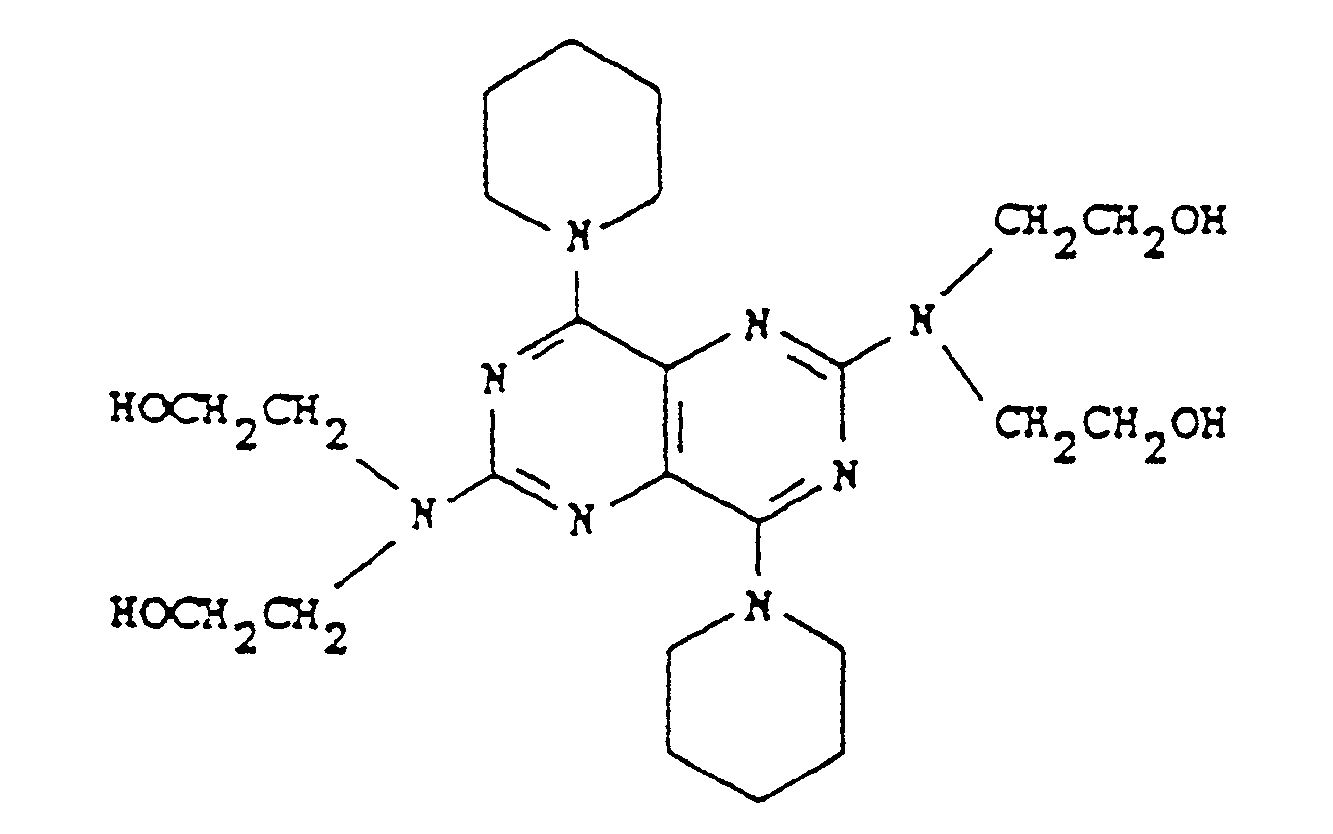
- the present invention is directed to a new therapeutic use of dipyridamole, that is, 2,6-bis-(diethyl-ethanolamine)-4,8-dipiperidinopyrimido[5,4-d] pyrimidine of the formula:
- Dipyrimadole is a known coronary vasodilator (see for example UK Patent No. 807,826 (1959), Saraf. Seth. Indian J. Pharmacol. 15, 135 (1971), Takenaka et al, Arzneistoff-Forsch. 22, 892 (1972)), and is marketed under various trademarks (Anginal, Cardoxin, Curantyl, Persantine, etc.).
- the said compound is also active on the central and peripheral nervous systems and can be used as a therapeutic agent to treat disorders and diseases of the nervous system.
- dipyridamole is an efficacious agent in the regeneration and reproduction of neuritic cells which is a property that can be applied in many cases of impairment of the peripheral nervous system, and also in neuropathies of the central nervous system caused by or connected with deficiencies or alterations of substances responsible for nervous transmission.
- the action of dipyridamole is therefore similar to that of gangliosides and, thus, this compound can be used effectively in therapies in the same fields of application.
- R1 is a (C1-C3)-alkoxy-(C2-C3)-alkyl radical
- R2 is a (C2-C6)-hydroxyalkyl radical or a C3-dihydroxyalkyl radical
- R3 is a (C1-C3)-alkoxy-(C2-C3)-alkyl radical or a C2-C3-hydroxyalkyl radical
- R4 is a dialkylamino radical, in which each radical has from 1 to 6 carbon atoms, or a diallyl- or di(methoxyethyl)-amino radical or a pyrrolinic, piperidinic, hexamethyleneamino, 1′,2′,5′,6′-tetrahydropyridinic, morpholinic, thiomorpholinic or 1-oxidethiomorpholinic radical, which can also be substituted by a methyl group in therapy for cerebral insuffici
- dipyridamole these compounds were however already known (see for example German patent application No. 2300661) for their inhibiting action on platelet aggregation, as well as hyperemic, coronary-dilating and hypertensive action, properties also displayed by dipyridamole.
- the aforesaid formula also includes derivatives of dipyridamole, such as especially monoethers with aliphatic alcohols having from 1 to 3 carbon atoms (see the definition of R1 above), but not dipyridamole itself.
- salts thereof obtained by acid addition, or double salts especially salts of both these types which are able to produce gradual release of the active principle over time (retard or slow release forms).
- pharmaceutically acceptable addition salts are the hydrochloride and hydrobromide salts, sulfates, phosphates, acetates, maleates, succinates, lactates, tartrates, benzoates, citrates, gluconates, methanesulfonates, and p-toluenesulfonates.
- vasodilating effect of dipyridamole does not constitute an obstacle to its therapeutic use according to the present invention. On the contrary, it represents a side effect which is by no means undesirable, and which can be avoided, if desired, by the administration of suitable preparations capable of limiting the vasodilating effect.
- the present invention is therefore directed more precisely to the therapeutic use of dipyridamole or of one of its salts obtained by acid addition or of one of its double or complex salts or of a pharmaceutical preparation containing one or more of such compounds as the active ingredient for the treatment of nervous system disorders or diseases.
- the invention is concerned with the therapeutic use of one of the aforesaid compounds in those cases which require neurocyte repair (neuronotrophic effect).
- Such cases may concern either the peripheral or the central nervous system.
- the peripheral nervous system in particular pathologies of traumatic, compressive, degenerative or toxic-infective origin, in which it is necessary to stimulate nervous regeneration and the recovery of neuromuscular function, are to be considered.
- the central nervous system the aforesaid products may be beneficial in neurodegenerative diseases, such as Alzheimer's or Parkinson's diseases, in the case of damage due to various kinds of acute insult of the nervous system, including trauma and postictal sequelae and in all cases of anomaly and impairment of neurotrophic function.
- the properties of inducing neuritic growth and enhancing neuronotrophic effect can be demonstrated by the following experiments on neuronal cell cultures.
- the derivative dipyridamole proved to be very active in inducing neurite growth in N2A neuroblastoma cells following a dose-effect course with maximum activity between 2.5X10 ⁇ 5M and 1X10 ⁇ 4M (Table 1). It is important to note that the derivative is active at very low doses and that it forms very long and branched neurites.
- dipyridamole promotes the formation of neurites with a dose-effect relationship (Table 2) and it notably enhances the effect of NGF (Table 3).
- Morphology No. of cells bearing neurites expressed as %) was assessed after 24 hrs of incubation at different concentrations of dipyridamole and expressed in terms of molarity.
- DRG E8 cells are incubated for 48 hrs with GM1 1X10 ⁇ 4M or dipyridamole at various concentrations (expressed in terms of molarity) and in the absence of NGF.
- dipyridamole The effect of dipyridamole is assessed in terms of its increase compared to GM1 and expressed as % (the effect of GM1 is therefore expressed as zero).
- the DRG E8 cells were incubated for 48 hours with NGF (1 ng/ml) ⁇ dipyridamole or GM1.
- the % increase in effect was assessed in comparison to NGF.
- Dipyridamole is administered preferably in the form of pharmaceutical preparations in which it is the active ingredient, the excipients or carriers being those conventionally used in pharmaceutical preparations.
- Administration can be by the parenteral route, for example intravenous, subcutaneous or intramuscular, or by the intranasal, local, rectal and especially the oral route.
- the preparations or formulations can therefore be in solid or semisolid form, for example pills, tablets, gelatinous capsules, capsules, suppositories, or soft gelatin capsules, or in the form of solutions or freeze-dried powders to be mixed with one or more pharmaceutically acceptable excipients or diluents, suitable for the aforesaid uses and with an osmolarity which is compatible with physiological fluids.
- preparations in the form of creams or ointments for topical use should be considered; for inhalant use, preparations in the form of sprays, for example nose sprays, should be considered.
- the preparations of the invention can be used for administration to humans or animals. They contain preferably from 0.01% to 10% by weight of active component for solutions, sprays, ointments and creams and from 1% to 100%, and preferably from 5% to 50%, by weight of active compound for preparations in solid form. Dosages to be administered depend on individual needs, on the desired effect and on the administration route. For the oral route, the daily dosage varies preferably from about 3 to 10 mg/kg of body weight.
- Tablets containing 100 mg of dipyridamole: 1 tablet contains:
- Gelatine capsules containing 200 mg of dipyridamole: 1 capsule contains:
Landscapes
- Health & Medical Sciences (AREA)
- Public Health (AREA)
- Pharmacology & Pharmacy (AREA)
- Biomedical Technology (AREA)
- Veterinary Medicine (AREA)
- Neurology (AREA)
- Neurosurgery (AREA)
- Engineering & Computer Science (AREA)
- General Health & Medical Sciences (AREA)
- Animal Behavior & Ethology (AREA)
- Life Sciences & Earth Sciences (AREA)
- Bioinformatics & Cheminformatics (AREA)
- Medicinal Chemistry (AREA)
- Chemical & Material Sciences (AREA)
- Chemical Kinetics & Catalysis (AREA)
- General Chemical & Material Sciences (AREA)
- Nuclear Medicine, Radiotherapy & Molecular Imaging (AREA)
- Organic Chemistry (AREA)
- Psychiatry (AREA)
- Hospice & Palliative Care (AREA)
- Epidemiology (AREA)
- Pharmaceuticals Containing Other Organic And Inorganic Compounds (AREA)
- Nitrogen Condensed Heterocyclic Rings (AREA)
- Medicinal Preparation (AREA)
Abstract
Description
- The present invention is directed to a new therapeutic use of dipyridamole, that is, 2,6-bis-(diethyl-ethanolamine)-4,8-dipiperidinopyrimido[5,4-d] pyrimidine of the formula:
- Dipyrimadole is a known coronary vasodilator (see for example UK Patent No. 807,826 (1959), Saraf. Seth. Indian J. Pharmacol. 15, 135 (1971), Takenaka et al, Arzneimittel-Forsch. 22, 892 (1972)), and is marketed under various trademarks (Anginal, Cardoxin, Curantyl, Persantine, etc.).
- According to the present invention the said compound is also active on the central and peripheral nervous systems and can be used as a therapeutic agent to treat disorders and diseases of the nervous system. More precisely, dipyridamole is an efficacious agent in the regeneration and reproduction of neuritic cells which is a property that can be applied in many cases of impairment of the peripheral nervous system, and also in neuropathies of the central nervous system caused by or connected with deficiencies or alterations of substances responsible for nervous transmission. The action of dipyridamole is therefore similar to that of gangliosides and, thus, this compound can be used effectively in therapies in the same fields of application.
- Some synthetic compounds, described in the literature, have a restorative action on the nerve cells of the central and/or peripheral nervous systems, for example, the pyrimidine derivatives of European patent application No. 257,102 dated 24.02.87, which have a very different structure from that of dipyridamole. Moreover, European patent application No. 169,405 dated 28.06.85 claims the use of compounds of the formula:
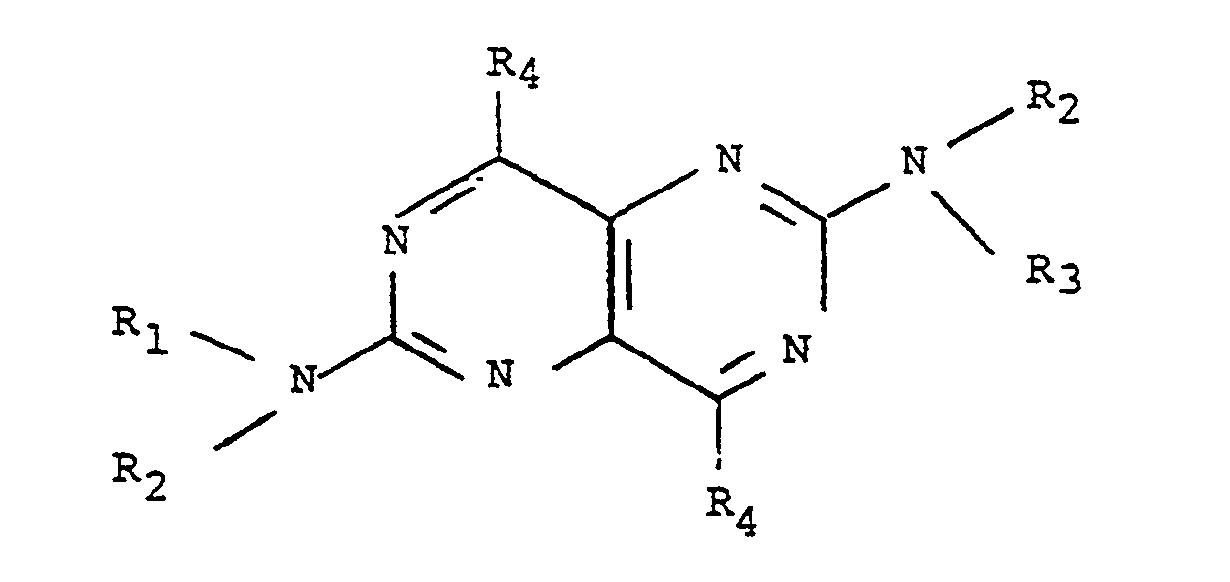
in which R₁ is a (C₁-C₃)-alkoxy-(C₂-C₃)-alkyl radical, R₂ is a (C₂-C₆)-hydroxyalkyl radical or a C₃-dihydroxyalkyl radical, R₃ is a (C₁-C₃)-alkoxy-(C₂-C₃)-alkyl radical or a C₂-C₃-hydroxyalkyl radical, R₄ is a dialkylamino radical, in which each radical has from 1 to 6 carbon atoms, or a diallyl- or di(methoxyethyl)-amino radical or a pyrrolinic, piperidinic, hexamethyleneamino, 1′,2′,5′,6′-tetrahydropyridinic, morpholinic, thiomorpholinic or 1-oxidethiomorpholinic radical, which can also be substituted by a methyl group in therapy for cerebral insufficiency, for example, to increase cerebral potential, especially in cases of deficiency due to damage following trauma or alcohol abuse. These compounds were however already known (see for example German patent application No. 2300661) for their inhibiting action on platelet aggregation, as well as hyperemic, coronary-dilating and hypertensive action, properties also displayed by dipyridamole. The aforesaid formula also includes derivatives of dipyridamole, such as especially monoethers with aliphatic alcohols having from 1 to 3 carbon atoms (see the definition of R₁ above), but not dipyridamole itself. - It is surprising, according to the finding of the present invention, that this compound unexpectedly has a wide range of action on both the central and peripheral nervous systems.
- In order to obtain the aforesaid therapeutic effects of dipyridamole, it is possible to use salts thereof obtained by acid addition, or double salts, especially salts of both these types which are able to produce gradual release of the active principle over time (retard or slow release forms). Examples of pharmaceutically acceptable addition salts are the hydrochloride and hydrobromide salts, sulfates, phosphates, acetates, maleates, succinates, lactates, tartrates, benzoates, citrates, gluconates, methanesulfonates, and p-toluenesulfonates.
- The aforesaid vasodilating effect of dipyridamole does not constitute an obstacle to its therapeutic use according to the present invention. On the contrary, it represents a side effect which is by no means undesirable, and which can be avoided, if desired, by the administration of suitable preparations capable of limiting the vasodilating effect.
- The present invention is therefore directed more precisely to the therapeutic use of dipyridamole or of one of its salts obtained by acid addition or of one of its double or complex salts or of a pharmaceutical preparation containing one or more of such compounds as the active ingredient for the treatment of nervous system disorders or diseases.
- In particular, the invention is concerned with the therapeutic use of one of the aforesaid compounds in those cases which require neurocyte repair (neuronotrophic effect). Such cases may concern either the peripheral or the central nervous system. With regard to the peripheral nervous system, in particular pathologies of traumatic, compressive, degenerative or toxic-infective origin, in which it is necessary to stimulate nervous regeneration and the recovery of neuromuscular function, are to be considered. With regard to the central nervous system, the aforesaid products may be beneficial in neurodegenerative diseases, such as Alzheimer's or Parkinson's diseases, in the case of damage due to various kinds of acute insult of the nervous system, including trauma and postictal sequelae and in all cases of anomaly and impairment of neurotrophic function. The properties of inducing neuritic growth and enhancing neuronotrophic effect can be demonstrated by the following experiments on neuronal cell cultures.
-
- 1a. Cell cultures of neuroblastoma from C 1300 mice, clone neuro-2a supplied by American Type Culture Collection (ATCC), were employed. The cells are seeded in an amount of 10,000 per 16 mm well, in a medium with 10% serum (3). The next day the medium is changed with an equal volume of fresh medium containing the product to be tested.
- 1b. Addition of dipyridamole to the cultures and the parameters assessed.
Dipyridamole is dissolved in a buffer with hydrochloric acid at a concentration of 1X10⁻²M and then dissolved in the culture medium to obtain final concentrations of 1X10⁻⁶, 1X10⁻⁵, 2.5X10⁻⁵, 5X10⁻⁵ and 1X10⁻⁴. This is then added to the culture cells, the Ph having been adjusted, if necessary.
24 hours later the cultures are fixed and the percentage of neurite-bearing cells is counted. - 2a. Dorsal root ganglia (DRG) are removed from chick embryos at day 8 of development (E8); the ganglia are then isolated and the cell suspension is enriched (4). The isolated neurons thus obtained are plated in wells containing polyornithine-laminin in DMEM (Dulbecco's Modified Eagle's Medium) containing 10% fetal calf serum (5).
- 2b. Addition of the dipyridamole compound and the parameters assessed.
Dipyridamole is solubilized in hydrochloric acid and buffer at a concentration of 10⁻²M and then diluted with medium to obtain final concentrations of 1X10⁻⁴M, 5X10⁻⁵M, 1X10⁻⁵M and 5X10⁻⁶M. It is then added to the cells and incubated for 48 hours in the presence of NGF (1 ng/ml). Neurite growth is assessed by antineurofilament antibody (RT 97; D.O.=492 nm) and ELISA. - The derivative dipyridamole proved to be very active in inducing neurite growth in N₂A neuroblastoma cells following a dose-effect course with maximum activity between 2.5X10⁻⁵M and 1X10⁻⁴M (Table 1).
It is important to note that the derivative is active at very low doses and that it forms very long and branched neurites. - Moreover, on dorsal root ganglia cells from chick embryo at day 8 of development (DRG E8), dipyridamole promotes the formation of neurites with a dose-effect relationship (Table 2) and it notably enhances the effect of NGF (Table 3).
- Dipyridamole proved active in inducing neurito genesis on primary neuronal cell cultures and in enhancing the effect of NGF on chick embryo dorsal root ganglia.

- Morphology (No. of cells bearing neurites expressed as %) was assessed after 24 hrs of incubation at different concentrations of dipyridamole and expressed in terms of molarity.

- DRG E8 cells are incubated for 48 hrs with GM₁ 1X10⁻⁴M or dipyridamole at various concentrations (expressed in terms of molarity) and in the absence of NGF.
- The effect of dipyridamole is assessed in terms of its increase compared to GM₁ and expressed as % (the effect of GM₁ is therefore expressed as zero).

- The DRG E8 cells were incubated for 48 hours with NGF (1 ng/ml) ± dipyridamole or GM₁.
- The % increase in effect was assessed in comparison to NGF.
- The following references describe the above experimental procedures:
- 1. Leon, et al (1982): "Morphological and biochemical effect of gangliosides in neuroblastoma cells." Dev. Neurosci. 5: 108-14.
- 2. Skaper, et al (1983): "Ionic behaviours and Nerve Growth Factor dependence in developing chick ganglia. II Studies with neurons of dorsal root ganglia." Dev. Biol. 98: 257-264.
- 3. Leon, et al (1984): "Dorsal root ganglia and nerve growth factor: a model for understanding the mechanism of GM₁ effect on neuronal repair." J. Neurosci. Res. 12: 277-87.
- Dipyridamole is administered preferably in the form of pharmaceutical preparations in which it is the active ingredient, the excipients or carriers being those conventionally used in pharmaceutical preparations. Administration can be by the parenteral route, for example intravenous, subcutaneous or intramuscular, or by the intranasal, local, rectal and especially the oral route. The preparations or formulations can therefore be in solid or semisolid form, for example pills, tablets, gelatinous capsules, capsules, suppositories, or soft gelatin capsules, or in the form of solutions or freeze-dried powders to be mixed with one or more pharmaceutically acceptable excipients or diluents, suitable for the aforesaid uses and with an osmolarity which is compatible with physiological fluids. For local use, preparations in the form of creams or ointments for topical use, should be considered; for inhalant use, preparations in the form of sprays, for example nose sprays, should be considered.
- The preparations of the invention can be used for administration to humans or animals. They contain preferably from 0.01% to 10% by weight of active component for solutions, sprays, ointments and creams and from 1% to 100%, and preferably from 5% to 50%, by weight of active compound for preparations in solid form. Dosages to be administered depend on individual needs, on the desired effect and on the administration route. For the oral route, the daily dosage varies preferably from about 3 to 10 mg/kg of body weight.
- The following are examples of pharmaceutical preparations that can be employed in the present invention.
- Tablets containing 100 mg of dipyridamole:
1 tablet contains:
- Gelatine capsules containing 200 mg of dipyridamole:
1 capsule contains:
Claims (14)
- Use of dipyridamole or a pharmaceutically acceptable salt thereof in the manufacture or preparation of a pharmaceutical formulation for the treatment of disorders and diseases of the nervous system.
- The use of dipyridamole according to claim 1 for indications that require neurocyte repair or reproduction.
- The use of dipyridamole according to claim 1 or claim 2 in central nervous system disorders.
- The use of dipyridamole according to claim 1 or claim 2 in peripheral nervous system disorders.
- The use of dipyridamole according to claim 4 in pathologies of traumatic, compressive, degenerative or toxic-infective origin.
- The use of dipyridamole according to claim 3 in neurodegenerative diseases.
- The use of dipyridamole according to claim 6 in Alzheimer's disease.
- The use of dipyridamole according to claim 6 in Parkinson's disease.
- The use of dipyridamole according to claim 6 in cases of damage due to acute insult of the nervous system.
- The use of dipyridamole according to claim 6 in anomalies and impairments of neuronotrophic function.
- The use of dipyridamole according to any of claims 1-10 by the oral route.
- The use of dipyridamole according to claim 11, in which a daily dosage of dipyridamole of from 3 to 10 mg/kg of body weight is administered.
- The use of dipyridamole according to any of claims 1-12, in which said salt is obtained by acid addition.
- The use of dipyridamole according to any of claims 1-12, in which said salt is a complex salt of dipyridamole.
Applications Claiming Priority (2)
| Application Number | Priority Date | Filing Date | Title |
|---|---|---|---|
| IT4159890 | 1990-05-14 | ||
| IT41598A IT1239064B (en) | 1990-05-14 | 1990-05-14 | THERAPEUTIC USE OF DIPYRIDAMOL |
Publications (2)
| Publication Number | Publication Date |
|---|---|
| EP0457671A2 true EP0457671A2 (en) | 1991-11-21 |
| EP0457671A3 EP0457671A3 (en) | 1992-04-08 |
Family
ID=11251782
Family Applications (1)
| Application Number | Title | Priority Date | Filing Date |
|---|---|---|---|
| EP19910401243 Withdrawn EP0457671A3 (en) | 1990-05-14 | 1991-05-14 | Dipyridamide for the treatment of diseases of the central or peripheral nervous system |
Country Status (3)
| Country | Link |
|---|---|
| EP (1) | EP0457671A3 (en) |
| JP (1) | JPH04226918A (en) |
| IT (1) | IT1239064B (en) |
Cited By (7)
| Publication number | Priority date | Publication date | Assignee | Title |
|---|---|---|---|---|
| WO2002085368A3 (en) * | 2001-04-20 | 2003-02-20 | Boehringer Ingelheim Pharma | Use of radical scavenging compounds for treatment and prevention of no-dependent microcirculation disorders |
| WO2003000269A3 (en) * | 2001-06-22 | 2003-04-03 | Bayer Ag | Novel use for pde 10a inhibitors |
| AU784124B2 (en) * | 1999-10-22 | 2006-02-09 | Boehringer Ingelheim Pharma Gmbh & Co. Kg | Use of dipyridamole or mopidamol in the manufacture of a medicament for the treatment and prevention of fibrin-dependent microcirculation disorders |
| US7064130B2 (en) | 2001-04-20 | 2006-06-20 | Boehringer Ingelheim Pharma Gmbh & Co. Kg | Use of radical-scavenging compounds for treatment and prevention of NO-dependent microcirculation disorders |
| CN107106541A (en) * | 2015-01-28 | 2017-08-29 | 瑞采生技有限公司 | Compounds for enhancing PPAR γ expression and nuclear translocation and medical uses thereof |
| CN116173035A (en) * | 2021-11-26 | 2023-05-30 | 中国科学院深圳先进技术研究院 | Application of dipyridamole in inhibiting Mcl-1 |
| WO2023092462A1 (en) * | 2021-11-26 | 2023-06-01 | 中国科学院深圳先进技术研究院 | Use of dipyridamole in inhibiting mcl-1 |
Family Cites Families (4)
| Publication number | Priority date | Publication date | Assignee | Title |
|---|---|---|---|---|
| DE3426615A1 (en) * | 1984-07-19 | 1986-01-30 | Boehringer Ingelheim KG, 6507 Ingelheim | NEW USE OF SUBSTITUTED PYRIMIDO- (5,4-D) PYRIMIDINES |
| US4791099A (en) * | 1984-10-29 | 1988-12-13 | Chaovanee Aroonsakul | Method of treatment for central nervous system diseases such as Alzheimer's's disease |
| GB8609290D0 (en) * | 1986-04-16 | 1986-05-21 | Thomae Gmbh Dr K | Chemical compounds |
| IT1204725B (en) * | 1987-06-17 | 1989-03-10 | Edmond Pharma Srl | DIPYRIDAMOL INCLUSION COMPLEXES WITH CYCLODESTRINE |
-
1990
- 1990-05-14 IT IT41598A patent/IT1239064B/en active IP Right Grant
-
1991
- 1991-05-14 EP EP19910401243 patent/EP0457671A3/en not_active Withdrawn
- 1991-05-14 JP JP3109052A patent/JPH04226918A/en active Pending
Cited By (11)
| Publication number | Priority date | Publication date | Assignee | Title |
|---|---|---|---|---|
| AU784124B2 (en) * | 1999-10-22 | 2006-02-09 | Boehringer Ingelheim Pharma Gmbh & Co. Kg | Use of dipyridamole or mopidamol in the manufacture of a medicament for the treatment and prevention of fibrin-dependent microcirculation disorders |
| CN100411620C (en) * | 1999-10-22 | 2008-08-20 | 贝林格尔英格海姆法玛两合公司 | Use of dipyridamole or mopidamole for the preparation of a medicament for the treatment and prevention of fibrin-dependent microcirculation disorders |
| WO2002085368A3 (en) * | 2001-04-20 | 2003-02-20 | Boehringer Ingelheim Pharma | Use of radical scavenging compounds for treatment and prevention of no-dependent microcirculation disorders |
| US7064130B2 (en) | 2001-04-20 | 2006-06-20 | Boehringer Ingelheim Pharma Gmbh & Co. Kg | Use of radical-scavenging compounds for treatment and prevention of NO-dependent microcirculation disorders |
| WO2003000269A3 (en) * | 2001-06-22 | 2003-04-03 | Bayer Ag | Novel use for pde 10a inhibitors |
| CN107106541A (en) * | 2015-01-28 | 2017-08-29 | 瑞采生技有限公司 | Compounds for enhancing PPAR γ expression and nuclear translocation and medical uses thereof |
| EP3250201A4 (en) * | 2015-01-28 | 2018-08-01 | Realinn Life Science Limited | Compounds for enhancing ppar expression and nuclear translocation and therapeutic use thereof |
| CN115282152A (en) * | 2015-01-28 | 2022-11-04 | 瑞采生技有限公司 | Compounds for enhancing PPARγ expression and nuclear translocation and medical use thereof |
| US12178817B2 (en) | 2015-01-28 | 2024-12-31 | Realinn Life Science Limited | Compounds for enhancing PPARγ expression and nuclear translocation and therapeutic use thereof |
| CN116173035A (en) * | 2021-11-26 | 2023-05-30 | 中国科学院深圳先进技术研究院 | Application of dipyridamole in inhibiting Mcl-1 |
| WO2023092462A1 (en) * | 2021-11-26 | 2023-06-01 | 中国科学院深圳先进技术研究院 | Use of dipyridamole in inhibiting mcl-1 |
Also Published As
| Publication number | Publication date |
|---|---|
| EP0457671A3 (en) | 1992-04-08 |
| JPH04226918A (en) | 1992-08-17 |
| IT1239064B (en) | 1993-09-20 |
| IT9041598A1 (en) | 1991-11-14 |
| IT9041598A0 (en) | 1990-05-14 |
Similar Documents
| Publication | Publication Date | Title |
|---|---|---|
| RU2268732C2 (en) | Method for treating mitochondrial disorders | |
| DE3650741T2 (en) | Combination of therapeutic nucleosides with other therapeutically active components. | |
| US5780450A (en) | Use of adenosine uptake inhibitors for treating retinal or optic nerve head damage | |
| DE69412251T2 (en) | AROMATIC NITRO COMPOUNDS AND THEIR METABOLITE USES AS ANTI-VIRUS AND ANTI-TUMOR AGENTS | |
| DE69332634T2 (en) | ENANTIOMIC HYDROXYLATED XANTHINE COMPOUNDS | |
| DE3687069T2 (en) | USE OF 3'-AZIDO-3'-DEOXYTHYMIDINE FOR TREATING OR PREVENTING HUMAN RETROVIRUS INFECTIONS. | |
| EP0482493B1 (en) | Pharmaceutical compositions active in the therapy of neurological affections in aids patients, containing as an active principle at least S-adenosyl-L-methionine salt. | |
| KR100196368B1 (en) | Apoptosis Modulators | |
| US5624945A (en) | Use of riluzole for the treatment of neuro-aids | |
| HU217130B (en) | Process for preparing pharmaceutical compositions containing 2-amino 6--trifluoromethoxy benzothiazole (riluzole) useful in the treatment of motor neuron diseases | |
| HU225342B1 (en) | K-252a-derivatives and pharmaceutical composition containing thereof and the novel compounds | |
| KR100910928B1 (en) | Pharmaceutical compositions containing carbamate compounds for the prevention or treatment of neurodegenerative diseases | |
| US5846958A (en) | Methods of using aminothiols to promote hematopoietic progenitor cell growth | |
| ITMI970939A1 (en) | USE OF ALPHA-METHYL-P-THYROSINE TO INHIBIT THE PRODUCTION OF MELANIN IN THE MELANOCYTES OF THE IRIS | |
| US5292765A (en) | Neuroprotection by indolactam V and derivatives thereof | |
| DE69327153T2 (en) | ANTI-HIV MEDICINE | |
| HU201672B (en) | Process for producing pharmaceutical compositions comprising podophyllotoxin | |
| AU2001266611A1 (en) | Use of (di-substituted-phenyl)-pyrimidinyl-imidazole derivatives as jnk-inhibitors | |
| US6703395B2 (en) | Cyclin dependent kinase inhibitor | |
| JPH04226918A (en) | Novel usage of dipyridamole | |
| EP0396081A2 (en) | The use of phosphatidyl-carnitine for the preparation of pharmaceutical compositions having an activity in the therapy of human pathologies associated with neuronal damage | |
| EP0838220A1 (en) | Drug for ameliorating brain diseases | |
| EP0278040B1 (en) | Use of pteridines and/or purines or of a xanthineoxidase inhibitor for the preparation of a medicament for the treatment of hereditary degenerative retinal diseases | |
| WO2012008674A1 (en) | Anti-angiogenic composition containing macrolactin a and a derivative thereof as active ingredients | |
| CA2454544A1 (en) | Optic nerve protecting agents containing .alpha.1 receptor blocker as active ingredient |
Legal Events
| Date | Code | Title | Description |
|---|---|---|---|
| PUAI | Public reference made under article 153(3) epc to a published international application that has entered the european phase |
Free format text: ORIGINAL CODE: 0009012 |
|
| AK | Designated contracting states |
Kind code of ref document: A2 Designated state(s): AT BE CH DE DK ES FR GB GR IT LI LU NL SE |
|
| PUAL | Search report despatched |
Free format text: ORIGINAL CODE: 0009013 |
|
| AK | Designated contracting states |
Kind code of ref document: A3 Designated state(s): AT BE CH DE DK ES FR GB GR IT LI LU NL SE |
|
| 17P | Request for examination filed |
Effective date: 19921002 |
|
| 17Q | First examination report despatched |
Effective date: 19940118 |
|
| STAA | Information on the status of an ep patent application or granted ep patent |
Free format text: STATUS: THE APPLICATION IS DEEMED TO BE WITHDRAWN |
|
| 18D | Application deemed to be withdrawn |
Effective date: 19940531 |