EP0458819B1 - Plantes transformees pour produire des toxines insecticides de bacillus thuringiensis - Google Patents
Plantes transformees pour produire des toxines insecticides de bacillus thuringiensis Download PDFInfo
- Publication number
- EP0458819B1 EP0458819B1 EP90902780A EP90902780A EP0458819B1 EP 0458819 B1 EP0458819 B1 EP 0458819B1 EP 90902780 A EP90902780 A EP 90902780A EP 90902780 A EP90902780 A EP 90902780A EP 0458819 B1 EP0458819 B1 EP 0458819B1
- Authority
- EP
- European Patent Office
- Prior art keywords
- gene
- btpgsi245
- plant
- btpgsi208
- protoxin
- Prior art date
- Legal status (The legal status is an assumption and is not a legal conclusion. Google has not performed a legal analysis and makes no representation as to the accuracy of the status listed.)
- Expired - Lifetime
Links
Images













Classifications
-
- C—CHEMISTRY; METALLURGY
- C07—ORGANIC CHEMISTRY
- C07K—PEPTIDES
- C07K14/00—Peptides having more than 20 amino acids; Gastrins; Somatostatins; Melanotropins; Derivatives thereof
- C07K14/195—Peptides having more than 20 amino acids; Gastrins; Somatostatins; Melanotropins; Derivatives thereof from bacteria
- C07K14/32—Peptides having more than 20 amino acids; Gastrins; Somatostatins; Melanotropins; Derivatives thereof from bacteria from Bacillus (G)
- C07K14/325—Bacillus thuringiensis crystal peptides, i.e. delta-endotoxins
-
- A—HUMAN NECESSITIES
- A01—AGRICULTURE; FORESTRY; ANIMAL HUSBANDRY; HUNTING; TRAPPING; FISHING
- A01N—PRESERVATION OF BODIES OF HUMANS OR ANIMALS OR PLANTS OR PARTS THEREOF; BIOCIDES, e.g. AS DISINFECTANTS, AS PESTICIDES OR AS HERBICIDES; PEST REPELLANTS OR ATTRACTANTS; PLANT GROWTH REGULATORS
- A01N63/00—Biocides, pest repellants or attractants, or plant growth regulators containing microorganisms, viruses, microbial fungi, animals or substances produced by, or obtained from, microorganisms, viruses, microbial fungi or animals, e.g. enzymes or fermentates
- A01N63/20—Bacteria; Substances produced thereby or obtained therefrom
- A01N63/22—Bacillus
- A01N63/23—B. thuringiensis
-
- C—CHEMISTRY; METALLURGY
- C12—BIOCHEMISTRY; BEER; SPIRITS; WINE; VINEGAR; MICROBIOLOGY; ENZYMOLOGY; MUTATION OR GENETIC ENGINEERING
- C12N—MICROORGANISMS OR ENZYMES; COMPOSITIONS THEREOF; PROPAGATING, PRESERVING, OR MAINTAINING MICROORGANISMS; MUTATION OR GENETIC ENGINEERING; CULTURE MEDIA
- C12N1/00—Microorganisms; Compositions thereof; Processes of propagating, maintaining or preserving microorganisms or compositions thereof; Processes of preparing or isolating a composition containing a microorganism; Culture media therefor
- C12N1/20—Bacteria; Culture media therefor
- C12N1/205—Bacterial isolates
-
- C—CHEMISTRY; METALLURGY
- C12—BIOCHEMISTRY; BEER; SPIRITS; WINE; VINEGAR; MICROBIOLOGY; ENZYMOLOGY; MUTATION OR GENETIC ENGINEERING
- C12N—MICROORGANISMS OR ENZYMES; COMPOSITIONS THEREOF; PROPAGATING, PRESERVING, OR MAINTAINING MICROORGANISMS; MUTATION OR GENETIC ENGINEERING; CULTURE MEDIA
- C12N15/00—Mutation or genetic engineering; DNA or RNA concerning genetic engineering, vectors, e.g. plasmids, or their isolation, preparation or purification; Use of hosts therefor
- C12N15/09—Recombinant DNA-technology
- C12N15/63—Introduction of foreign genetic material using vectors; Vectors; Use of hosts therefor; Regulation of expression
- C12N15/79—Vectors or expression systems specially adapted for eukaryotic hosts
- C12N15/82—Vectors or expression systems specially adapted for eukaryotic hosts for plant cells, e.g. plant artificial chromosomes (PACs)
- C12N15/8241—Phenotypically and genetically modified plants via recombinant DNA technology
- C12N15/8261—Phenotypically and genetically modified plants via recombinant DNA technology with agronomic (input) traits, e.g. crop yield
- C12N15/8271—Phenotypically and genetically modified plants via recombinant DNA technology with agronomic (input) traits, e.g. crop yield for stress resistance, e.g. heavy metal resistance
- C12N15/8279—Phenotypically and genetically modified plants via recombinant DNA technology with agronomic (input) traits, e.g. crop yield for stress resistance, e.g. heavy metal resistance for biotic stress resistance, pathogen resistance, disease resistance
- C12N15/8286—Phenotypically and genetically modified plants via recombinant DNA technology with agronomic (input) traits, e.g. crop yield for stress resistance, e.g. heavy metal resistance for biotic stress resistance, pathogen resistance, disease resistance for insect resistance
-
- C—CHEMISTRY; METALLURGY
- C12—BIOCHEMISTRY; BEER; SPIRITS; WINE; VINEGAR; MICROBIOLOGY; ENZYMOLOGY; MUTATION OR GENETIC ENGINEERING
- C12R—INDEXING SCHEME ASSOCIATED WITH SUBCLASSES C12C - C12Q, RELATING TO MICROORGANISMS
- C12R2001/00—Microorganisms ; Processes using microorganisms
- C12R2001/01—Bacteria or Actinomycetales ; using bacteria or Actinomycetales
- C12R2001/07—Bacillus
- C12R2001/075—Bacillus thuringiensis
-
- Y—GENERAL TAGGING OF NEW TECHNOLOGICAL DEVELOPMENTS; GENERAL TAGGING OF CROSS-SECTIONAL TECHNOLOGIES SPANNING OVER SEVERAL SECTIONS OF THE IPC; TECHNICAL SUBJECTS COVERED BY FORMER USPC CROSS-REFERENCE ART COLLECTIONS [XRACs] AND DIGESTS
- Y02—TECHNOLOGIES OR APPLICATIONS FOR MITIGATION OR ADAPTATION AGAINST CLIMATE CHANGE
- Y02A—TECHNOLOGIES FOR ADAPTATION TO CLIMATE CHANGE
- Y02A40/00—Adaptation technologies in agriculture, forestry, livestock or agroalimentary production
- Y02A40/10—Adaptation technologies in agriculture, forestry, livestock or agroalimentary production in agriculture
- Y02A40/146—Genetically Modified [GMO] plants, e.g. transgenic plants
Definitions
- This invention relates to a new strain of B . thuringiensis (the "BtPGSI245 strain”), which produces crystallized proteins (the “BtPGSI245 crystal proteins” which are packaged in crystals (the “BtPGSI245 crystals” during sporulation.
- the BtPGSI245 strain was deposited under the provisions of the Budapest Treaty at the Deutsche Sammlung Harrison Mikroorganismen and Zellkulturen ("DSM”), Mascheroder Weg 1B, D-3300 Braunschweig, Federal Republic of Germany, under accession number 5132 on January 19, 1989.
- This invention also relates to an insecticide composition that is active against Coleoptera and that comprises the BtPGSI245 strain, as such, or preferably the BtPGSI245 crystals, crystal proteins or the active component(s) thereof as an active ingredient.
- This invention further relates to a DNA sequence (the " btPGSI245 gene), from the genome of the BtPGSI245 strain, which encodes a 129 kDa protein (the "BtPGSI245 protoxin") that is found in the BtPGSI245 crystals.
- the BtPGSI245 protoxin is the protein that is produced by the BtPGSI245 strain before being packaged into the BtPGSI245 crystal.
- This invention still further relates to a 66 kDa protein (the "BtPGSI245 toxin”) which can be obtained (e.g., by trypsin digestion) from the BtPGSI245 protoxin.
- the BtPGSI245 toxin is an insecticidally active protein which can be liberated from the BtPGSI245 crystals, produced by the BtPGSI245 strain and has a high activity against Coleoptera.
- the BtPGSI245 toxin is believed to represent the smallest portion of the BtPGSI245 protoxin which is insecticidally effective against Coleoptera.
- This invention yet further relates to a chimaeric gene that can be used to transform a plant cell and that contains:
- This invention also relates to:
- This invention still further relates to a B . thuringiensis ("Bt") strain transformed, preferably by electroporation, with a vector carrying all or part of the btPGSI245 gene.
- Bt B . thuringiensis
- B . thuringiensis is a gram-positive bacterium which produces endogenous crystals upon sporulation. The crystals are composed of proteins which are specifically toxic against insect larvae.
- pathotype A that is active against Lepidoptera, e.g., caterpillars
- pathotype B that is active against certain Diptera, e.g., mosquitos and black flies
- pathotype C that is active against Coleoptera, e.g., beetles (Ellar et al, 1986).
- Bt strain whose crystals are toxic to Coleoptera, has been described as Bt tenebrionis (US patent 4,766,203; European patent publication 0,149,162), Bt M-7 or Bt San Diego (European patent publication 0,213,818; U.S. patent 4,771,131) and BtS1 (European patent application 88/402,115.5).
- the new BtPGSI245 strain of pathotype C is provided.
- a plant cell genome is transformed with the insecticidically effective btPGSI245 gene part, preferably the truncated btPGSI245 gene. It is preferred that this transformation be carried with the btPGSI245 chimaeric gene.
- the resulting transformed plant cell can be used to produce a transformed plant in which the plant cells in some or all of the plant tissues: 1) contain the insecticidally effective btPGSI245 gene part as a stable insert in their genome and 2) express the insecticidally effective btPGSI245 gene part by producing an insecticidally effective portion of its BtPGSI245 protoxin, preferably its BtPGSI245 toxin, thereby rendering the plant resistant to Coleoptera.
- the transformed plant cells of this invention can also be used to produce, for recovery, such insecticidal Bt proteins.
- a process for rendering a plant resistant to Coleoptera by transforming the plant cell genome with the insecticidally effective btPGSI245 gene part, preferably the truncated btPGSI245 gene.
- the plant cell be transformed with the btPGSI245 chimaeric gene.
- the BtPGSI245 protoxin the insecticidally effective portions of the protoxin and the BtPGSI245 toxin, as well as the BtPGSI245 gene, the insecticidally effective btPGSI245 gene part, the truncated btPGSI245 gene and the chimaeric btPGSI245 gene.
- a Bt strain is transformed, preferably by electroporation, with a vector carrying all or part of the btPGSI245 gene encoding all or an insecticidally effective portion of BtPGSI245 protoxin.
- the BtPGSI208 and BtPGSI245 protoxins can be isolated in a conventional manner from, respectively, the BtPGSI208 strain, deposited at the DSM under accession number 5131, and the BtPGSI245 strain, deposited at the DSM under accession number 5132.
- the BtPGSI208 and BtPGSI245 crystals can be isolated from sporulated cultures of their respective strains (Mahillon and Delcour, 1984), and then, the respective protoxins can be isolated from these crystals according to the method of Höfte et al (1986).
- the protoxins can be used to prepare monoclonal or polyclonal antibodies specific for these protoxins in a conventional manner (Höfte et al, 1988).
- the BtPGSI208 toxin can then be obtained by removing (e.g., by trypsin digestion) approximately 57 N-terminal amino acids from the BtPGSI208 protoxin.
- the BtPGSI245 toxin can be obtained by removing (e.g., by trypsin digestion) approximately 52 N-terminal and approximately 501 C-terminal amino acids from the BtPGSI245 protoxin.
- the btPGSI208 and btPGSI245 genes can also be isolated from their respective strains in a conventional manner.
- the btPGSI208 or btPGSI245 gene can be identified in its respective BtPGSI208 or BtPGSI245 strain, using the procedure described in U.S. patent application 821,582, filed January 22, 1986, and in European Patent Applications 86/300,291.1 and 88/402,115.5 (which are incorporated herein by reference).
- the btPGSI208 and btPGSI245 genes are each identified by: digesting total DNA from their respective BtPGSI208 and BtPGSI245 strains with one or more restriction enzymes; size fractionating the DNA fragments, so produced, into DNA fractions of 5 to 10 Kb; ligating such fractions to cloning vectors; transforming E . coli with the cloning vectors; and screening the clones with a suitable DNA probe.
- the DNA probe can be constructed: 1) from a highly conserved region of a Bt gene which codes for another crystal protoxin against Coleoptera such as: the bt13 gene described in European patent application 88/402,115.5 and by Höfte et al (1987); or 2) on the basis of the N-terminal amino acid sequence of the protoxin encoded by the respective btPGSI208 or btPGSI245 gene, which sequence can be determined by gas-phase sequencing of the immobilized protoxin (European Patent application 88/402,115.5).
- the 5 to 10 kB fragments prepared from total DNA of the BtPGSI208 or BtPGSI245 strain, can be ligated in suitable expression vectors and transformed in E . coli , and the clones can then be screened by conventional colony immunoprobing methods (French et al, 1986) for expression of the BtPGSI208 or BtPGSI245 toxin with monoclonal or polyclonal antibodies raised against the toxin.
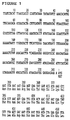
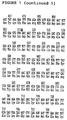
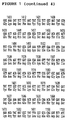
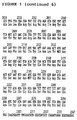
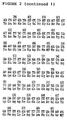
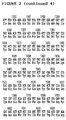
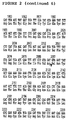
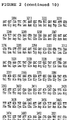
- btPGSI208 and btPGSI245 genes can then each be sequenced in a conventional manner (Maxam and Gilbert, 1980) to obtain the DNA sequences shown in Figs. 1 and 2, respectively.
- the nucleotide sequences of the btPGSI208 gene and btPGSI245 gene, shown in Figs. 1 and 2 prove that the BtPGSI208 and BtPGSI245 protoxins and toxins are different from previously described protoxins and toxins with activity against Coleoptera (Höfte and Whiteley, 1989).
- An insecticidally effective part of each of the sequenced genes, encoding an insecticidally effective portion of its protoxin, and a truncated part of each of the sequenced genes, encoding just its toxin, can be made in a conventional manner from each gene after the gene has been sequenced.
- the aminoacid sequences of the BtPGSI208 and BtPGSI245 protoxins and toxins can be determined from the DNA sequences of their respective btPGSI208 and btPGSI245 genes and truncated btPGSI208 and btPGSI245 genes.
- an insecticidally effective part or "a part” of the btPGSI208 or btPGSI245 gene is meant a DNA sequence encoding a polypeptide which has fewer amino acids then the respective BtPGSI208 or BtPGSI245 protoxin but which is still toxic to Coleoptera.
- Such a part of the btPGSI208 or btPGSI245 gene can encode a BtPGSI208 or BtPGSI245 protoxin which has been truncated towards at least one trypsin cleavage site of the protoxin (U.S. patent application 821,582; European patent application 86/300291.1).
- the insecticidally effective btPGSI208 or btPGSI245 gene part, encoding an insecticidally effective portion of its respective BtPGSI208 or BtPGSI245 protoxin, can be stably inserted in a conventional manner into the nuclear genome of a single plant cell, and the so-transformed plant cell be used in a conventional manner to produce a transformed plant that is insect-resistant.
- a disarmed Ti-plasmid containing the insectidicidally effective btPGSI208 or btPGSI245 gene part, in Agrobacterium tumefaciens can be used to transform the plant cell, and thereafter, a transformed plant can be regenerated from the transformed plant cell using the procedures described, for example, in European patent publications 0,116,718 and 0,270,822, PCT publication WO 84/02,913 and European patent application 87/400,544.0 (which are also incorporated herein by reference).
- the resulting transformed plant can be used in a conventional plant breeding scheme to produce more transformed plants with the same characteristics or to introduce the insecticidally effective btPGSI208 or btPGSI245 gene part in other varieties of the same or related plant species.
- Seeds, which are obtained from the transformed plants, contain the insecticidally effective btPGSI208 or btPGSI245 gene part as a stable genomic insert.
- Cells of the transformed plant can be cultured in a conventional manner to produce the BtPGSI208 or BtPGSI245 protoxin, preferably the respective toxin, which can be recovered for use in conventional insecticide compositions against Coleoptera (U.S. patent application 821,582; European patent application 86/300291.1.).
- the insecticidally effective btPGSI208 or btPGSI245 gene part preferably the truncated btPGSI208 or btPGSI245 gene, is inserted in a plant cell genome so that the inserted part of the gene is downstream (i.e., 3') of, and under the control of, a promoter which can direct the expression of the gene part in the plant cell. This is preferably accomplished by inserting the btPGSI208 or btPGSI245 chimaeric gene in the plant cell genome.
- Preferred promoters include: the strong constitutive 355 promoters (the "35S promoters") of the cauliflower mosaic virus of isolates CM 1841 (Gardner et al, 1981), CabbB-S (Franck et al, 1980) and CabbB-JI (Hull and Howell, 1987); and the TR1' promoter and the TR2' promoter (the “TR1' promoter” and “TR2' promoter", respectively) which drive the expression of the 1' and 2' genes, respectively, of the T-DNA (Velten et al, 1984).
- the TR1' promoter and the TR2' promoter the TR1' promoter and the TR2' promoter
- a promoter can be utilized which is not constitutive but rather is specific for one or more tissues or organs of the plant (e.g., leaves and/or roots) whereby the inserted btPGSI208 or btPGSI245 gene part is expressed only in cells of the specific tissue(s) or organ(s).
- the btPGSI208 or btPGSI245 gene part could be selectively expressed in the leaves of a plant (e.g., potato) by placing the gene part under the control of a light-inducible promoter such as the promoter of the ribulose-1,5-bisphosphate carboxylase small subunit gene of the plant itself or of another plant such as pea as disclosed in U.S. patent application 821,582 and European patent application 86/300,291.1.
- Another alternative is to use a promoter whose expression is inducible (e.g., by temperature or chemical factors).
- the insecticidally effective btPGSI208 or btPGSI245 gene part is inserted in the plant genome so that the inserted part of the gene is upstream (i.e., 5') of suitable 3' transcription regulation signals (i.e., transcription termination and polyadenylation signals).
- suitable 3' transcription regulation signals i.e., transcription termination and polyadenylation signals.
- Preferred polyadenylation and transcription termination signals include those of the octopine synthase gene (Gielen et al, 1984) and the T-DNA gene 7 (Velten and Schell, 1985), which act as 3'-untranslated DNA sequences in transformed plant cells.
- the insecticidally effective btPGSI208 or btPGSI245 gene part be inserted in the plant genome in the same transcriptional unit as, and under the control of, the same promoter as a selectable marker gene.
- the resulting hybrid btPGSI208 or btPGSI245 -marker gene will, thereby, be expressed in a transformed plant as a fusion protein (U.S. patent application 821,582; European patent application 86/300291.1; Vaeck et al, 1987).
- This result is preferably accomplished by inserting a btPGSI208 or btPGSI245 chimaeric gene, containing the marker gene, in the plant cell genome.
- Any conventional marker gene can be utilized, the expression of which can be used to select transformed plant cells.
- An example of a suitable selectable marker gene is an antibiotic resistance gene such as the neo gene coding for kanamycin resistance (Reiss et al, 1984; European patent application 87/400,544.0; U.S. patent application 821,582; European patent application 86/300,291.1).
- the insecticidally effective btPGSI208 or btPGSI245 gene part and the marker gene are expressed in a transformed plant as a fusion protein (U.S. patent application 821,582; European patent application 86/300,291.1; Vaeck et al, 1987).
- All or part of the btPGSI208 and btPGSI245 genes, encoding Coleopteran toxins, can also be used to transform gram-positive bacteria, such as a B . thuringiensis which has insecticidal activity against Lepidoptera or Coleoptera. Thereby, a transformed Bt strain can be produced which is useful for combatting both Lepidopteran and Coleopteran insect pests or combatting additional Coleopteran insect pests.
- Transformation of a bacteria with all or part of the btPGSI208 or btPGSI245 gene, incorporated in a suitable cloning vehicle, can be carried out in a conventional manner, preferably using conventional electroporation techniques as described in PCT patent application PCT/EP89/01539, filed December 11, 1989.
- Each of the BtPGSI208 and BtPGSI245 strains can be fermented by conventional methods (Dulmage, 1981) to provide high yields of cells. Under appropriate conditions which are well understood (Dulmage, 1981), the BtPGSI208 and BtPGSI245 strains each sporulate to provide their respective BtPGSI208 and BtPGSI245 crystal proteins in high yields.
- An insecticide composition of this invention can be formulated in a conventional manner using the BtPGSI208 or BtPGSI245 strain or preferably their respective crystals, crystal proteins, protoxin, toxin and/or insecticidally effective portions of their respective protoxin as active ingredient(s), together with suitable carriers, diluents, emulsifiers and/or dispersants.
- This insecticide composition can be formulated as a wettable powder, pellets, granules or a dust or as a liquid formulation with aqueous or non-aqueous solvents as a foam, gel, suspension, concentrate, etc.
- the concentration of the BtPGSI208 or BtPGSI245 strain, crystals, crystal proteins, protoxin, toxin and/or protoxin portions in such a composition will depend upon the nature of the formulation and its intended mode of use.
- an insecticide composition of this invention can be used to protect a potato field for 2 to 4 weeks against Coleoptera with each application of the composition. For more extended protection (e.g., for a whole growing season), additional amounts of the composition should be applied periodically.
- the BtPGSI208 strain was isolated from grain dust sampled in Belgium and was deposited at the DSM on January 19, 1989 under accession No. 5131.
- the BtPGSI245 strain was isolated from cow dung sampled in the United States and was deposited at the DSM on January 19, 1989 under accession No. 5132.
- Each strain can be cultivated on conventional standard media, preferably LB medium (Bacto-tryptone 10 g/l, yeast extract 5 g/l, NaCl 10 g/l and agar 15 g/l), preferably at 28°C.
- LB medium Bacto-tryptone 10 g/l, yeast extract 5 g/l, NaCl 10 g/l and agar 15 g/l
- T3 medium Tryptone 3 g/l, tryptose 2 g/l, yeast extract 1.5 g/l, 5 mg MnCl2, 0.05 M Na2PO4, pH 6.8 and 1.5% agar
- each of the BtPGSI208 and BtPGSI245 strains can also grow under facultative anaerobic conditions, but sporulation only occurs under aerobic conditions.
- Sterilization of each strain occurs by autoclave treatment at 120°C (1 bar pressure) for 20 minutes. Such treatment totally inactivates the spores and the crystalline BtPGSI208 and BtPGSI245 protoxins. UV radiation (254 nm) inactivates the spores but not the protoxins.
- the enzyme spectra of the BtPGSI208 and BtPGSI245 strains were determined using the extended API-ZYM strips (API Systems S.A.). The results are shown in Table 4, below. Esterase-, peptidase- (AP1, AP2, AP3, AP4, AP5 and AP6 test strips) and osidase-test strips were inoculated with 50 ul cell suspension (107 cfu/ml). The osidase reaction was revealed after 4 hours incubation (28°C) with 25 ⁇ l 0.1N NaOH. All other reactions were with 25 ⁇ l ZYM A and ZYM B reagent (API no. 7048).
- the BtPGSI208 and BtPGSI245 strains were grown for 48 to 72 hours at 28°C on T3 medium. After sporulation, the spores and crystals were harvested in phosphate buffered saline solution ("PBS" from Oxoid Ltd.) by scraping with a Trihalski spatula. The resulting aqueous spore-crystal suspensions were centrifuged, and the pellets were resuspended and incubated overnight in aqueous solutions containing 50mM Na2CO3 and 5mM dithiotreitol ("DTT”) at pH 10. After centrifugation, the supernatants were recovered containing the respective crystal proteins.
- PBS phosphate buffered saline solution
- DTT dithiotreitol
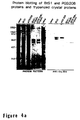
- the BtPGSI245 protoxin reacts with polyclonal antisera against the BtS1 or Bt13 toxin (European patent application 88/402115.5) and the Bt2 protoxin (U.S. patent application 821,582; European patent application 86/300,291.1) as shown in Fig. 4.
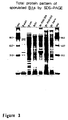
- the crystal proteins of each strain were analyzed on a 12.5% SDS-PAGE gel (Laemmli, 1970) and stained with Coomassie brilliant blue R-250 according to Lambert et al (1987).
- the crystal proteins were dissolved by exposing the spore-crystal mixtures overnight at 37°C to 50 mM Na2CO3, pH 10, 5 mM DTT. Solubilized crystal proteins were digested by adjusting the pH to 9.0 with 0.5 M HCl and by trypsinization (1 ⁇ g bovine trypsin/25 ⁇ g protein).
- Example 3 Insecticidal activity of the BtPGSI208 and BtPGSI245 crystal proteins
- Example 2 both strains were grown for 48 to 72 hrs at 28°C on T3 medium. After sporulation, the spores and crystals were harvested in PBS (phosphate buffered saline) with a Trihalski spatula. The resulting spore-crystal suspensions were centrifuged, and the pellets were resuspended and incubated overnight in aqueous Na2CO3 and DTT solutions as described in Example 2. After centrifugation, the supernatants were recovered, and their contents of the respective crystal proteins of the two strains were determined.
- PBS phosphate buffered saline
- Potato leaves were dipped in aqueous dilutions of the supernatant solutions and then air dried for two hours. Colorado potato beetle larvae of the second instar were placed on the treated leaves, and mortality of the larvae was measured after three days. These results were compared with the mortality of larvae fed leaves treated with solubilized crystal proteins of Bt HD-1 ("Bt kurstaki Dipel” from Abbott Laboratories, Abbott Park, North Chicago, Ill., USA) as a control. LC50, expressed as ug of solubilized crystal proteins/ml, was calculated by Probit analysis (Finney, 1971). The results are summarized in Table 5, below.
- the BtPGSI208 protoxin from the BtPGSI208 strain was detected by ELISA (Engvall and Pesce, 1978) with a polyclonal antiserum against the Bt13 coleoptera toxin (Höfte et al, 1987).
- the btPGSI208 gene was identified in the BtPGSI208 strain by preparing total DNA of the BtPGSI208 strain and then digesting the DNA with the restriction enzymes Hind III, Eco RI and Cla I.
- the so-digested DNA was analyzed by Southern blotting, probing with a nick-translated 2.9 kb Hind III fragment from the genome of the BtS1 strain (European patent application 88/402,115.5) containing the bt13 gene. After hybridization with the probe, the blot was washed under low stringency conditions (2XSSC, 0.1%SDS at 68°C for 2x15 min), showing the presence of the btPGSI208 gene, related to the bt13 gene. The hybridization pattern with the probe also showed that the btPGSI208 gene was clearly different from the bt13 gene.
- BAP bovine alkaline phosphatase
- coli clones containing the vector were then screened with the 2.9 kb Hind III DNA fragment containing the bt13 gene, as a probe, to identify DNA fragments of clones containing the btPGSI208 gene.
- the so-identified DNA fragments were then sequenced (Fig. 1) according to Maxam and Gilbert (1980).
- the gene is cut with an appropriate restriction enzyme to give the truncated btPGSI208 gene, encoding the BtPGSI208 toxin of about 68 kDa.
- the BtPGSI245 protoxin from the BtPGSI245 strain was detected by ELISA (Engvall and Pesce, 1978) with a polyclonal antiserum directed against the Bt13 coleoptera toxin. Colony hybridization of the BtPGSI245 strain and Southern blotting of the BtPGSI245 total DNA, that had been probed with the 2.9 kb Hind III DNA fragment containing the bt13 gene and washed under the previously described low stringency conditions, revealed no hybridizing DNA.
- total DNA from the BtPGSI245 strain was prepared and partially digested with Sau 3A.
- the digested DNA was size fractionated on a sucrose gradient and fragments ranging from 5 kb to 10 kb were ligated to the Bam HI-digested and BAP-treated cloning vector pUC18 (Yannisch-Perron et al, 1985).
- Recombinant clones containing the vector were then screened by colony immunoprobing (French et al, 1986) with an antiserum against the Bt13 toxin.
- the gene is cut with an appropriate restriction enzyme to give the truncated btPGSI245 gene, encoding the BtPGSI245 toxin of about 66 kDa.
- Example 6 Construction of a btPGSI208-neo hybrid gene and a btPGSI245-neo hybrid gene
- Example 7 Insertion of the btPGSI208 and btPGSI245 genes, the truncated btPGSI208 and btPGSI245 genes and the btPGSI208-neo and btPGSI245-neo hybrid genes in E. coli and insertion of the truncated btPGSI208 and btPGSI245 genes and the btPGSI208-neo and btPGSI245-neo hybrid genes in potato plants
- the btPGSI208 and btPGSI245 genes and the truncated btPGSI208 and btPGSI245 genes from Examples 4 and 5 and the btPGSI208 - neo and btPGSI245 - neo hybrid genes from Example 6 are each inserted into, and expressed by, different E . coli in a conventional manner, using E . coli expression vectors as described by Botterman and Zabeau (1987). In order to express these genes in E . coli and in plants, different gene cassettes are made.
- a Bam HI restriction site is introduced at the ATG initiation codon of the btPGSI208 gene by site directed mutagenesis (Stanssens et al, 1988; Stanssens et al, 1989).
- the 4th nucleotide of the btPGSI208 gene is changed from an A to a G, yielding a unique Bam HI site.
- this mutation should also optimize the translation initiation in plant cells.
- the AAT codon (second codon) coding for Asn is changed into a GAT codon coding for Asp.
- a Nco I is introduced at the ATG translation initiation codon of the btPGSI245 gene.
- the insecticidal activity, against Colorado potato beetle second instar larvae, of the BtPGSI208 protoxin produced in E . coli (transformed with the btPGSI208 gene) is given in Table 6, below. Toxicity is expressed as 50% lethal concentration in ug/ml, followed by the 95% confidence interval and the slope of the probit line. Table 6 LC50(ug/ml) slope 1.0 (0.6-1.8) 2.3
- the toxicity of the BtPGSI208 protoxin produced in E . coli was about 5 times greater than the toxicity of the BtPGSI208 protoxin produced by the BtPGSI208 strain. Trypsin digestion of the BtPGSI208 protoxin, produced in E . coli , yielded the BtPGSI208 toxin which also was active against Colorado potato beetle.
- the hybrid genes and truncated genes are placed under the control of the strong constitutive promoters, Cabb-JI 35S promotor (Hull and Howell, 1987) or the TR2' promoter (Velten et al, 1984), and are fused to the transcription termination and polyadenylation signals of the octopine synthase gene (Gielen et al, 1984).
- the intermediate plant expression vectors containing the truncated btPGSI208 and btPGSI245 genes and the btPGSI208 - neo and btPGSI245 - neo hybrid genes, are transferred into the Agrobacterium strain C 58 C1 Rif R (US patent application 821,582; European patent application 86/300,291.1) carrying the disarmed Ti-plasmid pGV2260 (Vaeck et al, 1987). Selection for spectinomycin resistance yields cointegrated plasmids, consisting of pGV2260 and the respective intermediate plant expression vectors.
- Each of these recombinant Agrobacterium strains is then used to transform different potato plants ( Solanum tuberosum ) so that the truncated btPGSI208 gene, the truncated btPGSI245 gene, the btPGSI208 - neo hybrid gene and the btPGSI245 - neo hybrid gene are contained in, and expressed by, different potato plant cells.
- Example 8 Expression of the truncated btPGSI208 and btPGSI245 genes and the btPGSI208-neo and btPGSI245-neo hybrid genes in potato plants
- the insecticidal activity against Coleoptera of the expression products of the truncated btPGSI208 and btPGSI245 genes and the btPGSI208 - neo and btPGSI245 - neo hybrid genes in leaves of transformed potato plants, generated from the transformed potato plant cells of Example 7, is evaluated by recording the growth rate and mortality of Leptinotarsa decemlineata larvae fed on these leaves. These results are compared with the growth rate of larvae fed leaves from untransformed potato plants. Toxicity assays are performed as described in European Patent application 88/402,115.5, U.S. patent application 821,582 and European patent application 86/300,291.1.
- a significantly higher mortality rate is obtained among larvae fed on leaves of transformed potato plants containing the truncated btPGSI208 gene, the truncated btPGSI245 gene, the btPGSI208 - neo hybrid gene or the btPGSI245 - neo hybrid gene than among larvae fed the leaves of untransformed plants.
- pAMbt21R1 is obtained by cloning the 5.4 kb Hpa I fragment of plasmid pJL21 into the Eco RV site of the tetracycline resistance gene of the shuttle vector pAM401 (Wirth et al, 1987).
- Plasmid pJL21 is obtained by cloning a 6kb fragment, containing the btPGSI208 gene, from the BtPGSI208 strain into the Bgl II site of plasmid pEcoR251 (DSM accession no. 4711).
- the electroporation procedure is carried out as described in PCT patent application no. PCT/EP89/01539.
- the BtS174A strain, transformed with pAMbt21R1 retains its insecticidal activity against Lepidoptera and demonstrates a newly acquired insecticidal activity against Coleoptera due to expression of the btPGSI208 gene in the strain.
- this invention is not limited to the BtPGSI245 (DSM 5132) strain. Rather, the invention also includes any mutant or variant of the BtPGSI245 strain which produces crystals, crystal proteins, protoxin or toxin having substantially the same properties as the BtPGSI245 crystals, crystal proteins, protoxin or toxin.
- variants of the BtPGSI245 strains include variants whose total protein pattern is substantially the same as the protein pattern of the BtPGSI245 strain as shown in Fig. 3.
- This invention also is not limited to potato plants transformed with the truncated btPGSI245 gene. It includes any plant, such as tomato, tobacco, rapeseed, alfalfa, sunflowers, cotton, corn, soybeans, brassicas, sugar beets and other vegetables, transformed with an insecticidally effective part of the btPGSI245 gene.
- Agrobacterium tumefaciens Ti-plasmids for transforming plant cells with an insecticidally effective btRGSI245 gene part.
- Other known techniques for plant cell transformations such as by means of liposomes, by electroporation or by vector systems based on plant viruses or pollen, can be used for transforming monocotyledons and dicotyledons with such a gene part.
- DNA sequences other than those shown in Fig. 2 for the btPGSI245 gene and the truncated btPGSI245 gene can be used for transforming plants and bacteria.
- the DNA sequence of Fig. 2 can be modified by: 1) replacing some codons with others that code either for the same amino acids or for other amino acids; and/or 2) deleting or adding some codons; provided that such modifications do not substantially alter the properties of the encoded, insecticidally effective portion of the BtPGSI245 protoxin or toxin.
- DNA recombinants containing the aforementioned DNA sequences in association with other foreign DNA particularly the DNA of vectors suitable for transforming plants and microorganisms other than E . coli , are encompassed by this invention.
- this invention is not limited to the specific plasmids containing the btPGSI245 gene, or parts thereof, that were heretofore described, but rather, this invention encompasses any DNA recombinants containing a DNA sequence that is their equivalent.
- the invention relates to all DNA recombinants that include all or part of the btPGSI245 gene and that are suitable for transforming microorganisms (e.g., plant associated bacteria such as Bacillus subtilis , Pseudomonas , and Xanthomonas or yeasts such as Streptomyces cerevisiae ) under conditions which enable all or part of the gene to be expressed and to be recoverable from said microorganisms or to be transferred to a plant cell.
- plant associated bacteria such as Bacillus subtilis , Pseudomonas , and Xanthomonas or yeasts such as Streptomyces cerevisiae
Landscapes
- Life Sciences & Earth Sciences (AREA)
- Health & Medical Sciences (AREA)
- Engineering & Computer Science (AREA)
- Chemical & Material Sciences (AREA)
- Genetics & Genomics (AREA)
- Zoology (AREA)
- Wood Science & Technology (AREA)
- Biotechnology (AREA)
- Organic Chemistry (AREA)
- General Health & Medical Sciences (AREA)
- Bioinformatics & Cheminformatics (AREA)
- Microbiology (AREA)
- General Engineering & Computer Science (AREA)
- Biomedical Technology (AREA)
- Biochemistry (AREA)
- Virology (AREA)
- Molecular Biology (AREA)
- Medicinal Chemistry (AREA)
- Plant Pathology (AREA)
- Pest Control & Pesticides (AREA)
- Environmental Sciences (AREA)
- Dentistry (AREA)
- Tropical Medicine & Parasitology (AREA)
- Agronomy & Crop Science (AREA)
- Biophysics (AREA)
- Gastroenterology & Hepatology (AREA)
- Crystallography & Structural Chemistry (AREA)
- Proteomics, Peptides & Aminoacids (AREA)
- Insects & Arthropods (AREA)
- Cell Biology (AREA)
- Physics & Mathematics (AREA)
- Micro-Organisms Or Cultivation Processes Thereof (AREA)
- Agricultural Chemicals And Associated Chemicals (AREA)
- Preparation Of Compounds By Using Micro-Organisms (AREA)
- Breeding Of Plants And Reproduction By Means Of Culturing (AREA)
- Peptides Or Proteins (AREA)
Claims (14)
- Souche de BtPGSI245 déposée sous le No. 5132 DSM ou variante de celle-ci dont le profil protéique global tel que déterminé par électrophorèse sur PAGE-SDS est quasiment identique .
- Cristaux de BtPGSI245 ou protéines du crystal de la souche de BtPGSI245 selon la revendication 1 ou la protoxine de BtPGSI245 ou la toxine de la figure 2 ou un fragment de la protoxine de BtPGSI245 de la figure 2 doué d'activité insecticide ou un variant de celui-ci ayant des propriétés insecticides quasiment identiques.
- Gène BtPGSI245 de la figure 2, une partie du gène ayant l'activité insecticide du gène de la Figure 2, le gène BtPGSI245 tronqué qui s'étend du nucleotide 340 au nucleotide 2094 dans la figure 2, le gène chimère BtPGSI245 ou un hybride de celui-ci associé à un gène marqueur de sélection, tel que le gène néo, ou un variant de celui-ci codant pour un polypeptide doté de propriétés insecticides quasiment identiques à celles de la protoxine de BtPGSI245, la toxine ou un fragment de la protoxine selon la revendication 2.
- ADN codant pour la protoxine BtPGSI245, la toxine ou un fragment de la protoxine selon la revendication 2.
- Composition insecticide, dirigée particulièrement contre Coléoptéra, qui comprend un principe actif choisi dans le groupe constitué de la souche BtPGSI245, de cristaux, de protéines du crystal de la protoxine, la toxine et un fragment de la protoxine ayant une activité insecticide selon les revendications 1 ou 2.
- Micro-organisme transformé, particulièrement E.coli, caractérisé par le gène, une partie du gène, le gène tronqué, le gène chimère, l'hybride ou l'ADN selon les revendications 3 ou 4.
- Cellule végétale transformée caractérisée par une partie du gène, le gène tronqué, le gène chimère, l'hybride ou l'ADN selon les revendications 3 ou 4.
- Plante ou graine de celle-ci constituées essentiellement du type de cellule végétale selon la revendication 7.
- Génome de plante contenant à l'état intégré une partie du gène, le gène tronqué, le gène chimère, l'hybride ou l'ADN des revendications 3 ou 4.
- Tissu végétal dont les cellules possèdent le génome de plante selon la revendication 8.
- Procédé pour rendre une plante résistante à Coléoptéra caractérisé par le l'apport du génome de plante selon la revendication 8, à la plante.
- Procédé de production de plantes et de matériel de reproduction tels que des graines desdites plantes comprenant une substance génétique hétérologue intégrée de manière stable dans le génome de ces dernières et capable de s'y exprimer sous forme d'une protéine toxique pour les insectes, particulièrement Coléoptéra, comprenant les étapes d' a) production de cellules végétales ou de tissu végétal incluant ledit matériel génétique hétérologue à partir de protéine de cellules végétales ou de tissu végétal n'exprimant pas cette proteine, b) production de plantes régénérées ou de matériel de reproduction desdites plantes ou les deux à partir desdits cellules végétales ou tissu végétal transformé comprenant ledit matériel génétique hétérologue, et c) facultativement réplication biologique desdites plantes régénérées ou matériel de reproduction ou les deux ; dans lequel ladite étape du production de cellules végétales transformées ou de tissu végétal transformé comprenant ladite matériel génétique hétérologue est caractérisée par: la transformation desdites cellules végétales ou tissu végétal de départ avec une partie du gène, la gène tronqué, l'hybride ou l'ADN selon les revendication 3 ou 4 ainsi qu'avec les éléments de régulation qui sont capables de permettre l'expression d'une partie du gène, du gène tronqué, de l'hybride ou de l'ADN dans lesdites cellules végétales ou tissu végétal, en vue d'induire l'intégration stable d'une partie du gène, du gène tronqué, d'hybride ou d'ADN dans lesdites cellules végétales ou tissu végétal, ainsi que dans lesdites plantes et matériel de reproduction issus de ces derniers au fil des générations ultérieures.
- Procédé pour lutter contre un insecte parasite, spécialement Coléoptéra, et particulièrement Leptinotarsa décémlinéata, Agelastica alini, Diabrotica lutéola, Haltica tombacina, Anthonomus gandis, Ténébrio molitor, Diabrotica undécimpuctata et Triboléum casténeum, caractérisé par la mise en contact du parasite avec une composition insecticide selon la revendication 5.
- B. thuringiensis transformé, de préférence par électroporation, avec le gène, une partie du gène, ou le gène tronqué, ou l'ADN selon les revendications 3 ou 4.
Applications Claiming Priority (2)
| Application Number | Priority Date | Filing Date | Title |
|---|---|---|---|
| EP89400428 | 1989-02-15 | ||
| EP89400428A EP0382990A1 (fr) | 1989-02-15 | 1989-02-15 | Souches de bacillus thuringiensis |
Publications (2)
| Publication Number | Publication Date |
|---|---|
| EP0458819A1 EP0458819A1 (fr) | 1991-12-04 |
| EP0458819B1 true EP0458819B1 (fr) | 1994-01-12 |
Family
ID=8202925
Family Applications (2)
| Application Number | Title | Priority Date | Filing Date |
|---|---|---|---|
| EP89400428A Withdrawn EP0382990A1 (fr) | 1989-02-15 | 1989-02-15 | Souches de bacillus thuringiensis |
| EP90902780A Expired - Lifetime EP0458819B1 (fr) | 1989-02-15 | 1990-02-14 | Plantes transformees pour produire des toxines insecticides de bacillus thuringiensis |
Family Applications Before (1)
| Application Number | Title | Priority Date | Filing Date |
|---|---|---|---|
| EP89400428A Withdrawn EP0382990A1 (fr) | 1989-02-15 | 1989-02-15 | Souches de bacillus thuringiensis |
Country Status (9)
| Country | Link |
|---|---|
| EP (2) | EP0382990A1 (fr) |
| JP (1) | JP3260139B2 (fr) |
| AT (1) | ATE100144T1 (fr) |
| AU (1) | AU633303B2 (fr) |
| CA (1) | CA2046646C (fr) |
| DE (1) | DE69006015T2 (fr) |
| DK (1) | DK0458819T3 (fr) |
| ES (1) | ES2062512T3 (fr) |
| WO (1) | WO1990009445A1 (fr) |
Families Citing this family (22)
| Publication number | Priority date | Publication date | Assignee | Title |
|---|---|---|---|---|
| US5683691A (en) * | 1989-02-15 | 1997-11-04 | Plant Genetic Systems, N.V. | Bacillus thuringiensis insecticidal toxins |
| US5187091A (en) * | 1990-03-20 | 1993-02-16 | Ecogen Inc. | Bacillus thuringiensis cryiiic gene encoding toxic to coleopteran insects |
| DK73890D0 (da) * | 1990-03-22 | 1990-03-22 | Novo Nordisk As | Pesticid |
| PL295547A1 (fr) * | 1990-04-26 | 1992-10-05 | Plant Genetic Systems Nv | |
| DK141790D0 (da) * | 1990-06-08 | 1990-06-08 | Novo Nordisk As | Middel |
| US5277905A (en) * | 1991-01-16 | 1994-01-11 | Mycogen Corporation | Coleopteran-active bacillus thuringiensis isolate |
| US5264364A (en) * | 1991-01-31 | 1993-11-23 | Ecogen Inc. | Bacillus thuringiensis cryIIIc(B) toxin gene and protein toxic to coleopteran insects |
| CA2101338A1 (fr) * | 1991-01-31 | 1992-08-01 | William P. Donovan | Gene de la toxine cryiiic(b) de bacillus thuringiensis et proteine toxique pour les coleopteres |
| US5204100A (en) * | 1991-02-01 | 1993-04-20 | Ciba-Geigy Corporation | Baciullus thuringiensis strains active against coleopteran insects |
| EP0537105A1 (fr) * | 1991-07-26 | 1993-04-14 | Sandoz Ltd. | Vecteurs pour bacillus thuringiensis |
| US5359048A (en) * | 1991-08-02 | 1994-10-25 | Mycogen Corporation | Polynucleotide encoding a toxin with activity against coleopterans |
| DE69227911T2 (de) * | 1991-08-02 | 1999-05-12 | Kubota Corp., Tokio/Tokyo | Neuer mikroorganismus und insektizid |
| US5262324A (en) * | 1991-11-06 | 1993-11-16 | Mycogen Corporation | Coleopteran-active Bacillus thuringiensis isolates and genes encoding coleopteran-active toxins |
| US5707619A (en) | 1995-03-06 | 1998-01-13 | Mycogen Corporation | Bacillus thuringiensis isolates active against weevils |
| EP0861021B1 (fr) * | 1995-10-13 | 2009-09-23 | Dow Agrosciences LLC | Gene modifie de bacillus thuringiensis pour combattre les lepidopteres sur les plantes |
| US6063756A (en) | 1996-09-24 | 2000-05-16 | Monsanto Company | Bacillus thuringiensis cryET33 and cryET34 compositions and uses therefor |
| US6060594A (en) | 1997-12-18 | 2000-05-09 | Ecogen, Inc. | Nucleic acid segments encoding modified bacillus thuringiensis coleopteran-toxic crystal proteins |
| ATE544857T1 (de) * | 1997-12-18 | 2012-02-15 | Monsanto Technology Llc | Insekten-resistente transgene pflanzen und verfahren zur verbesserung von der aktivität von delta-endotoxinen gegen insekten |
| US6501009B1 (en) | 1999-08-19 | 2002-12-31 | Monsanto Technology Llc | Expression of Cry3B insecticidal protein in plants |
| AU2001290919A1 (en) | 2000-09-12 | 2002-03-26 | Monsanto Technology Llc | Insect inhibitory bacillus thuringiensis proteins, fusions, and methods of use therefor |
| WO2006119457A1 (fr) * | 2005-05-02 | 2006-11-09 | Athenix Corporation | Axmi-028 et axmi-029, famille de nouveaux genes de delta-endotoxine et procedes d'utilisation associes |
| WO2007147096A2 (fr) | 2006-06-15 | 2007-12-21 | Athenix Corporation | Famille de protéines pesticides et leurs procédés d'utilisation |
Family Cites Families (7)
| Publication number | Priority date | Publication date | Assignee | Title |
|---|---|---|---|---|
| BR8600161A (pt) * | 1985-01-18 | 1986-09-23 | Plant Genetic Systems Nv | Gene quimerico,vetores de plasmidio hibrido,intermediario,processo para controlar insetos em agricultura ou horticultura,composicao inseticida,processo para transformar celulas de plantas para expressar uma toxina de polipeptideo produzida por bacillus thuringiensis,planta,semente de planta,cultura de celulas e plasmidio |
| US4771131A (en) * | 1985-08-16 | 1988-09-13 | Mycogen Corporation | Cloning and expression of Bacillus thuringiensis toxin gene encoding a protein toxic to beetles of the order Coleoptera |
| TR27832A (tr) * | 1987-04-29 | 1995-08-31 | Monsanto Co | Zararli ucucu hasarata mukavim bitkiler. |
| US5024837A (en) * | 1987-05-06 | 1991-06-18 | Donovan William P | Coleopteran active microorganisms, related insecticide compositions and methods for their production and use |
| US4999192A (en) * | 1988-02-12 | 1991-03-12 | Mycogen Corporation | Novel coleopteran-active bacillus thuringiensis isolate |
| US4996155A (en) * | 1988-03-04 | 1991-02-26 | Mycogen Corporation | Bacillus thuringiensis gene encoding a coleopteran-active toxin |
| EP0342633B1 (fr) * | 1988-05-20 | 1997-01-08 | Ciba-Geigy Ag | Bacillus thuringiensis transformation |
-
1989
- 1989-02-15 EP EP89400428A patent/EP0382990A1/fr not_active Withdrawn
-
1990
- 1990-02-14 EP EP90902780A patent/EP0458819B1/fr not_active Expired - Lifetime
- 1990-02-14 DK DK90902780.7T patent/DK0458819T3/da active
- 1990-02-14 AU AU50476/90A patent/AU633303B2/en not_active Ceased
- 1990-02-14 WO PCT/EP1990/000244 patent/WO1990009445A1/fr not_active Ceased
- 1990-02-14 ES ES90902780T patent/ES2062512T3/es not_active Expired - Lifetime
- 1990-02-14 CA CA002046646A patent/CA2046646C/fr not_active Expired - Fee Related
- 1990-02-14 DE DE69006015T patent/DE69006015T2/de not_active Expired - Fee Related
- 1990-02-14 JP JP50296590A patent/JP3260139B2/ja not_active Expired - Fee Related
- 1990-02-14 AT AT90902780T patent/ATE100144T1/de not_active IP Right Cessation
Non-Patent Citations (2)
| Title |
|---|
| Herrnstadt et al., Biotechn. 4(4), p.305-308 (1986), * |
| Krieg et al., J. Appl. Entomol. 104(4), p.417-424 (1987). * |
Also Published As
| Publication number | Publication date |
|---|---|
| WO1990009445A1 (fr) | 1990-08-23 |
| ATE100144T1 (de) | 1994-01-15 |
| EP0458819A1 (fr) | 1991-12-04 |
| AU5047690A (en) | 1990-09-05 |
| DE69006015T2 (de) | 1994-05-26 |
| EP0382990A1 (fr) | 1990-08-22 |
| CA2046646A1 (fr) | 1990-08-16 |
| ES2062512T3 (es) | 1994-12-16 |
| DK0458819T3 (da) | 1994-03-07 |
| JP3260139B2 (ja) | 2002-02-25 |
| AU633303B2 (en) | 1993-01-28 |
| DE69006015D1 (de) | 1994-02-24 |
| CA2046646C (fr) | 2000-12-26 |
Similar Documents
| Publication | Publication Date | Title |
|---|---|---|
| US5837237A (en) | Bacillus thuringiensis strains and their genes encoding insecticidal toxins | |
| EP0458819B1 (fr) | Plantes transformees pour produire des toxines insecticides de bacillus thuringiensis | |
| US7888471B2 (en) | Bacillus thuringiensis strains and their insecticidal proteins | |
| EP0647711B1 (fr) | Plantes transformées par une séquence d'ADN, léthale pour les lépidoptéra, de bacillus thuringiensis | |
| EP0694062B1 (fr) | Nouvelles souches de bacille thuringiensis et leurs protéines insecticides | |
| JPH04503452A (ja) | バチルスチュリンギエンシスの殺虫毒素を産生するように形質転換した植物 | |
| US5683691A (en) | Bacillus thuringiensis insecticidal toxins | |
| AU635728B2 (en) | New strain of bacillus thuringiensis | |
| AU685089C (en) | New (bacillus thuringiensis) strains and their insecticidal proteins | |
| HK1014374B (en) | New bacillus thuringiensis strains and their insecticidal proteins |
Legal Events
| Date | Code | Title | Description |
|---|---|---|---|
| PUAI | Public reference made under article 153(3) epc to a published international application that has entered the european phase |
Free format text: ORIGINAL CODE: 0009012 |
|
| 17P | Request for examination filed |
Effective date: 19910719 |
|
| AK | Designated contracting states |
Kind code of ref document: A1 Designated state(s): AT BE CH DE DK ES FR GB IT LI LU NL SE |
|
| 17Q | First examination report despatched |
Effective date: 19920527 |
|
| GRAA | (expected) grant |
Free format text: ORIGINAL CODE: 0009210 |
|
| AK | Designated contracting states |
Kind code of ref document: B1 Designated state(s): AT BE CH DE DK ES FR GB IT LI LU NL SE |
|
| PG25 | Lapsed in a contracting state [announced via postgrant information from national office to epo] |
Ref country code: AT Effective date: 19940112 |
|
| REF | Corresponds to: |
Ref document number: 100144 Country of ref document: AT Date of ref document: 19940115 Kind code of ref document: T |
|
| ITF | It: translation for a ep patent filed | ||
| REF | Corresponds to: |
Ref document number: 69006015 Country of ref document: DE Date of ref document: 19940224 |
|
| ET | Fr: translation filed | ||
| EPTA | Lu: last paid annual fee | ||
| REG | Reference to a national code |
Ref country code: DK Ref legal event code: T3 |
|
| PLBE | No opposition filed within time limit |
Free format text: ORIGINAL CODE: 0009261 |
|
| STAA | Information on the status of an ep patent application or granted ep patent |
Free format text: STATUS: NO OPPOSITION FILED WITHIN TIME LIMIT |
|
| REG | Reference to a national code |
Ref country code: ES Ref legal event code: FG2A Ref document number: 2062512 Country of ref document: ES Kind code of ref document: T3 |
|
| 26N | No opposition filed | ||
| EAL | Se: european patent in force in sweden |
Ref document number: 90902780.7 |
|
| REG | Reference to a national code |
Ref country code: GB Ref legal event code: IF02 |
|
| PGFP | Annual fee paid to national office [announced via postgrant information from national office to epo] |
Ref country code: NL Payment date: 20020117 Year of fee payment: 13 |
|
| PGFP | Annual fee paid to national office [announced via postgrant information from national office to epo] |
Ref country code: SE Payment date: 20020118 Year of fee payment: 13 Ref country code: ES Payment date: 20020118 Year of fee payment: 13 |
|
| PGFP | Annual fee paid to national office [announced via postgrant information from national office to epo] |
Ref country code: DK Payment date: 20020121 Year of fee payment: 13 |
|
| PGFP | Annual fee paid to national office [announced via postgrant information from national office to epo] |
Ref country code: LU Payment date: 20020128 Year of fee payment: 13 |
|
| PGFP | Annual fee paid to national office [announced via postgrant information from national office to epo] |
Ref country code: GB Payment date: 20020208 Year of fee payment: 13 |
|
| PGFP | Annual fee paid to national office [announced via postgrant information from national office to epo] |
Ref country code: DE Payment date: 20020213 Year of fee payment: 13 |
|
| PGFP | Annual fee paid to national office [announced via postgrant information from national office to epo] |
Ref country code: CH Payment date: 20020218 Year of fee payment: 13 |
|
| PGFP | Annual fee paid to national office [announced via postgrant information from national office to epo] |
Ref country code: FR Payment date: 20020219 Year of fee payment: 13 |
|
| PG25 | Lapsed in a contracting state [announced via postgrant information from national office to epo] |
Ref country code: LU Free format text: LAPSE BECAUSE OF NON-PAYMENT OF DUE FEES Effective date: 20030214 Ref country code: GB Free format text: LAPSE BECAUSE OF NON-PAYMENT OF DUE FEES Effective date: 20030214 |
|
| PG25 | Lapsed in a contracting state [announced via postgrant information from national office to epo] |
Ref country code: SE Free format text: LAPSE BECAUSE OF NON-PAYMENT OF DUE FEES Effective date: 20030215 Ref country code: ES Free format text: LAPSE BECAUSE OF NON-PAYMENT OF DUE FEES Effective date: 20030215 |
|
| PG25 | Lapsed in a contracting state [announced via postgrant information from national office to epo] |
Ref country code: LI Free format text: LAPSE BECAUSE OF NON-PAYMENT OF DUE FEES Effective date: 20030228 Ref country code: DK Free format text: LAPSE BECAUSE OF NON-PAYMENT OF DUE FEES Effective date: 20030228 Ref country code: CH Free format text: LAPSE BECAUSE OF NON-PAYMENT OF DUE FEES Effective date: 20030228 |
|
| PGFP | Annual fee paid to national office [announced via postgrant information from national office to epo] |
Ref country code: BE Payment date: 20030319 Year of fee payment: 14 |
|
| PG25 | Lapsed in a contracting state [announced via postgrant information from national office to epo] |
Ref country code: NL Free format text: LAPSE BECAUSE OF NON-PAYMENT OF DUE FEES Effective date: 20030901 |
|
| PG25 | Lapsed in a contracting state [announced via postgrant information from national office to epo] |
Ref country code: DE Free format text: LAPSE BECAUSE OF NON-PAYMENT OF DUE FEES Effective date: 20030902 |
|
| REG | Reference to a national code |
Ref country code: DK Ref legal event code: EBP |
|
| EUG | Se: european patent has lapsed | ||
| GBPC | Gb: european patent ceased through non-payment of renewal fee | ||
| REG | Reference to a national code |
Ref country code: CH Ref legal event code: PL |
|
| PG25 | Lapsed in a contracting state [announced via postgrant information from national office to epo] |
Ref country code: FR Free format text: LAPSE BECAUSE OF NON-PAYMENT OF DUE FEES Effective date: 20031031 |
|
| NLV4 | Nl: lapsed or anulled due to non-payment of the annual fee |
Effective date: 20030901 |
|
| REG | Reference to a national code |
Ref country code: FR Ref legal event code: ST |
|
| PG25 | Lapsed in a contracting state [announced via postgrant information from national office to epo] |
Ref country code: BE Free format text: LAPSE BECAUSE OF NON-PAYMENT OF DUE FEES Effective date: 20040228 |
|
| REG | Reference to a national code |
Ref country code: ES Ref legal event code: FD2A Effective date: 20030215 |
|
| BERE | Be: lapsed |
Owner name: *PLANT GENETIC SYSTEMS N.V. Effective date: 20040228 |
|
| PG25 | Lapsed in a contracting state [announced via postgrant information from national office to epo] |
Ref country code: IT Free format text: LAPSE BECAUSE OF NON-PAYMENT OF DUE FEES;WARNING: LAPSES OF ITALIAN PATENTS WITH EFFECTIVE DATE BEFORE 2007 MAY HAVE OCCURRED AT ANY TIME BEFORE 2007. THE CORRECT EFFECTIVE DATE MAY BE DIFFERENT FROM THE ONE RECORDED. Effective date: 20050214 |