EP0459192B1 - Verfahren zur Optimierung von Rechnerkode - Google Patents
Verfahren zur Optimierung von Rechnerkode Download PDFInfo
- Publication number
- EP0459192B1 EP0459192B1 EP91107510A EP91107510A EP0459192B1 EP 0459192 B1 EP0459192 B1 EP 0459192B1 EP 91107510 A EP91107510 A EP 91107510A EP 91107510 A EP91107510 A EP 91107510A EP 0459192 B1 EP0459192 B1 EP 0459192B1
- Authority
- EP
- European Patent Office
- Prior art keywords
- procedures
- pair
- basic block
- determined
- groups
- Prior art date
- Legal status (The legal status is an assumption and is not a legal conclusion. Google has not performed a legal analysis and makes no representation as to the accuracy of the status listed.)
- Expired - Lifetime
Links
Images


Classifications
-
- G—PHYSICS
- G06—COMPUTING OR CALCULATING; COUNTING
- G06F—ELECTRIC DIGITAL DATA PROCESSING
- G06F8/00—Arrangements for software engineering
- G06F8/40—Transformation of program code
- G06F8/41—Compilation
- G06F8/44—Encoding
- G06F8/443—Optimisation
- G06F8/4441—Reducing the execution time required by the program code
- G06F8/4442—Reducing the number of cache misses; Data prefetching
-
- G—PHYSICS
- G06—COMPUTING OR CALCULATING; COUNTING
- G06F—ELECTRIC DIGITAL DATA PROCESSING
- G06F11/00—Error detection; Error correction; Monitoring
- G06F11/30—Monitoring
- G06F11/34—Recording or statistical evaluation of computer activity, e.g. of down time, of input/output operation ; Recording or statistical evaluation of user activity, e.g. usability assessment
- G06F11/3409—Recording or statistical evaluation of computer activity, e.g. of down time, of input/output operation ; Recording or statistical evaluation of user activity, e.g. usability assessment for performance assessment
-
- G—PHYSICS
- G06—COMPUTING OR CALCULATING; COUNTING
- G06F—ELECTRIC DIGITAL DATA PROCESSING
- G06F11/00—Error detection; Error correction; Monitoring
- G06F11/30—Monitoring
- G06F11/34—Recording or statistical evaluation of computer activity, e.g. of down time, of input/output operation ; Recording or statistical evaluation of user activity, e.g. usability assessment
- G06F11/3466—Performance evaluation by tracing or monitoring
Definitions
- the present invention relates to computer systems and, more particularly, to an improved method for generating computer code which executes more efficiently on computers having cache memories and the like.
- the central processing unit When the central processing unit requests an instruction, the request is intercepted by the cache. If the instruction in question is already stored in the cache, it is returned to the central processing unit. If the instruction is not present, the cache loads a small block of memory locations which includes the requested instructions from the main memory. The cache then returns the requested instruction.
- the need to load the small block referred to as a "line" delays the execution of the program; hence, such cache loads must be limited to a small fraction of the instruction fetches if the cache architecture is to provide a substantial speed enhancement. This will be the case if the computer code is organized such that the execution sequence of the code is the same as the storage sequence. That is, if instruction A is to be executed after instruction B, instruction B should be stored immediately after Instruction A. In this case, each instruction in each line of code will be executed in the order stored and cache loads will only be needed at the end of each line of code. Furthermore, the cache loads at the end of lines could then be anticipated in advance and thus performed before the lines in question were actually requested.
- JUMP instructions in the computer code results in difficulties in providing this ideal code organization.
- the central processing unit encounters a JUMP instruction, the next instruction will be at a point in the code which may be very distant from the location at which the JUMP instruction is stored. Hence, the cache may not contain the line which includes the next instruction.
- the JUMP instruction is a conditional one, there is no method of determining in advance whether or not the jump will be executed.
- JUMP instructions cause additional problems for pipelined central processing units.
- a number of instructions are being processed at any given time. Each time an instruction is executed, a new instruction is introduced into the "pipe". If a jump is executed, the next instruction in the pipe is not likely to be the target of the jump. Hence, a portion of the pipe must be emptied and reloaded starting with the target instruction.
- computer code which minimizes the use of JUMP instructions is highly desirable.
- the present invention as claimed in claim 1 comprises a code optimization method for providing more efficiently executable computer code for running on a computer system having cache memories and the like.
- the method uses statistical information obtained by running the computer code with test data to determine a new ordering for the code blocks.
- the new order places code blocks that are often executed after one another close to one another in the computer's memory.
- a computer program comprising a plurality of procedures is modified to cause the computer program to be loaded in a more efficient memory order by determining the frequency with which each procedure calls each other procedure in the computer program and placing the procedures in the computer's memory in an order determined by the determined frequencies.
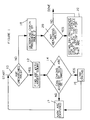
- Figure 1 is a flow chart for a basic block positioning method according to the present invention.
- Figure 2 illustrates the basic block positioning method of the present invention with reference to a specific example.
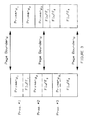
- FIG. 3 illustrates the benefits obtained by splitting procedures.
- Figure 4(a) shows the traditional ordering of basic blocks.
- Figure 4(b) shows the ordering after Procedure Splitting has been applied.
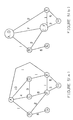
- FIG. 5 illustrates the manner in which procedures are ordered according to the present invention.
- the present invention utilizes two passes to optimize the computer code.
- the code is compiled and special code inserted which collects statistics on the subsequent execution of the code.
- This special code will be referred to as the instrumentation code in the following discussion.
- the instrumentation code is then executed using representative test data. During the execution, the instrumentation code records data indicating the number of times each block transfer control to the other blocks in which various blocks of code were actually used.
- this data is used to reorder the code such that instructions that are often executed after one another are stored close to one another in memory.
- the reordering operation also eliminates a significant number of JUMP instructions in the portion of the code which is most frequently executed, thereby reducing the program size and further improving the efficiency with which the code is executed. This permits the portion of code which is most frequently executed to be executed linearly.
- a basic block is defined to be a straight line section of code with a single entry point at the beginning and a single exit point at the end.
- the basic block was chosen as the smallest entity to move because once a basic block is entered, it is guaranteed that all of the instructions for that block will be executed in order. Hence, no further improvement in cache loading can be obtained by reordering the code within the basic block.
- the present invention identifies such cases and moves the infrequently executed code away from the more frequently executed code so that the normal flow of control is in a straight-line sequence.
- the target and sense of the conditional branch are changed to reflect the new ordering of the code.
- longer sequences of code are executed before a branch is taken.
- branch penalties are reduced since the hardware prediction matches normal code execution.
- moving the infrequently executed code results in the elimination of an unconditional JUMP instruction.
- a small block of code is added to each basic block for each possible transfer to that basic block.
- This code will be referred to as a basic block stub in the following discussion.
- the basic block stub comprises storage space for a counter used to record the number of times the jump is executed, data specifying the source of the JUMP instruction, and a JUMP instruction to the beginning of the basic block.
- a basic block stub is inserted for each possible JUMP instruction having the basic block in question as its target.
- the counters are initialized to zero by the linkage editor prior to the execution of the code with the test data.
- the present invention examines the basic block stubs and constructs a graph having arcs showing the various jumps and the number of times each JUMP instruction was executed. The code is then reordered.
- a chain is defined to be a sequence of basic blocks that should be a contiguous section of straight-line code.
- a source basic block is defined to be a basic block ending in a branch instruction such as a Jump.
- a target basic block is defined to be the basic block which begins with the target of a branch instruction. It should be noted that every basic block is a target of some other basic block, and every basic block is also a source basic block in a computer program running under a standard operating system.
- Two chains can be merged if the source basic block for the selected arc is the tail of a chain and the target block for the selected arc is the head of a chain. Since all basic blocks are themselves chains, this rule will always be true for the first arc selected.
- the chains are not merged.
- arcs are used to define a precedence relation among the chains.
- the precedence relationships are used to guide the final placement of the chains.
- the chain containing the source is given precedence over the chain containing the target if the chain containing the source basic block consists of a conditional branch to a target basic block in the second chain.
- the current arc contains one of the two possible targets. If the source is not the tail of a chain, then the source has already been chained with the second of the possible targets. Since arcs are examined in the order of the frequency of use from most frequently executed to least frequently executed, the source basic block in question will have already been chained with the dominant target. On pipelined machines, the lesser taken path of a conditional branch should be a forward branch in order to avoid penalties resulting from incorrect branch prediction. Thus, since the most common target basic block for the branch has already been chained to the branch, the target for the current arc should be a forward branch from the branch point. This is the rationale behind giving the chain containing the source node precedence over the chain containing the target node.
- the above mentioned two rules do not always resolve the ordering of all of the basic blocks. If there are any chains for which a precedence relationship has not been specified by the second rule, a third rule is applied this occurs when the second rule attempts to give precedence to two chains. The third rule establishes the precedence of remaining chains by giving precedence to a chain currently lacking precedence if this would result in the second rule being satisfied for the arc having the largest count.
- Figure 1 is a flow chart for the basic block positioning method as described above.
- the method examines each of the arcs in the graph. If any arc has not been examined, the method finds the arc having the largest count among the unexamined arcs as shown at 10 and 12. The method then attempts to join the two chains connected by this arc as shown at 14. If the two chains can be linked then they are linked as shown at 16. The arc is then removed. If the two chains can not be linked, the arc is merely marked as being examined and the next unexamined arc is found.
- the program applies the second rule to establish precedence between any remaining chains as shown at 18. If there are any remaining arcs, the method then attempts to remove them by satisfying the second rule for the arc having the largest count.
- Figure 2 shows the basic block graph of a procedure with each arc labeled with its count as determined in a test run.
- the source code was a while loop written in the C language. Within the body of the loop were several i f-then-else tests along with two alternate break statements at basic blocks G and M.
- next three largest arcs (N-B, D-F, and E-N) also extend the existing chain.
- the next largest arc (D-E) can not be used to extend a chain, since basic block D is already in the middle of a chain. The process is repeated with the remainder of the arcs.
- the final result will be six chains, three of which being individual basic blocks:
- the second rule will not always provide a complete set of precedence relationships.
- the branch which is less frequently taken be forward.
- the branch from D to E should be forward (since that link is not taken as often as the path from D to F).
- E and D are part of the same chain, and E occurs before D in the chain, that branch is necessarily backwards.
- the precedence relation between chains is not transitive. In these cases the reordering method resolves such conflicts by looking at the weights of the arc and choosing an order that will satisfy the precedence of the arcs having the higher weight.
- the chains are arranged so that the order is satisfied consistent-with the above rules. If there is some freedom in choosing the next chain, the chain connected to existing chains by the heaviest count is chosen.
- the final order of the basic blocks is: A, E-N-B-C-D-F-H, I-J-L, G-O, K, M
- the chains are started with the entry point basic block.
- the computer tries to place a successor of the last placed basic block. If there is more than one available, the one with the higher arc count is chosen.
- the method starts with basic block A. It only has one successor, B, so that would be placed next. B has two successors, but C is connected with the higher arc count so it would be chosen next. Continuing in this way, blocks D, F, H and N are placed.
- N After N is chosen, its only successor has already been selected, so a new starting place must be chosen from among the unselected basic blocks.
- E is selected since it is connected to the already chosen blocks by a weight of 3117. Note that its only successor has also already been chosen; hence, another new starting point is needed.
- the computer starts again with an unselected block, I.
- the final order after the algorithm completes is A, B, C, D, F, H, N, E, I, J, L, O, K, G, and M.
- the first method has the added advantage of removing unconditional branches.
- the first method is the preferred embodiment of the present invention.
- Procedure Splitting is the process of separating the fluff basic blocks of a procedure into a separate secondary region of the main memory to minimize the size of the primary part of the procedures.
- Virtual memory systems are analogous to the main memory-cache memory arrangement discussed above.
- the slow memory usually consists of a disk drive
- the fast memory consists of the computers main memory.
- Large programs are stored on the disk.
- a portion of the program referred to as a page, is read from the disk into the main memory of the computer.
- a page in turn, consists of a plurality of lines which are read into the cache memory prior to execution by the central processing system.
- Figure 3 shows an example of three procedures that would normally require two pages of memory. By splitting the primary portions away from the fluff, the primary code for the procedures can be contained within a single page.
- a new procedure is defined to encompass the fluff blocks.
- This procedure is atypical in that it does not adhere to the standard procedure calling conventions. There are no defined entry or exit points and no register saves or restores. This method was selected to avoid the overhead associated with a standard procedure call whenever control transfers between a primary and fluff procedure.
- the new procedure is also given a higher sort key so that the linker will force all fluff procedures to the end of the program space.
- a "long branch” is a JUMP instruction whose target may be more than a predetrmined distance from the JUMP. Long branch instructions take longer to execute, and hence, are normally avoided. However, these instructions are less of a problem in the present invention, since they are only rarely executed.
- the target of the long branch will be the original target basic block.
- a long branch is used because eventually the fluff procedure will most likely be located too far from its primary counterpart to be accessed by a short branch instruction.
- branches are allocated at the end of the procedure that is doing the interprocedural branch. Placing the branch at the end of the procedure instead of converting the original branches into long branches was chosen for simplicity. If there are multiple branch sites which have the same branch target, a single long branch is shared to save space.
- Figure 4(a)-(b) An example of an if-then-else sequence where the then clause is considered to be fluff is shown in Figure 4(a)-(b).
- Figure 4(a) shows the traditional ordering of basic blocks.
- Figure 4(b) shows the ordering after Procedure Splitting has been applied.
- yet another layer of code optimization is utilized.
- the above described basic block reorganization is preferably performed on basic blocks within a single procedure.
- Most computer programs consist of a plurality of procedures.
- the reordering process is performed at the procedure level.
- the procedure ordering is implemented in a separate set of passes.
- the first step in ordering the procedures is to construct a weighted call graph using the data collected by the instrumentation code.
- the linker introduces the procedure instrumentation code in a manner analogous to that described above for the basic blocks.
- the instrumentation is setup by the linker because only the linker is assured of having access to all procedures at the same time.
- the basic instrumentation code is similar to that described above with reference to the basic block, and hence, will not be described in detail here.
- a table is set up having a counter for each combination of calling and called procedure as is done for source and target basis blocks. Since the linkage editor already has a table giving the location of all calls and the procedure called, this is a straight forward extension of a conventional linkage editor. This table is initialized by the linker prior to running the program with the sample test data.
- each node of the graph is a single procedure and the edges correspond to calls between the procedures.
- the edges are weighted by the number of times the calls were actually made. If a procedure calls another from several different places within itself, or if two procedures were mutually recursive, those weights are first summed together to form the edge weight shown in the graph.
- the method of the present invention places procedures in memory based on the frequency with which said procedures called each other when executing the test data.
- the linkage placement of the procedures is determined by constructing groups similar to the chains described above with reference to basic blocks. However, the rules for ordering of the groups are somewhat different. Initially each group consists of one of the nodes in the call graph. The link order is constructed by first choosing the edge with the heaviest weight. The two nodes connected by this edge will be placed next to each other in the final link order to form a new group. However, the precedence of one node over the other in the group is not determined at this stage. This node will be referred to as an incompletely determined node. The two nodes are merged into a single node or group having two procedures therein, and the remaining edges leaving each node are coalesced.
- the two nodes being combined include at least one node that consists of an incompletely determined node.
- the nodes are combined, and the order of the various procedures in the node is determined.
- the order is determined by first making a list of the possible orders. Those entries in the list that place procedures next to one another that were not linked in the original call graph are then removed from the list. If there is more than one possible order left, the one which places procedures closest to each other that had the highest count connecting them in the call graph is used. Once the order has been determined, the linked procedures in the node are treated as a single "procedure" or a determined node in the remaining steps. The process is repeated until the resulting graph consists of an individual node or nodes with no edges.
- FIG 5(a) shows the graph prior to any mergers.
- the edge with the highest weight is the one connecting procedures A and D.
- procedures A and D will be placed next to each other in the final link order.
- the precedence of A and D will not be decided until later in the process.
- the two nodes are then merged and the process repeated.
- the next edge will be the one between procedures C and F. Again, it is determined that C and F will be placed next to one another in the final link order; although it is not known which will come first.
- the graph will appear as shown in Figure 5(b).
- the next highest weight is that between the two nodes that were just built by the previous mergers. Since it has already been decided that A and D should be together and that C and F should be together, there are four distinct choices available for ordering of this next merger:
Landscapes
- Engineering & Computer Science (AREA)
- General Engineering & Computer Science (AREA)
- Theoretical Computer Science (AREA)
- Software Systems (AREA)
- Physics & Mathematics (AREA)
- General Physics & Mathematics (AREA)
- Devices For Executing Special Programs (AREA)
Claims (7)
- Ein Verfahren zum Betreiben eines Digitalcomputers, der einen Computerspeicher für die Speicherung von Computer-Befehlen und -Daten aufweist, um ein erstes Computerprogramm zu einem zweiten Computerprogramm umzuwandeln, wobei das erste Computerprogramm eine Mehrzahl von Prozeduren aufweist, die in einer ersten linearen Prozedurreihenfolge angeordnet sind, und wobei das zweite Computerprogramm die Mehrzahl von Prozeduren in einer zweiten linearen Prozedurenreihenfolge angeordnet aufweist, wobei das Verfahren durch die folgenden Schritte gekennzeichnet ist:(a) Bestimmen der Häufigkeit, mit der jede Prozedur jede andere Prozedur in dem ersten Computerprogramm aufruft, wenn das erste Computerprogramm mit Testdaten ausgeführt wird; und(b) Plazieren der Prozeduren in dem Computerspeicher in einer Reihenfolge, die von den bestimmten Häufigkeiten abhängt, durch:(i) Definieren von Gruppen der Prozeduren, wobei jede Gruppe anfangs eine der Prozeduren aufweist, und jede Gruppe als bestimmt oder unvollständig bestimmt definiert wird, wobei die Gruppen anfangs als bestimmt definiert sind;(ii) Definieren einer Gewichtung für jedes Paar der Gruppen, wobei die Gewichtung anfangs die bestimmte Häufigkeit ist, mit der die Prozedur in einer Gruppe des Paars die Prozedur in der anderen Gruppe des Paars aufgerufen hat;(iii) Kombinieren eines Paars der Gruppen, das die höchste Gewichtung aufweist, um eine neue Gruppe zu bilden, die jede Gruppe in dem Paar von Gruppen ersetzt;(iv) Bestimmen einer Reihenfolge für die Prozeduren in der neuen Gruppe, wenn eine der Gruppen in dem Paar als unvollständig bestimmt charakterisiert wurde, wobei die neue Gruppe als bestimmt definiert wird, wenn eine Reihenfolge für alle Prozeduren in den neuen Gruppen bestimmt wird, und dieselbe sonst als unvollständig bestimmt definiert wird;(v) Definieren einer Gewichtung für jedes Paar von Gruppen, bei dem die neue Gruppe eine der Gruppen in dem Paar von Gruppen ist, wobei die Gewichtung die Summe der Häufigkeiten ist, mit denen die Prozeduren in der neuen Gruppe die Prozeduren in der anderen Gruppe in dem Paar von Gruppen aufgerufen haben; und(vi) Wiederholen der Schritte (iii) bis (v) bis lediglich eine Gruppe verbleibt, wobei die Reihenfolge, in der die Prozeduren in den Computerspeicher geladen werden, durch die Reihenfolge der Prozeduren in der verbleibenden Gruppe bestimmt wird.
- Das Verfahren gemäß Anspruch 1, bei dem mindestens eine der Prozeduren einen Satz von Basisblöcken von Computercode aufweist, der in einer ersten linearen Basisblockreihenfolge angeordnet ist, wobei das Verfahren ferner den Schritt des Anordnens des Satzes von Basisblöcken von Computercode in einer zweiten linearen Basisblockreihenfolge durch Durchführen der folgenden Schritte aufweist:(c) Bestimmen der Häufigkeit, mit der jeder Basisblock die Steuerung zu jedem anderen Basisblock des Satzes von Basisblöcken überträgt, wenn das erste Computerprogramm mit Testdaten ausgeführt wird;(d) Bereitstellen eines Anzeigers für jedes Paar der Basisblöcke, das eine bestimmte Übertragungshäufigkeit größer als Null aufweist, wobei jeder Anzeiger einen ersten Zustand und einen zweiten Zustand aufweist, und der Anzeiger auf den ersten Zustand initialisiert wird;(e) Bestimmen, welches Paar von Basisblöcken, für das sich der Anzeiger, der dem Paar entspricht, in dem ersten Zustand befindet, die größte Übertragungshäufigkeit aufweist, Einstellen des Anzeigers auf den zweiten Zustand und Einstellen der Anzeigereinrichtung für den Quellenbasisblock und den Zielbasisblock auf den zweiten Zustand;(f) Kombinieren eines Paars von Ketten der Basisblöcke, um eine neue Kette zu bilden, die das Paar von Ketten ersetzt, wenn ein Quellenbasisblock für das ausgewählte Paar von Ketten ein Schwanz einer der Ketten ist, und ein Zielblock ein Kopf der anderen der Ketten ist, wobei der Quellenbasisblock und der Zielbasisblock das Paar von Basisblöcken sind, das in Schritt (c) bestimmt wurde;(g) Wiederholen der Schritte (e) und (f), bis sich alle Anzeiger in dem zweiten Zustand befinden; und(h) Anordnen der verbleibenden Ketten in einer linearen Reihenfolge.
- Das Verfahren gemäß Anspruch 2, bei dem der Schritt (h) des Anordnens der verbleibenden Ketten in einer linearen Reihenfolge ferner den Schritt des Plazierens des Zielbasisblocks jedes in dem Schritt (f) kombinierten Paars von Ketten, das eine bestimmte Übertragungshäufigkeit kleiner als ein vorbestimmter Wert aufweist, in ein Codesegment getrennt von demselben, das den Quellenbasisblock enthält, und des Kennzeichnens des getrennten Codesegments auf eine Art und Weise aufweist, die bewirkt, daß das getrennte Codesegment in einem spezifizierten Bereich des Computerspeichers plaziert wird, wenn das zweite Computerprogramm in den Digitalcomputer vor dem Ausführen des zweiten Computerprogramms geladen wird.
- Das Verfahren gemäß den Ansprüchen 2 oder 3, bei dem der Schritt (h) des Anordnens des Satzes von Basisblöcken von Computercode in eine zweite lineare Basisblockreihenfolge ferner den Schritt des Umwandelns eines Verzweigungsbefehls, der den Quellenbasisblock beendet, in einen langen Verzweigungsbefehl aufweist.
- Das Verfahren gemäß einem beliebigen der Ansprüche 1 bis 4, bei dem der Schritt (b)(iv) des Bestimmens einer Reihenfolge für die Prozeduren in einer Gruppe, die aus der Kombination von zwei Gruppen resultierte, bei der eine der Gruppen als unvollständig bestimmt definiert war, und bei der die kombinierten Gruppen mindestens drei Prozeduren aufweisen, die folgenden Schritte aufweist:(1) Aufbauen einer Liste von allen möglichen Reihenfolgen von Prozeduren in der unvollständig bestimmten Gruppe;(2) Eliminieren von Reihenfolgen, bei denen ein Paar von Prozeduren, in dem keine Prozedur die andere Prozedur aufruft, nebeneinander plaziert wird; und(3) Auswählen einer der verbleibenden Reihenfolgen als die Reihenfolge für die Prozeduren in der Gruppe.
- Das Verfahren gemäß einem beliebigen der Ansprüche 2 - 5, bei dem der Schritt (h) des Anordnens der verbleibenden Ketten in einer linearen Reihenfolge ferner den Schritt des Plazierens einer ersten Kette vor einer zweiten Kette aufweist, wenn die erste Kette eine Quelle einer bedingten Verzweigung enthält, und die zweite Kette ein Ziel der bedingten Verzweigung enthält.
- Das Verfahren gemäß einem beliebigen der Ansprüche 2 - 5, das ferner den Schritt des Trennens von nie ausgeführten Fluffbasisblöcken in eine getrennte Region des Computerspeichers aufweist.
Applications Claiming Priority (2)
| Application Number | Priority Date | Filing Date | Title |
|---|---|---|---|
| US531782 | 1990-06-01 | ||
| US07/531,782 US5212794A (en) | 1990-06-01 | 1990-06-01 | Method for optimizing computer code to provide more efficient execution on computers having cache memories |
Publications (3)
| Publication Number | Publication Date |
|---|---|
| EP0459192A2 EP0459192A2 (de) | 1991-12-04 |
| EP0459192A3 EP0459192A3 (en) | 1993-04-07 |
| EP0459192B1 true EP0459192B1 (de) | 1998-03-04 |
Family
ID=24119023
Family Applications (1)
| Application Number | Title | Priority Date | Filing Date |
|---|---|---|---|
| EP91107510A Expired - Lifetime EP0459192B1 (de) | 1990-06-01 | 1991-05-08 | Verfahren zur Optimierung von Rechnerkode |
Country Status (3)
| Country | Link |
|---|---|
| US (1) | US5212794A (de) |
| EP (1) | EP0459192B1 (de) |
| DE (1) | DE69128980T2 (de) |
Families Citing this family (114)
| Publication number | Priority date | Publication date | Assignee | Title |
|---|---|---|---|---|
| US5313616A (en) * | 1990-09-18 | 1994-05-17 | 88Open Consortium, Ltd. | Method for analyzing calls of application program by inserting monitoring routines into the executable version and redirecting calls to the monitoring routines |
| JP3205406B2 (ja) * | 1992-11-10 | 2001-09-04 | 富士通株式会社 | 参照対象変数決定処理方法および翻訳処理システム |
| US5944819A (en) * | 1993-02-18 | 1999-08-31 | Hewlett-Packard Company | Method and system to optimize software execution by a computer using hardware attributes of the computer |
| JP3280449B2 (ja) * | 1993-03-01 | 2002-05-13 | 富士通株式会社 | コンパイル装置 |
| JPH06259262A (ja) * | 1993-03-08 | 1994-09-16 | Fujitsu Ltd | 分岐確率を設定するコンパイラの処理方法および処理装置 |
| JPH06314203A (ja) * | 1993-04-28 | 1994-11-08 | Fujitsu Ltd | コンパイラの最適化方法および装置 |
| US6126329A (en) * | 1993-06-08 | 2000-10-03 | Rational Software Coporation | Method and apparatus for accurate profiling of computer programs |
| US5457799A (en) * | 1994-03-01 | 1995-10-10 | Digital Equipment Corporation | Optimizer for program loops |
| US5966539A (en) * | 1994-03-01 | 1999-10-12 | Digital Equipment Corporation | Link time optimization with translation to intermediate program and following optimization techniques including program analysis code motion live variable set generation order analysis, dead code elimination and load invariant analysis |
| US5752038A (en) * | 1994-03-16 | 1998-05-12 | Microsoft Corporation | Method and system for determining an optimal placement order for code portions within a module |
| US5551020A (en) * | 1994-03-28 | 1996-08-27 | Flextech Systems, Inc. | System for the compacting and logical linking of data blocks in files to optimize available physical storage |
| US5706503A (en) * | 1994-05-18 | 1998-01-06 | Etak Inc | Method of clustering multi-dimensional related data in a computer database by combining the two verticles of a graph connected by an edge having the highest score |
| US5559884A (en) * | 1994-06-30 | 1996-09-24 | Microsoft Corporation | Method and system for generating and auditing a signature for a computer program |
| US5664191A (en) * | 1994-06-30 | 1997-09-02 | Microsoft Corporation | Method and system for improving the locality of memory references during execution of a computer program |
| US6006033A (en) * | 1994-08-15 | 1999-12-21 | International Business Machines Corporation | Method and system for reordering the instructions of a computer program to optimize its execution |
| US6219825B1 (en) * | 1995-01-10 | 2001-04-17 | Hewlett-Packard Company | Profile based optimization of shared libraries |
| US5742784A (en) * | 1995-01-25 | 1998-04-21 | International Business Machines Corporation | System for reordering of instructions before placement into cache to reduce dispatch latency |
| US5659752A (en) * | 1995-06-30 | 1997-08-19 | International Business Machines Corporation | System and method for improving branch prediction in compiled program code |
| EP0755003A2 (de) * | 1995-07-19 | 1997-01-22 | Sun Microsystems, Inc. | Verfahren und Gerät zur Wiederordnung von Softwarekomponenten |
| US5805863A (en) * | 1995-12-27 | 1998-09-08 | Intel Corporation | Memory pattern analysis tool for use in optimizing computer program code |
| US6091897A (en) * | 1996-01-29 | 2000-07-18 | Digital Equipment Corporation | Fast translation and execution of a computer program on a non-native architecture by use of background translator |
| US6301652B1 (en) | 1996-01-31 | 2001-10-09 | International Business Machines Corporation | Instruction cache alignment mechanism for branch targets based on predicted execution frequencies |
| US5761515A (en) * | 1996-03-14 | 1998-06-02 | International Business Machines Corporation | Branch on cache hit/miss for compiler-assisted miss delay tolerance |
| US5889999A (en) * | 1996-05-15 | 1999-03-30 | Motorola, Inc. | Method and apparatus for sequencing computer instruction execution in a data processing system |
| US6381739B1 (en) * | 1996-05-15 | 2002-04-30 | Motorola Inc. | Method and apparatus for hierarchical restructuring of computer code |
| AU3666697A (en) * | 1996-08-20 | 1998-03-06 | Idea Corporation | A method for identifying hard-to-predict branches to enhance processor performance |
| US5799143A (en) * | 1996-08-26 | 1998-08-25 | Motorola, Inc. | Multiple context software analysis |
| US6513154B1 (en) * | 1996-10-21 | 2003-01-28 | John R. Porterfield | System and method for testing of computer programs in programming effort |
| US6591414B2 (en) * | 1996-10-28 | 2003-07-08 | Fujitsu Limited | Binary program conversion apparatus, binary program conversion method and program recording medium |
| US6301641B1 (en) * | 1997-02-27 | 2001-10-09 | U.S. Philips Corporation | Method for reducing the frequency of cache misses in a computer |
| US5950009A (en) * | 1997-03-10 | 1999-09-07 | International Business Machines Coporation | Method and apparatus for profile-based reordering of program portions in a computer program |
| US6029004A (en) * | 1997-03-17 | 2000-02-22 | International Business Machines Corporation | Method and apparatus for modular reordering of portions of a computer program based on profile data |
| US5960198A (en) * | 1997-03-19 | 1999-09-28 | International Business Machines Corporation | Software profiler with runtime control to enable and disable instrumented executable |
| US6026234A (en) * | 1997-03-19 | 2000-02-15 | International Business Machines Corporation | Method and apparatus for profiling indirect procedure calls in a computer program |
| US5937191A (en) * | 1997-06-03 | 1999-08-10 | Ncr Corporation | Determining and reporting data accessing activity of a program |
| US6381740B1 (en) * | 1997-09-16 | 2002-04-30 | Microsoft Corporation | Method and system for incrementally improving a program layout |
| US6658648B1 (en) * | 1997-09-16 | 2003-12-02 | Microsoft Corporation | Method and system for controlling the improving of a program layout |
| US6269477B1 (en) * | 1997-09-16 | 2001-07-31 | Microsoft Corporation | Method and system for improving the layout of a program image using clustering |
| US5940618A (en) * | 1997-09-22 | 1999-08-17 | International Business Machines Corporation | Code instrumentation system with non intrusive means and cache memory optimization for dynamic monitoring of code segments |
| US6247173B1 (en) | 1997-09-24 | 2001-06-12 | Hewlett-Packard Company | Computer compiler optimizer for reducing computer resource consumption during dependence analysis after loop unrolling |
| US6253373B1 (en) * | 1997-10-07 | 2001-06-26 | Hewlett-Packard Company | Tracking loop entry and exit points in a compiler |
| US6072951A (en) * | 1997-10-15 | 2000-06-06 | International Business Machines Corporation | Profile driven optimization of frequently executed paths with inlining of code fragment (one or more lines of code from a child procedure to a parent procedure) |
| US6058265A (en) * | 1997-10-21 | 2000-05-02 | Hewlett Packard Company | Enabling troubleshooting of subroutines with greatest execution time/input data set size relationship |
| US6047390A (en) * | 1997-12-22 | 2000-04-04 | Motorola, Inc. | Multiple context software analysis |
| JP3631896B2 (ja) * | 1997-12-26 | 2005-03-23 | 富士通株式会社 | オブジェクト変換装置及びオブジェクト変換方法及びプログラム記録媒体 |
| US6164841A (en) * | 1998-05-04 | 2000-12-26 | Hewlett-Packard Company | Method, apparatus, and product for dynamic software code translation system |
| US6321375B1 (en) * | 1998-05-14 | 2001-11-20 | International Business Machines Corporation | Method and apparatus for determining most recently used method |
| US6240500B1 (en) | 1998-06-08 | 2001-05-29 | Compaq Computer Corporation | Method for dynamically placing procedures of a program in a memory |
| US6438725B2 (en) * | 1998-09-15 | 2002-08-20 | Hewlett-Packard Company | Apparatus and method for fast code coverage analysis |
| US6272674B1 (en) * | 1998-12-14 | 2001-08-07 | Nortel Networks Limited | Method and apparatus for loading a Java application program |
| US20020135611A1 (en) * | 1999-03-04 | 2002-09-26 | Trevor Deosaran | Remote performance management to accelerate distributed processes |
| US6580431B1 (en) | 1999-03-04 | 2003-06-17 | Nexmem | System, method, and computer program product for intelligent memory to accelerate processes |
| US6360361B1 (en) * | 1999-03-15 | 2002-03-19 | Microsoft Corporation | Field reordering to optimize cache utilization |
| US6397382B1 (en) | 1999-05-12 | 2002-05-28 | Wind River Systems, Inc. | Dynamic software code instrumentation with cache disabling feature |
| US7137105B2 (en) * | 1999-05-12 | 2006-11-14 | Wind River Systems, Inc. | Dynamic software code instrumentation method and system |
| US6308324B1 (en) * | 1999-06-10 | 2001-10-23 | International Business Machines Corporation | Multi-stage profiler |
| US6675374B2 (en) | 1999-10-12 | 2004-01-06 | Hewlett-Packard Development Company, L.P. | Insertion of prefetch instructions into computer program code |
| US6986128B2 (en) * | 2000-01-07 | 2006-01-10 | Sony Computer Entertainment Inc. | Multiple stage program recompiler and method |
| SE0002440D0 (sv) | 2000-06-28 | 2000-06-28 | Virtutech Ab | Interpreter |
| JP2002055829A (ja) * | 2000-08-07 | 2002-02-20 | Matsushita Electric Ind Co Ltd | 中間オブジェクト連結方法、及び、中間オブジェクト連結装置、及び、リンカ装置、及び、コンパイラドライバ装置、並びに、中間オブジェクトを連結するプログラムを記録した記憶媒体 |
| WO2002035548A2 (en) * | 2000-10-26 | 2002-05-02 | Matsushita Electric Industrial Co., Ltd. | Storing device, storing control method and program |
| US6857120B1 (en) * | 2000-11-01 | 2005-02-15 | International Business Machines Corporation | Method for characterizing program execution by periodic call stack inspection |
| US6918110B2 (en) * | 2001-04-11 | 2005-07-12 | Hewlett-Packard Development Company, L.P. | Dynamic instrumentation of an executable program by means of causing a breakpoint at the entry point of a function and providing instrumentation code |
| US7036118B1 (en) * | 2001-12-20 | 2006-04-25 | Mindspeed Technologies, Inc. | System for executing computer programs on a limited-memory computing machine |
| EP1349111A1 (de) * | 2002-03-27 | 2003-10-01 | Hewlett-Packard Company | Verbesserungen in Bezug auf Computerprogramme |
| US6865649B2 (en) * | 2002-10-10 | 2005-03-08 | Sun Microsystems, Inc. | Method and apparatus for pre-fetching data during program execution |
| US7124276B2 (en) * | 2003-04-14 | 2006-10-17 | Broadcom Corporation | Optimizing cache efficiency within application software |
| US20050044538A1 (en) * | 2003-08-18 | 2005-02-24 | Srinivas Mantripragada | Interprocedural computing code optimization method and system |
| US20050071821A1 (en) * | 2003-09-30 | 2005-03-31 | International Business Machines Corporation | Method and apparatus to autonomically select instructions for selective counting |
| US7373637B2 (en) * | 2003-09-30 | 2008-05-13 | International Business Machines Corporation | Method and apparatus for counting instruction and memory location ranges |
| US20050071516A1 (en) * | 2003-09-30 | 2005-03-31 | International Business Machines Corporation | Method and apparatus to autonomically profile applications |
| US7395527B2 (en) * | 2003-09-30 | 2008-07-01 | International Business Machines Corporation | Method and apparatus for counting instruction execution and data accesses |
| US7937691B2 (en) | 2003-09-30 | 2011-05-03 | International Business Machines Corporation | Method and apparatus for counting execution of specific instructions and accesses to specific data locations |
| US7225309B2 (en) * | 2003-10-09 | 2007-05-29 | International Business Machines Corporation | Method and system for autonomic performance improvements in an application via memory relocation |
| US7421681B2 (en) * | 2003-10-09 | 2008-09-02 | International Business Machines Corporation | Method and system for autonomic monitoring of semaphore operation in an application |
| US8381037B2 (en) * | 2003-10-09 | 2013-02-19 | International Business Machines Corporation | Method and system for autonomic execution path selection in an application |
| US7257657B2 (en) * | 2003-11-06 | 2007-08-14 | International Business Machines Corporation | Method and apparatus for counting instruction execution and data accesses for specific types of instructions |
| US7392370B2 (en) * | 2004-01-14 | 2008-06-24 | International Business Machines Corporation | Method and apparatus for autonomically initiating measurement of secondary metrics based on hardware counter values for primary metrics |
| US7293164B2 (en) * | 2004-01-14 | 2007-11-06 | International Business Machines Corporation | Autonomic method and apparatus for counting branch instructions to generate branch statistics meant to improve branch predictions |
| US7290255B2 (en) * | 2004-01-14 | 2007-10-30 | International Business Machines Corporation | Autonomic method and apparatus for local program code reorganization using branch count per instruction hardware |
| US7496908B2 (en) * | 2004-01-14 | 2009-02-24 | International Business Machines Corporation | Method and apparatus for optimizing code execution using annotated trace information having performance indicator and counter information |
| US7526757B2 (en) * | 2004-01-14 | 2009-04-28 | International Business Machines Corporation | Method and apparatus for maintaining performance monitoring structures in a page table for use in monitoring performance of a computer program |
| US7415705B2 (en) * | 2004-01-14 | 2008-08-19 | International Business Machines Corporation | Autonomic method and apparatus for hardware assist for patching code |
| US7895382B2 (en) * | 2004-01-14 | 2011-02-22 | International Business Machines Corporation | Method and apparatus for qualifying collection of performance monitoring events by types of interrupt when interrupt occurs |
| US7526616B2 (en) * | 2004-03-22 | 2009-04-28 | International Business Machines Corporation | Method and apparatus for prefetching data from a data structure |
| US8135915B2 (en) * | 2004-03-22 | 2012-03-13 | International Business Machines Corporation | Method and apparatus for hardware assistance for prefetching a pointer to a data structure identified by a prefetch indicator |
| US7299319B2 (en) * | 2004-03-22 | 2007-11-20 | International Business Machines Corporation | Method and apparatus for providing hardware assistance for code coverage |
| US7421684B2 (en) | 2004-03-22 | 2008-09-02 | International Business Machines Corporation | Method and apparatus for autonomic test case feedback using hardware assistance for data coverage |
| US7480899B2 (en) * | 2004-03-22 | 2009-01-20 | International Business Machines Corporation | Method and apparatus for autonomic test case feedback using hardware assistance for code coverage |
| US7296130B2 (en) * | 2004-03-22 | 2007-11-13 | International Business Machines Corporation | Method and apparatus for providing hardware assistance for data access coverage on dynamically allocated data |
| US7765539B1 (en) | 2004-05-19 | 2010-07-27 | Nintendo Co., Ltd. | System and method for trans-compiling video games |
| US20060129990A1 (en) * | 2004-12-13 | 2006-06-15 | International Business Machines Corporation | System, method, and article of manufacture for determining execution counts associated with a software program of an embedded system |
| US20060129997A1 (en) * | 2004-12-13 | 2006-06-15 | Stichnoth James M | Optimized layout for managed runtime environment |
| US20090178032A1 (en) * | 2005-03-03 | 2009-07-09 | Rongzhen Yang | Mining for performance data for systems with dynamic compilers |
| ATE486316T1 (de) | 2005-08-30 | 2010-11-15 | Sony Ericsson Mobile Comm Ab | Verfahren und software für die optimierung der positionierung von software-funktionen in einem speicher |
| US7882499B2 (en) * | 2005-10-24 | 2011-02-01 | Microsoft Corporation | Caching dynamically compiled code to storage |
| US7818720B2 (en) * | 2006-01-24 | 2010-10-19 | Freescale Semiconductor, Inc. | System and method for control logic code reordering based on stochastic execution time information |
| US8266605B2 (en) * | 2006-02-22 | 2012-09-11 | Wind River Systems, Inc. | Method and system for optimizing performance based on cache analysis |
| US20090099926A1 (en) * | 2007-10-10 | 2009-04-16 | Orcon Corporation | Methods Of Improving Long Term Business Arrangements |
| US8677336B2 (en) * | 2008-01-17 | 2014-03-18 | Microsoft Corporation | Block count based procedure layout and splitting |
| JP2010026851A (ja) * | 2008-07-22 | 2010-02-04 | Panasonic Corp | コンパイラによる最適化方法 |
| US9495279B2 (en) * | 2008-09-30 | 2016-11-15 | Nintendo Co., Ltd. | Method and apparatus for efficient statistical profiling of video game and simulation software |
| US8502822B2 (en) | 2008-09-30 | 2013-08-06 | Nintendo Co., Ltd. | Method and apparatus for visualizing and interactively manipulating profile data |
| JP4839424B2 (ja) * | 2008-12-15 | 2011-12-21 | インターナショナル・ビジネス・マシーンズ・コーポレーション | プログラムの解析を支援するための方法、並びにそのコンピュータ・プログラム及びコンピュータ・システム |
| US9092236B1 (en) * | 2011-06-05 | 2015-07-28 | Yong-Kyu Jung | Adaptive instruction prefetching and fetching memory system apparatus and method for microprocessor system |
| US8856769B2 (en) * | 2012-10-23 | 2014-10-07 | Yong-Kyu Jung | Adaptive instruction prefetching and fetching memory system apparatus and method for microprocessor system |
| US9195569B2 (en) * | 2013-01-28 | 2015-11-24 | Nintendo Co., Ltd. | System and method to identify code execution rhythms |
| GB2505564B (en) | 2013-08-02 | 2015-01-28 | Somnium Technologies Ltd | Software development tool |
| US9298436B2 (en) | 2014-06-25 | 2016-03-29 | International Business Machines Corporation | Conditional branch instruction compaction for regional code size reduction |
| US10025690B2 (en) * | 2016-02-23 | 2018-07-17 | International Business Machines Corporation | Method of reordering condition checks |
| US10768907B2 (en) | 2019-01-30 | 2020-09-08 | Bank Of America Corporation | System for transformation prediction with code change analyzer and implementer |
| US10853198B2 (en) | 2019-01-30 | 2020-12-01 | Bank Of America Corporation | System to restore a transformation state using blockchain technology |
| US10824635B2 (en) | 2019-01-30 | 2020-11-03 | Bank Of America Corporation | System for dynamic intelligent code change implementation |
| CN110147258B (zh) * | 2019-04-19 | 2022-08-16 | 平安科技(深圳)有限公司 | 提高程序加载效率的方法、装置、计算机设备和存储介质 |
Family Cites Families (12)
| Publication number | Priority date | Publication date | Assignee | Title |
|---|---|---|---|---|
| US3702005A (en) * | 1971-05-24 | 1972-10-31 | United Data Services | Execution time analyzer |
| US3800291A (en) * | 1972-09-21 | 1974-03-26 | Ibm | Data processing system memory relocation apparatus and method |
| US4435758A (en) * | 1980-03-10 | 1984-03-06 | International Business Machines Corporation | Method for conditional branch execution in SIMD vector processors |
| JPS57157362A (en) * | 1981-03-25 | 1982-09-28 | Hitachi Ltd | Method and apparatus of execution path career data pickup for architecture program |
| US5103394A (en) * | 1984-04-30 | 1992-04-07 | Hewlett-Packard Company | Software performance analyzer |
| US5021945A (en) * | 1985-10-31 | 1991-06-04 | Mcc Development, Ltd. | Parallel processor system for processing natural concurrencies and method therefor |
| US4847755A (en) * | 1985-10-31 | 1989-07-11 | Mcc Development, Ltd. | Parallel processing method and apparatus for increasing processing throughout by parallel processing low level instructions having natural concurrencies |
| US4782444A (en) * | 1985-12-17 | 1988-11-01 | International Business Machine Corporation | Compilation using two-colored pebbling register allocation method such that spill code amount is invariant with basic block's textual ordering |
| WO1987005417A1 (en) * | 1986-02-28 | 1987-09-11 | Nec Corporation | Instruction prefetch control apparatus |
| US4991080A (en) * | 1986-03-13 | 1991-02-05 | International Business Machines Corporation | Pipeline processing apparatus for executing instructions in three streams, including branch stream pre-execution processor for pre-executing conditional branch instructions |
| US4965724A (en) * | 1987-03-05 | 1990-10-23 | Oki Electric Industry Co., Ltd. | Compiler system using reordering of microoperations to eliminate interlocked instructions for pipelined processing of assembler source program |
| US4991088A (en) * | 1988-11-30 | 1991-02-05 | Vlsi Technology, Inc. | Method for optimizing utilization of a cache memory |
-
1990
- 1990-06-01 US US07/531,782 patent/US5212794A/en not_active Expired - Lifetime
-
1991
- 1991-05-08 EP EP91107510A patent/EP0459192B1/de not_active Expired - Lifetime
- 1991-05-08 DE DE69128980T patent/DE69128980T2/de not_active Expired - Fee Related
Also Published As
| Publication number | Publication date |
|---|---|
| DE69128980D1 (de) | 1998-04-09 |
| EP0459192A3 (en) | 1993-04-07 |
| US5212794A (en) | 1993-05-18 |
| DE69128980T2 (de) | 1998-06-25 |
| EP0459192A2 (de) | 1991-12-04 |
Similar Documents
| Publication | Publication Date | Title |
|---|---|---|
| US5212794A (en) | Method for optimizing computer code to provide more efficient execution on computers having cache memories | |
| EP0454985B1 (de) | Maschinenarchitektur für skalaren Verbundbefehlssatz | |
| US5548761A (en) | Compiler for target machine independent optimization of data movement, ownership transfer and device control | |
| US6681388B1 (en) | Method and compiler for rearranging array data into sub-arrays of consecutively-addressed elements for distribution processing | |
| US5339420A (en) | Partitioning case statements for optimal execution performance | |
| US5768595A (en) | System and method for recompiling computer programs for enhanced optimization | |
| EP0533813B1 (de) | Verfahren um die skalaren datenabhängigkeiten für einen optimisationskompiler darzustellen | |
| US6725448B1 (en) | System to optimally create parallel processes and recording medium | |
| EP0373361B1 (de) | Erzeugung eines wirksamen Kodes für einen unähnliche Registrierräume enthaltenden Computer | |
| US5303357A (en) | Loop optimization system | |
| EP1023659B1 (de) | Effiziente verarbeitung von gebündelten sprungbefehlen | |
| US20050044538A1 (en) | Interprocedural computing code optimization method and system | |
| JPH05128164A (ja) | データベース処理装置 | |
| KR0124812B1 (ko) | 독립적으로 액세스되는 중간 기억 장치를 이용하는 슈퍼스칼라 프로세서 시스템의 명령어 디스패치를 향상시키기 위한 시스템 및 그 방법 | |
| JPH04225431A (ja) | 命令キャッシュ効率を増大するコンピュータ命令をコンパイルする方法 | |
| EP0428560A4 (en) | Machine process for translating programs in binary machine language into another binary machine language | |
| JP2001516920A (ja) | 可変幅インストラクションを備えるデジタルシグナルプロセッサ | |
| US5794227A (en) | Optimization of the order in which the comparisons of the components of a boolean query expression are applied to a database record stored as a byte stream | |
| US5465372A (en) | Dataflow computer for following data dependent path processes | |
| Das et al. | Index array flattening through program transformation | |
| JPH04215133A (ja) | コード最適化方法およびコンパイラ・システム | |
| JP2001273138A (ja) | プログラム変換装置および方法 | |
| US6609191B1 (en) | Method and apparatus for speculative microinstruction pairing | |
| Moon et al. | Generalized multiway branch unit for VLIW microprocessors | |
| JP3538322B2 (ja) | データベース管理システムおよび問合せの処理方法 |
Legal Events
| Date | Code | Title | Description |
|---|---|---|---|
| PUAI | Public reference made under article 153(3) epc to a published international application that has entered the european phase |
Free format text: ORIGINAL CODE: 0009012 |
|
| AK | Designated contracting states |
Kind code of ref document: A2 Designated state(s): DE FR GB IT |
|
| PUAL | Search report despatched |
Free format text: ORIGINAL CODE: 0009013 |
|
| AK | Designated contracting states |
Kind code of ref document: A3 Designated state(s): DE FR GB IT |
|
| 17P | Request for examination filed |
Effective date: 19930702 |
|
| 17Q | First examination report despatched |
Effective date: 19941205 |
|
| GRAG | Despatch of communication of intention to grant |
Free format text: ORIGINAL CODE: EPIDOS AGRA |
|
| GRAG | Despatch of communication of intention to grant |
Free format text: ORIGINAL CODE: EPIDOS AGRA |
|
| GRAH | Despatch of communication of intention to grant a patent |
Free format text: ORIGINAL CODE: EPIDOS IGRA |
|
| GRAH | Despatch of communication of intention to grant a patent |
Free format text: ORIGINAL CODE: EPIDOS IGRA |
|
| GRAA | (expected) grant |
Free format text: ORIGINAL CODE: 0009210 |
|
| AK | Designated contracting states |
Kind code of ref document: B1 Designated state(s): DE FR GB IT |
|
| REF | Corresponds to: |
Ref document number: 69128980 Country of ref document: DE Date of ref document: 19980409 |
|
| ET | Fr: translation filed | ||
| ITF | It: translation for a ep patent filed | ||
| PLBE | No opposition filed within time limit |
Free format text: ORIGINAL CODE: 0009261 |
|
| STAA | Information on the status of an ep patent application or granted ep patent |
Free format text: STATUS: NO OPPOSITION FILED WITHIN TIME LIMIT |
|
| 26N | No opposition filed | ||
| REG | Reference to a national code |
Ref country code: GB Ref legal event code: 732E |
|
| REG | Reference to a national code |
Ref country code: FR Ref legal event code: TP |
|
| REG | Reference to a national code |
Ref country code: GB Ref legal event code: IF02 |
|
| PGFP | Annual fee paid to national office [announced via postgrant information from national office to epo] |
Ref country code: IT Payment date: 20060531 Year of fee payment: 16 |
|
| PGFP | Annual fee paid to national office [announced via postgrant information from national office to epo] |
Ref country code: DE Payment date: 20070702 Year of fee payment: 17 |
|
| PGFP | Annual fee paid to national office [announced via postgrant information from national office to epo] |
Ref country code: GB Payment date: 20070525 Year of fee payment: 17 |
|
| PGFP | Annual fee paid to national office [announced via postgrant information from national office to epo] |
Ref country code: FR Payment date: 20070517 Year of fee payment: 17 |
|
| GBPC | Gb: european patent ceased through non-payment of renewal fee |
Effective date: 20080508 |
|
| REG | Reference to a national code |
Ref country code: FR Ref legal event code: ST Effective date: 20090119 |
|
| PG25 | Lapsed in a contracting state [announced via postgrant information from national office to epo] |
Ref country code: DE Free format text: LAPSE BECAUSE OF NON-PAYMENT OF DUE FEES Effective date: 20081202 Ref country code: FR Free format text: LAPSE BECAUSE OF NON-PAYMENT OF DUE FEES Effective date: 20080602 |
|
| PG25 | Lapsed in a contracting state [announced via postgrant information from national office to epo] |
Ref country code: GB Free format text: LAPSE BECAUSE OF NON-PAYMENT OF DUE FEES Effective date: 20080508 |
|
| PG25 | Lapsed in a contracting state [announced via postgrant information from national office to epo] |
Ref country code: IT Free format text: LAPSE BECAUSE OF NON-PAYMENT OF DUE FEES Effective date: 20070508 |