EP0459765B1 - Procédé pour la récupération du cuivre à partir de matériaux contenant du cuivre - Google Patents
Procédé pour la récupération du cuivre à partir de matériaux contenant du cuivre Download PDFInfo
- Publication number
- EP0459765B1 EP0459765B1 EP91304821A EP91304821A EP0459765B1 EP 0459765 B1 EP0459765 B1 EP 0459765B1 EP 91304821 A EP91304821 A EP 91304821A EP 91304821 A EP91304821 A EP 91304821A EP 0459765 B1 EP0459765 B1 EP 0459765B1
- Authority
- EP
- European Patent Office
- Prior art keywords
- copper
- sulfate
- solution
- hcts
- ammonia
- Prior art date
- Legal status (The legal status is an assumption and is not a legal conclusion. Google has not performed a legal analysis and makes no representation as to the accuracy of the status listed.)
- Expired - Lifetime
Links
- 239000010949 copper Substances 0.000 title claims description 110
- RYGMFSIKBFXOCR-UHFFFAOYSA-N Copper Chemical compound [Cu] RYGMFSIKBFXOCR-UHFFFAOYSA-N 0.000 title claims description 109
- 229910052802 copper Inorganic materials 0.000 title claims description 107
- 238000000034 method Methods 0.000 title claims description 32
- 239000000463 material Substances 0.000 title claims description 28
- 238000011084 recovery Methods 0.000 title description 5
- QGZKDVFQNNGYKY-UHFFFAOYSA-N Ammonia Chemical compound N QGZKDVFQNNGYKY-UHFFFAOYSA-N 0.000 claims description 174
- QAOWNCQODCNURD-UHFFFAOYSA-L Sulfate Chemical compound [O-]S([O-])(=O)=O QAOWNCQODCNURD-UHFFFAOYSA-L 0.000 claims description 101
- 229910021529 ammonia Inorganic materials 0.000 claims description 75
- PXHVJJICTQNCMI-UHFFFAOYSA-N Nickel Chemical compound [Ni] PXHVJJICTQNCMI-UHFFFAOYSA-N 0.000 claims description 62
- 229910052759 nickel Inorganic materials 0.000 claims description 31
- HCHKCACWOHOZIP-UHFFFAOYSA-N Zinc Chemical compound [Zn] HCHKCACWOHOZIP-UHFFFAOYSA-N 0.000 claims description 30
- 229910052725 zinc Inorganic materials 0.000 claims description 30
- 239000011701 zinc Substances 0.000 claims description 30
- 239000002244 precipitate Substances 0.000 claims description 27
- BFNBIHQBYMNNAN-UHFFFAOYSA-N ammonium sulfate Chemical compound N.N.OS(O)(=O)=O BFNBIHQBYMNNAN-UHFFFAOYSA-N 0.000 claims description 20
- 229910052921 ammonium sulfate Inorganic materials 0.000 claims description 20
- 235000011130 ammonium sulphate Nutrition 0.000 claims description 20
- 230000008569 process Effects 0.000 claims description 19
- 239000000356 contaminant Substances 0.000 claims description 8
- 238000001816 cooling Methods 0.000 claims description 8
- 150000004677 hydrates Chemical class 0.000 claims description 7
- 239000007800 oxidant agent Substances 0.000 claims description 6
- 238000000926 separation method Methods 0.000 claims description 6
- 230000001590 oxidative effect Effects 0.000 claims description 5
- 238000000746 purification Methods 0.000 claims description 4
- 238000005406 washing Methods 0.000 claims description 4
- 239000000243 solution Substances 0.000 description 83
- 239000005749 Copper compound Substances 0.000 description 21
- 150000001880 copper compounds Chemical class 0.000 description 21
- 239000005848 Tribasic copper sulfate Substances 0.000 description 16
- ARUVKPQLZAKDPS-UHFFFAOYSA-L copper(II) sulfate Chemical compound [Cu+2].[O-][S+2]([O-])([O-])[O-] ARUVKPQLZAKDPS-UHFFFAOYSA-L 0.000 description 16
- 239000007787 solid Substances 0.000 description 16
- LITQZINTSYBKIU-UHFFFAOYSA-F tetracopper;hexahydroxide;sulfate Chemical compound [OH-].[OH-].[OH-].[OH-].[OH-].[OH-].[Cu+2].[Cu+2].[Cu+2].[Cu+2].[O-]S([O-])(=O)=O LITQZINTSYBKIU-UHFFFAOYSA-F 0.000 description 16
- VHUUQVKOLVNVRT-UHFFFAOYSA-N Ammonium hydroxide Chemical compound [NH4+].[OH-] VHUUQVKOLVNVRT-UHFFFAOYSA-N 0.000 description 11
- 235000011114 ammonium hydroxide Nutrition 0.000 description 11
- 229910000365 copper sulfate Inorganic materials 0.000 description 11
- 238000002386 leaching Methods 0.000 description 11
- XLYOFNOQVPJJNP-UHFFFAOYSA-N water Chemical compound O XLYOFNOQVPJJNP-UHFFFAOYSA-N 0.000 description 10
- 229910001868 water Inorganic materials 0.000 description 10
- 238000004519 manufacturing process Methods 0.000 description 9
- 238000001556 precipitation Methods 0.000 description 9
- 230000015572 biosynthetic process Effects 0.000 description 8
- LYCAIKOWRPUZTN-UHFFFAOYSA-N Ethylene glycol Chemical compound OCCO LYCAIKOWRPUZTN-UHFFFAOYSA-N 0.000 description 6
- QVGXLLKOCUKJST-UHFFFAOYSA-N atomic oxygen Chemical compound [O] QVGXLLKOCUKJST-UHFFFAOYSA-N 0.000 description 6
- 238000001914 filtration Methods 0.000 description 6
- 239000002184 metal Substances 0.000 description 6
- 229910052751 metal Inorganic materials 0.000 description 6
- 150000002739 metals Chemical class 0.000 description 6
- 239000000203 mixture Substances 0.000 description 6
- 229910000069 nitrogen hydride Inorganic materials 0.000 description 6
- 229910052760 oxygen Inorganic materials 0.000 description 6
- 239000001301 oxygen Substances 0.000 description 6
- 239000007864 aqueous solution Substances 0.000 description 5
- 238000005119 centrifugation Methods 0.000 description 5
- 238000004090 dissolution Methods 0.000 description 5
- 238000002156 mixing Methods 0.000 description 5
- QAOWNCQODCNURD-UHFFFAOYSA-N Sulfuric acid Chemical compound OS(O)(=O)=O QAOWNCQODCNURD-UHFFFAOYSA-N 0.000 description 4
- 238000011109 contamination Methods 0.000 description 4
- 230000007423 decrease Effects 0.000 description 4
- 150000003467 sulfuric acid derivatives Chemical class 0.000 description 4
- AGGKEGLBGGJEBZ-UHFFFAOYSA-N tetramethylenedisulfotetramine Chemical compound C1N(S2(=O)=O)CN3S(=O)(=O)N1CN2C3 AGGKEGLBGGJEBZ-UHFFFAOYSA-N 0.000 description 4
- JPVYNHNXODAKFH-UHFFFAOYSA-N Cu2+ Chemical compound [Cu+2] JPVYNHNXODAKFH-UHFFFAOYSA-N 0.000 description 3
- 238000013019 agitation Methods 0.000 description 3
- 230000005587 bubbling Effects 0.000 description 3
- 150000001875 compounds Chemical class 0.000 description 3
- 239000013078 crystal Substances 0.000 description 3
- 239000007789 gas Substances 0.000 description 3
- 238000010438 heat treatment Methods 0.000 description 3
- 239000007788 liquid Substances 0.000 description 3
- 150000004682 monohydrates Chemical class 0.000 description 3
- 150000004684 trihydrates Chemical class 0.000 description 3
- 229910000831 Steel Inorganic materials 0.000 description 2
- RAHZWNYVWXNFOC-UHFFFAOYSA-N Sulphur dioxide Chemical compound O=S=O RAHZWNYVWXNFOC-UHFFFAOYSA-N 0.000 description 2
- 239000003929 acidic solution Substances 0.000 description 2
- 230000002378 acidificating effect Effects 0.000 description 2
- 230000006978 adaptation Effects 0.000 description 2
- 239000000908 ammonium hydroxide Substances 0.000 description 2
- 230000009286 beneficial effect Effects 0.000 description 2
- QKSIFUGZHOUETI-UHFFFAOYSA-N copper;azane Chemical compound N.N.N.N.[Cu+2] QKSIFUGZHOUETI-UHFFFAOYSA-N 0.000 description 2
- PTVDYARBVCBHSL-UHFFFAOYSA-N copper;hydrate Chemical class O.[Cu] PTVDYARBVCBHSL-UHFFFAOYSA-N 0.000 description 2
- 238000002425 crystallisation Methods 0.000 description 2
- 230000008025 crystallization Effects 0.000 description 2
- 238000010586 diagram Methods 0.000 description 2
- 239000000706 filtrate Substances 0.000 description 2
- 230000000855 fungicidal effect Effects 0.000 description 2
- 239000000417 fungicide Substances 0.000 description 2
- -1 i.e. Chemical compound 0.000 description 2
- 230000004048 modification Effects 0.000 description 2
- 238000012986 modification Methods 0.000 description 2
- 239000003960 organic solvent Substances 0.000 description 2
- 238000002360 preparation method Methods 0.000 description 2
- 238000004064 recycling Methods 0.000 description 2
- 239000002904 solvent Substances 0.000 description 2
- 239000010959 steel Substances 0.000 description 2
- 238000003756 stirring Methods 0.000 description 2
- 229910021653 sulphate ion Inorganic materials 0.000 description 2
- 235000011149 sulphuric acid Nutrition 0.000 description 2
- ATRRKUHOCOJYRX-UHFFFAOYSA-N Ammonium bicarbonate Chemical compound [NH4+].OC([O-])=O ATRRKUHOCOJYRX-UHFFFAOYSA-N 0.000 description 1
- NLXLAEXVIDQMFP-UHFFFAOYSA-N Ammonium chloride Substances [NH4+].[Cl-] NLXLAEXVIDQMFP-UHFFFAOYSA-N 0.000 description 1
- JJLJMEJHUUYSSY-UHFFFAOYSA-L Copper hydroxide Chemical class [OH-].[OH-].[Cu+2] JJLJMEJHUUYSSY-UHFFFAOYSA-L 0.000 description 1
- VMQMZMRVKUZKQL-UHFFFAOYSA-N Cu+ Chemical compound [Cu+] VMQMZMRVKUZKQL-UHFFFAOYSA-N 0.000 description 1
- PQUCIEFHOVEZAU-UHFFFAOYSA-N Diammonium sulfite Chemical compound [NH4+].[NH4+].[O-]S([O-])=O PQUCIEFHOVEZAU-UHFFFAOYSA-N 0.000 description 1
- MYMOFIZGZYHOMD-UHFFFAOYSA-N Dioxygen Chemical compound O=O MYMOFIZGZYHOMD-UHFFFAOYSA-N 0.000 description 1
- PSIOOHPZLJTGJH-UHFFFAOYSA-M S(=O)(=O)([O-])[O-].[NH4+].[Zn+] Chemical class S(=O)(=O)([O-])[O-].[NH4+].[Zn+] PSIOOHPZLJTGJH-UHFFFAOYSA-M 0.000 description 1
- 238000003723 Smelting Methods 0.000 description 1
- DOIXGGGORNAJAT-UHFFFAOYSA-M [NH4+].[Ni+].[O-]S([O-])(=O)=O Chemical class [NH4+].[Ni+].[O-]S([O-])(=O)=O DOIXGGGORNAJAT-UHFFFAOYSA-M 0.000 description 1
- 239000002253 acid Substances 0.000 description 1
- 239000003619 algicide Substances 0.000 description 1
- 239000001099 ammonium carbonate Substances 0.000 description 1
- 235000012501 ammonium carbonate Nutrition 0.000 description 1
- 239000001166 ammonium sulphate Substances 0.000 description 1
- 235000019728 animal nutrition Nutrition 0.000 description 1
- 230000008859 change Effects 0.000 description 1
- 238000006243 chemical reaction Methods 0.000 description 1
- 239000003638 chemical reducing agent Substances 0.000 description 1
- 239000012141 concentrate Substances 0.000 description 1
- 229910001956 copper hydroxide Inorganic materials 0.000 description 1
- 230000003247 decreasing effect Effects 0.000 description 1
- 230000018044 dehydration Effects 0.000 description 1
- 238000006297 dehydration reaction Methods 0.000 description 1
- 239000000428 dust Substances 0.000 description 1
- 230000000694 effects Effects 0.000 description 1
- 238000005868 electrolysis reaction Methods 0.000 description 1
- 125000001495 ethyl group Chemical group [H]C([H])([H])C([H])([H])* 0.000 description 1
- 238000001704 evaporation Methods 0.000 description 1
- 230000008020 evaporation Effects 0.000 description 1
- 238000002474 experimental method Methods 0.000 description 1
- 238000000605 extraction Methods 0.000 description 1
- 238000009852 extractive metallurgy Methods 0.000 description 1
- 239000003337 fertilizer Substances 0.000 description 1
- 229910052500 inorganic mineral Inorganic materials 0.000 description 1
- 238000002955 isolation Methods 0.000 description 1
- 239000011707 mineral Substances 0.000 description 1
- 239000012074 organic phase Substances 0.000 description 1
- 230000003647 oxidation Effects 0.000 description 1
- 238000007254 oxidation reaction Methods 0.000 description 1
- 230000001376 precipitating effect Effects 0.000 description 1
- 230000009467 reduction Effects 0.000 description 1
- 239000012047 saturated solution Substances 0.000 description 1
- 230000007928 solubilization Effects 0.000 description 1
- 238000005063 solubilization Methods 0.000 description 1
- 238000003860 storage Methods 0.000 description 1
- LSNNMFCWUKXFEE-UHFFFAOYSA-L sulfite Chemical class [O-]S([O-])=O LSNNMFCWUKXFEE-UHFFFAOYSA-L 0.000 description 1
- 238000002424 x-ray crystallography Methods 0.000 description 1
Images

Classifications
-
- C—CHEMISTRY; METALLURGY
- C01—INORGANIC CHEMISTRY
- C01G—COMPOUNDS CONTAINING METALS NOT COVERED BY SUBCLASSES C01D OR C01F
- C01G3/00—Compounds of copper
- C01G3/14—Complexes with ammonia
-
- C—CHEMISTRY; METALLURGY
- C22—METALLURGY; FERROUS OR NON-FERROUS ALLOYS; TREATMENT OF ALLOYS OR NON-FERROUS METALS
- C22B—PRODUCTION AND REFINING OF METALS; PRETREATMENT OF RAW MATERIALS
- C22B15/00—Obtaining copper
- C22B15/0063—Hydrometallurgy
- C22B15/0065—Leaching or slurrying
- C22B15/0078—Leaching or slurrying with ammoniacal solutions, e.g. ammonium hydroxide
-
- Y—GENERAL TAGGING OF NEW TECHNOLOGICAL DEVELOPMENTS; GENERAL TAGGING OF CROSS-SECTIONAL TECHNOLOGIES SPANNING OVER SEVERAL SECTIONS OF THE IPC; TECHNICAL SUBJECTS COVERED BY FORMER USPC CROSS-REFERENCE ART COLLECTIONS [XRACs] AND DIGESTS
- Y02—TECHNOLOGIES OR APPLICATIONS FOR MITIGATION OR ADAPTATION AGAINST CLIMATE CHANGE
- Y02P—CLIMATE CHANGE MITIGATION TECHNOLOGIES IN THE PRODUCTION OR PROCESSING OF GOODS
- Y02P10/00—Technologies related to metal processing
- Y02P10/20—Recycling
Definitions
- the present invention relates generally to the extraction of copper from copper-containing materials such as low grade ores, oxidic dusts, drosses and scrap contaminated with nickel and zinc, and the direct production of high purity copper compounds from the aqueous solution, and in particular, the direct production of solid hydrates of copper ammine sulfate from cupric tetrammine sulfate solution.
- Copper compounds such as tribasic copper sulfate (3Cu(OH)2 ⁇ CuSO4) and copper sulfate (CuSO4) have wide application. Copper sulfate is a fungicide and algicide, and is used as a source of copper in animal nutrition, as a fertilizer, and as a source for other copper compounds. Tribasic copper sulfate is a fungicide and is a source for other copper compounds.
- the method should exclude expensive, intermediary steps. It would be beneficial if the copper could be recovered from a copper-bearing leachate in the form of a material that is readily converted into other commercially valuable copper compounds, without the necessity of an expensive intermediary copper purification step.
- the method of recovery of copper from the copper-containing leachate should be specific for copper and exclude contaminating metals, such as zinc and nickel.
- United States Patent No. 3,971,652 (1976) by Bryson discloses the use of an ammoniated ammonium carbonate solution containing sulfate ions to extract copper from dross recovered from lead smelting.
- the copper was separated from the leachate by contacting the leachate with an organic solvent containing an hydroxy-oxime (see, for example, U.S. Patent No. 3,244,873 to Swanson (1965)) which is a specific extractant for copper. Copper in the organic phase was then back extracted into a strong aqueous mineral acid solution such as sulfuric acid.
- the copper could then be purified from acidic copper sulfate solution by electrolysis or reduction with a reducing agent. Alternately, copper sulfate could be produced from the acidic copper sulfate solution by evaporation of the solution.
- the Swanson method has the drawback of the use of expensive organic solvents.
- Copper ammine sulfate has long been regarded as a desirable lixiviant for the dissolution of copper from copper-containing sources.
- Extractive Metallurgy of Copper Arbiter & Milligan eds., Vol. 2, pp. 974-993 (1976)
- a method is described for the treatment of a copper tetrammine sulfate leachate with sulfur dioxide for the precipitation of intermediate sulfites, preferably cuprous ammonium sulfite, Cu2SO3(NH4)2SO3.
- the precipitate is washed and thermally treated to decompose to copper metal of high purity. This method, however, does not provide for the production of copper compounds directly from copper ammine sulfate leachate.
- HCTS cupric tetrammine sulfate
- the hydrates of copper tetrammine sulfate are known compounds which were known to be formed by the dehydration of cupric tetrammine solution (see, e.g., Mellor, A Comprehensive Treatise on Inorganic and Theoretical Chemistry, pp. 251-260 (1960)).
- the selectivity in precipitation made possible by the practice of the present invention allows for the isolation of copper in the precipitate, leaving nickel and zinc ammine sulfates in solution.
- the precipitated HCTS typically having less than a total of 0.02% by weight of nickel and zinc contamination, can be readily converted into high purity copper compounds.
- Gmelins Handbuch, Kupfer, Mol B (60), pages 563-566 discloses a process for precipitating hydrates of cupric tetramine sulfate from a cupric tetramine sulfate solution, in which ammonia is added to a saturated solution of copper sulfate which is maintained at low temperatures (down to -15°C). This allows the selective formation of the desired tetramine hydrate.
- SU-A-337380 as described in Derwent Abstract Accession No. 73-01969U/02 describes the preparation of a copper tetraammino sulphate precipitate by cooling a solution of copper tetramine sulphate, to which additional ammonia and ammonium sulfate have been added, to 10°C for 8 hours.
- the present invention provides a process for the purification of copper, useful in the separation of copper from copper-containing materials contaminated with nickel and zinc, wherein said process comprises the steps of:
- the instant invention involves a process for recovering copper from copper-containing materials contaminated With nickel and zinc.
- the process involves contacting the copper-containing materials with a sufficient amount of cupric tetrammine sulfate, ammonium sulfate and ammonia to produce a cuprous ammine sulfate solution.
- the cuprous ammine sulfate is oxidized to produce cupric tetrammine sulfate.
- Sufficient free ammonia is added to precipitate HCTS.
- HCTS are precipitated at a solution temperature below 21°C, preferably in the range of about 0°C to about 4°C.
- the HCTS precipitate is washed to remove nickel and zinc contaminants.
- the HCTS can be treated to produce copper compounds such as tribasic copper sulfate, cupric tetrammine sulfate solution or anhydrous copper sulfate.
- copper can be leached from copper-containing materials with an acidic solution.
- the leached copper can then be converted to a cupric tetrammine sulfate solution by adding ammonia or ammonium hydroxide.
- HCTS can then be precipitated from the cupric tetrammine sulfate solution as discussed above.
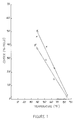
- Fig. 1 is a graph showing experimental results which indicate that HCTS yield increases with an increase in free ammonia concentration and with a decrease in temperature.
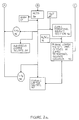
- Figs. 2 and 2A show a flow diagram of a preferred embodiment of the process of the present invention.
- the instant invention involves the preparation of HCTS precipitates and the use of HTCS precipitates to form copper compounds.
- the present invention also involves a process for the formation of copper compounds from copper-containing materials such as scrap, drosses, oxidic dust, ores and concentrates contaminated with nickel and zinc.
- the copper-containing materials are leached with an aqueous solution of cupric tetrammine sulfate having a pH greater than about 8.5 to produce cuprous ammine sulfate, which in turn is oxidized to cupric tetrammine sulfate.
- the cupric tetrammine sulfate solution is cooled and ammonia is added to provide free ammonia in solution.
- the cooling step and the addition of ammonia can be carried out simultaneously or in either order. The cooling and the excess free ammonia results in the precipitation of HCTS.
- cupric tetrammine sulfate solution can be obtained in a number of ways.
- copper-containing material can be leached with an acidic solution.
- the copper-containing leachate can be converted to a cupric tetrammine sulfate solution by raising the pH, for example by the addition of ammonia or ammonium hydroxide.
- HCTS form purple crystals having a needle shape.
- X-ray crystallography indicates that the HCTS solid primarily comprises the monohydrate. However, without wishing to be bound by theory, it is believed that the trihydrate can also be present.
- the HCTS solid is stable in an ammonia atmosphere, for example, in a sealed vessel containing ammonia gas. It is also stable in an atmosphere of cool, dry air. In moist or warm air, ammonia is slowly lost from HCTS resulting in the formation of tribasic copper sulfate.
- HCTS solid When the HCTS solid is contacted with water, it is solubilized until the copper concentration in the solution reaches about 90 g/l.
- Such a mixture of HCTS in equilibrium with cupric tetrammine sulfate provides a convenient, pure and concentrated source of cupric tetrammine sulfate which can be used for the direct production of other copper compounds without the additional step of purifying metallic copper.
- Copper compounds can also be directly produced from HCTS by heating. When heated to 300°C in air, ammonia and water are volatilized and anhydrous copper sulfate is produced. Alternately, when the HCTS solid is heated to a temperature in the range of about 38°C to about 93°C and washed with water to remove ammonium sulfate, tribasic copper sulfate is produced.
- cupric tetrammine sulfate (Cu(NH3)4SO4) solution is contacted with the scrap or other copper-containing material to solubilize the metallic copper therein.
- the cupric ion of cupric tetrammine sulfate oxidizes the copper present in the copper-containing material to form a copper ammine solution containing copper in the cuprous and cupric state.
- Cupric ammine sulfate has long been recognized as a desirable lixiviant for the dissolution of copper from copper-containing materials such as scrap, ores, dusts and drosses because very few metals form soluble ammines.
- cupric tetrammine sulfate can oxidize nickel and zinc in the copper-containing material to produce soluble nickel ammine sulfate and zinc ammine sulfate complexes. In the instant process, these contaminants can be readily separated from the copper in a later step.
- Contacting the copper-containing material with the cupric tetrammine sulfate solution can be accomplished in a digesting or leaching zone. Agitation or mixing can be provided to maximize leaching efficiency. The mixing can be accomplished in the leaching zone in any manner suitable for mixing said materials, for example, by recycling the leachate through the leaching zone, rotating the leaching zone vessel, or stirring the leaching zone with a mechanical mixer such as an impeller.
- the copper concentration of the solution should preferably be maintained near saturation, or in the range of about 90 to 100 grams per liter (g/l), because as the copper concentration decreases from saturation, the yield of HCTS decreases.
- the solution should contain ammonium sulfate ((NH4)2SO4) in an amount of at least about 50 g/l and preferably in the range of about 200 to 300 g/l. If less than 50 g/l ammonium sulfate is present in the solution and free ammonia concentration is greater than 60 g/l, copper hydroxides can precipitate. This is undesirable, because the copper hydrates can be in a non-crystalline, gelatinous form, which is hard to purify. Ammonium sulfate can be added to the leaching zone as necessary or desired to maintain the desired concentration.
- the solution should also contain "free" ammonia, i.e., ammonia not complexed to copper, zinc, nickel or other ammine forming metals, in a concentration of at least 40 g/l.
- the pH of the solution should be at least 8.5 and preferably is in the range of about 9 to about 11.
- Ammonia can be added to adjust the pH and free ammonia concentration by bubbling ammonia gas through the solution or by adding a solution of aqueous ammonia. Acceptable aqueous ammonia concentrations are from about 100 to about 270 grams ammonia per liter of water. Addition of aqueous ammonia is preferred because the heat liberated during dissolution of ammonia in water must be counteracted by additional cooling of the solution.
- the yield of HCTS has been found to increase with increased free ammonia concentration and decrease with increased temperature.
- the substantially decoppered residue is removed from the resulting cuprous ammine sulfate solution by any suitable separation means, such as filtration or centrifugation.
- cuprous ammine sulfate solution is then contacted with an oxidizing agent to convert the copper to the cupric state.
- an oxidizing agent capable of oxidizing cuprous ion to cupric ion can be used, for example, with air, enriched air or substantially pure oxygen.
- Oxidation using an oxygen-containing gas can be accomplished by passing the gaseous oxygen into the solution, e.g., by bubbling or sparging, or by agitation or vigorous stirring of the solution.
- the amount of oxygen necessary to convert one mole of cuprous ammine sulfate to cupric ammine sulfate is one-quarter mole of O2.
- the solution Prior to the addition of ammonia to the cupric tetrammine sulfate solution, the solution can be treated to reduce nickel and zinc content.
- the pH of a cupric tetrammine sulfate solution contaminated with nickel and zinc is adjusted from a pH in excess of about 8.5 to a pH between about 7.5 and about 8.0 to form a precipitate comprising nickel and zinc ammonium sulfate salts.
- the recovered precipitate can undergo nickel and zinc recovery processes, while the cupric tetrammine sulfate solution can be used either for production of cathode copper or the generation of HCTS according to the method of the present invention.
- This treatment can reduce the total nickel and zinc concentration in a cupric tetrammine sulfate solution to less than 2 g/l by the precipitation and removal of zinc and nickel ammonium sulfate salts.
- the cupric tetrammine sulfate solution is cooled to less than about 21°C, preferably to between about 0°C and about 4°C. It has been found that the yield of HCTS increases with decreasing temperature. Although temperatures of about 0°C to about 4°C are preferred, production of the HCTS is still possible at lower yields at temperatures as high as 21°C. Formation of HCTS at 21°C requires large amounts of free ammonia. It has also been found that at temperatures between about 0°C and about 4°C, the yield of HCTS increases with increasing free ammonia concentration.
- Sufficient ammonia should be added to the cupric tetrammine sulfate solution to raise the free ammonia concentration to at least about 80 g/l and preferably to at least about 100 g/l. If the free ammonia concentration is already above 80 g/l, no ammonia need be added. As indicated above, the yield of HCTS has been observed to increase with increasing free ammonia concentration.
- Ammonia can be provided by adding aqueous NH3 or by passing NH3 gas into the solution. As indicated hereinabove, the latter method has the disadvantage that the heat liberated during the dissolution of the ammonia must be counteracted by additional cooling of the solution.
- the steps of cooling the cupric ammine sulfate solution and the addition of ammonia to increase the free ammonia concentration to at least about 80 g/l can be performed simultaneously or in any order.
- HCTS solid HCTS
- cupric tetrammine sulfate undergoes crystallization to form HCTS; neither zinc nor nickel ammine sulfates form a precipitate in the pH range of about 8.5 to about 11.
- This selectivity in crystallization of only the mono- and trihydrates of cupric tetrammine sulfate allows for substantial separation of copper from zinc and nickel in a cupric tetrammine sulfate solution containing zinc and nickel ammine sulfates.
- the HCTS precipitate contains less than about 1% by weight zinc and substantially no nickel. This clean separation of copper in the form of HCTS from nickel and zinc ammine sulfates allows for the production of high purity copper compounds from HCTS due to the small amount of nickel and zinc contaminants associated with the HCTS.
- the solid HCTS is separated from the solution by any means suitable for separating a solid from a liquid, such as filtration or centrifugation. Remaining cupric tetrammine sulfate solution can be recycled to the leaching zone to solubilize more copper in the copper-containing material.
- the HCTS solid can be washed to remove adhering nickel and zinc contaminants. However, washing is optional; whether it is desirable depends on the original level of contamination in the cuprous ammine sulfate solution and on whether contaminating materials were removed from the cupric tetrammine sulfate solution prior to the precipitation of HCTS. Because nickel ammine sulfate is relatively stable, very little nickel contaminants co-precipitate with HCTS. However, approximately one weight percent zinc contaminants can precipitate in the HCTS and therefore washing may be desirable.
- the preferred solvent is an aqueous solution of ammonia containing at least about 100 g/l ammonia at about 0° to about 4°C.
- contaminants can be removed by washing the solid HCTS with a nonaqueous solvent such as ethylene glycol or mixtures of ethylene glycol and ethyl or methyl alcohols.
- the HCTS solid is heated to a temperature in the range of about 38° to about 93°C.
- Ammonia is volatilized from the HCTS and the residue is washed with water to remove (NH4)2SO4.
- the volatilized ammonia can be recycled to produce HCTS from the cupric tetrammine sulfate solution.
- cupric tetrammine sulfate solution copper compounds can be produced by way of the cupric tetrammine sulfate solution. This requires mixing HCTS with water to produce cupric tetrammine sulfate solution having a concentration as high as 90-100 g/l.
- H2SO4 is added to adjust the pH to a range from about pH 5.6 to about pH 7.0. Within this pH range, tribasic copper sulfate precipitates, and the precipitate can be separated by any means suitable for separating a solid from a liquid, such as centrifugation or filtration.
- the invention can be readily understood from a brief description of a preferred embodiment of the instant process as represented in the flow diagram of Figs. 2 and 2A.
- Low grade copper-containing material 2, such as breakage, and cupric tetrammine sulfate solution 6 are added to a digestor 4.
- the leaching process can be carried out in the digestor 4, which can be a vessel or vat with a means for agitation or mixing.
- the cupric tetrammine sulfate solution 6 selectively solubilizes only a few metals, including copper, zinc and nickel. It has been observed that the cupric tetrammine sulfate solution 6 does not attack steel provided that the free ammonia in solution is sufficient to produce a pH above 9.5.
- the digestor 4 can therefore be made of steel.
- cupric tetrammine sulfate solution 6 and copper-containing material 2 can be added if necessary to bring the ammonium sulfate concentration to at least about 50 g/l, and preferably to the range of about 200 to 300 g/l.
- Ammonia 20 can be added to raise the free ammonia concentration to at least 40 g/l and to raise the pH to at least about pH 8.5, and preferably to raise the pH to within the range from about pH 9 to about pH 11.
- Sufficient copper-containing material 2 is added to raise the copper concentration to saturation.
- the cupric ion of cupric tetrammine sulfate lixiviant 6 oxidizes metallic copper in the copper-containing material 2 to produce a cuprous diammine sulfate complex in solution 14.
- cuprous ammine sulfate 14 is oxidized by adding oxidant 16 to produce cupric tetrammine sulfate in solution 18.
- the oxidant 16 is preferably air sparged into the cuprous ammine sulfate solution 14 to produce a cupric tetrammine sulfate solution 18.
- the cupric tetrammine sulfate solution 18 is cooled to below 21°C, and preferably in the range of about 0°C to about 4°C.
- the zinc and nickel concentrations in the cupric tetrammine sulfate solution can be reduced 19, preferably by the method described above.
- Ammonia 20 is added, preferably as aqueous ammonia 20, unless the free ammonia concentration is already above 80 g/l.
- the addition of ammonia 20 results in the precipitation of HCTS in the cupric tetrammine sulfate solution 24.
- the solid HCTS 26 can be separated by any means suitable for separating a solid from a liquid, such as centrifugation or filtration.
- the filtrate, cupric tetrammine sulfate solution 6, can be recycled to the digestor 4.
- Recovered HCTS 26 can optionally be washed 27 to remove any adhering nickel and zinc.
- the HCTS can then be employed to generate additional useful compounds, such as anhydrous copper sulfate 28 and tribasic copper sulfate 30.
- Heating HCTS at about 300°C in air produces anhydrous copper sulfate 28 and releases NH3 gas 42, which can be recycled either to the digestor 4 or to form the precipitate HCTS 24 from cupric tetrammine sulfate 18.
- Heating HCTS at 38°C to 93°C produces tribasic copper sulfate 30 and liberates ammonia gas 44 which can be recycled.
- aqueous solution of 90 g/l cuprous ammine sulfate having a pH of pH 9.0, a free ammonia concentration of 40 g/l, and an ammonium sulfate concentration of 150 g/l was contacted with oxygen by sparging air through the solution.
- the solution was divided into samples A and B.
- Sample A was cooled to -1°C and 30% by weight aqueous ammonia was added to raise the free ammonia concentration to 80 g/l. More than 40% by weight of the copper present initially in sample A precipitated as HCTS.
- sample B was cooled to 10°C under otherwise identical conditions. Only 28% by weight of the copper precipitated as HCTS. This example illustrates that the yield of copper in the form of HCTS improves with cooler temperatures.
- aqueous solution containing 90 g/l cuprous ammine sulfate, having pH of pH 9.0, a free ammonia concentration of 40 g/l, and an ammonium sulfate concentration of 150 g/l was contacted with oxygen by bubbling air through the solution.
- the solution was cooled to 4°C and divided into samples C and D.
- sample C was added sufficient ammonia to raise the free ammonia concentration to 90 g/l.
- the resulting HCTS precipitate contained 35% by weight of the original copper present.
- the solution was cooled to a temperature of 21°C.
- Free ammonia concentration was increased to 100 g/l by the addition of 30% by weight aqueous ammonia.
- the resulting HCTS precipitate contained only 15% of the original copper present in the cupric tetrammine sulfate solution, due to the relatively high temperature.
- Copper scrap was leached in a digestor with an aqueous cupric tetrammine sulfate solution to produce a leachate containing 90 g/l copper, 200 g/l ammonium sulphate and 40 g/l free ammonia.
- the leachate was cooled to 2°C.
- the cooled leachate was divided into Samples E and F. 300 ml of aqueous ammonia containing 270 g/l ammonia was added to Sample E, while 150 ml of aqueous ammonia containing 270 g/l ammonia was added to Sample F, resulting in an increase in temperature. Formation of the solid HCTS was complete within ten minutes.
- the precipitate was removed by filtration and washed with 50% by volume ammonia solution having a temperature of 4°C
- Fig. 1 also demonstrates that as the temperature was lowered from 29°C to 3°C for sample E and sample F, the yield of HCTS increased.
- the individual lines represent the individual samples, with the plotted points representing the weight of the precipitate at successively cooler temperatures.
Landscapes
- Chemical & Material Sciences (AREA)
- Organic Chemistry (AREA)
- Engineering & Computer Science (AREA)
- Inorganic Chemistry (AREA)
- Manufacturing & Machinery (AREA)
- Materials Engineering (AREA)
- Mechanical Engineering (AREA)
- Metallurgy (AREA)
- Manufacture And Refinement Of Metals (AREA)
Claims (4)
- Procédé de purification du cuivre, utile pour séparer le cuivre dans des matériaux contenant du cuivre contaminé avec du nickel et du zinc, dans lequel ledit procédé comprend les étapes de :(a) combiner une quantité suffisante de solution de sulfate tétrammine cuivrique, de sulfate d'ammonium, d'ammoniac et desdits matériaux contenant du cuivre pour produire un extrait de sulfate ammine cuivreux qui a une concentration en sulfate d'ammonium d'au moins 50 g/l, une concentration en ammoniac libre d'au moins 40 g/l, un pH dans l'intervalle d'environ pH 8,5 à environ pH 11, une concentration en cuivre d'environ 40 g/l à environ 100 g/l ;(b) mettre en contact ledit extrait de sulfate ammine cuivrique avec un oxydant pour produire un extrait de sulfate tétrammine cuivrique ;(c) refroidir ledit extrait de sulfate tétrammine cuivre à une température inférieure à 21°C et ajouter suffisamment d'ammoniac audit extrait de sulfate tétrammine cuivrique pour augmenter la concentration en ammoniac libre à au moins 80 g/l et précipiter les hydrates de sulfate tétrammine cuivrique ; et(d) séparer lesdits hydrates précipités de sulfate tétrammine cuivrique dudit extrait refroidi de sulfate tétrammine cuivrique.
- Procédé selon la revendication 1, qui comprend en outre l'étape d'éliminer les contaminants nickel ou zinc dudit précipité séparé en lavant ledit précipité séparé avec une solution aqueuse d'ammoniac.
- Procédé de la revendication 1 ou de la revendication 2 dans lequel ladite concentration en sulfate d'ammonium est comprise entre environ 200 g/l et environ 300 g/l.
- Procédé selon l'une quelconque des revendications 1 à 3, dans lequel on refroidit ledit extrait de sulfate tétrammine cuivrique à une température comprise entre environ 0°C et environ 4°C.
Applications Claiming Priority (2)
| Application Number | Priority Date | Filing Date | Title |
|---|---|---|---|
| US07/530,824 US5173276A (en) | 1990-05-30 | 1990-05-30 | Method for recovery of copper from copper-containing materials |
| US530824 | 1990-05-30 |
Publications (2)
| Publication Number | Publication Date |
|---|---|
| EP0459765A1 EP0459765A1 (fr) | 1991-12-04 |
| EP0459765B1 true EP0459765B1 (fr) | 1995-04-26 |
Family
ID=24115137
Family Applications (1)
| Application Number | Title | Priority Date | Filing Date |
|---|---|---|---|
| EP91304821A Expired - Lifetime EP0459765B1 (fr) | 1990-05-30 | 1991-05-29 | Procédé pour la récupération du cuivre à partir de matériaux contenant du cuivre |
Country Status (4)
| Country | Link |
|---|---|
| US (1) | US5173276A (fr) |
| EP (1) | EP0459765B1 (fr) |
| CA (1) | CA2043473A1 (fr) |
| DE (1) | DE69109184D1 (fr) |
Families Citing this family (4)
| Publication number | Priority date | Publication date | Assignee | Title |
|---|---|---|---|---|
| EP0564401A3 (en) * | 1992-03-30 | 1994-06-01 | Dowa Iron Powder Co Ltd | Method of selective recovery of ferrous and nonferrous metals from industrial wastes and scrap home electric appliances |
| RU2013112337A (ru) * | 2010-08-20 | 2014-09-27 | ДАУ АГРОСАЙЕНСИЗ ЭлЭлСи | Обладающие синергическим действием фунгицидные и альгицидные композиции, включающие гетероциклоилгидразоны 2-гидроксифенилальдегида и 2-гидроксифенилкетона и медь |
| FR3118062B1 (fr) * | 2020-12-21 | 2023-07-21 | Leo Viridis | Procédé et installation de traitement de déchets contenant des composés métalliques |
| CN116274305A (zh) * | 2023-03-22 | 2023-06-23 | 鲁西化工集团股份有限公司硅化工分公司 | 一种有机硅水解渣无害化处置的系统及方法 |
Family Cites Families (5)
| Publication number | Priority date | Publication date | Assignee | Title |
|---|---|---|---|---|
| US2647830A (en) * | 1949-12-17 | 1953-08-04 | Chemical Construction Corp | Preparation of pure copper metal from copper-bearing scrap |
| US3197274A (en) * | 1962-03-05 | 1965-07-27 | Gen Mills Inc | Liquid-liquid recovery of metal values using hydroxyamine extractants |
| US3244873A (en) | 1963-12-13 | 1966-04-05 | Leutheuser Andrew | Extension light |
| US3971652A (en) | 1972-02-21 | 1976-07-27 | Metallurgical Development Company | Ammoniacal extraction of copper from metallic materials |
| US3967957A (en) * | 1973-03-26 | 1976-07-06 | Continental Oil Company | Aqueous ammonia oxidative leach and recovery of metal values |
-
1990
- 1990-05-30 US US07/530,824 patent/US5173276A/en not_active Expired - Lifetime
-
1991
- 1991-05-29 DE DE69109184T patent/DE69109184D1/de not_active Expired - Lifetime
- 1991-05-29 CA CA002043473A patent/CA2043473A1/fr not_active Abandoned
- 1991-05-29 EP EP91304821A patent/EP0459765B1/fr not_active Expired - Lifetime
Also Published As
| Publication number | Publication date |
|---|---|
| CA2043473A1 (fr) | 1991-12-01 |
| EP0459765A1 (fr) | 1991-12-04 |
| US5173276A (en) | 1992-12-22 |
| DE69109184D1 (de) | 1995-06-01 |
Similar Documents
| Publication | Publication Date | Title |
|---|---|---|
| US8834818B2 (en) | Treatment of indium gallium alloys and recovery of indium and gallium | |
| US4123499A (en) | Recovering metal values from marine manganese nodules | |
| CA1119817A (fr) | Methode de separation du cuivre metallique | |
| US3985553A (en) | Process for the recovery of copper and ammonium sulphate from copper-bearing mineral sulphide ores or concentrates | |
| US5290338A (en) | Antimony separation process | |
| CA1098481A (fr) | Extraction de zinc par lixiviation au chlore | |
| JP5062111B2 (ja) | 脱銅スライムからの高純度亜砒酸水溶液の製造方法 | |
| CA1335332C (fr) | Separation et recuperation du nickel et du cobalt dans des systemes ammoniacaux | |
| US3972711A (en) | Cuprous chloride recovery process | |
| US4013457A (en) | Process for the recovery of cuprous chloride in the presence of metal impurities | |
| CA1110076A (fr) | Lessivage de metaux a partir de concentres a l'aide de bioxyde d'azote dans des acides | |
| US5173276A (en) | Method for recovery of copper from copper-containing materials | |
| US4544460A (en) | Removal of potassium chloride as a complex salt in the hydrometallurgical production of copper | |
| US2959467A (en) | Process for treating arseniuretted or sulfarsenidic cobalt, nickel or cobalt and nickel ores | |
| US5332560A (en) | Process for the removal of zinc and nickel from copper ammine sulfate solutions | |
| EP1507878B1 (fr) | Extraction hydrometallurgique de metaux effectuee au moyen de chlorure | |
| US4599222A (en) | Recovery of tungsten and rhenium | |
| US4314976A (en) | Purification of nickel sulfate | |
| CA1242864A (fr) | Methode d'extraction du trioxyde d'arsenic, des gaz d'echappement resultant de la fusion des minerais | |
| US4401632A (en) | Recovery of arsenic from flue dust | |
| US6495024B1 (en) | Method for the removal of arsenic from sulfuric acid solution | |
| US4369164A (en) | Recovery of copper from arsenical drosses by ammonium arsenate leach | |
| US4888207A (en) | Recovery of arsenic from ores and concentrates | |
| JPS6035415B2 (ja) | 銅および砒素の分離方法 | |
| WO2005007900A1 (fr) | Procede de reconcentration d'un minerai ou d'un concentre |
Legal Events
| Date | Code | Title | Description |
|---|---|---|---|
| PUAI | Public reference made under article 153(3) epc to a published international application that has entered the european phase |
Free format text: ORIGINAL CODE: 0009012 |
|
| AK | Designated contracting states |
Kind code of ref document: A1 Designated state(s): BE DE ES FR GB IT |
|
| 17P | Request for examination filed |
Effective date: 19920519 |
|
| 17Q | First examination report despatched |
Effective date: 19931203 |
|
| GRAA | (expected) grant |
Free format text: ORIGINAL CODE: 0009210 |
|
| AK | Designated contracting states |
Kind code of ref document: B1 Designated state(s): BE DE ES FR GB IT |
|
| PG25 | Lapsed in a contracting state [announced via postgrant information from national office to epo] |
Ref country code: IT Free format text: LAPSE BECAUSE OF FAILURE TO SUBMIT A TRANSLATION OF THE DESCRIPTION OR TO PAY THE FEE WITHIN THE PRESCRIBED TIME-LIMIT;WARNING: LAPSES OF ITALIAN PATENTS WITH EFFECTIVE DATE BEFORE 2007 MAY HAVE OCCURRED AT ANY TIME BEFORE 2007. THE CORRECT EFFECTIVE DATE MAY BE DIFFERENT FROM THE ONE RECORDED. Effective date: 19950426 Ref country code: ES Free format text: THE PATENT HAS BEEN ANNULLED BY A DECISION OF A NATIONAL AUTHORITY Effective date: 19950426 |
|
| PGFP | Annual fee paid to national office [announced via postgrant information from national office to epo] |
Ref country code: FR Payment date: 19950524 Year of fee payment: 5 |
|
| REF | Corresponds to: |
Ref document number: 69109184 Country of ref document: DE Date of ref document: 19950601 |
|
| PGFP | Annual fee paid to national office [announced via postgrant information from national office to epo] |
Ref country code: BE Payment date: 19950712 Year of fee payment: 5 |
|
| PG25 | Lapsed in a contracting state [announced via postgrant information from national office to epo] |
Ref country code: DE Effective date: 19950727 |
|
| ET | Fr: translation filed | ||
| PLBE | No opposition filed within time limit |
Free format text: ORIGINAL CODE: 0009261 |
|
| STAA | Information on the status of an ep patent application or granted ep patent |
Free format text: STATUS: NO OPPOSITION FILED WITHIN TIME LIMIT |
|
| 26N | No opposition filed | ||
| PG25 | Lapsed in a contracting state [announced via postgrant information from national office to epo] |
Ref country code: BE Effective date: 19960531 |
|
| BERE | Be: lapsed |
Owner name: CATO RESEARCH CORP. Effective date: 19960531 |
|
| PG25 | Lapsed in a contracting state [announced via postgrant information from national office to epo] |
Ref country code: FR Effective date: 19970131 |
|
| REG | Reference to a national code |
Ref country code: FR Ref legal event code: ST |
|
| PGFP | Annual fee paid to national office [announced via postgrant information from national office to epo] |
Ref country code: GB Payment date: 20010523 Year of fee payment: 11 |
|
| REG | Reference to a national code |
Ref country code: GB Ref legal event code: IF02 |
|
| PG25 | Lapsed in a contracting state [announced via postgrant information from national office to epo] |
Ref country code: GB Free format text: LAPSE BECAUSE OF NON-PAYMENT OF DUE FEES Effective date: 20020529 |
|
| GBPC | Gb: european patent ceased through non-payment of renewal fee |
Effective date: 20020529 |