EP0459880A1 - Apparat zur Erzeugung von Kombinationen von numerischen Werten und Verfahren zur Ausführung - Google Patents
Apparat zur Erzeugung von Kombinationen von numerischen Werten und Verfahren zur Ausführung Download PDFInfo
- Publication number
- EP0459880A1 EP0459880A1 EP91401352A EP91401352A EP0459880A1 EP 0459880 A1 EP0459880 A1 EP 0459880A1 EP 91401352 A EP91401352 A EP 91401352A EP 91401352 A EP91401352 A EP 91401352A EP 0459880 A1 EP0459880 A1 EP 0459880A1
- Authority
- EP
- European Patent Office
- Prior art keywords
- memory
- value
- combination
- read
- numerical value
- Prior art date
- Legal status (The legal status is an assumption and is not a legal conclusion. Google has not performed a legal analysis and makes no representation as to the accuracy of the status listed.)
- Withdrawn
Links
Images

Classifications
-
- G—PHYSICS
- G06—COMPUTING OR CALCULATING; COUNTING
- G06F—ELECTRIC DIGITAL DATA PROCESSING
- G06F7/00—Methods or arrangements for processing data by operating upon the order or content of the data handled
- G06F7/76—Arrangements for rearranging, permuting or selecting data according to predetermined rules, independently of the content of the data
Definitions
- the present invention relates to a device for generating combinations of numerical values and a method for implementing the device. It applies in particular to the generation of numerical values representing faulty components during the simulation of failures of complex devices.
- a logic simulator allows the study of the consequences of the failure of one or more components involved in the constitution of complex systems, such as safety devices. It gives the combinations of failing components that cause the overall system to fail.
- a numerical value is assigned to each component.
- a generator of combinations of digital values connected to an input of the simulator delivers in turn all the combinations of possible digital values at a given order; these combinations correspond to the components that have failed simultaneously.
- the present invention aims to allow the realization of a generator of combinations of digital values simple to implement and comprising only a few components.
- Another object of the invention is to allow generation of these combinations quickly and inexpensively.
- the invention recommends the storage in memory of an initial combination and the deduction according to a determined criterion of the values of the following combination as and when the initial values are read.
- the deduced values are written into memory to replace the initial values read.
- Each new combination is then deduced from the previous one according to the same criterion until all the combinations in a given order have been scanned.
- each new combination is deduced from the previous combination during the reading of the latter.
- the number of numeric values to be stored does not exceed the total number of values of a combination in a given order.
- the means for generating place numbers is a second memory comprising place numbers recorded at successive addresses, the succession of these addresses corresponding to the succession of addresses of the numerical values in the first memory.
- Registration of numerical values is ordered; on the other hand, the addresses of the values in memory are successive and a place number is assigned to each value. Place numbers are also stored in memory at successive addresses. We can thus link each value to its place number by making the link between the addresses.
- the numerical values and the fine code being recorded in a first zone Z1 of the first memory
- the second memory corresponds to a second zone Z2 of the first memory.
- the first comparison means include: a register capable of possibly incrementing its content, this register being connected by an output to a first input of a comparator capable of comparing the content of the register with a comparison element delivered on a second input of the comparator and of delivering a comparison signal on an output connected to an input of the control means.
- a first comparison element consists of a maximum digital value and a second comparison element consists of a digital value recorded in the first memory and having an address following that of said digital value read.
- the device comprises a third memory connected by an output to an input of the first comparison means and by inputs to outputs of the control means and in which said maximum value is recorded at all the addresses.
- this third memory is a third zone Z3 of the first memory.
- the device comprises a second comparison means capable of comparing said digital value read to said end code and of delivering on an output connected to an input of the control means an end of combination signal.
- This end of combination signal informs the user system of the numerical values that the reading of a combination is finished and go to the next combination.
- the first comparison means comprising a register
- said second comparison means consists of this register
- the device allows the scanning of possible combinations at any order. Once all the combinations have been reviewed, a means of testing a stop criterion delivers a stop signal for stopping the generation of combinations. This makes it possible to avoid the generation of additional combinations which would be combinations comprising non useful numerical values, that is to say greater than the maximum value which one has set.
- the initial combination is composed of the p first possible numerical values, p being the order of the combination.
- said control means comprise a processor connected to a counter.
- processor By processor, we must understand processor equipped with its usual peripherals and in particular a clock allowing the synchronization of all the elements of the device.
- these control means can be a conventional specialized micromachine making it possible to accelerate the various operations.
- the counter delivers an address signal which allows addressing of the memory.
- each digital value read is compared to a determined maximum digital value, if the digital value read is equal to the maximum digital value, then the generation of combinations is stopped.
- each numerical value is assigned a place number of value equal to the numerical value considered.
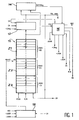
- the device comprises three memories of the direct access memory (RAM) type; these three memories are in fact three zones Z1, Z2, Z3 of a memory 10 of RAM type whose addresses are for example coded on 10 bits A9A8 ... A0.
- RAM direct access memory
- Comparison means are formed by a register 12 consisting for example of three circuits 74 LS 169 sold for example by the Texas Instrument Company connected in parallel, and by a comparator 14.
- An output of memory 10 is connected to an input of register 12 and to an input of comparator 14.
- An output of register 12 is connected to a second input of comparator 14 and to an input of memory 10.
- Control means connected to the various elements of the device make it possible to manage the operation of the system.
- These control means essentially comprise a processor 16, for example of the microprocessor type, provided with usual peripherals, in particular a clock (not shown) and connected to a counter 18 which delivers an address signal AD on an output connected to an input of memory 10. This address signal corresponds to bits A7-A0 of the address.
- bits A9A8 which determine the addressing area are delivered on an output of the processor 16.
- the processor 16 is also connected to a computer (not shown) which allows the introduction of data prior to the start of the generation of combinations. These data are for example the maximum value of the numerical values and the first combination of the current order.
- the numerical values of a combination recorded in memory 10 are read one after the other; after each reading, a new combination of numeric values is deduced. The latter takes the place in memory 10 of the combination of numerical values which has just been read. Each combination of numeric values can be read multiple times before the next combination is generated.
- the processor 16 determines an initial combination composed for example of the p first values, in ascending order. This combination is terminated by an end code T. T, for example chosen equal to the largest value that register 12 can contain.
- the initial combination followed by the end code is recorded in ascending order in the zone Z1 of the memory 10 at successive addresses.
- the processor 16 successively delivers on an output a signal DW consisting of the digital values to be recorded. It also delivers a clock signal CK, the signal A9A8 specifying the area to be addressed and an increment signal + 1ADR.
- the successive CK clock pulses do not modify the state of the counter 18.
- a control signal such as the signal + 1ADR, or signals such as RESET or -1ADR received simultaneously with CK respectively allow the incrementation of the counter 18, resetting it or decreasing it.
- the counter 18 delivers an address signal AD on an output connected to an input of the memory 10.
- AD indicates the address of the zone Z1 where the digital value to be recorded is contained.
- the recording is controlled by an R / W signal delivered by the processor 16 on an output connected to an input of the memory 10.
- Each new combination is determined when reading the previous combination.
- the counter 18 is reset to zero thanks to a RESET signal delivered by the processor 16 on an output connected to an input of the counter 18. Then, the counter 18 delivers the signal AD determining the address of the numerical value to be read, A9A8 being positioned at 00.
- the designated numerical value is recorded by the register 12.
- the recording is controlled by the processor 16 which delivers a load signal CH on an output connected to an input of the register 12.
- the clock signal CK delivered by the processor 16 allows synchronize addressing and reading from memory 10.
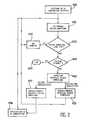
- the register 12 performs a comparison between the recorded digital value and the value of the end code T (step 120, fig.2). In the event of a tie, register 12 delivers an end of combination signal FDC on an output connected to an input of the processor 16. The processor 16 delivers a reset signal RESET from the counter 18 (step 130, FIG. 2) and the reading of a new combination begins.
- the recorded digital value is not equal to the end code, this is available in the form of an output signal VN on an output of register 12 and is used for example by a simulation system (not shown).
- the counter 18 is then incremented so as to read the next value of the combination and so on until finding the end code T.
- step 140 a stop criterion is tested (step 140). This test makes it possible to determine if all the combinations at a given order have been generated and if so to stop the generation of new combinations. Thus, step 140 is linked to step 150 at the end of generation.
- the verification of the stopping criterion comprises step 141.
- step 141 the digital value (VAL.NUM.) Recorded in register 12 is compared with a maximum digital value (VAL.MAX). For a use of the combination in the simulation of failures, the maximum value is equal to the number of components of the complex system.
- step 141 the processor 16 orders the delivery to the output of memory 10 of the maximum value recorded in the zone Z3 (A9A8 are equal to 10) at the address indicated by the counter 18.
- the comparator 14 compares the digital value available at the output of the register 12 and that available at the output of the memory 10.
- step 160 In the case where the numerical value is not equal to the maximum value, one passes to step 160 of deduction of a new numerical value.
- the determination of the new numerical value is carried out on the basis of the comparison between the numerical value read in step 110, FIG. 2 and a comparison element. According to the calculation criterion adopted in this realization, several cases are to be taken into consideration.
- the comparison element is equal to the numerical value occupying in the zone Z1 the address succeeding to that of the numerical value read in step 110. The comparison between these two values makes it possible to determine whether they are consecutive or not.
- the new numerical value is equal to the place number occupied in the zone Z1 by the numerical value read in step 110.
- the new numerical value is equal to the numerical value read in step 110 increased by 1 and the new combination is ready, the following numerical values are not explored.
- processor 16 delivers an increment signal + 1Reg which makes it possible to increase by 1 the value contained in register 12 (step 161, fig.3). This value increased by 1 is delivered on an output of the register 12 connected to an input of the comparator 14.
- the processor then controls the delivery to an output of memory 10 of the digital value occupying the following address in zone Z1 by an incrementation of counter 18.
- This output of memory 10 is connected to a second input of comparator 14.
- This ci performs step 162 of comparison between the values delivered on its two comparison inputs.
- the processor 16 then controls the operations which make it possible to equal the new numerical value with the place number of the value read in step 110.
- the processor 16 commands the decrementation of the counter 18 by an order -1ADR and equal A9A8 to the values 01, which has the effect of addressing the zone Z2 of the memory 10.
- the processor 16 commands the delivery of the place number contained at the designated address of the zone Z2 and its registration in the register 12 (step 163, fig. 3).
- step 170 the new digital value is recorded at the address of the digital value read in step 110. This operation is controlled by the processor 16.
- the new value which is equal to the numerical value read in step 110 increased by 1 is available at the output of register 12.
- the processor controls the decrementation of counter 18 by an order -1ADR and carries A9A8 to 00 while sending an order of writing which results in the recording of the numerical value read plus one instead of the numerical value read (steps 164, 172, fig. 2, 3).
- the new combination is ready from this moment: the following numerical values remain unchanged.
- a step of operating the new combination (step 174, fig. 2) precedes the resumption of the steps from the reference 110.
- 2 is the first value read (step 110, fig. 2); it occupies address 0 in zone Z1.
- 2 is not equal to the chosen end code equal to the largest value that register 12 can contain, for example 4095 (step 120, fig.2).
- 2 is also not equal to the maximum value, 5 in this example (step 140, fig. 2). Consequently, 2 is increased by 1, which gives 3 (step 161, fig. 3). This latter value is compared with the value occupying address 1 in zone Z1 (step 162, fig. 3). The two values are equal, indeed 2 and 3 are consecutive.
- the seat number 1 assigned to the value 2 is registered at the address 0 of the zone Z1 (steps 163, fig. 3 and 170, fig. 2).
- the successive combinations are: 1,2,3; 1,2,4; 1,3,4; 2,3,4; 1,2,5; 1,3.5; 2,3,5; 1,4.5; 2,4,5; 3,4,5.
- the last combination is formed by the three largest possible values. The stop criterion is satisfied only at the last combination. It is indeed necessary that the value 5 is loaded into the register during the determination of the following combination so that the processor recognizes that the scanning is finished. And this is only checked when the current combination is the last.
- the invention is in no way limited to the embodiments more particularly described and represented; on the contrary, it admits all variants.
- the numerical values can optionally be classified in descending order, or else the initial combination can be carried out by the p largest values recorded in ascending order or not, p being the order of the combination.
- the criterion for deducing the combination following a combination being read depends on these choices.
Landscapes
- Engineering & Computer Science (AREA)
- Theoretical Computer Science (AREA)
- Physics & Mathematics (AREA)
- General Engineering & Computer Science (AREA)
- General Physics & Mathematics (AREA)
- Executing Machine-Instructions (AREA)
Applications Claiming Priority (2)
| Application Number | Priority Date | Filing Date | Title |
|---|---|---|---|
| FR9006636 | 1990-05-29 | ||
| FR9006636A FR2662811B1 (fr) | 1990-05-29 | 1990-05-29 | Dispositif pour la generation de combinaisons de valeurs numeriques et procede pour sa mise en óoeuvre. |
Publications (1)
| Publication Number | Publication Date |
|---|---|
| EP0459880A1 true EP0459880A1 (de) | 1991-12-04 |
Family
ID=9397032
Family Applications (1)
| Application Number | Title | Priority Date | Filing Date |
|---|---|---|---|
| EP91401352A Withdrawn EP0459880A1 (de) | 1990-05-29 | 1991-05-27 | Apparat zur Erzeugung von Kombinationen von numerischen Werten und Verfahren zur Ausführung |
Country Status (2)
| Country | Link |
|---|---|
| EP (1) | EP0459880A1 (de) |
| FR (1) | FR2662811B1 (de) |
Citations (1)
| Publication number | Priority date | Publication date | Assignee | Title |
|---|---|---|---|---|
| EP0058108A1 (de) * | 1981-01-26 | 1982-08-18 | Commissariat à l'Energie Atomique | Generator für kombinierte logische Signale |
-
1990
- 1990-05-29 FR FR9006636A patent/FR2662811B1/fr not_active Expired - Lifetime
-
1991
- 1991-05-27 EP EP91401352A patent/EP0459880A1/de not_active Withdrawn
Patent Citations (1)
| Publication number | Priority date | Publication date | Assignee | Title |
|---|---|---|---|---|
| EP0058108A1 (de) * | 1981-01-26 | 1982-08-18 | Commissariat à l'Energie Atomique | Generator für kombinierte logische Signale |
Non-Patent Citations (1)
| Title |
|---|
| BIT vol. 26, 1986, pages 2 - 6; CHAN ET AL: 'Generating combinations in parallel ' * |
Also Published As
| Publication number | Publication date |
|---|---|
| FR2662811A1 (fr) | 1991-12-06 |
| FR2662811B1 (fr) | 1992-08-14 |
Similar Documents
| Publication | Publication Date | Title |
|---|---|---|
| EP0013347A1 (de) | Zwischenspeichervorrichtung zur Übertragung von Daten zwischen einem Prozessor und einer Eingabe/Ausgabe-Einrichtung | |
| CH616252A5 (de) | ||
| CH629319A5 (fr) | Installation de traitement de donnees. | |
| FR2487561A1 (fr) | Systeme de memoire dynamique | |
| FR2697663A1 (fr) | Circuit de test de mémoire. | |
| FR2528195A1 (fr) | Systeme de communication entre ordinateurs | |
| BE897587A (fr) | Circuit parallele de controle de redondance cyclique | |
| FR2720174A1 (fr) | Procédé pour tester le déroulement d'un programme d'instructions exécutées par un circuit intégré spécialisé, et circuit intégré spécialisé s'y rapportant. | |
| FR2588966A1 (fr) | Circuit et procede de diagnostic utilisant des comparaisons de donnees d'essai bidirectionnelles | |
| FR2632092A1 (fr) | Circuit de conditionnement d'ecriture d'antememoire retarde pour un systeme de microcalculateur a bus double comprenant une unite 80386 et une unite 82385 | |
| EP0394115B1 (de) | Vorrichtung zur Speicherzugriffsbeschleunigung in einer Datenverarbeitungsanlage | |
| FR2595474A1 (fr) | Dispositif de controle et de verification du fonctionnement de blocs internes a un circuit integre | |
| EP0459880A1 (de) | Apparat zur Erzeugung von Kombinationen von numerischen Werten und Verfahren zur Ausführung | |
| EP0043745B1 (de) | Digitales Datenverarbeitungs- und Speichersystem, insbesondere für ein Tomodensitometer | |
| FR2759178A1 (fr) | Circuit de gestion de memoire dans un environnement multi-utilisateurs avec requete et priorite d'acces | |
| FR2766642A1 (fr) | Procede et dispositif de reception de messages numeriques assurant un pretraitement de ces messages configurable dynamiquement | |
| FR2488420A1 (fr) | Dispositif d'obtention de l'histogramme des distances dans le temps entre des evenements successifs | |
| EP0635786B1 (de) | Einrichtung zur Speicherung von Daten | |
| EP1471435A1 (de) | Verfahren zur Ausführung von simultanen Tasks von einem von einem zentralen Prozessor verwalteten Subsystem | |
| FR2475763A1 (fr) | Processeur numerique a structure pipeline | |
| EP0407295B1 (de) | Verfahren zur Beobachtung eines in ein Rechnersystem geladenen Programms und Vorrichtung zur Durchführung des besagten Verfahrens | |
| FR2717921A1 (fr) | Dispositif de gestion de conflit d'accès entre un CPU et des mémoires. | |
| EP0449190B1 (de) | Programmschalteinrichtung zur Erzeugung von binären Ausgangssignalen als Reaktion auf ein Taktsignal | |
| FR2629230A1 (fr) | Dispositif de controle et d'acquisition de donnees a grande vitesse | |
| EP0264325B1 (de) | Automat für das Kompatibelmachen eines Prozessors mit dem Bus eines anderen Prozessors |
Legal Events
| Date | Code | Title | Description |
|---|---|---|---|
| PUAI | Public reference made under article 153(3) epc to a published international application that has entered the european phase |
Free format text: ORIGINAL CODE: 0009012 |
|
| AK | Designated contracting states |
Kind code of ref document: A1 Designated state(s): BE DE GB IT NL SE |
|
| 17P | Request for examination filed |
Effective date: 19920511 |
|
| 17Q | First examination report despatched |
Effective date: 19950403 |
|
| STAA | Information on the status of an ep patent application or granted ep patent |
Free format text: STATUS: THE APPLICATION IS DEEMED TO BE WITHDRAWN |
|
| 18D | Application deemed to be withdrawn |
Effective date: 19950814 |