EP0460251A1 - Herstellverfahren für einen Leistungs-MISFET - Google Patents
Herstellverfahren für einen Leistungs-MISFET Download PDFInfo
- Publication number
- EP0460251A1 EP0460251A1 EP90110611A EP90110611A EP0460251A1 EP 0460251 A1 EP0460251 A1 EP 0460251A1 EP 90110611 A EP90110611 A EP 90110611A EP 90110611 A EP90110611 A EP 90110611A EP 0460251 A1 EP0460251 A1 EP 0460251A1
- Authority
- EP
- European Patent Office
- Prior art keywords
- semiconductor body
- transistor cells
- layer
- covered
- oxide layer
- Prior art date
- Legal status (The legal status is an assumption and is not a legal conclusion. Google has not performed a legal analysis and makes no representation as to the accuracy of the status listed.)
- Granted
Links
Images
Classifications
-
- H—ELECTRICITY
- H10—SEMICONDUCTOR DEVICES; ELECTRIC SOLID-STATE DEVICES NOT OTHERWISE PROVIDED FOR
- H10D—INORGANIC ELECTRIC SEMICONDUCTOR DEVICES
- H10D62/00—Semiconductor bodies, or regions thereof, of devices having potential barriers
- H10D62/10—Shapes, relative sizes or dispositions of the regions of the semiconductor bodies; Shapes of the semiconductor bodies
- H10D62/102—Constructional design considerations for preventing surface leakage or controlling electric field concentration
- H10D62/103—Constructional design considerations for preventing surface leakage or controlling electric field concentration for increasing or controlling the breakdown voltage of reverse-biased devices
- H10D62/105—Constructional design considerations for preventing surface leakage or controlling electric field concentration for increasing or controlling the breakdown voltage of reverse-biased devices by having particular doping profiles, shapes or arrangements of PN junctions; by having supplementary regions, e.g. junction termination extension [JTE]
- H10D62/106—Constructional design considerations for preventing surface leakage or controlling electric field concentration for increasing or controlling the breakdown voltage of reverse-biased devices by having particular doping profiles, shapes or arrangements of PN junctions; by having supplementary regions, e.g. junction termination extension [JTE] having supplementary regions doped oppositely to or in rectifying contact with regions of the semiconductor bodies, e.g. guard rings with PN or Schottky junctions
-
- H—ELECTRICITY
- H10—SEMICONDUCTOR DEVICES; ELECTRIC SOLID-STATE DEVICES NOT OTHERWISE PROVIDED FOR
- H10D—INORGANIC ELECTRIC SEMICONDUCTOR DEVICES
- H10D30/00—Field-effect transistors [FET]
- H10D30/01—Manufacture or treatment
- H10D30/021—Manufacture or treatment of FETs having insulated gates [IGFET]
- H10D30/028—Manufacture or treatment of FETs having insulated gates [IGFET] of double-diffused metal oxide semiconductor [DMOS] FETs
- H10D30/0291—Manufacture or treatment of FETs having insulated gates [IGFET] of double-diffused metal oxide semiconductor [DMOS] FETs of vertical DMOS [VDMOS] FETs
- H10D30/0295—Manufacture or treatment of FETs having insulated gates [IGFET] of double-diffused metal oxide semiconductor [DMOS] FETs of vertical DMOS [VDMOS] FETs using recessing of the source electrodes
-
- H—ELECTRICITY
- H10—SEMICONDUCTOR DEVICES; ELECTRIC SOLID-STATE DEVICES NOT OTHERWISE PROVIDED FOR
- H10D—INORGANIC ELECTRIC SEMICONDUCTOR DEVICES
- H10D30/00—Field-effect transistors [FET]
- H10D30/60—Insulated-gate field-effect transistors [IGFET]
- H10D30/64—Double-diffused metal-oxide semiconductor [DMOS] FETs
- H10D30/66—Vertical DMOS [VDMOS] FETs
- H10D30/665—Vertical DMOS [VDMOS] FETs having edge termination structures
-
- H—ELECTRICITY
- H10—SEMICONDUCTOR DEVICES; ELECTRIC SOLID-STATE DEVICES NOT OTHERWISE PROVIDED FOR
- H10D—INORGANIC ELECTRIC SEMICONDUCTOR DEVICES
- H10D62/00—Semiconductor bodies, or regions thereof, of devices having potential barriers
- H10D62/10—Shapes, relative sizes or dispositions of the regions of the semiconductor bodies; Shapes of the semiconductor bodies
- H10D62/102—Constructional design considerations for preventing surface leakage or controlling electric field concentration
- H10D62/112—Constructional design considerations for preventing surface leakage or controlling electric field concentration for preventing surface leakage due to surface inversion layers, e.g. by using channel stoppers
-
- H—ELECTRICITY
- H10—SEMICONDUCTOR DEVICES; ELECTRIC SOLID-STATE DEVICES NOT OTHERWISE PROVIDED FOR
- H10D—INORGANIC ELECTRIC SEMICONDUCTOR DEVICES
- H10D64/00—Electrodes of devices having potential barriers
- H10D64/111—Field plates
-
- H—ELECTRICITY
- H10—SEMICONDUCTOR DEVICES; ELECTRIC SOLID-STATE DEVICES NOT OTHERWISE PROVIDED FOR
- H10D—INORGANIC ELECTRIC SEMICONDUCTOR DEVICES
- H10D64/00—Electrodes of devices having potential barriers
- H10D64/20—Electrodes characterised by their shapes, relative sizes or dispositions
- H10D64/23—Electrodes carrying the current to be rectified, amplified, oscillated or switched, e.g. sources, drains, anodes or cathodes
- H10D64/251—Source or drain electrodes for field-effect devices
- H10D64/252—Source or drain electrodes for field-effect devices for vertical or pseudo-vertical devices
- H10D64/2527—Source or drain electrodes for field-effect devices for vertical or pseudo-vertical devices for vertical devices wherein the source or drain electrodes are recessed in semiconductor bodies
-
- H—ELECTRICITY
- H10—SEMICONDUCTOR DEVICES; ELECTRIC SOLID-STATE DEVICES NOT OTHERWISE PROVIDED FOR
- H10D—INORGANIC ELECTRIC SEMICONDUCTOR DEVICES
- H10D64/00—Electrodes of devices having potential barriers
- H10D64/20—Electrodes characterised by their shapes, relative sizes or dispositions
- H10D64/23—Electrodes carrying the current to be rectified, amplified, oscillated or switched, e.g. sources, drains, anodes or cathodes
- H10D64/251—Source or drain electrodes for field-effect devices
- H10D64/256—Source or drain electrodes for field-effect devices for lateral devices wherein the source or drain electrodes are recessed in semiconductor bodies
-
- H—ELECTRICITY
- H10—SEMICONDUCTOR DEVICES; ELECTRIC SOLID-STATE DEVICES NOT OTHERWISE PROVIDED FOR
- H10D—INORGANIC ELECTRIC SEMICONDUCTOR DEVICES
- H10D64/00—Electrodes of devices having potential barriers
- H10D64/20—Electrodes characterised by their shapes, relative sizes or dispositions
- H10D64/27—Electrodes not carrying the current to be rectified, amplified, oscillated or switched, e.g. gates
- H10D64/311—Gate electrodes for field-effect devices
- H10D64/411—Gate electrodes for field-effect devices for FETs
- H10D64/511—Gate electrodes for field-effect devices for FETs for IGFETs
- H10D64/517—Gate electrodes for field-effect devices for FETs for IGFETs characterised by the conducting layers
- H10D64/518—Gate electrodes for field-effect devices for FETs for IGFETs characterised by the conducting layers characterised by their lengths or sectional shapes
-
- Y—GENERAL TAGGING OF NEW TECHNOLOGICAL DEVELOPMENTS; GENERAL TAGGING OF CROSS-SECTIONAL TECHNOLOGIES SPANNING OVER SEVERAL SECTIONS OF THE IPC; TECHNICAL SUBJECTS COVERED BY FORMER USPC CROSS-REFERENCE ART COLLECTIONS [XRACs] AND DIGESTS
- Y10—TECHNICAL SUBJECTS COVERED BY FORMER USPC
- Y10S—TECHNICAL SUBJECTS COVERED BY FORMER USPC CROSS-REFERENCE ART COLLECTIONS [XRACs] AND DIGESTS
- Y10S148/00—Metal treatment
- Y10S148/126—Power FETs
Definitions
- the invention relates to a method for producing a power MISFET with a semiconductor body, which has an array of transistor cells and at least one field plate and at least one channel stopper.
- MISFETs Methods of making such MISFETs are common practice. At least four, but mostly five or more photo steps are required to produce the fine structures of such a power MISFET. A mask is required for each photo step. A significant reduction in manufacturing costs can only be achieved by reducing the number of photo steps.
- the invention is based on the object of specifying a method which can be used for a low-voltage power MISFET and which requires only three photo steps.
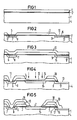
- FIGS. 1 to 5 These figures do not show all, but only the process steps essential to the invention. Identical parts are provided with the same reference symbols in the figures.
- a semiconductor body is shown in FIG. 1 and designated 1. He is e.g. B. weakly n-conductive.
- the semiconductor body is covered with an oxide layer 2, which is used as a gate oxide.
- the layer 2 is then covered with a polysilicon layer 3.
- the polysilicon layer 3 is structured in a first photo step, openings 5 being created for the transistor cells and an opening 19 lying at the edge for the channel stopper (FIG. 2). These openings have sloping flanks so that the polysilicon layer 3 can serve as a mask for the production of the source zones 6 and the base zones 7 or the superimposed zones 16, 17 of the channel stopper 9 located at the edge 4.
- Source zones 6, base zones 7 and zones 16, 17 are known in a known manner, for. B. generated by implantation of arsenic or phosphorus ions or boron ions. The energy of the boron ions is greater, so that they also penetrate the chamfered part of the polysilicon layer 3 used as a mask and penetrate deeper into the semiconductor body 1. In this step, transistor cells 8 and zones 16, 17 are generated.
- a second oxide layer 10 is applied, which is many times thicker than the oxide layer 2.
- the oxide layer 10 covers the entire surface of the semiconductor body 1.
- the second oxide layer 10 is structured. It is opened in the area of the transistor cells 8 and the zones 16, 17 in such a way that contact holes 11 or a contact area 13 are formed which extend as far as the base zones 7 or the edge zone 17.
- an opening 14 is produced in the second oxide layer 10 between the transistor cells 8 and the edge zones, which surrounds the transistor cells 8 in a ring.
- a metal layer 18, for. B. applied from aluminum This layer forms the source contacts for the transistor cells 8 and creates the shunts between the source zones 6 and base zones 7, which are indispensable for a power MISFET.
- the metal layer 18 contacts the edge zones 16, 17 Polysilicon layer 3 and the metal layer 18 over zone 15 completely interrupted (FIG 5). Then the entire surface can be covered with a passivation layer, e.g. B. covered with silicon nitride. This step is not shown in the figures.
- the ion implantation shown in FIG. 4 can also be carried out only after the polysilicon layer and the metal layer 16 (FIG. 5) have been interrupted.
- the metal layer 18 then acts as a mask.
- the metal layer 18 connected to the edge zones 16, 17 acts in connection with the polysilicon layer 3 connected to it as a channel stop electrode. Since the pn junction delimiting the edge zone 17 due to its edge position as a result of mechanical separation processes, for. B. is very bad by sawing, there is a relatively good contact between the channel stopper and the substrate of the semiconductor body 1.
- Zone 16 does not act as a source zone for the same reason.
- Zone 15 acts as a guard ring and is at floating potential.
Landscapes
- Metal-Oxide And Bipolar Metal-Oxide Semiconductor Integrated Circuits (AREA)
- Hall/Mr Elements (AREA)
- Insulated Gate Type Field-Effect Transistor (AREA)
- Electrodes Of Semiconductors (AREA)
- Element Separation (AREA)
Abstract
Description
- Die Erfindung bezieht sich auf ein Verfahren zum Herstellen eines Leistungs-MISFET mit einem Halbleiterkörper, der ein Feld von Transistorzellen sowie mindestens eine Feldplatte und mindestens einen Kanalstopper aufweist.
- Verfahren zum Herstellen solcher MISFET sind gängige Praxis. Dabei werden wenigstens vier, meistens jedoch fünf oder mehr Fotoschritte benötigt, um die feinen Strukturen eines solchen Leistungs-MISFET herzustellen. Für jeden Fotoschritt wird eine Maske benötigt. Eine signifikante Reduzierung der Herstellkosten läßt sich nur durch Verminderung der Fotoschritte erreichen.
- Der Erfindung liegt die Aufgabe zugrunde, ein für einen Niedervolt-Leistungs-MISFET verwendbares Verfahren anzugeben, das mit lediglich drei Fotoschritten auskommt.
- Dieses Verfahren ist gekennzeichnet durch die Schritte:
- a) der Halbleiterkörper wird mit einer ersten Oxidschicht bedeckt,
- b) die erste Oxidschicht wird mit einer Polysiliziumschicht bedeckt,
- c) die Polysiliziumschicht wird durch einen ersten Fotoschritt strukturiert,
- d) die Transistorzellen und übereinanderliegende Randzonen werden erzeugt,
- e) der Halbleiterkörper wird mit einer zweiten Oxidschicht bedeckt,
- f) durch einen zweiten Fotoschritt werden in der zweiten Oxidschicht im Bereich der Transistorzellen und der Randzonen Kontaktlöcher bzw. ein Kontaktbereich und zwischen den Transistorzellen und den Randzonen in der Polysiliziumschicht eine die Transistorzellen umgebende ringförmige Vertiefung erzeugt,
- g) durch die Vertiefung werden Dotierstoffe in den Halbleiterkörper implantiert, die den entgegengesetzten Leitungstyp des Halbleiterkörpers haben, mit einer Dosis, die geringer ist als die für die Transistorzellen und die Randzonen verwendete Dosis,
- h) der Halbleiterkörper wird mit einer Metallschicht bedeckt,
- i) die Metallschicht und die Polysiliziumschicht werden durch einen dritten Fotoschritt im Bereich der ringförmigen Vertiefung vollständig unterbrochen.
- Die Erfindung wird anhand eines Ausführungsbeispiels in Verbindung mit den FIG 1 bis 5 näher erläutert. Diese Figuren zeigen nicht alle, sondern nur die erfindungswesentlichen Verfahrensschritte. Gleiche Teile sind in den Figuren mit gleichen Bezugszeichen versehen.
- In FIG 1 ist ein Halbleiterkörper gezeigt und mit 1 bezeichnet. Er ist z. B. schwach n-leitend. Der Halbleiterkörper wird mit einer Oxidschicht 2 bedeckt, die als Gateoxid verwendet wird. Anschließend wird die Schicht 2 mit einer Polysiliziumschicht 3 bedeckt.
- Die Polysiliziumschicht 3 wird in einem ersten Fotoschritt strukturiert, wobei Öffnungen 5 für die Transistorzellen und eine am Rand liegende Öffnung 19 für den Kanalstopper entstehen (FIG 2). Diese Öffnungen haben schräge Flanken, so daß die Polysiliziumschicht 3 als Maske für die Herstellung der Sourcezonen 6 und der Basiszonen 7 bzw. der übereinanderliegendenZonen 16, 17 des am Rand 4 liegenden Kanalstoppers 9 dienen kann. Sourcezonen 6, Basiszonen 7 und die Zonen 16, 17 werden in bekannter Art und Weise z. B. durch Implantation von Arsen- oder Phosphorionen bzw. Borionen erzeugt. Die Energie der Borionen ist dabei größer, so daß diese auch den abgeschrägten Teil der als Maske verwendeten Polysiliziumschicht 3 durchdringen und tiefer in den Halbleiterkörper 1 eindringen. Bei diesem Schritt werden Transistorzellen 8 und die Zonen 16, 17 erzeugt.
- Als nächster Schritt (FIG 3) wird eine zweite Oxidschicht 10 aufgebracht, die um ein Vielfaches dicker als die Oxidschicht 2 ist. Die Oxidschicht 10 bedeckt die gesamte Oberfläche des Halbleiterkörpers 1. In einem zweiten Fotoschritt wird die zweite Oxidschicht 10 strukturiert. Sie wird im Bereich der Transistorzellen 8 und der Zonen 16, 17 derart geöffnet, daß Kontaktlöcher 11 bzw. ein Kontaktbereich 13 entstehen, die bis zu den Basiszonen 7 bzw. zur Randzone 17 reichen. Beim gleichen Fotoschritt wird in der zweiten Oxidschicht 10 zwischen den Transistorzellen 8 und den Randzonen eine Öffnung 14 erzeugt, die die Transistorzellen 8 ringförmig umgibt. Der gleiche Ätzvorgang, der die Kontaktlöcher 11 und den Kontaktbereich 13 bis zur Oberfläche der Basiszonen 7 bzw. der Randzone 17 öffnet, ätzt auch eine ringförmige Vertiefung 12 in die Polysiliziumschicht 3. Anschließend werden in die Oberfläche des Halbleiterkörpers z. B. Borionen implantiert, die eine ringförmige Zone 15 von dem Halbleiterkörper entgegengesetzten Leitungstyp erzeugen. Die angewandte Dosis ist geringer als die zur Herstellung der Sourcezonen 6 und der Basiszonen 7 bzw. der Randzonen 16, 17 verwendete Dosis. Daher ändert sich die Dotierung der Transistorzellen im Bereich des Kontaktloches nur unwesentlich. Zwischen der Zone 15 und den Transistorzellen ist die Oberfläche des Halbleiterkörpers im übrigen durch die Oxidschicht 10 gegen die Implantation von Ionen abgeschirmt (FIG 4).
- Anschließend wird auf die Oberfläche des Halbleiterkörpers eine Metallschicht 18, z. B. aus Aluminium aufgebracht. Diese Schicht bildet die Sourcekontakte für die Transistorzellen 8 und schafft die für einen Leistungs-MISFET unentbehrlichen Nebenschlüsse zwischen den Sourcezonen 6 und Basiszonen 7. Im Bereich des Kanalstoppers 9 kontaktiert die Metallschicht 18 die Randzonen 16, 17. In einem dritten und letztem Fotoschritt wird die Polysiliziumschicht 3 und die Metallschicht 18 über der Zone 15 vollständig unterbrochen (FIG 5). Anschließend kann dann die gesamte Oberfläche noch mit einer Passivierungsschicht, z. B. aus Siliziumnitrid bedeckt werden. Dieser Schritt ist in den Figuren nicht dargestellt.
- Gemäß einer Alternative kann auch die in FIG 4 gezeigte Ionenimplantation erst nach der Unterbrechung der Polysiliziumschicht und der Metallschicht 16 (FIG 5) vorgenommen werden. Hierbei wirkt dann die Metallschicht 18 als Maske.
- Die mit den Transistorzellen 8 verbundene Metallschicht 18 wirkt zusammen mit dem mit ihr verbundenen Teil der Polysiliziumschicht 3 als Feldplatte. Die mit den Randzonen 16, 17 verbundene Metallschicht 18 wirkt in Verbindung mit der mit ihr verbundenen Polysiliziumschicht 3 als Kanalstopperelektrode. Da der die Randzone 17 begrenzende pn-Übergang durch seine Randlage infolge mechanischer Trennvorgänge z. B. durch Sägen sehr schlecht ist, ist hier ein relativ guter Kontakt zwischen dem Kanalstopper und dem Substrat des Halbleiterkörpers 1 gegeben. Die Zone 16 wirkt aus dem gleichen Grund auch nicht als Sourcezone. Die Zone 15 wirkt als Guard-Ring und liegt auf floatendem Potential.
Claims (3)
- Verfahren zum Herstellen eines Leistungs-MISFET mit einem Halbleiterkörper, der ein Feld von Transistorzellen sowie mindestens eine Feldplatte und mindestens einen Kanalstopper aufweist,
gekennzeichnet durch die Schritte:a) der Halbleiterkörper (1) wird mit einer ersten Oxidschicht (2) bedeckt,b) die erste Oxidschicht wird mit einer Polysiliziumschicht (3) bedeckt,c) die Polysiliziumschicht wird durch einen ersten Fotoschritt strukturiert,d) die Transistorzellen (8) und übereinanderliegende Randzonen (16, 17) werden erzeugt,e) der Halbleiterkörper wird mit einer zweiten Oxidschicht (10) bedeckt,f) durch einen zweiten Fotoschritt werden in der zweiten Oxidschicht im Bereich der Transistorzellen (8) und der Randzonen (16, 17) Kontaktlöcher (11) bzw. ein Kontaktbereich (13) und zwischen den Transistorzellen (8) und den Randzonen (16, 17) in der Polysiliziumschicht eine die Transistorzellen umgebende ringförmige Vertiefung (12) erzeugt,g) durch die Vertiefung (12) werden Dotierstoffe in den Halbleiterkörper implantiert, die den entgegengesetzten Leitungstyp des Halbleiterkörpers haben, mit einer Dosis, die geringer ist als die für Transistorzellen und die Randzonen verwendete Dosis,h) der Halbleiterkörper wird mit einer Metallschicht (18) bedeckt,i) die Metallschicht (18) und die Polysiliziumschicht (3) werden durch einen dritten Fotoschritt im Bereich der ringförmigen Vertiefung (12) vollständig unterbrochen. - Verfahren nach Anspruch 1,
dadurch gekennzeichnet, daß Schritt i) vor Schritt g) vorgenommen wird. - Verfahren nach Anspruch 1 oder 2,
dadurch gekennzeichnet, daß nach Schritt i) und g) der Halbleiterkörper mit einer Passivierungsschicht bedeckt wird.
Priority Applications (4)
| Application Number | Priority Date | Filing Date | Title |
|---|---|---|---|
| EP90110611A EP0460251B1 (de) | 1990-06-05 | 1990-06-05 | Herstellverfahren für einen Leistungs-MISFET |
| DE59010855T DE59010855D1 (de) | 1990-06-05 | 1990-06-05 | Herstellverfahren für einen Leistungs-MISFET |
| JP3159780A JPH0529342A (ja) | 1990-06-05 | 1991-06-03 | パワーmisfetの製造方法 |
| US07/710,588 US5087577A (en) | 1990-06-05 | 1991-06-05 | Manufacturing method for a power misfet |
Applications Claiming Priority (1)
| Application Number | Priority Date | Filing Date | Title |
|---|---|---|---|
| EP90110611A EP0460251B1 (de) | 1990-06-05 | 1990-06-05 | Herstellverfahren für einen Leistungs-MISFET |
Publications (2)
| Publication Number | Publication Date |
|---|---|
| EP0460251A1 true EP0460251A1 (de) | 1991-12-11 |
| EP0460251B1 EP0460251B1 (de) | 1998-11-18 |
Family
ID=8204054
Family Applications (1)
| Application Number | Title | Priority Date | Filing Date |
|---|---|---|---|
| EP90110611A Expired - Lifetime EP0460251B1 (de) | 1990-06-05 | 1990-06-05 | Herstellverfahren für einen Leistungs-MISFET |
Country Status (4)
| Country | Link |
|---|---|
| US (1) | US5087577A (de) |
| EP (1) | EP0460251B1 (de) |
| JP (1) | JPH0529342A (de) |
| DE (1) | DE59010855D1 (de) |
Cited By (3)
| Publication number | Priority date | Publication date | Assignee | Title |
|---|---|---|---|---|
| DE4137341C1 (de) * | 1991-11-13 | 1993-04-29 | Siemens Ag, 8000 Muenchen, De | |
| EP0660416A1 (de) * | 1993-12-22 | 1995-06-28 | AT&T Corp. | Halbleiteranordnung mit vermindertem Randabschluss und hoher Durchbruchspannung |
| WO1999005714A1 (de) * | 1997-07-22 | 1999-02-04 | Infineon Technologies Ag | Herstellungsverfahren für ein durch feldeffekt gesteuertes halbleiterbauelement |
Families Citing this family (12)
| Publication number | Priority date | Publication date | Assignee | Title |
|---|---|---|---|---|
| US5597765A (en) * | 1995-01-10 | 1997-01-28 | Siliconix Incorporated | Method for making termination structure for power MOSFET |
| US5631484A (en) * | 1995-12-26 | 1997-05-20 | Motorola, Inc. | Method of manufacturing a semiconductor device and termination structure |
| US5926697A (en) * | 1997-10-09 | 1999-07-20 | Taiwan Semiconductor Manufacturing Company, Ltd. | Method of forming a moisture guard ring for integrated circuit applications |
| DE19818299B4 (de) * | 1998-04-23 | 2006-10-12 | Infineon Technologies Ag | Niederohmiger Hochvolt-Feldeffekttransistor |
| US6836022B2 (en) * | 2003-02-13 | 2004-12-28 | Medtronic, Inc. | High voltage flip-chip component package and method for forming the same |
| US9484451B2 (en) * | 2007-10-05 | 2016-11-01 | Vishay-Siliconix | MOSFET active area and edge termination area charge balance |
| US9431249B2 (en) | 2011-12-01 | 2016-08-30 | Vishay-Siliconix | Edge termination for super junction MOSFET devices |
| US9614043B2 (en) | 2012-02-09 | 2017-04-04 | Vishay-Siliconix | MOSFET termination trench |
| US9842911B2 (en) | 2012-05-30 | 2017-12-12 | Vishay-Siliconix | Adaptive charge balanced edge termination |
| US9508596B2 (en) | 2014-06-20 | 2016-11-29 | Vishay-Siliconix | Processes used in fabricating a metal-insulator-semiconductor field effect transistor |
| US9887259B2 (en) | 2014-06-23 | 2018-02-06 | Vishay-Siliconix | Modulated super junction power MOSFET devices |
| KR102098996B1 (ko) | 2014-08-19 | 2020-04-08 | 비쉐이-실리코닉스 | 초접합 금속 산화물 반도체 전계 효과 트랜지스터 |
Citations (4)
| Publication number | Priority date | Publication date | Assignee | Title |
|---|---|---|---|---|
| US4055884A (en) * | 1976-12-13 | 1977-11-01 | International Business Machines Corporation | Fabrication of power field effect transistors and the resulting structures |
| GB2087648A (en) * | 1980-11-17 | 1982-05-26 | Int Rectifier Corp | Improvements in or relating to high voltage semiconductor devices |
| EP0227894A2 (de) * | 1985-12-19 | 1987-07-08 | SILICONIX Incorporated | Vertikaler DMOS-Transistor von hoher Packungsdichte |
| EP0241059A2 (de) * | 1986-03-10 | 1987-10-14 | SILICONIX Incorporated | Verfahren zum Herstellen eines MOS-Leistungstransistors |
Family Cites Families (6)
| Publication number | Priority date | Publication date | Assignee | Title |
|---|---|---|---|---|
| DE270387C (de) * | ||||
| US4199774A (en) * | 1978-09-18 | 1980-04-22 | The Board Of Trustees Of The Leland Stanford Junior University | Monolithic semiconductor switching device |
| DE2926417A1 (de) * | 1979-06-29 | 1981-01-22 | Siemens Ag | Dynamische halbleiterspeicherzelle und verfahren zu ihrer herstellung |
| JPS5683077A (en) * | 1979-12-10 | 1981-07-07 | Sharp Corp | High tension mos field-effect transistor |
| DE3141203A1 (de) * | 1981-10-16 | 1983-04-28 | Siemens AG, 1000 Berlin und 8000 München | Planares halbleiterbauelement |
| US4918026A (en) * | 1989-03-17 | 1990-04-17 | Delco Electronics Corporation | Process for forming vertical bipolar transistors and high voltage CMOS in a single integrated circuit chip |
-
1990
- 1990-06-05 DE DE59010855T patent/DE59010855D1/de not_active Expired - Fee Related
- 1990-06-05 EP EP90110611A patent/EP0460251B1/de not_active Expired - Lifetime
-
1991
- 1991-06-03 JP JP3159780A patent/JPH0529342A/ja active Pending
- 1991-06-05 US US07/710,588 patent/US5087577A/en not_active Expired - Fee Related
Patent Citations (4)
| Publication number | Priority date | Publication date | Assignee | Title |
|---|---|---|---|---|
| US4055884A (en) * | 1976-12-13 | 1977-11-01 | International Business Machines Corporation | Fabrication of power field effect transistors and the resulting structures |
| GB2087648A (en) * | 1980-11-17 | 1982-05-26 | Int Rectifier Corp | Improvements in or relating to high voltage semiconductor devices |
| EP0227894A2 (de) * | 1985-12-19 | 1987-07-08 | SILICONIX Incorporated | Vertikaler DMOS-Transistor von hoher Packungsdichte |
| EP0241059A2 (de) * | 1986-03-10 | 1987-10-14 | SILICONIX Incorporated | Verfahren zum Herstellen eines MOS-Leistungstransistors |
Non-Patent Citations (1)
| Title |
|---|
| PATENT ABSTRACTS OF JAPAN, Band 10, Nr. 332 (E-453)[2388], 12. November 1986; & JP-A-61 137 368 (HITACHI LTD) 25-06-1986 * |
Cited By (5)
| Publication number | Priority date | Publication date | Assignee | Title |
|---|---|---|---|---|
| DE4137341C1 (de) * | 1991-11-13 | 1993-04-29 | Siemens Ag, 8000 Muenchen, De | |
| US5302537A (en) * | 1991-11-13 | 1994-04-12 | Siemens Aktiengesellschaft | Manufacturing method for a low voltage power MISFET utilizing only three masks |
| EP0660416A1 (de) * | 1993-12-22 | 1995-06-28 | AT&T Corp. | Halbleiteranordnung mit vermindertem Randabschluss und hoher Durchbruchspannung |
| WO1999005714A1 (de) * | 1997-07-22 | 1999-02-04 | Infineon Technologies Ag | Herstellungsverfahren für ein durch feldeffekt gesteuertes halbleiterbauelement |
| US6248620B1 (en) | 1997-07-22 | 2001-06-19 | Infineon Technologies Ag | Method for fabricating a field effect-controlled semiconductor component |
Also Published As
| Publication number | Publication date |
|---|---|
| EP0460251B1 (de) | 1998-11-18 |
| DE59010855D1 (de) | 1998-12-24 |
| US5087577A (en) | 1992-02-11 |
| JPH0529342A (ja) | 1993-02-05 |
Similar Documents
| Publication | Publication Date | Title |
|---|---|---|
| DE69032735T2 (de) | Verfahren zum Herstellen von Hochspannungs- und Niederspannungs-CMOS-Transistoren in einem einzigen integrierten Schaltungs-Chip | |
| DE3012363C2 (de) | Verfahren zur Bildung der Kanalbereiche und der Wannen von Halbleiterbauelementen | |
| DE2212049C2 (de) | Verfahren zur Herstellung einer Halbleiteranordnung und Verfahren zur Herstellung eines Transistors | |
| DE19704996C2 (de) | Verfahren zur Herstellung eines IGBT-Bauelementes | |
| DE3110477C2 (de) | ||
| EP0239652B1 (de) | Verfahren zum Herstellen einer monolithisch integrierten Schaltung mit mindestens einem bipolaren Planartransistor | |
| DE3145231C2 (de) | ||
| EP0460251B1 (de) | Herstellverfahren für einen Leistungs-MISFET | |
| EP0020998B1 (de) | Verfahren zum Herstellen eines bipolaren Transistors mit ionenimplantierter Emitterzone | |
| DE2153103A1 (de) | Integrierte Schaltungsanordnung und Verfahren zur Herstellung derselben | |
| DE2707652A1 (de) | Verfahren zur bildung von kanalsperren entgegengesetzter leitungstypen im zwischenbereich zwischen zwei mos-bauelementen zugeordneten zonen eines siliziumsubstrats | |
| EP0038994B1 (de) | Kontakt für MIS-Halbleiterbauelement und Verfahren zu seiner Herstellung | |
| DE4116690A1 (de) | Elementisolationsaufbau einer halbleitereinrichtung und verfahren zur herstellung derselben | |
| DE3588129T2 (de) | Verbesserungen von Verfahren zum Herstellen von Chips mit einer integrierten Schaltung und auf diese Art hergestellte Chips | |
| DE3887025T2 (de) | Methode zur Herstellung von CMOS EPROM-Speicherzellen. | |
| DE3312720A1 (de) | Verfahren zur herstellung von komplementaeren mos-transistoren in hochintegrierten schaltungen fuer hohe spannungen | |
| DE3540422C2 (de) | Verfahren zum Herstellen integrierter Strukturen mit nicht-flüchtigen Speicherzellen, die selbst-ausgerichtete Siliciumschichten und dazugehörige Transistoren aufweisen | |
| DE3324332A1 (de) | Verfahren zur herstellung von cmos-transistoren auf einem siliziumsubstrat | |
| DE2640981C2 (de) | Verfahren zur Herstellung von Halbleiteranordnungen durch Ionenimplantation | |
| EP0157926A1 (de) | Verfahren zum Herstellen einer hochintegrierten MOS-Feld-effekttransistorschaltung | |
| DE69531783T2 (de) | Herstellungsverfahren für Leistungsanordnung mit Schutzring | |
| WO1997013277A1 (de) | Mos-transistor mit hoher ausgangsspannungsfestigkeit | |
| DE19750221A1 (de) | Halbleiterbauteil mit MOS-Gatesteuerung sowie Verfahren zu seiner Herstellung | |
| DE4137341C1 (de) | ||
| EP0028786B1 (de) | Ionenimplantationsverfahren |
Legal Events
| Date | Code | Title | Description |
|---|---|---|---|
| PUAI | Public reference made under article 153(3) epc to a published international application that has entered the european phase |
Free format text: ORIGINAL CODE: 0009012 |
|
| 17P | Request for examination filed |
Effective date: 19901205 |
|
| AK | Designated contracting states |
Kind code of ref document: A1 Designated state(s): AT BE CH DE DK ES FR GB GR IT LI LU NL SE |
|
| RBV | Designated contracting states (corrected) |
Designated state(s): DE FR GB IT |
|
| 17Q | First examination report despatched |
Effective date: 19940503 |
|
| GRAG | Despatch of communication of intention to grant |
Free format text: ORIGINAL CODE: EPIDOS AGRA |
|
| GRAG | Despatch of communication of intention to grant |
Free format text: ORIGINAL CODE: EPIDOS AGRA |
|
| GRAH | Despatch of communication of intention to grant a patent |
Free format text: ORIGINAL CODE: EPIDOS IGRA |
|
| GRAH | Despatch of communication of intention to grant a patent |
Free format text: ORIGINAL CODE: EPIDOS IGRA |
|
| GRAA | (expected) grant |
Free format text: ORIGINAL CODE: 0009210 |
|
| AK | Designated contracting states |
Kind code of ref document: B1 Designated state(s): DE FR GB IT |
|
| REF | Corresponds to: |
Ref document number: 59010855 Country of ref document: DE Date of ref document: 19981224 |
|
| ET | Fr: translation filed | ||
| ITF | It: translation for a ep patent filed | ||
| GBT | Gb: translation of ep patent filed (gb section 77(6)(a)/1977) |
Effective date: 19990128 |
|
| PGFP | Annual fee paid to national office [announced via postgrant information from national office to epo] |
Ref country code: GB Payment date: 19990616 Year of fee payment: 10 |
|
| PGFP | Annual fee paid to national office [announced via postgrant information from national office to epo] |
Ref country code: FR Payment date: 19990629 Year of fee payment: 10 |
|
| PLBE | No opposition filed within time limit |
Free format text: ORIGINAL CODE: 0009261 |
|
| 26N | No opposition filed | ||
| PG25 | Lapsed in a contracting state [announced via postgrant information from national office to epo] |
Ref country code: DE Free format text: LAPSE BECAUSE OF NON-PAYMENT OF DUE FEES Effective date: 20000503 |
|
| PG25 | Lapsed in a contracting state [announced via postgrant information from national office to epo] |
Ref country code: GB Free format text: LAPSE BECAUSE OF NON-PAYMENT OF DUE FEES Effective date: 20000605 |
|
| GBPC | Gb: european patent ceased through non-payment of renewal fee |
Effective date: 20000605 |
|
| PG25 | Lapsed in a contracting state [announced via postgrant information from national office to epo] |
Ref country code: FR Free format text: LAPSE BECAUSE OF NON-PAYMENT OF DUE FEES Effective date: 20010228 |
|
| REG | Reference to a national code |
Ref country code: FR Ref legal event code: ST |
|
| PG25 | Lapsed in a contracting state [announced via postgrant information from national office to epo] |
Ref country code: IT Free format text: LAPSE BECAUSE OF NON-PAYMENT OF DUE FEES;WARNING: LAPSES OF ITALIAN PATENTS WITH EFFECTIVE DATE BEFORE 2007 MAY HAVE OCCURRED AT ANY TIME BEFORE 2007. THE CORRECT EFFECTIVE DATE MAY BE DIFFERENT FROM THE ONE RECORDED. Effective date: 20050605 |