EP0460927A2 - ProcÀ©dé pour mesurer les caractéristiques hydrauliques d'une formation - Google Patents
ProcÀ©dé pour mesurer les caractéristiques hydrauliques d'une formation Download PDFInfo
- Publication number
- EP0460927A2 EP0460927A2 EP91305062A EP91305062A EP0460927A2 EP 0460927 A2 EP0460927 A2 EP 0460927A2 EP 91305062 A EP91305062 A EP 91305062A EP 91305062 A EP91305062 A EP 91305062A EP 0460927 A2 EP0460927 A2 EP 0460927A2
- Authority
- EP
- European Patent Office
- Prior art keywords
- sample
- rock
- porosity
- permeability
- factor
- Prior art date
- Legal status (The legal status is an assumption and is not a legal conclusion. Google has not performed a legal analysis and makes no representation as to the accuracy of the status listed.)
- Ceased
Links
Images


Classifications
-
- G—PHYSICS
- G01—MEASURING; TESTING
- G01N—INVESTIGATING OR ANALYSING MATERIALS BY DETERMINING THEIR CHEMICAL OR PHYSICAL PROPERTIES
- G01N15/00—Investigating characteristics of particles; Investigating permeability, pore-volume or surface-area of porous materials
- G01N15/08—Investigating permeability, pore-volume, or surface area of porous materials
-
- G—PHYSICS
- G01—MEASURING; TESTING
- G01N—INVESTIGATING OR ANALYSING MATERIALS BY DETERMINING THEIR CHEMICAL OR PHYSICAL PROPERTIES
- G01N33/00—Investigating or analysing materials by specific methods not covered by groups G01N1/00 - G01N31/00
- G01N33/24—Earth materials
- G01N33/241—Earth materials for hydrocarbon content
-
- G—PHYSICS
- G01—MEASURING; TESTING
- G01V—GEOPHYSICS; GRAVITATIONAL MEASUREMENTS; DETECTING MASSES OR OBJECTS; TAGS
- G01V11/00—Prospecting or detecting by methods combining techniques covered by two or more of main groups G01V1/00 - G01V9/00
Definitions
- the present invention relates to methods for logging characteristics of a formation and is applicable to methods for modeling the quality and performance of a reservoir that contains hydrocarbon fluids, e.g. methods for predicting the flow characteristics of a reservoir of hydrocarbon fluids. More particularly, the present invention is applicable to a method for identifying and characterising units of a formation having similar hydraulic characteristics based on microscopic measurements of rock core samples and for linking the hydraulic units to wireline logs to enable accurate prediction of formation flow characteristics therefrom.
- Amaefule, et al. observe that the"mean hydraulic radius" ((k/ ⁇ ) 0.5 ), calculated from permeability and porosity data derived from core sample analysis, relates Darcy flow properties to pore space attributes. See J.O. Amaefule, D.G. Kersey, D.M. Marschall, J.D. Powell, L.E. Valencia, D.K. Keelan, "Reservoir Description: A Practical Synergistic Engineering and Geological Approach Based on Analysis of Core Data," SPE No. 18167 (1988). Amaefule, et al. note that core analysis descriptions can be used to divide the reservoir into various hydraulic units.
- the Kozeny and Kozeny-Carman constants, 2 and 5 are valid only for the capillary tube and spherical grain models, respectively. These models, as previously noted, do not translate accurately to the general case in which the porous media do not conform to the models.
- permeability varies with a variety of characteristics other than porosity, including pore shape and size, grain shape and size, pore and grain distribution, tortuosity, cementation, and type of pore system, that is, intergranular, intercrystalline, vuggy, or fractured. These characteristics vary from one lithology to another and even within formation units of similar lithology. Thus, they cannot be modelled accurately as a constant.
- a method for defining formation units of similar hydraulic characteristics by means of core measurements and for relating the hydraulic characteristics of such units to macroscopic measurements of the formation as provided by wireline logs including the steps of (a) obtaining core samples of the formation material from which a complete lithologic description of the formation may be made, (b) measuring directly the permeability, k, and the porosity, ⁇ , of discrete samples of material taken from the recovered core, (c) determining a hydraulic unit characterization factor, H c , as the product of an effective zoning factor, K T , and the square of the specific surface area of the pore system or the formation grains; (d) plotting log (H c ) versus log ( ⁇ ) and log (k) versus log (H c ); and (e) logging for permeability by obtaining a wireline log of porosity and converting the porosity measurements to permeability measurements by means of the relationship established in step (d).
- Such a method can provide an accurate transformation from pore space attributes to macroscopic scale properties of a reservoir by integrating core analysis data with wireline log data.
- This transformation can eliminate empirical and subjective calibration algorithms for wireline logging tools by providing measured and calculated characteristics for the formation in question.
- the correlation between H c and both permeability and porosity is based on recognition that certain textural parameters that affect both permeability and porosity vary within the formation and cannot be modelled accurately by means of the Kozeny or Kozeny-Carman constants. These variable textural parameters are accounted for in the above method by means of the effective zoning factor, K T , of which the hydraulic unit characterization factor is a product.
- permeability is a measure of the ability of a formation to allow the flow of fluids through its interconnected pore spaces. Permeability, however, cannot be measured foot by foot throughout a formation by conventional wireline logging techniques. Instead, permeability is calculated for available core samples at discrete point depths by making necessary core measurements and applying Darcy's law.
- the Kozeny model is modified to account for the variable effect of formation textural parameters that affect permeability.
- the relationship between porosity and permeability in the general case varies with an effective zoning factor, K T , which is a function of pore shape and size, grain shape and size, pore and grain distribution, tortuosity, cementation, and type of pore system.
- H c a hydraulic unit characterization factor
- the method comprises three basic steps.
- the first step 12 is determining a transformation from microscopic core measurements to macroscopic wireline log measurements.
- the second step 13 is calibrating the wireline logging tool, based on the transform determined in step 12, to measure permeability as a function of macroscopic parameters such as porosity.
- the third step 14 is logging a well for formation permeability.
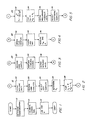
- Figure 2 describes in general terms the first step 12 of Figure 1, the method for determining a transformation from microscopic core measurements to macroscopic wireline log measurements.
- the first step 20 involved in determining the transformation is defining geologic/lithologic units of formation material based on a core sample.
- the second step 22 is performing a complete core analysis on the core sample, measuring in particular the Klinkenberg permeability and the porosity of formation samples, preferably at overburden pressure conditions.
- the next step 24 is selecting formation samples for further testing based on calculated values for a hydraulic unit characterization factor, H c .
- the fourth step 26 is determining the hydraulic unit characterization factor, H c , based on microscopic measurements on the selected samples.
- the final step 28 is plotting H c versus permeability and plotting porosity versus H c to establish a link between macroscopic porosity measurements and formation permeability for the corresponding hydraulic units of formation.
- Figure 3 shows the steps comprising the step 20 of defining geologic units.
- the step of defining geologic units comprises the steps of recovering a diamond-cut core sample using conventional techniques (step 32), making a complete lithologic description of the recovered core, again using conventional methodology (step 34), and based on the lithologic description, defining the geologic units comprising the formation (step 36).
- Geologic units are areas within the formation having similar lithologic characteristics. Geologic units most often, but need not, correspond to hydraulic units, that is, areas within the formation having similar flow characteristics. Geologic units may encompass one or more hydraulic units.
- the goal of the calibration portion of the method disclosed herein is to define discrete hydraulic units within the formation and to relate macroscopic parameters measured within those hydraulic units to microscopic parameters like permeability.
- the first step in identifying the hydraulic units is to define the geologic units, as described in steps 32, 34, and 36.
- Figure 4 describes in greater detail the three steps comprising the step 22 of performing core analysis of the recovered core sample. These include obtaining a series of plug samples from the core recovered in step 32 (step 42), cleaning and drying the sample material (step 44), and making direct measurements of permeability and porosity, preferably at overburden pressure conditions, on the material from the plug samples (step 46). Direct measurements of permeability and porosity are essential to the process of establishing the relationship between permeability, porosity, specific surface area of pore or grain volume, and the effective zoning factor, K T . These relationships, in turn, enable construction of the relationship between macroscopic porosity and microscopic permeability.
- the permeability and porosity measurements can be made by conventional plug sample analysis techniques, preferably at overburden pressure conditions or at a pressure of at least 800 lbs. or more.
- Overburden pressure conditions are necessary to represent rock properties at in situ conditions. This is particularly critical for highly stress sensitive formations, such as unconsolidated or friable formations, or tight formations where small stresses begin restricting pore throats.
- the equivalent liquid nonreactive permeability also known as the Klinkenberg permeability, k ⁇ , rather than the air permeability.
- the Klinkenberg permeability measurement is not sensitive to fluctuations in mean pressure. Air permeability measurements, particularly in low permeability rock, introduce substantial amounts of uncertainty into the calculations, making air permeability measurements less desirable.
- FIG. 5 summarizes the steps comprising the third step (step 24 in Figure 2) of the process of determining the transformation from microscopic to macroscopic data.
- the other three steps include plotting H c versus ⁇ and k ⁇ versus H c for each discrete geologic unit as previously identified (step 54), identifying preliminarily the hydraulic units comprising each geologic unit (step 56), and selecting samples of the core material for subsequent testing based on the preliminary definition of hydraulic units (step 58).
- the logarithm of the hydraulic unit characterization factor varies directly with the logarithm of porosity and with the logarithm of permeability.
- Log-log plots of H c versus ⁇ and k versus H c for each geologic unit typically reveal one or more sloping lines, each of which corresponds to a different hydraulic unit within the geologic unit under scrutiny.
- Log-log plots of the calculated H c and the measured k ⁇ and ⁇ will yield an approximation for the distribution of hydraulic units within each geologic unit. Based on these approximate distributions of hydraulic units, one can target certain areas of the formation as contained in the recovered core sample for additional examination, as described below.
- the next step (26 in Figure 2) in the process of determining the transformation is to determine a measured value for the hydraulic unit characterization factor, H c , from analysis of each of a plurality of samples selected from the core sample.
- H cp K T S pv 2 where S pv is the internal surface area of pore space per unit of pore volume.
- the effective zoning factor, K T is a function of the various formation textural parameters that affect permeability.
- K T by measurement or by calculation from measurements of mean pore throat radius r pt
- S gr or S pr by measurement or by calculation from measurements of d g (mean grain diameter) or d p (mean pore diameter).
- H c Given the variety of core analysis techniques currently available, there is no unique approach to measuring H c .
- the preferred approach will vary according to the type of formation involved, that is, consolidated or unconsolidated, and the tools available for analysis of core samples. It is desirable to determine H c by two independent methods in order to compare and verify the results.
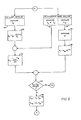
- Figures 6, and 7 describe some of the preferred techniques for obtaining K T and S gv or S pv , respectively.
- petrographic image analysis offers at least two approaches to determining the effective zoning factor, K T .
- K sp the pore shape factor
- K T the effective zoning factor
- the hydraulic unit characterization factor, H c can then be determined as explained above in connection with steps 66 and 68.
- Figure 7 describes several of the various alternatives for determining the surface area measurements needed to determine H c .
- the pore shape factor, K sp can also be determined by use of Brunauer Emmet Teller ("BET”) gas absorption analysis (step 82), although BET analysis is not preferred for use in measuring pore surface area.
- BET Brunauer Emmet Teller
- the surface area of grain per unit volume of grain, S gv can be measured directly by means of BET gas absorption analysis (step 82) or by means of nuclear magnetic resonance (step 84).
- Grain diameter, d g data is useful for depositional model studies where fining upward or coarsening upward sequences are noted on well logs.
- the hydraulic unit characterization factor, H c can be determined by use of equation (4) or equation (5) (step 98). If K T for the sample in question is not known, then the techniques described above in connection with Figure 6 should be employed to make that determination (step 100).
- the final step of the calibration process 14 is plotting H c versus ⁇ and plotting k ⁇ versus H c for each sample on which measurements were made.
- These graphs accurately identify distinct hydraulic units within several geologic units and establish a means for calculating permeability from the porosity measured in a given hydraulic unit.
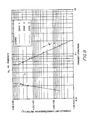
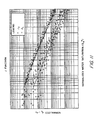
- Figures 8 and 9 show the actual H c versus ⁇ and k versus H c plots, respectively, determined by use of the foregoing method in connection with a sandstone formation (the Norphlet formation).
- the transformation process clearly identified three separate hydraulic units, each with a characteristic slope and limits. The method described herein identifies hydraulic units in either of sandstone or carbonate rocks.
- the second step 13 of the method for logging for permeability is calibrating the logging tool.
- well logging tools are one of three different types.
- Resistivity (or induction) logging tools measure the ability of water coating reservoir rocks to conduct electric current. Salinity of the water tends to diminish resistance.
- Induction logs present an average measure of resistivity, and resolution vertically is generally restricted to rock units having a thickness greater than two feet.
- Sonic logs measure the velocity of sound through rock grains and cements. Fluids trapped within the formation rocks tend to reduce the speed at which sound travels. Sonic logs present an average of formation measurements over several inches. Radioactive logs measure gamma and neutron radiation attenuation by dense rock and hydrogen compounds, respectively.
- the calculation can be made on a real time basis to provide a log of permeability as a well is logged (step 14 in Figure 1).
- permeability data can be generated by post-processing of porosity data previously logged from a plurality of wells. In either case, the foregoing method provides an accurate method for deriving reservoir permeability distributions from microscopic measurements on cores and macroscopic measurements on wirel ine logs.
- the foregoing methods can be adapted to provide data other than permeability. For example, as explained below, one can apply the foregoing method to calibrate a tool to log a well for water saturation data.
- Capillary forces are controlled by pore size distributions, with small pore networks causing water to be drawn high above the water-oil contact point.
- the behavior of water saturation distributions above the free water level is expressed by the following relationships: and where is oil density (g/cc), is water density (g/cc), g is the universal gravitational constant, h is the water height above the water-oil contact point, r ⁇ p is the mean pore radius, a is the interfacial tension between water and oil, and ⁇ is the contact angle of oil on a water wet surface.
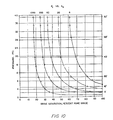
- capillary pressure measurements are made on individual samples selected from each rock type. Water saturation is measured as a function of the pressure required to force water into the pores (capillary pressure). When water saturation, S w , is plotted against capillary pressure, P c , the result is a separate curve for each sample selected, as demonstrated by the graph shown in Figure 10.
- the universal J function substantially enhances the ability to determine water saturation from capillary pressure data.
- a graph showing the improved universal J function and the Leverett J function plotted against normalized water saturation, S w *, is shown in Figure 11. Normalized water saturation, S w *, is determined as follows: S w * S w - S wr 1 - S wr , where S w and S wr are water saturation and residual water saturation, respectively.
- the plot of J T versus S w * enables one to predict S w * from any known capillary pressure for a particular hydraulic unit.
- the improved predictability of water saturation can be used to enhance prediction of water saturation from a wireline log.
- the values for a, m, and n in Equation (21) typically are determined both by field logging experience and by laboratory measurements of core plug samples. If the formation contains more than one hydraulic unit, and if the samples used for calibration are not truly representative of the formation being logged, the calibrations for a, m, and n will be inaccurate, as will the log of water saturation based thereon.
- water saturation logging techniques can be improved by use of the methods disclosed herein.
Landscapes
- Life Sciences & Earth Sciences (AREA)
- Chemical & Material Sciences (AREA)
- Physics & Mathematics (AREA)
- General Physics & Mathematics (AREA)
- Health & Medical Sciences (AREA)
- Engineering & Computer Science (AREA)
- Analytical Chemistry (AREA)
- Pathology (AREA)
- Immunology (AREA)
- General Health & Medical Sciences (AREA)
- General Life Sciences & Earth Sciences (AREA)
- Biochemistry (AREA)
- Geophysics (AREA)
- Medicinal Chemistry (AREA)
- Food Science & Technology (AREA)
- Environmental & Geological Engineering (AREA)
- Remote Sensing (AREA)
- Geology (AREA)
- Dispersion Chemistry (AREA)
- Investigation Of Foundation Soil And Reinforcement Of Foundation Soil By Compacting Or Drainage (AREA)
Applications Claiming Priority (2)
| Application Number | Priority Date | Filing Date | Title |
|---|---|---|---|
| US534458 | 1983-09-21 | ||
| US53445890A | 1990-06-06 | 1990-06-06 |
Publications (2)
| Publication Number | Publication Date |
|---|---|
| EP0460927A2 true EP0460927A2 (fr) | 1991-12-11 |
| EP0460927A3 EP0460927A3 (en) | 1993-02-17 |
Family
ID=24130127
Family Applications (1)
| Application Number | Title | Priority Date | Filing Date |
|---|---|---|---|
| EP19910305062 Ceased EP0460927A3 (en) | 1990-06-06 | 1991-06-05 | Method for logging hydraulic characteristics of a formation |
Country Status (3)
| Country | Link |
|---|---|
| US (1) | US5193059A (fr) |
| EP (1) | EP0460927A3 (fr) |
| NO (1) | NO912157L (fr) |
Cited By (12)
| Publication number | Priority date | Publication date | Assignee | Title |
|---|---|---|---|---|
| EP1070970A1 (fr) * | 1999-07-22 | 2001-01-24 | Schlumberger Technology B.V. | Procédé de reconstruction tridimensionnelle d'une grandeur physique dans l'environnement d'un forage |
| US11319478B2 (en) | 2019-07-24 | 2022-05-03 | Saudi Arabian Oil Company | Oxidizing gasses for carbon dioxide-based fracturing fluids |
| US11352548B2 (en) | 2019-12-31 | 2022-06-07 | Saudi Arabian Oil Company | Viscoelastic-surfactant treatment fluids having oxidizer |
| US11390796B2 (en) | 2019-12-31 | 2022-07-19 | Saudi Arabian Oil Company | Viscoelastic-surfactant fracturing fluids having oxidizer |
| US11499090B2 (en) | 2019-07-24 | 2022-11-15 | Saudi Arabian Oil Company | Oxidizers for carbon dioxide-based fracturing fluids |
| US11542815B2 (en) | 2020-11-30 | 2023-01-03 | Saudi Arabian Oil Company | Determining effect of oxidative hydraulic fracturing |
| US11619127B1 (en) | 2021-12-06 | 2023-04-04 | Saudi Arabian Oil Company | Wellhead acoustic insulation to monitor hydraulic fracturing |
| US11649702B2 (en) | 2020-12-03 | 2023-05-16 | Saudi Arabian Oil Company | Wellbore shaped perforation assembly |
| US12012550B2 (en) | 2021-12-13 | 2024-06-18 | Saudi Arabian Oil Company | Attenuated acid formulations for acid stimulation |
| US12025589B2 (en) | 2021-12-06 | 2024-07-02 | Saudi Arabian Oil Company | Indentation method to measure multiple rock properties |
| US12071814B2 (en) | 2020-12-07 | 2024-08-27 | Saudi Arabian Oil Company | Wellbore notching assembly |
| US12071589B2 (en) | 2021-10-07 | 2024-08-27 | Saudi Arabian Oil Company | Water-soluble graphene oxide nanosheet assisted high temperature fracturing fluid |
Families Citing this family (19)
| Publication number | Priority date | Publication date | Assignee | Title |
|---|---|---|---|---|
| US6792354B1 (en) | 2000-11-13 | 2004-09-14 | O'meara, Jr. Daniel J. | Method for determining reservoir fluid volumes, fluid contacts, compartmentalization, and permeability in geological subsurface models |
| US7054749B1 (en) | 2000-11-13 | 2006-05-30 | O'meara Jr Daniel J | Method for determining reservoir fluid volumes, fluid contacts, compartmentalization, and permeability in geological subsurface models |
| FR2836228B1 (fr) * | 2002-02-21 | 2005-08-19 | Inst Francais Du Petrole | Methode et dispositif pour evaluer des parametres physiques d'un gisement souterrain a partir de debris de roche qui y sont preleves |
| FR2836227B1 (fr) * | 2002-02-21 | 2004-10-01 | Inst Francais Du Petrole | Methode pour evaluer des parametres physiques d'un gisement souterrain a partir de debris de roche qui y sont preleves |
| US6714871B1 (en) * | 2002-10-31 | 2004-03-30 | Schlumberger Technology Corporation | Method for quantifying permeability of vuggy carbonates using wireline logs |
| US7277795B2 (en) * | 2004-04-07 | 2007-10-02 | New England Research, Inc. | Method for estimating pore structure of porous materials and its application to determining physical properties of the materials |
| WO2007131356A1 (fr) * | 2006-05-12 | 2007-11-22 | Stra Terra Inc. | Système et procédés de caractérisation d'informations |
| US20090260883A1 (en) * | 2008-04-16 | 2009-10-22 | Terratek Inc. | Continuous measurement of heterogeneity of geomaterials |
| US8234912B2 (en) | 2008-04-16 | 2012-08-07 | Terratek Inc. | Apparatus for continuous measurement of heterogeneity of geomaterials |
| US20120277996A1 (en) * | 2011-02-28 | 2012-11-01 | Hurley Neil F | Method to determine representative element areas and volumes in porous media |
| WO2015021088A1 (fr) * | 2013-08-06 | 2015-02-12 | Schlumberger Canada Limited | Procédés pour déterminer une fonction saturation-hauteur dans des gisements de pétrole et de gaz |
| EP3341760B1 (fr) * | 2015-08-27 | 2021-12-08 | Freie Universität Berlin | Procédé de détermination de la perméabilité hydraulique de roches dans une région de subsurface |
| EA201890954A1 (ru) * | 2018-05-13 | 2019-11-29 | Оценка уровня зеркала воды | |
| CN110955982B (zh) * | 2019-12-18 | 2023-04-07 | 长江大学 | 一种变质岩储层渗透率计算方法、装置及计算机存储介质 |
| EP4165281B1 (fr) | 2020-06-16 | 2025-08-13 | ConocoPhillips Company | Chambre à carottes à haute pression et récipient d'essai |
| GB2596579B (en) * | 2020-07-02 | 2022-10-12 | Equinor Energy As | Method for estimating depth of hydrocarbon reservoir |
| US12385888B2 (en) | 2021-09-16 | 2025-08-12 | Conocophillips Company | Inert fluid assays for sealed core recovery |
| CN115467653B (zh) * | 2022-08-29 | 2024-06-18 | 成都理工大学 | 一种测井渗透率谱的获取方法 |
| CN119827378B (zh) * | 2025-03-13 | 2025-06-27 | 中国科学院武汉岩土力学研究所 | 一种多孔介质渗透率测试方法 |
Family Cites Families (11)
| Publication number | Priority date | Publication date | Assignee | Title |
|---|---|---|---|---|
| US4903527A (en) * | 1984-01-26 | 1990-02-27 | Schlumberger Technology Corp. | Quantitative clay typing and lithological evaluation of subsurface formations |
| US4764903A (en) * | 1984-03-28 | 1988-08-16 | Conoco Inc. | Method and apparatus to determine permeability of rock formations adjacent a borehole |
| GB8418429D0 (en) * | 1984-07-19 | 1984-08-22 | Prad Res & Dev Nv | Estimating porosity |
| US4773264A (en) * | 1984-09-28 | 1988-09-27 | Schlumberger Technology Corporation | Permeability determinations through the logging of subsurface formation properties |
| US4752882A (en) * | 1986-05-05 | 1988-06-21 | Mobil Oil Corporation | Method for determining the effective water saturation in a low-resistivity hydrocarbon-bearing rock formation based upon rock matrix conductance |
| US4903207A (en) * | 1986-05-15 | 1990-02-20 | Restech, Inc. | Method for determining reservoir bulk volume of hydrocarbons from reservoir porosity and distance to oil-water contact level |
| US4893504A (en) * | 1986-07-02 | 1990-01-16 | Shell Oil Company | Method for determining capillary pressure and relative permeability by imaging |
| US4742459A (en) * | 1986-09-29 | 1988-05-03 | Schlumber Technology Corp. | Method and apparatus for determining hydraulic properties of formations surrounding a borehole |
| US4890487A (en) * | 1987-04-07 | 1990-01-02 | Schlumberger Technology Corporation | Method for determining horizontal and/or vertical permeability of a subsurface earth formation |
| US4868751A (en) * | 1987-09-11 | 1989-09-19 | Mobil Oil Corporation | Method for determining relative permeability of a subterranean reservoir |
| US4790180A (en) * | 1988-02-16 | 1988-12-13 | Mobil Oil Corporation | Method for determining fluid characteristics of subterranean formations |
-
1991
- 1991-06-05 EP EP19910305062 patent/EP0460927A3/en not_active Ceased
- 1991-06-05 NO NO91912157A patent/NO912157L/no unknown
- 1991-10-28 US US07/784,641 patent/US5193059A/en not_active Expired - Lifetime
Cited By (18)
| Publication number | Priority date | Publication date | Assignee | Title |
|---|---|---|---|---|
| FR2796726A1 (fr) * | 1999-07-22 | 2001-01-26 | Schlumberger Services Petrol | Procede de reconstruction tridimensionnelle d'une grandeur physique dans l'environnement d'un forage |
| EP1070970A1 (fr) * | 1999-07-22 | 2001-01-24 | Schlumberger Technology B.V. | Procédé de reconstruction tridimensionnelle d'une grandeur physique dans l'environnement d'un forage |
| US11713411B2 (en) | 2019-07-24 | 2023-08-01 | Saudi Arabian Oil Company | Oxidizing gasses for carbon dioxide-based fracturing fluids |
| US11319478B2 (en) | 2019-07-24 | 2022-05-03 | Saudi Arabian Oil Company | Oxidizing gasses for carbon dioxide-based fracturing fluids |
| US11499090B2 (en) | 2019-07-24 | 2022-11-15 | Saudi Arabian Oil Company | Oxidizers for carbon dioxide-based fracturing fluids |
| US12116528B2 (en) | 2019-07-24 | 2024-10-15 | Saudi Arabian Oil Company | Oxidizing gasses for carbon dioxide-based fracturing fluids |
| US11352548B2 (en) | 2019-12-31 | 2022-06-07 | Saudi Arabian Oil Company | Viscoelastic-surfactant treatment fluids having oxidizer |
| US11390796B2 (en) | 2019-12-31 | 2022-07-19 | Saudi Arabian Oil Company | Viscoelastic-surfactant fracturing fluids having oxidizer |
| US11597867B2 (en) | 2019-12-31 | 2023-03-07 | Saudi Arabian Oil Company | Viscoelastic-surfactant treatment fluids having oxidizer |
| US11713413B2 (en) | 2019-12-31 | 2023-08-01 | Saudi Arabian Oil Company | Viscoelastic-surfactant fracturing fluids having oxidizer |
| US11542815B2 (en) | 2020-11-30 | 2023-01-03 | Saudi Arabian Oil Company | Determining effect of oxidative hydraulic fracturing |
| US11649702B2 (en) | 2020-12-03 | 2023-05-16 | Saudi Arabian Oil Company | Wellbore shaped perforation assembly |
| US12421803B2 (en) | 2020-12-07 | 2025-09-23 | Saudi Arabian Oil Company | Wellbore notching assembly |
| US12071814B2 (en) | 2020-12-07 | 2024-08-27 | Saudi Arabian Oil Company | Wellbore notching assembly |
| US12071589B2 (en) | 2021-10-07 | 2024-08-27 | Saudi Arabian Oil Company | Water-soluble graphene oxide nanosheet assisted high temperature fracturing fluid |
| US11619127B1 (en) | 2021-12-06 | 2023-04-04 | Saudi Arabian Oil Company | Wellhead acoustic insulation to monitor hydraulic fracturing |
| US12025589B2 (en) | 2021-12-06 | 2024-07-02 | Saudi Arabian Oil Company | Indentation method to measure multiple rock properties |
| US12012550B2 (en) | 2021-12-13 | 2024-06-18 | Saudi Arabian Oil Company | Attenuated acid formulations for acid stimulation |
Also Published As
| Publication number | Publication date |
|---|---|
| NO912157L (no) | 1991-12-09 |
| EP0460927A3 (en) | 1993-02-17 |
| US5193059A (en) | 1993-03-09 |
| NO912157D0 (no) | 1991-06-05 |
Similar Documents
| Publication | Publication Date | Title |
|---|---|---|
| US5193059A (en) | Method for identifying and characterizing hydraulic units of saturated porous media: tri-kappa zoning process | |
| CN112526107B (zh) | 裂缝型致密砂岩储层甜点识别与定量表征的方法 | |
| US20210255359A1 (en) | Method for estimating rock brittleness from well-log data | |
| RU2315339C2 (ru) | Система петрофизической оценки в реальном времени | |
| US7825659B2 (en) | Pore-scale geometric models for interpretation of downhole formation evaluation data | |
| US7363161B2 (en) | Pore-scale geometric models for interpretation of downhole formation evaluation data | |
| US6691037B1 (en) | Log permeability model calibration using reservoir fluid flow measurements | |
| US4517836A (en) | Method for determining oil saturation in a subsurface formation | |
| EP2772775A1 (fr) | Procédé pour déterminer en temps réel la porosité et la saturation d'eau d'une formation souterraine utilisant des données d'enregistrement de gaz et de perforation | |
| US4953399A (en) | Method and apparatus for determining characteristics of clay-bearing formations | |
| CN106468172A (zh) | 一种超低渗砂岩油藏低阻储层测井解释方法 | |
| US9880319B2 (en) | Quality metrics for tight oil reservoirs | |
| US20210255358A1 (en) | Method for estimating the subsurface total organic carbon (TOC) from well-log data | |
| US20130292111A1 (en) | Method of constructing a well log of a quantitative property from sample measurements and log data | |
| US4594887A (en) | Method and apparatus for determining characteristics of clay-bearing formations | |
| CN105556345A (zh) | 用于估计地下储层中的孔隙度分布的系统和方法 | |
| US4756189A (en) | Method and apparatus for determining characteristics of clay-bearing formations | |
| WO2007053481A2 (fr) | Determination de la saturation des hydrocarbures au moyen des vitesses acoustiques obtenues dans le systeme de gainage | |
| US4506548A (en) | Method of locating potential low water cut hydrocarbon reservoirs in high water saturation sands | |
| US12578500B2 (en) | Hydrocarbon reservoir saturation logging | |
| US4622849A (en) | Method and apparatus for determining characteristics of clay-bearing formations | |
| CN120706309A (zh) | 一种水平井储层解释模型的构建方法 | |
| Hurst et al. | Sandstone reservoir description: An overview of the role of geology and mineralogy | |
| Askari et al. | A fully integrated method for dynamic rock type characterization development in one of Iranian off-shore oil reservoir | |
| Bush et al. | The quantitative application of radioactivity logs |
Legal Events
| Date | Code | Title | Description |
|---|---|---|---|
| PUAI | Public reference made under article 153(3) epc to a published international application that has entered the european phase |
Free format text: ORIGINAL CODE: 0009012 |
|
| AK | Designated contracting states |
Kind code of ref document: A2 Designated state(s): DE DK FR GB NL |
|
| PUAL | Search report despatched |
Free format text: ORIGINAL CODE: 0009013 |
|
| AK | Designated contracting states |
Kind code of ref document: A3 Designated state(s): DE DK FR GB NL |
|
| 17P | Request for examination filed |
Effective date: 19930811 |
|
| 17Q | First examination report despatched |
Effective date: 19940920 |
|
| RAP1 | Party data changed (applicant data changed or rights of an application transferred) |
Owner name: CORE HOLDINGS B.V. |
|
| STAA | Information on the status of an ep patent application or granted ep patent |
Free format text: STATUS: THE APPLICATION HAS BEEN REFUSED |
|
| 18R | Application refused |
Effective date: 19960512 |