EP0461581A2 - Polymérisation d'oléfines - Google Patents
Polymérisation d'oléfines Download PDFInfo
- Publication number
- EP0461581A2 EP0461581A2 EP91109473A EP91109473A EP0461581A2 EP 0461581 A2 EP0461581 A2 EP 0461581A2 EP 91109473 A EP91109473 A EP 91109473A EP 91109473 A EP91109473 A EP 91109473A EP 0461581 A2 EP0461581 A2 EP 0461581A2
- Authority
- EP
- European Patent Office
- Prior art keywords
- catalyst
- rare earth
- lithium
- titanium
- earth metal
- Prior art date
- Legal status (The legal status is an assumption and is not a legal conclusion. Google has not performed a legal analysis and makes no representation as to the accuracy of the status listed.)
- Withdrawn
Links
- 238000006116 polymerization reaction Methods 0.000 title claims abstract description 27
- 150000001336 alkenes Chemical class 0.000 title claims abstract description 20
- JRZJOMJEPLMPRA-UHFFFAOYSA-N olefin Natural products CCCCCCCC=C JRZJOMJEPLMPRA-UHFFFAOYSA-N 0.000 title claims abstract description 11
- 239000003054 catalyst Substances 0.000 claims abstract description 90
- 239000010936 titanium Substances 0.000 claims abstract description 36
- 229910052761 rare earth metal Inorganic materials 0.000 claims abstract description 32
- XJDNKRIXUMDJCW-UHFFFAOYSA-J titanium tetrachloride Chemical compound Cl[Ti](Cl)(Cl)Cl XJDNKRIXUMDJCW-UHFFFAOYSA-J 0.000 claims abstract description 32
- 150000002910 rare earth metals Chemical class 0.000 claims abstract description 30
- VGGSQFUCUMXWEO-UHFFFAOYSA-N Ethene Chemical compound C=C VGGSQFUCUMXWEO-UHFFFAOYSA-N 0.000 claims abstract description 28
- 239000005977 Ethylene Substances 0.000 claims abstract description 28
- 150000002900 organolithium compounds Chemical class 0.000 claims abstract description 18
- 150000003623 transition metal compounds Chemical class 0.000 claims abstract description 11
- 239000002685 polymerization catalyst Substances 0.000 claims abstract description 9
- MZRVEZGGRBJDDB-UHFFFAOYSA-N N-Butyllithium Chemical compound [Li]CCCC MZRVEZGGRBJDDB-UHFFFAOYSA-N 0.000 claims description 42
- 229910052744 lithium Inorganic materials 0.000 claims description 32
- -1 dicyclopentadienyl zirconium dichloride Chemical compound 0.000 claims description 26
- 229910052719 titanium Inorganic materials 0.000 claims description 23
- RTAQQCXQSZGOHL-UHFFFAOYSA-N Titanium Chemical compound [Ti] RTAQQCXQSZGOHL-UHFFFAOYSA-N 0.000 claims description 22
- WHXSMMKQMYFTQS-UHFFFAOYSA-N Lithium Chemical compound [Li] WHXSMMKQMYFTQS-UHFFFAOYSA-N 0.000 claims description 18
- 238000006243 chemical reaction Methods 0.000 claims description 15
- 125000004429 atom Chemical group 0.000 claims description 14
- 125000000217 alkyl group Chemical group 0.000 claims description 10
- 239000003085 diluting agent Substances 0.000 claims description 9
- ATINCSYRHURBSP-UHFFFAOYSA-K neodymium(iii) chloride Chemical group Cl[Nd](Cl)Cl ATINCSYRHURBSP-UHFFFAOYSA-K 0.000 claims description 9
- 239000007788 liquid Substances 0.000 claims description 8
- 229910003074 TiCl4 Inorganic materials 0.000 claims description 4
- 150000003609 titanium compounds Chemical class 0.000 claims description 4
- UBJFKNSINUCEAL-UHFFFAOYSA-N lithium;2-methylpropane Chemical compound [Li+].C[C-](C)C UBJFKNSINUCEAL-UHFFFAOYSA-N 0.000 claims description 3
- 239000011541 reaction mixture Substances 0.000 claims description 3
- 125000003545 alkoxy group Chemical group 0.000 claims description 2
- 150000005840 aryl radicals Chemical class 0.000 claims description 2
- 125000004432 carbon atom Chemical group C* 0.000 claims description 2
- 229910052736 halogen Inorganic materials 0.000 claims description 2
- 150000002367 halogens Chemical class 0.000 claims description 2
- 229910052726 zirconium Inorganic materials 0.000 claims 1
- VPGLGRNSAYHXPY-UHFFFAOYSA-L zirconium(2+);dichloride Chemical compound Cl[Zr]Cl VPGLGRNSAYHXPY-UHFFFAOYSA-L 0.000 claims 1
- 230000000694 effects Effects 0.000 abstract description 25
- YXFVVABEGXRONW-UHFFFAOYSA-N Toluene Chemical compound CC1=CC=CC=C1 YXFVVABEGXRONW-UHFFFAOYSA-N 0.000 description 12
- 239000000203 mixture Substances 0.000 description 10
- 239000007787 solid Substances 0.000 description 10
- 239000004698 Polyethylene Substances 0.000 description 9
- 125000001979 organolithium group Chemical group 0.000 description 8
- 229920000573 polyethylene Polymers 0.000 description 8
- VLKZOEOYAKHREP-UHFFFAOYSA-N n-Hexane Chemical compound CCCCCC VLKZOEOYAKHREP-UHFFFAOYSA-N 0.000 description 6
- 239000002904 solvent Substances 0.000 description 6
- 238000002474 experimental method Methods 0.000 description 5
- 229920000642 polymer Polymers 0.000 description 5
- VXNZUUAINFGPBY-UHFFFAOYSA-N 1-Butene Chemical compound CCC=C VXNZUUAINFGPBY-UHFFFAOYSA-N 0.000 description 4
- UFHFLCQGNIYNRP-UHFFFAOYSA-N Hydrogen Chemical compound [H][H] UFHFLCQGNIYNRP-UHFFFAOYSA-N 0.000 description 4
- 229910052779 Neodymium Inorganic materials 0.000 description 4
- 230000008901 benefit Effects 0.000 description 4
- 150000001993 dienes Chemical class 0.000 description 4
- 239000001257 hydrogen Substances 0.000 description 4
- 229910052739 hydrogen Inorganic materials 0.000 description 4
- QEFYFXOXNSNQGX-UHFFFAOYSA-N neodymium atom Chemical compound [Nd] QEFYFXOXNSNQGX-UHFFFAOYSA-N 0.000 description 4
- PLDDOISOJJCEMH-UHFFFAOYSA-N neodymium(3+);oxygen(2-) Chemical compound [O-2].[O-2].[O-2].[Nd+3].[Nd+3] PLDDOISOJJCEMH-UHFFFAOYSA-N 0.000 description 4
- 238000002360 preparation method Methods 0.000 description 4
- 239000004711 α-olefin Substances 0.000 description 4
- UHOVQNZJYSORNB-UHFFFAOYSA-N Benzene Chemical compound C1=CC=CC=C1 UHOVQNZJYSORNB-UHFFFAOYSA-N 0.000 description 3
- 229910017544 NdCl3 Inorganic materials 0.000 description 3
- 230000002411 adverse Effects 0.000 description 3
- 239000012298 atmosphere Substances 0.000 description 3
- 238000000034 method Methods 0.000 description 3
- 230000037048 polymerization activity Effects 0.000 description 3
- 230000000379 polymerizing effect Effects 0.000 description 3
- 229910001404 rare earth metal oxide Inorganic materials 0.000 description 3
- PRBHEGAFLDMLAL-GQCTYLIASA-N (4e)-hexa-1,4-diene Chemical compound C\C=C\CC=C PRBHEGAFLDMLAL-GQCTYLIASA-N 0.000 description 2
- LIKMAJRDDDTEIG-UHFFFAOYSA-N 1-hexene Chemical compound CCCCC=C LIKMAJRDDDTEIG-UHFFFAOYSA-N 0.000 description 2
- HECLRDQVFMWTQS-RGOKHQFPSA-N 1755-01-7 Chemical compound C1[C@H]2[C@@H]3CC=C[C@@H]3[C@@H]1C=C2 HECLRDQVFMWTQS-RGOKHQFPSA-N 0.000 description 2
- XKRFYHLGVUSROY-UHFFFAOYSA-N Argon Chemical compound [Ar] XKRFYHLGVUSROY-UHFFFAOYSA-N 0.000 description 2
- IJGRMHOSHXDMSA-UHFFFAOYSA-N Atomic nitrogen Chemical compound N#N IJGRMHOSHXDMSA-UHFFFAOYSA-N 0.000 description 2
- XDTMQSROBMDMFD-UHFFFAOYSA-N Cyclohexane Chemical compound C1CCCCC1 XDTMQSROBMDMFD-UHFFFAOYSA-N 0.000 description 2
- IMNFDUFMRHMDMM-UHFFFAOYSA-N N-Heptane Chemical compound CCCCCCC IMNFDUFMRHMDMM-UHFFFAOYSA-N 0.000 description 2
- OFBQJSOFQDEBGM-UHFFFAOYSA-N Pentane Chemical compound CCCCC OFBQJSOFQDEBGM-UHFFFAOYSA-N 0.000 description 2
- WYURNTSHIVDZCO-UHFFFAOYSA-N Tetrahydrofuran Chemical compound C1CCOC1 WYURNTSHIVDZCO-UHFFFAOYSA-N 0.000 description 2
- CETPSERCERDGAM-UHFFFAOYSA-N ceric oxide Chemical compound O=[Ce]=O CETPSERCERDGAM-UHFFFAOYSA-N 0.000 description 2
- 229910000422 cerium(IV) oxide Inorganic materials 0.000 description 2
- 239000003153 chemical reaction reagent Substances 0.000 description 2
- 150000001875 compounds Chemical class 0.000 description 2
- 238000007334 copolymerization reaction Methods 0.000 description 2
- RCJVRSBWZCNNQT-UHFFFAOYSA-N dichloridooxygen Chemical compound ClOCl RCJVRSBWZCNNQT-UHFFFAOYSA-N 0.000 description 2
- 229930195733 hydrocarbon Natural products 0.000 description 2
- 150000002430 hydrocarbons Chemical class 0.000 description 2
- MRELNEQAGSRDBK-UHFFFAOYSA-N lanthanum(3+);oxygen(2-) Chemical compound [O-2].[O-2].[O-2].[La+3].[La+3] MRELNEQAGSRDBK-UHFFFAOYSA-N 0.000 description 2
- 229910052751 metal Inorganic materials 0.000 description 2
- 239000002184 metal Substances 0.000 description 2
- 230000008569 process Effects 0.000 description 2
- 150000002909 rare earth metal compounds Chemical class 0.000 description 2
- MAYVZUQEFSJDHA-UHFFFAOYSA-N 1,5-bis(methylsulfanyl)naphthalene Chemical compound C1=CC=C2C(SC)=CC=CC2=C1SC MAYVZUQEFSJDHA-UHFFFAOYSA-N 0.000 description 1
- MGFBORQCIASVTC-UHFFFAOYSA-K C(CCC)[Li].[Cl-].[Nd+3].[Cl-].[Cl-] Chemical compound C(CCC)[Li].[Cl-].[Nd+3].[Cl-].[Cl-] MGFBORQCIASVTC-UHFFFAOYSA-K 0.000 description 1
- NTWOIGOPFDMZAE-UHFFFAOYSA-M CCO[Ti](Cl)(OCC)OCC Chemical compound CCO[Ti](Cl)(OCC)OCC NTWOIGOPFDMZAE-UHFFFAOYSA-M 0.000 description 1
- ZALOHOLPKHYYAX-UHFFFAOYSA-L CO[Ti](Cl)(Cl)OC Chemical compound CO[Ti](Cl)(Cl)OC ZALOHOLPKHYYAX-UHFFFAOYSA-L 0.000 description 1
- 229910004664 Cerium(III) chloride Inorganic materials 0.000 description 1
- VEXZGXHMUGYJMC-UHFFFAOYSA-M Chloride anion Chemical compound [Cl-] VEXZGXHMUGYJMC-UHFFFAOYSA-M 0.000 description 1
- 229910016859 Lanthanum iodide Inorganic materials 0.000 description 1
- CTQNGGLPUBDAKN-UHFFFAOYSA-N O-Xylene Chemical compound CC1=CC=CC=C1C CTQNGGLPUBDAKN-UHFFFAOYSA-N 0.000 description 1
- 241000220317 Rosa Species 0.000 description 1
- JEROREPODAPBAY-UHFFFAOYSA-N [La].ClOCl Chemical compound [La].ClOCl JEROREPODAPBAY-UHFFFAOYSA-N 0.000 description 1
- JGBAFVIBNBBBNE-UHFFFAOYSA-N [Nd].BrOBr Chemical compound [Nd].BrOBr JGBAFVIBNBBBNE-UHFFFAOYSA-N 0.000 description 1
- HDLKUQNRQQEPLO-UHFFFAOYSA-N [Nd].ClOCl Chemical compound [Nd].ClOCl HDLKUQNRQQEPLO-UHFFFAOYSA-N 0.000 description 1
- 229910052783 alkali metal Inorganic materials 0.000 description 1
- 150000001340 alkali metals Chemical class 0.000 description 1
- 229910052786 argon Inorganic materials 0.000 description 1
- 239000012300 argon atmosphere Substances 0.000 description 1
- 230000015572 biosynthetic process Effects 0.000 description 1
- LVZNHIPCUNINSN-UHFFFAOYSA-N bromo hypobromite lanthanum Chemical compound [La].BrOBr LVZNHIPCUNINSN-UHFFFAOYSA-N 0.000 description 1
- 125000000484 butyl group Chemical group [H]C([*])([H])C([H])([H])C([H])([H])C([H])([H])[H] 0.000 description 1
- VYLVYHXQOHJDJL-UHFFFAOYSA-K cerium trichloride Chemical compound Cl[Ce](Cl)Cl VYLVYHXQOHJDJL-UHFFFAOYSA-K 0.000 description 1
- DRVWBEJJZZTIGJ-UHFFFAOYSA-N cerium(3+);oxygen(2-) Chemical compound [O-2].[O-2].[O-2].[Ce+3].[Ce+3] DRVWBEJJZZTIGJ-UHFFFAOYSA-N 0.000 description 1
- ZEDZJUDTPVFRNB-UHFFFAOYSA-K cerium(3+);triiodide Chemical compound I[Ce](I)I ZEDZJUDTPVFRNB-UHFFFAOYSA-K 0.000 description 1
- 229910000421 cerium(III) oxide Inorganic materials 0.000 description 1
- 230000008859 change Effects 0.000 description 1
- 239000007810 chemical reaction solvent Substances 0.000 description 1
- ZMMRKRFMSDTOLV-UHFFFAOYSA-N cyclopenta-1,3-diene zirconium Chemical compound [Zr].C1C=CC=C1.C1C=CC=C1 ZMMRKRFMSDTOLV-UHFFFAOYSA-N 0.000 description 1
- 230000001419 dependent effect Effects 0.000 description 1
- 238000004821 distillation Methods 0.000 description 1
- XGZNHFPFJRZBBT-UHFFFAOYSA-N ethanol;titanium Chemical compound [Ti].CCO.CCO.CCO.CCO XGZNHFPFJRZBBT-UHFFFAOYSA-N 0.000 description 1
- NNMXSTWQJRPBJZ-UHFFFAOYSA-K europium(iii) chloride Chemical compound Cl[Eu](Cl)Cl NNMXSTWQJRPBJZ-UHFFFAOYSA-K 0.000 description 1
- MEANOSLIBWSCIT-UHFFFAOYSA-K gadolinium trichloride Chemical compound Cl[Gd](Cl)Cl MEANOSLIBWSCIT-UHFFFAOYSA-K 0.000 description 1
- KGOKDPWKDBWITQ-UHFFFAOYSA-K gadolinium(3+);tribromide Chemical compound Br[Gd](Br)Br KGOKDPWKDBWITQ-UHFFFAOYSA-K 0.000 description 1
- 150000004820 halides Chemical class 0.000 description 1
- 239000008241 heterogeneous mixture Substances 0.000 description 1
- 125000001183 hydrocarbyl group Chemical group 0.000 description 1
- KYKBXWMMXCGRBA-UHFFFAOYSA-K lanthanum(3+);triiodide Chemical compound I[La](I)I KYKBXWMMXCGRBA-UHFFFAOYSA-K 0.000 description 1
- XKUYOJZZLGFZTC-UHFFFAOYSA-K lanthanum(iii) bromide Chemical compound Br[La](Br)Br XKUYOJZZLGFZTC-UHFFFAOYSA-K 0.000 description 1
- ICAKDTKJOYSXGC-UHFFFAOYSA-K lanthanum(iii) chloride Chemical compound Cl[La](Cl)Cl ICAKDTKJOYSXGC-UHFFFAOYSA-K 0.000 description 1
- 239000011344 liquid material Substances 0.000 description 1
- 150000002642 lithium compounds Chemical class 0.000 description 1
- WGOPGODQLGJZGL-UHFFFAOYSA-N lithium;butane Chemical compound [Li+].CC[CH-]C WGOPGODQLGJZGL-UHFFFAOYSA-N 0.000 description 1
- 229950010610 lutetium chloride Drugs 0.000 description 1
- AEDROEGYZIARPU-UHFFFAOYSA-K lutetium(iii) chloride Chemical compound Cl[Lu](Cl)Cl AEDROEGYZIARPU-UHFFFAOYSA-K 0.000 description 1
- 238000004519 manufacturing process Methods 0.000 description 1
- ZEIWWVGGEOHESL-UHFFFAOYSA-N methanol;titanium Chemical compound [Ti].OC.OC.OC.OC ZEIWWVGGEOHESL-UHFFFAOYSA-N 0.000 description 1
- QZCOACXZLDQHLQ-UHFFFAOYSA-M methanolate titanium(4+) chloride Chemical compound [Cl-].[Ti+4].[O-]C.[O-]C.[O-]C QZCOACXZLDQHLQ-UHFFFAOYSA-M 0.000 description 1
- OKENUZUGNVCOMC-UHFFFAOYSA-K methanolate titanium(4+) trichloride Chemical compound [Cl-].[Cl-].[Cl-].CO[Ti+3] OKENUZUGNVCOMC-UHFFFAOYSA-K 0.000 description 1
- 239000002808 molecular sieve Substances 0.000 description 1
- 239000000178 monomer Substances 0.000 description 1
- LBWLQVSRPJHLEY-UHFFFAOYSA-K neodymium(3+);tribromide Chemical compound Br[Nd](Br)Br LBWLQVSRPJHLEY-UHFFFAOYSA-K 0.000 description 1
- DKSXWSAKLYQPQE-UHFFFAOYSA-K neodymium(3+);triiodide Chemical compound I[Nd](I)I DKSXWSAKLYQPQE-UHFFFAOYSA-K 0.000 description 1
- 229910052757 nitrogen Inorganic materials 0.000 description 1
- TVMXDCGIABBOFY-UHFFFAOYSA-N octane Chemical compound CCCCCCCC TVMXDCGIABBOFY-UHFFFAOYSA-N 0.000 description 1
- 150000002902 organometallic compounds Chemical class 0.000 description 1
- 230000000737 periodic effect Effects 0.000 description 1
- PLKCYEBERAEWDR-UHFFFAOYSA-K praseodymium(3+);tribromide Chemical compound Br[Pr](Br)Br PLKCYEBERAEWDR-UHFFFAOYSA-K 0.000 description 1
- LHBNLZDGIPPZLL-UHFFFAOYSA-K praseodymium(iii) chloride Chemical compound Cl[Pr](Cl)Cl LHBNLZDGIPPZLL-UHFFFAOYSA-K 0.000 description 1
- FLALGSYYVIWTFQ-UHFFFAOYSA-K propan-2-olate;titanium(4+);trichloride Chemical compound [Cl-].[Cl-].[Cl-].CC(C)O[Ti+3] FLALGSYYVIWTFQ-UHFFFAOYSA-K 0.000 description 1
- 239000000376 reactant Substances 0.000 description 1
- 230000035484 reaction time Effects 0.000 description 1
- 230000009467 reduction Effects 0.000 description 1
- 229920005989 resin Polymers 0.000 description 1
- 239000011347 resin Substances 0.000 description 1
- ICKYUJFKBKOPJT-UHFFFAOYSA-K samarium(3+);tribromide Chemical compound Br[Sm](Br)Br ICKYUJFKBKOPJT-UHFFFAOYSA-K 0.000 description 1
- BHXBZLPMVFUQBQ-UHFFFAOYSA-K samarium(iii) chloride Chemical compound Cl[Sm](Cl)Cl BHXBZLPMVFUQBQ-UHFFFAOYSA-K 0.000 description 1
- 238000007789 sealing Methods 0.000 description 1
- URGAHOPLAPQHLN-UHFFFAOYSA-N sodium aluminosilicate Chemical compound [Na+].[Al+3].[O-][Si]([O-])=O.[O-][Si]([O-])=O URGAHOPLAPQHLN-UHFFFAOYSA-N 0.000 description 1
- 239000011949 solid catalyst Substances 0.000 description 1
- 238000003860 storage Methods 0.000 description 1
- GFISHBQNVWAVFU-UHFFFAOYSA-K terbium(iii) chloride Chemical compound Cl[Tb](Cl)Cl GFISHBQNVWAVFU-UHFFFAOYSA-K 0.000 description 1
- YLQBMQCUIZJEEH-UHFFFAOYSA-N tetrahydrofuran Natural products C=1C=COC=1 YLQBMQCUIZJEEH-UHFFFAOYSA-N 0.000 description 1
- ILOTUXNTERMOJL-UHFFFAOYSA-K thulium(iii) chloride Chemical compound Cl[Tm](Cl)Cl ILOTUXNTERMOJL-UHFFFAOYSA-K 0.000 description 1
- UBZYKBZMAMTNKW-UHFFFAOYSA-J titanium tetrabromide Chemical compound Br[Ti](Br)(Br)Br UBZYKBZMAMTNKW-UHFFFAOYSA-J 0.000 description 1
- NLLZTRMHNHVXJJ-UHFFFAOYSA-J titanium tetraiodide Chemical compound I[Ti](I)(I)I NLLZTRMHNHVXJJ-UHFFFAOYSA-J 0.000 description 1
- ZLMGMVJGEULFPP-UHFFFAOYSA-J titanium(4+) trichloride phenoxide Chemical compound Cl[Ti](Cl)(Cl)OC1=CC=CC=C1 ZLMGMVJGEULFPP-UHFFFAOYSA-J 0.000 description 1
- 229910052723 transition metal Inorganic materials 0.000 description 1
- 150000003624 transition metals Chemical class 0.000 description 1
- PYOOBRULIYNHJR-UHFFFAOYSA-K trichloroholmium Chemical compound Cl[Ho](Cl)Cl PYOOBRULIYNHJR-UHFFFAOYSA-K 0.000 description 1
- KAKNBYVEBALXNX-UHFFFAOYSA-K trichloropromethium Chemical compound [Cl-].[Cl-].[Cl-].[Pm+3] KAKNBYVEBALXNX-UHFFFAOYSA-K 0.000 description 1
- 238000005303 weighing Methods 0.000 description 1
- 239000008096 xylene Substances 0.000 description 1
- 150000003755 zirconium compounds Chemical class 0.000 description 1
Images

Classifications
-
- C—CHEMISTRY; METALLURGY
- C08—ORGANIC MACROMOLECULAR COMPOUNDS; THEIR PREPARATION OR CHEMICAL WORKING-UP; COMPOSITIONS BASED THEREON
- C08F—MACROMOLECULAR COMPOUNDS OBTAINED BY REACTIONS ONLY INVOLVING CARBON-TO-CARBON UNSATURATED BONDS
- C08F4/00—Polymerisation catalysts
-
- C—CHEMISTRY; METALLURGY
- C08—ORGANIC MACROMOLECULAR COMPOUNDS; THEIR PREPARATION OR CHEMICAL WORKING-UP; COMPOSITIONS BASED THEREON
- C08F—MACROMOLECULAR COMPOUNDS OBTAINED BY REACTIONS ONLY INVOLVING CARBON-TO-CARBON UNSATURATED BONDS
- C08F10/00—Homopolymers and copolymers of unsaturated aliphatic hydrocarbons having only one carbon-to-carbon double bond
Definitions
- the present invention relates to the polymerization of olefins.
- the present invention relates to catalyst systems useful for the polymerization of olefins.
- the most commercially successful of the so-called Ziegler-Natta catalysts have heretofore generally been those employing a combination of a transition metal compound and an organoaluminum compound.
- An object of the present invention is to provide improved alkali metal based polymerization catalyst systems.
- Another object of the present invention is to provide new and improved methods for polymerizing olefins.
- a first type of olefin polymerization catalyst resulting from the combination of titanium tetrachloride and an organolithium compound, wherein the gram atom ratio of the lithium to the titanium is in the range of about 20 to 1 to about 50 to 1.
- a process for polymerizing an olefin comprising contacting the olefin under polymerization conditions with this first type of inventive catalyst system.
- ethylene is polymerized in the presence of an inventive Li/Ti catalyst system at an ethylene pressure of at least about 100 psig.
- a second type of olefin polymerization catalyst resulting from the combination of a rare earth metal halide, an organolithium compound, and a transition metal compound.
- the catalyst results from the combination of a rare earth metal halide, an organolithium compound, and titanium tetrachloride.
- a process for polymerizing an olefin comprising contacting the olefin under polymerization conditions with this second type of inventive catalyst system.
- ethylene is polymerized in the presence of the inventive rare earth-containing catalyst system at an ethylene pressure of at least about 100 psig.
- the first inventive catalyst system is prepared by combining an organolithium and titanium tetrachloride in a suitable diluent.
- the diluent can be any normally liquid material that does not interfere with the polymerization activity of the catalyst system.
- Typical diluents would include hydrocarbons. Typical examples of such hydrocarbons include pentane, heptane, hexane, cyclohexane, octane, benzene, xylene, toluene, and the like.
- tetrahydrofuran should not be employed, as it has been found to have an adverse effect upon the catalyst system.
- the organolithium employed in making the first inventive catalyst system can be selected from any suitable organolithium.
- lithium alkyls are preferred. Generally a lithium alkyl having 2 to 6 carbon atoms per alkyl group would be used.
- the currently preferred alkyl lithiums are the butyl lithiums, with tert-butyl lithium being most preferred, followed by n-butyl lithium, and then sec-butyl lithium.
- the contacting of the organolithium and the titanium tetrachloride can be carried out at any suitable temperature. Generally, they would be contacted in the suitable diluent at a temperature in the range of about 10°C to about 100°C, most preferably about normal ambient temperature, i.e. in the range of about 15°C to about 25°C.
- the contacting is preferably done under an inert atmosphere and the catalyst is preferably used soon after preparation.
- the relative amounts of titanium tetrachloride and organolithium can vary over a relatively broad range; however, for optimum results the gram atom ratio of the lithium to the titanium would be in the range of about 20/1 to about 100/1, more preferably about 20/1 to 35/1.
- the catalyst is suitable for the polymerization of any olefin that is polymerizable with a so-called Zeigler-Natta type polymerization catalyst.
- olefins include ethylene, propylene, 4-methyl-1-pentene, butene-1, hexene-1, and the like.
- Copolymerization of two or more alpha olefins or of an alpha olefin and a diene is also contemplated.
- Examples of typical dienes include 1,4-hexadiene, ethyldiennorbornene, and dicyclopentadiene.
- the first type of inventive catalyst system can be used to polymerize olefins using the same type of conditions often used in the polymerizations using the so-called Ziegler-Natta catalysts.
- the best results have been noted when the polymerization is conducted under an ethylene partial pressure of at least 100 psig, still more preferably at least about 500 psig.
- the employment of hydrogen during the polymerization appears to have an adverse effect upon the activity of the catalyst.
- ethylene partial pressures of 100-1000 psi are used.
- Higher reaction pressures, such as 5000 to 10,000 could be employed but the additional expense of the required equipment generally outweighs the benefits obtained.
- reaction temperature in the range of about 40°C to about 250°C is preferred.
- a reaction temperature in the range of about 50°C to about 100°C and an ethylene partial pressure of about 200 to about 600 psi will give good results.
- the second type of inventive catalyst is prepared by contacting reactants consisting essentially of a rare earth metal halide, an organolithium compound, and a transition metal compound selected from dicyclopentadienyl zirconium dichloride and titanium compounds of the formula TiX4 wherein each X is individually selected from the group consisting of halogen, alkyl, alkoxy, and aryl radicals.
- titanium compounds include titanium tetrachloride, titanium tetrabromide, titanium tetraiodide, monomethoxytrichlorotitanium, dimethoxy dichlorotitanium, trimethoxy monochloro titanium, tetramethoxy titanium, tetraethoxy titanium, triethoxy monochloro titanium, mono isopropoxy trichloro titanium, monophenoxytrichlorotitanium, and the like.
- the hydrocarbyl groups on the titanium compound have 1 to 6 carbons.
- organolithium compounds employed are selected from the same type as described above for the first inventive catalyst.
- the currently preferred organolithiums are the alkyl lithiums, with n-butyl lithium being the currently most preferred.
- rare earth metal refers to those rare earth elements having atomic numbers of 57-71 inclusive.
- Some typical examples of rare earth metal halides that are contemplated for use in this invention include neodymium chloride, cerous iodide, lanthanum bromide, lanthanum chloride, lanthanum iodide, cerous chloride, praseodymium bromide, praseodymium chloride, neodymium bromide, neodymium iodide, promethium chloride, samarium tribromide, samarium trichloride, europium chloride, gadolinium bromide, gadolinium chloride, terbium chloride, dysprosium chloride, holmium chloride, thulium chloride, yetterbium chloride, lutetium chloride, lanthanum oxybromide, lanthanum oxychloride, cerous oxychloride,
- rare earth metal oxides include cerous oxide, neodymium oxide, lanthanum oxide, and the like. Mixtures of two or more rare earth metal halides or of various rare earth metal halides and rare earth metal oxides can be employed. Some typical examples of such mixtures include NdC13 with Nd2O3, NdC13 with Nd2O3 and CeO2, NdC13 with CeO2, and the like.
- the organolithium compound and the rare earth metal halide in preparing the second type of inventive catalyst it is preferred to first contact the organolithium compound and the rare earth metal halide in a suitable liquid diluent.
- the diluent can be of the same type as described above for use in preparing the first type of inventive catalyst.
- the organolithium and the rare earth metal compound would be contacted in the suitable diluent at a temperature in the range of about 10°C to about 100°C, most preferably about normal ambient temperature, i.e. in the range of about 15°C to about 25°C.
- the contacting is preferably done under an inert atmosphere.
- the transition metal compound is added to the resulting liquid composition.
- the temperature conditions would be in the same general range as disclosed above for the contacting of the rare earth metal halide and the lithium compound.
- the formation of the catalyst would preferably be conducted under an inert atmosphere. The resulting catalyst would then preferably be used soon after preparation.
- the relative amounts of the rare earth metal halide and the organolithium can vary over a relatively broad range; however, for optimum results the gram atom ratio of the lithium to the rare earth metal would be in the range of from about 1/1 to about 30/1, more preferably about 3/1 to about 6/1.
- the relative amounts of the lithium to the titanium would generally be in the range of about 1/1 to about 300/1, more preferably in the range of about 20/1 to about 50/1, and still more preferably about 20/1 to 35/1.
- the second inventive type of catalyst is suitable for the polymerization of any olefin that is polymerizable with a so-called Zeigler-Natta type polymerization catalyst.
- olefins include ethylene, propylene, 4-methyl-1-pentene, butene-1, hexene-1, and the like.
- Copolymerization of two or more alpha olefins or of an alpha olefin and a diene is also contemplated.
- Examples of typical dienes include 1,4-hexadiene, and dicyclopentadiene.
- the first type of inventive catalyst system can be used to polymerize olefins using the same type of conditions often used in the polymerizations using the so-called Ziegler-Natta catalysts.
- the best results have been noted when the polymerization is conducted under an ethylene partial pressure of at least 100 psig, still more preferably at least about 500 psig.
- the employment of hydrogen during the polymerization appears to have an adverse effect upon the activity of the catalyst.
- ethylene partial pressures of 100-1000 psi are used.
- Higher reaction pressures, such as 5000 to 10,000 could be employed but the additional expense of the required equipment generally outweighs the benefits obtained.
- reaction temperature in the range of about 40°C to about 250°C is preferred.
- a reaction temperature in the range of about 50°C to about 100°C and an ethylene partial pressure of about 200 to about 600 psi will give good results.
- the reagents were of the highest purity available. Common solvents were degassed and then either dried by storage over molecular sieves or over active metal followed by distillation under reduced pressure.
- the rare earth containing catalysts were prepared in an argon atmosphere drybox by weighing the anhydrous solid into a small pressure tube. The tube was sealed using a perforated crown cap over a self-sealing gasket that had been extracted with toluene. Outside the box, solvent and other reagents were added via a syringe. Unless indicated otherwise the resulting mixture was then maintained at room temperature for approximately 16 hours.
- a typical example of the preparation of one of the inventive rare earth metal containing catalysts would be as follows: anhydrous NdCl3 in the amount of 0.25 grams was weighed into a 25 milliliter pressure tube. The solid was then suspended in 5 milliliters of toluene and 3.0 millimoles of n-butyl lithium was added in the form of a 2.5 molar solution in hexane. The mixture was place on a continuous shaker and agitated for a period of 16 hours. At the end of the reaction time a dark brown solution with a brown-black solid resulted. Then 11 microliters of titanium tetrachloride was added to the reaction mixture. A dark brown solid formed immediately. The mixture was shaken to homogenize it as much as possible and an aliquot of the catalyst solution was charged to the polymerization reactor no more than about 3 minutes after the addition of the titanium tetrachloride.
- Catalysts that did not contain a rare earth halide were prepared in a similar manner, namely, an argon filled pressure tube was removed from the drybox, charged with solvent, alkyllithium, and titanium tetrachloride in that order unless indicated differently.
- the polymerization reactions were carried out in a one-liter stirred autoclave. All reactions were run at 50°C unless otherwise specified. Prior to the reactions the autoclave was washed thoroughly with dry cyclohexane and purged with nitrogen. 500 milliliters of the polymerization reaction solvent was added to the reactor and the temperature maintained at 50°C. Then an aliquot of the catalyst solution was charged under a counterflow of ethylene through a small port. The reactor was sealed and the ethylene pressure increased. At the end of the reaction, the solvent and ethylene were rapidly vented and the solid polymer was collected and dried.
- the catalyst activity is set forth as kilograms PE/gram Ti ⁇ H. It should be noted that most of the reactions were of 0.5 hour or less. The activities specified are however scaled to one hour based upon the results obtained for the actual time of polymerization.
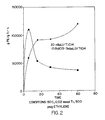
- Table II shows that when the rare earth metal halide is present an active catalyst is obtained even with a Li/Ti ratio of 1/1. The best results in terms of productivity per gram of titanium per hour were obtained when the lithium to Nd ratio was at least 6.
- the catalyst formed from the brown liquid fraction is still more active than the catalyst resulting from the mere combination of titanium tetrachloride with n-butyl lithium at a ratio of butyl lithium to titanium tetrachloride of 30. It is assumed that this brown liquid fraction contains some sort of organo neodymium compounds. When solvent is removed from the brown solution, the resulting composition had 7. weight % neodymium.
- the polyethylene prepared using the n-butyl lithium/titanium tetrachloride or the neodymium-containing catalyst was ultra high molecular weight (UHMW) with inherent viscosities in the range of 17 to 30.
- UHMW ultra high molecular weight
- the density of the resins ranged from about 0.93 to about 0.95. No significant change in density or the molecular weight of the product was detected for reactions conducted above 50°C.
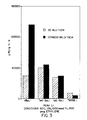
- Figure 3 shows that in all cases the catalyst prepared using alkyl lithium and the neodymium chloride were more active than those produced using only the alkyl lithium. N-butyl lithium gave the best overall activity for the neodymium-containing catalyst. In contrast tertiary butyl lithium gave the best results for the 30 alkyl lithium/titanium tetrachloride catalysts. The tetramethylsilylmethyllithium gave results which were much less desirable than those obtained using the alkyl lithiums.
Landscapes
- Chemical & Material Sciences (AREA)
- Health & Medical Sciences (AREA)
- Chemical Kinetics & Catalysis (AREA)
- Medicinal Chemistry (AREA)
- Polymers & Plastics (AREA)
- Organic Chemistry (AREA)
- Engineering & Computer Science (AREA)
- Materials Engineering (AREA)
- Transition And Organic Metals Composition Catalysts For Addition Polymerization (AREA)
- Addition Polymer Or Copolymer, Post-Treatments, Or Chemical Modifications (AREA)
Applications Claiming Priority (2)
| Application Number | Priority Date | Filing Date | Title |
|---|---|---|---|
| US07/536,383 US5028673A (en) | 1990-06-11 | 1990-06-11 | Olefin polymerization |
| US536383 | 1990-06-11 |
Publications (2)
| Publication Number | Publication Date |
|---|---|
| EP0461581A2 true EP0461581A2 (fr) | 1991-12-18 |
| EP0461581A3 EP0461581A3 (en) | 1992-05-27 |
Family
ID=24138264
Family Applications (1)
| Application Number | Title | Priority Date | Filing Date |
|---|---|---|---|
| EP19910109473 Withdrawn EP0461581A3 (en) | 1990-06-11 | 1991-06-10 | Olefin polymerization |
Country Status (7)
| Country | Link |
|---|---|
| US (1) | US5028673A (fr) |
| EP (1) | EP0461581A3 (fr) |
| JP (1) | JPH04226106A (fr) |
| KR (1) | KR920000793A (fr) |
| AU (2) | AU636981B2 (fr) |
| NO (1) | NO912222L (fr) |
| TW (1) | TW199170B (fr) |
Families Citing this family (6)
| Publication number | Priority date | Publication date | Assignee | Title |
|---|---|---|---|---|
| FR2681870B1 (fr) * | 1991-10-01 | 1994-02-11 | Ecp Enichem Polymeres France Sa | Catalyseurs et procede de preparation de catalyseurs utilisables pour la polymerisation de l'ethylene. |
| US5286694A (en) * | 1991-12-11 | 1994-02-15 | Phillips Petroleum Company | Lanthanide halide catalyst, method of producing the catalyst, and polymerization process employing the catalyst |
| US5258343A (en) * | 1991-12-18 | 1993-11-02 | Phillips Petroleum Company | Metal halide catalyst, method of producing the catalyst, polymerization process employing the catalyst, and polymer produced by the polymerization process |
| US5260244A (en) * | 1991-12-19 | 1993-11-09 | Phillips Petroleum Company | Transition metal/rare earth catalyst, olefin polymeration process, and polymer produced |
| US5182244A (en) * | 1991-12-19 | 1993-01-26 | Phillips Petroleum Company | Transition metal/rare earth catalyst and olefin polymerization process |
| US6046126A (en) * | 1998-05-12 | 2000-04-04 | Kelly; Mark | Titanium process for making catalyst |
Family Cites Families (14)
| Publication number | Priority date | Publication date | Assignee | Title |
|---|---|---|---|---|
| US3392162A (en) * | 1954-08-03 | 1968-07-09 | Ziegler | Polymerization of ethylenically unsaturated hydrocarbons |
| DE1226306B (de) * | 1954-08-13 | 1966-10-06 | Ziegler Karl | Verfahren zur Polymerisation von AEthylen |
| CA814529A (en) * | 1955-07-29 | 1969-06-03 | Hercules Incorporated | Process for polymerizing olefins |
| US3111511A (en) * | 1959-04-06 | 1963-11-19 | Grace W R & Co | Polymerization of ethylene with aluminum alkyl-rare earth halide catalysts |
| US3155641A (en) * | 1961-11-28 | 1964-11-03 | Exxon Research Engineering Co | Polymerization of aryllithium-titanium trihalide catalysts |
| US3429864A (en) * | 1964-12-21 | 1969-02-25 | Phillips Petroleum Co | Ethylene polymerization using catalyst comprising a mixture of rare earth compounds |
| US3812089A (en) * | 1969-12-28 | 1974-05-21 | Mitsubishi Petrochemical Co | Production of olefin polymers |
| US3708551A (en) * | 1970-09-01 | 1973-01-02 | Phillips Petroleum Co | Olefin conversion using rare earth metal halides with organoaluminums |
| US4384982A (en) * | 1981-05-18 | 1983-05-24 | Phillips Petroleum Company | Process and catalyst for olefin polymerization |
| US4524195A (en) * | 1983-10-19 | 1985-06-18 | Phillips Petroleum Company | Process and catalyst for olefin polymerization |
| US4699962A (en) * | 1984-01-30 | 1987-10-13 | Phillips Petroleum Company | Olefin polymerization |
| US4556647A (en) * | 1984-09-13 | 1985-12-03 | Phillips Petroleum Company | Olefin polymerization |
| US4575538A (en) * | 1984-12-20 | 1986-03-11 | Phillips Petroleum Company | Olefin polymerization |
| US5102840A (en) * | 1990-06-11 | 1992-04-07 | Phillips Petroleum Company | Olefin polymerization |
-
1990
- 1990-06-11 US US07/536,383 patent/US5028673A/en not_active Expired - Fee Related
-
1991
- 1991-05-21 AU AU77224/91A patent/AU636981B2/en not_active Ceased
- 1991-05-22 TW TW080103970A patent/TW199170B/zh active
- 1991-06-05 KR KR1019910009310A patent/KR920000793A/ko not_active Withdrawn
- 1991-06-06 JP JP3134899A patent/JPH04226106A/ja active Pending
- 1991-06-10 EP EP19910109473 patent/EP0461581A3/en not_active Withdrawn
- 1991-06-10 NO NO91912222A patent/NO912222L/no unknown
-
1993
- 1993-02-24 AU AU33731/93A patent/AU646363B2/en not_active Ceased
Also Published As
| Publication number | Publication date |
|---|---|
| AU646363B2 (en) | 1994-02-17 |
| NO912222D0 (no) | 1991-06-10 |
| AU7722491A (en) | 1992-01-23 |
| US5028673A (en) | 1991-07-02 |
| KR920000793A (ko) | 1992-01-29 |
| NO912222L (no) | 1991-12-12 |
| JPH04226106A (ja) | 1992-08-14 |
| AU3373193A (en) | 1993-04-29 |
| TW199170B (fr) | 1993-02-01 |
| AU636981B2 (en) | 1993-05-13 |
| EP0461581A3 (en) | 1992-05-27 |
Similar Documents
| Publication | Publication Date | Title |
|---|---|---|
| US4109071A (en) | Process for the polymerization of olefins | |
| US4089808A (en) | Catalysts for the polymerization of olefins, method of preparing the same | |
| EP0046537A2 (fr) | Procédé de préparation d'un catalyseur pour la polymérisation d'oléfines | |
| EP0036660A1 (fr) | Procédé de préparation d'un catalyseur de polymérisation d'oléfines, catalyseur et procédé de polymérisation | |
| US4239650A (en) | Process for the manufacture of a mixed catalyst | |
| US5350816A (en) | Olefin polymerization process and polymer produced | |
| JPH0710917A (ja) | 触媒系、その触媒系のオレフィン(共)重合のための使用、その触媒系の製造方法及びオレフィン(共)重合法 | |
| US5260244A (en) | Transition metal/rare earth catalyst, olefin polymeration process, and polymer produced | |
| US5173464A (en) | Olefin polymerization | |
| EP0113878B1 (fr) | Procédé et catalyseur pour la polymérisation d'oléfines | |
| US4097659A (en) | Process of polymerizing α-olefins in the liquid phase | |
| EP0115833A1 (fr) | Procédé de préparation de polyoléfines par polymérisation et catalyseurs utilisés | |
| US4295992A (en) | Support prepared from organomagnesium compounds and silicon halides; and catalysts for polymerizing olefins | |
| US5028673A (en) | Olefin polymerization | |
| US4283515A (en) | Support, catalyst and process for polymerizing olefins | |
| EP0171606A1 (fr) | Procédé de polymérisation d'oléfines et catalyseur | |
| US4192772A (en) | Solid catalyst and process for the preparation thereof | |
| US4064334A (en) | Process for preparing polyolefins | |
| US5102840A (en) | Olefin polymerization | |
| US5110884A (en) | Olefin polymerization | |
| CA1128916A (fr) | Support contenant du magnesium, catalyseur et procede de polymerisation des olefines | |
| US5286694A (en) | Lanthanide halide catalyst, method of producing the catalyst, and polymerization process employing the catalyst | |
| EP0027733A1 (fr) | Procédé pour la polymérisation d'alpha-monooléfines, catalyseur supporté pour celui-ci et procédé de préparation de ce catalyseur | |
| EP0085389B1 (fr) | Catalyseur pour la polymérisation des oléfines et procédé de polymérisation des oléfines | |
| US5071928A (en) | Process for polymerizing ethylene and copolymerizing ethylene with alpha-olefins and relevant catalyst |
Legal Events
| Date | Code | Title | Description |
|---|---|---|---|
| PUAI | Public reference made under article 153(3) epc to a published international application that has entered the european phase |
Free format text: ORIGINAL CODE: 0009012 |
|
| AK | Designated contracting states |
Kind code of ref document: A2 Designated state(s): AT BE CH DE DK ES FR GB GR IT LI LU NL SE |
|
| PUAL | Search report despatched |
Free format text: ORIGINAL CODE: 0009013 |
|
| AK | Designated contracting states |
Kind code of ref document: A3 Designated state(s): AT BE CH DE DK ES FR GB GR IT LI LU NL SE |
|
| 17P | Request for examination filed |
Effective date: 19920929 |
|
| 17Q | First examination report despatched |
Effective date: 19931220 |
|
| STAA | Information on the status of an ep patent application or granted ep patent |
Free format text: STATUS: THE APPLICATION IS DEEMED TO BE WITHDRAWN |
|
| 18D | Application deemed to be withdrawn |
Effective date: 19950427 |