EP0461920A2 - Drucksysteme - Google Patents
Drucksysteme Download PDFInfo
- Publication number
- EP0461920A2 EP0461920A2 EP91305414A EP91305414A EP0461920A2 EP 0461920 A2 EP0461920 A2 EP 0461920A2 EP 91305414 A EP91305414 A EP 91305414A EP 91305414 A EP91305414 A EP 91305414A EP 0461920 A2 EP0461920 A2 EP 0461920A2
- Authority
- EP
- European Patent Office
- Prior art keywords
- job
- document
- documents
- scanning
- scanner
- Prior art date
- Legal status (The legal status is an assumption and is not a legal conclusion. Google has not performed a legal analysis and makes no representation as to the accuracy of the status listed.)
- Granted
Links
Images


Classifications
-
- H—ELECTRICITY
- H04—ELECTRIC COMMUNICATION TECHNIQUE
- H04N—PICTORIAL COMMUNICATION, e.g. TELEVISION
- H04N1/00—Scanning, transmission or reproduction of documents or the like, e.g. facsimile transmission; Details thereof
- H04N1/32—Circuits or arrangements for control or supervision between transmitter and receiver or between image input and image output device, e.g. between a still-image camera and its memory or between a still-image camera and a printer device
- H04N1/32037—Automation of particular transmitter jobs, e.g. multi-address calling, auto-dialing
- H04N1/3208—Transmitting a plurality of separate messages to a common destination in a single transmission
-
- H—ELECTRICITY
- H04—ELECTRIC COMMUNICATION TECHNIQUE
- H04N—PICTORIAL COMMUNICATION, e.g. TELEVISION
- H04N1/00—Scanning, transmission or reproduction of documents or the like, e.g. facsimile transmission; Details thereof
- H04N1/00912—Arrangements for controlling a still picture apparatus or components thereof not otherwise provided for
- H04N1/0096—Simultaneous or quasi-simultaneous functioning of a plurality of operations
-
- H—ELECTRICITY
- H04—ELECTRIC COMMUNICATION TECHNIQUE
- H04N—PICTORIAL COMMUNICATION, e.g. TELEVISION
- H04N1/00—Scanning, transmission or reproduction of documents or the like, e.g. facsimile transmission; Details thereof
- H04N1/32—Circuits or arrangements for control or supervision between transmitter and receiver or between image input and image output device, e.g. between a still-image camera and its memory or between a still-image camera and a printer device
- H04N1/32561—Circuits or arrangements for control or supervision between transmitter and receiver or between image input and image output device, e.g. between a still-image camera and its memory or between a still-image camera and a printer device using a programmed control device, e.g. a microprocessor
-
- H—ELECTRICITY
- H04—ELECTRIC COMMUNICATION TECHNIQUE
- H04N—PICTORIAL COMMUNICATION, e.g. TELEVISION
- H04N2201/00—Indexing scheme relating to scanning, transmission or reproduction of documents or the like, and to details thereof
- H04N2201/0077—Types of the still picture apparatus
- H04N2201/0081—Image reader
-
- H—ELECTRICITY
- H04—ELECTRIC COMMUNICATION TECHNIQUE
- H04N—PICTORIAL COMMUNICATION, e.g. TELEVISION
- H04N2201/00—Indexing scheme relating to scanning, transmission or reproduction of documents or the like, and to details thereof
- H04N2201/0077—Types of the still picture apparatus
- H04N2201/0082—Image hardcopy reproducer
-
- Y—GENERAL TAGGING OF NEW TECHNOLOGICAL DEVELOPMENTS; GENERAL TAGGING OF CROSS-SECTIONAL TECHNOLOGIES SPANNING OVER SEVERAL SECTIONS OF THE IPC; TECHNICAL SUBJECTS COVERED BY FORMER USPC CROSS-REFERENCE ART COLLECTIONS [XRACs] AND DIGESTS
- Y10—TECHNICAL SUBJECTS COVERED BY FORMER USPC
- Y10S—TECHNICAL SUBJECTS COVERED BY FORMER USPC CROSS-REFERENCE ART COLLECTIONS [XRACs] AND DIGESTS
- Y10S347/00—Incremental printing of symbolic information
- Y10S347/90—Data processing for electrostatic recording
Definitions
- the invention relates to electronic printing systems, and more particularly, to a job supplement process for enabling print jobs to be built up from different document sources or to meet specialized job requirements.
- the term 'printing' in this specification includes the production of marks on an output medium by a non-impact process, such as xerogrpahy.
- Electronic printing systems typically employ a scanner for scanning image-bearing documents and converting the image to image signals, or 'pixels', for use in making prints.
- the job source usually consists of a quantity of documents having the same or similar parameters that enable the documents to be scanned en masse and without special treatment for individual documents. In some cases, however, the job may include diverse documents that require special treatment and therefore cannot be scanned with the other documents in a single scan. Similarly, the job program may necessitate that some documents be processed apart from the other documents that comprise the job. For example, a job may consist of a plurality of text-bearing documents, with one or more pictures.
- the documents cannot be scanned together in one pass if image processing of both types is to be optimized.
- the documents may differ in size, and thus require different scaling ratios to provide prints of the same size; some documents in a job may be fragile and require manual handling rather than being subjected to the possibility of damage by an automatic document handler; a job may consist of documents in the form of both individual sheets and computer form, etc. In these and the manifold other situations in which special processes are required, it would be highly desirable if a system or procedure existed to allow these special cases to be handled expeditiously and efficiently.
- US-A-4,573,084 discloses a document filing system in which the image data are optically read into RAM by scanning the documents and the data stored, with means provided to enable the RAM to be searched quickly and the data retrieved for display or printing.
- US-A-4,757,348 discloses a high-speed electronic reprographic/printing machine with scanner in which job tickets are assembled with the documents to be processed, each job ticket having a bar code enabling job instructions previously programmed in to be accessed.
- US-A-4,786,940 discloses a data handling and archiving system in which hard copy prints are used as the archiving material, with means enabling the data archived to be protected through encoding, and accessed through special recognition constraints.
- the present invention provides a job supplement process for a printing system effective, when actuated, to enable a print job to be built up from a plurality of smaller print jobs
- the printing system including a document-scanner with a platen on which documents to be scanned are placed, the scanner having automatic and manually assisted document handling modes for inputting documents to the platen for scanning and converting the document images to image signals for use in making prints, the steps comprising: automatically implementing job supplement in response to operation of the scanner in the manually-assisted document handling mode; manually implementing the job supplement in response to operation of the scanner in the automatic document handling mode, and preventing scanning of the next job by the scanner in response to implementation of the job supplement process.
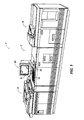
- FIG. 1 and 2 there is shown an exemplary laser-based printing system 2 for processing print jobs in accordance with the present invention.
- Printing system 2 for purposes of explanation, is divided into a scanner 6, controller 7, and printer 8. While a specific printing system is shown and described, the present invention may be used with other types of printing systems such as ink jet, ionographic, etc.
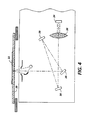
- scanner 6 incorporates a transparent platen 20 on which the document 22 to be scanned is located.
- One or more linear arrays 24 of photodetectors are supported for reciprocating scanning movement below platen 20.
- Lens 26 and mirrors 28, 29, 30 cooperate to focus array 24 on a line -like segment of platen 20 and the document being scanned thereon.
- Array 24 provides image signals or pixels representative of the image scanned which, after suitable processing by processor 25, are output to controller 7.
- Processor 25 converts the analog image signals output by array 24 to digital signals and processes the image signals as required to enable system 2 to store and handle the image data in the form required to carry out the job programmed.
- Processor 25 may provide enhancements and changes to the image signals such as filtering, thresholding, screening, cropping, etc.
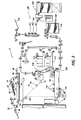
- Documents 22 to be scanned may be located on platen 20 for scanning by automatic document handler (ADF) 35 (Fig 3) operable in either a recirculating document handling (RDH) mode or a semi-automatic document handling (SADH) mode.
- a manual mode including a book mode, and a computer forms feeder (CFF) mode are also provided, the latter to accommodate documents in the form of computer fanfold.
- document handler 35 has a document tray 37 in which documents 22 are arranged in stacks or batches. The documents 22 in tray 37 are advanced by suction feed belt 40, document feed rolls 41 and document feed belt 42 onto platen 20 where the document is scanned by array 24. Following scanning, the document is removed from platen 20 by belt 42 and returned to tray 37 by document feed rolls 44.
- a document entry slot 46 provides access to the document feed belt 42 between tray 37 and platen 20 through which individual documents may be inserted manually for transport to platen 20. Feed rolls 49 behind slot 46 form a nip for engaging and feeding the document to feed belt 42 and onto platen 20. Following scanning, the document is removed from platen 20 and discharged into catch tray 48.
- document handler 35 is pivoted upwardly to expose platen 20. This permits the document 22 to be manually placed on platen 20, following which array 24 is operated to scan the document. When scanning is completed, the document is removed to clear platen 20 for the next document.
- book mode the book is manually positioned face down on platen 20 with the center line of the book aligned with positioning indicia (not shown) located along the border of platen 20. By programming the system, either one or both of the pages of the book open on the platen are scanned. The process is repeated for different pages of the book until all of the pages desired have been scanned, following which the book is removed to clear platen 20.
- computer forms material is fed through slot 46 and advanced by feed rolls 49 to document feed belt 42, which in turn advances a page of the fanfold material into position on platen 20.
- printer section 8 comprises a laser type printer which, for purposes of explanation, is separated into a raster output scanner (ROS) 87, print module section 95, paper supply 107, and finisher 120.
- ROS 95 has a laser 91, the beam of which is split into two imaging beams 94.
- Each beam 94 is modulated in accordance with the content of an image signal input by acousto-optic modulator 92 to provide dual imaging beams 94.
- Beams 94 are scanned across a moving photoreceptor 98 of print module 95 by the mirrored facets of a rotary polygon 100 to expose two image lines on photoreceptor 98 with each scan and create the latent electrostatic images represented by the image signal input to modulator 92.
- Photoreceptor 98 is uniformly charged by corotrons 102 at a charging station preparatory to exposure by imaging beams 94.
- the latent electrostatic images are developed by developer 104 and transferred at transfer station 106 to a print medium 108 delivered by paper supply section 107.
- Medium 108 may comprise any of a variety of sheet sizes, types, and colors.
- the print medium is brought forward in timed registration with the developed image on photoreceptor 98, from either a main paper tray 110 or from auxiliary paper trays 112 or 114.
- the developed image transferred to the print medium 108 is permanently fixed or fused by fuser 116, and the resulting prints discharged to either output tray 118 or finisher 120.
- Finisher 120 includes a stitcher 122 for stitching or stapling the prints together to form books, and a thermal binder 124 for adhesively binding the prints into books.
- controller 7 is, for explanation purposes, divided into an image input controller 50, user interface (UI) 52, system controller 54, main memory 56, image manipulation section 58, and image output controller 60.
- UI user interface
- system controller 54 main memory 56
- image manipulation section 58 image output controller 60.
- the scanned image data input from processor 25 of scanner section 6 to controller section 7 is compressed by image compressor/ processor 51 of image input controller 50 on PWB 70-3.
- image compressor/processor 51 As the image data pass through compressor/processor 51, they are segmented into slices N scanlines wide, each slice having a slice pointer.
- the compressed image data, together with slice pointers and any related image descriptors providing image specific information (such as height and width of the document in pixels, the compression method used, pointers to the compressed image data, and pointers to the image slice pointers), are placed in an image file.
- the image files, which represent different print jobs, are temporarily stored in system memory 61 which comprises a random access memory (RAM) pending transfer to main memory 56 where the data are held pending use.
- RAM random access memory
- UI 52 includes a combined operator controller/CRT display consisting of an interactive touchscreen 62, keyboard 64 and mouse 66.
- UI 52 interfaces the operator with printing system 2, enabling the operator to program print jobs and other instructions, to obtain system operating information, instructions, programming information, diagnostic information, etc.
- Items displayed on touchscreen 62, such as files and icons, are actuated by either touching the displayed item on screen 62 with a finger, or by using mouse 66 to position cursor 67 on the item selected and keying the mouse.
- Main memory 56 has plural hard disks 90-1, 90-2, 90-3 for storing machine operating system software, machine operating data, and the scanned image data currently being processed.
- main memory 56 When the compressed image data in main memory 56 require further processing, or are required for display on touchscreen 62 of UI 52, or are required by printer 8, the data are accessed in main memory 56. Where further processing, other than that provided by processor 25, is required, the data are transferred to image manipulation section 58 on PWB 70-6 where the additional processing steps, such as collation, make ready, decomposition, etc., are carried out. Following processing, the data may be returned to main memory 56, sent to UI 52 for display on touchscreen 62, or sent to image output controller 60.
- Image data output to image output controller 60 are decompressed and readied for printing by image-generating processors 86 of PWBs 70-7, 70-8 (seen in Figure 5A). Following this, the data are output by dispatch processors 88, 89 on PWB 70-9 to printer section 8. Image data sent to printer section 8 for printing are normally purged from memory 56 to make room for new image data.
- control section 7 includes a plurality of printed wiring boards (PWB) 70, PWBs 70 being coupled with one another and with system memory 61 by a pair of memory buses 72, 74.
- Memory controller 76 couples system memory 61 with buses 72, 74.
- PWBs 70 include system processor PWB 70-1 having system processors 78; low speed I/O processor PWB 70-2 having UI communication controller 80 for transmitting data to and from UI 52; PWBs 70-3, 70-4, 70-5 having disk drive controller/processors 82 for transmitting data to and from disks 90-1, 90-2, 90-3 respectively of main memory 56 (image compressor/processor 51 for compressing the image data is on PWB 70-3); image manipulation PWB 70-6 with image manipulation processors of image manipulation section 58; image generation processor PWBs 70-7, 70-8 with image generation processors 86 for processing the image data for printing by printer section 8; dispatch processor PWB 70-9 having dispatch processors 88, 89 for controlling transmission of data to and from printer section 8; and boot control-arbitration-scheduler PWB 70-10.
- system control signals are distributed via a plurality of printed wiring boards (PWBs). These include EDN core PWB 130, marking imaging core PWB 132, paper handling core PWB 134, and finisher binder core PWB 136, together with various input/output (I/O) PWBs 138.
- a system bus 140 couples the core PWBs 130, 132, 134, 136 with each other and with controller 7, while local buses 142 serve to couple the I/O PWBs 138 with each other and with their associated core PWB.
- the operating system software is loaded from memory 56 to EDN core PWB 130, and from there to the remaining core PWBs 132, 134, 136 via bus 140, each core PWB 130, 132, 134, 136 having a boot ROM 147 for controlling downloading of operating system software to the PWB, fault detection, etc.
- Boot ROMs 147 also enable transmission of operating system software and control data to and from PWBs 130, 132, 134, 136 via bus 140, and control data to and from I/O PWBs 138 via local buses 142. Additional ROM, RAM, and NVM memory types are resident at various locations within system 2.
- jobs are programmed in a job program mode in which there are displayed on touchscreen 62 a job ticket 150 and a job scorecard 152 for the job being programmed.
- job ticket 150 displays various job options available for programming the job, while job scorecard 152 displays the basic instructions to the system for printing the job.
- job scorecard 152 displays the basic instructions to the system for printing the job.
- the "Quantity" icon on job scorecard 152 has been actuated, displaying a keyboard 153 through the use of which the number of prints to be made can be programmed.
- the job supplement function of the present invention is used.
- the operator programs the supplemental job, creating a job ticket 150 and job scorecard 152 therefor in the same manner as when programming a job as described above.
- JOB SUPPLEMENT In cases where the documents that comprise the supplemental job are scanned in either the RDH mode or the CFF mode, job supplement must be implemented manually (Job Supplement Selected?).
- a soft button in the form of an icon 160 labeled JOB SUPPLEMENT which is displayed on touchscreen 62 by the system software, is actuated either by touching icon 160 on touchscreen 62 with a finger, or position the mouse cursor 126 displayed on touchscreen 62 on the JOB SUPPLEMENT icon and actuating mouse 66.
- the operator places the documents that comprise the job supplement in document tray 37 of ADF 35 and actuates the START SCAN icon 162 displayed on touchscreen 62 by touching the icon or by using mouse 66.
- the JOB SUPPLEMENT icon 160 is replaced by an END JOB icon 164 (Make ENDJOB button available/Enable ENDJOB button), warning the operator that scanner 7 is in the job supplement mode.
- Implementation of the job supplement function prevents scanning in of the next job by scanner 7 until the job supplement function is cleared. Normally, this is effected by either touching the END JOB icon 164 or by triggering mouse 66.
- clearing of the job supplement function may be done manually by touching the END JOB icon 164 on touchscreen 62 directly, by triggering mouse 66 (ENDJOB selected), or by selecting the RDH mode.
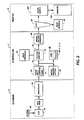
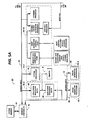
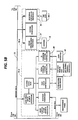
- FIG. 10 there is shown the state transitions when operating in the job supplement mode.
- START SCAN icon 162 On actuation of START SCAN icon 162, a check is made to determine if a programming conflict exists (Conflict Detected). If so, END JOB icon 164 is enabled, preventing scanning of a new job until the conflict is cleared and END JOB icon 164 is disabled.
- ADF 35 is operated in either the SADH or Platen mode to scan in the job supplement material (Scanning SADH or Platen?)
- job supplement is automatically invoked (Scanning SADH/Platen Supplement), enabling END JOB icon 164.
- END JOB icon 164 must be disabled before scanning of the next job can begin.
- JOB SUPPLEMENT icon 160 is actuated (Job Supplement Selected?)
- operation of ADF 35 in either the RDH or CFF modes (Scanning RDH/CFF Supplement) enables END JOB icon 164 as described.
- CFF mode is programmed to scan to a preset page (Scan CFF to a Page Selected?)
- job supplement is automatically invoked (Scanning RDH/CFF Supplement), enabling END JOB icon 164 as described.
- any number of additional documents or groups of documents may be scanned in for addition to the job, either in a single pass or in a series of passes.
- Any of the scanner inputs i.e., RDH, SADH, manual platen, book mode, or CFF may be used for this purpose, as described.
- the image data are processed, compressed, and stored on main memory 56.
- END JOB icon 164 When END JOB icon 164 is actuated (ENDJOB selected) or where the job is completed (ENDJOB complete), END JOB icon 164 is removed.
- the image data comprising the job and the supplemental material may be accessed in main memory 56 and displayed on touchscreen 62 of UI 52.
- touchscreen 62 is sized sufficiently large to enable plural pages of the scanned-in job material to be displayed at once.
- job pages and partial pages that make up the job may be edited, moved, processed, etc. to build up the job in the fashion desired.
- pages from the supplemental material may be inserted at desired points in the job, excerpts and parts of the job moved to different locations in the job, enlarged, deleted, etc. until the job is set up in the manner desired.
- adjustment may be made using UL 52 to render the various parts of the job compatible with one another.
Landscapes
- Engineering & Computer Science (AREA)
- Multimedia (AREA)
- Signal Processing (AREA)
- Computer Hardware Design (AREA)
- Microelectronics & Electronic Packaging (AREA)
- Automation & Control Theory (AREA)
- Control Or Security For Electrophotography (AREA)
- Facsimiles In General (AREA)
- Facsimile Scanning Arrangements (AREA)
- Exposure Or Original Feeding In Electrophotography (AREA)
- Combination Of More Than One Step In Electrophotography (AREA)
Applications Claiming Priority (2)
| Application Number | Priority Date | Filing Date | Title |
|---|---|---|---|
| US07/538,453 US5081494A (en) | 1990-06-15 | 1990-06-15 | Job supplement for electronic printing machines |
| US538453 | 1995-10-03 |
Publications (3)
| Publication Number | Publication Date |
|---|---|
| EP0461920A2 true EP0461920A2 (de) | 1991-12-18 |
| EP0461920A3 EP0461920A3 (en) | 1993-03-24 |
| EP0461920B1 EP0461920B1 (de) | 1996-09-04 |
Family
ID=24147000
Family Applications (1)
| Application Number | Title | Priority Date | Filing Date |
|---|---|---|---|
| EP91305414A Expired - Lifetime EP0461920B1 (de) | 1990-06-15 | 1991-06-14 | Drucksysteme |
Country Status (4)
| Country | Link |
|---|---|
| US (1) | US5081494A (de) |
| EP (1) | EP0461920B1 (de) |
| JP (1) | JP2977947B2 (de) |
| DE (1) | DE69121793T2 (de) |
Cited By (2)
| Publication number | Priority date | Publication date | Assignee | Title |
|---|---|---|---|---|
| EP1087609A3 (de) * | 1999-09-24 | 2002-02-13 | Hewlett-Packard Company, A Delaware Corporation | Verfahren und System zum Wiederholen eines Leseauftrags |
| EP1162824A3 (de) * | 2000-06-09 | 2004-08-18 | Konica Corporation | Bilderzeugungsgerät |
Families Citing this family (16)
| Publication number | Priority date | Publication date | Assignee | Title |
|---|---|---|---|---|
| US5408329A (en) * | 1992-09-08 | 1995-04-18 | Xerox Corporation | Image enhancement through digital darkness control |
| JP3534331B2 (ja) * | 1994-08-09 | 2004-06-07 | ゼロックス コーポレイション | ネットワークインタフェースを使用して多種のローカル及びリモートソースから多セグメント印刷ジョブを構築する方法 |
| US5794099A (en) * | 1994-11-22 | 1998-08-11 | Eastman Kodak Company | Copier apparatus and method with flexible source document entry scanning with display of options for selection of source |
| NL9402088A (nl) * | 1994-12-09 | 1996-07-01 | Oce Nederland Bv | Afdruk-inrichting voor het uitvoeren van afdruk-opdrachten. |
| US5493367A (en) * | 1994-12-23 | 1996-02-20 | Eastman Kodak Company | Reproduction apparatus and method for correctly orienting principal copies and supplemental copies |
| JP3058248B2 (ja) | 1995-11-08 | 2000-07-04 | キヤノン株式会社 | 画像処理制御装置及び画像処理制御方法 |
| JP3593399B2 (ja) * | 1995-12-07 | 2004-11-24 | 株式会社東芝 | 画像形成装置および画像形成方法 |
| US5749023A (en) * | 1997-04-04 | 1998-05-05 | Xerox Corporation | Adaptive feed forward compensation for time varying toner cohesivity |
| US6151131A (en) * | 1997-11-03 | 2000-11-21 | Xerox Corporation | Print system with deferred job assembly feature |
| US6239880B1 (en) * | 1998-04-10 | 2001-05-29 | Xerox Corporation | Memory management system for a printing system |
| US6215487B1 (en) | 1998-04-10 | 2001-04-10 | Xerox Corporation | System for altering attribute values in a printing system |
| JP4144175B2 (ja) | 2000-11-20 | 2008-09-03 | コニカミノルタビジネステクノロジーズ株式会社 | 画像処理装置、画像形成装置および画像形成システムならびに画像ジョブ結合方法 |
| US20030123080A1 (en) * | 2001-12-27 | 2003-07-03 | Toshiba Tec Kabushiki Kaisha | Image forming device and method for controling the same |
| US6619792B1 (en) * | 2002-07-12 | 2003-09-16 | Hewlett-Packard Development Company, L.P. | Printing mechanism |
| US7679777B2 (en) * | 2005-05-03 | 2010-03-16 | Xerox Corporation | Job supplement for electronic printing machines |
| US7639389B2 (en) * | 2006-12-12 | 2009-12-29 | Xerox Corporation | Memory for diagnosing imaging component failure |
Family Cites Families (9)
| Publication number | Priority date | Publication date | Assignee | Title |
|---|---|---|---|---|
| US4273439A (en) * | 1979-07-09 | 1981-06-16 | International Business Machines Corporation | Document feeder system having a suspending/commencing mode with a judgment decision capability |
| JPS56149668A (en) * | 1980-04-21 | 1981-11-19 | Toshiba Corp | Storing and retrieving device for picture information |
| US4870058A (en) * | 1982-12-20 | 1989-09-26 | Ohio State University Research Foundation | 14-Acyloxy-2'-halo-anthracycline anti-cancer antibiotics |
| JPS61153667A (ja) * | 1984-12-27 | 1986-07-12 | Minolta Camera Co Ltd | 複写装置 |
| JPS62284419A (ja) * | 1986-05-31 | 1987-12-10 | Toshiba Corp | 入力装置 |
| US4757348A (en) * | 1986-11-17 | 1988-07-12 | Xerox Corporation | High speed electronic reprographic/printing machine |
| US4786940A (en) * | 1986-11-17 | 1988-11-22 | Xerox Corporation | Data handling and archiving system |
| US4956667A (en) * | 1989-06-23 | 1990-09-11 | Eastman Kodak Company | Priority interrupt during editing mode |
| US4961092A (en) * | 1989-12-06 | 1990-10-02 | Xerox Corporation | Pre-programmed pauses post-collation copying system |
-
1990
- 1990-06-15 US US07/538,453 patent/US5081494A/en not_active Expired - Lifetime
-
1991
- 1991-06-10 JP JP3138038A patent/JP2977947B2/ja not_active Expired - Lifetime
- 1991-06-14 DE DE69121793T patent/DE69121793T2/de not_active Expired - Lifetime
- 1991-06-14 EP EP91305414A patent/EP0461920B1/de not_active Expired - Lifetime
Cited By (3)
| Publication number | Priority date | Publication date | Assignee | Title |
|---|---|---|---|---|
| EP1087609A3 (de) * | 1999-09-24 | 2002-02-13 | Hewlett-Packard Company, A Delaware Corporation | Verfahren und System zum Wiederholen eines Leseauftrags |
| US6535914B1 (en) | 1999-09-24 | 2003-03-18 | Hewlett-Packard Company | Method for repeating a scan operation in a network |
| EP1162824A3 (de) * | 2000-06-09 | 2004-08-18 | Konica Corporation | Bilderzeugungsgerät |
Also Published As
| Publication number | Publication date |
|---|---|
| EP0461920B1 (de) | 1996-09-04 |
| JPH04330851A (ja) | 1992-11-18 |
| US5081494A (en) | 1992-01-14 |
| JP2977947B2 (ja) | 1999-11-15 |
| DE69121793D1 (de) | 1996-10-10 |
| EP0461920A3 (en) | 1993-03-24 |
| DE69121793T2 (de) | 1997-02-13 |
Similar Documents
| Publication | Publication Date | Title |
|---|---|---|
| EP0478970B1 (de) | Elektronischer Druckprozess zum Drucken zusammengesetzter Bilder | |
| EP0465166B1 (de) | Aufgabe-/Seite-Testaufnahmedrucken für elektronische Drucker | |
| US5133048A (en) | System for printing ordered stock | |
| US5119206A (en) | System for printing bound documents | |
| US5260805A (en) | Process for identifying programming conflicts in electronic printing systems | |
| AU2001239868B2 (en) | Method and apparatus for tab printing | |
| US5206735A (en) | Job interrupt for electronic copying/printing machines | |
| EP0461920B1 (de) | Drucksysteme | |
| US5107299A (en) | Printer job recovery of complete or partially complete jobs in an electronic reprographic printing system | |
| EP0478270B2 (de) | Elektronisches reprographisches System | |
| AU2001239868A1 (en) | Method and apparatus for tab printing | |
| US5309558A (en) | Set addressing for electronic printing machines | |
| EP0479495B1 (de) | Automatisch einstellbare Bildverschiebung für vorgeschnittene tabellierte Blätter | |
| EP0478356B1 (de) | Elektronisches reprographisches System | |
| US5187587A (en) | Handling of copy sensitive jobs in an electronic reprographic printing system using unidirectional and bidirectional delivery of copies to plural bins | |
| EP0488814B1 (de) | System zur Abtastung von Druckseiten | |
| US5519501A (en) | Proofing images in a print job having at least one image in a print job having at least one image for printing on tab stock | |
| US7679777B2 (en) | Job supplement for electronic printing machines | |
| EP0478353B1 (de) | Reprografisches Drucksystem | |
| EP0478335A2 (de) | Elektronisches Drucksystem | |
| EP0465179A2 (de) | Elektronische Kopie-/Druck-Geräte |
Legal Events
| Date | Code | Title | Description |
|---|---|---|---|
| PUAI | Public reference made under article 153(3) epc to a published international application that has entered the european phase |
Free format text: ORIGINAL CODE: 0009012 |
|
| AK | Designated contracting states |
Kind code of ref document: A2 Designated state(s): DE FR GB |
|
| PUAL | Search report despatched |
Free format text: ORIGINAL CODE: 0009013 |
|
| AK | Designated contracting states |
Kind code of ref document: A3 Designated state(s): DE FR GB |
|
| 17P | Request for examination filed |
Effective date: 19930826 |
|
| 17Q | First examination report despatched |
Effective date: 19950616 |
|
| GRAG | Despatch of communication of intention to grant |
Free format text: ORIGINAL CODE: EPIDOS AGRA |
|
| GRAH | Despatch of communication of intention to grant a patent |
Free format text: ORIGINAL CODE: EPIDOS IGRA |
|
| GRAH | Despatch of communication of intention to grant a patent |
Free format text: ORIGINAL CODE: EPIDOS IGRA |
|
| GRAA | (expected) grant |
Free format text: ORIGINAL CODE: 0009210 |
|
| AK | Designated contracting states |
Kind code of ref document: B1 Designated state(s): DE FR GB |
|
| REF | Corresponds to: |
Ref document number: 69121793 Country of ref document: DE Date of ref document: 19961010 |
|
| ET | Fr: translation filed | ||
| PLBE | No opposition filed within time limit |
Free format text: ORIGINAL CODE: 0009261 |
|
| STAA | Information on the status of an ep patent application or granted ep patent |
Free format text: STATUS: NO OPPOSITION FILED WITHIN TIME LIMIT |
|
| 26N | No opposition filed | ||
| REG | Reference to a national code |
Ref country code: GB Ref legal event code: IF02 |
|
| PGFP | Annual fee paid to national office [announced via postgrant information from national office to epo] |
Ref country code: FR Payment date: 20100709 Year of fee payment: 20 |
|
| PGFP | Annual fee paid to national office [announced via postgrant information from national office to epo] |
Ref country code: DE Payment date: 20100610 Year of fee payment: 20 Ref country code: GB Payment date: 20100609 Year of fee payment: 20 |
|
| REG | Reference to a national code |
Ref country code: DE Ref legal event code: R071 Ref document number: 69121793 Country of ref document: DE |
|
| REG | Reference to a national code |
Ref country code: DE Ref legal event code: R071 Ref document number: 69121793 Country of ref document: DE |
|
| REG | Reference to a national code |
Ref country code: GB Ref legal event code: PE20 Expiry date: 20110613 |
|
| PG25 | Lapsed in a contracting state [announced via postgrant information from national office to epo] |
Ref country code: GB Free format text: LAPSE BECAUSE OF EXPIRATION OF PROTECTION Effective date: 20110613 |
|
| PG25 | Lapsed in a contracting state [announced via postgrant information from national office to epo] |
Ref country code: DE Free format text: LAPSE BECAUSE OF EXPIRATION OF PROTECTION Effective date: 20110615 |