EP0463471A2 - Bildverarbeitungssystem für dokumentarische Daten - Google Patents
Bildverarbeitungssystem für dokumentarische Daten Download PDFInfo
- Publication number
- EP0463471A2 EP0463471A2 EP91109600A EP91109600A EP0463471A2 EP 0463471 A2 EP0463471 A2 EP 0463471A2 EP 91109600 A EP91109600 A EP 91109600A EP 91109600 A EP91109600 A EP 91109600A EP 0463471 A2 EP0463471 A2 EP 0463471A2
- Authority
- EP
- European Patent Office
- Prior art keywords
- indicia
- interest
- area
- document
- pixel image
- Prior art date
- Legal status (The legal status is an assumption and is not a legal conclusion. Google has not performed a legal analysis and makes no representation as to the accuracy of the status listed.)
- Granted
Links
Images




Classifications
-
- G—PHYSICS
- G06—COMPUTING OR CALCULATING; COUNTING
- G06F—ELECTRIC DIGITAL DATA PROCESSING
- G06F15/00—Digital computers in general; Data processing equipment in general
-
- G—PHYSICS
- G09—EDUCATION; CRYPTOGRAPHY; DISPLAY; ADVERTISING; SEALS
- G09B—EDUCATIONAL OR DEMONSTRATION APPLIANCES; APPLIANCES FOR TEACHING, OR COMMUNICATING WITH, THE BLIND, DEAF OR MUTE; MODELS; PLANETARIA; GLOBES; MAPS; DIAGRAMS
- G09B7/00—Electrically-operated teaching apparatus or devices working with questions and answers
- G09B7/06—Electrically-operated teaching apparatus or devices working with questions and answers of the multiple-choice answer-type, i.e. where a given question is provided with a series of answers and a choice has to be made from the answers
- G09B7/066—Electrically-operated teaching apparatus or devices working with questions and answers of the multiple-choice answer-type, i.e. where a given question is provided with a series of answers and a choice has to be made from the answers with answer indicating cards, blocks
-
- G—PHYSICS
- G06—COMPUTING OR CALCULATING; COUNTING
- G06F—ELECTRIC DIGITAL DATA PROCESSING
- G06F40/00—Handling natural language data
- G06F40/10—Text processing
- G06F40/166—Editing, e.g. inserting or deleting
- G06F40/174—Form filling; Merging
-
- G—PHYSICS
- G06—COMPUTING OR CALCULATING; COUNTING
- G06K—GRAPHICAL DATA READING; PRESENTATION OF DATA; RECORD CARRIERS; HANDLING RECORD CARRIERS
- G06K17/00—Methods or arrangements for effecting co-operative working between equipments covered by two or more of main groups G06K1/00 - G06K15/00, e.g. automatic card files incorporating conveying and reading operations
-
- G—PHYSICS
- G06—COMPUTING OR CALCULATING; COUNTING
- G06K—GRAPHICAL DATA READING; PRESENTATION OF DATA; RECORD CARRIERS; HANDLING RECORD CARRIERS
- G06K7/00—Methods or arrangements for sensing record carriers, e.g. for reading patterns
- G06K7/10—Methods or arrangements for sensing record carriers, e.g. for reading patterns by electromagnetic radiation, e.g. optical sensing; by corpuscular radiation
- G06K7/12—Methods or arrangements for sensing record carriers, e.g. for reading patterns by electromagnetic radiation, e.g. optical sensing; by corpuscular radiation using a selected wavelength, e.g. to sense red marks and ignore blue marks
-
- G—PHYSICS
- G06—COMPUTING OR CALCULATING; COUNTING
- G06V—IMAGE OR VIDEO RECOGNITION OR UNDERSTANDING
- G06V10/00—Arrangements for image or video recognition or understanding
- G06V10/10—Image acquisition
- G06V10/12—Details of acquisition arrangements; Constructional details thereof
- G06V10/14—Optical characteristics of the device performing the acquisition or on the illumination arrangements
- G06V10/143—Sensing or illuminating at different wavelengths
Definitions
- the present invention relates generally to the fields of optical mark scanning apparatus, character recognition apparatus and visual imaging scanning apparatus. More particularly, the present invention relates to an image processing system that is capable of capturing scanned images and processing them with various intelligent symbol recognition (ISR) resources, including a bar code reader, an optical mark reader, a font OCR reader, a reader of handprinted numeric data and/or a reader of handprinted alphanumeric data to produce ASCII or equivalent character-based alphanumeric data (hereinafter called a handprint ISR system), and also capable of maintaining pixel images so as to integrate these multiple forms of data and images.
- ISR intelligent symbol recognition
- the present invention is an information processing system that extracts data recorded on documents by use of automated symbol recognition means and devices to handle and merge pixel images.
- OMR systems optical mark reading apparatus
- NIR-mode scanning A primary advantage of NIR-mode scanning (or other scanning based on limited spectral responsivity) is that it allows separation of the respondent-marked variable data from the standard background printing on the same document.
- VIS mode scanners visual image scanning apparatus
- VIS systems are capable of reproducing the entire contents of a scannable form (both standard background printing and any variable data) as a digitized, pixel image, but any associated OMR processing logic cannot easily interpret or analyze any of the discrete, variable information contained in a VIS-mode pixel image of the form.
- a great deal of digitized data both fixed and variable, can be collected by VIS images, but the meaning of the variable data remains to be extracted and not all of the VIS-mode data collected may be of interest.
- bit-level scanned information may be generated from this single page.
- DPI dots per inch
- AOI areas of interest
- storage requirements for storing all of this information in a situation where hundreds or thousands of documents are being processed to capture a complete pixel image as a by-product of capturing the variable data is so large as to be prohibitively expensive in most applications.
- One approach that has been used to reduce the amount of data that must be stored when documents containing text and/or numbers are VIS scanned is to use symbol recognition systems (usually computer-based) to convert the visual image of text and/or numbers into more-compact, character-based alphanumeric data.
- symbol recognition systems usually computer-based
- the latter requires far less memory for storage and has the further advantage that it can be used as an input file for a word processing program, a text search program, or a variety of other software for manipulating files consisting of text and/or numerical data.
- OMR scanning is a further highly developed art that permits rapid translation of position encoded data from document form to character-based alphanumeric form.
- some recorded information will be ambiguous under the criteria defined by the automated symbol recognition systems employed to interpret the information (e.g., faint OMR marks, heavy smudges or erasures, badly reproduced OCR font print, careless hand printing) and other recorded information will be either beyond the capacities of the available symbol recognition technology (e.g., handwritten script entries) or may only have significance in its full, undigested, visual form (e.g., a signature or a sketch).
- What is needed is a document scanning system and method that permits information encoded in a wide variety of ways to be efficiently processed so as to extract the desired information, where possible, in character-based alphanumeric form, while preserving the option to retain all or portions of such information in "electronic-image" visual form for examination by a human operator.
- the present invention is an image processing system that is capable of managing scanned images captured from both NIR-mode scanning apparatus and visual image scanning apparatus and of employing various symbol recognition resources to extract information recorded on documents and encoded in a variety of different forms and convert it to character-based alphanumeric data or store it as a digitized image.
- NIR mode optical mark scanning
- VIS-mode visual image
- a further objective of the present invention is to provide a means of capturing information from a document marked with responses that sharply reduces the amount of computer storage needed to store all information of significance on the document as compared to a non-compressed, full, pixel-by-pixel image of the document.
- a still further objective of the present invention is to provide an efficient system for extracting information from form documents containing response information encoded in a variety of encoding schemes.
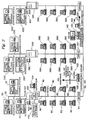
- Fig. 1 is an overall function block diagram of the image processing system of the present invention.
- Fig. 2 is a schematic pictorial diagram of the present invention as incorporated into a network.
- Fig. 3 is a plan view of a sample form document such as can be processed effectively by the present invention, containing the printed material common to all copies of the form document and certain additional information printed on the form for automated processing.
- Fig. 4 is a plan view of the sample form document of Fig. 3 which has been marked with responses constituting information that the present invention is designed to extract.
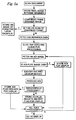
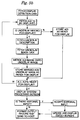
- Figs. 5a and 5b are flowcharts showing the method of the present invention for processing a response-marked form document such as in Fig. 4.
- Fig. 6 is a representation of a screen display as generated by the present invention after scanning of the response-marked document of Fig. 4 and processing the defined areas of interest with the automated symbol recognition resources available in the present invention.
- Fig. 7 is a representation of a screen display as in Fig. 6 after the editorial intervention of a human editor to prepare an output record incorporating information extracted from the response-marked document of Fig. 4.
- Fig. 1 shows a function block diagram of the various elements of the present invention.
- a server 100 that is a data processing system consisting of a UNIX-based server with several gigabytes of disk storage or other equally fast secondary storage.
- Residing in the server 100 is software that includes a scanner control module 30 that controls the operation of and receives data from up to three optical scanners 20 via communication channels 22.
- the application creation module 40 that permits a wide variety of document-specific scanning and processing tasks of the type described below to be developed.
- a system management module 50 is connected to the application creation module 40 by a channel 42.
- An operator interface 12, consisting of a communication channel 12 and an operator display (not shown in Fig. 1) permits an operator 10 to monitor the server 100 and intervene in the usual control situations encountered by a complex data processing system.
- Channel 52 connects the system management module 50 to other servers (see Fig. 2).
- Channel 56 connects the system management module 50 to the file management system 60.
- the file management system 60 interfaces with a number of files, the functions of which are described in greater detail below: raw image database file 162 via channel 62; translation database 164 via channel 64; job queue file 166 via channel 66; validation database 168 via channel 68; and application database 170 via channel 70.
- Channel 58 connects the system management module 50 to the workflow control module 80.
- the workflow control module 80 governs the flow of work to a handprint ISR system 110, which is one of several automated symbol recognition resources used in the present invention.
- This particular automated symbol recognition resource is, under the present state of the art, so complex that it is preferably implemented in the form of an outboard hardware-software device.
- the other symbol recognition resources employed by the preferred embodiment of the present invention include: a bar code reader, an optical mark reader, and a font OCR reader. These can be implemented in software resident on the server 100. Alternatively, the OMR reader for standard optical mark data can be incorporated in a scanner 20 and, as shown in Fig.
- outboard bar code reader 112 font OCR reader 114 and special (non-standard) OMR reader 116 can be connected to workflow control module 80 by channels 87, 88, 89, respectively.
- the handprint (ISR) system 110 is capable of reading all alphanumeric characters, depending on the requirements of the system and cost issues, a somewhat less sophisticated reader of only handprinted numeric data could be employed or a reader of only handprinted alphabetic data.
- Also connected to the workflow control module 80 are one or more edit workstations 90 via channels 82.
- Channel 84 connects the workflow control module 80 to the file management system 60, so that the workflow control module 80 can access information obtained by the scanner control module 30 and information stored on the various files connected to the file management system 60 for delivery to the handprint ISR system 110, bar code reader 112, font OCR reader 114 and special OMR reader 116 or to an edit workstation 90.
- a host data file 120 connected to the system management module 50 via channel 124 and to workflow control module 80 via channel 126 is used to assemble output records for delivery to a host system (not shown) via host communications channel 122.
- the output records constitute a primary final product of the present invention.
- the output records will consist of information in character-based alphanumeric format or pixel image format that the server 100 extracts from the documents scanned by the scanners 20.
- the pixel images of documents produced by the scanners 20 are processed in accordance with the present invention so that most pixel data are interpreted in automated or semi-automated fashion to convert the pixel images of the documents into usable, character-based alphanumeric records while some pixel data remain in image form.
- the present invention is suitable for extracting data from documents containing information encoded in a variety of optically scannable formats. Any kind of data may be involved.
- the most suitable situations for the use of the invention are data collection situations in which a high volume of data is to be collected and processed and in which a form document can be used to guide the collection of information.
- information is collected from a respondent who reads the form document or a booklet associated with it and marks or writes response indicia of various kinds on the form document. All respondents are given essentially the same document, although the individual forms given to each respondent may contain variable information used to identify the particular respondent, or perhaps a subset of the respondents, or some circumstance that is unique to a respondent .
- Fig. 2 shows a schematic pictorial diagram of the present invention as incorporated into a high-speed network (e.g., Ethernet).
- the server 100 is connected to three scanners.
- a server console 102 and a supervisor terminal 104 are also connected to the server 100.
- Multiple edit workstations 90 are connected to the server 100.
- a bridge 51 connects the server 100 to a communications server 130, which, in turn, is connected to a host mainframe via a channel 122 and connected to a modem 132 that can be used to provide dial up access to the system for diagnostic support.
- Line 52 connects the server 130 to another bridge 251 leading to a server 200.
- Server 200 is essentially the same as server 100, and has the corresponding elements in its network labeled with the same reference numbers as the corresponding elements for the server 100, but with a prefix "2".
- the edit workstations 290 connected to server 200 correspond to the edit workstations 90 connected to server 100.
- Line 52 also leads to another server 300, with references numbers again showing the correspondence with like elements of the network for server 100, except that a prefix "3" is used.
- Also connected to the line 52 leading to the server 300 is an erasable "jukebox" type optical disc storage device 142 with its own server 140 to be used for mass storage for archiving or other purposes.
- Fig. 3 is a plan view of a form document 400 designed to be processed effectively by the present invention.
- Form 400 contains the printed material common to all copies of the form document and certain additional information printed on the form for automated processing.
- the form document 400 of Fig. 3 demonstrates the various capabilities of the present invention. It represents a typical document that might be used to obtain information from a population of numerous respondents, in this case subscribers or potential subscribers to a fictitious periodical called "PC News".
- Each subscriber receives the same form document 400, except that the form each subscriber receives has certain information identifying the subscriber (name, company, address, etc.) printed in the upper left hand corner (area surrounded by broken line labeled 410).
- the form document 400 of Fig. 3 has some of the characteristics of a typical form response document designed solely for OMR scanning. That is, along the right hand margin it has the customary column of marks 402 that serves as a timing track and across the lower edge margin it has a contrast calibration bar 404. All printing visible on the form 400, with the exception of the contrast calibration bar 404, timing track 402 and the printing contained within the area labeled 410 is printed in an ink color that is easily visible to a human reader, but contains no carbon or other material that absorbs light in the near infrared range or that is detectable in an NIR-mode scanner.
- the printing ink for contrast calibrator bar 404, timing track 402 and the printing within the area labeled 410 contain graphite or another material that makes it absorb light in the near infrared range. (Triangulation marks used to correct skew and for other alignment purposes described in greater detail in the related application identified above would also be printed in NIR light absorbing ink.)
- NIR mode Triangulation marks used to correct skew and for other alignment purposes described in greater detail in the related application identified above would also be printed in NIR light absorbing ink.
- the form 400 contains first indicia (all printing except for the timing track 402, contrast calibration bar 404 and the print in area 410) detectable in a scan mode using light in a first spectral range, in this case the visible light range, but not detectable in a second scan mode using light outside the first spectral range, i.e., in a second scan mode using near infrared light.
- Form 400 also contains second indicia (the timing track 402, contrast calibration bar 404 and the print in area 410) detectable in either said first or second scan mode.
- Fig. 4 shows the same form 400 as in Fig. 3, except that the form 400 in Fig. 4 shows the marks, writing and other information placed on the form by the person responding to it.
- the respondent has: made marks in a number of response bubbles, written script responses in certain free-form response areas, printed various letters and numbers in defined response areas and affixed a barcode label to an area.
- the recipient of this response-marked form 400 desires to extract the response information by automated means, with the opportunity for human editing to check the results of automated processing by the various intelligent symbol recognition resources identified above and to intervene when the automated processing is unsuccessful in obtaining the information it seeks and therefore is unable to deliver charater-based alphanumeric data representative of the information to be decoded.
- the first step in using the present invention to extract information from a form response document such as that shown in Fig. 3 is to define the application-specific processing required.
- Applications are defined to focus on one or more scannable documents which under some logical grouping form a single unit of input for the scanning system.
- Form 400 represents a unit consisting of a single page.
- a multipage test booklet or order form to be completed by one respondent is a unit consisting of a plurality of pages.
- the application definition includes specification of machine-readable document identification symbols and registration requirements as well as document sequence rules. These allow a scanner 20 to recognize whether it has documents that correctly fit the scanning procedures defined for the application and to recognize closure of a single scanning unit.
- the application also defines what are called areas of interest (AOI's).
- An area of interest may be any area on the surface of the form 400. (although for some applications both the front and rear surfaces of a form document will be used, for clarity of explanation of the present invention, the following discussion of form 400 assumes that it has it first and second indicia printed on only one surface, that being the surface shown in Figs. 3 and 4.)
- the application definition also defines the objects of interest within the application ("objects").
- Objects are typically associated with logically grouped output data. For example name, address, question No. 2, and social security number are each objects on a document which represent some set of meaningful data. A single object may give rise to several AOI's on the document.
- To resolve the address object on form 400 for example, the system will need to interpret the regions on the form 400 that contain sheet address, city, state and zip code which, for efficiency or delineation, may all have unique AOI's. Therefore, objects may be defined as a composite of AOI's on the document, with processing resources defined for each AOI as well as having one or more components of output. Output can be defined for each object as to form and structure.
- Output for a name object may consist of four fields: first name as ASCII, last name as ASCII, middle initial as a single character of ASCII and the image of the signature itself. These fields are defined in terms of size and sequence in order to form a consistent usable structure for an output record for further processing.
- All of the rules and other information involved in defining an application is stored in application database 170 and/or translation database 164 and/or validation database 168.
- Fig. 3 shows a number of AOI's defined by the broken line boxes in Fig. 3. (These broken lines could be printed on the form 400 in ink detectable only in the first scan mode, but they are not meaningful to the respondents and normally do not appear on the form 400).
- AOI 410 defines the area in which some subscriber/respondent specific information is printed in a font that can be "read” or decoded by a font OCR reader.
- AOI 420 encompasses two yes-no questions, each with two corresponding OMR response areas or "bubbles" to be marked by the respondent.
- AOI's 430 and 440 each include multiple OMR response bubbles corresponding to a number of selections the respondent may make.
- Each AOI 430, 440 also has associated with it a contingent response area 435, 445 that permits a free-form entry of information by the respondent.
- the last OMR response bubble in each of the AOI's 430, 440 requests the user to indicate that a free-form entry is included on the lines appearing with the AOI's 435, 445.
- AOI 450 is a grid form response area containing OMR response bubbles at the grid intersection points.
- AOI 460 requests the respondent to insert printed letters and numerals one-by-one in single spaces of equal size. This guided form of response field makes the resulting response marks much easier for the handprint ISR system 110 to "read” or decode the markings.
- AOI 470 is for a signature that will normally not be subject to any processing by an automated symbol processing resource. Instead any signature will simply be stored as a pixel image.
- AOI 480 is similar to AOI 460, except that only numerals will be entered by hand printing in the predefined spaces.
- AOI 490 is much the same as AOI 450, again having response bubbles in a grid pattern, any one or more of which may be marked.
- AOI 500 is an open-ended, free form response area that can be expected to contain a handwritten script response not readable by present handprint ISR systems.
- this AOI may lead to the storing of a pixel image of the entire area in which writing occurs, if any handwritten comments appear.
- AOI 510 is an area in which a preprinted bar code from a label or other source is to be inserted. This AOI 510 will be processed by a bar code reader.
- AOI 520 contains a mixture of OMR bubbles and predefined areas for handwritten numerals, which, if both areas are correctly filled in, will contain the same information.
- Figs. 5a and 5b contain flowcharts that describe the overall processing flow for the present invention.
- the various logical steps and operations specified by the flowcharts are executed by the server 100 utilizing the scanners 20, edit workstations 90 and the ISR resources 110, 112, 114, 116.
- the scanners 20 will be scanning in either the VIS mode when they are capturing the information present on an unmarked form 400 or in the NIR mode when they are capturing markings on a response-marked form 400.
- each scanner is able to scan in either mode and can change from one mode to the other under the control of the scanner control module 30.
- the scanner 20 places a full, uncompressed, raw pixel image in suitable temporary storage, usually a "frame grabber" that is part of scanner 20.
- the pixel image in the frame grabber is preferably compressed using one of several conventional lossless compression techniques known under the names "Runlength”, "Huffman” or "LZW”. If this is a VIS scan of an unmarked form document (which may, nevertheless contain some data that is specific to that particular copy of the form document, such as the respondent identification information in AOI 410), then the compressed pixel image will not be processed by any automated symbol recognition resource.
- the pixel image is simply stored in a disk file or other long term storage for later use in a merge operation involving variable data from an NIR scan, in which the VIS scan pixel image will typically be used as an underlay. If this is an NIR scan, then the scanner 20 will again place a full, uncompressed, raw pixel image in a suitable temporary storage, such as a frame grabber, and the stored image will preferably undergo compression before it is stored in a longer term data file.
- a suitable temporary storage such as a frame grabber
- the NIR scan picks up only marks or printing that absorbs light in the near infrared range, a great deal of what appears on the form 400 is not picked up in the resulting pixel image. That is, ink for the typical preprinted information appearing on the form is invisible in the NIR scan, and areas printed in this ink appear as white space surrounding a limited amount of darker response marks. Because the amount of such white space compared to the darker response marks is very large in most applications, the compression that can be obtained is quite dramatic.
- AOI's include less than essentially the full surface area of the document, or if a content test is performed for each before it is accepted for storage to determine whether any mark at all is present.
- the particular content test used varies according to the type of information encoding used. For example, for OMR data, content would be found to exist only when some OMR bubble within the AOI had appreciable grayscale content. For bar code data, a meaningful bar code pattern would have to be present. For an AOI defined to contain handprint, a meaningful aggregate grayscale density would have to be exceeded. In some applications, e.g., an order form with an extensive listing of product choices, each product could be defined as an individual AOI but only those AOI's that actually contain order information would be stored for later processing.
- a queue of AOI's is constructed for further processing.
- each AOI has associated with it at the time it is defined the type of automated symbol processing resource, if any, that should be used to decode the response information marked in the AOI.
- the pixel image corresponding to the AOI is passed to the automated symbol processing resource that is specified for that AOI. If an AOI in the queue is not susceptible of automated symbol processing, then it is simply stored for later display. For each AOI that is passed to an automated symbol processing resource, a string of character-based alphanumeric data will be produced.
- the automated symbol processing resource also passes back a status code of some kind (such as an edit flag), indicating whether it was able to successfully process the pixel image it was assigned to process. If difficulty was encountered in processing (e.g., an OMR reader encounters a light OMR mark that leads to a grayscale value defined to be ambiguous or the handprint ISR system is unable to resolve a printed letter that deviates too much from the norm), then human editorial intervention will be desired and the alphanumeric character-based data results produced by the automated symbol processing resource may need correction or completion. Whether the edit flag is raised or not, the results of processing of each AOI by the assigned automated symbol processing resource become associated with the pixel image of the AOI for display purposes, discussed next.
- a status code of some kind such as an edit flag
- the scanner 20 captures the entire image of the front and back surfaces of the form as uncompressed 8-bit per pixel data.
- the AOIs on the form are analyzed for content and interpreted according to the application definition associated with the form.
- AOIs may be interpreted by the scanner 20 as being OMR response bubbles, regions having handwritten response or image clips.
- the scanner 20 will also interpret AOIs using its own font OCR and bar code reading resources, and other symbol processing resources.
- the scanner 20 passes this data to the scanner control module 30.
- This data can consist of ASCII coded characters, compressed or uncompressed images, or a representation of a raw OMR grid.
- Work flow control module 80 is built on the idea that objects are generated by the scanning process that need to be processed by some ISR resource and the output record for an instance of the application (e.g., a response-marked copy of form 400) needs to be produced upon successful interpretation of all objects associated with that instance.
- Work flow control is a two stage process.
- the first stage manages the system resources so as to monitor system processing resources e.g., CPU, disk storage, etc.
- the first stage starts and controls second stage processes which gather and interpret the objects for a single unit of the application.
- the second stage process is responsible for resolving the objects, if so capable, or routing the objects to appropriate ISR resources, i.e., font OCR reader 114, bar code reader 112 or to an edit workstation 90 for human visual verification.
- ISR resources i.e., font OCR reader 114, bar code reader 112 or to an edit workstation 90 for human visual verification.
- the content of the display for human visual verification is determined by display definition data that is part of the application definition.
- the results can be formulated directly into an output record containing the essential information that was to be extracted from the document scanned for transmission to a host computer (not shown).
- This record which constitutes a translation of the markings on the response-marked form into strings of alphanumeric data and may also include images, is ready for processing by whatever host application programs have been devised to accept and further process the information. In most applications, accuracy of the output records as faithful translations of the response-marked forms will be highly important. Accordingly, the present invention allows displaying the information obtained as a result of processing some or all AOI's on a document on an edit workstation 90 for any necessary editorial intervention.
- Figs. 5b and 6 the operations for formulating a display screen 600 for an edit workstation 90 and the layout of such a screen are shown.
- the edit screen image in Fig. 6 is the result of processing the AOI's of Fig. 4 and displaying selected AOI's.
- Each displayed AOI has associated with it a location or tab symbol 610, 620, 630, 640 to which the operator can tab when the operator wishes to work on a particular AOI.
- Each tab symbol is displayed an image that includes both first indicia, obtained from the VIS scan, and second indicia, obtained from the NIR scan. These have been merged to make one image in the manner described below.
- AOI 410 is not displayed on the edit screen 600, on the theory that it was not prepared by the respondent and that font OCR translation into character-based data is highly reliable. (Moreover, check digits may be added to the font OCR text for further enhancement of accuracy.) Accordingly, the alphanumeric translation of this information goes directly into the output record for this document.
- AOI 420 is displayed (tab symbol 610) on edit screen 600, because the OMR reader considered the check mark by the second "No" to be potentially ambiguous, due to the small amount of darkening within the response bubble. Displayed by the server 100 just above the image of AOI 420 are the letters "Y N?", representing the decoding work of the OMR reader and its conclusion that the check mark is an ambiguous marking that may need editorial intervention.
- AOI 435 is also displayed (tab symbol 620) on edit screen 600. Its display is caused by the OMR reading of a mark in the last response bubble in AOI 430, denoting the selection of "Other (Please specify)". Thus, the image of AOI 435 shows the respondent's script entry of the word "publishing", which could not be translated by any automated symbol processing resource. To permit the operator to translate the script entry to make it part of the output record, the server generates a blank line 622 that is part of the edit screen 600 and thereby prompts the operator to type in the word "publishing".
- AOI 460 is displayed.
- Juxtaposed with the image of AOI 460 is a multiline display 632 generated by the server 100 containing the alphanumeric data developed by the handprint ISR system to which the pixel image of AOI 460 was passed for translation into character-based data.
- the display 632 contains three blank lines (first, second and fourth), where the respondent entered no data and attempted alphanumeric translation of the third, fifth and sixth lines. From this display the operator should be able to observe that there is a translation error in the third line, where handprinted "DEN” has been translated “OEN", probably because of the carelessly formed "D".
- the operator will note that the final digit of the zip code is translated as a "?”, prompting the operator to read the carelessly handprinted "5".
- the operator can then edit the text at display 632 to make the necessary corrections.
- the blank lines may be handled in several different ways, depending on how the application is defined. The operator could be prompted to call up a display of AOI 410 to transcribe what appears there onto the blank lines. Alternatively, the operator could simply command the system to enter the translated alphanumeric string resulting from the font OCR reader reading AOI 410 onto the blank lines in display 632, on the theory that most respondents will leave blanks for those lines that seek entry of the information already correctly printed in AOI 410.
- AOI 520 At tab symbol 640 in edit screen 600 is displayed AOI 520, which could not be successfully processed by the OMR reader.
- the response area includes an OMR grid, which usually is correctly filled in, the area above the OMR grid for handprinted entry of the same seven numerals to be coded in the OMR grid was not passed as a pixel image for processing by the handprint ISR system.
- the operator can easily see that the final two digits could not be decoded by the OMR reader, because the response bubbles for both the "0" and the "5" were marked in the next-to-last column of the grid.
- server-generated string "10665??” prompts the operator to read the handprinted numerals and to type in the last two digits, based on the assumption that the handprinted numerals are correct, even though they differ from the marks made in the response grid bubbles.
- Fig. 6 shows a variety of AOI's in the form of merged images, incorporating information from both the VIS-mode and NIR mode scans, this is not always necessary.
- the merged images make the displayed data recognizable, but there are other methods. If the application causes the server 100 to develop labels for screen display 600, these could be used to aid the person viewing the display in identifying the AOI displayed, should the displayed information not be self-explanatory.
- NIR mode scan provides a particularly efficient way of separating the variable data recorded on a form from the background printing
- this separation can be performed in other ways.
- the AOI's could be specified by location and evaluated by use of a background template so as to reduce the effect of any background printing.
- This approach could be used to separate the pixel image of variable data contained within an AOI from the background printing that would be part of the same pixel image. With this type of system it would usually still be desirable to separately scan a "blank", unmarked copy of the form to provide a clean background underlay image for any merged images created by overlaying the background with the variable data captured in an AOI.
- Fig. 7 displays the edit screen 600 after all editorial intervention.
- the corrections and additions allow the output record for the document to be completed and made ready for storage in the host data file 120 for later transmission over channel 122 to the host computer (not shown).
- a subscription order can be printed and processed, a letter printed thanking the respondent for his/her response and notifying him/her that he/she qualifies for a subscription, or performing whatever other operations are desired.
- formulation of the output record could also involve validation of information obtained by processing various AOI's by automated symbol processing resources. For example, if a customer provided a customer number that would lead to a grant of credit, the number could be checked against a list of valid customers numbers kept in validation database 168, which might also contain customer name information or address information that could be used for additional cross-checking. In such an application, extensive use of translation database 164 could also be made. For example, if OMR entries resulted in a product number, this product number could be translated into a product name or description that could be included in an output record instead of or together with the product number.
Landscapes
- Engineering & Computer Science (AREA)
- Theoretical Computer Science (AREA)
- Physics & Mathematics (AREA)
- General Physics & Mathematics (AREA)
- Health & Medical Sciences (AREA)
- General Health & Medical Sciences (AREA)
- Artificial Intelligence (AREA)
- General Engineering & Computer Science (AREA)
- Audiology, Speech & Language Pathology (AREA)
- Educational Technology (AREA)
- Toxicology (AREA)
- Computational Linguistics (AREA)
- Electromagnetism (AREA)
- Business, Economics & Management (AREA)
- Educational Administration (AREA)
- Computer Vision & Pattern Recognition (AREA)
- Multimedia (AREA)
- Computer Hardware Design (AREA)
- Character Discrimination (AREA)
- Processing Or Creating Images (AREA)
- Storing Facsimile Image Data (AREA)
- Editing Of Facsimile Originals (AREA)
- Character Input (AREA)
Applications Claiming Priority (2)
| Application Number | Priority Date | Filing Date | Title |
|---|---|---|---|
| US07/537,293 US5134669A (en) | 1990-06-13 | 1990-06-13 | Image processing system for documentary data |
| US537293 | 1990-06-13 |
Publications (3)
| Publication Number | Publication Date |
|---|---|
| EP0463471A2 true EP0463471A2 (de) | 1992-01-02 |
| EP0463471A3 EP0463471A3 (en) | 1993-04-21 |
| EP0463471B1 EP0463471B1 (de) | 1996-04-24 |
Family
ID=24142046
Family Applications (1)
| Application Number | Title | Priority Date | Filing Date |
|---|---|---|---|
| EP91109600A Expired - Lifetime EP0463471B1 (de) | 1990-06-13 | 1991-06-12 | Bildverarbeitungssystem für dokumentarische Daten |
Country Status (6)
| Country | Link |
|---|---|
| US (1) | US5134669A (de) |
| EP (1) | EP0463471B1 (de) |
| JP (1) | JP3291302B2 (de) |
| KR (1) | KR920001359A (de) |
| CA (1) | CA2044400C (de) |
| DE (1) | DE69118970T2 (de) |
Cited By (6)
| Publication number | Priority date | Publication date | Assignee | Title |
|---|---|---|---|---|
| EP0561605A3 (en) * | 1992-03-20 | 1994-11-09 | Xerox Corp | Techniques for automatic form creation by combining partial operations |
| US5465167A (en) * | 1992-03-20 | 1995-11-07 | Xerox Corporation | Using an image from a form in automatic creation of a form or sheet |
| EP0637811A3 (de) * | 1993-08-02 | 1996-04-10 | Ibm | Verfahren zum Definieren mehrerer Formulardefinitionsdatensätze. |
| WO1998025230A1 (fr) * | 1996-12-06 | 1998-06-11 | Itesoft | Systeme de reconnaissance de caracteres manuscrits |
| CN1106620C (zh) * | 1994-06-16 | 2003-04-23 | 佳能株式会社 | 信息处理方法和设备 |
| WO2003038739A1 (en) * | 2001-10-31 | 2003-05-08 | James Au-Yeung | Apparatus and method for determining selection data from pre-printed forms |
Families Citing this family (98)
| Publication number | Priority date | Publication date | Assignee | Title |
|---|---|---|---|---|
| JPH0381817A (ja) * | 1989-08-25 | 1991-04-08 | Hitachi Ltd | 手書入力情報処理装置およびこの手書入力情報処理装置を用いた手書入力情報システム |
| JP3001065B2 (ja) * | 1991-03-19 | 2000-01-17 | テイ・エイ・エス通商株式会社 | プログラムの作成方法 |
| US5991440A (en) * | 1991-06-21 | 1999-11-23 | Canon Kabushiki Kaisha | Method and apparatus for recognizing input handwritten characters associated with title information |
| US5452379A (en) * | 1991-09-13 | 1995-09-19 | Meadowbrook Industries, Ltd. | Image capture and storage techniques in association with optical mark reading |
| US5229589A (en) * | 1991-11-21 | 1993-07-20 | Optimum Solutions Corp., Inc. | Questionnaire scanning system employing expandable answer mark areas for efficient scanning and mark detection |
| US5428210A (en) * | 1992-01-10 | 1995-06-27 | National Bancard Corporation | Data card terminal with embossed character reader and signature capture |
| US5774882A (en) * | 1992-03-12 | 1998-06-30 | Keen; Regina D. | Credit approval system |
| US5418865A (en) * | 1992-03-20 | 1995-05-23 | Xerox Corporation | Mark sensing on a form |
| US5251273A (en) * | 1992-04-15 | 1993-10-05 | International Business Machines Corporation | Data processing system and method for sequentially repairing character recognition errors for scanned images of document forms |
| US5672060A (en) * | 1992-07-08 | 1997-09-30 | Meadowbrook Industries, Ltd. | Apparatus and method for scoring nonobjective assessment materials through the application and use of captured images |
| US5987149A (en) | 1992-07-08 | 1999-11-16 | Uniscore Incorporated | Method for scoring and control of scoring open-ended assessments using scorers in diverse locations |
| US5321611A (en) * | 1993-02-05 | 1994-06-14 | National Computer Systems, Inc. | Multiple test scoring system |
| US5433615A (en) * | 1993-02-05 | 1995-07-18 | National Computer Systems, Inc. | Categorized test item reporting system |
| US5437554A (en) * | 1993-02-05 | 1995-08-01 | National Computer Systems, Inc. | System for providing performance feedback to test resolvers |
| WO1994027251A1 (en) * | 1993-05-18 | 1994-11-24 | Massachusetts Institute Of Technology | Automated reading system and method |
| DE69432114T2 (de) * | 1993-11-24 | 2003-10-30 | Canon K.K., Tokio/Tokyo | System zum Identifizieren und Verarbeiten von Formularen |
| US5659639A (en) * | 1993-11-24 | 1997-08-19 | Xerox Corporation | Analyzing an image showing editing marks to obtain category of editing operation |
| CA2134255C (en) * | 1993-12-09 | 1999-07-13 | Hans Peter Graf | Dropped-form document image compression |
| US5504319A (en) * | 1994-02-09 | 1996-04-02 | Symbol Technologies, Inc. | Method and system for bar code acquisition |
| US5666490A (en) * | 1994-05-16 | 1997-09-09 | Gillings; Dennis | Computer network system and method for managing documents |
| US5568550A (en) * | 1994-10-05 | 1996-10-22 | Shmuel Ur | Method and system for identifying documents generated by an unauthorized software copy |
| US6072871A (en) * | 1994-10-05 | 2000-06-06 | Leon H. Charney | Method and system for identifying the source of documents generated by software and documents generated thereby |
| US6243172B1 (en) | 1995-01-18 | 2001-06-05 | Varis Corporation | Method and system for merging variable text and images into bitmaps defined by a page description language |
| US5729665A (en) | 1995-01-18 | 1998-03-17 | Varis Corporation | Method of utilizing variable data fields with a page description language |
| US5610995A (en) * | 1995-06-06 | 1997-03-11 | United Parcel Service Of America, Inc. | Method and apparatus for compressing images containing optical symbols |
| US6952801B2 (en) | 1995-06-07 | 2005-10-04 | R.R. Donnelley | Book assembly process and apparatus for variable imaging system |
| US5673334A (en) * | 1995-11-30 | 1997-09-30 | Cognex Corporation | Method and apparatus for inspection of characteristics on non-rigid packages |
| US5936225A (en) * | 1996-04-02 | 1999-08-10 | Strategic Quantitative Solutions, Inc. | Method and apparatus for tabulating data from a plurality of response forms |
| US6209010B1 (en) | 1997-07-18 | 2001-03-27 | Varis Corporation | Computer implemented method for wrapping data to an arbitrary path defined by a page description language |
| US7302438B1 (en) | 1997-07-18 | 2007-11-27 | Tesseron Ltd. | Method and system for flowing data to an arbitrary path defined by a page description language |
| US6487568B1 (en) | 1997-07-18 | 2002-11-26 | Tesseron, Ltd. | Method and system for flowing data to an arbitrary path defined by a page description language |
| US6173154B1 (en) * | 1997-07-31 | 2001-01-09 | The Psychological Corporation | System and method for imaging test answer sheets having open-ended questions |
| US6311040B1 (en) * | 1997-07-31 | 2001-10-30 | The Psychological Corporation | System and method for scoring test answer sheets having open-ended questions |
| US6561428B2 (en) * | 1997-10-17 | 2003-05-13 | Hand Held Products, Inc. | Imaging device having indicia-controlled image parsing mode |
| JP3722966B2 (ja) * | 1997-11-13 | 2005-11-30 | 株式会社リコー | 縮小画像作成装置 |
| US6269341B1 (en) | 1998-07-01 | 2001-07-31 | Day-Timers, Inc. | Method and system for printing individualized calendars |
| US6325420B1 (en) | 1998-08-17 | 2001-12-04 | Inspectron Corporation | Method for embedding non-intrusive encoded data in printed matter and system for reading same |
| US6178308B1 (en) * | 1998-10-16 | 2001-01-23 | Xerox Corporation | Paper based intermedium for providing interactive educational services |
| US7315979B1 (en) | 1998-11-09 | 2008-01-01 | Tesseron Ltd. | Method and system for dynamic flowing data to an arbitrary path defined by a page description language |
| US7068832B1 (en) | 1999-05-11 | 2006-06-27 | The Chase Manhattan Bank | Lockbox imaging system |
| US6248996B1 (en) * | 1999-07-12 | 2001-06-19 | Hewlett-Packard Company | Single-scan transmission of documents to multiple heterogeneous receivers |
| US7278094B1 (en) | 2000-05-03 | 2007-10-02 | R. R. Donnelley & Sons Co. | Variable text processing for an electronic press |
| FR2801997A1 (fr) * | 1999-12-02 | 2001-06-08 | Itesoft | Technologie adaptative d'analyse automatique de document |
| AU2001264956A1 (en) * | 2000-08-11 | 2002-02-25 | Ctb/Mcgraw-Hill Llc | Enhanced data capture from imaged documents |
| US20020044687A1 (en) * | 2000-10-16 | 2002-04-18 | Emailcard Feedback Systems, Inc. | Customer feedback system |
| US6810232B2 (en) | 2001-03-05 | 2004-10-26 | Ncs Pearson, Inc. | Test processing workflow tracking system |
| US6675133B2 (en) | 2001-03-05 | 2004-01-06 | Ncs Pearsons, Inc. | Pre-data-collection applications test processing system |
| US6751351B2 (en) | 2001-03-05 | 2004-06-15 | Nsc Pearson, Inc. | Test question response verification system |
| US6961482B2 (en) * | 2001-03-05 | 2005-11-01 | Ncs Pearson, Inc. | System for archiving electronic images of test question responses |
| US6898317B2 (en) * | 2001-05-07 | 2005-05-24 | Hewlett-Packard Development Company, L.P. | Method and system for fit-to-form scanning with a scanning device |
| US6942151B2 (en) | 2001-05-15 | 2005-09-13 | Welch Allyn Data Collection, Inc. | Optical reader having decoding and image capturing functionality |
| US7111787B2 (en) | 2001-05-15 | 2006-09-26 | Hand Held Products, Inc. | Multimode image capturing and decoding optical reader |
| US6834807B2 (en) | 2001-07-13 | 2004-12-28 | Hand Held Products, Inc. | Optical reader having a color imager |
| US20040083229A1 (en) * | 2001-09-04 | 2004-04-29 | Porter Robert Austin | Apparatus and method for automatically grading and inputting grades to electronic gradebooks |
| US7077313B2 (en) * | 2001-10-01 | 2006-07-18 | Avante International Technology, Inc. | Electronic voting method for optically scanned ballot |
| US7635087B1 (en) | 2001-10-01 | 2009-12-22 | Avante International Technology, Inc. | Method for processing a machine readable ballot and ballot therefor |
| US7828215B2 (en) * | 2001-10-01 | 2010-11-09 | Avante International Technology, Inc. | Reader for an optically readable ballot |
| US7171022B2 (en) * | 2001-12-05 | 2007-01-30 | Lockheed Martin Corporation | Common method for communicating area information |
| US7070115B2 (en) * | 2002-01-23 | 2006-07-04 | Debiase Salvatore E | Ballot form and method for making and using same |
| US20040064472A1 (en) * | 2002-09-27 | 2004-04-01 | Oetringer Eugen H. | Method and system for information management |
| US7145093B2 (en) * | 2002-12-24 | 2006-12-05 | Siemens Energy & Automation, Inc. | Method and system for image processing |
| US6993818B2 (en) * | 2003-03-17 | 2006-02-07 | Memx, Inc. | Multi-fixture assembly of cutting tools |
| US7637430B2 (en) | 2003-05-12 | 2009-12-29 | Hand Held Products, Inc. | Picture taking optical reader |
| US7555145B2 (en) * | 2003-06-03 | 2009-06-30 | Gravic, Inc. | Multi-level optical mark reading that uses an unambiguous symbology of marks to fill into response bubbles |
| US7542160B2 (en) * | 2003-08-29 | 2009-06-02 | Hewlett-Packard Development Company, L.P. | Rendering with substituted validation input |
| US7298902B2 (en) * | 2004-01-20 | 2007-11-20 | Educational Testing Service | Method and system for performing image mark recognition |
| US7298901B2 (en) * | 2004-04-07 | 2007-11-20 | Scantron Corporation | Scannable form and system |
| US8155578B2 (en) * | 2004-05-14 | 2012-04-10 | Educational Testing Service | Method and system for generating and processing an assessment examination |
| US7293712B2 (en) | 2004-10-05 | 2007-11-13 | Hand Held Products, Inc. | System and method to automatically discriminate between a signature and a dataform |
| US9208480B2 (en) | 2004-11-05 | 2015-12-08 | Rdm Corporation | Mobile deposit system for digital image and transaction management |
| US7606421B2 (en) * | 2004-12-08 | 2009-10-20 | Ctb/Mcgraw-Hill Llc | Data extraction from temporal image data |
| US20060252023A1 (en) * | 2005-05-03 | 2006-11-09 | Lexmark International, Inc. | Methods for automatically identifying user selected answers on a test sheet |
| US7791756B2 (en) * | 2005-05-03 | 2010-09-07 | Lexmark International, Inc. | Methods for identifying marks using a digital master document and scanned image enhancement |
| CA2587874A1 (en) | 2006-05-05 | 2007-11-05 | Rdm Corporation | Method and system for thin client based image and transaction management |
| US7711191B2 (en) * | 2006-12-21 | 2010-05-04 | Michael John Kosek | Electronic transaction processing server with automated transaction evaluation |
| US20080227075A1 (en) * | 2007-03-15 | 2008-09-18 | Ctb/Mcgraw-Hill, Llc | Method and system for redundant data capture from scanned documents |
| US20090015875A1 (en) * | 2007-06-20 | 2009-01-15 | Ctb/Mcgraw-Hill Companies, Inc. | Image manipulation of digitized images of documents |
| US8144988B2 (en) * | 2007-09-06 | 2012-03-27 | Ricoh Company, Ltd. | Document-image-data providing system, document-image-data providing device, information processing device, document-image-data providing method, information processing method, document-image-data providing program, and information processing program |
| US8194982B2 (en) * | 2007-09-18 | 2012-06-05 | Ricoh Company, Ltd. | Document-image-data providing system, document-image-data providing device, information processing device, document-image-data providing method, information processing method, document-image-data providing program, and information processing program |
| US11157977B1 (en) | 2007-10-26 | 2021-10-26 | Zazzle Inc. | Sales system using apparel modeling system and method |
| US8526766B2 (en) | 2007-10-31 | 2013-09-03 | Ctb/Mcgraw-Hill Llc | Use of composite bitmapped images in conjunction with display of captured data |
| US8066184B2 (en) * | 2008-04-30 | 2011-11-29 | Avante International Technology, Inc. | Optically readable marking sheet and reading apparatus and method therefor |
| US10719862B2 (en) | 2008-07-29 | 2020-07-21 | Zazzle Inc. | System and method for intake of manufacturing patterns and applying them to the automated production of interactive, customizable product |
| US20100047757A1 (en) * | 2008-08-22 | 2010-02-25 | Mccurry Douglas | System and method for using interim-assessment data for instructional decision-making |
| US9087355B2 (en) * | 2008-08-22 | 2015-07-21 | Zazzle Inc. | Product customization system and method |
| US8261985B2 (en) * | 2009-04-07 | 2012-09-11 | Avante Corporation Limited | Manual recount process using digitally imaged ballots |
| JP5712487B2 (ja) * | 2009-09-04 | 2015-05-07 | 株式会社リコー | 画像処理装置、画像処理システム、画像処理方法、及びプログラム |
| US8261986B2 (en) * | 2009-10-21 | 2012-09-11 | Kevin Kwong-Tai Chung | System and method for decoding an optically readable markable sheet and markable sheet therefor |
| US8503785B2 (en) * | 2010-01-15 | 2013-08-06 | Gravic, Inc. | Dynamic response bubble attribute compensation |
| US9292565B2 (en) | 2010-06-30 | 2016-03-22 | International Business Machines Corporation | Template-based recognition of food product information |
| US8412004B2 (en) | 2010-10-15 | 2013-04-02 | Gravic, Inc. | Dynamic response form symbology processing |
| US8396765B2 (en) * | 2010-10-15 | 2013-03-12 | Thomas E. Santarlas | System and method for the automated distribution, management and service of court-related documents |
| US8657200B2 (en) | 2011-06-20 | 2014-02-25 | Metrologic Instruments, Inc. | Indicia reading terminal with color frame processing |
| US10969743B2 (en) | 2011-12-29 | 2021-04-06 | Zazzle Inc. | System and method for the efficient recording of large aperture wave fronts of visible and near visible light |
| EP2797031A3 (de) * | 2013-04-22 | 2017-07-12 | ESSILOR INTERNATIONAL (Compagnie Générale d'Optique) | Optische Zeichenerkennung eines Texts in einem Bild gemäß einer priorisierten Bearbeitungssequenz |
| US9239693B2 (en) | 2014-05-15 | 2016-01-19 | Xerox Corporation | Automatically printing only pages containing blank signature lines |
| US10176411B2 (en) * | 2016-05-26 | 2019-01-08 | Scantron Corporation | Single-pass imaging and optical mark recognition scanning |
| US10783323B1 (en) * | 2019-03-14 | 2020-09-22 | Michael Garnet Hawkes | Analysis system |
Family Cites Families (26)
| Publication number | Priority date | Publication date | Assignee | Title |
|---|---|---|---|---|
| US3284929A (en) * | 1964-05-19 | 1966-11-15 | Automata Corp | Test grading machine |
| US3444517A (en) * | 1965-03-09 | 1969-05-13 | Control Data Corp | Optical reading machine and specially prepared documents therefor |
| USRE29104E (en) * | 1971-08-18 | 1977-01-04 | Cognitronics Corporation | Method of scanning documents to read characters thereon without interference from visible marks on the document which are not to be read by the scanner |
| US4021777A (en) * | 1975-03-06 | 1977-05-03 | Cognitronics Corporation | Character reading techniques |
| US4205780A (en) * | 1977-03-21 | 1980-06-03 | Teknekron, Inc. | Document processing system and method |
| DE3062991D1 (en) * | 1979-01-02 | 1983-06-16 | Westinghouse Electric Corp | Optical mark reading system |
| JPS57150062A (en) * | 1981-03-12 | 1982-09-16 | Fuji Xerox Co Ltd | Processing of papers |
| US4408344A (en) * | 1981-04-09 | 1983-10-04 | Recognition Equipment Incorporated | OCR and Bar code reader using multi port matrix array |
| JPS59128666A (ja) * | 1983-01-14 | 1984-07-24 | Fuji Xerox Co Ltd | 伝票,書類等の発行装置 |
| JPS59205678A (ja) * | 1983-05-09 | 1984-11-21 | Sharp Corp | 用紙情報入力装置 |
| CH661365A5 (de) * | 1983-11-03 | 1987-07-15 | Landis & Gyr Ag | Anordnung zur darstellung und abtastung des inhalts von zahlenrollen-zaehlwerken. |
| US4654877A (en) * | 1984-08-28 | 1987-03-31 | Elscint Ltd. | Data compression system |
| US4972273A (en) * | 1984-10-15 | 1990-11-20 | Burkhardt Norman S | High speed, high resolution image processing system |
| US4627819A (en) * | 1985-01-23 | 1986-12-09 | Price/Stern/Sloan Publishers, Inc. | Teaching or amusement apparatus |
| JPH0797391B2 (ja) * | 1986-09-06 | 1995-10-18 | シャープ株式会社 | 金銭出納機 |
| US4760246A (en) * | 1987-04-20 | 1988-07-26 | Cognitronics Corporation | Mark-reading apparatus for use with answer sheets |
| US4877948A (en) * | 1987-06-25 | 1989-10-31 | Krueger Loren L | Combination bar code and mark-sense reader |
| JPS6458161A (en) * | 1987-08-28 | 1989-03-06 | Toshiba Corp | Facsimile equipment |
| US4855580A (en) * | 1987-11-20 | 1989-08-08 | Recognition Equipment Incorporated | Data merge document processing method |
| US5001330A (en) * | 1988-03-02 | 1991-03-19 | National Computer Systems, Inc. | Optically scanned document with fail-safe marking |
| US4873426A (en) * | 1988-08-03 | 1989-10-10 | Image Business Systems Corporation | Technique for reading bar codes |
| US4889367A (en) * | 1988-10-07 | 1989-12-26 | Frito-Lay, Inc. | Multi-readable information system |
| US5054096A (en) * | 1988-10-24 | 1991-10-01 | Empire Blue Cross/Blue Shield | Method and apparatus for converting documents into electronic data for transaction processing |
| US5003613A (en) * | 1988-12-21 | 1991-03-26 | Recognition Equipment Incorporated | Document processing system and method |
| US4914709A (en) * | 1989-06-02 | 1990-04-03 | Eastman Kodak Company | Method for identifying unrecognizable characters in optical character recognition machines |
| US5010580A (en) * | 1989-08-25 | 1991-04-23 | Hewlett-Packard Company | Method and apparatus for extracting information from forms |
-
1990
- 1990-06-13 US US07/537,293 patent/US5134669A/en not_active Expired - Lifetime
-
1991
- 1991-06-12 KR KR1019910009834A patent/KR920001359A/ko not_active Withdrawn
- 1991-06-12 CA CA002044400A patent/CA2044400C/en not_active Expired - Lifetime
- 1991-06-12 DE DE69118970T patent/DE69118970T2/de not_active Expired - Fee Related
- 1991-06-12 EP EP91109600A patent/EP0463471B1/de not_active Expired - Lifetime
- 1991-06-13 JP JP19266591A patent/JP3291302B2/ja not_active Expired - Lifetime
Cited By (7)
| Publication number | Priority date | Publication date | Assignee | Title |
|---|---|---|---|---|
| EP0561605A3 (en) * | 1992-03-20 | 1994-11-09 | Xerox Corp | Techniques for automatic form creation by combining partial operations |
| US5465167A (en) * | 1992-03-20 | 1995-11-07 | Xerox Corporation | Using an image from a form in automatic creation of a form or sheet |
| EP0637811A3 (de) * | 1993-08-02 | 1996-04-10 | Ibm | Verfahren zum Definieren mehrerer Formulardefinitionsdatensätze. |
| CN1106620C (zh) * | 1994-06-16 | 2003-04-23 | 佳能株式会社 | 信息处理方法和设备 |
| WO1998025230A1 (fr) * | 1996-12-06 | 1998-06-11 | Itesoft | Systeme de reconnaissance de caracteres manuscrits |
| FR2756952A1 (fr) * | 1996-12-06 | 1998-06-12 | Itesoft | Systeme de reconnaissance de caracteres manuscrits |
| WO2003038739A1 (en) * | 2001-10-31 | 2003-05-08 | James Au-Yeung | Apparatus and method for determining selection data from pre-printed forms |
Also Published As
| Publication number | Publication date |
|---|---|
| CA2044400C (en) | 2001-11-27 |
| CA2044400A1 (en) | 1991-12-14 |
| DE69118970D1 (de) | 1996-05-30 |
| US5134669A (en) | 1992-07-28 |
| JPH06149970A (ja) | 1994-05-31 |
| JP3291302B2 (ja) | 2002-06-10 |
| KR920001359A (ko) | 1992-01-30 |
| EP0463471A3 (en) | 1993-04-21 |
| DE69118970T2 (de) | 1996-11-28 |
| EP0463471B1 (de) | 1996-04-24 |
Similar Documents
| Publication | Publication Date | Title |
|---|---|---|
| EP0463471B1 (de) | Bildverarbeitungssystem für dokumentarische Daten | |
| US5452379A (en) | Image capture and storage techniques in association with optical mark reading | |
| EP0602821B1 (de) | Dateneingabeanlage | |
| EP0677817B1 (de) | System zur Seitensegmentierung und Zeichenerkennung | |
| US5867277A (en) | Reduced resolution document storage and retrieval system | |
| US5818978A (en) | Image pre-processor for character image recognition system | |
| US6816630B1 (en) | System and method for creating and processing data forms | |
| US5101447A (en) | Method and apparatus for optically reading pre-printed survey pages | |
| US20080235263A1 (en) | Automating Creation of Digital Test Materials | |
| US20110192894A1 (en) | Method for one-step document categorization and separation | |
| US4962432A (en) | Selective retrieval of data from microfilm images of different forms by reading a memory index form cord (bar code) recorded on each image frame | |
| WO2007024216A1 (en) | Test scoring system and method | |
| CN109726369A (zh) | 一种基于标准文献的智能模板化题录技术实现方法 | |
| JPS5947641A (ja) | 名刺デ−タベ−ス作成装置 | |
| Garris | Design and collection of a handwriting sample image database | |
| JPH08238870A (ja) | 検査カード及び検査システム | |
| US20060290999A1 (en) | Image processing apparatus and network system | |
| JP4356908B2 (ja) | 財務諸表自動入力装置 | |
| JP3061748B2 (ja) | 画像処理システム | |
| CN113469316A (zh) | 一种采用具有选择答题功能的复合二维码的答题卡 | |
| US9531906B2 (en) | Method for automatic conversion of paper records to digital form | |
| CN116303237B (zh) | 错误可回溯的图像数据结构与标注方法 | |
| US20050058346A1 (en) | Apparatus and method for determining selection data from pre-printed forms | |
| JPH0252329A (ja) | 画像情報記録・読取方法 | |
| US5655027A (en) | Continuous extraction and processing of document fields |
Legal Events
| Date | Code | Title | Description |
|---|---|---|---|
| PUAI | Public reference made under article 153(3) epc to a published international application that has entered the european phase |
Free format text: ORIGINAL CODE: 0009012 |
|
| AK | Designated contracting states |
Kind code of ref document: A2 Designated state(s): DE FR GB IT |
|
| PUAL | Search report despatched |
Free format text: ORIGINAL CODE: 0009013 |
|
| AK | Designated contracting states |
Kind code of ref document: A3 Designated state(s): DE FR GB IT |
|
| 17P | Request for examination filed |
Effective date: 19930621 |
|
| 17Q | First examination report despatched |
Effective date: 19940704 |
|
| GRAH | Despatch of communication of intention to grant a patent |
Free format text: ORIGINAL CODE: EPIDOS IGRA |
|
| GRAA | (expected) grant |
Free format text: ORIGINAL CODE: 0009210 |
|
| ITF | It: translation for a ep patent filed | ||
| AK | Designated contracting states |
Kind code of ref document: B1 Designated state(s): DE FR GB IT |
|
| PG25 | Lapsed in a contracting state [announced via postgrant information from national office to epo] |
Ref country code: FR Effective date: 19960424 |
|
| REF | Corresponds to: |
Ref document number: 69118970 Country of ref document: DE Date of ref document: 19960530 |
|
| PGFP | Annual fee paid to national office [announced via postgrant information from national office to epo] |
Ref country code: FR Payment date: 19960611 Year of fee payment: 6 |
|
| EN | Fr: translation not filed | ||
| PLBE | No opposition filed within time limit |
Free format text: ORIGINAL CODE: 0009261 |
|
| STAA | Information on the status of an ep patent application or granted ep patent |
Free format text: STATUS: NO OPPOSITION FILED WITHIN TIME LIMIT |
|
| 26N | No opposition filed | ||
| REG | Reference to a national code |
Ref country code: GB Ref legal event code: IF02 |
|
| PGFP | Annual fee paid to national office [announced via postgrant information from national office to epo] |
Ref country code: DE Payment date: 20090629 Year of fee payment: 19 Ref country code: GB Payment date: 20090625 Year of fee payment: 19 |
|
| PGFP | Annual fee paid to national office [announced via postgrant information from national office to epo] |
Ref country code: IT Payment date: 20090629 Year of fee payment: 19 |
|
| GBPC | Gb: european patent ceased through non-payment of renewal fee |
Effective date: 20100612 |
|
| PG25 | Lapsed in a contracting state [announced via postgrant information from national office to epo] |
Ref country code: IT Free format text: LAPSE BECAUSE OF NON-PAYMENT OF DUE FEES Effective date: 20100612 |
|
| PG25 | Lapsed in a contracting state [announced via postgrant information from national office to epo] |
Ref country code: DE Free format text: LAPSE BECAUSE OF NON-PAYMENT OF DUE FEES Effective date: 20110101 |
|
| PG25 | Lapsed in a contracting state [announced via postgrant information from national office to epo] |
Ref country code: GB Free format text: LAPSE BECAUSE OF NON-PAYMENT OF DUE FEES Effective date: 20100612 |