EP0463630A2 - Mécanisme d'invocation de règles pour machine d'apprentisage inductive - Google Patents
Mécanisme d'invocation de règles pour machine d'apprentisage inductive Download PDFInfo
- Publication number
- EP0463630A2 EP0463630A2 EP19910110773 EP91110773A EP0463630A2 EP 0463630 A2 EP0463630 A2 EP 0463630A2 EP 19910110773 EP19910110773 EP 19910110773 EP 91110773 A EP91110773 A EP 91110773A EP 0463630 A2 EP0463630 A2 EP 0463630A2
- Authority
- EP
- European Patent Office
- Prior art keywords
- rule
- rules
- sequence
- events
- event
- Prior art date
- Legal status (The legal status is an assumption and is not a legal conclusion. Google has not performed a legal analysis and makes no representation as to the accuracy of the status listed.)
- Withdrawn
Links
Images


Classifications
-
- G—PHYSICS
- G06—COMPUTING OR CALCULATING; COUNTING
- G06N—COMPUTING ARRANGEMENTS BASED ON SPECIFIC COMPUTATIONAL MODELS
- G06N5/00—Computing arrangements using knowledge-based models
- G06N5/04—Inference or reasoning models
-
- G—PHYSICS
- G06—COMPUTING OR CALCULATING; COUNTING
- G06N—COMPUTING ARRANGEMENTS BASED ON SPECIFIC COMPUTATIONAL MODELS
- G06N5/00—Computing arrangements using knowledge-based models
- G06N5/01—Dynamic search techniques; Heuristics; Dynamic trees; Branch-and-bound
Definitions
- the present invention relates to the field of computer-assisted information and knowledge processing known as "artificial intelligence,” and more particularly to a symbolic rule invocation mechanism for an inductive learning engine applicable to domains that use time-based representations such as security auditing.
- Artificial intelligence is directed to the development of processes and systems using digital computers to mimic the performance of human intelligent behavior.
- An important goal of artificial intelligence is to give computers the ability to learn from experience, which is one of the most prominent traits of intelligent behavior. This ability enables computers to learn complex concepts that may be difficult for humans to articulate and also to adapt to changing environments. Furthermore, the ability of a computer to learn relieves humans from the tedious task of spoon-feeding computers with the knowledge needed to perform particular functions.
- Deductive knowledge-based systems are necessarily limited by the quantity, variety, and accuracy of the knowledge they contain.
- a deductive knowledge-based system typically can be used only in connection with circumstances within the domain of the knowledge that system contains. If the system encounters circumstances which are unexpected and outside of that domain, the system will not be able to provide assistance.
- heuristic knowledge of this type is often of limited utility because it is difficult to verify and update.
- An inductive learning system generates generalized descriptions or patterns (or rules in the case of rule-based systems) from the information provided as domain examples.
- the examples may be data collected from actual operation in the domain, or from simulation models.
- a specific problem in knowledge acquisition is the incremental acquisition of time-based symbolic patterns (or rules) from observations of time-based processes.
- Observations of time-based processes may take the form of "events” which depict the state of the process at a particular moment in terms of a set of attributes.
- An "episode” consists of a sequence of events occurring in time.
- inductive learning as applied to time-based processes is to discover patterns (represented in the form of symbolic rules) which can be used to characterize processes or for prediction of subsequent events.
- patterns represented in the form of symbolic rules
- each rule may describe a sequential pattern that predicts the next possible events with reasonable accuracy.
- hypotheses i.e., patterns represented in the form of symbolic rules
- the hypotheses h1, h2, h3, and h4 may be viewed as alternative explanations that uncover what is happening in the process.
- a high quality rule or hypothesis has, among others, the following properties: (1) high level of confidence, and (2) high accuracy in prediction, and syntactical complexity.
- a high level of confidence is achieved by rules that cover as many data points as possible. Thus, the more times a rule is tested against new data points or events in the sequence and is proved to be valid, the higher the confidence level.
- rules represent patterns that are highly repetitive.
- Accuracy in prediction is expressed in the form of "entropy,” which measures the degree of randomness in the prediction when a rule is matched against known data points.
- the entropy of a rule is defined as follows: where p i is the probability that event i will occur under the conditions specified in the rule.
- FIG. 1 shows how a "good” pattern in terms of quality is found by minimizing the entropy value and maximizing the coverage.
- the "good” pattern covers or explains one type of data point represented by a "-” and therefore has a very low entropy. It also has maximum coverage because it explains all of the "-" data points.
- the "bad” pattern on the other hand, has a higher degree of randomness in its prediction and therefore a high entropy. Since it covers nearly equal numbers of "-" and "+” data points, its usefulness in prediction is limited.
- the lowering of entropy amounts to the gaining of information, because from a set of possible outcomes having a low entropy, one can learn that one outcome is more likely.
- the whole process of incremental inductive learning can be viewed as an attempt to extract as much information as possible from the seemingly random data.
- FIG. 2 is a simplified block diagram of a system for incremental inductive learning. Newly occurring events are input to an inductive learning engine 10.
- the inductive learning engine is embodied in a computer program operating on a digital computer.
- the rule base 12 contains symbolic rules of the form such as in the examples above and is stored in the memory of the digital computer.
- the inductive learning engine maintains and dynamically modifies the rules in the rule base in response to the new events.
- the inductive learning engine may also use certain background knowledge 14 applicable to the particular domain to evaluate and modify the rules in the rule base.
- the background knowledge may contain, for example, constructive induction rules that generate new attributes not present in the initial data. Background knowledge may also include models of the domain, which may aid the inductive learning engine in generating plausible hypotheses.
- rule invocation One of the functions performed by the inductive learning engine is determining which rules in the rule base 12 are affected by the new events and also have the greatest possibility of being further improved by the new events. This is known as "rule invocation.”
- a subset of the rules in the rule base may be invoked based on predetermined criteria, such as, for example, selecting only a certain number of the "best" rules in terms of quality. Even this technique has disadvantages, however, because the expensive rule-to-event pattern-matching must still be performed for all of the rules in the subset. In order to maintain the quality of the rule base, the number of rules in the subset must generally be sufficiently large that real-time processing is still difficult or impossible.
- This goal is achieved by first ranking the rules to be tested as hypotheses according to their information content or "quality" value. The efficiency of the rule-to-event pattern matching process for characterizing the new events is then increased by ignoring those hypotheses where much better hypotheses already exist. Thus, hypotheses that are not competitive with other hypotheses in characterizing the same sequence of events are prevented from entering the expensive pattern matching process. Hypotheses with similar quality values are retained, however, awaiting disambiguation by further events. Likewise, ignored hypotheses may enter the pattern-matching process in other parts of the episode. This decreases the possibility of missing those hypotheses that may eventually turn out to be good.
- the method of invoking rules in accordance with the present invention is embodied in a rule-based computer system employing rules for characterizing a sequence of time-related events, each rule having an associated quality value.
- the method comprises the steps, executed by the computer system, of: selecting the rules in order of decreasing quality values, finding the ones of the rules which characterize the sequence of events and have a quality value that is not less by a predetermined amount than the quality value of any other of the rules which characterize the sequence, and tagging each of the events with the ones of the found rules for characterizing the sequence including that event.
- the finding step includes the substeps of determining whether an event in the sequence has been previously tagged with one of the rules, and testing whether a selected one of the rules characterizes the sequence including the event if the event was not previously tagged.
- the finding step may further include the substeps of determining whether, for an event previously tagged, the quality of a rule tagged to the event is greater than the quality of a selected one of the rules by the predetermined amount, and testing whether the selected one of the rules characterizes the sequence including the event if the quality of the rule tagged to the event is not greater than the quality of the selected one of the rules by the predetermined amount.
- a rule-based computer system employing rules for characterizing a sequence of time-related events, each rule having an associated quality value, comprises: storage means for storing a set of rules for characterizing the sequence of events, and rule invocation means, coupled to the storage means, for determining which rules in the set best characterize the sequence of events.
- the rule invocation means comprises: ranking means for ranking the rules in the set according to decreasing quality value, pattern-matching means, coupled to the ranking means, for determining in ranked order whether a next rule in the set characterize the sequence of events, tagging means, coupled to the pattern-matching means, for tagging each of the events with those rules which are determined by the pattern-matching means to characterize the sequence of events including that event, and comparator means, coupled to the ranking means and the pattern-matching means, for comparing the quality value of a lower ranked rule with the quality value of a higher-ranked rule tagged to an event and for selecting the lower-ranked rule as the next rule for input to the pattern-matching means if the quality of the higher-ranked rule is not greater than the quality value of the lower ranked rule by a predetermined amount.
- the system further includes rule generating means, coupled to the storage means and responsive to the rule invocation means, for generating a new rule to characterize the sequence of events.
- the invention may be embodied in a computer program product having a computer readable medium having computer program logic recorded thereon.
- the method and system according to the invention provide increased efficiency in an inductive learning engine by using the quality of rules to determine which rules best characterize the sequence of events.
- the performance of the inductive learning engine may be increased significantly without significant degradation in the convergence toward a set of quality rules. Such degradation is prevented by the retention of those lower quality rules which may still turn out to be high quality rules with more new events.
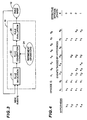
- FIG. 3 is a schematic block diagram showing the functional elements of the inductive learning engine 10 of FIG. 2.
- the inductive learning engine includes three basic parts: a rule invocation portion 20; a rule generation portion 22; and a rule evaluation portion 26.
- the rule invocation portion 20 receives as inputs the new events and the rules in the rule base 12. The rule invocation portion determines which rules in the rule base 12 best characterize the sequence of events including the new events and also have the greatest possibility of being further improved by the new events, in the manner described in detail below.
- rule refinement means modifying a hypothesis by (1) making the hypothesis more general whenever it is overspecialized (e.g., when the hypothesis does not cover certain positive examples), and (2) making the rule more specialized whenever it is overgeneralized (e.g., the hypothesis covers negative examples).
- the rule evaluation portion 26 evaluates the modified hypotheses from the rule generation portion 22 in order to decide whether the new hypotheses satisfy certain predefined criteria. These criteria may include the quality of the rule based on its entropy and confidence level as well as the syntactical complexity of the rule. Simpler rules, such as, for example, rules having fewer conditions in the left-hand side to explain the same event in the right-hand side, are preferable over more complex rules. Hypotheses that satisfy these criteria are returned to the rule base 12.
- Rule invocation portion 20 requires pattern matching between rules and events to determine which rules best characterize the sequence of events including the new events. This process entails matching the conditions in the left- and right-hand sides of a rule with the events in the sequences to determine whether the rule "covers" the sequence including the new events. If the conditions of the left-hand side of the rule are satisfied by the prior sequence of events, as determined by the pattern matching process, then the new events may be classified as positive or negative instances of the rule, depending on whether the right-hand side of the rule is also satisfied. If the events in the sequence only partially satisfy the conditions of the left-hand side of rule, but still match the right-hand side, then the rule may justify further refinement. Otherwise, the sequence of events may not match the rule at all and is therefore irrelevant to the rule.
- the rule invocation portion reduces or eliminates the expensive rule-to-event pattern matching process by: (1) ranking the hypotheses obtained from the rule base according to decreasing quality values; (2) tagging events with hypotheses that cover the event; and (3) reducing the effective length of an episode by preventing the expensive rule-to-event pattern matching process if an event in the episode was covered by a substantially better hypothesis.
- the rules from the rule base 12 which are used as hypotheses for characterizing the sequence including the new events are ranked so that the best hypotheses are considered first according to decreasing quality values.
- the quality value of a rule or hypothesis is determined at least in part by its accuracy of prediction, which may be expressed as entropy, and a confidence level which indicates the rule's past effectiveness at characterizing the sequence of events.
- Hypotheses may also be ranked based on other criteria such as syntactical complexity, generality, and significance. In terms of complexity, all other factors being equal, simpler rules are preferred to more complex rules. As for generality, more general rules have greater explaining power and are thus preferred over more specialized rules. Also certain types of rules which characterize or predict important events may be assigned a level of significance.
- the function "Q" will generally include at least some combination of the entropy and confidence level of the hypothesis.
- the rule invocation portion In processing a new episode consisting of a sequence of events, the rule invocation portion according to the invention tags events in the sequence with those hypotheses which have been determined through the rule-to-event pattern matching to cover the event. If an event is tagged by at least one hypothesis, and thus is covered by that hypothesis, subsequent hypotheses which are substantially lower in quality will be eliminated from the expensive pattern matching process.
- FIG. 4 is simplified example showing the reduction of an episode over several hypotheses.
- the episode E consists of eight events e1, e2, e3, e4, e5, e6, e7, and e8.
- the hypotheses h1, h2, h3, and h4, are ranked as follows: Q(h1) » Q(h2) > Q(h3) » Q(h4) where Q(h i ) represents the quality of hypothesis h i .
- rule-to-event pattern matching occurs in the order h1, h2, h3, and h4.
- the first hypothesis h1 covers three events out of the eight events in the episode.
- events e1, e2, and e7 are tagged with hypothesis h1.
- Testing determines that Q(h1) is substantially greater than Q(h2), so that the events e1, e2, and e7, are effectively removed from the episode and the effective length of the episode is only five.
- the remaining hypotheses h3 and h4, having substantially lower quality, are also eliminated from consideration with respect to events e1, e2, and e7, because they are inferior to h1 based on the hypothesis quality test, and do not enter into the expensive rule-to-event pattern matching process.
- Hypothesis h2 also covers two events e3 and e4, reducing the effective episode length to three.
- hypothesis h3 will enter into pattern matching for the same events, e3, e4, e5, e6, and e8.
- hypothesis h3 covers e3 as shown in FIG. 4, then e3 will also be tagged with h3 as well as h2.
- e8 is tagged with h3 reducing the effective episode length to two.
- Hypothesis h4 which is significantly inferior to h3 based on the hypothesis quality test, covers only one of the remaining events e4, leaving event e6 unexplained by the four existing hypotheses.
- the invoked hypotheses i.e., those hypotheses that are determined to characterize the sequence of events including the new events or are the best in terms of quality for those events that are unexplained by the existing hypotheses, are input to the rule generation portion 22 of the inductive learning engine 10.
- the invoked rules may be modified using the set of refinement operators 24 until satisfactory rules are found to cover the new events.
- FIG. 5 is a flow chart showing the sequence of operation of the rule invocation portion of the inductive learning engine according to one embodiment of the invention.
- the rule invocation portion obtains from the rule base those rules which will form the hypotheses to be tested for explaining the new events in the episode.
- the selected rules may consist of all of the rules in the rule base or a subset of the rules based in part on some measure of quality or other criteria.
- the rule invocation portion ranks the selected hypotheses according to a predetermined function Q which is based at least in part on the quality of the hypotheses.
- the rule-to-event pattern matching in subsequent steps will take place in the order of the ranked hypotheses with the higher ranked hypotheses being processed first.
- Step 34 is the first step in a first control loop in which the next hypothesis h i is obtained from the selected hypotheses according to its ranking as determined in step 32. Each hypothesis is preferably processed one at a time with respect to all of the events of a given episode.
- step 36 is the first step of a second control loop in which the next event e j in the sequence is obtained from the episode.
- the rule invocation portion determines whether the current hypothesis h i and the current event e j will be input to the rule-to-event pattern matching process. This is accomplished by first determining in step 38 whether the event e j is already tagged with another hypothesis h e indicating that the hypothesis covers that event. If not, then the hypothesis h i and event e j are input to the pattern matcher in step 42 to determine whether h i covers e j .
- step 40 If event e j is tagged by another hypothesis h e , however, then the Q function of the two hypotheses h e and h i are compared in step 40. If Q(h e ) is substantially greater than Q(h i ), that is, if Q(h e ) is greater than Q(h i ) by a predetermined difference D, then hypothesis h i is eliminated from further consideration with respect to event e j . Otherwise, hypothesis h i and event e j are input to the pattern matcher in step 42.
- step 42 the pattern matcher determines whether current hypothesis h i covers current event e j . If so, then event e j is tagged with hypothesis h i in step 44 to indicate that event e j is covered by hypothesis h i . Then, in step 46, whether the rule-to-event pattern match in step 42 was successful or not, the Q function of the current hypothesis h i is updated for use in comparison with other hypotheses. For example, both the accuracy in prediction of the hypotheses, as measured by entropy, and the confidence level, as measured by the number of times the hypothesis has previously been invoked, will change as a result of the pattern matching process.
- step 48 If there are no more events in the episode for processing in relation to the current hypothesis h i , then in step 48, the second control loop is exited. Otherwise, program control returns to step 36 to obtain the next event in the episode and to continue processing.
- step 50 the first control loop is exited and the reduction of the new episode is complete. Otherwise, program control returns to step 34 to obtain the next hypothesis and the continue processing the episode in relation to the next hypothesis.
- step 52 the hypotheses are reordered according to the Q function for input to the rule generation portion 22 of the inductive learning engine 10.
- the rule invocation mechanism according to the present invention is applicable to any system of incremental inductive learning used for discovering sequential patterns from large amounts of data.
- the invention may be applied in such areas as order transaction processing, manufacturing quality control, network diagnosis, adaptive user interfaces, bank account transaction auditing, or other domains where discovery of trends or patterns is important.
- the inductive learning engine may be used, for example, to generate rules representing user profiles describing the sequence of activities of various users of the computer system. These user profiles can then be used to detect unauthorized entry into the system or abusive activities by legitimate users.
- an event could be a security record in the system audit trail or a shell command, including corresponding command parameters and qualifiers, as normally entered and interpreted by the command interpreter of the computer's operating systems.
- the inductive learning engine can be used to incrementally generate rules representing user profiles. Such rules can then be used to detect unusual activities that deviate from a user's established behavioral profile or to uncover activities that are unrecognized in the user's established profile. These rules can also provide a simplified view of the security audit trail where repetitive sequences of events are compressed into a few rules.
- the rule invocation mechanism of the present invention by substantially increasing the efficiency of the inductive learning engine, makes it possible to generate rules for computer security in real time without significant degradation of the quality of the rules.
- the rule-to-event pattern matching process can be substantially eliminated by ignoring those hypotheses where much better explanations already exist.
Landscapes
- Engineering & Computer Science (AREA)
- Theoretical Computer Science (AREA)
- Computing Systems (AREA)
- Data Mining & Analysis (AREA)
- Evolutionary Computation (AREA)
- Physics & Mathematics (AREA)
- Computational Linguistics (AREA)
- General Engineering & Computer Science (AREA)
- General Physics & Mathematics (AREA)
- Mathematical Physics (AREA)
- Software Systems (AREA)
- Artificial Intelligence (AREA)
- Devices For Executing Special Programs (AREA)
- Information Retrieval, Db Structures And Fs Structures Therefor (AREA)
- Management, Administration, Business Operations System, And Electronic Commerce (AREA)
Applications Claiming Priority (2)
| Application Number | Priority Date | Filing Date | Title |
|---|---|---|---|
| US545072 | 1990-06-28 | ||
| US07/545,072 US5222197A (en) | 1990-06-28 | 1990-06-28 | Rule invocation mechanism for inductive learning engine |
Publications (2)
| Publication Number | Publication Date |
|---|---|
| EP0463630A2 true EP0463630A2 (fr) | 1992-01-02 |
| EP0463630A3 EP0463630A3 (en) | 1993-08-04 |
Family
ID=24174790
Family Applications (1)
| Application Number | Title | Priority Date | Filing Date |
|---|---|---|---|
| EP19910110773 Withdrawn EP0463630A3 (en) | 1990-06-28 | 1991-06-28 | Rule invocation mechanism for inductive learning engine |
Country Status (4)
| Country | Link |
|---|---|
| US (1) | US5222197A (fr) |
| EP (1) | EP0463630A3 (fr) |
| JP (1) | JP2862153B2 (fr) |
| CA (1) | CA2042455A1 (fr) |
Cited By (2)
| Publication number | Priority date | Publication date | Assignee | Title |
|---|---|---|---|---|
| EP0506038A3 (en) * | 1991-03-27 | 1995-02-15 | Toyoda Machine Works Ltd | Processing apparatus having rule base |
| EP0726531A1 (fr) * | 1995-02-09 | 1996-08-14 | AT&T Corp. | Appareil et méthode pour machine apprenant des hypothèses |
Families Citing this family (21)
| Publication number | Priority date | Publication date | Assignee | Title |
|---|---|---|---|---|
| US6006213A (en) * | 1991-04-22 | 1999-12-21 | Hitachi, Ltd. | Method for learning data processing rules from graph information |
| JP3184243B2 (ja) * | 1991-06-20 | 2001-07-09 | 株式会社日立製作所 | エキスパートシステムにおける知識獲得支援装置 |
| US5481650A (en) * | 1992-06-30 | 1996-01-02 | At&T Corp. | Biased learning system |
| US5758031A (en) * | 1992-11-10 | 1998-05-26 | Omron Corporation | Rule generating apparatus and method |
| US5802509A (en) * | 1993-09-21 | 1998-09-01 | Hitachi, Ltd. | Rule generation system and method of generating rule |
| US5473732A (en) * | 1993-11-02 | 1995-12-05 | Chang; Hou-Mei H. | Relational artificial intelligence system |
| US5627945A (en) * | 1994-10-07 | 1997-05-06 | Lucent Technologies Inc. | Biased learning system |
| US5796926A (en) * | 1995-06-06 | 1998-08-18 | Price Waterhouse Llp | Method and apparatus for learning information extraction patterns from examples |
| US5719692A (en) * | 1995-07-07 | 1998-02-17 | Lucent Technologies Inc. | Rule induction on large noisy data sets |
| JP3761238B2 (ja) * | 1996-01-25 | 2006-03-29 | 株式会社東芝 | 判断規則修正装置と判断規則修正方法 |
| US5841895A (en) * | 1996-10-25 | 1998-11-24 | Pricewaterhousecoopers, Llp | Method for learning local syntactic relationships for use in example-based information-extraction-pattern learning |
| US5832482A (en) * | 1997-02-20 | 1998-11-03 | International Business Machines Corporation | Method for mining causality rules with applications to electronic commerce |
| US6718322B1 (en) * | 1998-10-02 | 2004-04-06 | Ncr Corporation | SQL-based analytic algorithm for rule induction |
| US6477520B1 (en) * | 1999-02-22 | 2002-11-05 | Yatra Corporation | Adaptive travel purchasing optimization system |
| US6304833B1 (en) * | 1999-04-27 | 2001-10-16 | The United States Of America As Represented By The Secretary Of The Navy | Hypothesis selection for evidential reasoning systems |
| US20020184169A1 (en) * | 2001-05-31 | 2002-12-05 | Opitz David William | Method and device for creating a sequence of hypotheses |
| WO2005055073A1 (fr) * | 2003-11-27 | 2005-06-16 | Qinetiq Limited | Detection automatique d'anomalies |
| US9058486B2 (en) | 2011-10-18 | 2015-06-16 | Mcafee, Inc. | User behavioral risk assessment |
| US9380068B2 (en) | 2014-08-18 | 2016-06-28 | Bank Of America Corporation | Modification of computing resource behavior based on aggregated monitoring information |
| US20230070131A1 (en) * | 2021-09-08 | 2023-03-09 | Georgetown University | Generating and testing hypotheses and updating a predictive model of pandemic infections |
| US12561435B2 (en) * | 2022-12-16 | 2026-02-24 | Dell Products L.P. | Auditing classifier models with adversarially robust XAI committees |
Family Cites Families (21)
| Publication number | Priority date | Publication date | Assignee | Title |
|---|---|---|---|---|
| US4642782A (en) * | 1984-07-31 | 1987-02-10 | Westinghouse Electric Corp. | Rule based diagnostic system with dynamic alteration capability |
| JPH0734162B2 (ja) * | 1985-02-06 | 1995-04-12 | 株式会社日立製作所 | 類推制御方法 |
| US4999833A (en) * | 1985-05-06 | 1991-03-12 | Itt Corporation | Network connectivity control by artificial intelligence |
| US4809219A (en) * | 1985-06-26 | 1989-02-28 | International Business Machines Corporation | Method for processing an expert system rulebase on a system having limited memory |
| US4829450A (en) * | 1986-02-28 | 1989-05-09 | Michael Manthey | Reasoning machine |
| US4773024A (en) * | 1986-06-03 | 1988-09-20 | Synaptics, Inc. | Brain emulation circuit with reduced confusion |
| US4752890A (en) * | 1986-07-14 | 1988-06-21 | International Business Machines Corp. | Adaptive mechanisms for execution of sequential decisions |
| JPS6326726A (ja) * | 1986-07-21 | 1988-02-04 | Toshiba Corp | 情報処理装置 |
| US4849879A (en) * | 1986-09-02 | 1989-07-18 | Digital Equipment Corp | Data processor performance advisor |
| US4881178A (en) * | 1987-05-07 | 1989-11-14 | The Regents Of The University Of Michigan | Method of controlling a classifier system |
| US4843567A (en) * | 1987-07-30 | 1989-06-27 | International Business Machines Corp. | Device to assist adaptive reordering of sequential decisions |
| US4860213A (en) * | 1987-10-01 | 1989-08-22 | General Electric Company | Reasoning system for reasoning with uncertainty |
| US4866635A (en) * | 1987-10-19 | 1989-09-12 | Carnegie Group Inc. | Domain independent shell for building a diagnostic expert system |
| US4959799A (en) * | 1987-11-05 | 1990-09-25 | Hitachi, Ltd. | Inference method and system |
| JPH0676181B2 (ja) * | 1988-02-01 | 1994-09-28 | フジテック株式会社 | エレベータの群管理制御方法及び装置 |
| JP2770228B2 (ja) * | 1988-03-01 | 1998-06-25 | 株式会社日立製作所 | 知識型プラント情報処理方式 |
| US4890240A (en) * | 1988-09-20 | 1989-12-26 | International Business Machines Corporation | Coalescing changes in pattern-directed, rule-based artificial intelligence production systems |
| US5099436A (en) * | 1988-11-03 | 1992-03-24 | Allied-Signal Inc. | Methods and apparatus for performing system fault diagnosis |
| US5016204A (en) * | 1989-02-28 | 1991-05-14 | Digital Equipment Corporation | Expert system for performing diagnostic and redesign operations incorporating multiple levels of simulation detail |
| US5034898A (en) * | 1989-05-02 | 1991-07-23 | Digital Equipment | System including inductive learning arrangement for adaptive management of behavior of complex entity |
| US5103498A (en) * | 1990-08-02 | 1992-04-07 | Tandy Corporation | Intelligent help system |
-
1990
- 1990-06-28 US US07/545,072 patent/US5222197A/en not_active Expired - Lifetime
-
1991
- 1991-05-13 CA CA002042455A patent/CA2042455A1/fr not_active Abandoned
- 1991-06-11 JP JP3139188A patent/JP2862153B2/ja not_active Expired - Fee Related
- 1991-06-28 EP EP19910110773 patent/EP0463630A3/en not_active Withdrawn
Non-Patent Citations (4)
| Title |
|---|
| IEEE TRANSACTIONS ON PATTERN ANALYSIS AND MACHINE INTELLIGENCE vol. 10, no. 6, November 1988, NEW YORK US pages 888 - 896 PAUL W. BAIM: 'A Method for Attribute Selection in Inductive Learning Systems' * |
| PROCEEDINGS OF THE 1988 IEEE INTERNATIONAL CONFERENCE ON SYSTEMS, MAN, AND CYBERNETICS vol. 1, 8 August 1988, BEIJING AND SHENYANG, CHINA pages 548 - 552 , XP120013 XIAOJIA ZHOU ET AL.: 'A Heuristic-Statistical Feature Selection Criterion for Inductive Machine Learning in the Real World' * |
| PROCEEDINGS OF THE 1990 IEEE COMPUTER SOCIETY SYMPOSIUM ON RESEARCH IN SECURITY AND PRIVACY 7 May 1990, OAKLAND, CA US pages 278 - 284 , XP209258 HENRY S. TENG ET AL.: 'Adaptive Real-time Anomaly Detection Using Inductively Generated Sequential Patterns' * |
| PROCEEDINGS OF THE FOURTH CONFERENCE ON ARTIFICIAL INTELLIGENCE APPLICATIONS 14 March 1988, SAN DIEGO, CA US pages 188 - 193 USAMA M. FAYYAD ET AL.: 'Learning Control Information In Rule-Based Systems: A Weak Method' * |
Cited By (2)
| Publication number | Priority date | Publication date | Assignee | Title |
|---|---|---|---|---|
| EP0506038A3 (en) * | 1991-03-27 | 1995-02-15 | Toyoda Machine Works Ltd | Processing apparatus having rule base |
| EP0726531A1 (fr) * | 1995-02-09 | 1996-08-14 | AT&T Corp. | Appareil et méthode pour machine apprenant des hypothèses |
Also Published As
| Publication number | Publication date |
|---|---|
| JPH04233036A (ja) | 1992-08-21 |
| EP0463630A3 (en) | 1993-08-04 |
| JP2862153B2 (ja) | 1999-02-24 |
| CA2042455A1 (fr) | 1991-12-29 |
| US5222197A (en) | 1993-06-22 |
Similar Documents
| Publication | Publication Date | Title |
|---|---|---|
| US5222197A (en) | Rule invocation mechanism for inductive learning engine | |
| US5696884A (en) | Method for assisting in rendering a decision using improved belief networks | |
| Alpaydin | Multiple networks for function learning | |
| Lee et al. | An intelligent fuzzy agent for meeting scheduling decision support system | |
| Abu-Mostafa | Learning from hints | |
| Moreno et al. | Neural recursive belief states in multi-agent reinforcement learning | |
| Armentano et al. | Plan recognition for interface agents: State of the art | |
| Subramanian et al. | A neuro-symbolic approach to multi-agent rl for interpretability and probabilistic decision making | |
| Hansson et al. | Probabilistic heuristic estimates | |
| Kaelbling | Associative reinforcement learning: A generate and test algorithm | |
| Lemmer | The causal Markov condition, fact or artifact? | |
| Taylor | A reinforcement learning framework for parameter control in computer vision applications | |
| Branchi et al. | Recommending the optimal policy by learning to act from temporal data | |
| Tinker et al. | Analogical and case-based reasoning for predicting satellite task schedulability | |
| Liu et al. | Goal-capability-commitment based mediation for multi-agent collaboration | |
| LEVASHENKO et al. | Fuzzy decision tree for parallel processing support | |
| Pendrith et al. | An analysis of non-Markov automata games: Implications for reinforcement learning | |
| Terziyan et al. | Learning Bayesian Metanetworks from data with multilevel uncertainty | |
| Torgo | Applying propositional learning to time series prediction | |
| Aiello et al. | Neural networks and rule-based systems. | |
| Orth | Granger Significance Scoring. A Granger Causality-Based Scoring Function for the Time Series Causal Discovery Task | |
| Majercik | C-MAXPLAN: Contingent planning in the MAXPLAN framework | |
| Martin et al. | A virtual machine for event sequence identification using fuzzy tolerance | |
| Child et al. | SMART (Stochastic Model Acquisition with ReinforcemenT) learning agents: A preliminary report | |
| Llinas | Formal methods of automated reasoning for situational estimation |
Legal Events
| Date | Code | Title | Description |
|---|---|---|---|
| PUAI | Public reference made under article 153(3) epc to a published international application that has entered the european phase |
Free format text: ORIGINAL CODE: 0009012 |
|
| 17P | Request for examination filed |
Effective date: 19910729 |
|
| AK | Designated contracting states |
Kind code of ref document: A2 Designated state(s): DE FR GB IT NL |
|
| RIN1 | Information on inventor provided before grant (corrected) |
Inventor name: ABBRUZZESE, GREGORY B. Inventor name: CHEN, KAIHU Inventor name: VERDEYEN, MICHAEL P. Inventor name: TENG, HENRY SHAO-LIN Inventor name: WILSON, MATTHEW |
|
| PUAL | Search report despatched |
Free format text: ORIGINAL CODE: 0009013 |
|
| AK | Designated contracting states |
Kind code of ref document: A3 Designated state(s): DE FR GB IT NL |
|
| STAA | Information on the status of an ep patent application or granted ep patent |
Free format text: STATUS: THE APPLICATION IS DEEMED TO BE WITHDRAWN |
|
| 18D | Application deemed to be withdrawn |
Effective date: 19931205 |