EP0464077B1 - Verfahren zur herstellung eines ligand-rezeptor-komprexes - Google Patents
Verfahren zur herstellung eines ligand-rezeptor-komprexes Download PDFInfo
- Publication number
- EP0464077B1 EP0464077B1 EP90904856A EP90904856A EP0464077B1 EP 0464077 B1 EP0464077 B1 EP 0464077B1 EP 90904856 A EP90904856 A EP 90904856A EP 90904856 A EP90904856 A EP 90904856A EP 0464077 B1 EP0464077 B1 EP 0464077B1
- Authority
- EP
- European Patent Office
- Prior art keywords
- product
- ligand
- galactose
- afore
- rhamnose
- Prior art date
- Legal status (The legal status is an assumption and is not a legal conclusion. Google has not performed a legal analysis and makes no representation as to the accuracy of the status listed.)
- Expired - Lifetime
Links
Images

Classifications
-
- A—HUMAN NECESSITIES
- A61—MEDICAL OR VETERINARY SCIENCE; HYGIENE
- A61Q—SPECIFIC USE OF COSMETICS OR SIMILAR TOILETRY PREPARATIONS
- A61Q19/00—Preparations for care of the skin
- A61Q19/08—Anti-ageing preparations
-
- A—HUMAN NECESSITIES
- A61—MEDICAL OR VETERINARY SCIENCE; HYGIENE
- A61K—PREPARATIONS FOR MEDICAL, DENTAL OR TOILETRY PURPOSES
- A61K8/00—Cosmetics or similar toiletry preparations
- A61K8/02—Cosmetics or similar toiletry preparations characterised by special physical form
- A61K8/0241—Containing particulates characterized by their shape and/or structure
-
- A—HUMAN NECESSITIES
- A61—MEDICAL OR VETERINARY SCIENCE; HYGIENE
- A61K—PREPARATIONS FOR MEDICAL, DENTAL OR TOILETRY PURPOSES
- A61K8/00—Cosmetics or similar toiletry preparations
- A61K8/02—Cosmetics or similar toiletry preparations characterised by special physical form
- A61K8/11—Encapsulated compositions
-
- A—HUMAN NECESSITIES
- A61—MEDICAL OR VETERINARY SCIENCE; HYGIENE
- A61K—PREPARATIONS FOR MEDICAL, DENTAL OR TOILETRY PURPOSES
- A61K8/00—Cosmetics or similar toiletry preparations
- A61K8/02—Cosmetics or similar toiletry preparations characterised by special physical form
- A61K8/14—Liposomes; Vesicles
-
- A—HUMAN NECESSITIES
- A61—MEDICAL OR VETERINARY SCIENCE; HYGIENE
- A61K—PREPARATIONS FOR MEDICAL, DENTAL OR TOILETRY PURPOSES
- A61K8/00—Cosmetics or similar toiletry preparations
- A61K8/18—Cosmetics or similar toiletry preparations characterised by the composition
- A61K8/30—Cosmetics or similar toiletry preparations characterised by the composition containing organic compounds
- A61K8/60—Sugars; Derivatives thereof
-
- A—HUMAN NECESSITIES
- A61—MEDICAL OR VETERINARY SCIENCE; HYGIENE
- A61K—PREPARATIONS FOR MEDICAL, DENTAL OR TOILETRY PURPOSES
- A61K9/00—Medicinal preparations characterised by special physical form
- A61K9/10—Dispersions; Emulsions
- A61K9/127—Synthetic bilayered vehicles, e.g. liposomes or liposomes with cholesterol as the only non-phosphatidyl surfactant
-
- A—HUMAN NECESSITIES
- A61—MEDICAL OR VETERINARY SCIENCE; HYGIENE
- A61K—PREPARATIONS FOR MEDICAL, DENTAL OR TOILETRY PURPOSES
- A61K9/00—Medicinal preparations characterised by special physical form
- A61K9/10—Dispersions; Emulsions
- A61K9/127—Synthetic bilayered vehicles, e.g. liposomes or liposomes with cholesterol as the only non-phosphatidyl surfactant
- A61K9/1271—Non-conventional liposomes, e.g. PEGylated liposomes or liposomes coated or grafted with polymers
-
- A—HUMAN NECESSITIES
- A61—MEDICAL OR VETERINARY SCIENCE; HYGIENE
- A61Q—SPECIFIC USE OF COSMETICS OR SIMILAR TOILETRY PREPARATIONS
- A61Q19/00—Preparations for care of the skin
-
- A—HUMAN NECESSITIES
- A61—MEDICAL OR VETERINARY SCIENCE; HYGIENE
- A61Q—SPECIFIC USE OF COSMETICS OR SIMILAR TOILETRY PREPARATIONS
- A61Q7/00—Preparations for affecting hair growth
-
- B—PERFORMING OPERATIONS; TRANSPORTING
- B82—NANOTECHNOLOGY
- B82Y—SPECIFIC USES OR APPLICATIONS OF NANOSTRUCTURES; MEASUREMENT OR ANALYSIS OF NANOSTRUCTURES; MANUFACTURE OR TREATMENT OF NANOSTRUCTURES
- B82Y5/00—Nanobiotechnology or nanomedicine, e.g. protein engineering or drug delivery
-
- A—HUMAN NECESSITIES
- A61—MEDICAL OR VETERINARY SCIENCE; HYGIENE
- A61K—PREPARATIONS FOR MEDICAL, DENTAL OR TOILETRY PURPOSES
- A61K2800/00—Properties of cosmetic compositions or active ingredients thereof or formulation aids used therein and process related aspects
- A61K2800/40—Chemical, physico-chemical or functional or structural properties of particular ingredients
- A61K2800/41—Particular ingredients further characterized by their size
- A61K2800/413—Nanosized, i.e. having sizes below 100 nm
-
- A—HUMAN NECESSITIES
- A61—MEDICAL OR VETERINARY SCIENCE; HYGIENE
- A61K—PREPARATIONS FOR MEDICAL, DENTAL OR TOILETRY PURPOSES
- A61K2800/00—Properties of cosmetic compositions or active ingredients thereof or formulation aids used therein and process related aspects
- A61K2800/40—Chemical, physico-chemical or functional or structural properties of particular ingredients
- A61K2800/42—Colour properties
- A61K2800/43—Pigments; Dyes
- A61K2800/434—Luminescent, Fluorescent; Optical brighteners; Photosensitizers
-
- A—HUMAN NECESSITIES
- A61—MEDICAL OR VETERINARY SCIENCE; HYGIENE
- A61K—PREPARATIONS FOR MEDICAL, DENTAL OR TOILETRY PURPOSES
- A61K2800/00—Properties of cosmetic compositions or active ingredients thereof or formulation aids used therein and process related aspects
- A61K2800/40—Chemical, physico-chemical or functional or structural properties of particular ingredients
- A61K2800/57—Compounds covalently linked to a(n inert) carrier molecule, e.g. conjugates, pro-fragrances
-
- A—HUMAN NECESSITIES
- A61—MEDICAL OR VETERINARY SCIENCE; HYGIENE
- A61K—PREPARATIONS FOR MEDICAL, DENTAL OR TOILETRY PURPOSES
- A61K2800/00—Properties of cosmetic compositions or active ingredients thereof or formulation aids used therein and process related aspects
- A61K2800/40—Chemical, physico-chemical or functional or structural properties of particular ingredients
- A61K2800/60—Particulates further characterized by their structure or composition
- A61K2800/61—Surface treated
- A61K2800/612—By organic compounds
-
- A—HUMAN NECESSITIES
- A61—MEDICAL OR VETERINARY SCIENCE; HYGIENE
- A61K—PREPARATIONS FOR MEDICAL, DENTAL OR TOILETRY PURPOSES
- A61K2800/00—Properties of cosmetic compositions or active ingredients thereof or formulation aids used therein and process related aspects
- A61K2800/40—Chemical, physico-chemical or functional or structural properties of particular ingredients
- A61K2800/60—Particulates further characterized by their structure or composition
- A61K2800/65—Characterized by the composition of the particulate/core
- A61K2800/654—The particulate/core comprising macromolecular material
Definitions
- the present invention essentially relates to a process for fixing a product on the membrane of a keratinocyte by means of a ligand-receptor bond, process for the preparation of such a product, product obtained, cosmetic or pharmaceutical composition containing it and its process for preparation.
- liposomes have been used as vectors for active medicinal or other principle (see for example FR-A-2 221 122 or FR- A-2 415 460 or FR-A-2 540 381).
- Document FR-A-2 609 397 relates to the use of a substance or composition of a carbohydrate nature as the active principle of a dermatological, or cosmetological, or pharmaceutical, or cellular stimulant composition, with the aim of strengthening the cellular bioenergetic potential or tissue (see claim 1) or to improve skin comfort, thanks to their moisturizing, softening, softening effect (page 3, line 33 to page 4, line 10; where an anti-inflammatory action is even indicated).
- This document therefore relates to general education which is not related to the particular problem of keratinocytes.
- the document PCT / WO 87/05300 BIOCOMPATIBLES LTD relates to a method for preserving a material having a water-dependent structure, comprising bringing the material into contact with an aqueous solution of a polyhydroxy compound and then removing the water of this material, this in order to allow a long term conservation of biological materials such as hemoglobin, erythrocytes, liposomes and cells (see page 1, lines 1 to 4).
- WO 88/00474 describes a lipid membrane structure comprising a lipid vesicle encapsulating a medicament, and a ligand comprising a residue specific for hepatobiliary receptors, in order to achieve control of the structure towards the hepatocytes with efficiency. exceptional.
- EP-A-0 285 178 relates to mannobiose derivatives useful as a modification component of pharmaceutical preparations, such as liposomes, having a specific affinity for Kupffer cells of the liver.
- this document recommends a specific culture of keratinocytes to activate them in order to activate their capacity to multiply on all substrates coated with ligands.
- BIOCARB also relates to hydrocarbon derivatives within the framework of specific targeting for a therapeutic or diagnostic purpose, this targeting being carried out on molecules of organs different from mammals including the male (see page 1, lines 4 to 8).
- a product on the membrane of a keratinocyte by means of a ligand-receptor bond when a product carrying at least one ligand is used.
- a product carrying at least one ligand consisting of an osidic residue chosen from rhamnose, galactose and galactose-6-phosphate.
- rhamnose, galactose and galactose-6-phosphate are ligands specific for receptor sites on the membrane of keratinocytes.
- ⁇ -L-rhamnose and ⁇ -D-ga! Actose-6-phosphate exhibit significantly greater specificity than ⁇ -D-galactose, and are therefore preferred over it. latest.
- the product carrying this sugar forming a ligand specific for receptors of the keratinocyte membrane could be in various forms. It may, for example, be a submicroscopic particle, such as a liposome or a polymeric nanoparticle or else a molecule or a macromolecule of natural or synthetic origin, such as a protein.
- the ligand-forming sugar can be coupled in various ways to the surface of this product. It can be advantageously coupled by a covalent chemical bond, preferably by means of a spacer arm.
- the object of the present invention is to solve the new technical problem consisting in providing a solution making it possible to specifically fix a product on the membrane of keratinocytes by means of a ligand-receptor bond, if necessary to the detriment of other categories of cells surrounding keratinocytes.
- the object of the present invention is to solve the above new technical problem according to an extremely simple, rapid, practical and reliable method.
- the present invention also aims to solve this new technical problem by providing a method of selecting a product capable of specifically binding to the membrane of a keratinocyte by means of a ligand-receptor bond which is particularly simple, rapid. , practical and reliable.
- Another object of the present invention is to solve the aforementioned new technical problem by providing a process for the preparation of such a product capable of attaching specifically to the membrane of a keratinocyte by means of a ligand-receptor bond which is as simple. , fast, practical and reliable.
- the purpose of the invention is also to resolve the aforementioned new technical problem by providing a product capable of specifically binding to the membrane of a keratinocyte by means of a ligand-receptor bond which is in a form which is particularly easy to handle, which is reliable and can be used quickly without requiring special steps.
- the present invention also aims to solve the aforementioned new technical problem by providing a cosmetic or pharmaceutical composition, in particular a dermatological composition, and its method of preparation, incorporating such a specific product which has all the aforementioned determining technical advantages relating to the reliability of the fixation.
- a cosmetic or pharmaceutical composition in particular a dermatological composition, and its method of preparation, incorporating such a specific product which has all the aforementioned determining technical advantages relating to the reliability of the fixation.
- the present invention solves the above technical problem by providing the above solutions in an extremely simple manner, usable on an industrial scale.
- the present invention provides a method for fixing a product on the membrane of a keratinocyte by means of a ligand-receptor bond, characterized in that a product consisting of a product is used.
- base coupled to at least one ligand consisting of an osidic residue accessible to membrane receptors, said osidic residue being chosen from rhamnose, galactose and galactose-6-phosphate, and preferably from a-L-rhamnose and aD-ga! actose-6-phosphate.
- the invention includes all the isomeric forms of rhamnose and galactose.
- the ligand is coupled to the surface of the base product by a covalent chemical bond.
- the ligand is coupled to the surface of the aforementioned basic product by means of a spacer arm such as the residue of a heterobifunctional reagent or a group of several sugars, such than the group (1-4) -O- ⁇ -D-glucopyranosyl- (1-6) -O-; 8-Dg! ucopyranosy! e.
- a spacer arm such as the residue of a heterobifunctional reagent or a group of several sugars, such than the group (1-4) -O- ⁇ -D-glucopyranosyl- (1-6) -O-; 8-Dg! ucopyranosy! e.
- the abovementioned basic product is a submicroscopic particle such as a liposome or a polymeric nanoparticle.
- the abovementioned product or basic product is or contains a substance of cosmetic or pharmaceutical interest, in particular dermatological, such as an agent modulating the metabolism of skin cells.
- the present invention also provides a method for selecting a product intended to be fixed on the membrane of a keratinocyte by means of a ligand-receptor bond, characterized in that one chooses, from a set of products, those consisting of a basic product coupled to at least one ligand consisting of an osidic residue accessible to receptors, said osidic residue being chosen from rhamnose, galactose or galactose-6-phosphate, preferably a- L-rhamnose and aD-galactose-6-phosphate.
- the present invention also provides a process for the preparation of a product intended to be fixed on the membrane of a keratinocyte by means of a ligand-receptor bond, characterized in that a product of base corresponding to at least one ligand consisting of an osidic residue accessible to membrane receptors, said osidic residue being chosen from rhamnose, galactose and galactose-6-phosphate, preferably a-L-rhamnose and! 'aD- ga! actose-6-phosphate.
- the above-mentioned ligand is coupled to the basic product by a covalent chemical bond.
- the coupling can be carried out in accordance with the general method described by MacBroom in Methods in Enzymology (1972) 28, 212-222 or also that described by FJ Martin and D. Papahadjopoulos in The Journal of Biological Chemistry (1982), vol 257, n ° 1, pages 286-288.
- the aforementioned ligand is coupled to the base product via a spacer arm as defined above.
- the basic product is a submicroscopic particle such as a liposome or a polymeric nanoparticle.
- the abovementioned basic product is a molecule or a macromolecule of natural or synthetic origin, such as a protein, for example a serum albumin.
- the aforementioned product or basic product is or contains a substance of cosmetic or pharmaceutical interest, in particular dermatological, such as an agent modulating the metabolism of skin cells.
- the invention also covers a product intended to be fixed on the membrane of a keratinocyte by means of a ligand-receptor bond, characterized in that it is capable of being obtained according to one previously defined processes.
- the invention also covers new products capable of binding to the membrane of a keratinocyte by means of a ligand-receptor bond, characterized in that they comprise at least one ligand consisting of an osidic residue accessible to the membrane receptors, said osidic residue being chosen from rhamnose, galactose and galactose-6-phosphate and preferably a-L-rhamnose and! 'aD-ga!
- actose-6-phosphate coupled to a basic product, for example selected from the group consisting of a submicroscopic particle such as a liposome or a polymeric nanoparticle; a molecule or macromolecule of natural or synthetic origin, such as a protein, in particular serum albumin; a substance of cosmetic or pharmaceutical interest, in particular dermatological interest, such as an agent modulating the metabolism of skin cells.
- this coupling takes place via a spacer arm such as the residue of a heterobifunctional reagent or a group of several sugars, such as the group (1-4) -O- ⁇ -D- glucopyranosyl- (1-6) -O- ⁇ -D-glucopyranosyle.
- the present invention also provides a cosmetic or pharmaceutical composition, in particular a dermatological composition, characterized in that it contains at least one product as obtained by the process previously described or as previously defined.
- the aforementioned composition is intended for any care or any treatment of interest to keratinocytes, for example the improvement of skin regeneration, the treatment of psoriasis or hair regrowth.
- the invention also relates to a process for the preparation of a cosmetic or pharmaceutical composition, in particular a dermatological composition, characterized in that one associates with a cosmetically or pharmaceutically acceptable excipient, vehicle or support, at least one product as obtained by one of the methods previously described, or as previously defined.
- the invention also covers a process for the care or treatment of keratinocytes, for example with a view to skin regeneration, the treatment of psoriasis or hair regrowth, characterized in that the product is applied as previously obtained by one of the methods previously described, or as previously defined, in a cosmetically or therapeutically effective amount, advantageously while the latter is associated with a cosmetically or pharmaceutically acceptable vehicle, support or excipient.
- cell targeting of a product is obtained which can thus be specifically concentrated at the level of keratinocytes by virtue of the presence of at least one specific ligand constituted by an osidic residue chosen from rhamnose, galactose and galactose-6-phosphate, preferably ⁇ -L-rhamnose and ⁇ -D-ga! actose-6-phosphate.
- the basic product to which the specific ligand constituted by the sugar residue is coupled may be any.
- the number of osidic residues as defined above carried by the protein is at least about twenty.
- lipid vesicle which can be in the form of a liposome.
- lipid covers all substances comprising a so-called fatty carbon chain, generally greater than 5 carbon atoms, this substance usually being called "lipid".
- amphiphilic lipids are used as lipid to form the abovementioned liposome, that is to say made up of molecules having a hydrophilic group indifferently ionic or nonionic and a lipophilic group, these amphiphilic lipids being susceptible to form lipid lamellar phases or liposomes in the presence of an aqueous phase.
- lipids examples include: phospholipids, phosphoaminolipids, glycolipids, polyoxyethylenated fatty alcohols, esters of optionally polyoxyethylenated polyols.
- Such substances are, for example, constituted by an egg or soy lecithin, a phosphatidylserine, a sphyngomyelin, a cerebroside or an oxyethylenated polyglycerol stearate.
- the proportion, in molar percentage of the osidic derivatives according to the invention relative to all of the lipid molecules forming the bilayer of the liposome is at least 10% , and preferably at least 15% relative to all of the amphiphilic lipids of the liposome.
- the liposomes are formulated so as to have a high microviscosity.
- This can for example be obtained by using amphiphilic lipids whose transition temperature is higher than approximately 37 ° C and preferably 41 ° C, in particular phospholipids or saturated fatty acids, for example dipalmitoyl phosphatidylcholine.
- a polymeric nanoparticle generally of dimension smaller than a micrometer, preferably polymeric nanoparticles comprising NH 2 groups, alcohol functions or thiol functions allowing easy coupling with the osidic residue according to the invention.
- Biodegradable nanoparticles such as polylactates, which are well known to those skilled in the art, are preferably chosen.
- Such particular particles comprising NH 2 groups are commercially available, for example from Interfacial Dynamics Corporation (Portland, Oregon-USA).
- the osidic residues coupled to the surface of said polymeric nanoparticles are chosen from the residues of a-D-galactose, a-L-rhamnose and a-D-galactose-6-phosphate.
- porous nanoparticles can be used to encapsulate the active substances.
- the basic products such as the aforementioned liposomes or nanoparticles, contain one or more substances of cosmetic or pharmaceutical interest, especially dermatological, such as an agent for modulating cell metabolism of the skin, for example peptides obtained by hydrolysis of proteins, modulators of enzymatic activity, for example a xanthine such as theophylline.
- dermatological such as an agent for modulating cell metabolism of the skin, for example peptides obtained by hydrolysis of proteins, modulators of enzymatic activity, for example a xanthine such as theophylline.
- the basic product which can be used according to the invention can also be the active substance itself of cosmetic or pharmaceutical interest, in particular dermatological interest.
- DPPE dipalmitoylphosphatidyl ethanolamine molecule
- Rha a-L-rhamnose molecule
- PPITC-a-L-rhamnopyranoside is prepared from p-aminophenyl-a-L-rhamnoside, by reaction with thiophosgene, according to the method described by C.R. McBroom et al. in Methods in Enzymology (1972) 28212-222.
- DPPE is dissolved mole to mole with PPITC-aL-rhamnopyranoside at 50 ° C. in a mixture consisting of a bicarbonate buffer (0.1 M, pH 9.5) and ethanol. The temperature is maintained at 50 ° C for 3 h, with stirring. The reaction medium is then cooled to approximately 4 ° C, and centrifuged.
- DPPE-Rha rhamnosylated DPPE
- This aqueous solution can, for example, contain a fluorescent marker consisting, for example, of the potassium salt of 5- (6) -carboxyfluorescein in an amount of 8 g per 40 ml of distilled water.
- blue calcein can also be used in an equivalent manner.
- the mixture After adding 10 ml of the aqueous solution to be encapsulated above, the mixture is placed under magnetic stirring for 15 to 24 hours, protected from light.
- the contents of the flask are collected in a 30 ml container cooled in melting ice.
- the suspension is subjected to sonication three times at 2 min at 4 ° C. at a power of 200 W, which makes it possible to form liposomes of substantially homogeneous size, of submicroscopic dimension.
- the liposomal suspension thus obtained can be stored at 4 ° C.
- purification of the liposomes is carried out by separating them from the non-encapsulated aqueous phase by gel filtration, as is well known according to the conventional liposome purification protocol.
- an “activated sugar” of formula (I) is prepared, as indicated below, consisting of an aL-rhamnopyranosyl residue, in which the OH group located on the first carbon is substituted by a straight chain terminated by an SH group.
- MPB-DPPE is a phospholipid carrying a maleimide group, prepared according to the method described by Martin F.J. and Papahadjopoulos D., J. Biol. Chem. (1982) 257 286-288, by reaction of dipalmitoylphosphatidylethanolamine on succinimidyl-4- (p-maleimidophenyl) butyrate (SMPB).
- SMPB succinimidyl-4- (p-maleimidophenyl) butyrate
- the mixture is placed under an argon atmosphere, with gentle stirring for 12 h at ordinary temperature.
- the thiol function of the compound of formula (I) is then fixed by addition reaction on the double bond of the maleimide group.
- Liposomes are thus obtained comprising on the surface rhamnosylated residues located at the end of a chain of atoms (spacer arm) corresponding to the chain of the compound of formula (I).
- the constituents of the above lipid phase are dissolved at a concentration of approximately 10% in an 80:20 by volume mixture of dichloromethane and methanol.
- the organic solution is atomized at around 60 ° C according to the process described in document EP-B1-0087993 to obtain a powder.
- This powder is then dispersed by stirring in the aqueous solution to be encapsulated, in a proportion of 1 part of powder for 100 parts of aqueous solution.
- This solution can for example contain a fluorescent marker such as 5- (6) carboxyfluorescein, as in Example 1.
- a liposome suspension is thus formed which is preferably homogenized, for example by means of a pressurized homogenizer as described in document EP-B1-0107559.
- a suspension of liposomes is thus obtained having rhamnosylated residues on the surface, connected to the bilayer by spacer arms consisting of the residue (1-4) -O- ⁇ -D-glucopyranosyl- (1-6) -O- ⁇ -D -glucopyra- nosyle.
- Example 1 The procedure is as in Example 1, except that use is made of digalactosyldiglyceride, wheat flour extract, available for example from Sigma and comprising at the end of the molecule two galactosylated residues, in place of the product according to the invention used in Example 1.
- Nanoparticles can be obtained commercially In the form of beads with an average diameter of approximately 0.5 ⁇ m consisting mainly of polystyrene, and having NH 3 + groups on the surface . Such nanoparticles are available for example from Interfacial Dynamics Corporation (IDC, Portland, Oregon, USA).
- the beads are then collected, then rinsed twice with PBS buffer.
- Nanoparticles are thus obtained comprising rhamnosylated residues on the surface.
- a protein for example bovine serum albumin, BSA, to which around twenty units of rhamnose are coupled, thereby obtaining a neoglycoprotein.
- BSA bovine serum albumin
- BSA-rhamnosylated This neoglycoprotein called BSA-rhamnosylated is obtained as follows by taking inspiration from the method described by MacBroom et al. in Methods in Enzymology, (1972) 28 212-222.
- p-aminophenyl-6-phospho-a-D-galactopyranoside is prepared from commercial p-nitrophenyl-a-D-galactoside, according to the method described by G.N. SANDO and E.M. KARSON in Biochemistry (1980) vol. 19 No. 16 pages 3850-3855, by phosphorylation using phosphoryl chloride, followed by hydrogenation.
- PPITC-6-phospho-a-D-galactopyranoside (PPITC-G) is prepared according to the method of Example 1, by reaction of the thiophosgene with the compound prepared in the first step.
- bovine serum albumin (BSA) are incubated in the presence of 62 mg of PPITC-G, prepared in the preceding step, operating as in Example 6.
- Example 1 we proceed to Example 1, except that we use instead of DPPE-Rha, a molecule of natural origin already carrying a glucosyl residue, consisting of the sericoside extracted from the roots of Terminalia sericea available for example from Inverni Della Beffa.
- DPPE-Rha a molecule of natural origin already carrying a glucosyl residue, consisting of the sericoside extracted from the roots of Terminalia sericea available for example from Inverni Della Beffa.
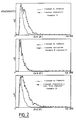
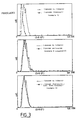
- F26 normal human fibroblasts
- HSC human tumor keratinocytes
- Fluorescence microscopy allows the study of cells in situ. It is possible to locate the parts of the cell where the fluorescent compounds preferentially attach.
- the substances tested are neoglycoproteins synthesized from BSA by reaction with a glycosido-p-phenylisothiocyanate, according to Example 6 or, where appropriate, Example 7 when a phosphate sugar is desired. Then, these neoglycoproteins are made fluorescent by reacting them with fluorescein p-phenylisothiocyanate.
- neoglycoprotein Cells grown on coverslips are labeled with a neoglycoprotein as follows. The medium is replaced in the keratinocyte culture dishes by a solution of neoglycoprotein in a PBS buffer at a concentration of 1 mg / ml. It is left to incubate for 2 h at 32 ° C. It is then rinsed in culture with PBS buffer at 4 ° C., then it is fixed using paraformaldehyde. The same is done with fluorescent BSA as a control substance.
- the plasma membrane is permeabilized using a detergent, such as Nonidet P40 @ available from SIGMA . This permeabilization makes it easier to access internal membranes to fluorescent products, which makes it possible to highlight sugar receptors inside the cell.
- a detergent such as Nonidet P40 @ available from SIGMA .
- the cells cultured in 60 mm diameter petri dishes having reached confluence are brought into contact with the products according to the invention comprising at least one osidic ligand.
- these products according to the invention carrying osidic ligands are incorporated into the lipid phase of the liposomes and are found on the surface of the liposomes with the freely accessible osidic ligands of the outside.
- the potassium salt of 5- (6) -carboxyfluorescein [5- (6) -CF-y is used.
- the endocytosis of the different types of liposomes is compared by measuring the 5- (6) -CF incorporated in each cell.
- the liposomes exhibiting rhamnose referenced PE-Rha are endocyted more quickly than the liposomes having glucose of the sericoside molecule referenced SER.
- the endocytosis of the liposomes containing the asiaticoside referenced C.A. is more important than that of PE-Rha.
- the fibroblasts are cultured as previously described.
- keratinocytes better endocytize liposomes having in their membrane composition molecules comprising a rhamnose, galactose or galactose-6-phosohate ligand.
- a-L-rhamnose and a-D-galactose-6-phosphate have a specificity for the keratinocyte membrane receptors that is clearly greater than a-D-galactose.
- fibroblasts are indifferent to these molecules as well as to the structure of the glucose carried by the sericoside. It must therefore be concluded that products according to the invention comprising at least one osidic residue constituted by rhamnose, galactose or galactose-6-phosphate and more particularly a-L-rhamnose and! 'AD-ga! Actose -6-phosphate can be specifically attached to the surface of keratinocyte membranes.
- the cream is obtained by mixing an emulsion and a gelled suspension of liposomes of the following compositions:
- a gelled suspension of liposomes is prepared as follows.
- the liposomes are prepared as indicated in Example 1.
- the constituents of the lipid phase (DPPC, chol, DCP, DPPE-rhamnose) are dissolved in a chloroform-methanol 7: 1 mixture.
- the organic solution thus obtained is evaporated under reduced pressure, then the lipid residue is taken up in 49 g of an aqueous solution containing the substances to be encapsulated (elastin polypeptides, and calf thymus hydrolyzate prepared, for example according to the process described in document FR-A1-2 594 847).
- an aqueous solution containing the substances to be encapsulated elastin polypeptides, and calf thymus hydrolyzate prepared, for example according to the process described in document FR-A1-2 594 847.
- This suspension is finally gelled by addition of 50 g of 2% Carbopol 940 @ gel, neutralized with triethanolamine, prepared in
- This cream is applied daily to the skin of the face and neck.
- a lipid powder is prepared according to Example 3 by spraying a solution into an 8: 2 dichloromethane-methanol mixture containing the lipid or hydrophobic constituents (DPPC, chol, DCP, C.A.) and 0.5 g of theophylline.
- This powder is then dispersed in 50 ml of an aqueous solution containing 0.5 g of theophylline, by stirring, followed by homogenization with ultrasound, according to the method known to those skilled in the art.
- a suspension of liposomes encapsulating theophylline and comprising rhamnosyl residues on the surface is thus obtained. Finally, this suspension is mixed with approximately 45 g of stabilized carbomer gel, prepared in a conventional manner.
- the lotion thus obtained can be used in local applications for the treatment of psoriasis, twice a day, until the lesions disappear.
- Example 11 The procedure is as in Example 11, except that the lipid powder does not contain theophylline.
- This powder is dispersed in 50 ml of an aqueous solution containing 5 g of placental extract and 0.1 g of sodium pantothenate, then gelled with the sufficient amount of stabilized carbomer gel to obtain a final weight of 100 g of lotion .
- this lotion improves the health of the hair bulb and stimulates hair growth.
Landscapes
- Health & Medical Sciences (AREA)
- Life Sciences & Earth Sciences (AREA)
- General Health & Medical Sciences (AREA)
- Animal Behavior & Ethology (AREA)
- Public Health (AREA)
- Veterinary Medicine (AREA)
- Chemical & Material Sciences (AREA)
- Epidemiology (AREA)
- Birds (AREA)
- Pharmacology & Pharmacy (AREA)
- Engineering & Computer Science (AREA)
- Medicinal Chemistry (AREA)
- Dermatology (AREA)
- Nanotechnology (AREA)
- Dispersion Chemistry (AREA)
- Molecular Biology (AREA)
- Biophysics (AREA)
- Biotechnology (AREA)
- General Engineering & Computer Science (AREA)
- Medical Informatics (AREA)
- Gerontology & Geriatric Medicine (AREA)
- Crystallography & Structural Chemistry (AREA)
- Bioinformatics & Cheminformatics (AREA)
- Medicinal Preparation (AREA)
- Cosmetics (AREA)
- Pharmaceuticals Containing Other Organic And Inorganic Compounds (AREA)
- Medicines That Contain Protein Lipid Enzymes And Other Medicines (AREA)
Claims (33)
Applications Claiming Priority (2)
| Application Number | Priority Date | Filing Date | Title |
|---|---|---|---|
| FR8903628 | 1989-03-20 | ||
| FR8903628A FR2645741B1 (fr) | 1989-03-20 | 1989-03-20 | Procede pour fixer un produit sur la membrane d'un keratinocyte au moyen d'une liaison ligand-recepteur, procede de preparation d'un tel produit, produit obtenu, composition cosmetique ou pharmaceutique le contenant et son procede de preparation |
Publications (2)
| Publication Number | Publication Date |
|---|---|
| EP0464077A1 EP0464077A1 (de) | 1992-01-08 |
| EP0464077B1 true EP0464077B1 (de) | 1994-02-02 |
Family
ID=9379873
Family Applications (1)
| Application Number | Title | Priority Date | Filing Date |
|---|---|---|---|
| EP90904856A Expired - Lifetime EP0464077B1 (de) | 1989-03-20 | 1990-03-16 | Verfahren zur herstellung eines ligand-rezeptor-komprexes |
Country Status (8)
| Country | Link |
|---|---|
| US (1) | US5286629A (de) |
| EP (1) | EP0464077B1 (de) |
| JP (1) | JP2856547B2 (de) |
| CA (1) | CA2056357C (de) |
| DE (1) | DE69006496T2 (de) |
| ES (1) | ES2051013T3 (de) |
| FR (1) | FR2645741B1 (de) |
| WO (1) | WO1990011069A1 (de) |
Cited By (1)
| Publication number | Priority date | Publication date | Assignee | Title |
|---|---|---|---|---|
| DE10121092A1 (de) * | 2001-04-26 | 2002-10-31 | Beiersdorf Ag | Kosmetische oder dermatologische Formulierungen mit einem Gehalt an Sericosid und/oder Pflanzenextrakten, dasselbe enthaltend |
Families Citing this family (25)
| Publication number | Priority date | Publication date | Assignee | Title |
|---|---|---|---|---|
| US5603872A (en) * | 1991-02-14 | 1997-02-18 | Baxter International Inc. | Method of binding recognizing substances to liposomes |
| DE69113036T2 (de) | 1991-02-14 | 1996-05-02 | Baxter Int | Verzögerte arzneistoffabgabe durch topische anwendung bioadhäsiver liposomen. |
| DK0525132T3 (da) * | 1991-02-14 | 1996-02-05 | Baxter Int | Binding af genkendende stoffer til liposomer |
| CA2078388A1 (en) * | 1991-10-02 | 1993-04-03 | Mridula Nair | Biocompatible emulsion particles |
| US5466675A (en) * | 1992-02-04 | 1995-11-14 | Piljac; Goran | Immunological activity of rhamnolipids |
| BE1005704A4 (nl) * | 1992-02-04 | 1993-12-21 | Piljac Goran & Piljac Visnja | Farmaceutisch preparaat op basis van rhamnolipide. |
| US5455232A (en) * | 1992-02-04 | 1995-10-03 | Piljac; Goran | Pharmaceutical preparation based on rhamnolipid |
| GB9208339D0 (en) * | 1992-04-15 | 1992-06-03 | Unilever Plc | Treatment composition |
| FR2695035A1 (fr) * | 1992-08-25 | 1994-03-04 | Lvmh Rech Gie | Utilisation d'un ecdystéroïde pour la préparation de compositions cosmétiques ou dermatologiques destinées notamment à renforcer la fonction protectrice de la peau, et compositions ainsi obtenues. |
| FR2730409B1 (fr) * | 1995-02-15 | 1997-05-09 | Dior Christian Parfums | Utilisation des galactolipides, en particulier galactosylglycerides, et des extraits d'origine naturelle contenant ces produits, dans les domaines cosmetiques, pharmaceutique et notamment dermatologique |
| FR2757391B1 (fr) * | 1996-12-20 | 1999-03-12 | Dior Christian Parfums | Utilisation d'un extrait de la plante terminalia, dans les domaines cosmetique et pharmaceutique, notamment dermatologique |
| DE19755966B4 (de) * | 1997-12-16 | 2004-08-05 | Urs J. Dr. Hänggi | Verwendung von Formulierungen von wasserfesten, biologisch abbaubaren Polymeren aus nachwachsenden Rohstoffen mit erhöhter Bindungsaffinität zur Herstellung von Trägern für Analysensysteme und Testsysteme aus diesen Formulierungen |
| US6958148B1 (en) * | 1998-01-20 | 2005-10-25 | Pericor Science, Inc. | Linkage of agents to body tissue using microparticles and transglutaminase |
| EP1043016B1 (de) | 1999-03-30 | 2014-08-20 | Sodic Sa | Pflanzenextrakt auf Glycerid-, Phospholipid- und Phytosphingolipidbasis, Verfahren für die Gewinnung dieses Extrakts und ihn enthaltende kosmetische Zusammensetzungen |
| US6821509B2 (en) * | 2000-04-14 | 2004-11-23 | Cosmetica, Inc. | Nanoscopic hair care products |
| MX235399B (es) * | 2000-04-14 | 2006-03-31 | David S Soane | Productos nanoscopicos para el cuidado del cabello. |
| FR2819721B1 (fr) † | 2001-01-19 | 2005-02-04 | L M D | Traitement des escarres avec sucre non metabolisable et un absorbant polymerique |
| US20040126900A1 (en) * | 2001-04-13 | 2004-07-01 | Barry Stephen E | High affinity peptide- containing nanoparticles |
| US20030031689A1 (en) * | 2001-08-09 | 2003-02-13 | Thomas Mammone | Method of skin exfoliation |
| KR100492913B1 (ko) * | 2002-08-23 | 2005-06-03 | 주식회사 태평양 | 피부 감작 및 자극을 완화하는 피부 외용제 조성물 |
| CN1228042C (zh) * | 2003-01-30 | 2005-11-23 | 上海家化联合股份有限公司 | 积雪草甙脂质体及其用途 |
| AU2003901815A0 (en) * | 2003-04-15 | 2003-05-01 | Vital Health Sciences Pty Ltd | Phosphate derivatives |
| AU2006280019A1 (en) * | 2005-08-09 | 2007-02-22 | Soane Labs, Llc | Hair hold formulations |
| US9445975B2 (en) * | 2008-10-03 | 2016-09-20 | Access Business Group International, Llc | Composition and method for preparing stable unilamellar liposomal suspension |
| CN114469920B (zh) * | 2022-03-31 | 2023-09-15 | 中国医学科学院整形外科医院 | 维甲酸和/或鼠李糖在制备药物和/或器械中的应用 |
Family Cites Families (8)
| Publication number | Priority date | Publication date | Assignee | Title |
|---|---|---|---|---|
| US3969540A (en) * | 1975-09-11 | 1976-07-13 | Albion Laboratories, Inc. | Enzymatically prepared metal proteinates |
| US4310505A (en) * | 1979-11-08 | 1982-01-12 | California Institute Of Technology | Lipid vesicles bearing carbohydrate surfaces as lymphatic directed vehicles for therapeutic and diagnostic substances |
| US4508693A (en) * | 1983-11-29 | 1985-04-02 | Shell Oil Co. | Solution removal of HCN from gaseous streams, with pH adjustment of reacted solution and hydrolysis of thiocyanate formed |
| SE8501613D0 (sv) * | 1985-04-01 | 1985-04-01 | Bio Carb Ab | Foreningar for terapeutisk eller diagnostisk anvendning jemte forfarande for terapeutisk behandling |
| ATE54826T1 (de) * | 1985-10-23 | 1990-08-15 | Mulli Kurt Nachf Gmbh | Thymusextraktfraktionen enthaltende pharmazeutische zusammensetzung. |
| GB8604983D0 (en) * | 1986-02-28 | 1986-04-09 | Biocompatibles Ltd | Protein preservation |
| PH26549A (en) * | 1987-04-03 | 1992-08-19 | Meito Sangyo Kk | Mannobiose derivatives |
| FR2609397B1 (fr) * | 1988-02-23 | 1991-12-13 | Serobiologiques Lab Sa | Utilisation d'une substance ou composition de nature glucidique comme principe actif d'une composition dermatologique et/ou cosmetologique et/ou pharmaceutique et/ou stimulante cellulaire, et composition contenant une telle substance ou composition de nature glucidique |
-
1989
- 1989-03-20 FR FR8903628A patent/FR2645741B1/fr not_active Expired - Fee Related
-
1990
- 1990-03-16 CA CA002056357A patent/CA2056357C/en not_active Expired - Lifetime
- 1990-03-16 JP JP2504959A patent/JP2856547B2/ja not_active Expired - Fee Related
- 1990-03-16 WO PCT/FR1990/000176 patent/WO1990011069A1/fr not_active Ceased
- 1990-03-16 ES ES90904856T patent/ES2051013T3/es not_active Expired - Lifetime
- 1990-03-16 EP EP90904856A patent/EP0464077B1/de not_active Expired - Lifetime
- 1990-03-16 DE DE69006496T patent/DE69006496T2/de not_active Expired - Fee Related
- 1990-03-16 US US07/761,809 patent/US5286629A/en not_active Expired - Lifetime
Non-Patent Citations (2)
| Title |
|---|
| Biochimica et Biophysica Acta, vol. 946, 1988, Elsevier Science Publishers B.V., J. Haensler e tal., pp. 95-105 * |
| Database STN, (Karlsruhe) File cas,vol. 106, AN 193579j, 8 June 1987, K. Toda et al. * |
Cited By (1)
| Publication number | Priority date | Publication date | Assignee | Title |
|---|---|---|---|---|
| DE10121092A1 (de) * | 2001-04-26 | 2002-10-31 | Beiersdorf Ag | Kosmetische oder dermatologische Formulierungen mit einem Gehalt an Sericosid und/oder Pflanzenextrakten, dasselbe enthaltend |
Also Published As
| Publication number | Publication date |
|---|---|
| JP2856547B2 (ja) | 1999-02-10 |
| JPH04504120A (ja) | 1992-07-23 |
| DE69006496D1 (de) | 1994-03-17 |
| WO1990011069A1 (fr) | 1990-10-04 |
| FR2645741B1 (fr) | 1995-06-23 |
| US5286629A (en) | 1994-02-15 |
| ES2051013T3 (es) | 1994-06-01 |
| FR2645741A1 (fr) | 1990-10-19 |
| EP0464077A1 (de) | 1992-01-08 |
| CA2056357A1 (en) | 1990-09-21 |
| CA2056357C (en) | 2002-01-08 |
| DE69006496T2 (de) | 1994-08-18 |
Similar Documents
| Publication | Publication Date | Title |
|---|---|---|
| EP0464077B1 (de) | Verfahren zur herstellung eines ligand-rezeptor-komprexes | |
| EP0661035B1 (de) | Kosmetisches Mittel zur gleichzeitigen Behandlung von Hautoberschichten und von Hauttiefschichten | |
| EP0584315B1 (de) | Kosmetische und/oder pharmazeutische zusammensetzung, die eine dispersion von lipidvesikeln enthält, verfahren zur herstellung besagter, und lipidvesikeldispersion | |
| EP0661037B1 (de) | Mittel gegen Hautalterung, das gleichzeitig auf die Hautoberschichten und Tiefschichten wirkt | |
| BE1007320A5 (fr) | Utilisation d'un ecdysteroide pour la preparation de compositions cosmetiques ou dermatologiques destinees notamment a renforcer la fonction de barriere hydrique de la peau, ou pour la preparation d'un milieu de culture de cellules de peau, et compositions ainsi obtenues. | |
| FR2714600A1 (fr) | Composition protectrice, nutritive et/ou raffermissante pour le traitement simultané des couches superficielles et profondes de la peau, son utilisation. | |
| EP0665000A1 (de) | Hautbefeuchtendes Mittel zur gleichzeitigen Behandlung von oberen und tiefern Hautschichten sowie ihre Anwendung | |
| US5332575A (en) | Method of targeting melanocytes with a compound containing a fucose residue | |
| CA2138877A1 (fr) | Utilisation d'un accepteur de spin dans une composition cosmetique ou dermatologique | |
| CA2180480C (fr) | Procede de preparation de liposomes sans utilisation de solvant organique | |
| JP2007246538A (ja) | セラミド7及び/又は5.5が補填された再構築表皮の調製方法、セラミド7及び/又は5.5ファミリーの少なくとも一の誘導体が導入されたラメラ状脂質小胞体をベースとする組成物、及びその用途 | |
| EP0755242A1 (de) | Verwendung von galaktosylglyceriden und naturstoff-extrakten enthaltend diese produkte in der kosmetik in der pharmazie und inbesondere in der dermatologie | |
| EP0491921B1 (de) | Verfahren zur herstellung eines durch einbau einer lipophilen wirksubstanz modifizierten lipoproteins | |
| EP0342100B1 (de) | Kosmetische oder dermatologische Anti-Zellulitis oder schlankmachende Zusammensetzung mit freien oder in liposomen Kolaextrakten | |
| FR2739553A1 (fr) | Utilisation d'antagonistes de la bradykinine pour stimuler ou induire la pousse des cheveux et/ou stopper leur chute | |
| EP0318369B2 (de) | Zusammensetzung aus lipiden lamellaren Hydratwasser enthaltenden Phasen oder Liposomen, die Tyrosin oder ein Tyrosinderivat enthalten und kosmetische oder pharmazeutische, insbesondere dermatologische Zusammensetzung mit pigmentierender Wirkung | |
| EP0673238A1 (de) | Verwendung eines simaroubaextraktes zur verminderung von fleckiger hautpigmentierung | |
| EP1337233A1 (de) | Verwendung mindestens eines aminosulfosäure-derivats in einer zusammensetzung zur förderung der abschuppung der haut | |
| FR2723848A1 (fr) | Composition cosmetique ou dermatologique contenant des extraits vegetaux encapsules | |
| JP3727073B2 (ja) | メラニン細胞膜特異性リガンド組成物製造方法 | |
| FR2850570A1 (fr) | Composition a base de vesicules lamellaires lipidiques incorporant au moins un derive de la famille du ceramide 7 et/ou 5.5, utilisation pour ameliorer la fonction barriere des epidermes |
Legal Events
| Date | Code | Title | Description |
|---|---|---|---|
| PUAI | Public reference made under article 153(3) epc to a published international application that has entered the european phase |
Free format text: ORIGINAL CODE: 0009012 |
|
| 17P | Request for examination filed |
Effective date: 19910808 |
|
| AK | Designated contracting states |
Kind code of ref document: A1 Designated state(s): BE CH DE ES FR GB IT LI LU NL |
|
| 17Q | First examination report despatched |
Effective date: 19920716 |
|
| GRAA | (expected) grant |
Free format text: ORIGINAL CODE: 0009210 |
|
| AK | Designated contracting states |
Kind code of ref document: B1 Designated state(s): BE CH DE ES FR GB IT LI LU NL |
|
| ITF | It: translation for a ep patent filed | ||
| RAP2 | Party data changed (patent owner data changed or rights of a patent transferred) |
Owner name: PARFUMS CHRISTIAN DIOR |
|
| GBT | Gb: translation of ep patent filed (gb section 77(6)(a)/1977) |
Effective date: 19940127 |
|
| REF | Corresponds to: |
Ref document number: 69006496 Country of ref document: DE Date of ref document: 19940317 |
|
| REG | Reference to a national code |
Ref country code: ES Ref legal event code: FG2A Ref document number: 2051013 Country of ref document: ES Kind code of ref document: T3 |
|
| EPTA | Lu: last paid annual fee | ||
| PLBE | No opposition filed within time limit |
Free format text: ORIGINAL CODE: 0009261 |
|
| STAA | Information on the status of an ep patent application or granted ep patent |
Free format text: STATUS: NO OPPOSITION FILED WITHIN TIME LIMIT |
|
| 26N | No opposition filed | ||
| PGFP | Annual fee paid to national office [announced via postgrant information from national office to epo] |
Ref country code: NL Payment date: 19960219 Year of fee payment: 7 |
|
| PGFP | Annual fee paid to national office [announced via postgrant information from national office to epo] |
Ref country code: ES Payment date: 19960320 Year of fee payment: 7 |
|
| PGFP | Annual fee paid to national office [announced via postgrant information from national office to epo] |
Ref country code: LU Payment date: 19960401 Year of fee payment: 7 |
|
| PGFP | Annual fee paid to national office [announced via postgrant information from national office to epo] |
Ref country code: BE Payment date: 19960412 Year of fee payment: 7 |
|
| PG25 | Lapsed in a contracting state [announced via postgrant information from national office to epo] |
Ref country code: LU Free format text: LAPSE BECAUSE OF NON-PAYMENT OF DUE FEES Effective date: 19970316 |
|
| PG25 | Lapsed in a contracting state [announced via postgrant information from national office to epo] |
Ref country code: ES Free format text: LAPSE BECAUSE OF NON-PAYMENT OF DUE FEES Effective date: 19970317 |
|
| PG25 | Lapsed in a contracting state [announced via postgrant information from national office to epo] |
Ref country code: BE Effective date: 19970331 |
|
| BERE | Be: lapsed |
Owner name: PARFUMS CHRISTIAN DIOR Effective date: 19970331 |
|
| PG25 | Lapsed in a contracting state [announced via postgrant information from national office to epo] |
Ref country code: NL Effective date: 19971001 |
|
| NLV4 | Nl: lapsed or anulled due to non-payment of the annual fee |
Effective date: 19971001 |
|
| REG | Reference to a national code |
Ref country code: ES Ref legal event code: FD2A Effective date: 19990301 |
|
| REG | Reference to a national code |
Ref country code: GB Ref legal event code: IF02 |
|
| PGFP | Annual fee paid to national office [announced via postgrant information from national office to epo] |
Ref country code: CH Payment date: 20080313 Year of fee payment: 19 |
|
| PGFP | Annual fee paid to national office [announced via postgrant information from national office to epo] |
Ref country code: GB Payment date: 20080307 Year of fee payment: 19 Ref country code: IT Payment date: 20080326 Year of fee payment: 19 |
|
| PGFP | Annual fee paid to national office [announced via postgrant information from national office to epo] |
Ref country code: DE Payment date: 20080311 Year of fee payment: 19 |
|
| PGFP | Annual fee paid to national office [announced via postgrant information from national office to epo] |
Ref country code: FR Payment date: 20080327 Year of fee payment: 19 |
|
| REG | Reference to a national code |
Ref country code: CH Ref legal event code: PL |
|
| GBPC | Gb: european patent ceased through non-payment of renewal fee |
Effective date: 20090316 |
|
| REG | Reference to a national code |
Ref country code: FR Ref legal event code: ST Effective date: 20091130 |
|
| PG25 | Lapsed in a contracting state [announced via postgrant information from national office to epo] |
Ref country code: CH Free format text: LAPSE BECAUSE OF NON-PAYMENT OF DUE FEES Effective date: 20090331 Ref country code: LI Free format text: LAPSE BECAUSE OF NON-PAYMENT OF DUE FEES Effective date: 20090331 Ref country code: DE Free format text: LAPSE BECAUSE OF NON-PAYMENT OF DUE FEES Effective date: 20091001 |
|
| PG25 | Lapsed in a contracting state [announced via postgrant information from national office to epo] |
Ref country code: GB Free format text: LAPSE BECAUSE OF NON-PAYMENT OF DUE FEES Effective date: 20090316 Ref country code: FR Free format text: LAPSE BECAUSE OF NON-PAYMENT OF DUE FEES Effective date: 20091123 |
|
| PG25 | Lapsed in a contracting state [announced via postgrant information from national office to epo] |
Ref country code: IT Free format text: LAPSE BECAUSE OF NON-PAYMENT OF DUE FEES Effective date: 20090316 |